Visiting Lille: 40 Must-See and Must-Do Things
Lille, the capital of Hauts-de-France, is a city where history, culture, and urban dynamism come together.
Between Flemish architecture, historic squares, prestigious museums, and calming green spaces, the city offers an impressive cultural heritage.
Whether you are an art lover, a history enthusiast, a foodie, or simply looking to wander, Lille offers a multitude of places to discover.
This guide presents the must-see sites to fully enjoy the soul of Lille and its surroundings.
For a unique discovery, embark on our adventure “The Secrets of Old Lille ”, a captivating mix of escape game and self-guided cultural tour, which will make you explore the city differently.
Iconic Squares and Places
Grand Place (Place du Général-de-Gaulle)
 Lille Grand Place
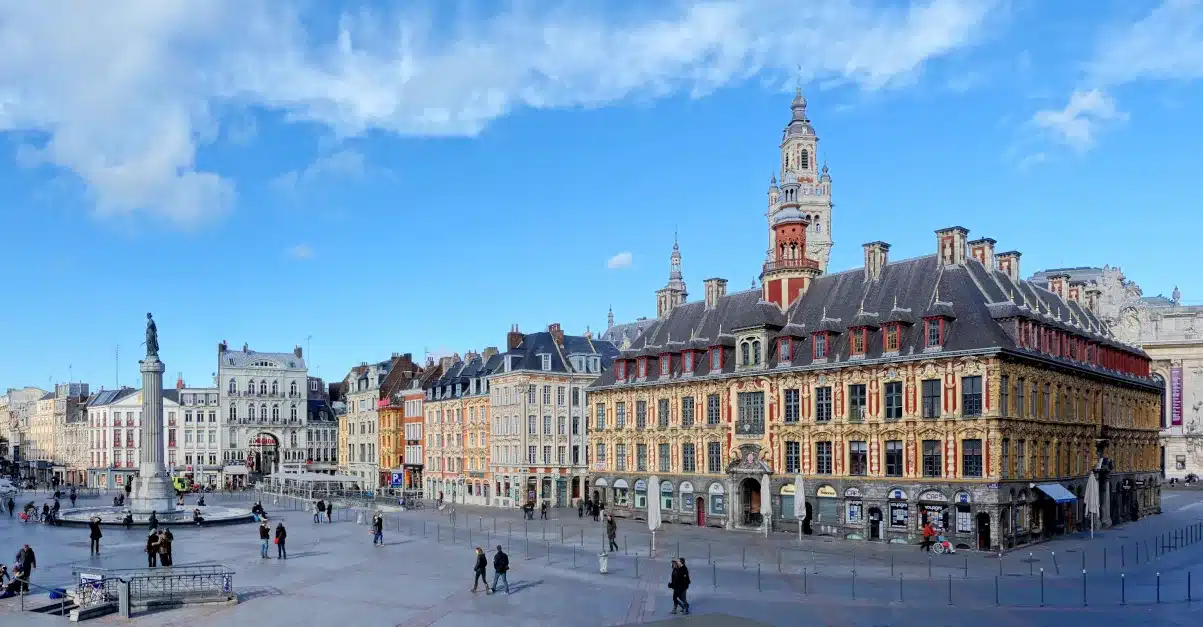
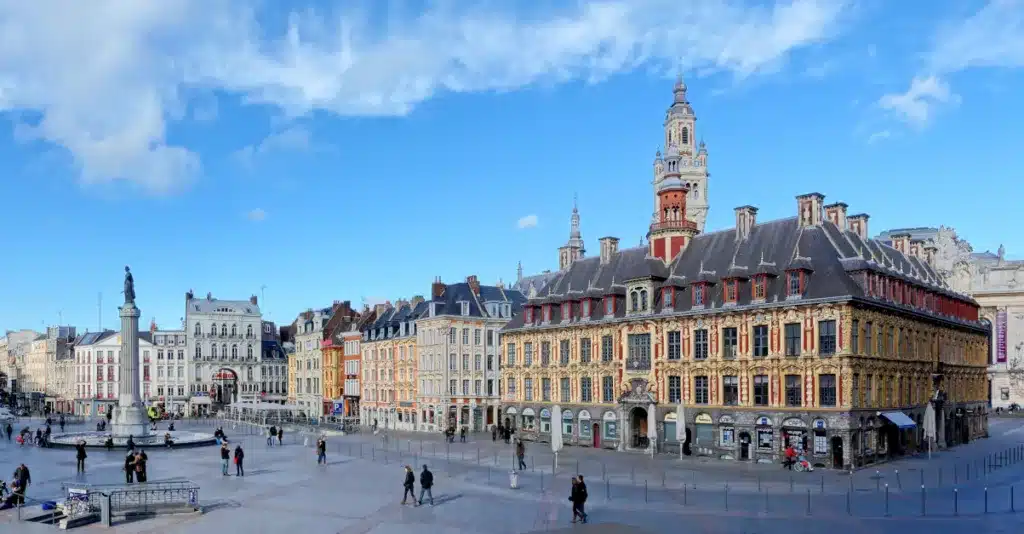
The Grand Place, also called Place du Général-de-Gaulle, is the historic heart of Lille and the main meeting point for locals.
At the center stands the Column of the Goddess, erected in 1845 to commemorate the city’s resistance during the siege of 1792. The female statue holds a fire starter in her right hand, symbolizing artillery, and points to an inscription of refusal with her left hand.
Three other golden statues, representing Flanders, Artois, and Hainaut, dominate the facade of the La Voix du Nord building in the background.
The facades surrounding the square are typical of Flemish architecture, with bricks, gables, and colorful ornaments. Every winter, the square comes alive with a Ferris wheel for Christmas festivities, enhancing its role as a festive and popular place.
Discover more about the siege of Lille in 1792 with our tour The Secrets of Old Lille
La Vieille Bourse
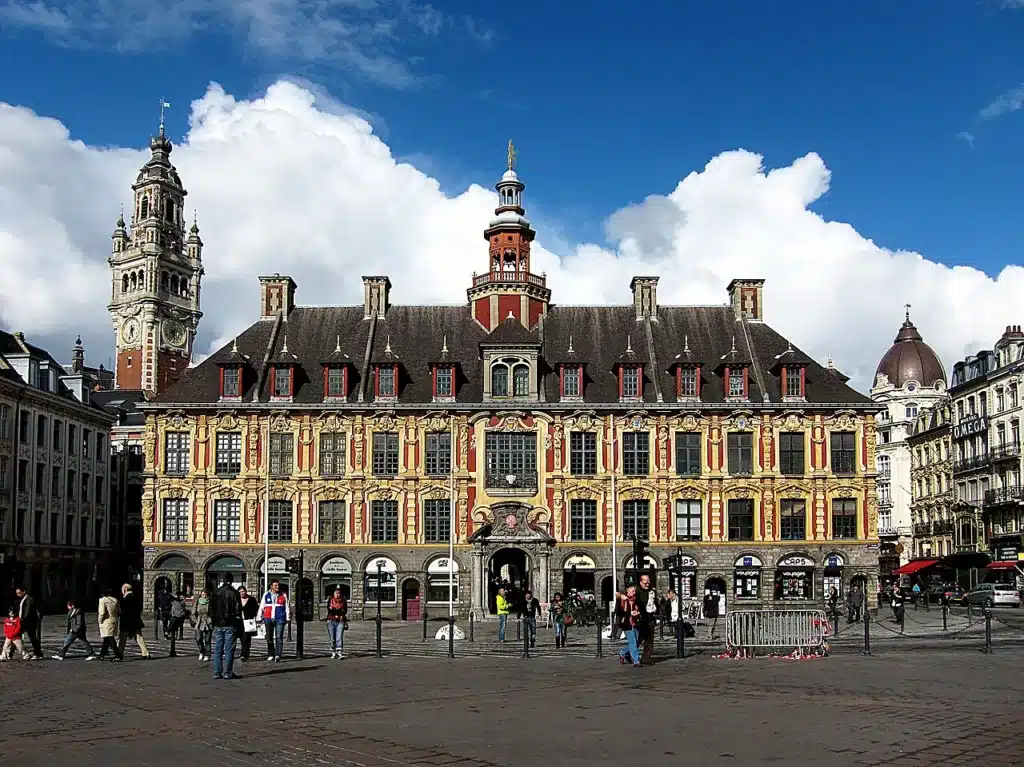 La Vieille Bourse de Lille
La Vieille Bourse was built between 1652 and 1653 by Julien Destrée in a typical 17th-century Flemish style.
The building consists of 24 identical houses arranged around an inner courtyard lined with galleries, creating a harmonious and orderly space.
Today, the courtyard is a lively place: you can find second-hand booksellers, chess players, and, in the summer, tango dances. Classified as a “historic monument” since 1921, it symbolizes Lille’s commercial importance at the time.
Discover the mysterious details of this monument with our treasure hunt The Secrets of Old Lille
La Voix du Nord Building
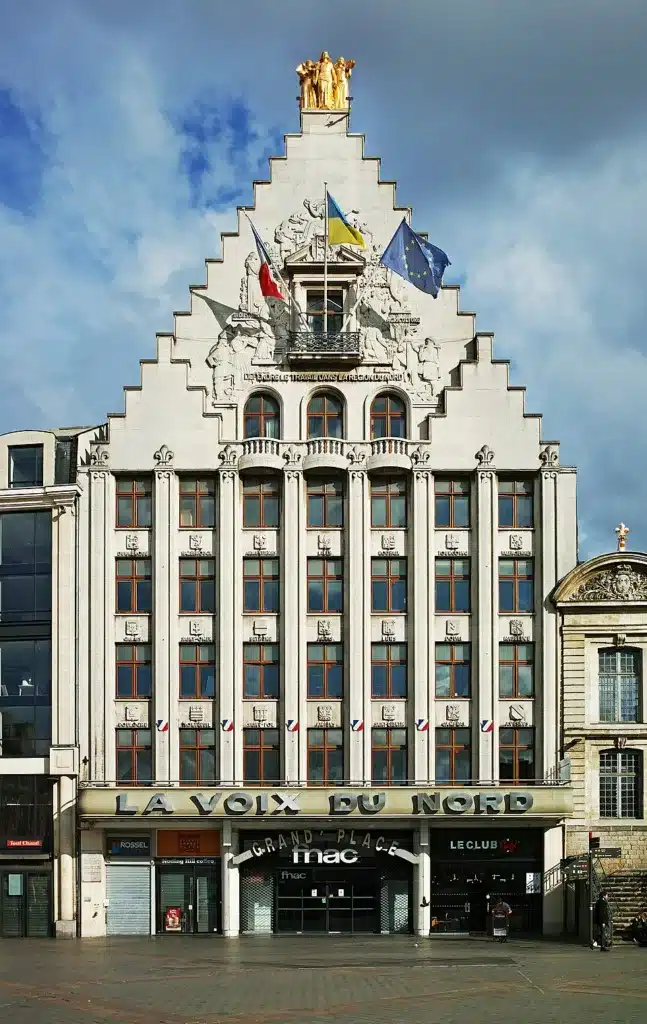 La Voix du Nord de Lille
The headquarters of La Voix du Nord, located on the Grand Place, stands out for its very distinctive Neo-Flemish facade, with bricks, gables, and a strongly regional style.
Three golden bronze statues on the gable symbolize the former provinces of the region: Flanders, Artois, and Hainaut.
The building houses both press offices and a commercial gallery on the ground floor, making it a functional as well as heritage site.
Discover the secret of the mysterious coats of arms on La Voix du Nord with our adventure The Secrets of Old Lille
Palais Rihour
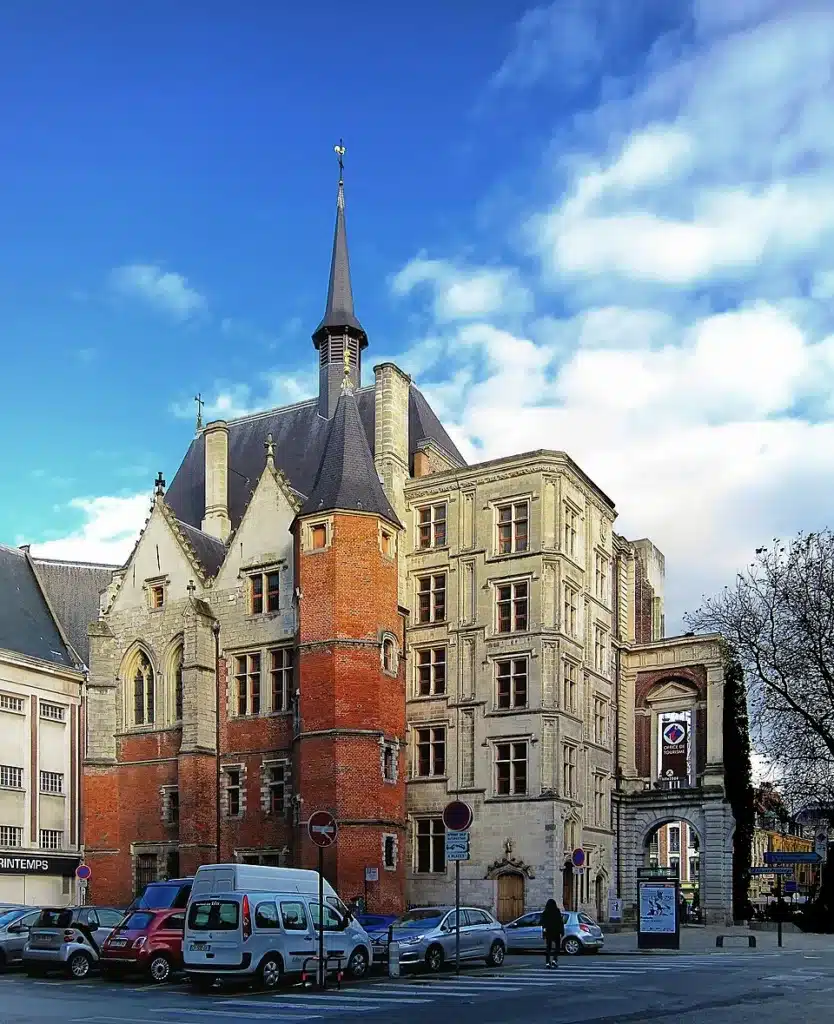 Palais Rihour de Lille
Palais Rihour, begun in 1453 by Philip the Good, is one of the few remnants of Flamboyant Gothic architecture in Lille.
It was historically a residence of the Dukes of Burgundy, then, after purchase by the city, it became the town hall in the 17th century. It suffered several fires, including a very serious one in 1916, which destroyed much of the original palace.
Today, only the Guards Hall on the ground floor remains, which houses the Tourist Office, as well as the Conclave Chapel and its sacristy upstairs.
These spaces are decorated with magnificent stained glass and are used for cultural events, exhibitions, and ceremonies.
Palais Rihour has been classified as a historic monument since 1875, reflecting its heritage importance.
Religious Monuments to See in Lille
Notre-Dame-de-la-Treille Cathedral
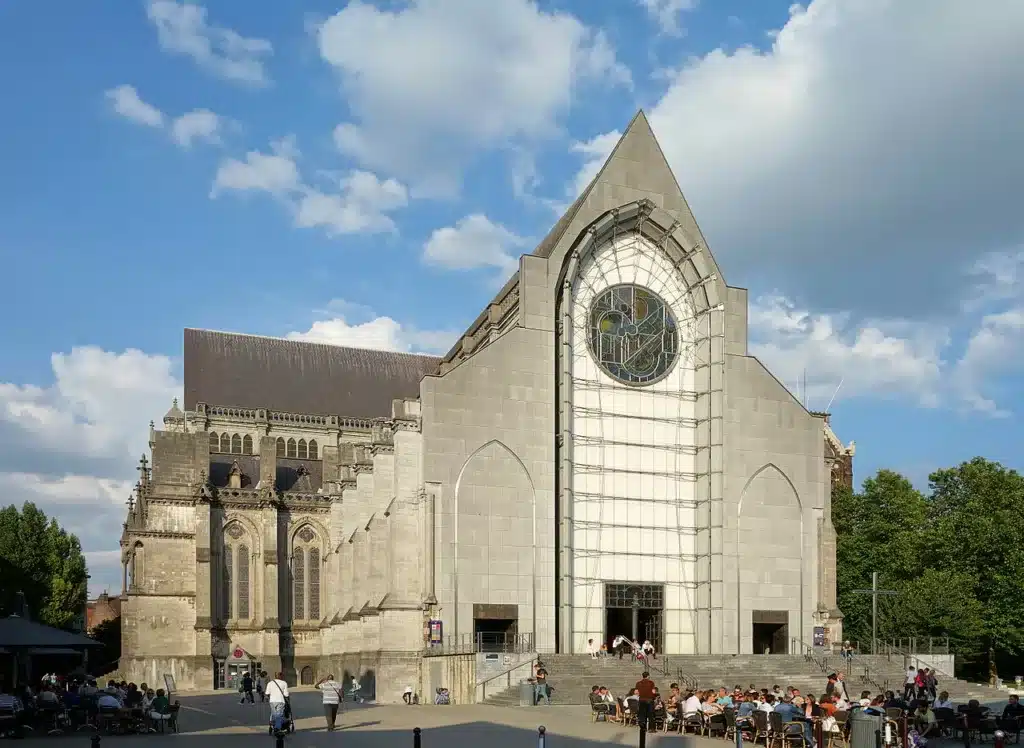
The Lille Cathedral is a neo-Gothic building whose construction began in the mid-19th century and was only completed in 1999.
It is built on Lille’s former motte castrale, a strategic site in the city’s medieval history.
Its contemporary translucent marble façade, designed by Pierre-Louis Carlier and Peter Rice, strongly contrasts with the rest of the Gothic architecture.
Behind this façade, a rose window by Ladislas Kijno symbolizes resurrection, and the portal sculpted by Georges Jeanclos adds a modern artistic dimension.
Its crypt, about 2,500 m², is divided into two parts: a neo-Gothic section with tombs and a modern section housing the Sacred Art Center.
The cathedral is also a cultural venue: concerts, exhibitions, and conferences are organized here, making it a true landmark of Old Lille.
Sacré-Cœur Catholic Church
The Sacré-Cœur Church in Lille is a neo-Gothic building constructed at the end of the 19th century (1875–1878), following a vow made during the Franco-Prussian War.
It was designed by architect Jules Batigny, with apsidal chapels added in the 1880s–1890s.
When the church was consecrated in 1902, the bell tower was not yet completed, reflecting the successive phases of construction. The Archbishop of Cambrai at the time dedicated Lille to the Sacred Heart during the inauguration, marking a gesture of faith and protection.
The building, due to its size and significance, became a major place of worship for the people of Lille, as well as a highly visible point of reflection in the city. Its architecture combines bricks and stone, and its style recalls grand Gothic churches while remaining anchored in local heritage.
Discover the secrets of its unusual architecture in our treasure hunt Secrets of Old Lille
Saint-Maurice Church
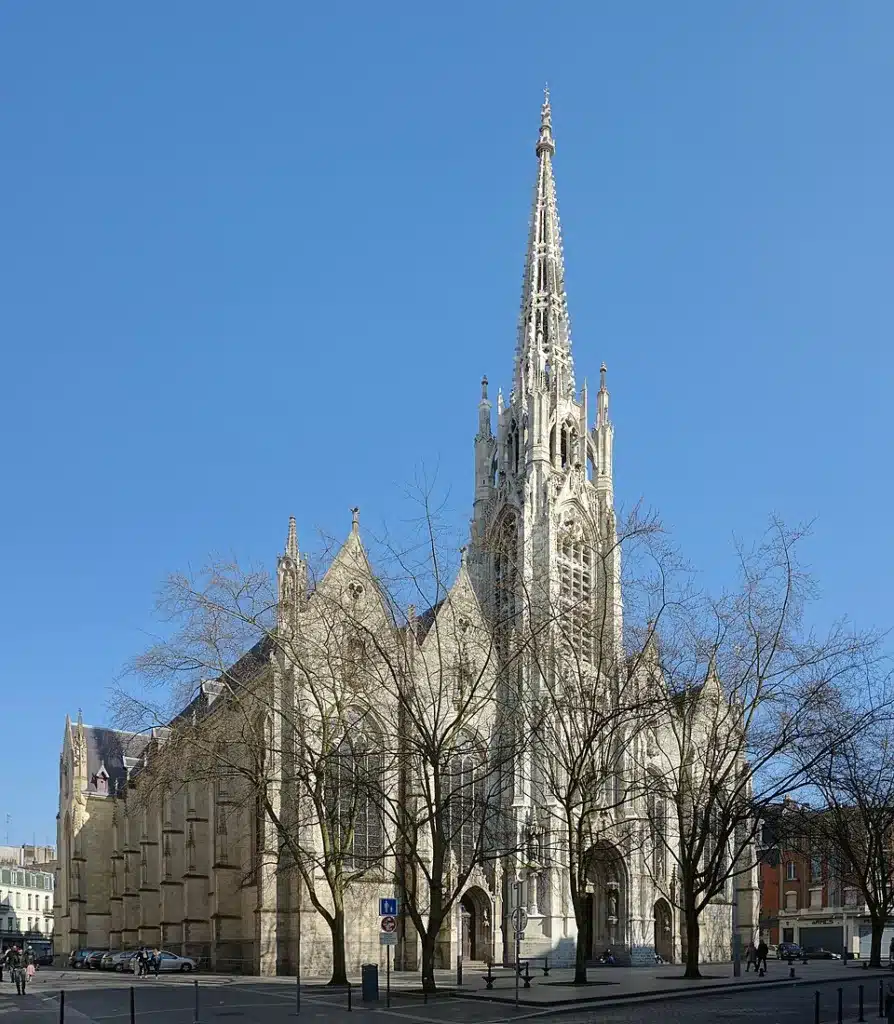
Saint-Maurice Church in Lille is a hall church, meaning its naves are of equal height, a typical feature of Gothic hall churches.
Its construction began at the end of the 14th century and extended until the 19th century, marking several architectural phases.
In the 19th century, architect Philippe Cannissié led a major restoration, unifying the interior in a sober Gothic/neo-Gothic style.
The church is classified as a “historical monument,” highlighting its heritage importance in Lille’s historic center.
The spacious nave and its stained glass windows create a peaceful atmosphere, far from the tourist bustle, ideal for a contemplative visit.
The church is also conveniently located: it is just a short walk from Lille Flandres station, making it easily accessible for visitors.
Institutional Buildings
Chamber of Commerce & Its Belfry
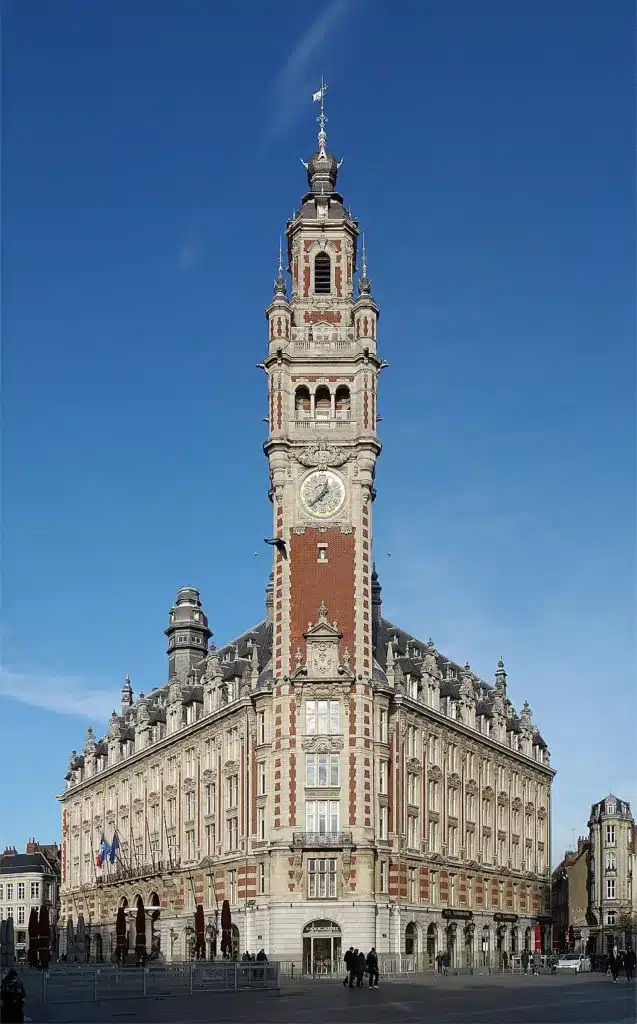
The Lille Chamber of Commerce building was constructed between 1910 and 1921 by architect Louis-Marie Cordonnier, in a neo-Flemish style evoking the rich regional heritage. Its belfry, rising 76 meters, is one of the most recognizable symbols of Lille’s skyline and offers an impressive panoramic view of the city.
The belfry houses a carillon of 25 bells, playing local tunes and traditional melodies at noon. The main hall is adorned with a translucent dome that illuminates frescoes and woodwork, showcasing the architectural refinement of the time.
The interior offices combine functionality with decorative luxury, featuring frescoes, columns, and sculptures. The building is listed as a historic monument, symbolizing both Lille’s economic dynamism and architectural wealth.
City Hall & Belfry of Lille
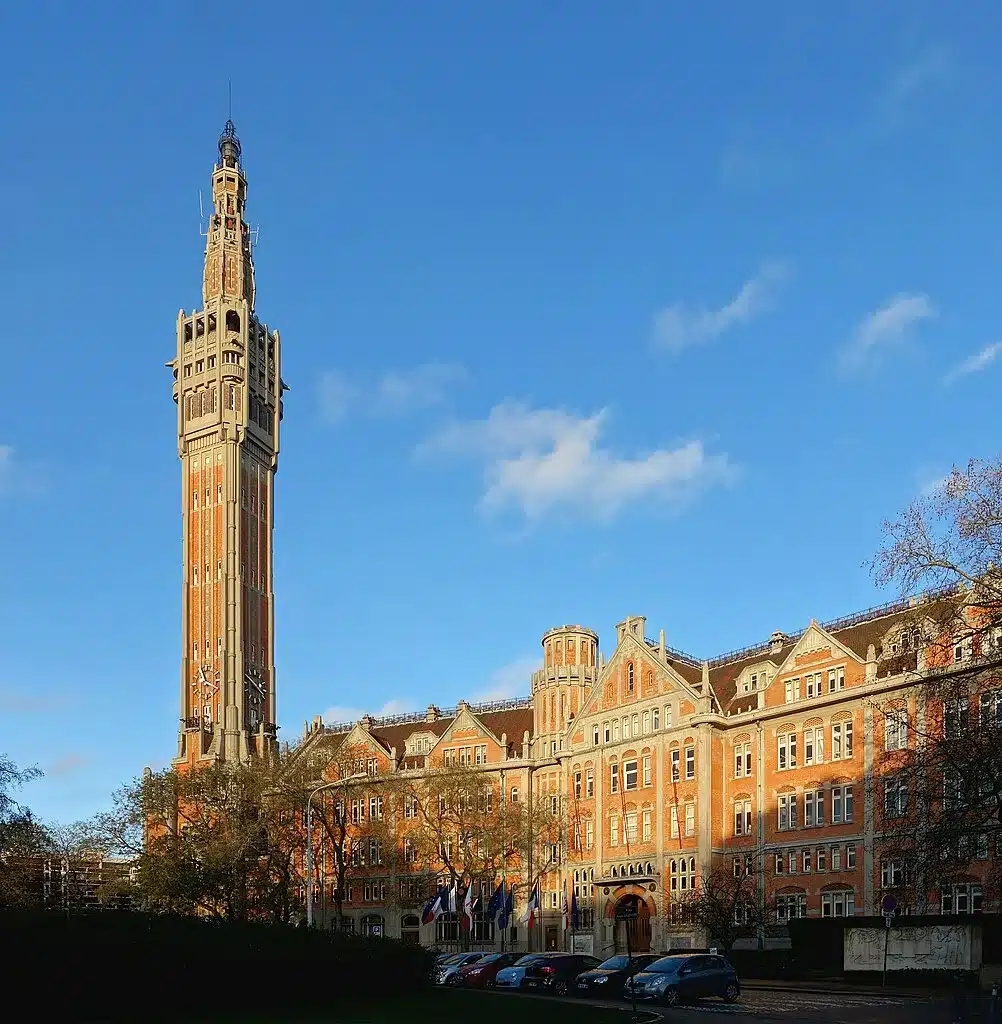
The Belfry of Lille City Hall was built between 1924 and 1932 in an Art Deco style by architect Émile Dubuisson.
It rises to 104 meters and is listed as a UNESCO World Heritage site as part of the belfries of Northern France and Belgium.
Climbing the belfry offers an exceptional panoramic view of Lille and the surrounding metropolitan area, with the possibility to explore intermediate landings.
The materials used — brick, stone, and marble — give the building an imposing yet elegant style, blending tradition and modernity.
Porte de Paris
Porte de Paris is a monumental triumphal arch built between 1685 and 1692 by engineer Simon Vollant to celebrate the capture of Lille by Louis XIV in 1667.
Its Baroque style is richly decorated with sculptures representing Hercules and Mars, as well as two trumpeting angels at the top.
The gate marks the historic entrance to the city and symbolizes both royal power and the military grandeur of the Sun King.
Major Museums and Cultural Venues
Palais des Beaux-Arts de Lille
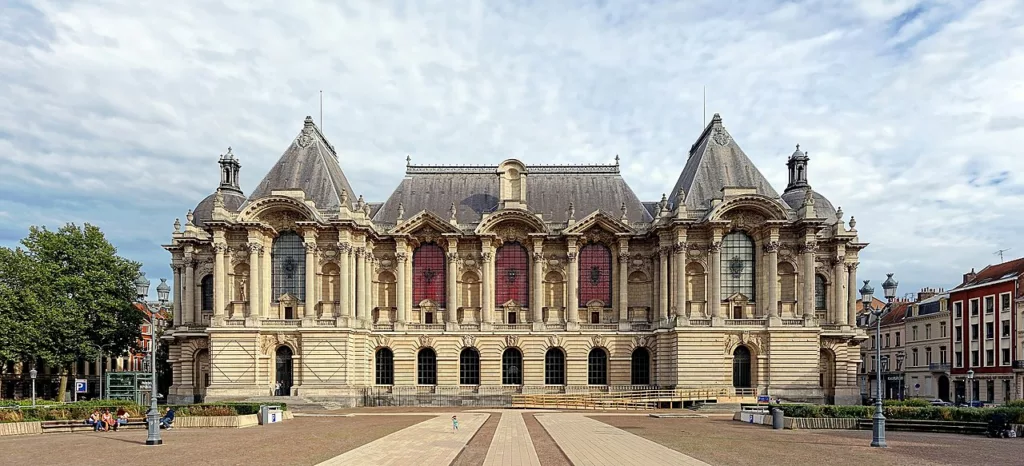
The Palais des Beaux-Arts de Lille is one of the largest museums in France, created in the early 19th century to house works confiscated from churches and private collections.
The current building, in a Baroque revival style, was constructed between 1885 and 1892 by architects Édouard Bérard and Fernand Delmas.
It houses an impressive collection of paintings, sculptures, ceramics, and drawings, including works by Rubens, Goya, Delacroix, and Rodin.
In the 1990s, the museum underwent extensive renovations, adding temporary exhibition spaces, an auditorium, and restoration workshops.
The museum also offers temporary exhibitions, educational workshops, and lectures, making it a vibrant cultural center.
Hospice Comtesse Museum
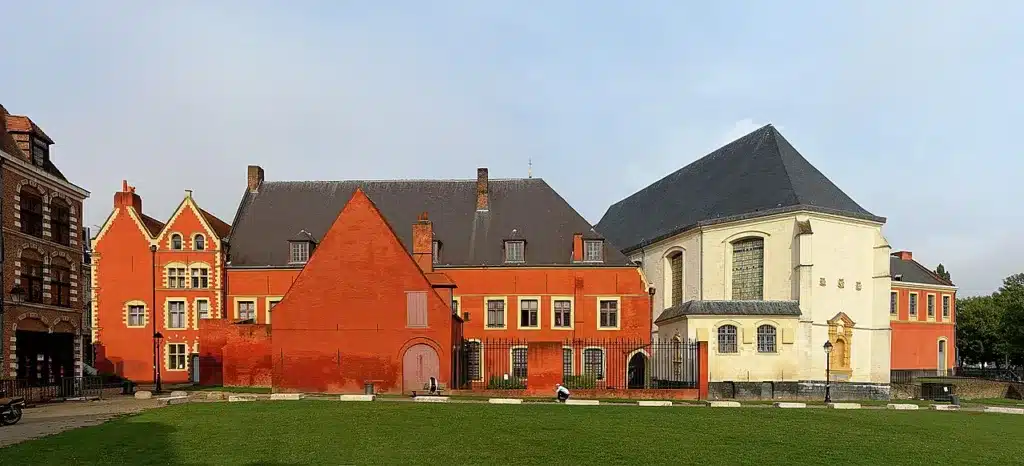
The Hospice Comtesse Museum is housed in a former hospital founded in 1237 by Countess Jeanne of Flanders.
The buildings, spanning several centuries, include Gothic, Baroque, and Neoclassical rooms, a main courtyard, and a medicinal garden.
Since 1962, the hospice has hosted an art and history museum, presenting around 70,000 works: paintings, tapestries, furniture, and everyday objects. Notable items include celestial and terrestrial globes by cartographer Vincenzo Coronelli.
The museum also reconstructs hospital life with rooms such as the dormitory, patients’ room, and the nuns’ kitchen. It organizes temporary exhibitions, children’s workshops, and attracts between 100,000 and 160,000 visitors annually.
Learn more about Countess Jeanne of Flanders and the mysterious details of this hospice in our tour Secrets of Old Lille
Charles de Gaulle Birthplace
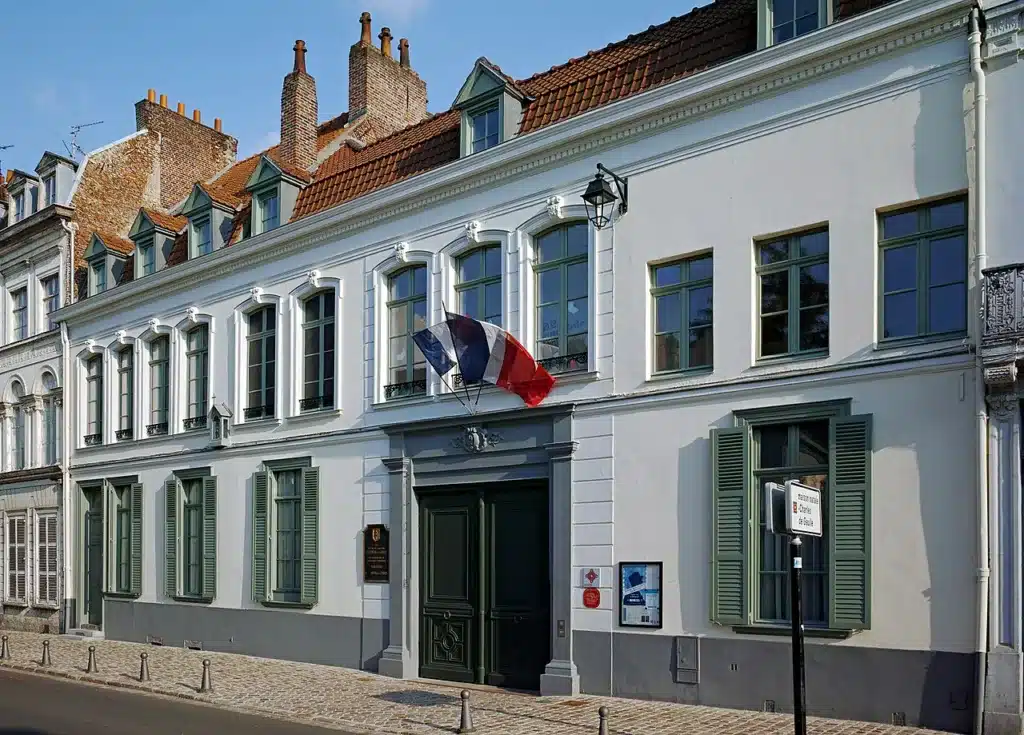
The Charles de Gaulle Birthplace is located in the Lille-Moulins district and retraces the childhood of the general and former President of France.
The family home is preserved with period furniture, portraits, and personal objects, offering insight into the daily life of the de Gaulle family.
The permanent exhibition retraces Charles de Gaulle’s military and political life, with original documents and archives.
The venue also hosts conferences and educational activities for schools and the general public.
The visit is complemented by a shop offering publications and souvenirs related to the life of the General.
This museum allows visitors to understand Charles de Gaulle’s impact while discovering Lille at the beginning of the 20th century.
Natural History Museum of Lille
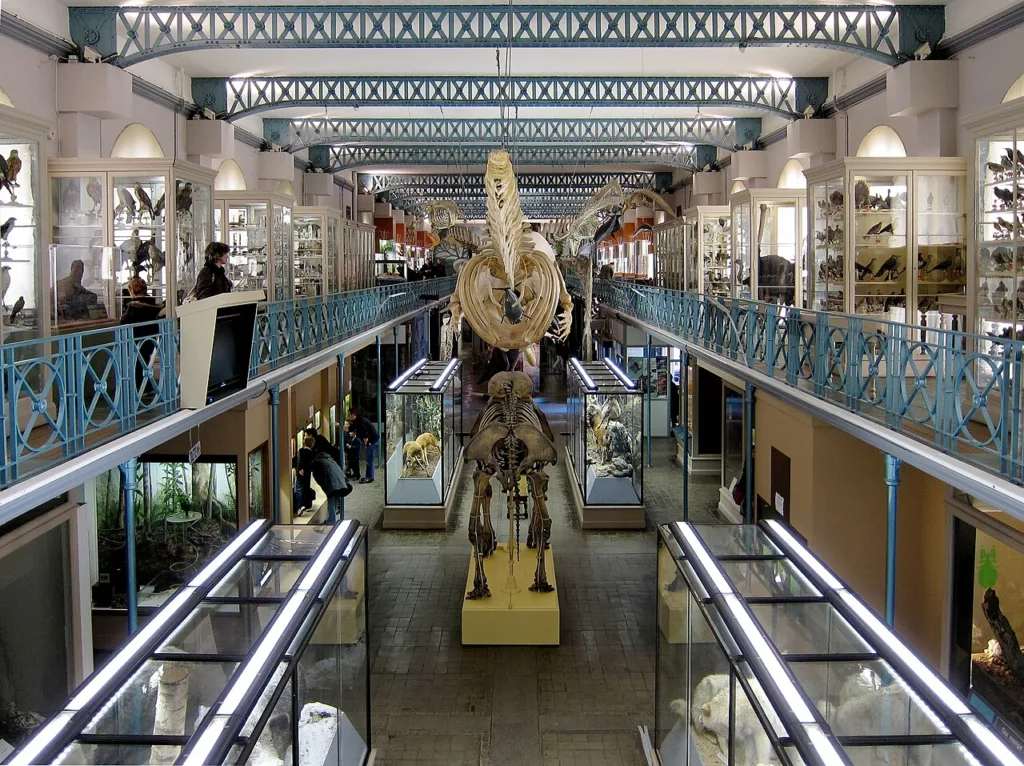
The Natural History Museum of Lille, founded in 1822, is one of the oldest museums of its kind in France.
It houses diverse collections: zoology, geology, paleontology, botany, and ethnography.
Visitors can discover dinosaur skeletons, rare fossils, taxidermy animals, and precious minerals.
The museum regularly hosts temporary exhibitions, educational workshops, and scientific lectures for all ages.
Its historic city-center building is an example of 19th-century architecture, with spacious and bright rooms.
The museum provides an immersive and educational experience, ideal for families and natural science enthusiasts.
La Piscine de Roubaix
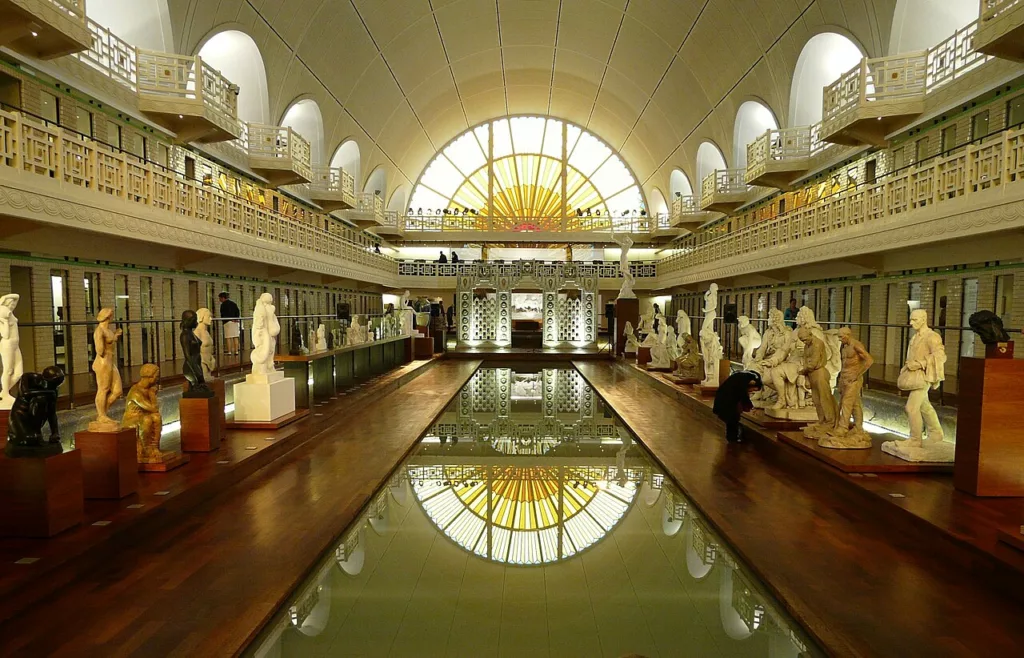
La Piscine de Roubaix is an art museum located in a former Art Deco swimming pool inaugurated in 1932.
Its conversion into a museum occurred in the 1990s, preserving the original pool, mosaics, and changing rooms, creating a unique setting for the displayed works.
The museum exhibits paintings, sculptures, textiles, and decorative arts, with a focus on Northern artists and Art Deco.
Temporary exhibitions, conferences, and educational workshops enrich the visit and explore contemporary creativity.
La Piscine de Roubaix is a must-see for visitors to Lille who want to expand their cultural circuit around the metropolitan area.
The contrast between the pool’s original architecture and the displayed artworks provides a unique visual and emotional experience.
LaM – Lille Métropole Museum of Modern, Contemporary, and Outsider Art
The LaM, located in Villeneuve-d’Ascq, is the only museum in France combining modern art, contemporary art, and outsider art on a single site.
It was inaugurated in 1983 and renovated to offer bright, modern spaces suited to the collections.
The museum has over 4,000 works, including paintings, sculptures, and drawings by major artists like Picasso, Vasarely, and Dubuffet.
The outsider art collections, unique in Europe, feature creations made outside the official academic and artistic world.
LaM also offers temporary exhibitions, conferences, educational workshops, and guided tours for all audiences. Its location in a park and spacious exhibition areas make it a must-visit cultural stop to complement a Lille visit.
Le Tripostal
The Tripostal is a contemporary art center housed in a former 19th-century industrial postal building in Lille.
It was converted into an exhibition space in 2004, retaining its metal structure and impressive volumes.
The venue hosts temporary contemporary art exhibitions, multimedia installations, and international projects.
Its industrial architecture and loft-like atmosphere attract both artists and visitors, providing an atypical art setting.
Tripostal also organizes cultural events, conferences, and educational workshops for children and adults.
It is located near Lille Flandres Station, facilitating access for tourists and contributing to its vibrancy.
Saint-Sauveur Station
Saint-Sauveur Station is a former railway warehouse transformed into a multidisciplinary cultural center in Lille.
Opened in 2009, it hosts exhibitions, concerts, markets, screenings, and family events.
The architecture retains industrial charm with large spaces, glass roofs, and visible metal structures.
The site is part of an urban redevelopment project, aiming to revitalize abandoned spaces and offer a cultural venue open to all.
It also hosts artistic and educational workshops, involving residents and visitors.
Saint-Sauveur Station is a successful example of converting old industrial buildings into lively cultural spaces.
Neighborhoods, Streets, and Leisure Areas
Rue de Béthune
Rue de Béthune is the main shopping street in Lille city center, connecting the Grand Place to the Porte de Paris.
It is lined with modern shops, major brands, and traditional stores, offering a complete shopping experience.
The architectural style alternates between old brick facades and renovated structures, reflecting a mix of historic and contemporary design.
Some sections are pedestrianized, encouraging strolling and tourist traffic.
The street regularly hosts events, exhibitions, and pop-up markets, enhancing its vibrancy.
Passage Lepelletier
Passage Lepelletier is a picturesque covered passage in central Lille, typical of 19th-century shopping galleries.
It connects busy streets of Old Lille and today hosts independent shops, art galleries, and cafés, creating a very pleasant strolling atmosphere.
The passage’s architecture is charming: wrought-iron shopfronts, a glass roof, and cobblestone floors give it an almost intimate character.
Green Spaces in Lille
Vauban Citadel
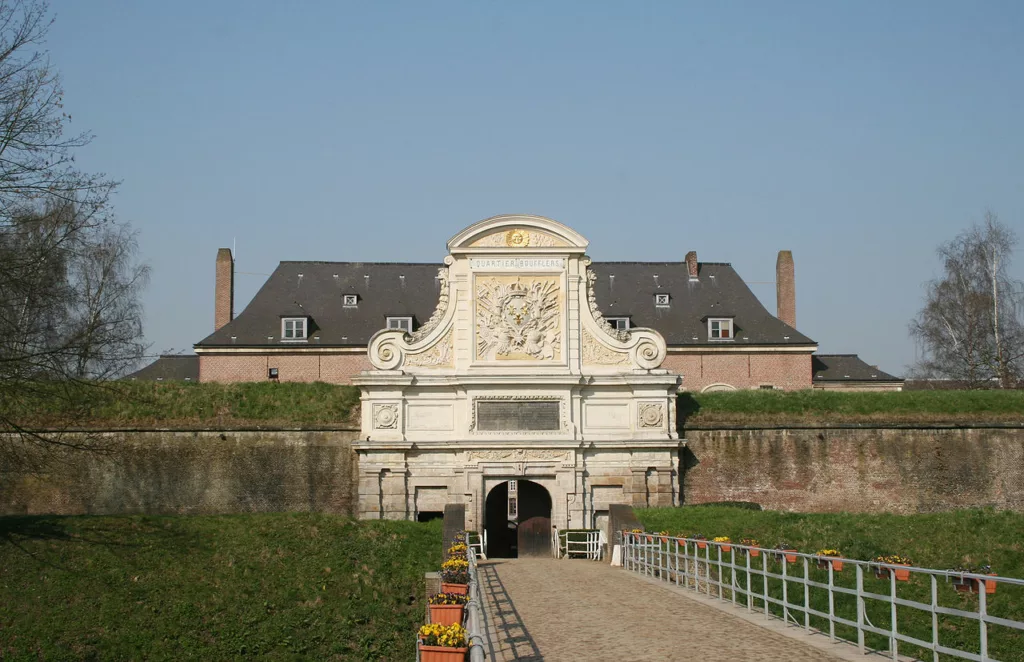
The Lille Citadel, nicknamed the “Queen of Citadels,” was designed by Vauban between 1667 and 1670 following the city’s conquest by Louis XIV.
It is built in a star shape with bastions and moats, showcasing Vauban’s military genius.
Today, it is surrounded by a large park, the Bois de Boulogne and the Jardin Vauban, offering green spaces for walks, jogging, and family activities.
The citadel is still used by the military, but some areas are open to the public during guided tours or events.
Visitors can observe the military structures from the outside, enjoy the trails and wooden bridges, and explore the historical bastions and ramparts.
The Deûle River
The Deûle is the river that flows through Lille and its surroundings, offering a pleasant setting for walking, cycling, or boating.
The riverbanks have been developed for strolling and water activities, especially around the Citadel park.
It connects the city center to more peripheral neighborhoods while providing a natural environment.
Marked trails and bike paths run along the river, inviting residents and tourists to discover Lille in a different way.
The Deûle is also used for cultural and sporting events, such as regattas and summer activities.
This mix of nature and urbanism allows visitors to enjoy the city while staying close to water and greenery.
Jean-Baptiste Lebas Park
Jean-Baptiste Lebas Park is a green space located in the heart of Lille, between the city center and the Saint-Sauveur district.
It was developed in the early 20th century and is named after the socialist mayor Jean-Baptiste Lebas, an important local figure.
The park offers large lawns, shaded walkways, and children’s play areas, ideal for relaxing or picnicking.
Flower gardens, sculptures, and benches invite visitors to stroll and contemplate in a peaceful setting in the city center.
The park also hosts seasonal events, such as markets, exhibitions, or open-air concerts, contributing to Lille’s cultural life.
It is a popular spot for both locals and tourists to escape urban bustle while remaining close to main city attractions.
Cultural Venues & Performance Spaces
Lille Opera House
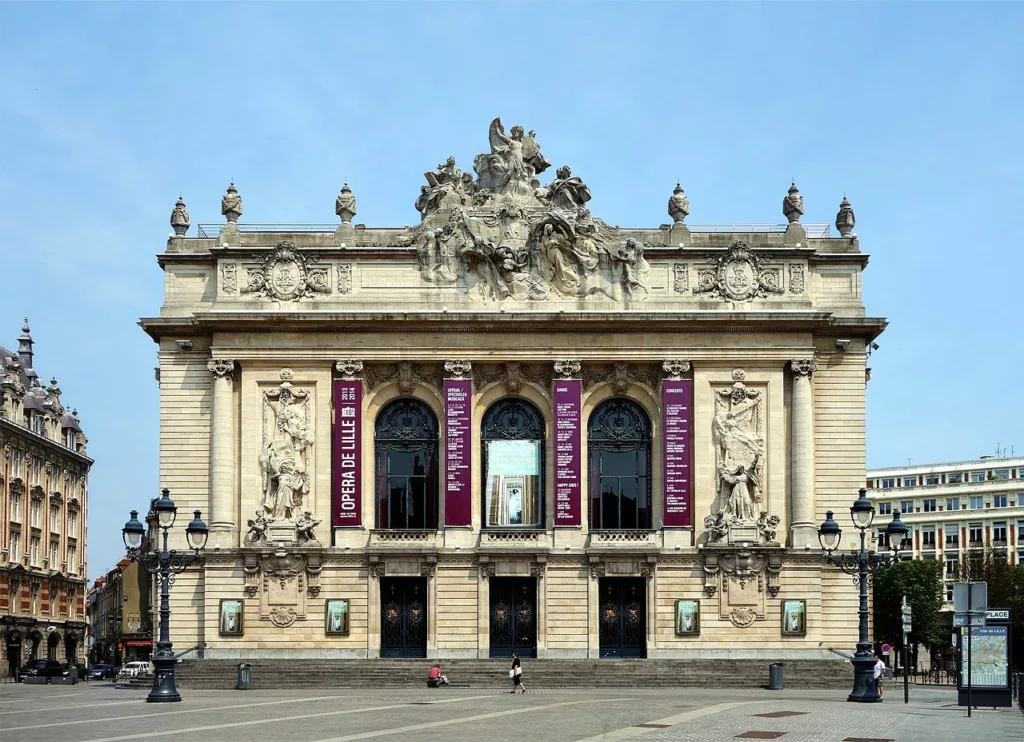
The Lille Opera House, inaugurated in 1923, is a magnificent neoclassical building located on Place du Théâtre.
Its elegant façade, adorned with Corinthian columns and a sculpted frieze, reflects the monumental style of the period.
The interior features an Italian-style auditorium with 1,100 seats, offering exceptional acoustics for operas, ballets, and concerts.
The Opera House offers a varied program, from opera classics to contemporary creations and symphonic concerts.
It also hosts educational events and guided tours, allowing visitors to explore the backstage and the building’s history.
The auditorium plays a central role in Lille’s cultural life, attracting thousands of spectators each year.
Sébastopol Theatre
The Sébastopol Theatre, located on the Grand-Place, is one of Lille’s oldest theaters, inaugurated in 1903.
It combines a neo-Baroque style with Art Deco elements, providing a majestic setting for performances.
The auditorium can accommodate around 1,000 spectators, with boxes and balconies decorated with moldings and gilding.
The theater offers a diverse program: plays, concerts, comedians, and shows for young audiences.
It also organizes workshops and meetings with artists, engaging the local community and schools.
The Sébastopol remains an emblematic venue of Lille’s cultural and architectural heritage.
Nouveau Siècle (Lille National Orchestra)
Nouveau Siècle is the hall of the Lille National Orchestra, inaugurated in 2003 for symphonic concerts and cultural events.
The hall’s modern architecture combines contemporary design with state-of-the-art acoustics, using materials carefully chosen to optimize sound.
It has a capacity of around 1,050 spectators, offering proximity appreciated for classical and contemporary music. It is also used for conferences, shows, and public events.
Nouveau Siècle plays a central role in Lille’s musical life and hosts international festivals and collaborations.
Its location on Place Mendès-France makes it easily accessible from the city center and public transport.
Lille Specialties
Maison Méert
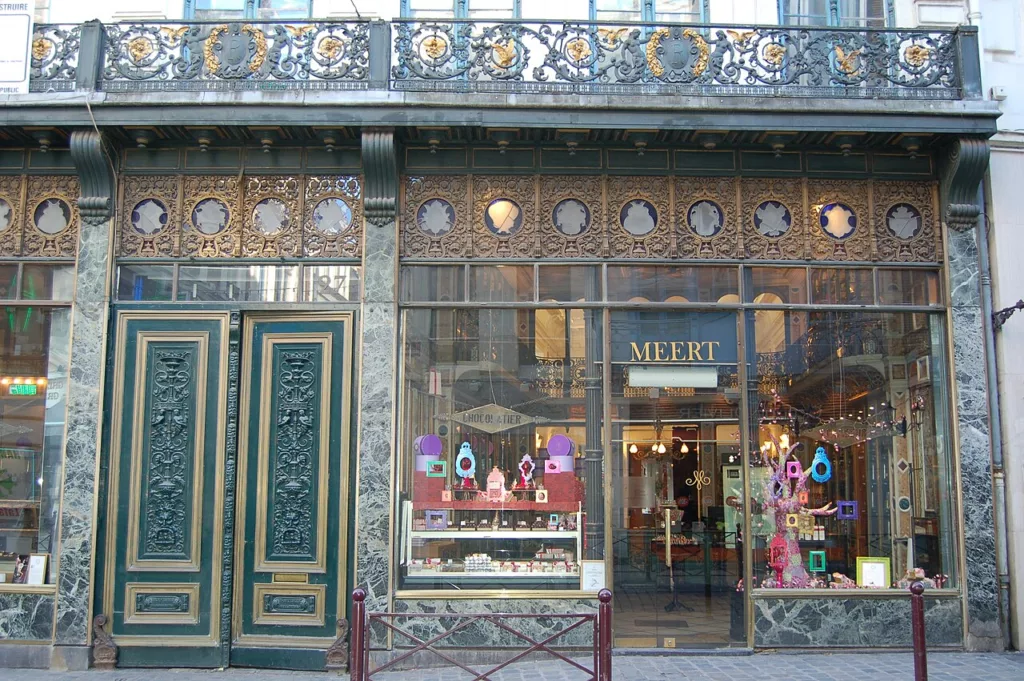
Maison Méert, founded in 1761, is a Lille institution famous for its traditional vanilla waffles from Madagascar.
The historic shop is located in Old Lille, with refined décor and woodwork evoking 19th-century elegance.
It also offers chocolates, biscuits, and artisanal confectionery, preserving a centuries-old craft.
Maison Méert welcomes visitors to the tea room, where pastries can be enjoyed in a chic and intimate setting.
Wazemmes Market
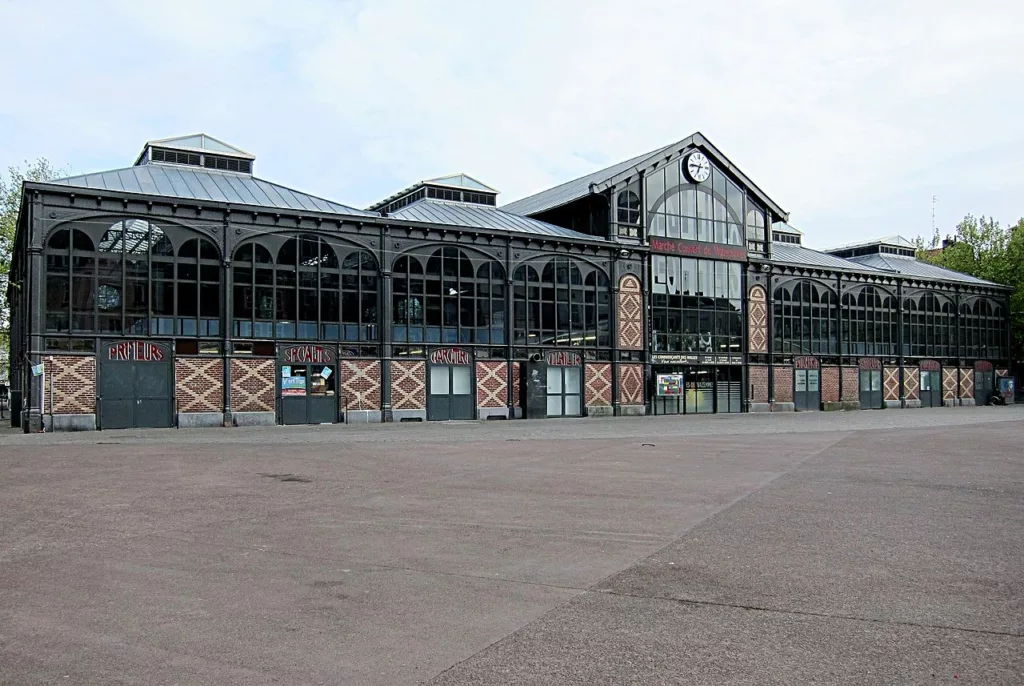
Wazemmes Market, located in the district of the same name, is one of the liveliest markets in France, active every Sunday morning.
It offers a wide variety of products: fruits and vegetables, exotic foods, cheeses, meats, and textiles.
The atmosphere is very lively, with vendors interacting with customers and stalls often colorful and fragrant.
Local Specialties
Lille is famous for its culinary specialties, such as Welsh, a dish made with melted cheddar and ham, or carbonnade flamande, a beef stew cooked in beer.
Lille waffles and Méert wafer cookies are iconic desserts, renowned for their delicate texture and unique sweet taste.
Local beers, from regional breweries, pair perfectly with these traditional dishes.
Lille’s gastronomy reflects a blend of Flemish and French culture, rich in flavor and history.
The city’s restaurants and breweries offer a wide range of traditional dishes for all budgets. Tasting these specialties is a must to understand the culinary identity of the North.
Excursions from Lille
Destinations in Belgium
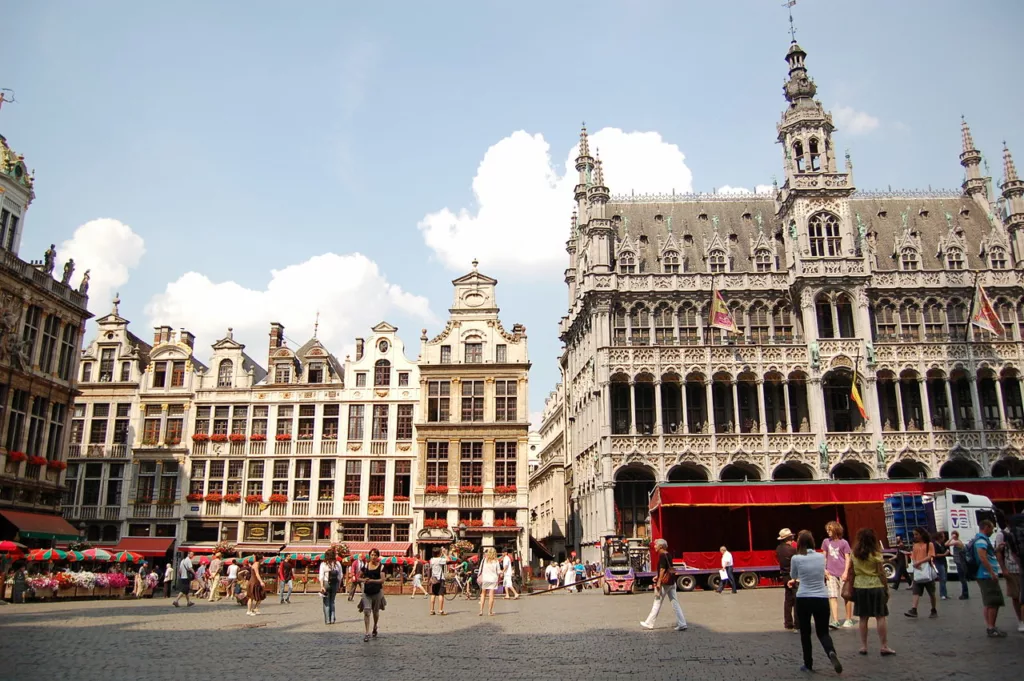
Brussels
Brussels is easily accessible from Lille: several TGV trains connect Lille Europe to Brussels-Midi, with very short journeys (the fastest takes about 34 minutes).
The Belgian capital offers a wide range of attractions: Grand Place, Manneken-Pis, numerous art museums, as well as the must-try Belgian cuisine (waffles, beers, chocolates).
It is an ideal day trip from Lille, combining culture, history, and gastronomy.
Destinations in France
Arras
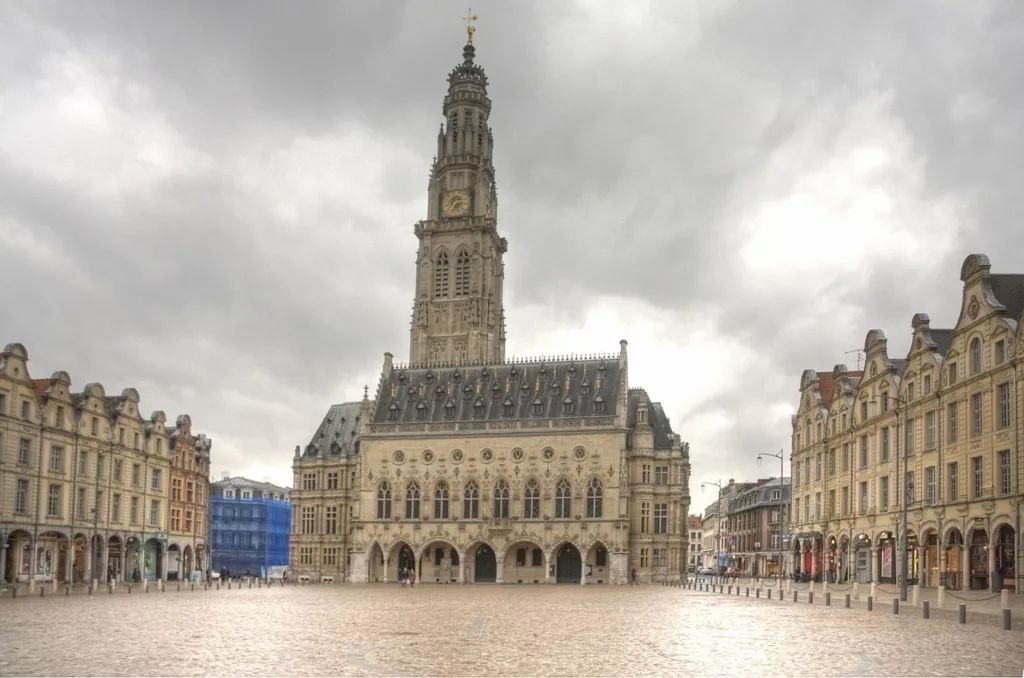
Arras, in the Pas-de-Calais, is a city of art and history and makes a great excursion from Lille.
The Arras belfry, 75 meters high, overlooks the famous Place des Héros and offers a panorama of the city and surrounding countryside.
The Place des Héros itself is remarkable for its Baroque façades and architectural charm typical of the region.
The belfry is a listed building and a strong historical symbol of the city.
Roubaix
Roubaix is another interesting destination from Lille, notably for its La Piscine museum, located in a former Art Deco swimming pool.
This visit combines art, architecture, and industrial heritage, complementing a stay in the Lille metropolitan area.
Nature and Outdoor Destinations
Flanders Hills
The Flanders Hills (or “Monts des Flandres”) are a hilly area located on the French-Belgian border. Among them, peaks such as Paterberg (89 m) or Pottelberg (159 m) are known for their green, rolling landscapes. These hills offer pleasant trails, ideal for hiking, cycling, or simply a nature escape from Lille.
Opal Coast
The Opal Coast, located in northern France, is perfect for a nature excursion: dramatic cliffs, dunes, beaches, hiking trails, and fishing villages. The Grand Site des Deux Caps (Cap Blanc-Nez, Cap Gris-Nez) is particularly emblematic and can be explored via trails like GR 120.
Views over the English Channel, local wildlife, flora, and World War II remnants make this excursion rich and varied.
Major Events in Lille
La Braderie de Lille
La Braderie de Lille is the largest flea market in Europe and one of the city’s emblematic events.
It takes place every first weekend of September and attracts more than 2 million visitors each year.
During this weekend, the streets of the city center transform into a massive market, where individuals and merchants sell antiques, second-hand goods, and artisanal products.
La Braderie is also famous for its giant mussels and fries, a traditional dish served in many restaurants and temporary stalls.
Lille3000
Lille3000 is a cultural and artistic festival that takes place every 3 to 4 years and transforms the city for several months.
Each edition follows a different theme and includes exhibitions, art installations, street performances, musical acts, and workshops.
The festival aims to combine contemporary art, innovation, and heritage, involving both local and international artists.
International Short Film Festival
This festival highlights short films with screenings, international competitions, and meetings with directors.
It takes place every year in Lille, mainly at the Tripostal and other partner venues.
The event allows audiences to discover emerging talents and creative productions from around the world.
Lille Carnival
The Lille Carnival is a festive tradition that generally takes place in spring, in the streets of Old Lille and the city center.
Participants parade in colorful costumes, accompanied by brass bands and decorated floats, reminiscent of northern France and Belgian carnivals.
It is a convivial event that brings together families, residents, and tourists through entertainment, shows, and workshops for children.
Christmas Markets and Winter Activities
Every December, Lille lights up for the end-of-year festivities.
The Christmas Market at the Grand-Place features artisanal chalets, gourmet products, and activities for children and adults.
A Ferris wheel and temporary ice rinks are installed to create a festive and friendly atmosphere, reinforcing the Grand-Place’s role as the heart of the city.
Conclusion
Exploring Lille is diving into a living heritage where the past and modernity coexist harmoniously.
From iconic squares to renowned museums, Gothic churches, green spaces, and local gastronomy, every visitor finds something to enjoy.
Lille thus reveals itself as a welcoming and vibrant city, offering a complete cultural, historical, and sensory experience.
A stay in the Lille metropolitan area promises memorable experiences and diverse discoveries for all tastes and ages.