Visit London: 30 Must-Do and Must-See Things
London, the cosmopolitan capital of the United Kingdom, is a city where history, culture, and modernity meet on every street corner. With its iconic landmarks such as the Tower of London, Big Ben, or Buckingham Palace, its free museums like the British Museum and the National Gallery, as well as its lively neighborhoods such as Soho, Camden, or Notting Hill, London attracts millions of visitors each year.
Between walks along the Thames, culinary discoveries with the famous Fish & Chips and the ritual of English tea, and must-see events like the Notting Hill Carnival or London Fashion Week, the city offers a complete experience for all types of travelers. Whether you are passionate about history, an art lover, a shopping fan, or simply looking for a lively city getaway, visiting London promises unforgettable memories.
Discover the must-see sights of London with our London scavenger hunt, a mix between an escape game and a cultural tour.
Monuments & Historical Heritage – London
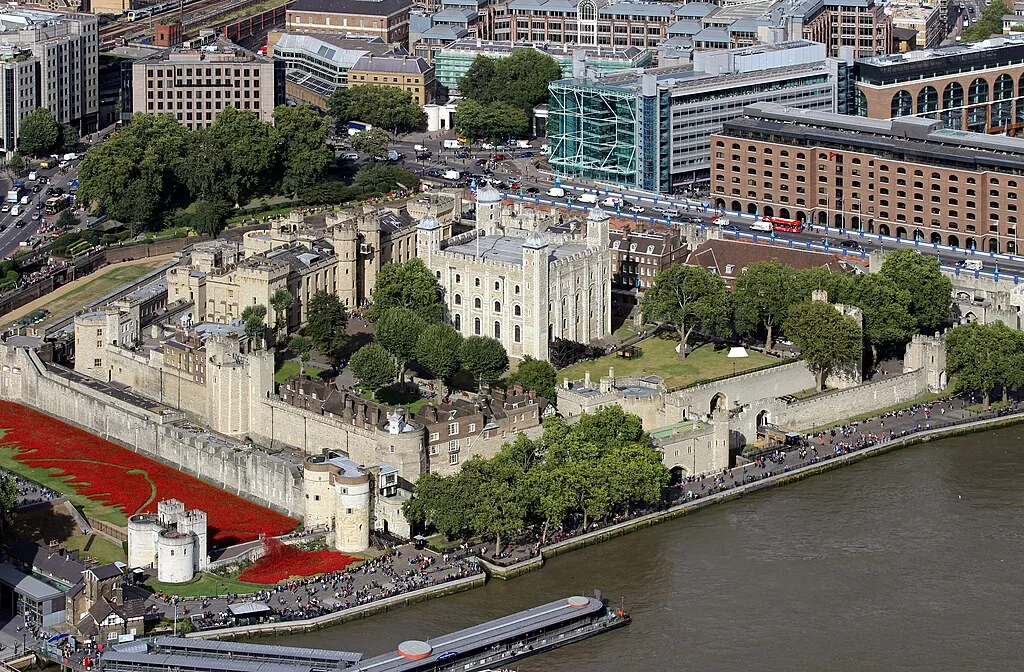
The Tower of London
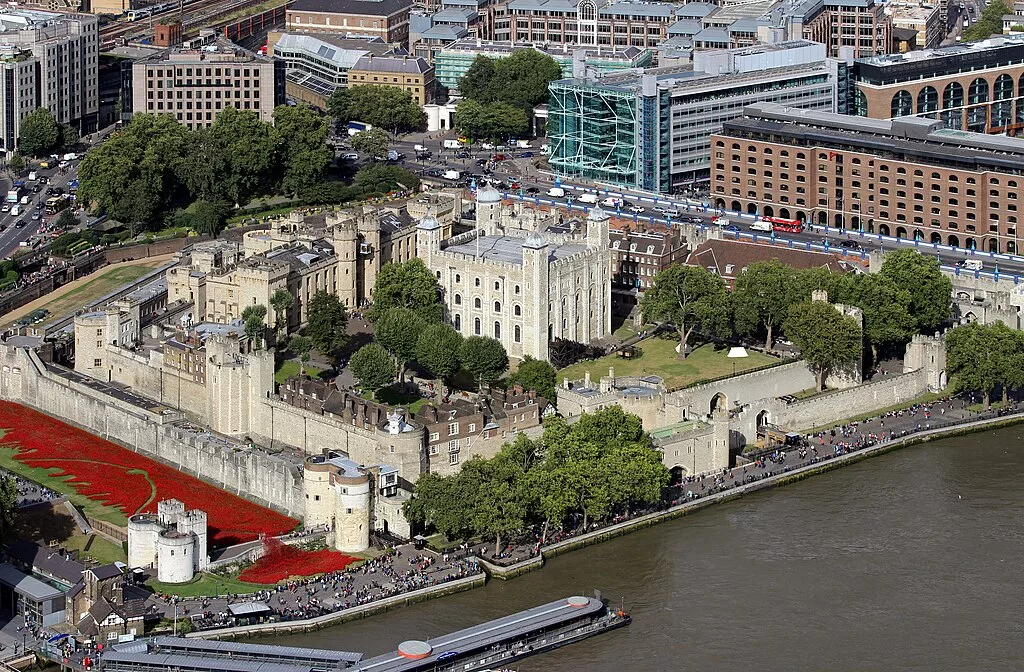
The Tower of London is a historic fortress built from 1066 on the north bank of the Thames to assert Norman power in London. The heart of the complex is the White Tower, erected in 1078 by order of William the Conqueror, symbolizing both royal residence and military power.
The Tower of London was not only a prison: it also served as an arsenal, treasury, mint, and royal menagerie. By 1100, the fortress began to be used as a prison, particularly for high-ranking political prisoners.
The English expression “sent to the Tower” comes from this tradition: being imprisoned in the Tower of London.
Over the centuries, kings such as Richard I, Henry III, and Edward I expanded the Tower, forming a complex composed of two concentric defensive walls and a moat. The Tower of London houses the British Crown Jewels, kept in buildings specially adapted for this purpose.
Buckingham Palace
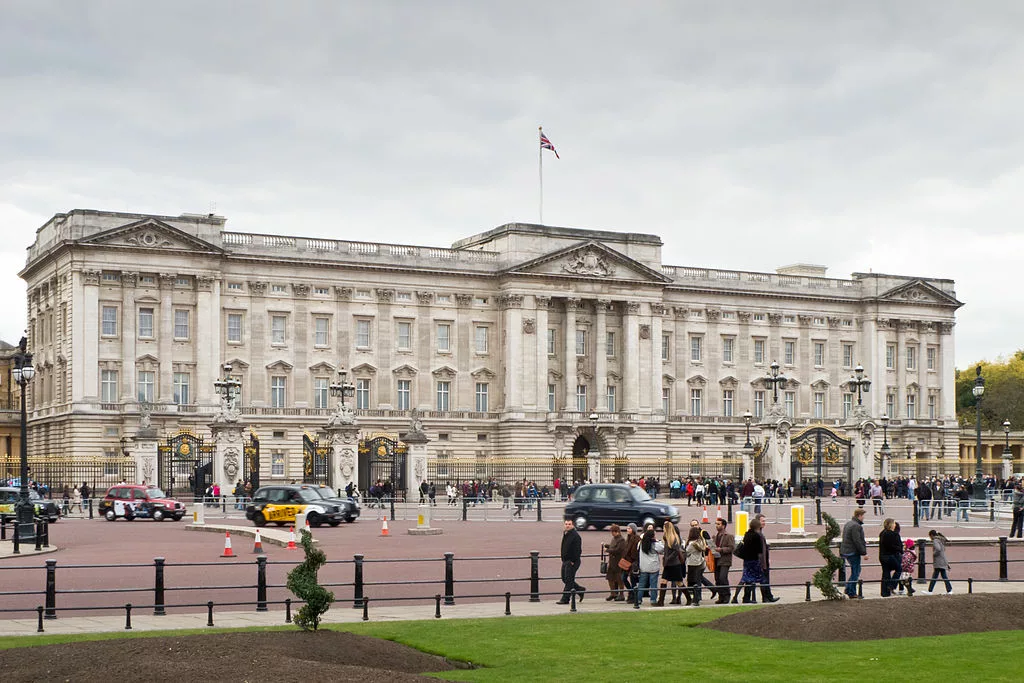
Buckingham Palace is the official residence of the King in London and also serves as the administrative headquarters of the monarchy.
Originally, it was “Buckingham House” built in 1703 for John Sheffield, Duke of Buckingham. King George III purchased this house in 1761 to serve as a private residence for Queen Charlotte.
The palace was largely expanded in the 19th century by architects John Nash and Edward Blore, notably during the reign of George IV. Since Queen Victoria’s accession in 1837, Buckingham has been officially the residence of the British monarchs in London.
The palace has 775 rooms: 19 state rooms, 52 royal and guest bedrooms, 188 staff rooms, 92 offices, and 78 bathrooms. It has 350 clocks and timepieces, wound weekly by two specialists.
London’s largest private garden is part of the palace: the Buckingham Gardens are vast and peaceful, with a central lake spanning several acres.
The Victoria Memorial, a monumental statue in front of the palace entrance, was erected in honor of Queen Victoria and was designed to be viewed from the east facade of the palace.
Big Ben / Elizabeth Tower
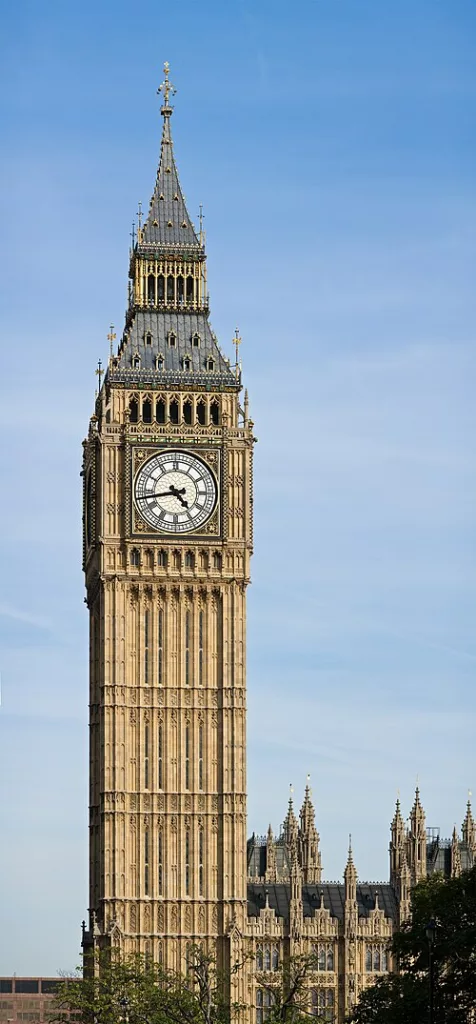
“Big Ben” is actually the nickname of the tower’s main bell, but the name is commonly used to refer to the entire clock tower.
The tower has been officially named Elizabeth Tower since 2012, in honor of Queen Elizabeth II’s Diamond Jubilee.
It reaches a height of 96 meters, equivalent to about 21 London buses stacked.
Each clock face measures 7 meters in diameter and is made of 312 opal glass pieces. The hands are enormous: the minute hand is 4.2 m and weighs around 100 kg, while the hour hand is 2.7 m.
Big Ben (the bell) weighs about 13.7 tons and its hammer strikes from the outside, without swinging the bell.
A light — called Ayrton Light — illuminates at the top of the tower when the British Parliament sits in the evening, visible from about sixty steps away from the bell tower.
Discover hidden elements on this tower with our Westminster scavenger hunt.
Despite its tourist appeal, Borough Market continues to supply top-tier restaurateurs: many London chefs still purchase products here. Wikipedia
Palace of Westminster
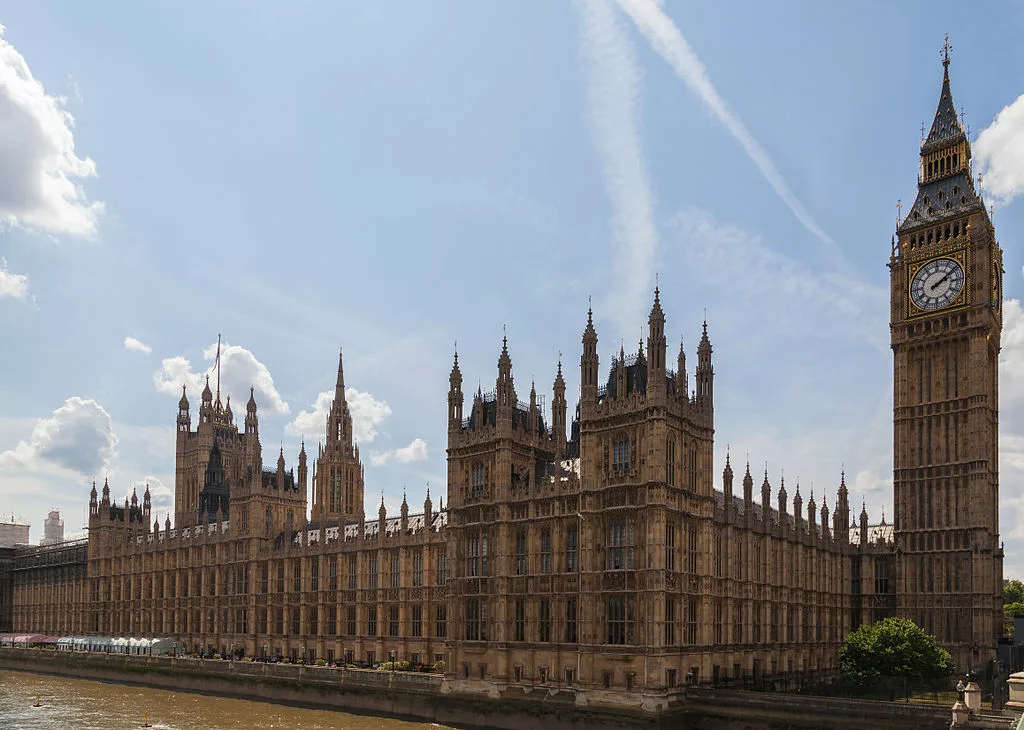
The Palace of Westminster is the seat of the United Kingdom Parliament, housing both the House of Commons and the House of Lords.
Located on the north bank of the Thames in the City of Westminster, its architecture is an icon of London’s skyline. Most of the current palace dates from the 19th century after a devastating fire in 1834 destroyed almost the entire building.
Only Westminster Hall, built in 1097, survived the fire: it is one of the oldest parts of the palace. Architects Charles Barry and Augustus Pugin designed the reconstruction in a highly detailed and symbolic neo-Gothic style.
The palace contains approximately 1,000 rooms, around a hundred staircases, and nearly 4.8 kilometers of corridors.
The Victoria Tower, one of the palace towers, contains copies of all laws passed since 1497: a true “living archive” of Parliament.
St Margaret’s Church, located next to the palace, serves as the official parish church for the House of Commons since the 17th century.
Discover how to know when the sovereign is present in this palace with our Westminster must-see tour.
Westminster Abbey
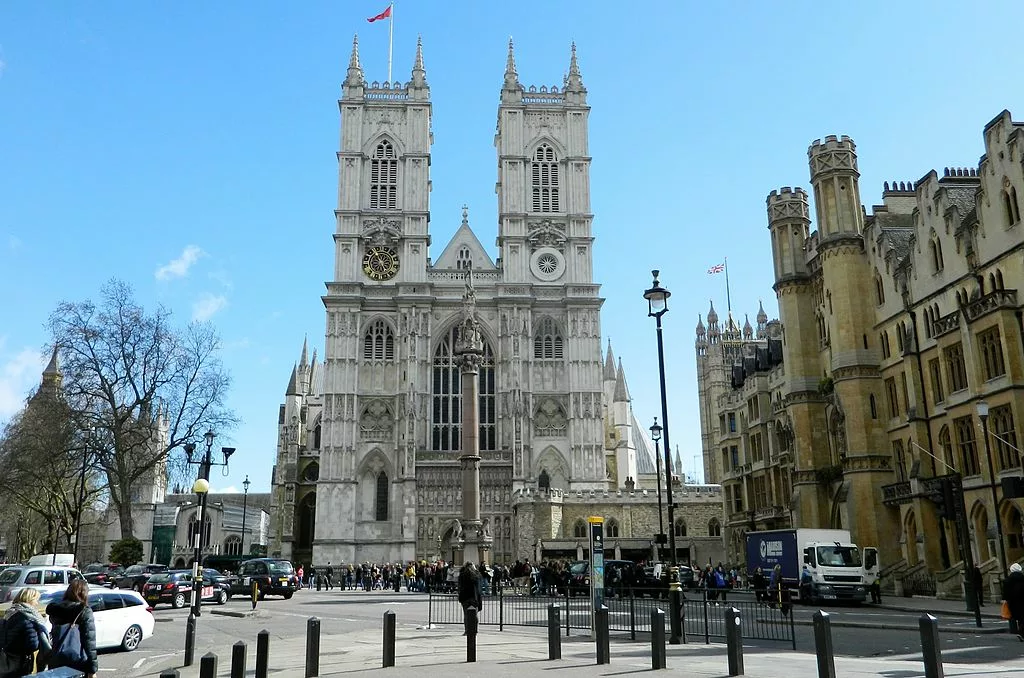
Westminster Abbey, officially the Collegiate Church of Saint Peter at Westminster, is located in Westminster, at the heart of London, right next to Parliament.
The current building dates from 1245 to 1269: it was rebuilt during the reign of Henry III in Gothic style.
Since 1066, almost all British monarchs have been crowned at Westminster Abbey — the historic coronation site of the monarchy. The Abbey is not a cathedral but a “Royal Peculiar”: meaning it is under the direct jurisdiction of the monarch, not a bishop.
Over 3,300 famous people are buried or commemorated here: kings, queens, poets, scientists… including Isaac Newton, Charles Dickens, and Jane Austen.
The Henry VII Chapel at the east end is famous for its fan vault and houses the tombs of several monarchs, including Henry VII and Elizabeth of York.
Poets’ Corner is one of the most moving areas: it contains monuments and graves of many famous writers, like Geoffrey Chaucer, Charles Dickens, and William Shakespeare (commemorated).
Discover the secrets of the statues of martyrs added to the façade with our Westminster must-see tour.
St Paul’s Cathedral
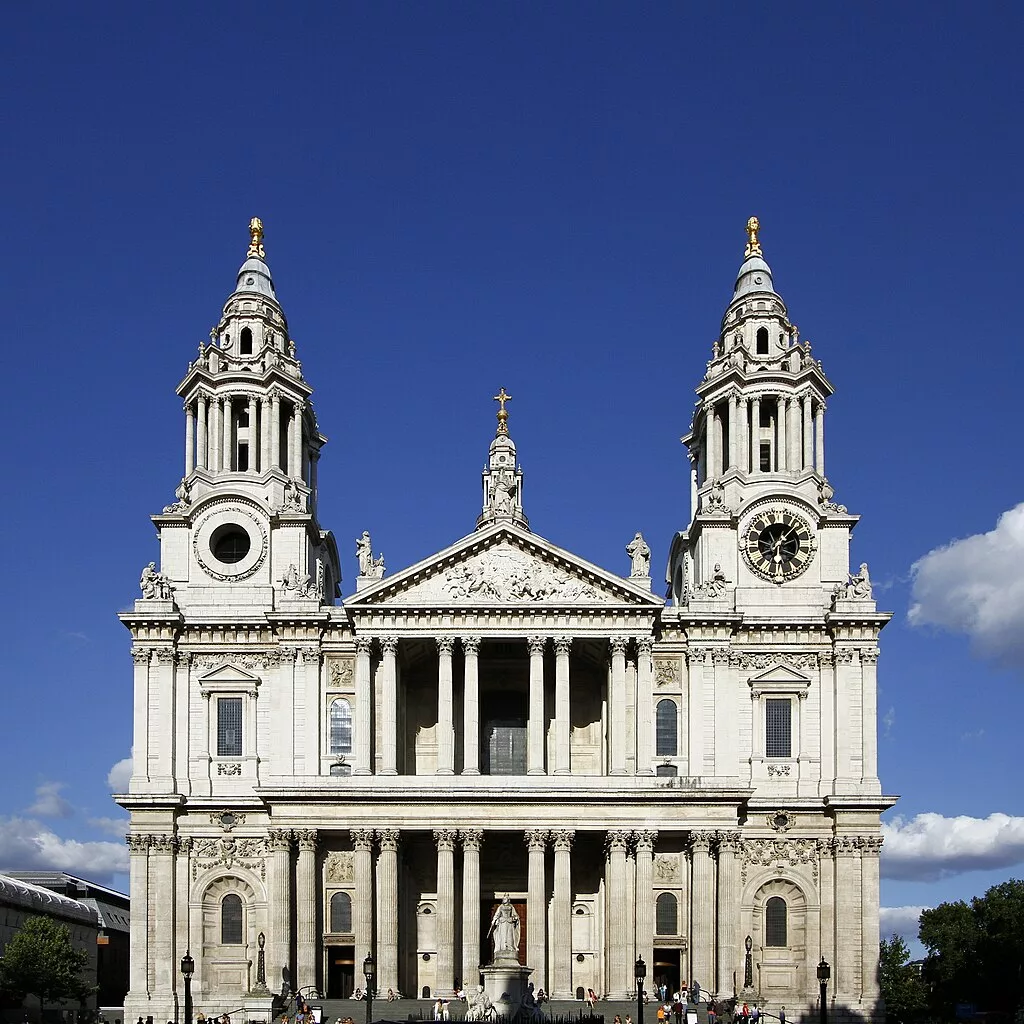
The current St Paul’s Cathedral is the fifth church built on this site, the previous one having been destroyed in the Great Fire of London in 1666.
It was designed by Sir Christopher Wren, and construction lasted from 1675 to 1710, 35 years in total.
The dome of St Paul’s, about 111 meters high, is composed of three interlocking layers: an outer dome, a brick cone support, and an inner dome.
Three galleries are open to visitors: the Whispering Gallery, the Stone Gallery, and the Golden Gallery, each offering a different view of London.
The Whispering Gallery is especially famous for its acoustics: a whisper can be heard clearly across the 30-meter span.
The cathedral’s architectural style is Baroque and classical, blending Renaissance influences with Roman basilicas, giving it a majestic and harmonious appearance.
During World War II, St Paul’s was targeted by the Luftwaffe but survived almost intact, becoming a symbol of London’s resilience.
In the crypt rest several famous figures: Admiral Nelson, the Duke of Wellington, and Christopher Wren himself.
The cathedral has hosted historic events: for example, the funeral of Winston Churchill and the wedding of Prince Charles and Lady Diana.
Royal Horse Guards
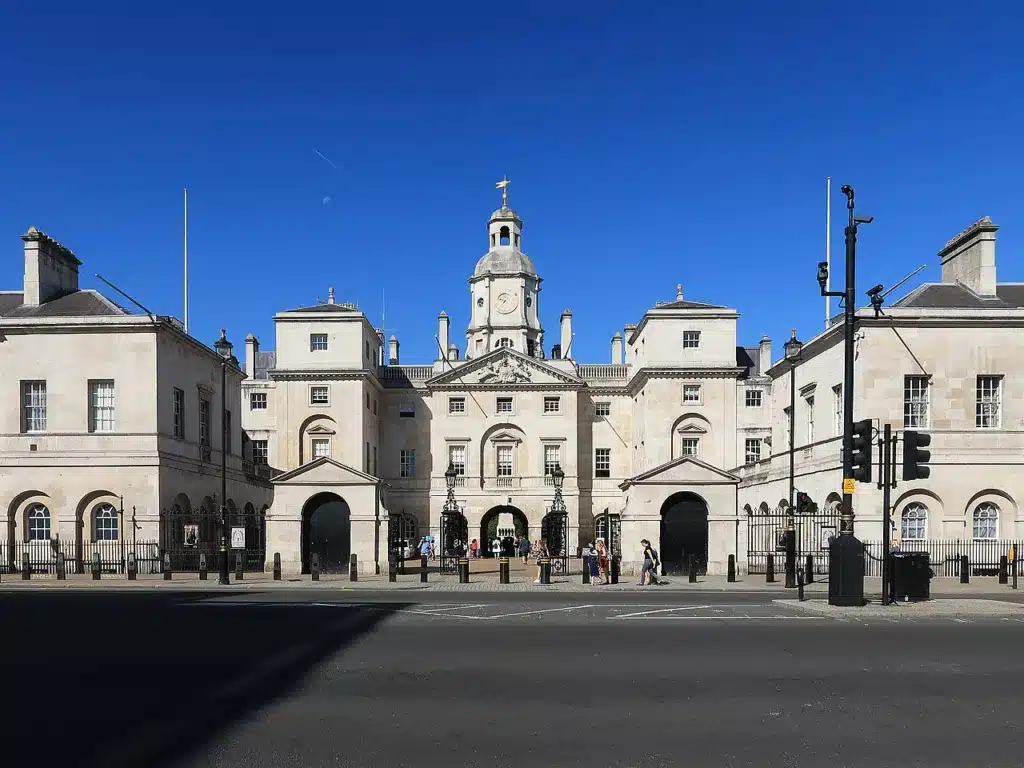
The Royal Horse Guards, nicknamed The Blues, were a British cavalry regiment formed in 1650 and active until 1969. They were part of the Household Cavalry, units responsible for protecting the monarch and ceremonial duties.
The regiment was initially raised by Sir Arthur Haselrig under Oliver Cromwell and later placed in royal service after the Restoration of Charles II in 1660. The name The Blues comes from the dark blue color of their uniforms.
In 1969, the Royal Horse Guards merged with 1st The Royal Dragoons to form the Blues and Royals. Units from the Royal Horse Guards continue today performing ceremonial duties such as mounted guards for the King in London (e.g., The King’s Life Guard).
Throughout history, the Royal Horse Guards served in military campaigns and royal guard missions, reinforcing their historical and ceremonial role in the British Army.
Discover the mystical animal on the façade of this building in our Westminster must-see tour.
King Charles Street Arch
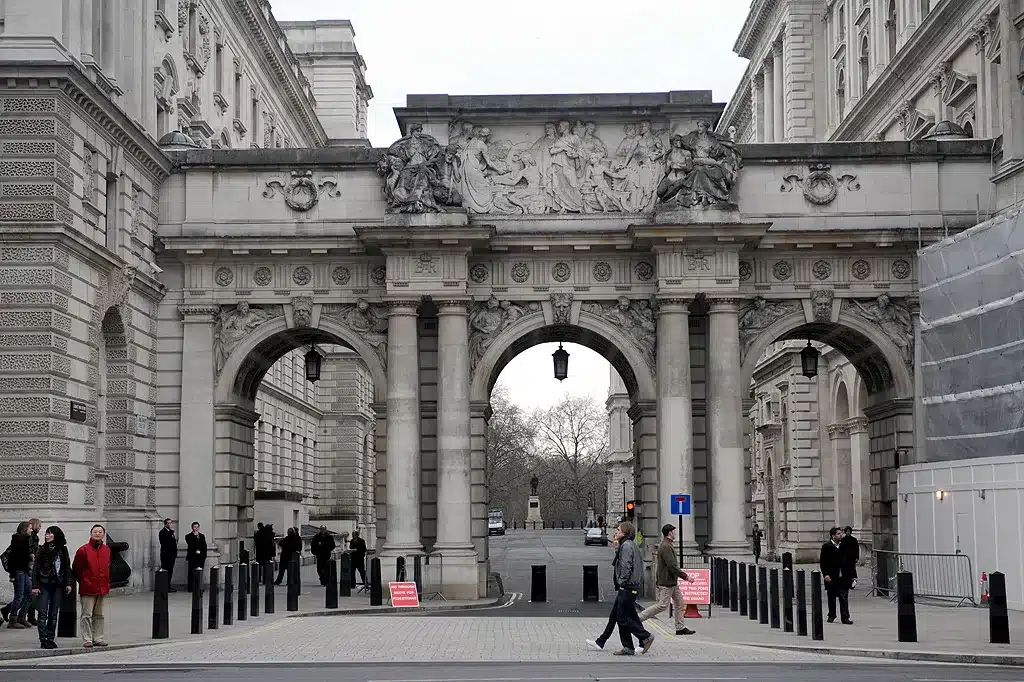
The King Charles Street Arch is a triple-arched architectural structure located at 100 Parliament Street, to the west of Parliament Street in the Whitehall area, central London. It was built in 1908 to connect government offices: the Treasury and the Foreign, Commonwealth and Development Office, forming a kind of covered bridge over King Charles Street.
On the archway are sculptures by William Silver Frith and Paul Raphael Montford, decorating various parts of the stone structure.
The passage marks the entrance to King Charles Street, a street named in honor of King Charles I that connects Whitehall to historic government offices.
Discover the meaning of the allegorical statues on this arch through our Westminster scavenger hunt.
Tower Bridge
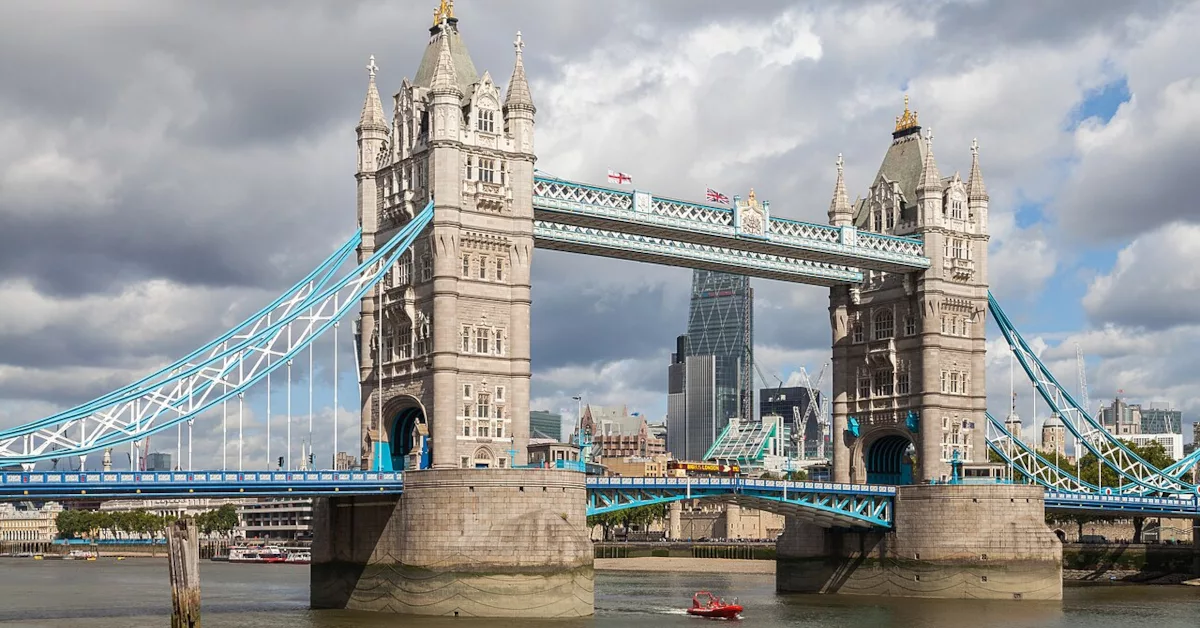
The Tower Bridge is an iconic London bridge, a combined bascule and suspension bridge, built between 1886 and 1894.
The two towers of the bridge, connected by two horizontal walkways, rise to about 61 meters above the River Thames.
The bridge can open (bascule): its “leaves” lift to allow ships to pass through, using a hydraulic mechanism. Originally, the lifting mechanism was powered by steam, but since the 1970s, it operates with an electro-hydraulic system.
Around 800 lifts of the bridge occur every year, according to the bridge management.
The Tower Bridge houses a tourist exhibition: visitors can explore the towers, the high-level walkways, and the old Victorian engine rooms. The bridge was painted red, white, and blue in 1977 to celebrate the Queen’s Silver Jubilee, while its original color was chocolate brown.
Admiralty Arch
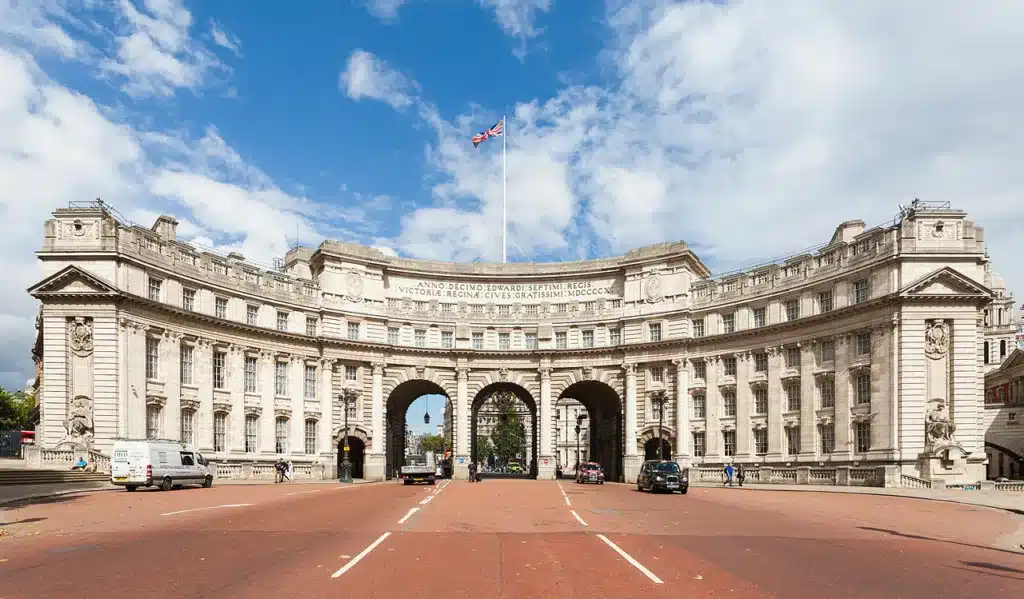
Admiralty Arch is a monumental triumphal arch in London, providing road and pedestrian access between Trafalgar Square and The Mall, the grand avenue leading to Buckingham Palace.
It was commissioned by King Edward VII in memory of his mother, Queen Victoria, and designed by architect Sir Aston Webb at the beginning of the 20th century. Construction was completed in 1912, and the building is now Grade I listed, meaning it has exceptional historical and architectural significance.
The arch has three main arches, with the central one only open for ceremonial occasions such as royal processions, while the side arches are used by vehicles and pedestrians. Originally, the building housed offices and residences for Royal Navy officers, including the First Sea Lord, and was used by the government until 2011.
Since the 2010s, the arch has been leased long-term and is undergoing restoration to transform it into a luxury hotel and private residences while preserving its historic structure.
Discover the secrets of the Latin inscription on this monument with our Westminster tour.
Highgate Cemetery
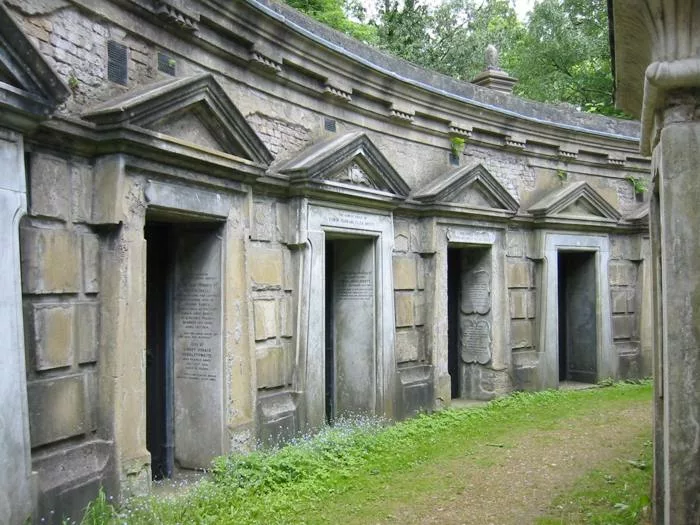
Highgate Cemetery opened in 1839 and is part of the “Magnificent Seven,” seven large Victorian cemeteries created around central London.
Designed by architect Stephen Geary, the cemetery addressed the need to relieve overcrowded and unsanitary urban graveyards. It is divided into two parts: the East, freely accessible, and the West, wilder and more mysterious, mainly visited through guided tours.
Nature has reclaimed the grounds: trees, bushes, and wildlife (foxes, birds, etc.) take over the paths, making the cemetery a true haven for biodiversity.
Among the most famous graves is that of Karl Marx, whose bronze monument was inaugurated in 1956.
The architectural style is strongly Victorian Gothic: visitors can admire mausoleums, Egyptian arches (“Egyptian Avenue”), and a circle of graves called the “Circle of Lebanon”, crowned by a large cedar of Lebanon.
There are many “supernatural” rumors: in the 1970s, stories of vampires even stirred public fascination, with media-covered exorcisms!
London Eye
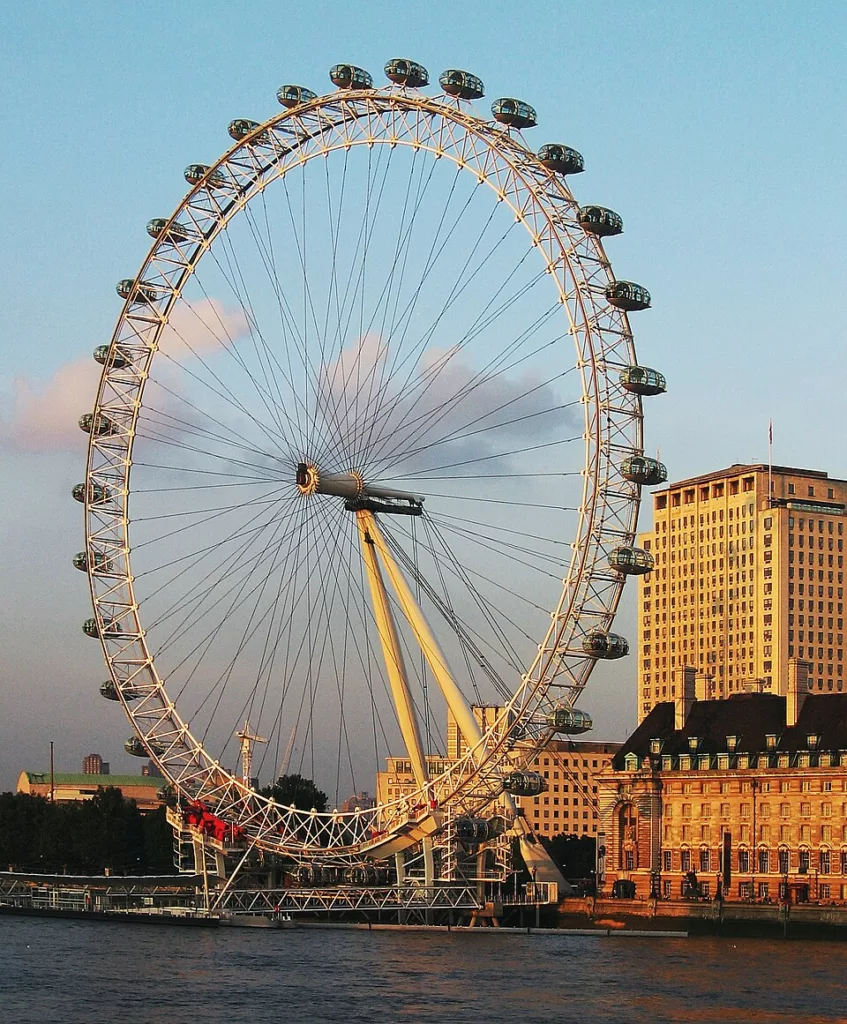
The London Eye, also called the “Millennium Wheel,” is a giant observation wheel located on the south bank of the Thames, between Westminster Bridge and Hungerford Bridge. It measures 135 meters high, with a diameter of 120 meters.
Originally intended to last only 5 years, its immense popularity made it permanent.
It has 32 capsules, each representing one of the 32 London boroughs (London boroughs represent the administrative divisions of the City of London, similar to “arrondissements” in Paris), but there is no number 13, due to “superstition.”
A full rotation takes approximately 30 minutes, and the wheel moves very slowly (~0.9 km/h), allowing visitors to board without stopping.
Each capsule can hold up to 25 people. From the London Eye, on a clear day, one can see up to 40 km around, including landmarks such as Windsor Castle.
Trafalgar Square
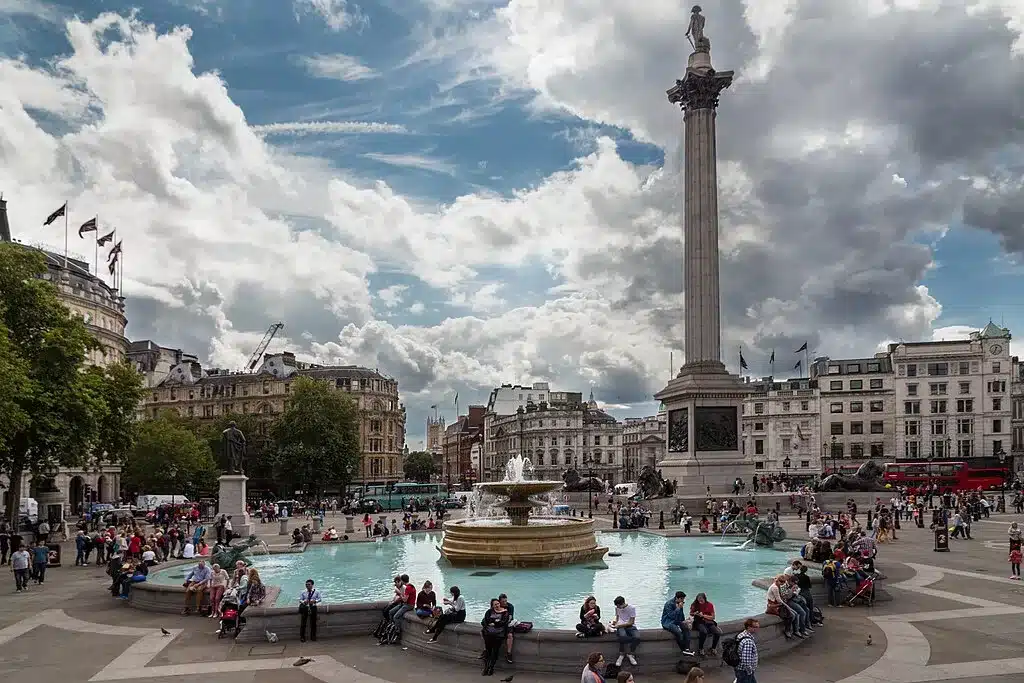
Trafalgar Square is a large public square located in the Westminster district, central London, named in honor of the Battle of Trafalgar (1805), where the British fleet achieved a decisive naval victory. Nelson’s Column, erected between 1840 and 1843, dominates the center of the square and bears a statue of Admiral Horatio Nelson, the hero of that battle.
At the base of the column are four large bronze lions, sculpted by Sir Edwin Landseer, designed as guardians of the monument. The square is lined with significant buildings, such as the National Gallery, as well as embassies and St Martin‑in‑the‑Fields church.
Since 1947, a Christmas tree gifted each year by the city of Oslo has been installed on Trafalgar Square as a sign of friendship between Norway and the United Kingdom. Trafalgar Square is a traditional site for public gatherings, demonstrations, and celebrations, serving as a space for civic expression.
Discover the secrets of the murals on Nelson’s Column and the history of the busts on this square with our Westminster scavenger hunt.
Famous Districts and Landmarks
Camden Town
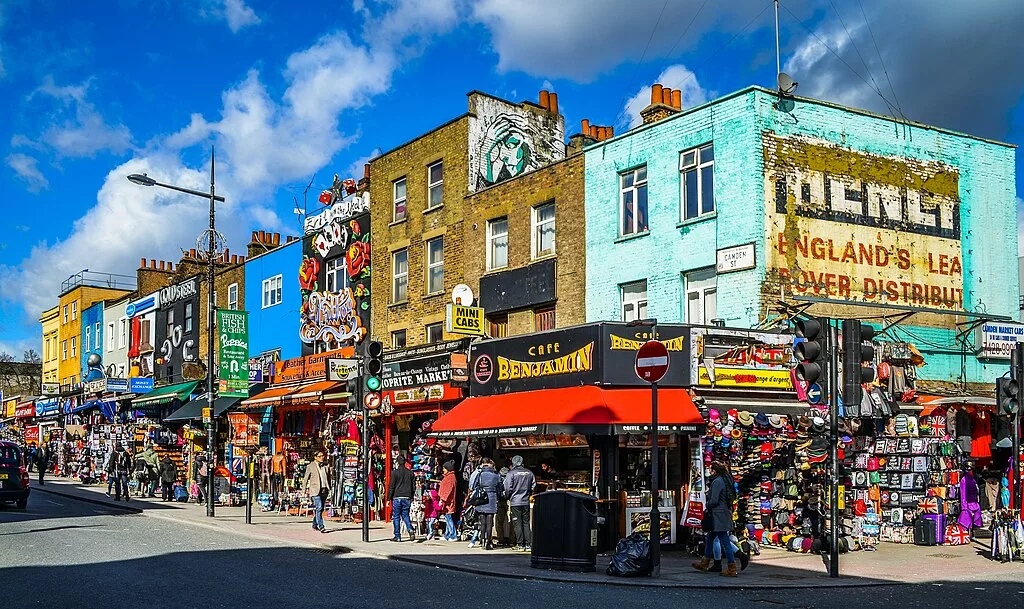
Camden Town is named after Charles Pratt, 1st Earl of Camden, and began developing in 1791 when he started granting leases for housing construction.
The area evolved with the Industrial Revolution: the Regent Canal runs through Camden, and the warehouses along the canal were very active in the 19th century.
The Camden Market, very famous, is not a single market but several interconnected markets (Camden Lock, Stables Market, Buck Street…), each with its own unique atmosphere.
The Stables Market is housed in former Victorian stables, giving the place a very authentic industrial charm.
Camden Town is known for its alternative spirit: you’ll find gothic shops, tattoo parlors, piercing studios, vintage clothing…
The area has a strong musical heritage: the Roundhouse, now a concert venue, was originally a railway turntable to rotate locomotives. One of Camden’s iconic figures is Amy Winehouse: a bronze statue of her stands in the Stables Market, with a Star of David pendant honoring her heritage.
Charles Dickens lived in Camden during his childhood, and the neighborhood inspired some of his works, such as Oliver Twist.
Harry Potter Studios
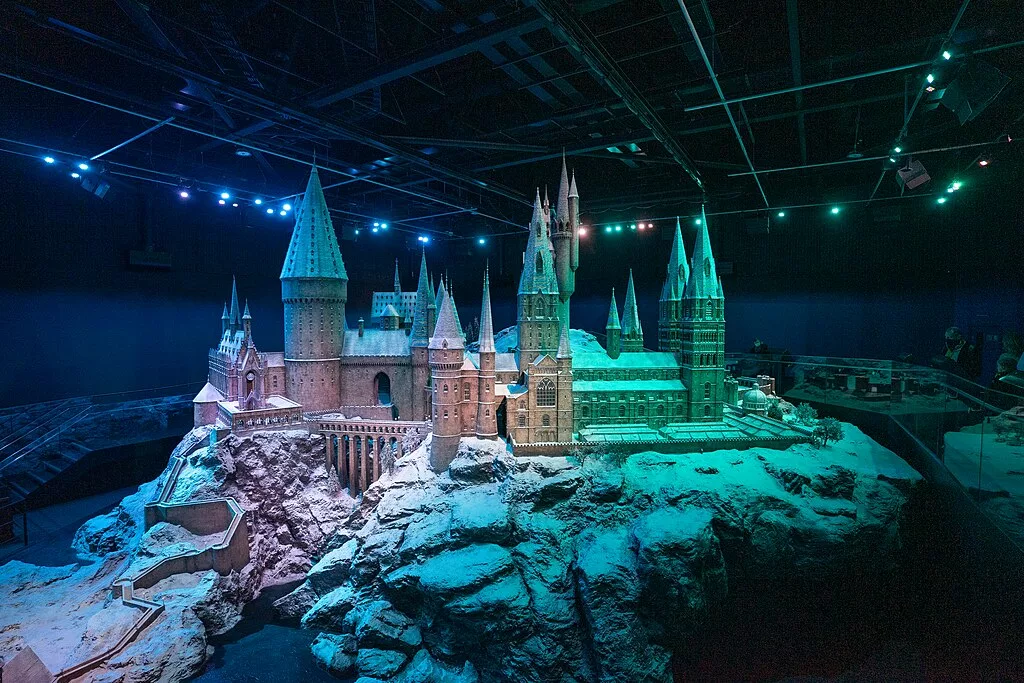
The Warner Bros Studio Tour London – The Making of Harry Potter is located in Leavesden, Hertfordshire, where all eight films were shot. The site opened to the public on March 31, 2012, after the filming of the saga.
Over 588 sets were built for the films in these studios, many of which are now on display during the tour. Visible sets include the Great Hall of Hogwarts, the Forbidden Forest, Platform 9¾, and the exterior of Diagon Alley.
The studio’s Great Hall is completely authentic: it features the long tables, the four house torches, and even Dumbledore’s lectern. The studio’s Forbidden Forest is enormous, with majestic trees; some sets stretch up to 180 meters long.
The studio offers an immersive shop with themed souvenirs: wands, clothing, sweets, and even plush Aragog spiders. During the tour, visitors can enjoy the famous Butterbeer in the outdoor set café for a truly magical experience.
Covent Garden
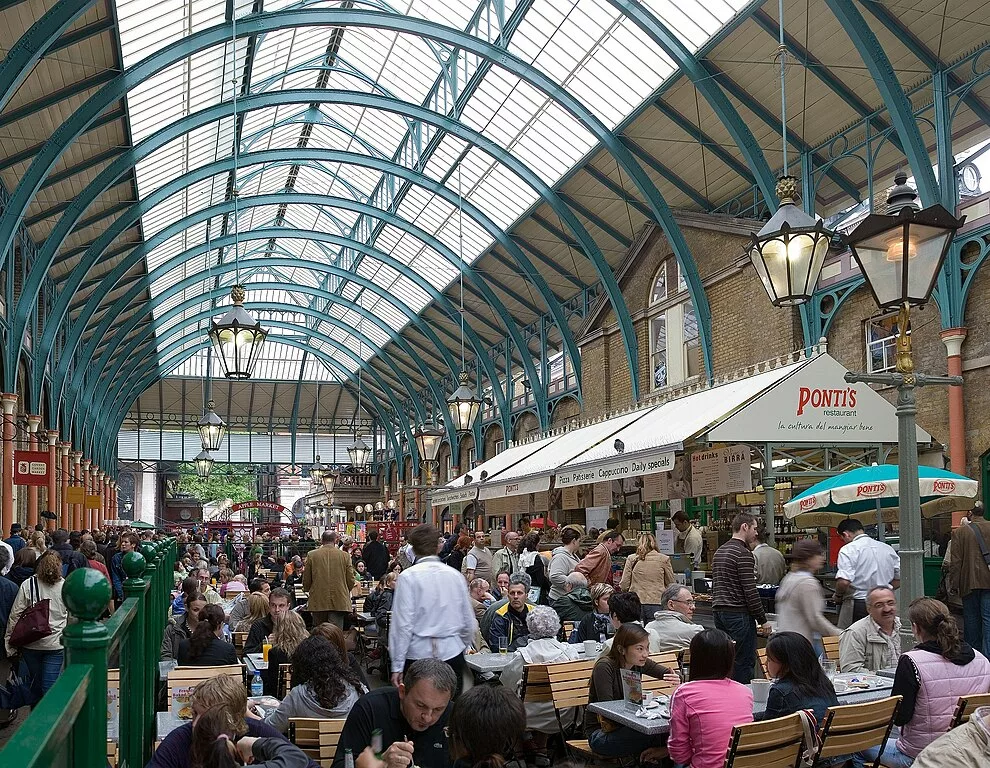
The name “Covent Garden” comes from “Convent Garden” because, in medieval times, Westminster Abbey owned a vegetable garden at this location.
From the 17th century, Covent Garden Square hosted a very lively fruit and vegetable market, which became one of London’s most important markets.
The iconic neoclassical market building, designed by architect Charles Fowler, dates from 1830. In 1974, the original market was moved to Nine Elms (“New Covent Garden Market”) due to traffic issues.
The market building was renovated and reopened in 1980 as a shopping center with cafés, shops, crafts, and the “Apple Market.”
Covent Garden is one of the few places in London where street performers are permanently allowed: you can see musicians, jugglers, acrobats…
The area has 13 theaters and over 60 pubs, creating a lively mix of culture, theater, and local life.
The famous Royal Opera House, home to the opera and ballet, is located in Covent Garden; it is one of the neighborhood’s cultural landmarks.
Piccadilly Circus
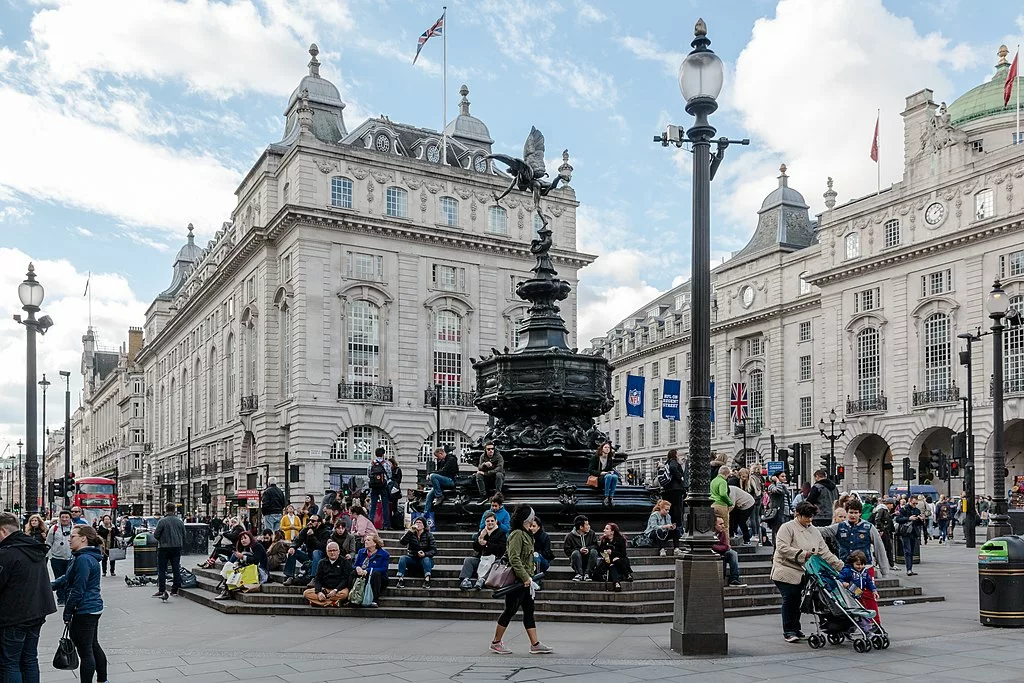
Piccadilly Circus is a very iconic intersection in London’s West End, created in 1819 to connect Regent Street with Piccadilly.
The word “Circus” does not refer to a performance circus but comes from Latin, meaning a “circular place” at a road junction. The name “Piccadilly” comes from a tailor named Robert Baker, who sold “piccadills” (a type of stiff collar) and lived on this street.
In the center of the square stands the Shaftesbury Memorial Fountain, topped by a winged statue often called “Eros,” although it is actually Anteros, symbol of Christian charity.
Since 1908, illuminated advertising panels have lit up the façades of Piccadilly Circus, making it somewhat London’s “Times Square.”
The famous neon signs have only been switched off on rare occasions: during World War II, at Winston Churchill’s funeral, and at Princess Diana’s funeral.
Over the decades, Piccadilly Circus has become a cultural meeting point: theaters (Shaftesbury Avenue), shopping (Regent Street), and a bustling nightlife.
Soho District
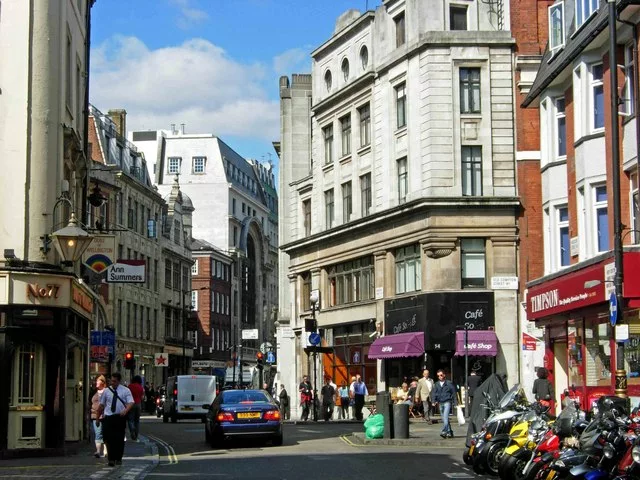
Soho is a central district in London’s West End, bordered by Oxford Street to the north, Piccadilly Circus to the south, Regent Street to the west, and Charing Cross Road to the east.
Its name comes from a hunting cry (“So‑ho!”) used during hunts in what was once a rural area.
From the 17th century, the area hosted a large community of French Protestant Huguenots, who built places of worship and deeply influenced its character. Soho was long considered a “red-light” district: until the 1970s, it had over 250 sex shops, illegal bars, and adult clubs.
It is also a historic center of the LGBTQ+ community: Old Compton Street is a pillar of London’s gay life, with bars, restaurants, and meeting places.
The district has been an artistic and intellectual hub: writers, painters, and poets, such as William Blake, lived on its streets.
Dean Street, a famous Soho street, hosted Karl Marx and Friedrich Engels; it was here that discussions for the Communist Manifesto took place in pubs.
Soho also hosts Chinatown, mainly around Gerrard Street, giving it a strong multicultural character and a wide variety of Asian restaurants.
Today, the area is a hotspot for gastronomy and nightlife: trendy restaurants, alternative bars, theaters, clubs, and vintage shops coexist.
During the 1854 cholera epidemic, Dr. John Snow identified a water pump in Soho as the source of the infection — a key moment in the history of epidemiology.
Borough Market
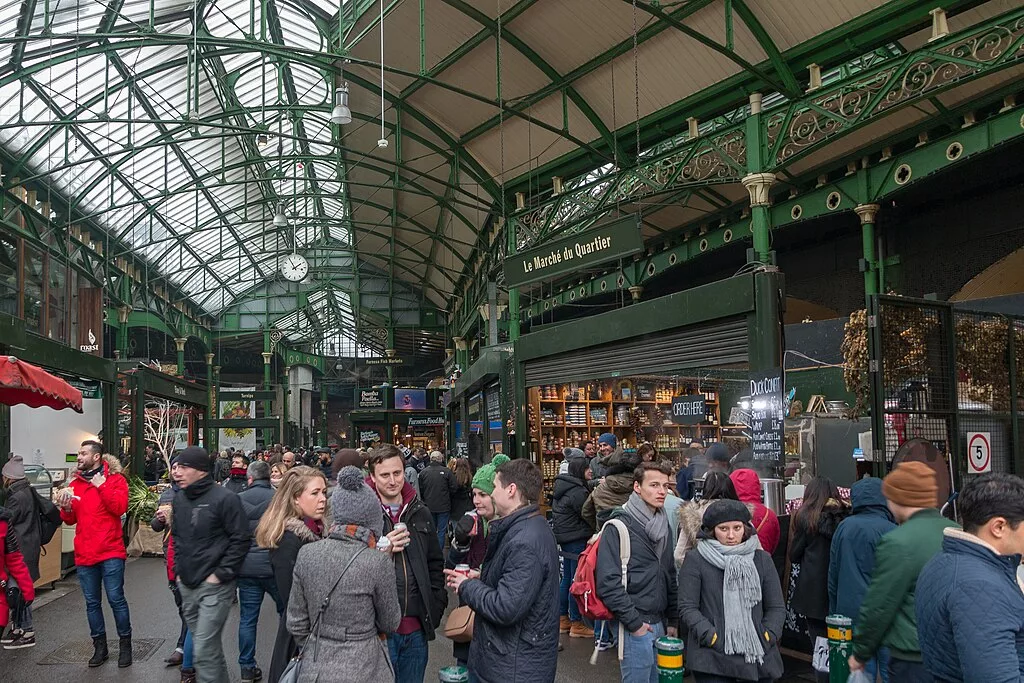
Borough Market is one of London’s oldest food markets: records of food trade date back to 1014, but it was formally mentioned as early as 1276.
It is located in the Southwark district, just south of London Bridge, in characteristic Victorian buildings.
The market still operates as a wholesale market very early in the morning (around 2 a.m. for professionals), but welcomes retail visitors several days a week. Today, it is famous for its street food and gourmet products: artisan cheeses, breads, charcuterie, spices, wines, and more.
Its architecture is a picturesque mix: railway arches, Victorian glass halls, and an Art Deco entrance added in the 1930s.
Despite its tourist appeal, Borough Market continues to supply high-end restaurants: many London chefs buy products here. Wikipedia
Borough Market has been featured in films: it appears in movies such as Harry Potter and Bridget Jones’s Diary.
Notting Hill
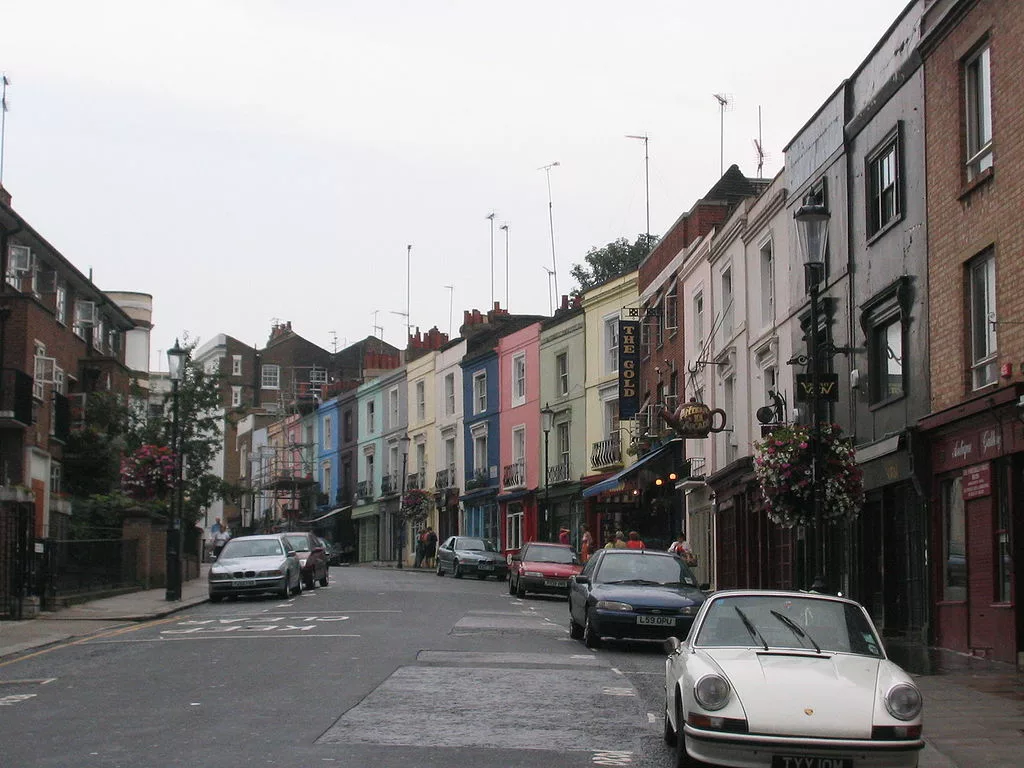
Notting Hill is a district in the Royal Borough of Kensington and Chelsea, in West London, blending bohemian charm with Victorian elegance.
It is famous for its colorful houses from the 19th century, now one of the area’s most Instagrammed symbols.
The Portobello Road Market in Notting Hill is well-known: on Saturdays, it transforms into a lively antiques market with vintage clothing, furniture, and food stalls.
The area has a complex history: in the 1950s-60s, rents were very low, attracting immigrant communities, notably from the Caribbean, but also racial tensions like the 1958 riots.
With gentrification, Notting Hill has become one of the most desirable and expensive areas in London, attracting artists, creatives, and affluent families.
Street art galleries are hidden in the area: urban artworks, sometimes signed by artists such as Banksy, can be discovered along Portobello Road.
Notting Hill became famous in cinema, notably with the film “Notting Hill” (1999) starring Julia Roberts and Hugh Grant — some façades from the movie have become iconic spots to visit.
Museums & Culture – London
The British Museum
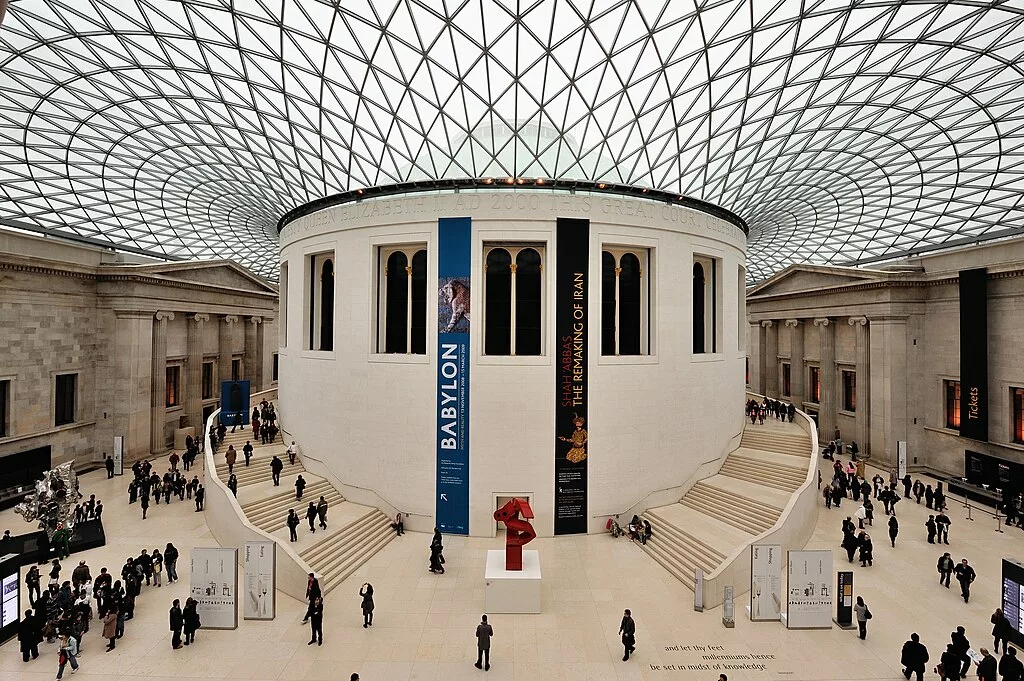
The British Museum was founded in 1753, based on the collection of physicist Sir Hans Sloane, and opened to the public in 1759 — it was the first major national public museum with free admission.
Its collection now includes around 8 million objects, though less than 1% are permanently displayed. The main building, designed by architect Sir Robert Smirke, is Neo‑Greek style: its façade features 43 imposing Ionic columns.
One of the museum’s most famous pieces is the Rosetta Stone, which allowed the deciphering of Egyptian hieroglyphs. Another iconic treasure is the Parthenon Marbles (Elgin Marbles) from the Parthenon in Athens — their presence in the museum is often controversial.
At the center of the museum is the “Great Court”, a large courtyard covered by a glass roof designed by Norman Foster, inaugurated in 2000.
The Enlightenment Gallery, formerly King George III’s library, showcases the spirit of the Enlightenment and the origins of the museum’s collections. The museum houses artifacts from around the world: Mesopotamia, Africa, Asia, and the Americas, reflecting the diversity of human civilizations.
The National Gallery
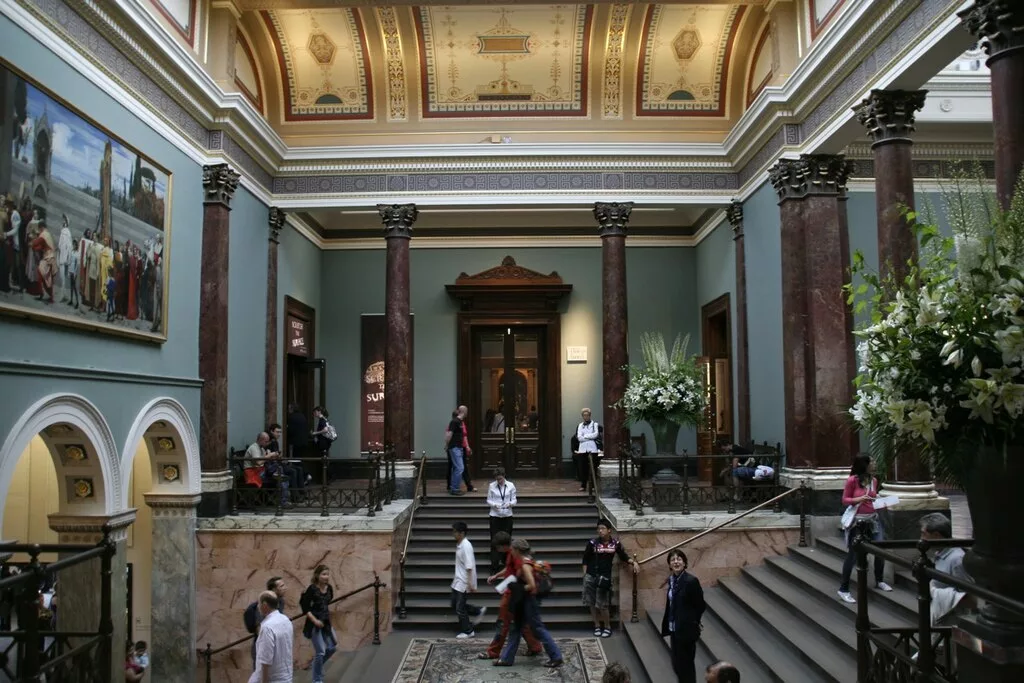
The National Gallery is located on the iconic Trafalgar Square in the heart of London. It was founded in 1824 when the British government purchased 38 paintings from John Julius Angerstein’s private collection.
The current building, designed by architect William Wilkins, was constructed from 1832 and opened to the public in 1838.
The permanent collection includes over 2,300 paintings, covering the period from the 13th century to around 1900. Masterpieces include Van Gogh’s Sunflowers, Velázquez’s Venus at her Mirror, and van Eyck’s Arnolfini Portrait.
The museum does not display sculptures or decorative arts: it is entirely dedicated to painting. Admission to the permanent collection is free, making it accessible to all visitors.
Tate Modern
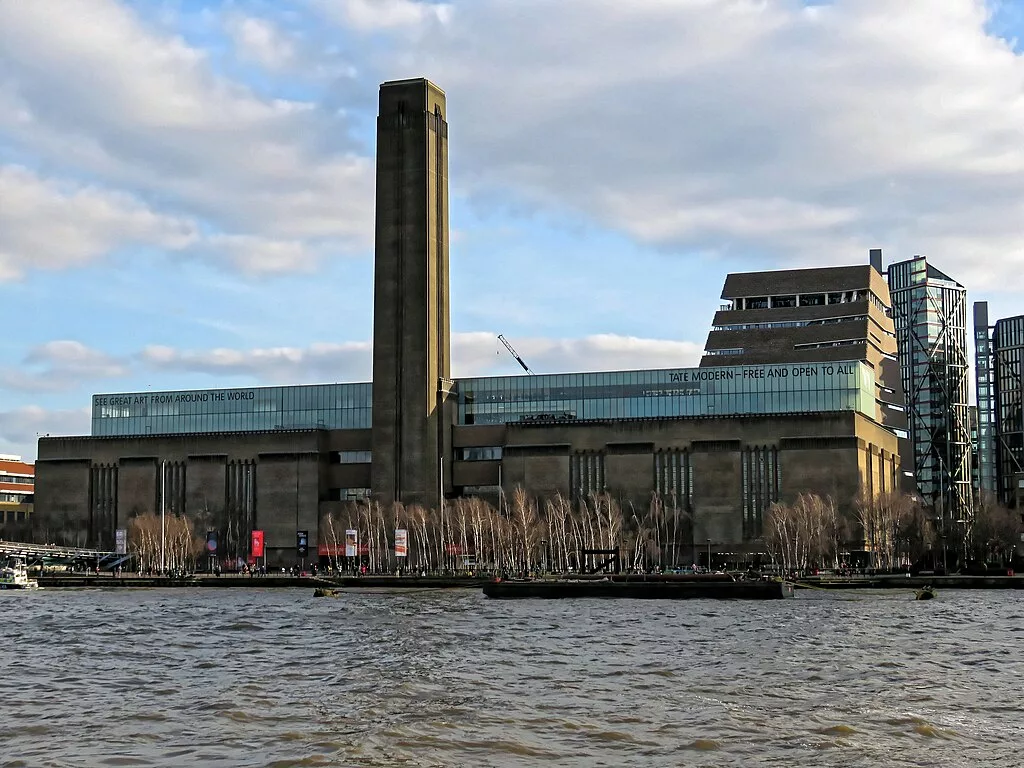
The Tate Modern is housed in the former Bankside Power Station, designed by Sir Giles Gilbert Scott between 1947 and 1963.
It reopened as a modern art museum on 11 May 2000, after a transformation by Swiss architects Herzog & de Meuron.
The Turbine Hall, the former engine room, remains an iconic space: vast and high-ceilinged, hosting monumental works and spectacular temporary installations.
Tate Modern houses one of the world’s most significant collections of modern and contemporary art, including works by Picasso, Matisse, Rothko, Warhol… Admission to the permanent collection is free, though some temporary exhibitions require a ticket.
In 2016, the museum expanded with a new wing called the Blavatnik Building (formerly “Switch House”), also designed by Herzog & de Meuron, providing additional exhibition spaces.
The building retains its industrial character: a 99 m chimney, massive brickwork, and original elements such as the Turbine Hall cranes have been preserved.
Natural History Museum
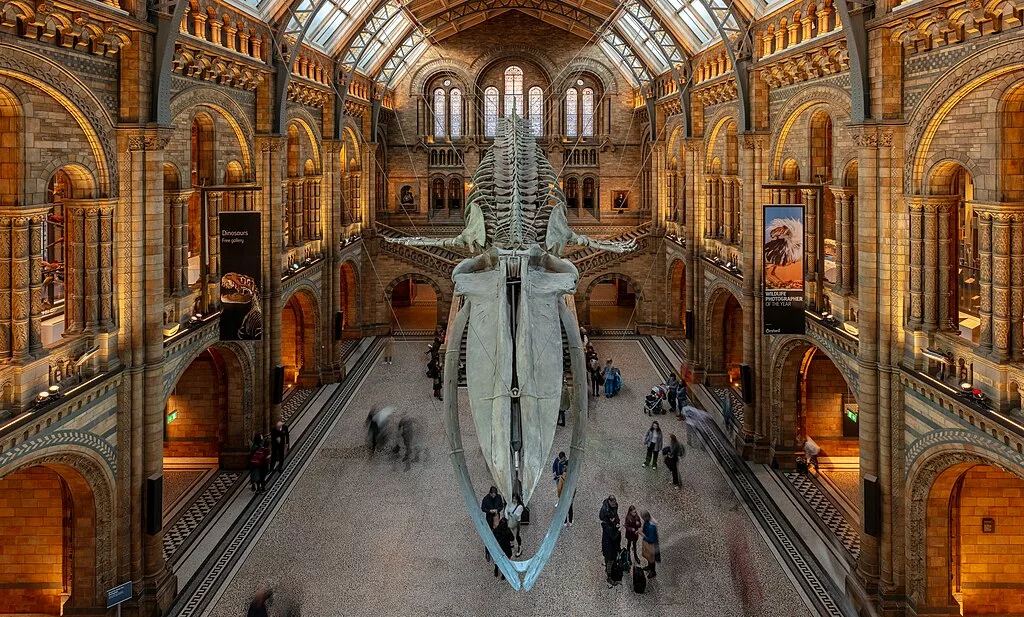
The Natural History Museum in London opened on 18 April 1881, after several years of construction between 1873 and 1880.
Its initial collection came from Sir Hans Sloane, whose bequest of over 71,000 objects was acquired by the British Parliament.
The main building, designed by architect Alfred Waterhouse, is Neo-Romanesque style, with terracotta bricks designed to withstand Victorian pollution. Sculpted reliefs on the museum façade depict both living and extinct species, including fossils.
The central entrance hall (Hintze Hall) was renovated in 2017: the diplodocus skeleton that previously stood there was replaced by a blue whale named “Hope.”
The museum houses over 70 million specimens across five main collections: botany, entomology, mineralogy, paleontology, and zoology. A notable part of the museum is the Darwin Centre, containing insect and plant collections as well as research labs open to the public.
The museum now features an “Evolution Garden”: a five-acre garden showcasing Earth’s geological history with rocks billions of years old. Admission to the museum is free, though some temporary exhibitions may require a ticket.
The museum building is sometimes called the “Cathedral of Nature” due to its spectacular Gothic/Neo-Romanesque architecture combined with animal motifs.
Victoria & Albert Museum
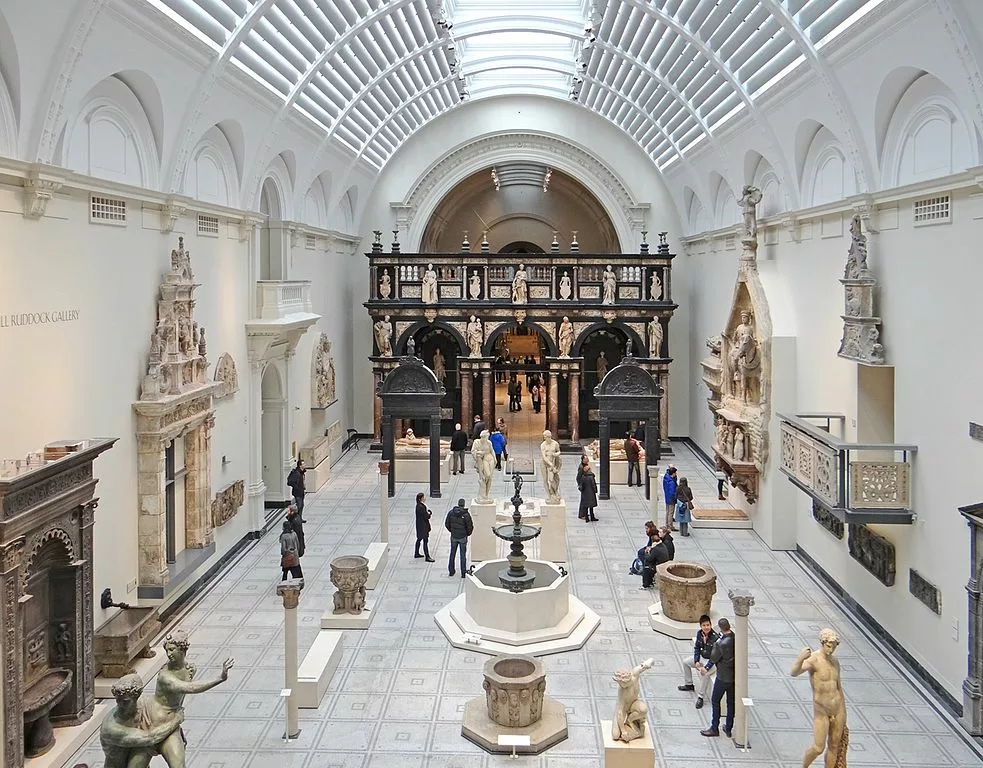
The Victoria and Albert Museum (commonly abbreviated V&A) is the world’s largest museum dedicated to decorative arts and design.
It was founded in 1852 as the “Museum of Manufactures” and renamed “Victoria & Albert” in 1899 in honor of Queen Victoria and Prince Albert.
The main building is located in South Kensington on Cromwell Road, in a culturally dense area alongside the Science Museum and Natural History Museum.
The V&A holds a massive collection: around 2.8 million objects in 145 galleries, covering 5,000 years of creativity: furniture, jewelry, textiles, ceramics, sculptures, drawings, fashion, and more.
Highlights include Chinese porcelain, jades, Indian sculptures, modern fashion creations, and historical furniture.
In May 2025, the museum opened a new branch, the V&A East Storehouse, in East London: an interactive space where visitors can view and even handle some stored objects. Up to five items can be “reserved” in advance for close examination with gloves, providing a highly immersive experience.
Admission to the permanent collections is free, making it accessible to everyone.
Parks, Gardens & Walks – London
Hyde Park
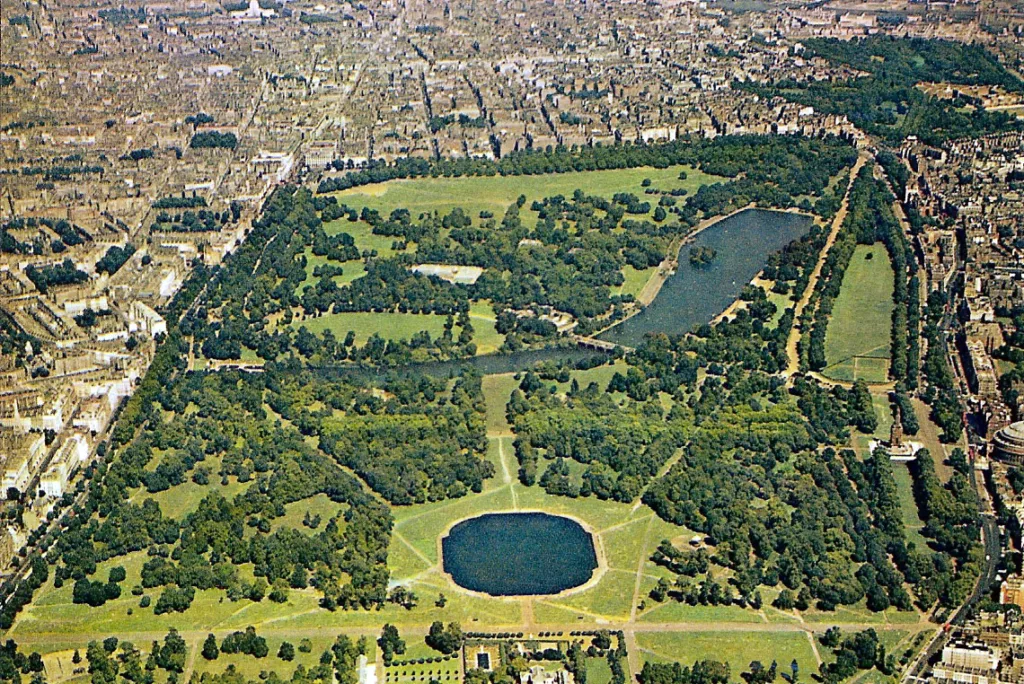
Hyde Park is one of the most famous royal parks in London, covering around 350 acres in the heart of the city.
Originally, this land belonged to Westminster Abbey; it was acquired by Henry VIII in 1536 to become a royal hunting ground. The park was opened to the public as early as 1637 under Charles I, making it one of the oldest public green spaces in London.
At the center of the park, the Serpentine Lake was created in the 18th century by Queen Caroline: its winding shape makes it a symbol of the park. Rotten Row, a historic avenue, was once the “King’s Road”: a popular horseback riding path for the nobility.
Hyde Park is a key place for freedom of expression thanks to the famous Speaker’s Corner, where speakers gather every Sunday.
The park houses a Holocaust Memorial, inaugurated in 1983, honoring Jewish victims in a sober and moving setting. Major music events also take place: in summer, concerts such as the British Summer Time Festival enliven the park.
Every winter, Hyde Park transforms into Winter Wonderland, a giant fairground with a Christmas market, ice rink, and attractions.
Regent’s Park and Primrose Hill
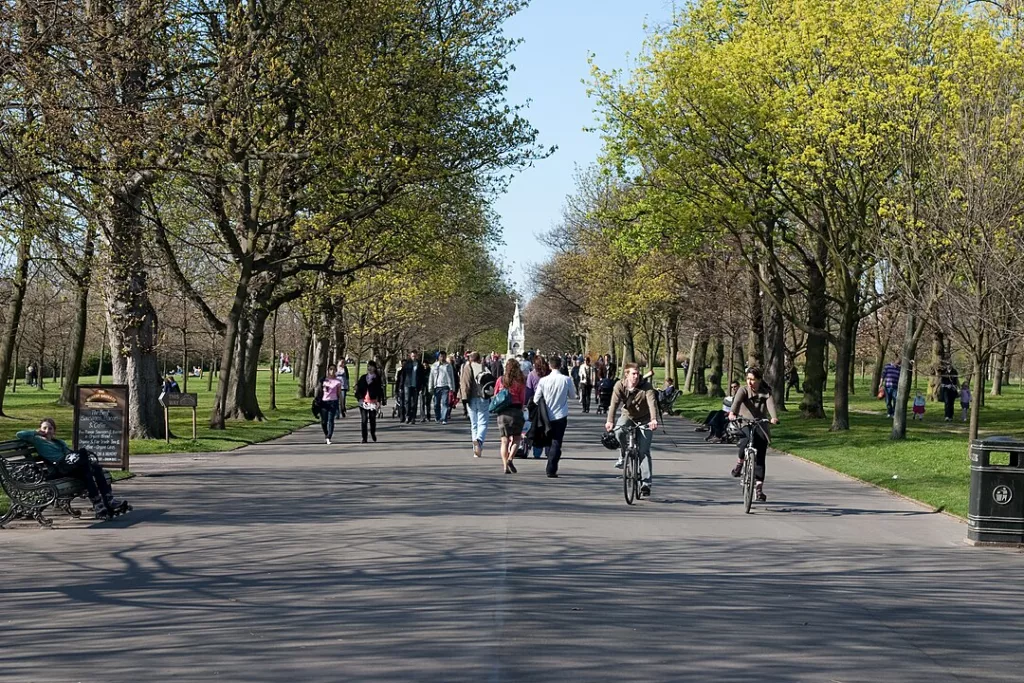
Regent’s Park, designed by architect John Nash in the early 19th century, is a perfect example of Regency elegance set in a green oasis in the heart of London.
With its 472 acres, the park combines formal gardens, large lawns, wooded areas, streams, and wild meadows that encourage biodiversity.
The park is home to the ZSL London Zoo, the world’s oldest scientific zoo — a must-visit for families and animal lovers. In the Queen Mary’s Gardens, visitors can admire up to 12,000 rose bushes when in full bloom: a striking visual and olfactory display in summer.
Regent’s Park contains several monuments: among them, the Ready Money Fountain, funded by an Indian industrialist, and the Triton Fountain, surrounded by mythological sculptures.
The park’s Open Air Theatre is the oldest professional outdoor theatre in the UK, offering plays, comedy, and music performances every summer.
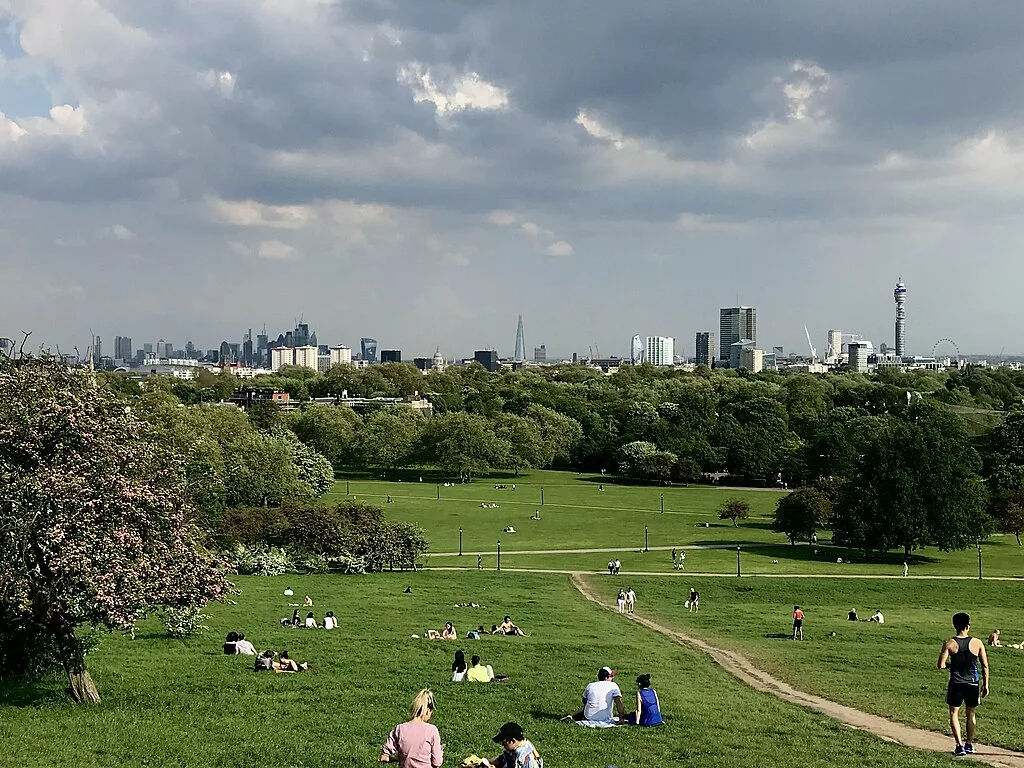
Primrose Hill, adjacent to the park, is a natural hill 64 meters high, one of the highest points in London, offering spectacular panoramic views of the skyline. The name “Primrose Hill” comes from the primroses that once grew on its slopes, reflecting its bucolic origins.
Primrose Hill features a commemorative monument to Iolo Morganwg, a Welsh poet, placed on the hill’s slopes: a small cultural tribute in this green space.
Kew Gardens
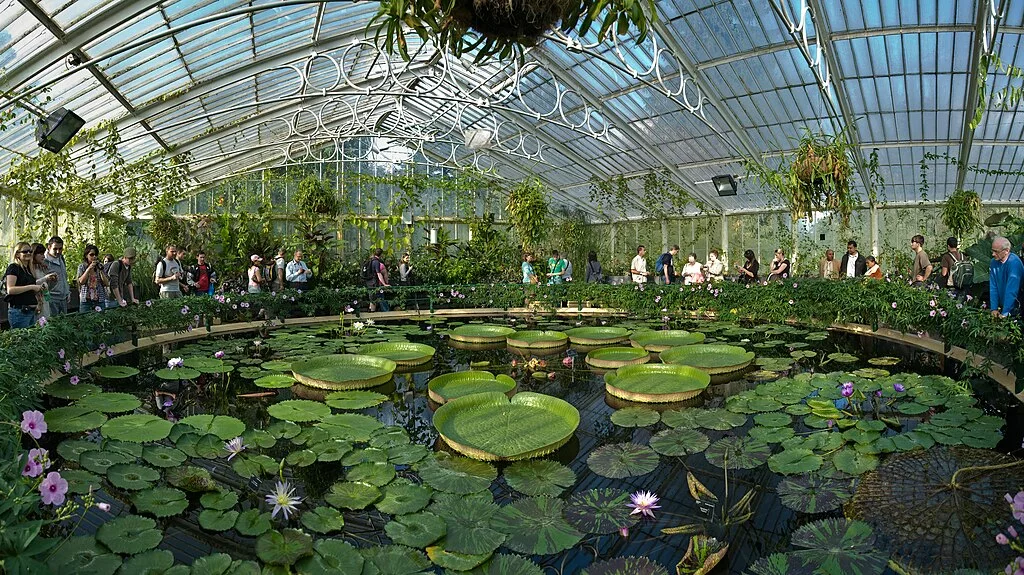
Kew Gardens (Royal Botanic Gardens, Kew) cover around 132 hectares in the Borough of Richmond upon Thames, London. Founded in 1759 by Princess Augusta, mother of King George III, the gardens have become a world-renowned botanical center.
Kew is home to over 50,000 living plant species, making it one of the most diverse plant collections in the world.
Notable structures include the Palm House, a Victorian wrought iron greenhouse, and the Temperate House, the largest greenhouse of its type in the world. The famous Great Pagoda, built in 1762 by William Chambers, adds a Chinese touch to the gardens.
Beneath the greenhouses lie old railway tunnels, vestiges of a surprising industrial past. Kew plays a key role in conservation: its researchers manage one of the largest seed banks in the world (Millennium Seed Bank) to safeguard biodiversity.
The Kew museum and herbarium contain millions of preserved botanical specimens and a library of hundreds of thousands of volumes. The Japanese Garden at Kew, with its pond, lanterns, and cherry trees, is a peaceful retreat, especially in spring.
Walk along the Thames
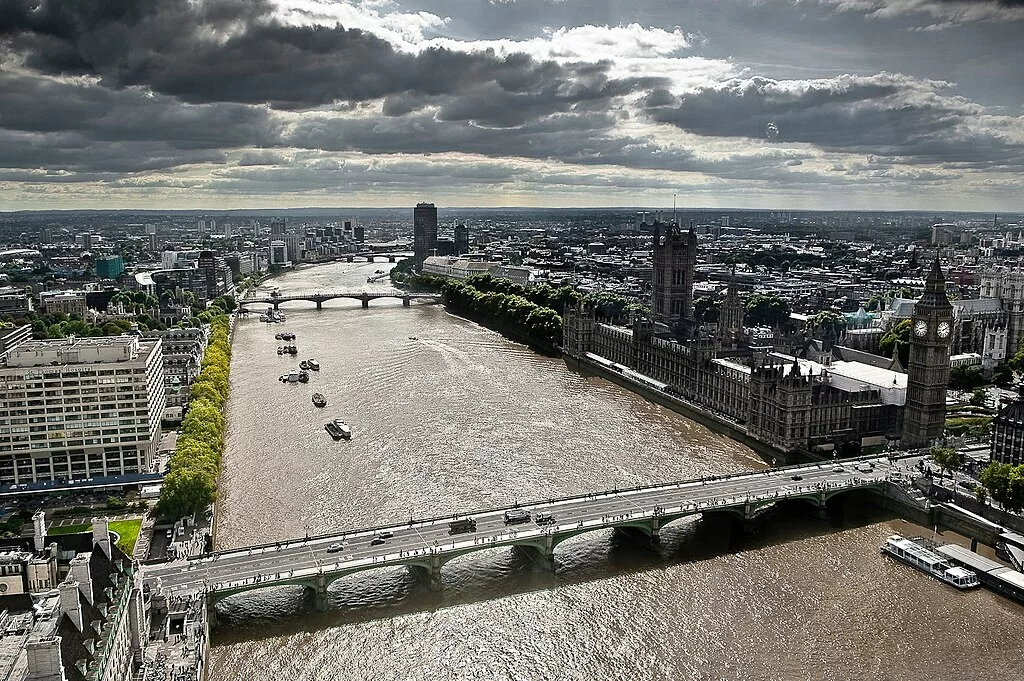
The Thames Embankments offer an iconic stroll through the heart of London, connecting numerous historic and cultural landmarks.
The South Bank is particularly lively, with cafés, restaurants, art galleries, and street performances. Iconic buildings such as the London Eye, Tate Modern, and Shakespeare’s Globe can be admired from the embankment.
The North Bank offers views of the Palace of Westminster, Big Ben, and Westminster Bridge in all their splendor.
The Thames Embankments are historic sites: they served as ports and commercial areas since the Middle Ages.
The Thames Path, a walking trail along the river, passes through the embankments and allows long walks or runs along the water.
Some bridges, like the Millennium Bridge or the Tower Bridge, provide spectacular views of the city and river.
At night, the embankments transform into a magical place: illuminated monuments and bridges reflect on the water, creating a romantic and photogenic atmosphere.
London Cuisine
Fish & Chips

Fish & Chips is a dish consisting of white fish fillet fried in a light, crispy batter, accompanied by French fries. It is usually served with traditional sides like mashed peas, tartar sauce, salt, and malt vinegar.
This iconic British dish traces its origins to the Sephardic Jewish traditions of Portugal and Spain, who cooked fried fish. The Jewish immigrant Joseph Malin is often credited with opening one of London’s first “chippies” around 1860, serving fried fish with fries.
Fish & Chips played a symbolic role during both World Wars: it was exempt from rationing and became a dish of national resilience. The famous restaurant Poppies Fish & Chips, founded in 1952, embodies the traditional British style with classic recipes and a retro atmosphere.
Pies and Pastries
Pies (savory pastries) are a traditional British dish, often filled with meat, chicken, fish, or vegetables, sometimes served with gravy.
The steak and kidney pie is one of London and England’s most iconic pies, combining steak, kidney, and golden puff pastry.
The Cornish pasties, originally from Cornwall, are also popular in London: traditionally filled with beef, potatoes, swede, and onions.
British pastry also includes sweet classics like Eccles cake, Chelsea bun, and Bakewell tart, highly appreciated in London cafés.
English Tea

English tea, or afternoon tea, is a British tradition dating back to the early 19th century, popularized by Anna, Duchess of Bedford. It usually takes place between 3 PM and 5 PM and consists of a gourmet break combining tea, sandwiches, scones, and pastries.
The English sandwiches served during tea are often filled with cucumber, smoked salmon, egg, or ham, with crustless white bread. The scones, a must-try specialty, are served warm with clotted cream and strawberry jam. Pastries and small cakes (cakes, tarts, macarons) complete the tasting and showcase the richness of London cuisine.
Tea can be served in various varieties: Earl Grey, Darjeeling, Assam, depending on guests’ preferences and British tradition.
The tea ritual also includes presentation: tiered trays, fine china, and careful decoration, creating a complete culinary experience.
English tea is not just a drink: it has become a symbol of hospitality and refinement, often associated with social or family moments.
Major Events – London
Notting Hill Carnival
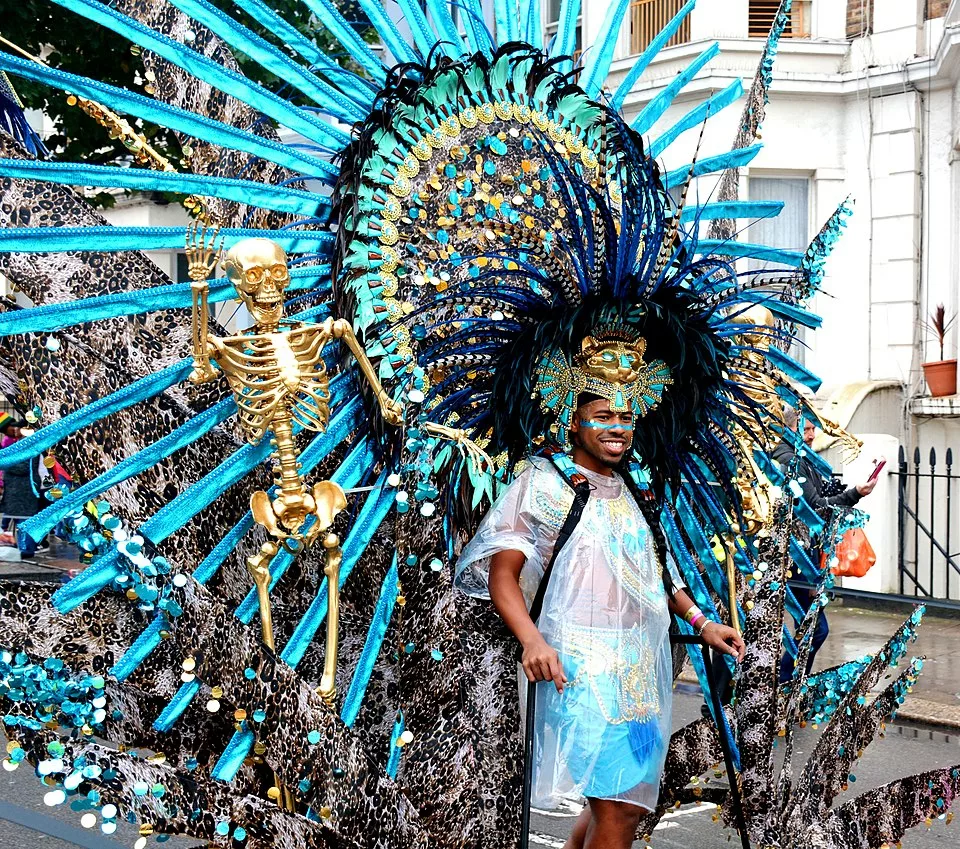
The Notting Hill Carnival is the largest street festival in Europe, celebrated every year in London on the last weekend of August. It was created in 1966 by the Caribbean community in London to celebrate Afro-Caribbean culture and combat racism and social tensions.
The carnival attracts over a million participants each year, both tourists and Londoners. The colorful parade floats are accompanied by Caribbean music such as calypso, soca, and reggae. Participants wear elaborate costumes decorated with feathers, beads, and sequins, often crafted throughout the year for the event.
The carnival cuisine highlights Caribbean specialties: jerk chicken, roti, patties, and tropical drinks. The carnival mainly takes place in Notting Hill, West London, along Westbourne Park Road and Ladbroke Grove. (visitlondon.com)
The sound systems on the floats blast music at full volume, creating a festive and immersive atmosphere. The carnival is an opportunity to dance in the streets, with percussion groups, steel bands, and samba dancers. (bbc.com)
Trooping the Colour
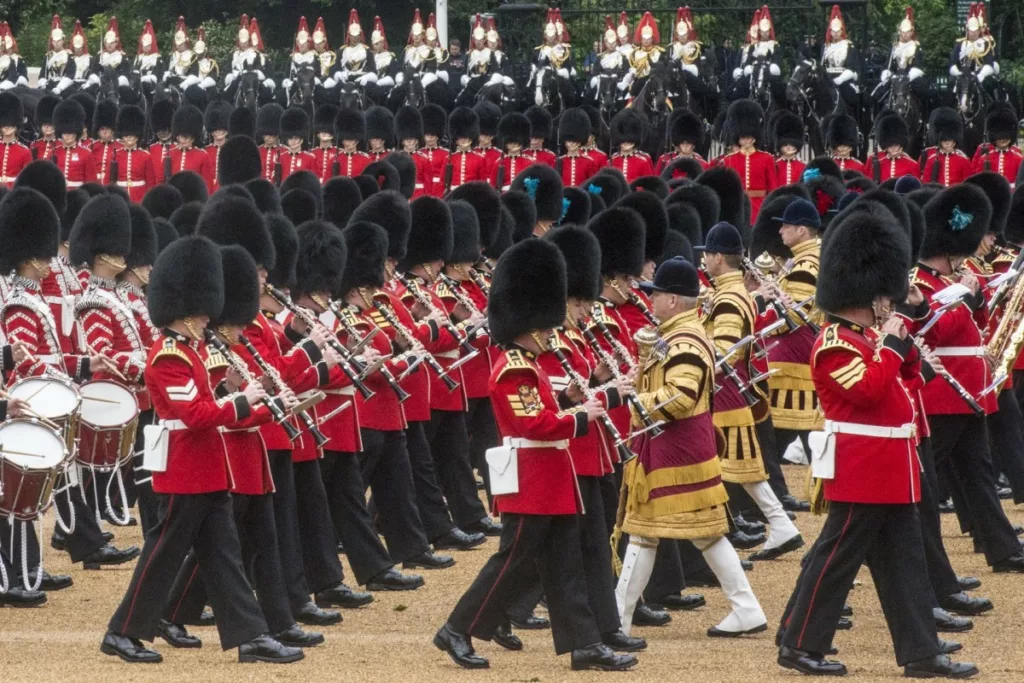
Trooping the Colour is an annual military ceremony that officially celebrates the birthday of the British monarch. Although Queen Elizabeth II was born in April, the monarch’s official birthday is celebrated in June, when London usually enjoys better weather.
The tradition dates back to the 18th century, when British army regiments presented their flags (“colours”) for inspection. The ceremony mainly takes place at Horse Guards Parade, near Whitehall in London, featuring a parade of the Household Division regiments.
The monarch inspects the troops, then the relevant regiment “troopes” its colour (presents the flag) before the formation. The parade is accompanied by foot and mounted battalions, military musicians, and often a Royal Air Force flypast over the capital.
The ceremony often concludes with a flypast above Buckingham Palace, where the royal family appears on the balcony.
London Fashion Week

London Fashion Week (LFW) is one of the four major international fashion events, alongside Paris, Milan, and New York.
It takes place twice a year, in February (Autumn/Winter collections) and September (Spring/Summer collections). The first LFW was organized in 1984 by the British Fashion Council to promote British design. LFW showcases collections from emerging and established British designers, including famous names like Burberry, Victoria Beckham, and Christopher Kane.
Shows are held at various iconic London locations, such as Somerset House, Royal Albert Hall, or specially designated temporary spaces.
Besides the shows, LFW includes exhibitions, pop-ups, interactive installations, and talks on fashion and innovation.
Street styles observed around show venues have become almost as famous as the collections themselves, inspiring London urban fashion.
Excursions / Day Trips from London
Windsor
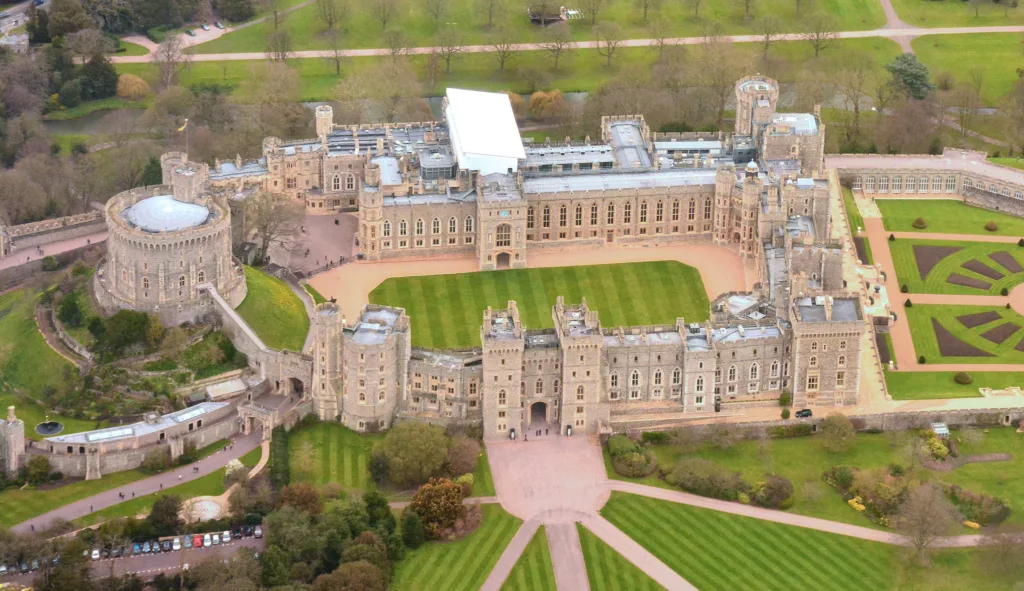
Windsor is famous for its royal castle, the oldest and largest inhabited castle in the world, and the official residence of the British royal family. Windsor Castle was built in the 11th century by William the Conqueror and expanded over the centuries.
Visitors can tour the State Apartments, richly decorated and used by the monarch for official ceremonies. The St. George’s Chapel, inside the castle, is a Gothic masterpiece and the site of royal weddings and funerals.
A trip to Windsor also allows visitors to explore the Long Walk, a tree-lined avenue offering spectacular views of the castle. Windsor town features picturesque streets and shops for royal souvenirs and local specialties.
The castle hosts the Changing of the Guard, a colorful ceremony where royal guards in red uniforms and bearskin hats switch posts. Windsor is easily accessible from London by train or guided tour, taking about an hour.
Stonehenge and Bath
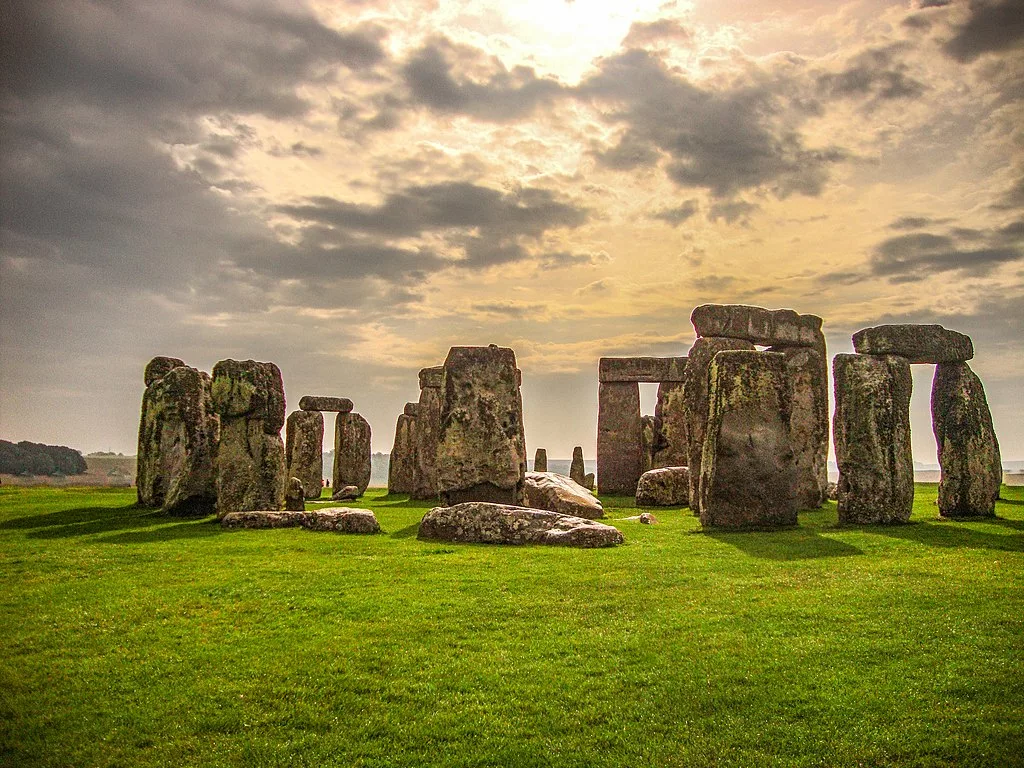
Stonehenge is an iconic prehistoric site, famous for its massive standing stones whose origin and meaning continue to fascinate archaeologists.
The Stonehenge stone circle was built between 3000 and 2000 BC and remains a mystical symbol of the British Neolithic. The arrangement of stones is aligned with the solstices, showing advanced astronomical knowledge by its builders.
Bath, about two hours from London, is famous for its Roman baths and perfectly preserved Georgian architecture. The city has been a UNESCO World Heritage Site since 1987, thanks to its ancient baths, Bath stone buildings, and historic streets. Visitors can explore the Roman Baths, an ancient complex with pools and archaeological relics. Bath also offers excellent examples of Georgian style, including the Royal Crescent and the Circus, symbols of 18th-century urban planning.
Combined Stonehenge + Bath trips from London typically last a full day, with a guide explaining local history and culture.
Oxford
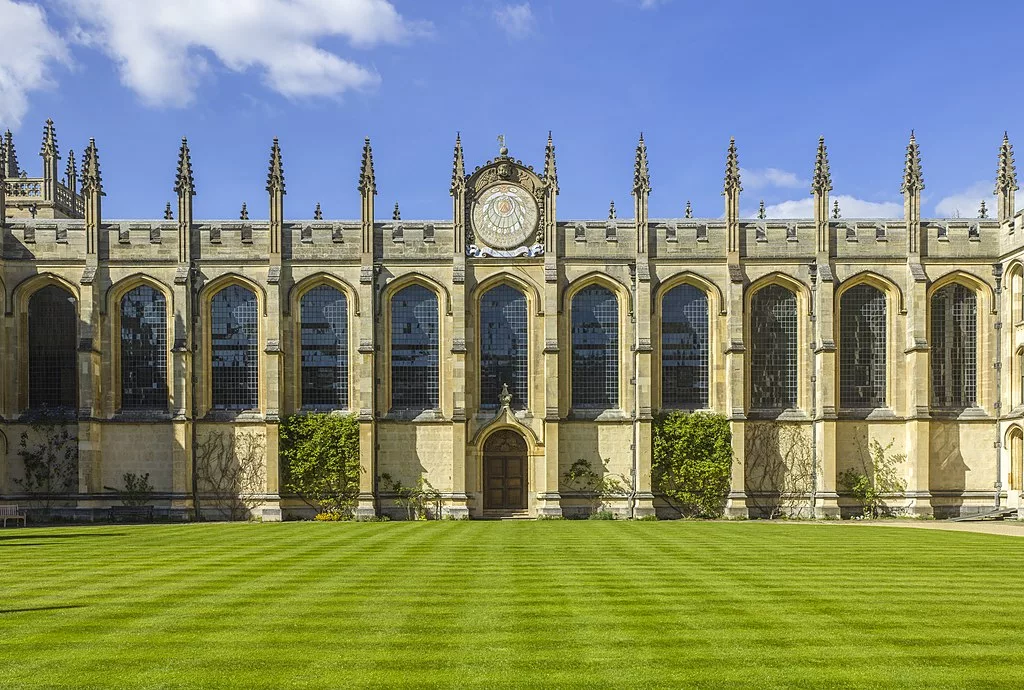
Oxford is nicknamed the “City of Dreaming Spires” because of its Gothic towers and spires dominating the city center. The city is world-famous for the University of Oxford, one of the oldest and most prestigious universities in the world.
Oxford has 38 autonomous colleges, each with its own history, architecture, and academic traditions.
The Christ Church College is famous for its architecture, cathedral, and for inspiring the sets of Harry Potter.
The Bodleian Library, one of the oldest libraries in Europe, houses millions of books and manuscripts, including rare editions.
The city is full of university museums, such as the Ashmolean Museum, the first British university museum, rich in art and antiquities.
The pedestrian streets and medieval passageways, known as “moulins” and “hidden passages”, give visitors a unique charm.
Oxford is famous for its punting on the River Isis (part of the Thames), a typical activity to admire the colleges from the water.
The city has inspired many famous writers, including Lewis Carroll (Alice in Wonderland) and J.R.R. Tolkien, who studied and taught here.
Conclusion – Visit London
London is a must-visit destination for all travelers, combining history, culture, and modernity. The city captivates with its iconic landmarks such as the Tower of London, Buckingham Palace, and Big Ben, its free museums like the British Museum, the National Gallery, and Tate Modern, as well as its royal parks and gardens such as Hyde Park, Regent’s Park, and Kew Gardens.
Iconic neighborhoods — Covent Garden, Soho, Camden, or Notting Hill — offer a unique blend of shopping, gastronomy, and nightlife, while walks along the Thames or trips to Stonehenge, Windsor, or Oxford let visitors explore the surrounding cultural and historical richness.
For lovers of London cuisine, traditional Fish & Chips, pies and pastries, and the ritual of afternoon tea are integral parts of the London experience. Annual events like the Notting Hill Carnival, Trooping the Colour, or London Fashion Week add a festive and cosmopolitan dimension to the visit.
Whether you are passionate about history, a fan of music and art, or simply seeking a lively urban getaway, visiting London promises a memorable experience, full of discoveries and emotions.
Discover the must-sees of Westminster with our London tour.