Visiting Strasbourg: 36 Must-See Sights and Experiences
Strasbourg, the jewel of Alsace, is a city where medieval history meets Gothic architecture and the Alsatian art of living.
Between picturesque districts, iconic monuments, and prestigious cultural institutions, every street, every bridge, and every square tells a unique story.
In this article, discover 33 must-see places to visit Strasbourg and fully explore its heritage and hidden treasures.
For an original discovery, set off on an adventure with our route « The Secrets of Strasbourg’s Historic City Center », a captivating blend of escape game and self-guided cultural tour that will let you explore the city in a different way.
Monuments and Historic Buildings
Vauban Dam
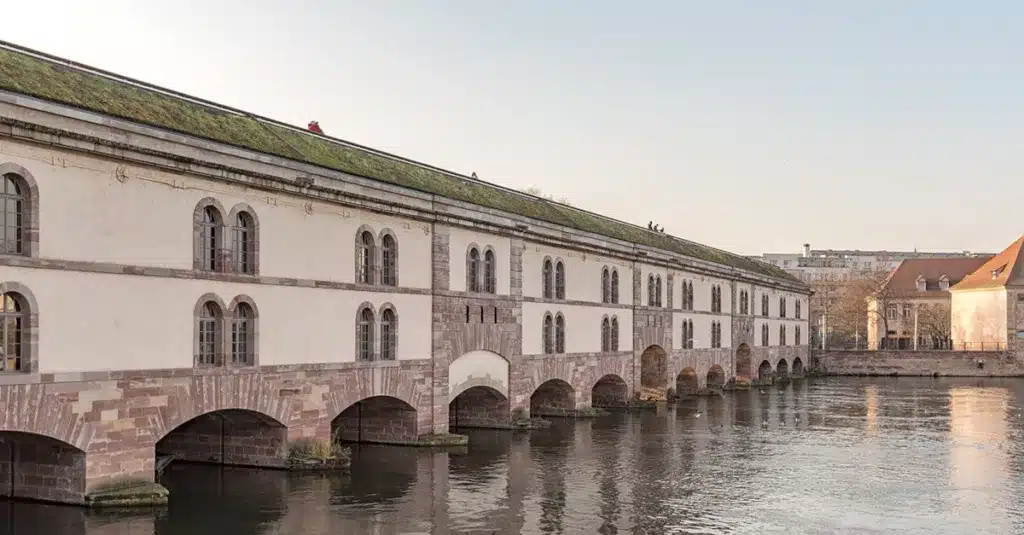
The Vauban Dam is a 17th-century defensive structure designed to protect Strasbourg and flood the surrounding areas in case of attack.
It measures 120 meters in length and features 13 arches, three of which are raised to allow boats to pass.
At the top, a panoramic terrace offers a spectacular view of the Covered Bridges and the Petite France district.
The dam houses a lapidarium displaying casts of gargoyles and sculptures from the cathedral.
Listed as a historic monument since 1971, it is open to the public and very popular with tourists.
Palace of the Rhine
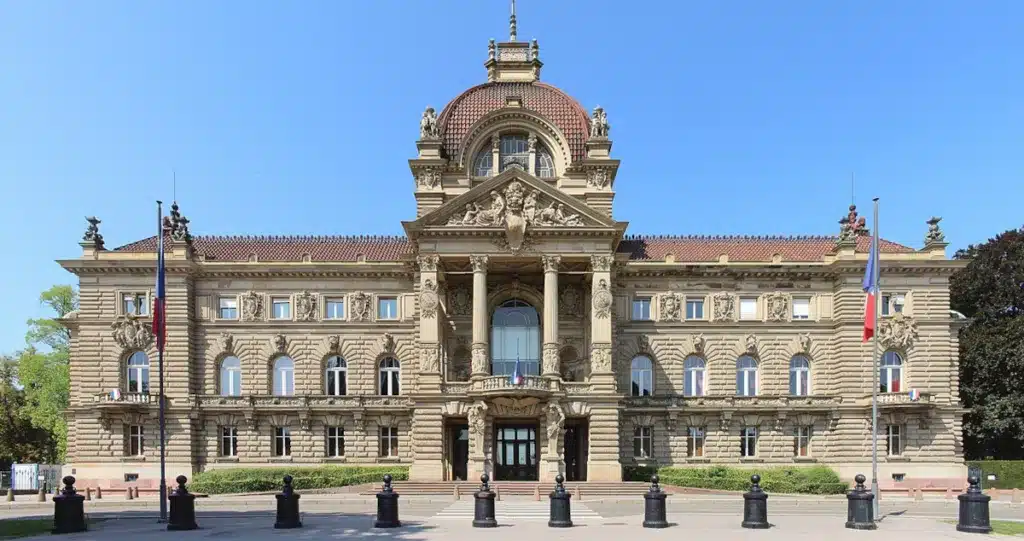
The Palace of the Rhine, built during the German era at the beginning of the 20th century, is a symbol of imperial power.
Located in the Neustadt district, it is surrounded by gardens and broad vistas.
Today, it houses official institutions and remains a major architectural landmark.
Its Wilhelmine style asserts its grandeur and reflects Strasbourg’s recent history.
Although not very tourist-oriented inside, its exterior impresses with its size and elegance.
The New Customs House

The New Customs House is a Renaissance building located along the banks of the Ill River, built in the 16th century.
It was used to inspect goods and collect taxes for the city.
Today, it houses shops and restaurants while preserving its historic architecture.
Its façades, decorated with sculptures and geometric patterns, make it an architectural gem.
Pheasant Bridge
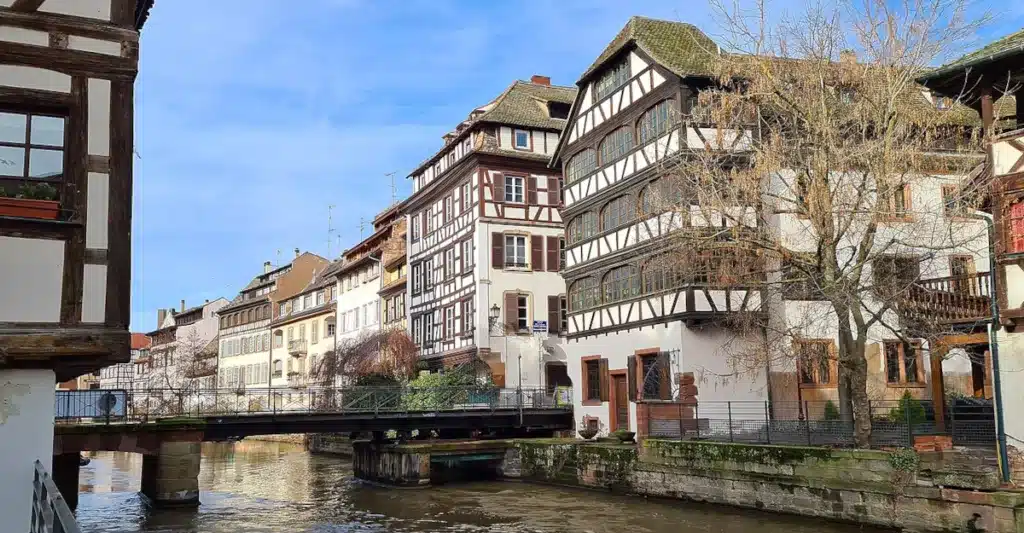
The Pheasant Bridge is a historic bridge linking the Petite France district to other areas of Strasbourg.
It dates back to the Middle Ages and has been rebuilt several times over the centuries.
Its traditional architecture makes it a picturesque crossing point for pedestrians.
Former Icehouses of Strasbourg
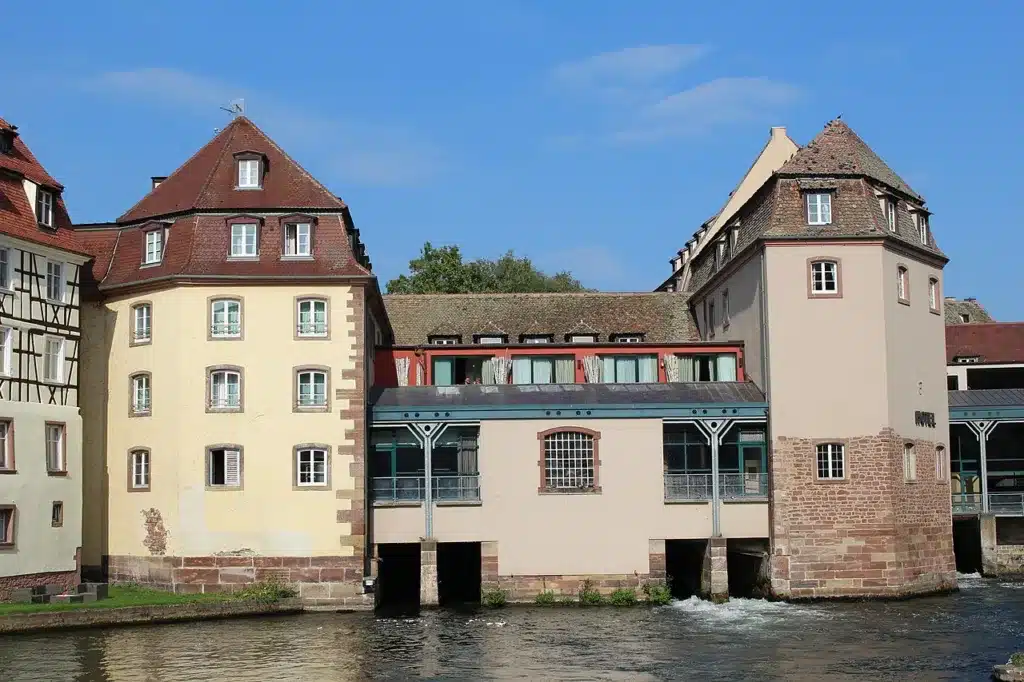
The former icehouses were once used to store ice and preserve food.
Located near the Petite France district, they bear witness to the city’s former trade and economy.
These buildings have been restored and integrated into today’s urban landscape.
Lock A of Petite France
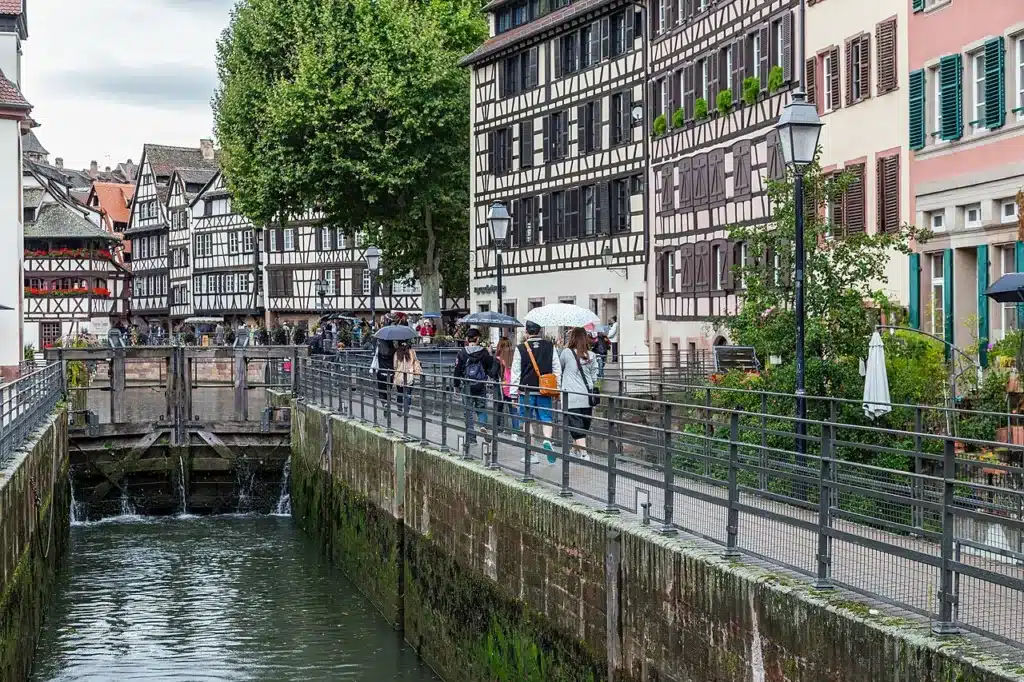
The Lock A is one of the former locks in the Petite France district, dating back to the medieval period.
It was used to regulate water levels for navigation and the city’s mills.
Its mechanisms and typical structure of historic locks can still be observed.
It is a living example of traditional Strasbourg hydraulic engineering.
Rohan Palace
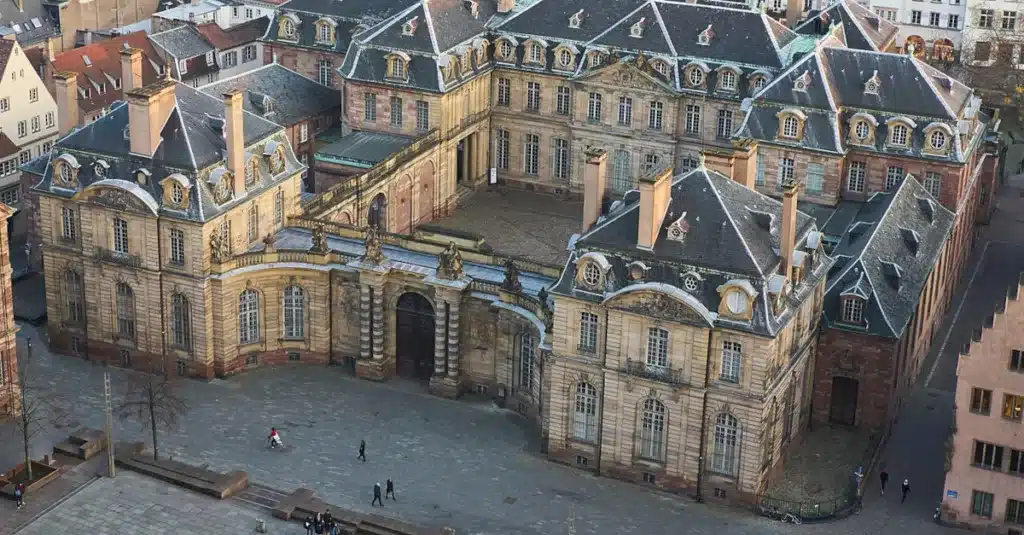
Rohan Palace is an 18th-century masterpiece located next to Strasbourg’s Notre-Dame Cathedral.
It once served as the residence of the prince-bishops of Strasbourg and reflects the religious and political power of the time.
Today, it houses three museums: the Museum of Fine Arts, the Archaeological Museum, and the Museum of Decorative Arts.
Its classical architecture and richly decorated salons reflect the refined taste of the Strasbourg aristocracy.
The palace is also famous for its magnificent staircases and façades adorned with sculptures.
It is a must-see for art and history enthusiasts, offering a complete immersion into Strasbourg’s heritage.
Grand’Rue
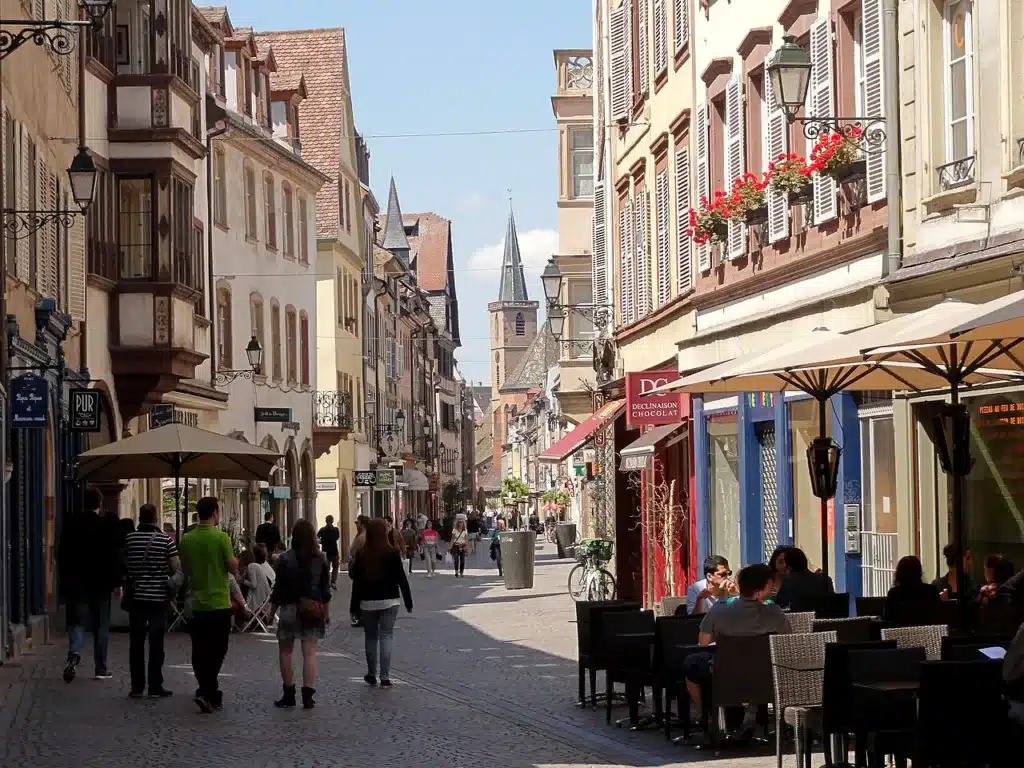
The Grand’Rue runs across the Grande Île and is one of Strasbourg’s historic thoroughfares.
It features buildings in Renaissance, 18th-century, and medieval styles.
The street connects several important squares and tourist districts.
It is a lively shopping street, lined with shops, restaurants, and cafés.
It is an essential passage for discovering Strasbourg’s commercial and historic soul.
Churches and Religious Institutions
Notre-Dame Cathedral of Strasbourg
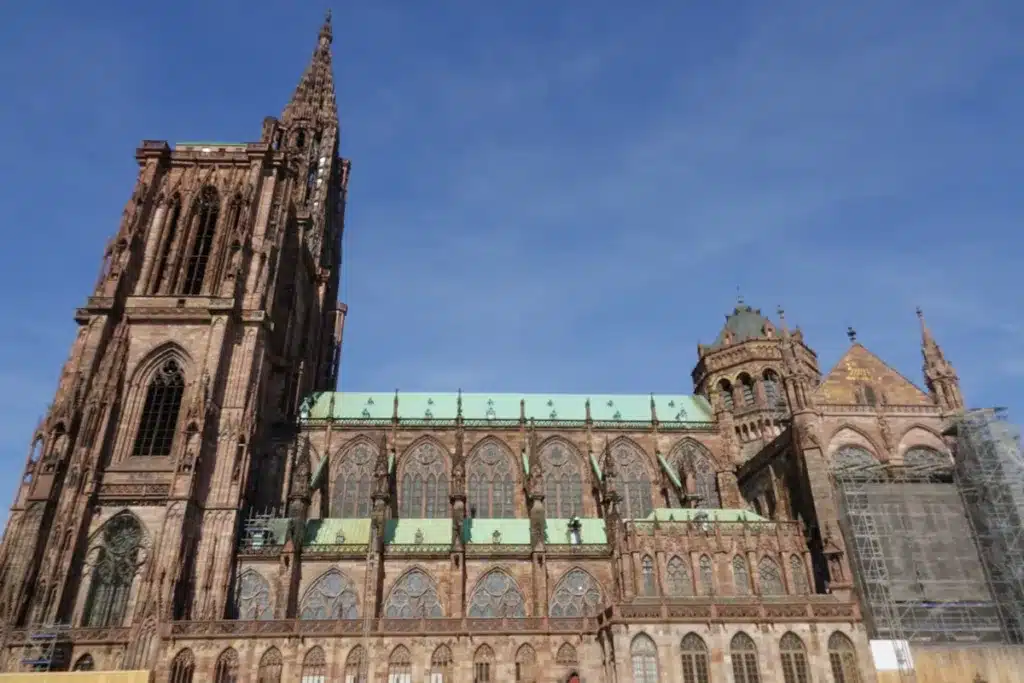
The Notre-Dame Cathedral is a 13th-century Gothic masterpiece with its famous spire rising to 142 meters. It houses the Renaissance astronomical clock and numerous works of religious art.
Its forecourt is a place for gathering and admiring the sculptures and stained-glass windows. Listed as a historic monument, it is a major symbol of Strasbourg and attracts thousands of visitors.
Discover a mysterious plaque hiding a treasure in the cathedral square of Strasbourg with our adventure The Secrets of Strasbourg’s Historic City Center
Saint-Thomas Church

The Saint-Thomas Church is a Gothic Protestant church dating back to the 13th century.
It houses one of the most famous Silbermann organs from the 18th century.
Its late Gothic architecture impresses with its verticality and soaring vaults.
Saint-Pierre-le-Vieux Catholic Church
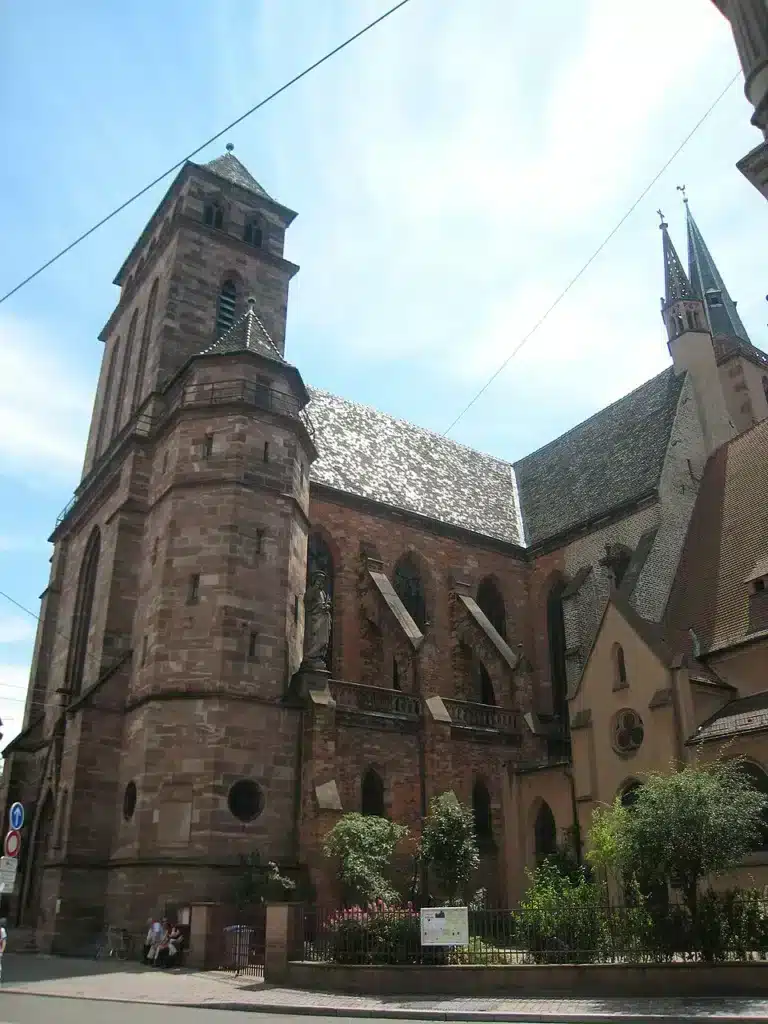
This church is unique as it is used by both Catholics and Protestants (simultaneum).
It dates back to the 13th century, with reconstructions carried out in the 19th century.
Its Silbermann organ from 1709 is particularly renowned.
The building also houses sculpted panels and paintings from the 15th century.
Its central location makes it a must-see stop for discovering Strasbourg’s religious heritage.
Protestant Church of the Temple-Neuf
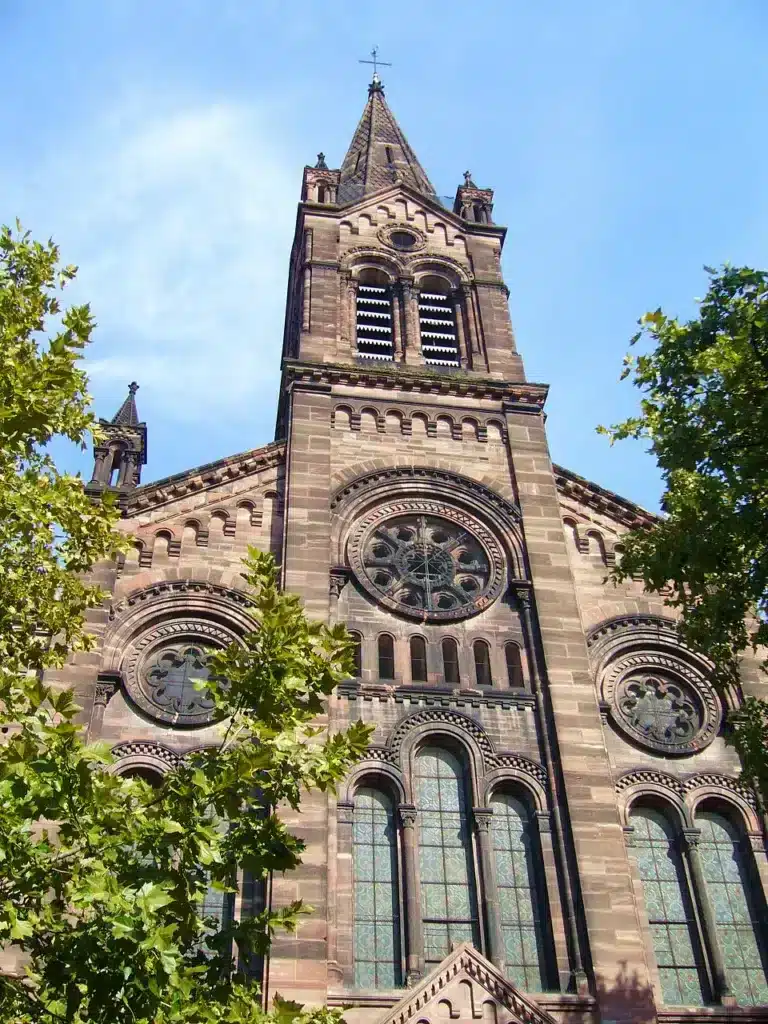
The Temple-Neuf is a neo-Romanesque Protestant church built after the fire that destroyed the former church.
It was completed in 1877, and its bell tower shapes the skyline of the Grande Île.
The interior combines Byzantine and neo-Romanesque influences, with large vertical arches.
It belongs to the Union of Protestant Churches of Alsace and Lorraine.
The church is also used for concerts due to its exceptional acoustics.
Remarkable Houses
Alsatian Museum
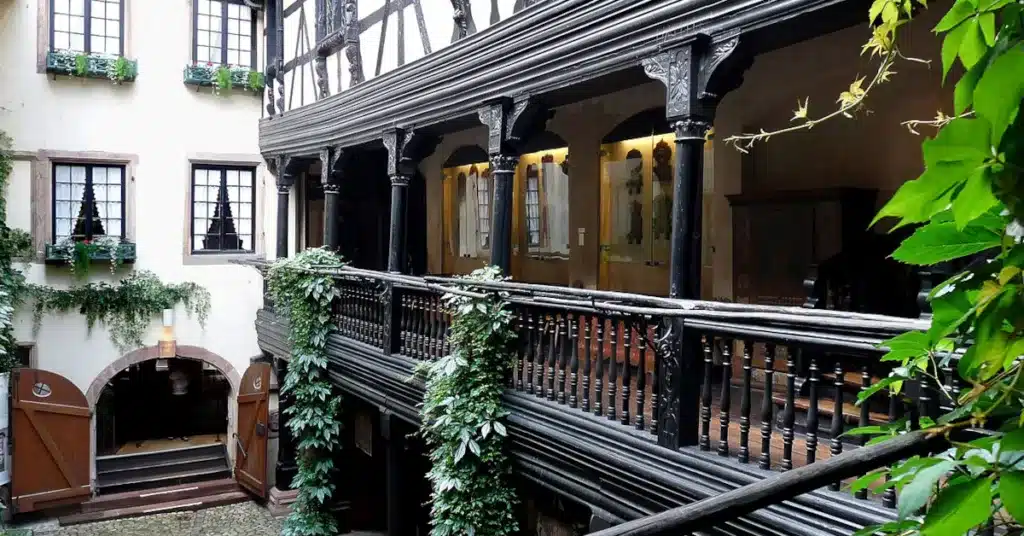
The Alsatian Museum is dedicated to traditional Alsatian life, its trades, and customs.
It is housed in several half-timbered houses dating from the 16th and 17th centuries.
The museum displays costumes, tools, furniture, and everyday objects from Alsace.
It is an essential place for understanding the social and cultural history of the region.
Kammerzell House
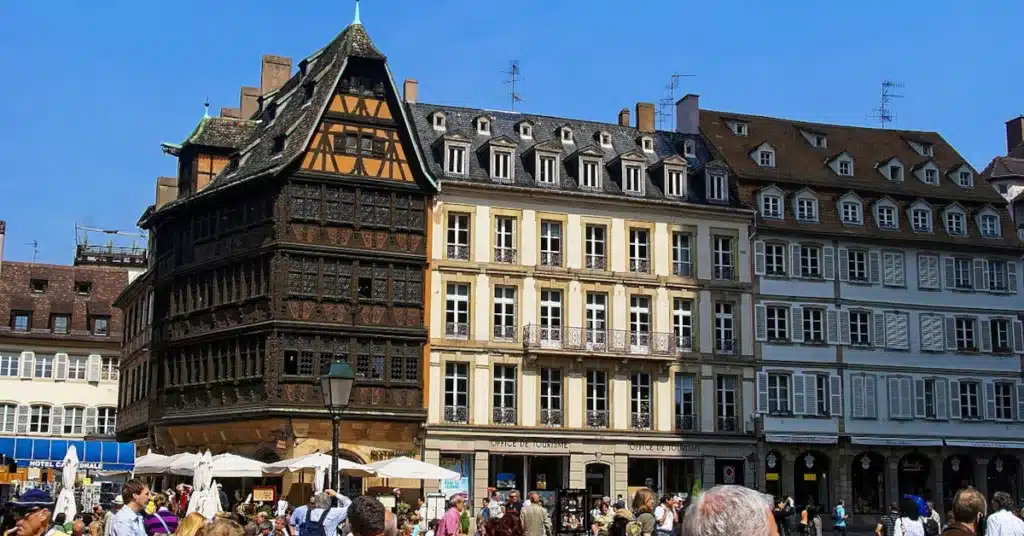
The Kammerzell House, built in 1427, is one of the most famous medieval houses in Strasbourg. It combines Gothic and Renaissance architecture with richly decorated half-timbered façades.
Inside, frescoes and woodwork tell local history and Alsatian legends. Today, it houses a renowned brasserie-restaurant, blending gastronomy and heritage.
Located next to the cathedral, it is a must-see for visitors.
Goethe House
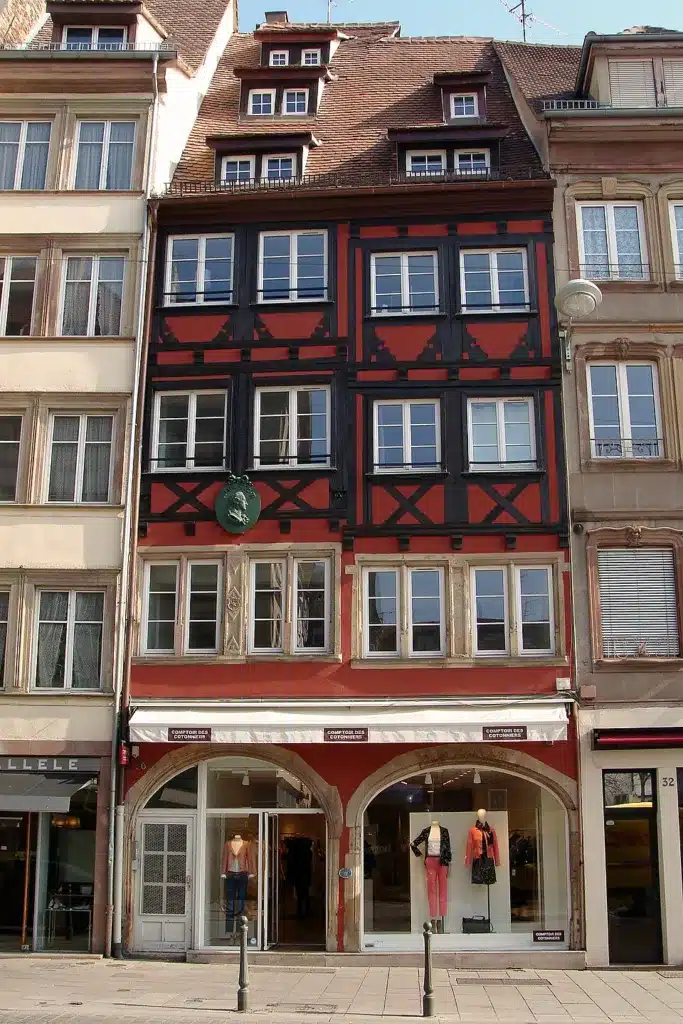
The Goethe House is linked to Johann Wolfgang von Goethe, who stayed in Strasbourg in the 18th century. It is a place of remembrance for lovers of literature and European history.
Although the building has been modified over time, it retains its historic charm.
Discover Goethe’s story and his connection to Strasbourg with our route The Secrets of Strasbourg’s Historic City Center
Cour du Corbeau Hotel (MGallery Collection)
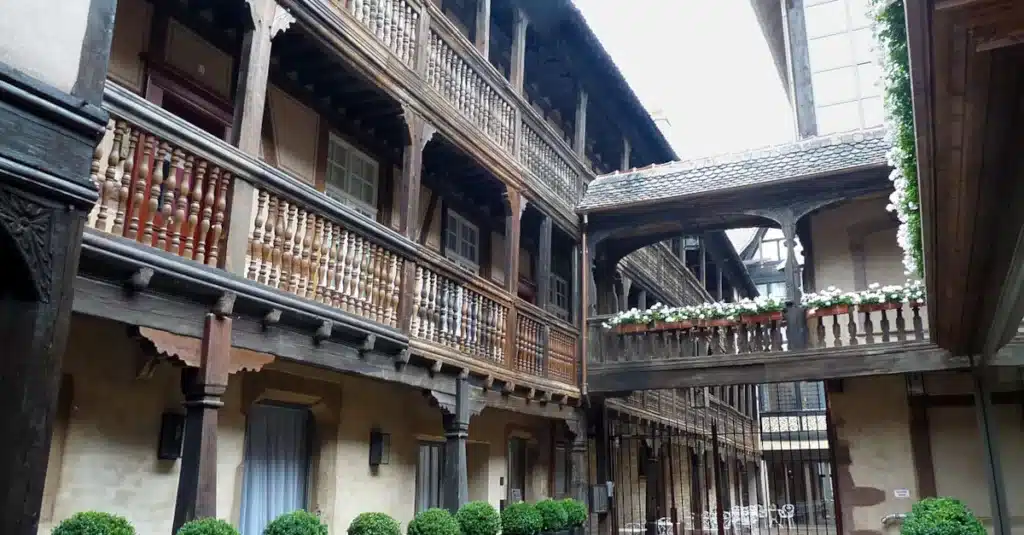
The Cour du Corbeau Hotel is a 16th-century Renaissance building listed as a Historic Monument.
Now transformed into a boutique hotel (MGallery), it has preserved its half-timbering and inner courtyards.
The rooms combine modern comfort with period features for an authentic experience.
The hotel is located in the heart of the historic city center, close to the main landmarks.
Staying here allows for a total immersion in Strasbourg’s heritage.
Monumental Squares of Strasbourg
Place Kléber

The Place Kléber pays tribute to General Jean-Baptiste Kléber (1753–1800), a native of Strasbourg and hero of the French Revolution.
Kléber notably distinguished himself during the Egyptian campaign alongside Napoleon Bonaparte and was assassinated in Cairo in 1800.
His statue has stood at the center of the square since 1840 and symbolizes courage, patriotism, and Strasbourg’s connection to French military history.
The square was renamed in his memory after the Revolution to honor this local figure who became a national hero.
It is lined with historic buildings and shops and serves as a central venue for markets, festivals, and public gatherings.
Place Gutenberg
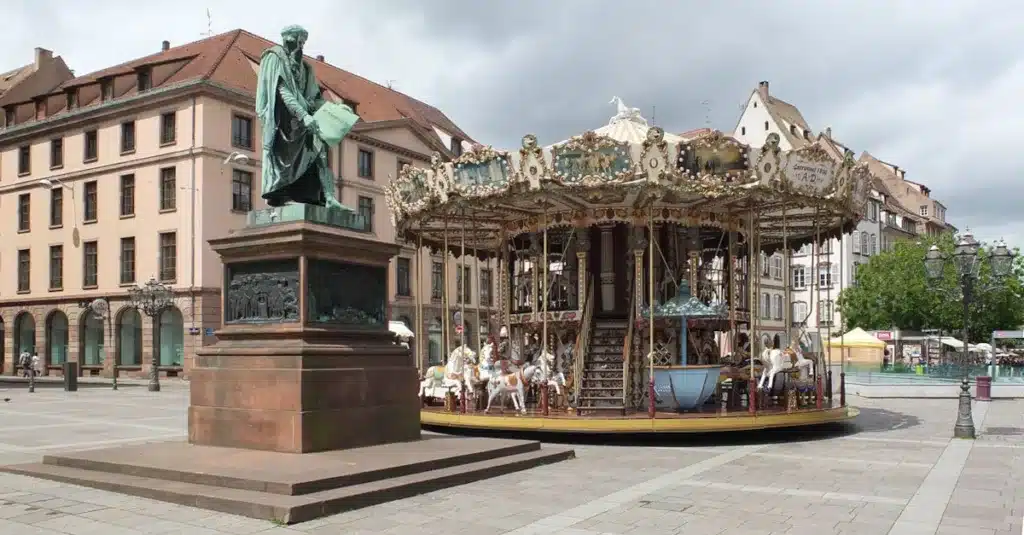
The Place Gutenberg pays tribute to Johannes Gutenberg (c. 1400–1468), the inventor of movable-type printing. Gutenberg studied and worked in Strasbourg at the beginning of the 15th century before perfecting his invention in Mainz. The statue erected on the square depicts him holding a book and a printing tool, symbolizing the spread of knowledge and culture.
The square is surrounded by historic buildings that bear witness to the city’s commercial and intellectual life during the Middle Ages. Each year, it hosts cultural events, markets, and Christmas festivities that enliven the heart of the Grande Île.
It is a must-see location to admire Alsatian architecture while honoring one of the most influential inventors in European history.
Learn more about Gutenberg and Strasbourg with our route The Secrets of Strasbourg’s Historic City Center
Place Benjamin Zix
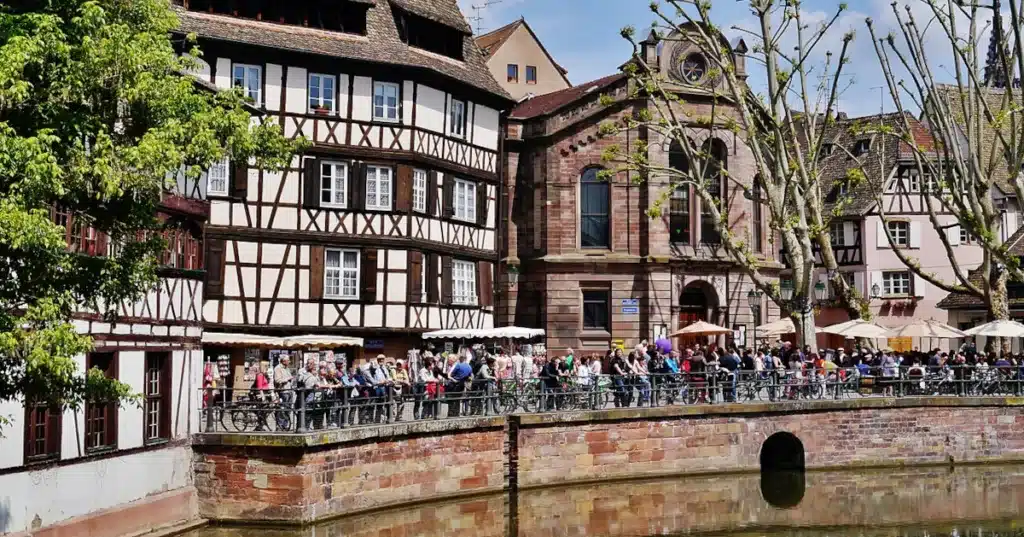
The Place Benjamin Zix is located in the picturesque Petite France district.
It is named in honor of Benjamin Zix (1770–1827), a Strasbourg painter and professor renowned for his architectural drawings and watercolors.
The square is surrounded by half-timbered houses dating from the 16th and 17th centuries, characteristic of the Alsatian style.
It offers a peaceful setting to admire the canals and restored medieval buildings.
Nearby stands the Maison des Tanneurs, a former guild house transformed into a museum and restaurant.
Place des Tripiers
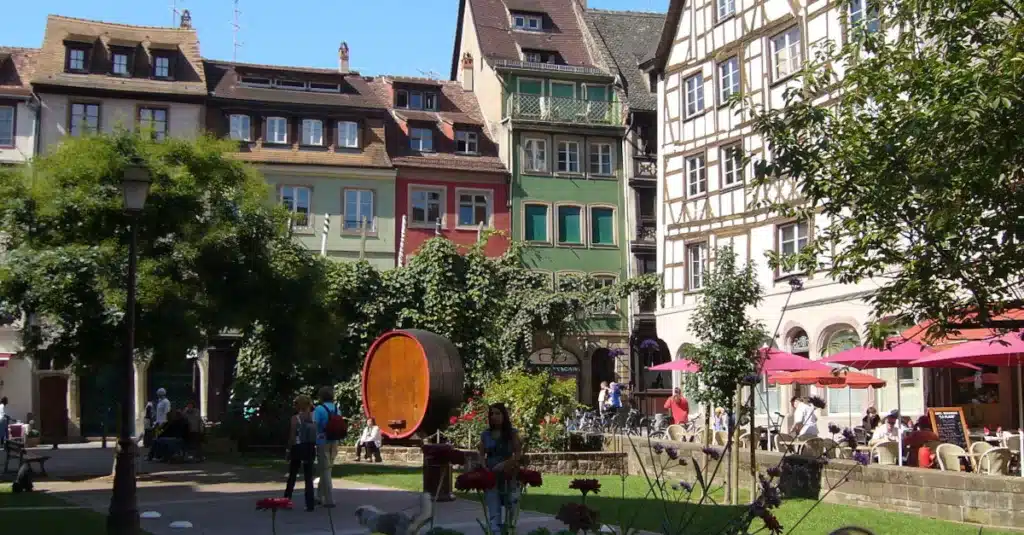
The Place des Tripiers is a small historic square in the city center, located just steps from the cathedral. It takes its name from the butchery trades and tripe commerce that took place here during the Middle Ages.
The square has preserved its medieval character with narrow alleys and half-timbered façades. Today, it hosts artisan shops, cafés, and traditional restaurants.
Discover the secrets behind this square’s tribute to Alsatian winemakers with our treasure hunt The Secrets of Strasbourg’s Historic City Center
>
Place Saint-Pierre-le-Jeune
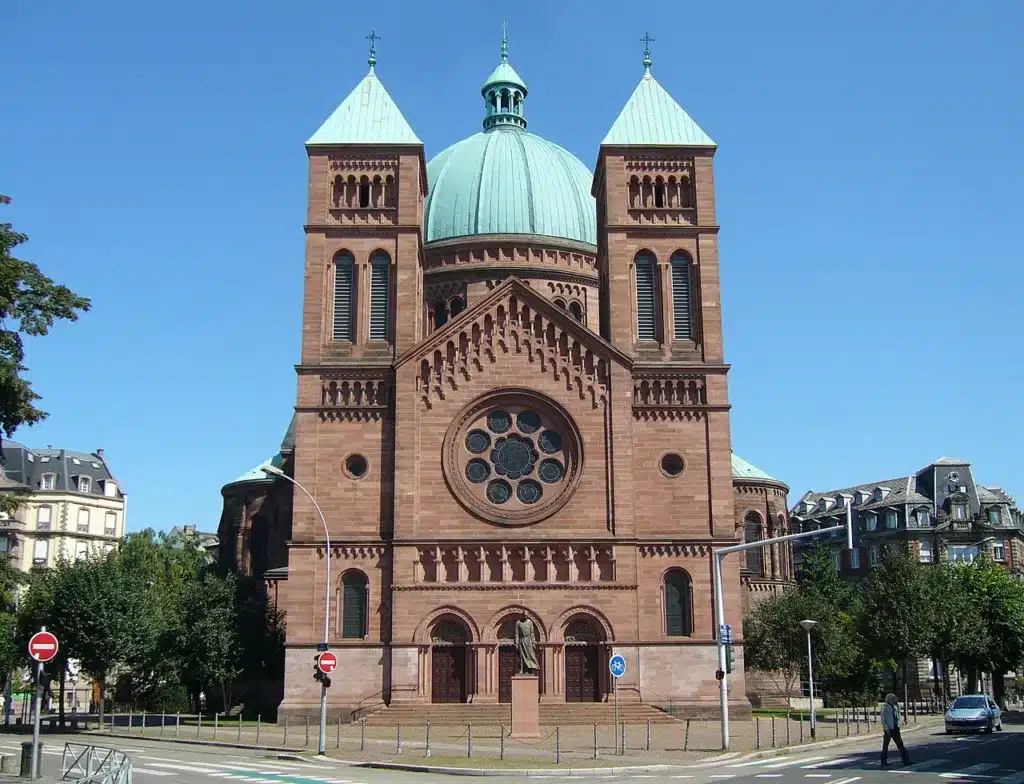
The Place Saint-Pierre-le-Jeune surrounds the church of the same name, a major medieval building in Strasbourg.
It takes its name from the church dedicated to Saint Peter and reflects the religious and social importance of the district over the centuries.
The square is lively, with café terraces, markets, and occasional cultural events.
It offers a direct view of the church’s bell tower and historic façades.
The surrounding buildings display a mix of medieval and Renaissance architecture.
Place Saint-Étienne

The Place Saint-Étienne is located near Saint-Étienne Church in the historic city center.
It pays tribute to the medieval church dedicated to Saint Stephen, the first Christian martyr.
The square is lined with half-timbered houses typical of old Strasbourg and retains a medieval atmosphere.
It is a quiet, less touristy space, ideal for a peaceful stroll.
Place du Marché-aux-Cochons-de-Lait
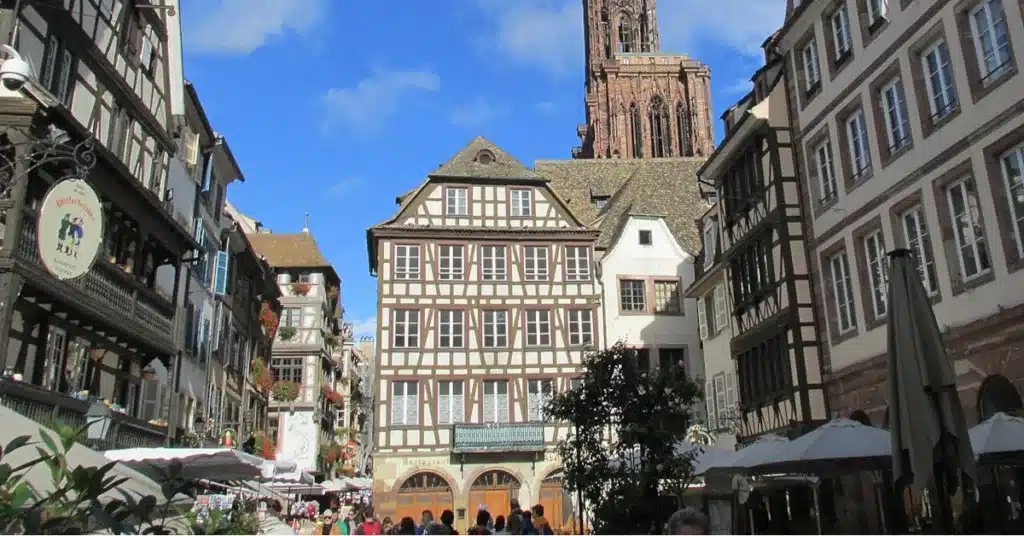
This historic square was dedicated to the trade of pork and poultry during the Middle Ages.
It has retained its name and historic buildings, bearing witness to medieval commercial activity.
The square is lined with half-timbered houses typical of Alsace, offering a picturesque setting.
Place du Marché Gayot
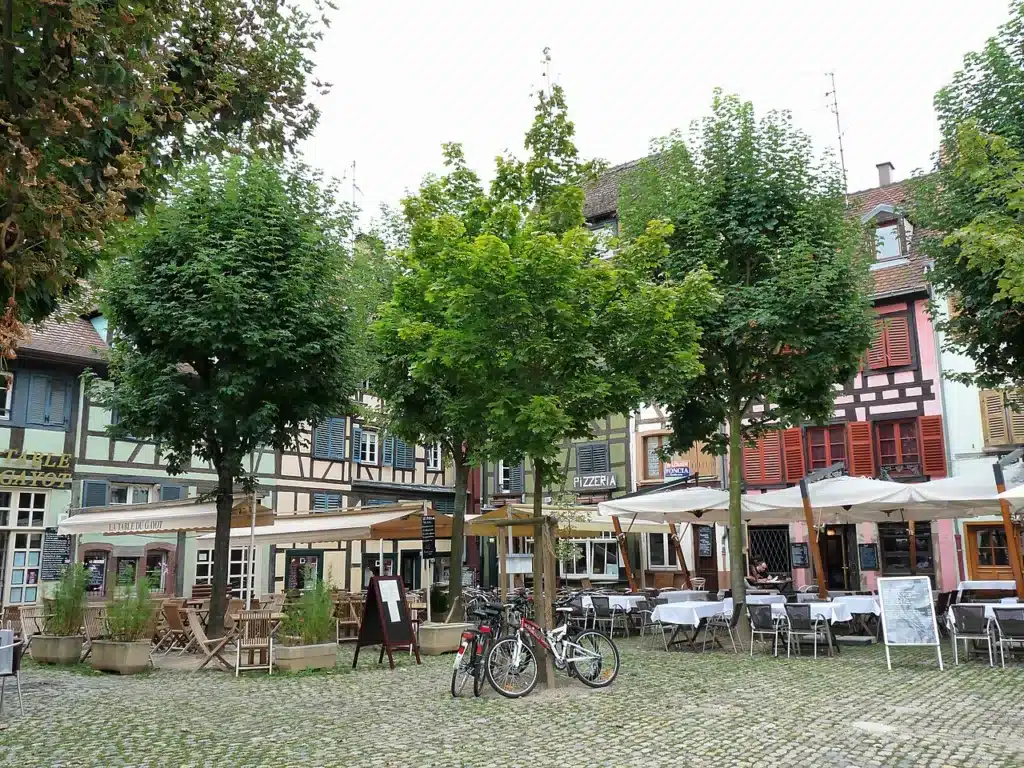
The Place du Marché Gayot is a lesser-known historic square located near the Grand’Rue.
It was used for markets and local trade during the Middle Ages.
The restored buildings display a classic Alsatian style, with colorful façades and half-timbering.
Discover the legend of the “king’s shoe” with our route The Secrets of Strasbourg’s Historic City Center
Theaters and Cultural Institutions
Opéra national du Rhin
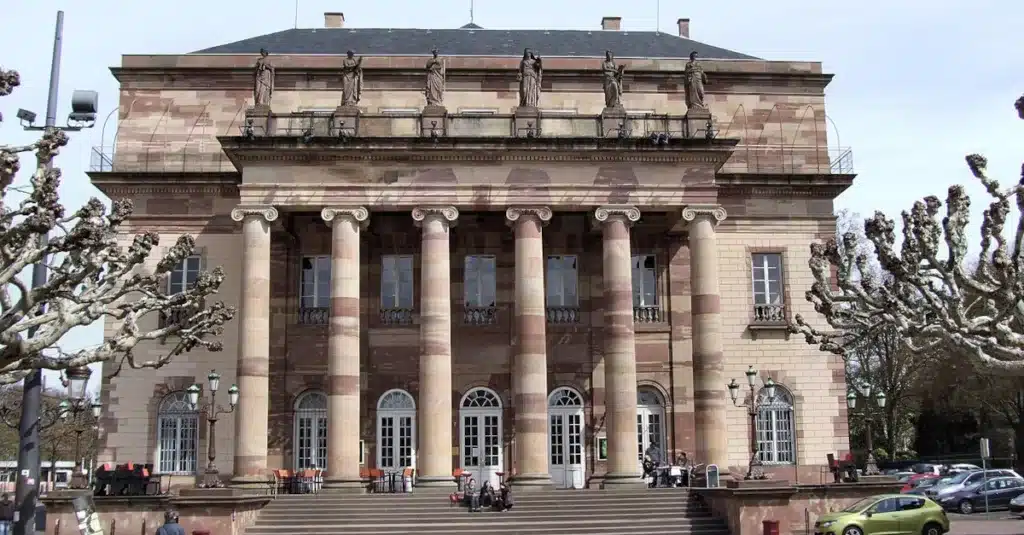
The Opéra national du Rhin (ONR) is Strasbourg’s main opera house and one of the most important opera institutions in France.
It was founded in 1972 and resulted from the merger of several opera companies from Strasbourg, Mulhouse, and Colmar.
The ONR offers opera, ballet, and concert performances throughout the year, attracting both national and international audiences.
The Strasbourg building, modern yet elegant, fits seamlessly into the historic city center while offering state-of-the-art stage and acoustic facilities.
National Theatre of Strasbourg (TNS)
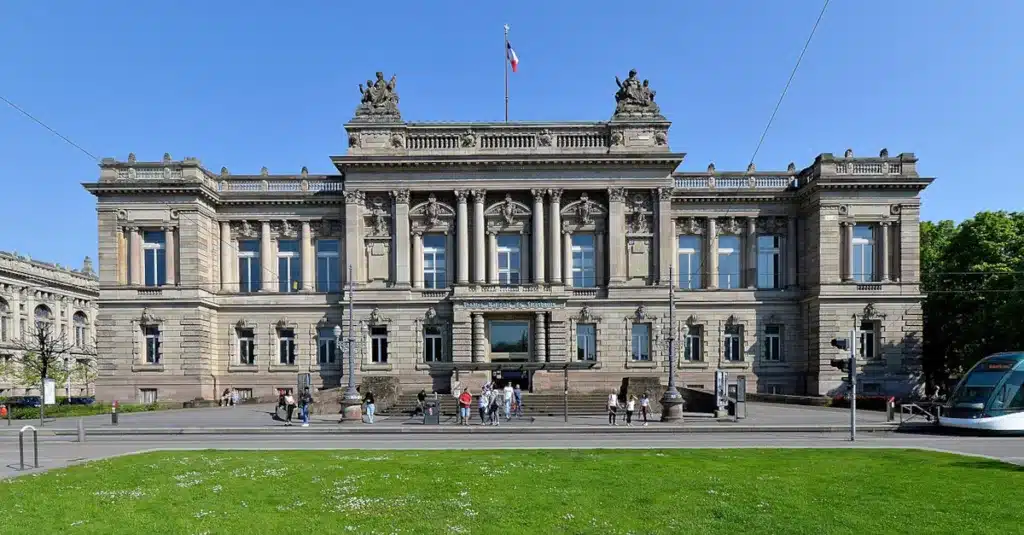
The National Theatre of Strasbourg (TNS) is a major institution for contemporary theater in France.
Founded in 1871, it occupies a historic building on the Grande Île and is renowned for its original productions and modern adaptations of classic works.
It hosts festivals, international performances, and artist residencies, enriching Strasbourg’s cultural life.
National and University Library of Strasbourg (BNUS)
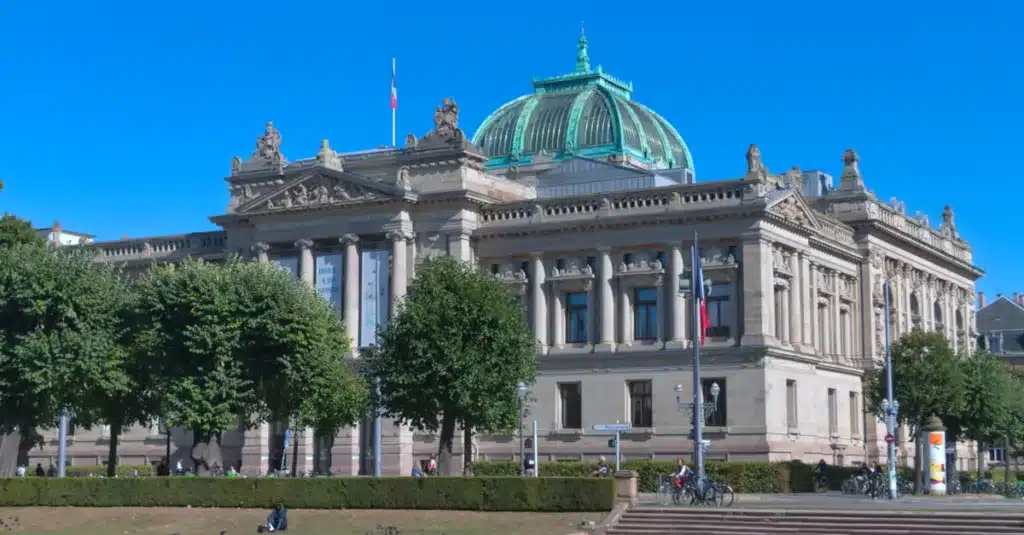
The National and University Library of Strasbourg (BNUS) is one of the largest libraries in France and a major research center.
Founded in the 18th century, it holds over 4 million documents, including numerous manuscripts, incunabula, and rare archives.
Its architecture blends tradition and modernity, with bright reading rooms and well-preserved heritage collections.
The BNUS regularly hosts temporary exhibitions on a wide range of themes, from Alsatian history to world literature.
Iconic Neighborhoods
Neustadt District
The Neustadt is a district built during the German occupation at the end of the 19th century.
It features Wilhelminian architectural style with wide avenues and imposing administrative buildings.
Notable landmarks include the Palais du Rhin and other emblematic official buildings.
The district contrasts sharply with the medieval Grande Île, offering a striking example of German urban planning.
It is listed as a UNESCO World Heritage Site as part of the ensemble “Strasbourg, Grande Île”.
La Petite France
The Petite France district is the most picturesque and iconic neighborhood of Strasbourg.
Its name comes from patients suffering from syphilis, once nicknamed “the French,” who were treated in the Saint-Jean hospital in the 16th century.
The area is characterized by half-timbered houses dating from the 16th and 17th centuries, often featuring red-tiled roofs and decorated wooden balconies.
Numerous canals of the Ill River run through Petite France, once used by tanners, millers, and fishermen who helped the district thrive.
Visiting Strasbourg’s European Institutions
European Parliament – Strasbourg

The European Parliament in Strasbourg is one of the main institutions of the European Union.
Located in the Esplanade district, it hosts plenary sessions and represents the democratic heart of Europe.
Its modern architecture, with a large glass façade and hemicycle chamber, contrasts with the city’s historic center.
Visitors can take guided tours to discover how the Parliament functions and explore its facilities.
Exhibitions and educational events are regularly organized to raise awareness of the EU’s history and role.
A visit to the European Parliament highlights Strasbourg’s importance as a European capital.
Council of Europe / Palais de l’Europe
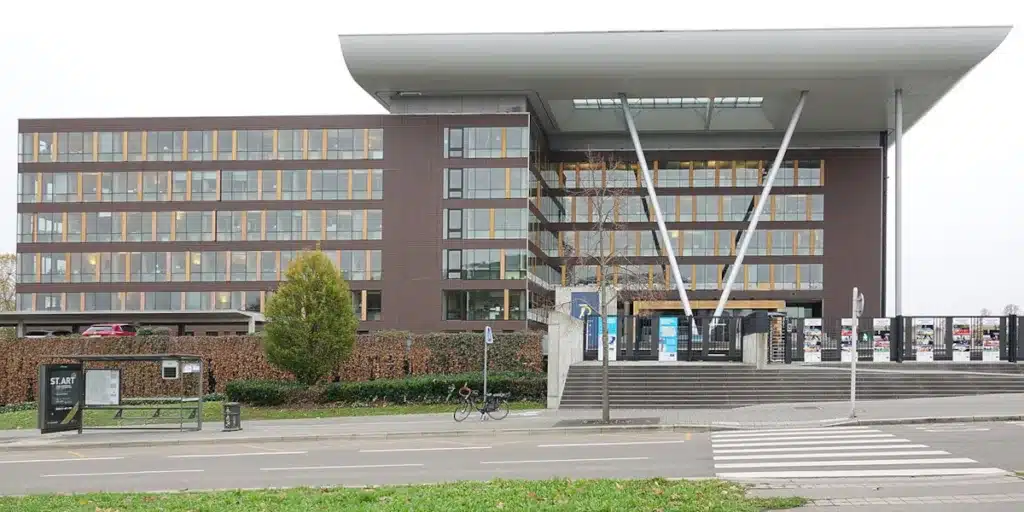
Next to the European Parliament, the Palais de l’Europe houses the Council of Europe, founded in 1949 to promote democracy, human rights, and the rule of law across Europe.
The building is easily recognizable by its modern façade and imposing architecture.
Guided tours allow visitors to explore the meeting rooms and learn more about the Council’s role in European diplomacy and the conventions it oversees.
European Court of Human Rights
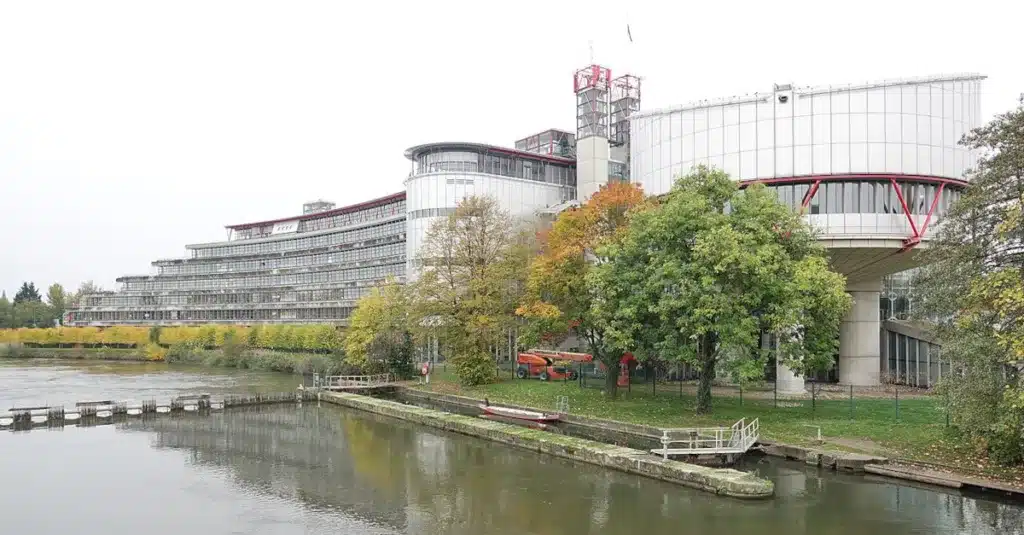
Also located in Strasbourg, the European Court of Human Rights is another major symbol of the city’s role as a European capital.
It ensures the application of the European Convention on Human Rights and handles both individual and inter-state complaints.
The modern, functional building offers visitors insight into how European justice operates and how fundamental rights are protected across the continent.
Must-See Parks and Gardens
Parc de l’Orangerie
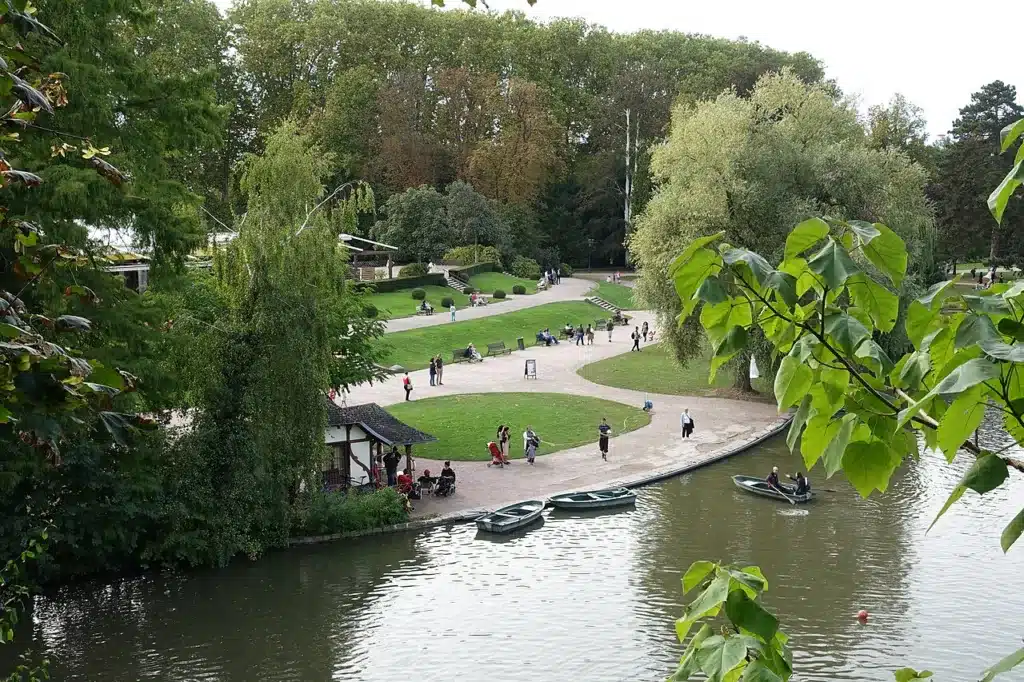
The Parc de l’Orangerie, covering 26 hectares, is the oldest and one of the most iconic green spaces in Strasbourg.
According to some sources, it was designed as early as 1801 based on plans attributed to André Le Nôtre, or alternatively by engineer Antoine du Chaffat in 1735.
The Joséphine Pavilion, built in 1807 to house the orange trees that gave the park its name, pays tribute to Empress Joséphine de Beauharnais.
During the 1895 industrial and craft exhibition, the park was expanded and enhanced with an artificial lake, a waterfall, and both French-style and English-style walkways.
Today, the park features a mini-farm, a children’s car circuit, rowboats on the lake, and works of art scattered along its paths.
The park is also located directly opposite the European institutions, making it a symbolic meeting point between nature, power, and heritage.
Jardin des Deux Rives
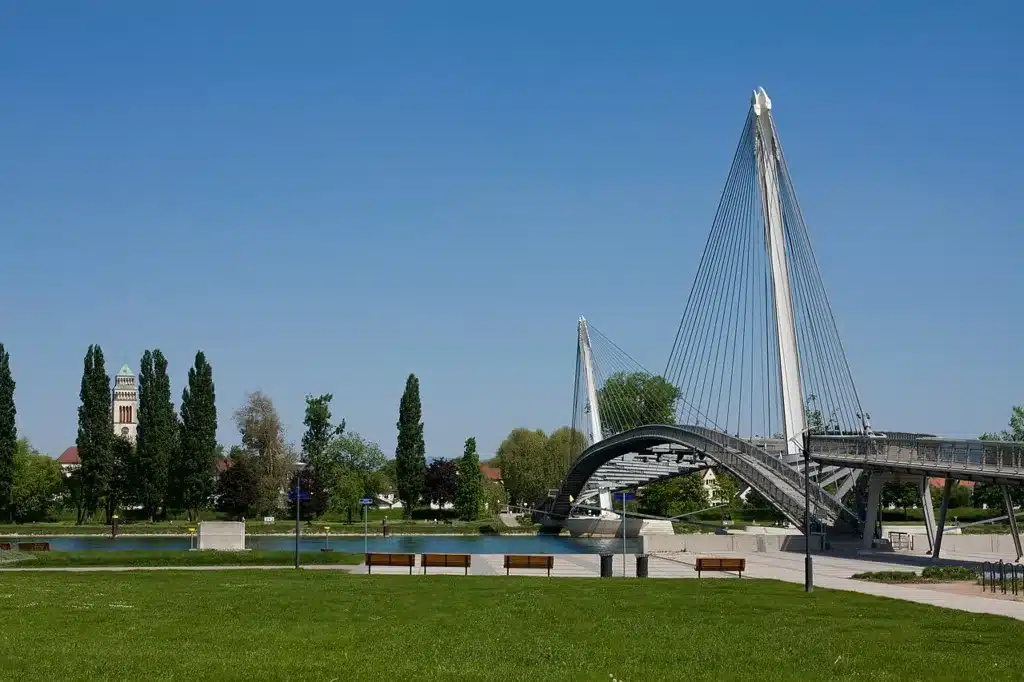
The Jardin des Deux Rives is a cross-border park stretching along the banks of the Rhine in Strasbourg and Kehl, Germany.
Created in 2004, it symbolizes Franco-German cooperation and friendship between the two riverbanks.
German landscape architect Rüdiger Brosk designed the garden’s layout, adopting a circular plan that evokes unity and Europe.
An iconic footbridge, the Mimram Footbridge, designed by architect Marc Mimram, connects the two banks and offers pedestrians and cyclists a unique crossing over the Rhine.
During the 2009 NATO summit, heads of state met at the center of this bridge, making it a powerful symbol of connection between nations.
The garden also features “ephemeral” gardens, water staircases, playgrounds, and artistic installations, and hosts open-air concerts every summer, such as the “Symphony of the Two Banks.”
Parc de la Citadelle
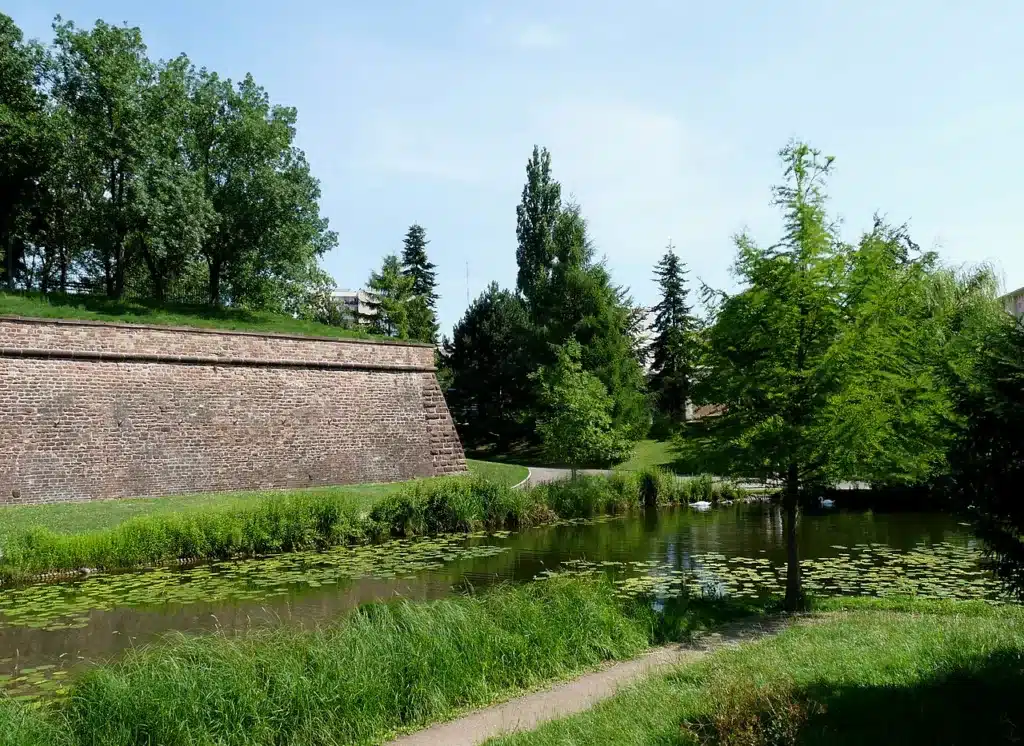
The Parc de la Citadelle covers 11 hectares in the Esplanade district, on the site of the former citadel designed by Vauban in 1681.
In 1964, the former military grounds were redeveloped into a public park, incorporating historical remains such as bastions, escarpment walls, and moats.
Parts of the original star-shaped fortifications still remain, recalling the citadel’s major defensive role in Strasbourg’s history.
The park’s name directly pays tribute to this former fortress, now transformed into a green haven.
Shaded paths, playgrounds, and water basins invite visitors to relax in a setting that blends military heritage with nature.
Each summer, the park hosts cultural events such as the “Interférences” festival and outdoor leisure activities around the former moats.
Gastronomy and Strasbourg Specialties
Strasbourg is not only a city of history and architecture—it is also a true stronghold of Alsatian gastronomy. Its specialties reflect a unique blend of French and German influences, combining traditional recipes, local flavors, and regional products.
Sauerkraut (Choucroute)
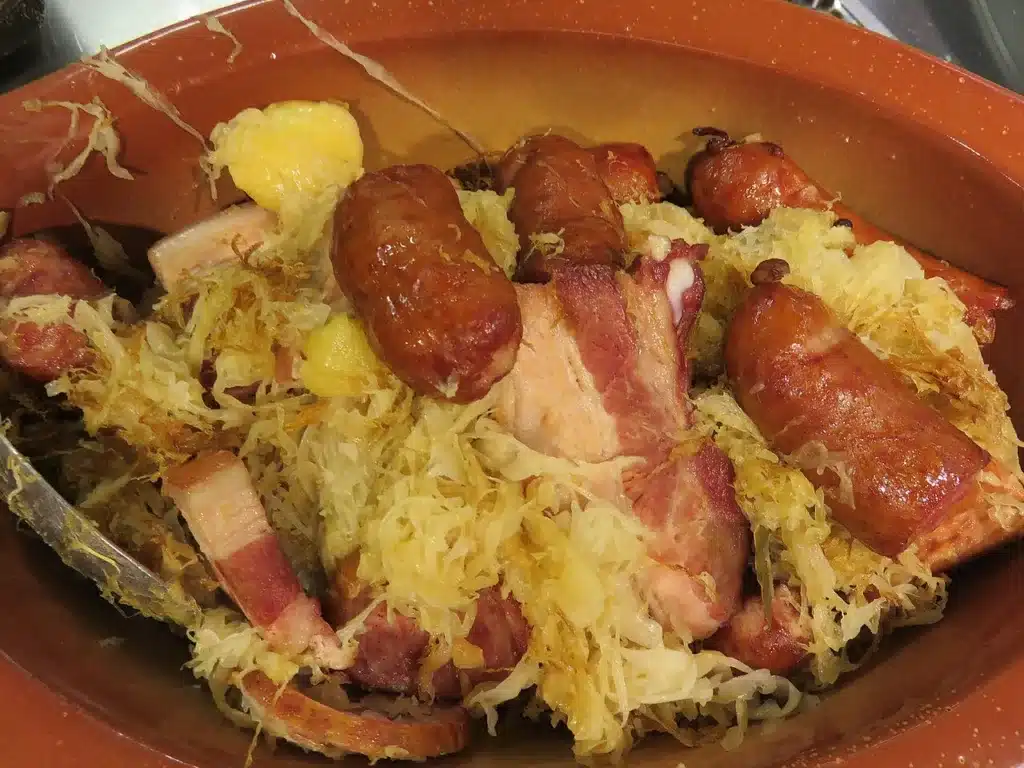
An emblematic dish of Strasbourg and all of Alsace, choucroute is made of fermented cabbage cooked with potatoes and served with a variety of meats and cured sausages, such as pork knuckle, bacon, and local sausages.
Its origins date back to the Middle Ages, and its popularity is linked to traditional methods of preserving vegetables for winter.
Choucroute garnie is enjoyed in many winstubs, traditional Alsatian restaurants known for their warm and convivial atmosphere.
Baeckeoffe
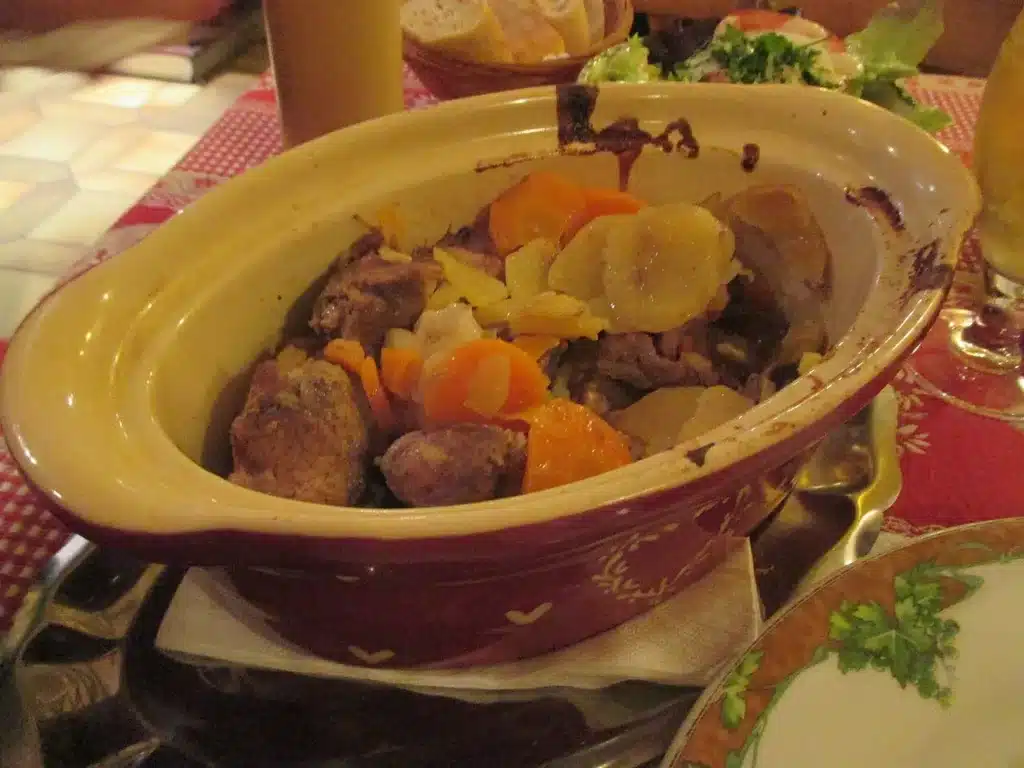
The baeckeoffe is a traditional family-style stew from Strasbourg, combining marinated meats (pork, beef, lamb), potatoes, and vegetables, slowly cooked in a terracotta dish.
Its name literally means “baker’s oven,” as residents once brought their dish to the baker to be cooked in the communal oven. It symbolizes the rustic and generous cuisine of the region.
Foie Gras and Terrines
Foie gras is an essential specialty of Strasbourg and Alsace.
Often served as a starter on fresh bread or accompanied by jams and chutneys, it embodies the refinement of Alsatian cuisine.
The region is also renowned for its terrines and pâtés, often prepared with high-quality local products.
Traditional Desserts
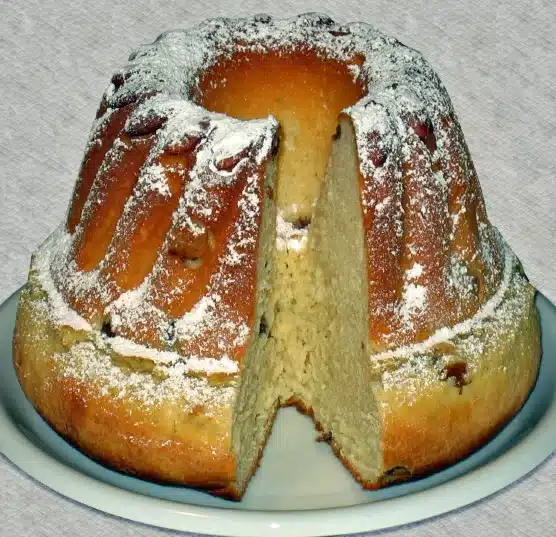
On the sweet side, Strasbourg shines with its bredeles, small cookies flavored with cinnamon, anise, or almonds, especially popular during the Christmas season.
The kougelhopf, a ring-shaped brioche cake, is another iconic specialty, often enjoyed for breakfast or afternoon tea.
Local Wines and Beverages
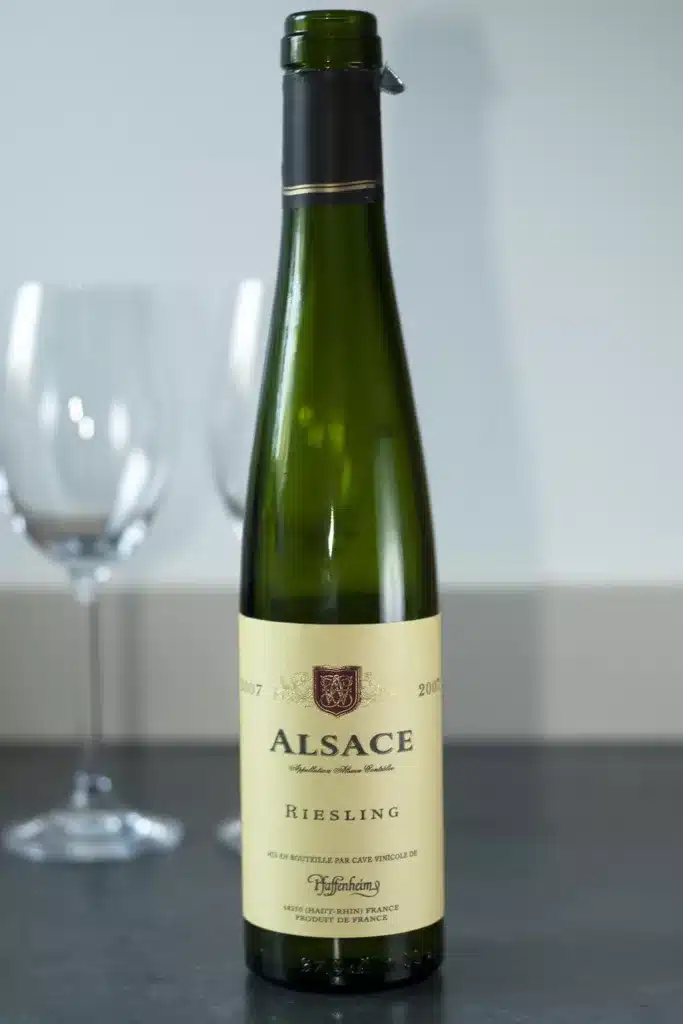
Strasbourg lies at the heart of the Alsace Wine Route, famous for its aromatic white wines, such as Riesling, Gewurztraminer, and Pinot Gris.
These wines pair perfectly with traditional dishes and reflect the region’s ancestral winemaking expertise.
Alsatian beer, brewed locally, is also very popular in winstubs and craft breweries.
The Gastronomic Experience
To fully discover Strasbourg’s gastronomy, it is recommended to visit the historic winstubs, cozy restaurants where traditional cuisine blends with typical Alsatian décor.
Markets, such as Strasbourg’s covered market or the Christmas markets, also offer a rich culinary immersion with fresh products and local specialties.
Must-See Events in Strasbourg
The Christmas Market – Christkindelsmärik
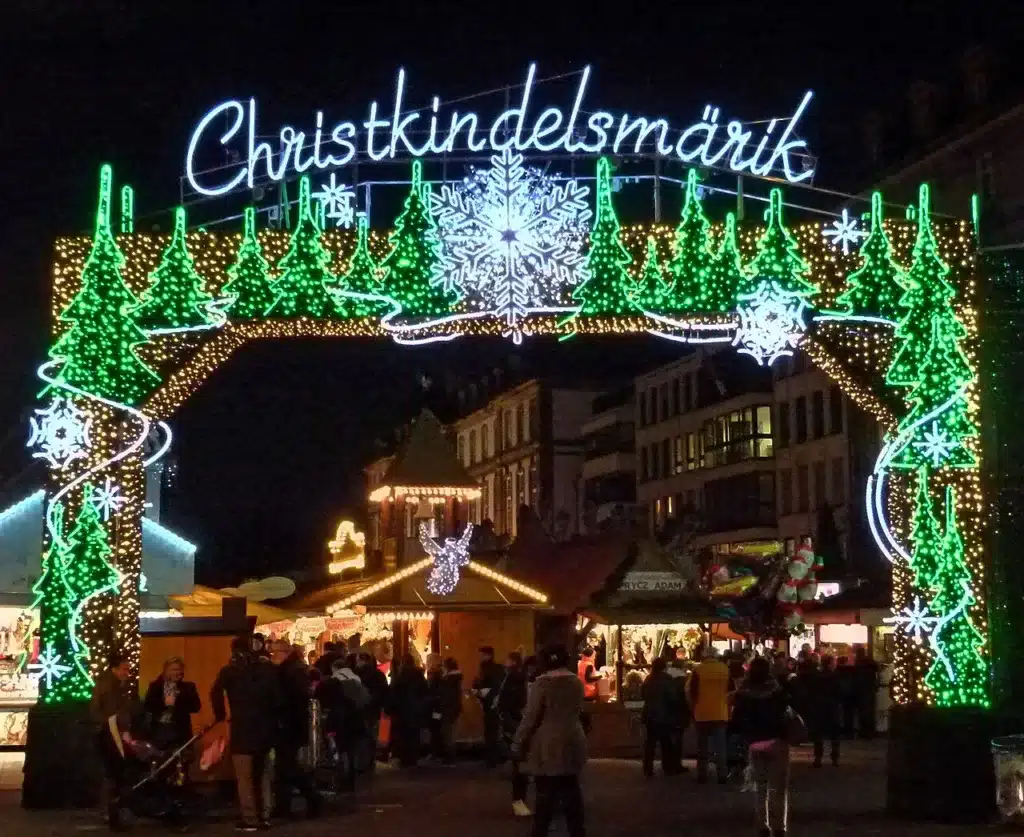
The Christkindelsmärik of Strasbourg is one of the oldest Christmas markets in Europe, held every year since 1570.
For nearly a month (from late November to late December), more than 300 wooden chalets line the historic squares of the Grande Île: Broglie, Kléber, the Cathedral, and more.
The Great Christmas Tree on Place Kléber, over 30 meters tall, lights up every evening, creating a highly anticipated musical and light show.
Visitors can find Alsatian handicrafts, decorations, mulled wine, bredeles, and family-friendly entertainment.
The market attracts millions of visitors each season and represents a major tourist highlight.
It embodies Strasbourg’s festive and convivial spirit during the holiday season, striking a balance between tradition, craftsmanship, and spectacle.
Augenblick Festival
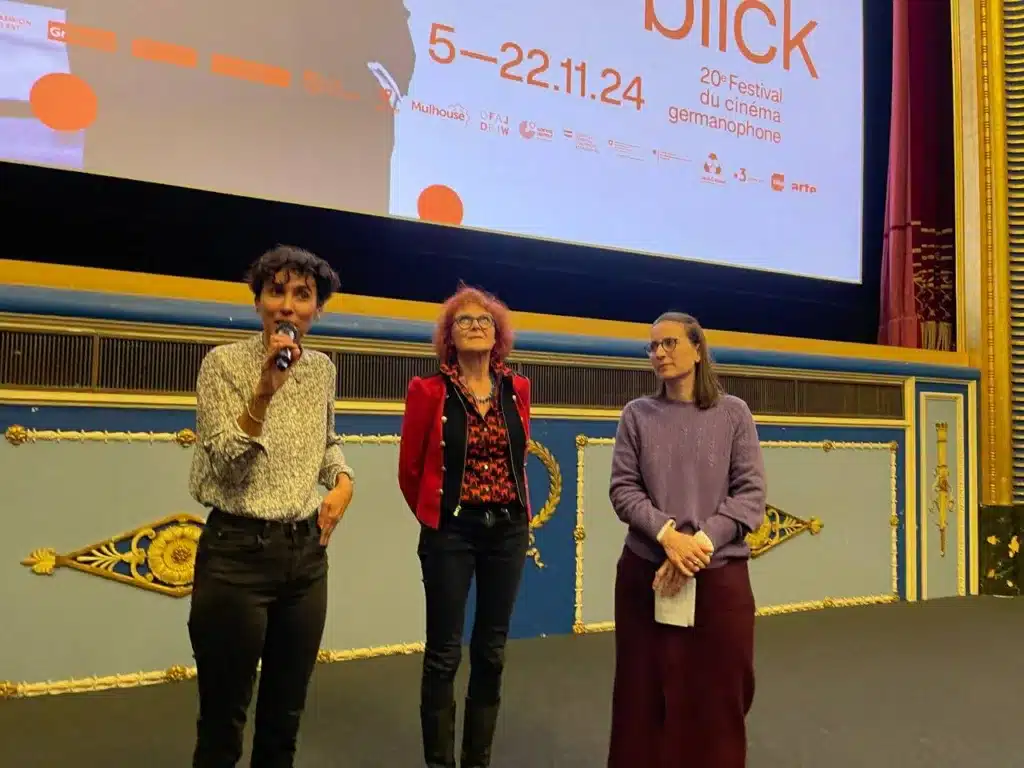
The Augenblick Festival is an annual film festival dedicated to German-language cinema (Germany, Austria, Switzerland).
Held every autumn in Strasbourg, it features screenings, workshops, masterclasses, and artistic discussions.
The festival aims to promote cultural dialogue between French- and German-speaking audiences by showcasing lesser-known works.
It attracts both film enthusiasts and curious visitors interested in European cultural diversity.
Screenings take place in several venues across the city, reinforcing Strasbourg’s cultural vibrancy in November.
It is a great opportunity to discover auteur films, experimental works, and lesser-known classics of German-language cinema.
Immersive “Luminiscence” Show in the Cathedral
Each year, an immersive show called “Luminiscence” lights up Strasbourg Cathedral, transforming the monument into a magical setting.
Video mapping plays across the vaults, stained glass windows, and sculptures, creating a visual narrative that blends heritage and modernity.
The experience is especially enchanting in the evening, when light effects merge with darkness and the Gothic stonework.
The show attracts a wide audience: tourists, families, and lovers of art and technology come together for this illuminated experience.
It is part of the city’s cultural calendar, alongside major festivals and seasonal events.
This type of event illustrates how Strasbourg successfully combines its historical past with contemporary artistic expression.
A Football Match at Stade de la Meinau
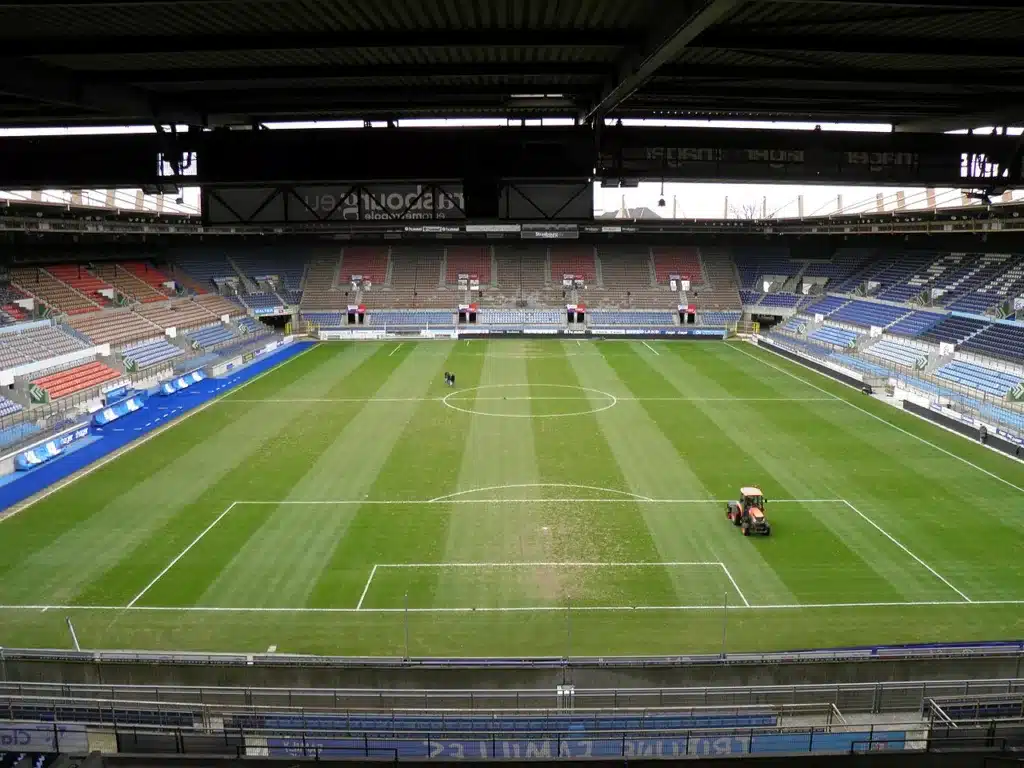
Attending a RC Strasbourg Alsace match at the Stade de la Meinau is a lively and authentic experience for any visitor. Opened in 1914, the stadium has been the club’s home for over a century.
Nicknamed “La Meinau” and located in the district of the same name, it currently seats more than 26,000 supporters and is undergoing renovation to reach around 32,300 seats.
The atmosphere is electric: Racing Club fans, especially in the West Stand (the “Ultra Boys”), create an impressive display of passion and fervor.
Conclusion
Strasbourg is a city where every street corner tells a story.
Between La Petite France, the historic squares, the Gothic churches, the half-timbered houses, cultural and European institutions, parks and gardens, gastronomy, and events, the city offers a rich and diverse heritage.
Walking through Strasbourg means diving into centuries of history, admiring unique architecture, and discovering Alsatian culture.
Whether you are a history enthusiast, an art lover, or a curious visitor, Strasbourg will charm you with its authentic character and countless treasures.
Each place presented in this article is an essential stop to fully enjoy the city.
For an original visit, discover Strasbourg with our route “The Secrets of Strasbourg’s Historic City Center”, a captivating blend of escape game and self-guided cultural tour that lets you explore the city in a different way.