Visit Rennes: 30 Must-See Sights and Things to Do
Visiting Rennes means discovering a dynamic city in the heart of Brittany, where history, culture, and modernity blend harmoniously. As a regional capital, Rennes captivates with its medieval historic center, half-timbered houses, and iconic monuments such as the Parliament of Brittany and Saint Peter’s Cathedral.
The city is also known for its lively cultural scene with museums, festivals, and artistic events. Parks, gardens, and the banks of the Vilaine River allow you to enjoy nature right in the city. This complete guide will help you plan your stay to fully enjoy everything Rennes has to offer.
For a unique experience, embark on an adventure with our route « The Historic Center of Rennes », a captivating mix of an escape game and self-guided cultural tour, allowing you to explore the city in a different way.
Monuments & Historical Heritage – Rennes
1. Parliament of Brittany

The Parliament of Brittany, located in the heart of Rennes, is a majestic 17th-century building symbolizing the judicial power and political history of the region.
Built between 1618 and 1655, it was designed by architect Salomon de Brosse in a very elegant classical style, with a façade richly decorated with columns and sculpted pediments.
The building once housed the sovereign court of the Parliament, where the most important judicial decisions for Brittany were made.
It was partially destroyed by a fire in 1994, before being fully restored, with special care taken to preserve the original woodwork, paintings, and gilding.
The large “hall of lost steps” impresses with its high ceiling and murals depicting Breton history and the legitimacy of royal power.
Discover the secrets of the mysterious emblems present in the Parliament of Brittany with our route « The Historic Center of Rennes »
2. Saint Peter’s Cathedral of Rennes
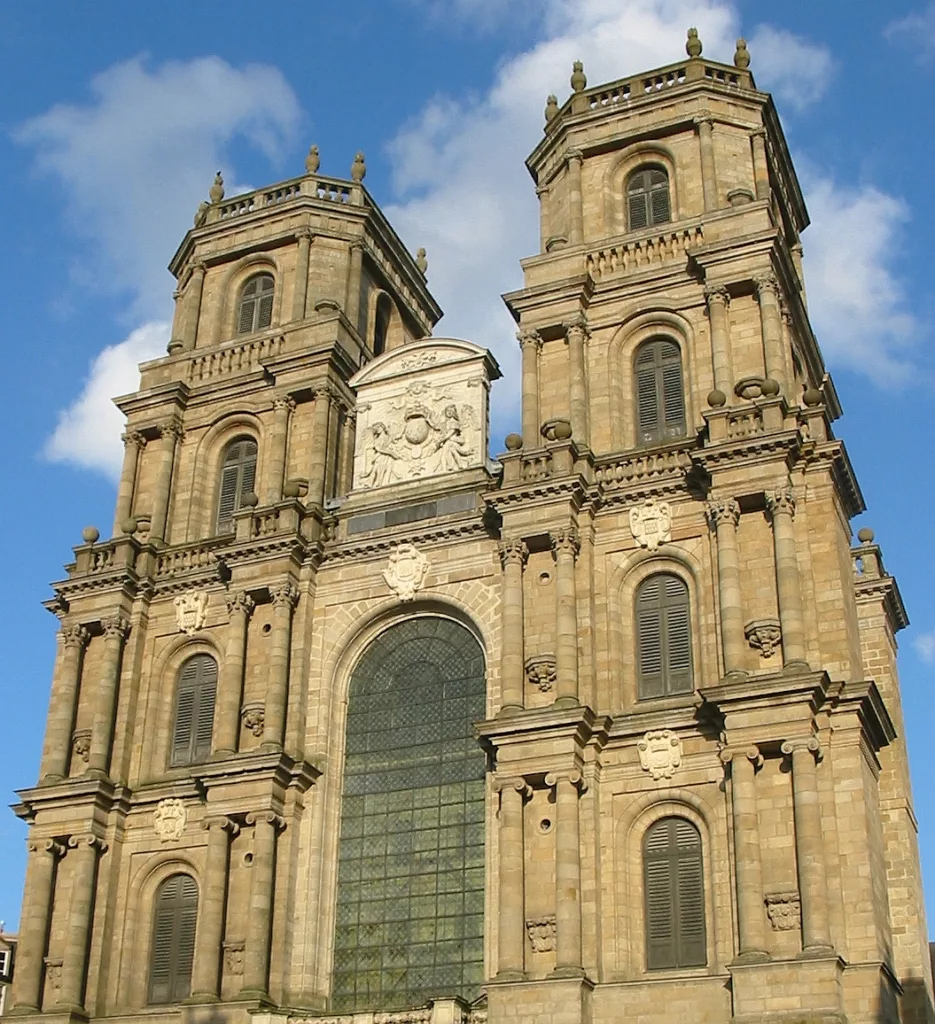
Saint Peter’s Cathedral of Rennes is the city’s main Catholic place of worship, located on Saint Peter’s Square in the heart of the historic center.
Its construction began in the 16th century and spanned several centuries, combining architectural styles ranging from Gothic to Neoclassical.
The building has suffered numerous fires and reconstructions, notably after the major fire in Rennes in 1720.
The main façade, sober and elegant, presents a classical style with two massive towers framing the main entrance.
The interior of the cathedral is spacious and bright, with large vaults and Corinthian columns, offering a solemn yet welcoming atmosphere.
It houses several remarkable works of art, including paintings and sculptures from the 17th and 18th centuries, depicting the lives of saints and biblical scenes.
Learn more about the coats of arms present on this cathedral with our route « The Historic Center of Rennes »
3. Saint-Sauveur Basilica
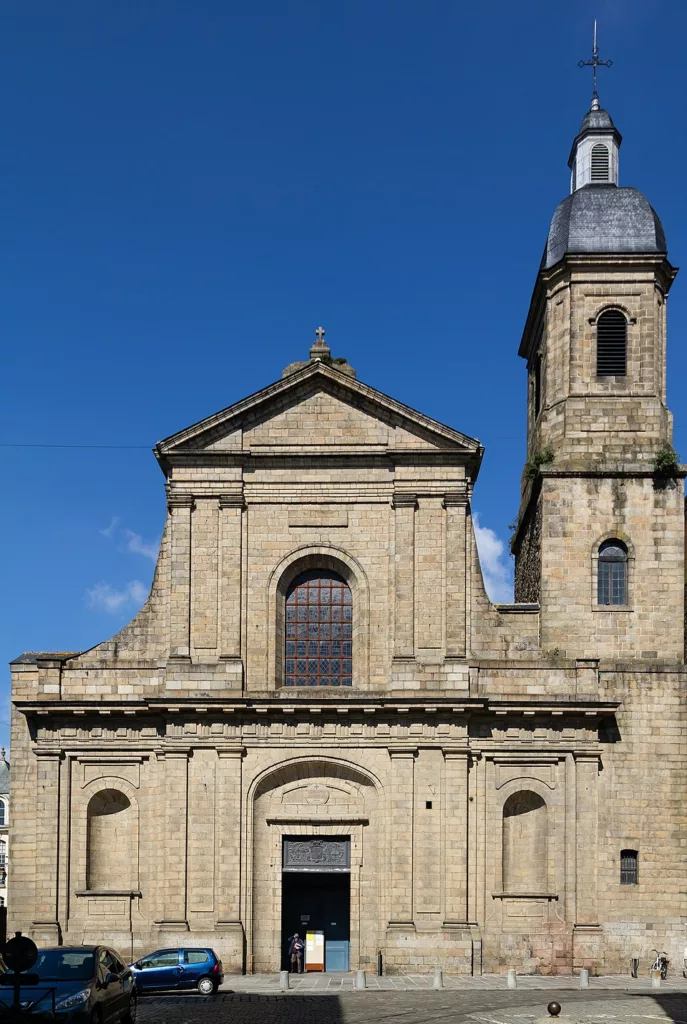
Saint-Sauveur Basilica of Rennes is a minor basilica of the Catholic Church, dedicated to Saint Sauveur and Our Lady of Miracles and Virtues.
Its construction began in 1703 following the plans of architect François Huguet, and was completed in 1768.
The architectural style is classical, characterized by balanced forms and a sober, elegant façade.
The basilica is particularly remarkable for its furnishings: the main altar canopy, wrought-iron pulpit, organ, and numerous ex-votos deposited by the faithful.
Marian devotion is very strong here: several miracles are attributed to Our Lady, which led to the church being elevated to a basilica in 1916.
As a minor basilica, Saint-Sauveur has its own coat of arms, visible notably on a stained glass window or above the main entrance.
4. Mordelaises Gate
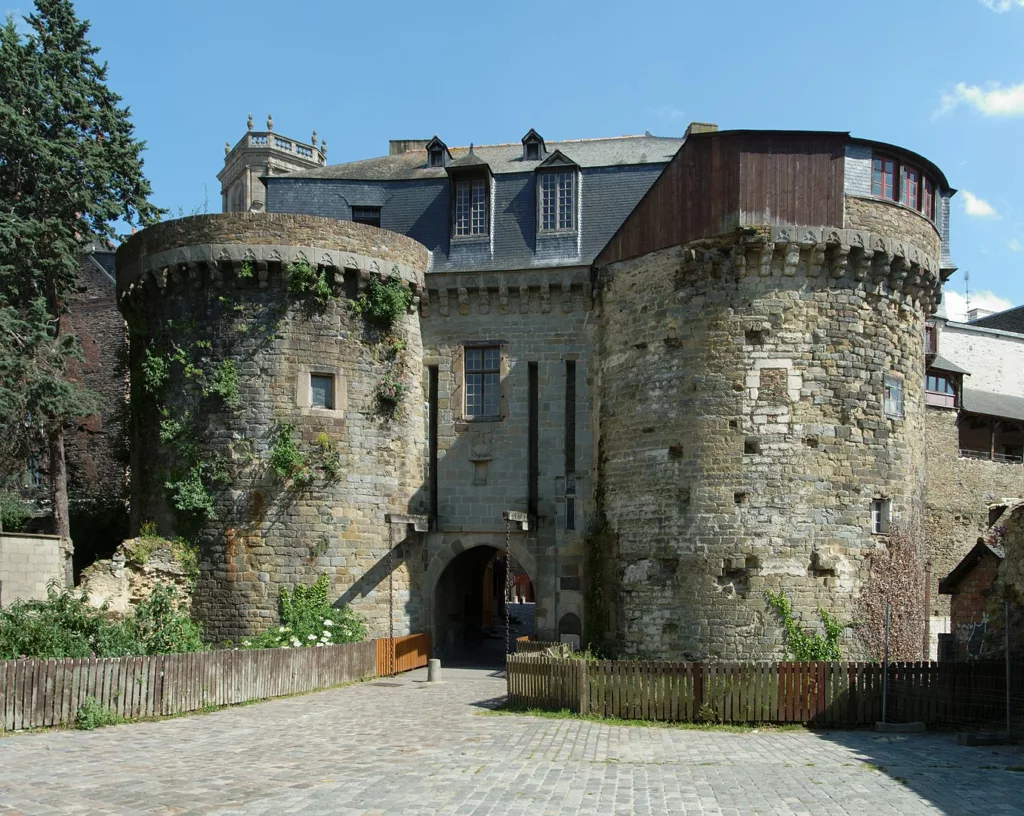
The Mordelaises Gate is a historic entry châtelet, consisting of two granite towers topped with machicolations. This remnant of Rennes’ city walls mainly dates back to the 15th century, rebuilt between 1442 and 1452.
It was equipped with a drawbridge and a portcullis, and featured an advanced defensive system with a barbican. The name “Mordelaises” comes from the road leading to Mordelles, an important locality west of Rennes.
During ducal ceremonies, future dukes or duchesses of Brittany swore to defend Breton liberties in front of these gates before entering Rennes. In 1793, during the French Revolution, the towers of the Mordelaises Gate were used as a prison, also called the “Marat Gate.”
5. Hôtel de Blossac
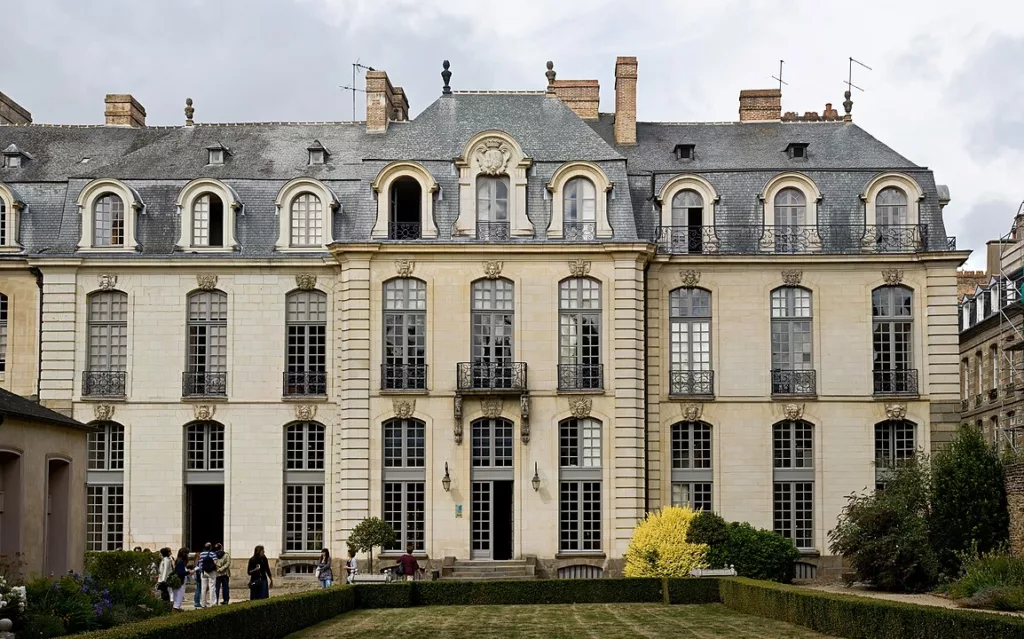
The Hôtel de Blossac is an 18th-century private mansion located at 6 Rue du Chapitre, in Rennes’ historic center. It was built in 1728, after the 1720 fire of Rennes, on a plan probably designed by Jacques V. Gabriel.
The architecture is classical in style, with two main wings, service buildings, and a grand ceremonial staircase. The mansion belonged to the La Bourdonnaye family, Counts of Blossac, and was long rented as the residence of the province’s commander-in-chief.
During the French Revolution, the building was divided into apartments, and the writer Paul Féval was born there. In 1982, the State acquired the hôtel and converted it into offices; it now houses the Regional Directorate of Cultural Affairs (DRAC) of Brittany.
7. Place des Lices
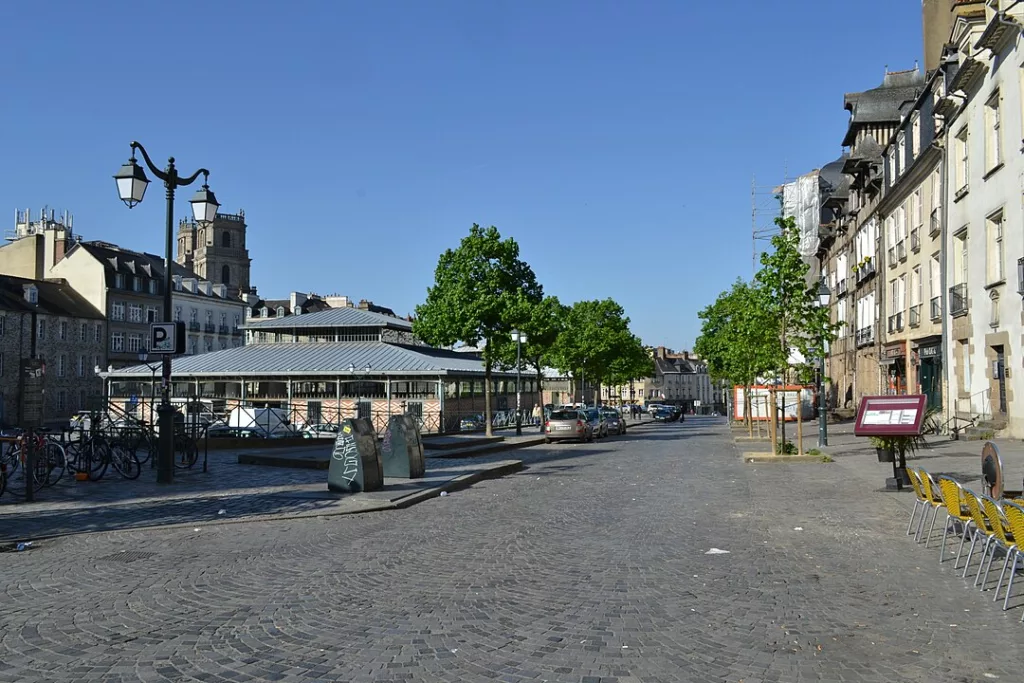
Place des Lices is an iconic square in Rennes’ city center, hosting a lively market every Saturday since 1622. The name “Lices” comes from the Middle Ages: it was a field for knightly jousts, with the lice being the barrier separating the two riders. Tradition holds that the famous Breton knight Bertrand du Guesclin took part in his first tournament on this square in 1337.
At one time, the square also served as a site for public executions: the current clock is located where the old gallows once stood.
Two halls, known as the Halles Martenot, in the Baltard style, line the square and testify to its importance in local commerce. It is surrounded by remarkable private mansions, such as number 26 (Racapée de La Feuillée) and number 34 (Hôtel du Molant).
8. Jacobins Convent

The Jacobins Convent of Rennes was founded on February 2, 1369 by the Dominicans, in the presence of the Duke of Brittany, marking its importance from the outset. From the Middle Ages, it played a major spiritual, intellectual, and political role, as the Dominicans were preaching brothers established in the city to be close to the inhabitants.
The convent became a bustling pilgrimage site around a painting of the Virgin called Our Lady of Good News, to which miracles have been attributed since the 16th century. On November 17, 1491, it was linked to a major political event: the peace treaty between Anne of Brittany and Charles VIII was reportedly signed there, symbolically sealing the union of Brittany and France.
During archaeological excavations conducted between 2011 and 2013, nearly a thousand graves were found, including that of Louise de Quengo, a 17th-century Breton noblewoman. Louise de Quengo’s lead coffin revealed an exceptionally well-preserved body, allowing for studies in the history of science.
After the Revolution, the convent was transformed: purchased by the army, it became a barracks and was finally sold to Rennes Métropole in 2002.
9. Rennes City Hall
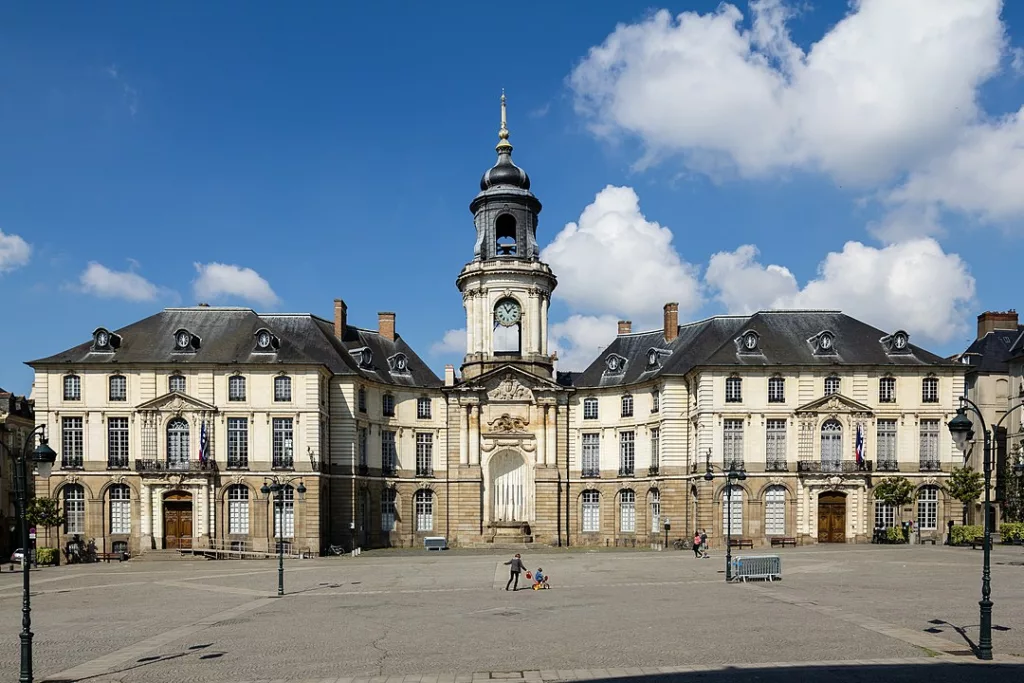
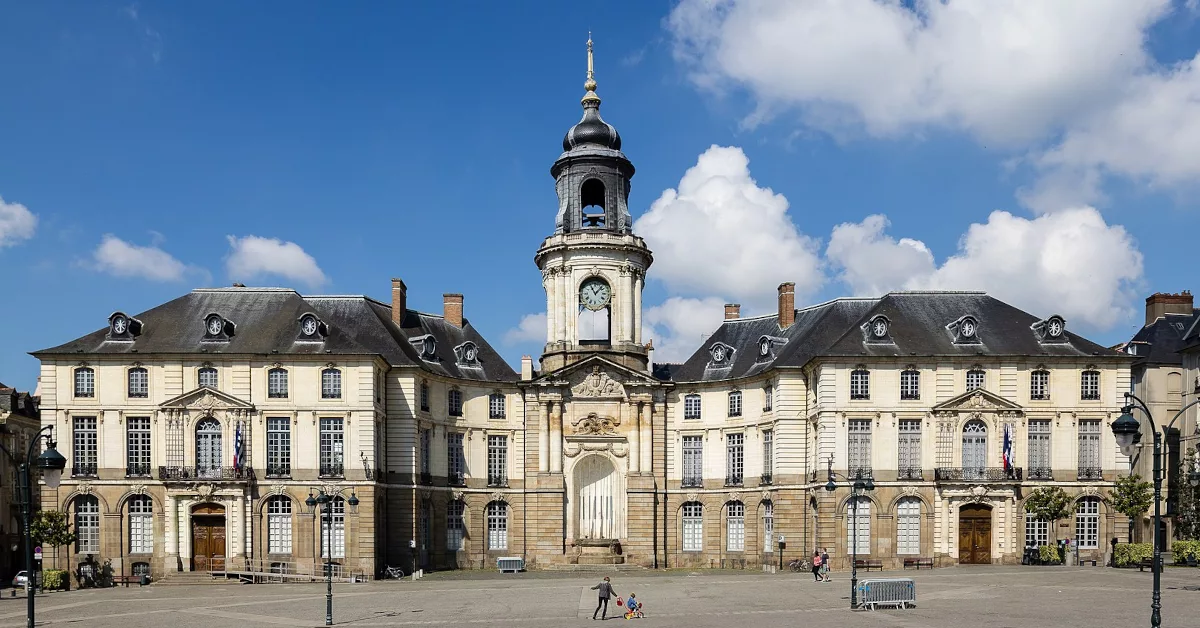
Jacques-V. Gabriel designed the City Hall not only as an administrative building but also as a theatrical element structuring the square. The curvature of the façades creates a carefully calculated perspective effect.
The 1720 fire destroyed more than 900 houses. The City Hall is part of the grand reconstruction plan Gabriel implemented to “modernize” Rennes.
The City Hall houses both the mayor’s office and the former presidial court (royal tribunal). The two once had completely different functions, but a single large central belfry connects them.
Many visitors think the belfry is perfectly symmetrical, but it is not: it was adjusted to account for the internal functions of the two wings.
In the north wing, there is a memorial hall dedicated to the citizens of Rennes who died in wars, decorated with large frescoes. This is a rare feature for a city hall.
The grand wedding hall, restored in the 19th century, features a very warm style inspired by Italian palaces, with woodwork and monumental paintings.
Learn more about a mysterious sundial present on this building with our route « The Historic Center of Rennes »
10. Rennes Opera House
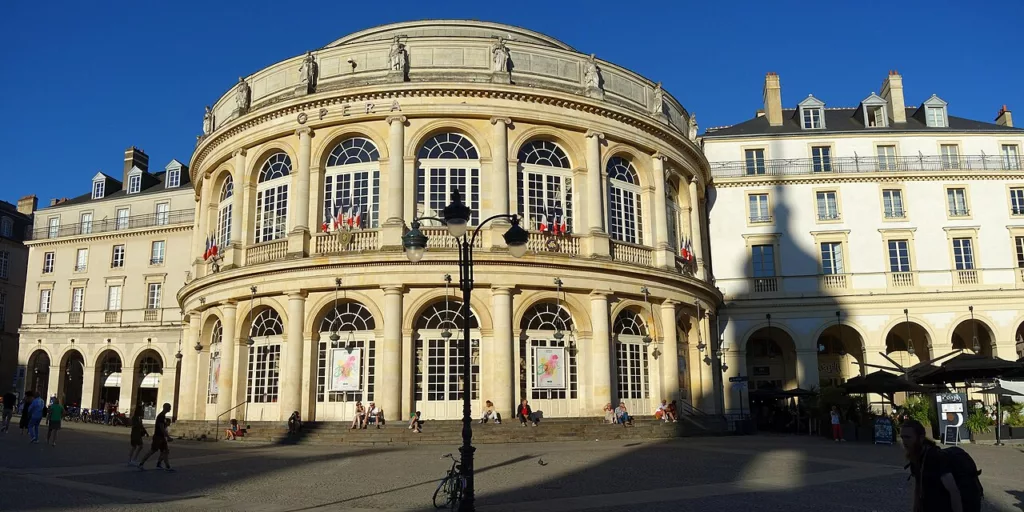
The Rennes Opera House, inaugurated in 1836, is one of the smallest opera houses in France but also one of the most elegant, designed to offer exceptional acoustics.
Its architect, Charles Millardet, adopted a uniquely curved façade, the only one of its kind in France, perfectly matching that of the City Hall across the square.
The building rests on an old medieval city wall: in the basement, the remains of the city’s fortifications can still be seen.
The interior preserves its original wrought-iron structure, an innovation at the time that helped reduce the risk of fire.
The dome is decorated with a large allegorical painting completed in 1913, representing the arts and the Muses in a highly theatrical style.
The opera is renowned for its excellent stage-to-audience ratio: no seat is more than 22 meters from the stage, creating an intimate and immersive atmosphere.
Discover the secrets of the statues at Rennes Opera House with our route « The Historic Center of Rennes »
11. Saint-Yves Chapel

Saint-Yves Chapel, built in the 15th century, is one of the oldest religious buildings still visible in Rennes’ historic center.
It once served as a hospital and almonry, welcoming travelers, the poor, and the sick, making it an emblematic site of medieval charity.
Its architecture combines flamboyant Gothic style with Renaissance elements, notably in the richly sculpted portal.
Contemporary stained glass windows, created at the end of the 20th century, provide a striking contrast with the ancient stone and tell the story of Rennes.
The chapel was desacralized after the French Revolution and later served as a court, warehouse, and even an art workshop.
Restored in the 1990s, it regained the full elegance of its arches, vaults, and sculpted portal.
Today, it houses the Tourism Office, with a permanent exhibition explaining the city’s evolution from the Middle Ages to the present day.
12. Saint-Georges Palace
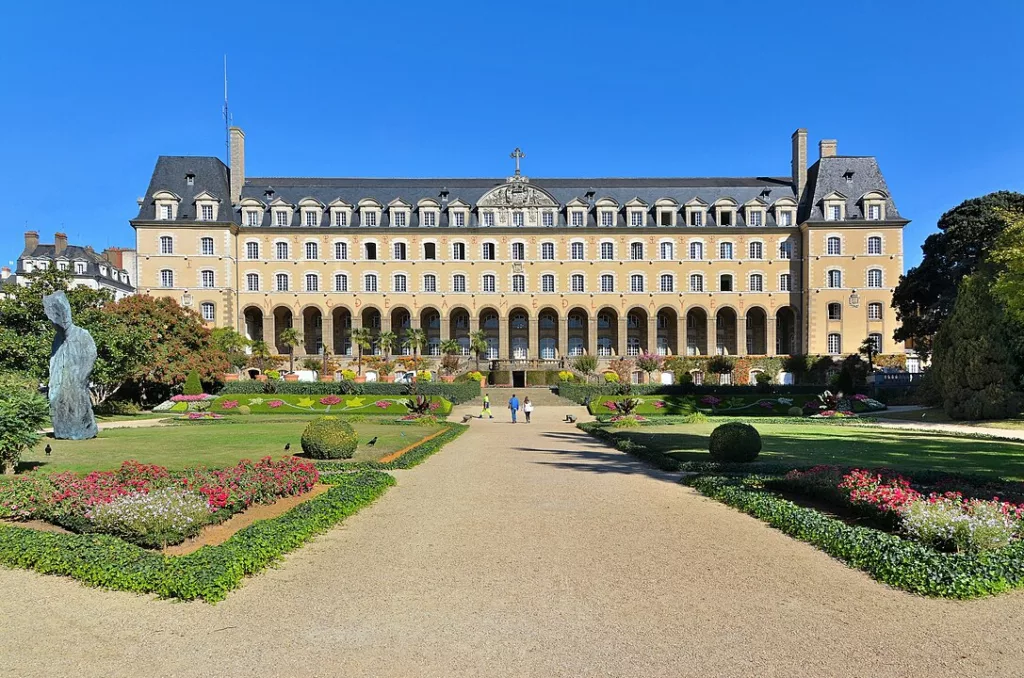
Saint-Georges Palace was built in the 17th century to house the Benedictine Abbey of Saint-Georges, one of the most powerful religious communities in Rennes.
Its majestic façade, 100 meters long, is an outstanding example of Breton classicism, with 32 perfectly aligned arches.
The building was commissioned by Abbess Magdelaine de la Fayette, who wanted a structure befitting the prestige of her monastery.
At the center of the façade, the large pediment still bears the abbess’s coat of arms, sculpted to assert her authority and wealth.
After the Revolution, the abbey was transformed into a barracks and then into an administrative building, which allowed it to be preserved.
The French-style garden in front of the palace, redesigned in the 20th century, forms a superb flowerbed that changes pattern every summer.
Since 1999, the ground floor has housed municipal services, while the upper floors remain inaccessible to the public, maintaining an air of mystery around the site.
13. Place du Champ-Jacquet
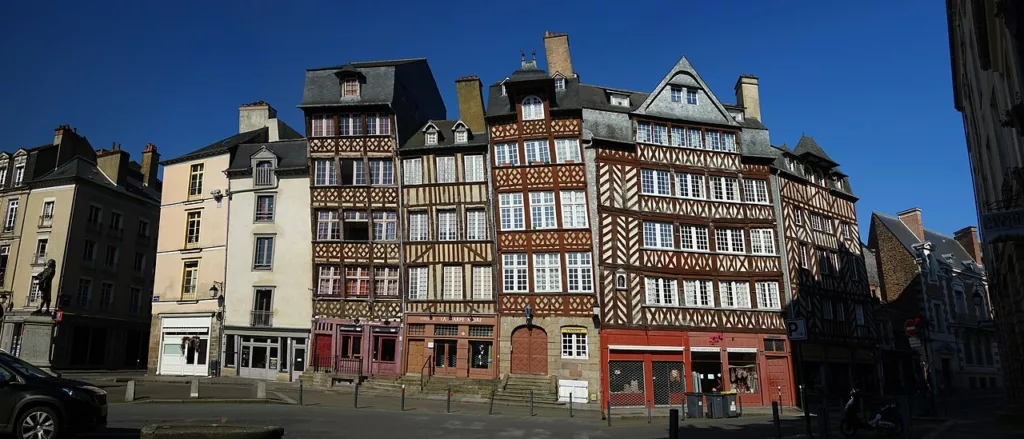
Place du Champ-Jacquet is one of the most iconic squares in Rennes, famous for its tall half-timbered houses that appear to lean toward each other.
Most of these houses date from the 17th century and rest on cantilevered structures, a traditional technique typical of Rennes’ architecture before the 1720 fire.
The square takes its name from a former agricultural field – the “Champ Jacques” – which belonged to a local family in the Middle Ages.
The center of the square features an elegant granite fountain, installed in the 19th century, which serves as a landmark for visitors.
It was formerly an important market area, especially for fruits and vegetables, bustling each morning with vendors and inhabitants from the suburbs.
Today, the square is lined with cafés and small shops, making it a lively and welcoming place in the historic center.
Museums & Culture – Rennes
1. Rennes Museum of Fine Arts
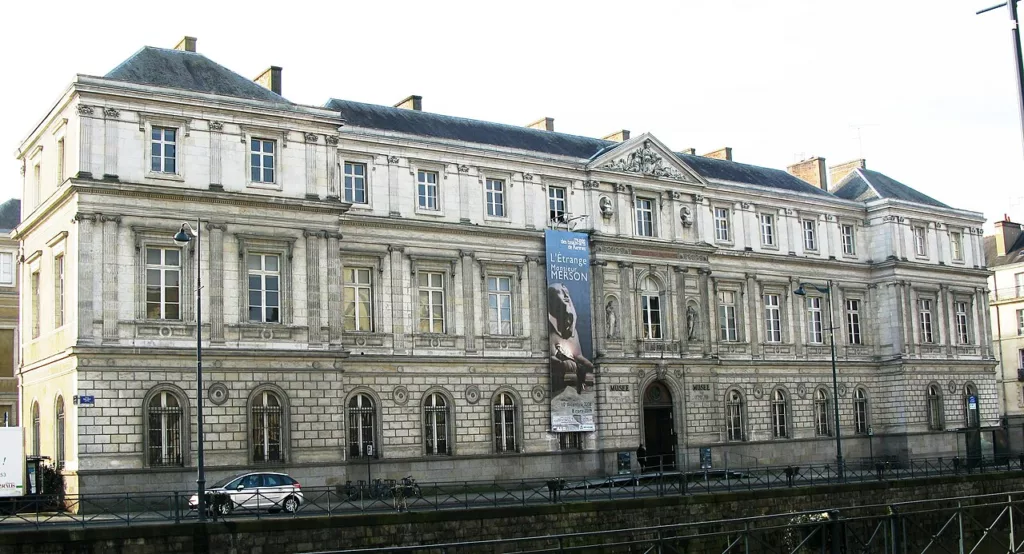
The Rennes Museum of Fine Arts is one of the city’s main museums, located in the heart of the historic center. It houses a rich collection ranging from the Renaissance to contemporary art, including works by French and European artists, encompassing paintings, sculptures, and drawings.
3. Museum of Brittany
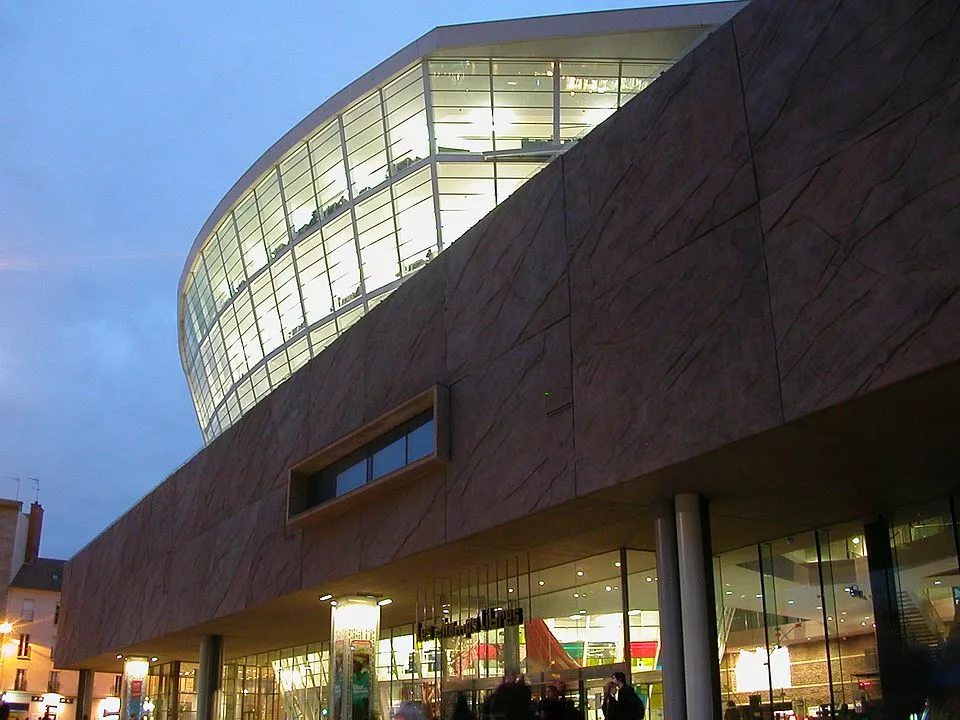
The Museum of Brittany, located at Les Champs Libres, retraces the region’s history and heritage. It presents archaeological, ethnographic, and historical collections, allowing visitors to better understand the evolution of Brittany and Rennes over the centuries.
4. FRAC Bretagne (Regional Contemporary Art Fund)
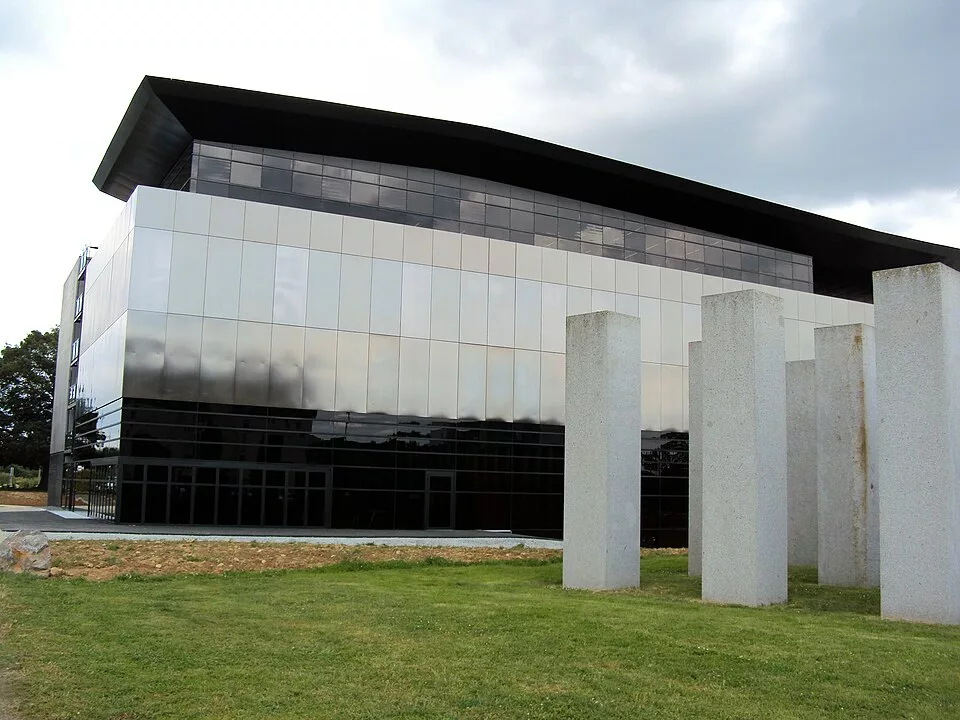
The FRAC Bretagne is dedicated to contemporary art and highlights artists from the region and beyond. It offers a variety of temporary exhibitions, ranging from painting to sculpture and multimedia installations. The exhibited works are often innovative and interactive.
5. L’Espace des Sciences
L’Espace des Sciences, located at the heart of Les Champs Libres, is one of the most dynamic centers for scientific culture in Brittany.
It offers interactive exhibitions that allow visitors to understand science by manipulating, experimenting, and observing phenomena directly.
One of its main attractions is the Planetarium, equipped with an immersive dome that offers spectacular journeys through the Universe.
L’Espace des Sciences also hosts the “Merlin Laboratory,” a space dedicated to children that encourages exploration and scientific curiosity.
Parks, Gardens & Walks
1. Thabor Park
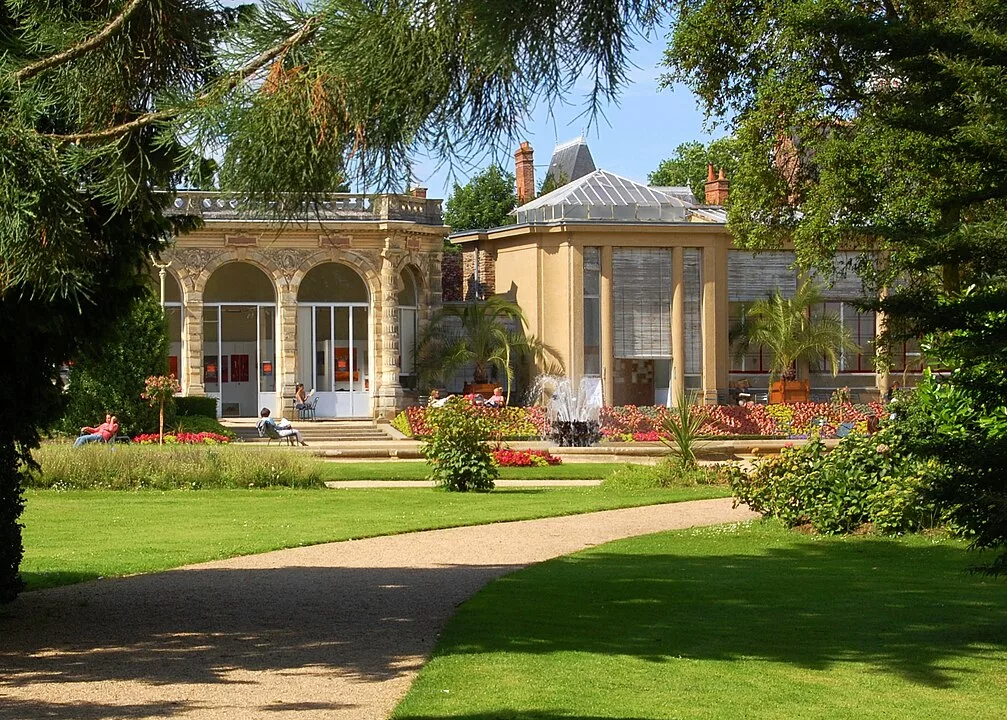
Thabor Park covers about 10 hectares in the heart of Rennes. Its name comes from the biblical Mount Tabor, referencing the hill overlooking the Sea of Galilee, as evoked by the monks of Saint-Melaine Abbey.
Originally, it was a monastic garden: the monks of Saint-Melaine Abbey cultivated orchards and vegetable gardens here. The park was landscaped between 1866 and 1868 by the landscape brothers Denis and Eugène Bühler, who designed both French-style gardens and English-style spaces.
It features several garden styles: a formal French parterre, a romantic English section, and a large rose garden. The Thabor Botanical Garden, located within the park, contains over 3,000 species arranged in eleven circular beds, some organized by botanical class.
The park also includes decorative structures: an aviary, a bandstand, fountains, and a grotto called “the Inferno” for its shady corners. Thabor Park is classified as a “prestigious garden” by the city of Rennes.
2. Gayeulles Park
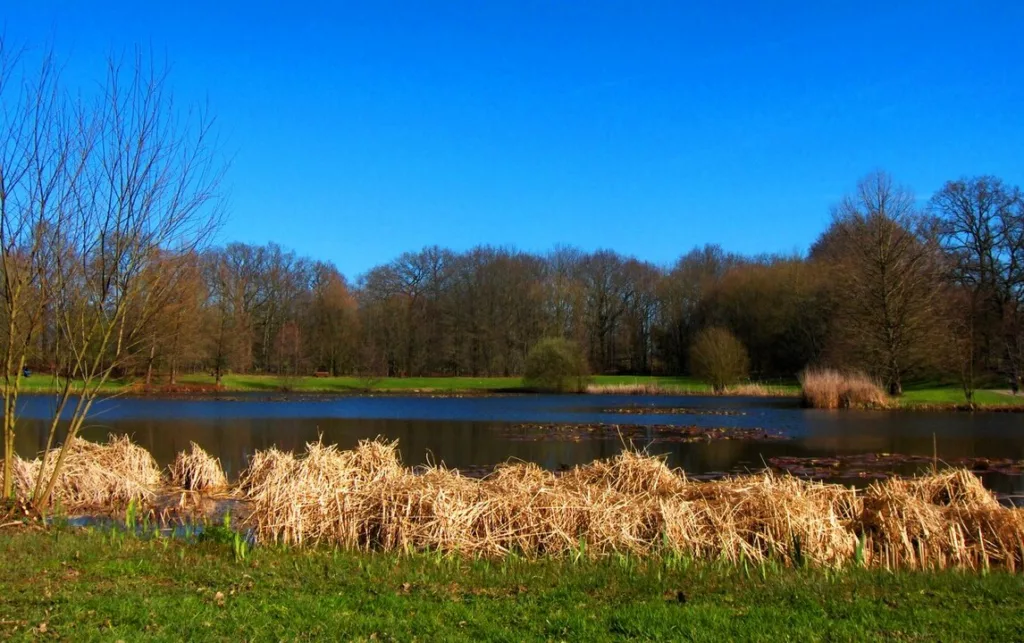
Gayeulles Park is a large natural area located north of Rennes. It offers hiking trails, cycling paths, and sports zones. The park includes ponds, picnic areas, and wooded spaces. It is particularly popular for outdoor activities and relaxation.
3. Walk along the Vilaine River
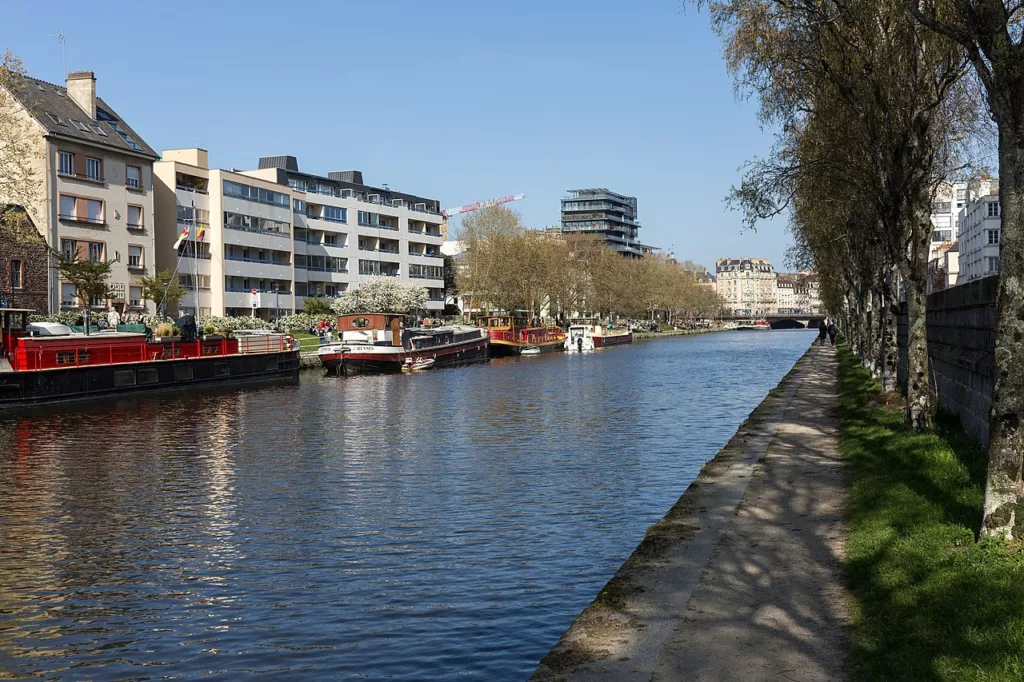
The Vilaine River runs through Rennes, offering beautiful riverside walks. Pedestrian paths and cycling lanes allow visitors to explore the city from a natural perspective. The walk provides views of historic bridges and the buildings lining the riverbanks. Green spaces and benches are arranged for relaxation and rest. It is a favored spot for jogging, cycling, or a peaceful stroll.
4. Rocambole Garden
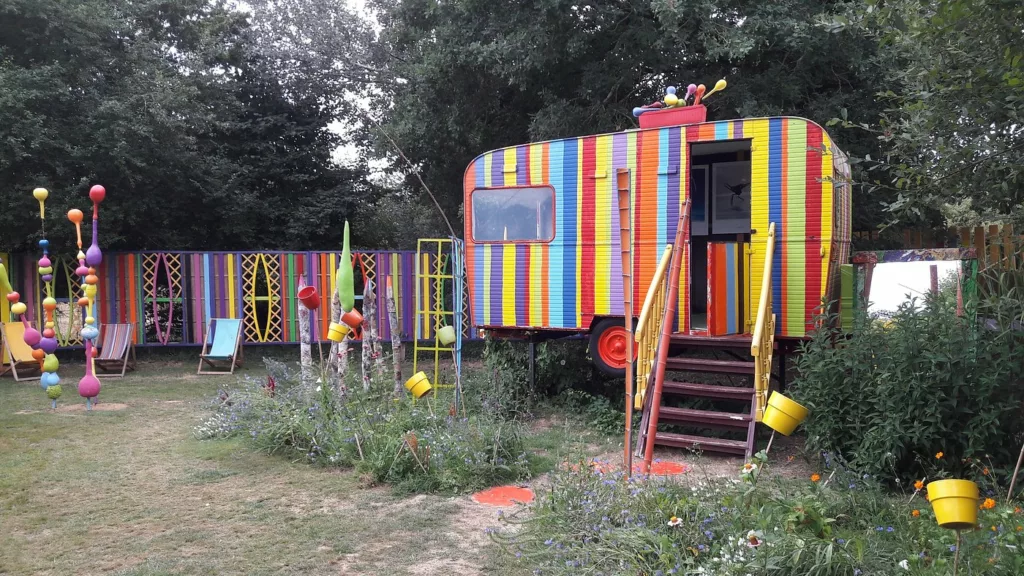
Rocambole Garden, located in Corps-Nuds near Rennes, is an artistic and ecological garden created by two passionate artist-gardeners.
It stands out for its unique approach, combining organic gardening, recycled installations, and poetic creations entirely made from reclaimed materials.
The garden is designed as a sensory journey, where each space tells a small story through shapes, colors, and atmospheres.
Visitors can discover unusual huts, plant sculptures, and playful decorations that stimulate the imagination of both children and adults.
The garden emphasizes biodiversity and agroecology, featuring permaculture vegetable gardens that demonstrate simple, reproducible techniques.
Each summer, new installations appear as the artists transform the garden into a permanent workshop, reinventing spaces season after season.
5. Hamelin-Oberthür Park
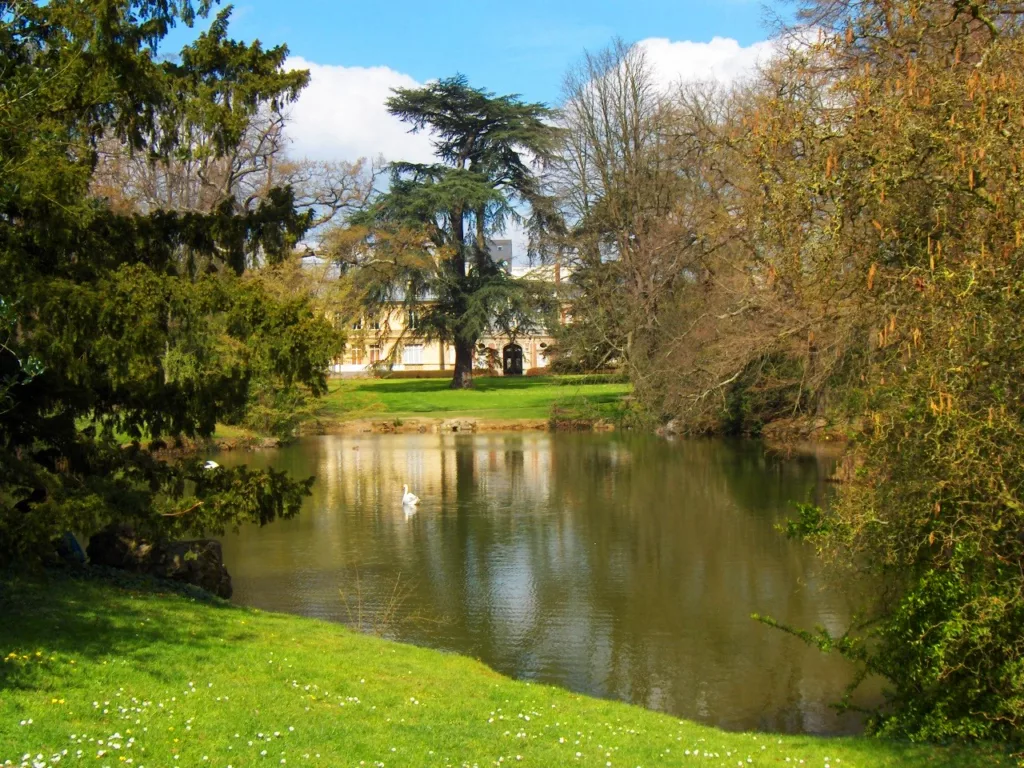
Hamelin-Oberthür Park is one of the most romantic parks in Rennes, situated around the former estate of the Oberthür family, famous 19th-century printers from Rennes.
It is named after François-Charles Oberthür, founder of the Oberthür printing house, which became one of the city’s industrial highlights.
The park is designed as an English-style landscaped garden, with winding paths, groves, and carefully arranged viewpoints.
One of its main attractions is a beautiful pond where swans and ducks delight families and provide photogenic reflections of the surrounding trees.
Rennes Gastronomy
Dishes & Specialties
Galette-sausage
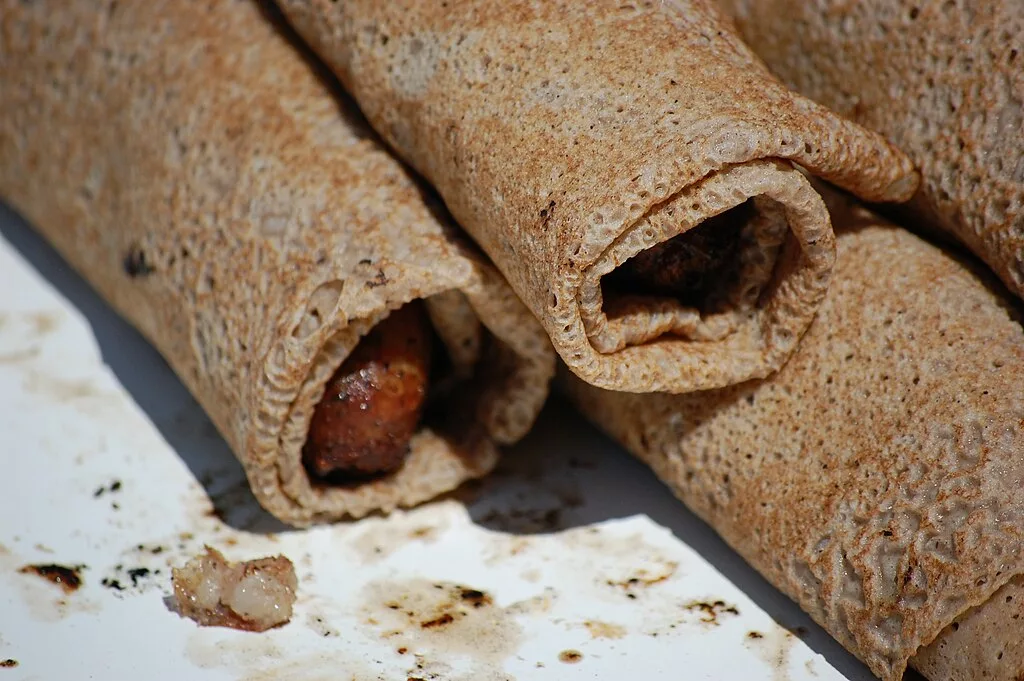
The galette-sausage is an iconic specialty of Rennes and Brittany. It consists of a grilled sausage wrapped in a buckwheat pancake.
It is typically enjoyed during markets or sporting events, particularly at Place des Lices. This quick and flavorful dish reflects the culinary traditions of Brittany.
Kig ha farz

The Kig ha farz is a traditional Breton dish made with meat (pork, beef, or chicken) and farz, a type of flour-based dough cooked in a broth. It is often served with local vegetables such as carrots and cabbage.
The dish is enjoyed hot and makes a hearty, comforting meal. It reflects the rural and historical gastronomic heritage of Brittany.
🍮 Desserts & Sweets
Far Breton
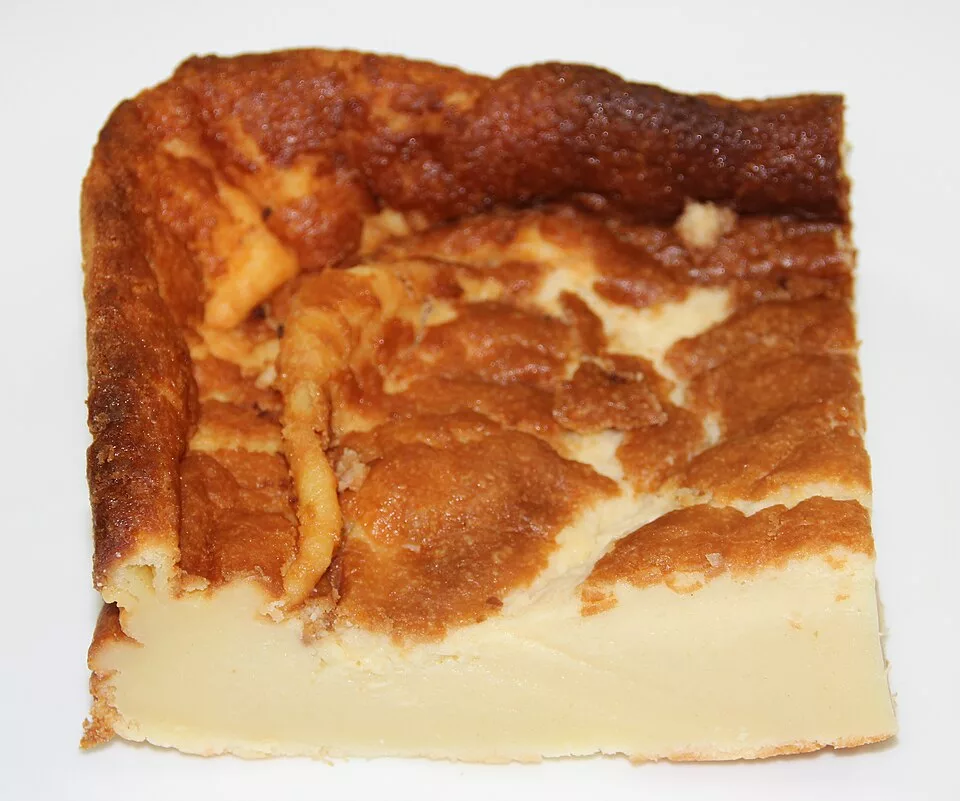
The Far Breton is a traditional dessert made from flour, eggs, milk, and prunes. It is soft, slightly sweet, and can be enjoyed at any time of the day.
Far Breton is often served in slices during meals or at local bakeries. This dessert represents Breton pastry expertise.
Kouign-amann
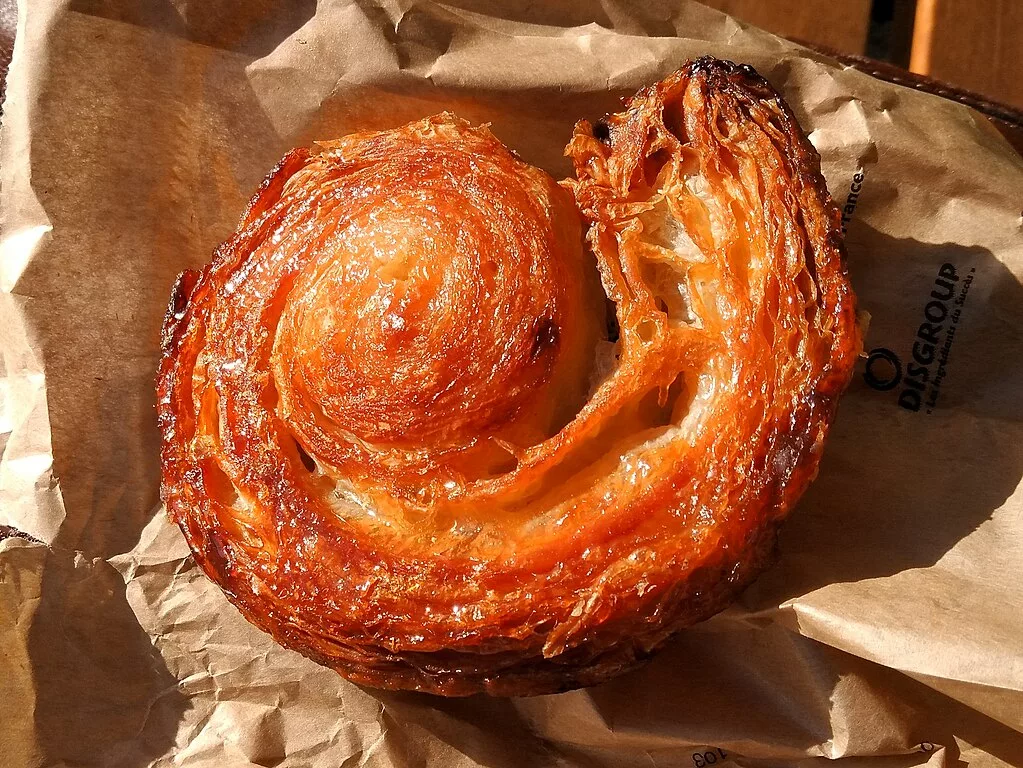
The Kouign-amann is a famous Breton pastry known for its flaky texture and caramelized taste. It is made with butter and sugar, giving it a golden and crispy appearance.
Bakeries in Rennes offer various versions, sometimes including apples or chocolate.
Cider and Local Drinks
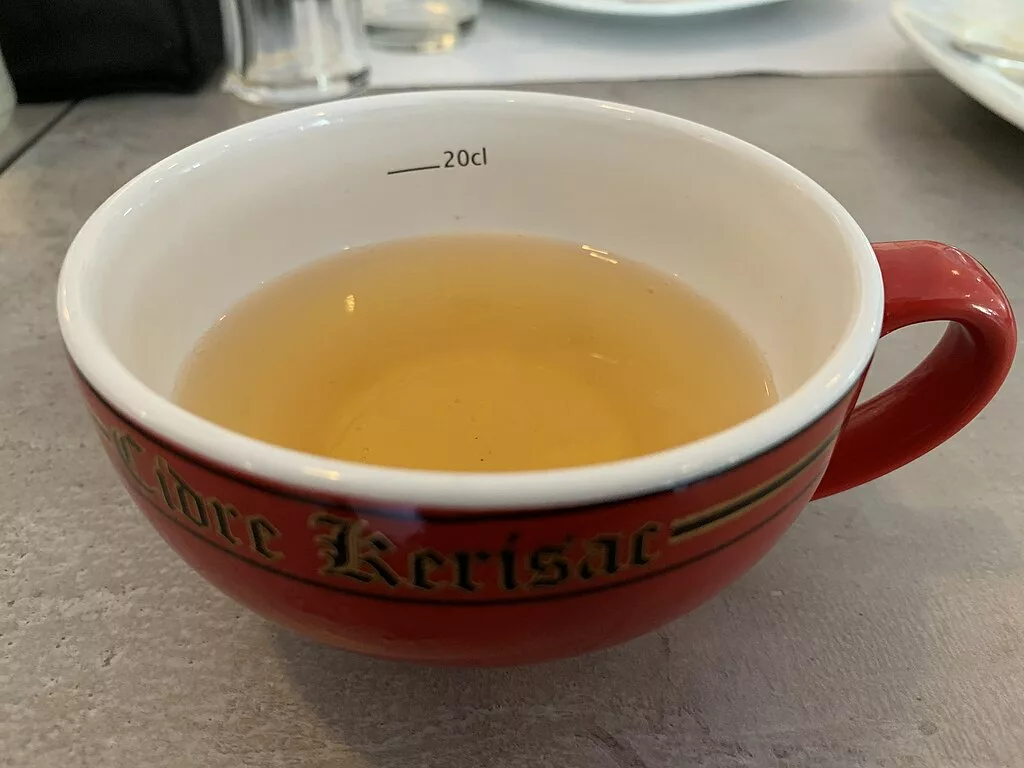
Brittany is famous for its cider, a traditional drink made from fermented apples. In Rennes, cider is often paired with galettes, crêpes, and local meals. There are different varieties, ranging from sweet to dry.
Major Events – Rennes
1. Les Trans Musicales
The Trans Musicales is an annual contemporary music festival, renowned for discovering new talent. It takes place every December at various locations across Rennes. The festival attracts French and international artists of all musical styles. Concerts, showcases, and workshops are offered to enrich the audience experience.
2. Festival Mythos
The Festival Mythos is a spring festival of storytelling, theater, and street arts. It offers performances, readings, concerts, and meetings with artists from across France and abroad. The festival highlights creativity, poetry, and humor in urban and unusual venues.
3. Les Tombées de la Nuit
Tombées de la Nuit is a performing arts festival held every summer in Rennes. It features concerts, theater, dance, circus acts, and street performances across different neighborhoods. The festival promotes artistic diversity and cultural accessibility. Events are often free or low-cost, attracting a wide audience.
Excursions / Trips Around Rennes
1. Saint-Malo and the Emerald Coast
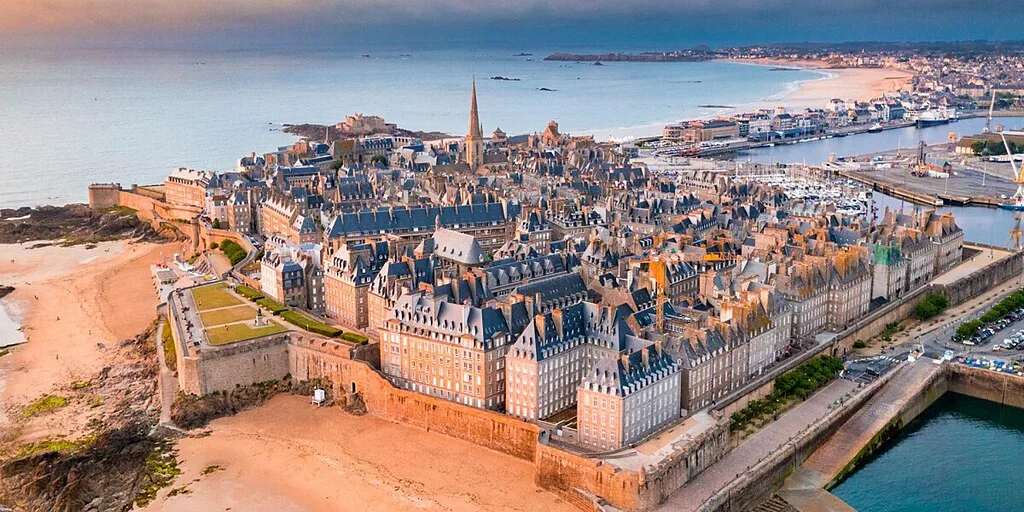
Saint-Malo is a fortified town located on the northern coast of Brittany, famous for its ramparts and beaches. Visitors can walk along the walls and admire the view of the sea and surrounding islands.
The beaches and port offer opportunities for nautical and seaside activities.
2. Mont Saint-Michel
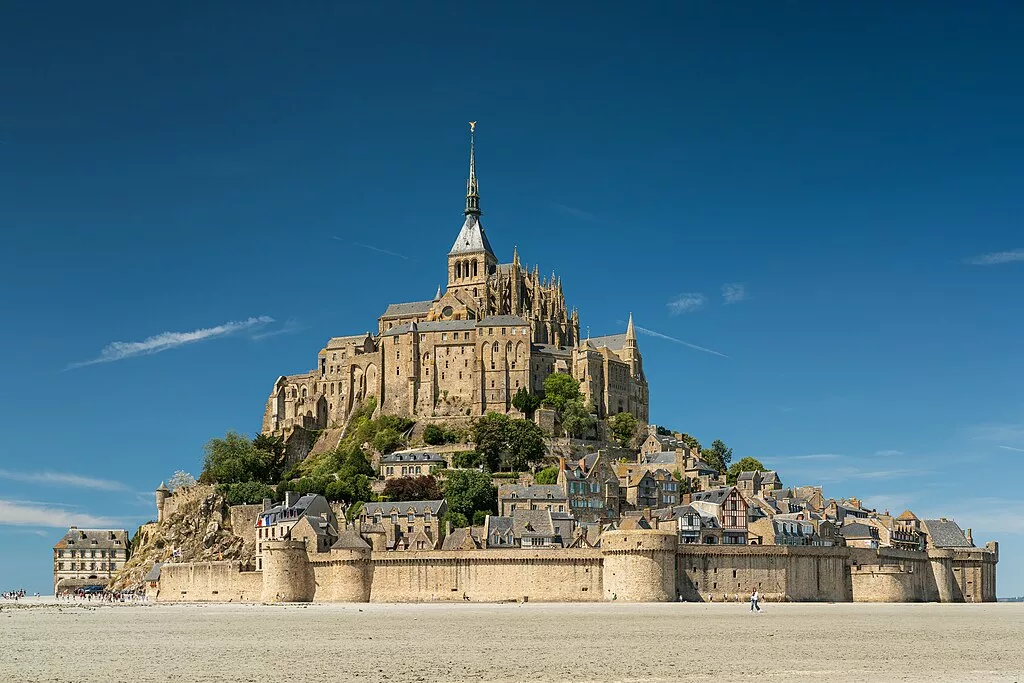
The Mont Saint-Michel is an iconic island and abbey in Normandy, easily accessible from Rennes. It is famous for its medieval abbey perched on a rocky hill and its picturesque streets.
Visitors can explore the religious and military history of the site. The dramatic tides provide an impressive natural spectacle.
3. Fougères and Its Medieval Castle

Fougères is a town known for its medieval castle and charming historic center. The castle dominates the town and offers panoramic views of the surroundings.
4. Dinan and Its Medieval Charm
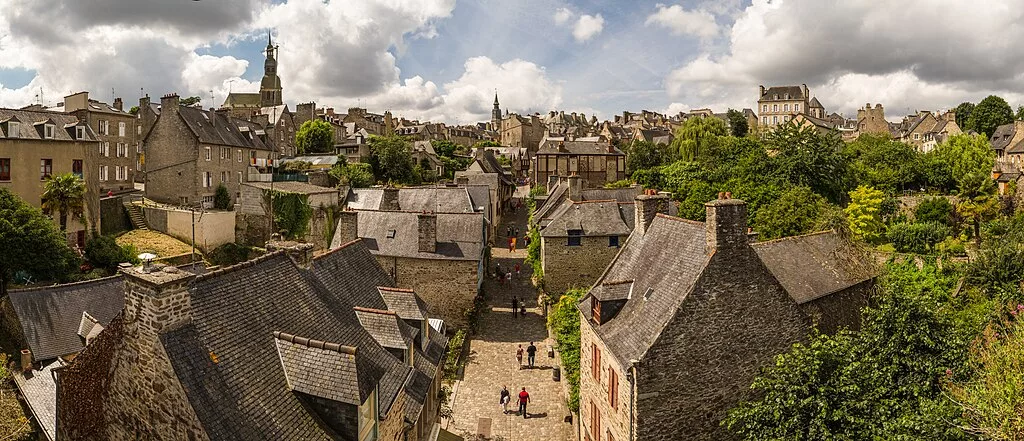
Dinan is a medieval town located in the Côtes-d’Armor, famous for its half-timbered houses and town walls. Visitors can stroll along the cobbled streets and discover churches, towers, and local shops. The town is known for its port on the Rance River and its picturesque atmosphere.
5. Brocéliande Forest and Arthurian Legends
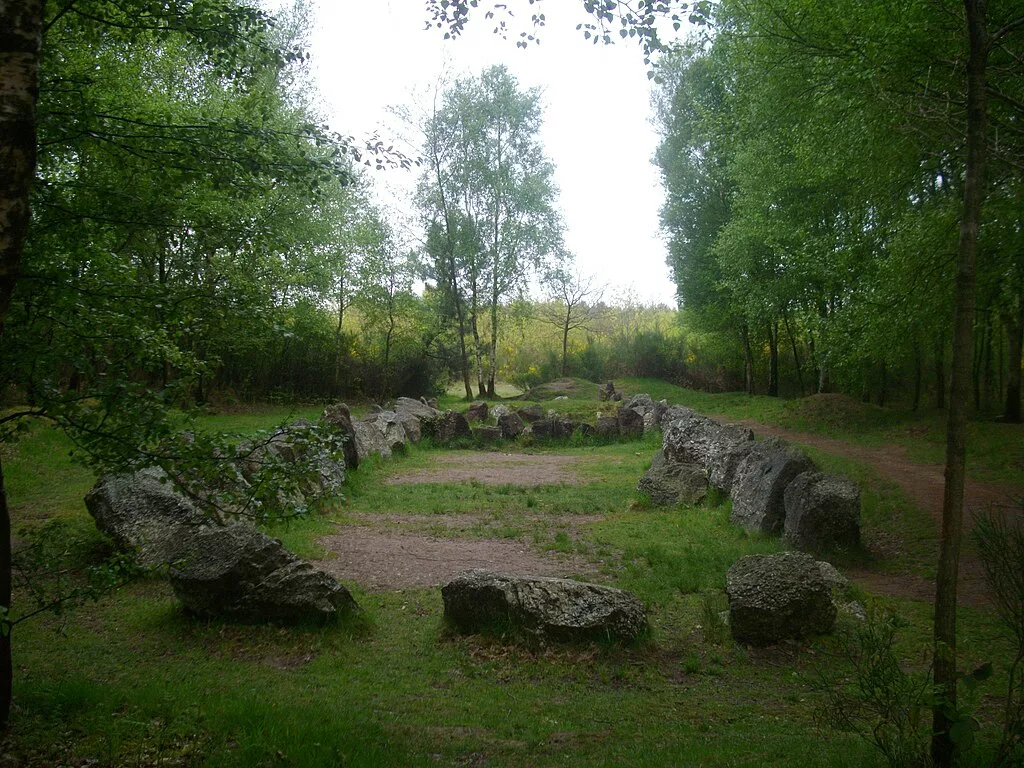
The Brocéliande Forest is famous for its Arthurian legends and mysterious landscapes. Located about an hour from Rennes, it offers numerous hiking and walking trails.
Visitors can discover legendary sites such as Merlin’s Tomb or the Fountain of Barenton. The forest is rich in wildlife and flora, ideal for nature lovers.
Conclusion
Visiting Rennes means exploring a city rich in historical heritage, contemporary culture, and Breton gastronomy. From the medieval center with its half-timbered houses to modern neighborhoods and green spaces like Parc du Thabor, Rennes offers a diversity of experiences for all tastes.
Its museums and festivals, such as Les Trans Musicales or Festival Mythos, enrich the cultural life throughout the year. Local gastronomy, with galette-saucisse, Kig ha farz, and Breton cider, completes the experience in a delicious way.
Excursions to Saint-Malo, Mont Saint-Michel, Fougères, Dinan, or Brocéliande Forest allow visitors to discover Brittany and its surrounding nature. Visiting Rennes is a complete and memorable experience combining heritage, culture, and Breton traditions.