
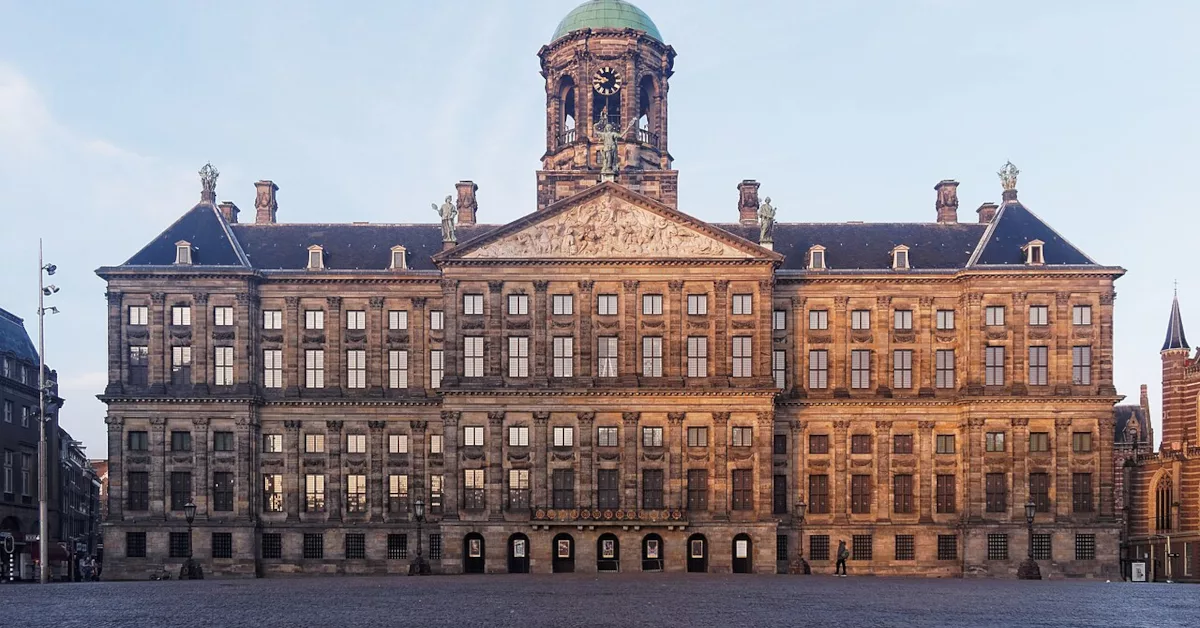
Visiting Amsterdam: 30 Must-Do and Must-See Experiences
Visiting Amsterdam, the capital of the Netherlands, means discovering a city with a unique charm, where history, culture, and modernity blend harmoniously. Crossed by iconic canals, it is famous for its typical Golden Age architecture, narrow houses with slanted facades, and picturesque bridges. Cycling and soft mobility are at the heart of daily life, and the artistic atmosphere is felt everywhere, from renowned museums to intimate galleries.
The city attracts visitors not only with its historical heritage and monuments but also with its lively atmosphere, bustling neighborhoods, and warm local culture. Historic squares like Dam Square, home to the Royal Palace, and emblematic districts such as the Jordaan or De Pijp, make Amsterdam an experience that is both authentic and cosmopolitan.
Along its canals and streets, the Dutch capital also reveals its culinary traditions — from stroopwafels and poffertjes to the famous Dutch cheeses — and its festive events, such as King’s Day (Koningsdag). For those wishing to explore beyond the city center, excursions to Zaanse Schans, Volendam, Marken, or the Keukenhof Gardens allow visitors to discover the rural heritage and natural beauty of the Netherlands.
In this article, we offer a comprehensive guide to visiting Amsterdam, combining history, culture, gastronomy, and must-see activities, so you can fully enjoy this multifaceted city.
For a unique discovery of Amsterdam, embark on an adventure with our route «Amsterdam Highlights», a captivating mix of escape game and self-guided cultural tour, which will let you explore the city in a different way.
Monuments & Historical Heritage
Royal Palace of Amsterdam or Koninklijk Paleis te Amsterdam,
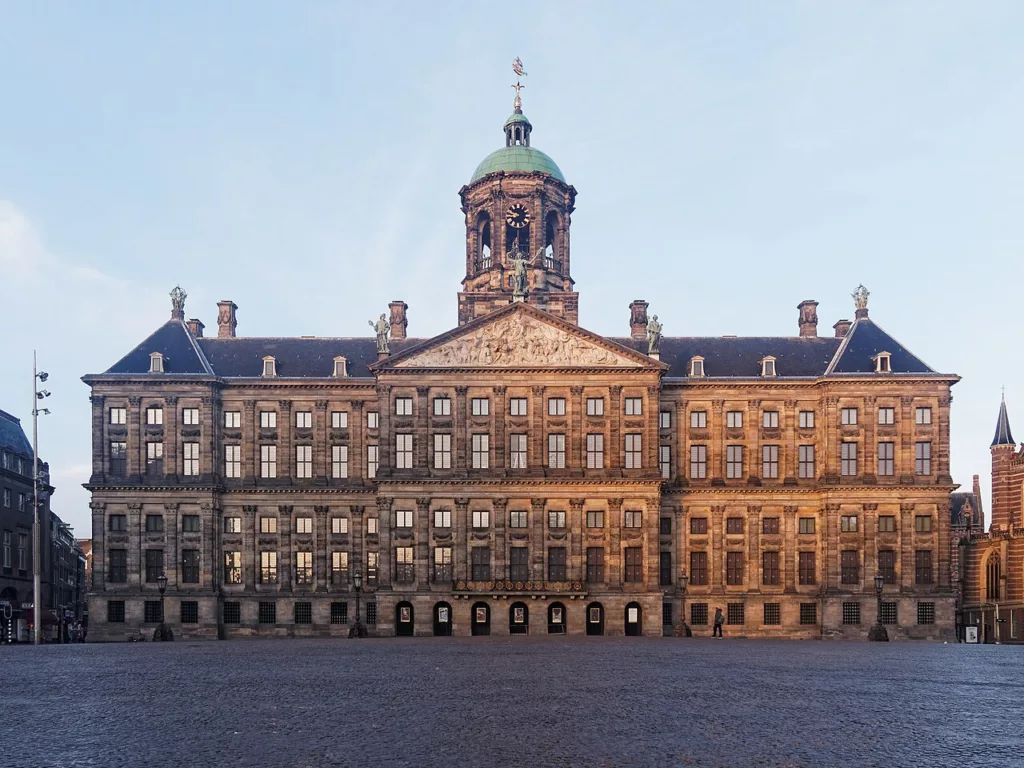
The Royal Palace of Amsterdam, or Koninklijk Paleis te Amsterdam, is located on Dam Square in the city center. It was built between 1648 and 1665 by architect Jacob van Campen to serve as the new city hall.
Originally, the building was not a palace but the Stadhuis (city hall) of Amsterdam. In 1808, the palace was converted into a royal palace under the reign of Louis Bonaparte, brother of Napoleon.
Since 1936, the Royal Palace has belonged to the Dutch state and is made available to the king. It is still used today for official receptions of the royal family.
Discover the secrets of the mythological animals on the building’s facade with our Amsterdam Highlights tour here
Magna Plaza
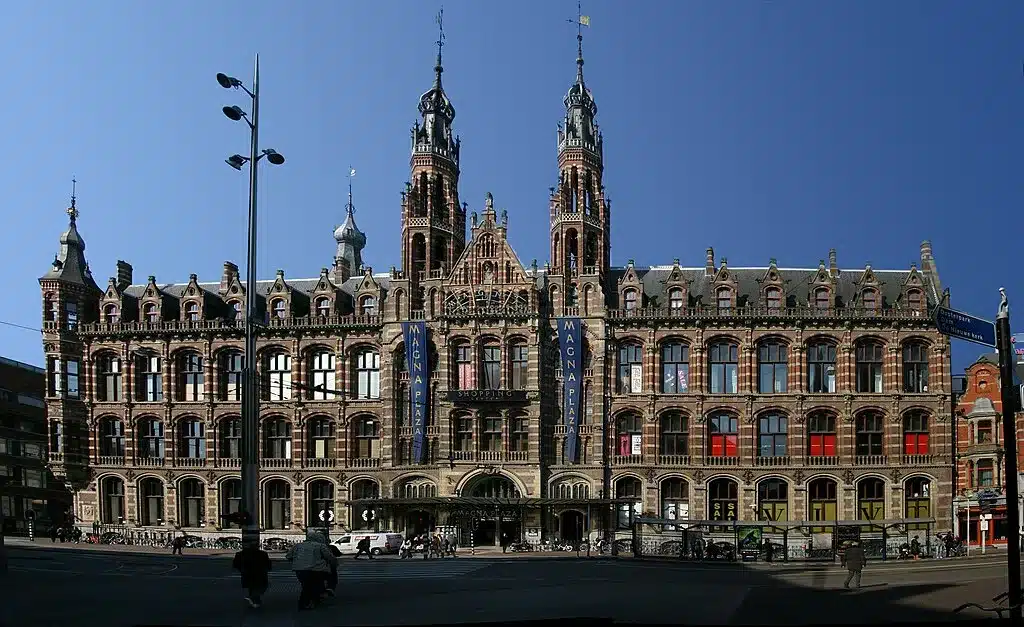
Magna Plaza is the shopping center located in Amsterdam’s former main post office, built between 1895 and 1899.
The building was designed by architect Cornelis Hendrik Peters in a blend of neo-Gothic and neo-Renaissance styles.
The interior of the building features a large central hall with galleries on two floors and an abundance of natural light through a glass roof.
After serving as a post office, the building was transformed into a luxury shopping center and opened to the public on August 17, 1992.
Discover under which king it was inaugurated and the fascinating history of this post office turned magnificent shopping center through our Amsterdam Highlights tour here
Westerkerk
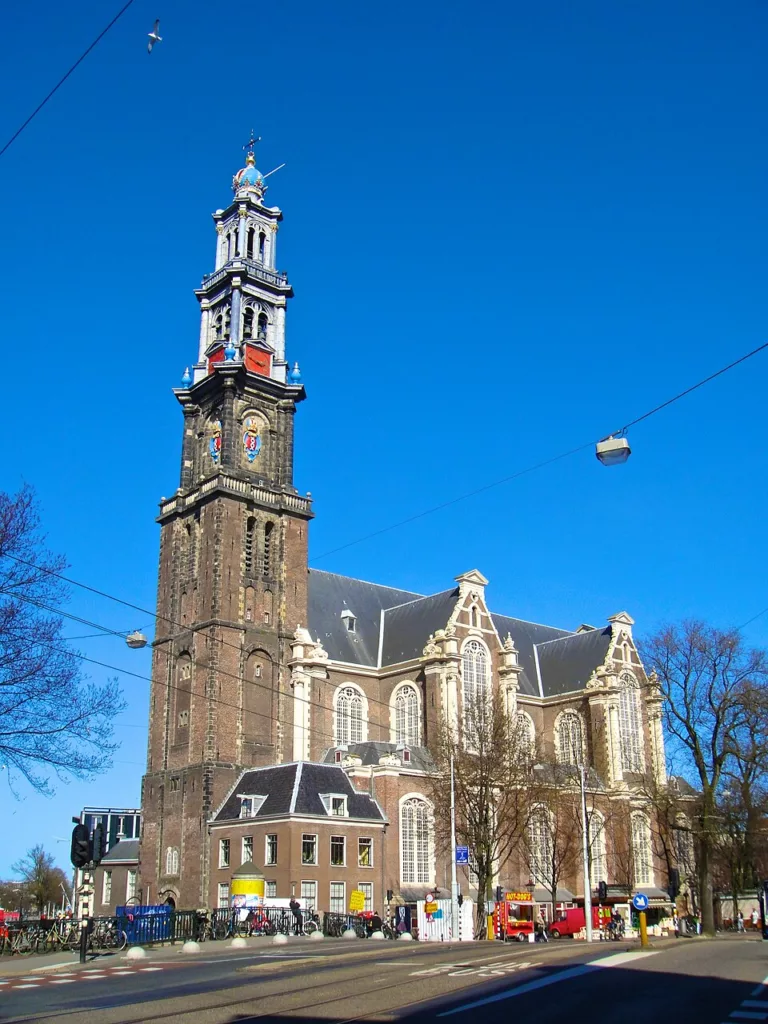
The Westerkerk is a Reformed Protestant church located on the Prinsengracht canal, in the center of Amsterdam, near the Jordaan district. It was designed by architect Hendrick de Keyser and built between 1620 and 1631 in Dutch Renaissance style.
The Westertoren, its iconic tower, measures approximately 85 meters high and is the tallest church tower in Amsterdam. The famous painter Rembrandt van Rijn was buried in the Westerkerk in 1669, although the exact location of his grave is unknown and commemorated with a plaque.
The church’s interior houses a historic 17th-century organ built by Duyschot, as well as historical chandeliers and artworks.
Discover the story of the statue near this church and the mysteries of the flag on this building with our Amsterdam Highlights tour here
Oude Kerk (the Old Church)
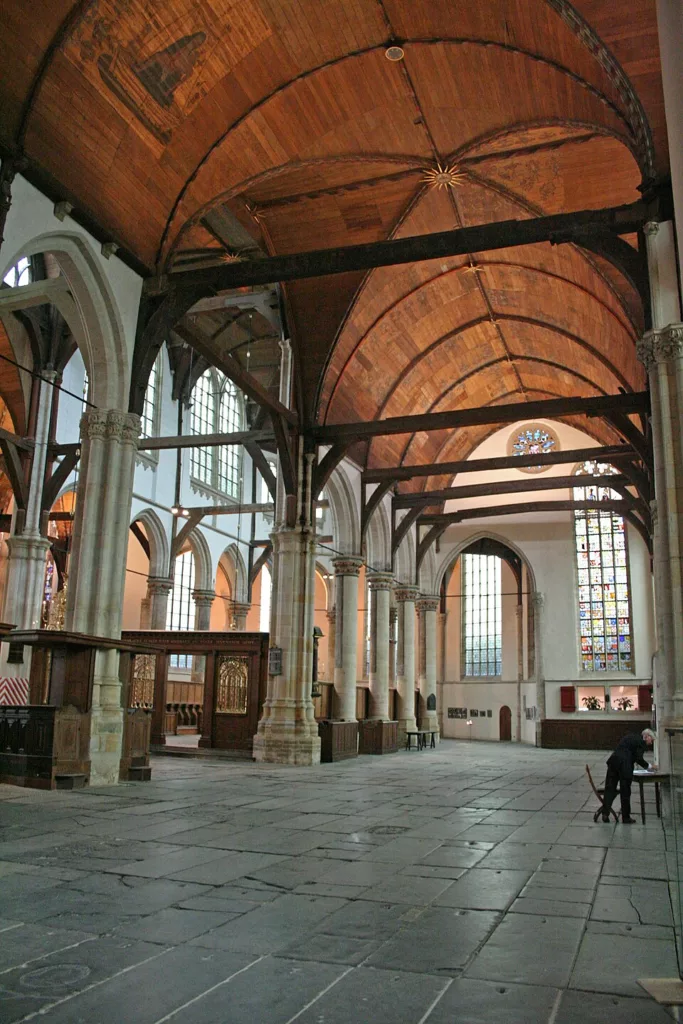
The Oude Kerk (“Old Church”) is the oldest building in Amsterdam, founded around 1213 and consecrated in 1306.
Originally, it was a Catholic church dedicated to Saint Nicholas, the patron saint of sailors.
The church floor consists of graves: around 10,000 Amsterdam residents are buried there. Its medieval wooden ceiling is one of the largest of its kind in Europe.
Today, the Oude Kerk combines religion, art, and heritage: it hosts contemporary art installations.
It is located in the De Wallen district, at the heart of Amsterdam’s famous Red Light District.
Nieuwe Kerk
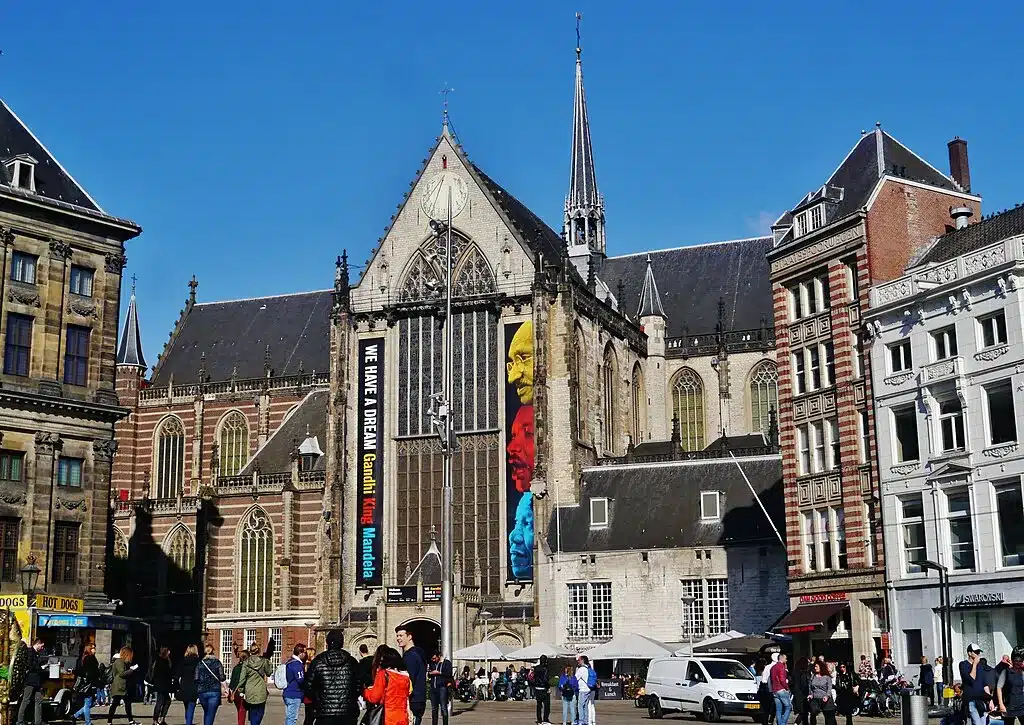
The Nieuwe Kerk (New Church) is a historic 15th-century church located on Dam Square, next to the Royal Palace in Amsterdam. Its construction began at the end of the 14th century to accommodate the growing population, and it was dedicated to St. Mary and St. Catherine in 1409.
The church was damaged by several fires, notably in 1421, 1452, and especially in 1645, after which it was rebuilt in a Gothic style. In 1578, it ceased being Catholic and became a Protestant Church in the Netherlands following the Protestant Reformation.
Today, the Nieuwe Kerk is no longer used for regular religious services but serves as a venue for exhibitions, organ concerts, and cultural events. The church has national importance: it hosted royal ceremonies, such as the wedding of King Willem-Alexander and Queen Máxima in 2002, as well as his inauguration in 2013.
Among its interior treasures are an impressive historic organ and remarkable stained glass windows, as well as the tomb monument of Admiral Michiel de Ruyter.
Discover the history of this site and the sundial on this building with our Amsterdam Highlights tour here
Begijnhof
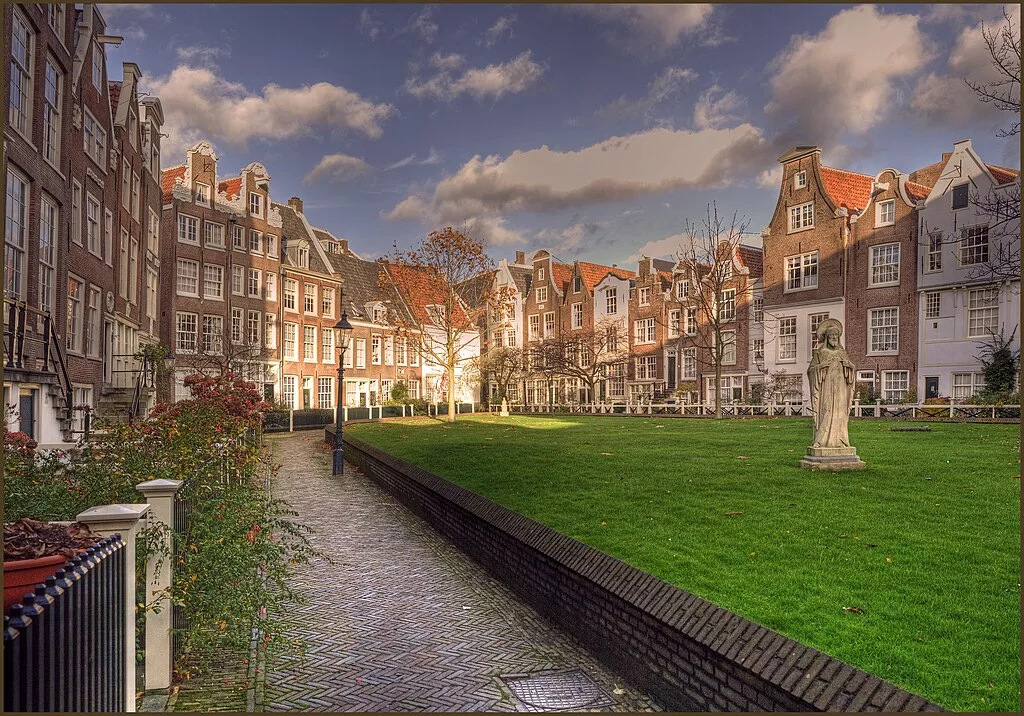
The Begijnhof is one of the oldest hofjes (inner courtyards) in Amsterdam, dating back to the 14th century. It was established around 1346 to host the beguines, devout Catholic women who lived together without taking permanent monastic vows.
Number 34 in the Begijnhof houses the oldest wooden house in Amsterdam, built around 1420. In the center of the courtyard is the Engelse Kerk (English Church), built in the 15th century and still active today. There is also a hidden chapel (schuilkerk) built in 1671 for Catholics, designed not to look like a church from the outside; it is dedicated to Saint John and Saint Ursula.
The last beguine (“Sister Antonia”) died in 1971, bringing an end to this traditional community in the courtyard.
Magere Brug
The Magere Brug (literally “Skinny Bridge”) is a white-painted wooden drawbridge over the Amstel in Amsterdam. The bridge connects Kerkstraat between the Keizersgracht and Prinsengracht canals.
The current version of the bridge dates from 1934, designed by architect Piet Kramer to resemble the previous bridge but slightly wider. The original bridge at this location was built in 1691 and was so narrow that two pedestrians could barely pass each other — hence its name.
The bridge opens several times a day to let boats through. It is decorated with 1,200 bulbs that light up at night, creating a very romantic atmosphere.
A legend says that two sisters named “Magere” lived on opposite banks of the Amstel and funded the bridge so they could visit each other. It is also said that if two lovers kiss on the bridge or pass underneath by boat, their love will last forever.
Montelbaanstoren
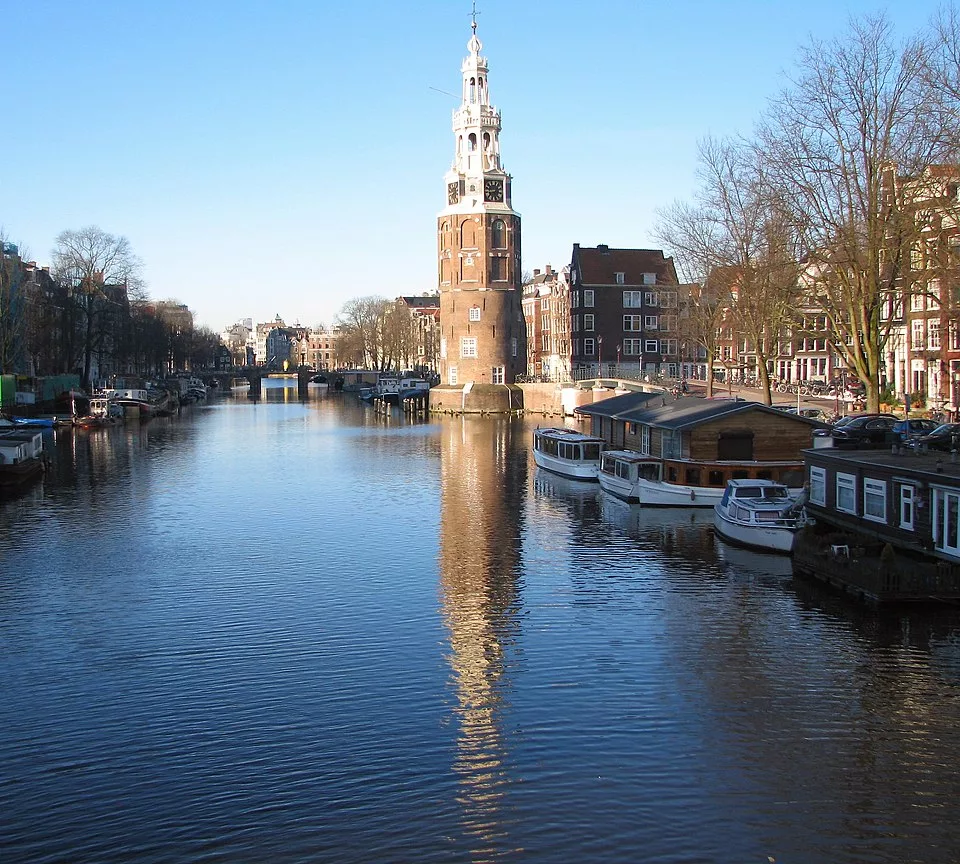
The Montelbaanstoren is a tower located on the bank of the Oudeschans, a canal in central Amsterdam. It was originally built in 1516 as part of Amsterdam’s fortifications to protect the Lastage district.
The current height of the tower is approximately 48 meters. The tower features a clock and bells added during renovations, earning it the popular nickname “Malle Jaap”. This nickname comes from the fact that the bells used to ring erratically, sometimes spontaneously, and then remain silent for days.
Since 2014, the tower has been occupied by Private Boat Tours, a company offering canal boat tours in Amsterdam.
Amsterdam Stock Exchange (Beurs van Berlage)
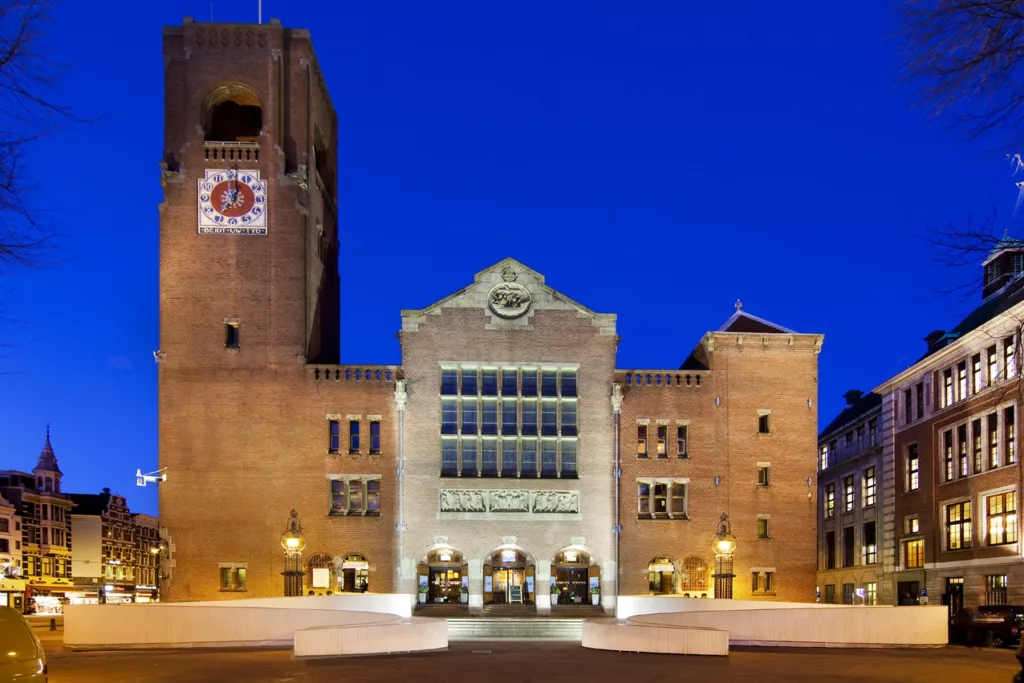
The Beurs van Berlage, literally the Berlage Stock Exchange, is located on the Damrak in central Amsterdam.
It was designed by architect Hendrik Petrus Berlage and built between 1896 and 1903. This red brick building, with an iron and glass roof, is characteristic of modern Dutch architecture.
The main entrance is under a 40-meter-high clock tower.
Berlage envisioned this building as a “Gesamtkunstwerk,” a total work of art combining multiple artistic disciplines: architecture, sculpture, and decoration. Interior decorations include works by Jan Toorop, notably ceramic panels representing “The Past, the Present, and the Future.”
When the exchange became too small, trading activities moved in 1912 to a new building at Beursplein 5. In 2002, the civil wedding ceremony of Prince Willem-Alexander and Máxima Zorreguieta took place in the Beurs van Berlage.
Today, the building no longer functions as a stock exchange: it is used as a venue for exhibitions, conferences, concerts and hosts a café open to the public.
Rembrandt House
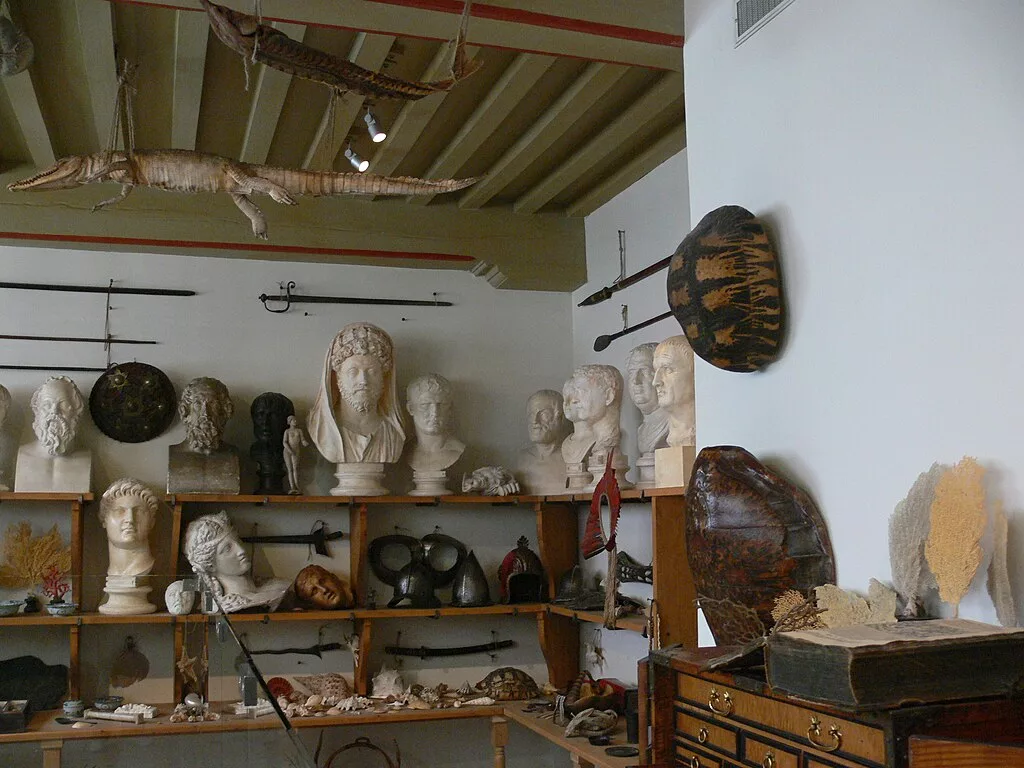
The Rembrandt House is located at Jodenbreestraat 4, in the center of Amsterdam, in the former Jewish quarter. Rembrandt van Rijn lived here between 1639 and 1658, using it both as his home and his studio.
The main building was constructed around 1606‑1607, before Rembrandt purchased it.
In 1656, Rembrandt went bankrupt: the house was seized and sold at auction in 1658.
The Rembrandthuis museum was inaugurated on June 10, 1911, after the building was restored by architect K.P.C. de Bazel.
Since its renovation, the museum reconstructs the original rooms of the house: living room, kitchen, studio, and personal cabinet, based on an inventory from Rembrandt’s bankruptcy. The museum houses almost the entire collection of Rembrandt’s etchings, about 260 works, as well as pieces by artists from his circle.
De Waag
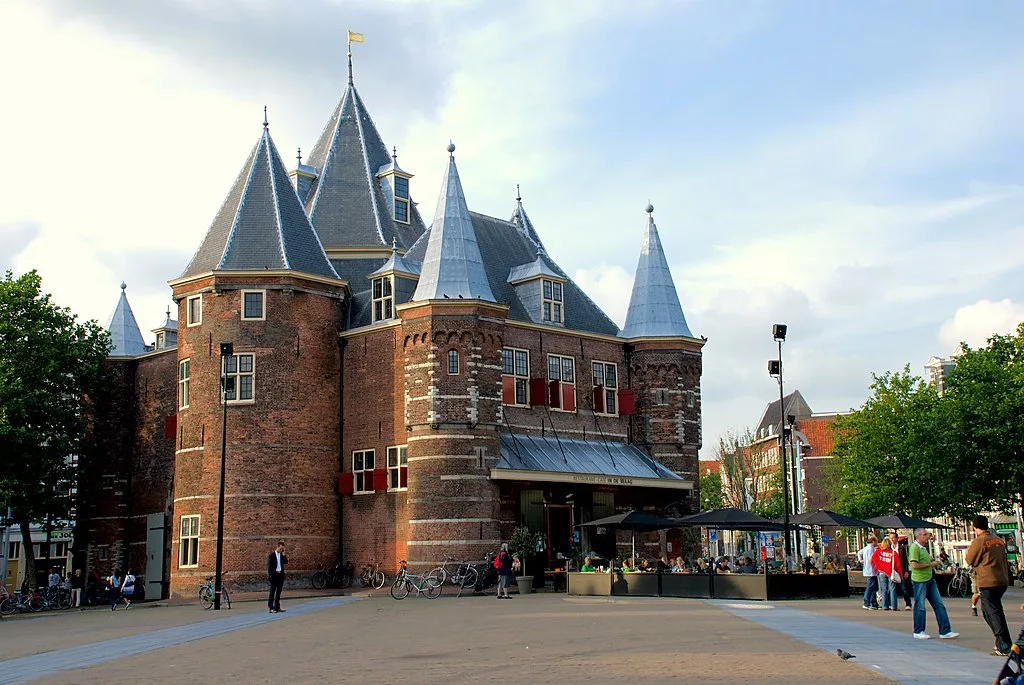
De Waag (or “The Weigh House”) is an iconic building located on Nieuwmarkt Square in Amsterdam. Originally, it was the Saint Anthony Gate (Sint Antoniespoort), built in 1488 as part of Amsterdam’s medieval city walls.
When Amsterdam expanded, this city gate lost its defensive function and was converted into a weigh house in 1617‑1618. Numerous guilds (blacksmiths, painters, masons, surgeons) had rooms in the towers of De Waag, each with its own entrance.
The Theatrum Anatomicum (anatomy theater) of the surgeons was located on the second floor: public dissections were performed here, as depicted in Rembrandt’s “The Anatomy Lesson of Dr. Tulp.”
The current octagonal dome was added around 1690‑1691, giving De Waag its recognizable silhouette.
After its weigh house function ended in 1819, the building had multiple uses: armory, fire station, municipal archives, Amsterdam Historical Museum, and later the Jewish Historical Museum.
Since its restoration in the 1990s, De Waag houses the Waag Society, an innovation center combining art, science, and technology, as well as a café-restaurant (“In de Waag”) on the ground floor.
Nationaal Monument
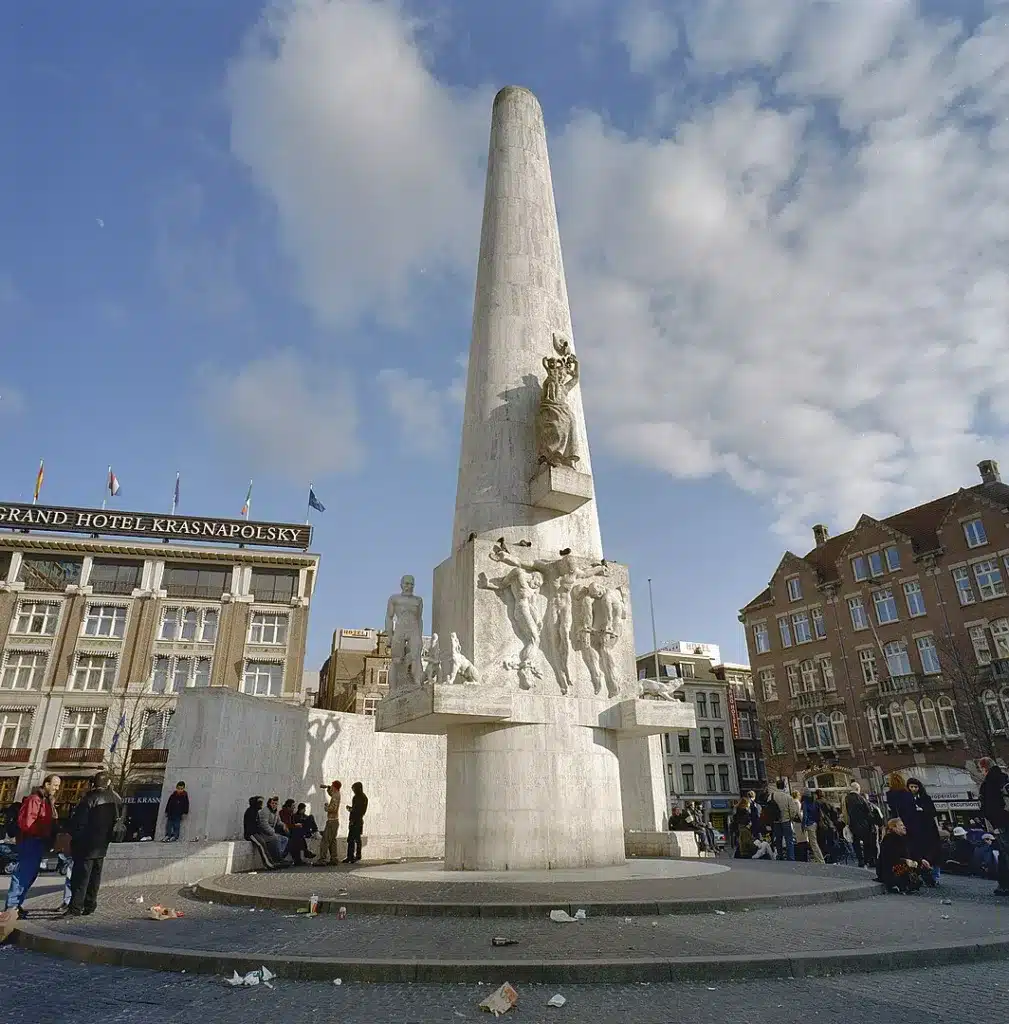
The Nationaal Monument is a national memorial erected in 1956 on Dam Square in Amsterdam to commemorate the victims of World War II and subsequent armed conflicts. It stands at the center of Dam Square, opposite the Royal Palace, and measures approximately 22 meters in height, dominating the public space.
The monument was designed by Dutch architect J.J.P. Oud with sculptures by John Rädecker and his sons, as well as reliefs by Paul Grégoire. It consists of a large white travertine column surrounded by a memorial wall and urns containing soil from execution sites and war cemeteries in the Dutch provinces and the former Dutch East Indies.
Every May 4, during the national commemoration Nationale Dodenherdenking (Remembrance Day), the king and many citizens lay wreaths at the foot of the monument in honor of the war dead.
Discover the animals on the side representing liberation and the animals that protect this monument with our Amsterdam Highlights tour here.
Flower Market (Bloemenmarkt)
The Bloemenmarkt is the world’s only floating flower market, located on barges moored along the Singel canal.
The market was founded in 1862, originally on boats transporting flowers from surrounding cultivation areas. The current stalls are installed on fixed platforms but retain the “floating” style of the past.
You can find tulip bulbs, seeds, plants, as well as typical Dutch souvenirs.
Coffeeshops
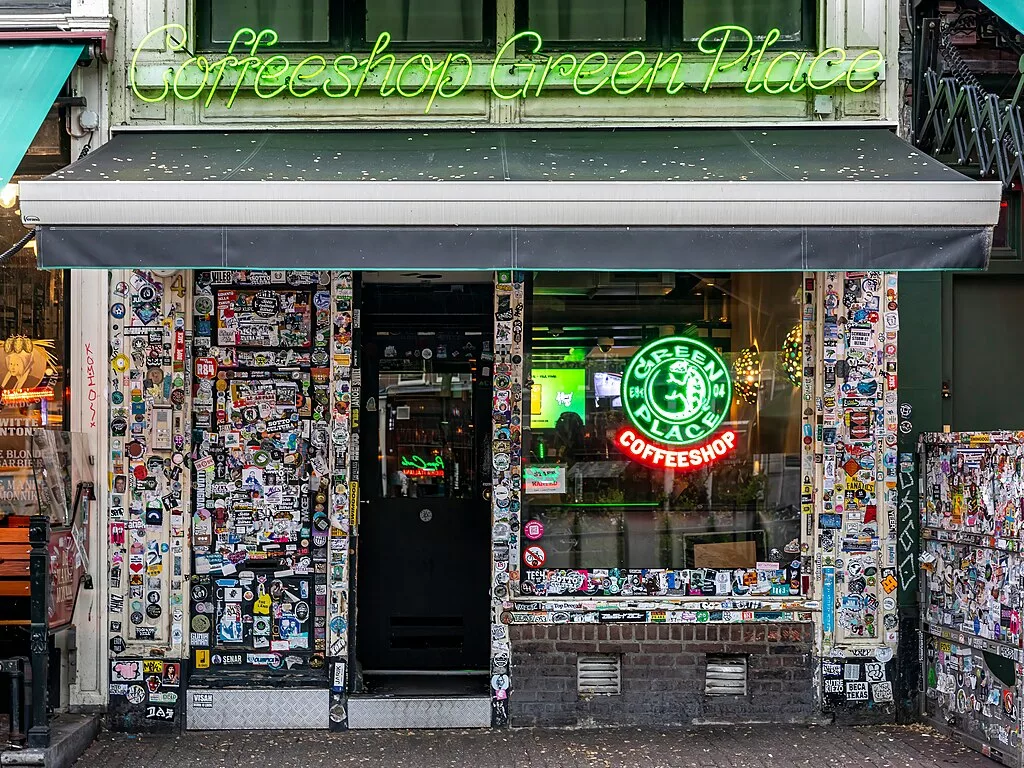
The coffeeshops in Amsterdam are legal establishments where the sale and consumption of cannabis is tolerated. The first official coffeeshop opened in 1976 in Amsterdam.
Dutch law prohibits public consumption of cannabis, but coffeeshops allow it on-site in a regulated setting. Coffeeshops may only sell up to 5 grams per person and must refuse entry to minors (under 18 years old).
Advertising is strictly prohibited, and they cannot sell alcohol. Tourists can easily visit coffeeshops in the Amsterdam city center, particularly in the Red Light District and the Jordaan neighborhoods.
Coffeeshops are considered safer places to consume cannabis than the streets, and they are an integral part of Amsterdam’s tourist culture.
Although the sale of cannabis is tolerated, its production remains illegal in the Netherlands, creating a specific legal framework often referred to as the backdoor policy.
Iconic Neighborhoods
The Red Light District
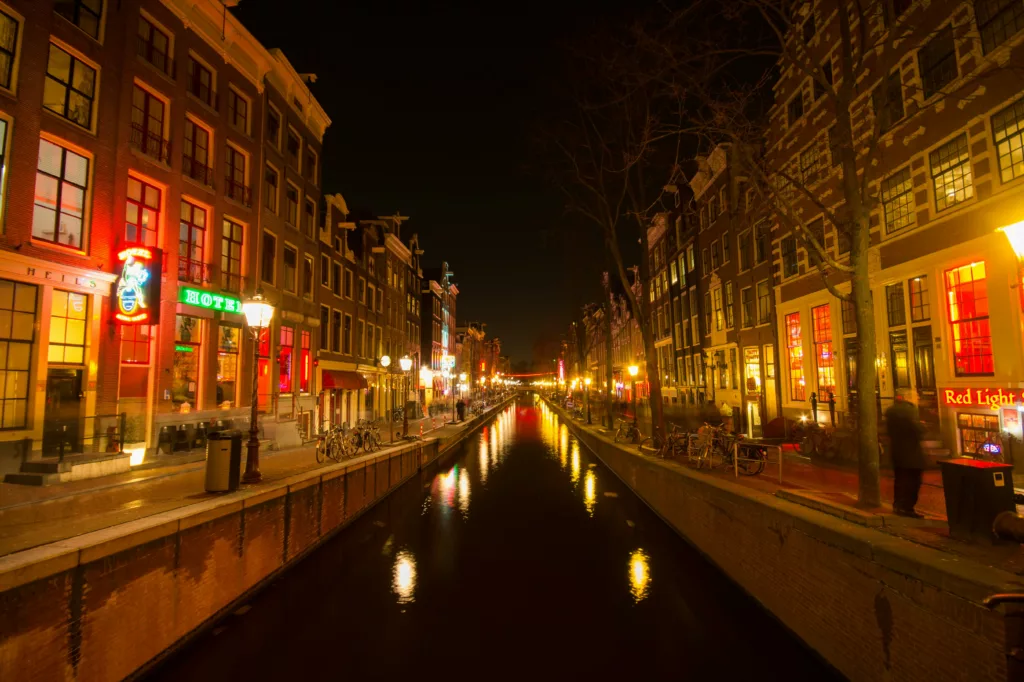
The Amsterdam Red Light District, known as De Wallen, is the oldest neighborhood in the city and is located in the historic center. It is famous for its windows where sex workers offer their services, as well as for its coffeeshops and cafés.
The neighborhood gets its name from the former city walls, called “Wallen,” which once surrounded Amsterdam.
De Wallen is a historic district with canals, bridges, and medieval buildings, offering a unique atmosphere in the city center.
Prostitution is legal and regulated in the Netherlands, with health checks and mandatory licenses for sex workers.
The Red Light District also hosts numerous museums and attractions, such as the Erotic Museum and the Museum of Prostitution (ProstitutieMuseum). Security is maintained by specialized police officers, and the area is closely monitored to protect residents and visitors.
Besides the windows, De Wallen has bars, restaurants, and art galleries, making it a very touristy spot day and night.
The Jordaan Neighborhood
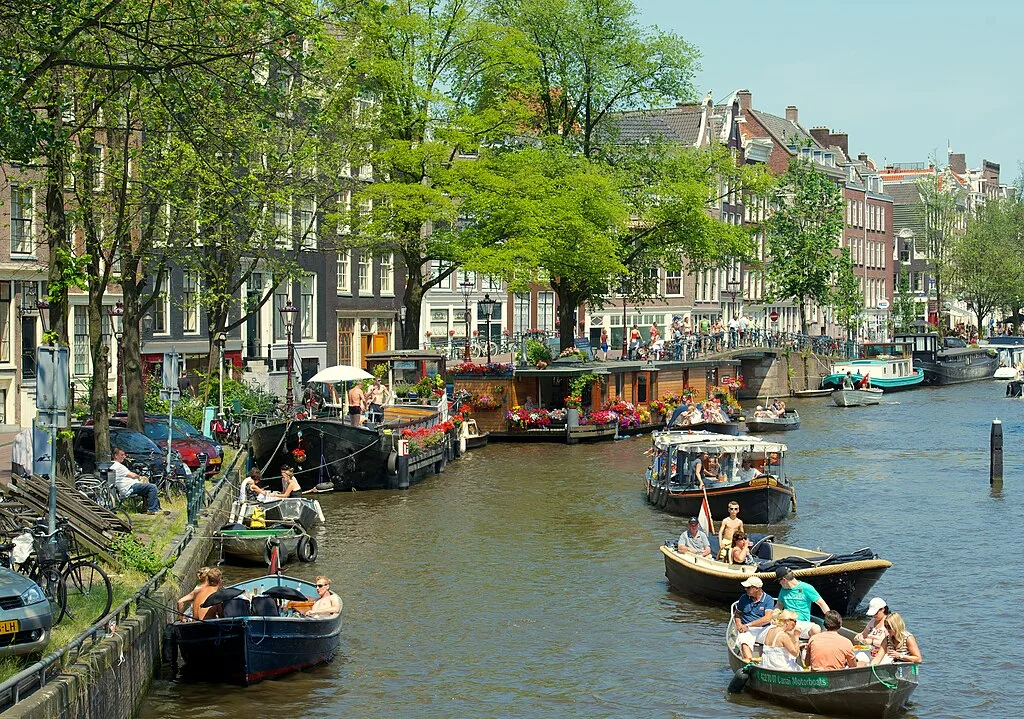
The Jordaan is a historic district in Amsterdam located in the Centre borough, between the Singel, Prinsengracht, Brouwersgracht, and Leidsegracht canals.
It was built from 1612 during a major city expansion to house the working class, artisans, and immigrants (Protestants, Jews, Huguenots…). The name “Jordaan” likely comes from the French word jardin, as many streets and canals are named after trees or flowers, reflecting a more rural past.
The street layout in Jordaan is atypical: streets and canals do not follow Amsterdam’s classic grid because they follow older paths and ditches. In the 19th century, several canals in Jordaan were filled in to improve sanitation — for example, Anjeliersgracht became Westerstraat.
The neighborhood contains many hofjes (inner courtyards), originally built for elderly women and now restored, often open to the public during events.
The Jordaan has a history of social unrest: riots occurred here, notably in 1934 during the “Jordaanoproer” against unemployment. Since the 1970s, the area has been heavily gentrified: artists, students, and entrepreneurs revitalized it while preserving its historic charm.
Today, it is a highly sought-after district with art galleries, traditional “brown” cafés, vintage shops, and markets like the Noordermarkt.
Among Jordaan’s landmarks: Noorderkerk Church, regular markets (organic, flea markets…), and reminders of its musical scene (several local artists known as “Jordanezen”).
The De Pijp Neighborhood
De Pijp is a district located just south of central Amsterdam, in the Amsterdam‑Zuid borough.
The name “De Pijp” literally means “the pipe” in Dutch — possibly referring to the long, narrow streets of the neighborhood.
The district is divided into three parts: Oude Pijp (Old Pijp), Nieuwe Pijp (New Pijp), and Diamantbuurt.
The Oude Pijp was built at the end of the 19th century to accommodate rapid population growth, with densely populated working-class housing.
The Nieuwe Pijp was developed in the 1920s under architect Hendrik Petrus Berlage’s Plan Zuid, in a style typical of the Amsterdam School. Many streets are named after famous Dutch painters like Jan Steen, Frans Hals, Jacob van Ruisdael, and Vincent van Gogh.
The bustling Albert Cuyp Market is located in De Pijp: it is one of Amsterdam’s most famous street markets.
The district is now highly cosmopolitan, hosting a diverse population of students, artists, expatriates, and multicultural families.
Museums & Culture
Heineken Experience
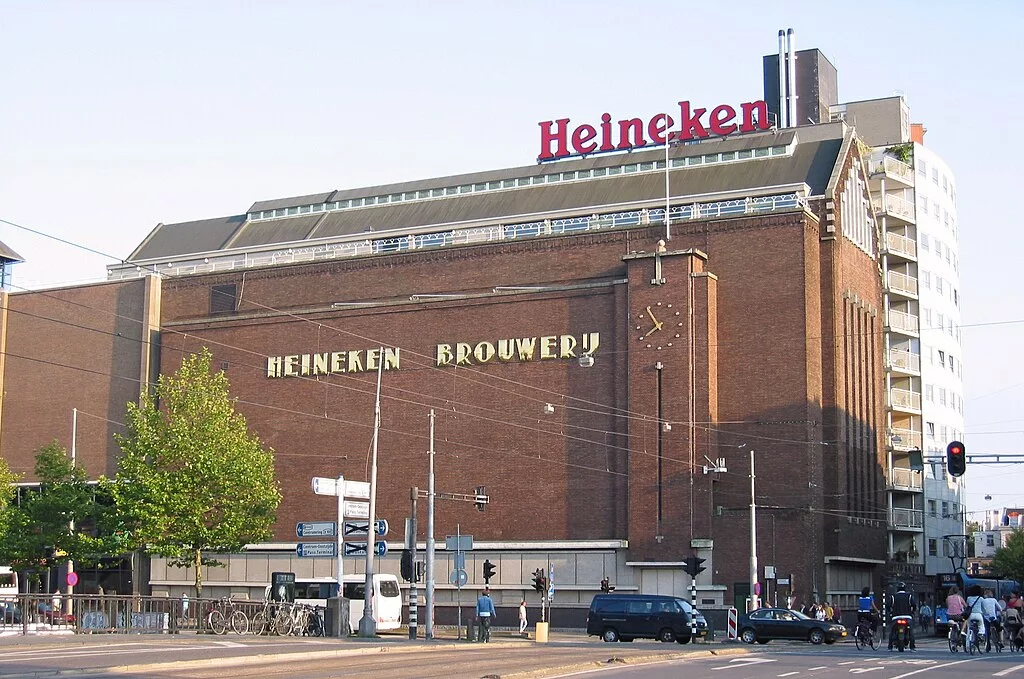
The Heineken Experience is an interactive museum located in the very first Heineken brewery, in the heart of Amsterdam. The building dates back to 1867 and served as the main production site until 1988.
It showcases the brewing process from raw ingredient to bottle through multisensory exhibits. The tour includes interactive areas to touch and smell raw materials like hops and malt.
At the end of the visit, each visitor can taste two Heineken beers, included in the ticket.
Important: minors (under 18) are not allowed to enter the Heineken Experience.
Amstelkring Museum
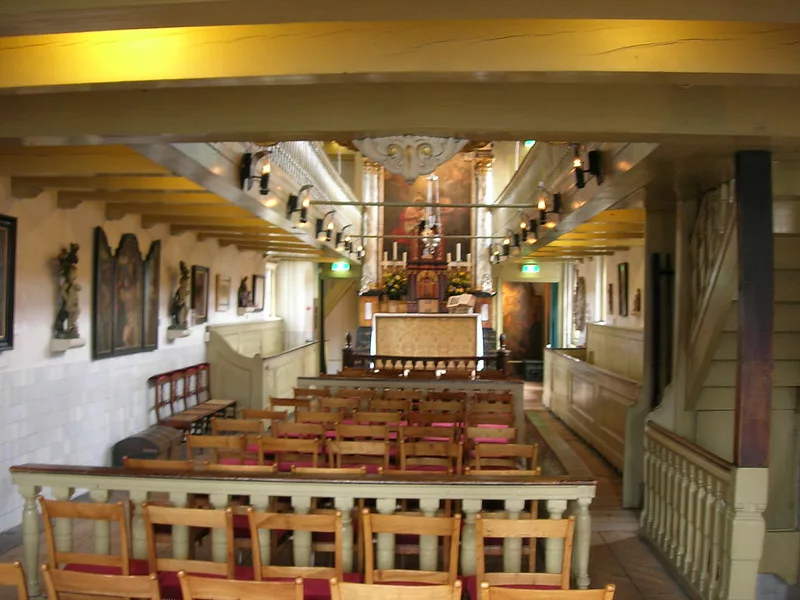
The Amstelkring Museum is located at 40 Oudezijds Voorburgwal, in a 17th-century building.
This museum is best known for its “attic church”: a hidden Catholic chapel built in the loft, called Ons’ Lieve Heer op Solder.
The hidden church was set up between 1661 and 1663 by Catholic merchant Jan Hartman, during a period when public worship was prohibited.
Since 1888, the building has functioned as a museum, making it one of the oldest in Amsterdam. The tour lets visitors explore not only the chapel but also the house’s rooms: kitchen, confessional, living quarters, etc.
The museum collection includes liturgical objects, manuscripts, paintings, books, and religious clothing illustrating clandestine Catholic life.
Despite its museum status, religious celebrations (masses, weddings) are still held here today.
Rijksmuseum
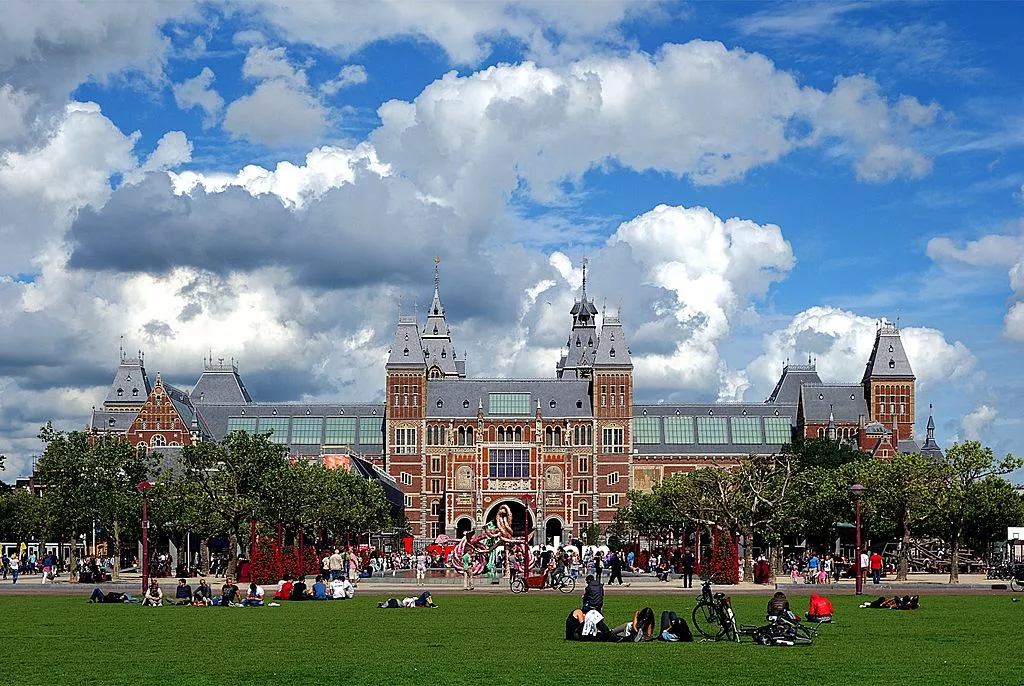
The Rijksmuseum is the national museum of the Netherlands, located on Museumstraat in Amsterdam, in the Museum District. It was founded in 1800 in The Hague, then moved to Amsterdam in 1808 by order of Napoleon Bonaparte.
The current building, in neo-Renaissance style, was designed by architect Pierre Cuypers and inaugurated in 1885. The Rijksmuseum houses a collection of over one million objects, with about 8,000 on permanent display. It is famous for its Dutch Golden Age masters, such as Rembrandt, Vermeer, Frans Hals, and Jan Steen.
Rembrandt’s painting “The Night Watch” (1642) is one of the museum’s highlights. The Rijksmuseum also has collections of Asian art, historical objects, weapons, and musical instruments.
Anne Frank House
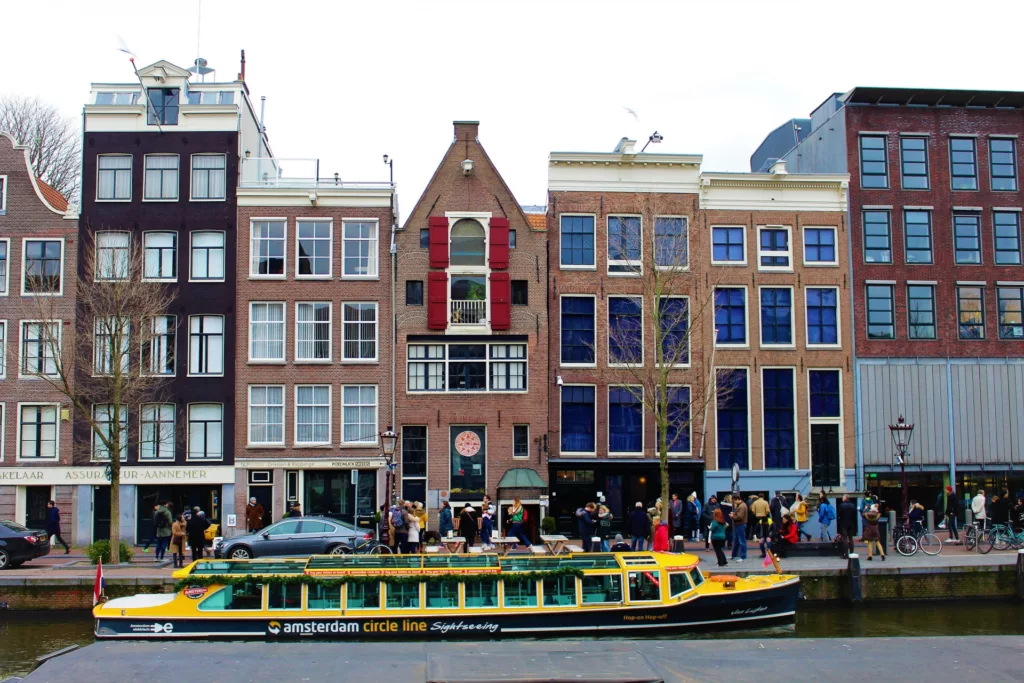
The Anne Frank House (Anne Frank Huis) is a museum located at Prinsengracht 263‑267 in Amsterdam.
It was in the “Secret Annex” of this house that Anne Frank, her family, and four others hid for over two years during World War II.
At that time, the building housed the offices of Opekta, owned by Anne’s father, Otto Frank. The entrance to the Annex was hidden by a secret passage behind a rotating bookshelf.
The museum is dedicated not only to Anne Frank’s memory but also to the fight against all forms of persecution and discrimination. The Anne Frank Museum was founded on May 3, 1960, thanks to Otto Frank’s initiative to preserve the hiding place.
Visitors can explore the rooms of the Annex and see photographs, historical documents, and excerpts from Anne’s diary. In Anne’s bedroom, photos of actresses and artists that she had pasted on the walls can still be seen.
Van Gogh Museum
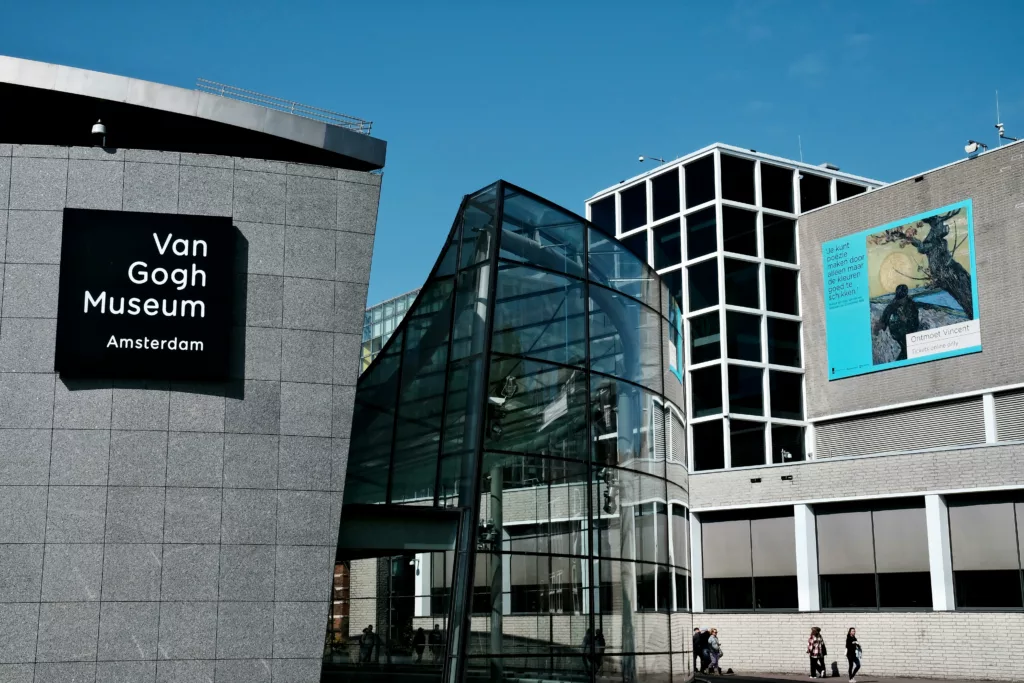
The Van Gogh Museum is located on Museumplein, next to the Rijksmuseum and the Stedelijk Museum, in Amsterdam’s Museum District. It is entirely dedicated to the life and work of Vincent van Gogh, one of the most famous 19th-century painters.
The museum opened in 1973, with a modern extension added in 1999, designed by architects Kisho Kurokawa and Gerrit Rietveld. It houses the largest collection of Van Gogh’s works in the world, with over 200 paintings, 500 drawings, and 700 letters.
Among the most famous works on display are Sunflowers, The Bedroom, and Self-Portrait.
The museum also hosts temporary exhibitions dedicated to other artists and 19th-century art movements. The collection is organized chronologically, allowing visitors to follow Van Gogh’s artistic evolution from his early years in the Netherlands to his time in Arles and Saint-Rémy.
Stedelijk Museum (Modern Art)
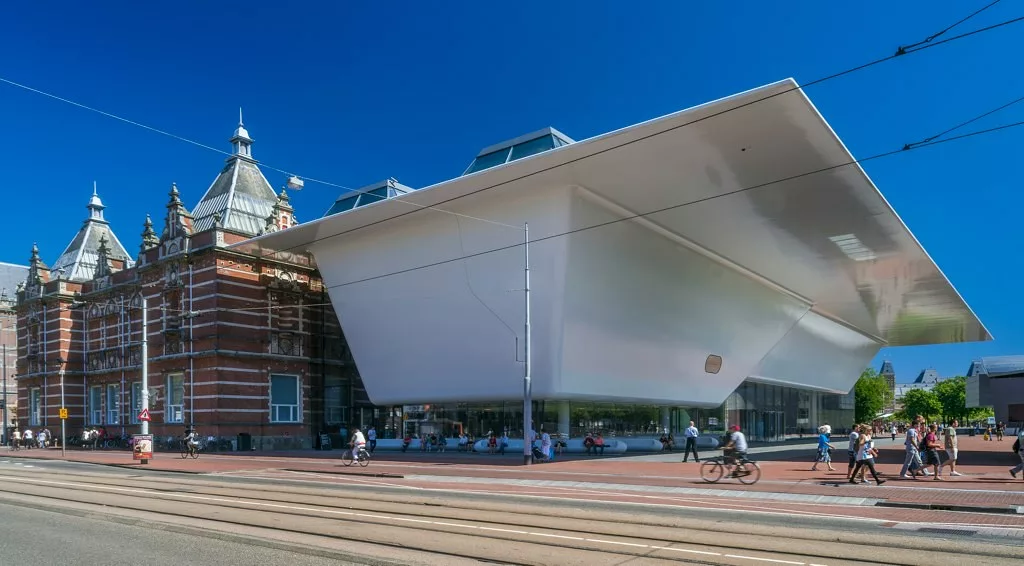
The Stedelijk Museum is located on Museumplein, next to the Rijksmuseum and Van Gogh Museum, in the Museum District of Amsterdam.
It is dedicated to modern and contemporary art, as well as design and graphic arts. The museum was founded in 1874 and opened to the public in 1895.
The original architecture of the main building is neo-Renaissance, designed by Adolf Leonard van Gendt, but it has been modernized and expanded with an extension called the “Bathtub” in 2012.
The permanent collection includes over 90,000 works, including painting, sculpture, photography, video, and design. The museum exhibits famous artists such as Karel Appel, Piet Mondrian, Kazimir Malevich, Andy Warhol, and Roy Lichtenstein.
It also houses a significant collection of industrial and graphic design, covering the 19th century to the present.
Amsterdam Historical Museum (Amsterdam Museum)
The Amsterdam Historical Museum, also called the Amsterdam Museum, is located on Kalverstraat, in the historic city center. Since 1975, it has been housed in a former medieval convent and hospital, the Regulierspoort, dating from the 15th century.
The museum traces the complete history of Amsterdam, from its beginnings in the Middle Ages to today. The collection includes paintings, historical objects, maps, models, and artifacts reflecting daily life, commerce, and the city’s culture.
The museum also features interactive exhibitions, allowing visitors to explore the lives of Amsterdam residents over the centuries. Among the displayed items are traditional costumes, navigation instruments, furniture, and artworks illustrating the city’s history.
It offers an immersive experience with reconstructions of old neighborhoods, daily life scenes, and interactive maps.
Parks, Gardens & Walks
Vondelpark
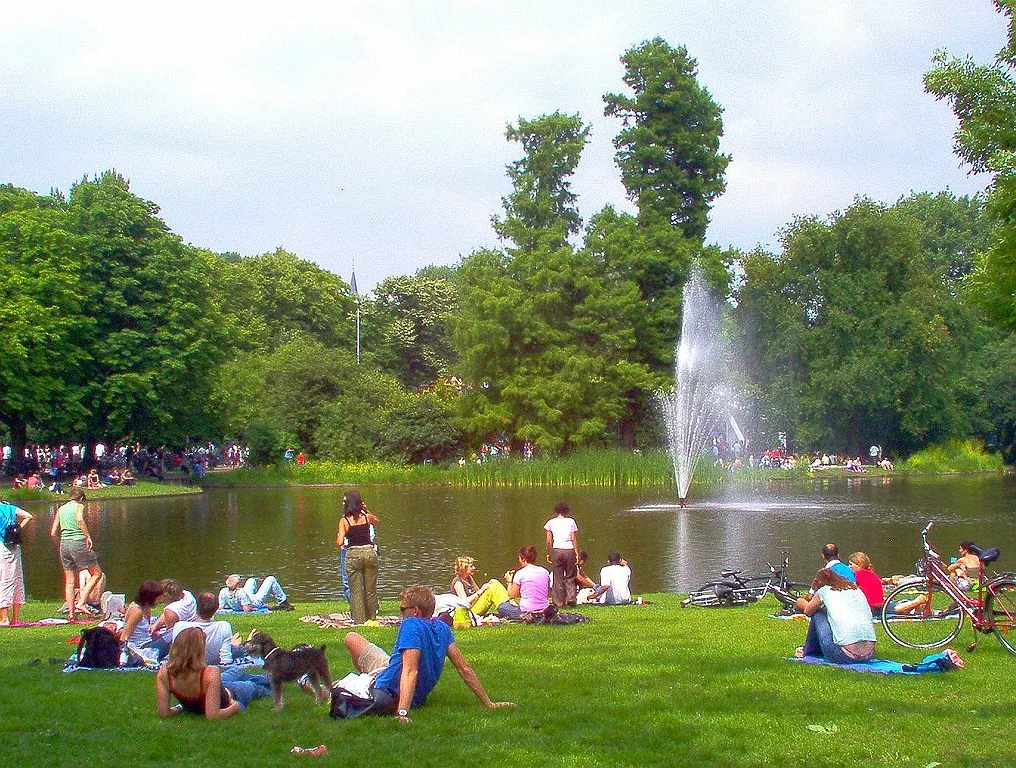
The Vondelpark is the largest public park in Amsterdam, located in the Museum District near the Rijksmuseum and Stedelijk Museum.
It was inaugurated in 1865 and was originally called the Nieuwe Park before being renamed after Joost van den Vondel, a famous Dutch poet.
The park covers approximately 47 hectares, with lawns, ponds, walking paths, and cycling trails. The park contains several sculptures and monuments, including statues dedicated to Joost van den Vondel and other cultural figures.
The Vondelpark Open Air Theatre, inaugurated in 1957, offers free concerts and performances during the summer.
Botanical Garden (Hortus Botanicus)
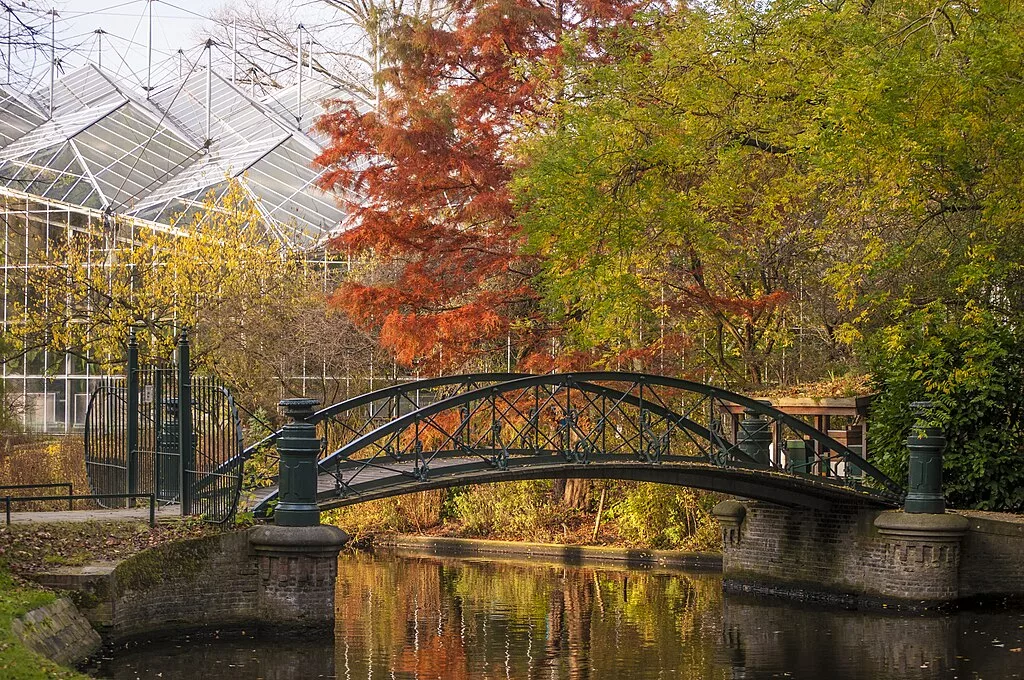
The Hortus Botanicus Amsterdam is one of the oldest botanical gardens in the world, founded in 1638 to cultivate medicinal plants.
The garden covers about 4 hectares and houses over 6,000 plant species. Hortus is renowned for its collection of tropical plants, housed in several greenhouses, including the large Victoria greenhouse with the famous giant water lily.
Among its botanical treasures is a 1685 Cedar of Lebanon, one of the oldest trees in the city. The garden also includes cactus and succulent greenhouses, as well as collections of orchids and bromeliads.
Amstel River and Cruises
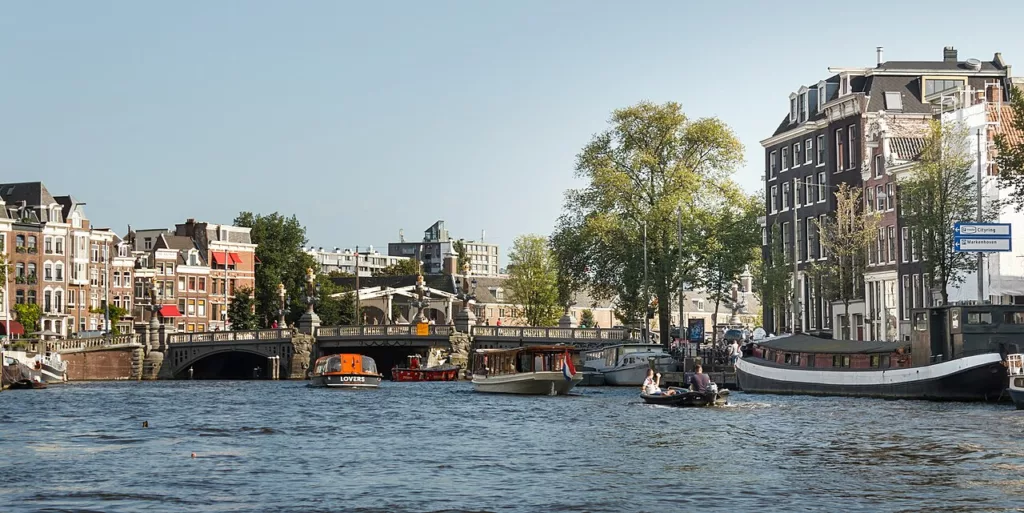
The Amstel is the river running through central Amsterdam, giving the city its name: Amstel-dam, the dam on the Amstel.
The river has played a central role in Amsterdam’s history and trade since the Middle Ages. Today, the Amstel is a popular spot for walking, boating activities, and sightseeing cruises.
River cruises allow visitors to discover the city from the water, passing under historic bridges and 17th-century house facades.
Gastronomy
Stroopwafels

Stroopwafels are thin Dutch waffles made of two crisp disks with a caramel syrup filling in the center.
They were invented in Delft in the 17th century, although today they are emblematic of Amsterdam.
Stroopwafels are traditionally eaten warm, often placed on top of a cup of coffee or tea so that the caramel softens slightly. Their traditional recipe uses flour, butter, sugar, yeast, and caramel syrup made from brown sugar and molasses.
Poffertjes

Poffertjes are small, thick, and fluffy pancakes typical of Dutch cuisine. They are cooked in a special pan that gives them their round, slightly puffed shape. Traditionally, they are enjoyed with butter and powdered sugar, for a sweet and comforting taste.
Dutch Cheeses (Gouda, Edam)
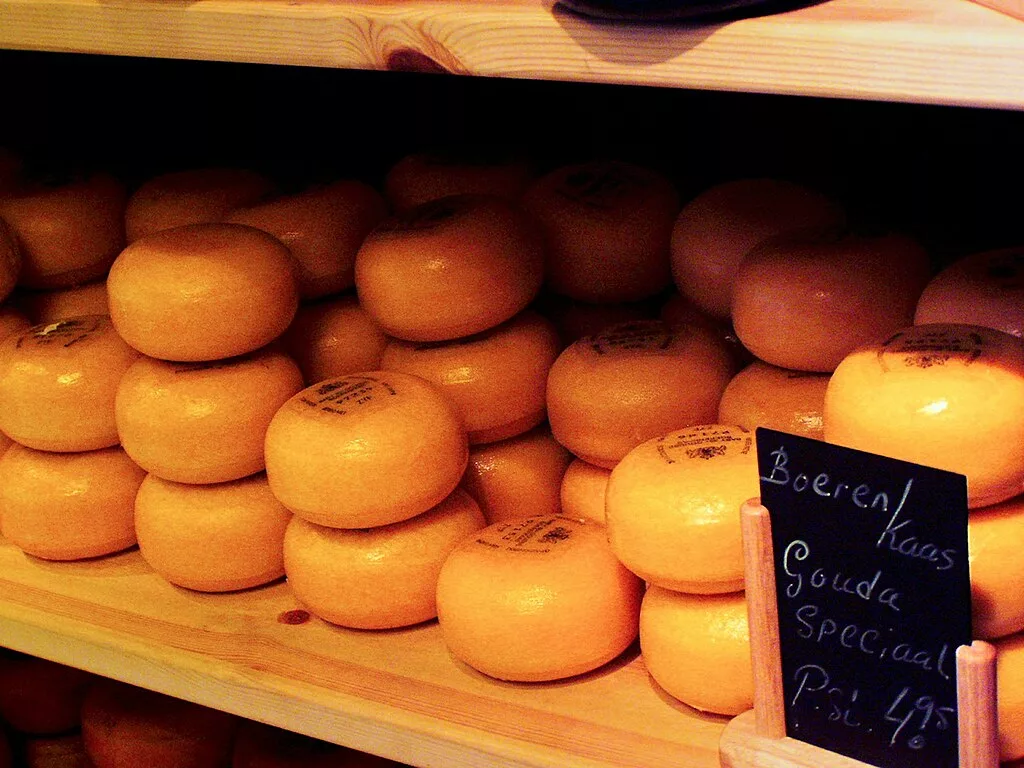
Dutch cheeses are famous worldwide, with iconic varieties such as Gouda and Edam.
Gouda, originating from the city of the same name, is a cow’s milk cheese, either mild or aged, often covered with a yellow or red wax rind.
Edam is recognizable by its round shape and red rind, with a firmer and slightly saltier paste than Gouda.
These cheeses are traditionally made from raw or pasteurized cow’s milk according to local recipes.
Traditional markets, such as the Alkmaar Cheese Market or the one in Gouda, are must-visit places to discover Dutch cheesemaking traditions.
Major Events
King’s Day (Koningsdag)
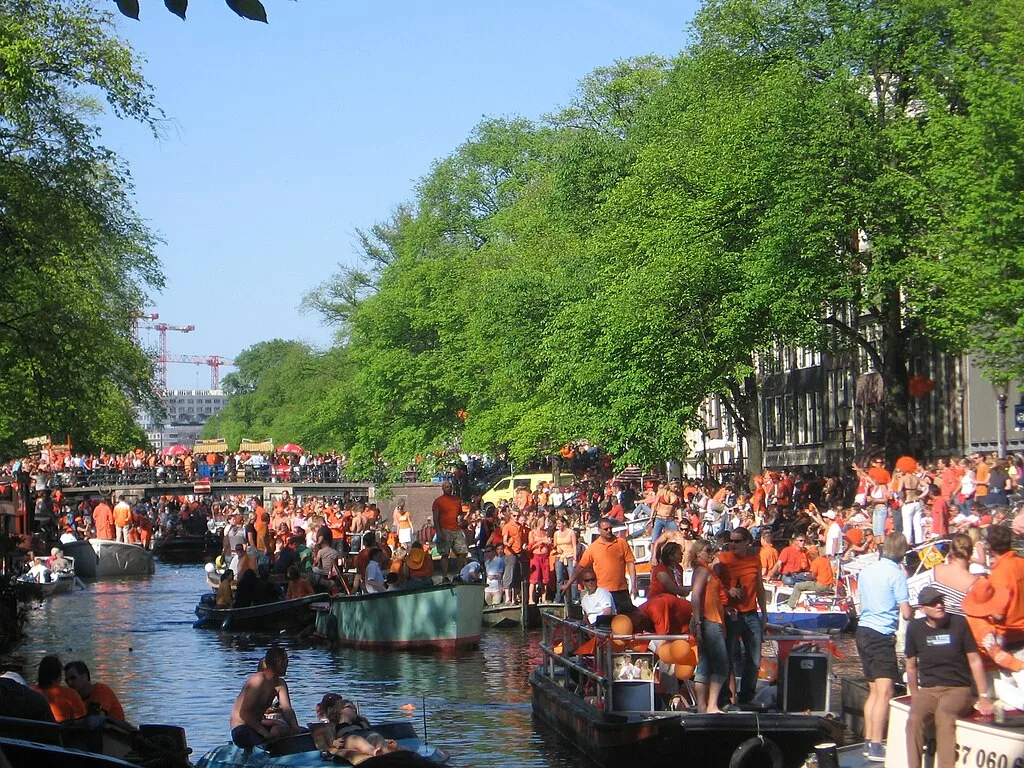
King’s Day, or Koningsdag, is celebrated every year in the Netherlands on April 27, the birthday of King Willem-Alexander. It is one of the largest national celebrations in the Netherlands, with festivities in cities and villages across the country.
Amsterdam is one of the liveliest cities for Koningsdag, with thousands of visitors and residents dressed in orange, the symbolic color of the royal family. The city hosts a large outdoor flea market, called the vrijmarkt, where anyone can sell or buy items.
Concerts, street performances, and canal parties take place all day, creating a unique festive atmosphere.
The Amsterdam canals fill with decorated boats and floating parties, offering spectacular views from the water.
The celebration honors both the Dutch monarchy and the community spirit and festive nature of the Dutch people.
Excursions / Trips Around Amsterdam
Zaanse Schans (Windmills & Crafts)
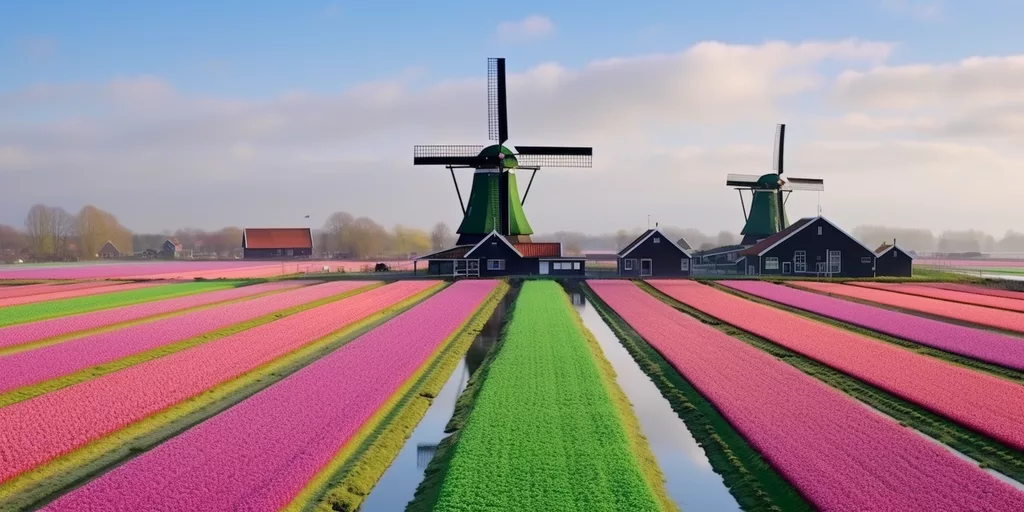
Zaanse Schans is an open-air museum village located about 15 km north of Amsterdam, famous for its traditional windmills and 17th- and 18th-century wooden houses.
The site allows visitors to see working windmills, historically used to grind grain, produce oil, or saw wood. Visitors can explore traditional workshops, including clogs, cheese, and dye-making.
Several windmills are open to the public and offer live demonstrations, showing traditional Dutch techniques. The museum village includes historic houses and shops, some converted into museums or cafés where visitors can sample local specialties.
Volendam and Marken (Fishing Villages)
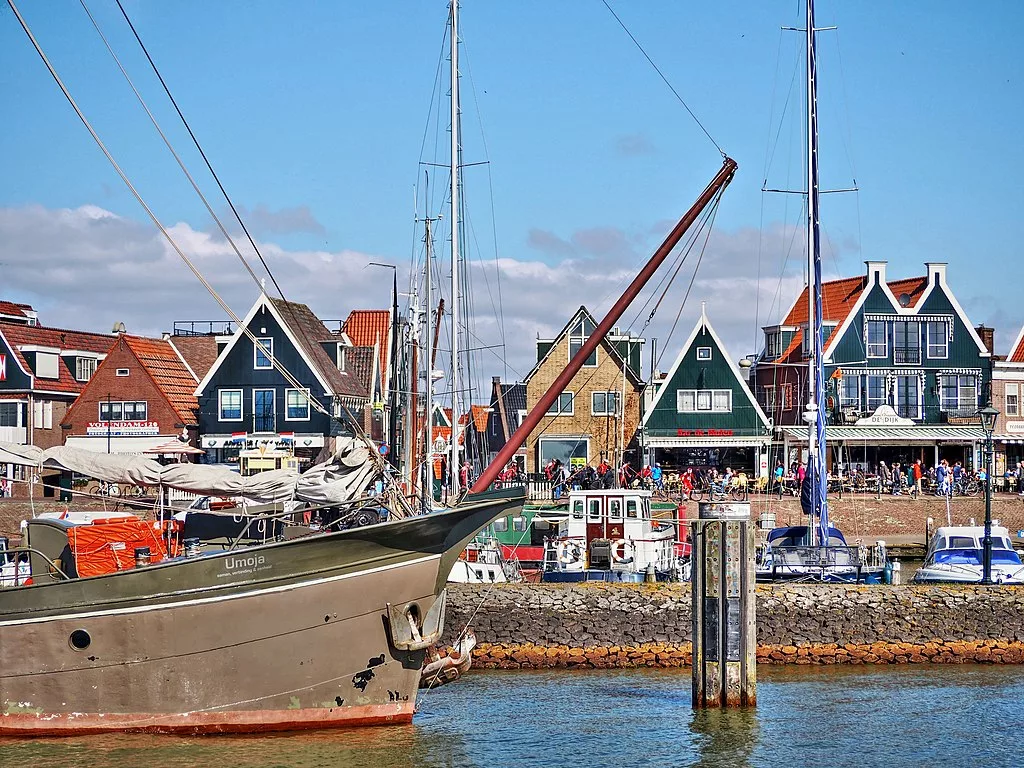
Volendam is a picturesque fishing village north of Amsterdam, famous for its colorful wooden houses and traditional harbor. Nearby, Marken is a former island, now connected to the mainland by a dike, known for its stilt houses and traditional costumes.
Both villages are part of the Waterland region, offering a glimpse of traditional Dutch life and maritime history.
Volendam is renowned for its seafood restaurants, where visitors can enjoy fresh herring, shrimp, and other local specialties. Visitors can also see traditional costumes and even have their photo taken dressed like locals from the past.
The area is ideal for photography, with its colorful houses, dikes, fishing boats, and nearby windmills. Volendam and Marken showcase the history of polders and dikes and how the Dutch shaped their land to protect it from the sea.
Keukenhof (Tulip Gardens, Spring Season)
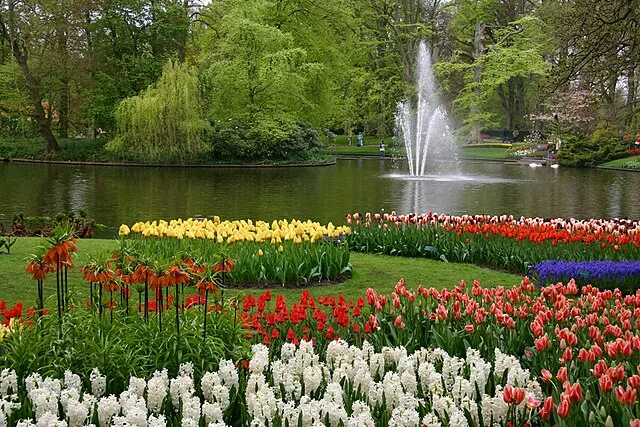
Keukenhof, located in Lisse about 40 minutes from Amsterdam, is one of the largest flower gardens in the world. The park is famous for its tulips, but also features daffodils, hyacinths, orchids, and other spring flowers.
Keukenhof covers about 32 hectares, with more than 7 million bulbs planted each year. The best time to visit is late March to mid-May, when the tulips are in full bloom.
The park offers flower exhibitions, themed greenhouses, landscaped gardens, and artistic sculptures. Visitors can explore the park on foot, by bike, or even on boats along the canals surrounding Keukenhof.
Keukenhof also hosts special events, such as concerts, horticulture demonstrations, and floral sculpture exhibitions.
Conclusion
Visiting Amsterdam means diving into a city with a unique charm, where history, culture, and modernity meet around every canal corner. To fully enjoy the Dutch capital, it is recommended to combine walks through the historic center, visits to iconic museums like the Rijksmuseum and Van Gogh Museum, and exploration of typical neighborhoods such as Jordaan or De Pijp.
Don’t miss tasting local specialties — stroopwafels, poffertjes, and Dutch cheeses — and attending a major event if your visit coincides with King’s Day. To experience Dutch tradition and natural beauty, plan excursions to Zaanse Schans, Volendam, Marken, or the Keukenhof gardens.
Finally, prioritize sustainable mobility: Amsterdam is best discovered by bike, on foot, or from its canals, offering a unique perspective on its bridges, historic façades, and lively atmosphere. With proper planning, your visit to Amsterdam will become a complete experience, full of discoveries and unforgettable memories.
If you want to explore Amsterdam differently, check out our scavenger hunt Amsterdam Highlights, a mix between an escape game and a cultural tour.