Visiting Nancy: 30 Must-See and Must-Do Attractions
Visiting Nancy means diving into the heart of the history, culture, and architecture of Lorraine. The city is famous for its Place Stanislas, its historic monuments, and its picturesque medieval districts.
Nancy also charms visitors with its museums, parks, gardens, and walks along the Meurthe River. Local gastronomy, with specialties such as quiche Lorraine, macarons, and bergamots, enhances the experience.
Festivals and events, such as Nancy Jazz Pulsations or the Saint Nicholas Festival, set the rhythm of city life throughout the year. This comprehensive guide will help you plan your stay and fully enjoy everything Nancy has to offer.
Monuments & Historical Heritage – Nancy
1. Place Stanislas and private mansions

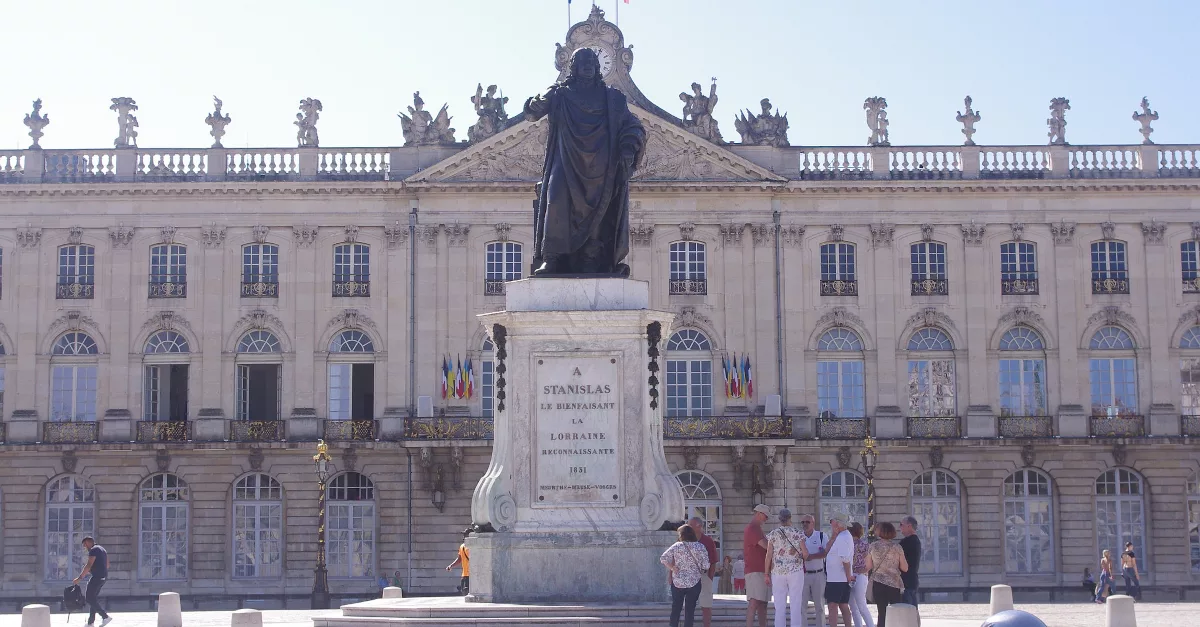
Place Stanislas was originally called Place Royale and paid tribute to Louis XV with a statue at its center. During the Revolution, the square changed names several times and the royal statue was removed. It was in 1831 that the square definitively took the name Place Stanislas, in honor of the last Duke of Lorraine.
The architectural ensemble of the square was designed by architect Emmanuel Héré to link the Old Town and the New Town of Nancy. On the south side stands the imposing City Hall, which is the main building of the square. The east side is occupied by the Lorraine National Opera, a former theater housed in an 18th-century façade. The Nancy Museum of Fine Arts rises on the west side, in a building that is part of the original composition. The two symmetrical pavilions to the north frame access to the Héré triumphal arch, which extends the axis of the square toward Place de la Carrière.
The ensemble is famous for its gilded wrought-iron gates by Jean Lamour, considered a masterpiece of 18th-century ironwork.
2. Porte de la Craffe
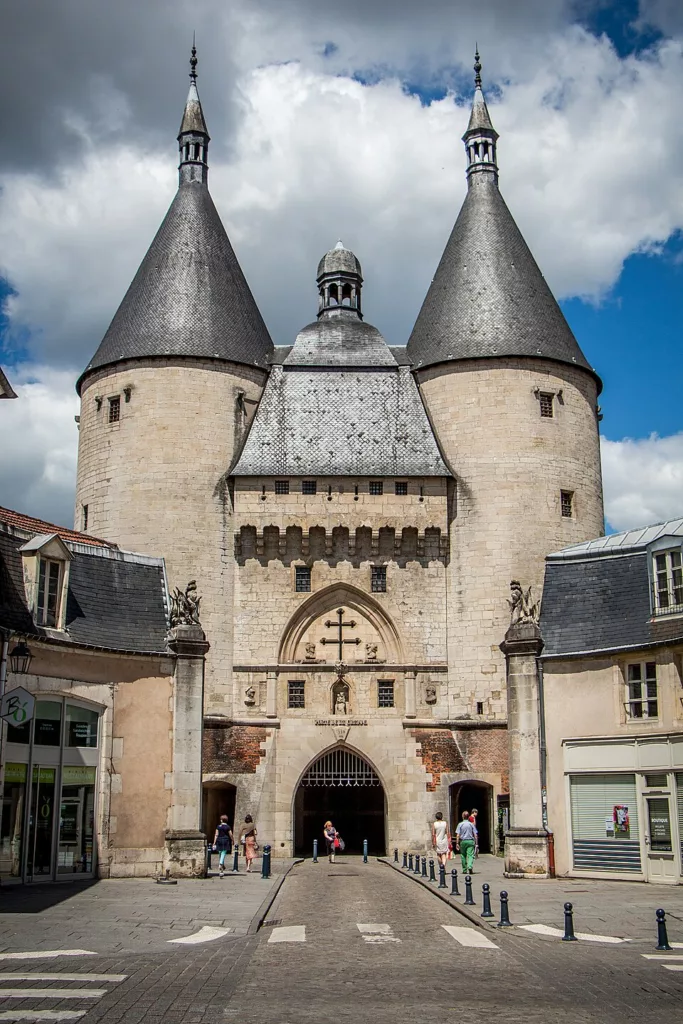
The Porte de la Craffe is the oldest medieval monument still standing in the historic center of Nancy. It was built between the 14th and 15th centuries as part of the city’s fortifications.
Originally, it was called the Porte des Bordes, a name linked to contagious patients according to local archives. The term “Craffe” may have several origins: it could come from “Kraft” (strength in German), from a Neapolitan nobleman named Caraffa, or refer to the clamps holding the stones of the gate together.
The gate consists of a central body topped with a pointed Gothic arch, flanked by two massive round towers built in 1463, with very thick walls (about three meters). A lantern was added in the 16th century, housing a bell taken from Saint-Epvre Church, used to mark the hours, curfews, executions, and compulsory labor.
4. Palais du Gouvernement
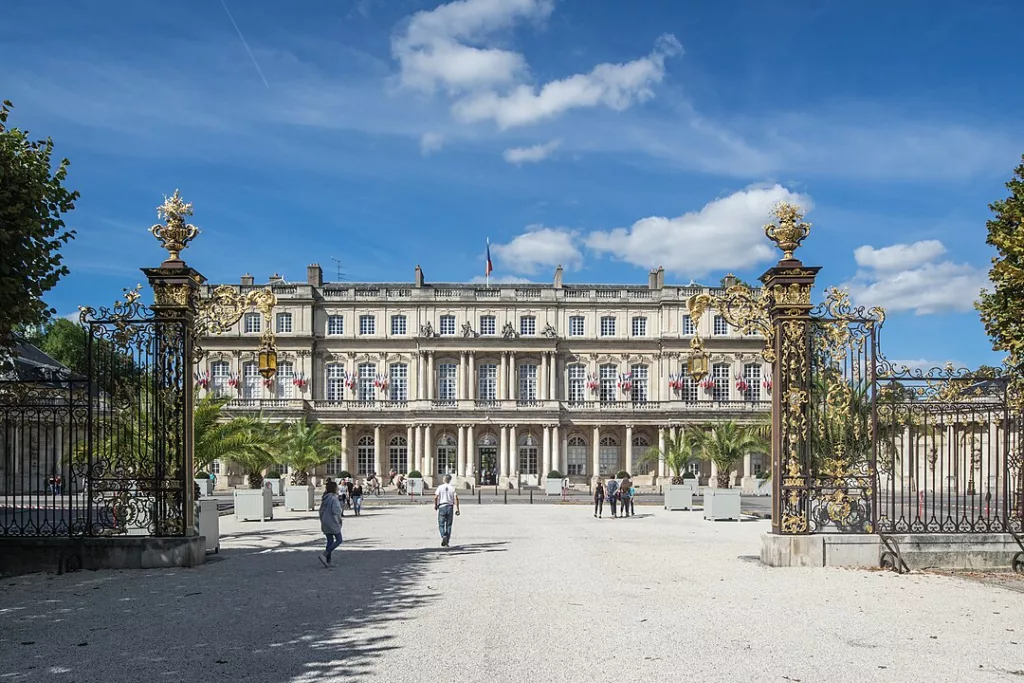
The Palais du Gouvernement in Nancy was built between 1751 and 1753 by architect Emmanuel Héré, on the orders of Stanislas Leszczynski. It was originally intended to house the Intendant of France, the king’s administrative representative in the Duchy of Lorraine.
The palace was built on the site of the former “New Louvre” planned by Duke Leopold; this unfinished project had been initiated by Germain Boffrand.
Its architectural style is classical / neoclassical, in symmetrical mirror with Nancy’s City Hall, featuring columns and harmonious proportions. The name “Palais du Gouvernement” comes from its function: it symbolized the authority of the French state in Lorraine, first through the intendant and later the governor.
Today, the site houses cultural spaces: exhibitions are organized there, and it also accommodates offices of the Culture and Attractiveness Department of the City of Nancy.
The palace garden, covering about 8,800 m², is still accessible today: it contains two plane trees planted in Stanislas’s time, over 250 years old.
5. Basilica of Saint-Epvre
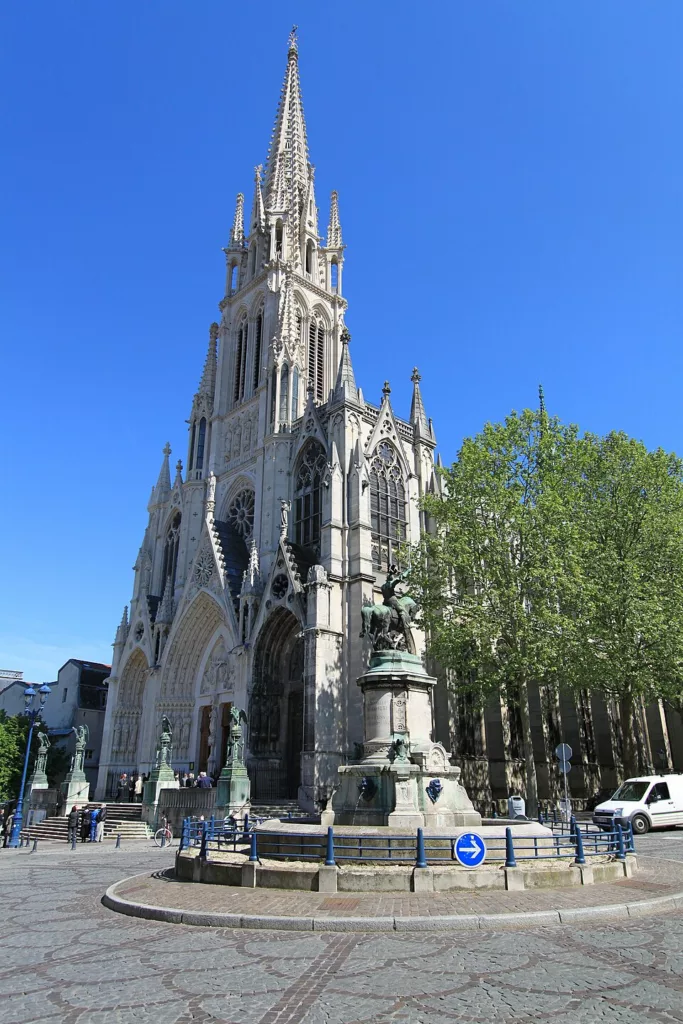
The parish of Saint-Epvre in Nancy has existed since 1080, when Duke Thierry II of Lorraine established a first church on this site.
This church underwent several transformations and was demolished in 1863 to make way for the new building, with the foundation stone of the current basilica laid in 1864.
Construction was completed in 1871, the year the church was consecrated by the Bishop of Nancy. The building was then elevated to the rank of minor basilica by Pope Pius IX in 1874.
The basilica is dedicated to Saint Epvre (Bishop of Toul): his relics are kept in a reliquary placed on the high altar.
Its architecture is in the Neo-Gothic style, with a spire rising to about 87 meters, making it a highly visible landmark in the Old Town of Nancy. The basilica’s stained glass windows are particularly remarkable: there are more than 70 windows (and three rose windows), notably from the Carl Geyling workshop in Vienna.
6. Church of the Cordeliers
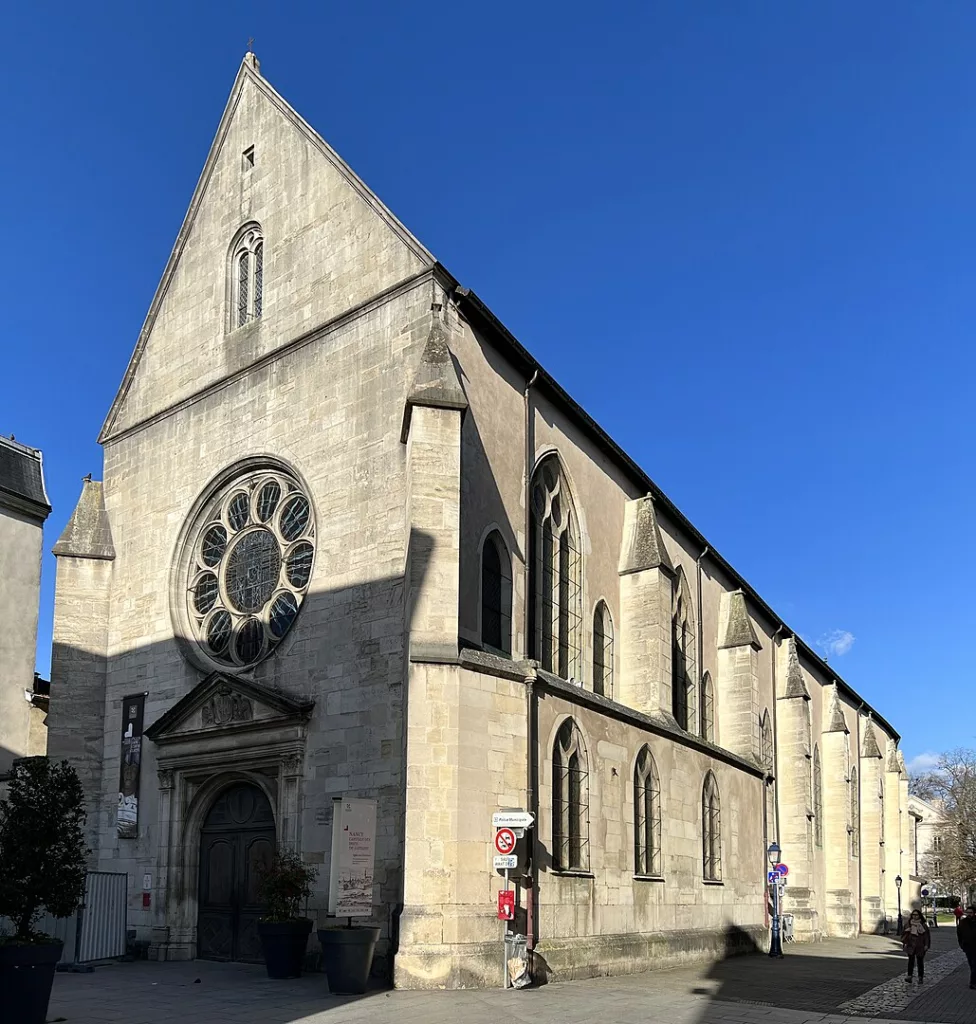
The Church of the Cordeliers in Nancy was built between 1477 and 1487, during the reign of Duke René II, shortly after his victory over Charles the Bold.
It owes its name to the Order of Friars Minor (Franciscans), known as “Cordeliers” because of the rope they wear around their waist.
Very sober on the exterior, the building measures about 73 meters in length and has a single nave, in a Flamboyant Gothic style mixed with Renaissance elements.
It became the necropolis of the Dukes of Lorraine, housing several major tombs of the dynasty, such as that of René II. The tomb of René II is a polychrome Renaissance “enfeu,” and the recumbent effigy of his wife, Philippe de Gueldre, is the work of the sculptor Ligier Richier.
Today, the church is part of the Musée Lorrain and hosts a scenography retracing the history of the Duchies of Lorraine and Bar.
7. Lorraine National Opera
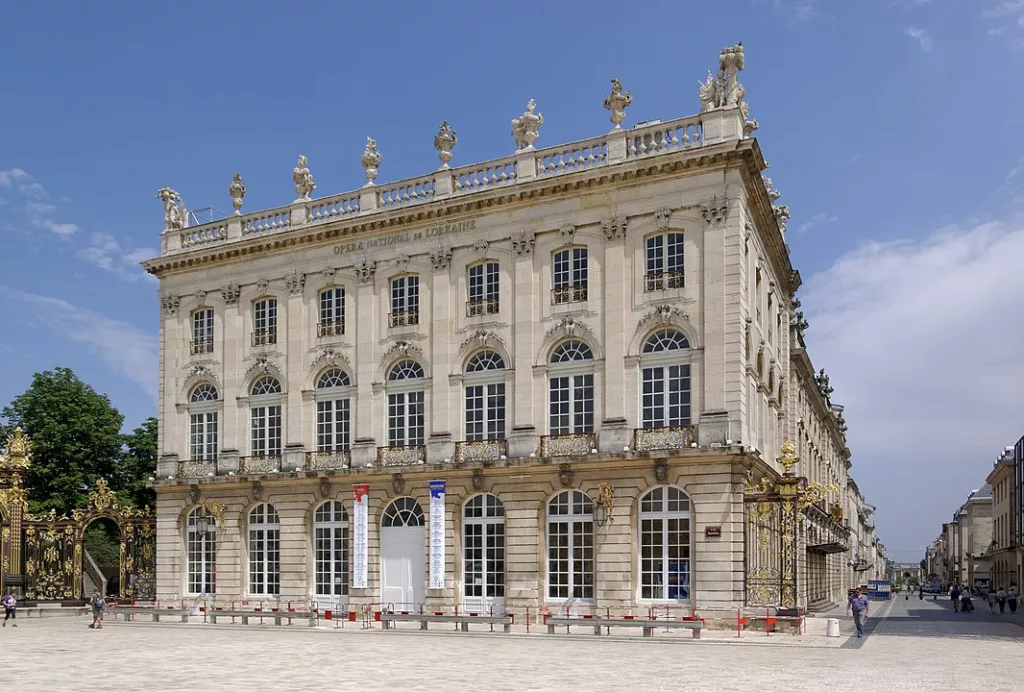
The Lorraine National Opera is located in Nancy on Place Stanislas and is a major lyric venue in the region.
Its predecessor, the Théâtre de la Comédie, was built during the reign of Stanislas Leszczynski in the 1750s, but it was destroyed by a fire in 1906. Immediately after the fire, an architectural competition was organized to rebuild the opera. The selected project was that of Joseph Hornecker, who designed an “Italian-style” auditorium in a classical style blended with Art Nouveau influences. The new opera was inaugurated on October 14, 1919, after World War I delayed its construction.
In 1994, the opera underwent a major restoration aimed at faithfully reproducing the auditorium as it was at its inauguration. The Lorraine National Opera blends tradition and modernity: it presents works from the classical repertoire as well as contemporary creations and organizes initiatives to support audiences and artistic creation.
8. The ADN Street Art Trail in Nancy
Nancy is not only a city of history and culture; it is also a true space for contemporary artistic expression. To extend your discovery after visiting the Museum of Fine Arts, let yourself be surprised by the Street Art trail offered via the ADN – Art dans Nancy application.
This interactive walk guides you through the city to admire original works by both established and emerging artists. Wall murals, giant paintings, and colorful installations line the streets, offering a fresh and modern perspective on urban art. Each stop on the route allows you to discover the story and inspiration behind the artists’ creations.
9. Villa Majorelle
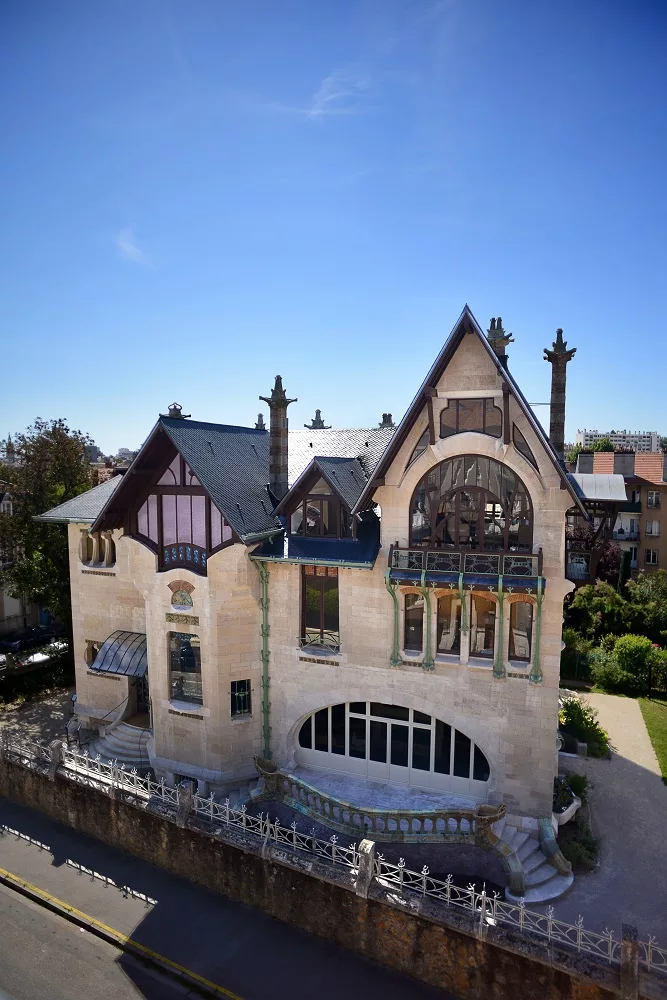
The Villa Majorelle is located in Nancy, in the heart of the Saurupt district, and is an emblematic example of Art Nouveau in Lorraine. It was built between 1898 and 1902 by architect Henri Sauvage, commissioned by the famous cabinetmaker and designer Louis Majorelle.
Louis Majorelle, a key figure of the École de Nancy, wanted a house combining modern functionality and Art Nouveau decoration, integrating his furniture and creations. The villa is famous for its concrete and brick façade, enhanced with floral motifs and artistic ironwork signed by Majorelle.
Inside, there is custom-made furniture, stained glass, carved woodwork, and decorative elements in harmony with the Art Nouveau style. The villa also features a terraced garden, designed to extend the aesthetics and fluidity of the architecture outdoors.
After Louis Majorelle’s death, the villa changed owners and was listed as a historic monument in 1975, protecting its architecture and décor. It has served as an exhibition venue and private residence, but is mainly accessible through guided tours or cultural events.
10. The Héré Triumphal Arch

The Héré Triumphal Arch is located on Place Stanislas in Nancy and is one of the city’s most emblematic landmarks. It was designed by architect Emmanuel Héré de Corny in the 18th century, between 1752 and 1755, during the reign of Duke Stanislas Leszczynski.
The arch was erected in honor of King Louis XV, symbolizing the alliance between Lorraine and the French monarchy.
The architecture of the arch combines classical and Baroque elements, with Corinthian columns and bas-reliefs depicting military victories. The pediment of the arch bears the effigy of the king, surrounded by symbols of Lorraine and France, recalling Nancy’s political role in the 18th century.
11. Cathedral of Our Lady of the Annunciation
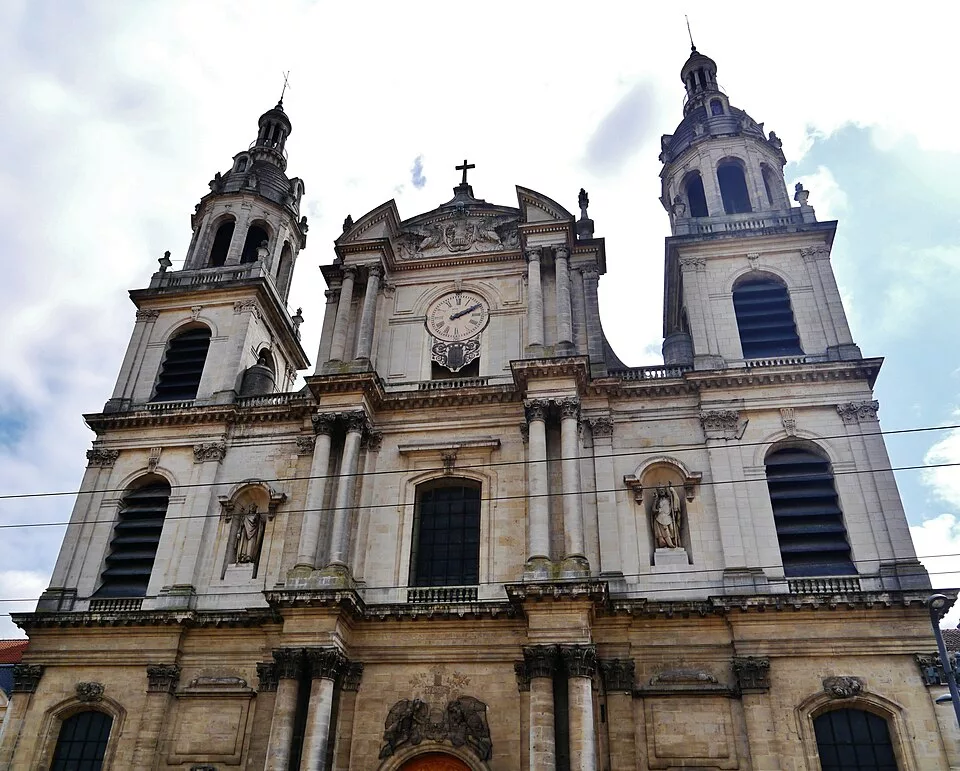
The Cathedral of Our Lady of the Annunciation of Nancy is the city’s main Catholic place of worship and the seat of the Diocese of Nancy and Toul. Its construction spanned several centuries, from 1477 to 1756, blending late Gothic and Baroque styles.
The cathedral was built on the site of earlier medieval churches, symbolizing Nancy’s religious importance since the Middle Ages.
It is dedicated to Our Lady of the Annunciation, reflecting Marian devotion in the Lorraine region. Our Lady of the Annunciation is a title given to the Virgin Mary in the context of the Annunciation, a central biblical episode of the New Testament. The Annunciation is the event recounted in the Gospel according to Luke (1:26–38), in which the Archangel Gabriel announces to Mary that she will conceive Jesus, the Son of God, through the Holy Spirit.
The cathedral also preserves ancient stained glass windows, as well as 18th-century works of art depicting saints and biblical scenes.
12. Church of Our Lady of Bonsecours
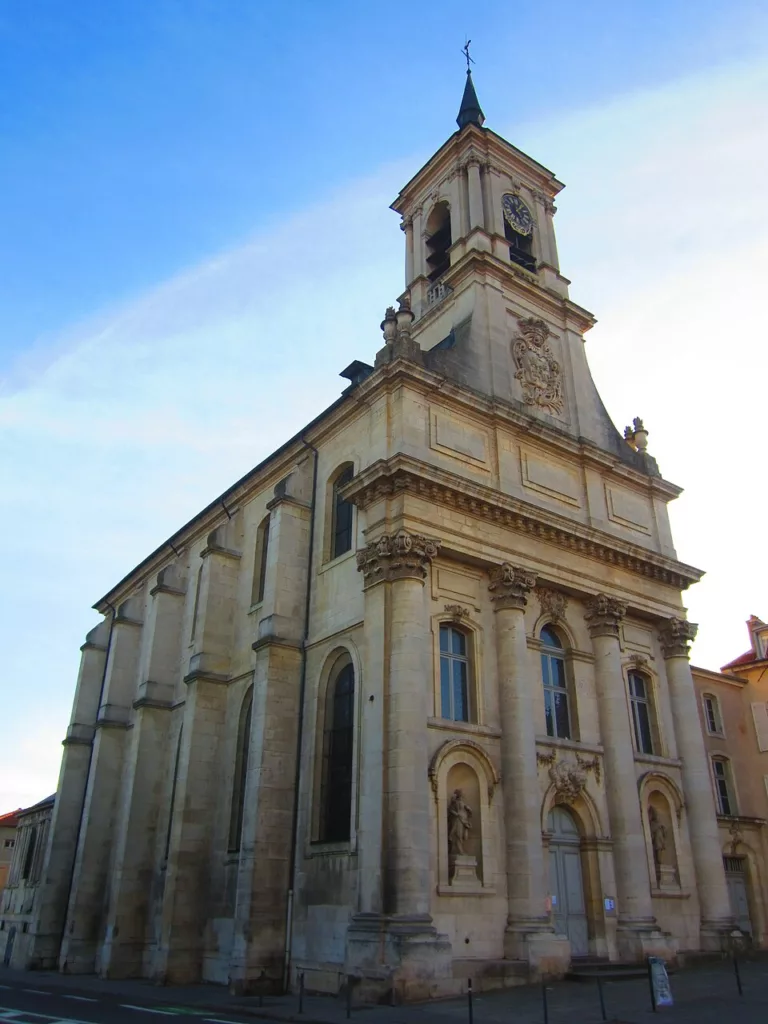
The Church of Our Lady of Bonsecours was built between 1738 and 1741 on the orders of Duke Stanislas Leszczynski, by architect Emmanuel Héré.
Originally, a chapel built in 1484 stood on this site, in memory of the Battle of Nancy (1477), where many bodies were buried.
Stanislas’s project aimed to transform this place into a funerary sanctuary for his own family: his tomb and that of his wife are located in the church. In the crypt lie Duke Stanislas Leszczynski, his wife Catherine Opalińska, and the heart of their daughter Marie Leszczynska (Queen of France).
The church’s architectural style is Baroque, with painted vaults (Annunciation, Assumption, Immaculate Conception) by Joseph Gilles known as “le Provençal.” There are polychrome statues of saints, some of whom are particularly venerated in Poland (a reference to Stanislas’s origins).
13. Maison Bergeret
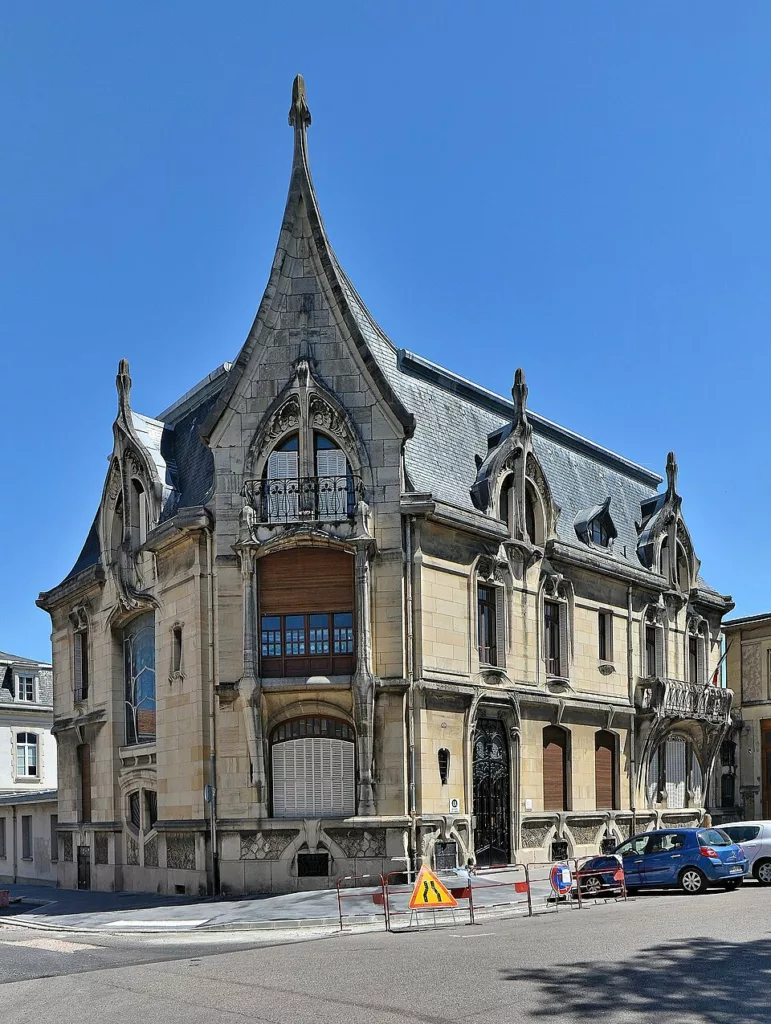
The Maison Bergeret, located at 24 rue Lionnois in Nancy, is a jewel of Art Nouveau, built in 1903 by architect Lucien Weissenburger for the printer Albert Bergeret.
It perfectly reflects the spirit of the École de Nancy, combining modernity, plant-inspired decoration, and artistic craftsmanship. The ironwork was created by Louis Majorelle, the stained glass by Jacques Grüber, the furniture by Eugène Vallin, and the painted ceilings by Victor Prouvé, creating a total harmony between architecture and decorative arts.
The house stands out for its colorful stained-glass windows, carved woodwork, and richly decorated ceilings, which testify to the artisanal excellence of the period. It also incorporates innovative techniques for its time, such as a metal structure and a hot-air central heating system.
Listed as a historic monument, Maison Bergeret is now owned by the University of Lorraine, which has installed its presidency there while preserving its décor. Guided tours allow visitors to discover the complete furnishings, stained glass, and unique architectural details.
Museums & Culture – Nancy
1. Nancy Museum of Fine Arts
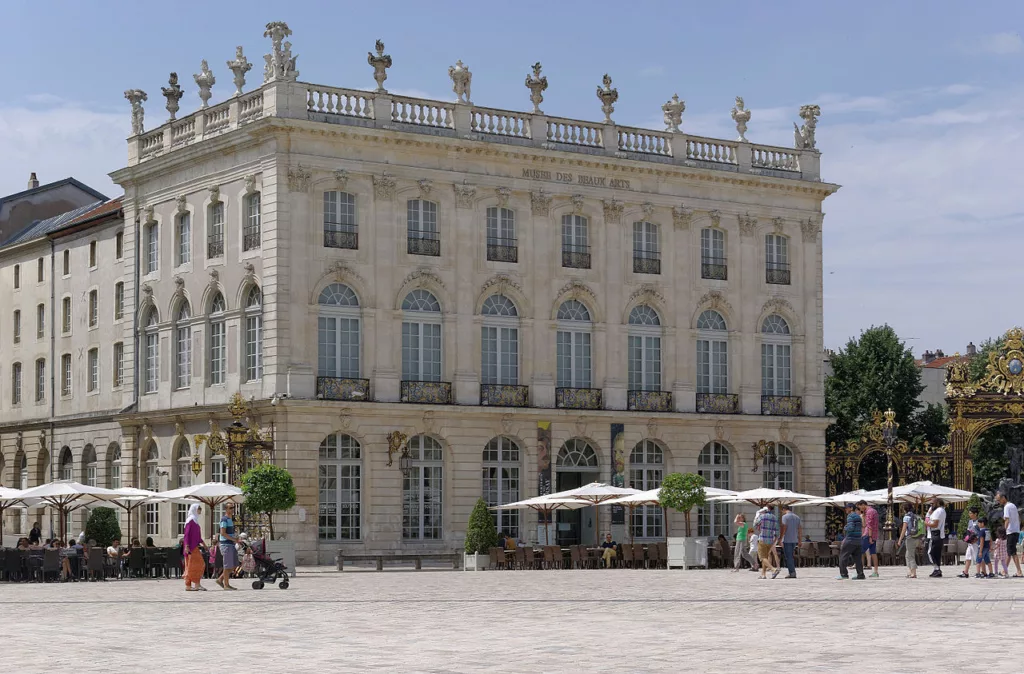
The Nancy Museum of Fine Arts is one of the oldest museums in France, founded during the French Revolution.
Its initial collections came from the seizure of church property and aristocratic estates during the Revolution. Under the First Empire, around 30 paintings from the Louvre were transferred to Nancy following a treaty, greatly enriching the museum.
In 1936, the museum moved into an 18th-century pavilion designed by architect Emmanuel Héré on Place Stanislas. The museum building rests on former Nancy fortifications, which are visible in the basement.
The museum presents a very broad artistic panorama, from European paintings of the 14th century to the 20th century, featuring artists such as Caravaggio, Rubens, and Delacroix.
2. Museum of the École de Nancy
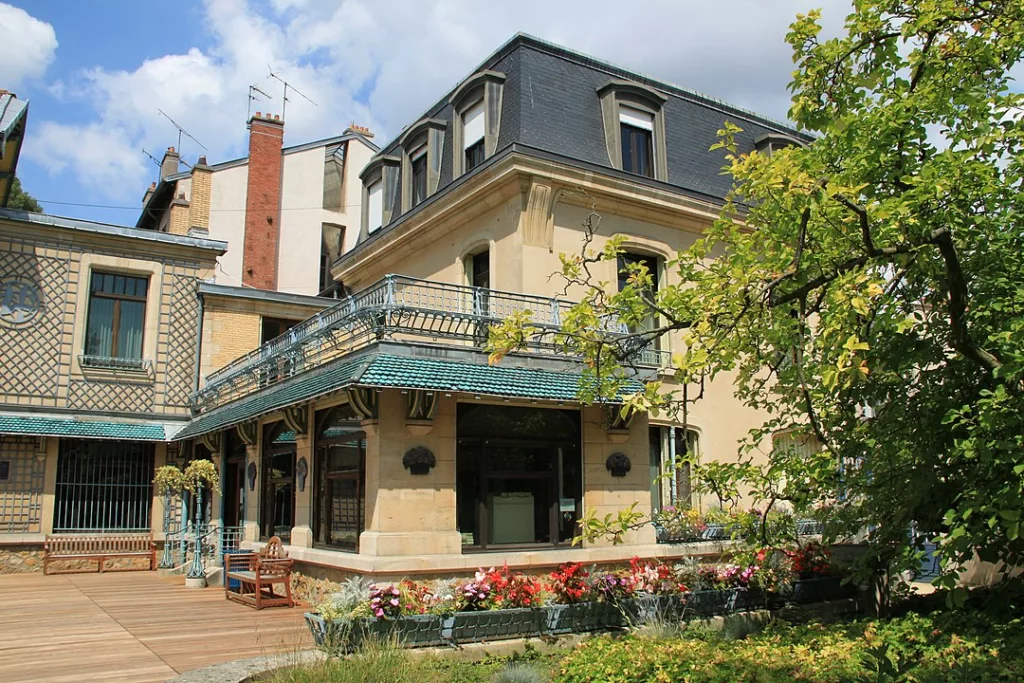
The Museum of the École de Nancy is dedicated to the Nancy Art Nouveau movement, known as the “École de Nancy.”
It occupies the former property of patron Eugène Corbin, one of the most important collectors of the École de Nancy. The City of Nancy acquired the building in 1951–1952, a few months before Corbin’s death, to make it a permanent museum.
The museum opened to the public very gradually: from May 1954 one day a week, then in an expanded version in 1964.
Inside, visitors discover furniture, art objects, glassware, ceramics, stained glass, textiles, and paintings created by artists of the École de Nancy. The museum particularly highlights the works of Émile Gallé, with a glassware collection of more than 400 pieces. A flagship room is the Masson dining room, designed by Eugène Vallin with a ceiling painted by Victor Prouvé and lighting fixtures from the Daum manufactory.
3. Musée Lorrain
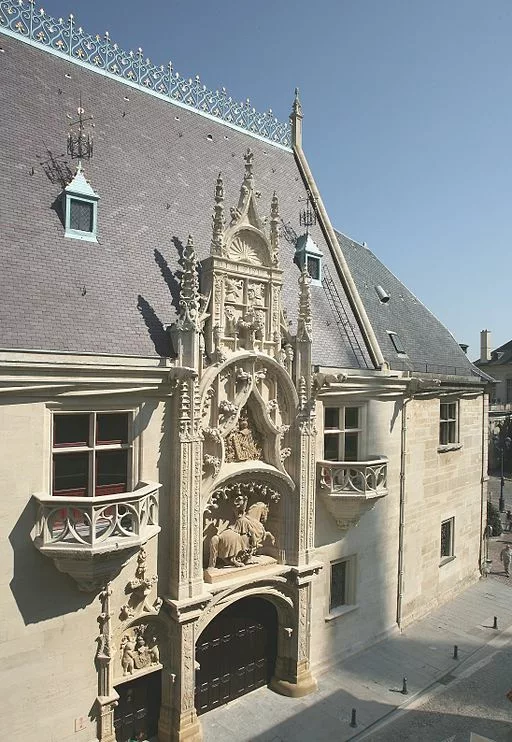
The Musée Lorrain was founded in 1850 by the Lorraine Archaeological Society to preserve and promote the historical heritage of Lorraine.
It is housed in the former Palace of the Dukes of Lorraine, in the heart of Nancy’s Old Town, as well as in the Church of the Cordeliers and the Palais du Gouvernement.
The museum’s collections are extremely rich—more than 155,000 items covering the entire history of Lorraine, from prehistory to the contemporary period.
Parks, Gardens & Walks – Nancy
1. Parc de la Pépinière
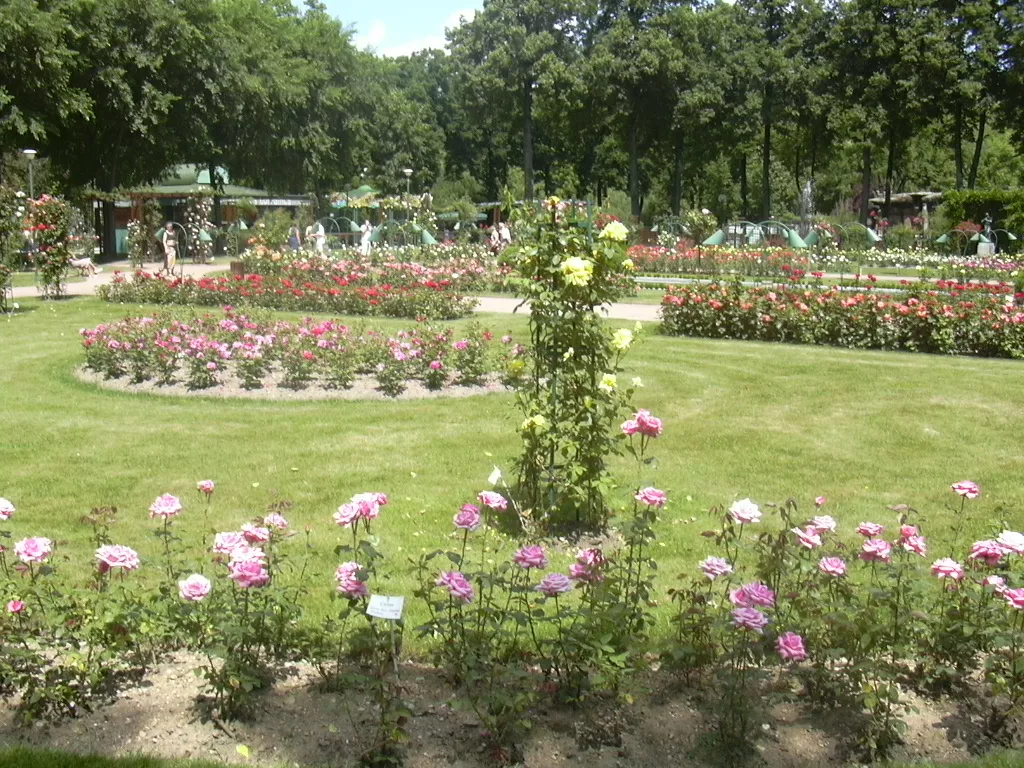
Parc de la Pépinière covers approximately 21 hectares in the very heart of historic Nancy, just steps from Place Stanislas. It owes its name to its original function: it was a royal nursery founded in 1765 under Stanislas Leszczynski to produce trees intended for the roads of Lorraine.
In 1835, the City of Nancy bought back the nursery and transformed it into a public park, while preserving the grid layout of the former “cultivation plots.”
An English-style avenue was created at the end of the 19th century (around 1877), with winding paths contrasting with the original grid. The park features a rose garden covering 2,000 m², located on the site of the former municipal greenhouses, with nearly 197 varieties of roses. A bandstand, known as the “Mozart kiosk,” dating from 1875, stands in the English-style section of the park and is still used for open-air concerts.
The park includes a 2-hectare animal area, home to more than 40 animal species, including Lorraine goats, fallow deer, geese, and peacocks. Several sports facilities are available: football, basketball, pétanque, mini-golf, as well as a playground and a gymnasium within the park.
Since 2022, a water mirror has been installed in the park: a contemporary water garden with several pools themed around plant species (irises, cattails, submerged plants, etc.).
The park is home to remarkable trees (purple beeches, giant sequoias, etc.), sculptures, and several paths named in tribute to notable figures, making it a remarkable listed garden.
2. Montet Botanical Garden
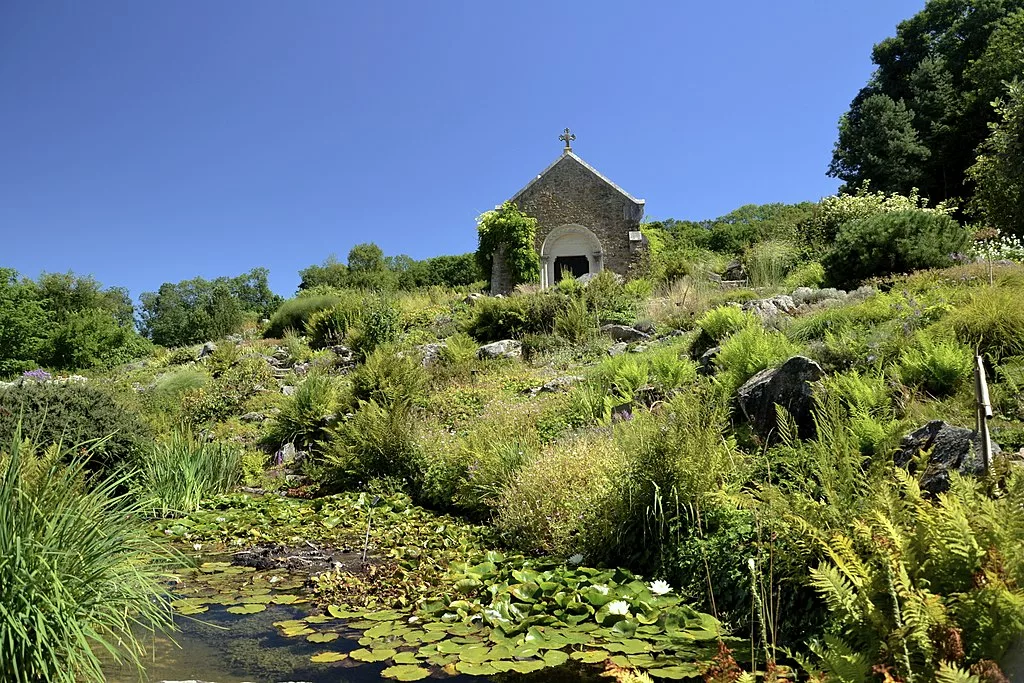
Montet Botanical Garden
The Montet Botanical Garden was inaugurated in 1975 on the site of Villers-lès-Nancy, replacing the former botanical garden of Nancy. In 2016, it was renamed the Jean-Marie-Pelt Botanical Garden, in tribute to the Lorraine botanist Jean-Marie Pelt.
It is jointly managed by the Metropolis of Greater Nancy and the University of Lorraine, within the Conservatory and Botanical Gardens of Nancy.
The garden covers approximately 35 hectares and is home to more than 12,000 plant species arranged in themed collections. It features large tropical greenhouses (around 2,500 m²) housing rare exotic plants such as orchids, epiphytes, and cacti.
Among the themed areas are an alpinum dedicated to mountain plants, an arboretum, a rose garden, and a medicinal garden. One of the garden’s buildings is the Sainte-Valérie Chapel, overlooking the alpinum, a remnant of the former Montet estate.
The garden fulfills three main missions: conservation, environmental education, and scientific research.
3. Walk Along the Meurthe River
The walk along the Meurthe River offers a chance to discover Nancy from a calm and natural perspective. The riverbanks provide spaces for walking, jogging, or cycling. Visitors can observe local wildlife and enjoy picturesque views of the city. Benches and rest areas allow visitors to relax and admire the scenery. The walk connects several neighborhoods and historic landmarks of Nancy.
4. Sainte-Marie Park

Sainte-Marie Park in Nancy
Sainte-Marie Park covers approximately 7.5 hectares, making it the second-largest park in central Nancy.
Its name comes from the settlement of the Jesuits in 1620, who established a large estate there and named it Sainte-Marie.
In 1808, the park became a private ornamental garden and was landscaped with remarkable trees such as weeping sequoias, tulip trees, cedars, and oaks. The City of Nancy acquired the property in 1904 and later transformed it into a public park.
For leisure activities, the park offers playgrounds, basketball courts, a pétanque court, and a cycling path.
During the International Exhibition of Eastern France in 1909, the park hosted several pavilions, including the “Alsatian House,” which is still visible today. This building is now called the “House of Green Spaces” and hosts educational exhibitions about nature.
The park is recognized for its ecological richness: it features around 85 remarkable trees and is classified as a “remarkable garden.”
Nancy Gastronomy
Dishes & Specialties
Quiche Lorraine
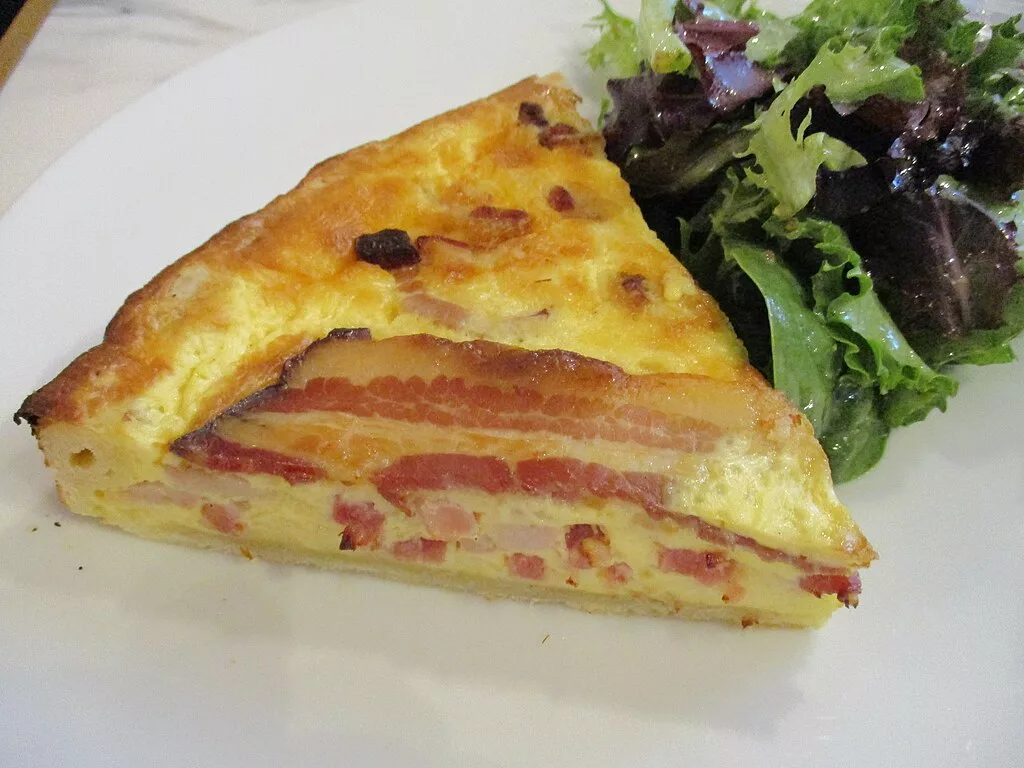
Quiche Lorraine
The quiche Lorraine is one of the most famous specialties of Nancy and the Lorraine region. It is made with eggs, fresh cream, and bacon or ham. This savory dish can be enjoyed hot or cold, as a starter or a main course.
Potée Lorraine
The potée Lorraine is a traditional regional stew made with vegetables and meat. It typically includes cabbage, carrots, potatoes, and pork or sausages.
This slow-cooked dish is hearty and comforting, ideal for colder seasons. Locals and visitors alike appreciate it for its authentic flavor and richness. Potée Lorraine is often served in traditional restaurants or during local festivities.
Desserts & Sweets
Macaron of Nancy
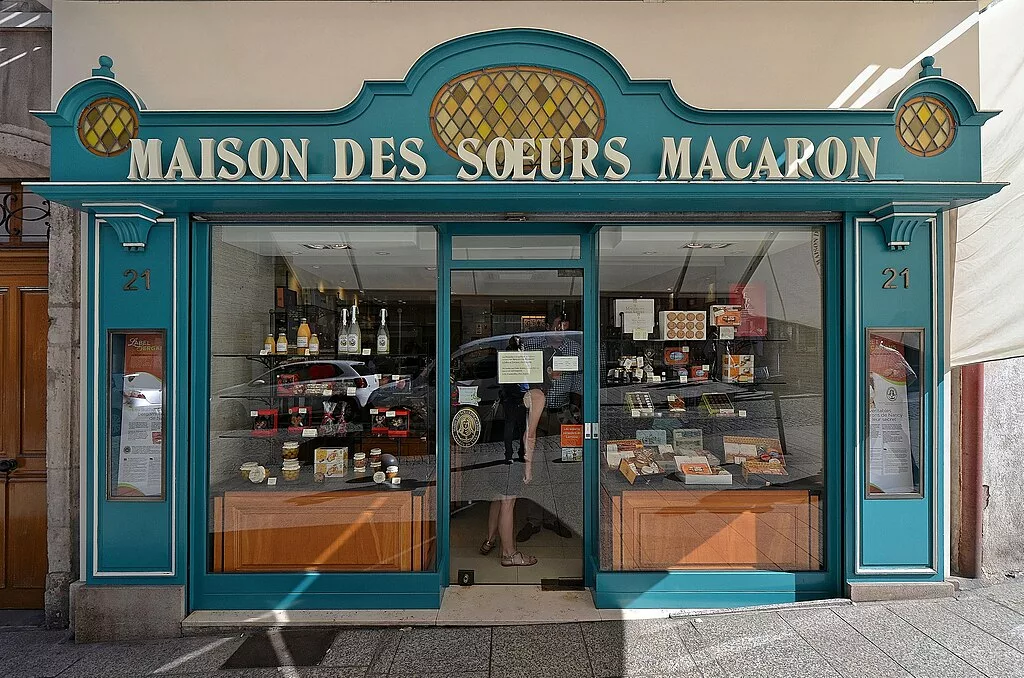
Macarons of Nancy
The Macaron of Nancy is an iconic traditional pastry of the city. It is made from sugar, almonds, and egg whites, with a soft and slightly crunchy texture. The macarons are often flavored with mirabelle plum, orange, or other regional aromas.
Bergamotes of Nancy
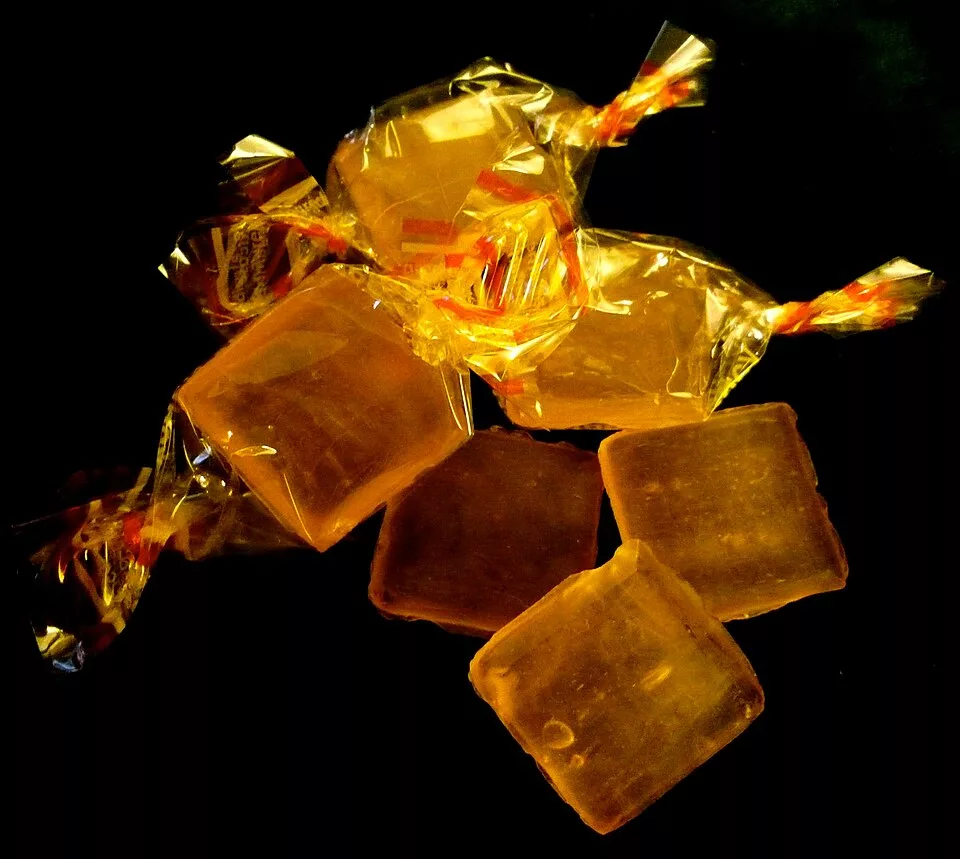
Bergamotes of Nancy
The Bergamotes of Nancy are sweets flavored with bergamot, a citrus fruit typical of the region. They are produced artisanally and are a well-known local specialty. Bergamotes can be enjoyed on their own or served with tea or coffee.
Lorraine Wines and Local Liqueurs
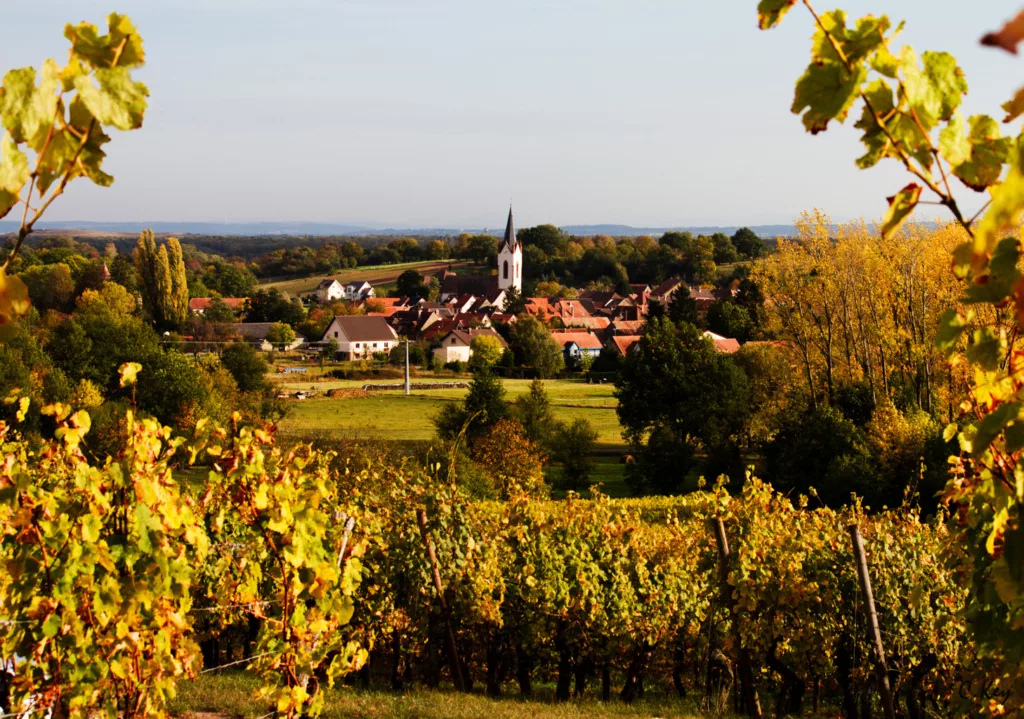
Vineyard in Lorraine
The Nancy region also produces local wines and liqueurs, such as mirabelle plum or damson (quetsche) liqueur. These beverages pair perfectly with traditional dishes or can be enjoyed on their own. Visitors can discover local producers and take part in tastings.
Major Events – Nancy
1. Nancy Jazz Pulsations
Nancy Jazz Pulsations (NJP) is a music festival founded in 1973 by the Lorraine pianist and journalist Jean-Marie Londeix along with jazz enthusiasts. The festival takes place every year in Nancy, usually in October, and lasts around 10 days.
Originally, its goal was to promote contemporary jazz, which was little known in Lorraine at the time, by inviting local and international artists. NJP quickly evolved to include other musical genres such as rock, funk, blues, reggae, and electronic music.
The festival stands out for its free open-air concerts, often held on Place Stanislas or in the Parc de la Pépinière, as well as ticketed evening shows in concert halls. Each year, NJP attracts more than 70,000 spectators from across France and abroad.
2. Saint Nicholas of Lorraine Festival
The Saint Nicholas Festival is celebrated every year in Nancy, a city considered the capital of Saint Nicholas celebrations in Lorraine. It commemorates Saint Nicholas, Bishop of Myra in the 4th century, renowned for his generosity toward children and the poor.
This Lorraine tradition is very old: the first processions and celebrations date back to the 16th century and are linked to the Dukes of Lorraine. In Nancy, the festival usually lasts several days, beginning in late November and culminating around December 6, Saint Nicholas’ Day.
The city is adorned with illuminated decorations, Christmas markets, and numerous activities for children. The traditional procession features Saint Nicholas accompanied by Père Fouettard, a character responsible for punishing disobedient children.
Children receive traditional pastries, such as “mannele” or brioche shaped like a little figure, reflecting the region’s rich culinary heritage.
Excursions / Trips Around Nancy
1. Château de Lunéville

Château de Lunéville
The Château de Lunéville, often nicknamed the “Versailles of Lorraine,” is located about fifteen kilometers from Nancy. It was the residence of the Dukes of Lorraine and reflects the refinement of the 18th century.
It was rebuilt between 1703 and 1723 for Duke Leopold I, based on plans by Pierre Bourdict, Nicolas Dorbay, and especially Germain Boffrand. It stands on the site of a former medieval fortress owned by the Dukes of Lorraine since the 13th century. Leopold I chose Lunéville as his official residence when Nancy was occupied by the French army, thereby enhancing the site’s political importance.
In 1737, Stanislas Leszczynski, former King of Poland and father-in-law of Louis XV, became Duke of Lorraine and established his court in Lunéville, turning the château into an intellectual center of the Enlightenment.
The château hosted major Enlightenment figures such as Voltaire and Montesquieu, as well as scientists like Maupertuis, making it a true intellectual crossroads.
The château suffered several fires throughout its history; the most recent, on January 2, 2003, severely damaged the royal chapel and many rooms. Since then, an extensive restoration program has been underway, led by the Meurthe-et-Moselle Departmental Council, its main owner since 2017.
Today, the château houses a museum, hosts exhibitions, concerts, and cultural events in its restored rooms, and its Bosquets park (over 19 hectares) is open to the public year-round.
2. Lorraine Regional Nature Park
The Lorraine Regional Nature Park (PNRL) was created in 1974 to preserve Lorraine’s natural and cultural heritage. It covers approximately 210,000 hectares across three departments: Meuse, Meurthe-et-Moselle, and Moselle.
The park’s landscape is extremely diverse, featuring wet forests, limestone grasslands, ponds, and salt marshes. Among its most remarkable wetlands are the Woëvre and Lindre ponds. In terms of wildlife, the park is home to species such as deer and foxes, as well as migratory and aquatic birds.
3. Metz and Its Heritage
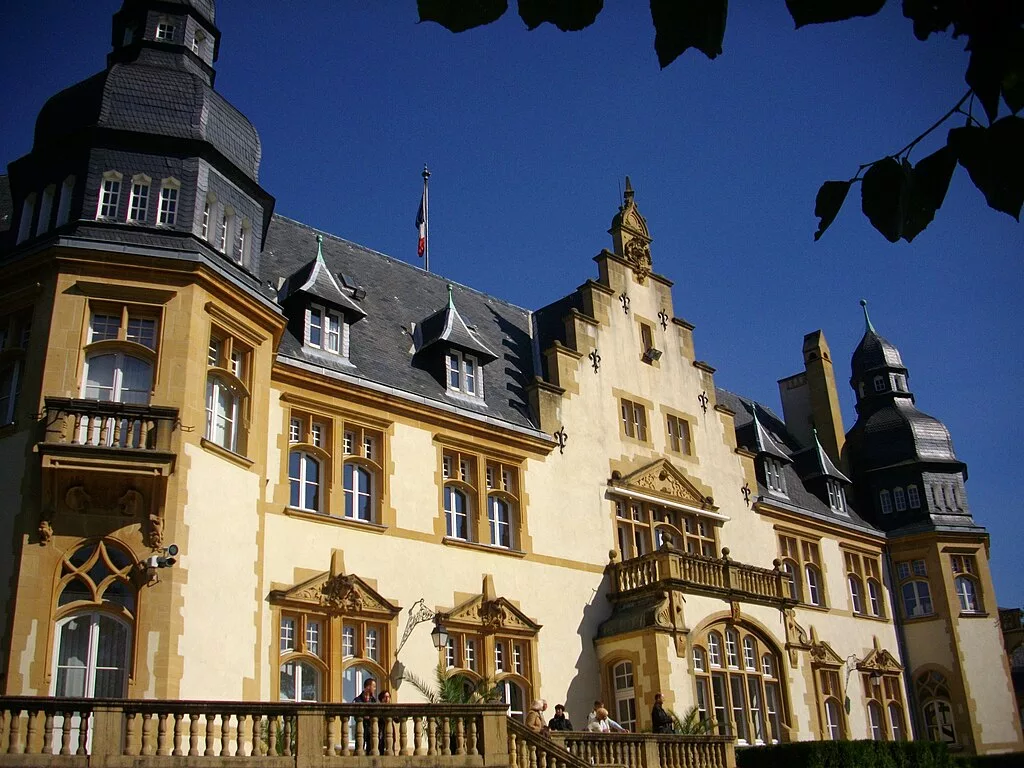
Governor’s Palace in Metz
Metz, located about 50 km from Nancy, is a city rich in history and architecture.
Its history dates back to the Gallo-Roman period, when it was known as Divodurum Mediomatricorum, and the city still preserves remains from this era.
The Saint Stephen’s Cathedral, built between the 13th and 15th centuries, is famous for its exceptional stained-glass windows, some of which were created by Marc Chagall in the 20th century. (metz.fr)
Metz is home to the Centre Pompidou-Metz, inaugurated in 2010, an extension of the renowned Paris museum that hosts contemporary art exhibitions.
The Temple Neuf, built on Petit Saulcy Island at the beginning of the 20th century, is a notable example of neo-Romanesque Protestant architecture.
The Pont des Morts and the Pont Saint-Georges are emblematic historic structures linking the city’s historic districts.
Metz preserves many medieval and Renaissance buildings, including the Porte des Allemands, a 13th-century fortification, as well as several private mansions dating from the 16th and 17th centuries.
The city is nicknamed the “City of a Hundred Spires” due to the large number of churches and chapels scattered throughout the historic center.
Metz also boasts numerous parks and gardens, such as the Metz Botanical Garden and the Esplanade lake, which enhance its urban and natural heritage. (metz.fr)
4. Baccarat and Its Crystal

Baccarat Crystal
Baccarat is a small town located in Lorraine, in the Meurthe-et-Moselle department, world-famous for its luxury crystal.
The Baccarat crystal factory was founded in 1764 by royal decree of Louis XV, originally to produce crystal glass for the royal court.
In the 19th century, Baccarat became an official supplier to imperial and royal courts, developing exceptional expertise in blown and cut crystal. Baccarat artisans invented innovative techniques such as hand-cut crystal, diamond engraving, and molded crystal.
The manufactory produced famous pieces displayed in royal palaces and museums around the world, including the Louvre Museum and the Victoria and Albert Museum. Iconic creations include monumental chandeliers, crystal tableware, and prestigious decorative objects.
Baccarat’s worldwide reputation was further enhanced by its participation in world exhibitions during the 19th and early 20th centuries, where its creations won numerous medals and awards.
Today, the crystal factory is still active and features a crystal museum, the “Baccarat Museum,” where visitors can discover the history and techniques of crystal craftsmanship.
5. Verdun and World War I Historical Sites
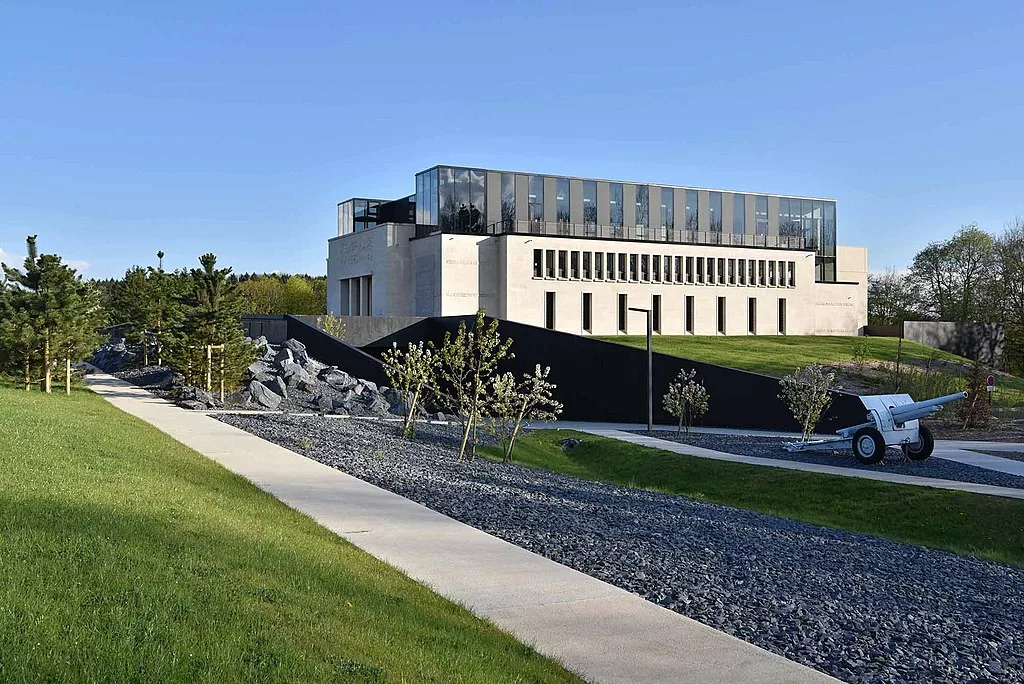
Verdun Memorial
Verdun is located about 90 km from Nancy and is world-renowned for the Battle of Verdun (February–December 1916), one of the longest and deadliest battles of the First World War. The battle pitted the German and French armies against each other, resulting in more than 700,000 casualties, including dead and wounded.
Verdun preserves many memorial sites, such as the Douaumont Ossuary, which contains the remains of nearly 130,000 French and German soldiers.
The Fort Douaumont is the most famous of Verdun’s forts; it was captured by German forces in 1916 and later retaken by the French. Today, it operates as a museum open to the public.
The Fort de Vaux, also strategically important during the battle, is accessible to visitors and features reconstructions and exhibitions on soldiers’ daily lives.
The Verdun Memorial, inaugurated in 1967, recounts the history of the battle through artifacts, photographs, and period documents, offering an educational and emotional visitor experience.
The preserved trenches and communication trenches in the Verdun area provide insight into the extreme living conditions endured by soldiers on the front lines.
The Douaumont Military Cemetery contains more than 16,000 French and German graves and is one of the most visited memorial sites in Verdun. Today, Verdun is an international place of remembrance, hosting commemorative ceremonies, school visits, and tourists from around the world.
Conclusion
Visiting Nancy means discovering a city where history, culture, and gastronomy come together. From the majestic Place Stanislas to medieval streets and elegant townhouses, each site tells part of the city’s story.
Museums and festivals offer a wide range of cultural experiences, while parks and gardens provide opportunities to relax in the heart of the city.
Local specialties such as quiche Lorraine, macarons, and potée Lorraine enrich the stay with authentic flavors.
Excursions around Nancy—to Lunéville, Baccarat, or Verdun—extend the discovery of the region. Visiting Nancy is a complete and memorable experience for travelers seeking heritage, culture, and gastronomy.