
Visiting Berlin: 30 Must-See Attractions and Things to Do
Berlin, the capital of Germany, is a city where history blends with modernity and where each district tells a page of the past. From its iconic monuments like the Brandenburg Gate and the Reichstag, witnesses of great historical eras, to emotionally charged sites such as the Berlin Wall or the Holocaust Memorial, the city offers a unique panorama of European history.
Its prestigious museums, like the Pergamon Museum or the Neues Museum, allow visitors to discover artistic and archaeological treasures, while its parks and gardens, such as the Tiergarten or Treptower Park, offer spaces for relaxation and strolls in the heart of the metropolis. Berlin is also a city of vibrant culture: theaters, performance halls like the Friedrichstadt-Palast, lively markets, and iconic squares like Alexanderplatz or Gendarmenmarkt shape the daily life of Berliners.
Local gastronomy, with specialties like currywurst, döner kebab, or Berliner Pfannkuchen, invites an exploration of the city’s typical flavors. For those who wish to escape the urban hustle, excursions to nearby places such as Potsdam and Sanssouci Palace, the Spreewald, or Wannsee offer a perfect mix of nature and heritage.
Visiting Berlin means exploring a city rich in history, culture, and discoveries, where each monument, museum, or district reveals a unique aspect of the Berlin spirit.
Experience Berlin differently with our tour “The History of the Third Reich and the Cold War in Berlin,” a blend between an escape game and a cultural visit.
Monuments & Historical Heritage – Berlin
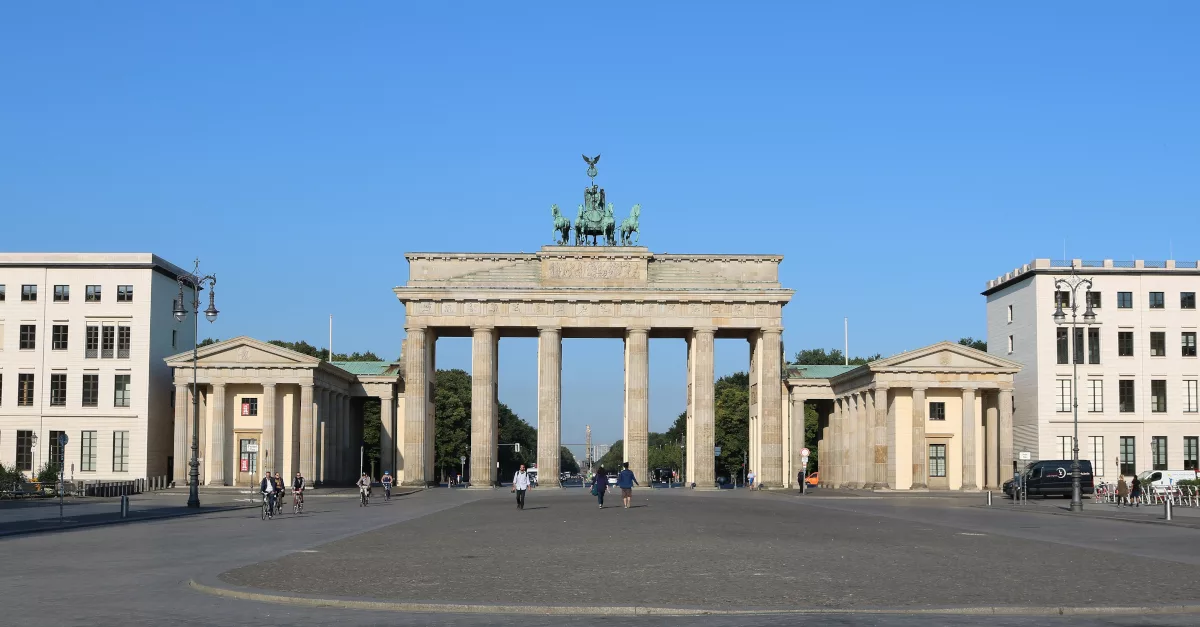
The Brandenburg Gate
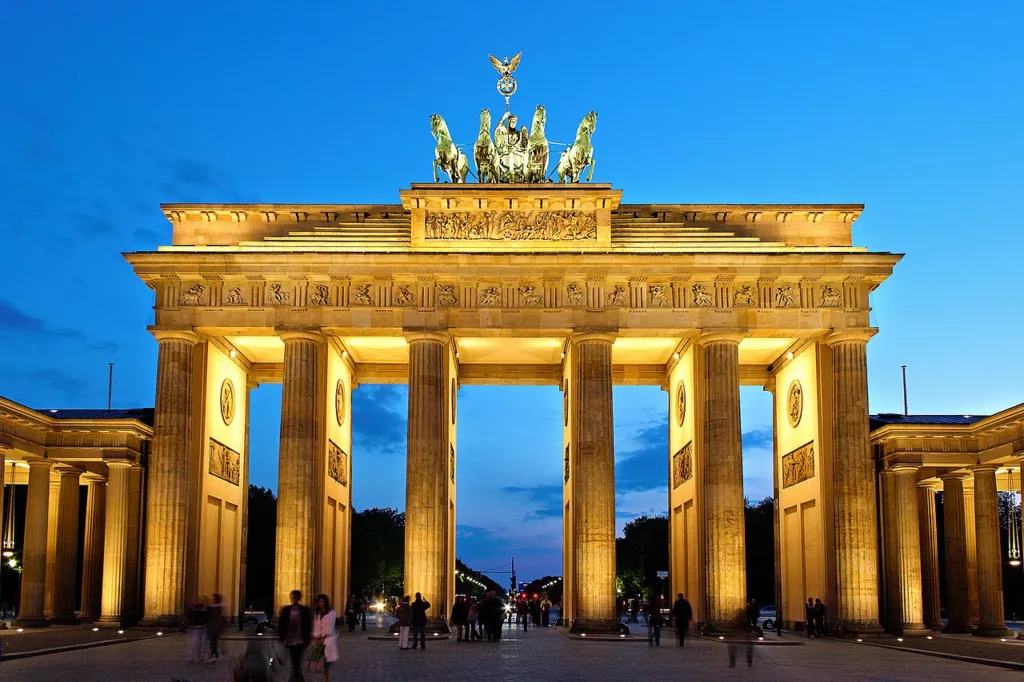
The Brandenburg Gate is an 18th-century neoclassical monument located in Berlin. It was built between 1788 and 1791 by order of King Frederick William II of Prussia, according to the plans of architect Carl Gotthard Langhans.
The bronze quadriga atop the gate, representing the goddess of Victory, was sculpted by Johann Gottfried Schadow. The Brandenburg Gate marked the entrance of a former city gate on the road from Berlin to Brandenburg an der Havel.
The gate was severely damaged during World War II, notably with bullet impacts on its columns.
The original quadriga was taken by Napoleon to Paris in 1806, then returned to Berlin in 1814 after his fall.
During the Cold War, the Brandenburg Gate was located in the “restricted zone” of the Berlin Wall and was inaccessible to Berliners. After the fall of the Wall in 1989, it became a strong symbol of German unity and regained its place as a central monument in Berlin.
Discover the secrets of the Hercules frescoes on this monument with our tour The History of the Third Reich and the Cold War in Berlin
The Reichstag
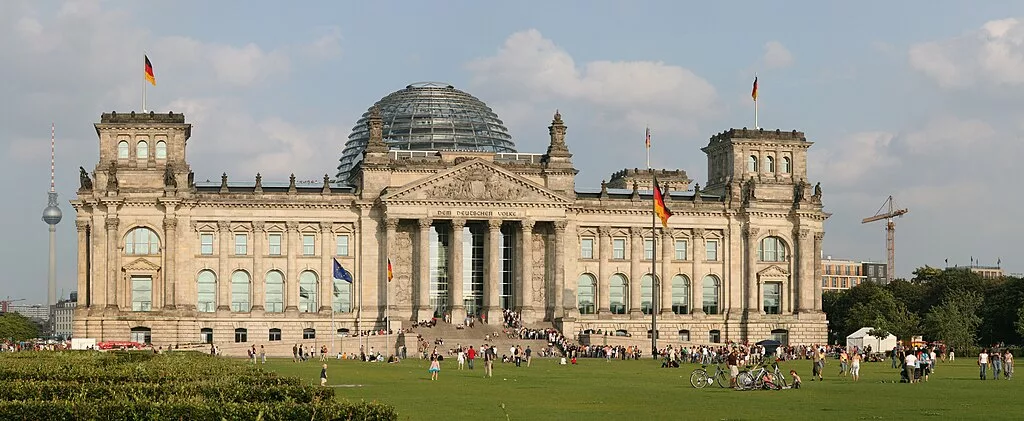
The Reichstag (Reichstagsgebäude) is a historic legislative building located on the Platz der Republik in Berlin and houses the Bundestag. The Reichstag originally served as the seat for the parliament of the German Empire and later the Weimar Republic.
It was built between 1884 and 1894 according to the plans of architect Paul Wallot in a neo-Renaissance style.
In 1933, the building was severely damaged by a fire, a pivotal event in the establishment of the Nazi regime.
During World War II, the Reichstag suffered significant damage and became a symbolic target for the Red Army during the Battle of Berlin. After the war, it was restored in the 1950s but did not serve as a parliament, as it was located in West Berlin.
From 1995 to 1999, the building was remodeled by architect Norman Foster to once again house the German federal parliament. A glass dome was added atop the Reichstag: it symbolizes the transparency of democracy. The dome contains a mirrored cone at its center that directs daylight into the plenary hall, improving the building’s energy efficiency.
Discover the secrets of the coats of arms on this building with our tour The History of the Third Reich and the Cold War in Berlin
The Berlin Wall
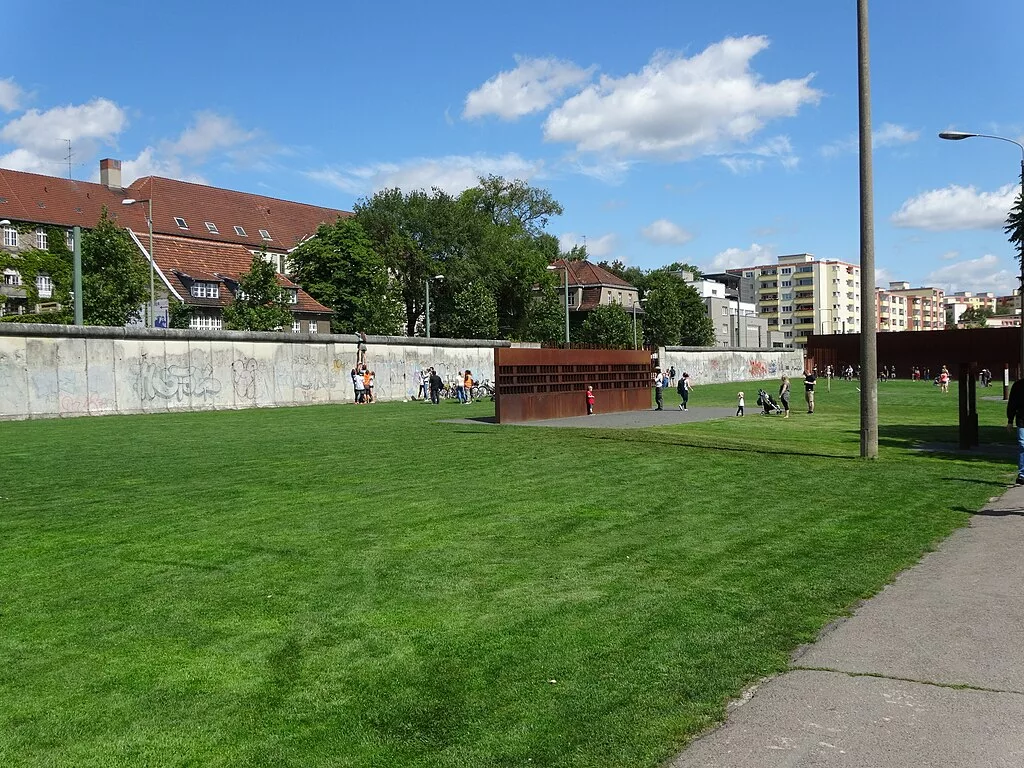
The Berlin Wall (“Berliner Mauer”) was a guarded concrete barrier surrounding West Berlin from 1961 to 1989. It was built by the German Democratic Republic (GDR) during the night of August 12–13, 1961.
The official purpose of the wall, according to the GDR, was to create an “anti-fascist protective barrier.” The wall became a major symbol of the Cold War and the division between the Eastern and Western blocs. Its construction was motivated by the massive exodus of East Berlin residents to West Berlin: between 1949 and 1961, millions of people had fled the GDR.
The border system included not only a concrete wall but also watchtowers, electrified fences, patrols, and a “death strip.” Over 100,000 people attempted to cross the wall between 1961 and 1988, according to the Berlin Memorial. On November 9, 1989, the announcement of eased exit regulations in the GDR caused crowds at the checkpoints and marked the beginning of the Wall’s fall. Official demolition began in June 1990, and destruction continued until December of the same year.
The Berlin Wall Memorial, located on Bernauer Straße, preserves a section of the wall and pays tribute to the victims of the division.
Discover the history of the Berlin Wall in our tour The History of the Third Reich and the Cold War in Berlin
Charlottenburg Palace
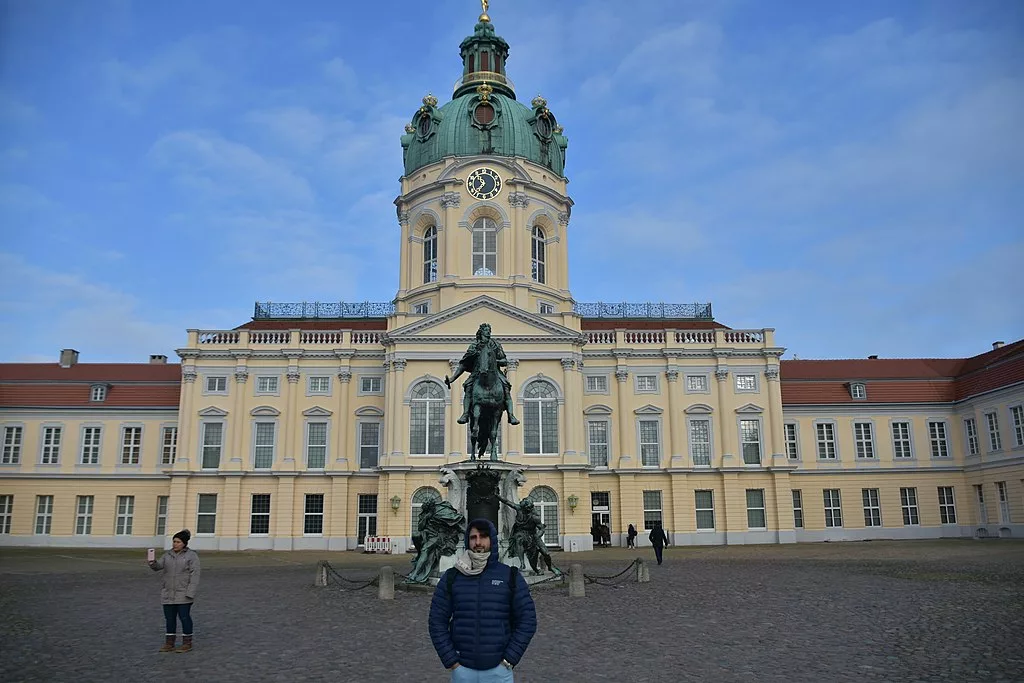
The Charlottenburg Palace is a Baroque palace located in the Charlottenburg district of Berlin. It was built between 1695 and 1713 by architect Johann Arnold Nering for Sophie Charlotte of Hanover.
It was originally a summer residence called Lietzenburg, renamed Charlottenburg after Sophie Charlotte’s death. The complex consists of the Old Palace (Altes Schloss) and the New Wing, built in the 18th century.
The interior is richly decorated in Baroque and Rococo styles, with impressive ceremonial rooms. The Old Palace porcelain cabinet exhibits a large collection of refined blue-and-white porcelain. In the New Wing is the “Golden Gallery” (Goldene Galerie), a sumptuous Rococo-style ballroom.
The palace park was designed by the Frenchman Siméon Godeau in a Baroque style, then remodeled in the English landscape style in the 18th century. There is also a Neoclassical mausoleum, which houses, among others, the tomb of Queen Louise of Prussia.
The palace was heavily damaged during World War II, but it was rebuilt and is now a museum and major tourist attraction.
Berlin Cathedral
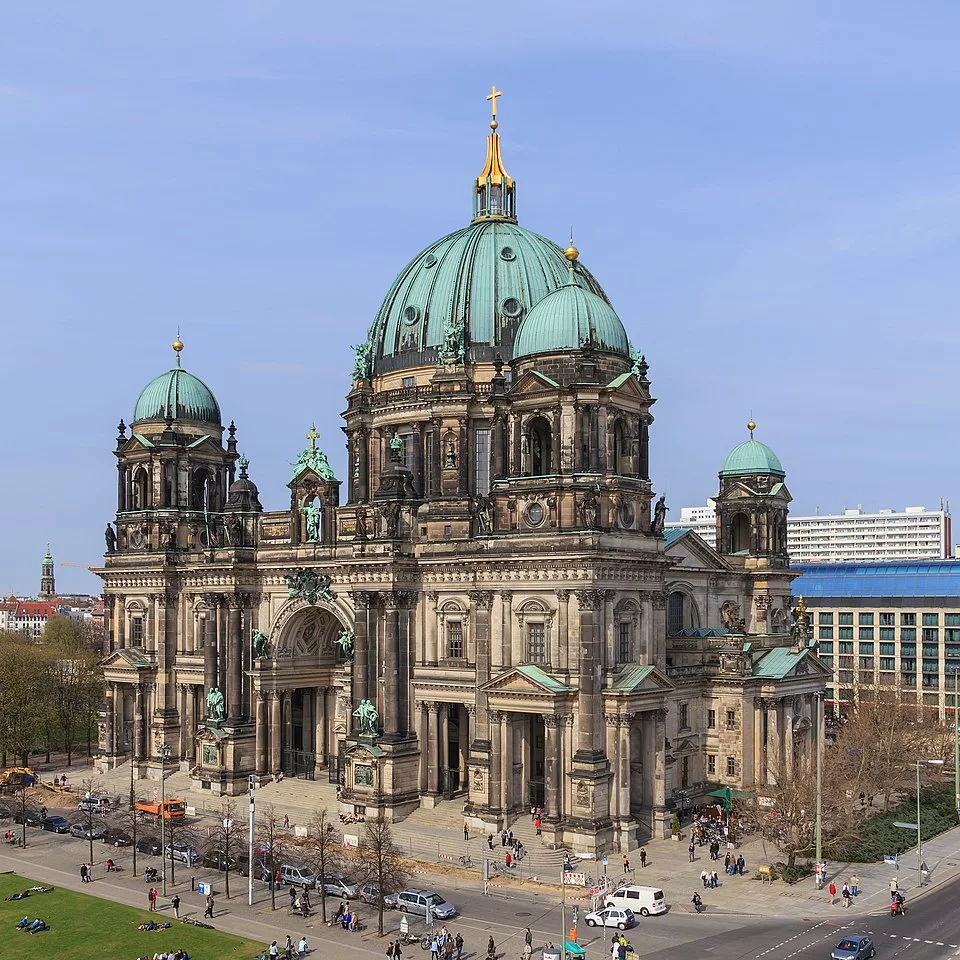
The Berlin Cathedral, or Berliner Dom, is a historic Protestant church located on Museum Island in Berlin-Mitte.
Its current construction took place between 1894 and 1905 under Emperor Wilhelm II, according to the plans of architect Julius Carl Raschdorff. The building is in a neo-Renaissance style with Baroque influences and measures approximately 114 meters in length.
Inside are mosaics, statues, a marble altar, and baptismal fonts by Christian Daniel Rauch. The cathedral houses the Hohenzollern crypt, containing about thirty sarcophagi of the Prussian dynasty.
The cathedral’s organ is very impressive: built by the Sauer company, it has more than 7,000 pipes.
The building was heavily damaged during World War II, and its reconstruction lasted from 1975 to 1993.
Although called a “cathedral,” it has never been the seat of a bishop: “Dom” here means “collegiate church.”
The dome offers a panoramic view of Berlin: about 270 steps must be climbed to reach it.
Soviet Memorial Tiergarten
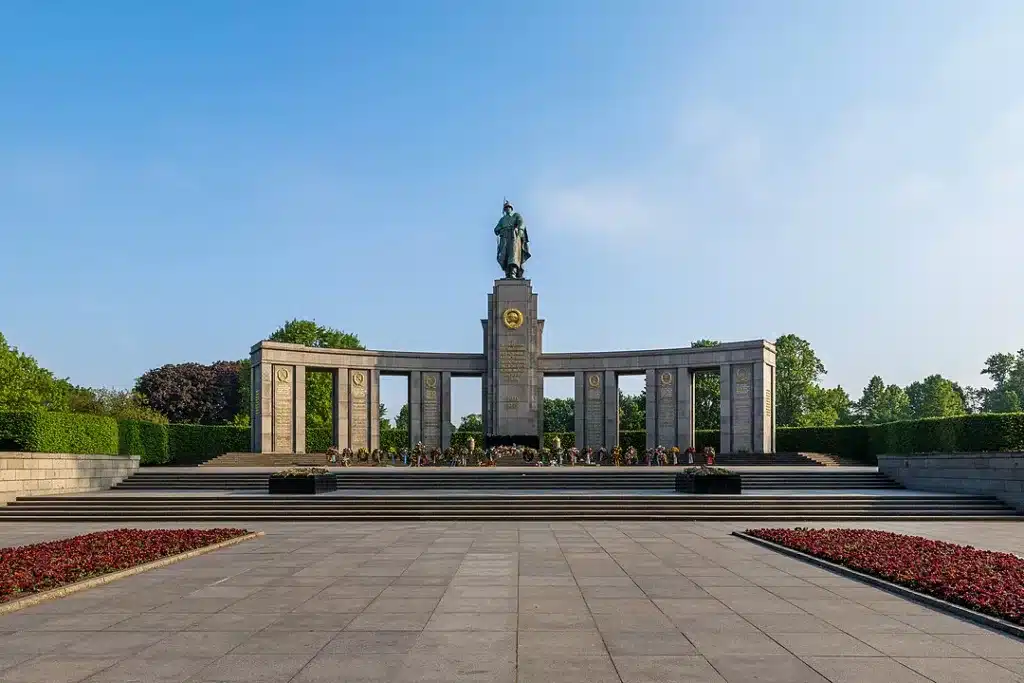
The Soviet War Memorial in Tiergarten is a World War II commemorative monument located in the Großer Tiergarten park in Berlin, along Straße des 17 Juni, near the Brandenburg Gate.
It was inaugurated on November 11, 1945, just months after the end of the Battle of Berlin, to honor Red Army soldiers who fell during the 1945 fighting. The memorial commemorates about 80,000 Soviet soldiers who died capturing Berlin at the end of the war in Europe.
The architecture of the site includes a semicircular colonnade topped with a large bronze statue of a Soviet soldier, as well as T-34 tanks and artillery pieces placed at the entrance.
Behind the colonnade are the graves of over 2,000 Soviet soldiers, making the site both a memorial and a military cemetery. An inscription in Russian on the memorial translates to “Eternal glory to the heroes who fell in the fight against the German fascist invaders for the freedom and independence of the Soviet Union.”
Learn more about the Russian weapons near this site and the capture of Berlin by the USSR with our tour The History of the Third Reich and the Cold War in Berlin
Checkpoint Charlie
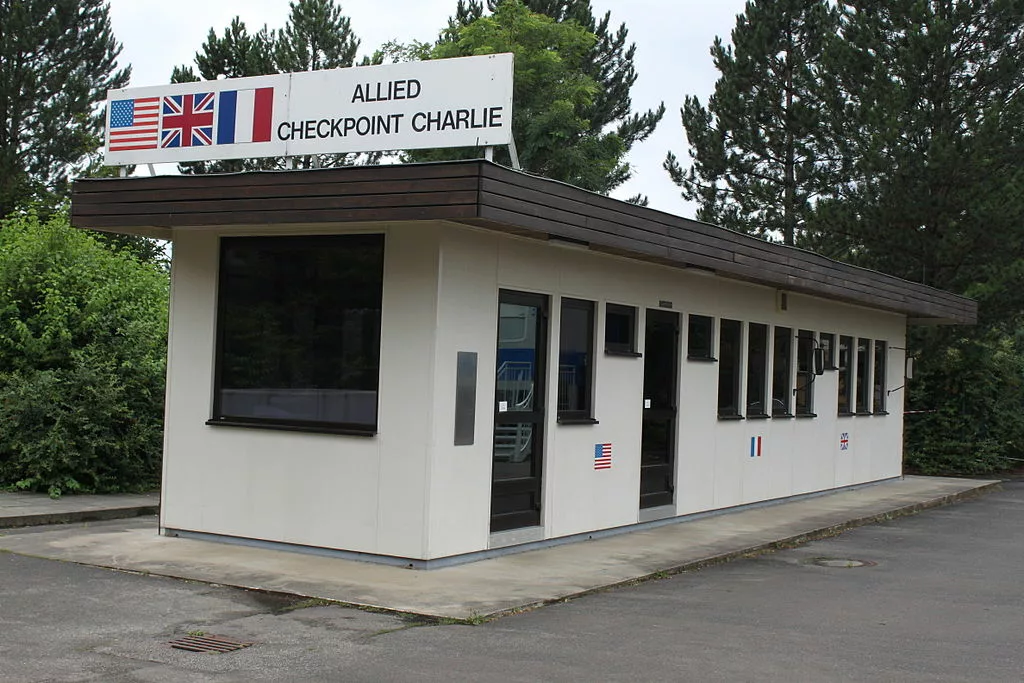
Checkpoint Charlie was a Berlin Wall crossing point located at the intersection of Friedrichstraße, Zimmerstraße, and Mauerstraße. It was established in August 1961, shortly after the construction of the Wall, to allow passage for diplomats, Allied military personnel, and foreign tourists.
The name “Charlie” comes from the letter C in the NATO phonetic alphabet.
During the Berlin Crisis in October 1961, Soviet and American tanks faced each other at this checkpoint, creating a symbolic confrontation. The border post was controlled by the Americans, while on the other side the GDR had highly secured infrastructure (watchtowers, zig-zag barriers, etc.).
The famous “You are now leaving the American sector” sign was displayed at this crossing point.
Today, a reconstruction of the original guardhouse is on-site, and a double row of cobblestones marks the former Wall path.
Nearby, the Haus am Checkpoint Charlie Museum traces the history of the Cold War and the many escape attempts to the West.
Discover the history of this checkpoint with our Berlin scavenger hunt The History of the Third Reich and the Cold War in Berlin
Alexanderplatz
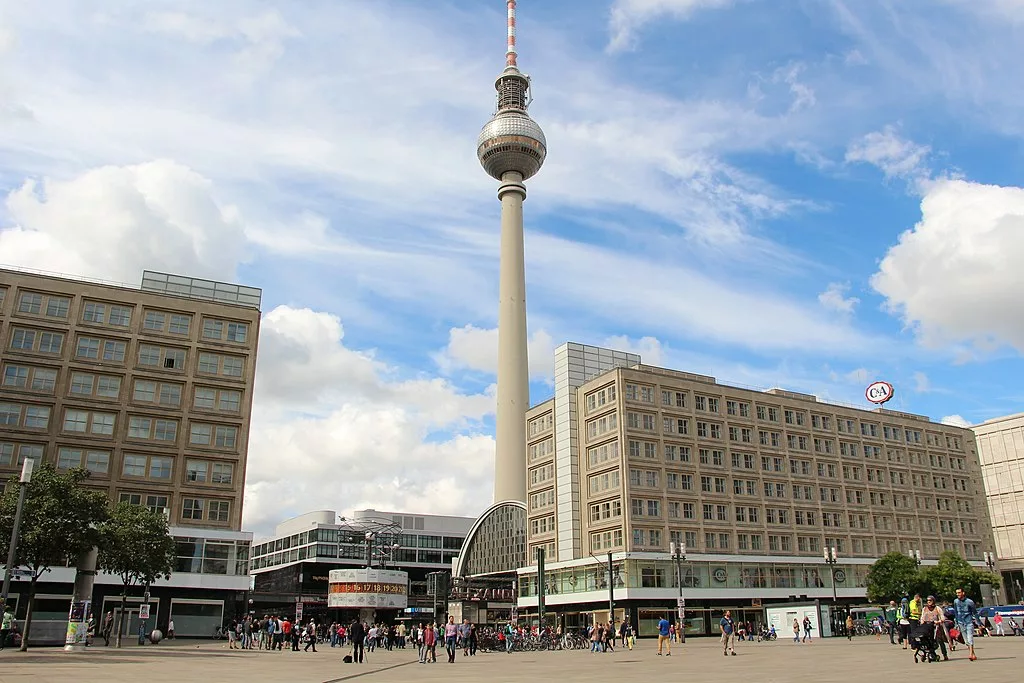
Alexanderplatz is a large public square and major transport hub in the Mitte district of Berlin.
It is named after Tsar Alexander I of Russia, following his visit to Berlin on October 25, 1805.
Originally, Alexanderplatz was a cattle market (“Ochsenmarkt”) before becoming a site for military parades.
During the GDR era, the square was completely redesigned in the 1960s-1970s, with iconic buildings such as the TV Tower (Fernsehturm), the World Clock, and the Fountain of Friendship among Peoples.
The Urania World Clock (Weltzeituhr) was installed in 1969: it shows the time in 148 cities worldwide and has become a very popular meeting point.
The Fountain of Friendship among Peoples (“Brunnen der Völkerfreundschaft”) has a basin 23 meters in diameter and was inaugurated in 1970.
The Berlin TV Tower (Fernsehturm), located at Alexanderplatz, is approximately 365 meters tall and offers a panoramic observation platform for visitors.
Bebelplatz
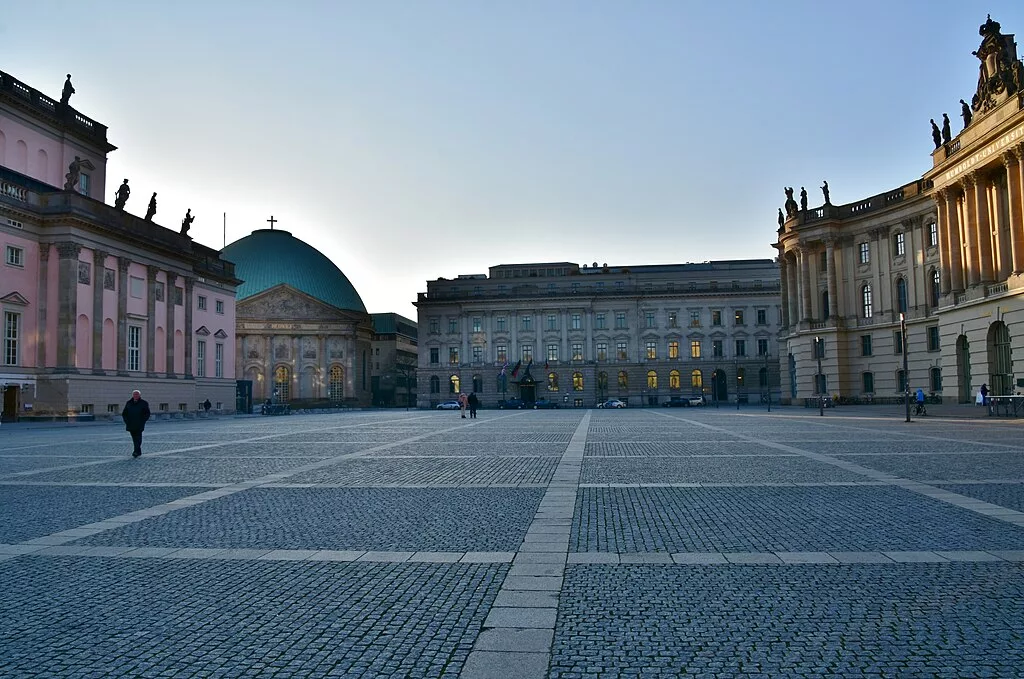
Bebelplatz is a public square located in the Mitte district of Berlin, south of Unter den Linden Avenue. It was originally called Opernplatz due to the proximity of the State Opera (Staatsoper) Unter den Linden. In 1947, the square was renamed Bebelplatz in honor of August Bebel, co-founder of the Social Democratic Party of Germany (SPD).
On May 10, 1933, more than 20,000 books considered “un-German” were burned in this square during a Nazi book burning. Among the authors whose works were destroyed were Karl Marx, Heinrich Heine, Erich Kästner, Thomas Mann, and other thinkers deemed “subversive” by the Nazi regime.
A memorial called the “Empty Library” (Bibliothek versenkt) was created by artist Micha Ullman: it is an underground installation with empty bookshelves visible through a glass plate. The inscription on the plate quotes Heinrich Heine: “Where they burn books, they will also ultimately burn people.”
It is surrounded by historic buildings: the State Opera, the Old Library, the Old Palace, and St. Hedwig’s Cathedral.
Gendarmenmarkt
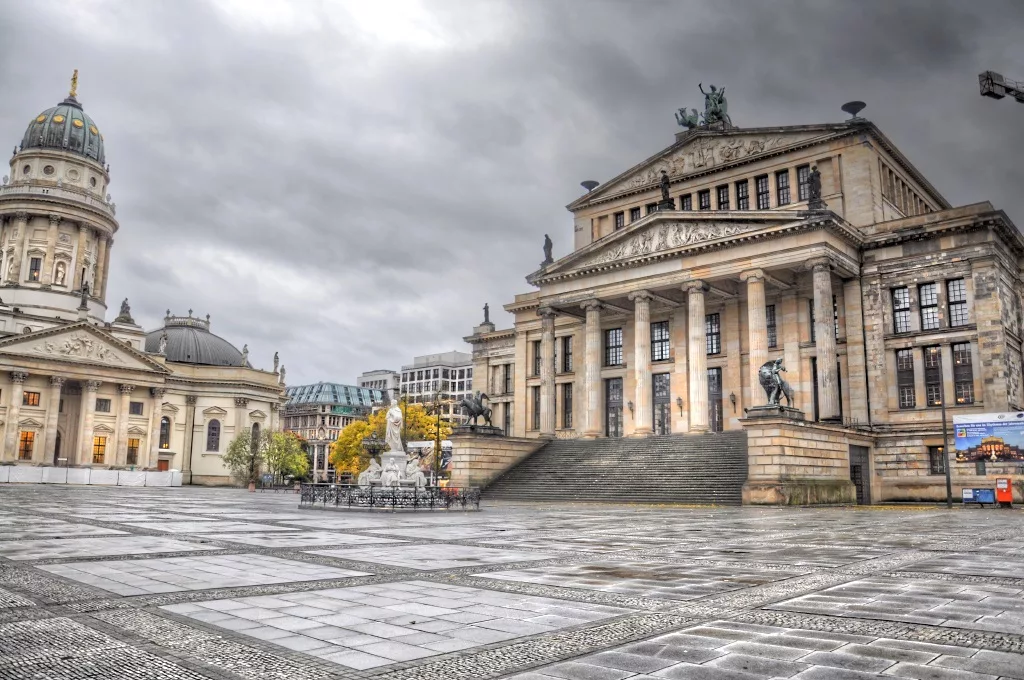
The Gendarmenmarkt is a historic public square located in the Mitte district of Berlin. Its name comes from a Prussian cuirassier regiment, the “Gens d’armes,” whose stables were once located on the square.
The square was developed starting in 1688 by architect Johann Arnold Nering as part of the expansion of the Friedrichstadt district.
It is dominated by three remarkable buildings: the Konzerthaus, the Deutscher Dom (German Cathedral), and the Französischer Dom (French Cathedral).
The Konzerthaus, formerly the National Theatre, was designed by architect Karl Friedrich Schinkel and inaugurated in 1821.
The two “Dom” buildings are not actual cathedrals: “Dom” here refers to the dome atop their towers. The Deutscher Dom houses a permanent exhibition on the history of the German parliament.
The Französischer Dom hosts the Huguenot Museum, tracing the history of French Protestants exiled in Prussia.
In the center of the square stands a statue of Friedrich Schiller, created by sculptor Reinhold Begas.
Each summer, the square hosts the “Classic Open Air”: outdoor concerts, while in winter, a popular Christmas market takes place there.
Potsdamer Platz
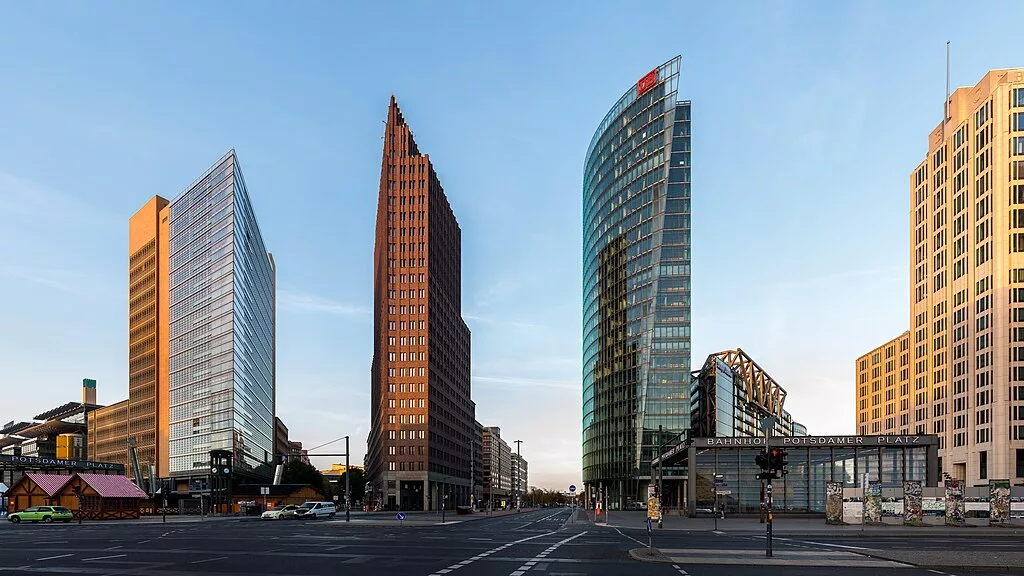
Potsdamer Platz is a large historic square and major crossroads in central Berlin. The square is named after the city of Potsdam, about 25 km southwest of Berlin.
The railway arrived at Potsdamer Platz as early as 1838, with the opening of the Potsdamer Bahnhof.
In the 20th century, Potsdamer Platz was an important commercial, cultural, and transportation center under the Weimar Republic.
During World War II, the area was heavily damaged, and afterward it became a “no man’s land” due to the Berlin Wall.
After the fall of the Wall, the square was completely rebuilt in the 1990s, making it a symbol of the urban renewal of reunified Berlin.
The Sony Center (now “The Center”) is a futuristic complex at Potsdamer Platz, designed by architect Helmut Jahn and opened in 2000.
The Kollhoff Tower, a 25-story skyscraper on the square, offers a panoramic observation deck (PanoramaPunkt).
On the southern side of the square is the Kulturforum, housing several cultural institutions such as the Philharmonie, the Art Gallery, and the Art Library.
The Memorial Church, Peace Memorial in Berlin
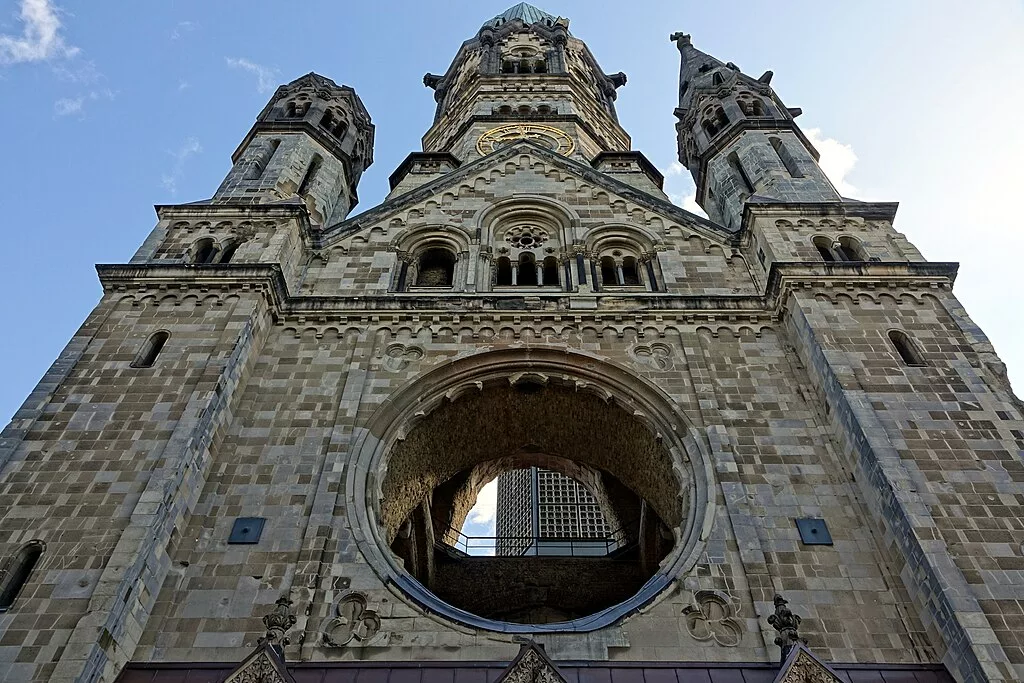
The Memorial Church, or Kaiser Wilhelm Memorial Church, is located on Breitscheidplatz at the entrance to Kurfürstendamm in the Charlottenburg district.
It was originally built between 1891 and 1895 by architect Franz Schwechten in a Neo-Romanesque style, in honor of Emperor Wilhelm I.
During World War II, the church was heavily damaged by bombings: its original tower is in ruins, nicknamed the “hollow tooth” (“der Hohle Zahn”).
Rather than fully reconstructing the old structure, Berliners chose to preserve the ruins as a war memorial. Between 1959 and 1963, a new church complex was built by architect Egon Eiermann, including an octagonal nave, a chapel, and a modern tower.
The new buildings consist of concrete honeycomb panels with deep blue glass designed by stained-glass artist Gabriel Loire, creating a calming interior light. The Memorial Hall, in the ruined part, is a space dedicated to remembrance, with photographic exhibits and commemorative objects.
Friedrichstadt-Palast
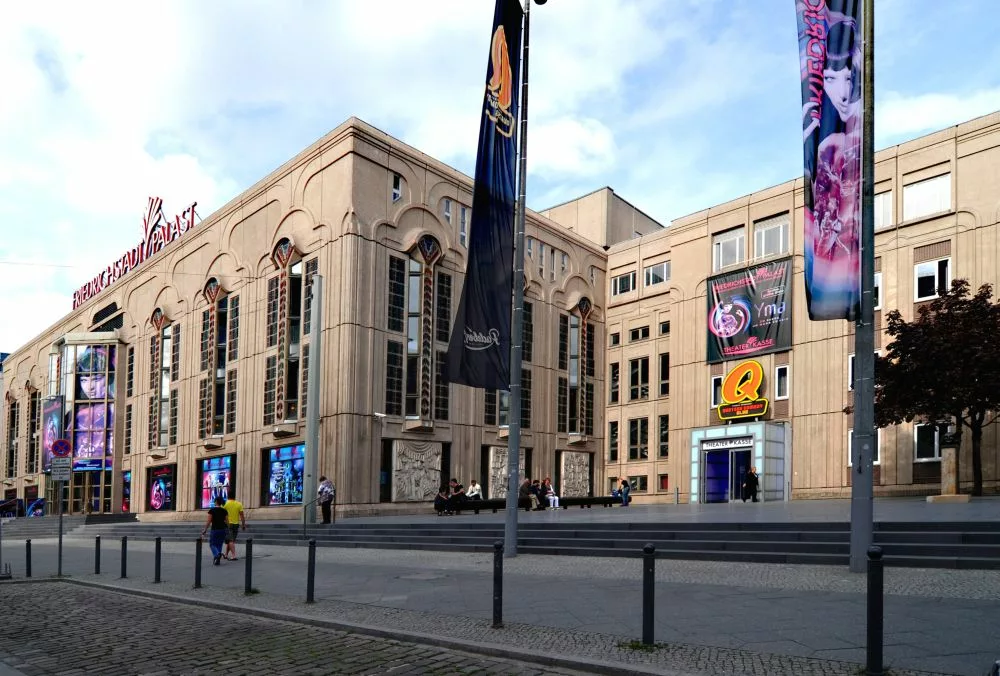
The Friedrichstadt-Palast is an iconic revue theatre located at 107 Friedrichstraße in the Mitte district of Berlin.
It has nearly 1,900 seats, making it one of the largest revue theatres in Europe. The stage measures about 3,000 m², one of the largest in the world.
The current building was constructed between 1981 and 1984 in the GDR in a postmodern style. The theatre presents spectacular shows with acrobatics, dance, music, impressive costumes, and stage designs.
The origins of the Palast date back to 1867, when it was a market hall converted into a circus and then into a theatre.
Museums to See in Berlin
For further exploration, discover our ranking of Berlin museums, sorted by number of Google reviews.
Pergamon Museum
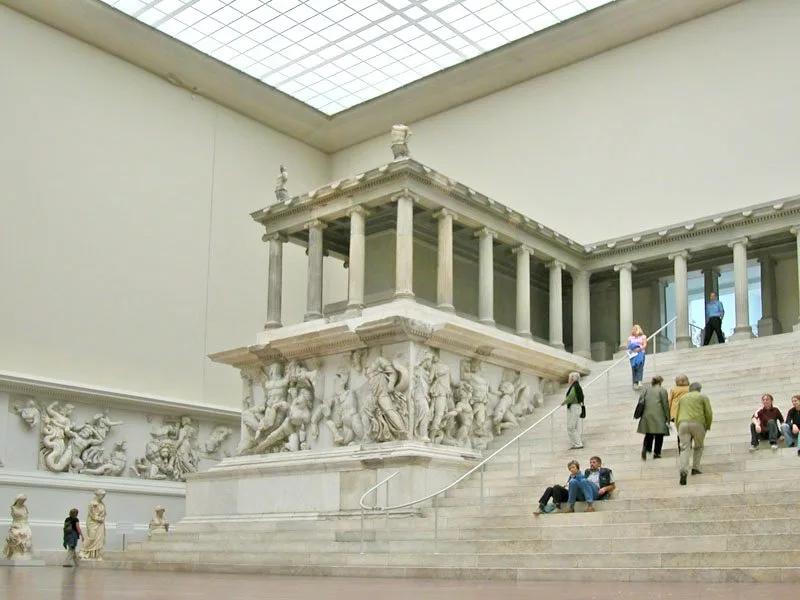
The Pergamonmuseum, also called Pergamon Museum, is a listed building on Museum Island (Museumsinsel) in the heart of Berlin.
It was built between 1910 and 1930 according to the plans of Alfred Messel and Ludwig Hoffmann. The museum is part of the Museum Island complex, which was inscribed as a UNESCO World Heritage Site in 1999.
Before its complete closure, the Pergamonmuseum housed three major collections: the Antikensammlung (Antiquities), the Vorderasiatisches Museum (Near East), and the Museum of Islamic Art.
Among the most famous pieces is the Pergamon Altar, largely reconstructed inside the museum.
The Ishtar Gate from Babylon and the “Processional Way” are also impressive elements on display.
The Mshatta facade, from an Islamic palace, is another emblematic piece of the Islamic art collection.
The museum suffered significant damage during World War II bombings, then was rebuilt between 1948 and 1959. Currently, the Pergamonmuseum is undergoing a full renovation: the north wing is expected to reopen in 2027.
Holocaust Memorial
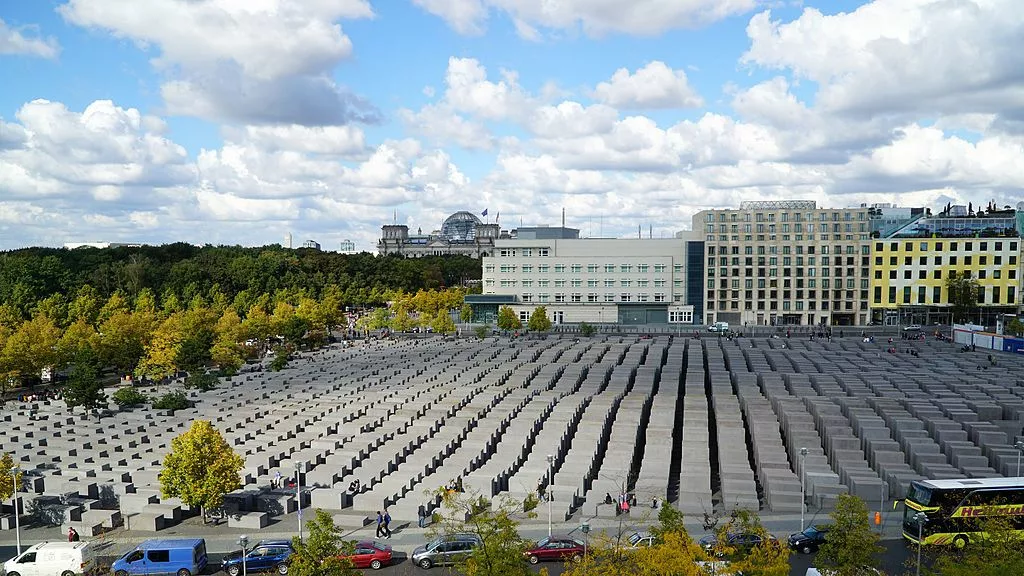
The official memorial is called Denkmal für die ermordeten Juden Europas, in English “Memorial to the Murdered Jews of Europe.” It was designed by architect Peter Eisenman and the engineering firm Buro Happold and opened on May 10, 2005.
The site covers 1.9 hectares and consists of 2,711 concrete stelae of varying heights, forming a grid. The ground of the stelae is slightly undulating, creating a unique, sometimes disorienting walking experience for visitors.
Beneath the field of stelae is an underground information center (“Place of Information”) of about 800 m². The center contains thematic rooms (such as “Room of Dimensions,” “Room of Families,” “Room of Names”) with biographies, letters, photographs, and testimonies.
The memorial honors the six million Jews murdered during the Holocaust by the Nazi regime.
Learn more about the Holocaust with our tour The History of the Third Reich and the Cold War in Berlin
Neues Museum
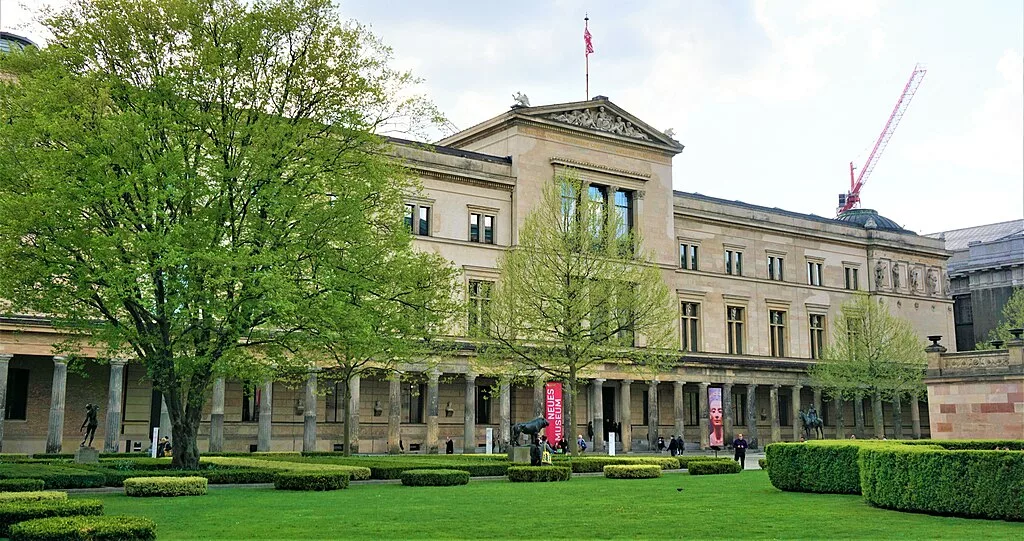
The Neues Museum is located on Museum Island (Museumsinsel) in Berlin’s Mitte district. It was built between 1843 and 1855 by architect Friedrich August Stüler, commissioned by King Frederick William IV.
The building combines Neoclassical and Renaissance architectural styles, making it one of the masterpieces of the 19th century.
The museum was heavily damaged during World War II and remained in ruins for several decades. Its restoration was carried out from 2003 to 2009 by British architect David Chipperfield, following a “careful restoration” approach to preserve historical traces.
The Neues Museum houses three major collections: Ancient Egypt (Egyptian Museum + papyri), Prehistory/Protohistory, and part of the Antiquities Collection.
It contains the famous bust of Nefertiti, displayed in an impressive showcase in the north of the building. The museum also displays very ancient objects: for example, a hand axe dating back about 700,000 years from the Stone Age. Other treasures include the “Berlin Gold Hat,” a Bronze Age golden hat illustrating the ancient peoples’ knowledge of calendars.
Topography of Terror
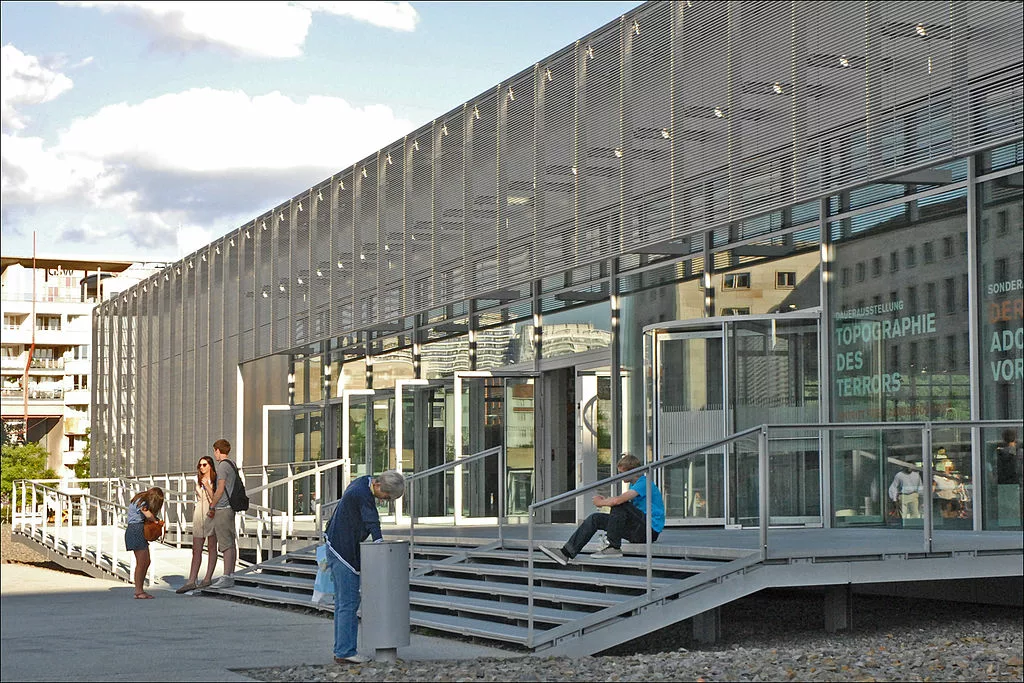
The Topography of Terror museum is located on the historic site of the former Gestapo and SS headquarters in Berlin. It is situated in the Mitte district along Niederkirchnerstraße.
The permanent exhibition retraces the history of the Nazi regime, from persecution to the implementation of terror in Germany and Europe.
The site features extensive documentation, including photos, films, maps, and official documents about the Nazi dictatorship. The exhibition includes information on the crimes of the Gestapo and SS, as well as on racial and political persecutions.
The museum opened in 1987, with a modern extension inaugurated in 2010 to enhance exhibition spaces.
Learn more about the Gestapo and SS with our tour The History of the Third Reich and the Cold War in Berlin
Parks, Gardens & Walks – Berlin
Tiergarten
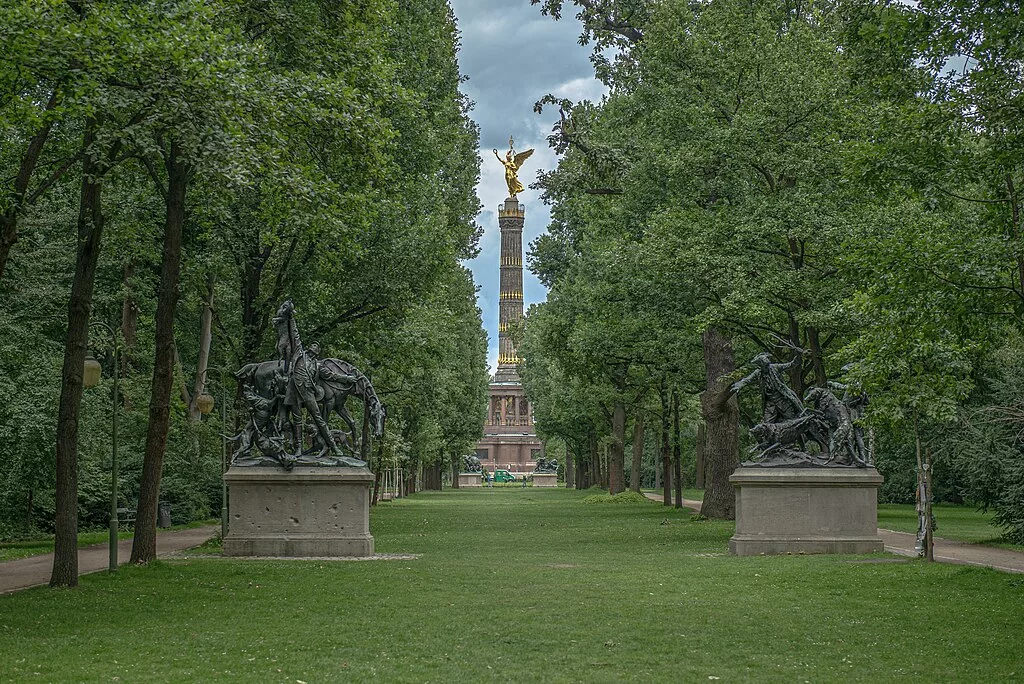
The Tiergarten is the largest urban park in Berlin, covering about 210 hectares. It is located in the Mitte district at the heart of the city and serves as Berlin’s “green lung.”
The park was created in the 16th century as a hunting reserve for the Electors of Brandenburg. Today, it is landscaped with paths, lawns, ponds, and gardens, offering a space for relaxation and leisure for both Berliners and tourists.
Tiergarten is home to many famous monuments, such as the Victory Column (Siegessäule).
Tempelhofer Feld
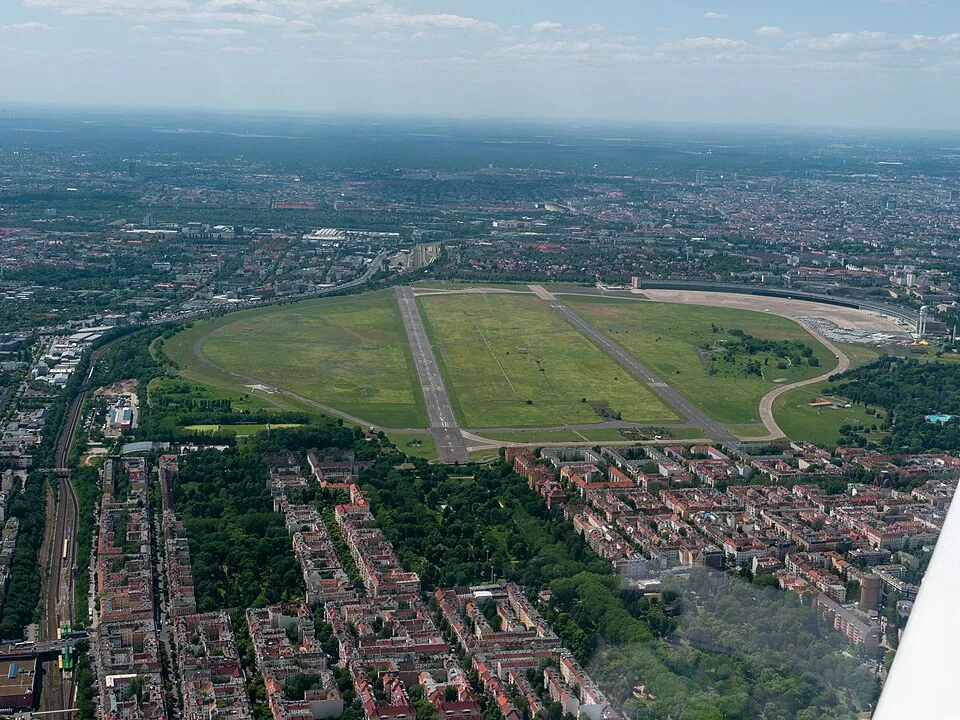
The Tempelhofer Feld is the former Tempelhof Airport, located in the Tempelhof-Schöneberg district of Berlin. The airport was inaugurated in 1923 and was used for civil flights until 2008.
The site is famous for its large runway, one of the longest in the world, now accessible to visitors on foot or by bike. Tempelhofer Feld played a historic role during the Berlin Airlift of 1948-1949, supplying the city under Soviet blockade.
After its closure, the site was transformed into a public park, open since 2010, covering about 300 hectares.
Treptower Park
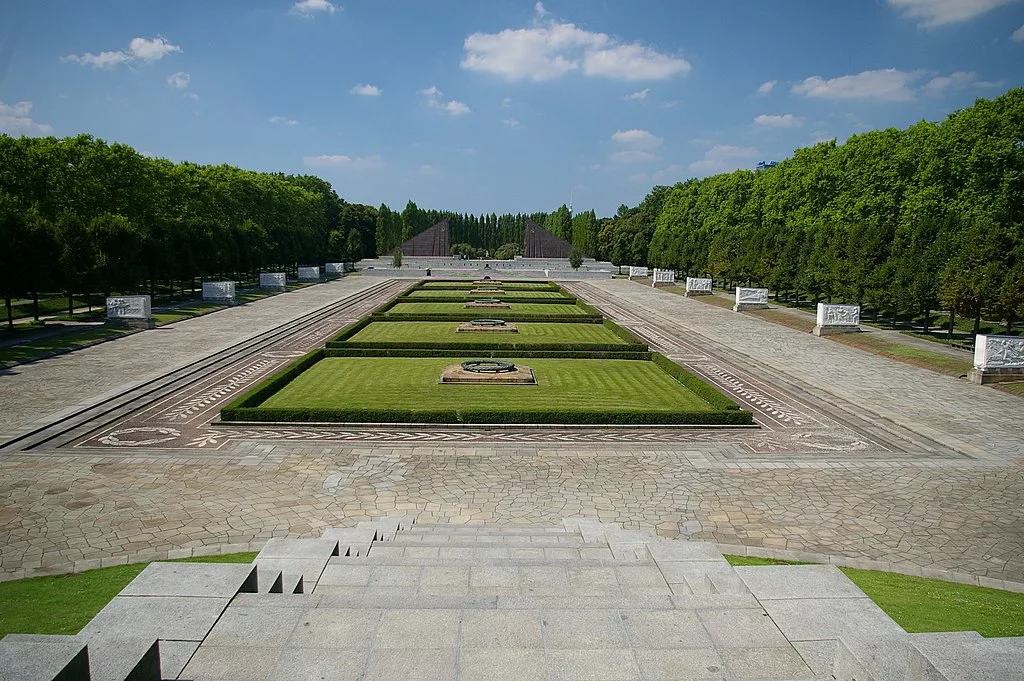
The Treptower Park (Treptower Park) is a large public park located in the Treptow-Köpenick district of Berlin. It covers approximately 84 hectares along the Spree River, offering extensive green and recreational spaces.
The park was landscaped in the 19th century as a public park for Berliners. It is famous for its Soviet War Memorial, dedicated to the Red Army soldiers who died during World War II. The Soviet Memorial, inaugurated in 1949, features a statue of a soldier holding a child and a large red marble star.
Visitors can enjoy boat rides along the Spree River from the park, as well as cycling and rollerblading on designated paths. Treptower Park hosts annual festivals, concerts, and outdoor sports events.
The park also has a historic planetarium, offering astronomy and space projections.
German Cuisine & Berlin Specialties
Currywurst

The currywurst is a typical German sausage, served sliced and topped with a sauce made from ketchup (or tomato concentrate) and curry powder.
It is said to have been invented in 1949 by Herta Heuwer in Berlin, who mixed ketchup, Worcestershire sauce, and curry. Heuwer patented her sauce under the name “Chillup” in 1951.
Currywurst is sold as “street food” at fast-food stands (Schnellimbisse), diners, or in trays with fries or bread.
Döner Kebab
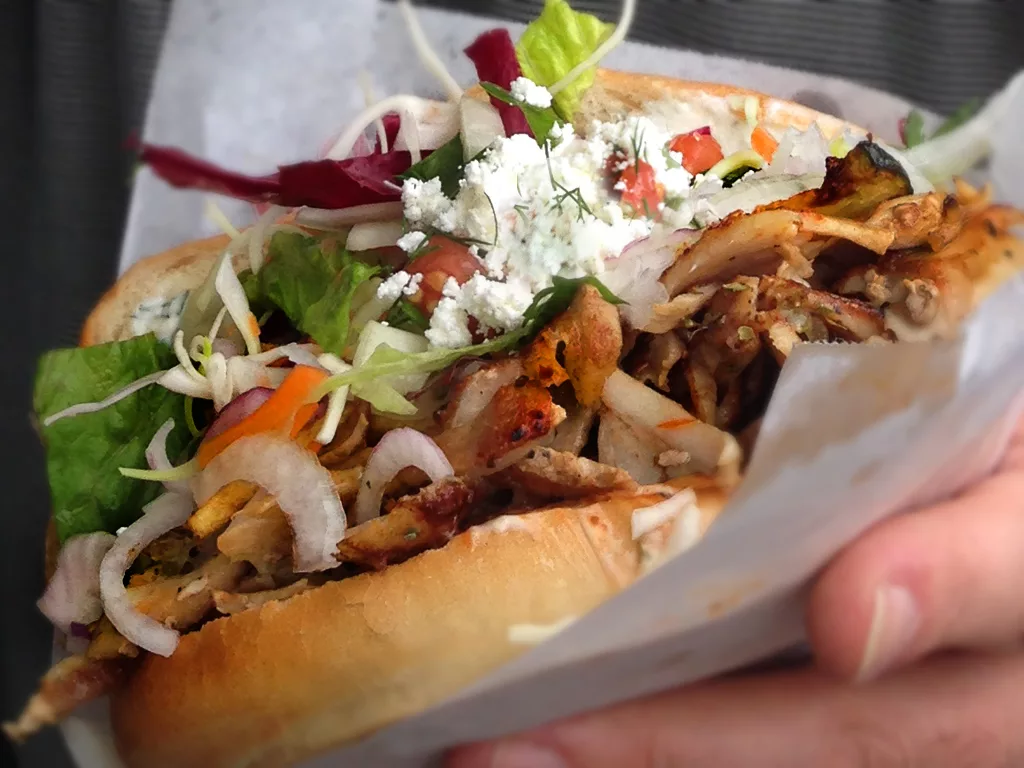
The döner kebab is a Turkish dish made of meat (lamb, beef, or chicken) cooked on a vertical rotisserie. The “sandwich” version of döner was popularized in the 1970s in West Berlin by Turkish immigrants.
The credited inventor of the German version of the döner kebab is Kadir Nurman, who opened a stall in Berlin in the 1970s.
The meat is thinly sliced by hand as it cooks on the spit, resulting in grilled strips. Döner can be served as a sandwich (pita or lavash), on a plate, or as a “dürüm” (rolled in a thin flatbread).
Berliner Pfannkuchen (Doughnut)
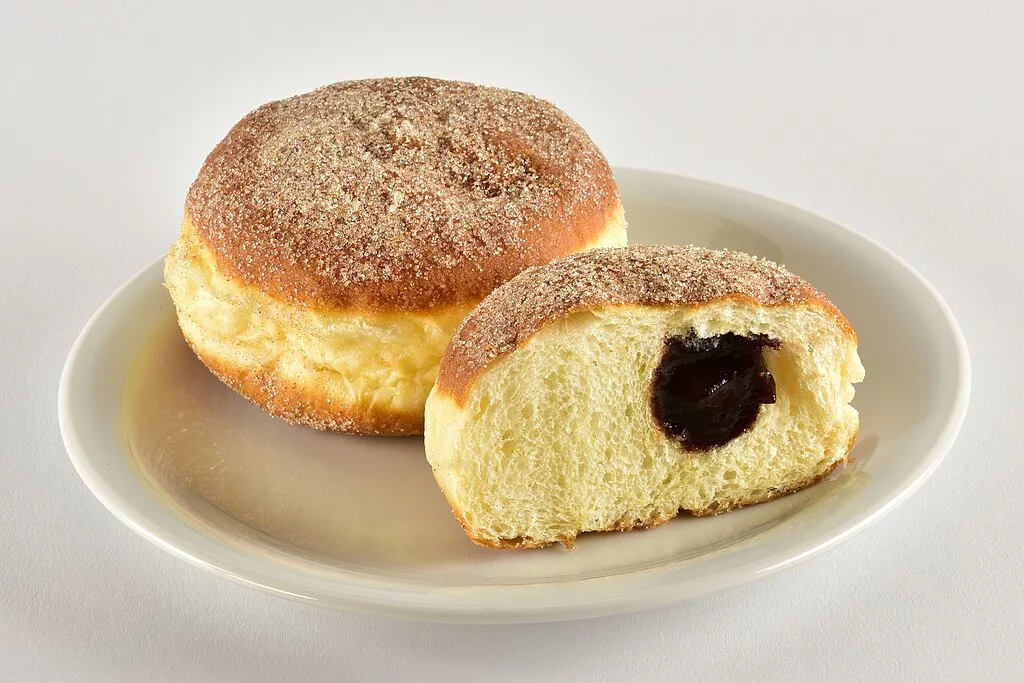
The “Berliner Pfannkuchen” (often shortened to “Berliner”) is a pastry made from leavened dough, fried in oil. Traditional dough contains yeast, eggs, milk, and butter, making it soft and light.
The doughnut is often filled with jam (or another sweet filling) before frying. After frying, Berliners can be dusted with powdered sugar, glazed, or covered with flavored icing.
There are many variations, including rum-flavored versions or decorated with colored icing and various toppings.
Eisbein & Sausages
Eisbein is a salted, lightly boiled pork knuckle, highly appreciated in German cuisine. It can be prepared in different ways depending on the region: in Berlin, it is often served with pease pudding. Pease pudding is a thick puree made from yellow or green dried peas, cooked and then mashed into a paste.
In southern Germany, Eisbein is sometimes roasted, while in some regions it is smoked before cooking. The word “Eisbein” (“ice leg”) likely comes from an old use of the pork bone in ice-related activities.
Excursions / Trips around Berlin
Potsdam and Sanssouci Palace
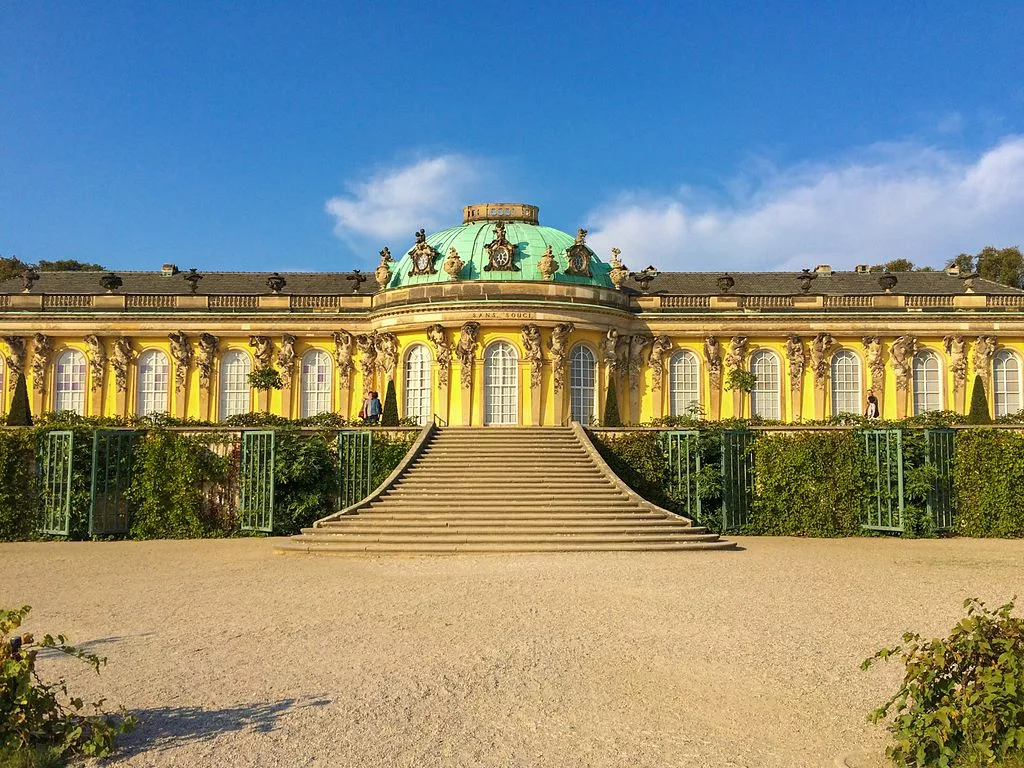
Potsdam is a city located about 30 km southwest of Berlin, famous for its historic heritage and beautiful gardens.
The city’s jewel is Sanssouci Palace, the summer residence of Frederick II of Prussia, built in the 18th century in Rococo style. The palace is surrounded by vineyard terraces, French gardens, and fountains, creating a picturesque setting ideal for walking.
Inside, visitors can explore the royal apartments decorated with period furniture, paintings, and tapestries.
The Sanssouci Park also includes the Neues Palais, Charlottenhof Palace, and the Palace of Peace, each worthy of a visit.
The city of Potsdam also offers a charming historic center, with cobbled streets, churches, and small squares.
Spreewald
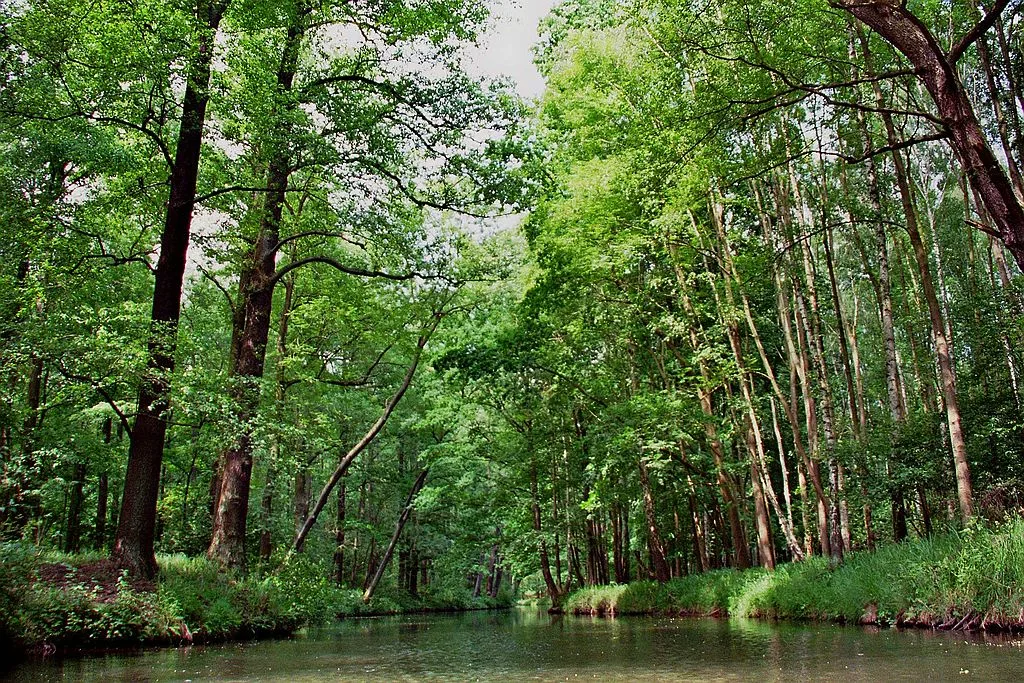
The Spreewald is a region located about 100 km southeast of Berlin, in the state of Brandenburg. It is famous for its network of natural canals, forming a kind of river labyrinth crossed by the Spree River.
Visitors can explore Spreewald by traditional boat (Kahnfahrt), by bike, or on foot along the trails. The region is known for its picturesque villages inhabited by the Sorbian minority, who preserve their local culture and traditions.
Spreewald is also famous for its pickled cucumbers, a local culinary specialty.
Sachsenhausen (former concentration camp)
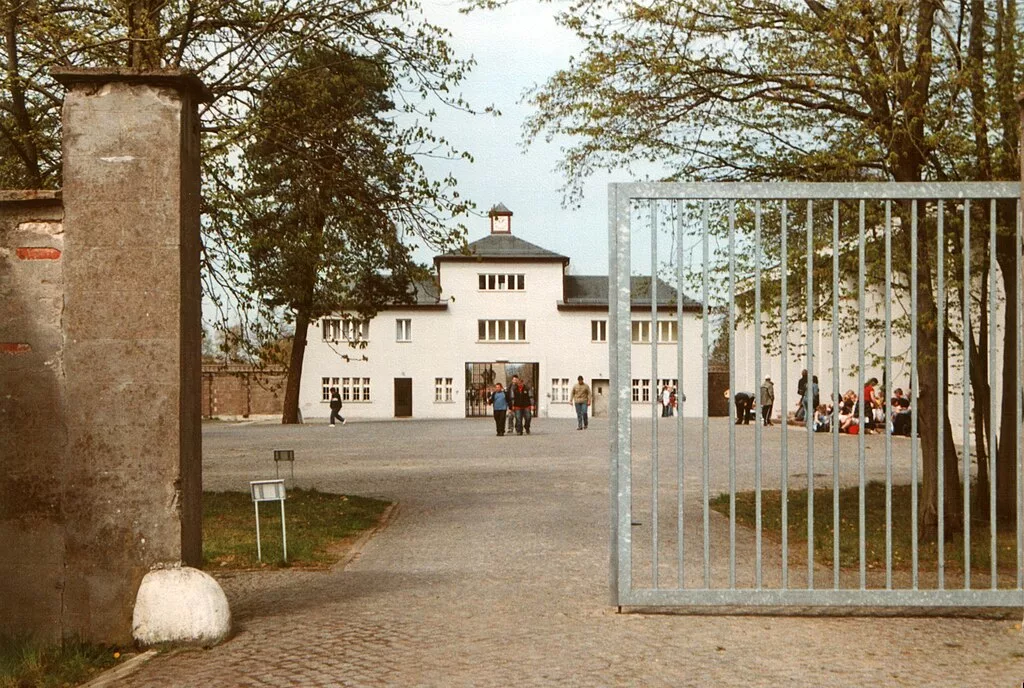
Sachsenhausen is a former Nazi concentration camp located in Oranienburg, about 35 km north of Berlin. It was built in 1936 and served as a model camp for organizing other camps under the Nazi regime.
Today, the site is a memorial and museum, dedicated to the memory of victims and historical education. Visitors can see original bars, administrative buildings, barracks, and cells, as well as execution sites and mass graves.
The museum offers exhibitions on the history of the camp, Nazism, and resistance, with photos, documents, and testimonies.
Wannsee
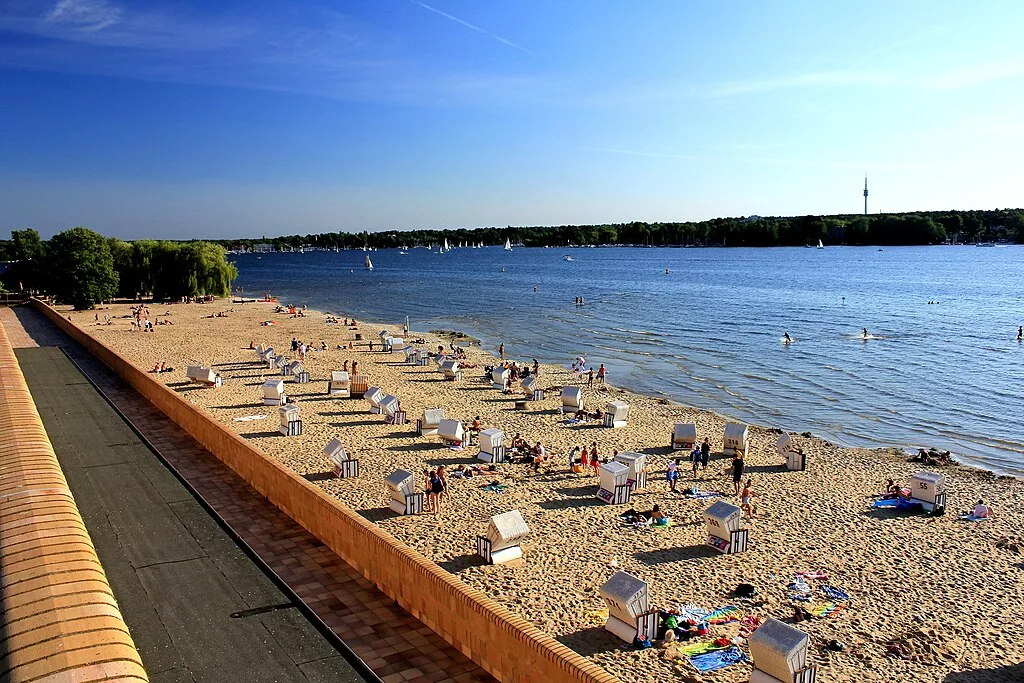
The Wannsee is a lake located in the southwest of Berlin, in the Steglitz-Zehlendorf district. It is famous for its beaches, water activities, and green landscapes, offering a relaxing getaway close to the city.
The lake is connected to Berlin’s waterways, allowing boat and ferry rides.
The Haus der Wannsee Conference, located nearby, is a historic site where the 1942 Wannsee Conference planned the “Final Solution.”
Conclusion
Berlin is a city to be discovered through its monuments, museums, and green spaces, but also through the history resonating at every street corner. From the grandeur of the Brandenburg Gate to the emotion of the Holocaust Memorial, from the modernity of Potsdamer Platz to the serenity of Tiergarten, every place tells a unique story.
Berlin’s cultural richness is reflected in its museums, theaters, and festivals, offering visitors a fascinating panorama of arts, architecture, and music. Local gastronomy, from currywurst to Eisbein, completes the experience by awakening the taste buds with typical flavors.
For those wishing to extend their exploration, trips around Berlin, such as Potsdam, Spreewald, or Wannsee, combine heritage, nature, and relaxation.
Visiting Berlin is immersing yourself in a vibrant city where past and present combine to offer an unforgettable journey, rich in emotions, culture, and experiences. The German capital does not just show its history: it makes you live it, feel it, and love it.
Discover Berlin differently with our adventure The History of the Third Reich and the Cold War in Berlin, exploring iconic sites, solving puzzles based on observation, and learning about the Third Reich and the Cold War in Berlin.