Visiting Le Marais in Paris: 20 must-see and must-do attractions.
Le Marais, located in the heart of Paris’s 4th arrondissement, is one of the most fascinating and iconic neighborhoods of the French capital. A true concentration of history, art, and culture, it elegantly blends traces of medieval Paris, the splendors of the aristocratic era, and the energy of a modern, lively district.
Strolling through Le Marais is like traveling through time: from 17th-century private mansions to prestigious museums, from cobblestone streets to contemporary art galleries. It also means soaking up its bohemian and cosmopolitan atmosphere, shaped by historic Jewish communities, cutting-edge fashion, gastronomy, and artistic creativity.
Balancing heritage and modernity, every street in Le Marais tells a story. Here are the 20 must-see sights and things to do in Le Marais, to discover a neighborhood that is elegant, vibrant, and deeply Parisian.
Historic landmarks and iconic monuments
1. Place des Vosges
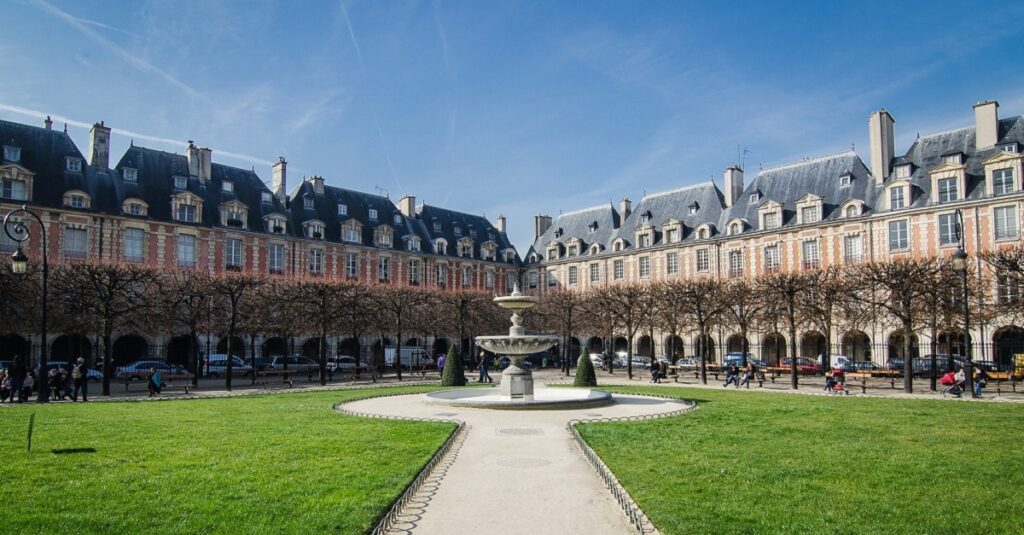 Place des Vosges in Paris
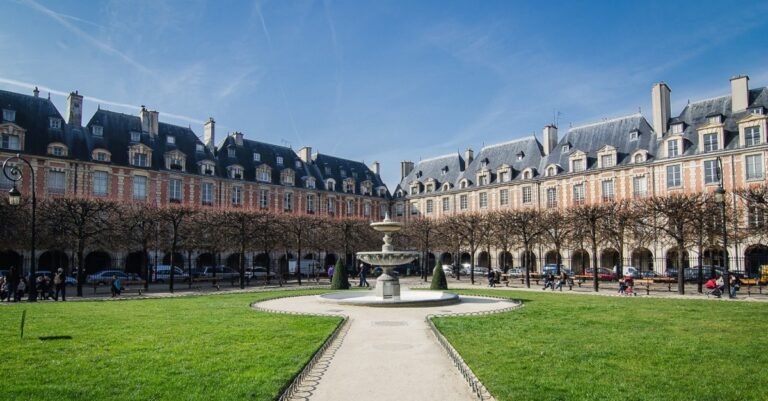
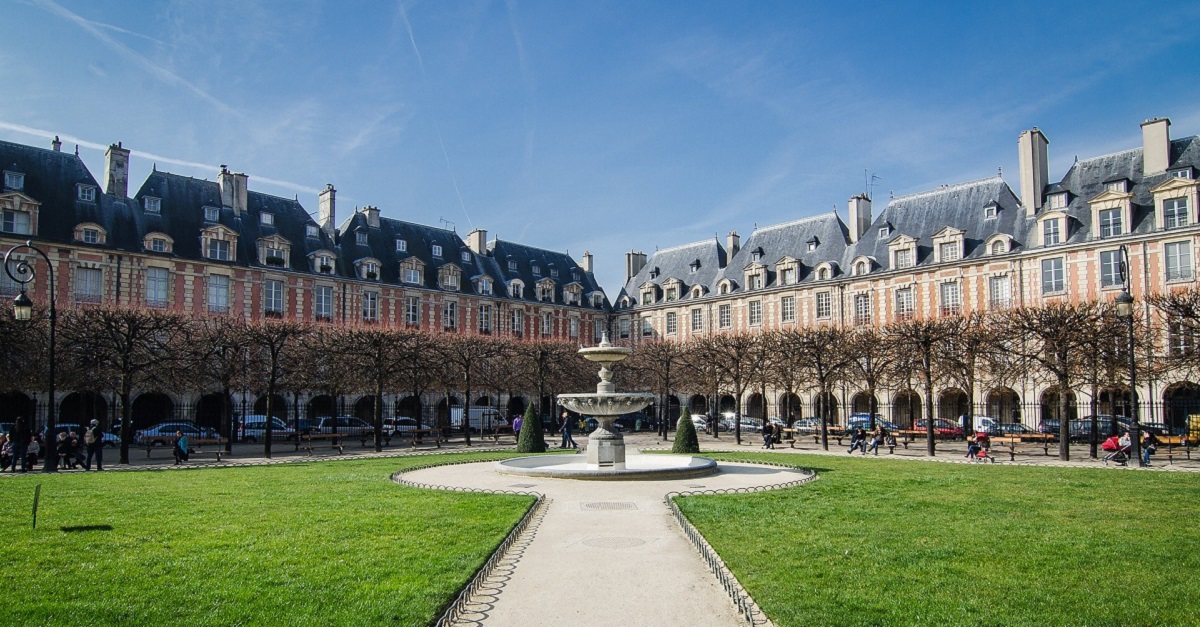
A jewel of Le Marais and the first royal square in Paris, Place des Vosges is a place steeped in elegance and history. Created under King Henry IV at the beginning of the 17th century, it is famous for its uniform arcades, red brick façades with white stone details, and its perfectly symmetrical central garden.
Walking around the square means experiencing classical Paris at its finest. Once a favored promenade of the nobility, it is now home to art galleries, intimate cafés, and refined boutiques beneath its arcades. The central square, lined with lime trees, offers a peaceful haven in the heart of the Parisian bustle.
Don’t miss:
-
The equestrian statue of Louis XIII in the center of the square.
-
The art galleries and cafés under the arcades, especially the legendary Carette for a gourmet break.
-
The perfectly symmetrical façades, a masterpiece of 17th-century urban planning.
Practical tips:
-
Visit in the morning to enjoy the calm and the golden light on the façades.
-
Sit on a bench with a takeaway coffee and watch Parisian life unfold.
-
Combine your visit with the Maison de Victor Hugo, located on the southeastern corner.
- Discover the secrets of this square with our Marais scavenger hunt, a mix between an escape game and a guided tour.
 Marais scavenger hunt
2. Maison de Victor Hugo
 Victor Hugo’s house
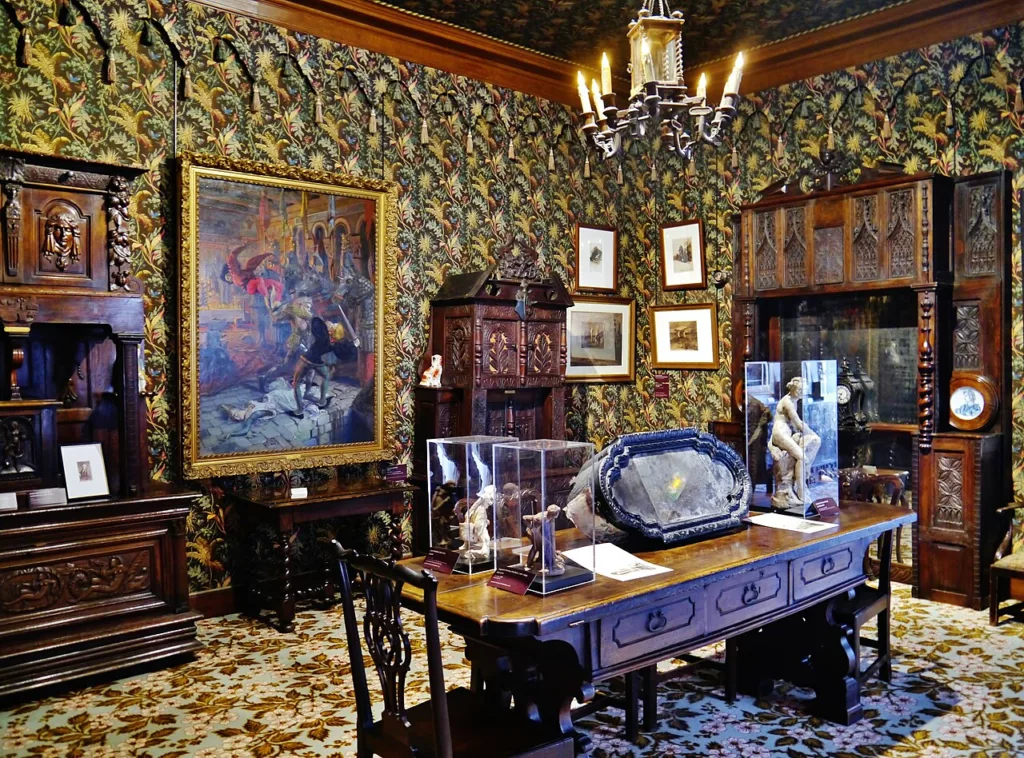
Located at No. 6 Place des Vosges, the Maison de Victor Hugo is one of Paris’s most moving literary landmarks. The writer lived here from 1832 to 1848, during which time he notably wrote Les Misérables. Now transformed into a museum, the apartment preserves personal belongings, manuscripts, furniture, and artworks that once belonged to Hugo.
The visit offers a glimpse into the writer’s private world: his bedroom, Chinese-style living room, study, and many objects he personally designed or decorated. Each room reveals a facet of his genius and his political and artistic engagement.
Don’t miss:
-
The Chinese-style salon, decorated by Victor Hugo himself.
-
Portraits and drawings by the writer, showcasing his multiple creative talents.
-
The stunning view over Place des Vosges from the museum windows.
Practical tips:
-
Free admission to the permanent collection.
-
Allow about 1 hour for the visit.
-
The museum offers an audioguide and regularly hosts temporary exhibitions.
3. Hôtel de Sully
 Hôtel de Sully in Paris
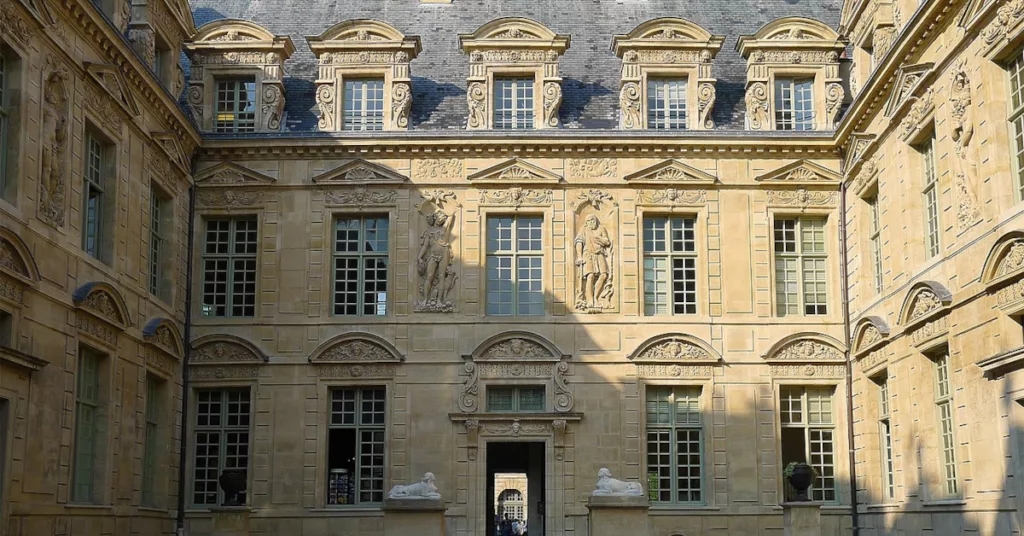
A masterpiece of French classical architecture, the Hôtel de Sully was built in the early 17th century for a financier of Louis XIII. It stands out for its sculpted façade, elegant mascarons, and its charming formal garden, accessible directly from Place des Vosges.
Today, the Hôtel de Sully houses the Centre des Monuments Nationaux, but it remains open for free visits for those who wish to admire its architecture and enjoy the tranquility of its inner courtyard. It is one of the most secret and poetic passages in Le Marais.
Don’t miss:
-
The main courtyard and its sculpted window decorations.
-
The hidden garden that connects directly to Place des Vosges.
-
The peaceful, almost timeless atmosphere in the heart of Paris.
Practical tips:
-
Free access every day (except for special events).
-
The entrance is on Rue Saint-Antoine, discreet but well signposted.
-
Perfect to combine with a visit to Place des Vosges and the Carnavalet Museum.
4. The Carnavalet Museum – History of Paris
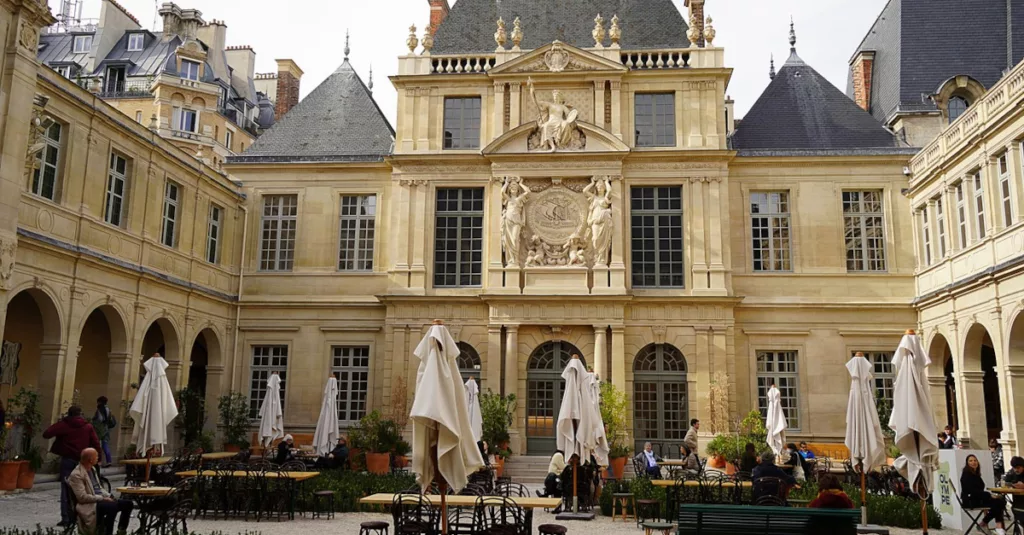
The Carnavalet Museum is the museum dedicated to the History of Paris and an essential place for understanding the evolution of the capital from its origins to the present day. Housed in two magnificent private mansions — Carnavalet and Le Peletier de Saint-Fargeau — it offers a fascinating immersion into Parisian life through the centuries.
Here you’ll discover scale models of the city, paintings, sculptures, everyday objects, as well as powerful testimonies from the French Revolution and the Belle Époque. The galleries are beautifully restored and decorated, some featuring original period wood paneling.
Don’t miss:
-
The reconstructed 18th-century apartments.
-
The works related to the French Revolution, especially portraits of famous historical figures.
-
The peaceful, flower-filled inner garden.
Practical tips:
-
Free admission to the permanent collections.
-
Allow at least 1.5 to 2 hours to fully enjoy the museum.
-
Combine your visit with a stroll along nearby Rue des Francs-Bourgeois.
- Discover this place through our Marais trail: solve puzzles, explore the Marais, and uncover the fascinating history of this neighborhood.
5. Paris City Hall (Hôtel de Ville)
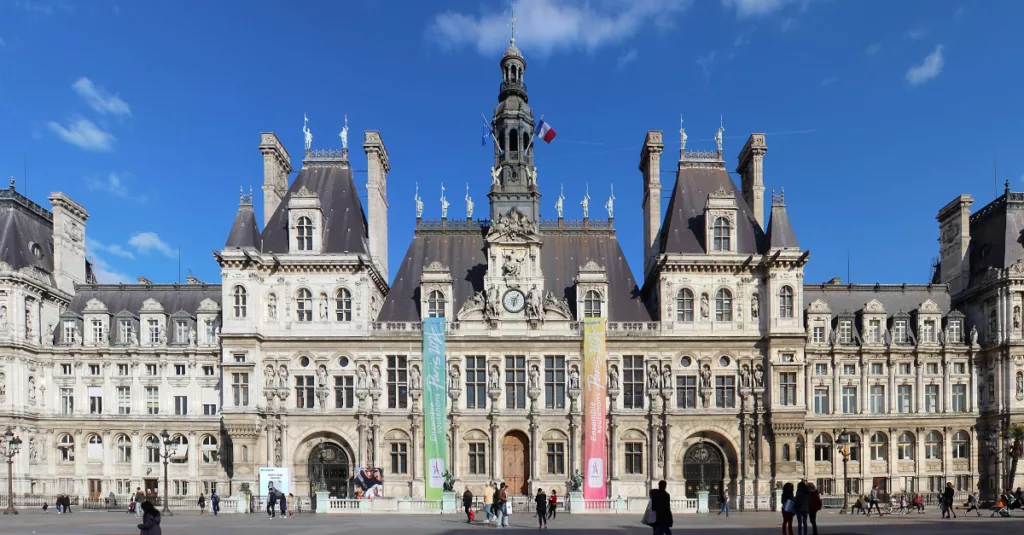
Located on the western edge of Le Marais, the Hôtel de Ville is a grand neo-Renaissance landmark, a symbol of the capital and the seat of the Parisian municipal government since 1357. Its richly decorated façade, statues, and pediments tell the story of the French Republic.
The interior, accessible through guided tours, impresses visitors with its sumptuous reception rooms, painted ceilings, and monumental grand staircase. In front of the building, the vast Place de l’Hôtel de Ville regularly hosts events, markets, and seasonal activities, such as an ice rink in winter.
Don’t miss:
-
The main façade and its allegorical sculptures.
-
The free exhibitions held in the Saint-Jean Hall.
-
The lively atmosphere of the square, especially in the evenings and on weekends.
Practical tips:
-
Free guided tours (reservation required through the City of Paris).
-
Enjoy views of the Seine and the riverbanks just steps away.
Museums and art galleries not to be missed
6. The Centre Pompidou (Beaubourg)
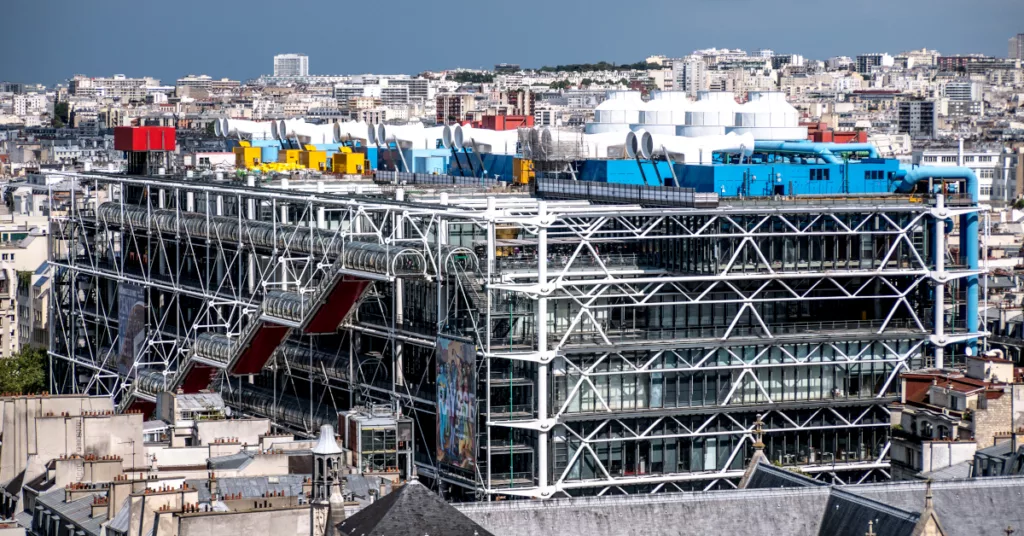
It’s impossible to talk about Le Marais without mentioning the Centre Pompidou, also known as Beaubourg. A true icon of modern architecture, this bold building designed by Renzo Piano and Richard Rogers — with its colorful external pipes and panoramic tube escalator — challenges the conventions of traditional Paris.
Inside is one of the world’s largest museums of modern and contemporary art, housing masterpieces by Picasso, Matisse, Kandinsky, Warhol, and Dalí. The center also hosts internationally renowned temporary exhibitions, performances, a public library, and experimental creative spaces.
The forecourt of the Centre Pompidou is a living spectacle in itself, with musicians, mimes, and street performers, while the top floor offers an exceptional panoramic view over the rooftops of Paris and the Eiffel Tower.
Don’t miss:
-
The permanent collection of the National Museum of Modern Art.
-
Temporary exhibitions in the main galleries.
-
The 360° view from the panoramic terrace.
Practical tips:
-
Allow at least 2 hours for a complete visit.
-
Go up to the top floor even without a museum ticket: access to the panoramic view can be purchased separately.
-
Book your tickets online to avoid long queues.
7. The Picasso Museum
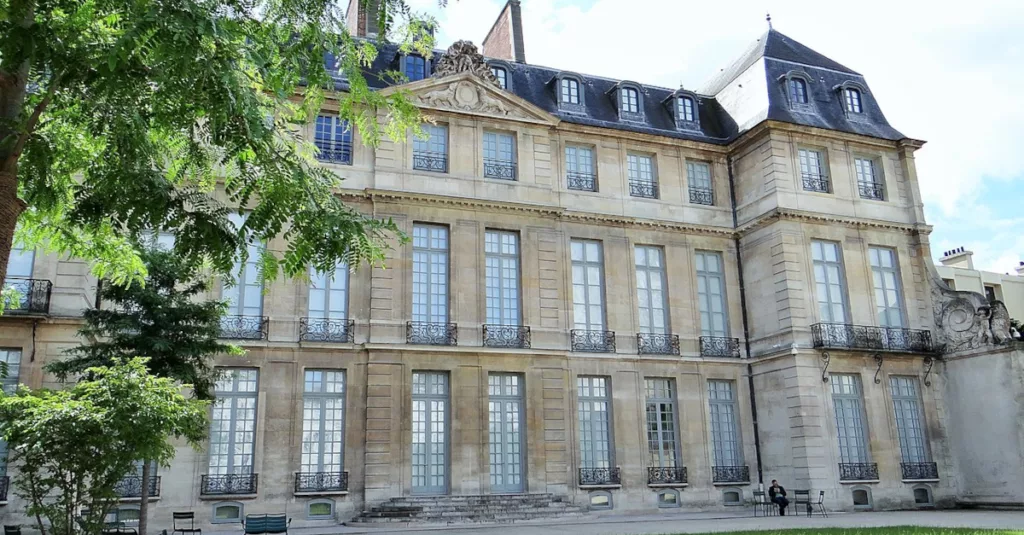
Located in the elegant Hôtel Salé, the Picasso Museum is a must-see for lovers of modern art. The building itself — a refined 17th-century private mansion — is worth the visit alone.
Inside, more than 5,000 works trace the prolific career of Pablo Picasso: paintings, sculptures, ceramics, drawings, and photographs. The museum follows a chronological and thematic route, making it possible to understand the different periods of the master — from Cubism to his most intimate works.
The bright, spacious setting offers a modern exhibition design that highlights the diversity of Picasso’s creative genius, as well as his strong connection to France and Paris.
Don’t miss:
-
Masterpieces such as La Célestine or Les Demoiselles d’Avignon (studies).
-
The monumental sculptures and rare sketches.
-
The magnificent central staircase of the Hôtel Salé.
Practical tips:
-
Visit in the morning to avoid peak hours.
-
Download the museum’s app to access an interactive audioguide.
-
Combine your visit with a walk along Rue de Thorigny and the surrounding streets, filled with art galleries.
8. The European House of Photography (MEP)
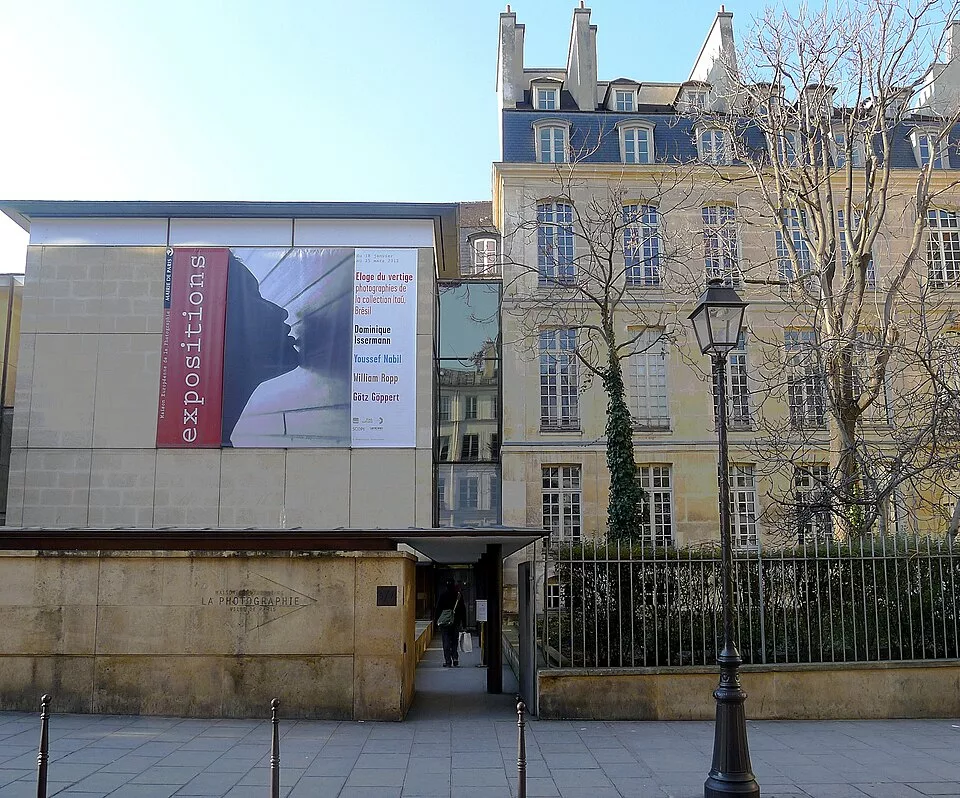
Nestled in an elegant Marais building, the European House of Photography (MEP) is a temple of contemporary imagery. This museum highlights photography in all its forms: thematic, monographic, documentary, and experimental exhibitions.
The MEP is renowned for the quality of its programming and the richness of its archives, which include more than 20,000 works. Visitors discover renowned photographers — Helmut Newton, Sebastião Salgado, Nan Goldin — as well as emerging European and international talents.
It is a place where photography is alive, engaged, and constantly renewed. The setting is understated and elegant, ideal for contemplation and discovery.
Don’t miss:
-
Temporary contemporary photography exhibitions.
-
The bookstore corner, well stocked with rare books and exhibition catalogs.
-
Occasional screenings or talks focused on visual arts.
Practical tips:
-
Check the website before your visit: exhibitions change every 6 to 8 weeks.
-
Free admission on Wednesdays from 5 pm to 8 pm.
-
Perfect to combine with a visit to the nearby Shoah Memorial.
9. Art galleries of the Haut-Marais
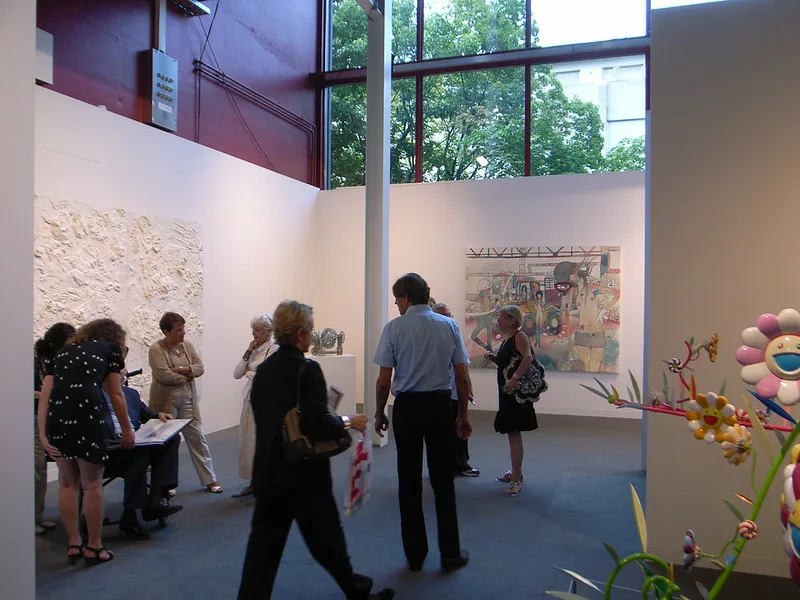
The Haut-Marais, the northern part of the district, has become over the years a major hub for contemporary creation. Its former shops and workshops have been transformed into avant-garde galleries, attracting art lovers from around the world.
From the Perrotin Gallery (Rue de Turenne) to the Thaddaeus Ropac Gallery, not to mention smaller, more confidential spaces such as Galerie Xippas or Galerie Karsten Greve, the Haut-Marais offers a vibrant and inspiring art trail.
Every narrow street seems to hide an exhibition, installation, or artistic performance.
It’s an ideal place to wander, discover contemporary art trends, and chat with passionate gallery owners. The atmosphere is chic, relaxed, and creative.
Don’t miss:
-
Galerie Perrotin, a major figure in contemporary art.
-
Thursday evening openings and gallery events.
-
Free exhibitions, often renewed every month.
Practical tips:
-
Most galleries are open from Tuesday to Saturday, with free admission.
-
Check the Paris Gallery Weekend website to find out about current exhibitions.
-
Combine this artistic walk with a trendy lunch on Rue de Bretagne.
Places of Worship and Remembrance
10. Saint-Paul–Saint-Louis Church
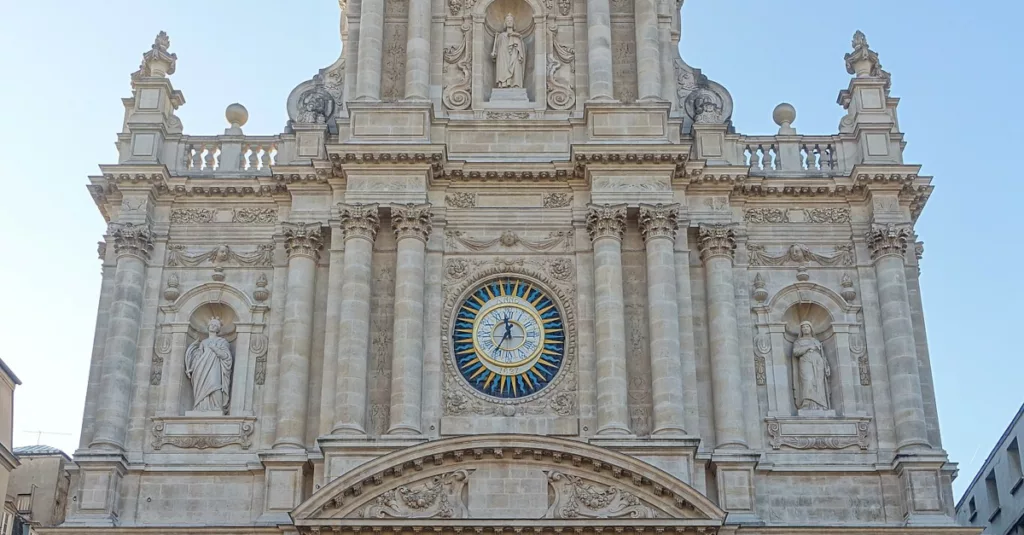
Located on Rue Saint-Antoine, in the heart of the Marais, Saint-Paul–Saint-Louis Church is a masterpiece of Parisian Baroque architecture. Built in the 17th century at the request of the Jesuits, it was inaugurated in 1641 in the presence of Louis XIII and Cardinal Richelieu.
Its monumental façade, inspired by Roman churches, impresses with its Corinthian columns and finely detailed sculptures. Inside, the church reveals a vast central dome and a majestic nave bathed in soft light. Visitors can admire remarkable works of art, including a painting by Delacroix (Christ in the Garden of Olives).
The church also houses commemorative plaques honoring notable figures from the Marais, as well as regular organ and classical music concerts that further enhance the beauty of the site.
Not to be missed:
-
The grand dome and the monumental cross on the façade.
-
Paintings by Delacroix and other 17th-century artists.
-
The peaceful atmosphere, ideal for reflection and meditation.
Practical tips:
-
Free admission all day.
-
Check the concert program for an immersive experience.
-
Combine your visit with a stroll along Rue Saint-Paul, known for its antique shops and hidden passages.
11. Hôtel de Saint-Aignan – Museum of Jewish Art and History
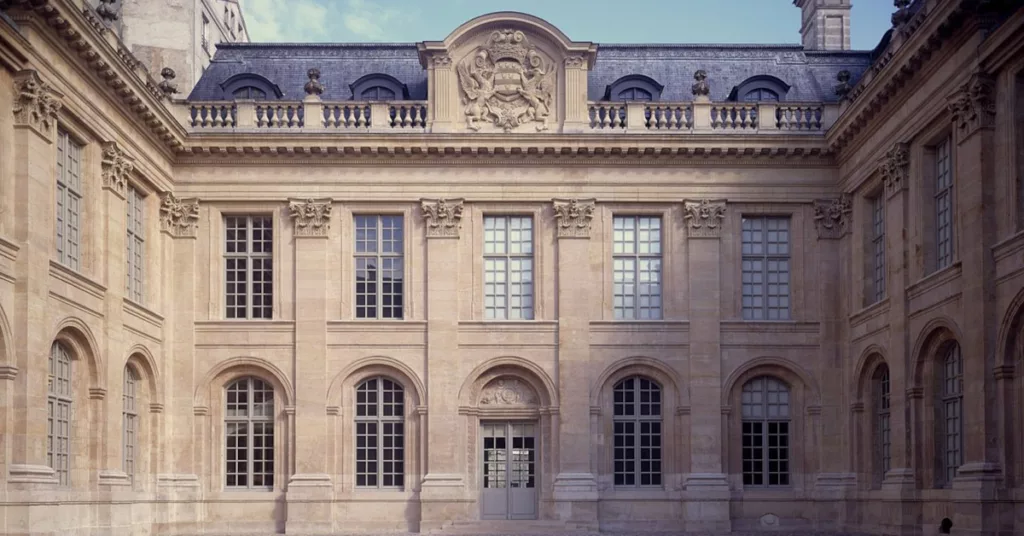
Housed in one of the most beautiful private mansions in the Marais, the Hôtel de Saint-Aignan, the Museum of Jewish Art and History located here is a true cultural gem. It traces more than two thousand years of Jewish history in France and Europe through works of art, ritual objects, rare documents, and contemporary creations.
The permanent exhibition highlights both the richness of Jewish culture and the hardships endured by this community, which is deeply connected to the history of the Marais. Visitors will discover sections dedicated to major figures such as Spinoza, Proust, and Chagall, as well as often deeply moving temporary exhibitions.
The building itself, with its cobblestone courtyard and harmonious façades, reflects the elegance of the 17th century and the grandeur of aristocratic mansions of the period.
Not to be missed:
-
The collection of European Jewish art.
-
High-quality temporary exhibitions.
-
The exceptional architectural setting of the Hôtel de Saint-Aignan.
Practical tips:
-
Free admission on the first Sunday of each month.
-
Audio guides available in several languages.
-
Ideal to combine with a walk through the Pletzl district (Rue des Rosiers).
12. The Shoah Memorial
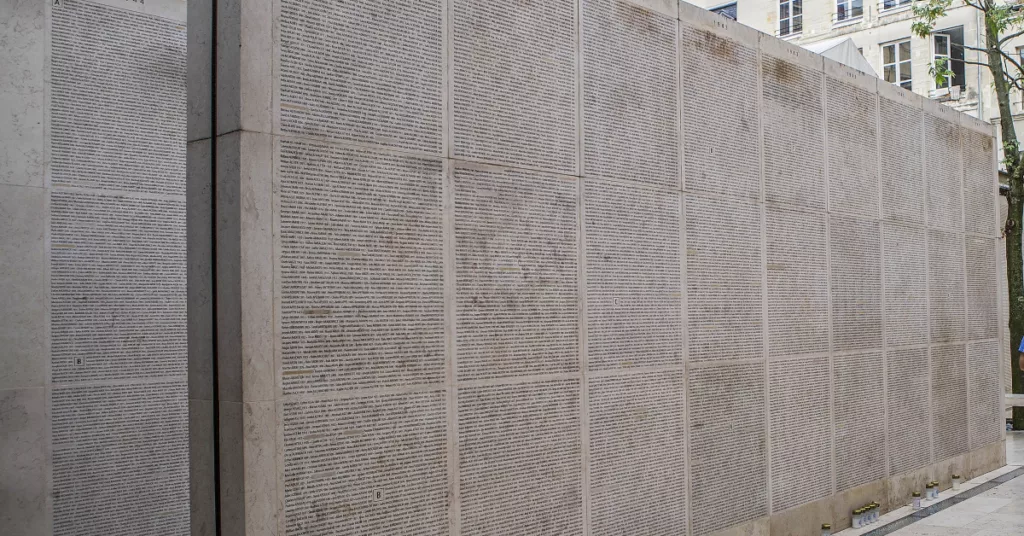
A place of remembrance and deep emotion, the Shoah Memorial, located on Rue Geoffroy-l’Asnier, is an essential site in the Marais. This museum-memorial pays tribute to the victims of the Holocaust and traces the history of the persecution of Jews during World War II.
The museum journey is marked by great sobriety, combining historical documents, testimonies, photographs, and personal objects. The Wall of Names, engraved with thousands of surnames of French victims, is one of the most moving parts of the site. The memorial also includes a crypt, an archive center, and temporary exhibitions dedicated to human rights and collective memory.
It is a place for reflection and transmission, reminding visitors of the importance of remembrance and education in the face of history.
Not to be missed:
-
The Wall of Names in the main courtyard.
-
The permanent and temporary exhibitions.
-
The crypt and the documentation center.
Practical tips:
-
Free admission.
-
Guided tours available by reservation.
-
Visit in a calm and respectful manner — allow approximately 1.5 hours.
Walks and Typical Streets of the Marais
13. Rue des Rosiers
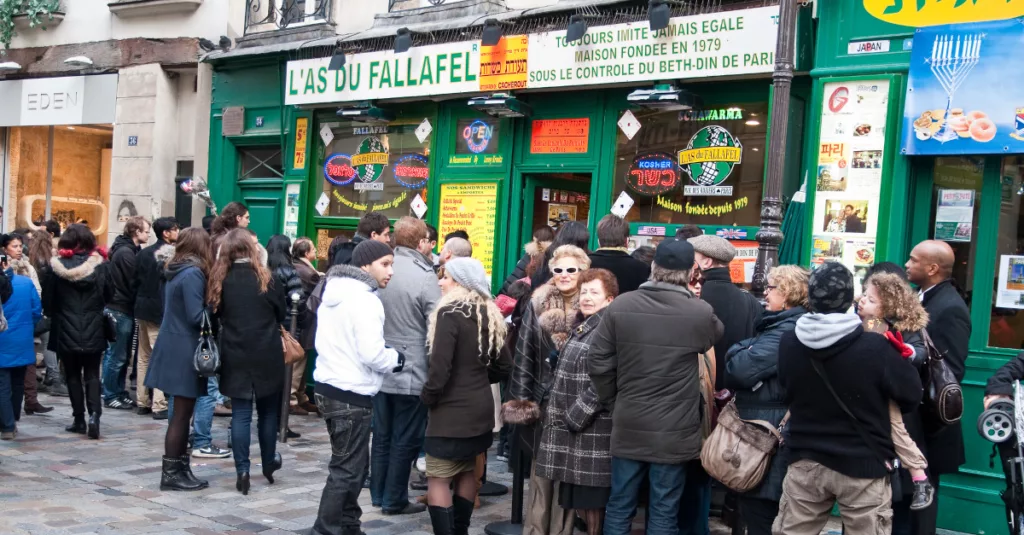
This is one of the most iconic streets in the Marais, a true symbol of the historic Jewish quarter of Paris.
Rue des Rosiers immerses visitors in a unique atmosphere, where the aromas of falafel, Hebrew shop signs, and Middle Eastern pastries coexist with fashion boutiques and concept stores.
Here, every façade tells a story: that of Ashkenazi families settled here for generations, traditional businesses, and a Yiddish culture that is still very much alive.
Don’t miss the legendary L’As du Falafel, often cited as the best in Paris, and indulge in a gourmet stroll along this lively and vibrant street.
Not to be missed:
-
The legendary falafels from L’As du Falafel or Mi-Va-Mi.
-
Traditional Jewish pastries, such as strudel or cheesecake.
-
Historic shop signs and vintage boutiques.
Practical tips:
-
The street is often very busy on weekends — visit in the morning if possible.
-
Combine your visit with the nearby Shoah Memorial or the Museum of Jewish Art and History.
-
A perfect stop for lunch on a terrace while observing local life.
- Discover the fabulous Rue des Rosiers in our Marais adventure: a blend of an escape game and a guided tour.
14. Rue des Francs-Bourgeois
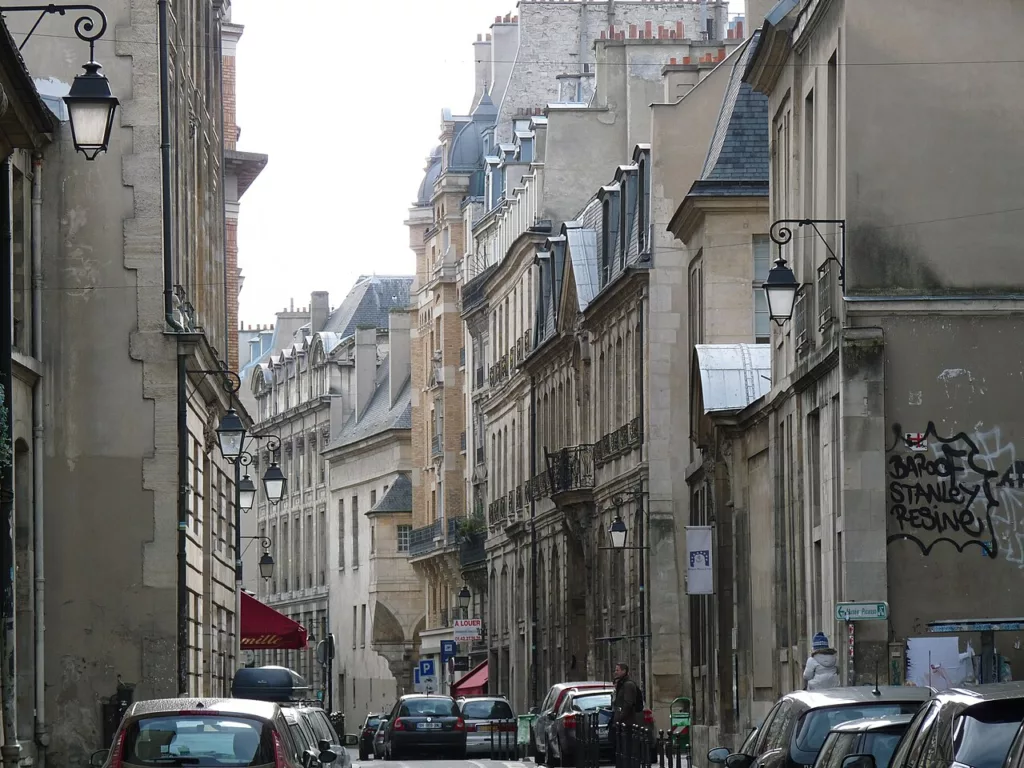
This is the backbone of the Marais, both elegant and lively. Lined with historic private mansions converted into boutiques, galleries, and cafés, Rue des Francs-Bourgeois is a must for anyone wanting to experience the unique blend of historical charm and Parisian modernity.
Here you’ll find both luxury brands and independent French labels set within an exceptional architectural setting.
Blond stone façades, sculpted gateways, and inner courtyards recall the era when the Marais was home to the nobility of the Grand Siècle.
Not to be missed:
-
Elegant boutiques and Parisian concept stores.
-
Restored historic mansions, often open to visitors (such as the Carnavalet Museum).
-
Trendy cafés ideal for a shopping break.
Practical tips:
-
Pedestrian street on Sundays — the perfect time to stroll stress-free.
-
Combine this walk with Place des Vosges and Rue de Turenne.
-
At the end of the day, enjoy the sunset over the golden façades.
15. Place du Marché Sainte-Catherine
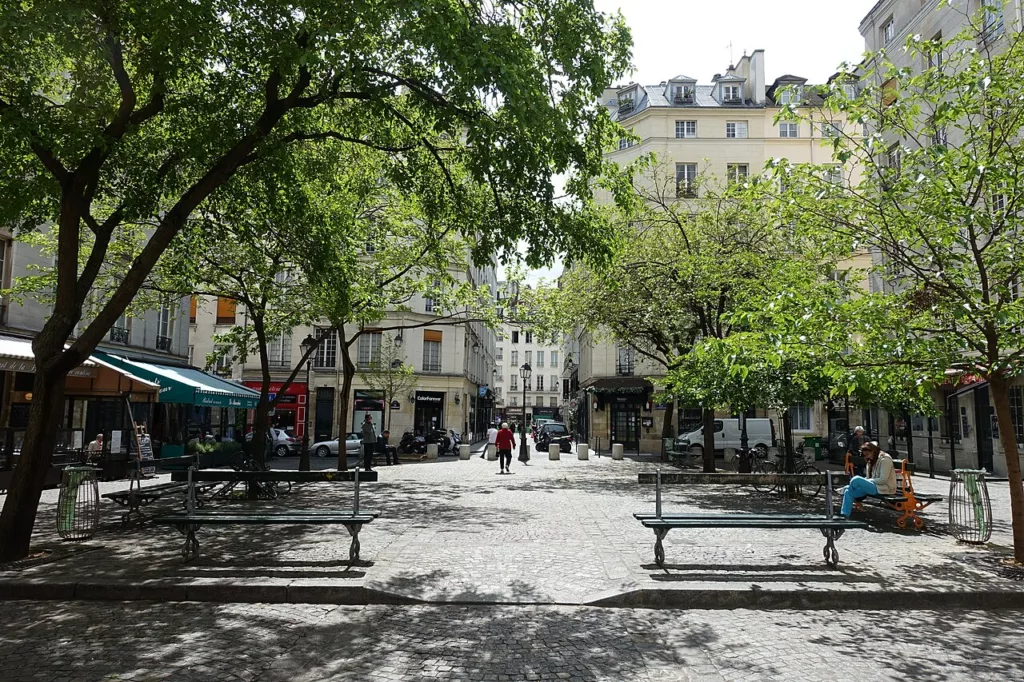
A small gem hidden just off Rue Saint-Antoine, Place du Marché Sainte-Catherine is a peaceful haven in the heart of the Marais.
Surrounded by trees and lined with terraces, it has retained its old village-like atmosphere, far from the bustle of the main boulevards.
It is an ideal place to stop for a drink or enjoy an outdoor meal in a typically Parisian setting. In the evening, the string lights of the surrounding restaurants create a warm, romantic, and convivial atmosphere.
Not to be missed:
-
The terraces of Café l’Artisan or La Terrasse Sainte-Catherine.
-
The discreet art galleries around the square.
-
The bucolic atmosphere, perfect for a photo break.
Practical tips:
-
Very popular in good weather: come early to find a spot on a terrace.
-
Combine your visit with Saint-Paul–Saint-Louis Church, located just steps away.
-
Perfect for brunch or a pre-dinner drink at the end of your walk.
16. Rue Vieille-du-Temple
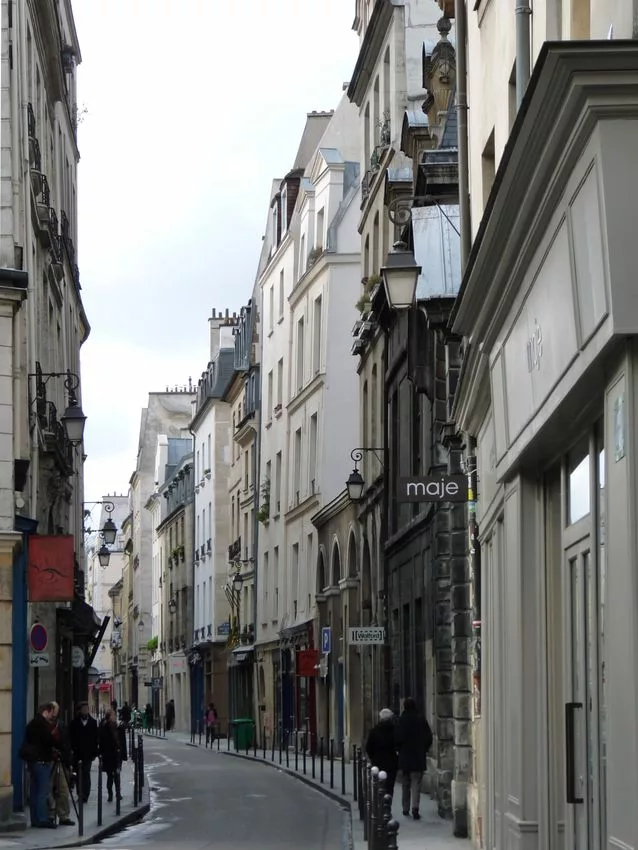
One of the liveliest arteries of the Marais, it embodies the neighborhood’s free and creative spirit.
Rue Vieille-du-Temple winds from Rue de Rivoli up to the Haut-Marais, bringing together everything that gives the area its charm: lively cafés, contemporary art galleries, designer boutiques, and historic mansions hidden behind massive gateways.
This is where you truly feel the trendy heart of the Marais beating, between local life and artistic energy.
Fashion, design, and culture lovers come here to stroll, shop, or simply observe Parisian life from a terrace.
Not to be missed:
-
The café Les Philosophes, a Marais institution.
-
The contemporary art galleries around Rue du Trésor.
-
Historic façades dating from the Middle Ages and the Renaissance.
Practical tips:
-
The atmosphere is especially pleasant in the late afternoon.
-
Combine with Rue des Rosiers and Place du Marché Sainte-Catherine.
-
Ideal for a leisurely walk without a set route — simply follow the charm of the area.
Trendy Spots, Gastronomy, and Shopping
17. Marché des Enfants Rouges
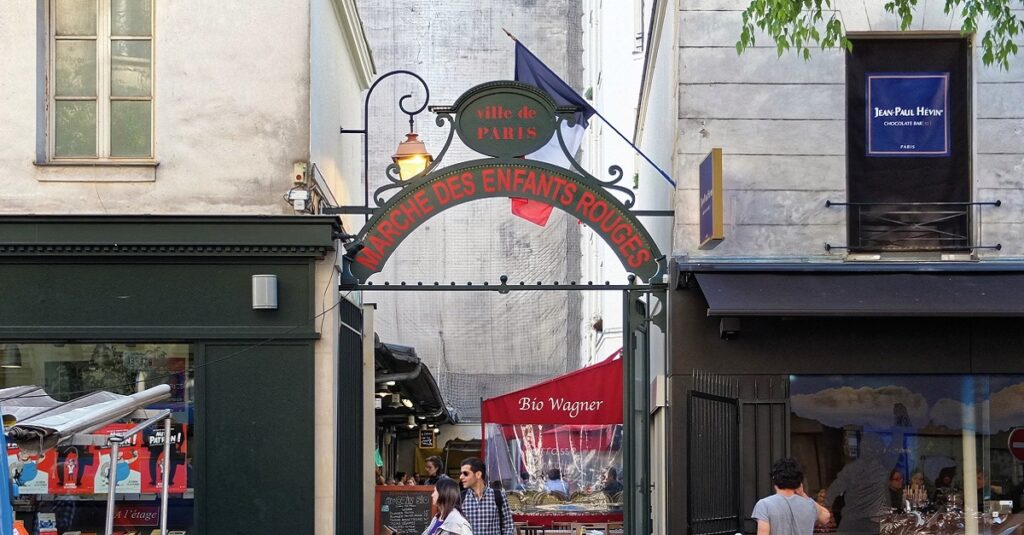
Hidden behind a discreet doorway on Rue de Bretagne, the Marché des Enfants Rouges is the oldest covered market in Paris, founded in 1615. Its name comes from the nearby orphanage whose residents once wore red uniforms.
Today, this historic site has become a paradise for lovers of world cuisine. Between Italian, Moroccan, Japanese, Lebanese, and Creole food stalls, visitors can enjoy authentic and flavorful dishes in a warm and friendly atmosphere.
It is a lively, colorful place where Parisians and visitors gather for lunch under the original glass roofs.
Not to be missed:
-
The couscous from the iconic Chez Omar or the Japanese bento boxes.
-
The Lebanese stand for its homemade mezze.
-
The cosmopolitan atmosphere, especially on weekends.
Practical tips:
-
Open every day except Monday.
-
Try to come late in the morning to avoid the crowds.
-
Combine with a stroll through the lively Haut-Marais.
18. Le BHV Marais
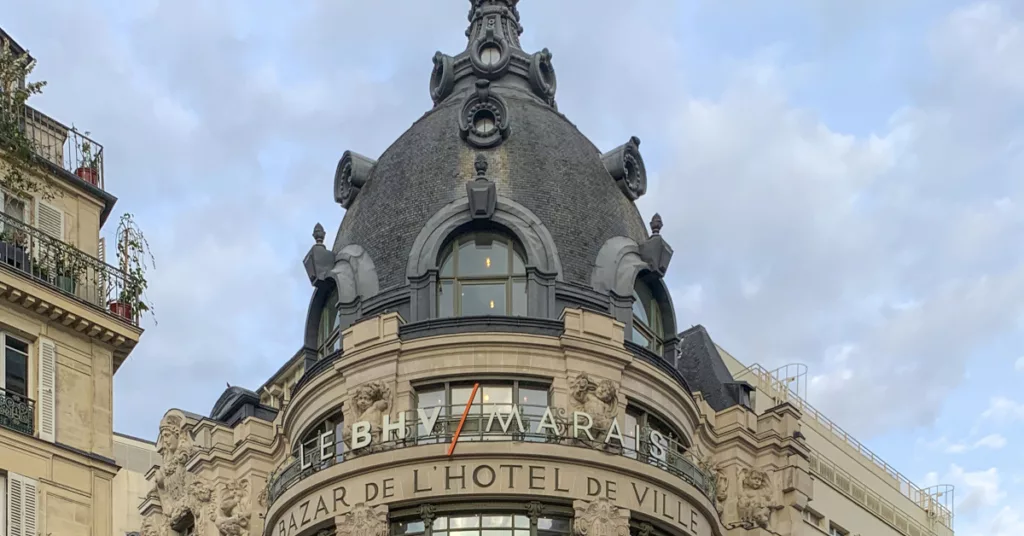
Facing City Hall, the BHV Marais (Bazar de l’Hôtel de Ville) is a true Parisian institution.
Founded in the mid-19th century, it is now one of the capital’s most iconic department stores, combining elegance, diversity, and a creative spirit.
You can find everything here: fashion, beauty, home décor, design, DIY, and even an outstanding stationery section.
Its rooftop, Le Perchoir Marais, offers spectacular views over the rooftops of Paris, the Tour Saint-Jacques, and Notre-Dame — the perfect spot for a drink at sunset.
Not to be missed:
-
The “Le BHV Marais Homme” concept store on rue de la Verrerie.
-
The Le Perchoir Marais rooftop for its breathtaking views.
-
Pop-up stores featuring local and ethical brands.
Practical tips:
-
Direct access from the Hôtel de Ville metro station.
-
The rooftop is accessible in the late afternoon (note: limited seating).
-
Combine with a stroll along the riverbanks or a visit to Notre-Dame.
19. Concept Stores in Le Marais
Le Marais is a paradise for concept stores and designer boutiques. Here, fashion blends with art and design in original, inspiring spaces.
Among the must-visit addresses:
-
Merci (111 boulevard Beaumarchais): a true temple of Parisian lifestyle, combining fashion, décor, design, and a café under a glass roof.
-
The Broken Arm (rue Perrée): an avant-garde concept store offering high-end clothing, books, and design objects.
-
Fleux’ (rue Sainte-Croix-de-la-Bretonnerie): a modern Ali Baba’s cave, perfect for lovers of contemporary home décor.
These boutiques perfectly reflect the spirit of Le Marais: creative, elegant, cosmopolitan, and forward-looking.
Not to be missed:
-
The café at Merci for a relaxing break in a leafy setting.
-
The avant-garde window displays at The Broken Arm.
-
Unusual objects and original gifts at Fleux’.
Practical tips:
-
Allow half a day to wander between these addresses.
-
Shops usually close between 7:00 and 8:00 p.m.
-
Combine with a coffee or brunch in the Haut-Marais.
20. Cafés and Restaurants in Le Marais
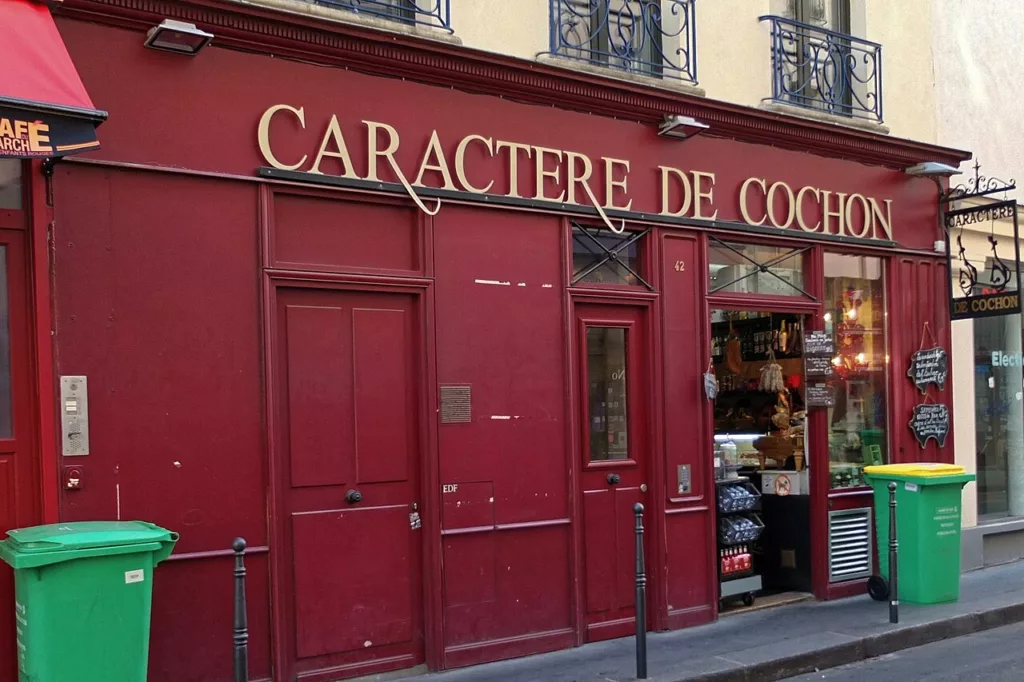
The true gourmet heart of Paris, Le Marais is packed with historic cafés, modern bistros, and refined dining spots.
Whether you’re looking for a shaded terrace, a literary café, or a fine-dining restaurant, the neighborhood offers a uniquely rich variety.
Some standout addresses:
-
Café Charlot (rue de Bretagne): a typically Parisian bistro, always buzzing with life.
-
Les Philosophes (rue Vieille-du-Temple): a local institution where you can enjoy authentic French cuisine.
-
Le Mary Celeste (rue Commines): a cocktail and oyster bar popular in the Haut-Marais.
-
Le Loir dans la Théière (rue des Rosiers): a tearoom famous for its lemon meringue tart.
These spots are perfect for soaking up the neighborhood’s atmosphere, blending bohemian charm with Parisian elegance.
Not to be missed:
-
Sunday brunch at Café Charlot.
-
A romantic dinner on Place du Marché Sainte-Catherine.
-
A coffee on a terrace while watching the flow of passersby.
Practical tips:
-
Terraces are in high demand—book ahead for summer evenings.
-
Weekend brunch is a must in Le Marais.
-
For a more local experience, avoid chains and choose independent spots.
Conclusion
Le Marais, more than just a Paris neighborhood, is a true experience. A place where every stone, every alleyway, and every façade tells a story. Here, past and present meet with elegance: grand 17th-century mansions stand alongside contemporary galleries, the spice-scented air of rue des Rosiers mingles with the aroma of freshly ground coffee, and medieval façades house avant-garde creators.
Strolling through Le Marais means discovering an intimate Paris—one best explored on foot, around a quiet square or through a hidden passage. It’s where the cultural and artistic heart of the capital beats, in an atmosphere that is at once chic, cosmopolitan, and deeply human.
Whether you’re a history lover, an art enthusiast, a curious foodie, or simply a wanderer, Le Marais offers a thousand facets to explore. You always come back, because with every visit it reveals new surprises—a hidden café, a recent mural, a flower-filled courtyard.
In short, visiting Le Marais means experiencing Paris differently, in its most vibrant, creative, and authentic form.