Visit Geneva: 30 Must-See Attractions and Experiences
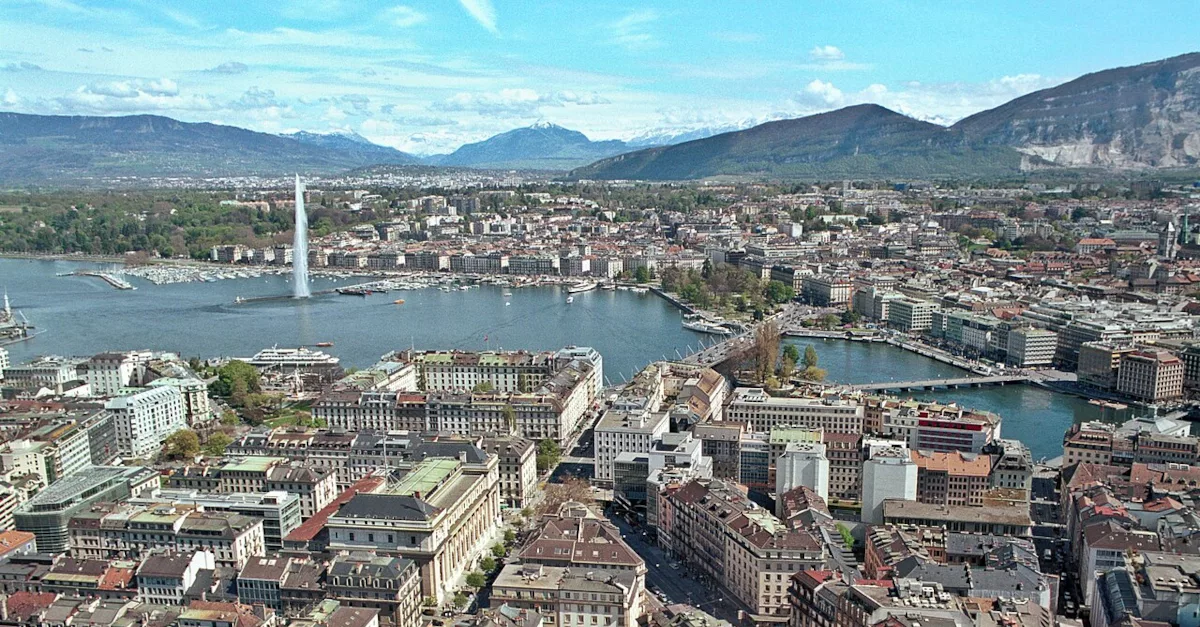
Visiting Geneva means discovering a unique Swiss city where history, culture, nature, and innovation meet on the shores of Lake Geneva. Renowned for its famous Jet d’Eau, its historic Old Town, its international institutions, and its many green spaces, Geneva appeals equally to heritage enthusiasts, food lovers, and admirers of Alpine landscapes.
Between renowned museums, iconic monuments, flower-filled parks, and excursions to the Alps or nearby villages, Calvin’s city offers a wide variety of experiences. Whether you are planning a weekend getaway or a longer stay, this guide presents the must-see attractions to help you explore Geneva and fully enjoy one of Switzerland’s most attractive destinations.
Geneva’s Historic Monuments and Heritage
Jet d’Eau
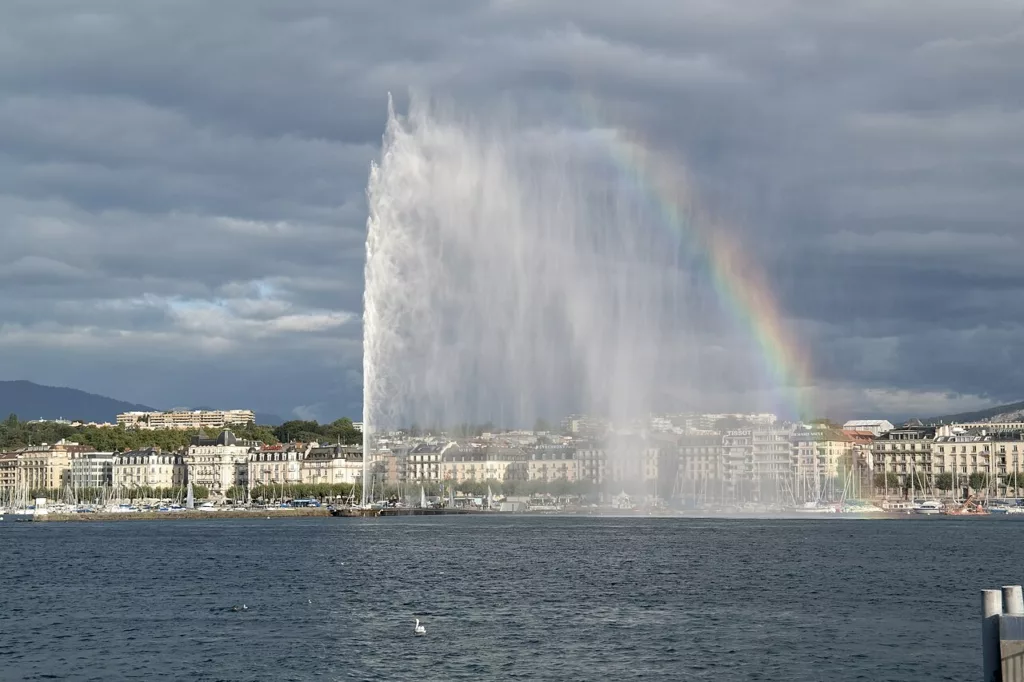
Born in 1886 as a simple hydraulic safety valve, the Jet d’Eau has become one of Geneva’s most famous symbols. Since 1891, this iconic landmark has attracted visitors and locals alike to the heart of Geneva’s harbor. Propelling 500 liters of water per second at nearly 200 km/h, the Jet d’Eau reaches an impressive height of 140 meters.
Each drop of water takes approximately 16 seconds to complete its journey between the nozzle and Lake Geneva. What originally served as a technical solution to a pressure problem is now a world-renowned tourist attraction.
Thanks to an autonomous pumping station using water from Lake Geneva, the Jet d’Eau has operated year-round since 2003. The characteristic white color of its plume comes from the millions of air bubbles mixed with the projected water.
With nearly 8 tons of water suspended in the air at any given moment, the Jet d’Eau is a remarkable feat of engineering. Over time, it has also become a symbol of solidarity, occasionally illuminated in the colors of significant events.
Saint Peter’s Cathedral
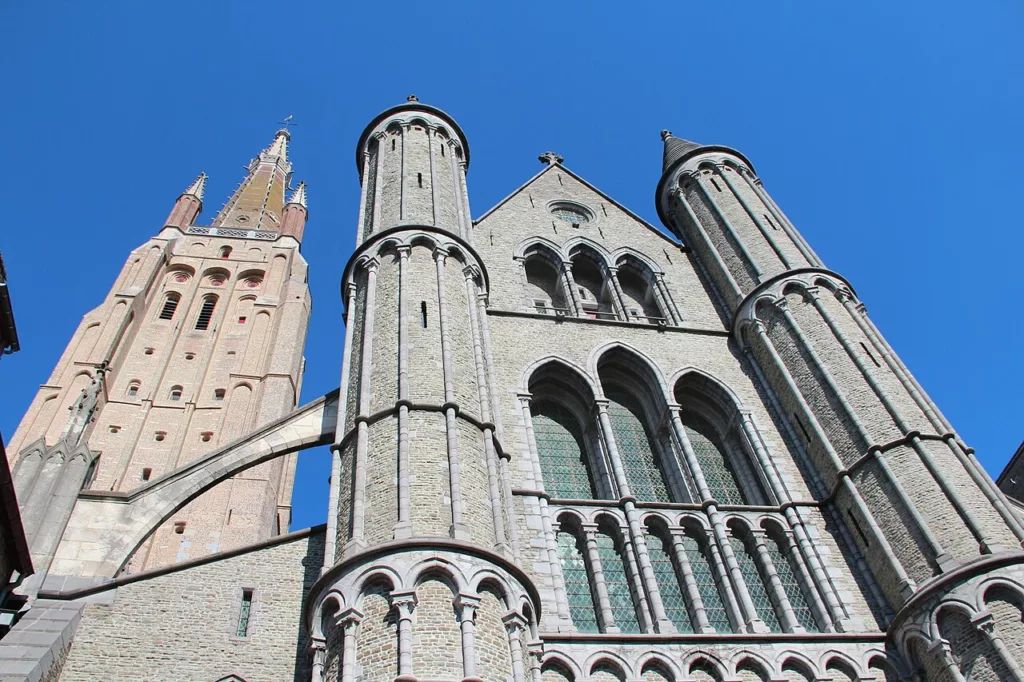
Overlooking Geneva’s Old Town, Saint Peter’s Cathedral was built between the 12th and 13th centuries and harmoniously blends Romanesque, Gothic, and Neoclassical styles. Before becoming Geneva’s principal Protestant church in 1535, it served as the cathedral of Catholic bishops for nearly a thousand years.
The cathedral is closely associated with the Protestant Reformation and the figure of John Calvin, who preached there for more than twenty years. Beneath its foundations lies one of the largest archaeological sites in Europe north of the Alps, tracing over 2,000 years of Geneva’s history. Its famous Neoclassical portico, added in the 18th century, contrasts elegantly with its medieval architecture.
From the top of its north tower, accessible via 157 steps, visitors enjoy exceptional panoramic views over Geneva, Lake Geneva, and the Alps. The cathedral houses “La Clémence,” a monumental bell weighing more than six tons that has marked the rhythm of Geneva life for centuries.
Palace of Nations
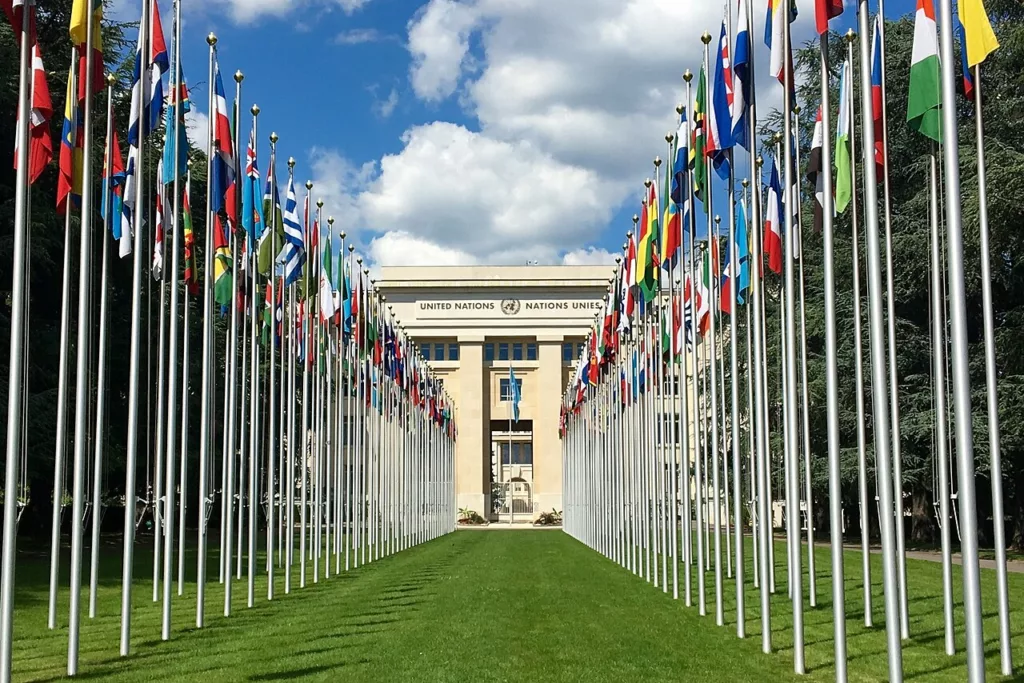
The Palace of Nations is one of the world’s largest diplomatic centers and a symbol of multilateralism in Geneva. Built between 1929 and 1938 to host the League of Nations, it is now the European headquarters of the United Nations.
Nearly 8,000 international meetings and conferences take place here every year, making Geneva one of the world capitals of diplomacy. Located within the magnificent Ariana Park, the palace offers exceptional views of Lake Geneva and the Alps.
Its monumental architecture is the result of a collaboration between five European architects selected from 377 proposals submitted in an international competition. A time capsule buried beneath the foundation stone contains founding documents and coins from member states of the League of Nations.
With its 34 conference rooms and thousands of offices, the complex is the second-largest United Nations center after New York. The Palace of Nations hosts numerous international agencies working in development, education, food security, and humanitarian aid.
The famous peacocks of Ariana Park have become one of the site’s most distinctive and beloved symbols.
Place du Bourg-de-Four
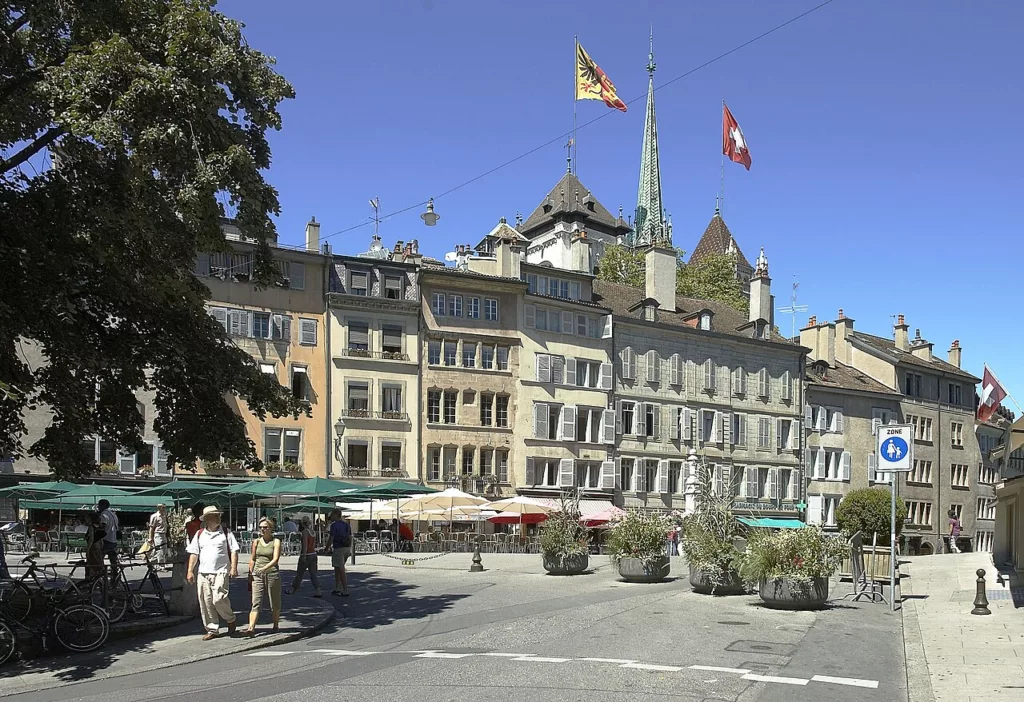
Place du Bourg-de-Four is Geneva’s oldest square and has served as a central gathering and trading place since antiquity. Originally a Roman forum and later a medieval marketplace, it has witnessed every major stage of Geneva’s history.
Located in the heart of the Old Town, it retains a unique charm thanks to its historic façades, its 18th-century fountain, and its picturesque alleyways. For centuries, fairs, markets, and commercial activities animated this strategic square located at the gates of the city.
During the Protestant Reformation, Bourg-de-Four became a refuge for many Huguenot exiles from France. The Palace of Justice, the Lutheran church, and several historic buildings still testify to the richness of its past. The square is connected to Saint Peter’s Cathedral by the famous “Degrés-de-Poule,” a discreet passage steeped in history.
At the center of the square, the statue of “Clémentine” reflects Geneva’s longstanding concern for social issues and child protection. Today, its terraces, bookstores, galleries, and shops make it one of the city’s liveliest and most appreciated places.
Broken Chair
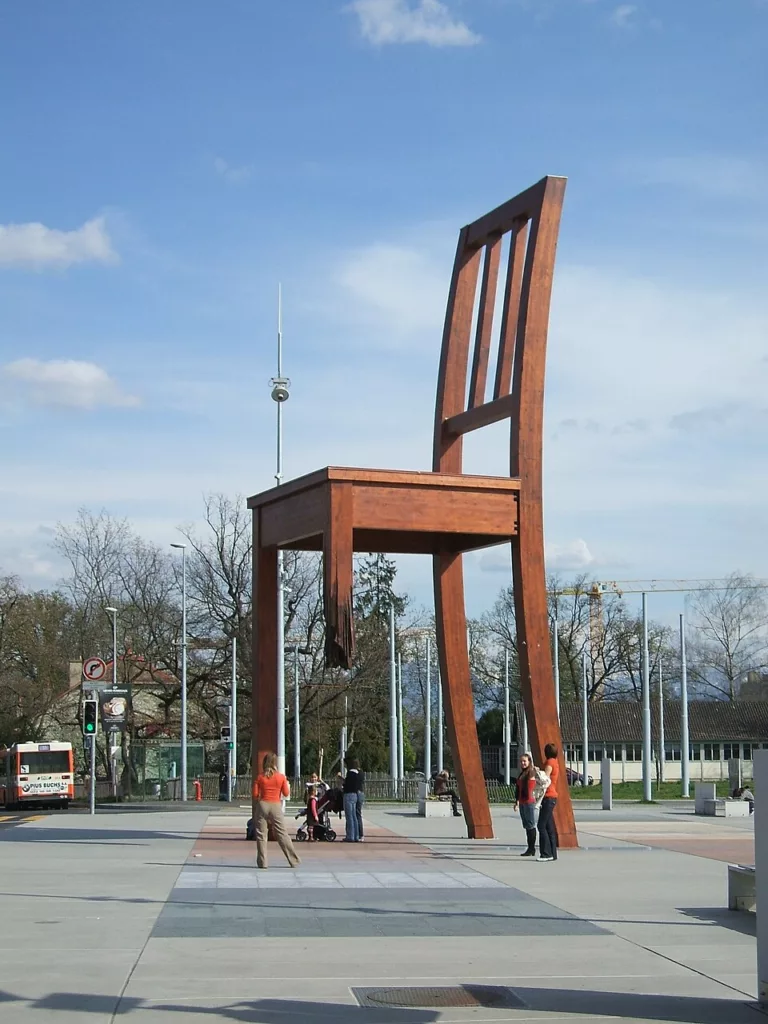
Broken Chair is one of Geneva’s most iconic works of art and a powerful symbol of the fight against anti-personnel landmines. Installed since 1997 on Place des Nations, facing the Palace of Nations, this giant 12-meter-high chair attracts attention from around the world.
With its broken leg, the sculpture represents victims of armed conflict and highlights the human consequences of explosive weapons. Commissioned by Handicap International, the artwork was intended to support the signing of the Ottawa Convention banning anti-personnel mines.
Built from Douglas fir wood and weighing more than five tons, it combines visual simplicity with powerful symbolism. Although originally conceived as a temporary installation, its success allowed it to become a permanent monument of international Geneva.
Reformation Wall
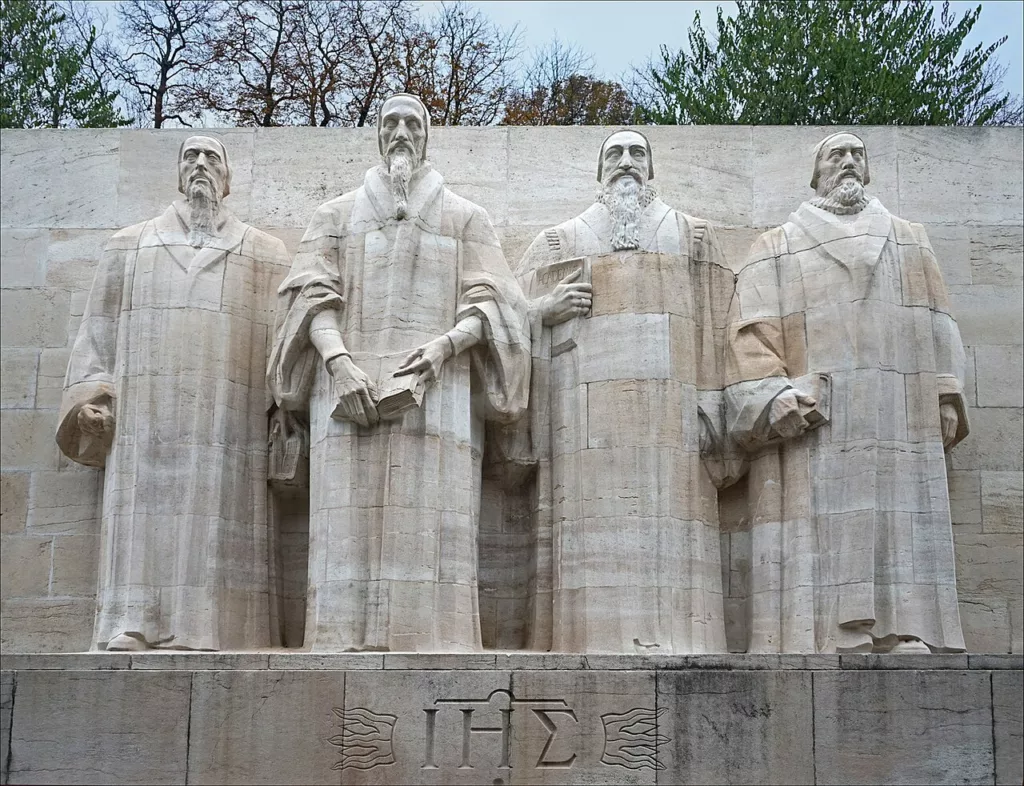
Erected in Bastions Park, the Reformation Wall is one of the most emblematic monuments of Geneva’s Protestant history. Inaugurated at the beginning of the 20th century, it celebrates Geneva’s influence in spreading the Reformation throughout Europe and the world.
At the center of the monument stand the imposing statues of William Farel, John Calvin, Theodore Beza, and John Knox, major figures of Protestantism. Stretching approximately one hundred meters in length, the monument is backed by the city’s former fortifications, recalling Geneva’s historical role as a city of refuge and religious freedom.
The Geneva motto, “Post tenebras lux” (“After darkness, light”), is engraved on the wall as a symbol of the spiritual renewal brought about by the Reformation. The statues and bas-reliefs also honor personalities who contributed to the rise of Protestantism in France, England, the Netherlands, Germany, Hungary, and America.
Built to commemorate the 400th anniversary of John Calvin’s birth, the monument highlights Geneva’s intellectual and religious heritage. A reflecting pool runs alongside the wall, evoking the defensive moats that once protected the city.
Cathedral of the Exaltation of the Holy Cross in Geneva
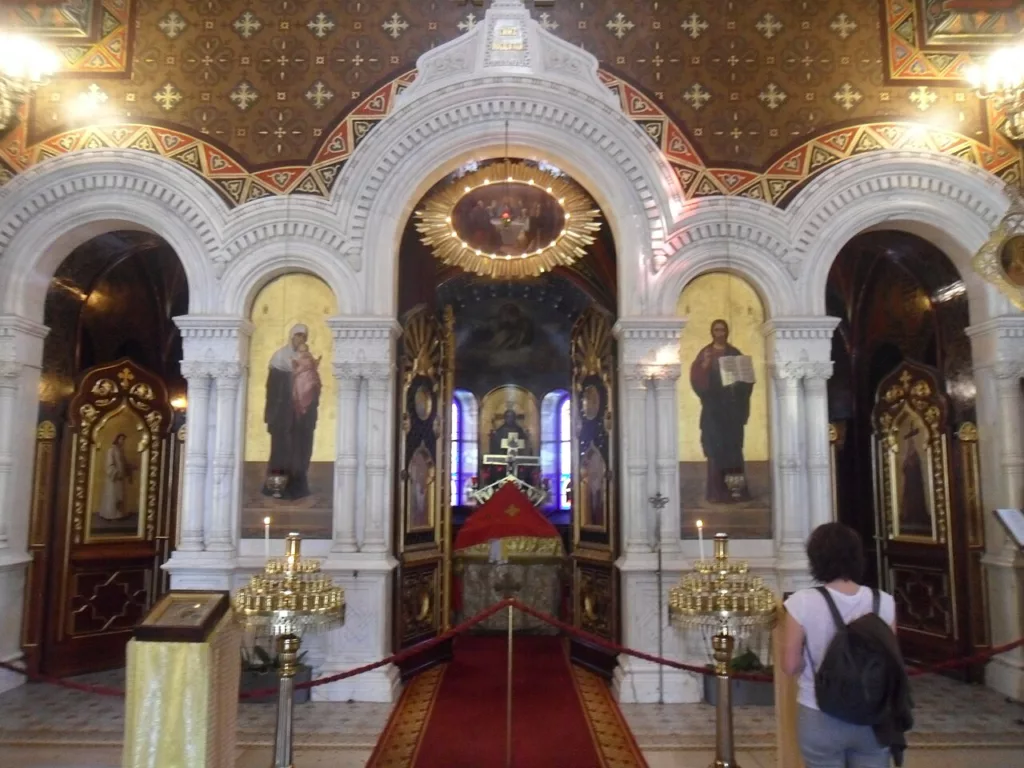
Known as the “Russian Church of Geneva,” this Orthodox cathedral was built between 1863 and 1866 and reflects the long-standing presence of the Russian and Orthodox community in Geneva.
Located in the Tranchées district, it was the first building constructed in this area and even influenced the layout of the neighborhood. Its Neo-Russian architecture, recognizable by its golden onion domes, brings an Oriental and Byzantine touch to Geneva’s cityscape.
The church is topped with nine golden domes, symbolizing Christ, the Evangelists, and the celestial hierarchy of angels. Inside, the frescoes, icons, and Carrara marble iconostasis create a rich and solemn spiritual atmosphere.
The cathedral was funded by donations from Russia, notably from members of the imperial family. Classified as a cultural property of national importance in 1979, it has undergone several major restoration campaigns. Today, it welcomes Orthodox worshippers from diverse backgrounds, reflecting Geneva’s international dimension.
Notre-Dame Basilica
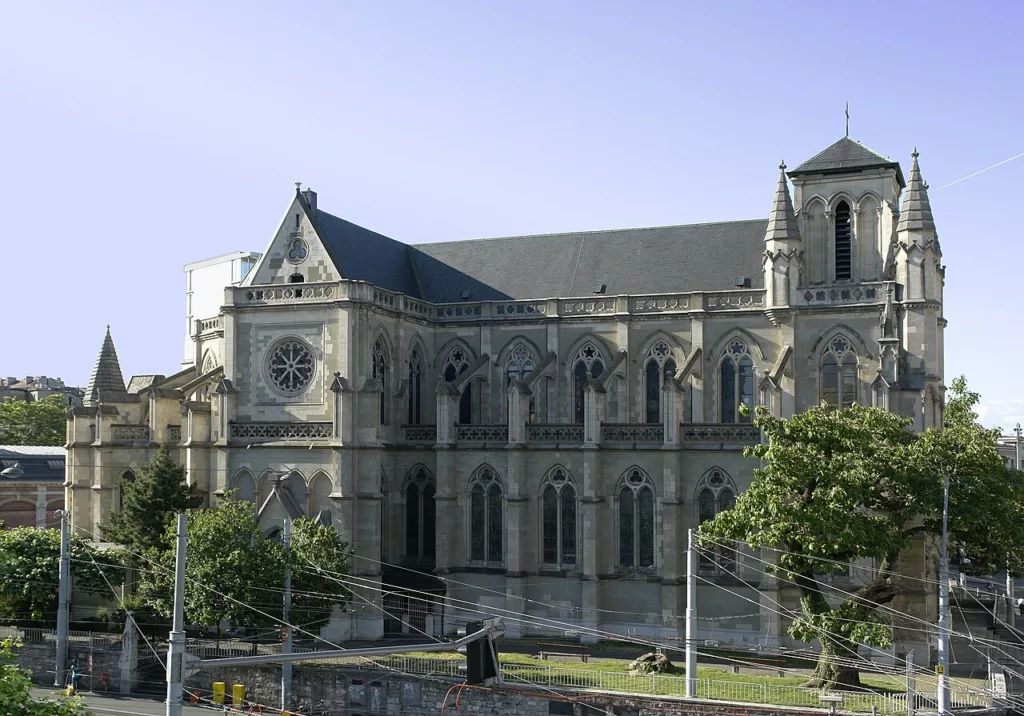
Notre-Dame Basilica of Geneva was built between 1852 and 1857 and is an important example of Neo-Gothic architecture in Geneva. It was erected on the site of a former bastion of Geneva’s fortifications.
The basilica is dedicated to the Virgin Mary, represented by a statue offered by Pope Pius IX. It is an important stop for pilgrims on their way to Santiago de Compostela.
Its history reflects the religious tensions of the 19th century, particularly during its occupation and closure in 1875. Bought back by the Catholic Church in 1911–1912, it later fully regained its spiritual role.
Its remarkable stained-glass windows illustrate the evolution of stained-glass art from the 19th to the 20th century.
Brunswick Monument
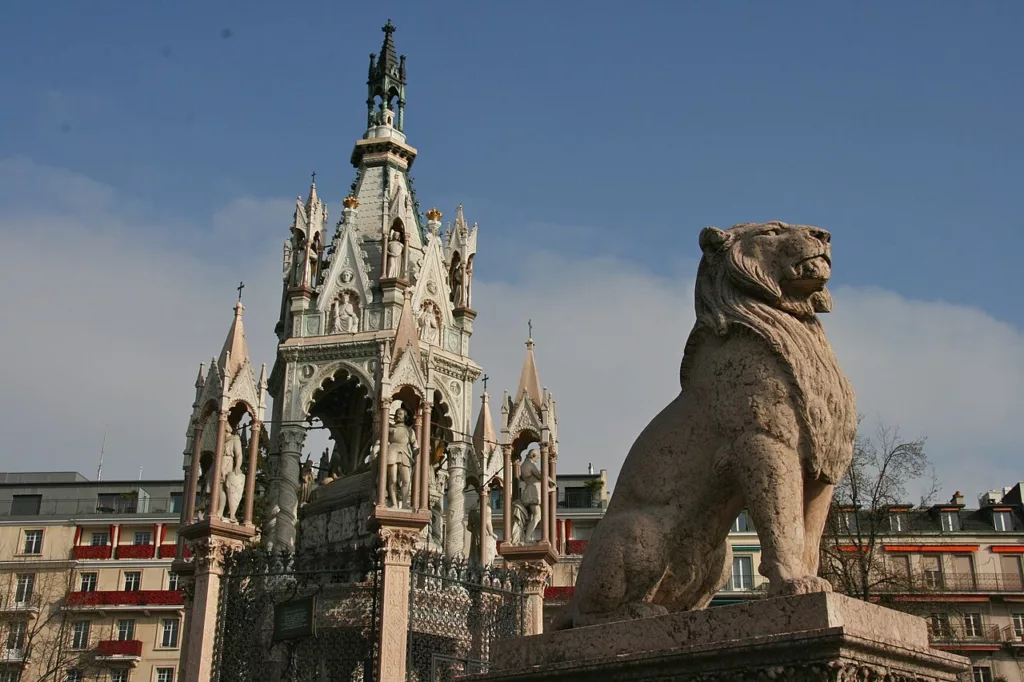
The Brunswick Monument was built in 1879. This mausoleum honors Duke Charles II of Brunswick, who bequeathed his fortune to the city of Geneva. Inspired by medieval tombs in Verona, the monument stands out for its richly decorated Neo-Gothic architecture.
With its precious marbles, stone lions, and equestrian statue, it embodies the 19th-century taste for grand monuments. The duke’s exceptional bequest allowed Geneva to finance many public projects, including schools, infrastructure, and cultural spaces.
Its construction sparked considerable debate, both because of its cost and its particularly ostentatious character in a city known for its sobriety. Classified as a cultural property of national importance, it bears witness to the unique bond between an exiled German prince and the city that welcomed him.
Place Molard
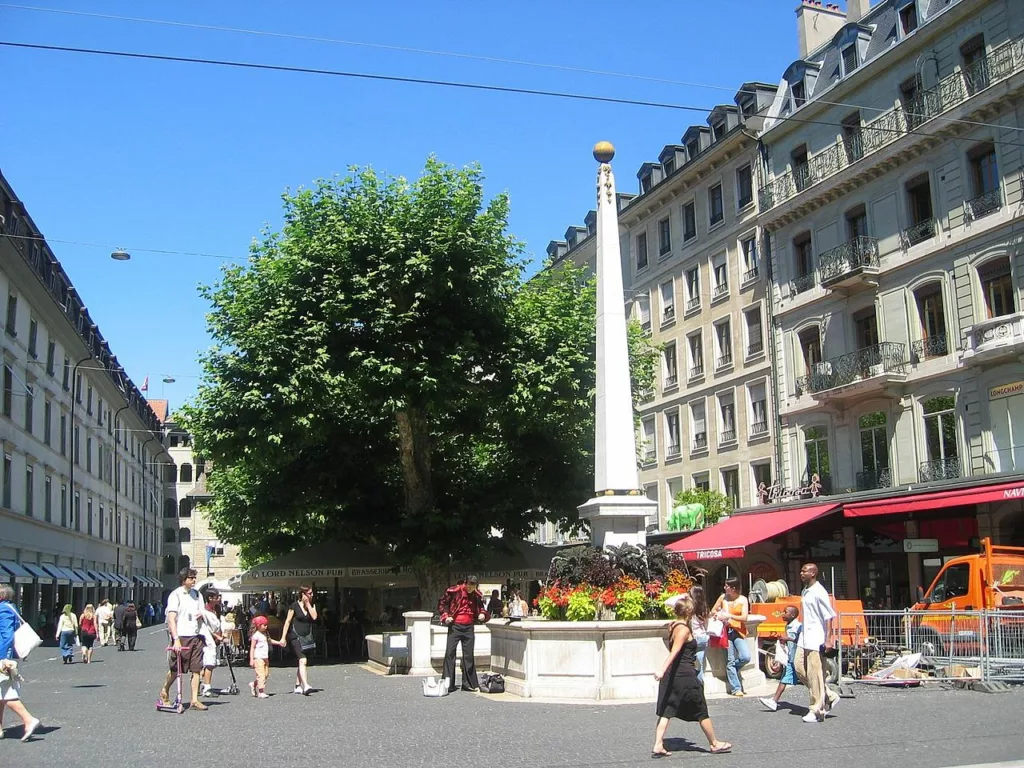
For centuries, Place du Molard was Geneva’s main port and economic heart. From the Middle Ages onward, it was a major commercial center through which goods, merchants, and travelers from Lake Geneva passed.
In the 16th century, Molard was the true nerve center of the city, bringing together warehouses, customs offices, money changers, artisans, and markets. It was on this square that Antoine Froment publicly preached the ideas of the Reformation in 1533, a landmark event in Geneva’s history.
The Molard Tower, a former medieval defensive tower rebuilt in 1591, remains one of the city’s historic symbols. The Halles du Molard, built in 1690, testify to the commercial importance the square retained for several centuries. The Molard Fountain, whose origins date back to the 18th century, is today one of the square’s emblematic heritage features.
Redeveloped in 2004, the square is now famous for its illuminated paving stones engraved with words in the six official languages of the United Nations. This contemporary project, entitled “Whispers,” evokes both the water of the former port and Geneva’s cultural diversity.
The Old Arsenal
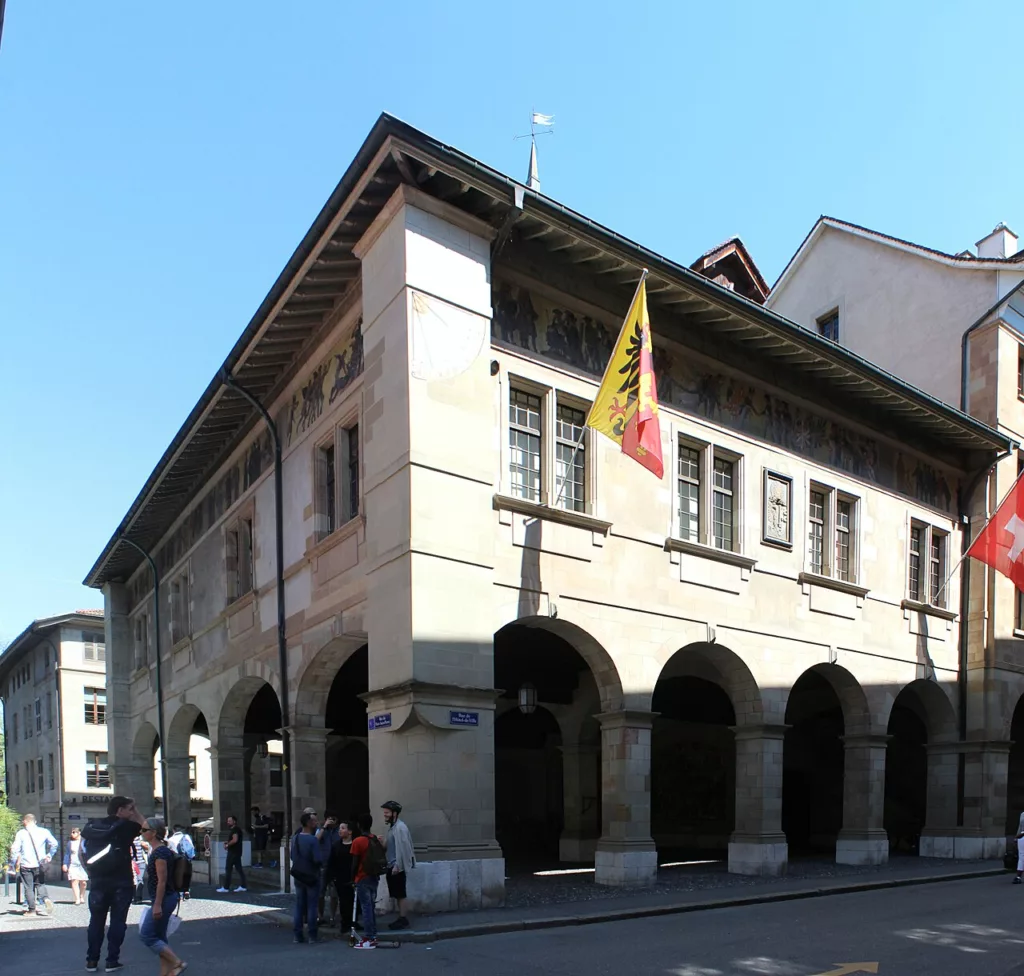
The Town Hall Market Hall, also known as the Old Arsenal, is one of the most emblematic historic buildings in Geneva’s Old Town. Originally built in 1470, it served as a covered market, granary, and storage place for goods.
Between 1626 and 1633, the building was enlarged and transformed with the construction of the arcades, upper floors, and roof that can still be admired today. From the 18th century onward, part of the building became an arsenal where the Republic of Geneva stored weapons and ammunition.
After its military function ended in 1877, the building housed a historical museum devoted in particular to ancient weapons. A major restoration was carried out at the end of the 19th century to showcase Geneva’s heritage.
Beneath the arcades are three famous mosaics by Alexandre Cingria, created in 1949, illustrating key episodes in Geneva’s history. Since 1923, the building has been linked to the State Archives of Geneva, becoming their headquarters after a complete modernization between 1969 and 1972.
Flower Clock
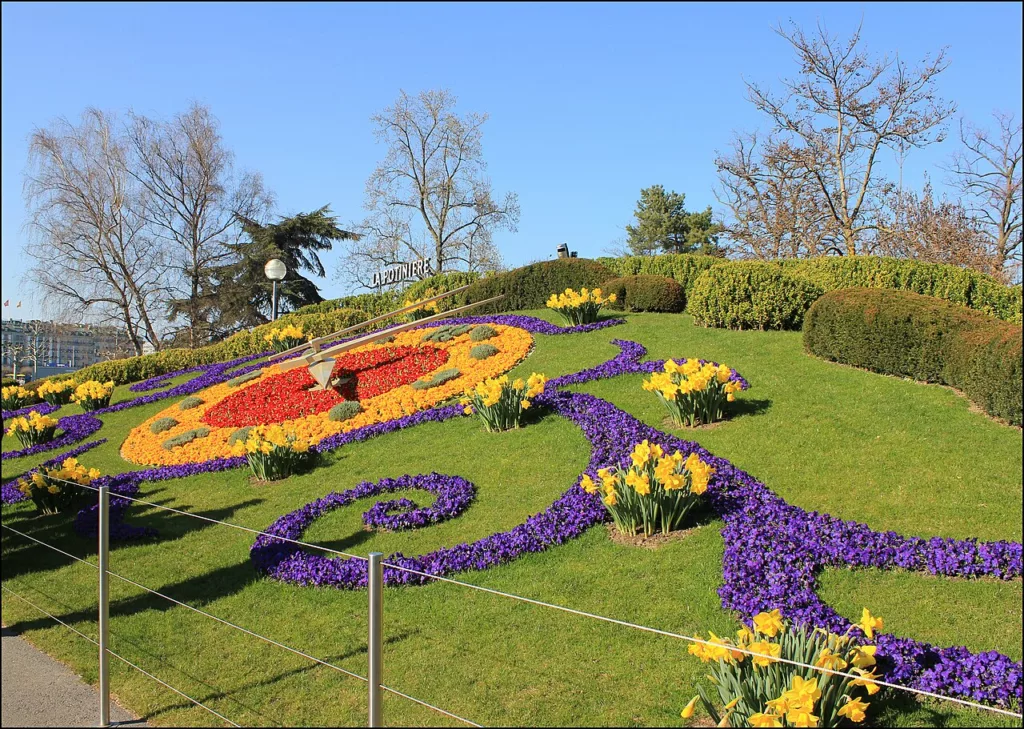
The Flower Clock was created in 1955 and pays tribute to Geneva’s watchmaking tradition and the city’s horticultural expertise.
Its dial is entirely composed of flowers and plants, renewed several times a year to offer changing patterns and colors according to the seasons. A true living work of art, it combines nature, landscape design, and watchmaking precision.
In 2002, its design was modernized to give it a more contemporary appearance while preserving its iconic character. Its second hand, measuring 2.5 meters long, is among the largest clock hands in the world.
Thanks to a satellite adjustment system, it displays the time with great precision.
Must-See Museums in Geneva
CERN Science Gateway
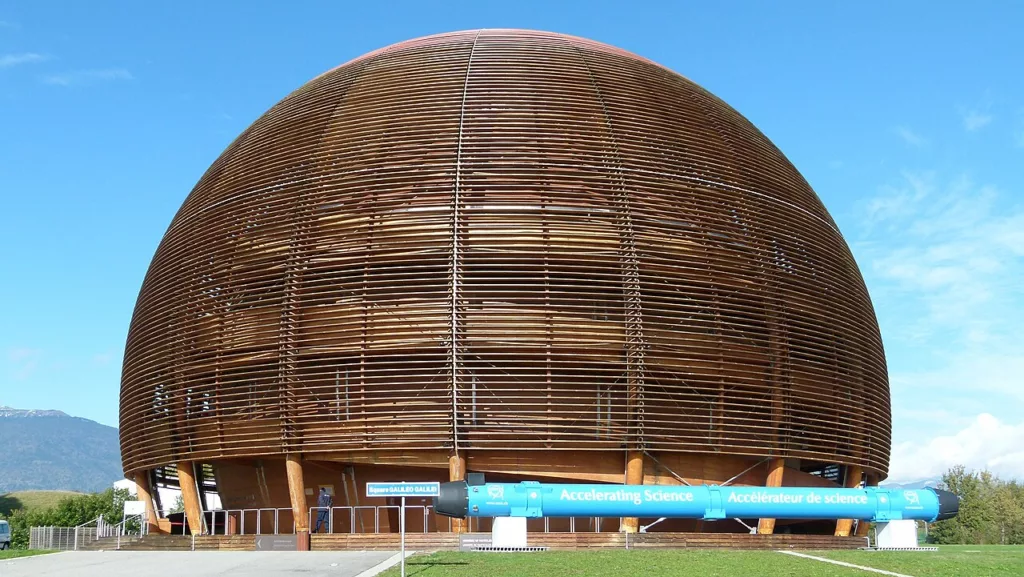
The CERN Science Gateway is the new public gateway into the fascinating world of particle physics. Inaugurated in 2023, this innovative center allows visitors to discover the major scientific questions surrounding the origin and workings of the Universe.
Located near CERN, it complements the laboratory’s research mission by making science accessible to everyone. Designed by the famous architect Renzo Piano, the building stands out for its futuristic architecture inspired by particle accelerators.
Visitors can explore themes ranging from the Big Bang to quantum physics, including antimatter and elementary particles. CERN is particularly known for the Large Hadron Collider (LHC), the world’s most powerful particle accelerator, which enabled the discovery of the Higgs boson in 2012.
It was also at CERN that the World Wide Web was born in 1989, an invention that transformed global communication. Free and open to all, the Science Gateway reflects CERN’s commitment to sharing scientific knowledge with as many people as possible.
Patek Philippe Museum
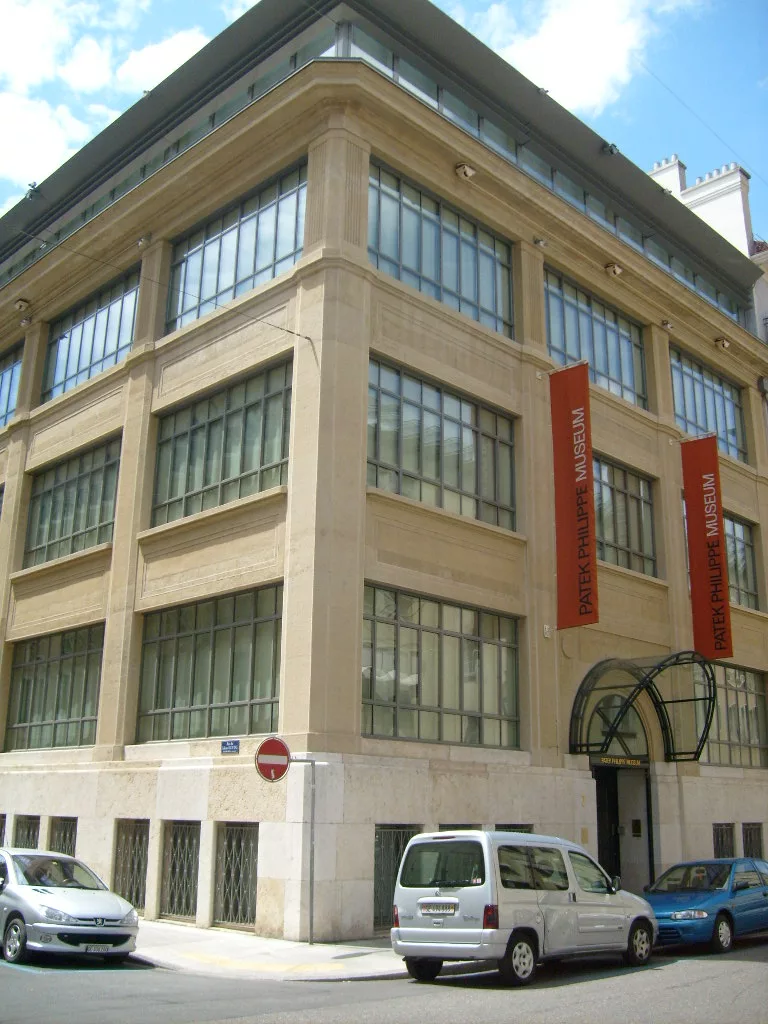
The Patek Philippe Museum is one of the world’s most prestigious watchmaking museums and a true tribute to Geneva’s craftsmanship. Founded in 1989 in Geneva, it traces more than five centuries of timekeeping history and watchmaking art.
Its collections bring together more than 2,000 exceptional pieces, ranging from the first watches of the 16th century to contemporary Patek Philippe creations. The museum preserves one of the most important collections of antique watches, automata, miniatures, and watchmaking art objects.
Visitors discover the evolution of watchmaking techniques as well as the refinement of crafts linked to enameling, engraving, and goldsmithing. An entire section is devoted to the history of Patek Philippe, the emblematic manufacture founded in 1839 and a symbol of Swiss excellence.
The automata, watches intended for the Chinese and Ottoman markets, and astonishing fantasy watches illustrate the exceptional creativity of watchmaking artisans.
Natural History Museum
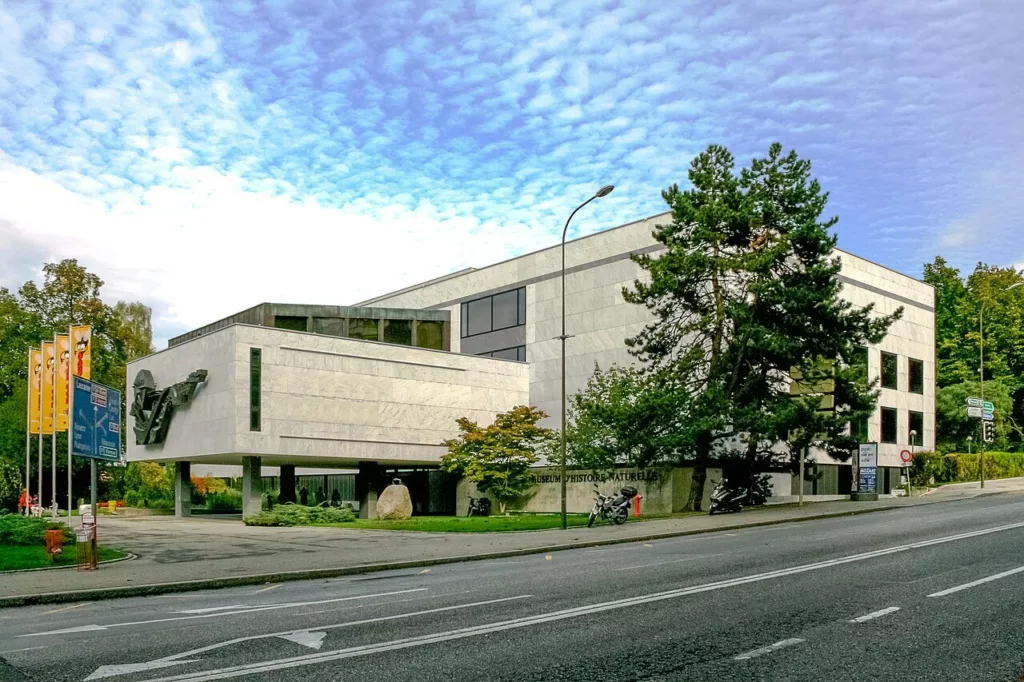
The Geneva Natural History Museum is the largest natural history museum in Switzerland and one of the country’s leading scientific centers. Founded at the end of the 18th century, it now preserves nearly 15 million specimens from the fields of zoology, paleontology, geology, and mineralogy.
Its collections represent around one third of Switzerland’s zoological, paleontological, and mineralogical heritage. Every year, the museum’s researchers describe more than sixty new species, actively contributing to global knowledge of biodiversity.
The institution is at once a museum, a scientific research center, and a major player in the conservation of natural heritage. Its permanent galleries cover nearly 8,500 m² and present local wildlife, animals from around the world, Earth sciences, and the evolution of life.
Among its treasures is the only known specimen of Baudin’s emu, a now-extinct species. The museum is also famous for Janus, a two-headed tortoise that has become the institution’s emblematic mascot. Free and accessible to all, the museum welcomes several hundred thousand visitors each year and plays an essential role in sharing scientific knowledge.
Maison Tavel
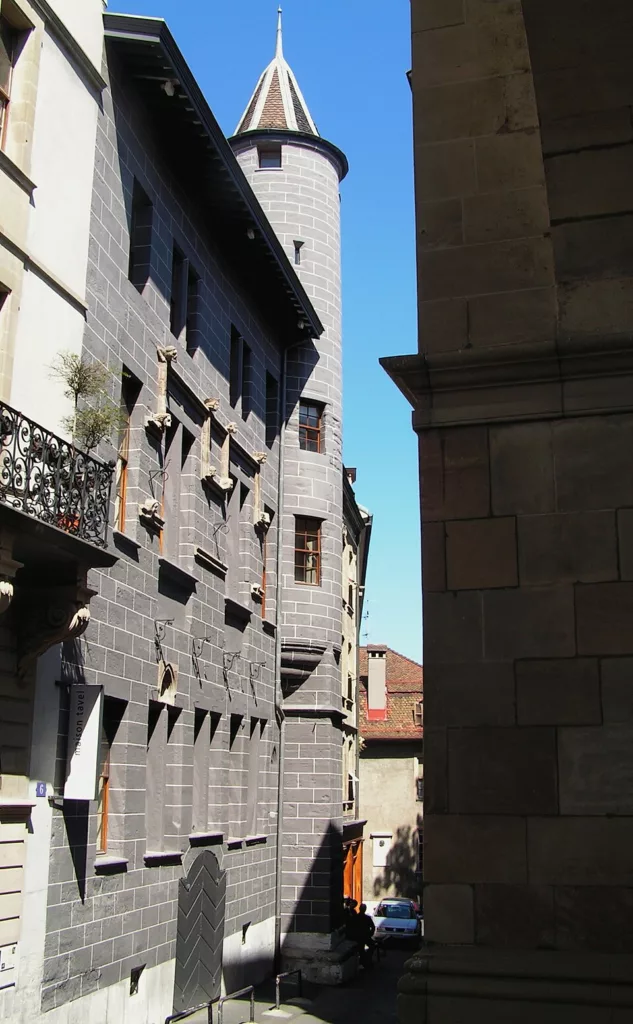
The Maison Tavel is the oldest preserved private residence in Geneva and an exceptional example of medieval civic architecture in Switzerland. Located in the heart of the Old Town, it is now a museum dedicated to Geneva’s urban history and everyday life.
Its origins date back to the 12th century, but it owes its name to the Tavel family, an important noble Genevan lineage that became its owner at the end of the 13th century. After being destroyed during the great fire of Geneva in 1334, the residence was rebuilt and transformed into a true fortified house with defensive turrets.
Maison Tavel houses the famous Relief Magnin, an impressive model representing Geneva before the demolition of its fortifications in the 19th century.
International Red Cross and Red Crescent Museum
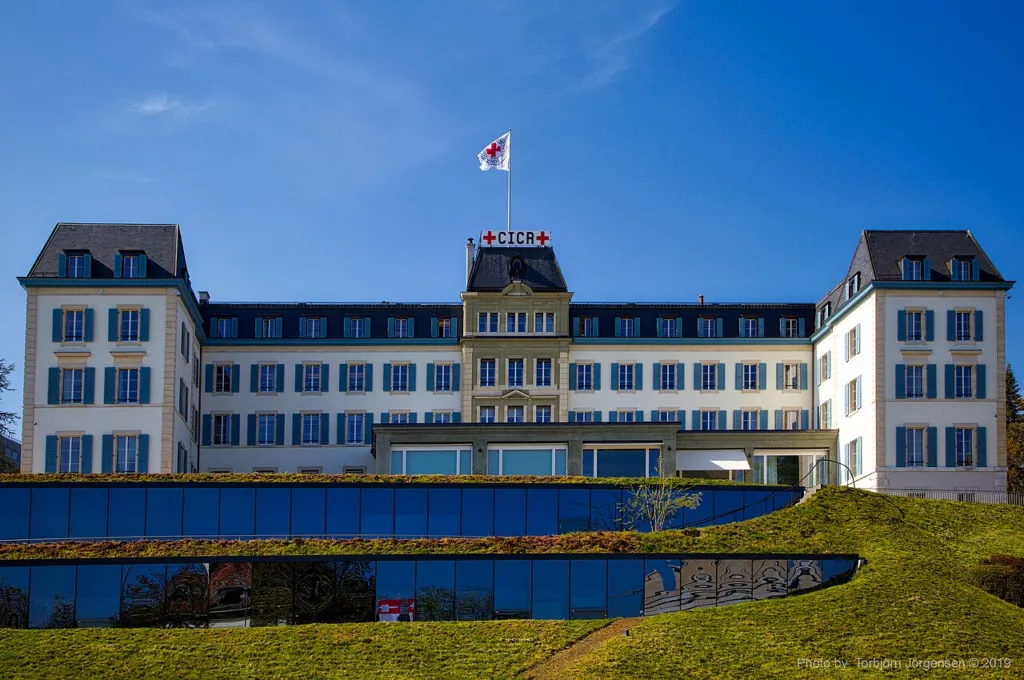
The International Red Cross and Red Crescent Museum is one of Geneva’s most emblematic places dedicated to the history and contemporary challenges of humanitarian action.
Located near the Palace of Nations, it invites visitors to reflect on an essential question: how can human dignity be preserved in the face of crises and conflicts? Its mission is to explain the history, current realities, and future challenges of humanitarian aid through an approach that is educational, artistic, and immersive.
The permanent exhibition, entitled “The Humanitarian Adventure”, explores three major challenges: defending human dignity, restoring family links, and reducing risks linked to natural disasters.
The museum places people at the center of its visitor experience through testimonies, historical objects, interactive installations, and life stories. Temporary exhibitions regularly address current themes such as migration, conflict, climate change, identity, and human rights.
Parks and Green Spaces in Geneva
Lake Geneva
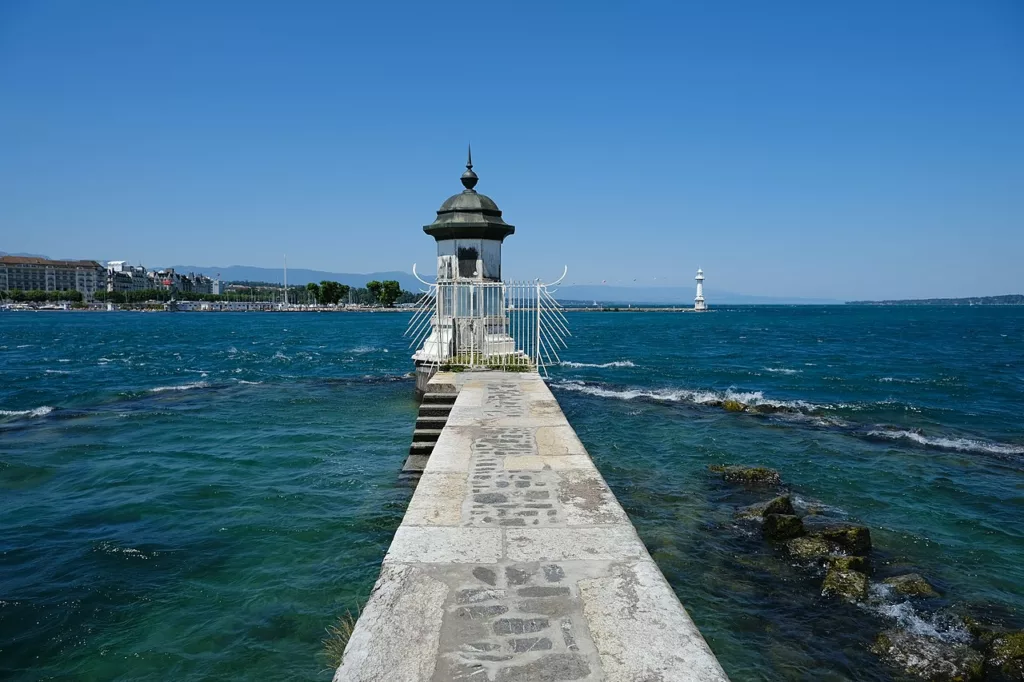
Lake Geneva is the largest Alpine lake in Western Europe. Of glacial origin, it was formed nearly 16,000 years ago during the retreat of the Rhône Glacier.
With an area of around 580 km² and a length of nearly 73 kilometers, it connects the Alpine landscapes of Valais to the urban shores of Geneva. The Rhône is both its main tributary and its only outlet, crossing the lake from east to west before continuing its course toward the Mediterranean.
Lake Geneva is shared between Switzerland and France, with its shores home to renowned towns such as Geneva, Lausanne, Montreux, Évian-les-Bains, and Thonon-les-Bains. Its vast body of water creates a microclimate that softens winters and moderates summer heat along its shores.
The lake is home to rich biodiversity, including fish, migratory birds, and internationally important protected wetlands. The famous “Lake Geneva seiches,” natural oscillations of the water surface, are a unique phenomenon that has been studied since the 19th century.
Geneva Botanical Garden
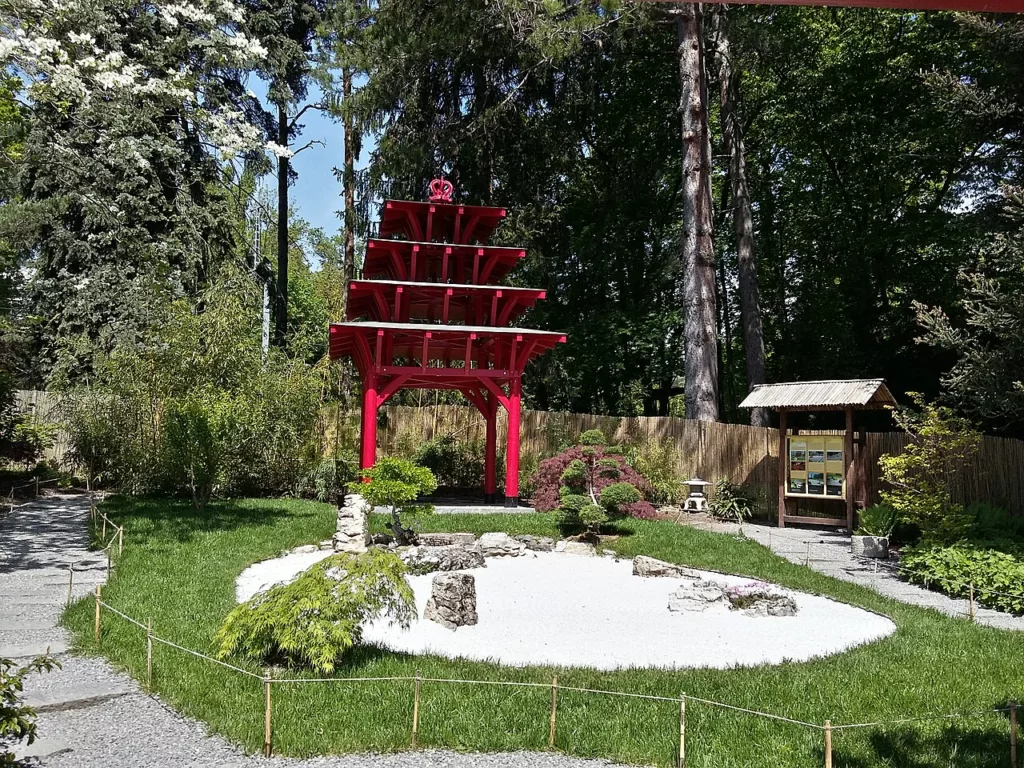
The Conservatory and Botanical Garden of Geneva is one of the most important botanical gardens in the world, with more than 200 years of scientific and botanical history.
Founded in 1817 at the initiative of botanist Augustin Pyrame de Candolle, it was created to support university teaching in natural history. The garden is home to more than 14,000 plant species from around the world, including many rare or threatened species.
Its herbarium contains more than six million botanical specimens, making Geneva an international reference center for botanical research. The collections include tropical and temperate greenhouses, an arboretum, alpine rock gardens, medicinal plants, and a garden of scents and touch.
The site covers 28 hectares near Lake Geneva and the international organizations district. Since 2017, it has been certified by Bio Suisse, becoming the first Swiss public garden managed according to strict organic standards.
The garden plays an essential role in biodiversity conservation through its programs for safeguarding, research, and reintroduction of threatened plants. Beyond its scientific mission, it offers the public exhibitions, workshops, guided tours, and relaxation areas free of charge.
Parc La Grange
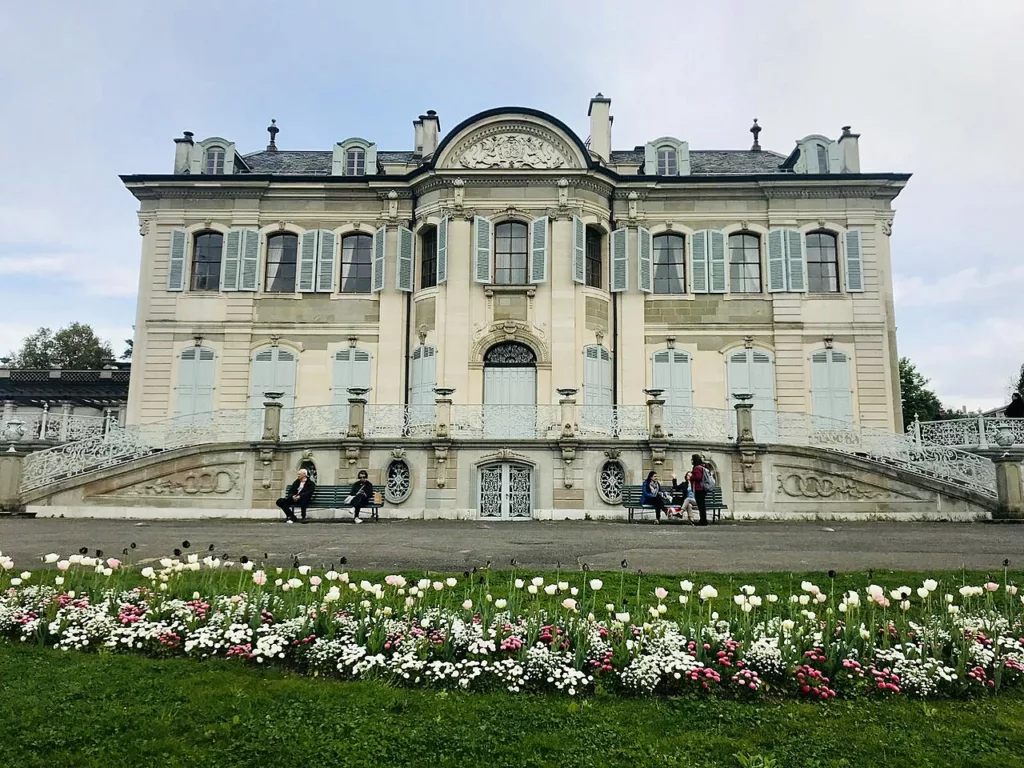
Parc La Grange is Geneva’s largest public park, with more than 21 hectares of greenery on the left bank of Lake Geneva. Its history dates back several millennia: archaeological excavations have revealed traces of human occupation dating to around 4,500 BCE, as well as the remains of a Gallo-Roman villa.
Two prehistoric menhirs are still visible in the park, recalling the exceptional age of the site. The estate was created in the 17th century before becoming the property of the Favre family, who bequeathed it to the City of Geneva in 1917 so it could be opened to the public.
The park is home to the majestic Villa La Grange, an elegant 18th-century residence surrounded by landscaped gardens and a remarkable historic library. In June 2021, the villa hosted the historic meeting between Joe Biden and Vladimir Putin.
The park has one of the most famous rose gardens in Switzerland, with hundreds of rose varieties blooming each year in a spectacular setting. Its remarkable arboretum brings together numerous tree species from around the world, including an impressive Lebanon cedar grown from seeds of the famous Genevan cedars in Parc Beaulieu.
The gardens have evolved over the centuries, from the French classical style of the 18th century to the romantic English-style landscapes admired today.
Parc des Bastions
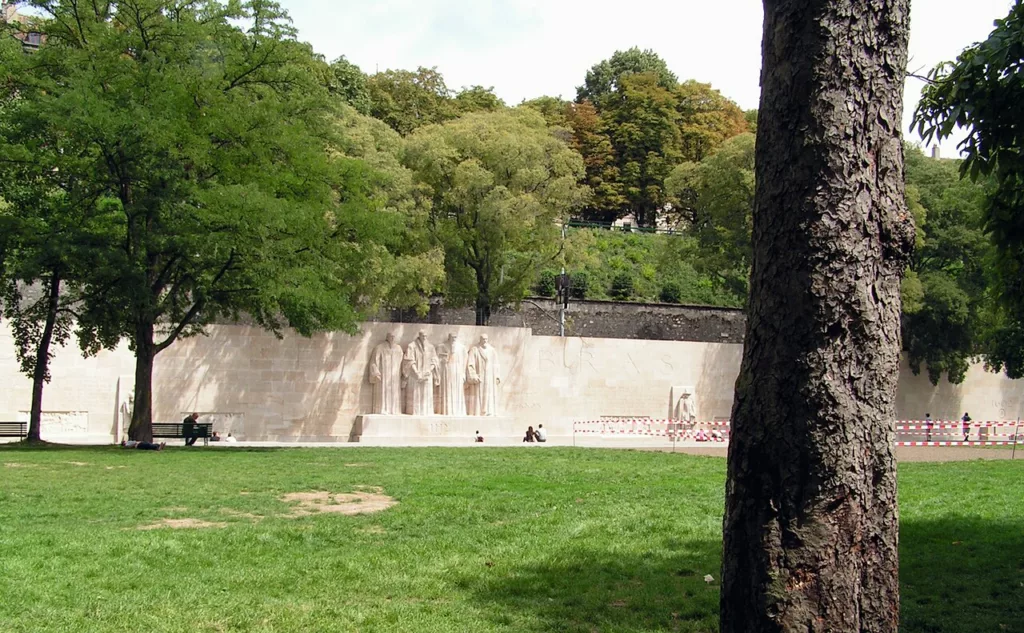
Parc des Bastions was created in the 18th century under the name “Belle Promenade,” offering residents a relaxing space protected within the city walls.
In 1817, botanist Augustin Pyrame de Candolle founded Geneva’s first Botanical Garden there, making the park an important center of Genevan science. The park is home to the famous International Monument to the Reformation, also known as the Reformation Wall, which pays tribute to the great figures of Protestantism.
The oldest buildings of the University of Geneva border the park and contribute to its intellectual and student atmosphere. The majestic Palais Eynard, now the seat of Geneva’s Administrative Council, is also located very nearby.
The park’s famous giant chessboards attract chess enthusiasts and passionate players all year round for outdoor matches.
The park hosts many popular events, including the Fête de la Musique, Swiss National Day celebrations on August 1, and the start of the famous Escalade Race. A dendrological trail allows visitors to discover remarkable trees from different regions of the world.
Geneva’s Gastronomy and Specialties
Moitié-Moitié Fondue
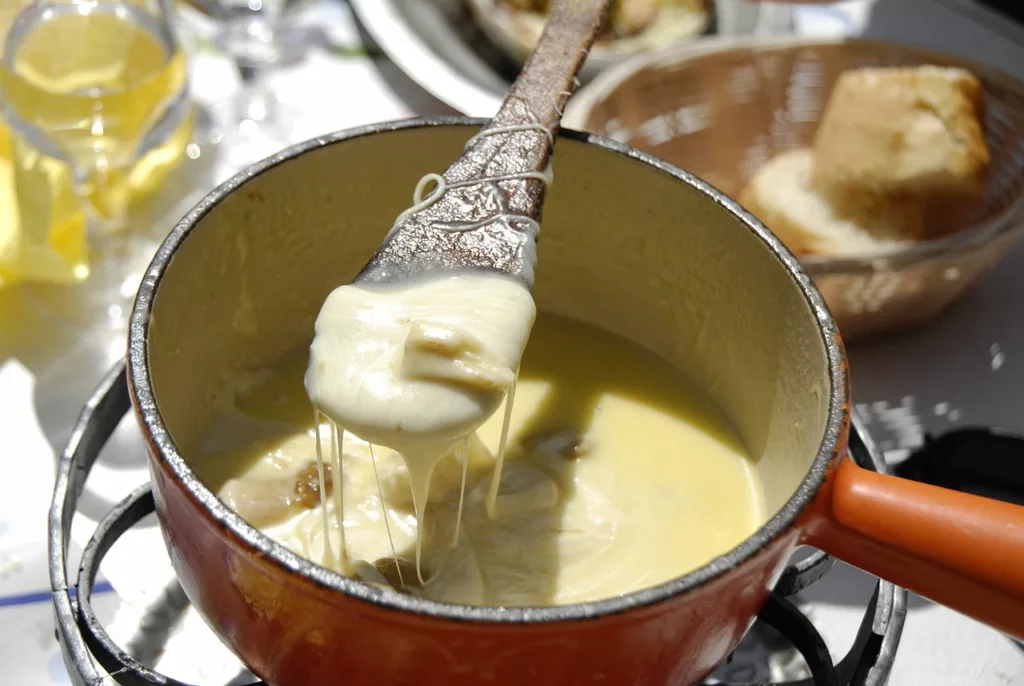
Moitié-moitié fondue is one of Switzerland’s most iconic specialties; it is prepared with 50% Gruyère AOP and 50% Vacherin Fribourgeois AOP, melted in white wine.
Originating in the 19th century in the canton of Fribourg, it is now considered the traditional Swiss fondue par excellence. Its name comes from the perfect balance between the two cheeses: Gruyère adds character, while Vacherin gives it a particularly creamy texture.
In Geneva, it is often enjoyed in winter in a convivial atmosphere, accompanied by bread, potatoes, and a glass of Chasselas.
Rösti
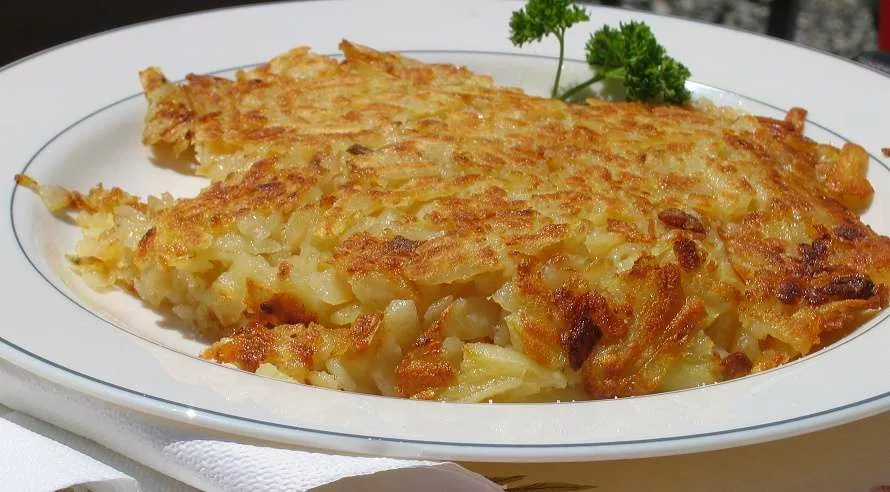
Rösti is a golden potato pancake originating from German-speaking Switzerland and now enjoyed throughout the country. Originally, it was the breakfast of Bernese farmers before becoming a staple of Swiss cuisine.
Its name derives from the German verb “rösten,” meaning to roast or grill. In Geneva, rösti frequently accompanies meats, sausages, or cheese dishes, and symbolizes the connection between the country’s different regions.
Grisons Meat

Grisons meat is a specialty of the canton of Graubünden made from salted beef, seasoned and then air-dried in the mountain air.
Its origins go back several centuries, when Alpine inhabitants sought ways to preserve meat during the winter. It is generally served in very thin slices as an appetizer or on Swiss specialty platters.
Lake Perch Fillets
Lake perch fillets are one of the most representative dishes of the Lake Geneva region. They are prepared from perch caught in Lake Geneva when local catches allow.
Traditionally served meunière-style, with beurre blanc, or with tartar sauce, they are accompanied by fries and salad.
Excursions from Geneva
Annecy – “The Venice of the Alps”
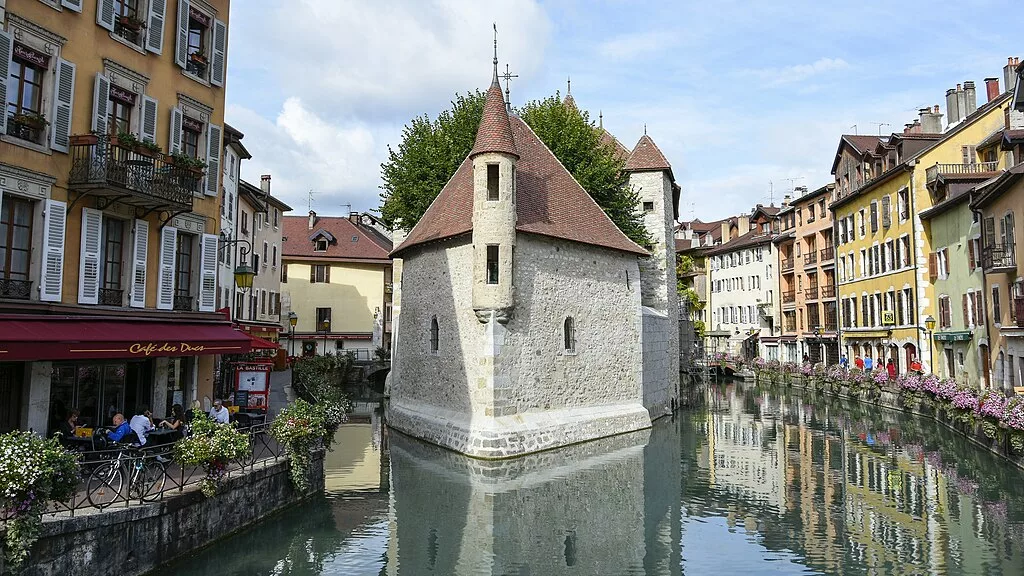
Located only 40 km from Geneva, Annecy is one of the region’s most popular excursions thanks to its lake and medieval historic center.
The city is nicknamed “the Venice of the Alps” because of the canals that run through the old town and its magnificent turquoise lake. Its historic center charms visitors with cobbled streets, colorful façades, and numerous flower-covered bridges.
The famous Palais de l’Île, built in the middle of a canal, has become one of Annecy’s most photographed symbols. Between lake and mountains, Annecy offers an exceptional natural setting ideal for walks, cycling, and water activities.
Lake Annecy is renowned for the purity of its waters and ranks among the most beautiful Alpine lakes in Europe. Annecy Castle, the former residence of the Counts of Geneva, overlooks the city and offers a remarkable panorama over the rooftops and the lake.
Montreux & Chillon Castle
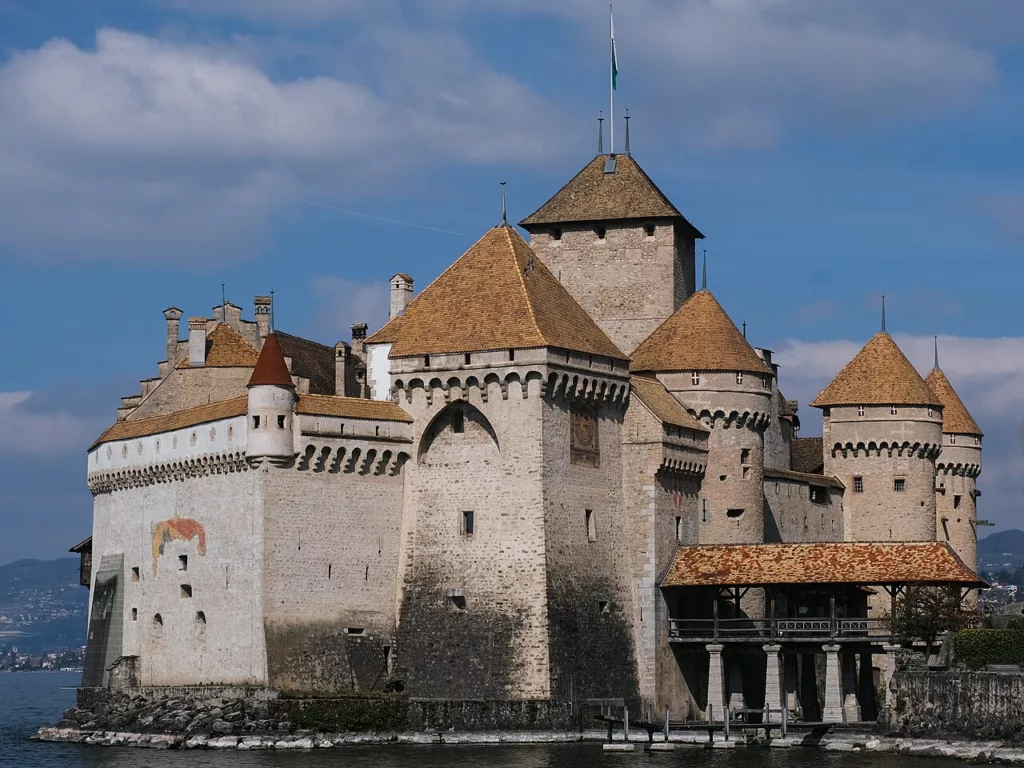
Montreux is an elegant resort town located on the shores of Lake Geneva, famous for its flower-lined promenade and particularly mild climate. The city is known worldwide thanks to the Montreux Jazz Festival, which welcomes the world’s greatest international artists every year.
Just a few kilometers from the city center stands the spectacular Chillon Castle, the most visited historic monument in Switzerland. Built on a rocky islet along the shores of Lake Geneva, the castle has occupied a strategic position for nearly a thousand years.
The castle belonged to the Counts of Savoy before passing under Bernese and later Vaudois rule. Writer Lord Byron contributed to its worldwide fame through his poem The Prisoner of Chillon.
Gruyères
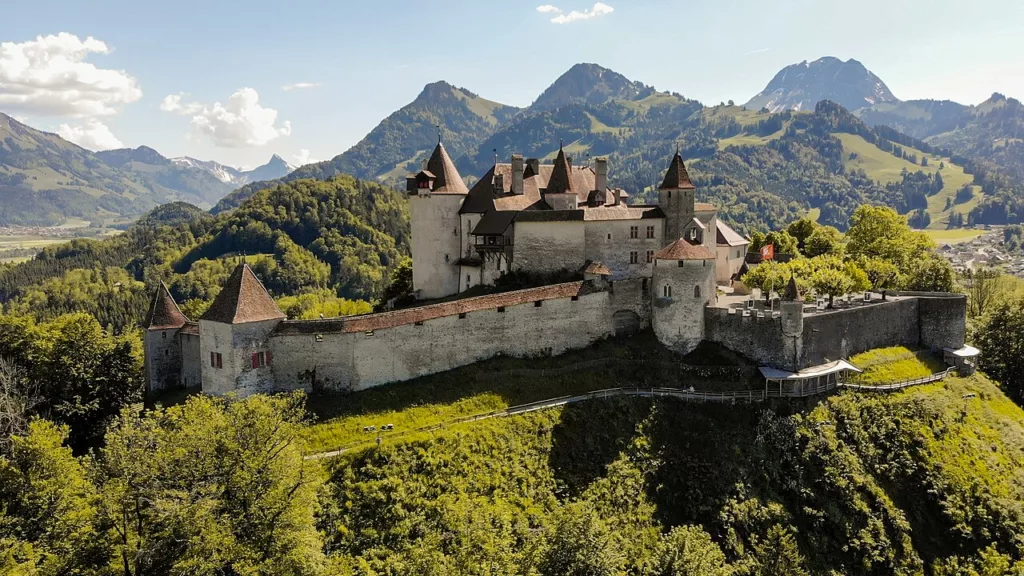
Nestled in the heart of the canton of Fribourg, Gruyères is one of Switzerland’s most beautiful medieval villages, renowned for its heritage and gastronomy. Dominated by the majestic Gruyères Castle, the village offers a journey through more than eight centuries of Swiss history.
Gruyères is the birthplace of the famous Gruyère AOP, one of the world’s most renowned cheeses. The Maison du Gruyère allows visitors to observe the traditional cheesemaking process and discover its history.
The cobbled streets, flower-filled houses, and absence of car traffic contribute to the village’s authentic charm. Gruyères is also home to the surprising HR Giger Museum, dedicated to the Swiss artist who created the universe of the film Alien.
Chamonix-Mont-Blanc
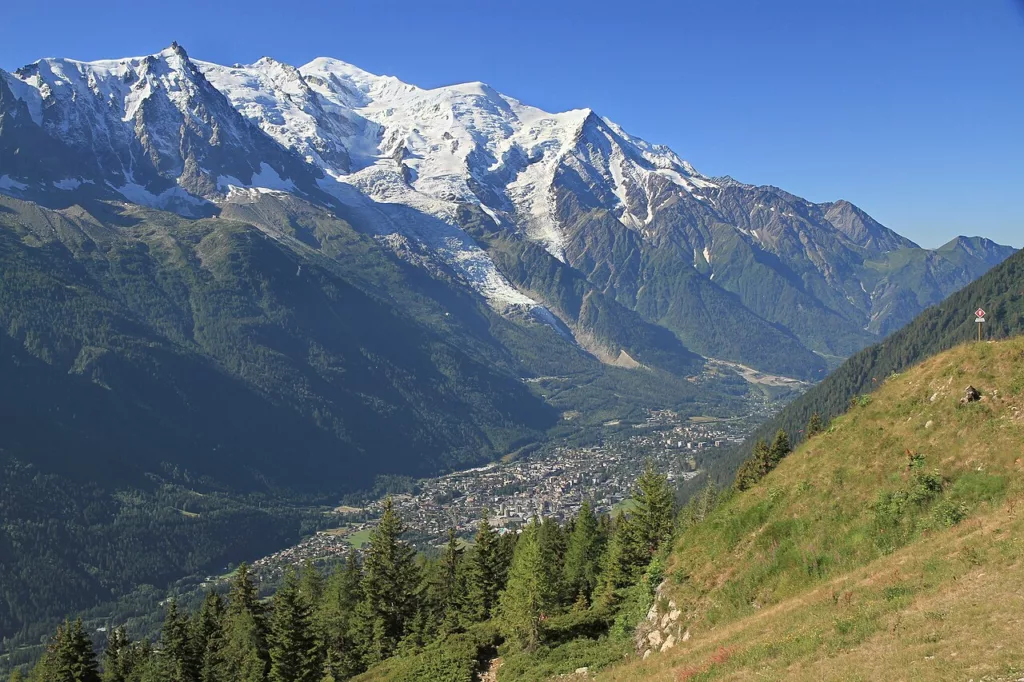
Located at the foot of Mont Blanc, Chamonix-Mont-Blanc is considered the world capital of mountaineering. Mont Blanc, rising to 4,805 meters, is the highest peak in Western Europe and attracts thousands of visitors and climbers every year.
The famous Aiguille du Midi Cable Car provides access in just a few minutes to an altitude of more than 3,800 meters and offers exceptional views of the Alps. From Aiguille du Midi, the attraction known as “Step into the Void” allows visitors to admire the mountain range from a glass box suspended above the abyss.
The picturesque Montenvers Railway takes visitors to the famous Mer de Glace, France’s largest glacier. Chamonix hosted the first Winter Olympic Games in 1924, marking a major milestone in the history of mountain sports.
The valley offers activities year-round: hiking, skiing, paragliding, climbing, or simply enjoying walks with spectacular glacier views.
Conclusion
Visiting Geneva means discovering a destination that harmoniously combines historic heritage, international culture, preserved nature, and the Swiss art of living. From the narrow streets of the Old Town to the shores of Lake Geneva, passing through its museums, iconic monuments, and magnificent parks, every visit reveals a different side of the city.
Its privileged location also makes it easy to enjoy excursions to the Alps, medieval villages, and some of the most beautiful landscapes in the region. Whether you are passionate about history, a lover of gastronomy, a nature enthusiast, or simply seeking an escape, visiting Geneva promises a rich experience filled with discoveries and unforgettable memories.
Similar Posts
Visiting Nantes: 30 must-see and must-do experiences
Visiting Nantes means discovering a dynamic city rich in history, located on the banks of the Loire. The capital of…
The 11 Most Popular Museums in Lille
Discover the best museums in Lille, true cultural treasures that tell the story of history, art, and science in the…
Visiting Berlin: 30 Must-See Attractions and Things to Do
Berlin, the capital of Germany, is a city where history blends with modernity and where each district tells a page…
Visiting Angers: 30 Must-See Things to Do and See
Visiting Angers means diving into the heart of the history and culture of Anjou. The city is famous for its…
Unusual Activities in Marseille: 7 Must-Try Experiences
Looking for unusual activities in Marseille to get off the beaten path and enjoy memorable experiences? Whether you’re with family,…
Visiting Montpellier: 30 Must-Do and Must-See Things
Visiting Montpellier means diving into the heart of a city in southern France where history, culture, and modernity meet. As…