Guide to Paris’ 20 Districts
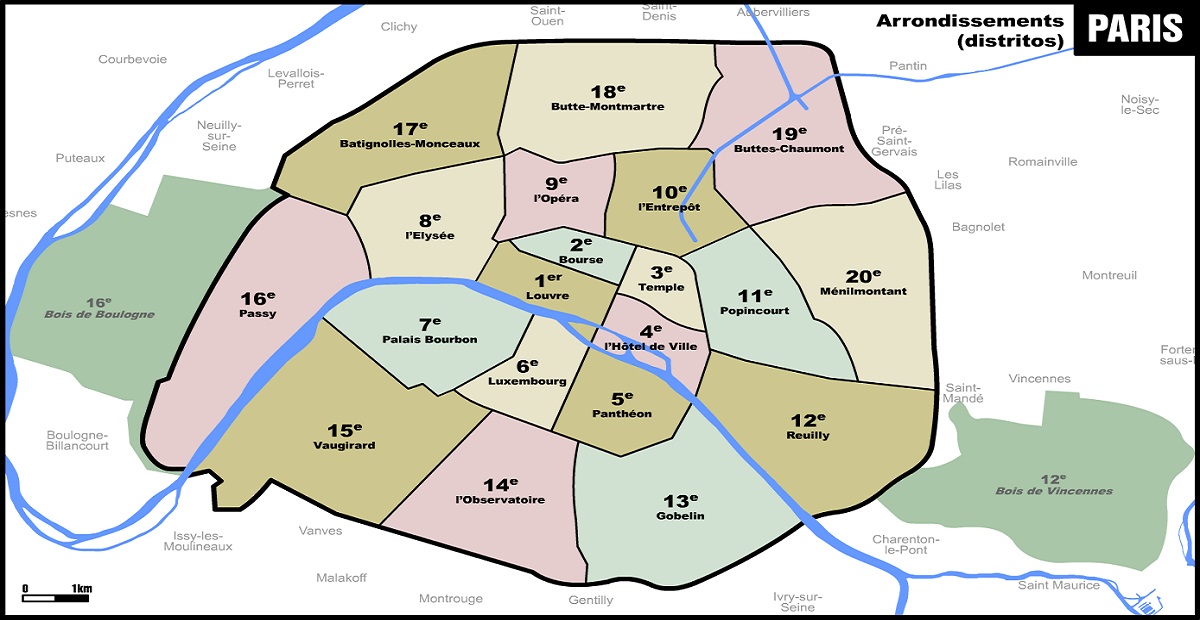
Below you will find the ratings of the 20 Parisian arrondissements across several areas: quality of life, culture, transport, shops, environment, and safety.
The aggregated ratings come from reviews written by Parisians on the VilleIdeale website.
Green ratings are excellent, above 7.5 / 10.
Red ratings are insufficient, below 5 / 10.
| Arrondissement | Quality of life | Culture | Transport | Shops | Environment | Safety |
|---|---|---|---|---|---|---|
| Paris 1 | 6.5 | 8.7 | 9.3 | 8.3 | 4.4 | 5.6 |
| Paris 2 | 5.63 | 7.81 | 8 | 8.19 | 3 | 5.88 |
| Paris 3 | 8.06 | 9.25 | 8 | 9.31 | 6.25 | 8.63 |
| Paris 4 | 6.44 | 7.94 | 8.44 | 7.31 | 7.5 | 7.88 |
| Paris 5 | 8.29 | 8.33 | 8.5 | 8.17 | 8.67 | 8.21 |
| Paris 6 | 7.29 | 8.14 | 8.79 | 7.93 | 8.43 | 7.57 |
| Paris 7 | 7.08 | 7.38 | 8 | 6.62 | 6.77 | 7.92 |
| Paris 8 | 7.6 | 7 | 8.9 | 7.4 | 7.1 | 7.1 |
| Paris 9 | 7.96 | 8.83 | 9.13 | 8.96 | 5.7 | 6.35 |
| Paris 10 | 4.37 | 6.01 | 7.79 | 6.31 | 2.87 | 3.51 |
| Paris 11 | 6.58 | 6.61 | 8.1 | 7.64 | 5.01 | 5.7 |
| Paris 12 | 7.55 | 6.82 | 8.44 | 7.82 | 6.81 | 6.67 |
| Paris 13 | 6.5 | 6.88 | 8.38 | 7.91 | 5.58 | 5.42 |
| Paris 14 | 5.81 | 6.4 | 7.27 | 7.52 | 5.77 | 5.16 |
| Paris 15 | 7.2 | 6.37 | 8.14 | 8.17 | 5.9 | 6.88 |
| Paris 16 | 7.54 | 6.69 | 7.22 | 7 | 7.28 | 7.81 |
| Paris 17 | 7.41 | 6.78 | 7.24 | 7.54 | 6.17 | 6.81 |
| Paris 18 | 4.84 | 6.04 | 7.12 | 6.74 | 3.52 | 3.97 |
| Paris 19 | 5.95 | 5.95 | 7.35 | 6.56 | 5.42 | 4.58 |
| Paris 20 | 5.62 | 6.21 | 7.4 | 6.95 | 4.44 | 4.83 |
The results of this study
Regarding quality of life, it is generally good in Paris. Parisians appreciate their city and their quality of life. It is excellent in the upscale arrondissements of the capital. Central arrondissements (notably the 3rd, 5th, 8th, and 9th) and those near large green spaces (12th and 16th) score particularly well.
On the other hand, in the northern arrondissements, it could be improved, especially in the 10th and 18th arrondissements of Paris.
In terms of culture, all Parisian arrondissements are very well supplied, as the lowest rating is 5.95 for the 19th arrondissement of Paris. Central arrondissements are the best endowed in this area, with excellent scores for the 1st, 2nd, 3rd, 4th, 5th, 6th, and 9th arrondissements of the capital.
You can explore Paris neighborhoods in a different way thanks to our scavenger hunts, a mix between an escape game and a cultural visit.
Public transport is the area in which the city of Paris excels. Its lowest-rated arrondissement, the 18th, still scores 7.12 out of 10.
Metro lines and RER trains are numerous and serve all the capital’s arrondissements very efficiently.
Shops are also a major strength of the city of Paris, with the lowest rating being 6.56 for the 19th arrondissement. They are diverse and present everywhere. Whatever you are looking for, there will be a shop in Paris that meets your needs.
The environment is the area in which the city of Paris needs the most improvement. There is a lack of green spaces despite the many parks and gardens, streets are somewhat too dirty due to incivility as well as tourists, and the city is too polluted. The most affected arrondissements are the 1st, 2nd, 10th, 11th, 18th, and 20th (all on the Right Bank). Arrondissements with very good ratings in this area are the 4th, 5th, and 6th arrondissements of Paris.
Safety is also an area that the city of Paris must improve. Unfortunately, the most cosmopolitan arrondissements are the most affected by this issue. These arrondissements are located in northern Paris (10th, 18th, 19th, and 20th). On the other hand, safety is excellent in the most upscale arrondissements, notably the 3rd, 4th, 5th, 6th, 7th, and 16th.
1st arrondissement of Paris: Les Halles
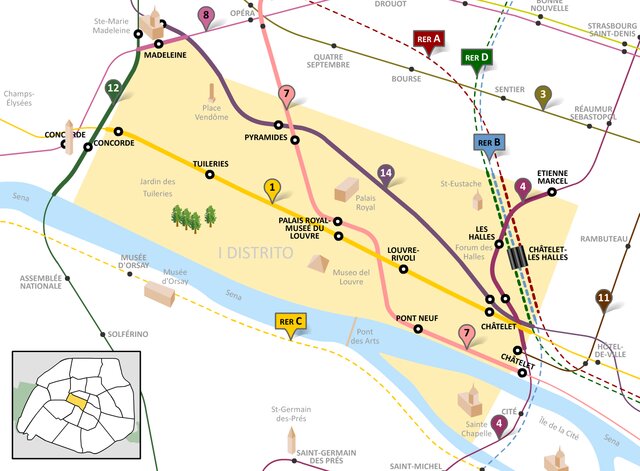
Quality of life: 6.5 – heritage and central location
The 1st arrondissement is an open-air museum, with an abundance of cultural venues and museums. It is the most central arrondissement of Paris, with a huge number of shops.
Culture 8.7 – an open-air museum
Museums are plentiful in this highly cultural district of Paris. Notably, you’ll find the Louvre, the most famous museum in the world, which attracts millions of visitors every year (9.6 million in 2019), as well as the MAD – Museum of Decorative Arts and the Orangerie Museum.
Monuments are everywhere in this arrondissement: the Conciergerie, Saint-Jacques Tower, Sainte-Chapelle, the Vendôme Column, the Fountain of the Innocents, the Arc de Triomphe du Carrousel, the Palais-Royal, and the courthouse.
Transport 9.3 – central
This arrondissement is the best served in Paris in terms of transport.
Châtelet is the most famous central metro station in Paris.
Metro lines: 1, 4, 7, 8, 11, 14
RER lines: A, B, and D
Shops 8.3 – diverse
Shops are everywhere and very diverse in this district.
They are very luxurious and elegant around the Vendôme Column and along Rue Saint-Honoré.
Shops are very tourist-oriented along Rue de Rivoli.
Forum des Halles, located at Châtelet station, is a huge mainstream shopping mall. It is the most visited shopping center in France, with 50 million visitors in 2019. It brings together all major brands and hosts numerous events.
There is also the Carrousel du Louvre, an underground shopping center located near the Louvre. This venue features many small luxury boutiques, restaurants, and several shops selling trendy made-in-France fashion products.
Restaurants are varied and cater to all budgets. One of the strengths of this shopping center is the regular organization of cultural exhibitions.
The Vendôme Column appears in our Napoleon history scavenger hunt, a mix between an escape game and a cultural visit.
Environment 4.4
There is little green space in this district. However, it includes one of the most beautiful gardens in Paris: the Tuileries, with its magnificent statues.
This low rating in this area is linked to cleanliness issues on certain streets.
2nd arrondissement of Paris: Bourse
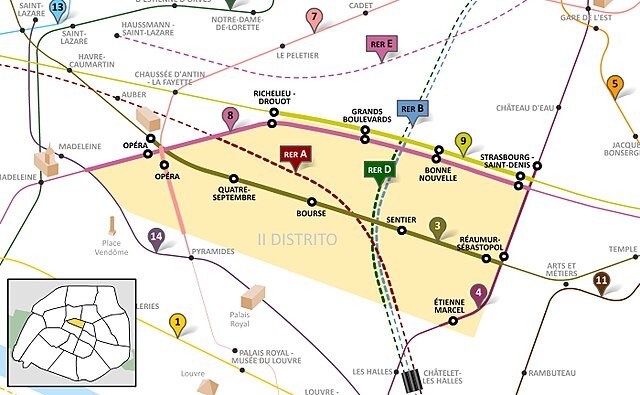
Quality of life 5.63
Like the 1st arrondissement, it is an urban hub for transport and shopping.
It is named Bourse because it is built around the Paris Stock Exchange, also called the Palais Brongniart.
Culture 7.81
In the 2nd, the small must-see museum is the “Department of Coins, Medals and Antiques of the National Library of France.”
Monuments to see in this arrondissement include the medieval Jean-sans-Peur Tower and the Palais Brongniart, better known as the Bourse, as well as Paris’s most famous cinema, “Le Grand Rex.”
This arrondissement is home to some of the most beautiful covered passages in Paris, such as Galerie Vivienne and Passage des Panoramas. These are places from another era, which you can—and really should—explore through our scavenger hunt to discover their fascinating history.
Transport 8
In this central arrondissement of Paris, public transport is everywhere.
Metro lines: 3, 4, 7, 8, 9
RER line: A
Shops 8.19
Shops are a major strength of this arrondissement, with Rue Montorgueil and the Grands Boulevards being key areas.
Unusual and diverse shops are also present in the covered passages. Restaurants are everywhere and cater to all tastes.
Environment 3
There is little green space in the 2nd arrondissement. Only the small Square Louvois with its charming fountain is available.
The low rating in this area is linked to the cleanliness of certain streets.
3rd arrondissement of Paris: Temple
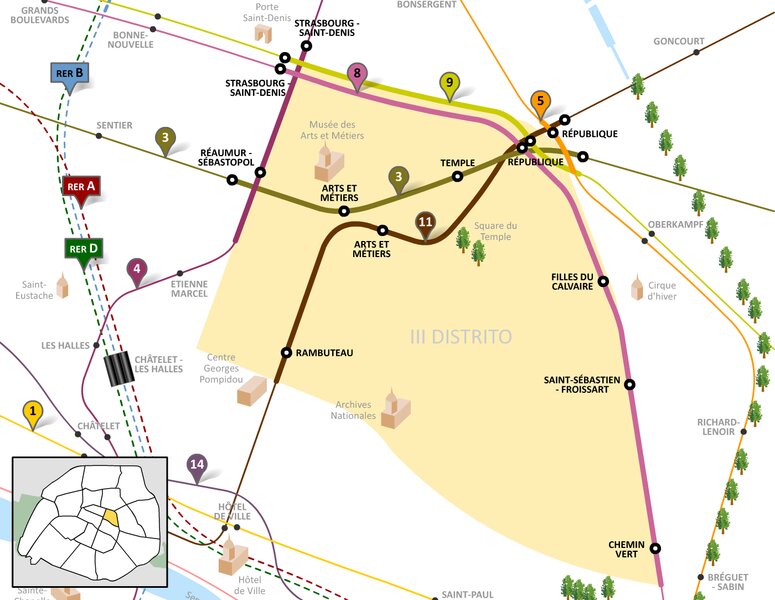
Quality of life 8.06
The 3rd arrondissement is very lively, with shops every 100 meters. It is mainly inhabited by young professionals and foreigners.
Culture 9.25
Museums are abundant in this arrondissement.
You can visit the National Archives Museum, the Carnavalet Museum on the history of Paris, the National Picasso Museum, the Museum of Arts and Crafts, and the Museum of Art and History of Judaism.
There are no unmissable monuments in this arrondissement, but many private mansions are worth seeing, notably the Hôtel de Soubise.
This neighborhood is part of the Marais (3rd and 4th arrondissements), a must-see stop when visiting Paris.
Transport 8
Many metro lines pass through the 3rd arrondissement thanks notably to Place de la République.
Metro lines: 3, 4, 5, 8, 9, 11.
Shops 9.31
There are many small artisan shops and very nice places to shop. However, due to its popularity, prices increase, and small shops are gradually replaced by large retail chains.
A personal favorite is the covered market of Les Enfants-Rouges, a spot not to miss if you are in the area.
Environment 6.25
There are no large green spaces in this arrondissement, but several small, quiet squares shielded from the crowd are worth visiting, notably the hidden garden of the National Archives.
4th arrondissement of Paris: Hôtel-de-Ville
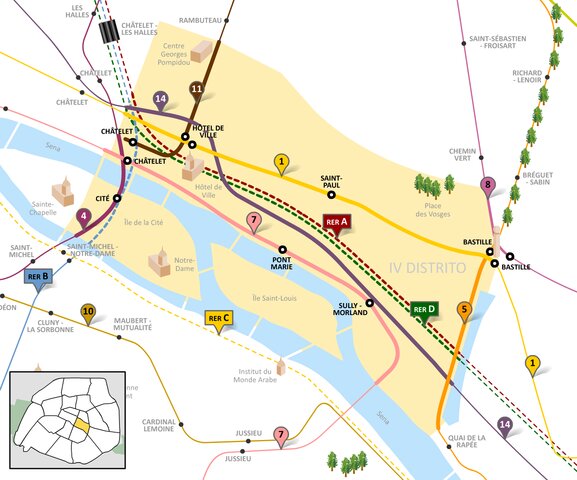
Quality of life 6.44
The 4th and 3rd arrondissements are part of what is commonly called the Marais.
The Marais is known for its gay district (Rue Sainte-Croix-de-la-Bretonnerie) and its Jewish quarter (near Rue des Rosiers).
It is a very popular area with young affluent couples and tourists.
Culture 7.94
The 4th arrondissement of Paris is very rich culturally, notably with the modern art museum Georges Pompidou.
There are also small museums worth visiting, such as the Museum of Magic, the Shoah Memorial Museum, and the Victor Hugo House.
There are many monuments in this historic district; the must-sees are:
– Notre-Dame Cathedral, the most visited monument in Paris before the fire
– The City Hall, an architectural gem with its magnificent statues
– Hôtel de Sully, the largest and most beautiful private mansion in the Marais
If you have time, take a short stroll in the splendid Saint-Merri Church.
The Marais district (3rd and 4th arrondissements) is a must-see during a stay in Paris.
Discover the Marais’s gems with our scavenger hunt on the history of this arrondissement, a mix between an escape game and a cultural tour.
Transport 8.44
Transport options are plentiful with the proximity of Place de la Bastille and Châtelet; these two Parisian metro hubs are located at the two ends of the 4th arrondissement.
Metro lines: 1, 4, 5, 7, 8, 11, 14
RER lines: A, B, D
Shops 7.31
This arrondissement has plenty of charming small boutiques. For shopping, go to Rue des Francs-Bourgeois or Rue des Rosiers, which will charm you with its Jewish shops and falafel restaurants.
For luxury shopping, the magnificent BHV department store is a must-visit for shopaholics, housing numerous luxury brands.
However, in this district, small shops are gradually being replaced by luxury boutiques. There is also a notable lack of grocery stores and markets in certain areas.
Environment 7.5
There are a few small green spaces in this district, notably the beautiful Place des Vosges, which is a must-see, Square Jean XXIII next to Notre-Dame Cathedral, as well as the magnificent Seine quays, perfect for walking or sports away from traffic.
5th arrondissement of Paris: Panthéon
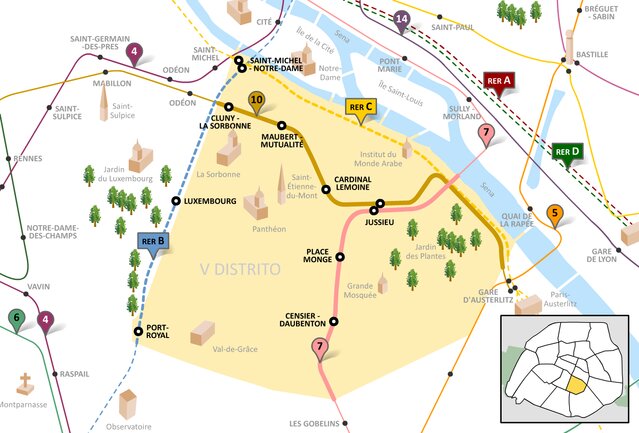
Quality of life 8.29
It is a student district, with many universities, including the Sorbonne.
Its name comes from students who communicated in Latin, as education was conducted in this language at the time.
According to collected reviews, it is the Paris arrondissement with the best quality of life.
Culture 8.33
The architecture of the 5th arrondissement takes us back to old Paris, the Paris we love.
The 5th arrondissement is full of museums, notably the Natural History Museum, the Cluny Museum on the Middle Ages, and the Arab World Institute.
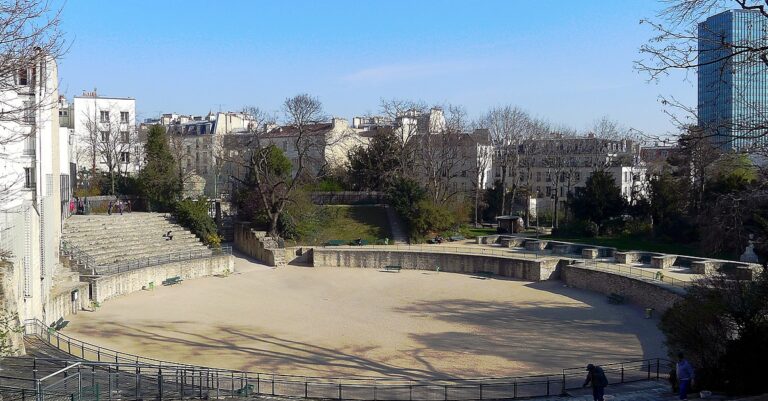
Monuments to visit in this district include the Arènes de Lutèce, the finest remnant of Ancient Paris, the Sorbonne, a millennia-old school, the Panthéon where France’s greatest celebrities rest, the Grand Mosque of Paris, and the Collège des Bernardins, a magnificent medieval relic.
Discover the history of the Latin Quarter with our scavenger hunt “The Latin Quarter, cradle of knowledge and free spirits.”
Transport 8.5
This arrondissement is well served by public transport; you will never be far from a metro station.
Metro lines: 4, 5, 7, 10
RER line: C
Shops 8.17
Shops are abundant for daily life; there are many restaurants, cafés, bookstores, and convenience stores. However, there are no particularly exciting shops; for luxury shopping, another district is preferred.
Environment 8.67
There are several small squares in this student district, and especially the magnificent Jardin des Plantes, which is enchanting.
6th arrondissement of Paris: Luxembourg
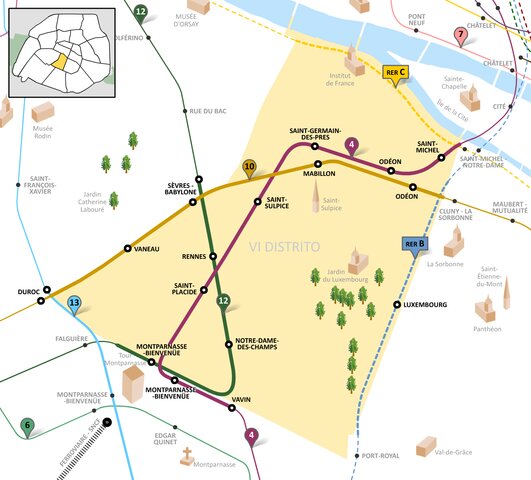
Quality of life 7.29: affluent and intellectual
It is a pleasant arrondissement to live in, known for its famous literary cafés such as Café de Flore and Les Deux Magots, luxury boutiques, and rich heritage.
It is a residential area for very wealthy families.
I invite you to discover the magnificent Saint-Germain-des-Prés district via our app.
Culture 8.14
Beautiful old Paris architecture (notably in the Saint-Germain and Odéon areas).
There are many museums worth visiting in this arrondissement: Monnaie de Paris, Luxembourg Museum, and smaller ones like the Museum of the History of Medicine and the Eugène Delacroix Museum.
Monuments not to miss in the 6th arrondissement include the Luxembourg Palace, now the French Senate, the Institut de France, the most beautiful fountains in Paris: the Medici Fountain and the Saint-Michel Fountain, the oldest bridge in Paris: Pont Neuf, Saint-Sulpice Church (from DA VINCI CODE), Place Furstenberg, the most romantic square in Paris, and also the iconic literary cafés such as Café de Flore.
Transport 8.79
Transport options are plentiful in this arrondissement, which is located right next to Montparnasse Station.
Metro lines: 4, 6, 10, 12, 13
RER lines: B and C
Shops 7.93
In this arrondissement, there are many shops, including bookstores, bars, and famous cafés such as Café des Deux Magots.
Cour du Commerce-Saint-André is a must-visit street; it is home to one of the oldest cafés in Paris: Le Procope.
There is also the splendid Saint-Germain Market, a beautiful place that still maintains a friendly atmosphere with a cheesemonger, butcher, greengrocers, and fishmonger.
This location also hosts well-known stores like Apple. Rue de Rennes is the main shopping street of the 6th arrondissement of Paris.
This street is very popular, especially with tourists.
It is filled with mostly high-end boutiques selling ready-to-wear, jewelry, antiques, etc.
Environment 8.43
In the south of the 6th arrondissement, you will find the Luxembourg Gardens, a magnificent Parisian park that delights both young and old with its recreational and sporting activities as well as its rich heritage.
7th arrondissement of Paris: Palais-Bourbon
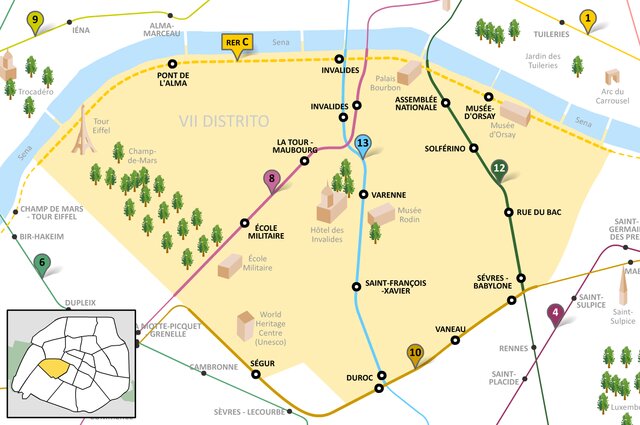
Quality of life 7: prestigious, calm, and institutional
This arrondissement hosts many emblematic sites of French politics, such as Hôtel Matignon and the National Assembly.
It is a quiet district where very wealthy families reside.
Culture 7.38
This arrondissement hosts many famous museums such as Musée d’Orsay, Musée des Armées, Musée Rodin, Musée du Quai Branly, and also the Museum of the Legion of Honour.
The monuments are remarkable in the 7th, which is home to the most famous monument in the world, the Eiffel Tower—a must-see for all tourists.
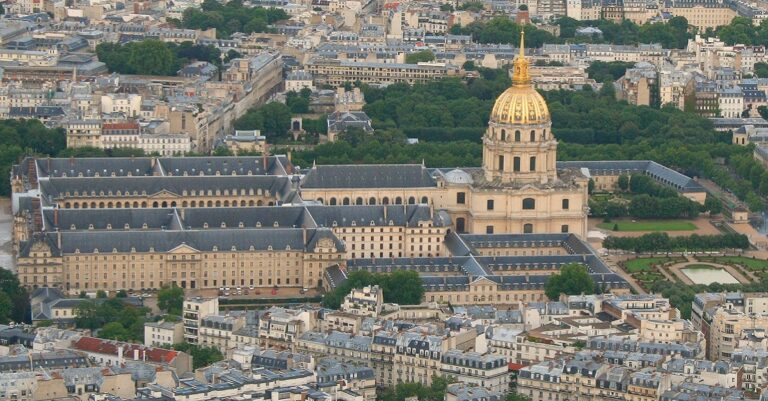
You should also see Palais Bourbon, home of the National Assembly, as well as Les Invalides, where Napoleon Bonaparte’s tomb is located.
Transport 8: central
This central arrondissement is very well served by public transport, notably:
Metro lines: 8, 10, 12, 13
RER line: C
Shops 6.62
There are a few upscale shops, including restaurants, but overall this district is very calm with limited commercial activity.
However, note the presence of the “Le Bon Marché” department store, one of the oldest shopping centers in Paris. Products are quite expensive, but customers are rarely disappointed. You can find high-end gastronomic products such as wine and cheese.
Rue de Sèvres also runs through the 6th, 7th, and 15th arrondissements, offering numerous shops from mainstream to high-end.
Environment 6.77
It is one of the greenest arrondissements in the capital, with the Esplanade des Invalides, Champ de Mars, and the Seine quays.
8th arrondissement of Paris: Élysée
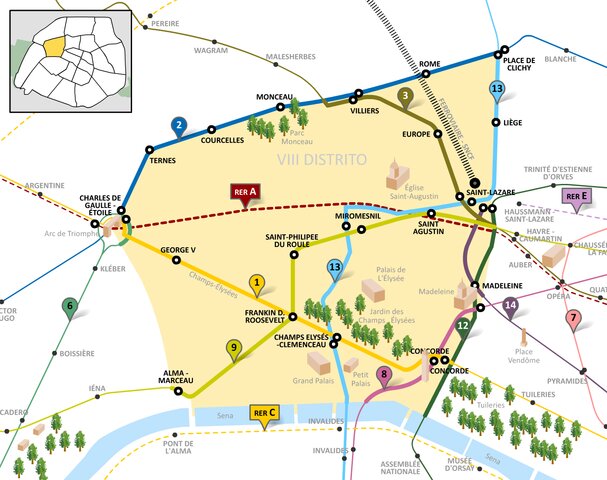
Quality of life 7.6: power and bourgeoisie
This is a residential area for the upper bourgeoisie, with luxury cars, designer boutiques, palaces, and nightclubs.
It is also where power is concentrated, with the Élysée Palace, the Ministry of the Interior, the headquarters of many CAC40 companies, financial institutions, and foreign embassies.
Culture 7
Several well-known museums are located in this arrondissement, such as the Petit Palais, Grand Palais, and Palais de la Découverte.
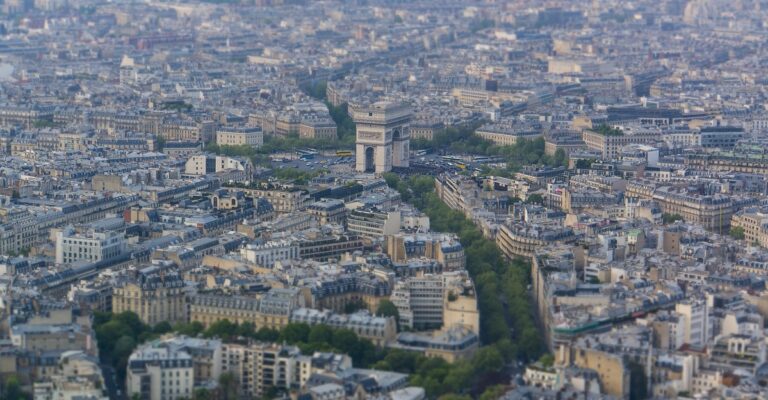
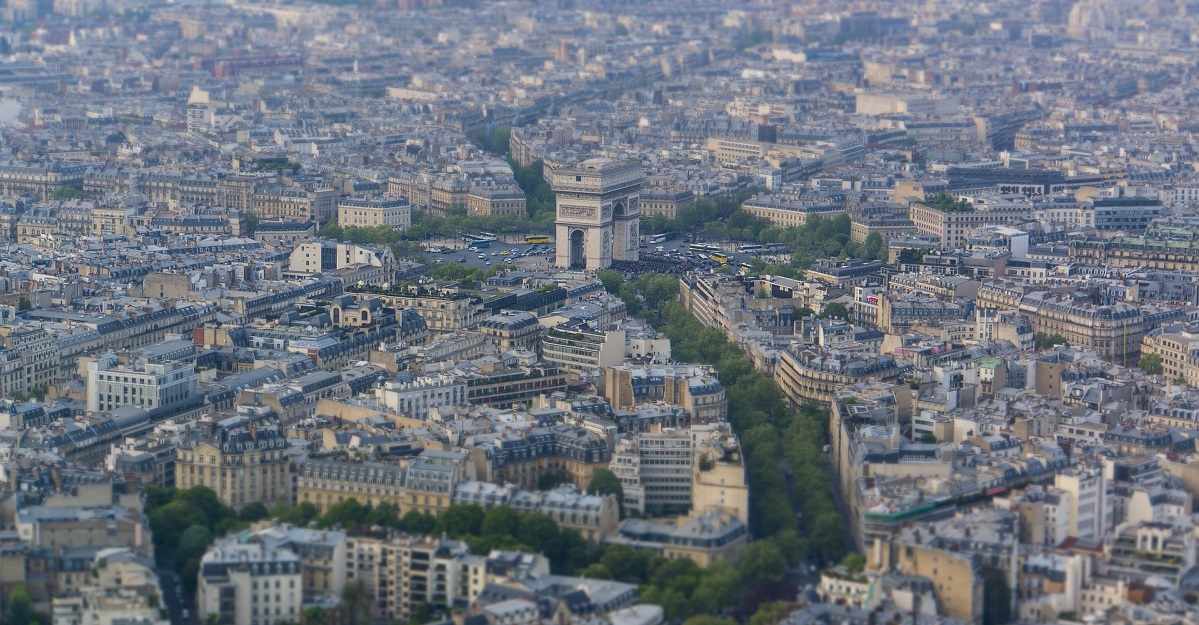
There are few monuments here, but some are unmissable, like the Arc de Triomphe, iconic to Paris, and the Church of La Madeleine, both built by Napoleon to glorify his army.
The Élysée Palace, seat of executive power, is also here.
The most beautiful bridge in Paris: Pont Alexandre III
The most beautiful square in Paris: Place de la Concorde
The Haussmannian architecture of this arrondissement is magnificent.
Transport 8.9
The 8th is among the three best-served arrondissements in terms of public transport, thanks notably to Charles-De-Gaulle–Étoile station and Saint-Lazare station at its ends.
Metro lines: 1, 2, 3, 6, 8, 9, 12, 13, 14
RER lines: A, C
Shops 7.4
In this district, many everyday shops are present (convenience stores, bakeries, butcher shops, etc.).
There are also many luxury boutiques in this arrondissement, mainly on the Champs-Élysées, the most beautiful avenue in the world, at Village Royal, as well as on the stunning Rue Montaigne.
Environment 7.1
This arrondissement has some lovely green spaces, including the Champs-Élysées Gardens and the magnificent Parc Monceau with its many wonders.
9th arrondissement of Paris: Opéra
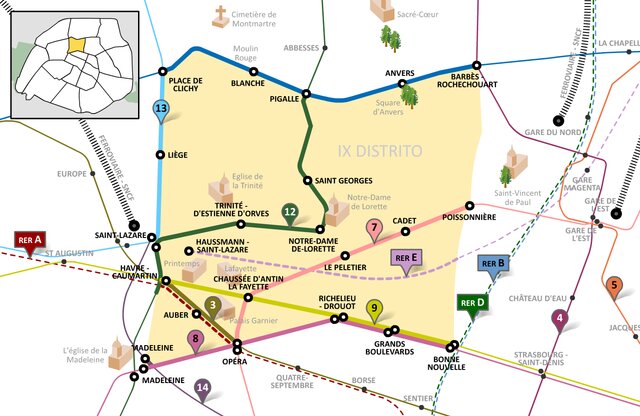
Quality of life 7.96: lively and Haussmannian
This is the most Haussmannian arrondissement of Paris, with its wide boulevards, Haussmann-style buildings, and the magnificent Palais Garnier.
It is a very lively place during the day with its department stores and at night with its dance bars.
Culture 8.83
There are many museums worth visiting in this arrondissement, including the Perfume Museum, the Museum of Romantic Life, and the Musée Grévin of famous wax figures located in the splendid Passage Jouffroy.
The most beautiful monument in Paris, in my opinion, is located here: the Opéra Garnier. This imperial building hides many secrets, which you can discover on our application.
Transport 9.13
It is the second best-served arrondissement in terms of public transport, after the 1st arrondissement of Paris.
Metro lines: 2, 3, 4, 7, 8, 9, 12, 13, 14
RER lines: A and E
Shops 8.96
It is a shopper’s paradise, with the magnificent department stores on the Grands Boulevards, architectural marvels housing mostly luxury boutiques.
Many everyday shops are also open late into the evening.
Environment 5.70
The environment is the weak point of the 9th arrondissement; there is a glaring lack of green spaces, only a few small squares.
The major traffic arteries cause high pollution.
The streets are quite dirty and noisy, especially on weekend nights due to many partygoers.
10th arrondissement of Paris: l’Entrepôt
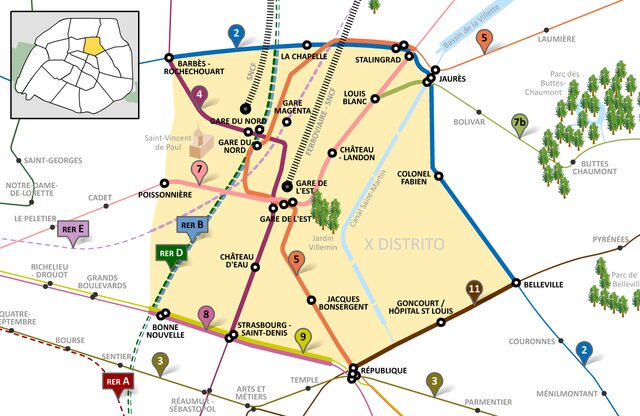
Quality of life 4.37: lively and popular
This is a cosmopolitan arrondissement hosting many communities with their traditional markets and shops.
An explosion of flavors and colors awaits you.
It is trendy among “bobo” residents, particularly around Canal Saint-Martin.
Unfortunately, quality of life is heavily impacted by a sense of insecurity and incivilities present in certain areas.
Culture 6.01
The museum to visit here is the Chocolate Museum, which delights chocolate lovers with tastings throughout the tour.
Monuments to see include the magnificent triumphal arches: Porte Saint-Denis and Porte Saint-Martin, as well as the discreet Saint-Vincent-de-Paul Church.
Transport 7.79
Transport is a strong point of this arrondissement, with numerous options thanks to stations such as Gare du Nord, Barbès, Strasbourg Saint-Denis, and République.
Metro lines: 2, 3, 4, 5, 7, 7bis, 8, 9, 11
RER lines: B, D, E
Shops 6.31
Everyday shops are numerous and varied, with many exotic products from Asia and Africa.
Restaurants offer flavors from all over the world, with the most typical being Passage Brandy, home to many Indian restaurants.
Environment 2.87
There are very few green spaces here. However, the beautiful Canal Saint-Martin is a popular summer spot, ideal for picnics and even boat rides.
11th arrondissement of Paris: Popincourt
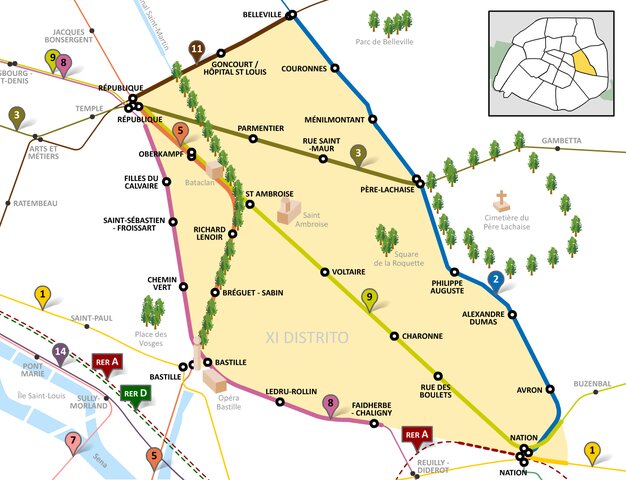
Quality of life 6.58: young and very festive
This arrondissement is young and very lively. Partygoers flock to Bastille (especially Rue de Lappe), Oberkampf, and République.
Few families live here; it is urban, noisy, but incredibly lively.
Culture 6.61
The must-see museum is Atelier des Lumières, offering digital projections using 140 projectors.
There are no major monuments, except Saint-Ambroise Church.
However, three of the most important squares in Paris are in the 11th: Place de la République, Place de la Nation, and Place de la Bastille, an iconic square of the French Revolution. These squares are often the starting points for demonstrations.
Transport 8.10
This fairly central district allows you to reach anywhere in Paris in less than 30 minutes.
Metro lines: 1, 2, 3, 5, 6, 8, 9, 11
RER line: A
Be aware that some streets are regularly blocked due to demonstrations.
Shops 7.64
There are many shops in this district: a wide variety of restaurants and convenience stores.
Some small “bobo” boutiques are scattered throughout the 11th.
The Richard-Lenoir Market is very pleasant for grocery shopping.
However, some streets are composed solely of wholesale Chinese clothing stores.
Environment 5.01
Very few green spaces exist in the 11th, and none are particularly noteworthy.
This district is crowded by partygoers every weekend, very noisy, and it is difficult to sleep peacefully due to poor insulation in many apartments.
This arrondissement is also quite dirty because of the many partygoers.
12th arrondissement of Paris: Reuilly
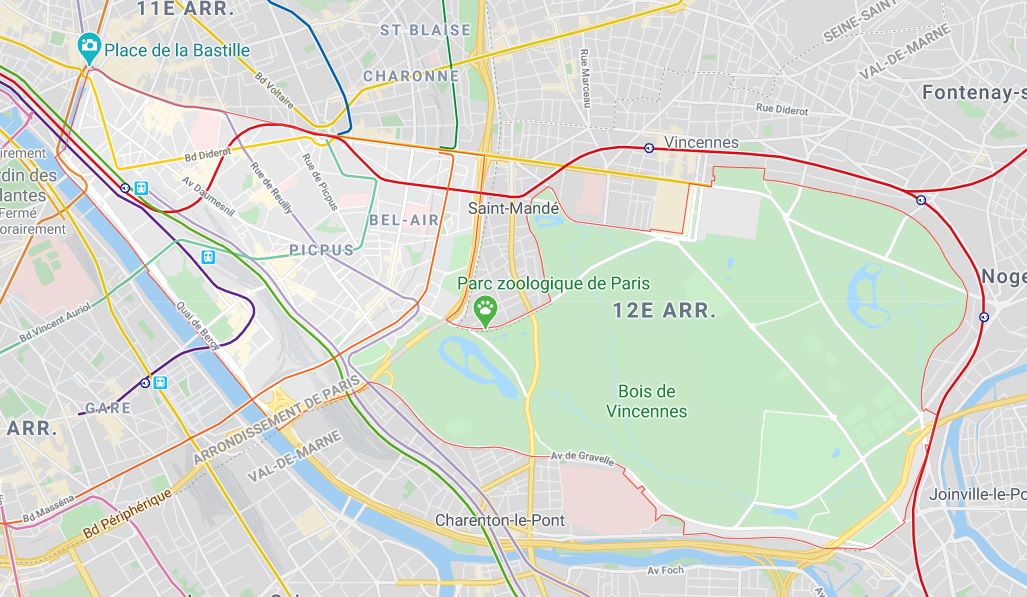
Quality of life 7.55: calm and family-friendly
This is a calm and quiet arrondissement where mainly older families live.
It is a paradise for children with numerous green spaces and the Zoological Park.
Culture 6.82
Museums to see include the National Museum of the History of Immigration and especially the Arts Forains Museum, a magical museum that brings out your inner child.
There are no emblematic monuments, but you can take a look at the Gare de Lyon clock, the second tallest in the world after Big Ben.
Transport 8.44
This arrondissement is generally well served, particularly via Nation, Gare de Lyon, Bercy, and Bastille. Line 14 and the RER allow fast access to other Paris arrondissements.
Metro lines: 1, 2, 5, 6, 8, 9, 14
RER lines: A and D
Shops 7.82
There are various everyday shops in this arrondissement, including numerous markets such as Marché d’Aligre and Marché des Producteurs.
My favorite shopping spot in this arrondissement is Bercy Village, a very pleasant place with many bars, restaurants, and the large UGC Bercy cinema.
However, some areas of this arrondissement are quite empty of shops.
Environment 6.81
There are many green spaces in the 12th arrondissement, including Parc de Bercy and especially the immense and beautiful Bois de Vincennes, a true breath of fresh air.
The beautiful Coulée Verte connects Bastille to Vincennes, a charming and unusual green space that runs through the 12th arrondissement of Paris.
13th arrondissement of Paris: Gobelins
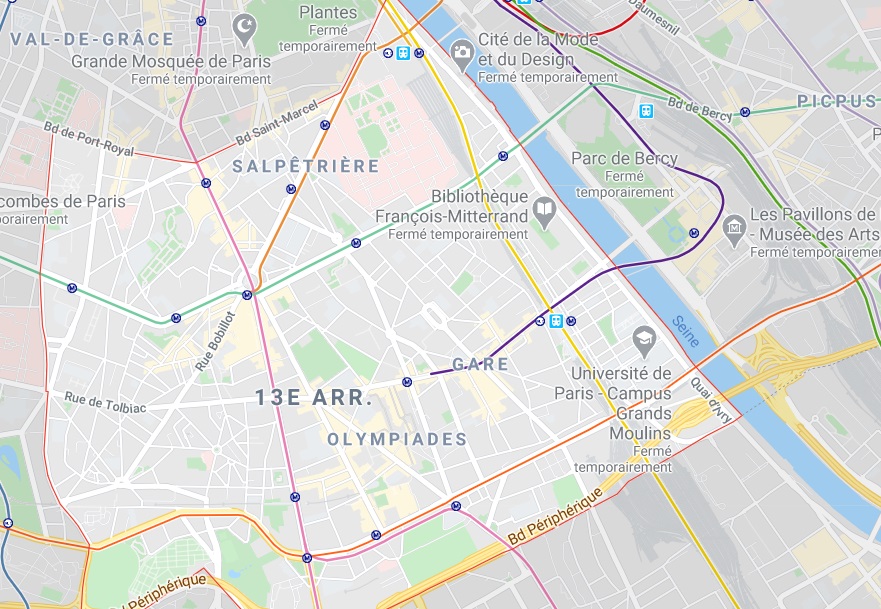
Quality of life 6.5
This arrondissement is especially known for its Asian district with tall buildings and numerous Asian shops.
It is a diverse arrondissement with a small-village atmosphere, particularly around the Butte-aux-Cailles.
Culture 6.88
The museum to see here is the “Mobilier National / Les Gobelins.”
There are no iconic Parisian monuments in this arrondissement, but some bridges are worth visiting, such as Pont de Bercy and Viaduc d’Austerlitz.
Today, if you visit this part of the city, it is mainly for its magnificent and grandiose street-art murals, a true open-air museum.
Discover these murals with our Street Art treasure hunt in Paris 13th.
Transport 7.79
Transport is mainly concentrated in the north of the 13th; the south is a bit neglected.
The main hubs are Place d’Italie and Gare d’Austerlitz.
It is quite long to reach the right bank from this arrondissement.
Metro lines: 5, 6, 7, 10, 14
RER line: C
Shops 7.91
The shops are varied, numerous, and from all backgrounds. There are many Asian shops and restaurants, as well as a large shopping center, “Italie Deux,” which houses no less than 130 boutiques.
Markets are interesting with affordable prices.
Environment 5.58
This arrondissement is not very green, but there are several small squares and parks, including Parc de Choisy, which is very pleasant and offers several playgrounds.
14th arrondissement of Paris: L’Observatoire
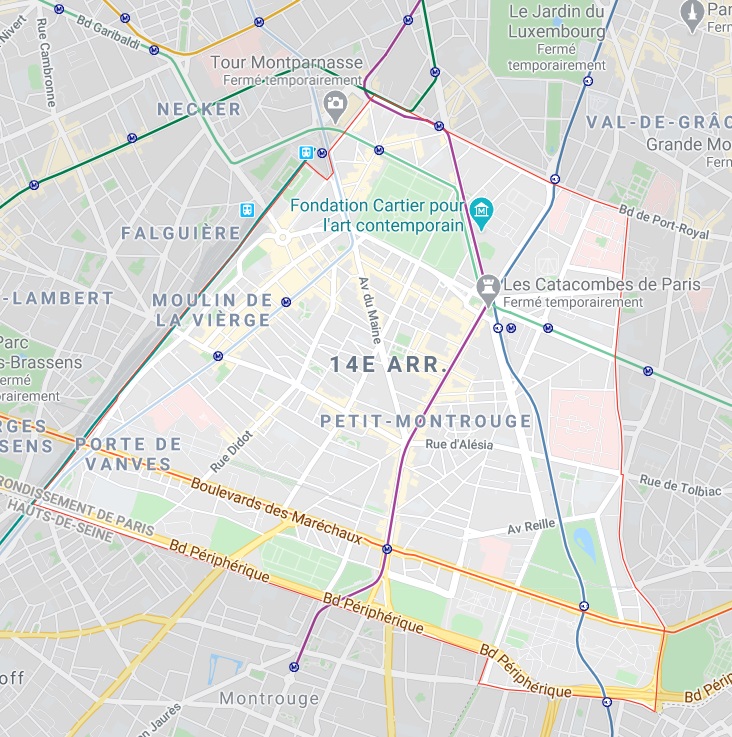
Quality of life 5.81: family-friendly and lively
The 14th arrondissement is family-oriented and lively. It is popular with young couples who still want to enjoy nightlife.
Culture 6.4
The must-see museum in this district is undoubtedly the Catacombs (500,000 visitors in 2015), one of the most unusual places in Paris.
There are also several interesting museums such as the Giacometti Institute (20th-century artist), the Fondation Cartier for contemporary art, and the Musée de la Libération de Paris.
Notable sites include Montparnasse Cemetery, an unusual cemetery where many celebrities are buried, including Serge Gainsbourg, Charles Baudelaire, and Guy de Maupassant.
The Paris Observatory is also worth a visit.
Transport 7.27
This arrondissement is generally well connected, notably via Gare Montparnasse and Denfert-Rochereau station.
Metro lines: 4, 6, 12, 13
RER line: B
However, some areas are quite isolated from public transport.
Shops 7.52
Many everyday shops are present, especially along Rue Daguerre, which has a family-friendly atmosphere.
It attracts locals with bakeries, florists, wine shops, boutiques, and café terraces.
Several small markets are also organized here, such as the Petite Marché Bio at Place Brancusi.
Environment 5.77
The main green space in the 14th is Parc Montsouris, a quiet 15-hectare park with many plant species, popular with students living nearby in the university campus.
15th arrondissement of Paris: Vaugirard
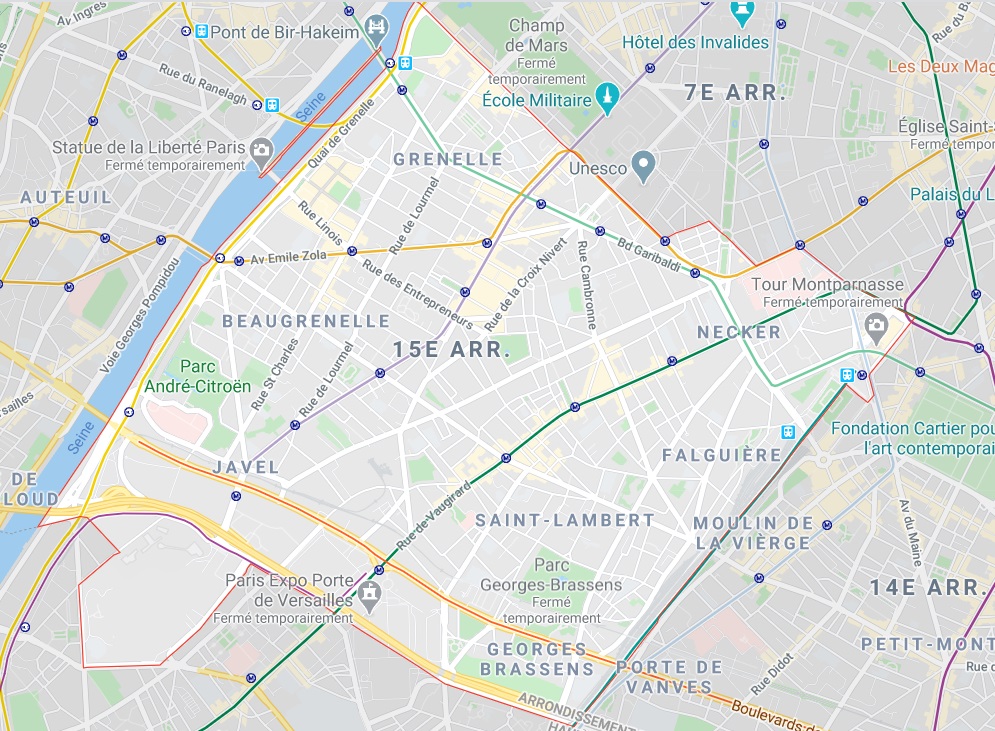
Quality of life 7.2: family-friendly and quiet
The 15th arrondissement is ideal for families with children. It is a calm area with many offices and green spaces.
Culture 6.37
The main museum to visit is Musée Bourdelle, dedicated to sculptor Antoine Bourdelle (1861–1929).
The iconic monument is Tour Montparnasse, the tallest tower in central Paris.
Two beautiful bridges to see are Pont Mirabeau and Pont de Bir-Hakeim (featured in the film *Inception*).
Transport 8.14
This arrondissement is generally well connected by public transport, notably via Gare Montparnasse.
However, some areas, especially in the south, are a bit far from stations.
Metro lines: 4, 6, 8, 10, 12, 13
RER lines: B and C
Shops 8.17
There are many everyday shops, with markets organized in Vaugirard and Convention.
For shopping, visit the Beaugrenelle shopping center with 110 stores, restaurants, and a cinema.
There is also the Montparnasse Rive Gauche shopping center at the foot of Tour Montparnasse, less glamorous than Beaugrenelle.
Rue du Commerce is popular in the 15th, with many daily shops (butcher, bakeries, etc.), perfumeries, clothing and home decor boutiques, and cafés/bistros such as the famous Café du Commerce at No. 51.
Environment 5.9
There are several pleasant green spaces for relaxation, including Parc André-Citroën, a modern park suitable for sports and leisure. It has a tethered gas balloon offering a 150-meter ascent.
There is also the charming Parc Georges Brassens, notable for its 700 vine plants.
16th arrondissement of Paris: Passy
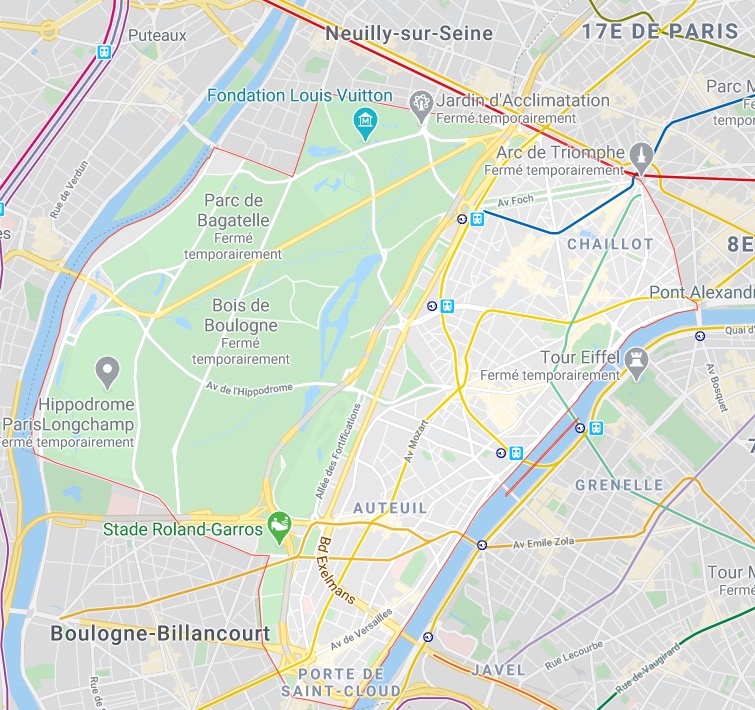
Quality of life 7.54: bourgeois and calm
The 16th is a bourgeois, family-friendly, safe, quiet, and very green arrondissement, ideal for living.
Culture 6.69
There are several notable museums here:
– Fondation Louis Vuitton, an architectural gem offering magnificent contemporary art exhibitions
– Musée Yves Saint Laurent Paris to admire haute couture
– Musée national des arts asiatiques Guimet to explore Asian art
– Palais de Tokyo, a beautiful building dedicated to contemporary art
The must-see monument is Palais de Chaillot, offering, via Place du Trocadéro, one of the best views of the Eiffel Tower.
Transport 7.22
This arrondissement is generally well connected by public transport.
However, metro lines are limited, especially in the south, requiring several transfers to reach some destinations.
Metro lines: 1, 2, 6, 9, 10
RER lines: A, C
Shops 7
There are a few everyday shops of generally good quality, such as along Rue Passy, which also hosts a shopping gallery called Passy Plaza. It gathers about twenty well-known brands like H&M.
There are two elegant markets in the 16th: the Marché Couvert de Passy and Marché Couvert Saint-Didier.
Also worth noting is the pâtisserie Cyril Lignac on Rue de Chaillot.
However, some areas of this arrondissement are not very well served in terms of shops.
Environment 7.28
This is the major strength of the 16th arrondissement, located next to the immense Bois de Boulogne.
It is one of the greenest and cleanest arrondissements in Paris.
Several green spaces are present, including the Jardin d’Acclimatation with its amusement park, Jardin des Serres d’Auteuil with its beautiful tropical greenhouses, and the Jardin du Ranelagh.
17th arrondissement of Paris: Batignolles-Monceau
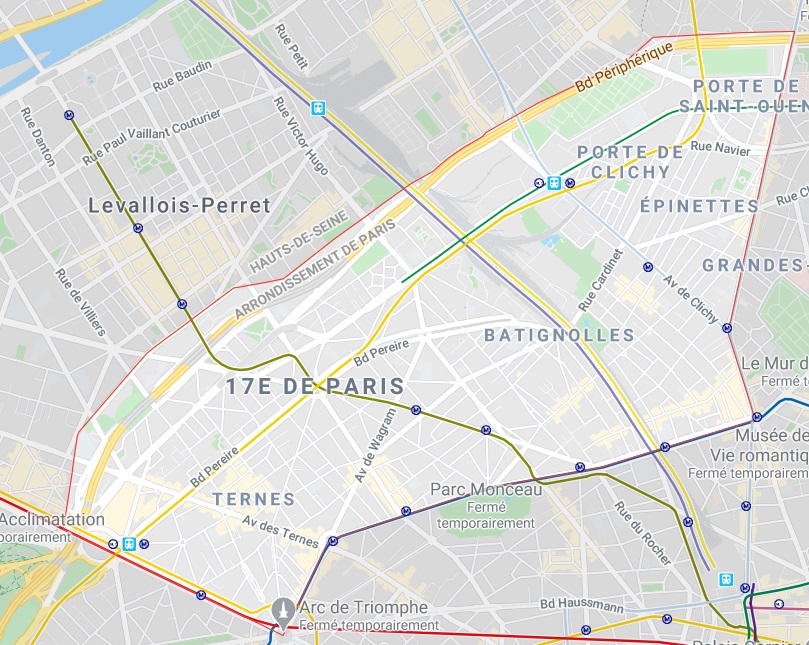
Quality of life 7.41: contrasting arrondissement
The 17th arrondissement is very contrasting.
In the southwest, it is bourgeois, calm, and residential, with beautiful Haussmannian architecture.
In the northeast, it is more working-class and lively.
Culture 6.78
There are no must-see museums in this arrondissement, but some smaller museums are worth visiting:
– Citéco: the City of Economics
– Art 42: a museum dedicated to urban art
– Musée Jean Jacques Henner (1829–1905) for painting
There are no major iconic monuments, but the arrondissement has charming architecture, including two lovely churches: Église Saint-Michel des Batignolles and Église Sainte-Odile.
For modern architecture enthusiasts, the Palais de Justice and the striking buildings around Parc des Batignolles are worth seeing.
Transport 7.24
This arrondissement is generally well served, but Line 13, which crosses the area, is almost always overcrowded—quite a challenge for commuters.
There is also a lack of a fast line to reach the Left Bank quickly; the upcoming Line 14 should solve this problem.
Metro lines: 1, 2, 3, 6, 13
RER line: A
Shops 7.54
Small everyday shops are scattered throughout the 17th, including two covered markets: Marché Couvert Batignolles and Marché Couvert des Ternes.
For shopping, head to the Porte Maillot / Parc Monceau area, which gathers all types of shops: groceries, cultural goods, clothing, etc.
There is also a shopping center, Les Boutiques du Palais des Congrès, with 80 stores, mostly fashion brands like Lacoste, Sephora, etc.
In Saint-Ouen, located in the north of the 17th, there is the huge Saint-Ouen Flea Market with over 2,000 vendors. It is a cosmopolitan area, lively with street art, but some visitors may feel uneasy due to counterfeit products.
Also noteworthy is Rue de Lévis, a street full of food shops that will delight your taste buds.
Environment 6.17
In the 17th, I recommend the Promenade Pereire, a “green corridor” of the arrondissement, less known than the Coulée Verte in the 12th and slightly less exotic.
This tree-lined walk takes you from Porte Maillot to Place du Maréchal, showcasing this chic arrondissement.
Parc Clichy-Batignolles – Martin Luther King is a peaceful green space crossed by a small stream.
The park also has the Jardins du Rail, community vegetable gardens along the railway. They are divided into small plots and cultivated by local residents and students.
18th arrondissement of Paris
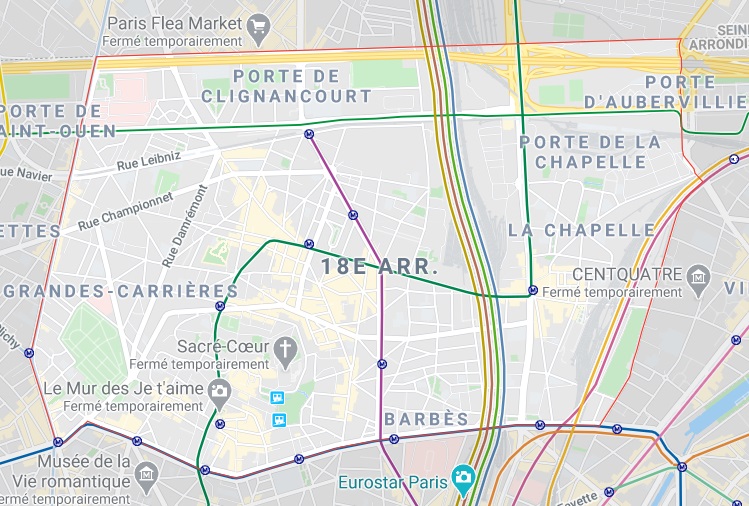
Quality of life 4.84: working-class and contrasting
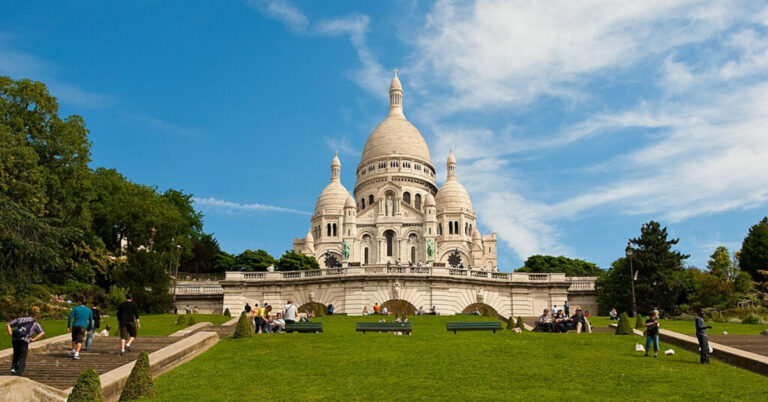
Around the Sacré-Cœur, Montmartre has maintained a small-village atmosphere, attracting millions of tourists each year.
Around Barbès station, the area is working-class, with a population mainly from North African immigration.
This neighborhood is unusual, very distinctive, and full of character.
Culture 6.04
Several charming small museums are worth visiting: Musée de Montmartre, Musée Dali, and Halle Saint-Pierre.
If you are in the 18th, you must wander through the wonderful village of Montmartre to admire artists’ houses, religious buildings such as Sacré-Cœur and Église Saint-Jean de Montmartre, and the traces of Montmartre’s agricultural past.
I recommend taking our Montmartre treasure hunt to discover this unmissable Parisian neighborhood.
Transport 7.12
The 18th is generally well served by public transport. However, be careful with your belongings in tourist areas and on public transport; unfortunately, I witnessed phone thefts on the metro near Barbès.
Metro: 2, 4, 12, 13
RER: B, D, E
This arrondissement is also home to Paris’ most unusual transport: the Montmartre Funicular.
Shops 6.31
Small everyday shops are scattered throughout the 18th. Place du Tertre, with its many painters, is a must-see.
For groceries, visit the charming Marché Couvert de La Chapelle, located in a beautiful Baltard-style hall.
Also notable is the iconic Marché Barbès, one of the liveliest, most cosmopolitan, and cheapest markets in Paris.
Environment 3.52
The 18th lacks large green spaces but has a few unusual green spots.
– Clos de Montmartre: 1,760 vine plants, the last remnant of Montmartre’s winemaking past. Since 1934, the Montmartre Grape Harvest Festival is celebrated here annually.
– Jardin Sauvage Saint-Vincent: a small abandoned square where nature has taken over.
– Square Louise-Michel Montmartre: at the foot of Sacré-Cœur, offering one of the best views in Paris, though very popular with tourists.
19th arrondissement of Paris
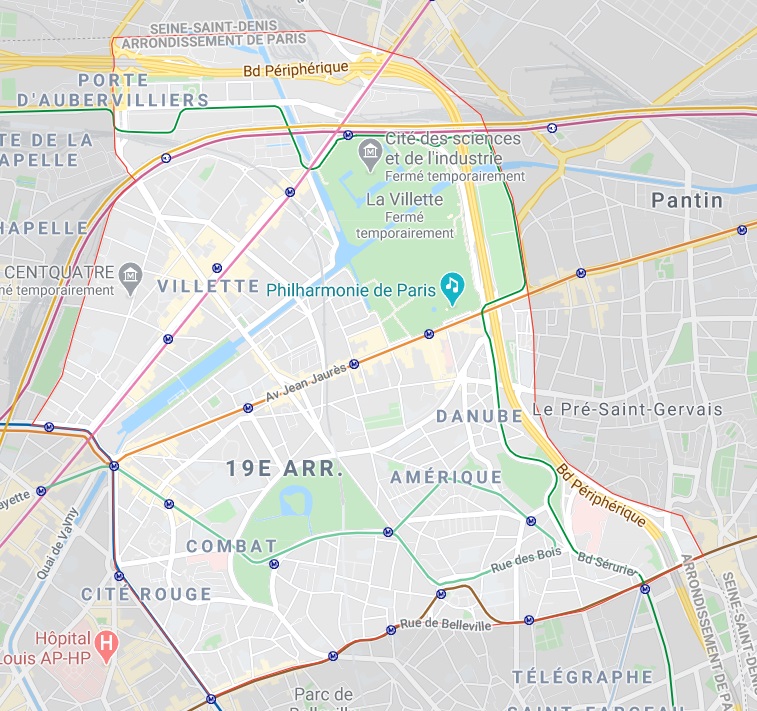
Quality of life 5.95: cosmopolitan and lively
This arrondissement is cosmopolitan, historically working-class, and constantly evolving.
It is increasingly appreciated by families thanks to its many green spaces, though security issues persist.
Culture 5.95
The must-see museum here is the Cité des Sciences et de l’Industrie, a fascinating, interactive, and educational space with regular activities.
Also, visit the Philharmonie de Paris: spectacular from the outside, and inside it is colorful with excellent acoustics.
Transport 7.35
The 19th is well connected by public transport. Major hubs are Jaurès and Stalingrad.
Metro: 2, 5, 7, 7bis, 11
Shops 6.56
The largest shopping center is Vill’Up, next to La Villette, with 40 stores.
iFLY at Vill’Up offers a freefall simulation—short but thrilling.
Small everyday shops are scattered throughout the arrondissement.
Environment 5.42
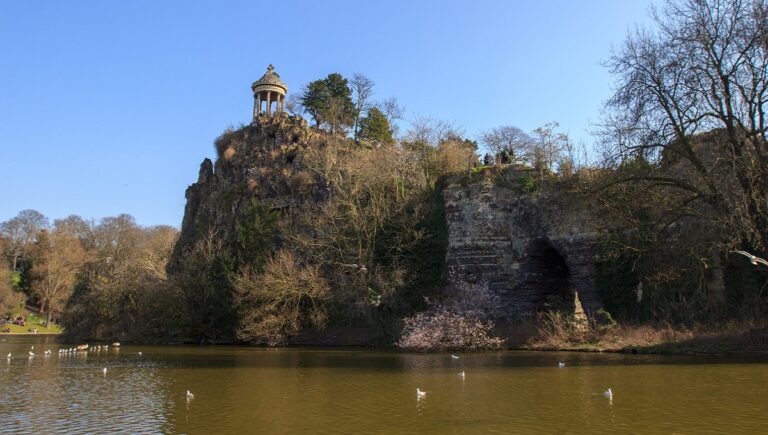
The most beautiful park here is Parc des Buttes-Chaumont, built on a former quarry, featuring stunning mountainous landscapes, caves, cliffs, and waterfalls.
Also notable: Parc de la Villette, built on the former abattoirs, very lively with Jazz à la Villette, open-air cinema, children’s activities, and exhibitions.
Don’t miss the Canal de l’Ourcq, once a water supply canal, now a popular promenade. Electric boats without a license can be rented for a unique experience.
20th arrondissement of Paris
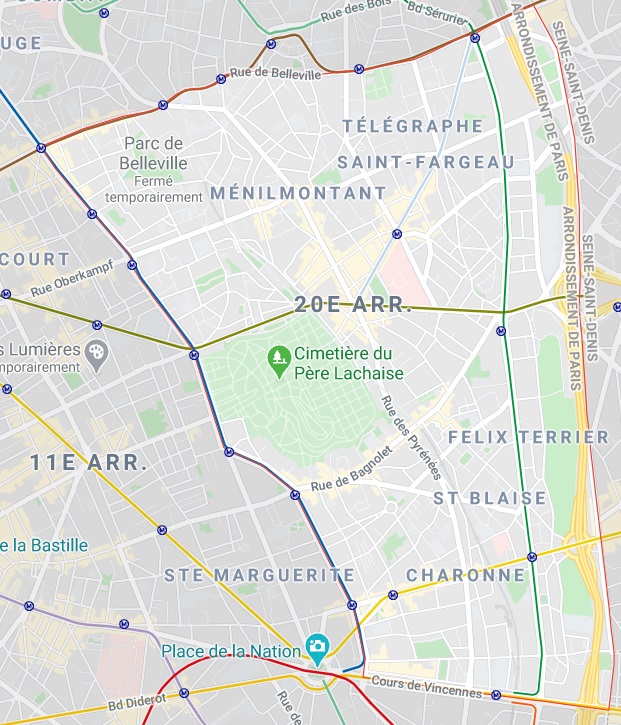
Quality of life 5.62: working-class and trendy
The 20th is a diverse and lively arrondissement with many immigrants.
It is trendy, with small bars, cafés, theatres, and hipster shops. It attracts young, stylish people.
Despite its charm, some areas have insecurity issues and litter problems.
Culture 6.21
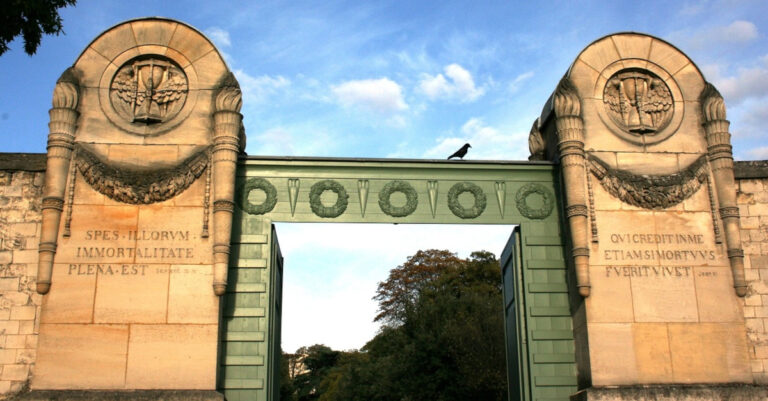
The must-see place is Père-Lachaise Cemetery, a large green space where many famous French figures rest, including Jean de La Fontaine and Molière.
You can explore it via a guided treasure hunt on our app.
Other cultural spots: Pavillon Carré de Baudouin, and the street art of Belleville, Rue Denoyez, Rue des Maronites, etc.
Transport 7.4
The 20th is fairly well connected by public transport, though fast access to the Left Bank is limited.
Metro: 1, 2, 3, 3bis, 6, 9, 11
RER: A
Shops 6.95
Many small shops of daily needs are scattered throughout the arrondissement.
Notable: Printemps Paris Nation on Cours de Vincennes near Nation, with Maisons du Monde, Citadium, and Uniqlo.
For vintage or antique shopping, visit the Montreuil Flea Market—cheap items, quality varies, but treasures can be found.
Environment 4.44
For one of the best views of Paris, visit Belvédère de Belleville in the park of Belleville, featuring beautiful urban mosaics and murals.
Père-Lachaise Cemetery is also one of the largest and most beautiful green spaces in Paris, with many celebrity tombs: tombs of celebrities.
This cemetery remains active; please respect it when visiting this magical site.