Visiting Carcassonne: 30 must-see and must-do attractions
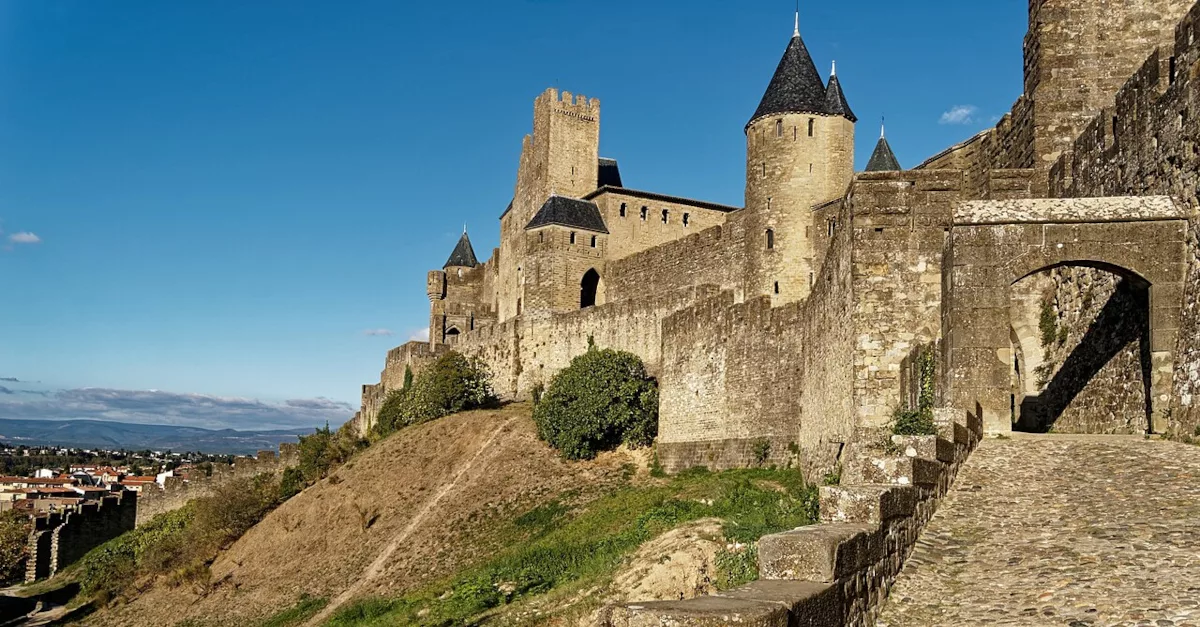
Située au cœur de l’Occitanie, Carcassonne is a must-visit destination for all travelers in search of history, heritage, and authenticity. Visiting Carcassonne means discovering one of the best-preserved medieval cities in Europe, listed as a UNESCO World Heritage Site, with its impressive ramparts, fortified gates, and its famous count’s castle. But the city is not limited to its medieval citadel: it also features a lively lower town (bastide), remarkable historical monuments, and a rich cultural life.
Visiting Carcassonne also means diving into southwestern French gastronomy and enjoying an ideal destination for excursions to Toulouse, Narbonne, or Albi. Between history, discovery, and the art of living, Carcassonne promises a complete and memorable experience.
Explore it differently with our Carcassonne treasure hunt, a mix between a guided tour and an escape game through the streets of Carcassonne.
Monuments & Historical Heritage of Carcassonne
Port Narbonnaise
Narbonne Gate
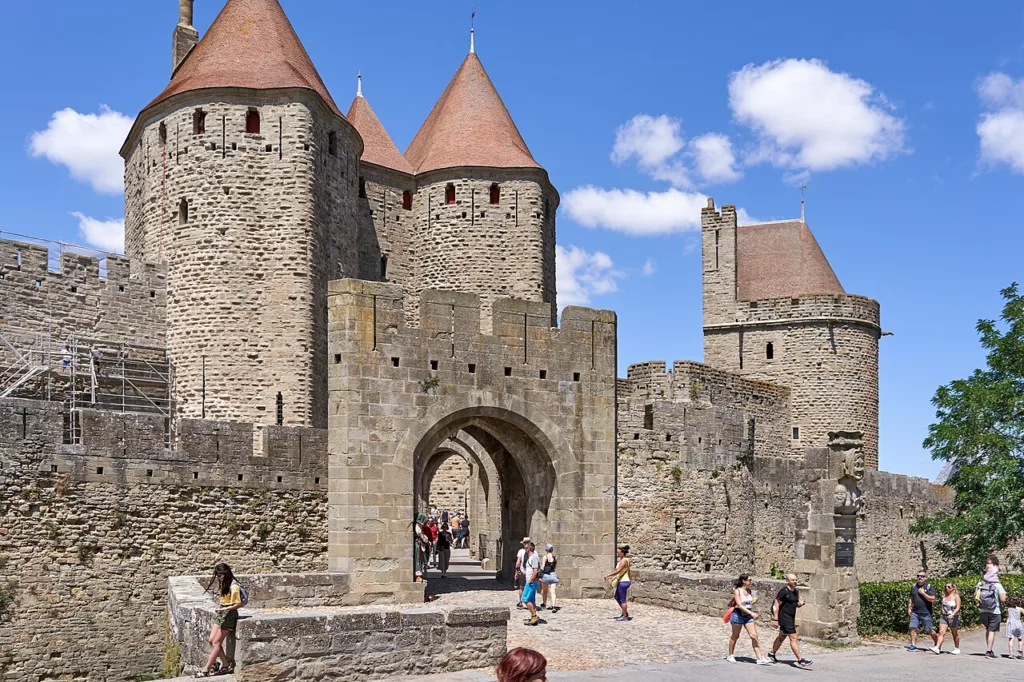
The Narbonne Gate is the main entrance to the medieval city of Carcassonne, located on the eastern side of the ramparts. It was built around 1280 under the reign of King Philip III the Bold. Its name comes from its orientation toward the city of Narbonne.
It replaced an earlier castle, now destroyed, known as the Château Narbonnais, which once controlled the main access. In the 19th century, architect Eugène Viollet-le-Duc restored the gate, adding features such as the slate roof.
The structure consists of two massive defensive towers. These towers include military features such as arrow slits and a double portcullis. Inside, they contain several floors used for storage and defense. A statue of the Virgin Mary is placed in a niche above the entrance. The gate is also protected by the Saint-Louis barbican and a watchtower used for surveillance and defense.
Discover more secrets about this defensive gate in our Carcassonne tour.
Statue of Lady Carcas
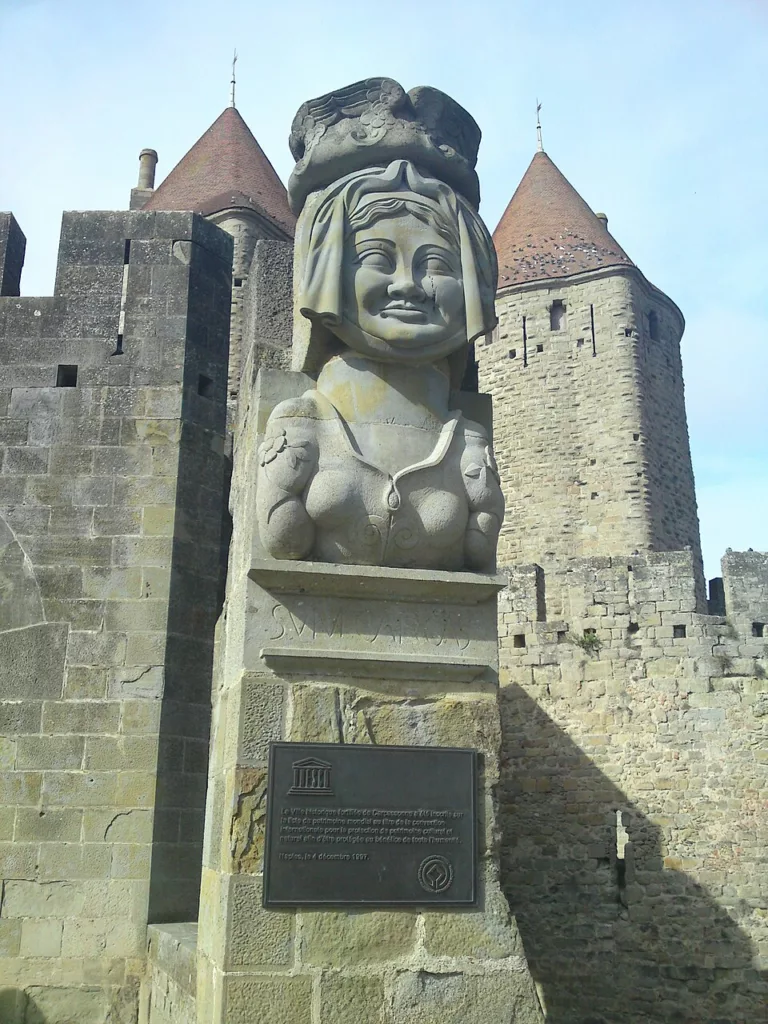
Statue of Lady Carcas
Lady Carcas is a legendary heroine associated with the city of Carcassonne. According to legend, she saved the city, which was under siege by Charlemagne, through an ingenious trick. After her husband’s death, she took command and organized the defense against the Franks.
To deceive the enemy, she made them believe the city still had abundant supplies. She even fed a pig with wheat and threw it over the ramparts. Believing the city was well provisioned, the attackers lifted the siege. Legend says that a soldier exclaimed “Carcas sonne!” (“Carcas rings!”), giving the city its name.
Discover the link between a queen and this statue in our Carcassonne treasure hunt.
The Comtal Castle
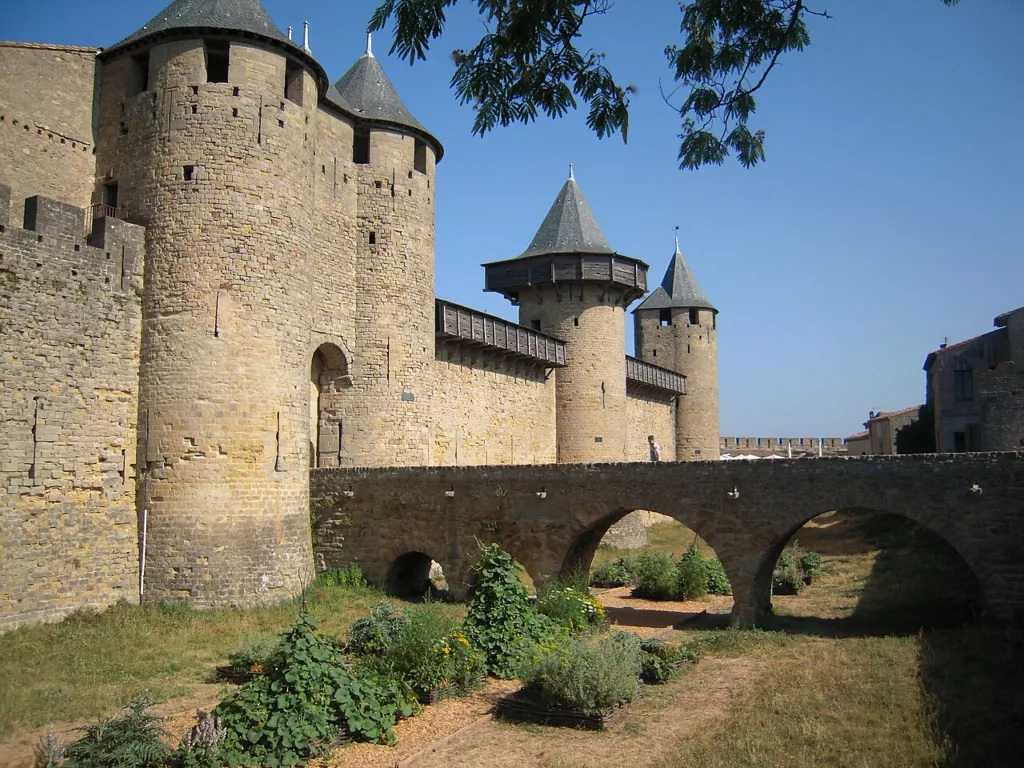
The Comtal Castle
The Comtal Castle is located in the heart of the Cité of Carcassonne, against the ramparts. It was built in the 12th century by the Trencavel family to strengthen the city’s defenses. Construction began around 1130 under Bernard Aton IV Trencavel.
The castle has an elongated shape and includes several buildings arranged around a central courtyard. Originally, it was separated from the rest of the city by a simple palisade. After becoming part of the royal domain in the 13th century, it was transformed into a true fortress, with added defensive features such as a moat, drawbridge, portcullis, and reinforced walls.
The castle has nine towers, including the Tour Pinte, the tallest in the city. Inside, there is a main courtyard and buildings modified over the centuries.
The Aude Gate
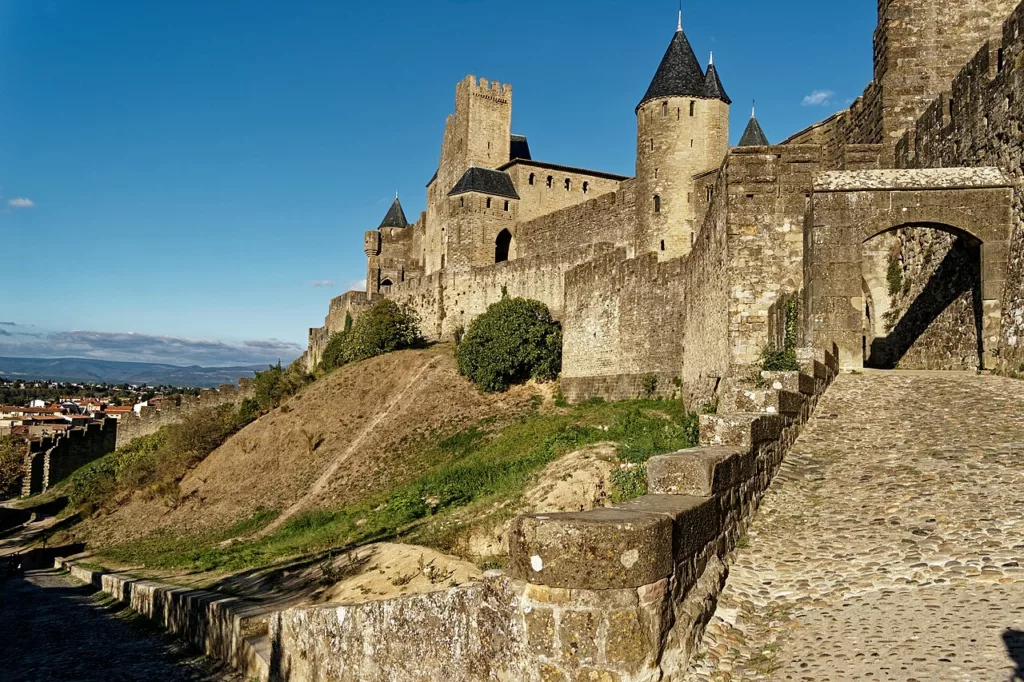
The Aude Gate
The Aude Gate is located on the western side of the Cité of Carcassonne, facing the Aude River. It is close to the Comtal Castle and once served as a strategic entrance to the city.
The gate was extended by a barbican, now mostly destroyed. Only a ramp surrounded by crenellated walls remains.
Its defensive system was highly complex and ingenious, with false doors and arches designed to confuse attackers. A winding network of corridors formed a trap for enemies. Entry was made through a sloped path with several successive passages.
Today, it is famous for its medieval appearance and has been used as a filming location for movies such as The Visitors and Robin Hood: Prince of Thieves.
Discover the unusual path leading to this gate in our Carcassonne treasure hunt.
The Basilica of Saint-Nazaire and Saint-Celse
The Basilica of Saint-Nazaire and Saint-Celse is located in the heart of the Cité of Carcassonne. It was formerly a cathedral and became a minor basilica in 1898.
Its construction spans from the 11th to the 14th century, combining Romanesque and Gothic styles. The Romanesque parts are the oldest, especially the nave built in the 12th century. In the 13th century, the choir and transept were expanded in a more Gothic style.
The building is famous for its beautiful stained glass windows, among the most remarkable in southern France. These windows depict religious scenes such as the life of Christ and various saints. The basilica was restored in the 19th century by Eugène Viollet-le-Duc. It long served as the main religious center of Carcassonne before losing its cathedral status.
The Saptes Cloth Factory
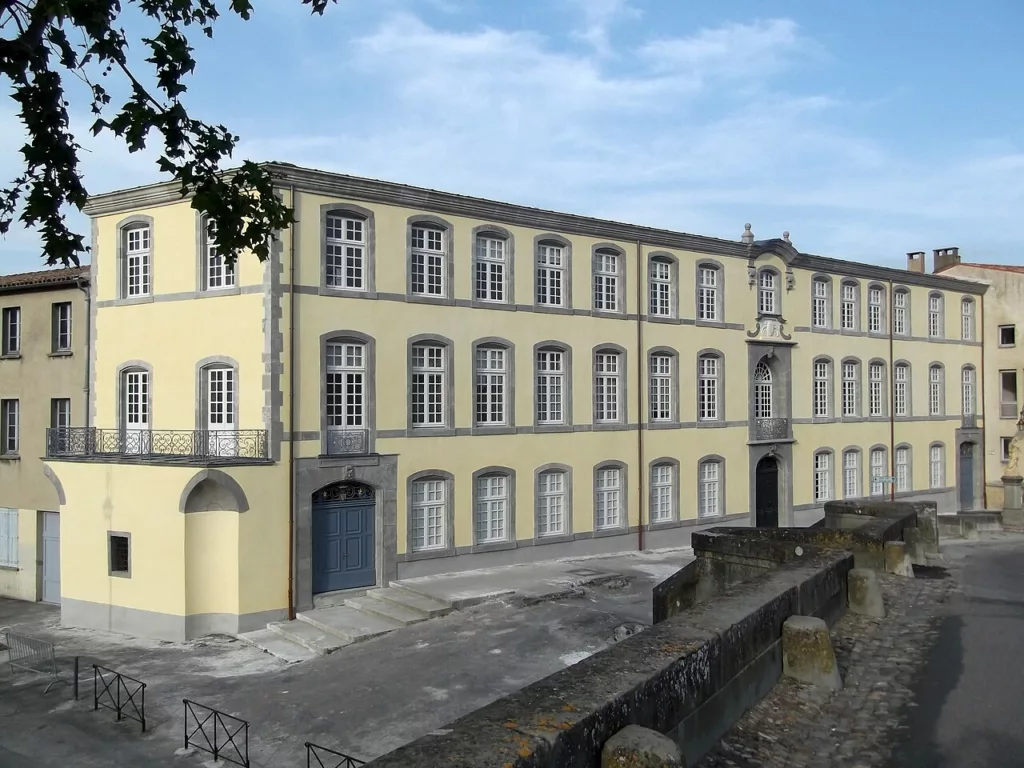
Saptes Cloth Factory
The Saptes cloth factory in Carcassonne, created in the 16th century, was revived in 1667 by Colbert to develop the textile industry, especially for export.
The Saptes brothers, originally from Tuchan, settled in the 16th century near Conques-sur-Orbiel and Carcassonne, where they centralized all stages of textile production. The family later left manufacturing for careers in the magistracy. Although sold in 1620, the factory kept their name and became in 1666 the first royal manufactory of Languedoc, supported by the state.
In 1667, Colbert promoted its development as part of his industrial policy. He introduced new techniques and brought in foreign workers, especially from the Netherlands, to improve production quality. The goal was to develop cloth production for export.
In 1669, the factory received state funding of 20,000 livres. In 1670, the Levant Company was created to export Languedoc cloth to Constantinople, Smyrna, and Alexandria. Despite these efforts, results remained limited.
The activity gradually declined and ceased at the end of the century after the death of its director.
Saint-Gimer Church
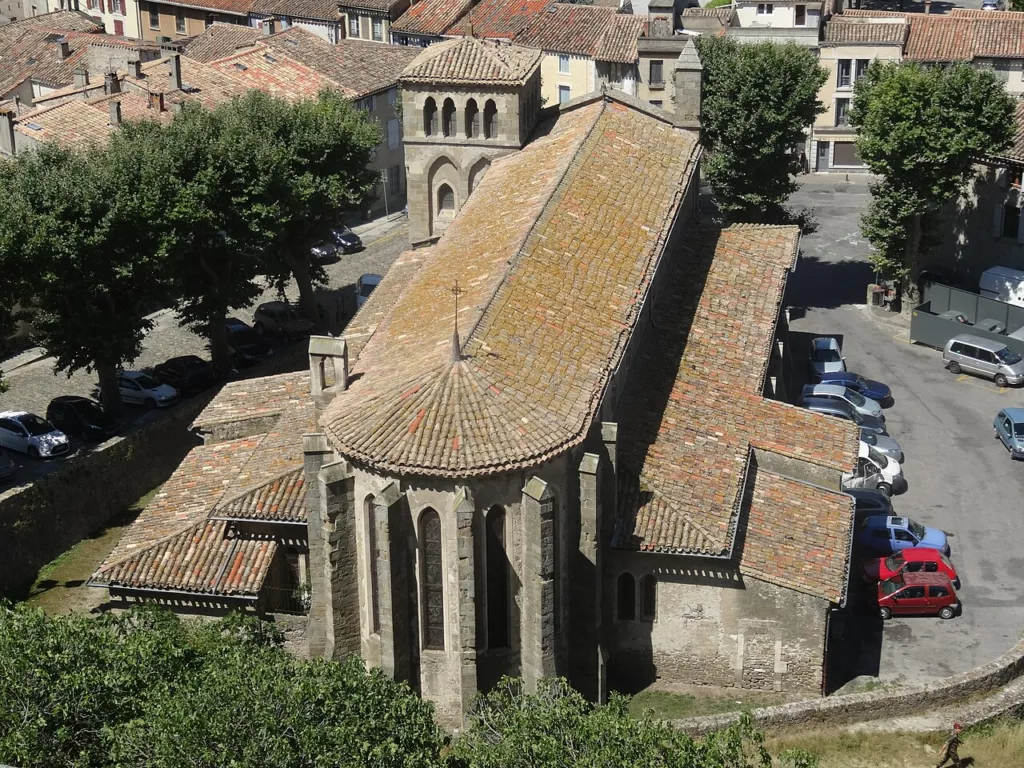
Saint-Gimer Church
The Saint-Gimer Church is located in Carcassonne, near the medieval city. It was built in the 19th century by architect Eugène Viollet-le-Duc. Its construction took place between 1852 and 1859, during the restoration of the Cité.
It is dedicated to Gimer of Carcassonne, a 10th-century bishop. The church replaced an older chapel that had become too small for the local population. It was consecrated in June 1859 and became an important place for the local parish.
Its architecture is inspired by the neo-Gothic style characteristic of Viollet-le-Duc. The building is relatively modest but harmoniously integrated into the landscape.
The Chapel of Notre-Dame-de-la-Santé
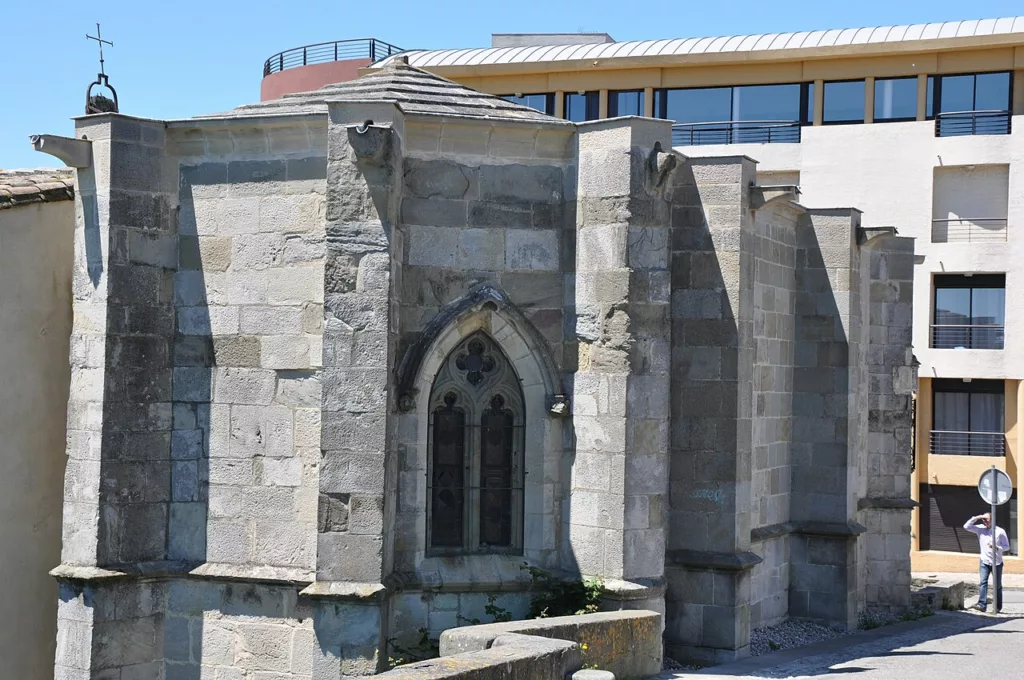
The Chapel of Notre-Dame-de-la-Santé
The Chapel of Notre-Dame-de-la-Santé is located in Carcassonne, at the entrance of the Pont Vieux. It was built around the year 1500 to welcome pilgrims. A first chapel already existed on this site at the end of the 14th century.
The building was enlarged in the 16th century thanks to donations from wealthy residents. Its location near the Aude River makes it an iconic part of the Carcassonne landscape. During the French Revolution, the chapel was converted into a private house. It was later repurchased and restored in the 19th century to regain its religious function.
Its architecture is in the Flamboyant Gothic style, despite being built during the Renaissance period. Inside, visitors can admire elegant vaulted ceilings and statues of the Virgin Mary.
The Old Bridge of Carcassonne (Pont Vieux)
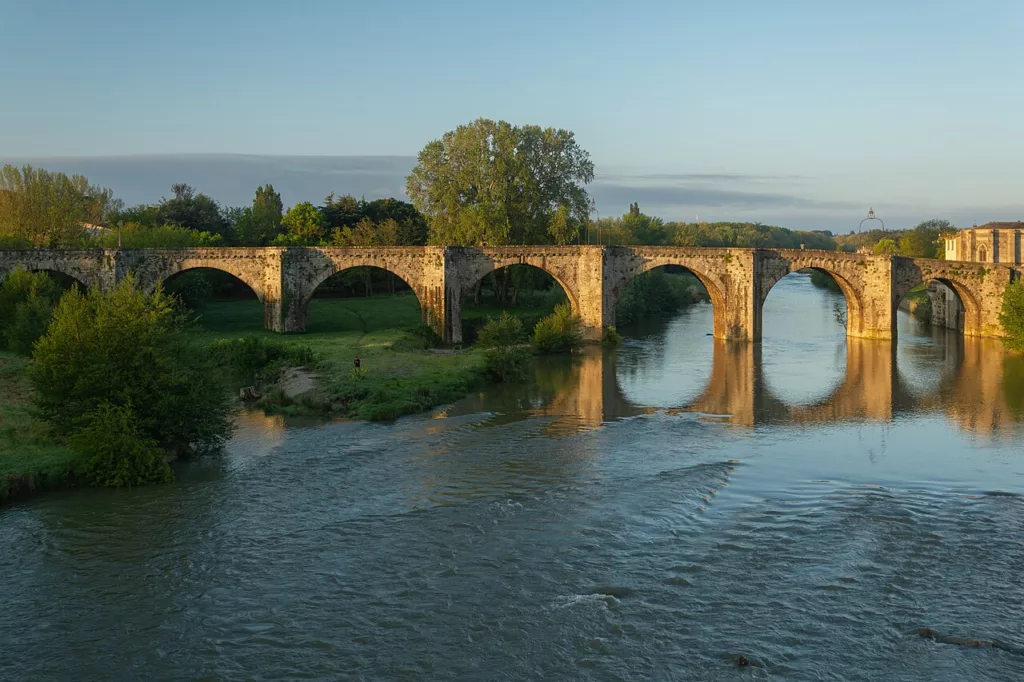
The Old Bridge of Carcassonne
The Pont Vieux is an iconic medieval bridge crossing the Aude River in Carcassonne. It is now a pedestrian crossing connecting the lower town with the famous medieval citadel.
Its history dates back to the 12th century: in 1184, the viscount Roger Trencavel authorized the construction of the first bridge, likely made of wood. It was destroyed during the Albigensian Crusade. A new stone bridge was then built in the early 14th century under royal authority and completed around 1320.
In the Middle Ages, it was the only connection between the lower town and the fortified city. It even featured a symbolic separation between these two areas.
The bridge has undergone several restorations over the centuries, including after the collapse of some arches in 1456 and major 19th-century works that altered its appearance. It has been listed as a historic monument since 1926.
Measuring about 225 meters, it consists of twelve semicircular arches resting on piers with pointed cutwaters designed to withstand the current. Refuge areas on these piers once allowed pedestrians to take shelter from passing carts.
The Hôtel de Rolland
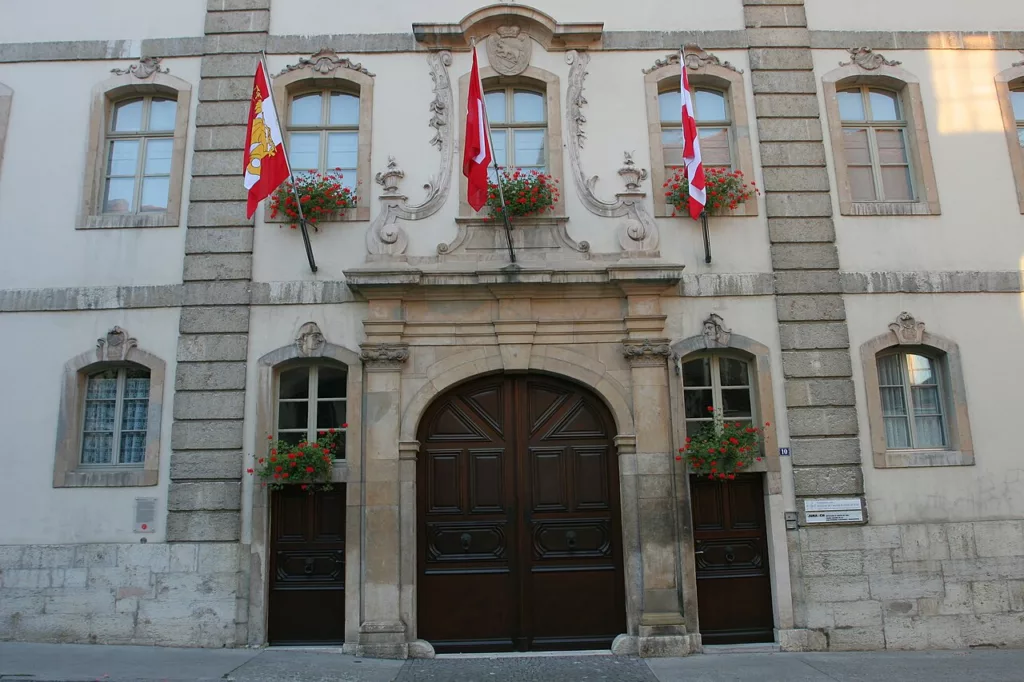
The Hôtel de Rolland
The Hôtel de Rolland is a historic building located in the heart of Carcassonne, now used by the municipal administration. Listed as a historic monument since 1923, it is a fine example of 18th-century civic architecture.
Built between 1751 and 1761 for Jean-François Cavaillès, it was designed by architect Guillaume Rollin in a neoclassical style. Originally a private mansion organized around an inner courtyard, it features a main building and side wings. Its elegant façade includes arched openings, a balcony, and typical decorative elements of the period.
In 1815, it was acquired by Antoine Joseph Gérard de Rolland, from whom it takes its name. It remained in this family for over a century before being purchased by a bank and later by the city of Carcassonne in 1978.
Today, the Hôtel de Rolland is integrated into the city hall complex, which also includes a 1930s Art Deco extension. Inside, rooms such as the city council chamber and wedding hall are still in use.
Over time, the building has evolved from a prestigious private residence into a central administrative hub, while preserving its historical character.
The Porte des Jacobins
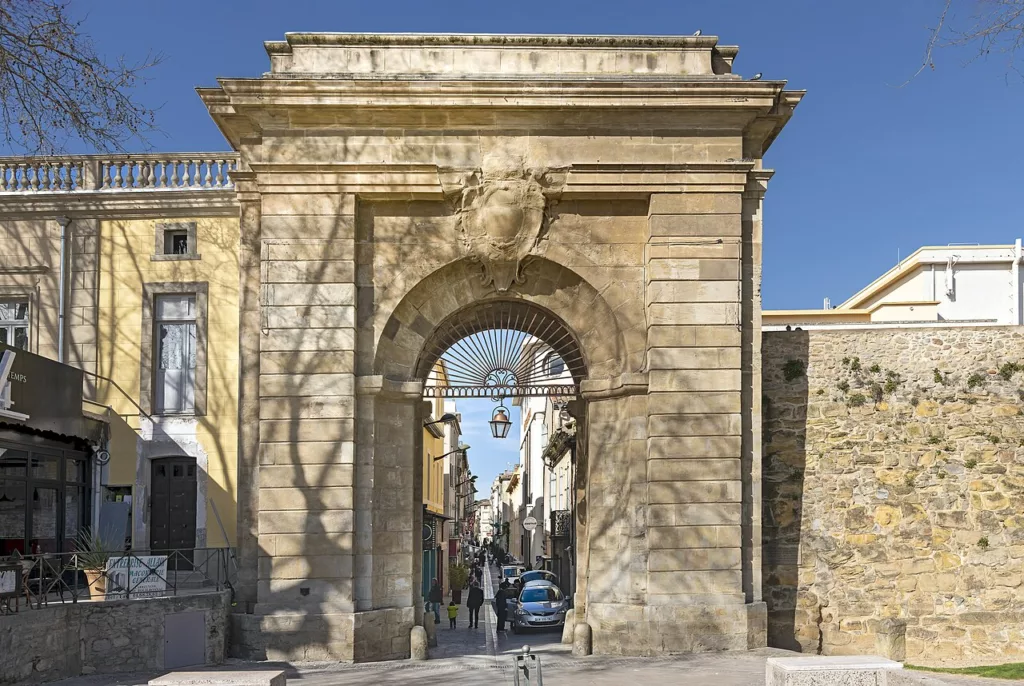
The Porte des Jacobins
The Porte des Jacobins is the last remaining of the four gates that once provided access to the lower town of Carcassonne. These gates were part of the fortifications built between 1355 and 1359 to protect the city.
The current gate dates from 1779. It was rebuilt on its original site after the city’s ramparts, towers, and moats were transferred to the community by a decree of the Council in 1778.
Its construction involved several design proposals. After review, local authorities selected the plan by architect Dalbeau in 1778. The work was entrusted to a contractor, while the sculptural decoration was created separately by a local artist.
Originally, the gate featured two carved coats of arms:
– on the outside, the royal arms with honorific symbols,
– on the inside, the city’s arms topped with a crown.
These decorations have since disappeared.
The Porte des Jacobins remains an important testimony to the former fortifications of the lower town and its evolution in the late 18th century.
The Saint-Michel Cathedral of Carcassonne
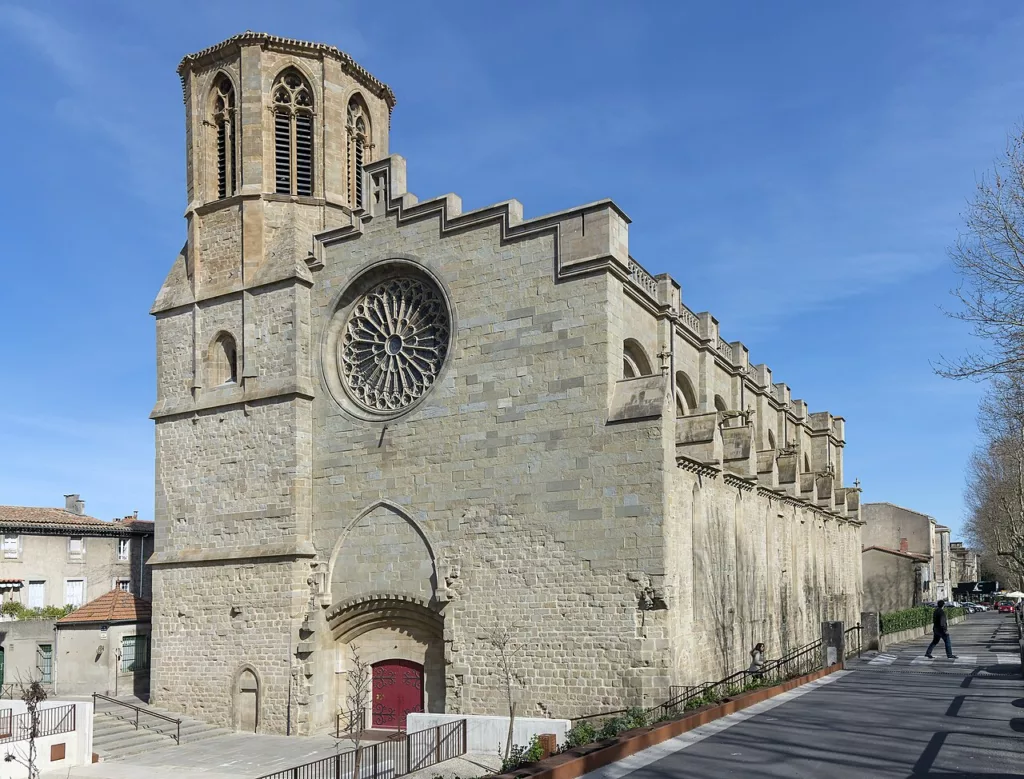
The Saint-Michel Cathedral of Carcassonne
The Saint-Michel Cathedral is the main church of the diocese of Carcassonne. Located in the Bastide Saint-Louis, the lower town, it became a cathedral in 1803, replacing the Basilica of Saint-Nazaire in the medieval citadel.
Its construction began in 1247 by order of King Saint Louis, after the destruction of an earlier sanctuary during the conflicts of the 13th century. The building, initially modest, was expanded from the end of the 13th century to accommodate a growing population.
Over its history, the cathedral suffered several destructions and reconstructions, notably after the fire of 1849. It was then extensively restored in the 19th century by architect Eugène Viollet-le-Duc, who strongly influenced its current appearance.
The cathedral is built in the Southern Gothic style. It consists of a single nave with eight bays, flanked by side chapels. The older choir features a polygonal apse with large Gothic windows filled with 14th-century stained glass.
The façade is dominated by a large 8-meter rose window, while the massive bell tower, with a rectangular base transitioning to an octagonal upper section, houses eight bells.
Inside, the cathedral preserves a remarkable organ built by Aristide Cavaillé-Coll in 1860, as well as decorative elements restored by Viollet-le-Duc.
The cathedral became the episcopal seat in 1803, when the bishopric was transferred from the medieval citadel to the lower town. It has been listed as a historic monument since 1886, with its surroundings protected since 1926.
Saint-Vincent Church of Carcassonne
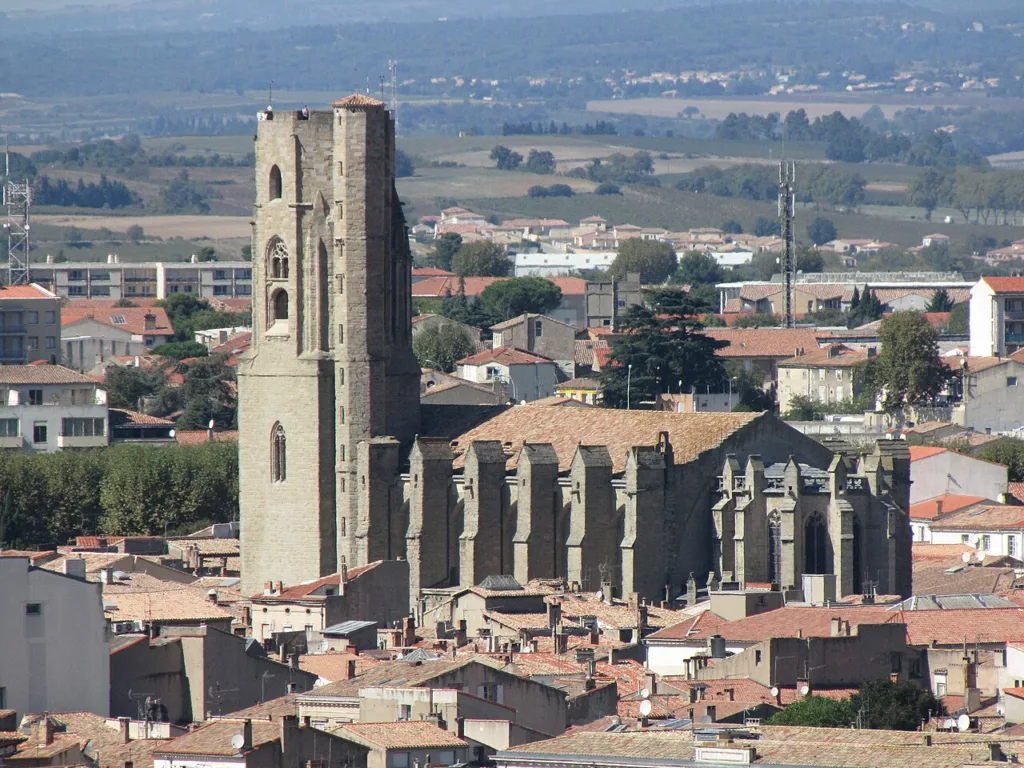
Saint-Vincent Church of Carcassonne
The Saint-Vincent Church of Carcassonne is a religious building in the Southern Gothic style located in the Bastide Saint-Louis, in Carcassonne. Its construction began in 1269 as part of the development of the new town promoted by Saint Louis in the 13th century.
Built progressively between the 14th and 15th centuries, the church quickly became a major element of urban life. It features a single nave with side chapels and a polygonal choir. Its bell tower, about 54 meters high, long served as a watchtower.
Over the centuries, the building underwent numerous transformations and uses: damaged during the Wars of Religion, it was used as a foundry during the French Revolution before being returned to worship in 1795. Major restoration work began in the 19th century, followed by several conservation campaigns up to modern times.
Listed as a historic monument since 1907, the church preserves remarkable architectural and artistic heritage, including an 18th-century organ and an important bell carillon.
Notre-Dame des Carmes Church of Carcassonne
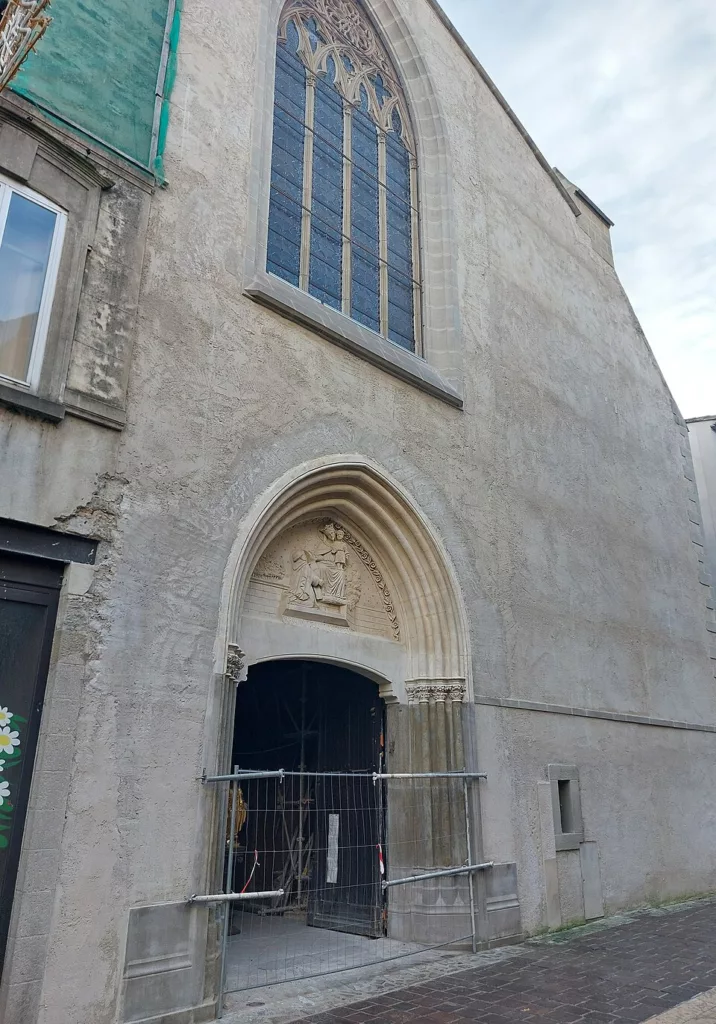
Notre-Dame des Carmes Church of Carcassonne
The Notre-Dame des Carmes Church is a religious building located in Carcassonne, in the Aude department of Occitanie. This Catholic place of worship, linked to the Carmelite order, reflects the religious and architectural history of the region.
It was built in 1297 by members of the Carmelite order established in Carcassonne. It served both as a place of prayer for the monks and as a parish church for local residents. After the fire caused by the Black Prince in 1355, the church was rebuilt in 1370.
Over the centuries, it underwent several modifications, especially in the 19th century with the addition of Baroque elements.
The building is characterized by Southern Gothic architecture, including:
– an ornate façade with sculpted details and decorative elements,
– a single nave with six bays and a polygonal choir,
– stained glass windows depicting biblical scenes and saints,
– the Chapel of the Holy Sacrament with a painted ceiling.
The bell tower, added in the 19th century, is a distinctive feature of the building.
In the 18th century, after the French Revolution, the church was deconsecrated and used as a warehouse or court. It was later restored and listed as a historic monument. It is adjacent to the diocesan headquarters of Carcassonne and Narbonne.
Must-Visit Museums
The Medieval Camp of Carcassonne
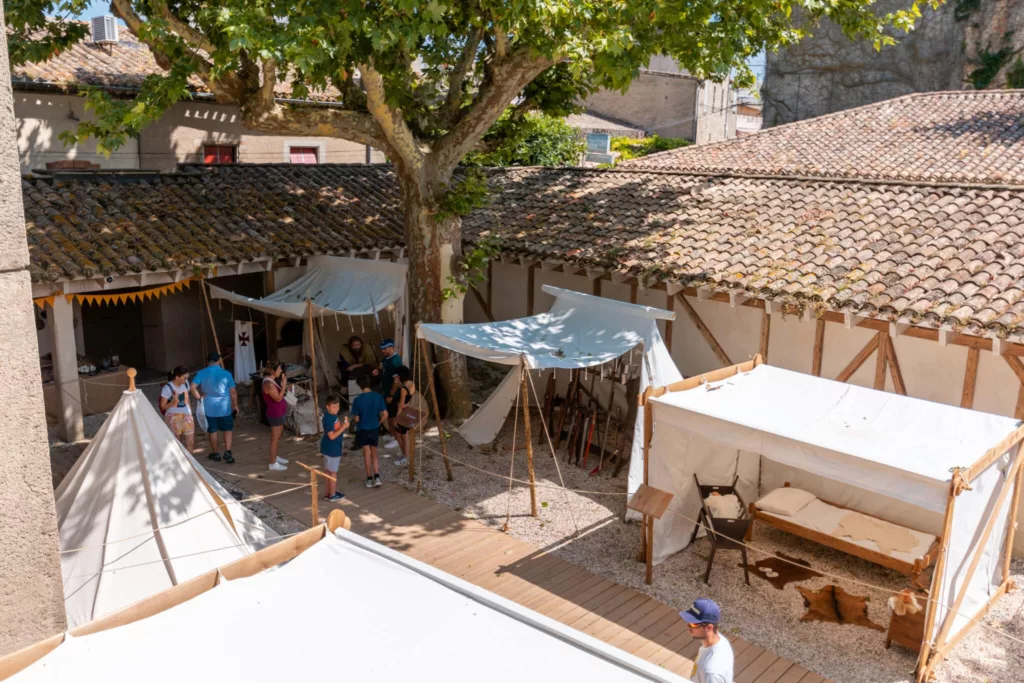
The Medieval Camp of Carcassonne
With the Medieval Camp of Carcassonne, discover the Middle Ages for free in the heart of the medieval city of Carcassonne. Immerse yourself in an interactive experience where visitors of all ages can explore daily medieval life, discover ancient crafts, take part in hands-on workshops, taste medieval-inspired food, and enjoy original activities such as the Meeple Escape Game. The Medieval Camp is a unique place that brings history to life in a UNESCO World Heritage setting.
Inside the camp, discover themed tents and rooms presenting medieval daily life, including:
– medicine and diseases of the time
– weapons and armor of knights and soldiers
– monastic life and calligraphy
– hygiene, clothing, and musical traditions
– tournaments and medieval games
Each space is designed to be educational and immersive, helping visitors understand medieval tools, gestures, and customs.
Children aged 6 to 11 can also take part in interactive workshops:
– knight and lady training course
– heraldry (coat of arms creation)
– calligraphy
– leather crafting
– medieval games and initiation
Discover the craftsmanship of medieval artisans such as blacksmiths, calligraphers, jewelers, potters, weavers, and apothecaries through demonstrations and workshops.
Carcassonne Fine Arts Museum
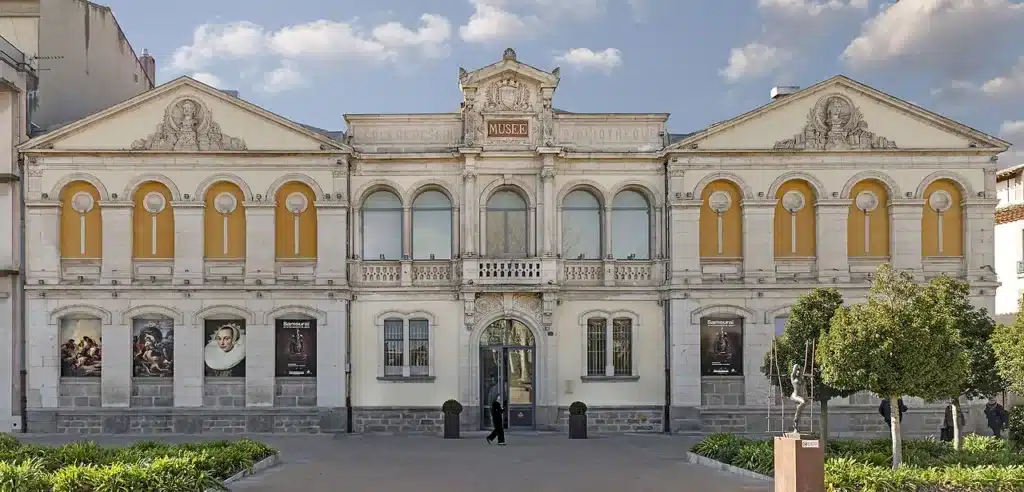
Carcassonne Fine Arts Museum
The Carcassonne Fine Arts Museum is an art museum located in the Bastide Saint-Louis in Carcassonne (Aude), France. Housed in the former city courthouse, it was founded in 1836 by art, history, and archaeology enthusiasts, making it one of the oldest cultural institutions in the region.
The museum’s collections are rich and diverse, covering a wide period from the 16th to the 20th century. They include paintings, sculptures, decorative arts, and archaeological objects. The collection features major European schools, including French, Italian, Flemish, Dutch, Spanish, and German art. Notable artists include Jean-Auguste-Dominique Ingres, Jean Siméon Chardin, Gustave Courbet, and Jean-Baptiste Camille Corot, along with many others representative of their periods. The museum also holds an important collection of works by Jacques Gamelin, a painter born in Carcassonne, strengthening its local identity.
The museum is organized into eleven thematic rooms following a chronological path from the 16th century to contemporary art.
The Centre for the Memory of Combatants
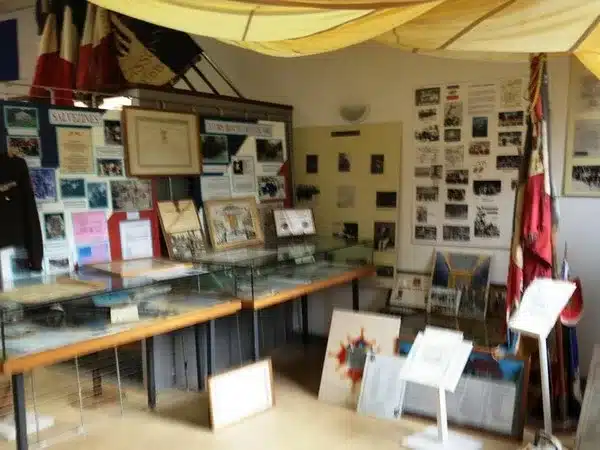
The Centre for the Memory of Combatants
The Centre for the Memory of Combatants is a place dedicated to preserving and promoting the history of military conflicts that have marked France, including World War I (1914–1918), World War II (1939–1945), the Indochina and Algerian Wars, as well as more recent overseas military operations. Located in Carcassonne, it offers free access to the public, with visits available Monday to Friday from 9:00 to 12:00 and from 14:00 to 18:00, and group visits available by reservation.
The centre is divided into several areas across two floors. On the ground floor, a reading room allows visitors to consult period magazines and books related to modern conflicts. There is also a conference room used for screenings, meetings, and temporary exhibitions. On the upper floor, a permanent exhibition displays a collection of objects, uniforms, and military memorabilia mainly donated by veterans, their families, or supporters. These items form an important testimony to collective memory and military heritage.
School Museum of Carcassonne
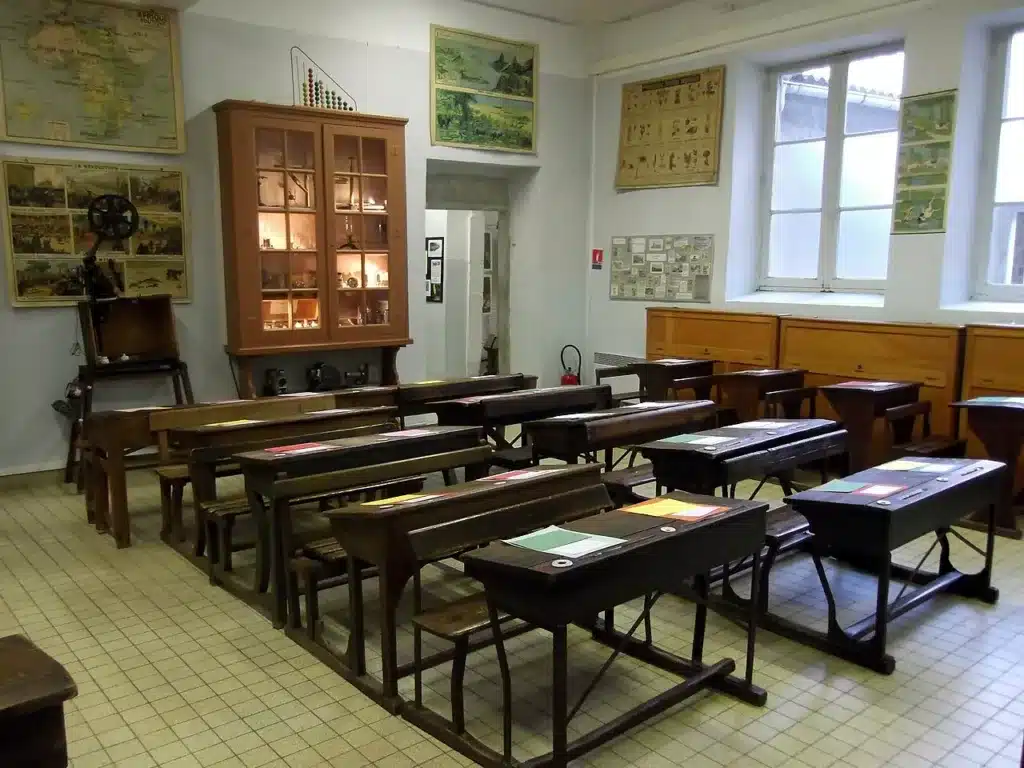
School Museum of Carcassonne
The School Museum of Carcassonne is located in the heart of the medieval city of Carcassonne, in the Aude department of France. Housed in the former city school, it has been part of the Carcassonne Fine Arts Museum since September 1, 2009. This cultural site is dedicated to preserving and presenting school materials and documents used between 1880 and 1960, covering a period from the Third to the Fifth Republic.
The museum originated from Francis Loubés, who began collecting and restoring school furniture and objects from former municipal schools in 1980. His passion gradually led to the creation of a museum supported by the city of Carcassonne and organized through the School Museum Association.
Today, the museum offers an immersive experience into traditional school life through reconstructed classrooms with wooden desks, blackboards, ink blots, and educational tools from the past. Its collections also include textbooks, teaching posters, educational objects, and old projection equipment.
The museum regularly hosts temporary thematic exhibitions and reenactments of historical classrooms, including handwriting workshops with fountain pens, traditional dictations, and educational activities for school groups and visitors.
It offers a true journey into the history of French education, highlighting school life from the late 19th century to the mid-20th century, while maintaining a fun and educational approach for all audiences.
Parks and Green Spaces
The Australian Park
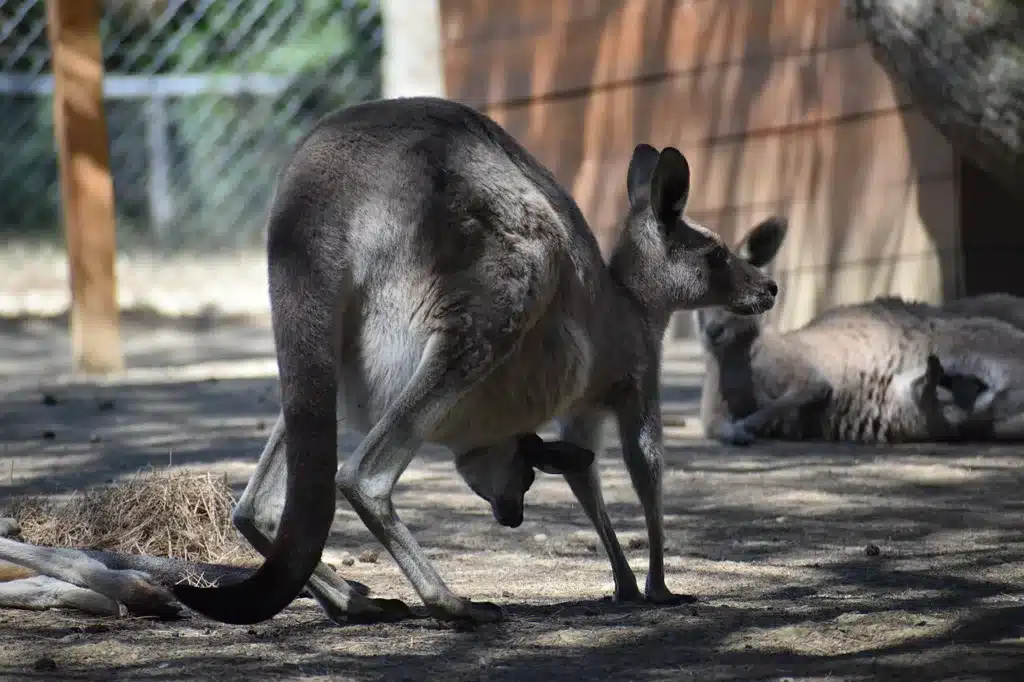
The Australian Park
The Australian Park is a themed attraction and activity park located in Carcassonne, near the famous medieval city. It offers an immersive Australian-inspired experience, allowing visitors to discover iconic animals such as kangaroos, wallabies, ostriches, and exotic birds in a natural and educational setting.
Designed as a family-friendly discovery park, it emphasizes interaction between visitors and animals through guided tours and supervised activities. Visitors may feed certain animals and access specific areas accompanied by animal keepers. The park also offers educational and fun workshops such as “animal keeper for a day” for children, boomerang throwing initiation, and gold-panning activities.
The Australian Park is especially suited for families with children, offering playgrounds, discovery trails, and varied activities in a friendly atmosphere. Visitors also benefit from picnic areas and relaxation spaces, making it ideal for a full-day outing. Reviews often highlight the quality of hospitality, the friendliness of staff, and the richness of animal interactions.
The Cavayère Lake
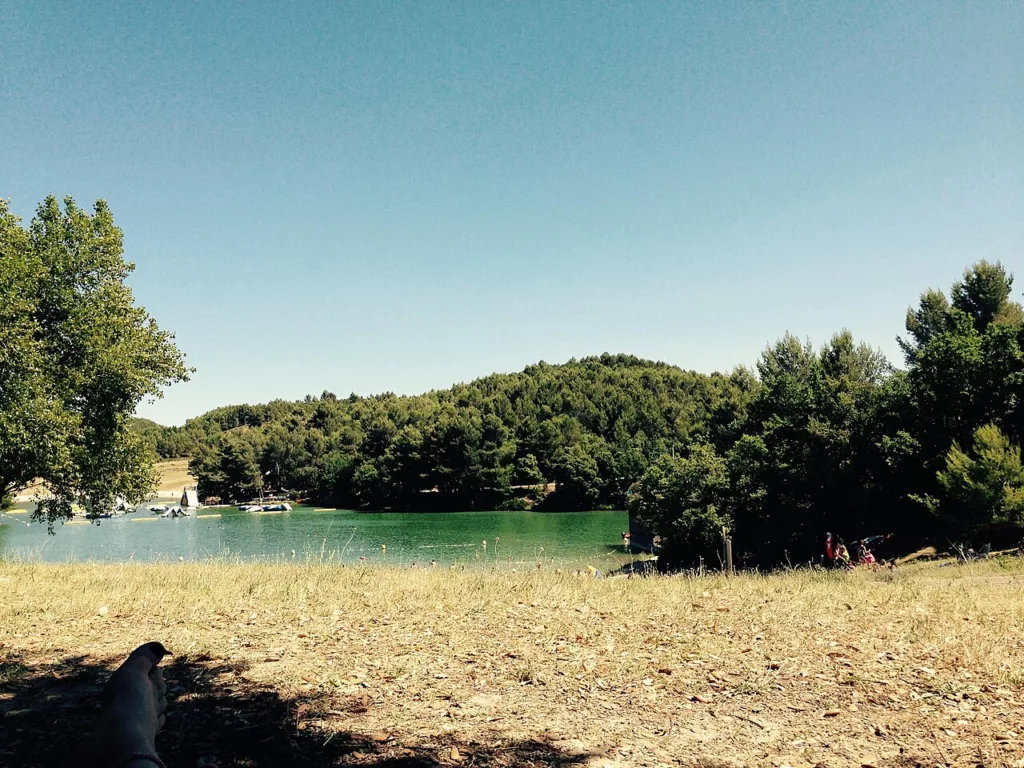
The Cavayère Lake
The Cavayère Lake is a reservoir located about 7 km southeast of Carcassonne, in the Aude department of the Occitanie region. Often called “Carca Plage,” it covers an area of about 18 hectares and is part of a large recreational area popular with both locals and tourists.
Created in the late 1980s under the initiative of Carcassonne’s mayor Raymond Chesa, the lake was developed after a major fire in 1985. The dam, about 23 meters high, holds nearly 1.5 million cubic meters of water fed by several streams.
Today, the site is a leisure and outdoor activity area. It features supervised beaches, picnic areas, and various water activities such as pedal boats, a wakeboard cable park, and summer inflatable water structures. A treetop adventure course is also located nearby, making it a complete family recreation area.
The Jouarres Lake
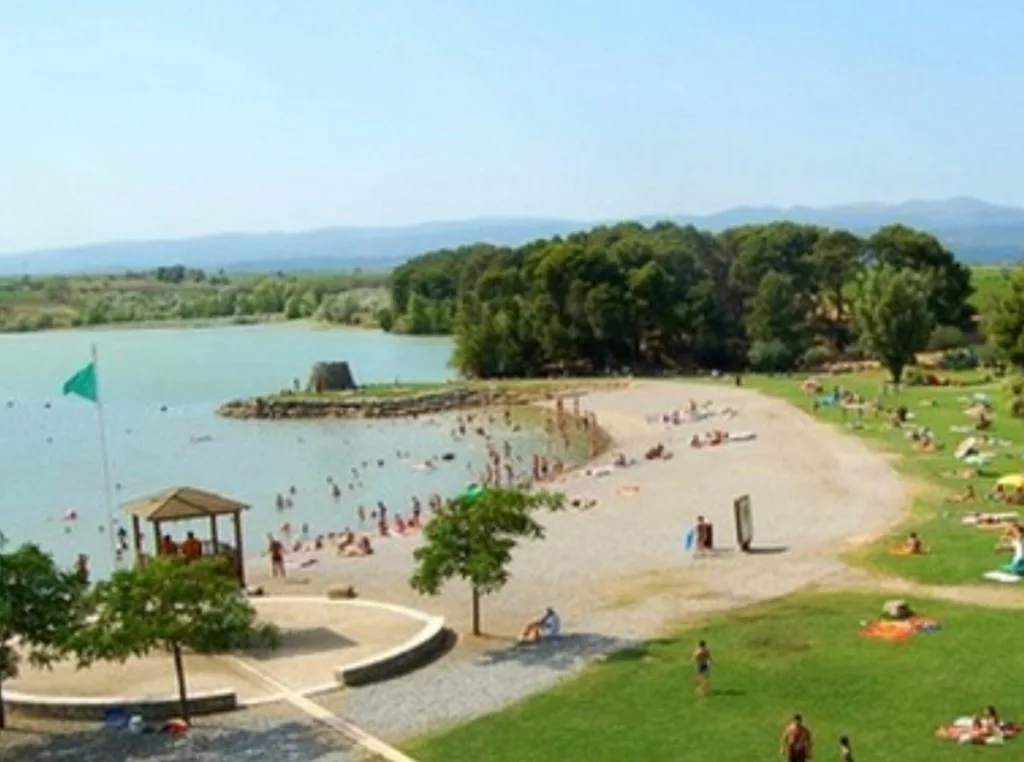
The Jouarres Lake
The Jouarres Lake
The Jouarres Lake is an artificial lake located in the Occitanie region, on the border between the Aude and Hérault departments, in the communes of Azille and Olonzac. Created in 1992 on a former pond, it covers an area of about 94 hectares.
It plays an important role in water management, particularly for irrigation and supporting the Canal du Midi, which partially depends on it for its water supply.
Today, the lake is also a popular leisure area. It features a supervised beach, water activities such as canoeing, paddleboarding, and pedal boats, as well as fishing areas and walking paths, including a 5 km loop around the lake. It is a well-known summer destination for outdoor activities and relaxation.
Place Gambetta
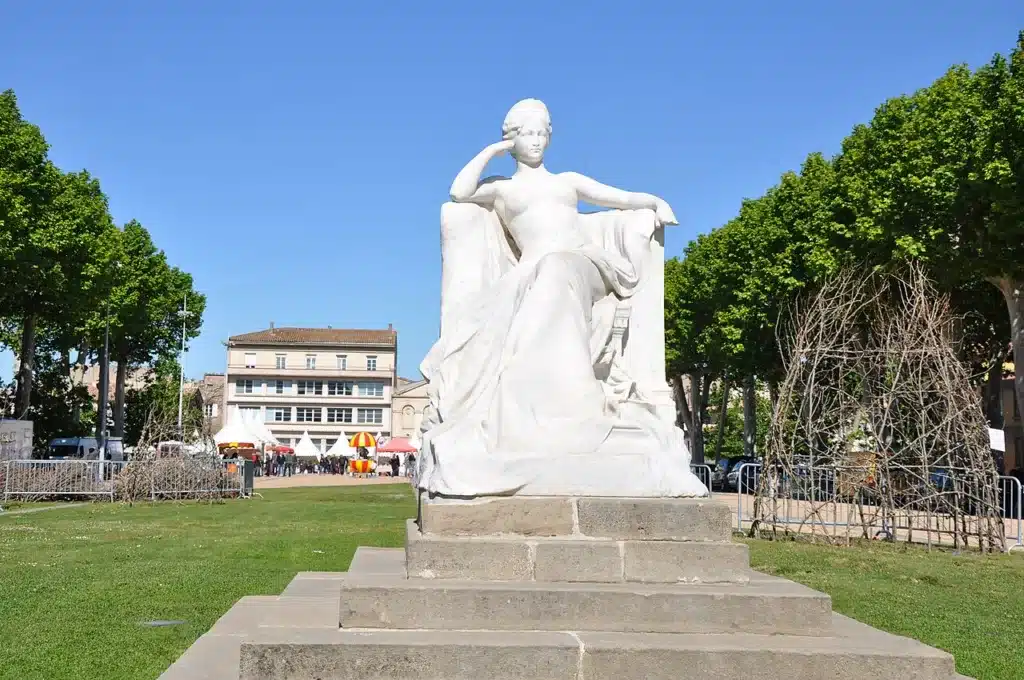
Place Gambetta
Gambetta Square is a public garden located in Carcassonne. Developed in the 19th century on the former Charbon Square, it was first inaugurated as Sainte-Cécile Square in 1861, before being renamed Gambetta Square in 1883.
The site has a turbulent history, including partial destruction in 1944 during the German occupation, followed by reconstruction after the Liberation. It was reopened in 1948 as a French-style garden, featuring a monument dedicated to the Resistance.
In 2015, it underwent major renovation with new green areas, shaded zones, and a water mirror. It also currently hosts the Carcassonne Museum of Fine Arts and serves as a popular place for relaxation and walking in the city center.
The Mayronnes Sculpture Trail
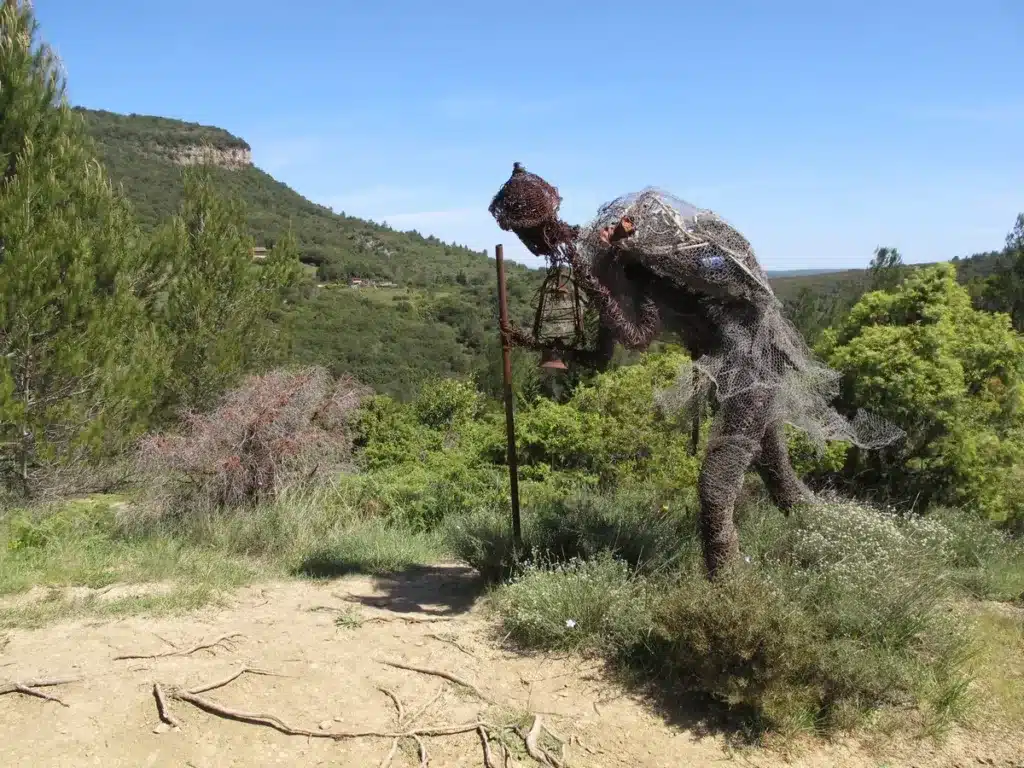
The Mayronnes Sculpture Trail
The Mayronnes Sculpture Trail is an artistic hiking path located in the Corbières region of the Aude, near Lagrasse. Stretching about 6 km, it offers an accessible walk through a Mediterranean natural landscape.
This original trail features around thirty contemporary sculptures installed outdoors. The artworks blend into the natural environment and create an experience combining art and nature, with beautiful viewpoints over the surrounding landscapes.
Created in 1993, the project was initiated by a passionate sculptor and developed through a local association. Today, the sculptures remain permanently installed, and the site is freely accessible year-round.
It is an enjoyable walk, ideal for families, combining hiking, artistic discovery, and immersion in a preserved natural environment.
Gastronomy & Specialties
The Cassoulet
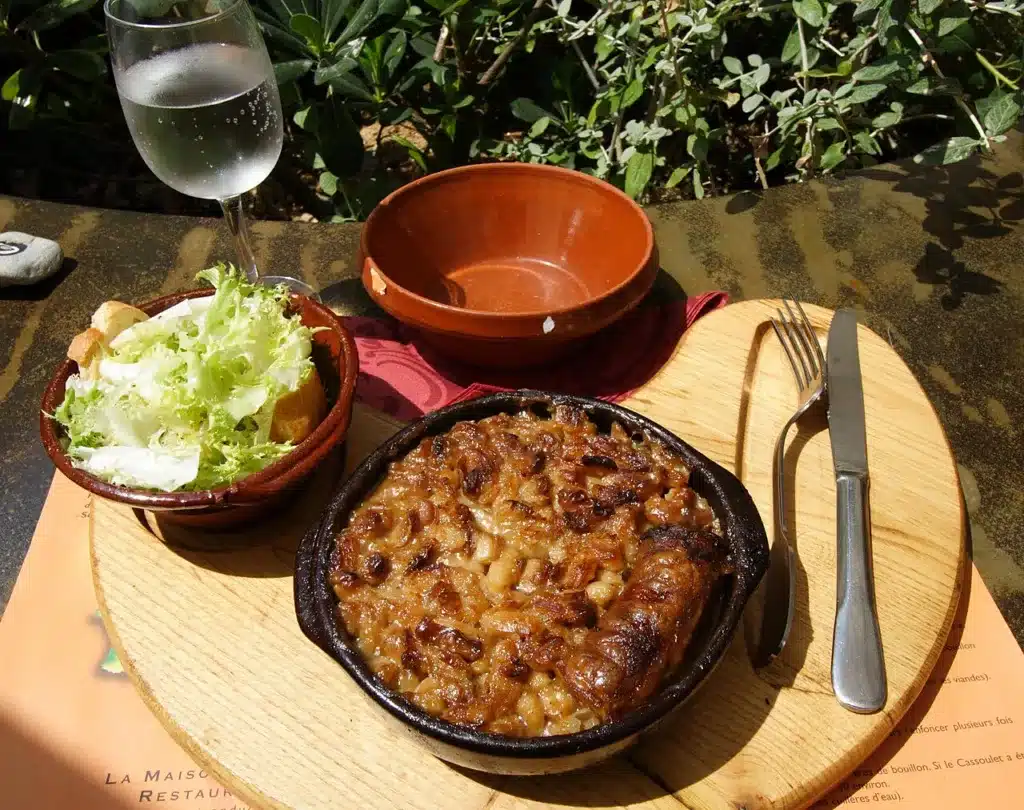
The Cassoulet
Cassoulet is the iconic traditional dish of Carcassonne and the wider southwest of France. It is a slow-cooked dish made with white beans, pork, duck or goose confit, and sometimes Toulouse sausage, all cooked slowly in a traditional earthenware pot called a cassole.
This dish is deeply rooted in Occitan culture and is often associated with family and convivial meals. Several regional variations exist, especially in Carcassonne, Castelnaudary, and Toulouse, each with its own interpretation of the recipe.
In Carcassonne, cassoulet may sometimes include partridge meat, which slightly distinguishes it from other versions. Today, it is considered a must-try culinary specialty, served in many local restaurants and often enjoyed with regional red wine.
Languedoc-Style Snails
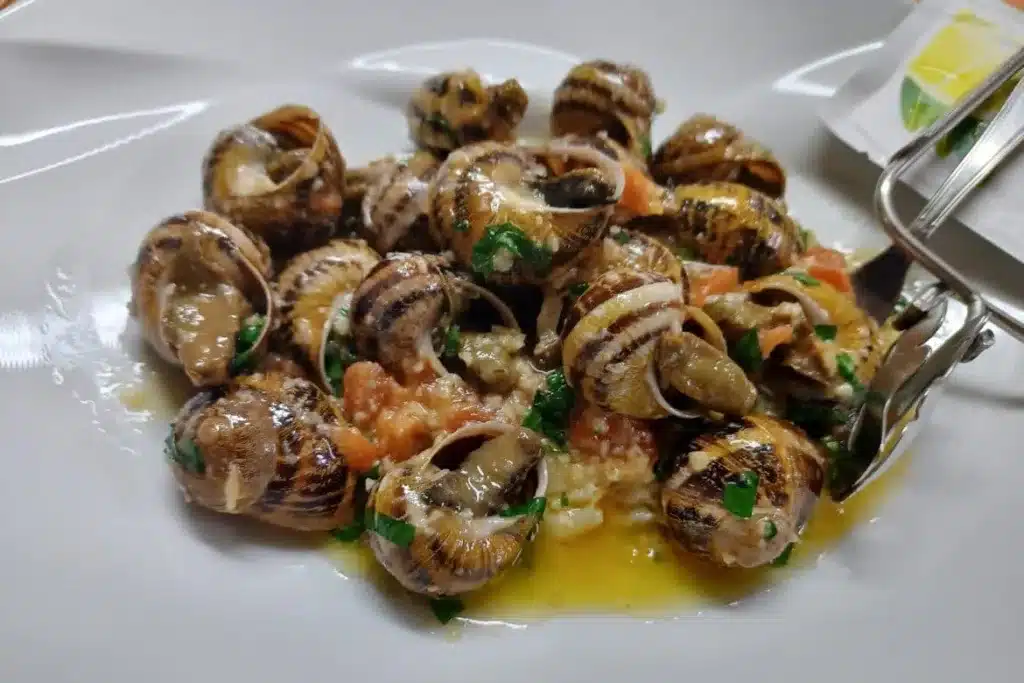
Languedoc-Style Snails
Languedoc-style snails, inspired by traditional southern recipes such as Carcassonne-style snails, are characterized by a simple and flavorful Mediterranean preparation. The snails are first sautéed with finely chopped onion and garlic in olive oil, then simmered with fresh diced tomatoes and a splash of white wine.
The mixture is slowly reduced to concentrate the flavors. At the end of cooking, it is seasoned with salt, pepper, and a touch of Espelette pepper, then topped with fresh parsley. This rustic and generous dish highlights snails in a light sauce version, more delicate than the traditional garlic butter preparation, and typical of Languedoc cuisine.
The Petit Carcassonnais

The Petit Carcassonnais
This small oval cake, with a delicate texture similar to a sponge cake or madeleine, reveals subtle aromas of candied orange peel. Created in 1928 by Mr. Gau, it was later taken over by the Fuster family, who remain its sole producers today, continuing an authentic artisanal tradition.
The Frozen Cassoulet

The Frozen Cassoulet
Frozen cassoulet is a sweet specialty from Castelnaudary inspired by the traditional cassoulet. It is an original dessert served in a nougatine cassole, featuring a base of almond caramel topped with melted chocolate and homemade vanilla ice cream. It is finished with praline and a red fruit coulis, offering a contrast of crunchy, creamy, and fresh textures.
Created to visually resemble the traditional dish, this gourmet dessert has become a popular summer specialty in the region, combining pastry creativity with local identity.
The Carcassonnais
The Carcassonnais is a local pastry inspired by the Swiss brioche. Very popular among locals, it is a soft, buttery brioche with a light, sweet crumb, generously filled with vanilla custard and candied fruit pieces. The dough is folded like a calzone, trapping a rich filling that gently oozes when eaten.
Sweet and indulgent, this “sweet sandwich” combines airy brioche, creamy filling, and colorful fruit pieces. Traditionally, locals enjoy it with family, especially on Sunday lunches, making it a true moment of conviviality.
Excursions around Carcassonne
Toulouse
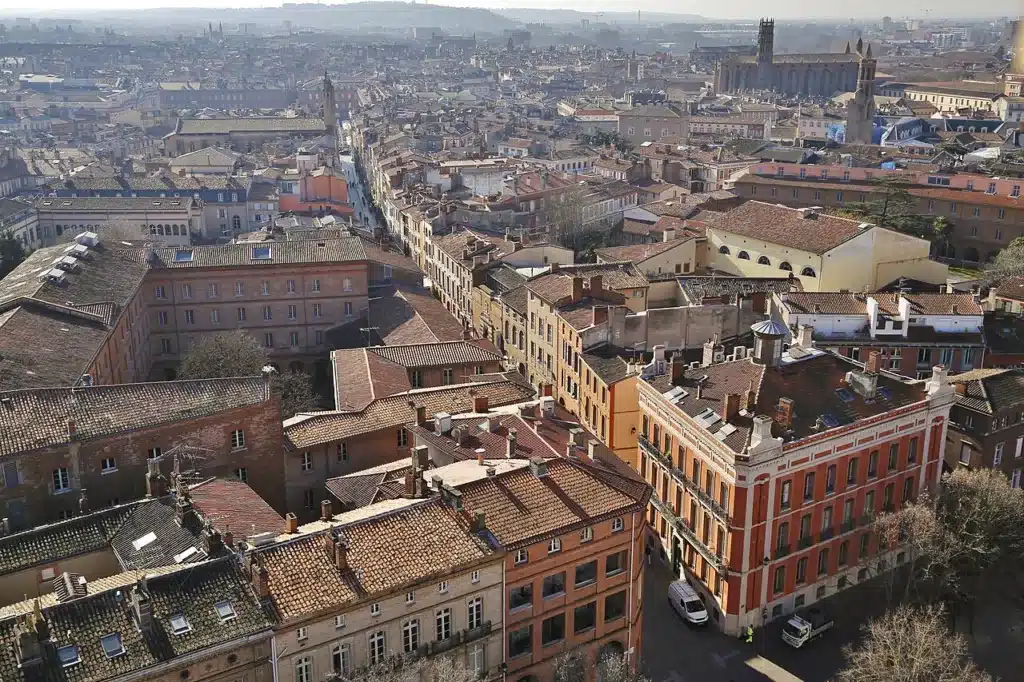
Toulouse – view of Old Toulouse
Toulouse is an ideal day trip from Carcassonne, located about 1h15 away by car. Nicknamed the “Pink City,” it is known for its warm-toned terracotta brick architecture. The historic center is built around the Capitole Square, the lively heart of the city. Visitors can explore many shopping streets, cafés, and historic buildings with a distinctly Occitan atmosphere. The Garonne riverbanks offer a pleasant walk with beautiful city views.
Toulouse is also known for its rich cultural life, with several museums and landmarks. It is a dynamic city that perfectly combines heritage, gastronomy, and student life. This excursion offers a change of atmosphere while staying close enough to return to Carcassonne the same day.
Narbonne
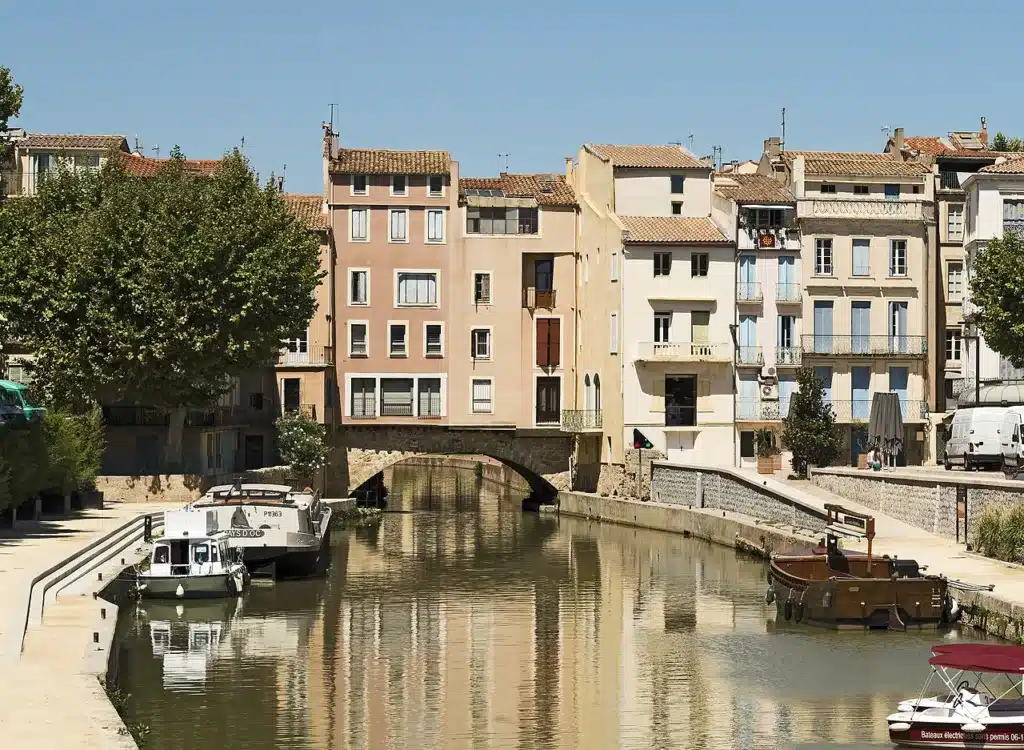
Narbonne – The Merchant Bridge
Narbonne is a perfect day trip from Carcassonne, located about one hour away. A former Roman colony, the city preserves a rich historical heritage visible in its old center. The unfinished Gothic Cathedral of Saint-Just and Saint-Pasteur is particularly impressive. The city center is animated by Les Halles de Narbonne, a covered market known for its local products and lively atmosphere.
The city is also crossed by the Canal de la Robine, ideal for a peaceful walk along the water. Narbonne offers a harmonious mix of history, culture, and Mediterranean gastronomy. Visitors can also explore museums and ancient remains to enrich their visit.
Albi
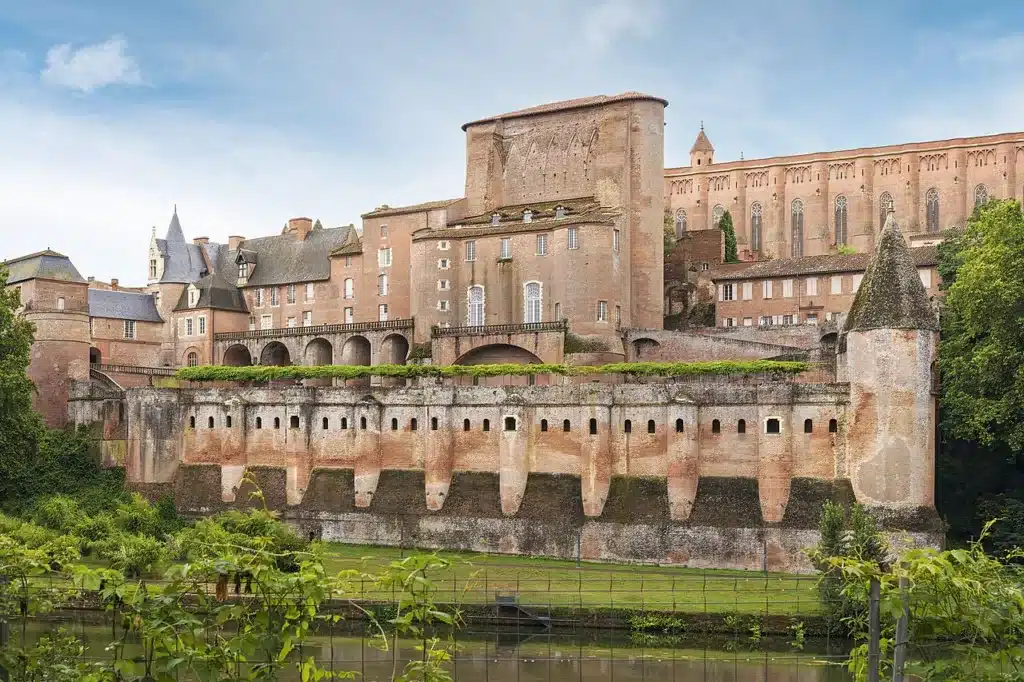
Berbie Palace
Albi is an essential day trip from Carcassonne, located about 1h45 away. Listed as a UNESCO World Heritage Site, it is famous for its perfectly preserved episcopal city. The Sainte-Cécile Cathedral is remarkable for its entirely red brick construction and extraordinary interior decoration.
Nearby, the Berbie Palace houses the Toulouse-Lautrec Museum, dedicated to the famous painter born in Albi. The historic center is easily explored on foot, with medieval streets and traditional houses. The Tarn riverbanks offer a pleasant walk with beautiful views of the city.
Albi combines heritage, art, and a relaxed lifestyle in a warm atmosphere, making it one of the cultural gems of southwestern France.
Conclusion: Visiting Carcassonne
Visiting Carcassonne is an essential experience for anyone interested in heritage, history, and discovery in Occitanie. Between its UNESCO-listed medieval city, impressive ramparts, historic gates, and iconic monuments such as the Comtal Castle and the Saint-Nazaire Basilica, the city offers a true journey through time.
But visiting Carcassonne also means enjoying a lively destination rich in local gastronomy and southwestern specialties. Its ideal location also allows for easy day trips to Toulouse, Narbonne, or Albi.
Whether for a short stay or a longer holiday, visiting Carcassonne guarantees a complete immersion in culture, relaxation, and authenticity.