
Visit Vienna: 30 Must-See and Must-Do Attractions
Vienna, the capital of Austria, is a city where imperial history blends with art, music, and gastronomy. From its majestic palaces like Schönbrunn and the Hofburg to iconic churches such as St. Stephen’s Cathedral and St. Charles Church, every corner of the city tells a chapter of its rich past.
Its prestigious museums, historic cafés, and green parks offer a complete immersion in Viennese culture. From walks along the Danube, tasting local specialties, to excursions in the Wachau Valley or nearby Bratislava, Vienna emerges as an ideal destination to combine heritage, art, and sensory pleasures.
This article will guide you through the must-see places and hidden treasures of the city, for an unforgettable Viennese visit.
Visit Vienna with our Vienna scavenger hunt—a mix between an escape game and a cultural tour.
Monuments & Historical Heritage
Schönbrunn Palace
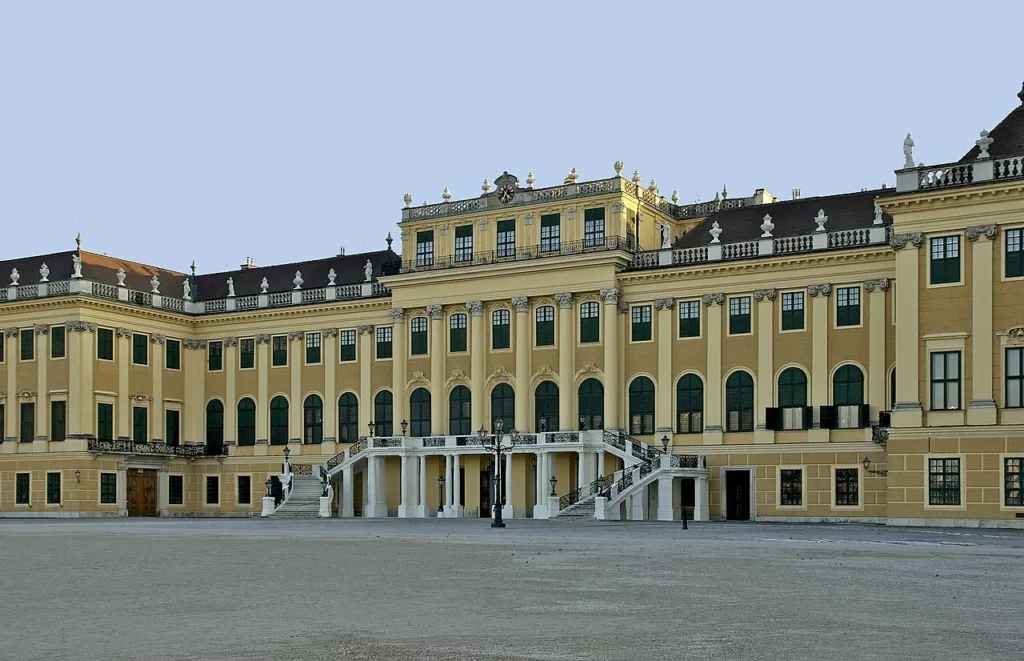
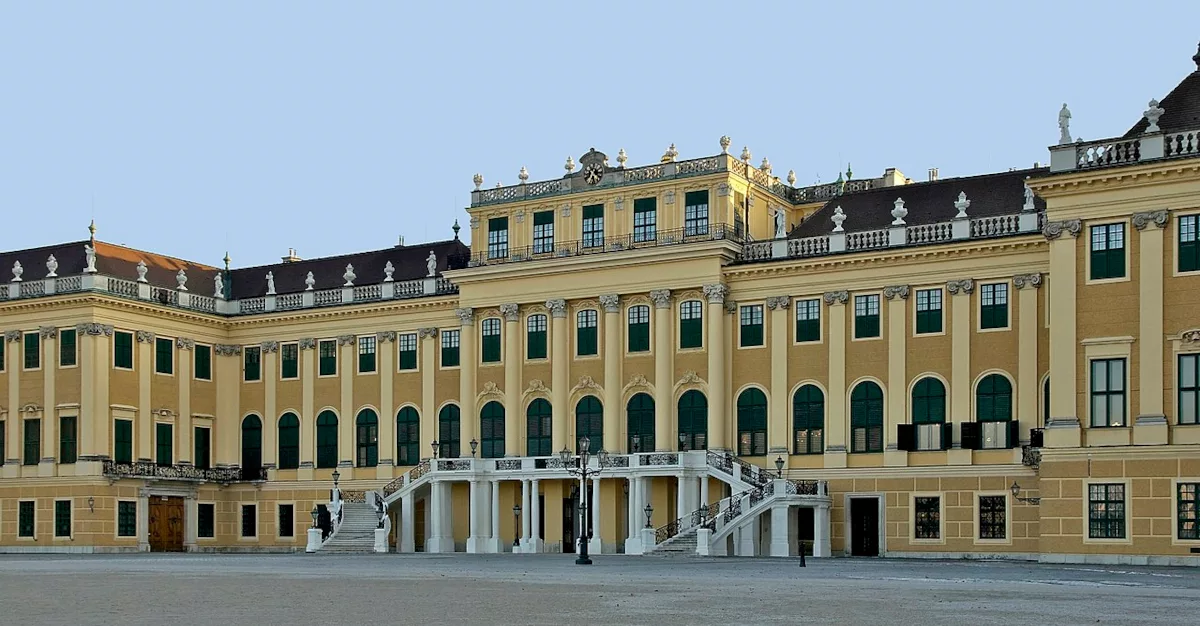
The Schönbrunn Palace (Schloss Schönbrunn) is a former imperial summer palace located in Vienna’s 13th district.
It has 1,441 rooms, making it one of Austria’s largest and most majestic palaces. The palace was designed by the Baroque architect Johann Bernhard Fischer von Erlach and later expanded by Nicolaus Pacassi during the reign of Maria Theresa.
Schönbrunn was the summer residence of the Habsburg dynasty from the mid-18th century until 1918.
After the fall of the Austro-Hungarian Empire in 1918, the palace became a museum open to the public.
The Schönbrunn Zoo, located in the palace gardens, is the oldest still-operating zoo in the world, founded in 1752.
The Palmenhaus at Schönbrunn, a large greenhouse in the park, houses thousands of plant species and is one of the largest greenhouse buildings in Europe.
The Schönbrunn Park, with its statues, fountains, the Gloriette, and decorative Roman ruins, forms a true “Gesamtkunstwerk”, a total Baroque work of art.
Hofburg Palace
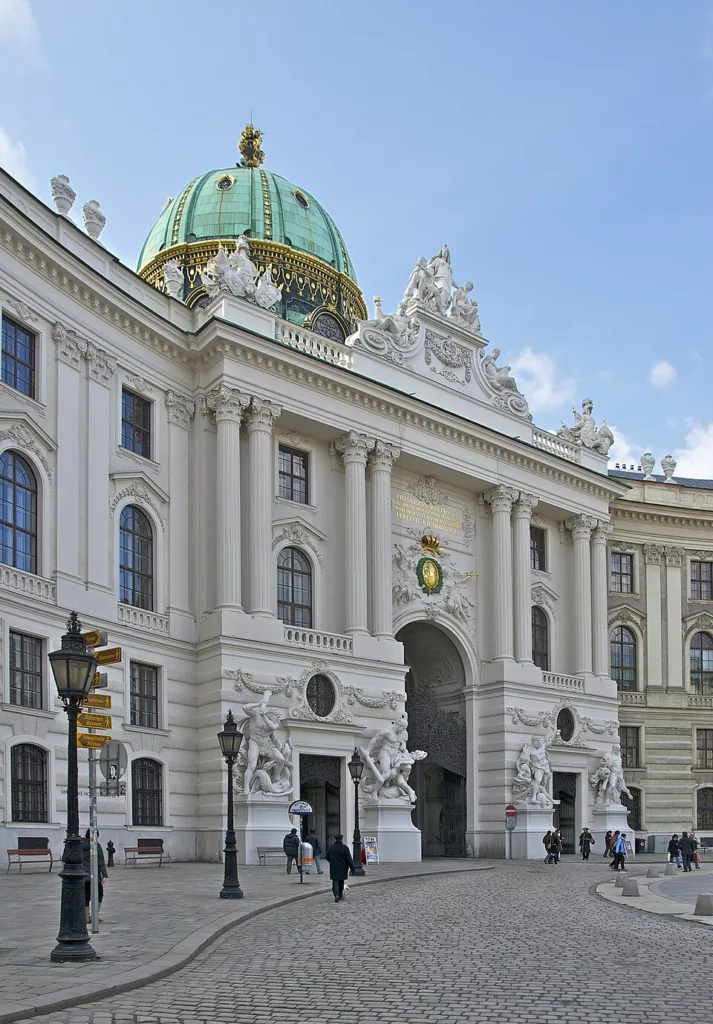
The Hofburg Palace is a former imperial palace located in Vienna’s 1st district. The Hofburg complex gradually developed from the 13th century, with architectural additions continuing until the early 20th century.
For over six hundred years, the Hofburg was the residence of the rulers of the Habsburg dynasty. Since 1946, it has housed the official residence and office of the Federal President of Austria.
The palace comprises about 18 wings, 19 courtyards, and over 2,600 rooms according to some sources. The architectural style of the Hofburg blends multiple eras: Gothic, Renaissance, Baroque, and Neoclassical.
The “Swiss Wing” is one of the oldest parts of the palace, with the Swiss Gate dating from the 16th century. Today, the Hofburg Palace houses several museums, including the Sisi Museum, the Imperial Treasury, and the Austrian National Library. The Imperial Treasury, located in the Swiss Courtyard, displays imperial jewels such as the Habsburg crown and scepter.
The Hofburg complex is also used as a conference center: since 1969, it has hosted international conferences and events in its historic rooms.
Discover the secrets of the Swiss Gate, the statues in the Inner Courtyard “INNERER BURGHOF”, and the “NEUE BURG” with our Vienna Highlights tour.
St. Stephen’s Cathedral (Stephansdom)
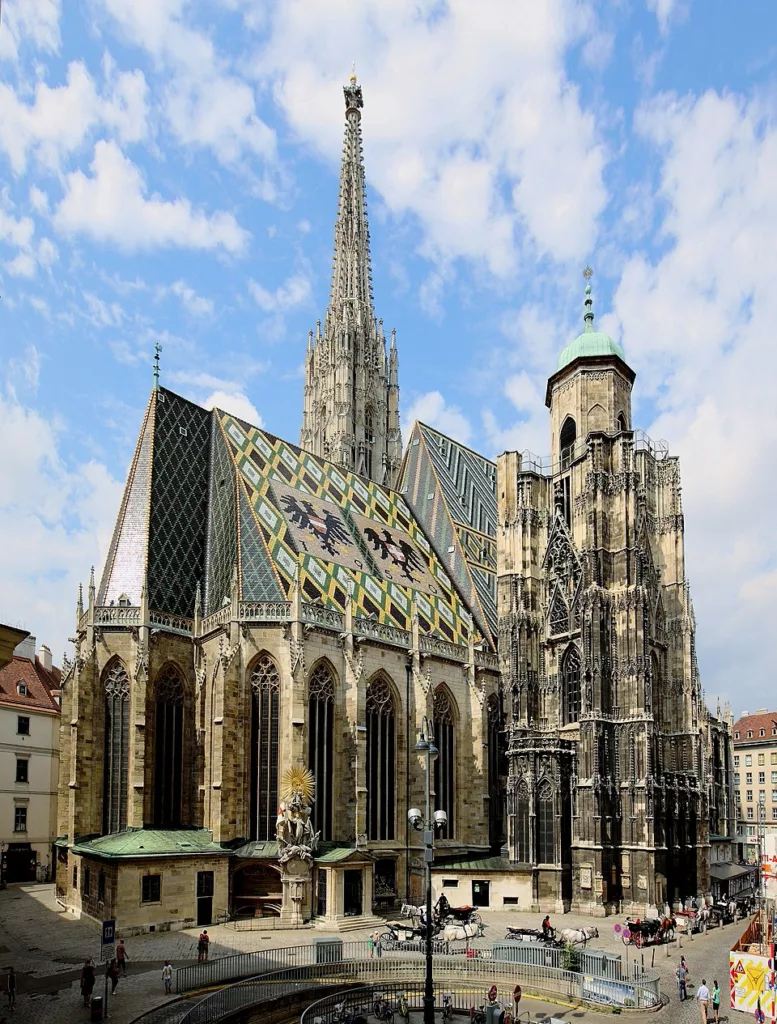
The St. Stephen’s Cathedral (Stephansdom) is the spiritual and historical heart of Vienna. Its construction began in 1137 and it was consecrated in 1147 in the presence of King Conrad III.
Much of the towers and the west wall date from the Romanesque period between 1230 and 1245. A fire in 1258 destroyed a significant part of the building, which was later rebuilt. The Gothic choir, called the “Albertine Choir,” was completed in 1340 under Duke Albert II and later extended by Duke Rudolf IV.
The south tower (the “Steffl”) rises to about 136 meters, offering a panoramic view of Vienna from its 343 steps. The north tower houses the famous bell Pummerin, one of the cathedral’s largest bells.
The cathedral roof is covered with 230,000 glazed tiles, forming colorful patterns including the imperial double-headed eagle. The catacombs beneath the cathedral contain the tombs of former bishops, members of the Habsburg family, and other historical figures. Mozart was married in 1782 at St. Stephen’s Cathedral to Constance Weber.
Belvedere Palace
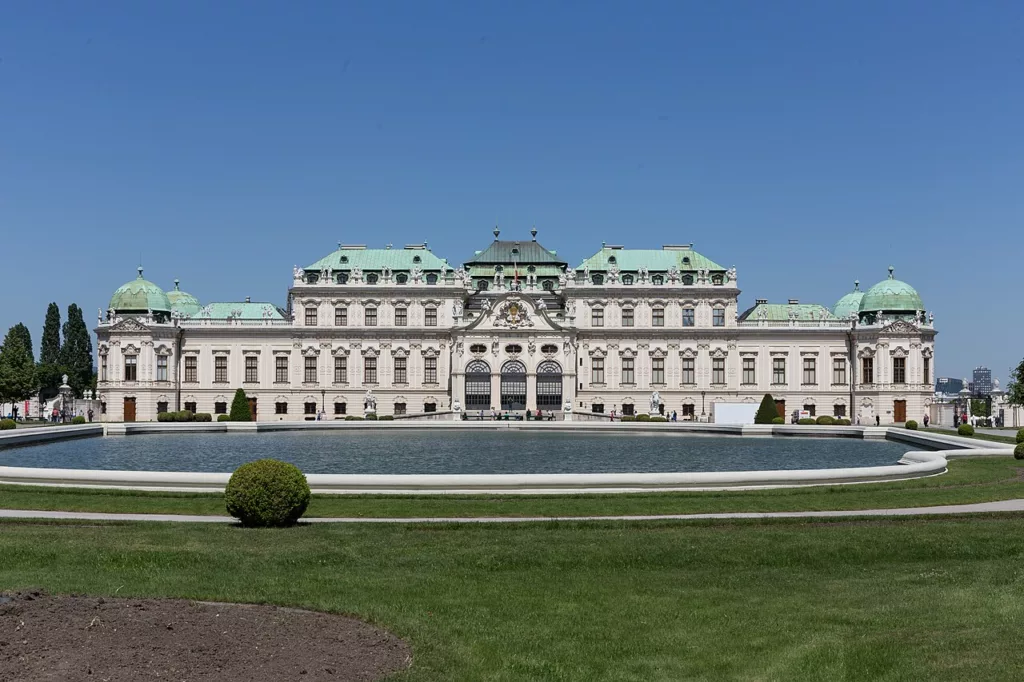
The Belvedere Palace (Schloss Belvedere) is one of the largest Baroque complexes in Vienna, located in the 3rd district. It was built between 1714 and 1723 for Prince Eugene of Savoy, under the direction of Baroque architect Johann Lukas von Hildebrandt.
The complex includes two palaces: the Upper Belvedere, perched on a hill, and the Lower Belvedere, connected by a terraced Baroque garden. The Belvedere gardens, designed in the French style by Dominique Girard, feature symmetrical parterres, water basins, cascades, and mythological sculptures.
After Prince Eugene’s death in 1736, Empress Maria Theresa acquired the estate and transformed the Upper Belvedere into an exhibition space for the imperial collections. The Upper Belvedere houses, among other things, the “Great Marble Hall,” famous for its lavish décor and views of the gardens.
Since 1903, the Belvedere has operated as a museum: the Lower Belvedere hosts a Baroque art gallery and temporary exhibitions. The Upper Belvedere preserves the permanent collection of the Österreichische Galerie Belvedere, featuring major works such as Gustav Klimt’s “The Kiss.”
Belvedere Palace also has historical significance: in 1955, the Austrian State Treaty was signed in one of its halls, marking the end of the post-war occupation.
The Belvedere gardens offer a “mirror pond” south of the Upper Belvedere, which reflects the palace’s monumental façade in a spectacular visual effect.
Vienna State Opera
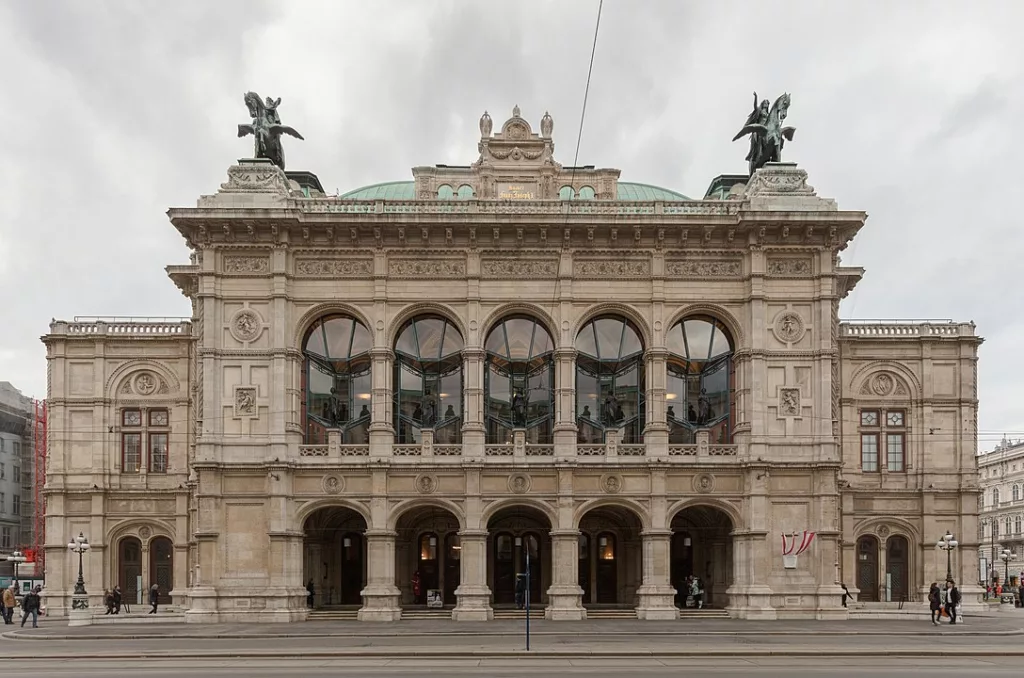
The Vienna State Opera (Wiener Staatsoper) is one of the most prestigious opera houses in the world. It is located in the heart of Vienna, at Opernring 2, on the famous Ringstraße.
The opera building was inaugurated on May 25, 1869, in a Neo-Renaissance style. Its main hall can accommodate approximately 2,284 spectators, with a stage of about 670 m².
The large crystal chandelier suspended in the opera foyer weighs around three tons and is a true symbol of Viennese elegance.
Discover the secret statues and mystical animals present in the opera, as well as the meaning of the nearby fountains, with our Vienna scavenger hunt.
Mozart’s House
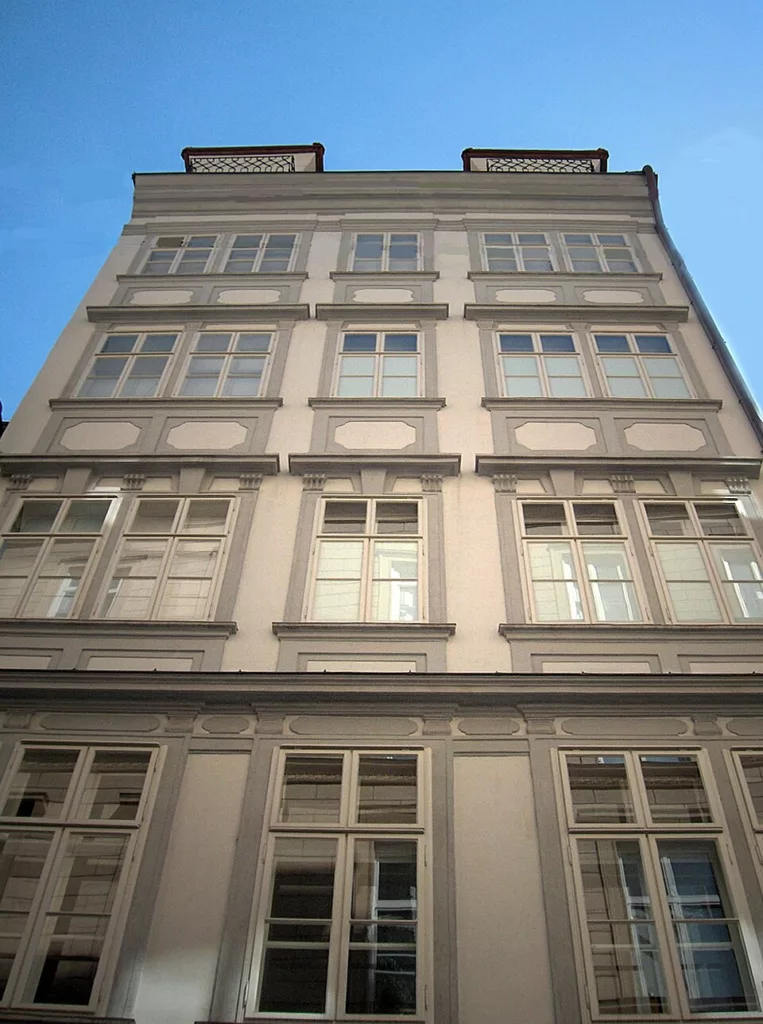
The Mozarthaus Vienna is the only surviving Viennese apartment of Mozart. Mozart lived in this apartment, located at Domgasse 5, from 1784 to 1787.
The building dates from the 17th century and was renovated in 1716, preserving a piano nobile corresponding to the floor Mozart lived on. Mozart rented an apartment with “four large rooms, two small rooms, and a kitchen,” making it one of the most prestigious apartments he ever occupied in Vienna.
It was in this residence that Mozart composed major works, such as The Marriage of Figaro and several string quartets with Haydn. The Mozarthaus museum offers a permanent exhibition over three floors, covering Mozart’s social, musical, and personal life.
An authentic musical clock, dating around 1790, is displayed in the apartment; it plays a variation of a Mozart piece (KV 616).
The Austrian National Library (Österreichische Nationalbibliothek)
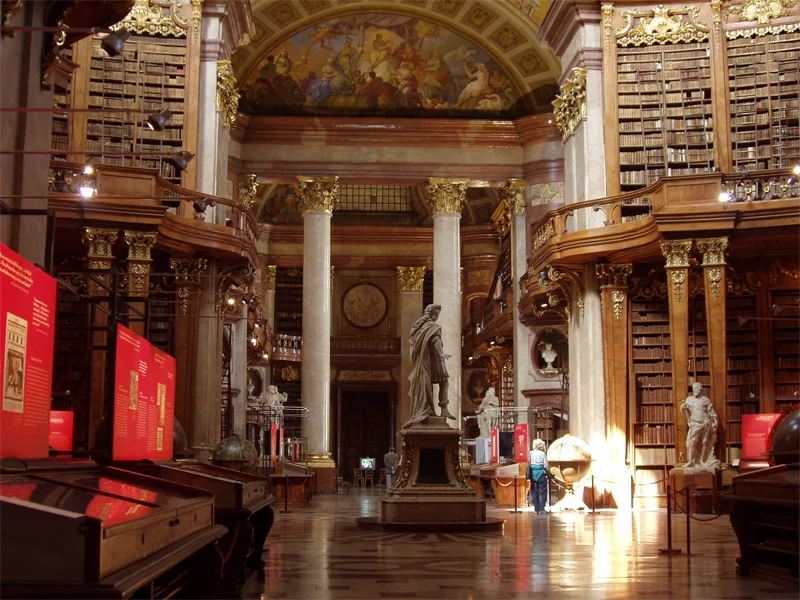
The Austrian National Library (Österreichische Nationalbibliothek) is Austria’s largest library, with over 12 million items in its collections. It is located in the Neue Burg wing of the Hofburg Palace, in the heart of Vienna.
The library traces its origins to the “Imperial Court Library” (Hofbibliothek), founded in the 14th century, and was designated as the national library in 1920 after the fall of the Habsburgs. The architectural gem of the library is the State Hall (Prunksaal), a large Baroque hall approximately 80 meters long and 20–30 meters high. vienna.info
The ceiling of the State Hall is decorated with a fresco painted by Daniel Gran, depicting the apotheosis of Emperor Charles VI. The central statue in the “central oval” of the hall represents Charles VI, surrounded by other members of the Habsburg dynasty sculpted in marble.
Approximately 200,000 books dating from 1501 to 1850 are displayed in the State Hall, including the private collection of 15,000 volumes from Prince Eugene of Savoy. The library also preserves a significant papyrus collection, with around 180,000 items, covering 3,000 years of Egyptian history.
Café Central
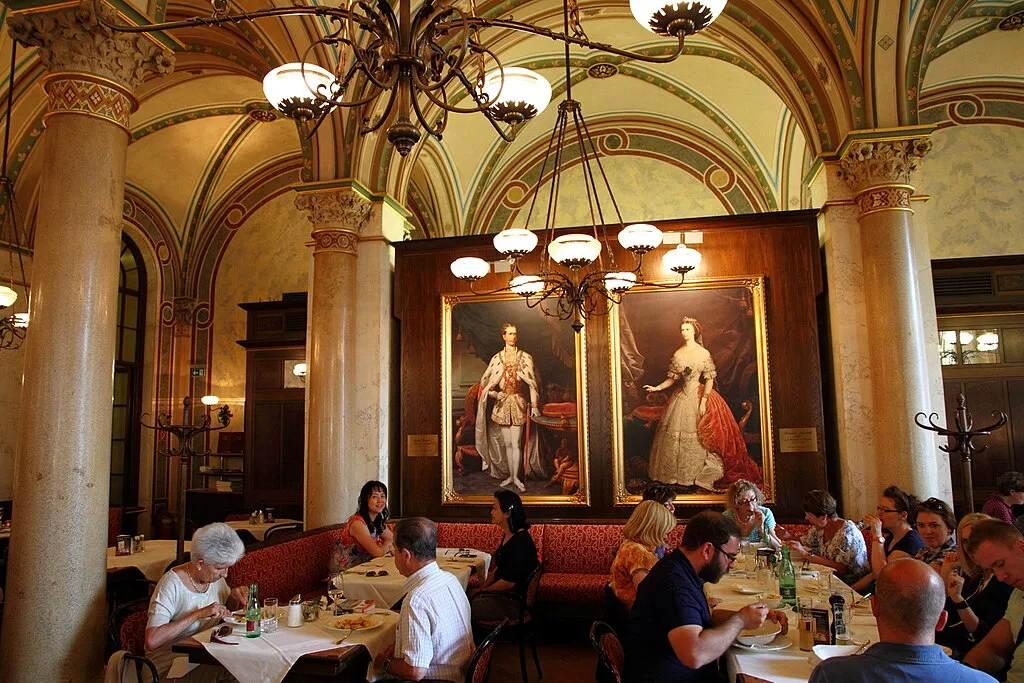
The Café Central is a traditional Viennese café located at 14 Herrengasse, in Vienna’s 1st district.
It occupies the ground floor of the Palais Ferstel, a former bank and stock exchange building designed by architect Heinrich von Ferstel. The café opened in 1876 and quickly became a key venue of Vienna’s intellectual scene.
Many literary and philosophical figures were regulars, including Peter Altenberg, Hugo von Hofmannsthal, Stefan Zweig, Alfred Polgar, Robert Musil, and Adolf Loos. The Café Central also hosted revolutionaries and thinkers such as Leon Trotsky, as well as historical figures like Freud.
The Palais Ferstel, where the café is located, was initially designed in a Venetian/Florentine Trecento style, giving the café a very elegant architectural atmosphere.
During World War II, the café had to close (1943) and the building was damaged, before being renovated in the 1970s–1980s. The café reopened in 1986 in its magnificent columned hall, recreating the original atmosphere of Vienna’s literary cafés.
St. Charles Borromeo Church
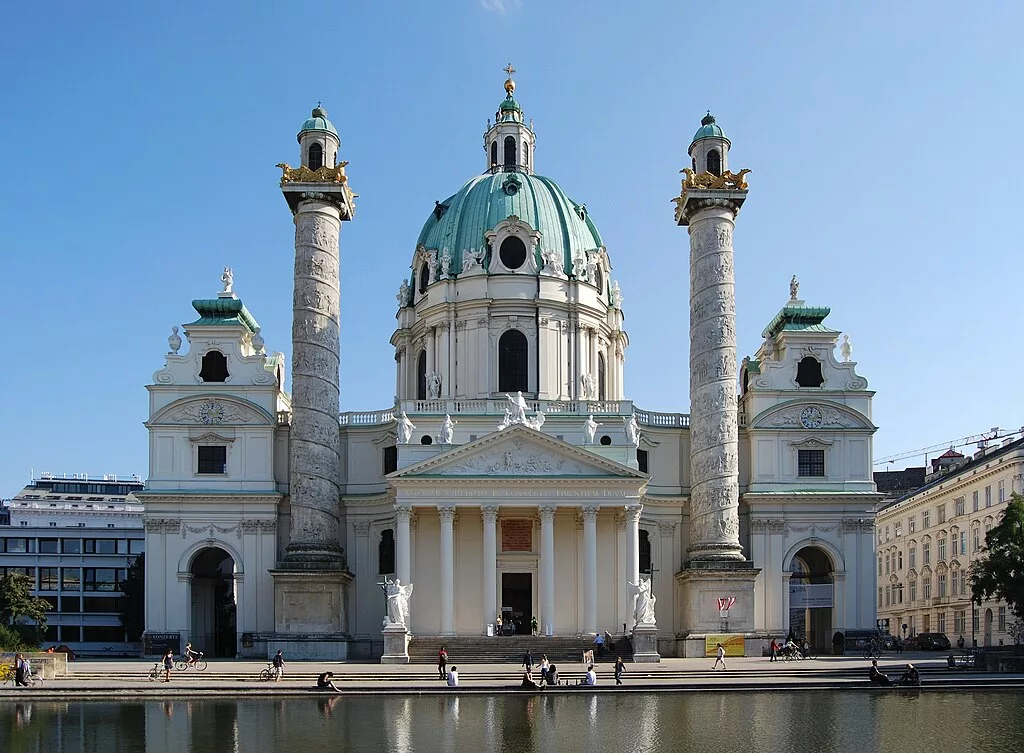
St. Charles Borromeo Church, better known as Karlskirche, is a Baroque church located at Karlsplatz in Vienna. It is dedicated to Saint Charles Borromeo, a saint of the Counter-Reformation. Charles Borromeo (1538–1584) was an Italian prelate, Archbishop of Milan, considered one of the leading figures of the Catholic Counter-Reformation following the Council of Trent. He worked to reform the clergy and fight corruption within the Church.
Construction began in 1716 by order of Emperor Charles VI, who had vowed to erect a church after the 1713 plague epidemic.
Its façade is dominated by a portico with six columns and two twin columns over 47 m high, decorated with bas-reliefs depicting scenes from the life of Charles Borromeo.
The copper-clad dome rises to about 70 m and is adorned with frescoes painted by Johann Michael Rottmayr, covering over 1,250 m². Inside, the church features polychrome marbles, gilded stuccos, and a richly decorated main altar designed by Fischer von Erlach.
Albrechtsbrunnen
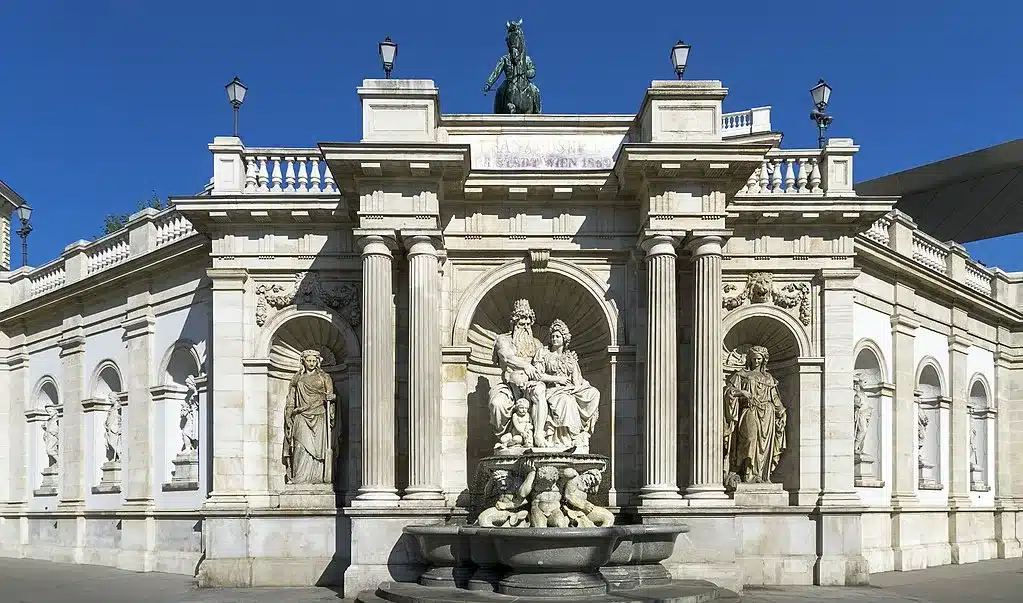
The Albrechtsbrunnen, also called Danubiusbrunnen, is a fountain located in Vienna’s 1st district (Innere Stadt), next to the Augustinerbastei near the Albertina. The name Albrechtsbrunnen comes from Archduke Albrecht of Austria-Teschen, who resided in the Albrecht Palace now incorporated into the Albertina.
The fountain was constructed between July 24, 1864, and its inauguration on December 24, 1869, by the Vienna City Expansion Fund, intended to finance representative constructions during the city’s expansion. The monument includes allegorical marble figures representing the city of Vindobona (Vienna) and the river Danubius (the Danube), as well as its tributaries.
The fountain was heavily damaged during a bombing in March 1945 in World War II and later reconstructed in a smaller form.
Discover the secrets of the statues near this fountain on our Vienna scavenger hunt that passes through this location.
Rathaus
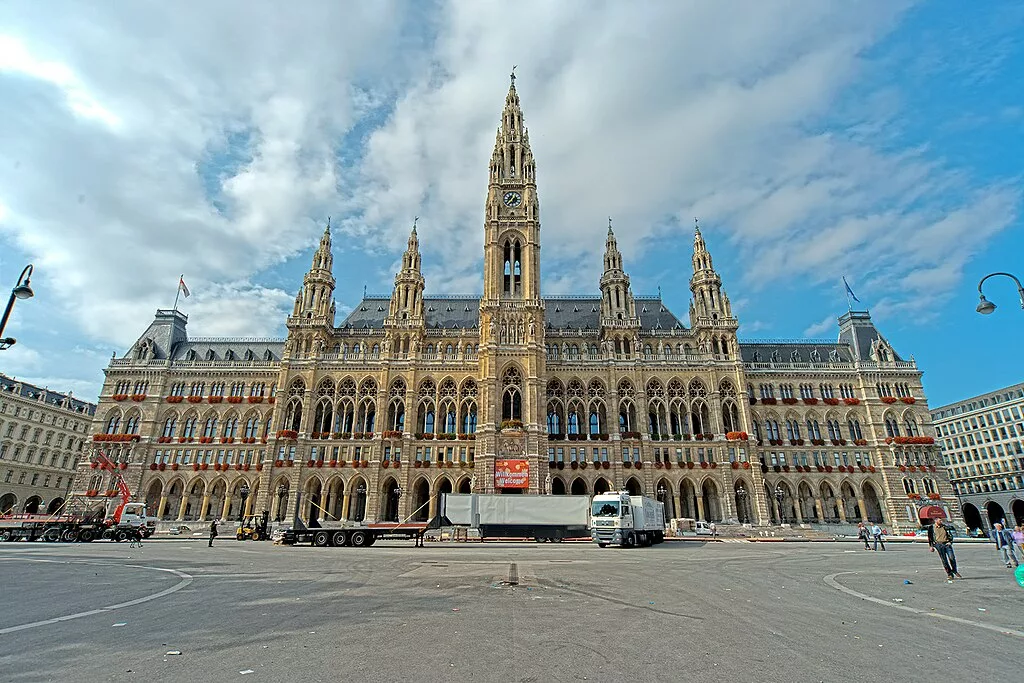
The Vienna Rathaus is the city hall of Austria’s capital and serves as the seat of the city council and the Landtag of the State of Vienna. It was designed by architect Friedrich von Schmidt, a specialist in Neo-Gothic style.
Its construction took place between 1872 and 1883, during the major development of the Ringstrasse.
The central tower rises to 98 meters and is topped by the “Rathausmann,” an iron knight statue that has become a symbol of Vienna.
The Rathauspark, the park surrounding the city hall, was created in 1873 and offers a lovely green space in the heart of the city. The Rathaus is open to the public: free guided tours are offered on certain days to explore the interior and its architecture.
Josefsplatz
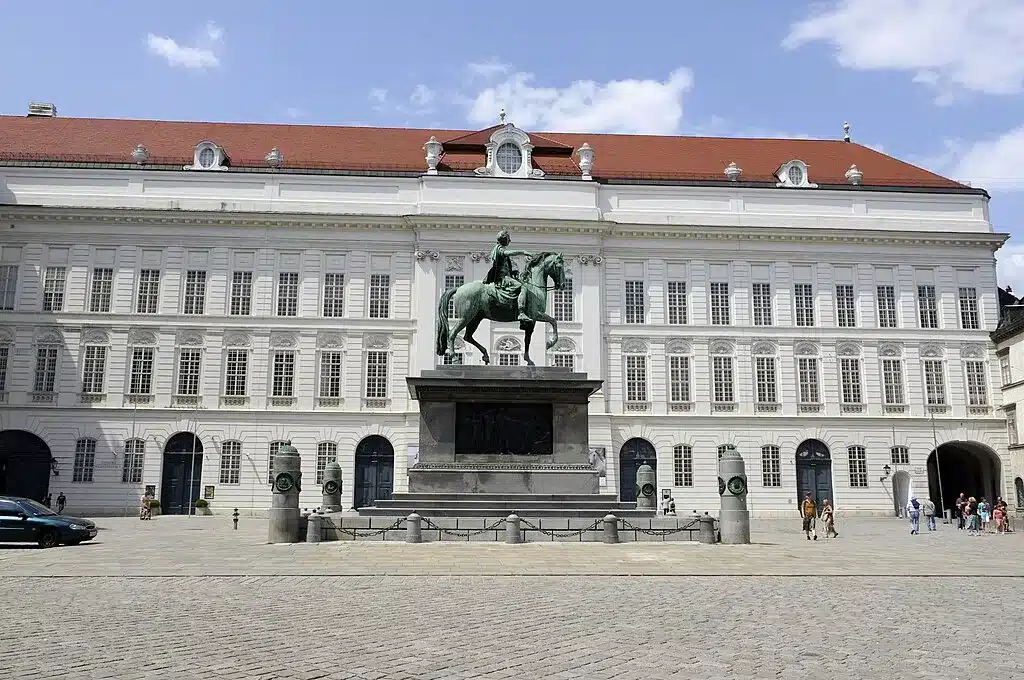
Josefsplatz is a public square located within the Hofburg Imperial Palace in Vienna, Austria, named after Emperor Joseph II. At the center of Josefsplatz stands an equestrian statue of Emperor Joseph II, created by sculptor Franz Anton von Zauner between 1795 and 1807.
The square is surrounded on three sides by parts of the Hofburg complex, including the Austrian National Library (Prunksaal), a remarkable example of late Baroque architecture. Several historic palaces are also located on Josefsplatz, such as the Pallavicini Palace, built in 1784 in a Baroque and Neoclassical style, and the Pálffy Palace.
The Augustinian Church (Augustinerkirche), located next to the square, is a Gothic church dating from the 14th century that served as the parish church of the Habsburg imperial court.
Discover the frescoes honoring Emperor Joseph and their significance with our Vienna tour.
Hundertwasserhaus
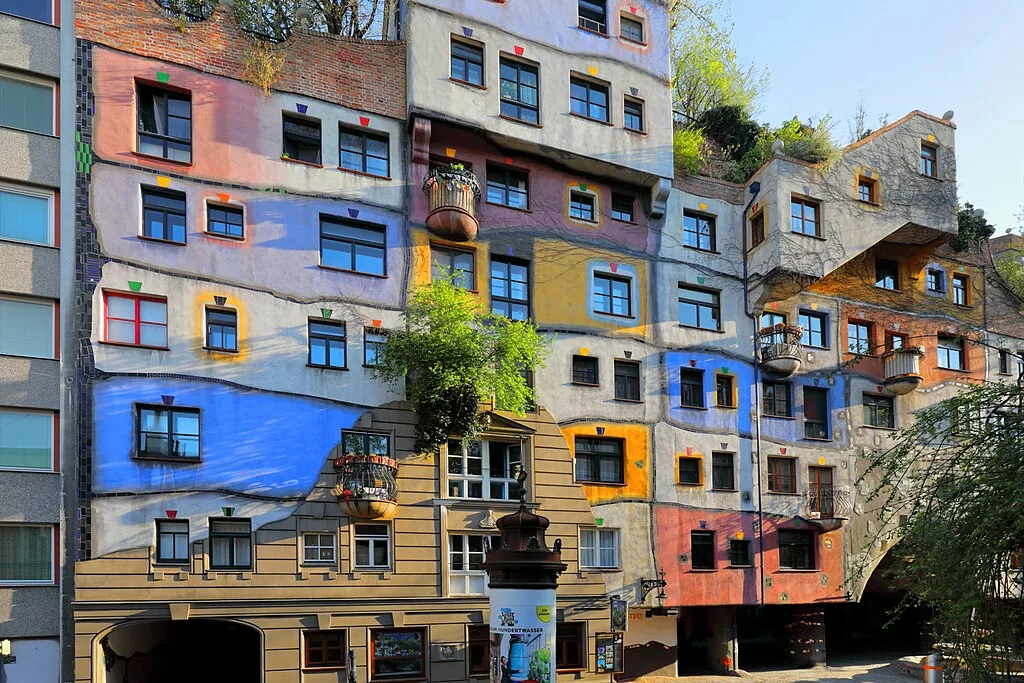
The Hundertwasserhaus is an expressionist residential building located in Vienna’s 3rd district, at the corner of Kegelgasse and Löwengasse. It was designed by Austrian artist Friedensreich Hundertwasser (born Friedrich Stowasser).
Its construction took place between 1983 and 1985, in collaboration with architect Peter Pelikan.
The building contains 52 apartments, 4 commercial units, 16 private terraces, and 3 communal terraces. More than 200 trees and shrubs were planted on the balconies and terraces, turning the building into a genuine green oasis.
The public floors of the building are intentionally uneven: Hundertwasser rejected straight lines, which he considered unnatural. Each resident has the right to decorate the façade around their window according to their tastes—a Hundertwasser principle promoting individuality.
Michaelerplatz
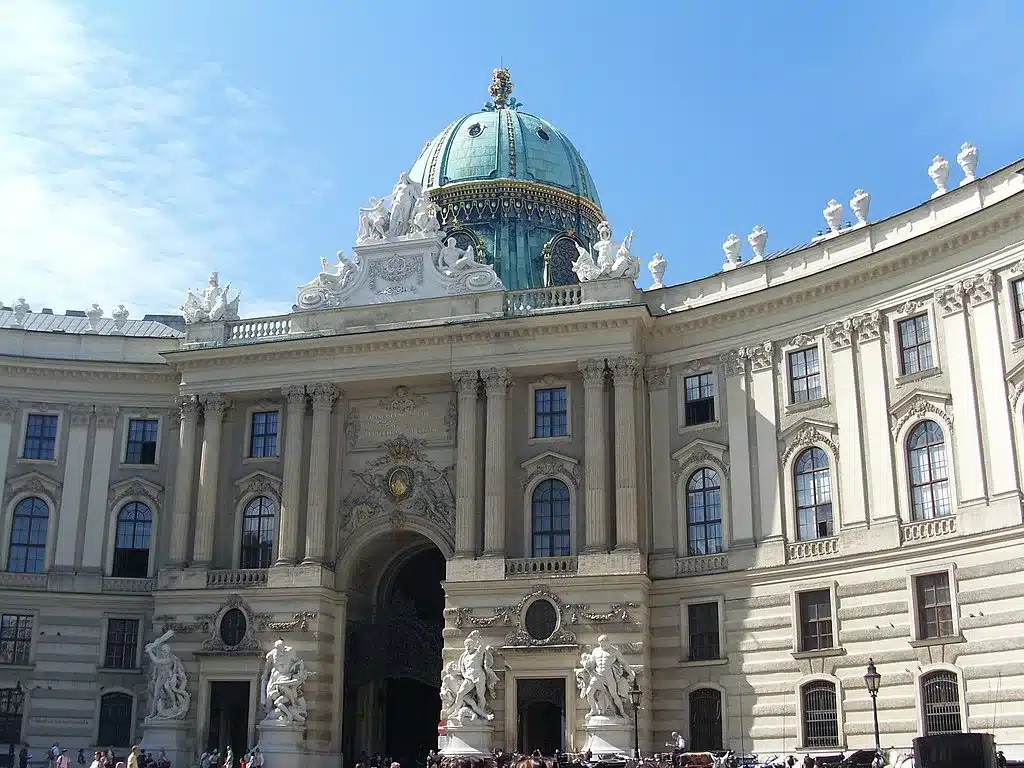
Michaelerplatz is a major square in central Vienna, also known as St. Michael’s Square, located at the intersection of several important streets such as Kohlmarkt and Herrengasse.
The name Michaelerplatz comes from St. Michael’s Church, located on the eastern side of the square.
The history of Michaelerplatz dates back to Roman times, as the area was part of the suburbium (canabae) of the Vindobona camp. Remains of Roman houses from the 2nd to 5th century have been discovered on-site. The Roman ruins in the center of the square are now visible under glass panels and are part of an open archaeological site.
Several notable buildings surround Michaelerplatz, including the Looshaus, built in the early 20th century and considered an icon of Viennese modernist architecture.
Discover the meaning of the Hercules statues on this square with our Vienna scavenger hunt.
Rathaus
The Vienna Rathaus is the city hall of Austria’s capital and serves as the seat of the city council and the Landtag of the State of Vienna. It was designed by architect Friedrich von Schmidt, a specialist in Neo-Gothic style.
Its construction took place between 1872 and 1883, during the major development of the Ringstrasse.
The central tower rises to 98 meters and is topped by the “Rathausmann,” an iron knight statue that has become a symbol of Vienna.
The Rathauspark, the park surrounding the city hall, was created in 1873 and offers a lovely green space in the heart of the city. The Rathaus is open to the public: free guided tours are offered on certain days to explore the interior and its architecture.
Josefsplatz
Josefsplatz is a public square located within the Hofburg Imperial Palace in Vienna, Austria, named after Emperor Joseph II. At the center of Josefsplatz stands an equestrian statue of Emperor Joseph II, created by sculptor Franz Anton von Zauner between 1795 and 1807.
The square is surrounded on three sides by parts of the Hofburg complex, including the Austrian National Library (Prunksaal), a remarkable example of late Baroque architecture. Several historic palaces are also located on Josefsplatz, such as the Pallavicini Palace, built in 1784 in a Baroque and Neoclassical style, and the Pálffy Palace.
The Augustinian Church (Augustinerkirche), located next to the square, is a Gothic church dating from the 14th century that served as the parish church of the Habsburg imperial court.
Discover the frescoes honoring Emperor Joseph and their significance with our Vienna tour.
Hundertwasserhaus
The Hundertwasserhaus is an expressionist residential building located in Vienna’s 3rd district, at the corner of Kegelgasse and Löwengasse. It was designed by Austrian artist Friedensreich Hundertwasser (born Friedrich Stowasser).
Its construction took place between 1983 and 1985, in collaboration with architect Peter Pelikan.
The building contains 52 apartments, 4 commercial units, 16 private terraces, and 3 communal terraces. More than 200 trees and shrubs were planted on the balconies and terraces, turning the building into a genuine green oasis.
The public floors of the building are intentionally uneven: Hundertwasser rejected straight lines, which he considered unnatural. Each resident has the right to decorate the façade around their window according to their tastes—a Hundertwasser principle promoting individuality.
Michaelerplatz
Michaelerplatz is a major square in central Vienna, also known as St. Michael’s Square, located at the intersection of several important streets such as Kohlmarkt and Herrengasse.
The name Michaelerplatz comes from St. Michael’s Church, located on the eastern side of the square.
The history of Michaelerplatz dates back to Roman times, as the area was part of the suburbium (canabae) of the Vindobona camp. Remains of Roman houses from the 2nd to 5th century have been discovered on-site. The Roman ruins in the center of the square are now visible under glass panels and are part of an open archaeological site.
Several notable buildings surround Michaelerplatz, including the Looshaus, built in the early 20th century and considered an icon of Viennese modernist architecture.
Discover the meaning of the Hercules statues on this square with our Vienna scavenger hunt.
Parks, Gardens & Walks
Stadtpark
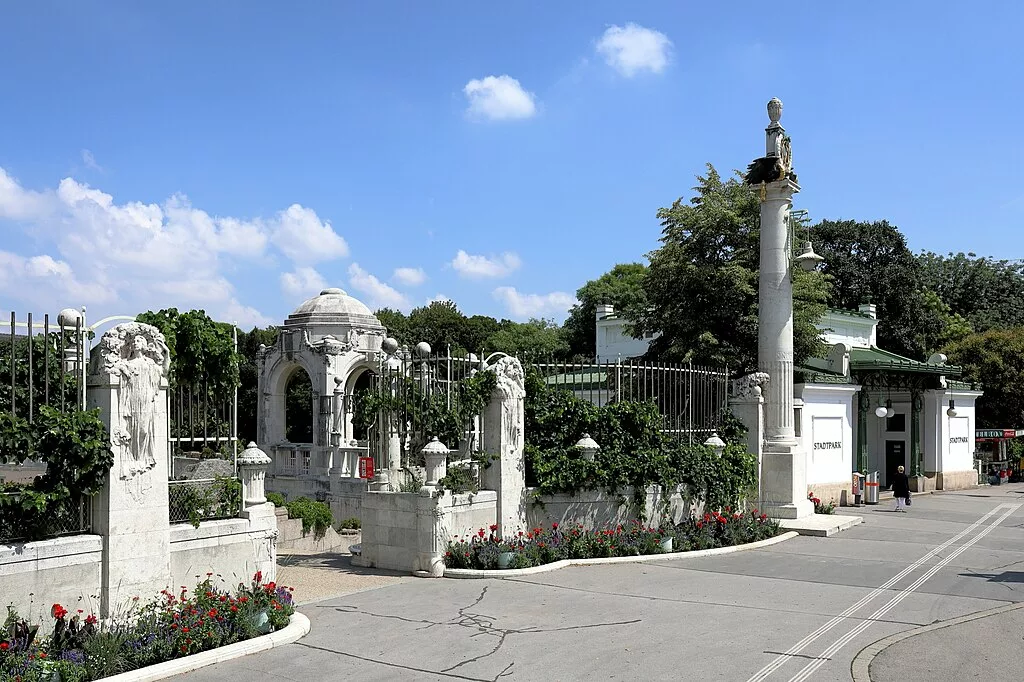
The Stadtpark is a public park located in Vienna’s 1st and 3rd districts. It was created in 1862 as part of the city’s development and urban planning around the Ring.
The park covers about 65,000 m² and combines green spaces, ponds, and shaded paths. It is famous for its statues and monuments, including the statue of Johann Strauss II, the king of the Viennese waltz. The park also features statues of figures such as Franz Lehár, Franz Schubert, and Johannes Brahms.
The Stadtpark is crossed by the Donaukanal, and numerous bridges and footbridges add to its romantic charm.
Volksgarten
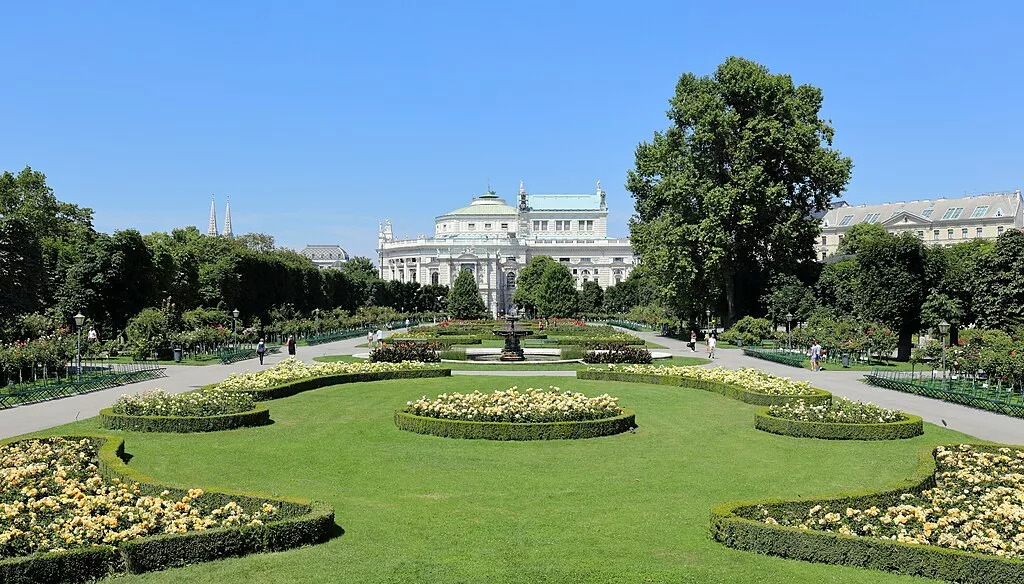
The Volksgarten is a public park located in Vienna’s 1st district. It is part of the historic parks around the Ring, designed after the demolition of the city fortifications in the 19th century.
The Volksgarten is famous for its rose gardens, featuring several thousand rose bushes of various varieties. At the center of the park stands a neoclassical Greek-style temple, the Theseustempel, built between 1820 and 1823.
The Volksgarten is also known for its Empress Elisabeth (Sissi) monument, inaugurated in 1907. It was opened to the public in 1823, making the Volksgarten one of Vienna’s first public parks.
Prater
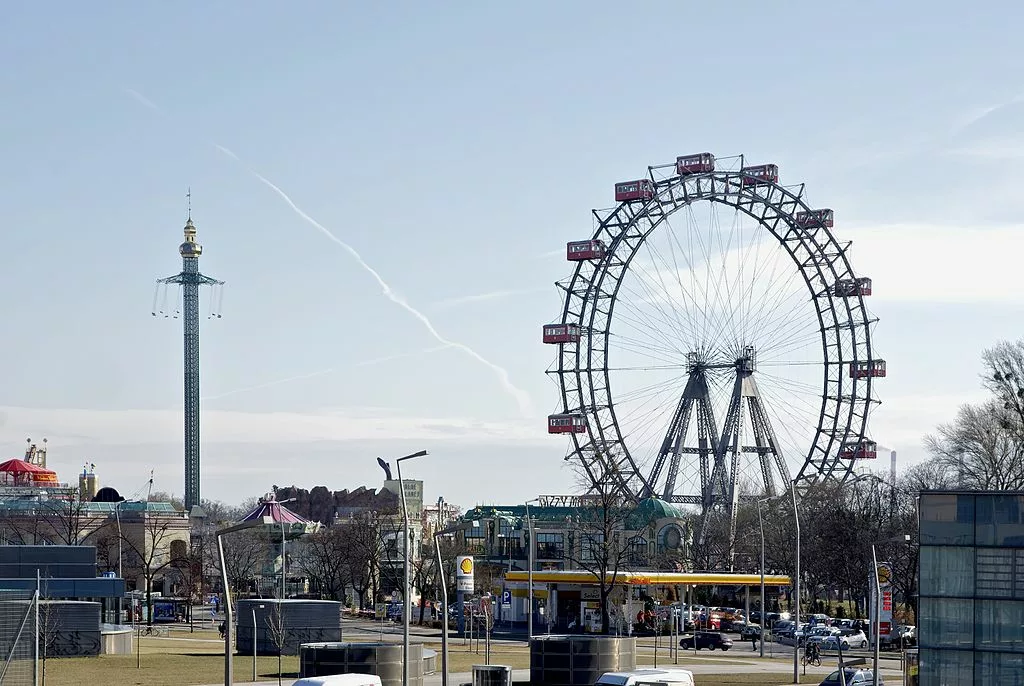
The Prater is a large public park located in Vienna’s 2nd district. It covers about 6 km² and combines green spaces, forests, meadows, and recreational facilities. The park was originally an imperial hunting reserve, opened to the public in 1766 by order of Emperor Joseph II.
The park is famous for the Wurstelprater, its historic amusement park open to the public since the 17th century. The Vienna Giant Ferris Wheel (Riesenrad), built in 1897, is the Prater’s most iconic symbol.
Gastronomy & Specialties
Wiener Schnitzel
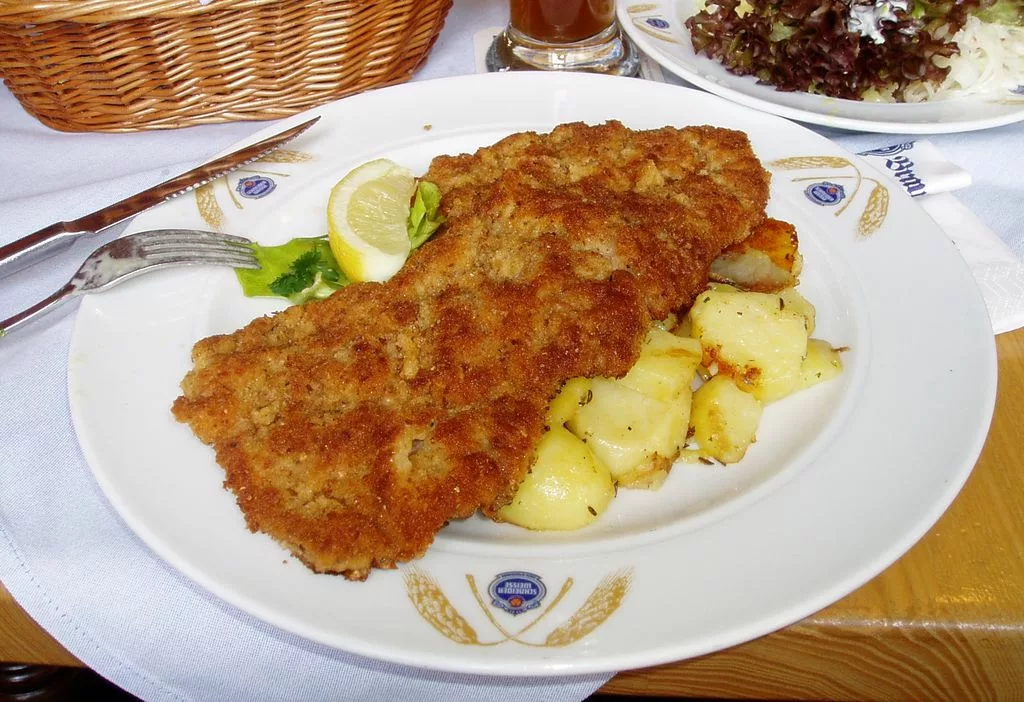
The Wiener Schnitzel is a thinly pounded veal cutlet, breaded and fried, and is a symbol of Viennese cuisine.
It is traditionally served with a slice of lemon and sides such as potatoes or a salad. This recipe dates back to the 19th century and has become an iconic dish throughout Austria. Schnitzel can also be prepared with pork, but the original veal version remains the most authentic.
Tafelspitz
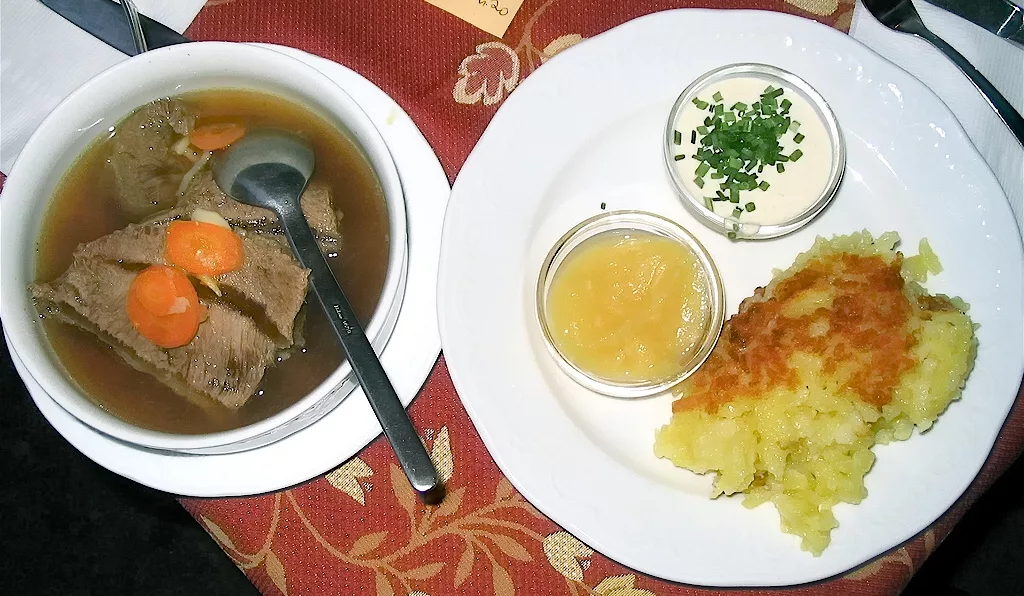
The Tafelspitz is a boiled beef dish, slowly cooked in a flavorful broth with vegetables. It is usually served with sauces, such as apple or horseradish sauce, and potatoes.
This dish was particularly enjoyed by Emperor Franz Joseph I of Habsburg.
Viennese Pastries – Sachertorte, Apfelstrudel, Kardinalschnitten
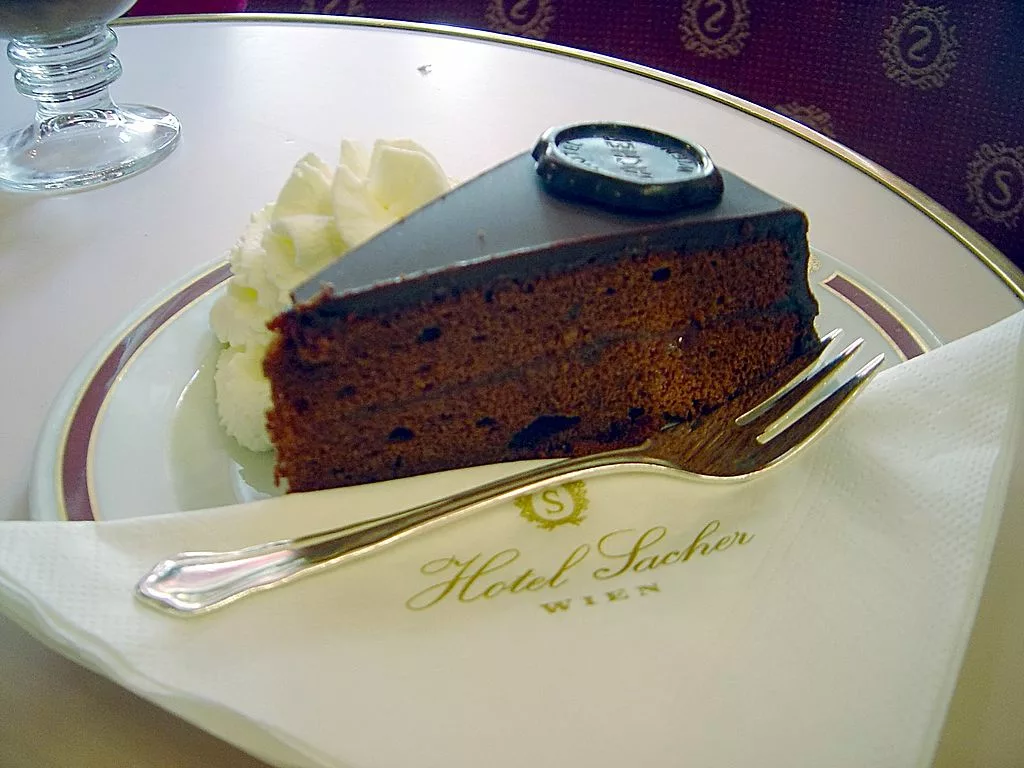
The Sachertorte is an iconic chocolate cake, created in 1832 by Franz Sacher, with a thin layer of apricot jam.
The Apfelstrudel is a traditional dessert made with thin pastry, apples, cinnamon, and raisins.
The Kardinalschnitten are light and elegant pastries composed of layers of meringue and sponge cake.
Viennese Hot Chocolate
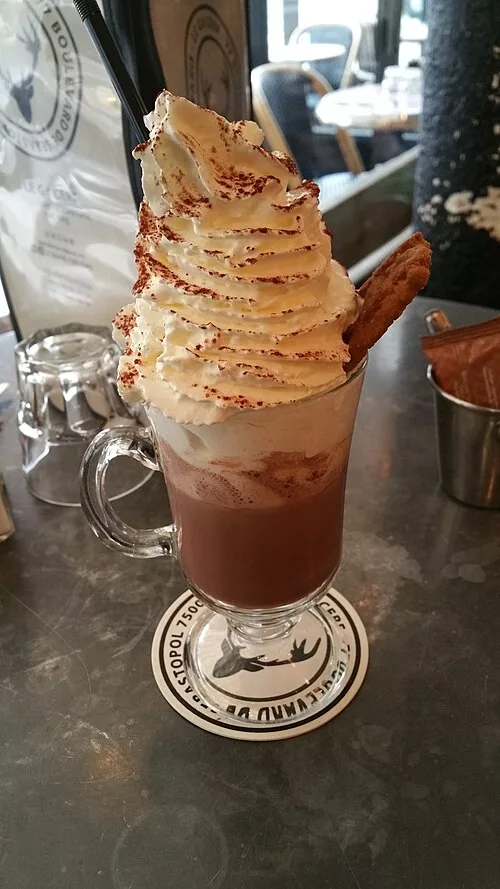
The Viennese hot chocolate is distinguished by its rich and creamy texture, often served hot with whipped cream.
It is part of the traditional café experience, enjoyed slowly while conversing or reading.
Viennese hot chocolate can be flavored with vanilla, rum, or cinnamon for added depth.
Excursions around Vienna
Wachau Valley – Picturesque villages, vineyards, and abbeys
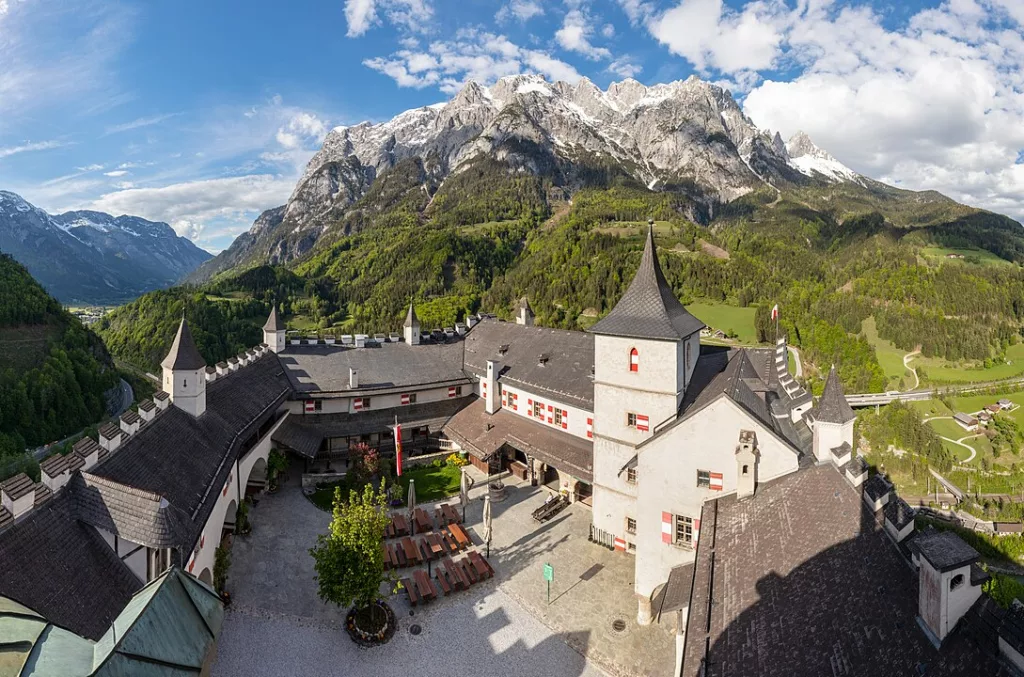
The Wachau Valley is a picturesque region along the Danube River, between the towns of Melk and Krems in Austria. It is famous for its terraced vineyards, producing some of Austria’s finest wines, including Riesling and Grüner Veltliner.
The valley is home to many castles, monasteries, and medieval ruins, including Melk Abbey, an iconic Baroque landmark. The Danube flows through the valley, offering spectacular scenery and opportunities for river cruises.
The village of Dürnstein is famous for its abbey and blue tower, as well as its historical connection to Richard the Lionheart.
The Wachau is also renowned for its apples and apricots, traditional products of the region.
Lainzer Tiergarten – Nature reserve and Hermesvilla
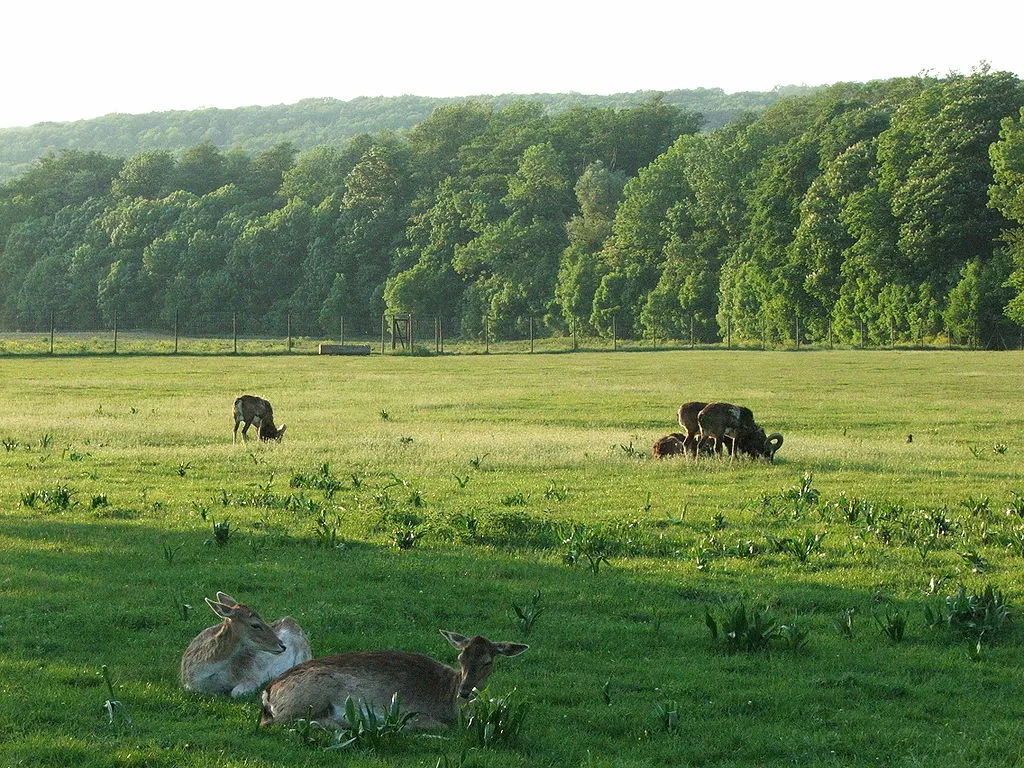
The Lainzer Tiergarten is a nature reserve located in Vienna’s 13th district. It covers approximately 2,400 hectares, making it one of the city’s largest green spaces.
Originally, the park was an imperial hunting reserve, established during the Habsburg era in the 18th century. The Lainzer Tiergarten is home to a diverse wildlife, including deer, wild boars, and fallow deer.
The Hirtenhaus and the Hermesvilla are two historic buildings inside the park open to the public. The Hermesvilla was built for Empress Elisabeth (“Sissi”) and served as a leisure residence.
Bratislava – Old Town and Castle
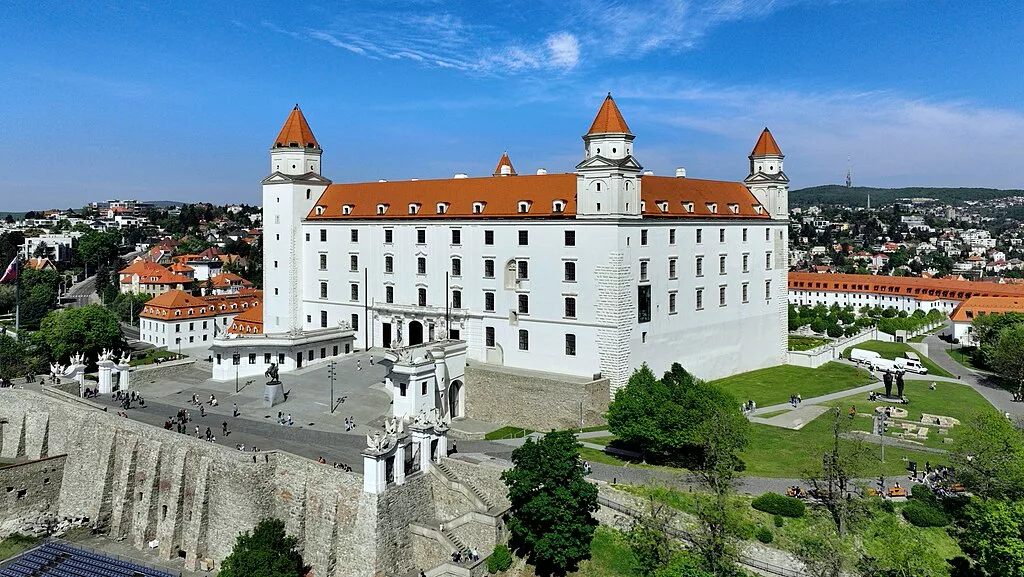
Bratislava is the capital and largest city of Slovakia, located on the banks of the Danube. It can be reached in about an hour by train or car from Vienna. The city is close to the borders with Austria and Hungary, giving it a strategic position in Central Europe.
Bratislava has a medieval historic center, with cobbled streets, picturesque squares, and Baroque buildings. The Bratislava Castle, overlooking the city and the Danube, is an iconic landmark offering panoramic views.
The city is also home to the St. Martin’s Cathedral, a historic site where Hungarian kings were crowned until the 19th century.
Bratislava is known for its modern bridges, including the SNP Bridge with its famous UFO-shaped panoramic restaurant.
The city has a vibrant cultural scene, including theaters, museums, art galleries, and annual festivals.
Bratislava’s gastronomy blends Slovak, Hungarian, and Austrian influences, with traditional dishes like bryndzové halušky.
Bryndzové halušky consists of small potato dumplings, called halušky. These dumplings are mixed with fresh, salted sheep cheese, called bryndza, giving the dish its characteristic flavor. The dish is often topped with fried bacon or crispy lard, adding texture and taste.
Conclusion
Visiting Vienna means immersing yourself in a city where history, art, and culture meet on every corner. From imperial palaces like Schönbrunn and the Hofburg to prestigious museums like the Kunsthistorisches Museum and the Albertina, each visit offers a unique insight into Vienna’s heritage.
The parks, gardens, and traditional cafés allow visitors to savor local life, while excursions to the Wachau Valley or Bratislava complete the experience. Whether interested in Baroque architecture, classical music, or gastronomy, visiting Vienna promises an unforgettable journey full of discoveries and emotions.
For anyone looking to combine culture, history, and relaxation, Vienna remains a must-see destination.
Explore Vienna in a different way with our Vienna trail.