Visiting Barcelona: 30 Must-See Things to Do and See
Visiting Barcelona means diving into a city where history, art, and the sea meet at every street corner. To make the most of your stay, it is essential to plan your visits around iconic landmarks such as the Sagrada Família, Park Güell, or Casa Batlló, while also exploring historic neighborhoods like the Barri Gòtic and the Eixample.
The city also charms visitors with its diverse gastronomy, from tapas and paella to Catalan specialties to enjoy in its markets and local restaurants. Its lively beaches provide the perfect setting to relax after a day of exploration, and excursions to Montserrat, Sitges, or Girona allow you to complete a full immersion in Catalonia.
With this guide, discover how to organize your days, optimize your travel, and fully enjoy everything Barcelona has to offer.
Discover Barcelona’s must-see highlights with our Barcelona scavenger hunt, a blend of an escape game and a cultural tour.
Monuments & Historical Heritage – Barcelona
La Sagrada Família
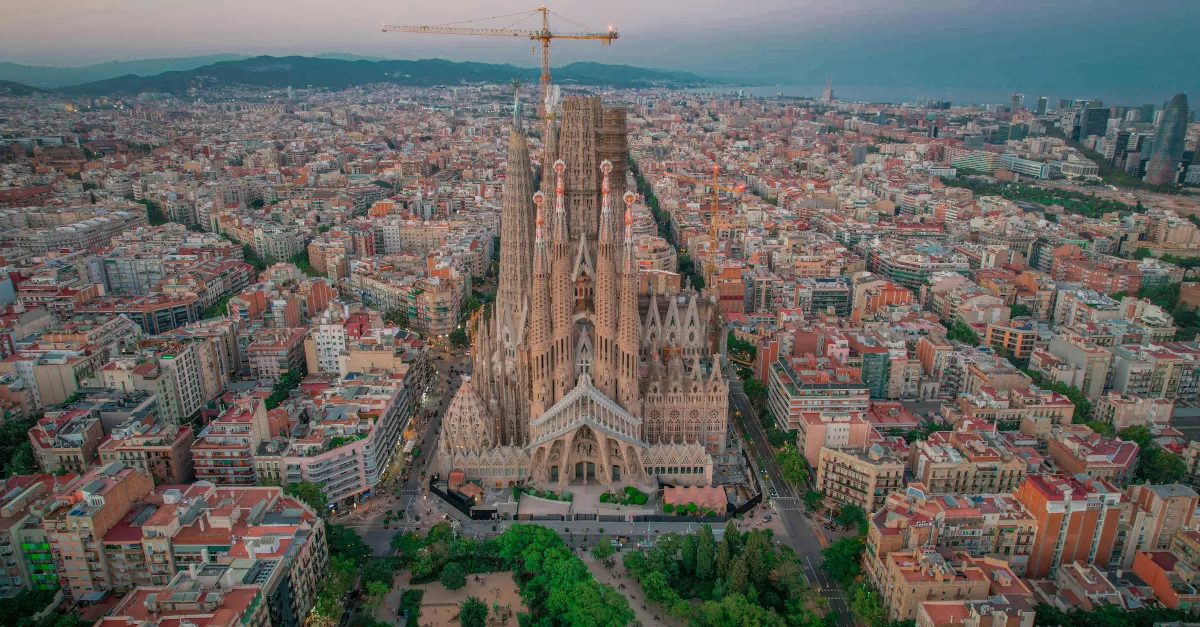
The Basílica i Temple Expiatori de la Sagrada Família, often simply called the Sagrada Família, is a Catholic church located in the Eixample district of Barcelona.
Construction began in 1882, making it one of the most famous churches still unfinished today. The project’s main architect was the Catalan Antoni Gaudí, whose modernist style profoundly shaped the building.
The construction combines several architectural styles: Gothic, Art Nouveau, and Modernist.
Once completed, it will include 18 towers, the tallest of which will reach 172.5 meters.
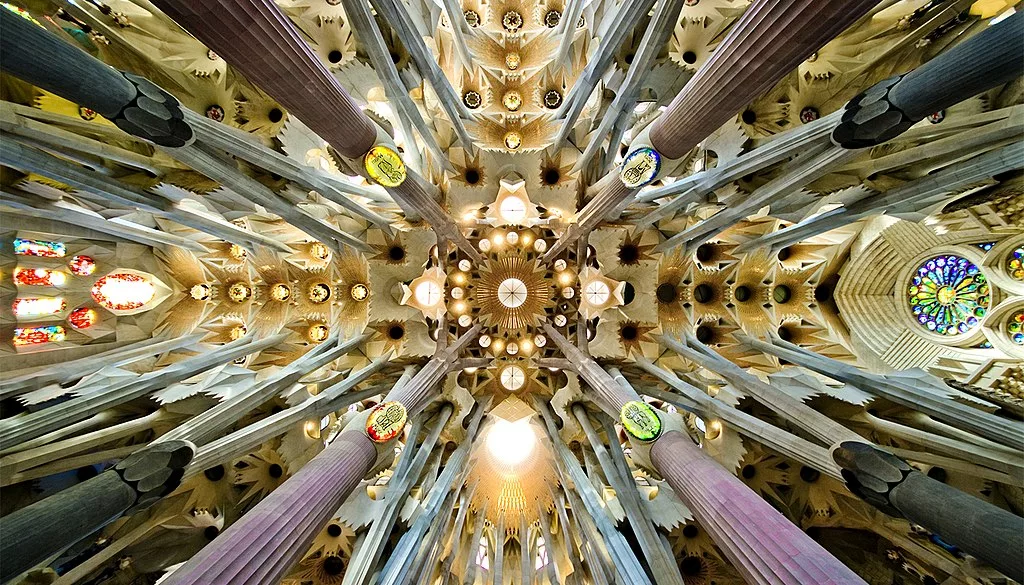
The interior is inspired by nature: the columns resemble trees branching toward the vault, creating the sensation of a “stone forest.”
There are three main façades: the Nativity Façade, the Passion Façade, and the Glory Façade, each with its own symbolism and style.
The construction is largely funded by visitors, and completion is currently planned around 2026.
Plaça de Sant Miquel
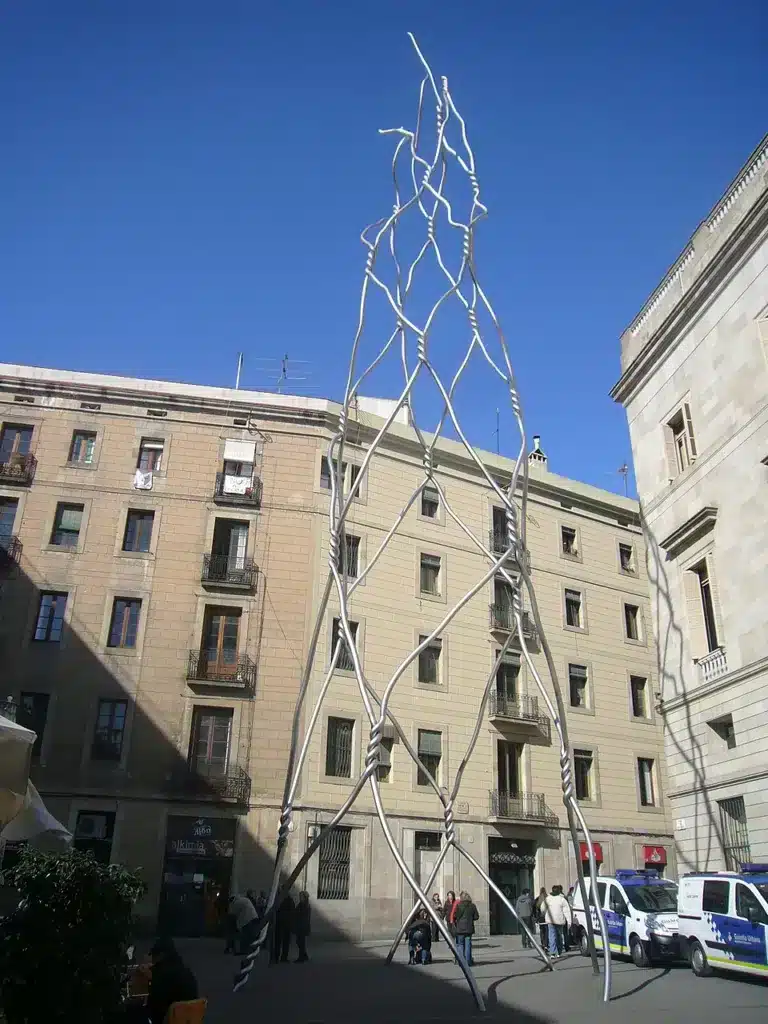
The name Plaça de Sant Miquel comes from the former Church of Sant Miquel, which once stood on this site, although it was demolished in the 19th century.
Today, Plaça de Sant Miquel is a modern and welcoming public space, the result of an urban transformation that converted a former car-dominated square into a true gathering place. The renovation included new play areas, pedestrian zones, and greenery to encourage local and intergenerational use.
Discover the history and meaning of the metal sculpture at the center of this square with our Barcelona scavenger hunt.
Plaça de Sant-Jaume
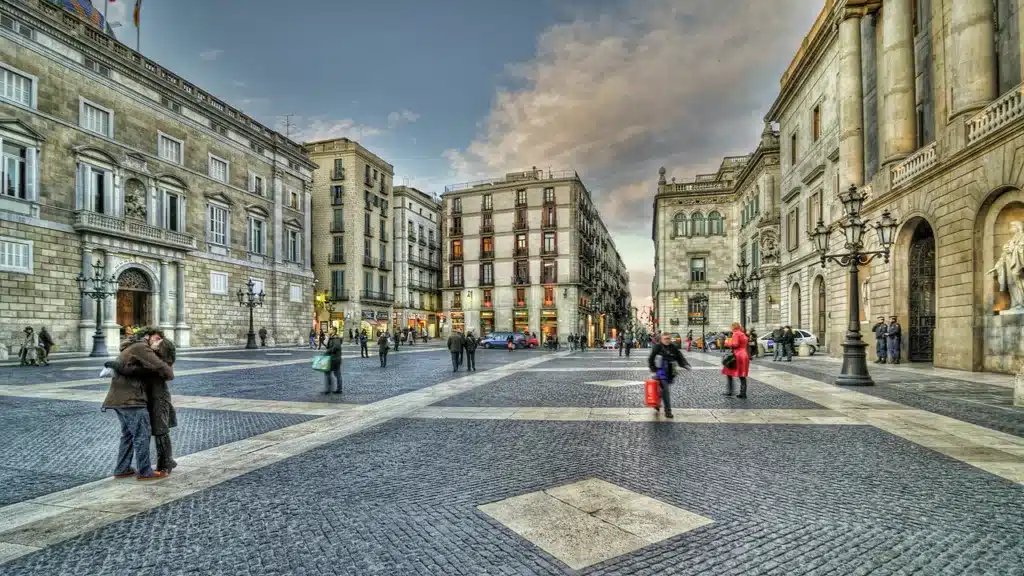
Plaça de Sant Jaume is home to two major institutional buildings: Barcelona City Hall (Casa de la Ciutat) and the Palau de la Generalitat, seat of the Catalan autonomous government.
The site of the square corresponds to the former Roman forum of Barcino, the political and social center of the city during Roman times, with remains such as the columns of the Temple of Augustus nearby.
The current layout of the square dates back to 1823, when houses and the former Church of Sant Jaume were demolished to create a large public space.
Every April 23rd, on Sant Jordi’s Day, it transforms into a market of roses and books, a very popular cultural tradition in Barcelona.
Discover the fresco of Saint George slaying a legendary creature on the Palau de la Generalitat through our route featuring Barcelona’s must-see highlights
Plaça Reial
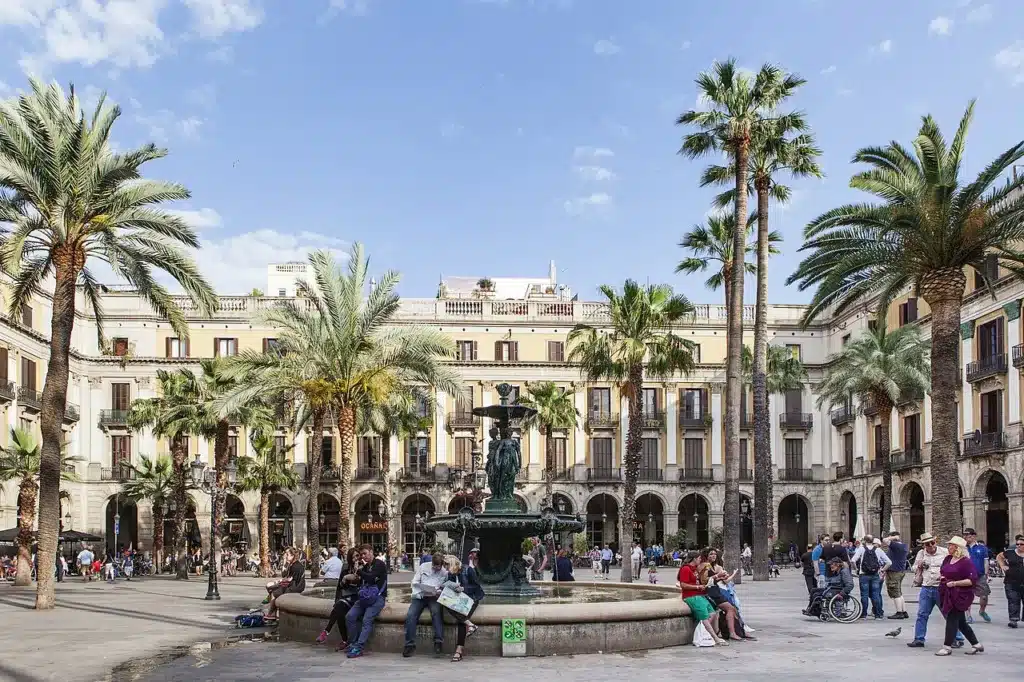
Plaça Reial (in Catalan, “Royal Square”) is an iconic square in Barcelona’s Gothic Quarter (Barri Gòtic), located just south of La Rambla. The square was created in the 19th century on the site of the former Capuchin convent, demolished around 1835 during the confiscation of religious properties.
Architect Francesc Daniel Molina i Casamajó designed the square with elegant buildings surrounded by arcades intended to house shops and social spaces. Originally, an equestrian statue of King Ferdinand VII was planned for the center, but it was never built and was replaced by the Fountain of the Three Graces.
The ornamental lampposts in the square were designed by the young Antoni Gaudí and installed in 1879; they are recognizable by their winged helmet and dragon motifs.
Around the square, café terraces, bars, and restaurants buzz with the rhythm of locals and tourists alike, making Plaça Reial a very lively spot, especially in the evening. The royal palm trees planted under the arcades add an exotic touch, and the square retains an atmosphere that is both elegant and bohemian.
Learn more about one of Antoni Gaudí’s earliest creations in this square through our Barcelona scavenger hunt.
The Gothic Quarter (Barri Gòtic)
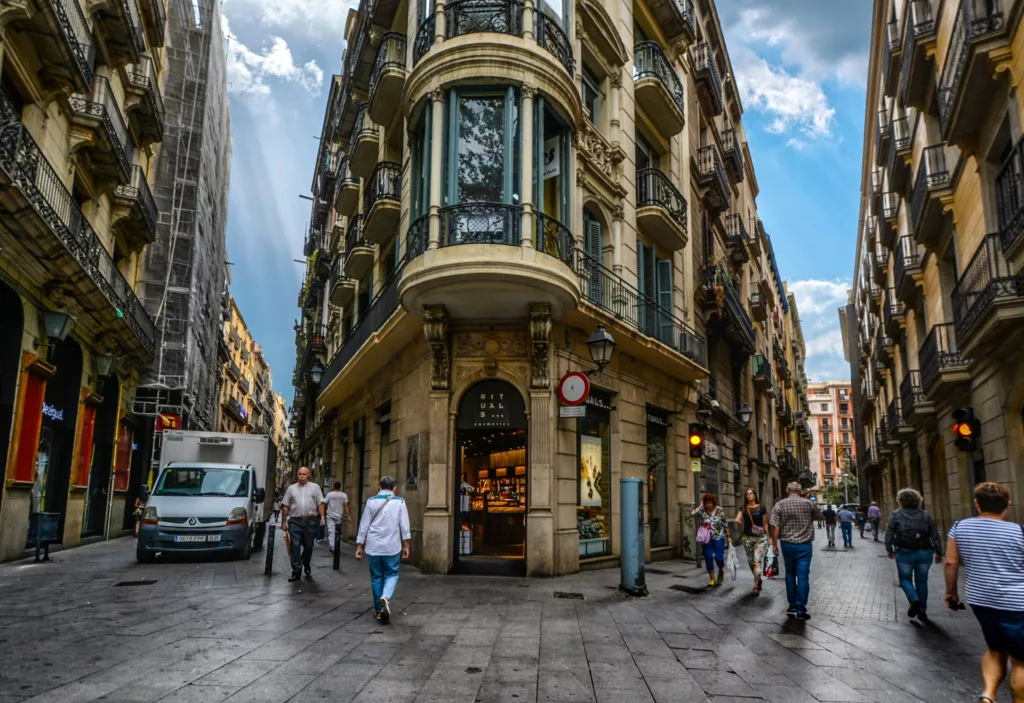
The Barri Gòtic, or Gothic Quarter, is the historic heart of Barcelona, located in the Ciutat Vella district.
The neighborhood is built on the foundations of ancient Roman Barcino, and some remains of the Roman walls are still visible, particularly on Plaça Nova. In its labyrinthine streets, medieval alleys and small picturesque squares intersect, creating a very authentic atmosphere.
It is home to iconic buildings such as the Cathedral of the Holy Cross and Saint Eulalia, as well as Gothic palaces.
The Palau de la Generalitat and City Hall (Ajuntament) face each other on Plaça Sant Jaume, at the heart of Catalan political power.
The medieval Jewish quarter, El Call, is nestled within the Barri Gòtic, with narrow streets where traces of its past still remain.
Plaça del Rei, in this neighborhood, houses Roman archaeological ruins beneath its paving stones, visible through underground excavations.
The Church of Sant Felip Neri, located on a small square, exudes a Baroque atmosphere that contrasts with the dominant Gothic style of the neighborhood.
Casa Martí, built by Josep Puig i Cadafalch in this neighborhood, houses the famous modernist café Els Quatre Gats, closely associated with Pablo Picasso.
Gaudí’s House
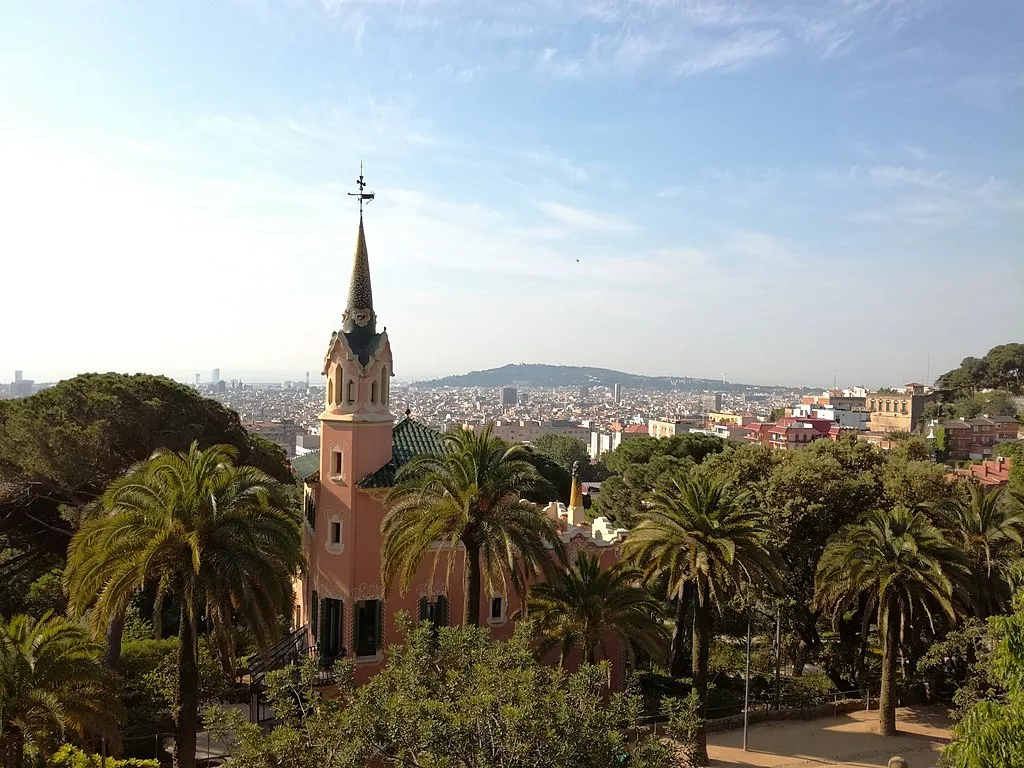
The Gaudí House Museum (“Casa Museu Gaudí”) is located within Park Güell in Barcelona. Gaudí lived there for nearly 20 years, from 1906 to 1925; it was his personal residence for a large part of his life.
The building was not designed directly by Gaudí, but by his friend Francesc Berenguer i Mestres, although Gaudí signed the plans. The house was part of an urban development project: Eusebi Güell’s vision was to create a “garden city” with 60 houses within the park.
On September 28, 1963, the house was converted into a museum to preserve the architect’s legacy. Inside the museum, visitors can see original furniture designed by Gaudí from projects such as Casa Batlló, Casa Calvet, and the crypt of Colònia Güell.
The house-museum offers a more intimate exhibition: visitors discover Gaudí’s bedroom, his office, personal objects, and audiovisual presentations about his religious life. In the museum garden, decorative elements designed by Gaudí are displayed, such as wrought-iron gates (from Casa Vicens and Casa Milà) and a cross from the Miralles estate.
Casa Batlló
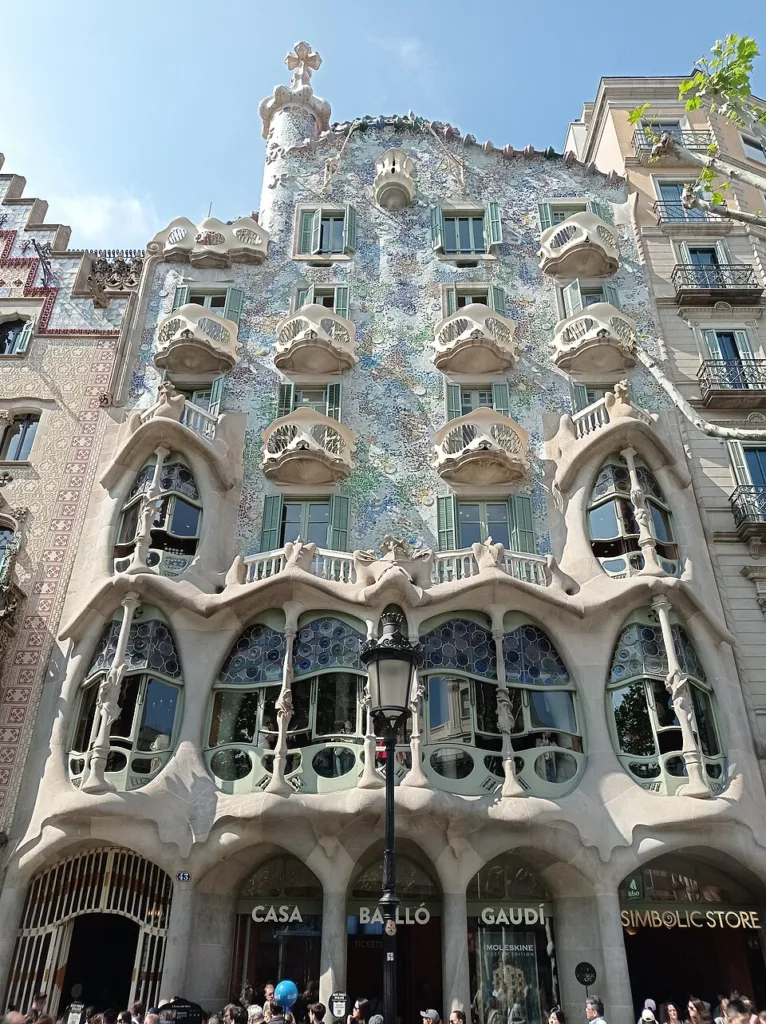
Casa Batlló is an iconic building in Barcelona, located at No. 43 Passeig de Gràcia, designed by Antoni Gaudí. It is a complete renovation of a pre-existing building, carried out by Gaudí between 1904 and 1906 at the request of textile industrialist Josep Batlló.
The building is often nicknamed the “House of Bones” due to its bone-shaped balconies and organic façade. The façade is covered with trencadís—colorful mosaics made of broken ceramic pieces—which create a vibrant, undulating appearance.
The roof of Casa Batlló evokes the back of a dragon: its glossy tiles resemble scales, and a four-armed cross is said to represent Saint George’s lance. Gaudí drew inspiration from nature for many of the building’s forms: balconies resembling masks or bones, and columns recalling trees and caves.
The roof is not merely decorative: its chimneys are part of an ingenious ventilation system, reflecting Gaudí’s technical mastery.
Inside, Gaudí reorganized the spaces, enlarged the light well, and made modern functional choices while maintaining a strong artistic dimension. Casa Batlló is part of the “Manzana de la Discordia” (“Block of Discord”), a group of modernist buildings designed by several renowned architects along Passeig de Gràcia.
Casa Milà (La Pedrera)
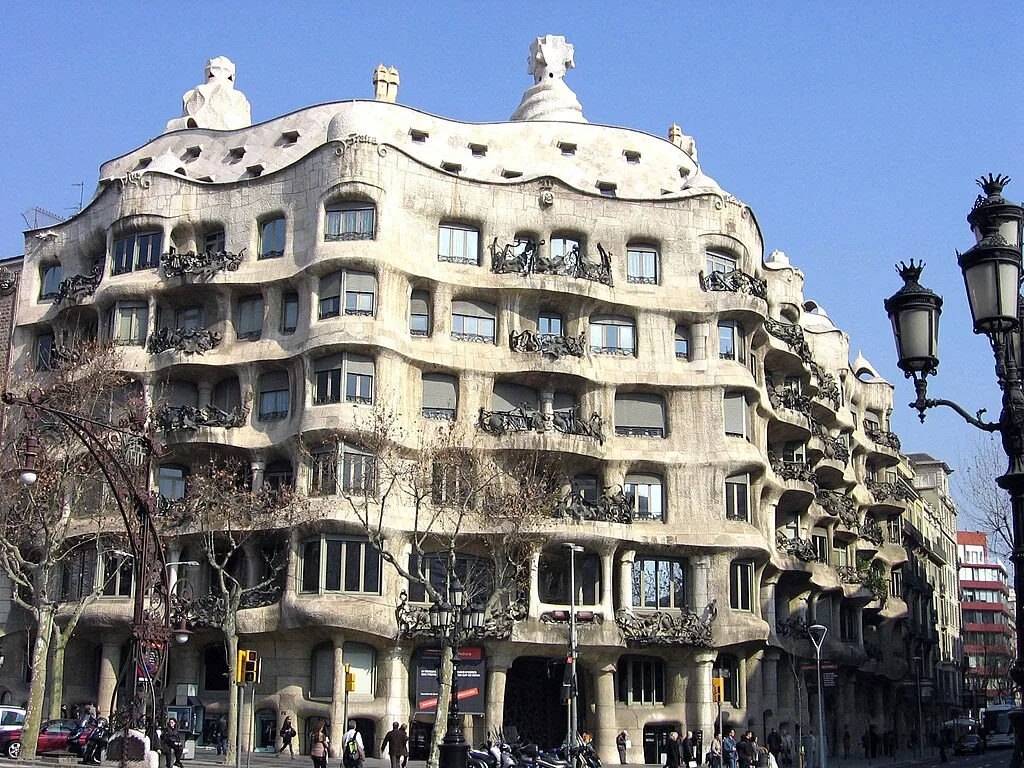
Casa Milà, better known as La Pedrera (“the stone quarry” in Catalan), is an iconic modernist residential building designed by Antoni Gaudí. It was built between 1906 and 1912, commissioned by Pere Milà and his wife Roser Segimon.
The undulating limestone façade gives the impression of a sculpted landscape, with no straight lines, which explains the nickname “Pedrera.” Gaudí incorporated structural innovations: the façade is self-supporting, freeing the interior space from traditional load-bearing walls.
The building is organized around two elliptical courtyards, allowing excellent circulation of natural light and air. The attic, now converted into an exhibition space, is made up of brick catenary arches, a structural solution very characteristic of Gaudí. The rooftop terrace is one of the most famous elements: it features sculptural chimneys and ventilation towers with highly organic forms.
Today, the building belongs to the Fundació Catalunya-La Pedrera, which organizes exhibitions, guided visits, and an “Espai Gaudí” in the attic.
Barcelona Cathedral (Santa Eulàlia)
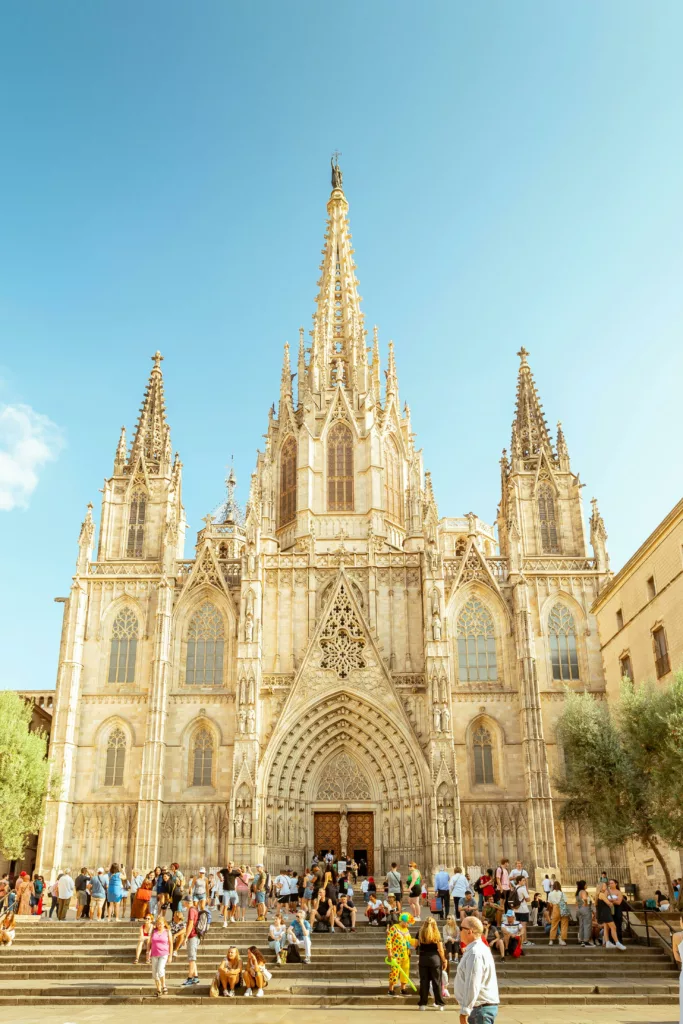
Barcelona Cathedral, officially the Cathedral of the Holy Cross and Saint Eulàlia, is the seat of the Archdiocese of Barcelona. Its construction took place mainly between the 13th and 15th centuries, in the Catalan Gothic style. The current façade is neo-Gothic, built in the 19th century based on earlier plans.
The cathedral is dedicated to Saint Eulàlia, a 13-year-old martyr and co-patron saint of Barcelona. According to tradition, Eulàlia was martyred during Roman persecution: she was allegedly rolled inside a spiked barrel before being crucified on an “X”-shaped cross. Her relics are housed in the cathedral’s crypt, within an impressive Gothic marble sarcophagus.
The Gothic cloister, laid out in the 14th–15th centuries, contains a small garden with 13 white geese, symbolizing Saint Eulàlia’s age at the time of her martyrdom.
Discover the origin of its name and the history of the statues on the cathedral with our route featuring Barcelona’s must-see highlights
Palau de la Música Catalana
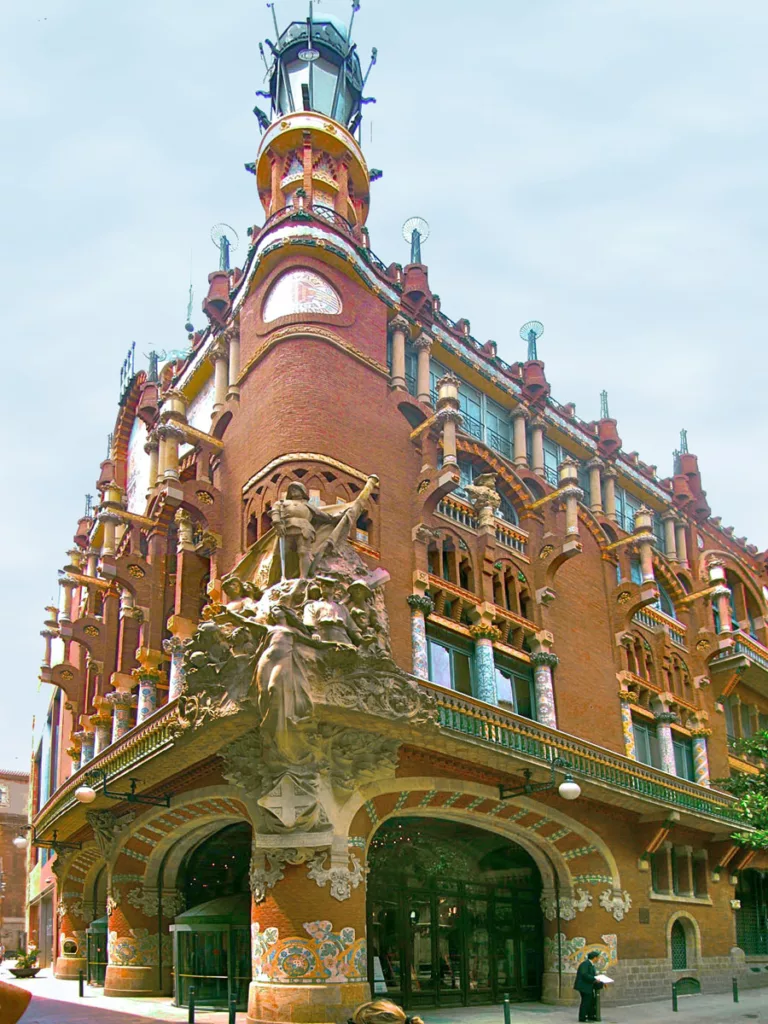
The Palau de la Música Catalana is an iconic concert hall of Catalan Modernist architecture, designed by architect Lluís Domènech i Montaner. It was built between 1905 and 1908 to house the Orfeó Català, a choral society of major importance in Catalan cultural life.
The Palau is the only Modernist concert hall listed as a UNESCO World Heritage Site.
The building is centered around a metal structure covered with glass, allowing natural light to flood in and transforming the venue into a kind of “magical music box” where mosaics, sculpture, stained glass, and wrought iron blend together. The concert hall’s dome is a striking inverted stained-glass skylight designed by Antoni Rigalt i Blanch, representing the sun and giving the hall a very distinctive light.
On the stage, sculpted muses can be seen—created by Eusebi Arnau—with mosaic bodies crafted by Lluís Bru, each playing a different musical instrument.
The main façade, built in red brick, is decorated with mosaics, sculptures, and ornamental elements evoking Catalan popular music.
Sant Pau Hospital
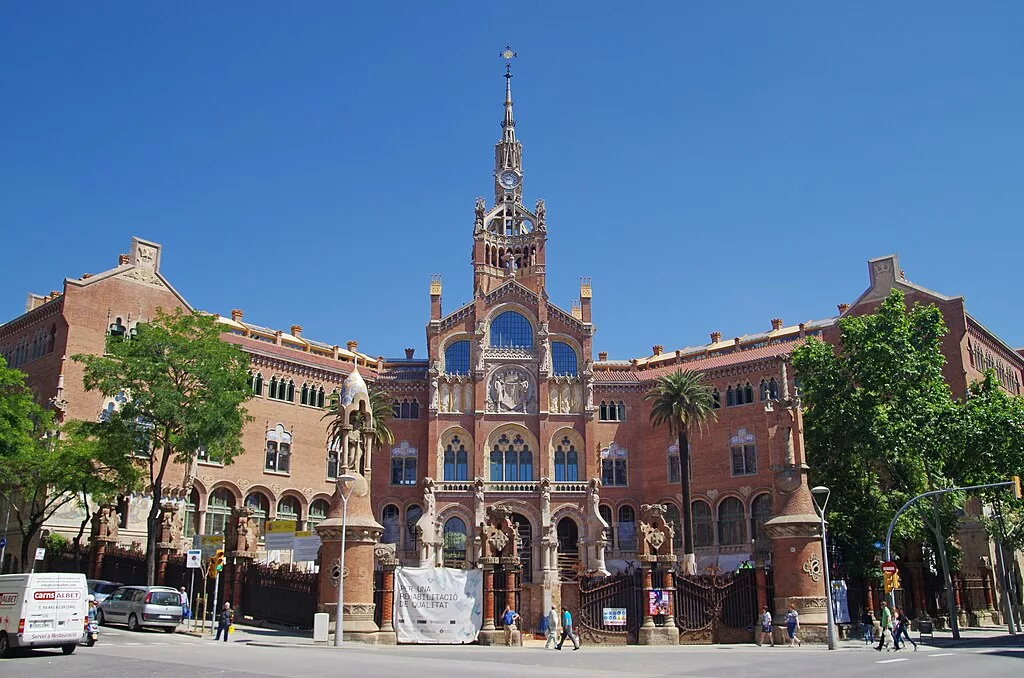
The Sant Pau Hospital (Hospital de la Santa Creu i Sant Pau) is a former Modernist hospital located in the Guinardó district of Barcelona. It was designed by the Catalan architect Lluís Domènech i Montaner, and its construction took place mainly between 1901 and 1930.
The hospital complex functions like a garden city, with independent pavilions surrounded by gardens and connected by underground galleries.
Domènech i Montaner designed the hospital according to principles of hygiene and light: the buildings are oriented to maximize sunlight exposure.
The historic hospital ceased medical operations in 2009, when services were transferred to a newer, more modern facility. Today, it serves as a historical and architectural site open to visitors, showcasing the Modernist complex designed by Lluís Domènech i Montaner.
Camp Nou
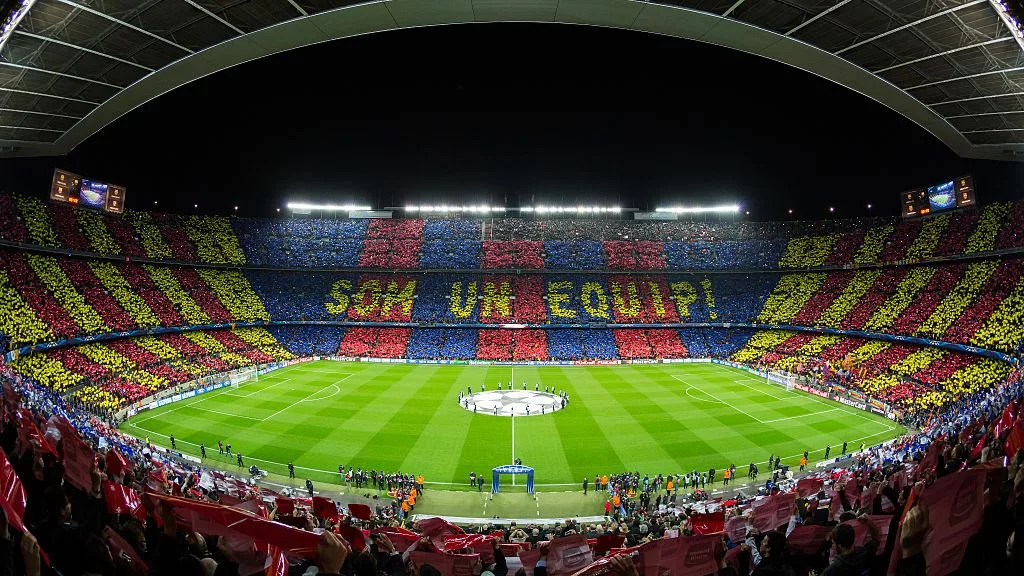
The Camp Nou is the iconic stadium of FC Barcelona, inaugurated on September 24, 1957, replacing the former Les Corts stadium. Its initial capacity was 93,000 seats, making it at the time the largest stadium in Spain and one of the largest in Europe. Currently, Camp Nou is undergoing renovation as part of the “Espai Barça” project, but it remains partially usable for matches, training sessions, and tourist visits.
It has hosted numerous major sporting events, including the UEFA Champions League finals in 1989 and 1999, as well as matches during the 1982 FIFA World Cup. Camp Nou has been the stage for historic moments in football, featuring legendary players such as Johan Cruyff, Ronaldinho, Lionel Messi, and Xavi.
It also hosts concerts and cultural events, welcoming artists such as U2, Bruce Springsteen, and Shakira.
The FC Barcelona Museum and the guided “Camp Nou Experience” tour allow visitors to explore the locker rooms, players’ tunnel, pitch, and the club’s trophies.
Santa Maria del Mar Church, Barcelona
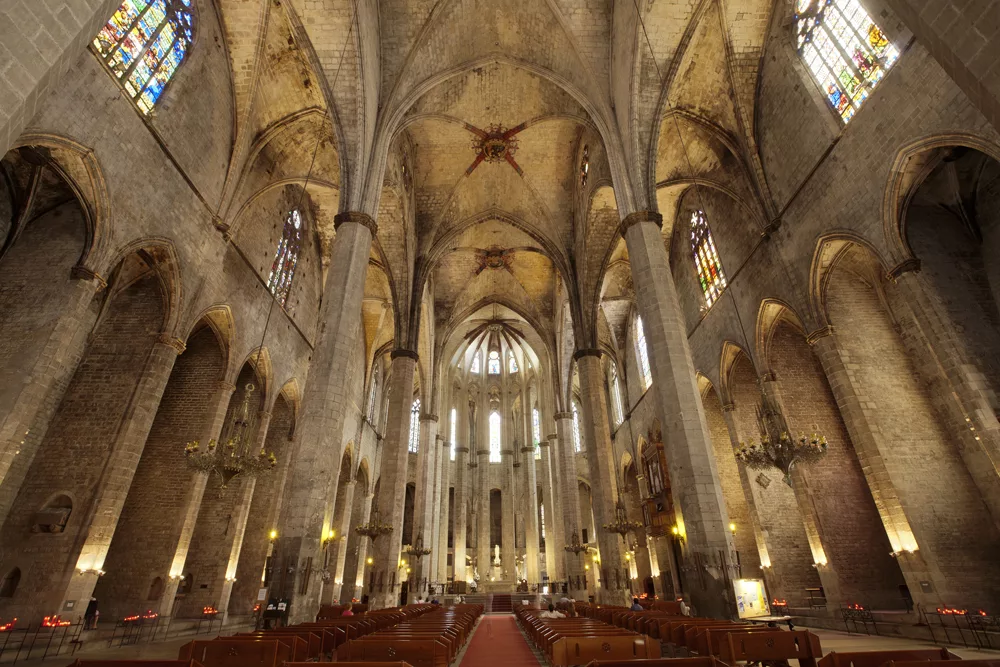
The Santa Maria del Mar Basilica is located in the La Ribera district, very close to Barcelona’s port. It was built between 1329 and 1384, which is remarkably fast for a large Gothic church.
The basilica is a pure example of Catalan Gothic, with horizontal lines, a sober façade, and great architectural harmony. Its construction was largely funded and carried out by local residents, particularly sailors and dockworkers (the “bastaixos”) who carried the stones on their shoulders.
The rose window on the west façade had to be rebuilt in the 15th century after an earthquake.
It is popularly known as the “Cathedral of the Ribera” or the “Cathedral of the Sea.”
Pont del Bisbe
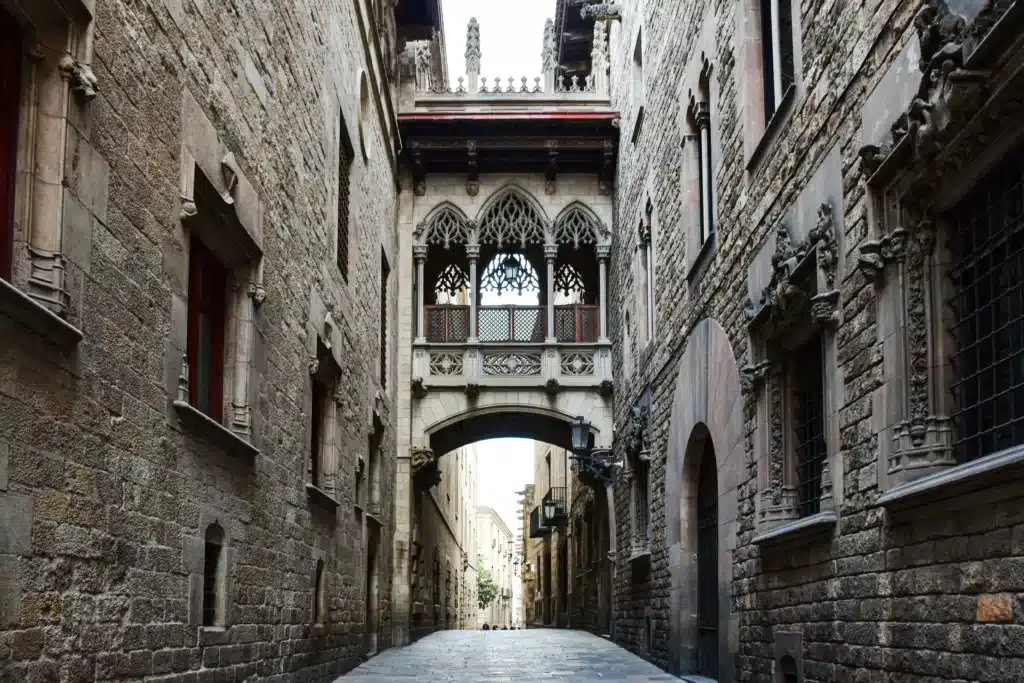
The Pont del Bisbe (or Bishop’s Bridge) is a neo-Gothic bridge located in Barcelona’s Gothic Quarter (Barri Gòtic), and is often considered one of the most photographed spots in the city.
It was built in 1928 by the Catalan architect Joan Rubió i Bellver, a disciple of Antoni Gaudí, to embellish the historic center as part of the preparations for the 1929 International Exposition. The bridge connects the Palau de la Generalitat (the seat of the Catalan government) to the Casa dels Canonges (the House of the Canons) above the narrow Carrer del Bisbe.
Despite its medieval appearance, the Pont del Bisbe is actually less than a century old, making it a modern structure inspired by flamboyant Gothic style.
Under the arch of the bridge is a sculpture of a skull pierced by a dagger, the subject of many urban legends involving wishes and local curses.
Discover the legends surrounding this landmark with our trail on the must-see highlights of Barcelona.
Museums to See in Barcelona
Picasso Museum
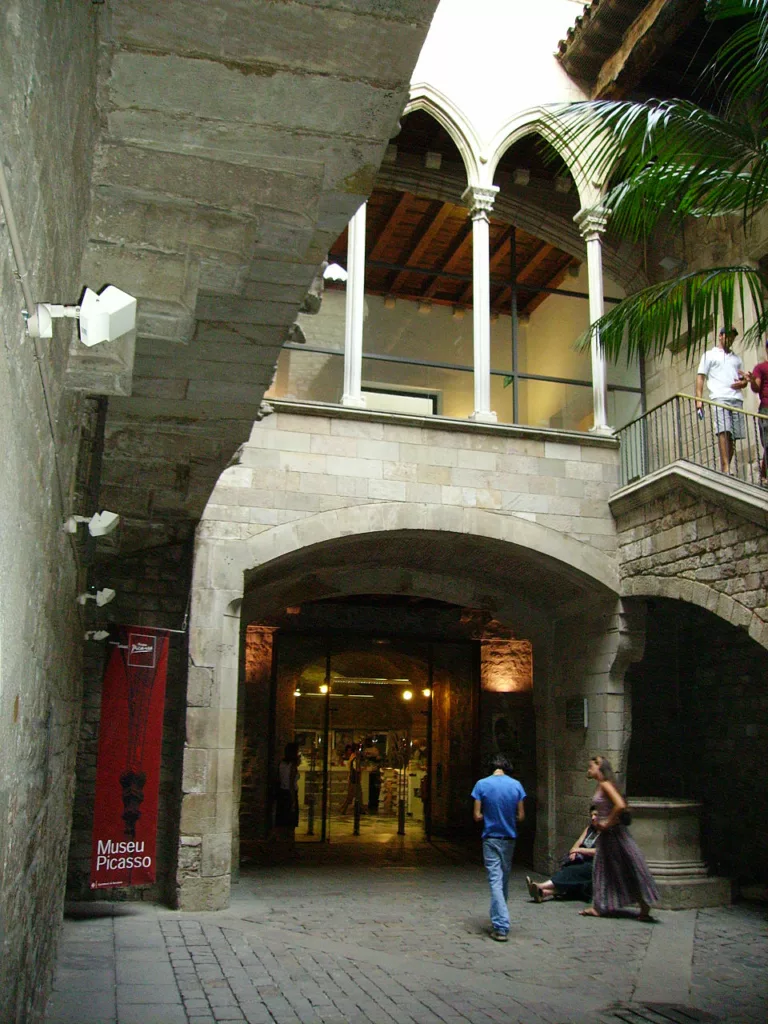
The Picasso Museum is located in the El Born district, in the heart of Barcelona’s old town. It is housed in five adjoining medieval palaces, built between the 14th and 17th centuries, featuring beautiful inner courtyards.
The museum opened its doors in 1963, after Jaume Sabartés, a close friend of Picasso, donated numerous works. Today, it holds more than 4,000 works by Picasso, covering his early years through adulthood.
The museum places particular emphasis on Picasso’s formative years in Barcelona, from 1895 to 1904, when he developed his artistic style. Iconic collections include the Las Meninas Series, which reinterpret Velázquez’s masterpiece.
National Museum of Art of Catalonia (MNAC)
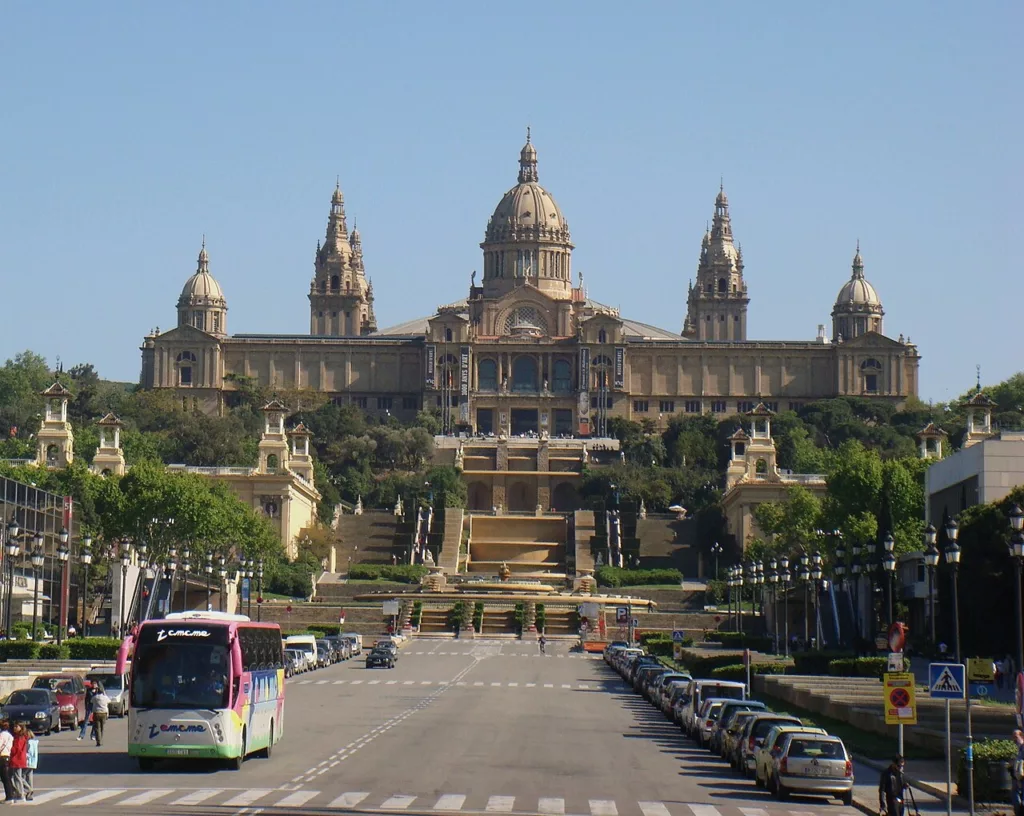
The MNAC is housed in the Palau Nacional, a monumental building constructed for the 1929 International Exposition on Montjuïc hill.
The museum houses an extensive collection of Catalan art ranging from the Romanesque period to the 20th century, with emblematic works from every era. It is particularly renowned for its Romanesque art collection, notably frescoes and panels from rural churches across Catalonia. The MNAC also holds collections of Gothic, Baroque, and Modernist painting, including works by Ramon Casas, Santiago Rusiñol, and other Catalan artists.
The modern collection includes works from the 20th century, such as those by Salvador Dalí and Joan Miró.
Museum of Contemporary Art of Barcelona (MACBA)
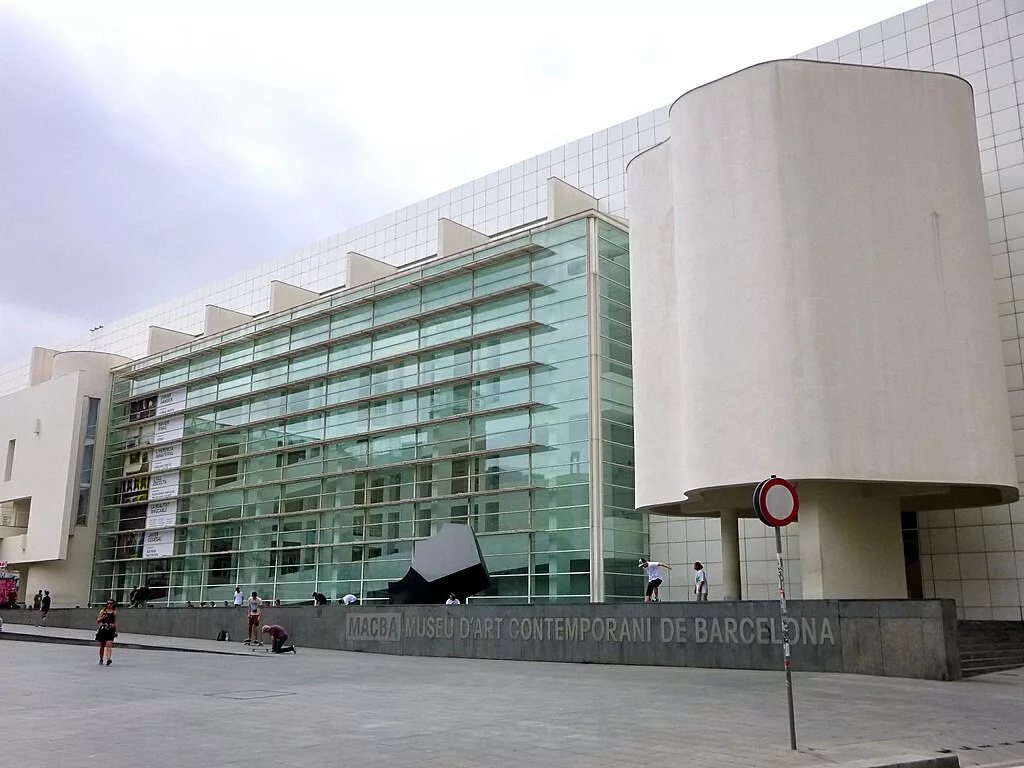
The MACBA is located in the Raval district, in the heart of Barcelona’s historic center. It was inaugurated in 1995 in a striking white modernist building designed by American architect Richard Meier.
The museum is dedicated to contemporary and late contemporary art, mainly covering the second half of the 20th century to the present day. The MACBA holds a collection of more than 5,000 works, including painting, sculpture, photography, video, and multimedia installations.
The plaza in front of the MACBA has become an iconic gathering place for skateboarders and local youth, creating a lively interaction with the urban space.
Joan Miró Foundation
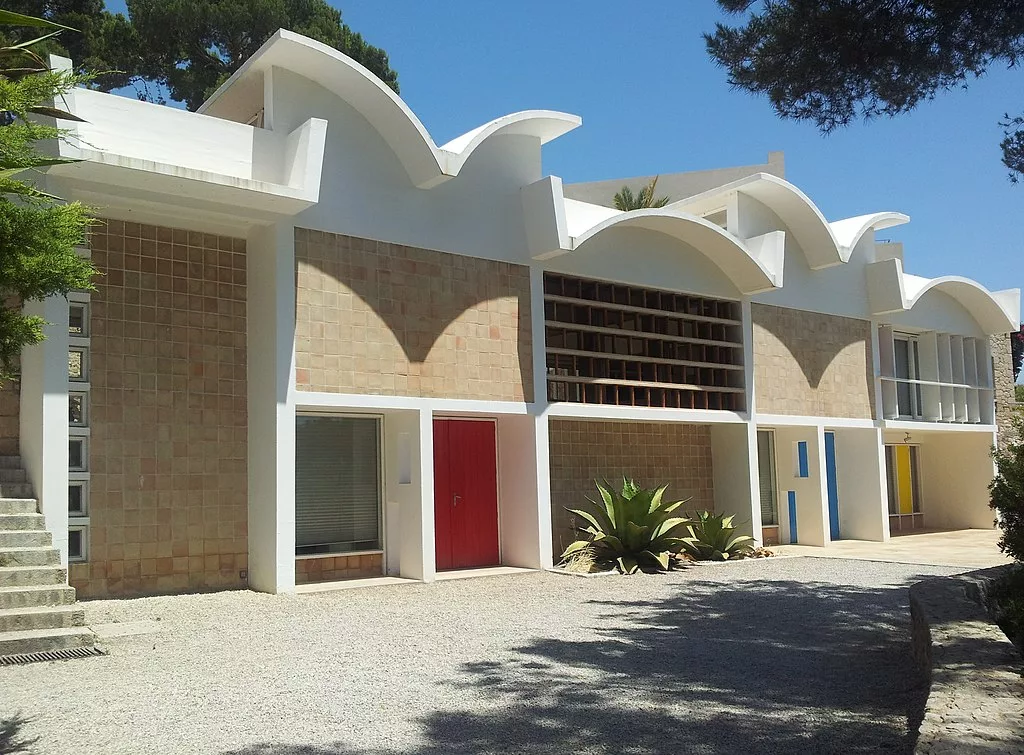
The Joan Miró Foundation is located on Montjuïc hill, offering panoramic views over Barcelona and the port.
It was inaugurated in 1975 at the initiative of Joan Miró himself, who wanted to create a space dedicated to the promotion of modern and contemporary art. The building was designed by Catalan architect Josep Lluís Sert, a close friend of Miró, in a minimalist style that emphasizes natural light.
The foundation houses the largest collection of Miró’s works, including paintings, sculptures, tapestries, and drawings. The outdoor spaces feature monumental works and sculptures by Miró, integrated into the Mediterranean garden surrounding the building.
Parks, Gardens & Walks – Barcelona
Parc Güell
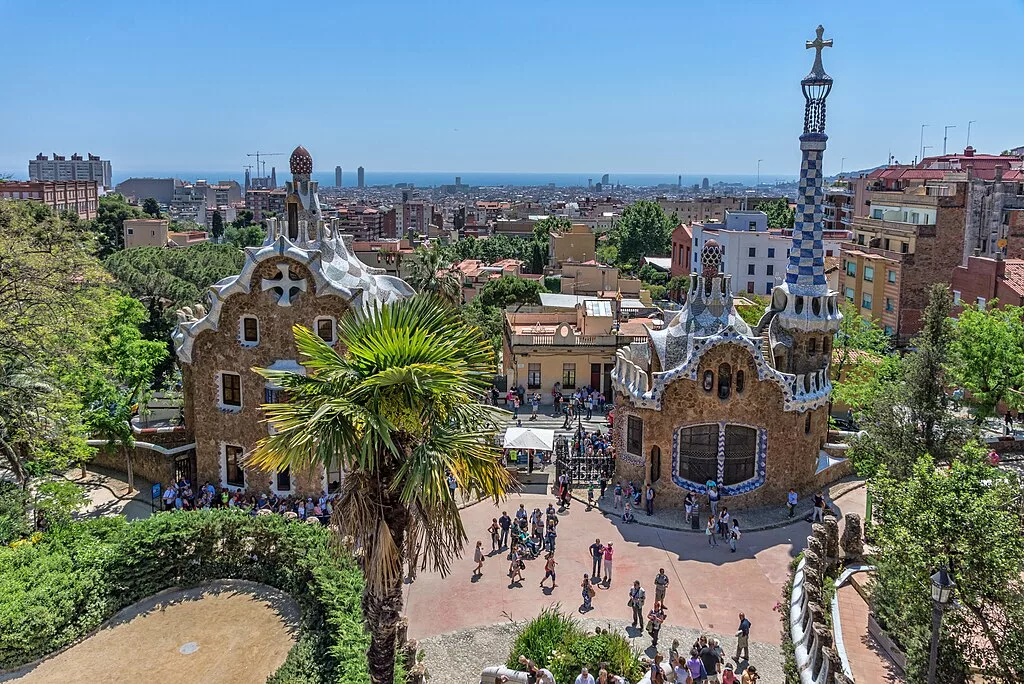
The Parc Güell is an iconic park in Barcelona designed by Antoni Gaudí between 1900 and 1914.
Originally planned as a residential housing development for the bourgeoisie, the project failed and the site became a public park in 1926. The park is located on Carmel Hill, offering exceptional panoramic views over Barcelona and the Mediterranean Sea.
It features famous colorful mosaics, including the “Gaudí dragon,” a ceramic dragon located at the main entrance. The park illustrates Gaudí’s organic style, with undulating forms, nature-inspired columns, and structures integrated into the landscape.
The Hypostyle Hall, with its 86 columns shaped like tree trunks, was intended to serve as a market for the housing development but is now an exhibition space.
The serpentine bench on the main terrace is covered with mosaics and offers an ideal place to relax while admiring the city.
The site includes several houses designed by Gaudí, including the Gaudí House Museum, where he lived from 1906 to 1925.
Parc de la Ciutadella
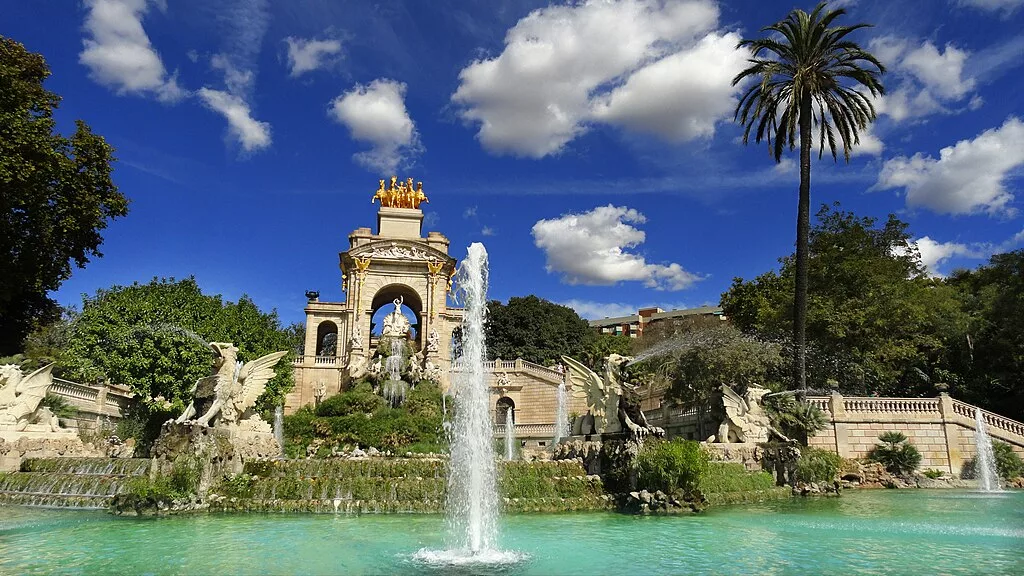
The Parc de la Ciutadella is Barcelona’s most famous public park, located in the El Born district. It was created in the early 19th century on the site of the former military citadel of Barcelona, which was later demolished to make way for the park.
The park is home to the Barcelona Zoo, opened in 1892, where visitors can observe numerous animal species. It is also famous for its monumental fountain, designed by Josep Fontserè, with collaboration from Gaudí on certain decorative elements.
You will also find several historic buildings, such as the Parliament of Catalonia, housed in the former military arsenal.
The park is also a cultural venue, hosting sculptures, monuments, and spaces for concerts and outdoor events.
The Arc de Triomf of Barcelona, located at the entrance to the park, is another iconic architectural landmark of the site.
Montjuïc
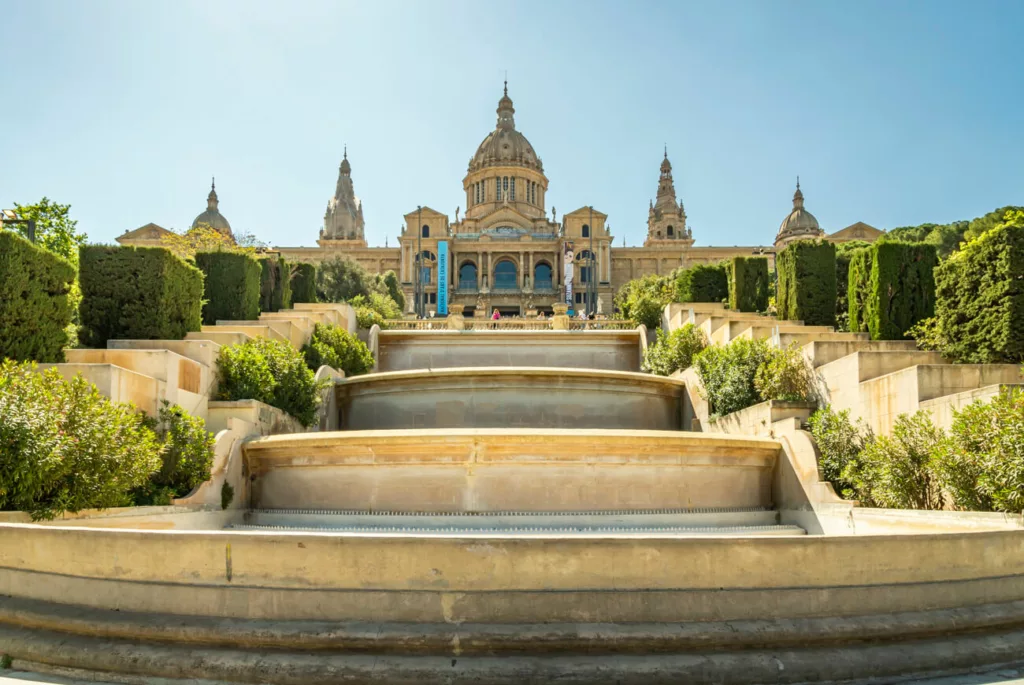
The Montjuïc Hill is an iconic area of Barcelona, overlooking the port and offering panoramic views of the city. Its name means “Mountain of the Jews,” referring to the medieval Jewish cemetery that once stood there.
The hill is home to the Montjuïc Castle, a military fortress built in the 17th century and later converted into a museum and historical site open to the public. Montjuïc is the cultural and sporting heart of Barcelona, with several museums including the MNAC, the Joan Miró Foundation, and the Poble Espanyol.
The hill hosted the 1929 International Exposition, and some of its pavilions and gardens are still visible today.
Montjuïc is famous for its themed gardens, such as the Botanical Garden, the Laribal Gardens, and the Mossèn Cinto Verdaguer Gardens. The hill offers numerous viewpoints and lookout points, ideal for photographing the port, the sea, and the rooftops of Barcelona.
The park is also home to the Magic Fountain of Montjuïc, famous for its nighttime shows of light, music, and water.
Tibidabo
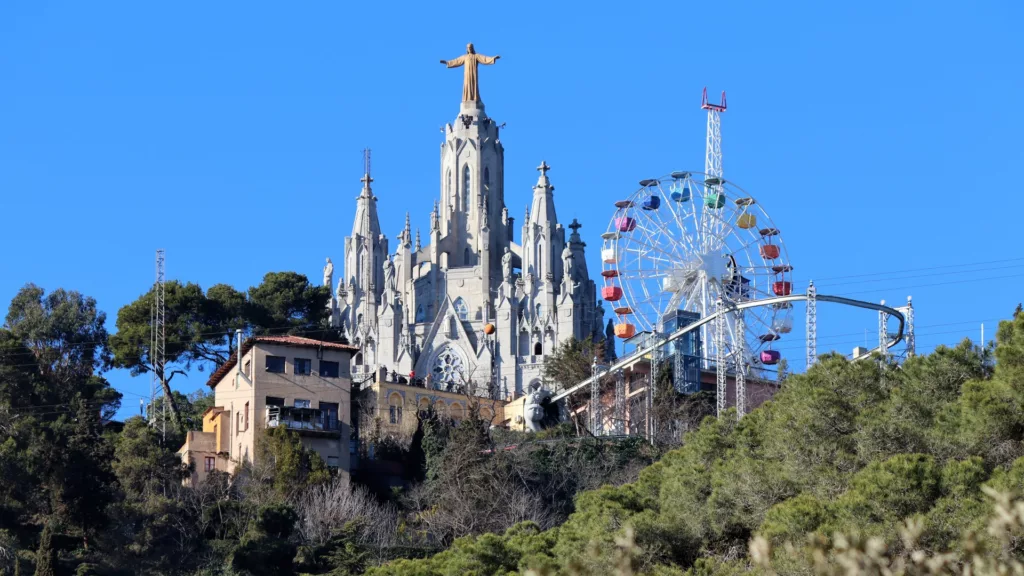
The Tibidabo is the highest hill in Barcelona, rising to 512 meters and offering panoramic views over the entire city and the Mediterranean Sea. It is famous for the Tibidabo Amusement Park, one of the oldest in Europe, inaugurated in 1901.
At the summit stands the Temple Expiatori del Sagrat Cor, a Catholic church built between 1902 and 1961, crowned by a large statue of the Sacred Heart overlooking Barcelona.
The amusement park combines historic rides with modern attractions, offering fun for the whole family. The site is also a protected natural area, with numerous hiking trails and rich biodiversity, including Mediterranean forests and local species.
Tibidabo is also home to the Torre de Collserola, a telecommunications tower designed by architect Norman Foster, featuring a panoramic observation deck open to the public.
The Beaches of Barcelona
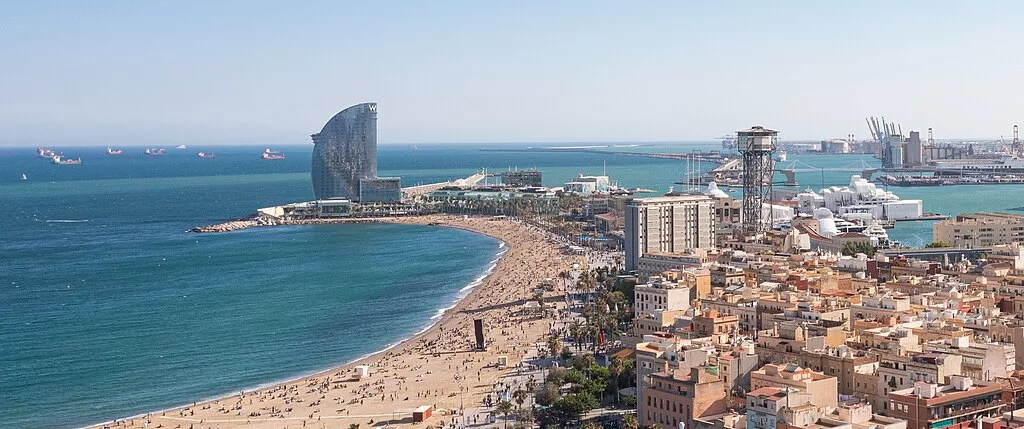
Barcelona boasts several urban beaches along the Mediterranean coast, stretching for approximately 4.5 km of fine sand. The most famous beach is Barceloneta, known for its lively atmosphere and its proximity to seafood restaurants and bars.
Nova Icària Beach is ideal for families thanks to its calm waters, volleyball courts, and children’s play areas. Bogatell Beach attracts sports enthusiasts with areas dedicated to beach volleyball, beach football, and outdoor fitness.
Somorrostro Beach, recently renovated, retains a historic charm linked to the former fishermen’s neighborhood that once surrounded it.
Catalan Gastronomy & Barcelona Specialties
Paella (Catalan version: “arròs”)
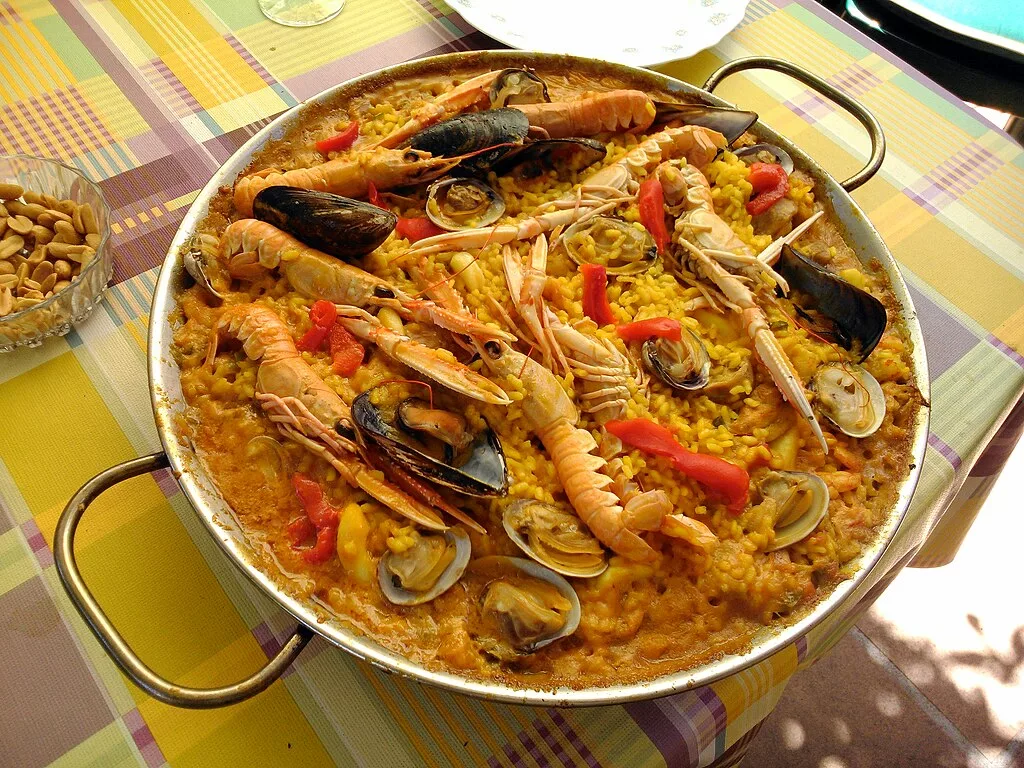
Paella is a rice-based dish made with vegetables, meat, or seafood, very popular in Catalonia and throughout Spain.
The Catalan version, known as “arròs,” often uses locally grown rice slowly cooked with fish or meat broth. Traditional ingredients include tomatoes, peppers, garlic, olive oil, and sometimes saffron for color and aroma.
Tapas & Pintxos
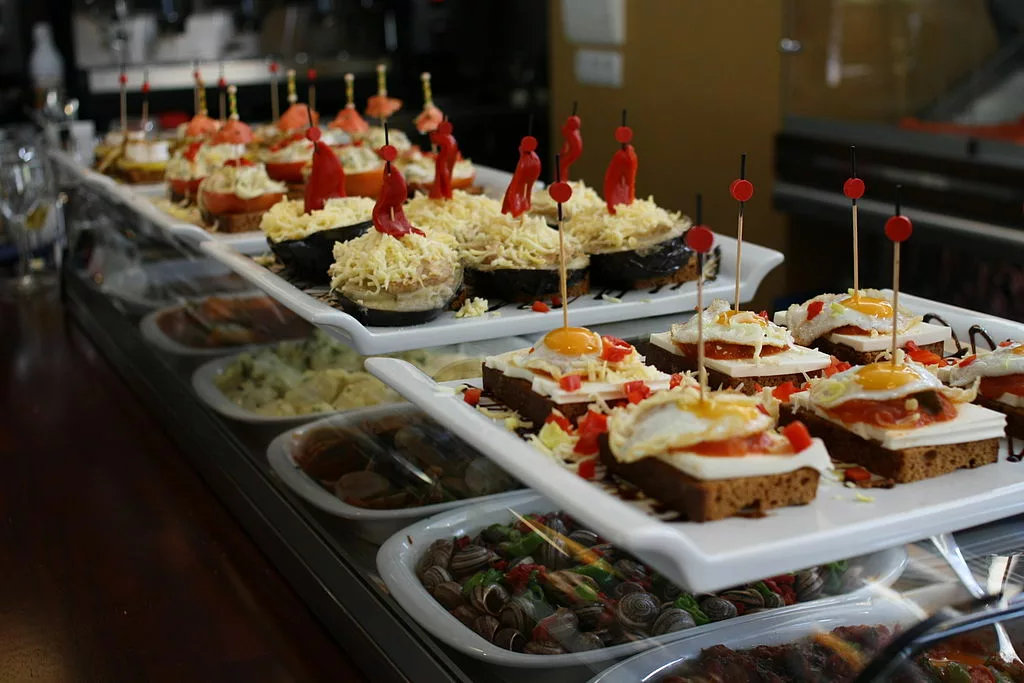
Tapas are small portions of food, perfect for sampling several Catalan specialties in one sitting.
Pintxos, more popular in northern Spain, are usually served on a slice of bread and held together with a small skewer. They can feature a wide variety of ingredients such as cheeses, cured meats, seafood, or grilled vegetables. These bite-sized dishes are often enjoyed with a glass of wine, cava, or local beer in bars throughout the city center.
Pan con Tomate (Pa amb tomàquet)
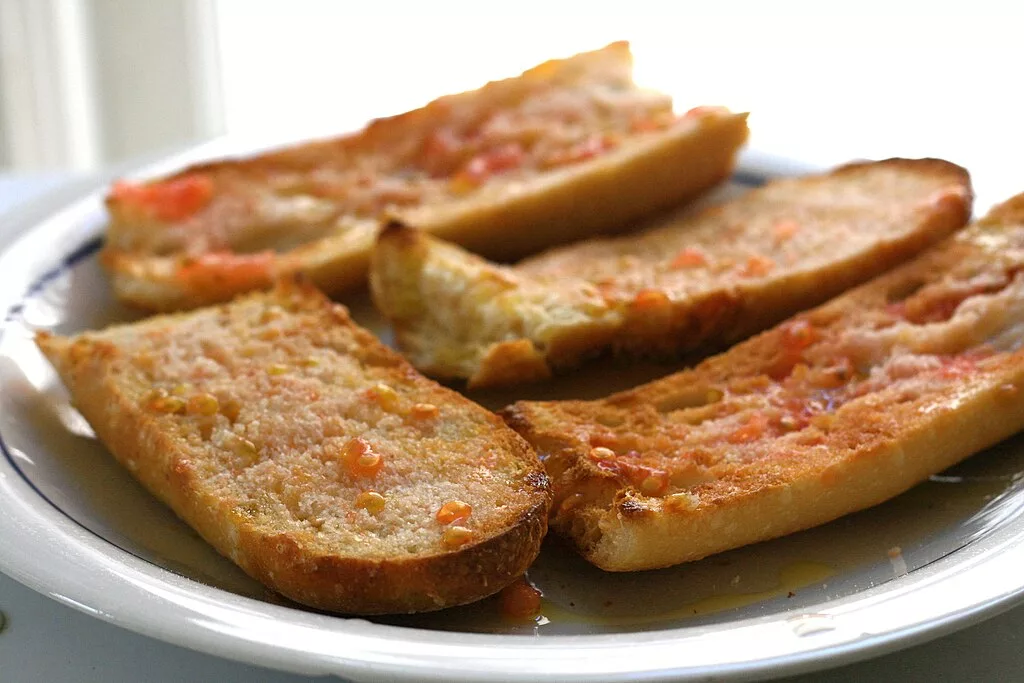
Pa amb tomàquet is a simple yet iconic Catalan dish, made of bread rubbed with garlic and ripe tomato. It is usually topped with olive oil, salt, and sometimes ham or cheese. It is a classic accompaniment for breakfast, lunch, or as an aperitif.
Crema Catalana
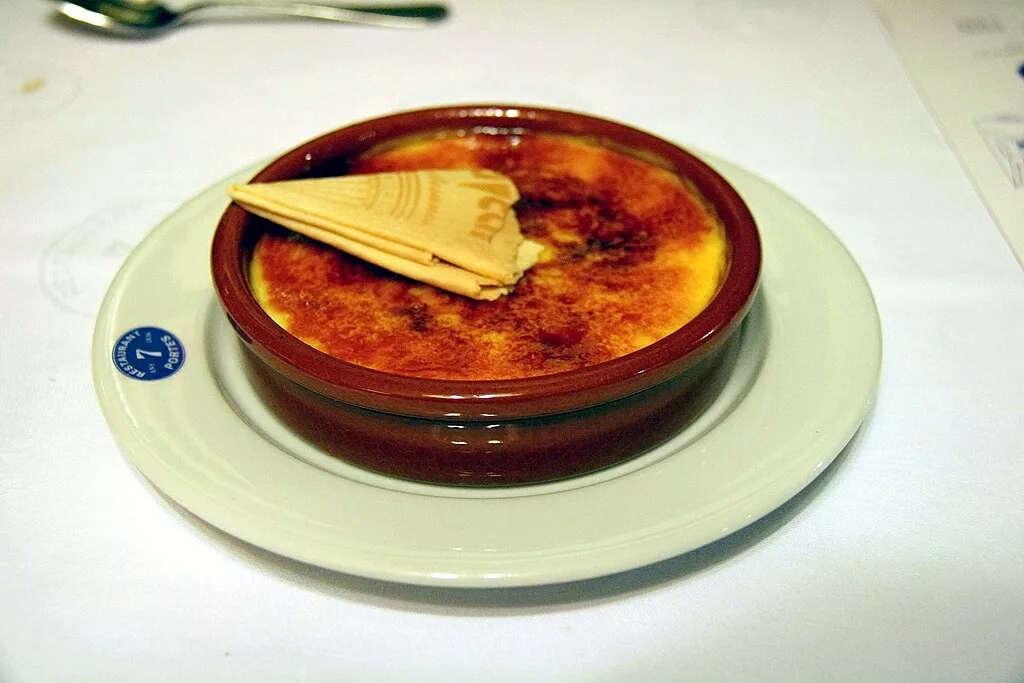
Crema Catalana is a traditional dessert similar to French crème brûlée, featuring a crunchy caramelized sugar layer on top. It is flavored with lemon zest and cinnamon, giving it a distinctive Catalan taste.
Fideuà
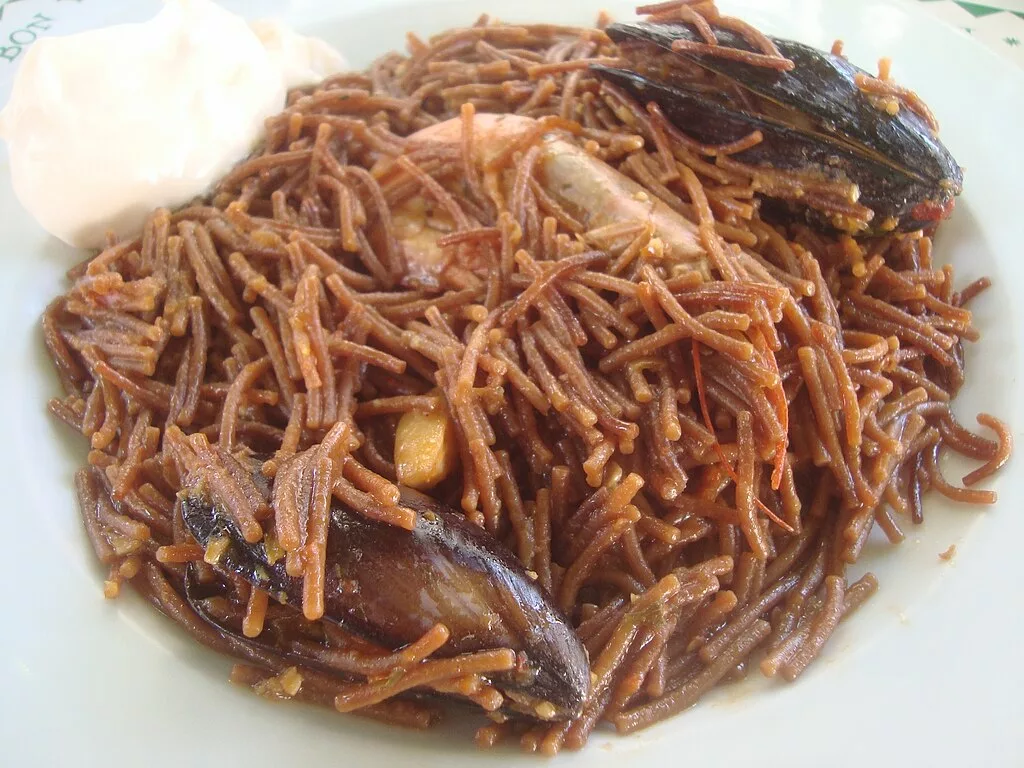
Fideuà is a seafood dish similar to paella, but made with thin noodles instead of rice. It is traditionally prepared with seafood, fish, and sometimes chicken.
The dish is seasoned with garlic, saffron, and fish stock for a rich and aromatic flavor. Fideuà is often served with allioli sauce made from garlic and olive oil.
Suquet de Peix
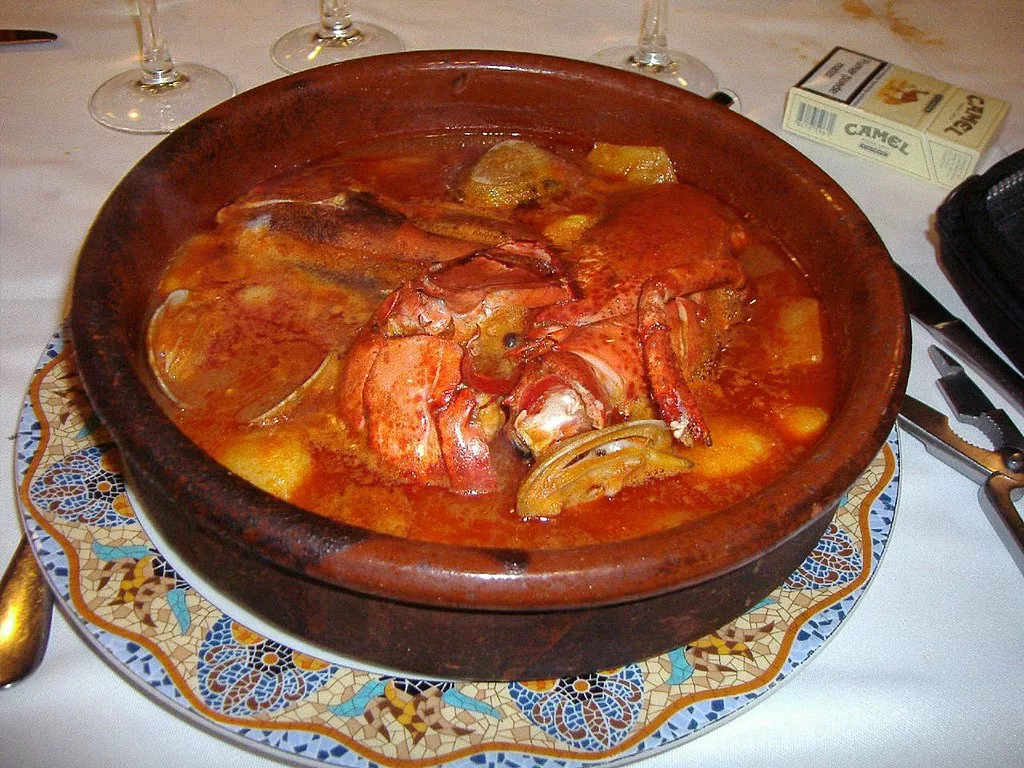
Suquet de Peix is a traditional Catalan fish stew, usually prepared with fresh fish and shellfish. The ingredients are simmered with tomatoes, potatoes, garlic, and olive oil, creating a flavorful broth. It is often served with bread to soak up the sauce.
Catalan cured meats (fuet, butifarra)

Catalonia is renowned for its artisan cured meats, particularly fuet and butifarra.
Fuet is a thin, dry-cured sausage, lightly spiced and perfect as an aperitif.
Butifarra is a thicker sausage, often grilled or cooked, and typically served with vegetables or bread.
These products are made from high-quality pork and natural ingredients, without artificial additives.
Day Trips / Excursions Around Barcelona
Montserrat
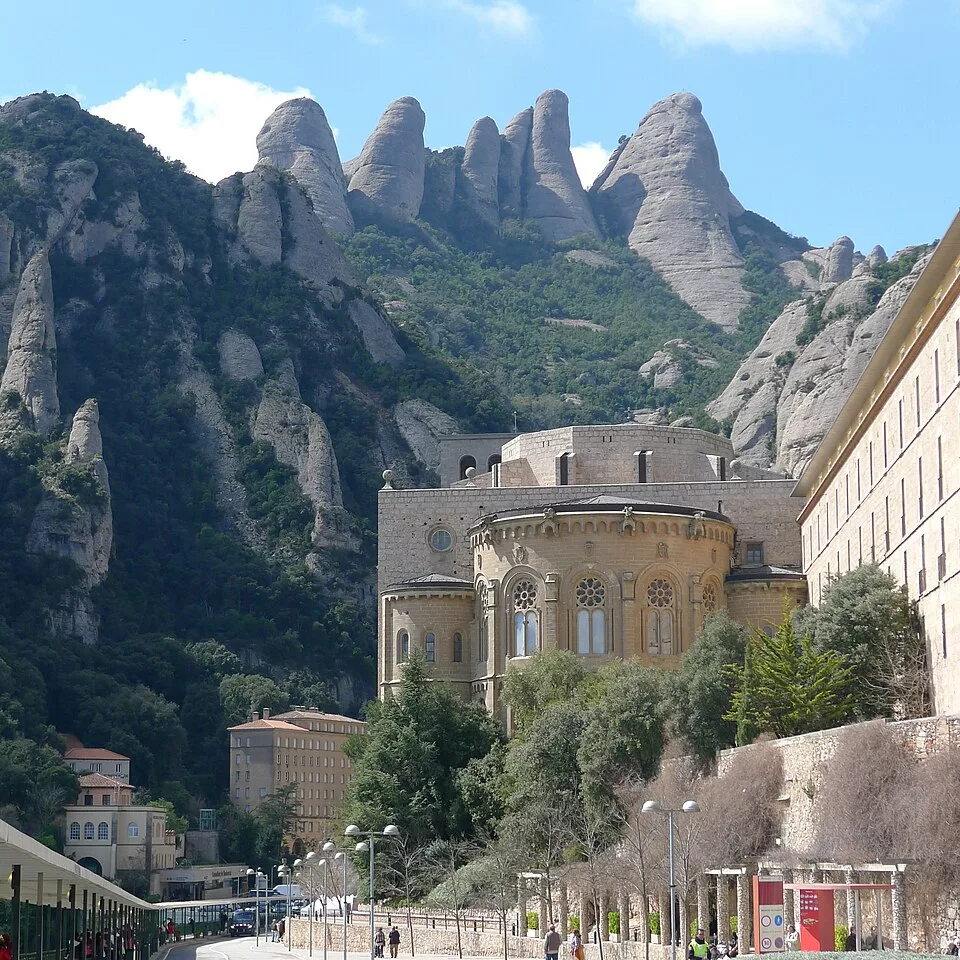
Montserrat is an iconic mountain range located about 50 km from Barcelona, famous for its unique rock formations and jagged peaks.
The site is best known for the Benedictine monastery of Santa Maria de Montserrat, founded in the 11th century and still active today. The mountain is home to the famous Black Madonna (La Moreneta), a statue venerated by pilgrims from all over Catalonia.
Montserrat is an exceptional hiking destination, with trails suitable for all levels, allowing visitors to explore caves, summits, and forests.
The site also features the Montserrat Museum, which houses Catalan and European artworks ranging from the Middle Ages to the 20th century.
Sitges
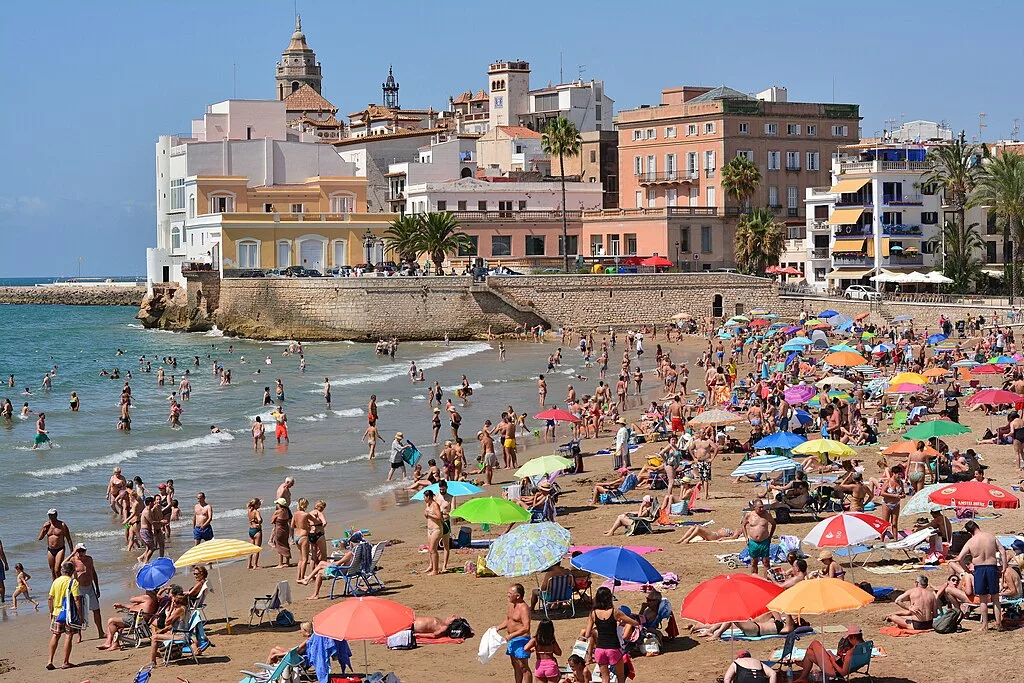
Sitges is a charming coastal town located about 35 km southwest of Barcelona, on the Costa del Garraf. It is famous for its fine sandy beaches, ideal for relaxing, swimming, or enjoying water sports.
The town features a picturesque historic center with narrow streets, whitewashed houses, and ancient churches such as the Church of Sant Bartomeu i Santa Tecla.
The Sitges International Film Festival, specializing in fantasy and horror cinema, attracts visitors from around the world. The town is also known for its vibrant nightlife, with lively bars, clubs, and festive events, especially during Carnival.
Girona
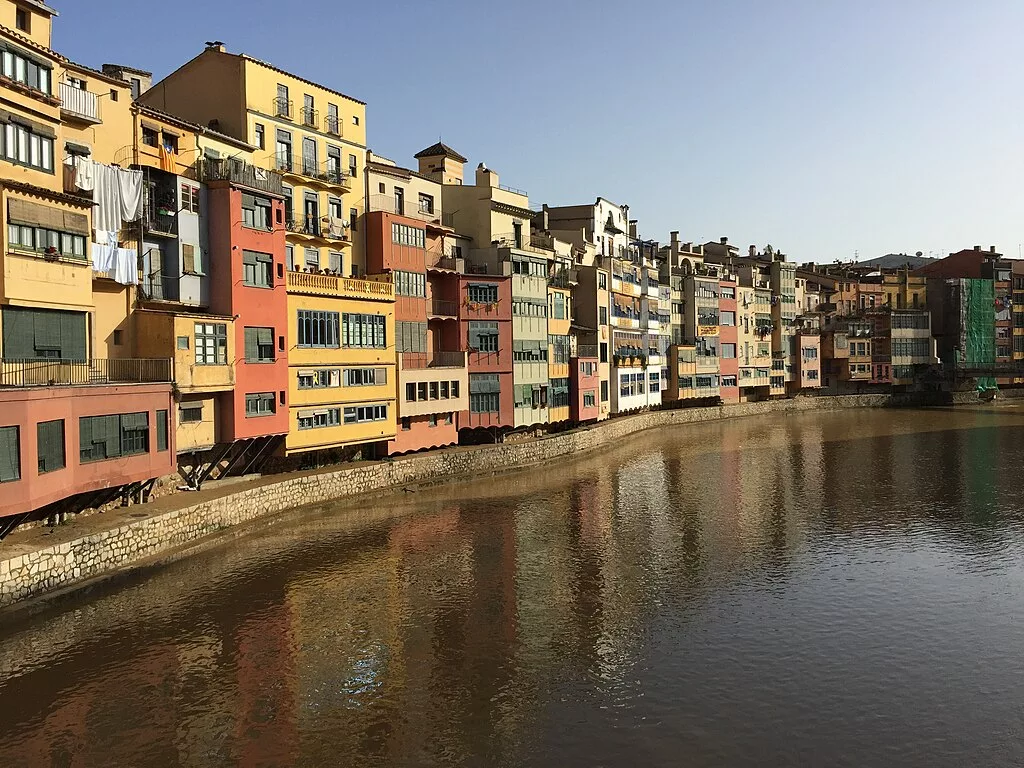
Girona is a historic city located about 100 km north of Barcelona, in the Catalonia region.
Its perfectly preserved medieval center is famous for its narrow streets, colorful houses along the Onyar River, and picturesque squares.
Girona Cathedral, with its impressive staircase and unique nave, is one of the city’s must-see landmarks.
Girona is also home to a historic Jewish Quarter (Call Jueu), one of the best preserved in Europe, rich in history and legends. The city features numerous medieval walls and towers, offering panoramic views over the rooftops and surrounding countryside.
Girona served as a filming location for several scenes of the TV series Game of Thrones, notably in the old town and around the cathedral.
Girona hosts cultural events throughout the year, including the Temps de Flors Festival, a magnificent flower festival that transforms the city into a living garden.
Conclusion
Visiting Barcelona means diving into a world where history meets modernity, where Gaudí’s colorful façades stand alongside the medieval streets of the Gothic Quarter. The city captivates visitors with its iconic landmarks, renowned art museums, green spaces, generous cuisine, and Mediterranean beaches.
Beyond its urban treasures, Barcelona also offers unforgettable excursions to Montserrat, Sitges, or Girona, allowing travelers to discover Catalonia in all its diversity.
With its architectural heritage, local gastronomy, natural landscapes, and vibrant culture, Barcelona remains a destination that amazes at every corner and invites visitors to return again and again.
Discover Barcelona differently with our tour of Barcelona’s must-see highlights.