Visiting Bordeaux: 25 Must-See and Must-Do Experiences
Bordeaux, nicknamed the “Sleeping Beauty,” is a city that enchants with its timeless charm. Between elegant architecture, lively banks of the Garonne, refined gastronomy, and neighborhoods full of character, it offers a thousand and one experiences for visitors. Whether you come for a weekend or a few days, there are places and activities you absolutely shouldn’t miss. Here are the must-see and must-do things in Bordeaux, along with practical tips to make the most of every moment.
If you want to visit Bordeaux in a different way, I recommend our tours, explore unusual places in Bordeaux, solve riddles, and discover its history.
1. Place de la Bourse and Miroir d’Eau
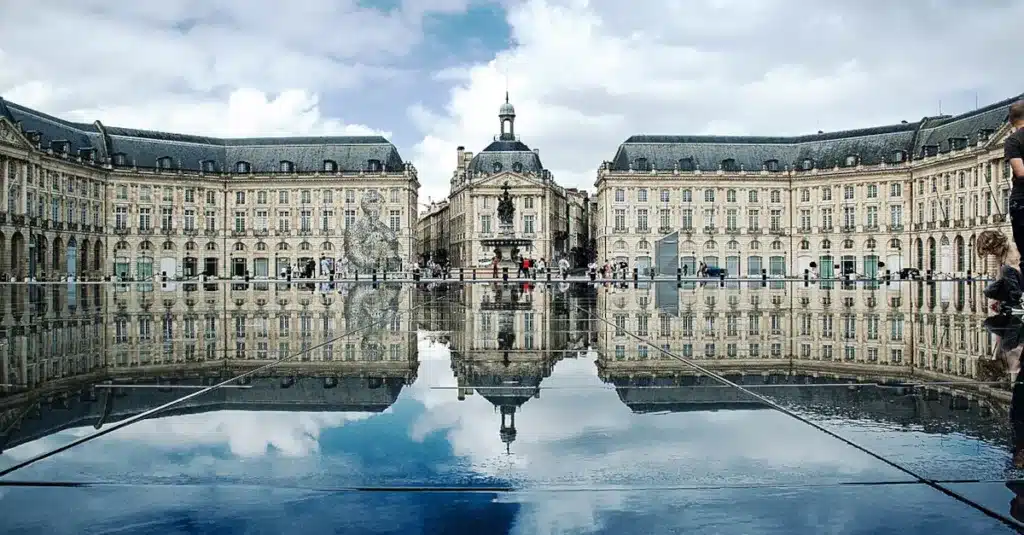 Palais de la Bourse Bordeaux
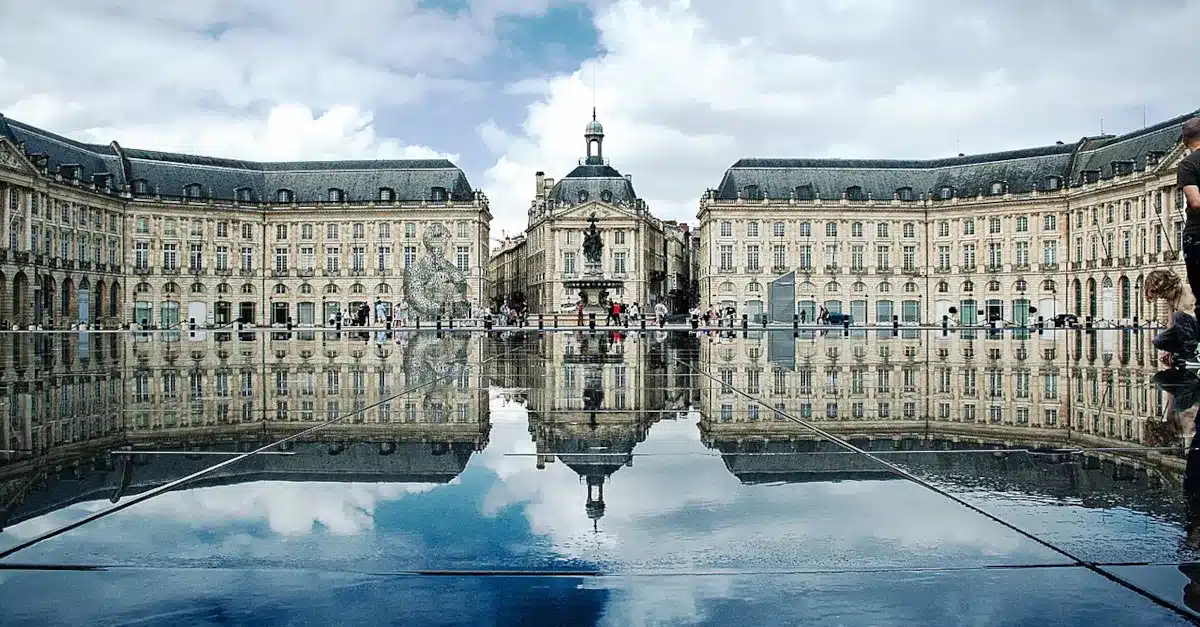
It’s impossible to visit Bordeaux without stopping at the Place de la Bourse. This majestic 18th-century square, with its symmetrical façades and classical architecture, is a true symbol of the city. But the real gem is just across from it: the Miroir d’Eau. This shallow pool reflects the square and the sky, creating a magical spectacle at any time of day.
In the morning, the mist gives it an almost fairy-tale effect, while at sunset, the golden light transforms the place into a living painting. Children love walking through the water and watching their reflections, and photographers find endless inspiration here.
Practical tips:
-
Plan a visit early in the morning to avoid the crowds.
-
Summer evenings sometimes feature temporary light shows, not to be missed.
- Discover the secrets of this water mirror in our Bordeaux mysteries tour
2. Pont de Pierre and the Garonne Quays
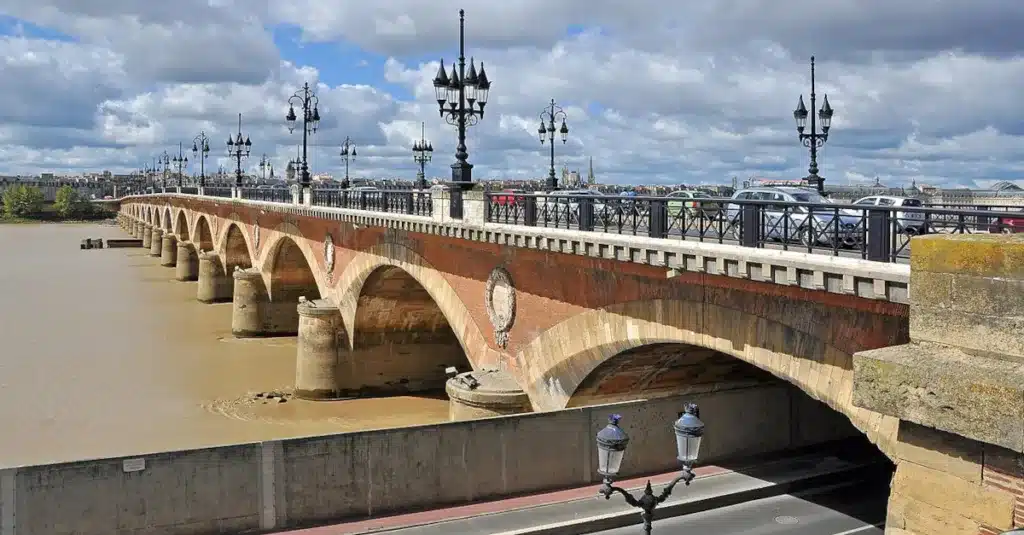 The Pont de Pierre in Bordeaux
The Pont de Pierre is another Bordeaux must-see. Built under Napoleon I, it connects the two banks of the Garonne with its 17 elegant arches. Walking across it allows you to admire the city from a different perspective, with the Garonne sparkling below.
The redeveloped quays are perfect for a leisurely stroll, jogging, or even cycling. The cafés and terraces along the river invite you to take a tasty break while enjoying the sunset.
Practical tips:
-
Rent a bike to explore the quays and the surrounding area.
-
Stop regularly to enjoy viewpoints and statues along the way.
-
A coffee or snack by the water makes your walk even more enjoyable.
3. La Cité du Vin
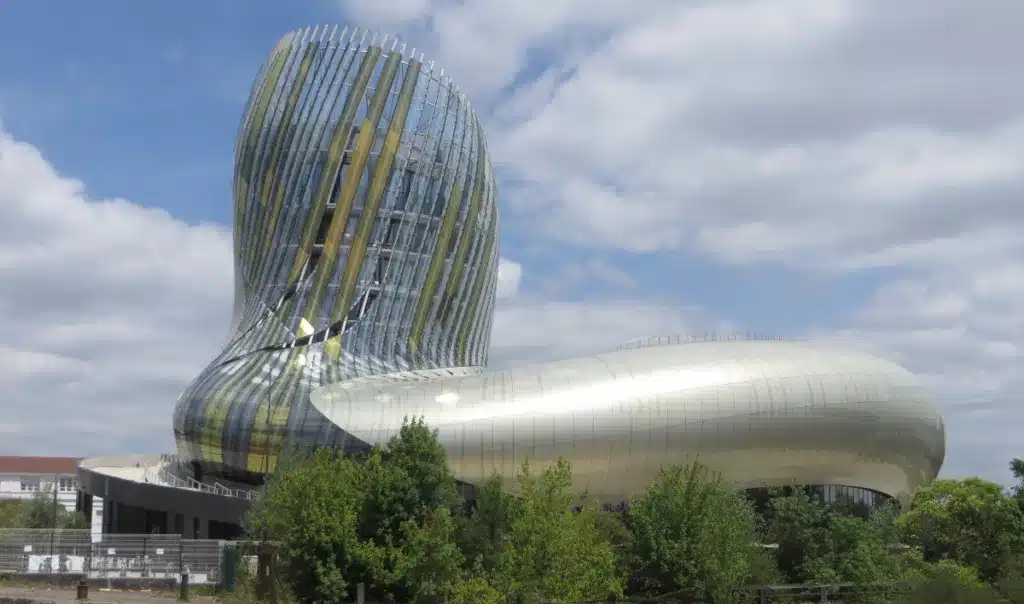 La Cité du Vin
For wine lovers, the Cité du Vin is a must-visit. This modern building, shaped like a wine carafe, offers an immersion into the world of wine. Here, you don’t just look: you discover, touch, taste, and learn the history of wine and vineyards.
The highlight of the visit is the observation deck at the top, where you can enjoy an exceptional panorama of Bordeaux and the Garonne. Tastings are offered, from local grands crus to wines from other continents, all in a fun and interactive setting.
Practical tips:
-
Book your tickets in advance, especially on weekends.
-
Allow at least two hours to fully enjoy the experience.
4. Darwin Écosystème
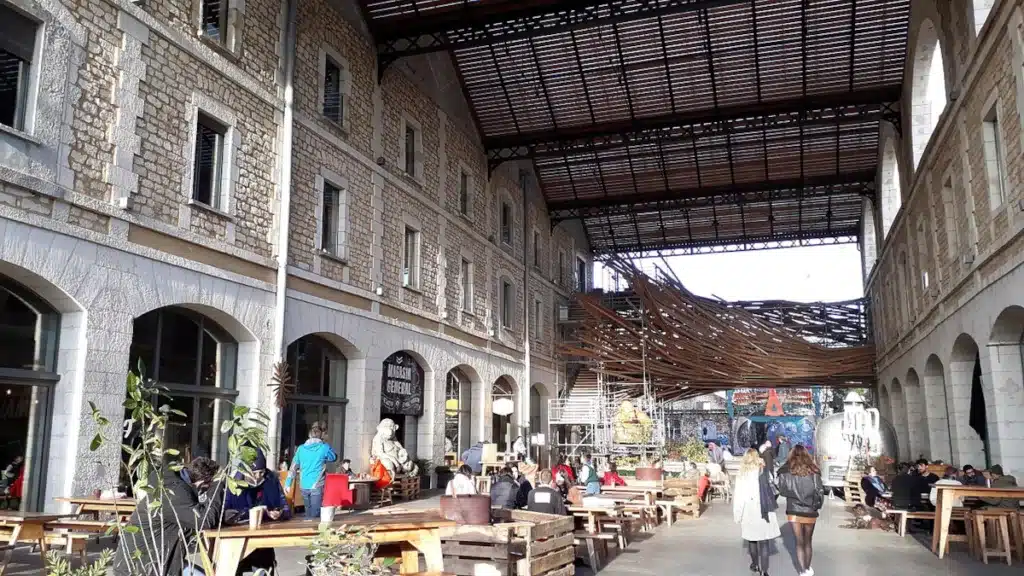 Darwin Écosystème
For a different Bordeaux experience, head to Darwin Écosystème on the right bank. This former barracks has been transformed into a cultural and eco-friendly space, blending coworking, a skatepark, street art, and organic cafés. The atmosphere is unique: modern, creative, and relaxed.
The walls are covered with colorful and original murals, and many cultural events and concerts are held here. Green spaces invite relaxation, and local restaurants offer tasty and sustainable dishes.
5. Chartrons District
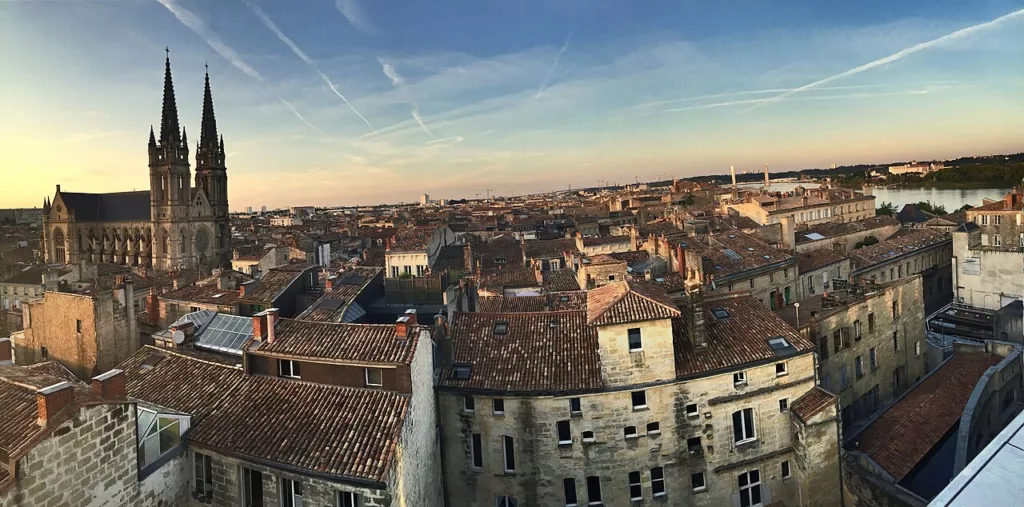
The Chartrons district is perfect for strolling and soaking up the Bordeaux atmosphere. A former wine merchants’ neighborhood, it is full of antique shops, unique boutiques, and cozy cafés. The cobbled streets and townhouses tell the rich and prosperous history of this area.
The Chartrons market on weekends is a chance to taste local specialties and discover Bordeaux craftsmanship. Art galleries and bookstores add a cultural touch to your walk, offering an authentic and relaxing experience.
Practical tips:
-
Take your time visiting the galleries and unique shops.
-
Stop for a coffee or brunch in a charming and typical spot.
6. La Grosse Cloche
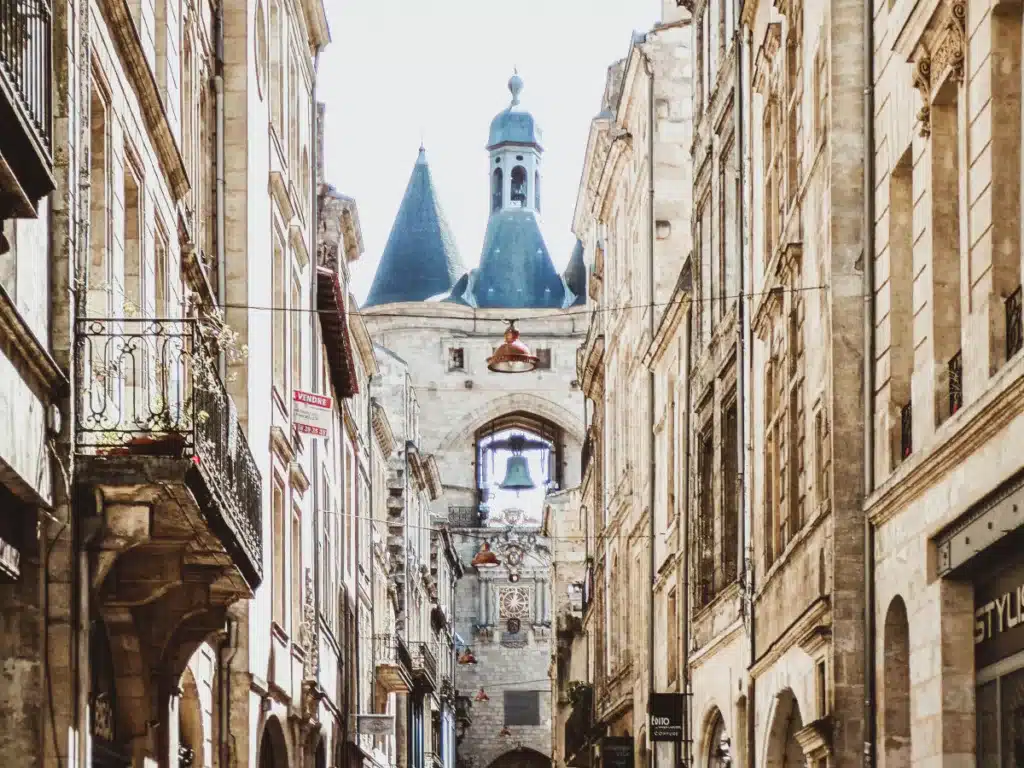
The Grosse Cloche is one of Bordeaux’s oldest monuments and a symbol of the city. A former gate of the medieval city walls, it houses an impressive bell weighing over 7 tons. The two towers and the clock bear witness to Bordeaux’s historical past.
The neighborhood around the Grosse Cloche is picturesque, with cobbled streets and old buildings. The view from the towers offers a unique perspective on the historic center and daily life in Bordeaux.
Practical tips:
-
Explore the adjacent streets to capture the medieval atmosphere.
-
Combine this visit with a walk through the historic center to make sure you don’t miss anything.
7. Place de l’Opéra
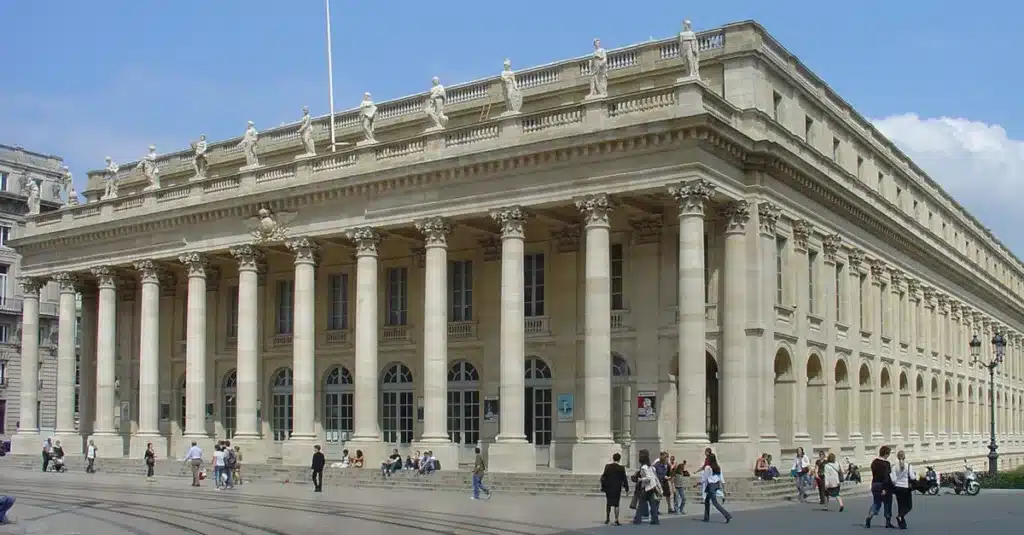
The Place de l’Opéra is one of the living hearts of Bordeaux. Dominated by the sumptuous Grand Théâtre, the square exudes 18th-century elegance with its finely sculpted façades and symmetrical architecture. The fountains and statues decorating the square add a touch of majesty to the ensemble.
It’s a perfect place to feel Bordeaux’s vibrancy: students meeting up, tourists admiring the buildings, and locals enjoying café terraces. The cafés around the square are ideal for observing local life and savoring a break while admiring the theater.
Practical tip:
- Discover the secrets of the muses on the Opera in our Bordeaux mysteries scavenger hunt
8. Place des Quinconces
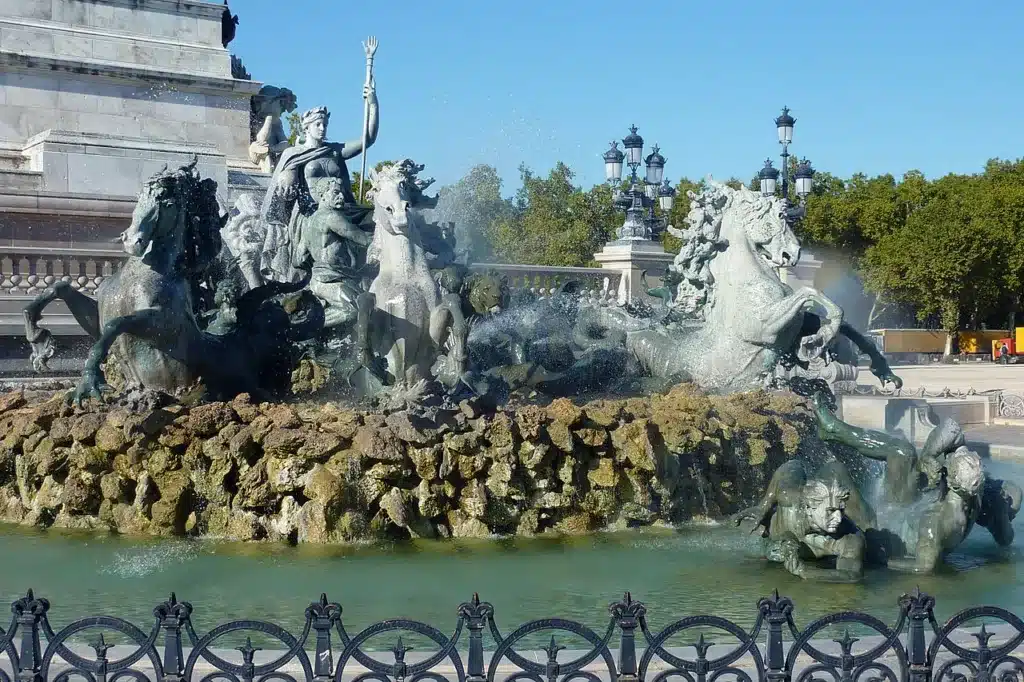
The Place des Quinconces is vast and impressive. With its statues, columns, and fountains, it pays tribute to the Girondins and Bordeaux’s history. The size of the square gives it a grandiose atmosphere, ideal for strolls or simply observing the city’s activity.
It’s also a lively place where markets, fairs, and outdoor concerts are regularly held. The columns and statues are perfect for spectacular photos, and one quickly senses the central role of this square in Bordeaux life.
Practical tip:
- Discover the mysteries of the Monument aux Girondins in our Bordeaux scavenger hunt, a mix between an escape game and a guided tour.
9. Pey-Berland Tower
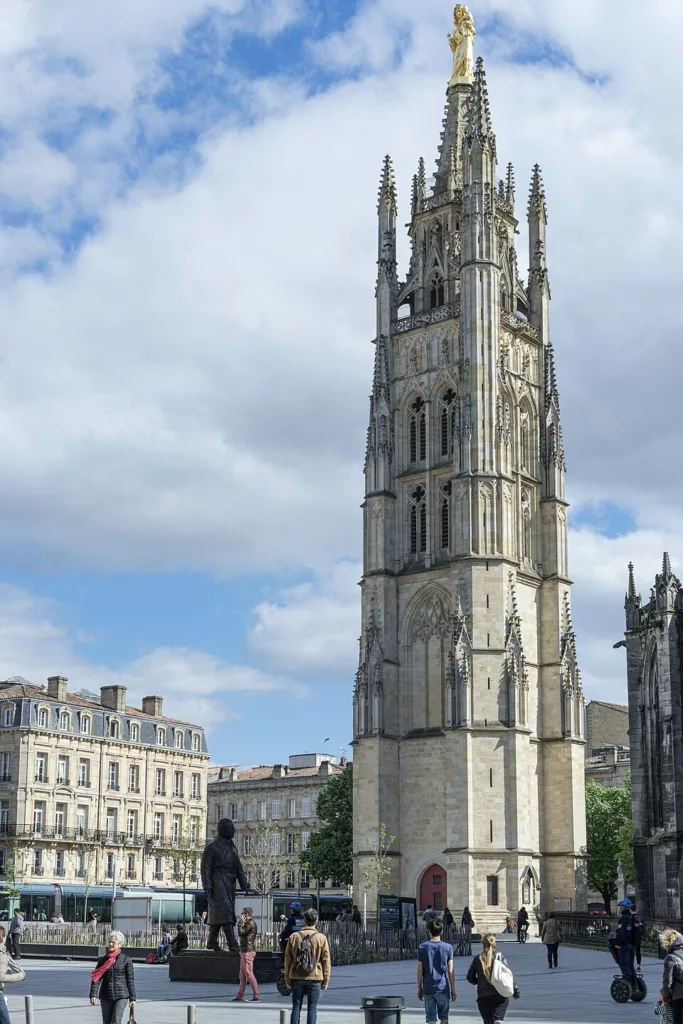
The Pey-Berland Tower is closely linked to the Saint-André Cathedral and is a must for anyone who loves panoramic views. This 15th-century Gothic tower stands proudly and offers an exceptional view of the city, the Garonne quays, and Bordeaux rooftops.
Climbing the tower’s steps is an experience in itself: the medieval architecture, thick walls, and old wood under your feet immediately transport you back in time. At the top, the 360° view is simply breathtaking, offering a perspective of Bordeaux rarely seen otherwise.
Practical tip:
-
Be prepared to climb dozens of steps, but the view is well worth the effort.
10. Bassin des Lumières
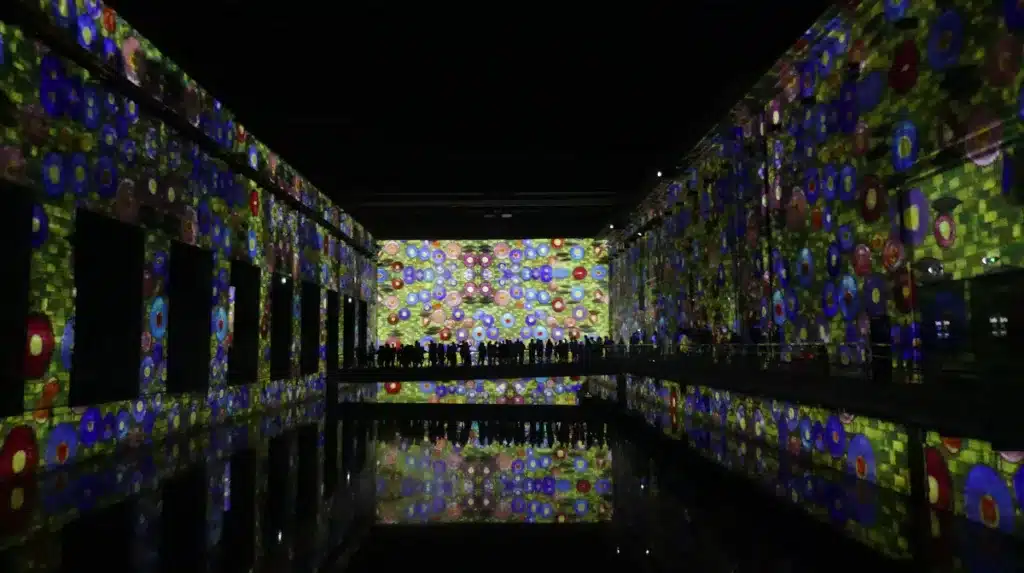
The Bordeaux Submarine Base is an extraordinary site. A former bunker built by the Germans during World War II, it has been converted into a contemporary cultural space. Inside, contemporary art exhibitions, projections, and concerts bring life to this imposing place.
The Bassin des Lumières, integrated into this site, offers light installations that transform the interior and exterior of the building, creating an atmosphere that is both mysterious and artistic. The raw concrete walls combined with the light effects create a unique and often photogenic ambiance.
Practical tip:
-
Check the program before your visit to enjoy exhibitions or shows.
-
Ideal for discovering an alternative and cultural side of Bordeaux.
11. Saint-André Cathedral
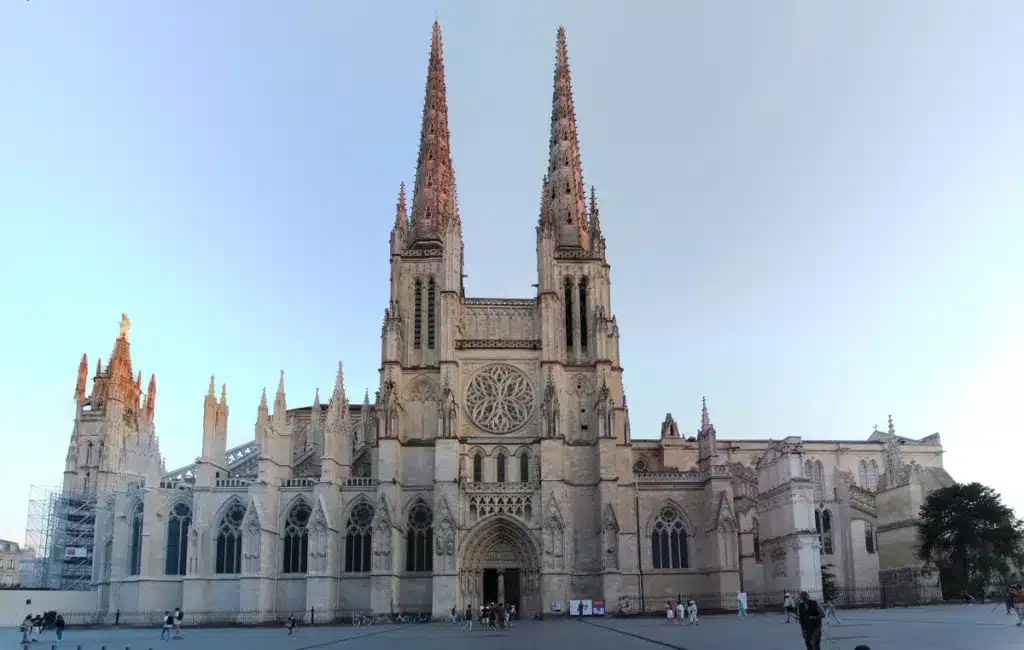
The Saint-André Cathedral is a Gothic masterpiece and a central monument of Bordeaux. Its majestic façade and imposing towers captivate at first sight. Inside, the richness of the colorful stained glass, chapels, and sculptures makes it a fascinating place to explore.
Every detail tells a story: from the frescoes to the Gothic vaults, everything invites contemplation. The cathedral is also closely linked to Bordeaux’s history, having hosted important events such as the coronation of Henry IV. Its atmosphere, both solemn and calming, contrasts with the bustle of the surrounding streets.
Practical tip:
-
Take your time walking through the nave and observing the stained glass in detail.
-
Combine your visit with climbing the Pey-Berland Tower for a spectacular panorama of the city.
- Discover the secrets of Saint-André Cathedral in our Bordeaux secrets scavenger hunt
12. Porte Cailhau
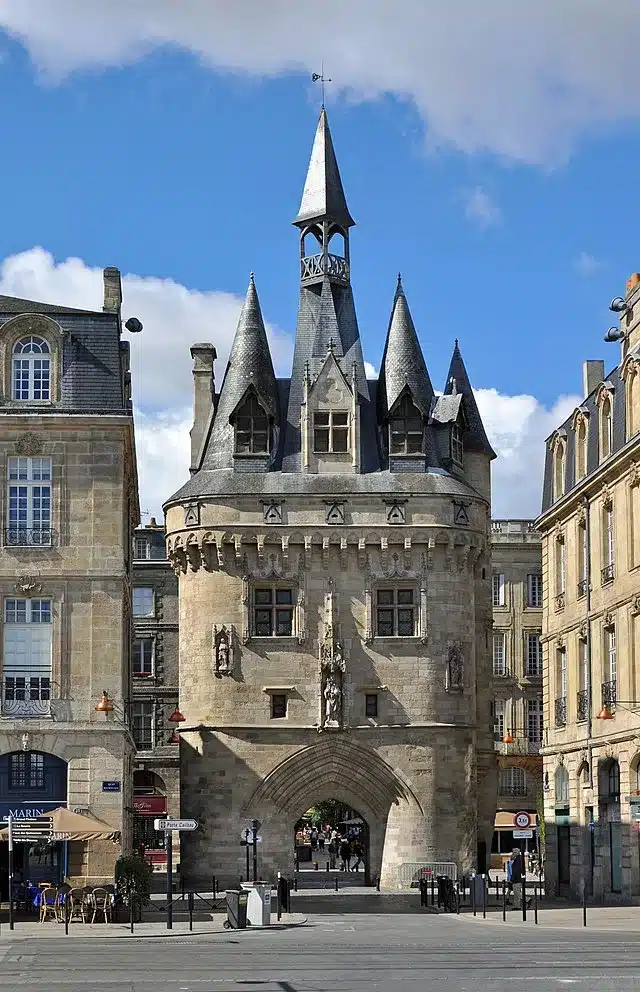
The Porte Cailhau is one of Bordeaux’s historical symbols. Built at the end of the 15th century, this medieval gate once served as the city’s main entrance. Its façade, adorned with sculptures and carved motifs, tells the story of kings and major events in Bordeaux.
Passing under Porte Cailhau is like stepping back in time: it’s easy to imagine carriages and pedestrians crossing through this entrance centuries ago. The top of the gate can be visited, offering a nice viewpoint over the historic district and the Garonne River.
Practical tip:
-
Climb to the top to admire the rooftops of Bordeaux and enjoy the view over the river.
- Discover the secrets of Porte Cailhau in our Bordeaux scavenger hunt, a mix of guided tour and escape game.
13. Musée d’Aquitaine
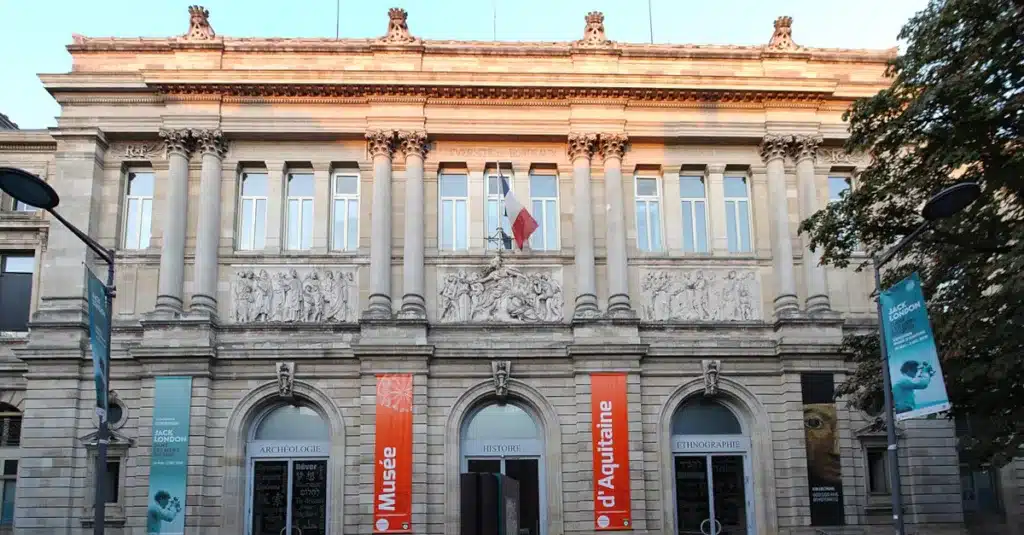
The Musée d’Aquitaine is the ideal place to understand the region’s rich history. It traces the evolution of Bordeaux and Aquitaine from prehistory to the contemporary era. The collections are diverse: archaeological objects, paintings, sculptures, and models that tell the story of daily life and major regional events.
The museum helps to better understand Bordeaux’s strategic role through the centuries, its economic development, and its opening to the world through trade and wine.
Practical tip:
-
Allow at least 2 hours to fully enjoy the collections without rushing.
-
Some areas of the museum offer audio guides or guided tours to enrich the experience.
14. Tasting Cannelés and Wine
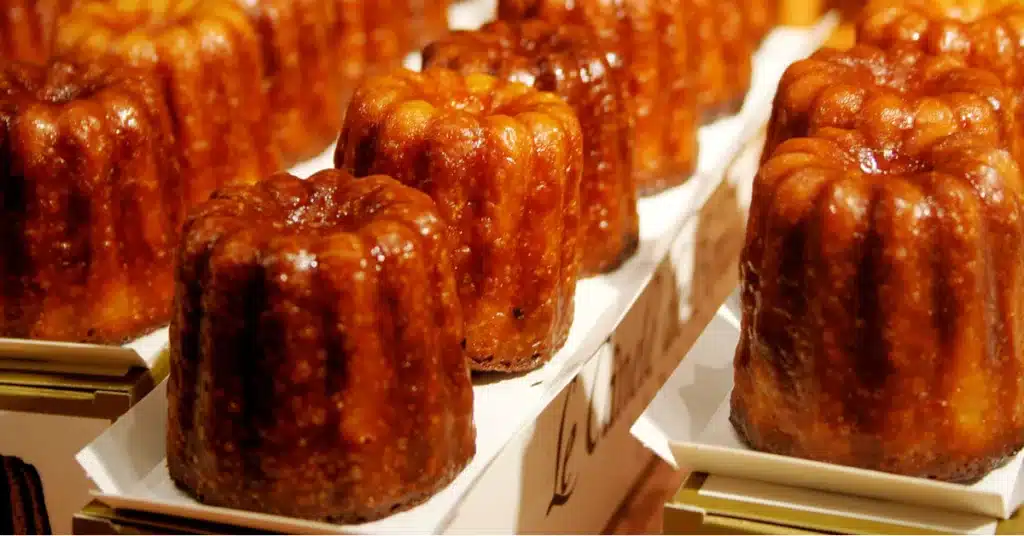
No trip to Bordeaux would be complete without tasting the local specialties. The famous cannelé, a small cake with a soft interior and a crisp exterior, is a must. You can find them in many city-center bakeries and enjoy them with coffee or tea. I recommend trying them at La Toque Cuivrée.
For wine lovers, Bordeaux is obviously a paradise. The city’s wine cellars and bars offer tastings ranging from the famous local grands crus to lesser-known but equally delicious wines. Participating in a tasting helps you understand the aromas and richness of Bordeaux’s terroir.
Practical tip:
-
Some workshops in Bordeaux also let you make your own cannelé.
15. Capucins Market
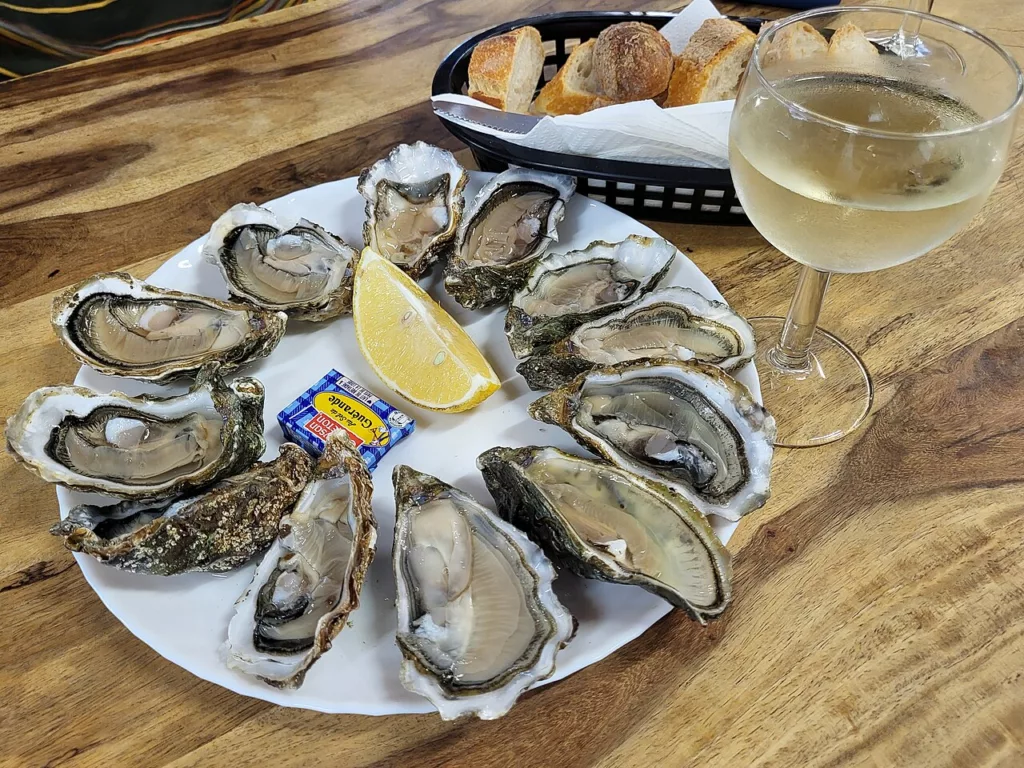
The Capucins Market is a must to discover Bordeaux’s culinary soul. This covered market, open every day, offers a wide selection of fresh products: fruits, vegetables, fish, meat, and local specialties. There are also ready-to-eat food stands, perfect for a quick lunch.
The atmosphere is warm and authentic: vendors chat with customers, and it’s easy to soak up the local life. The market is also an excellent place to taste cannelés and local wines, or to take home regional products as souvenirs.
Practical tip:
-
Arrive in the morning to enjoy the market at its busiest and choose the best products.
-
Don’t hesitate to chat with vendors; they often give great tips for preparing local products.
16. Château Pape Clément
Located in Pessac, about fifteen minutes from the center of Bordeaux, Château Pape Clément is one of the oldest and most prestigious wine estates in the region. It is a place where wine, history, and the beauty of the landscape meet harmoniously.
Founded in the 13th century, the château is named after Bertrand de Got, who later became Pope Clement V. He was the first to plant vines on these lands, marking the beginning of an exceptional wine estate. Since then, the château has endured through the centuries, preserving its soul and expertise while adopting modern techniques that today contribute to the reputation of the Grands Crus Classés de Graves.
An immersion in the heart of Bordeaux vineyards
Upon entering the estate, one is struck by its majesty. The avenue lined with vines, the château with its elegant architecture, the French gardens, and contemporary sculptures provide a setting both refined and calming. The visit often begins with a stroll through the vineyards, where passionate guides explain the characteristics of the terroir, the nature of the soils, and the meticulous work carried out throughout the year.
Inside, the tour continues through the wine cellars, where barrels are lined up in a hushed atmosphere. Visitors then discover the winemaking process, from harvest to aging, including the secrets of blending and maturation. The attention to every detail shows why Château Pape Clément is considered a model of excellence.
The tasting: a suspended moment
The highlight of the visit is undoubtedly the tasting. In an elegant room, sometimes facing the vineyards, glasses are lined up and aromas slowly reveal themselves. Guides invite visitors to discover the richness of the estate’s wines, their structure, balance, and subtle notes.
The red wines of Château Pape Clément are powerful, elegant, and deep, while the whites, rare, charm with their freshness and aromatic complexity.
For those wishing to extend the experience, the estate also offers introductory tasting workshops and even wine-focused stays in the château’s guest rooms. Sleeping amidst the vineyards, surrounded by calm and refinement, is an unforgettable experience.
17. Jardin Public Bordeaux
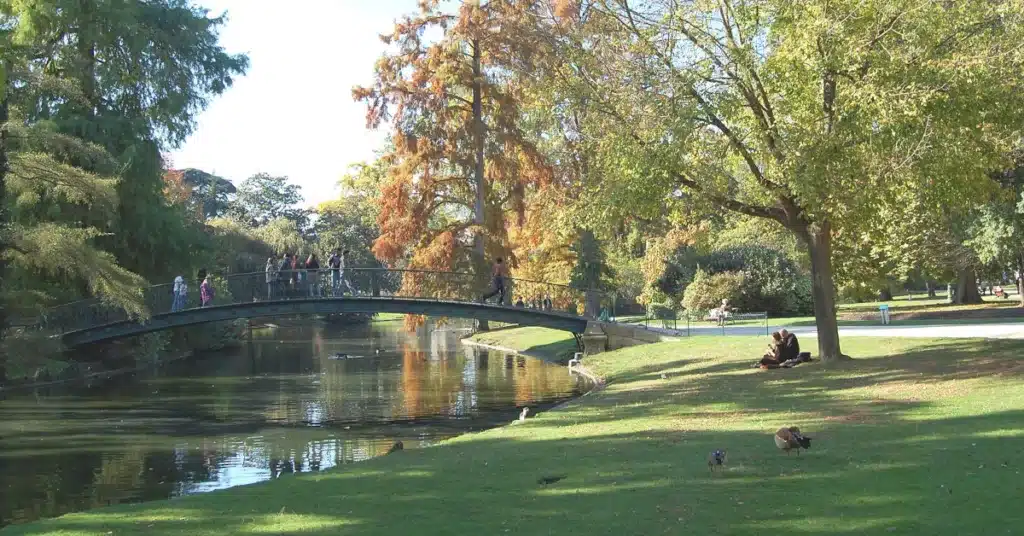
The Jardin Public is the green lung of Bordeaux’s city center. Created in the 18th century, it offers an ideal space for relaxation for families, walkers, and nature lovers. With tree-lined paths, lawns, ponds, and statues, the garden is both a place for strolling and for historical discovery.
Children can enjoy playgrounds and a small animal park, while adults appreciate the tranquility of shaded paths or the beauty of flowers and flowerbeds. Cultural events and concerts are sometimes organized, adding an extra dimension to the visit.
Practical tip:
-
Perfect for a picnic or a break after visiting the city center’s monuments.
-
Sunny mornings are ideal for a walk and to enjoy the colors and calm atmosphere of the garden.
18. Shopping on Rue Sainte-Catherine
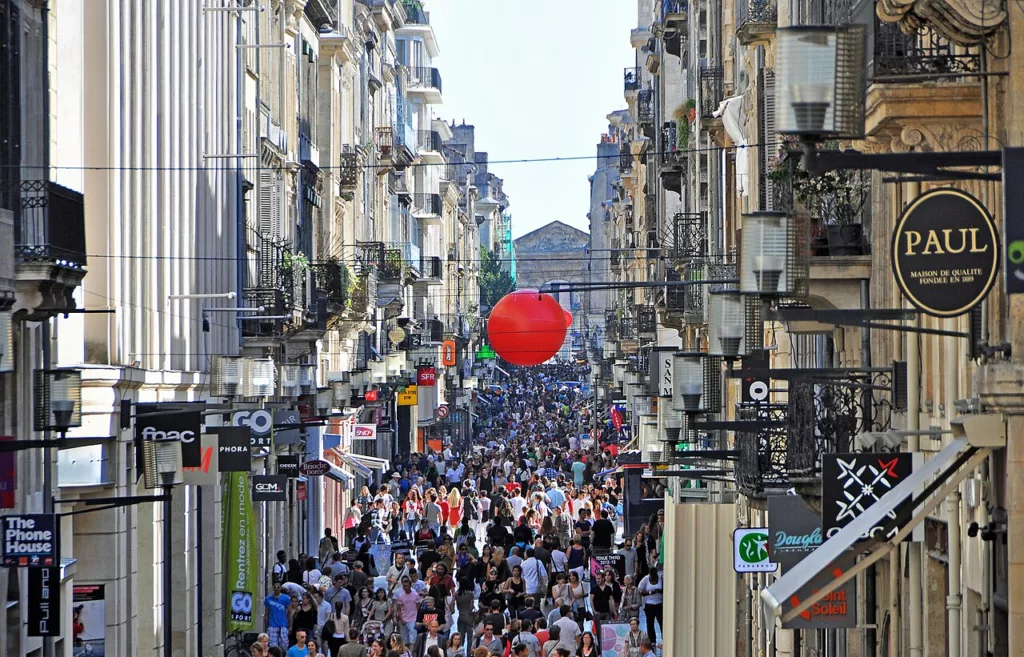
It is impossible to visit Bordeaux without strolling along Rue Sainte-Catherine, the longest shopping street in Europe. It crosses the historic heart of the city for over a kilometer, connecting Place de la Victoire to Place de la Comédie, close to the Grand Théâtre.
This lively and vibrant artery of Bordeaux is a place where locals, students, tourists, and shopping enthusiasts from around the world mingle.
19. Stay in Arcachon
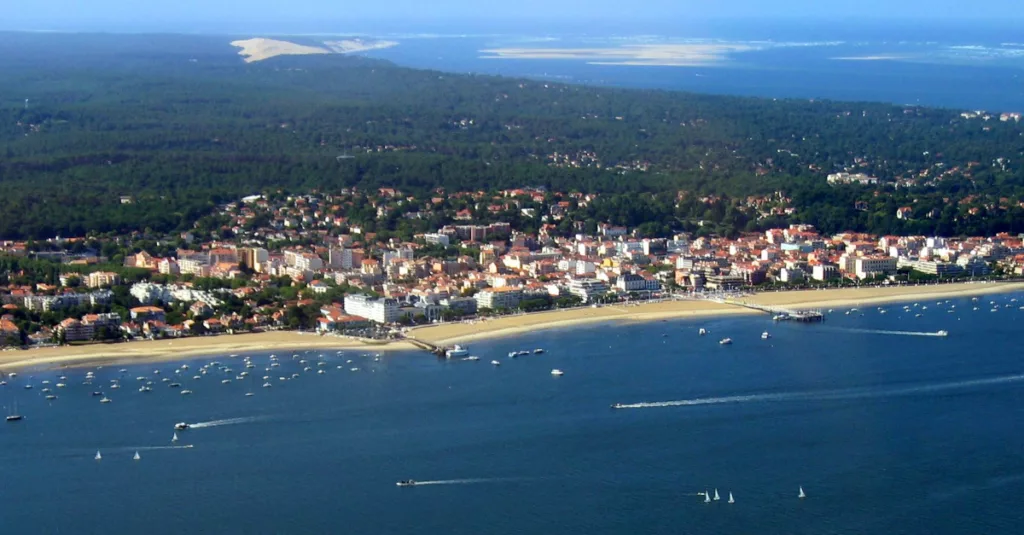
Just over an hour from Bordeaux, the Arcachon Bay offers a true change of scenery. Between the ocean, pine forests, dunes, and oyster ports, Arcachon charms with its gentle and luminous atmosphere. It is the perfect getaway to escape for a few days, breathe the sea air, and enjoy a more relaxed pace of life.
An elegant and lively seaside resort
The town of Arcachon is organized around four main districts, each named after a season. The most famous is probably the Ville d’Hiver, a historic district perched on the heights, known for its 19th-century villas with colorful façades and ornate balconies. Strolling through its quiet streets feels like stepping back in time: each house tells a story and reflects the refinement of Bordeaux’s former bourgeoisie.
The Ville d’Été, on the other hand, concentrates the activity: the Thiers pier, beaches, cafés, and shops along the waterfront. Here you feel Arcachon’s energy, especially in the evening when the sunset lights up the bay.
The Dune of Pilat: nature’s spectacle
Arcachon is inseparable from the Dune of Pilat, the tallest dune in Europe. Located about ten kilometers from the town center, it offers breathtaking views of the Atlantic Ocean, the Landes forest, and the Arguin sandbank. Climbing to the top is a small physical challenge, but once there, the spectacle is unforgettable: the wind, the warm sand, and the endless view create a sense of total freedom.
Tip: come early in the morning or late in the day when the light is softer and there are fewer visitors. Watching the sunrise or sunset from the dune is a magical moment.
Oyster villages: authenticity and gentle living
Around the bay, the oyster villages are true treasures. The most famous, Le Canon, L’Herbe, and La Teste-de-Buch, have retained their old-world charm with colorful wooden huts and small flowered streets. Here, you can taste the famous bay oysters directly from the oyster farmers, feet in the sand, with a glass of white wine in hand.
It’s a simple yet deeply authentic experience, a must to feel the spirit of the place.
The Port of Larros, in Gujan-Mestras, is also an excellent spot for a quiet walk. The oyster huts line the port, some converted into art workshops or small friendly bars.
Excursions on the bay
To discover Arcachon from another perspective, nothing beats a boat ride. Several companies offer half-day or full-day cruises to admire the cabanes tchanquées (the stilt houses emblematic of the bay), the Arguin sandbank, and the Cap Ferret peninsula.
The more athletic can opt for a sea kayak or paddleboarding to quietly navigate along the coast, close to nature.
A lifestyle between sea and pine forest
Arcachon also embodies a certain idea of happiness. In the morning, enjoy a coffee on the waterfront while watching sailboats glide on the water. At noon, have a seafood platter with a glass of chilled white wine. In the afternoon, take a bike ride along paths through the pine forest and along the bay. And in the evening, enjoy a spectacular sunset from Pereire Beach.
Markets, such as the Arcachon town market, are also not to be missed: you can find fresh fish, oysters, cheeses, pastries, and regional products, all in a friendly and colorful atmosphere.
A stay combining relaxation and discovery
Whether you love nature, gastronomy, or simply seek serenity, Arcachon has it all. You can spend a weekend or a whole week without ever getting bored: between swimming, walks, tastings, and relaxation, time flows gently, following the rhythm of the tides.
Practical tips:
-
Bring a bike: it’s the best way to explore the bay and its villages.
-
If you have time, take the ferry to reach Cap Ferret: a very pleasant day trip.
-
In winter, Arcachon is much quieter, but retains its charm and unique light.
20. Stay in Blaye and Vauban Citadel
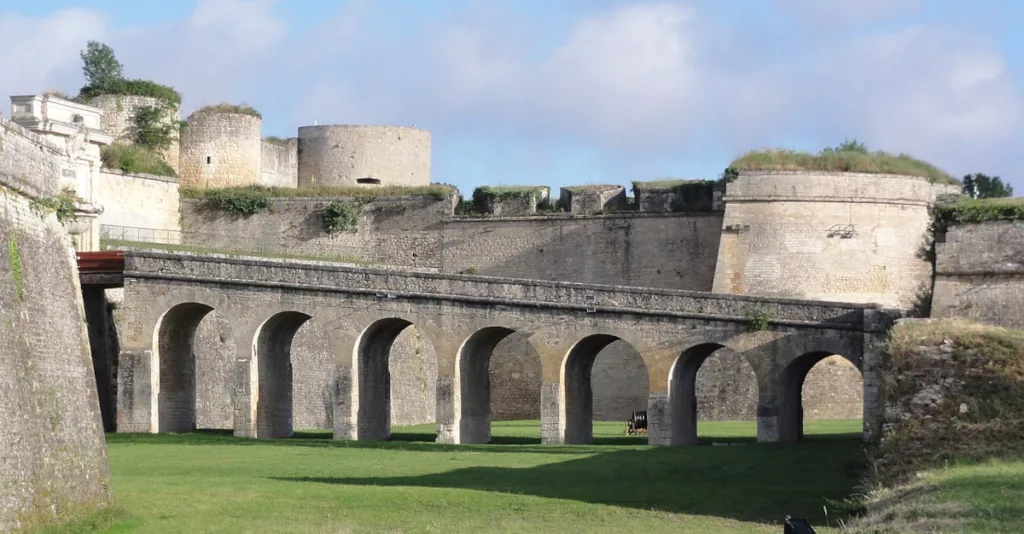
About an hour north of Bordeaux, on the right bank of the Garonne, the Blaye Citadel proudly overlooks the estuary. Listed as UNESCO World Heritage, it is part of the famous estuary lock system, a defensive ensemble designed by Vauban, the military engineer of Louis XIV.
21. Stay in Saint-Émilion
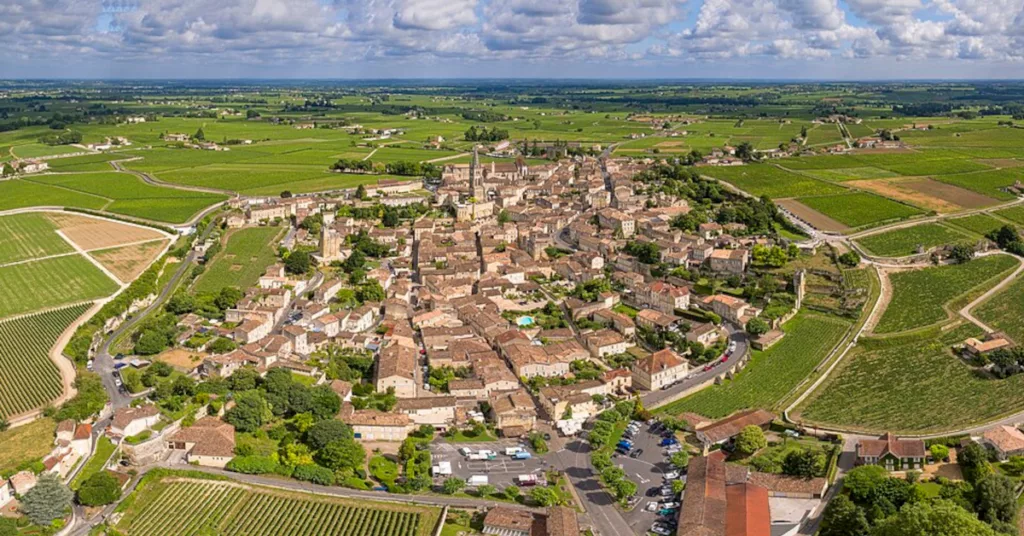
Only 45 minutes from Bordeaux, the medieval village of Saint-Émilion is a true jewel perched on the hills of the Libournais. Listed as UNESCO World Heritage, this unique place combines ancient charm, prestigious vineyards, and the French art of living.
It is a must-visit destination for anyone wishing to discover the wine heart of the Bordeaux region while enjoying an authentic and peaceful setting.
A village out of time
Upon arrival, one is captivated by the beauty of the landscape: vines stretch as far as the eye can see, forming a perfect patchwork on the slopes. The village, entirely built in light stone, seems frozen in time. Its cobbled streets, vaulted passageways, and old houses give off a peaceful and romantic atmosphere.
Strolling through the winding narrow streets is a real pleasure. Every corner of Saint-Émilion reveals a surprise: a carved door, a vaulted cellar, a tasting shop, or a panoramic view of the surrounding vineyards. The main square, animated by café terraces and shops, is perfect for soaking up the village atmosphere.
An exceptional heritage
Saint-Émilion is not just a wine name; it is also a place rich in history. The village is named after a Breton monk, Émilion, who settled here in the 8th century. His legend and hermitage gave rise to a monastic city, of which many remnants remain today.
Among the treasures to discover:
-
The monolithic church, entirely carved into rock, is one of the most impressive underground monuments in Europe. Its almost mystical atmosphere leaves no one indifferent.
-
The King’s Tower, which dominates the village, offers a spectacular panorama of the tiled roofs and surrounding vineyards.
-
The catacombs and underground galleries, carved into limestone, tell centuries of history and faith.
A guided tour is highly recommended to fully understand the historical richness of the place — and to access areas usually closed to the public.
A paradise for wine lovers
It is impossible to visit Saint-Émilion without talking about wine. Here, almost every street hides a tasting cellar, and vineyards surround the village. The Grands Crus Classés abound: Château Ausone, Château Cheval Blanc, Château Angélus… Names that resonate like legends in the wine world.
Most estates offer guided tours and tastings. Owners often share their passion, telling the history of the estate and the subtleties of the terroir. For enthusiasts, it is a complete sensory experience: smell, taste, and understand.
For a fully immersive experience, some estates offer wine-focused stays, with accommodation in the heart of the vineyards. Waking up in the morning facing sunlit rows of vines is an unforgettable experience.
Gastronomy and art of living
Saint-Émilion is also a destination for food lovers. The village’s restaurants and inns highlight Southwest cuisine: foie gras, entrecôte à la Bordelaise, duck breast, not to mention aged cheeses that pair wonderfully with a local red wine.
And of course, you must try the famous Saint-Émilion macaron, a specialty created in the 17th century by the Ursuline nuns. These soft almond-based cookies are a simple yet irresistible delight.
A stay combining relaxation and discovery
Saint-Émilion is the perfect destination for a two- to three-day getaway. Between walks in the vineyards, tastings, historical heritage, and moments of relaxation, time seems to slow down. In the evening, when the streets empty and the sun sets over the hills, the village softly lights up, offering a peaceful spectacle.
Practical tips:
-
Prefer spring or autumn to avoid crowds and enjoy pleasant temperatures.
-
Book your château visits in advance, especially during the harvest season.
-
If you enjoy walking, take the trails around the village: several marked circuits pass through the vineyards and offer magnificent viewpoints.
22. Bordeaux Museum of Fine Arts
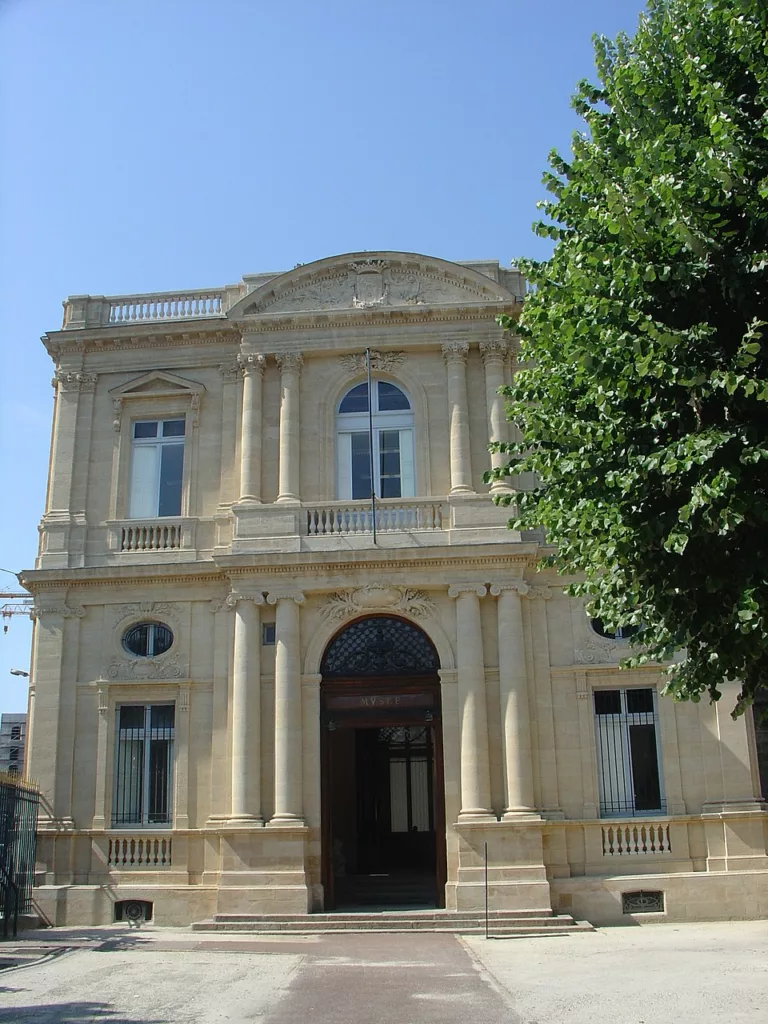
Just steps from Palais Rohan and Saint-André Cathedral, the Bordeaux Museum of Fine Arts is a must-visit for art and culture lovers. Founded in 1801, it is one of the oldest museums in France, and probably one of the most charming.
An art jewel in the historic center
Housed in two wings of Palais Rohan, the museum offers a journey through over six centuries of art history. The permanent collections gather great European masters — Rubens, Matisse, Delacroix, Corot, Renoir, Picasso — as well as Bordeaux and French artists from the 19th century.
Each room offers a particular atmosphere, with a bright and airy display that perfectly showcases the works. Religious paintings sit alongside bourgeois portraits, romantic landscapes, and modern canvases, providing a comprehensive overview of European artistic evolution.
A peaceful and inspiring experience
Unlike other large often-crowded museums, Bordeaux’s museum maintains an intimate dimension. You can take your time, pause in front of a work without hurrying, or simply soak up the beauty of the space. The passionate staff are always available to share insights or anecdotes.
The adjoining garden, between the two wings, is a small haven of tranquility. In summer, it becomes an ideal place to take a break after visiting, in the shade of century-old trees.
Practical tips:
-
Free entry for the permanent collections.
-
Recommended visit time: about 1 to 1.5 hours.
-
Combine the visit with Saint-André Cathedral and Pey-Berland Tower, located just next door.
23. Palais Rohan (City Hall)
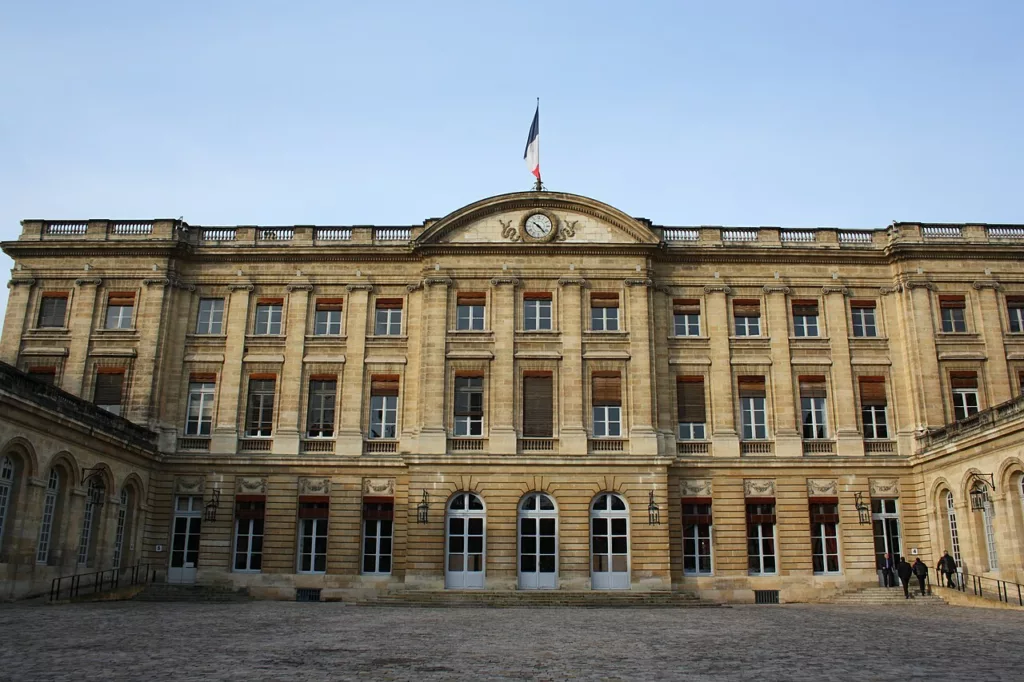
Right next to Saint-André Cathedral stands the elegant Palais Rohan, an 18th-century jewel that now houses Bordeaux City Hall. Built between 1771 and 1784 for the Archbishop of Bordeaux, Cardinal de Rohan, this palace showcases the architectural refinement of the era and the city’s prestige.
Majestic architecture
As soon as you enter the courtyard, you are struck by the building’s majesty. Its neoclassical, symmetrical, and understated façade reflects the Enlightenment spirit. The columns, sculpted pediments, and elegant ironwork recall the grandeur of Parisian palaces.
Inside, certain rooms can be visited during Heritage Days or temporary exhibitions. You will discover salons decorated with stucco and gilding, monumental staircases, and painted ceilings — a true blend of art and history.
The administrative and symbolic heart of the city
Today, Palais Rohan is primarily the seat of the city hall, but it remains an emblematic place of Bordeaux, symbolizing local authority and the city’s historical continuity. Its proximity to Saint-André Cathedral and Pey-Berland Tower makes it a must-see spot for visitors.
The ensemble formed by these three monuments — Palais Rohan, Saint-André Cathedral, and Pey-Berland Tower — perfectly illustrates the richness of Bordeaux’s heritage, combining religious, political, and artistic power.
Practical tips:
-
Palais Rohan is not open all the time, but guided tours are occasionally offered.
-
Even without entering, take the time to admire its façade and courtyard from the street.
24. Bordeaux Botanical Garden
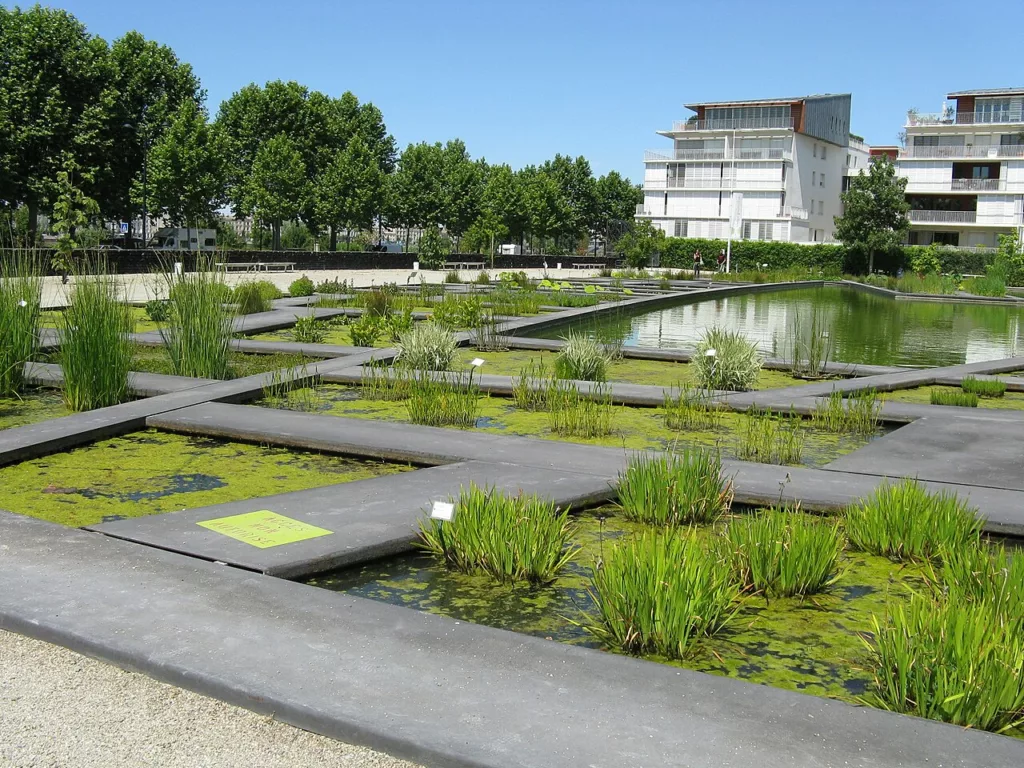
Located on the right bank of the Garonne, facing Place de la Bourse, the Bordeaux Botanical Garden is a true green oasis in the heart of the city. Less crowded than the Jardin Public, it is a peaceful place to walk, breathe, and observe nature in all its diversity.
Created in 2003, this modern garden spans over 4 hectares and stands out for its scientific yet poetic approach. It is not just a park, but a space designed to understand the region’s ecosystems and the richness of flora from around the world.
A place between science and contemplation
The garden consists of several themed areas:
-
The aquatic garden, where you can discover plants from marshes and wetlands, with ponds hosting water lilies, reeds, and frogs.
-
The greenhouses, dedicated to Mediterranean and tropical environments, perfect for a sensory immersion.
-
The geological garden, presenting different types of soils and rocks characteristic of the Southwest.
Paths lined with wild plants and views of the Garonne’s quays make for a pleasant stroll, especially in spring or late afternoon. The contrast between the modern constructions around and the site’s vegetative serenity creates a calming, almost meditative atmosphere.
A haven for curious minds and photographers
Botany enthusiasts will be amazed by the variety of species on display, but the place also appeals to casual walkers, families, and photographers. The garden often hosts temporary exhibitions and educational activities focused on the environment.
Practical tips:
-
Best period: May to September, when the blooms are at their most spectacular.
-
Combine your visit with a walk along the right bank quays, very pleasant and less crowded than the city center.
25. The Médoc Château Route
Less than an hour northwest of Bordeaux, the Médoc Château Route invites both visual and gustatory discovery. It is one of the most beautiful wine routes in the world — a succession of prestigious estates, charming villages, and vineyards stretching as far as the eye can see.
Here, every turn tells a story, every château a legend.
A legendary route between vineyards and estuary
The route, officially called D2, winds for about a hundred kilometers between Blanquefort and Pauillac, then on to Saint-Estèphe. It runs along the left bank of the Gironde, lined with perfectly aligned vineyards, elegant manor houses, and stately homes.
It is a route to savor slowly, by car or bike, with stops at the châteaux and wine tastings.
Legendary estates
Médoc is the beating heart of Bordeaux red wine. The appellations — Margaux, Pauillac, Saint-Julien, Saint-Estèphe — inspire wine lovers worldwide. Along this route, you encounter iconic names:
-
Château Margaux, with its neoclassical façade and majestic park, a true icon of French wine.
-
Château Pichon Baron and Pichon Comtesse, neighboring estates with twin turrets straight out of a fairy tale.
-
Château Lafite Rothschild, Mouton Rothschild, Latour… absolute references for connoisseurs.
Beyond these legends, the route also offers pleasant surprises: small family estates welcome visitors warmly, offering approachable tastings and genuine encounters.
Immersion in Bordeaux winemaking expertise
Visiting the Médoc châteaux immerses you in the Bordeaux wine culture. Each estate shares its history, techniques, and philosophy. You learn the secrets of winemaking, from vine to bottle.
Visits always end with a guided tasting, where aromas of red fruit, vanilla, and fine wood gradually reveal themselves.
Some estates offer unique experiences:
-
Bike rides through the vineyards,
-
Blending workshops where you create your own wine,
-
Or lunches in the cellars, paired with regional dishes.
Between landscapes and heritage
The Château Route is not just a wine pilgrimage: it is also an aesthetic journey. The vineyards roll to the horizon, dotted with pine trees, blonde-stone villages, and estuary reflections.
The light, changing throughout the day, gives the landscapes an almost painterly beauty — especially at sunset, when the châteaux glow in gold and copper tones.
A route to savor with eyes and heart
Traveling the Médoc Château Route is much more than a wine tour: it is an encounter with a lifestyle, history, and exceptional land.
Between tastings, architectural discoveries, and breathtaking landscapes, this route embodies the grandeur and finesse of Bordeaux’s heritage.
Conclusion: Bordeaux, Between History and Modernity
Bordeaux is a city where every street corner tells a story. Between iconic monuments, neighborhoods full of character, cultural and gastronomic experiences, and walks along the Garonne, there is always something to discover.
To make the most of your stay:
-
Plan several days to explore the different neighborhoods and monuments.
-
Mix historical visits, walks, and culinary tastings.
-
Dare to go off the beaten path to discover unusual places like Darwin or the small streets of the Chartrons district.
In summary, Bordeaux charms with its diversity and cultural richness. These must-see and must-do experiences in Bordeaux guarantee a memorable stay, whether you are a history buff, a wine enthusiast, or a curious traveler seeking new experiences.