
Visiting Budapest: 30 must-see and must-do experiences.
Budapest, the enchanting capital of Hungary, is a city where history, architecture, and culture meet at every corner. Between the majestic banks of the Danube and the green hills of Buda, the city is full of historic monuments, royal palaces, must-see museums, and iconic sites that attract millions of visitors each year.
Whether you are passionate about art, history, architecture, or gastronomy, Budapest offers a unique experience blending medieval heritage, Baroque splendor, and vibrant modernity. In this article, discover the best tourist sites in Budapest, from must-sees like the Hungarian Parliament, the Fisherman’s Bastion, Buda Castle, and St. Stephen’s Basilica, to excursions around the city to Szentendre, Esztergom, or Visegrád.
Prepare your visit and explore Budapest in depth, from its iconic monuments to its hidden streets and unique cultural experiences.
Monuments & Historical Heritage
The Hungarian Parliament
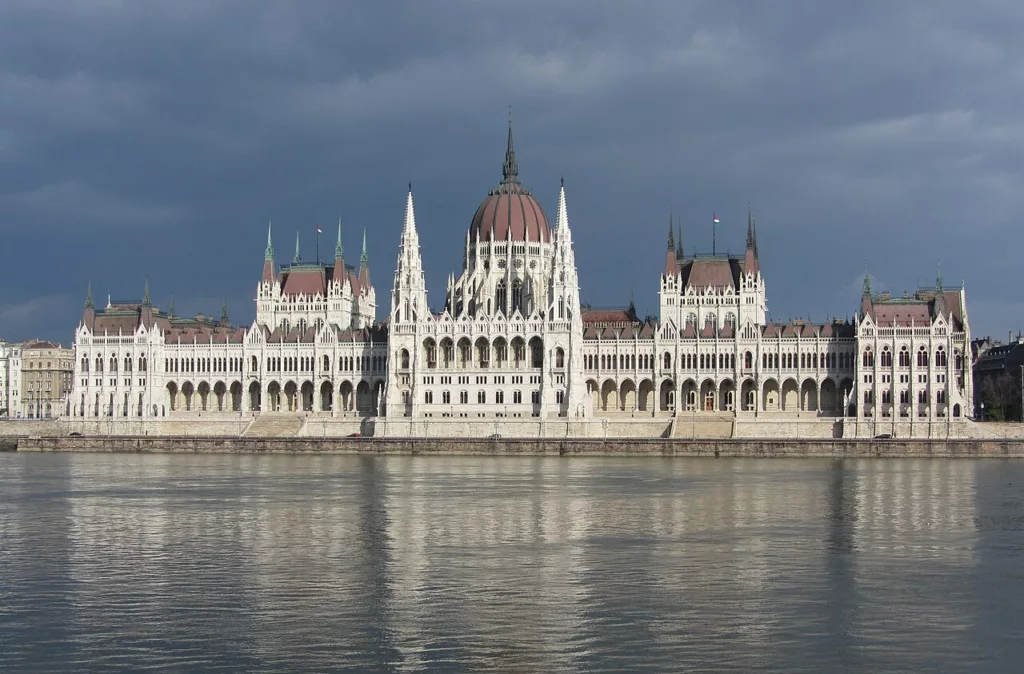
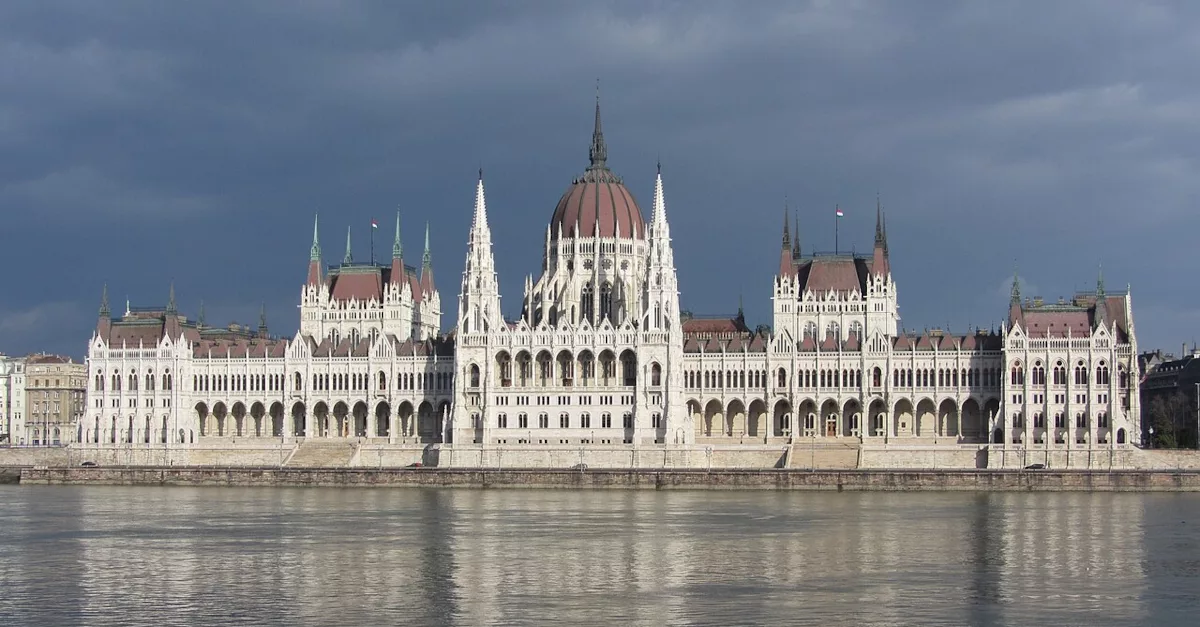
Since 1902, the Hungarian Parliament (or Országház) has been the seat of the National Assembly of Hungary and houses parliamentary services as well as the National Assembly library.
The construction of this building began in 1885, was inaugurated in 1896 for Hungary’s millennium, but was not fully completed until 1904.
About 40 million bricks, half a million semi-precious stones, and 40 kg of gold were used in its construction.
The building is 268 meters long and 123 meters wide, has 10 inner courtyards, 13 elevators, 27 doors, 29 staircases, and 691 rooms. Inside and out, the building is decorated with 242 sculptures representing Hungarian rulers, Transylvanian leaders, and military heroes.
The Fisherman’s Bastion
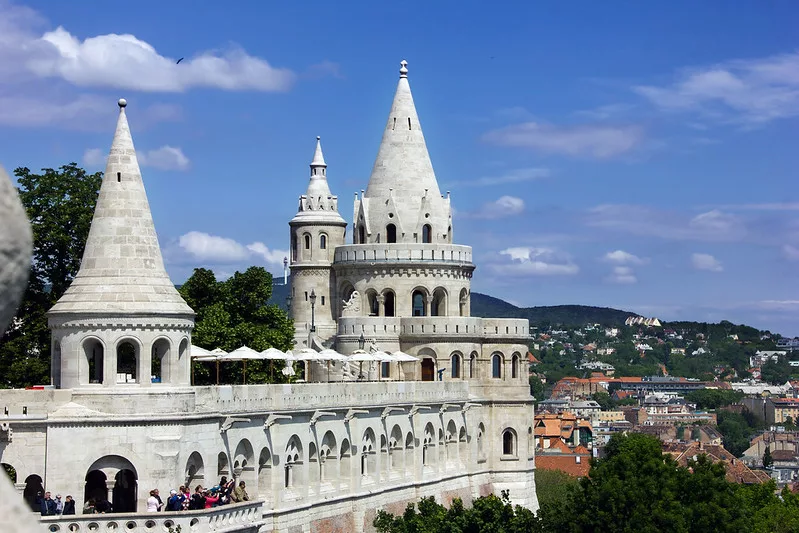
The Fisherman’s Bastion (Halászbástya) is one of Budapest’s most iconic monuments, located in the 1st district on the Buda Castle hill. It was built between 1895 and 1902 according to plans by Hungarian architect Frigyes Schulek.
Its seven towers symbolize the seven chieftains of the Magyar tribes who founded Hungary in 895.
The name “Fisherman’s Bastion” comes from the fact that in the Middle Ages, a guild of fishermen defended this section of the Buda Castle walls.
Buda Castle
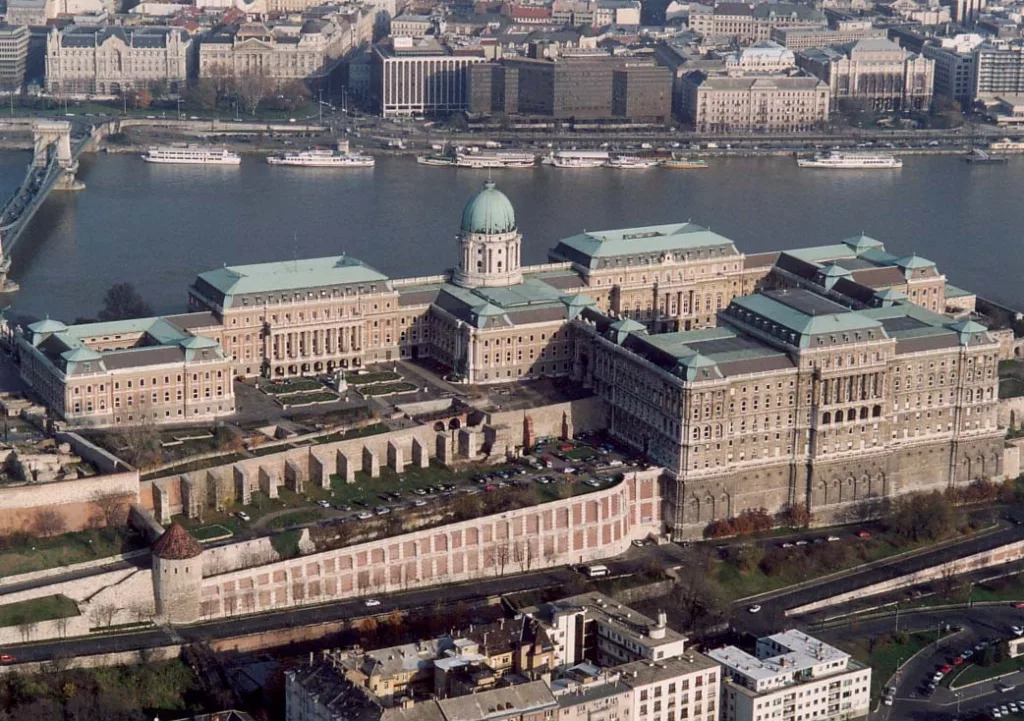
Buda Castle (in Hungarian Budavári Palota) is the historic complex of the royal palace of the kings of Hungary, located on Castle Hill in Budapest.
The royal palace we see today is largely Baroque, built between 1749 and 1769.
It currently houses several cultural institutions, including the Hungarian National Gallery, the Budapest History Museum, and the Széchényi National Library.
A medieval part of the palace, dating from the 14th century, has been partially restored and is now part of the Budapest History Museum. The medieval palace included a Gothic royal chapel, which has been rebuilt today in the restored section of the castle.
Beneath the castle hill lie cellars and an underground network, which have served various purposes over the centuries, including storage, medieval prison, bunker, or wine depot.
Matthias Church
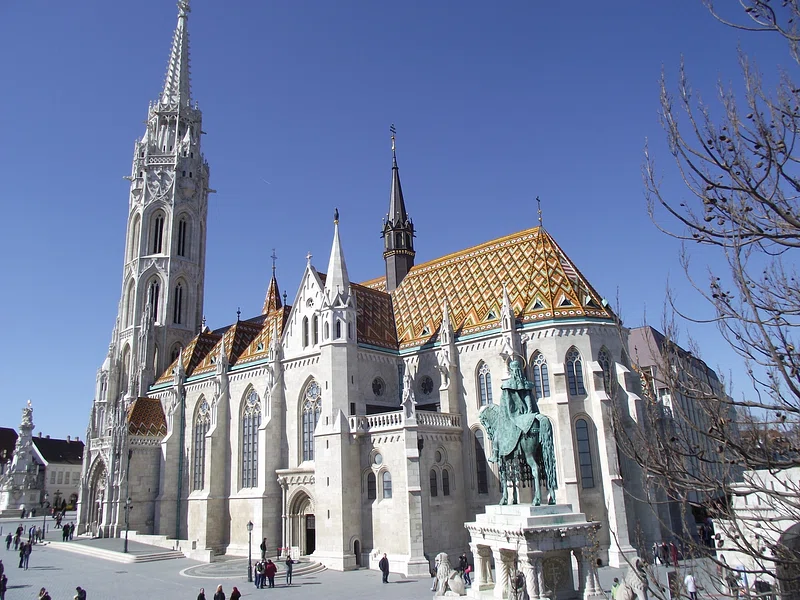
Matthias Church, officially the Church of Our Lady of the Assumption of Buda (Budavári Nagyboldogasszony-templom), is located on Buda Castle Hill, facing the Fisherman’s Bastion.
The original construction is believed to date back to the 11th century according to tradition, although historical evidence is scarce. The current building was erected at the end of the 14th century in a rich and complex Gothic style.
The dedication “Matthias” comes from King Matthias Corvinus, who rebuilt and embellished the building in the 15th century.
The church was the site of several royal coronations, including that of Franz Joseph I and Hungary’s last king, Charles IV.
The church roof is covered with colorful glazed tiles (produced by the Zsolnay factory), giving it a very distinctive and decorative appearance.
Inside, visitors can explore a medieval crypt, as well as a sacred art museum housing relics, sculptures, and replicas of the royal crown.
The Citadel
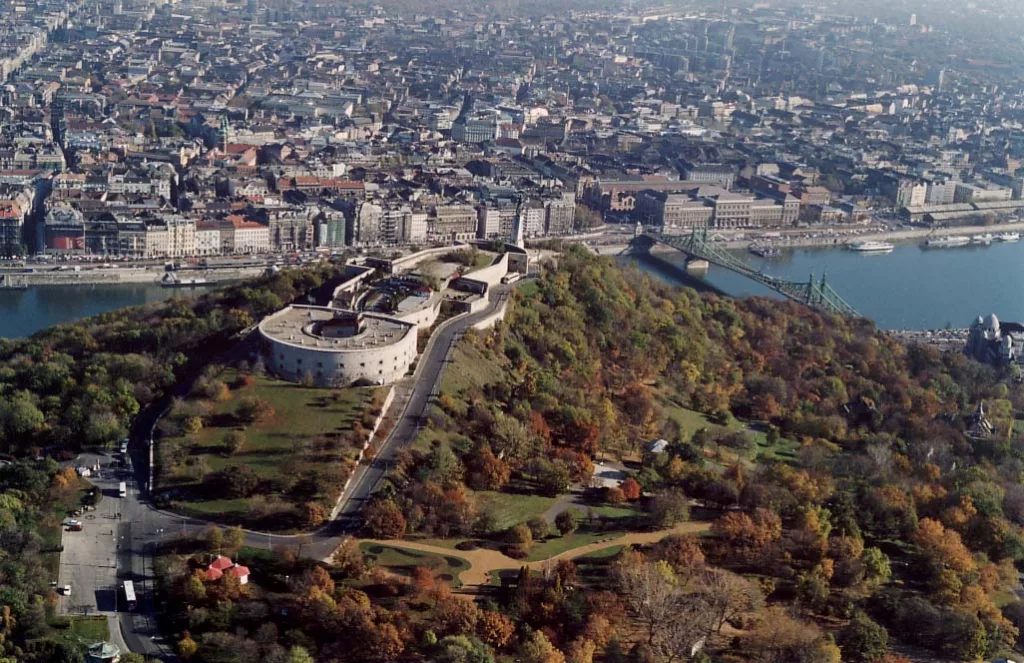
The Citadel of Budapest is a fortress located at the top of Gellért Hill, 235 meters above the city, overlooking the Danube.
It was built in 1854 by the Austrian Empire after the suppression of the Hungarian Revolution of 1848–1849.
The fortress’s purpose was to oversee Budapest and symbolize Austrian authority over Hungary.
After the 1867 Austro-Hungarian Compromise, which created the Dual Monarchy, the Citadel gradually lost its military function.
The Liberty Statue, located near the Citadel, was erected in 1947 to commemorate the Soviet soldiers who died during the liberation of Budapest in World War II. The statue depicts a woman holding a palm leaf, a symbol of freedom and peace.
Széchenyi Chain Bridge
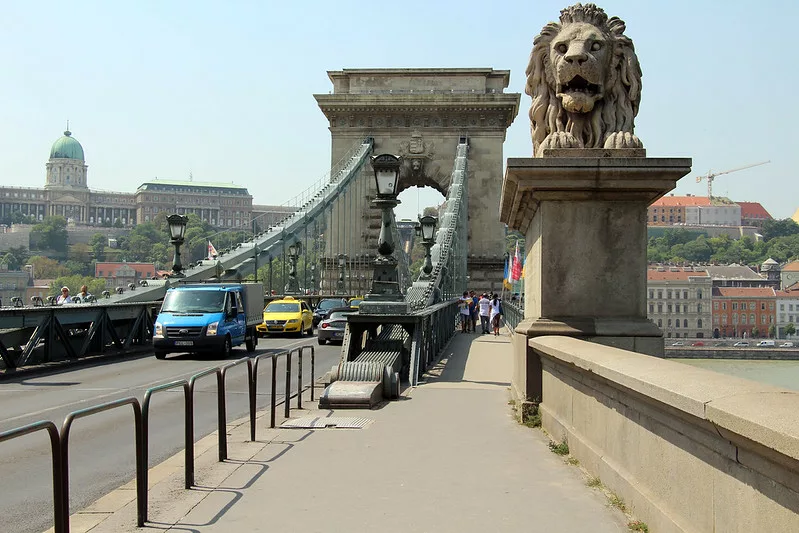
The Széchenyi Chain Bridge is a suspension bridge spanning the Danube in Budapest, connecting Buda and Pest.
Its construction was initiated by Count István Széchenyi, a key figure in Hungary’s 19th-century renewal, which gave the bridge its current name.
Construction began in 1839, and the bridge was officially inaugurated on November 20, 1849.
It rests on two massive stone pylons connected by wrought-iron chains, hence its name.
During World War II, the bridge was destroyed by retreating German troops, then rebuilt identically and reopened in 1949, exactly one century after its inauguration.
St. Stephen’s Basilica
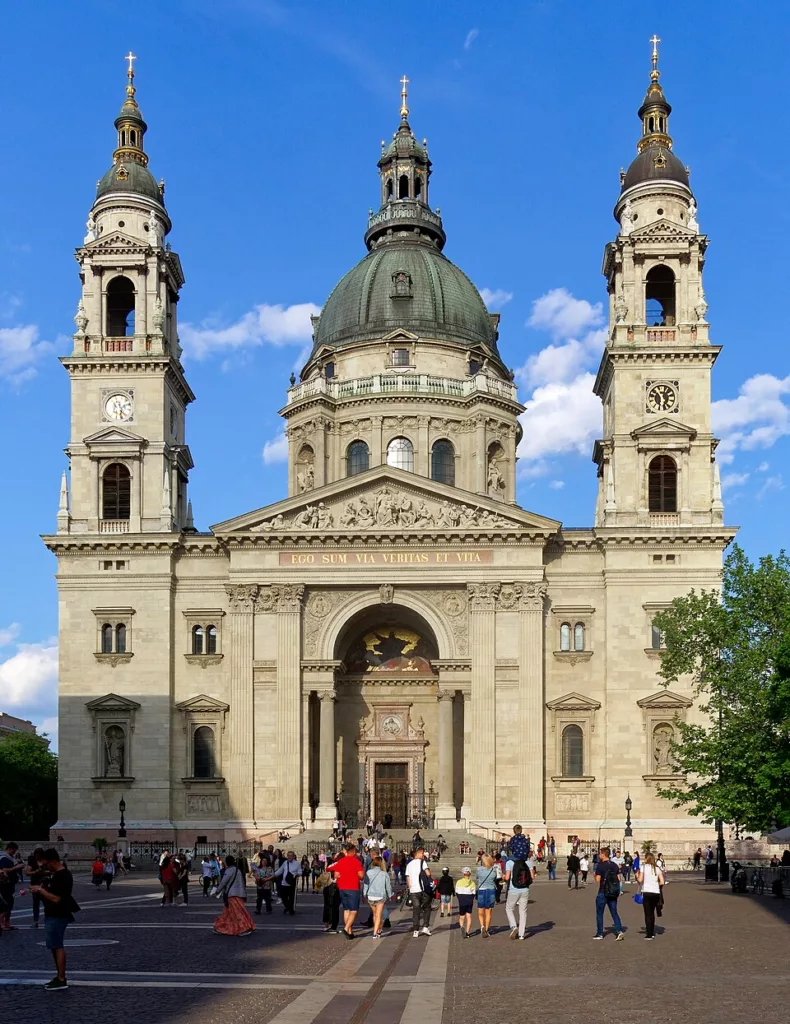
St. Stephen’s Basilica is dedicated to Saint Stephen, the first Christian king of Hungary and founder of the Hungarian state.
Construction of the basilica began in 1851 and was completed in 1905, after more than half a century of work.
The basilica is 96 meters high, making it one of the two tallest buildings in Budapest, equal in height to the Hungarian Parliament.
The interior is richly decorated with marble, mosaics, and sculptures, featuring an altar dedicated to Saint Stephen. The basilica houses one of Hungary’s most sacred relics: the Holy Right Hand, the mummified hand of King Stephen I.
The Great Synagogue of Budapest
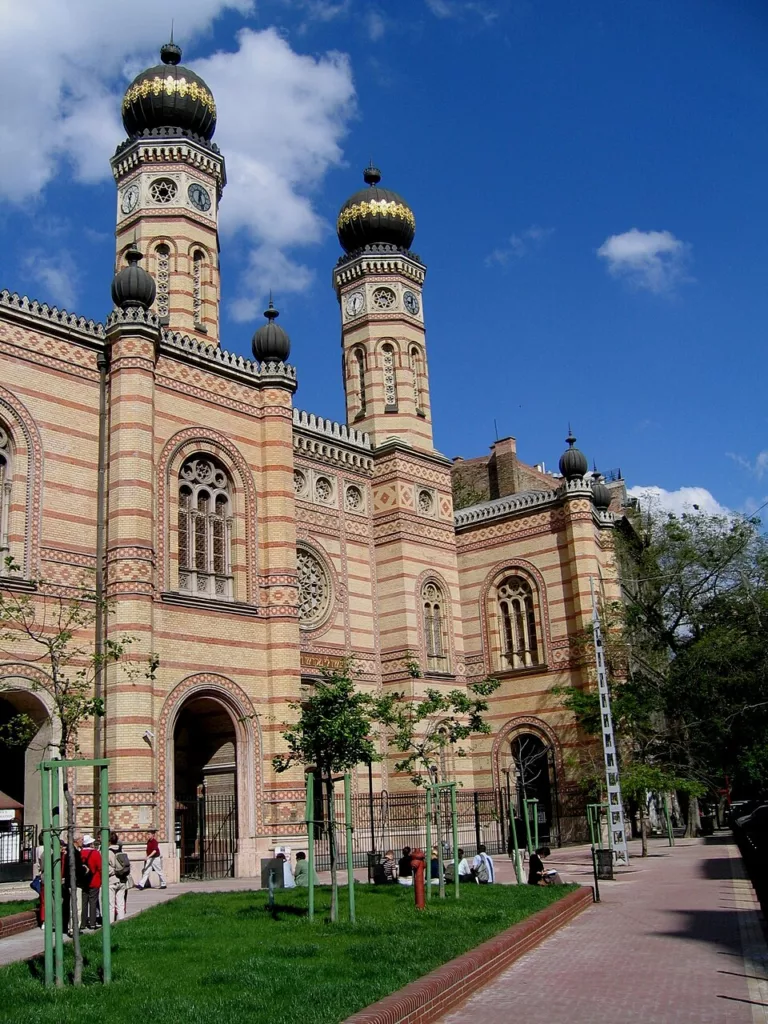
The Great Synagogue of Budapest, also called Dohány Street Synagogue, is located in the 7th district, in the Jewish Quarter of Erzsébetváros.
It was built between 1854 and 1859 by Viennese architect Ludwig Förster in a Moorish style. The architectural design is heavily inspired by Muslim art from North Africa and Spain, featuring arches, domes, and highly decorative ornaments.
The interior was partially decorated by Frigyes Feszl, who added touches of Romanticism and Byzantine influences.
It can accommodate about 2,964 people, separated between men (on the ground floor) and women (in the galleries). The synagogue is approximately 75 meters long and 27 meters wide, with two domes on the roof.
It is the largest Jewish place of worship in Europe and the second-largest synagogue in the world by capacity.
The synagogue complex also includes a Jewish museum, a cemetery, the Heroes’ Temple, and a memorial park. There is a commemorative weeping willow made of granite and steel, engraved with the names of thousands of Jews who were victims of the Holocaust.
The synagogue was damaged during World War II and restored between 1991 and 1998 thanks to public and private funding.
Heroes’ Square
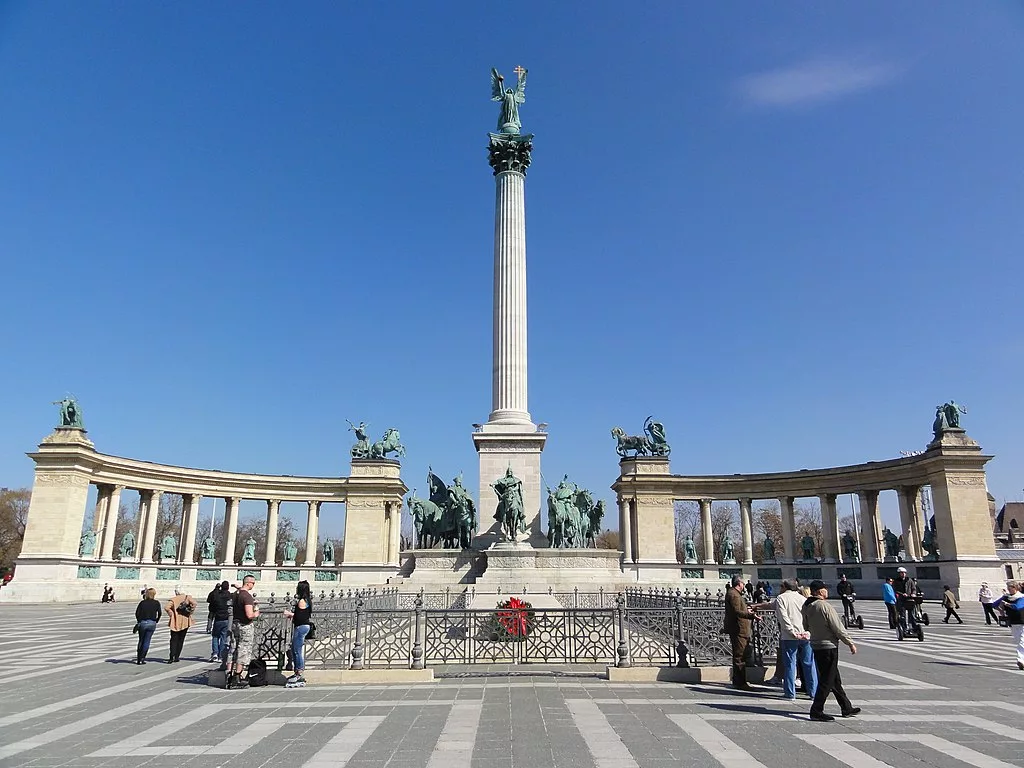
Heroes’ Square marks the entrance to Városliget City Park. It was created at the end of the 19th century to celebrate Hungary’s millennium in 1896.
At its center stands a tall 36-meter column topped with the Archangel Gabriel, a symbol of Hungarian Christianity. At the base of the column are equestrian statues representing the seven chieftains of the Magyar tribes, founders of the Kingdom of Hungary.
Two semicircular colonnades surround the square, adorned with statues of kings, leaders, and historical Hungarian figures. Heroes’ Square is flanked by two major museums: the Museum of Fine Arts and the Műcsarnok Art Gallery.
Hungarian State Opera House
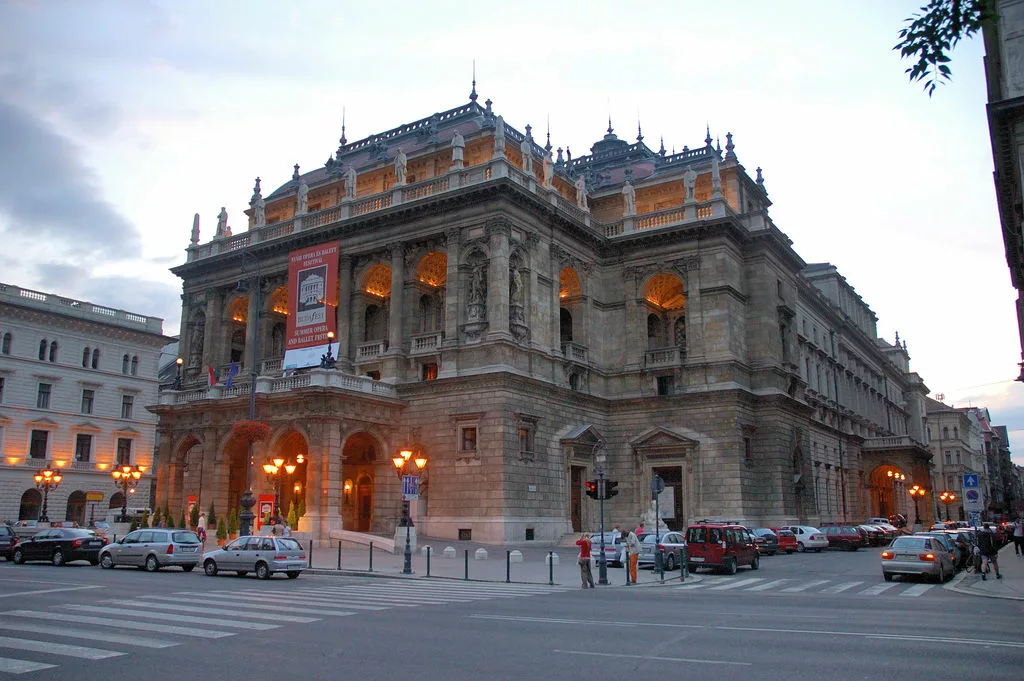
The Hungarian State Opera House is located on Andrássy Avenue in central Budapest. Its construction began in 1875 and was completed in 1884, under the direction of architect Miklós Ybl, a key figure of Hungarian Neo-Renaissance architecture.
The building can accommodate approximately 1,260 spectators.
The façade is decorated with statues of famous composers, such as Beethoven, Mozart, Erkel, and other Hungarian figures.
The richly decorated interior features a grand marble staircase, frescoes, and a ceiling painted by Károly Lotz.
Shoes on the Danube Bank
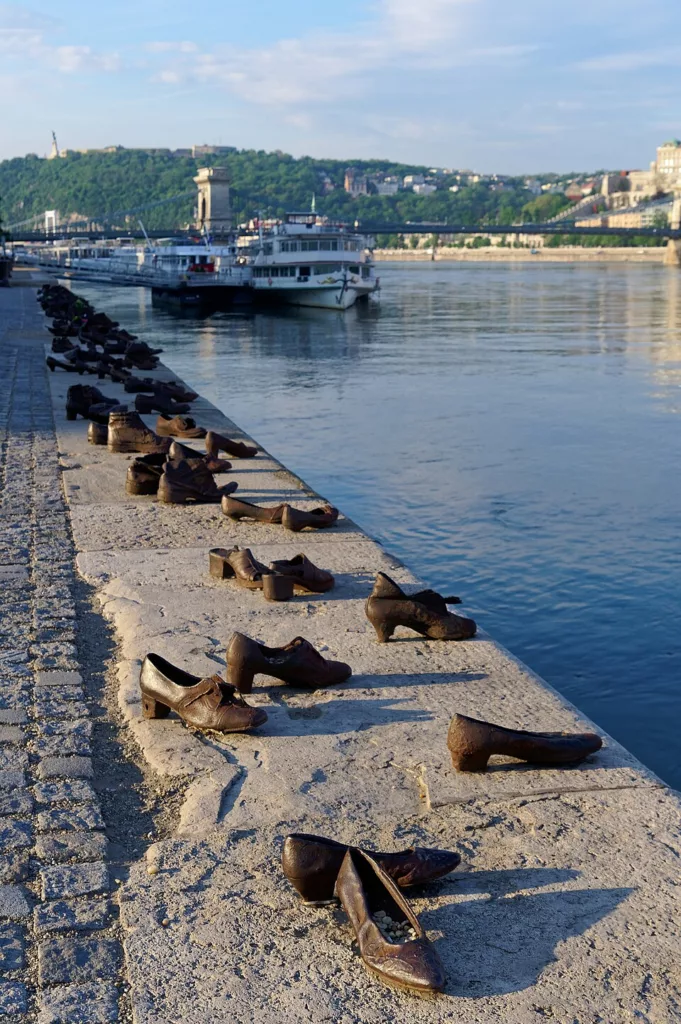
The Shoes on the Danube is an outdoor memorial located on the banks of the Danube in Budapest. It commemorates the Jewish victims shot by Hungarian fascist forces during World War II.
It features dozens of metal shoes embedded in the ground, representing the victims before they were executed. The shootings took place mainly between 1944 and 1945, when the Arrow Cross regime persecuted Budapest’s Jewish population.
The shoes symbolize the humiliation and vulnerability of the victims, who were forced to remove their shoes before being shot and thrown into the river. The memorial was created in 2005 by sculptors Gyula Pauer and Can Togay.
The shoes are of various styles, for men, women, and children, reflecting the diversity of the victims.
Great Market Hall of Budapest
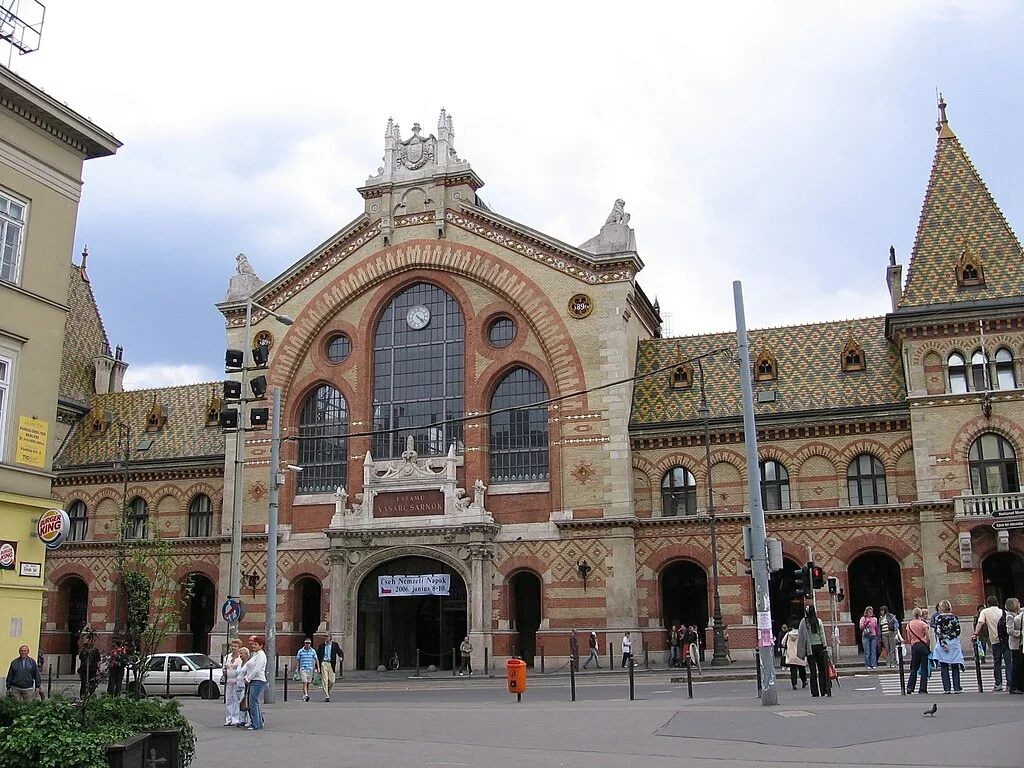
The Great Market Hall is Budapest’s largest and oldest covered market, located near the Liberty Bridge on the Pest side. Its construction was completed in 1897, based on a design by Hungarian architect Samu Pecz, in an eclectic style with colorful tiled roofs.
The market covers approximately 10,000 m², spread over three levels, including a basement dedicated to fresh products and food stores. It has more than 180 stalls offering fruits, vegetables, meats, fish, spices, and local Hungarian products.
The ground floor is dedicated to food products, while the upper levels offer souvenirs, handicrafts, and textiles. The market also hosts several restaurants and fast-food stalls, where visitors can taste traditional dishes such as goulash.
Vajdahunyad Castle
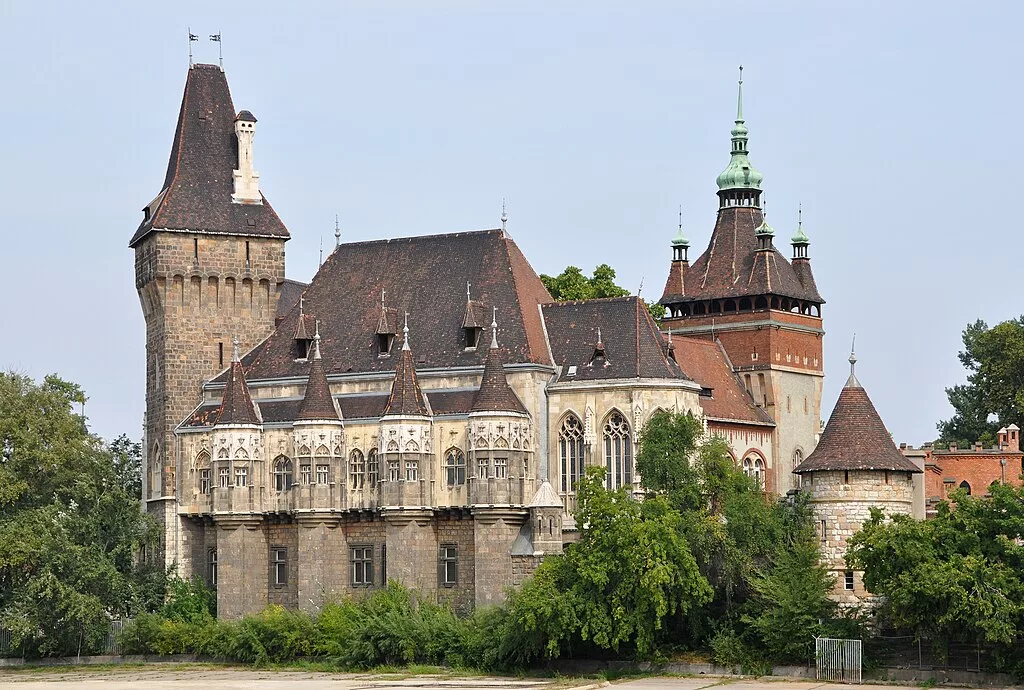
The Vajdahunyad Castle is located in City Park (Városliget) in Budapest, near the Great Market Hall and the zoo. It was built in 1896 to celebrate Hungary’s millennium and to showcase different Hungarian architectural styles.
The building combines Romanesque, Gothic, Renaissance, and Baroque elements, reflecting several historical periods and regions of the country. The original castle was made of wood for the Millennium Exhibition, then rebuilt in stone and brick a few years later.
The architecture is notably inspired by Corvin Castle (Vajdahunyad) in Transylvania, which gives the castle its name. Today, the castle houses the Hungarian Agricultural Museum, presenting the history of agriculture and forestry in Hungary.
An artificial pond nearby reflects the castle, and it turns into an ice rink in winter, attracting many visitors.
Museums to See in Budapest
Hungarian National Museum
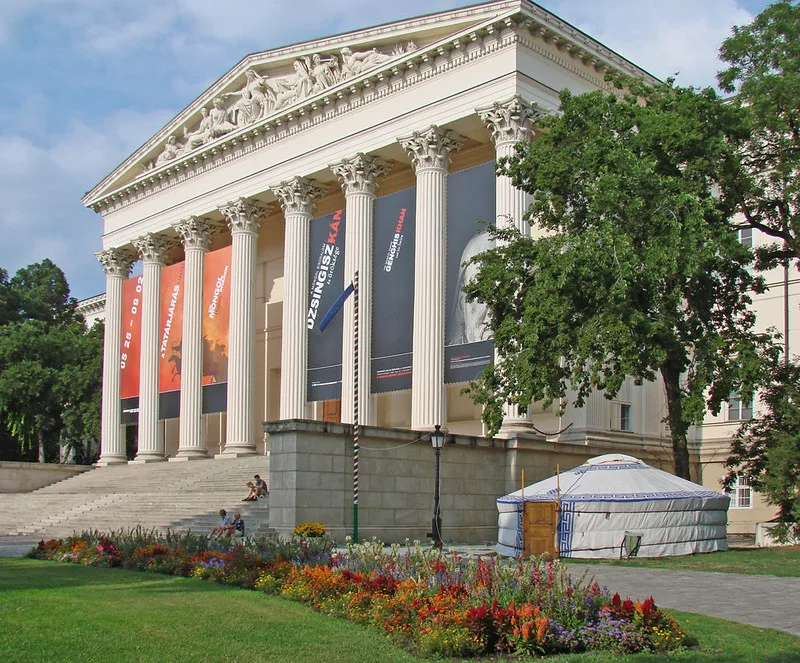
The Hungarian National Museum is located in central Budapest, in the 8th district, and is the country’s main history museum. Its construction was completed in 1847, following the plans of architect Mihály Pollack, in a Neoclassical style.
The museum preserves collections spanning from prehistory to contemporary history, including archaeological, artistic, and historical objects. It also houses relics of the Árpád dynasty, Hungary’s first rulers.
The National Museum possesses the Crown of Saint Stephen (replicas and historical elements) and other symbols of Hungarian royalty. It also has several gardens and statues around its façades, contributing to its impressive presence in the city center.
Hungarian National Gallery
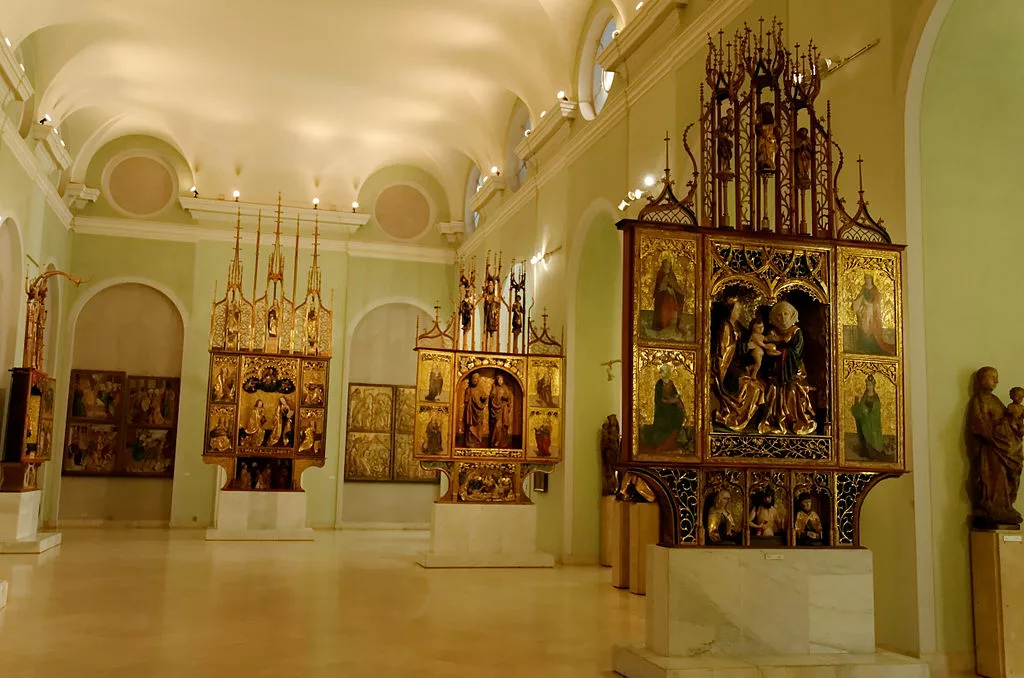
The Hungarian National Gallery is located in Buda Castle, on Castle Hill, offering panoramic views of Budapest. It was established in 1957 and is one of Hungary’s main art museums.
The gallery mainly exhibits Hungarian art, ranging from the Middle Ages to contemporary times. Its collections include paintings, sculptures, prints, and religious icons, reflecting the artistic evolution of the country.
The museum also holds treasures of Hungarian religious art, such as altarpieces and liturgical objects. Famous artists represented include Munkácsy Mihály, Lotz Károly, and Csontváry Kosztka Tivadar.
Museum of Fine Arts
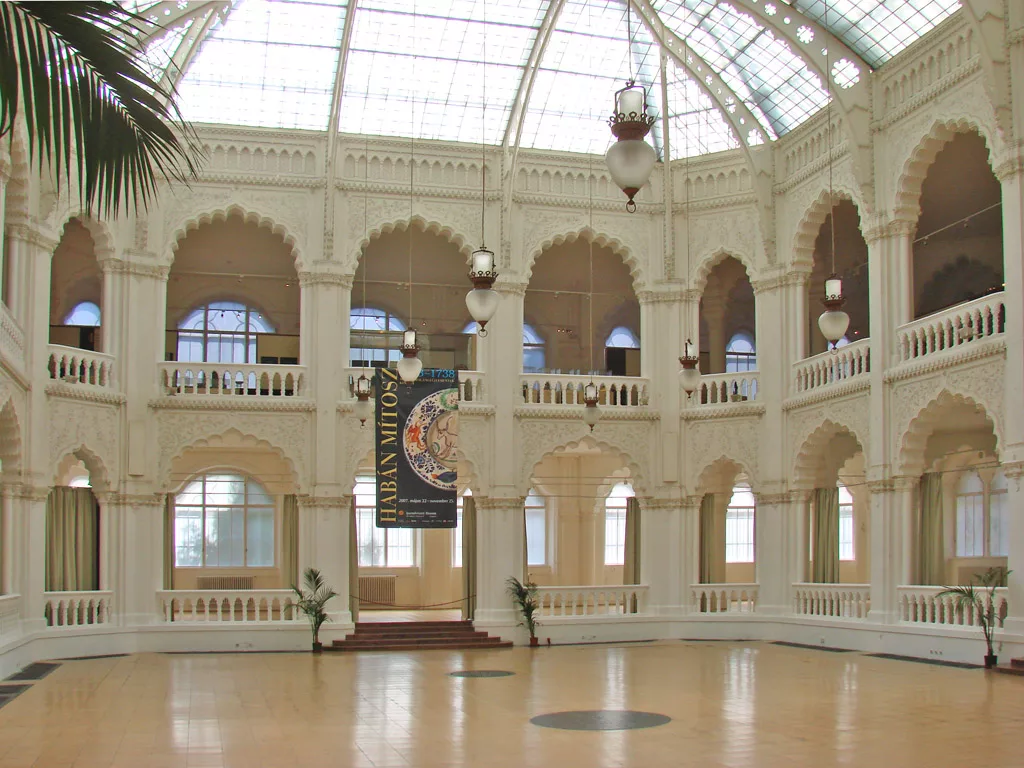
The Museum of Fine Arts in Budapest is located on Heroes’ Square (Hősök tere), in the 14th district, at the entrance to Városliget Park.
It was inaugurated in 1906, after more than twenty years of construction, designed by architect Albert Schickedanz in a monumental Neoclassical style.
The museum houses one of the most important collections of European art in Central Europe, covering over six centuries of history. Its collections include works by old masters such as Raphael, Titian, El Greco, Goya, and Rembrandt. It also features French, German, Italian, Spanish, and Dutch art, as well as sculptures and drawings.
The building is decorated with columns, pediments, and sculptures, reflecting the classical and prestigious architecture of its era. The Egyptian collection, though smaller, offers insight into ancient art outside Europe.
House of Terror (Terror Háza)
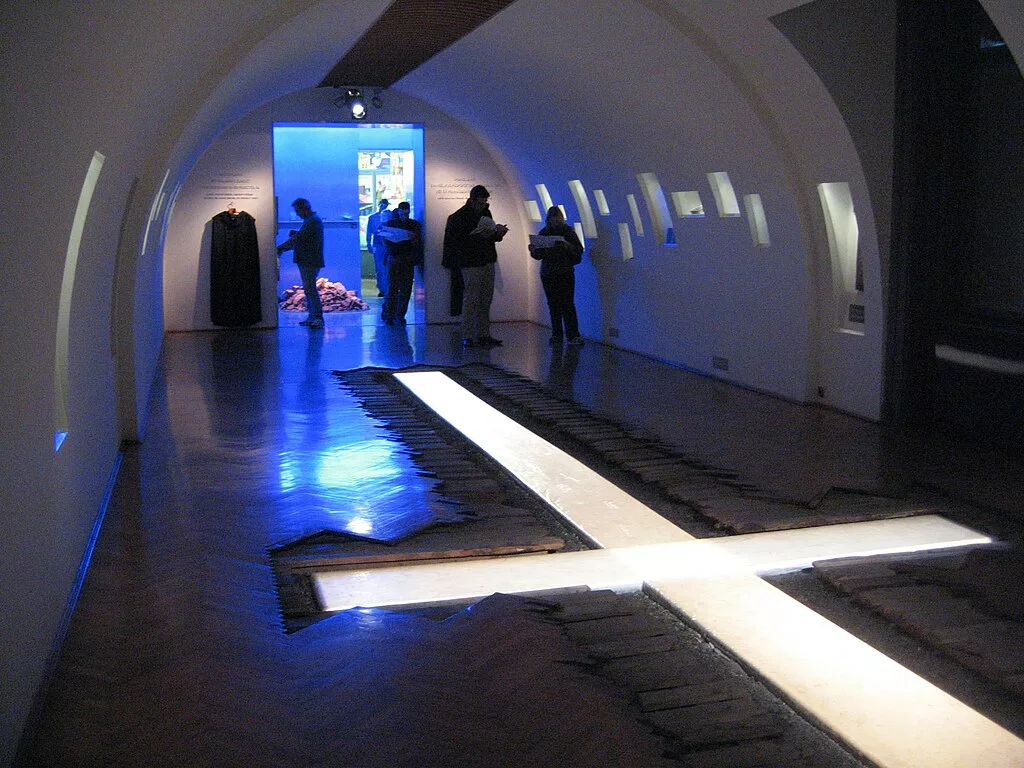
The House of Terror is located on Andrássy Avenue in central Budapest and is a museum dedicated to 20th-century Hungarian history. It was inaugurated in 2002 and occupies the former headquarters of the Communist State Police and the fascist Arrow Cross Party.
The museum commemorates the victims of totalitarian regimes that affected Hungary, notably Nazism and Communism. The building itself was a site of torture, executions, and detentions during the oppressive regimes.
The visit includes interactive exhibitions, historical documents, photographs, and videos recounting political persecution. The museum rooms are arranged chronologically to trace Hungary’s history from 1944 to 1989. It also presents survivor testimonies and personal objects of victims.
Hospital in the Rock Nuclear Bunker Museum
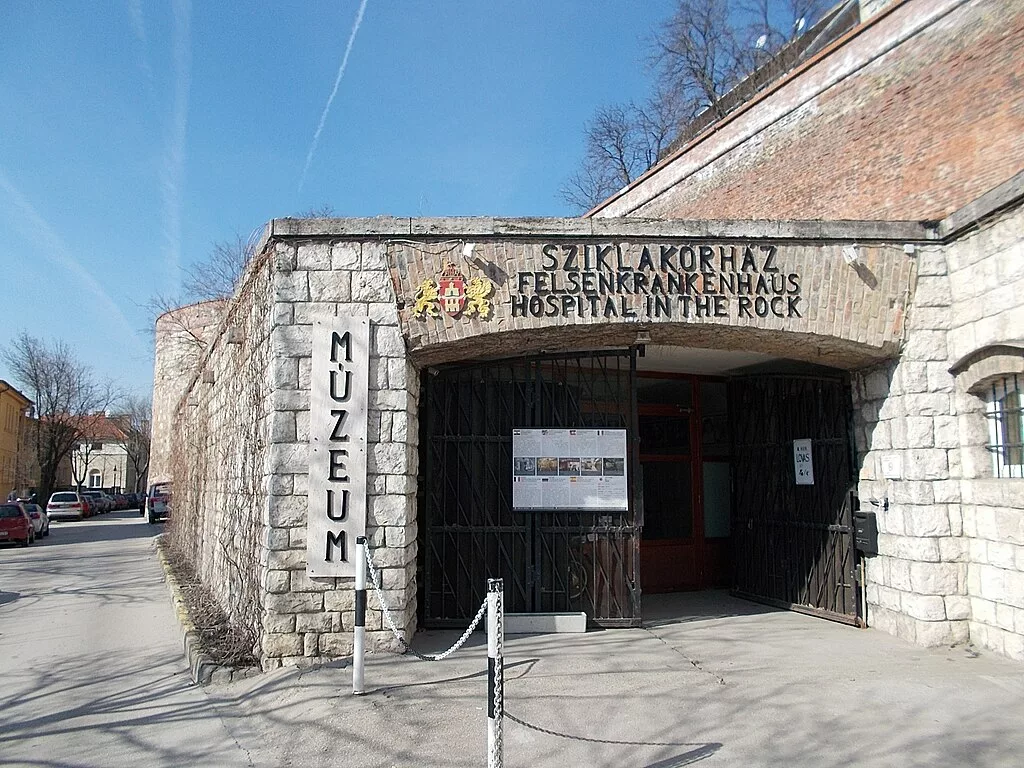
The Hospital in the Rock is located under Buda Castle, in a network of caves and artificial tunnels. It was established during World War II as an underground hospital to treat bombing victims.
During the Cold War, the site was converted into a nuclear shelter capable of housing hundreds of people in case of an atomic attack. The museum recreates the medical and military facilities, including operating rooms and intensive care units of the era.
Visitors can see original medical equipment, mannequins, and radiation protection gear.
Baths and Parks
Széchenyi Thermal Baths
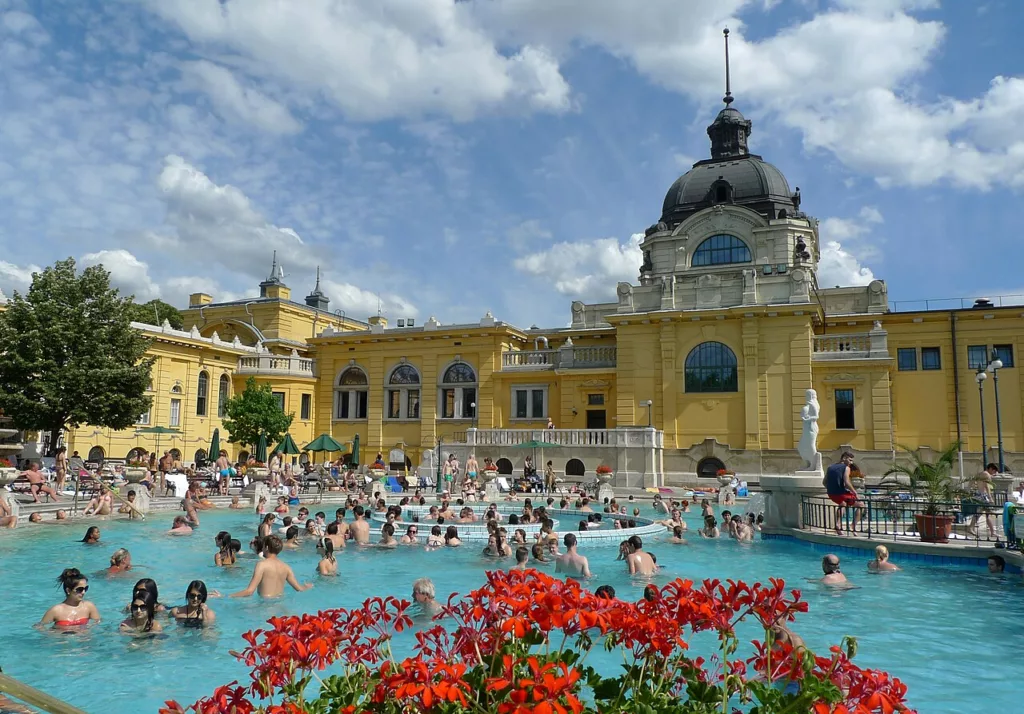
The Széchenyi Thermal Baths are located in City Park (Városliget) in Budapest and are one of the largest thermal complexes in Europe.
The building was inaugurated in 1913 and designed in a spectacular Neo-Baroque style.
The baths use hot thermal waters from more than 15 natural springs, rich in minerals.
Széchenyi is famous for its outdoor pools, heated year-round, offering a unique experience even in winter. The complex includes 18 pools, saunas, hammams, and medical and physiotherapy treatment rooms. The baths were designed to combine medical therapy and leisure and remain popular with locals and tourists alike.
Gellért Thermal Baths
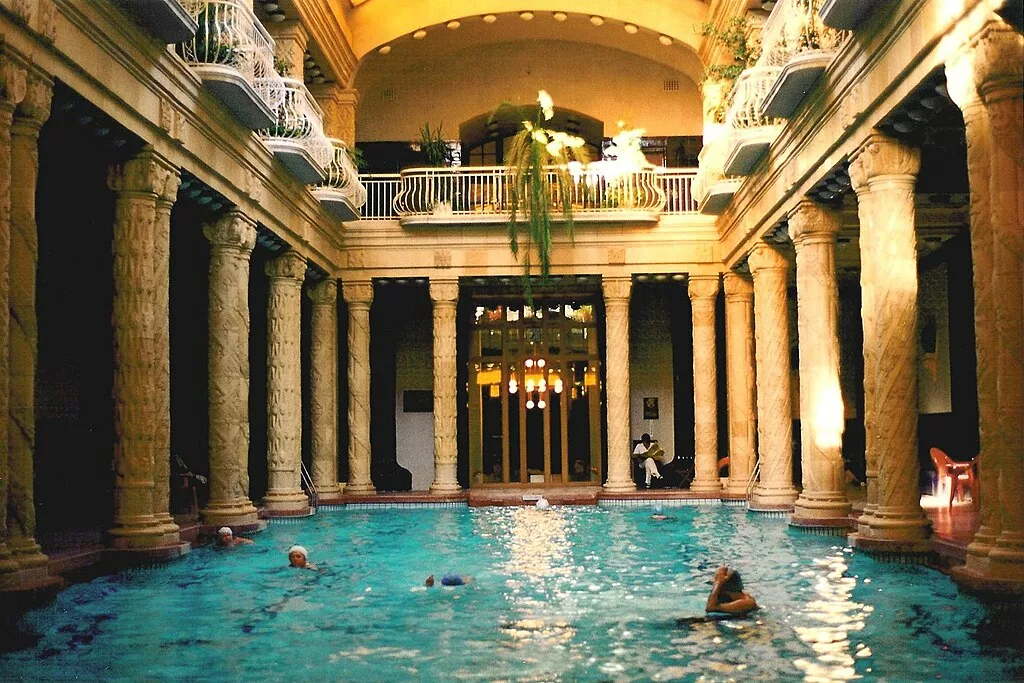
The Gellért Thermal Baths are located at the foot of Gellért Hill on the Buda side, next to the Gellért Hotel.
The thermal complex was inaugurated in 1918 and is famous for its elegant and colorful Art Nouveau architecture.
The baths use natural hot springs, rich in minerals beneficial for health. The building includes several indoor and outdoor pools, as well as saunas and treatment rooms.
Visitors can enjoy massages, physiotherapy treatments, and medical baths, combining relaxation and therapy.
The interior is distinguished by stained glass windows, mosaics, sculpted columns, and decorative sculptures, typical of Art Nouveau.
Margit-sziget (Margaret Island)
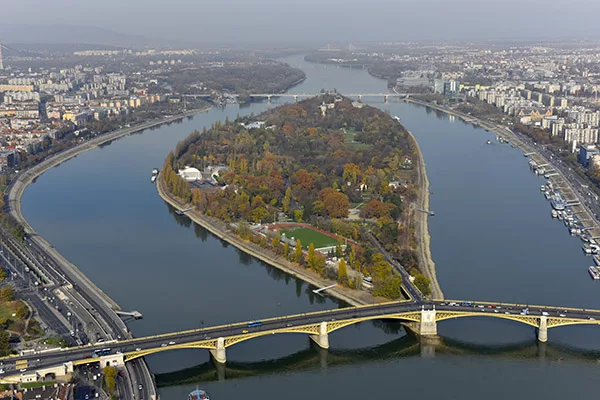
Margit-sziget, or Margaret Island, is a 2.5 km long island located on the Danube between Buda and Pest. It is one of Budapest’s most popular green spaces, ideal for walking, cycling, and outdoor recreation.
The island is named after Princess Margaret, who lived there in the 13th century as a nun in the Dominican convent. Margit-sziget hosts historical ruins, such as the remains of the Dominican convent and the 13th-century cloister.
The park also includes a Japanese garden, a musical fountain, and large lawns for picnics. Visitors can enjoy sports facilities, including running tracks, tennis courts, and swimming pools. Part of the island is occupied by a water and spa complex, utilizing local thermal waters.
City Park (Városliget)
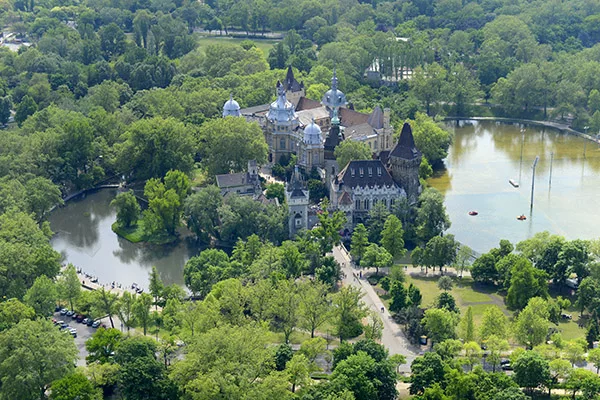
The City Park (Városliget) is the largest public park in central Budapest, located behind Heroes’ Square. It covers approximately 1.2 km² and is a space for relaxation and leisure for locals and tourists.
The park houses several historical monuments, including Vajdahunyad Castle and the Millennium Monument. It also includes the Museum of Fine Arts and the Műcsarnok Gallery, bordering Heroes’ Square.
The park has a large artificial lake that turns into an ice-skating rink in winter, popular with families and winter sports enthusiasts.
The famous Széchenyi Thermal Bath complex is located within the park. The park also contains a zoo and a botanical garden, making Városliget an ideal place for family outings.
Hungarian Cuisine & Specialties
Goulash (Gulyás)
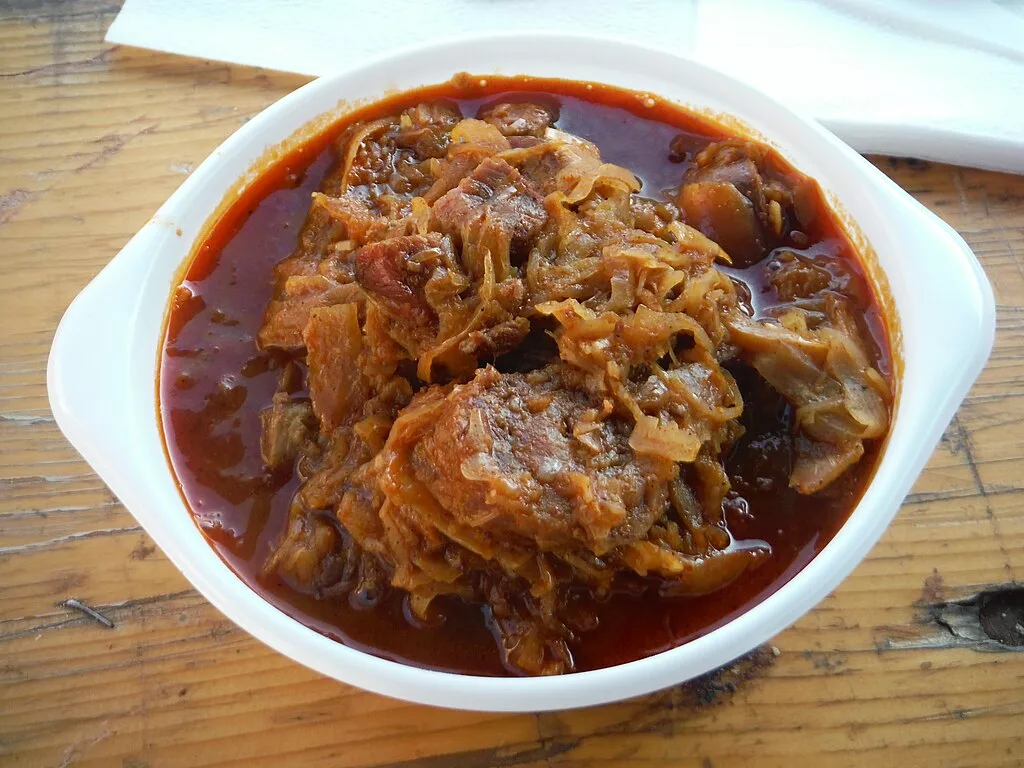
Goulash (gulyás in Hungarian) is a meat and vegetable stew seasoned with paprika and other spices. Its origins date back to Hungarian shepherds in the 10th century, who cooked in portable cauldrons.
Originally, the primitive version of goulash did not contain paprika, which only arrived in Hungary in the 16th century.
The term “gulyás” comes from the Hungarian word gulya, meaning “cattle herd”; gulyás therefore refers to the cattle herder.
There is also a soup version called gulyásleves, which includes beef, potatoes, paprika, and other vegetables according to the traditional recipe.
Lángos
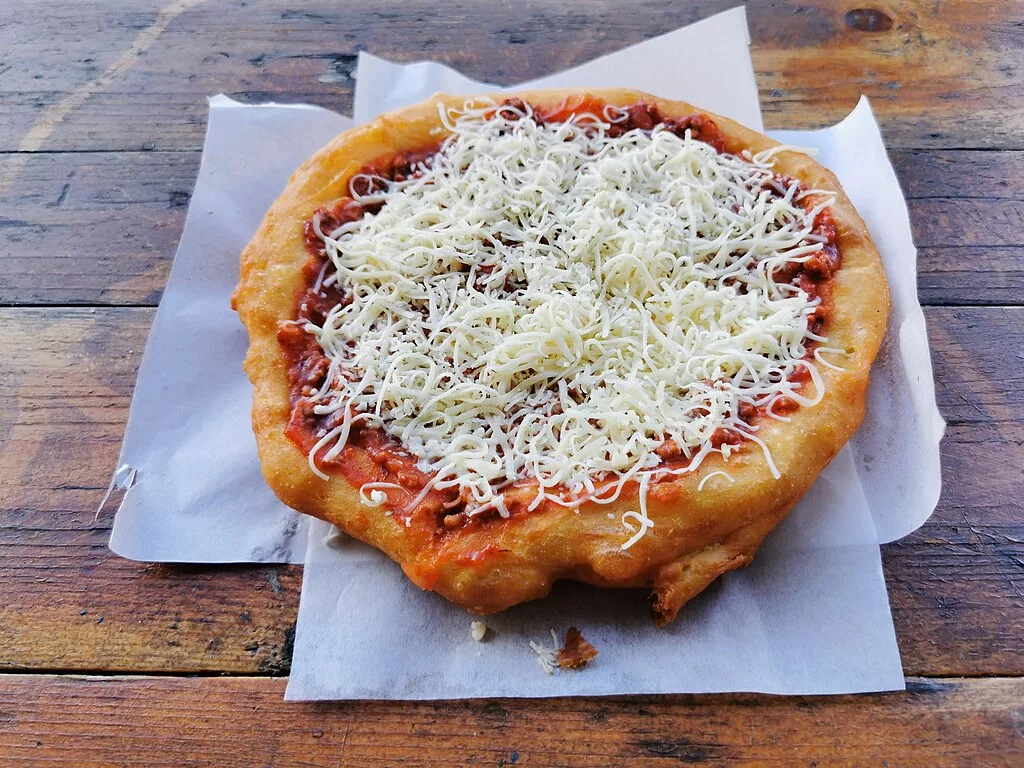
Lángos is a Hungarian fried flatbread, typically made from flour, yeast, salt, and water (or milk).
The word lángos comes from the Hungarian word láng, meaning “flame”, because this bread was traditionally cooked near a fire.
Historically, bakers used leftover dough, which they fried the next day, giving rise to lángos.
Today, it is often served with sour cream (tejföl) and grated cheese or garlic. There are also sweet versions topped with jam, sugar, or chocolate according to preference.
Paprikás Csirke (Chicken Paprikash)
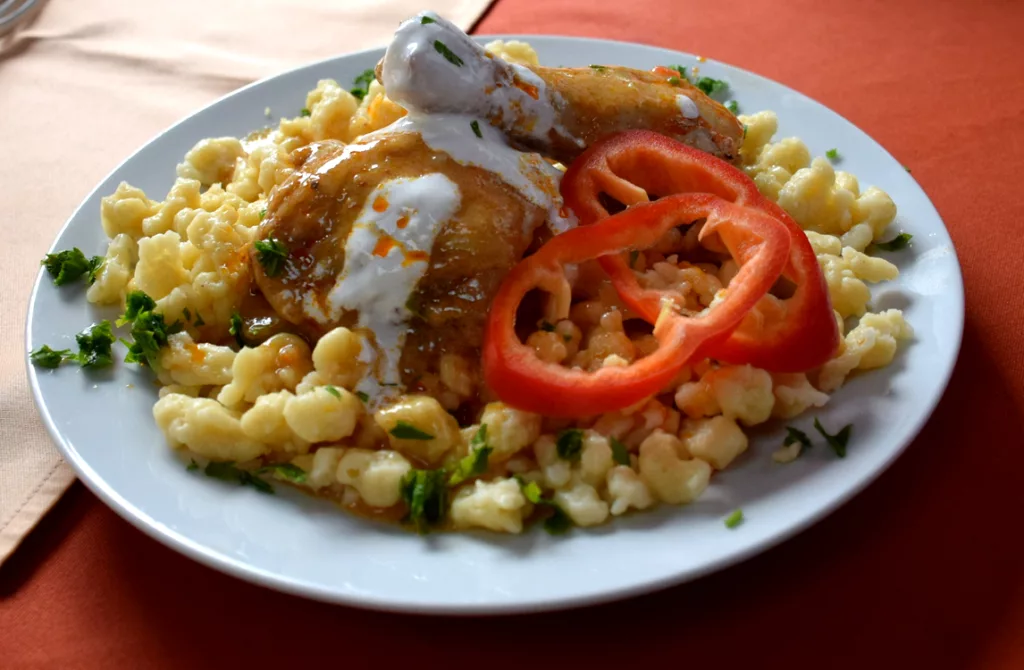
Paprikás csirke, or “chicken paprikash,” is a traditional Hungarian dish of chicken cooked in a paprika sauce. The sauce begins with a roux infused with paprika, giving it its characteristic pink-red color.
Sweet (“édes nemes”) or hot (“csípős nemes”) paprika can be used, depending on the recipe. The dish may include red or yellow peppers and a little tomato paste in some variations.
At the end of cooking, sour cream (tejföl) is usually added to soften the sauce.
Dobos Torte
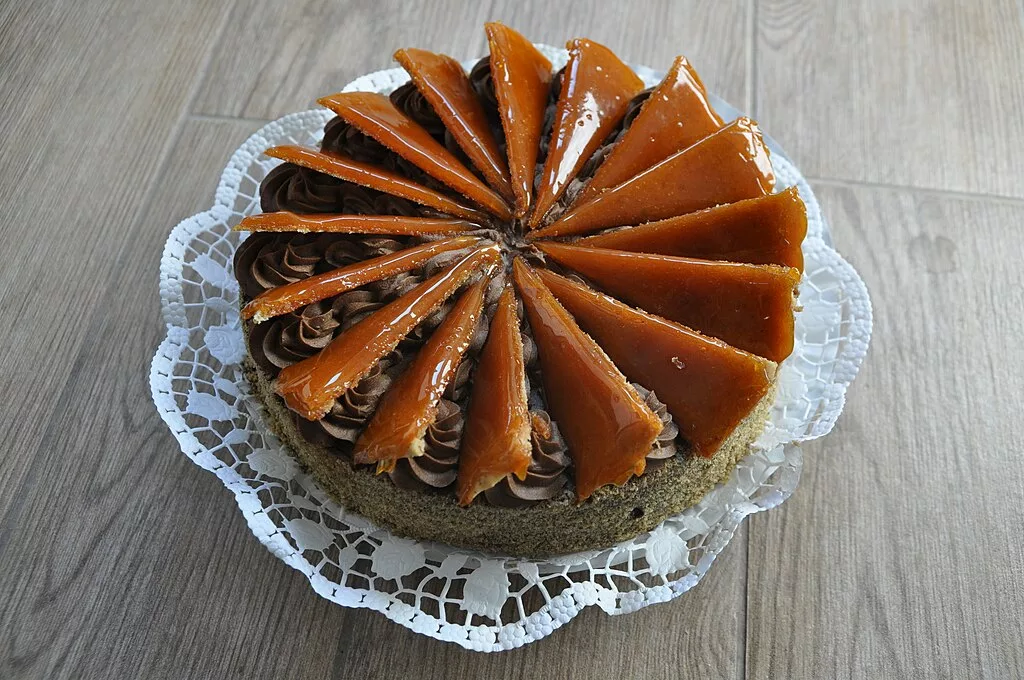
The Dobos Torte is a Hungarian cake invented by pastry chef József C. Dobos in the 19th century.
It consists of several layers of sponge cake separated by chocolate buttercream. The cake’s surface is covered with a hard caramel glaze, giving it a shiny and crunchy top. The sides are traditionally coated with finely chopped hazelnuts, walnuts, or almonds.
The cake was designed to last: the hard caramel top helps preserve moisture, extending its shelf life.
Kürtőskalács
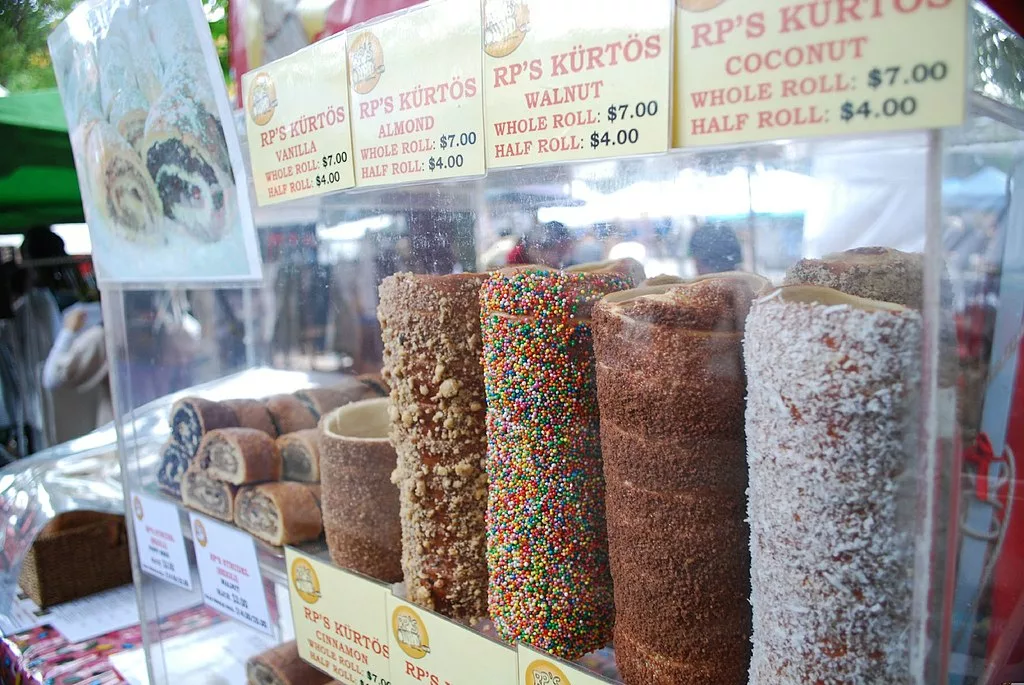
Kürtőskalács is a traditional Hungarian pastry, often called “spit cake.” It is made from a sweet dough consisting of flour, milk, butter, eggs, and yeast.
The dough is wrapped around a cylindrical spit and slowly baked over a fire or in an oven. During cooking, the spit is rolled in sugar, caramelizing the cake’s surface.
Toppings such as nuts, cinnamon, or chocolate may be added in modern variations.
Kürtőskalács has ancient roots: its first written mention dates back to 1679.
Tokaji – Iconic Wine
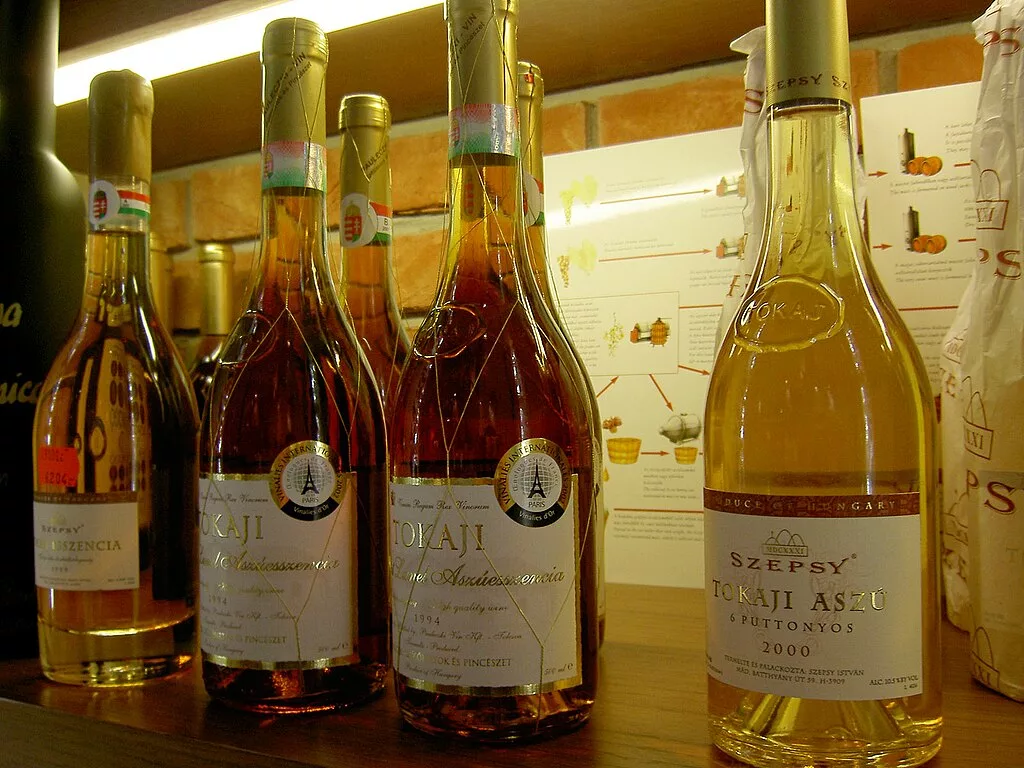
Tokaji is a Hungarian wine produced in the historic Tokaj-Hegyalja wine region in northeastern Hungary.
It is especially famous for Tokaji Aszú, a sweet wine made from grapes affected by “noble rot” (Botrytis). The Tokaj terroir is unique: volcanic soil, a favorable microclimate, and humid nights ideal for the formation of noble rot.
Historically, Tokaji is nicknamed “Vinum Regum, Rex Vinorum” (“wine of kings, king of wines”) in reference to its prestige.
Unusual Experiences & Activities
Ruin Bars – Szimpla Kert and others
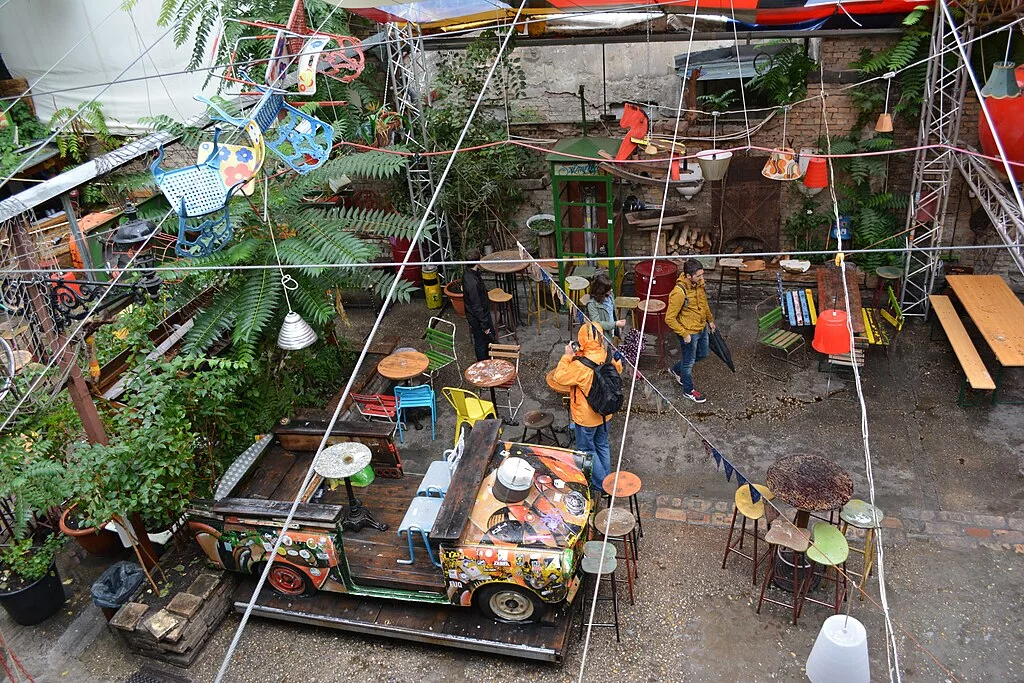
The ruin bars are bars set up in abandoned buildings in Budapest’s 7th district, the former Jewish Quarter. Szimpla Kert is considered a pioneer of ruin pubs, opening in 2002 and relocated to a dilapidated building on Kazinczy Street in 2004.
Szimpla means “simple” in Hungarian: the original concept was to offer an affordable, relaxed, and alternative venue. The bar hosts film screenings, concerts, a Sunday farmer’s market, and even a “living library” (Kazinczy Living Library).
Its eclectic decor mixes old sofas, swings, bathtubs repurposed as seats, hanging bicycles, and recycled objects, giving it a highly artistic “DIY” atmosphere.
Gyermekvasút (Children’s Railway)
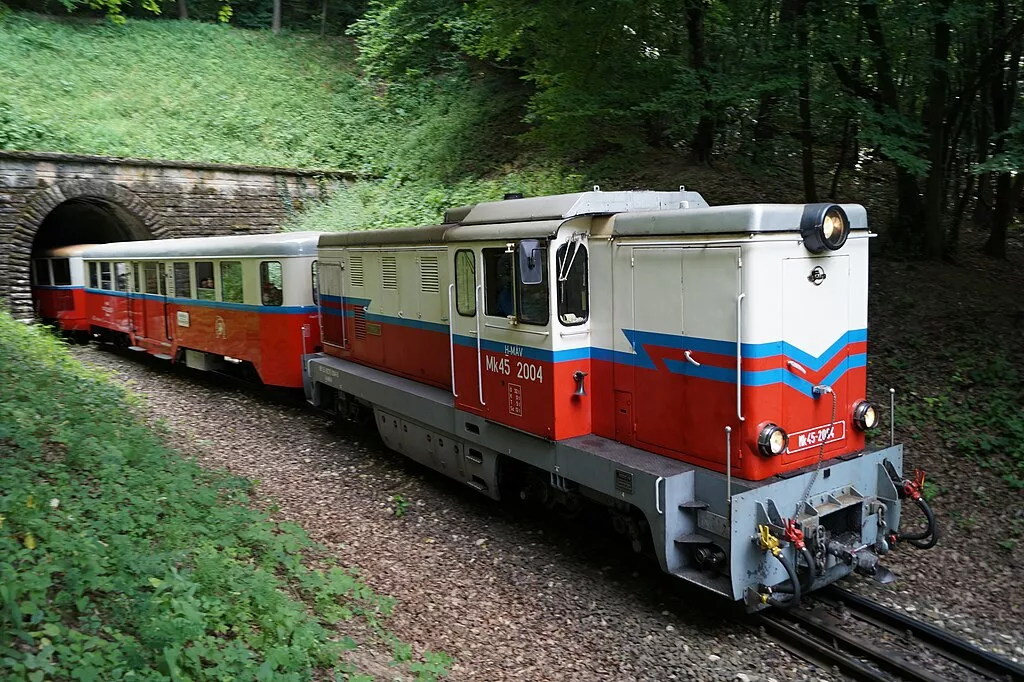
The Gyermekvasút, also called line 7, is a narrow-gauge railway in the Buda hills, between Széchenyihegy and Hűvösvölgy. What makes this line special is that nearly all stations (ticketing, control, announcements) are operated by children aged 10 to 14, under adult supervision.
It opened in 1948, originally named Úttörővasút (“Pioneer Railway”) during the communist era.
The route covers approximately 11.2 km, offering beautiful views of the wooded Buda hills.
Danube Cruise
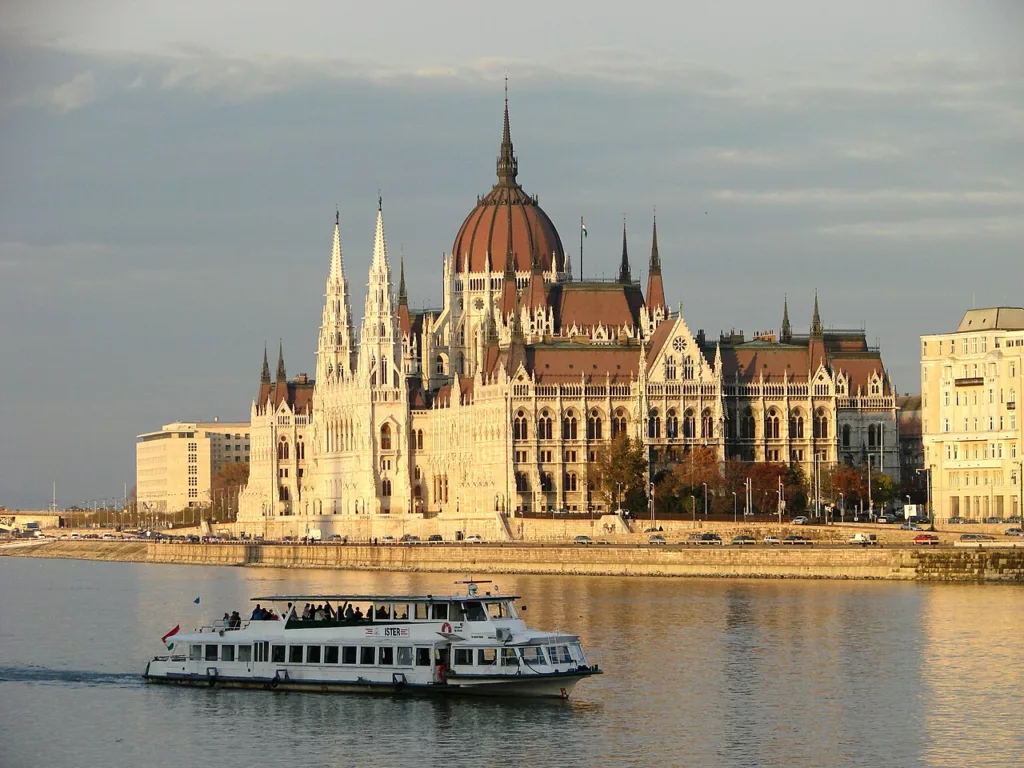
The Danube cruise allows you to admire Budapest’s iconic landmarks, such as the Parliament, Buda Castle, and illuminated bridges.
Many cruises depart in the evening from central docks, with modern boats featuring open decks to enjoy the view. Some cruises offer welcome drinks (wine, beer, soft drinks) to enhance the romantic atmosphere.
There are also “dinner + folk music” cruises for a more immersive experience, with meals and entertainment on board.
Hidden Passages & Courtyards in Downtown Budapest
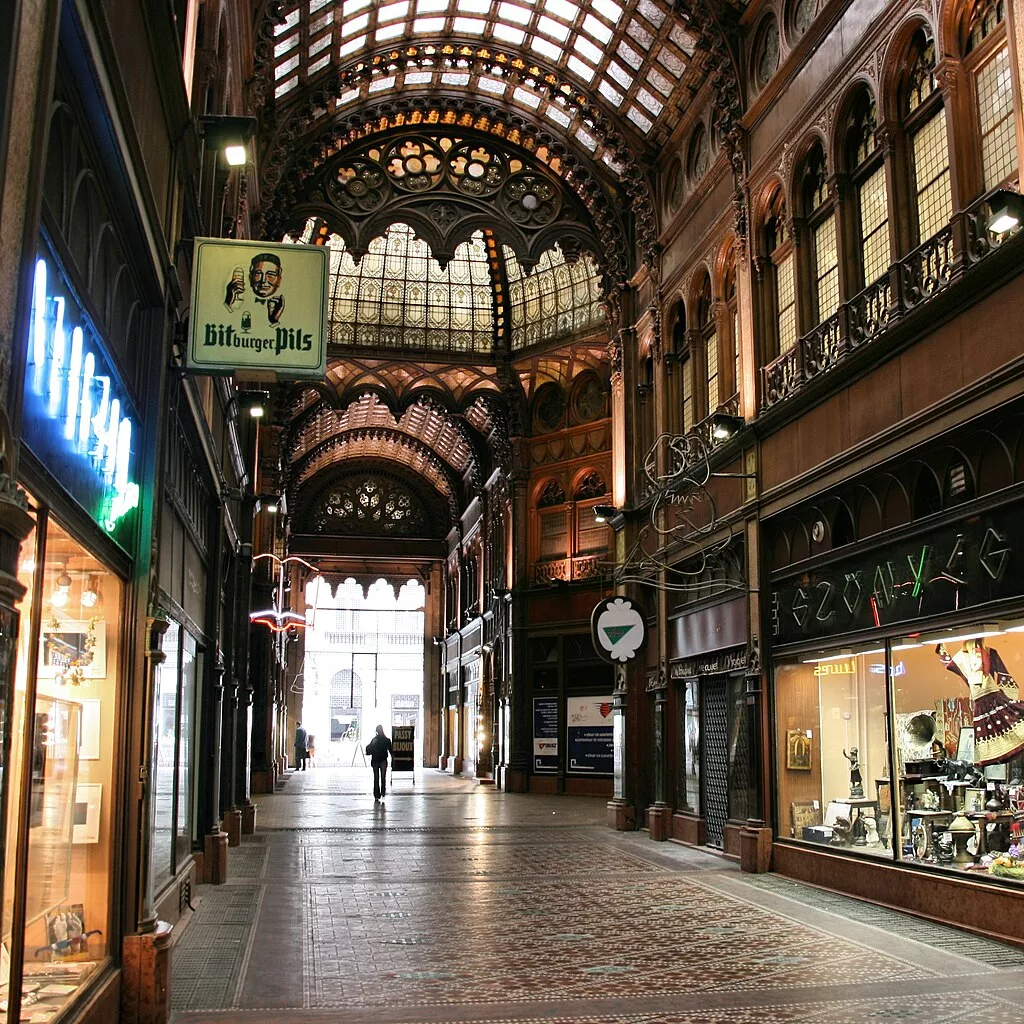
In downtown Budapest, urban passages and hidden courtyards can be found behind historic façades, often invisible from the street.
Among the most famous, Gozsdu Udvar is a complex of seven connected courtyards, accessible through discreet doors, now housing bars, restaurants, and shops.
Róser Bazár, a neo-Renaissance passage, has become a charming space with cafés, artisan workshops, and designer shops.
The Parisian Court (Párisi Udvar) is a covered arcade in Art Deco / Art Nouveau style, featuring a glass roof, sculpted decorations, and elegant boutiques.
These hidden courtyards and passages offer a paradox: they are peaceful havens away from the bustling streets, yet also reflect the bourgeois Budapest of the late 19th and early 20th centuries.
Excursions Around Budapest
Szentendre – Baroque Artists’ Village
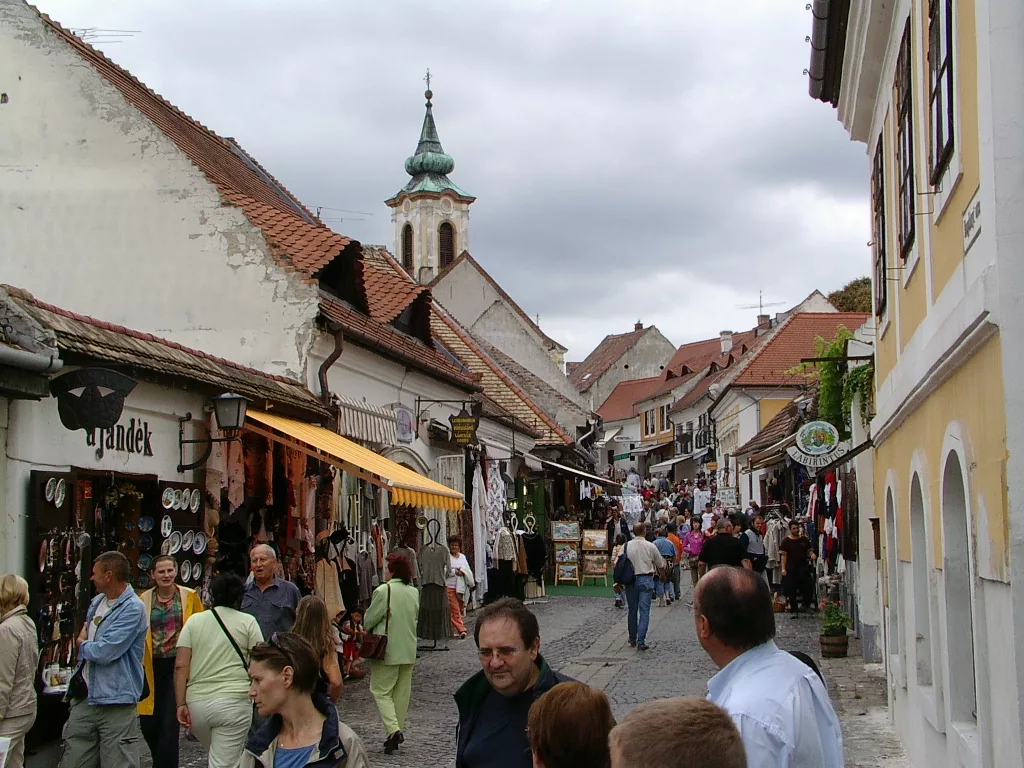
Szentendre is a small town located on the banks of the Danube, in Pest County, about 25 km north of Budapest.
It is particularly renowned for its museums, art galleries, and artists’ village atmosphere. Its picturesque architecture is strongly influenced by the Baroque style, especially in its cobblestone streets and colorful houses.
Szentendre’s population has historically been diverse: in the 18th century, an influx of Serbian refugees shaped the city’s cultural and religious character. Numerous Serbian Orthodox churches can be found here, such as the Church of St. Archangel Michael, built in Baroque style in the 18th century.
Szentendre attracts many artists every year — painters, sculptors, writers — who come to be inspired by its landscape, tranquility, and light.
Esztergom – The Largest Basilica in the Country
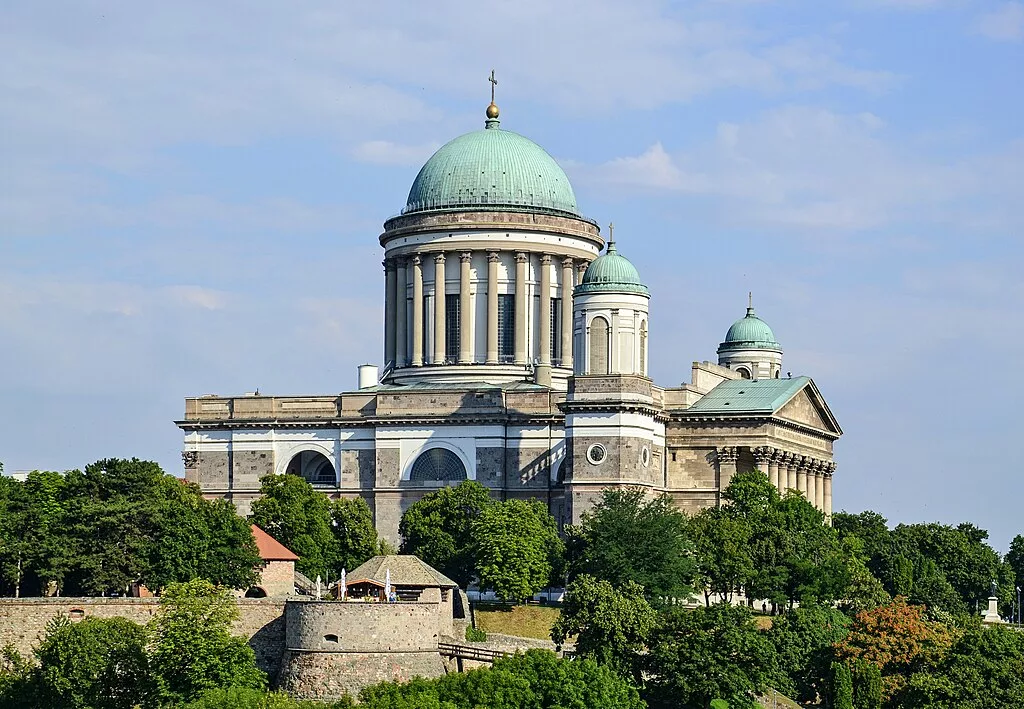
Esztergom is a historic town located on the banks of the Danube, in Komárom-Esztergom County. It is considered one of the most important towns in Hungarian history, having been the kingdom’s capital during the Middle Ages.
The Esztergom Basilica (Cathedral of St. Adalbert) is a monumental neoclassical building, whose construction began in 1822. With a dome reaching about 100 meters high, it is one of Hungary’s tallest religious buildings.
The interior of the basilica offers an impressive area of 5,600 m², illuminated by numerous windows. The Bakócz Chapel, located inside the basilica, is a Renaissance masterpiece, featuring red marbles and designs inspired by Italian architecture.
The basilica’s treasury (Kincstár) contains Hungary’s largest collection of sacred art, including chalices, pectoral crosses, and other relics.
Visegrád – Medieval Fortress & Danube Bend
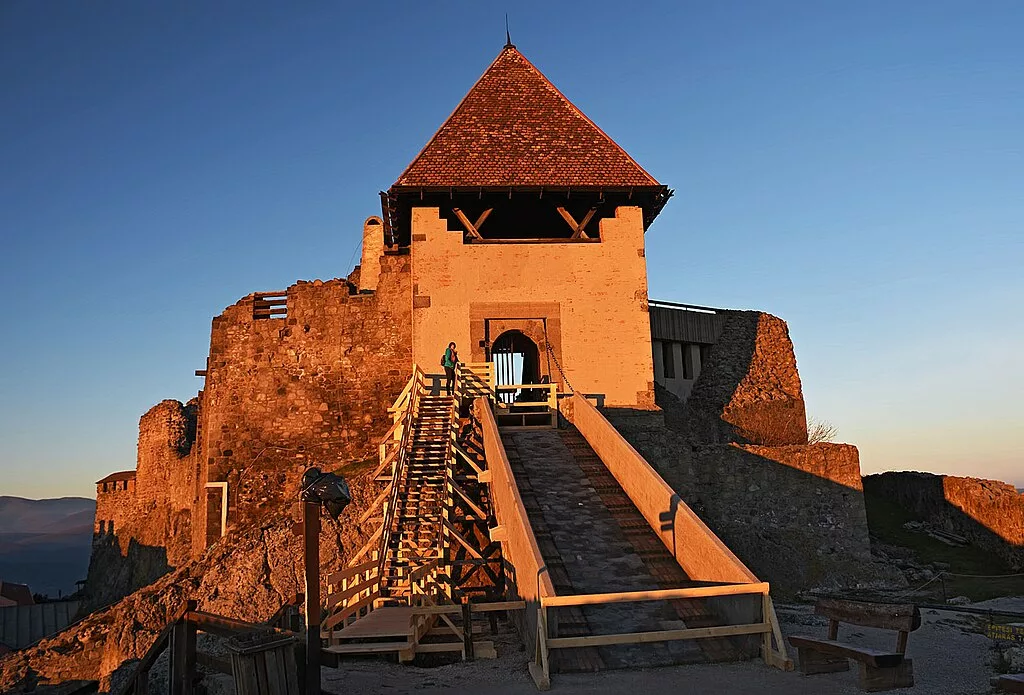
Visegrád is a town located in Pest County, on the famous “bend” (or loop) of the Danube, about 40 km north of Budapest.
Its name comes from the Slavic word meaning “high castle” (Vyšehrad), referencing its strategic position on a hill. The Visegrád Castle, or citadel, was an important royal residence in the Middle Ages and is now a tourist fortress.
King Béla IV had the fortification built after the Tatar invasion, strengthening the kingdom’s defenses. Today, the castle hosts historical reconstructions: banquet halls, armories, and exhibitions on medieval life.
Visegrád also played a historical role as a site of alliances: in 1335, a summit there brought together the kings of Hungary, Bohemia, and Poland.
Conclusion
Visiting Budapest is a dive into a city rich in history and heritage, where every neighborhood reveals unique architectural and cultural treasures. From majestic buildings like the Hungarian Parliament and St. Stephen’s Basilica, to the medieval fortresses of Visegrád or picturesque villages like Szentendre, Budapest offers a complete journey through time and artistic styles.
Museums, ruin bars, historic thermal baths, and walks along the Danube combine culture, relaxation, and unusual experiences. Whether for a weekend or a longer stay, planning your visit to Budapest ensures you discover not only its iconic monuments but also hidden gems, culinary specialties, and local atmospheres.
Prepare to explore Budapest in depth and take home unforgettable memories from this fascinating European capital.