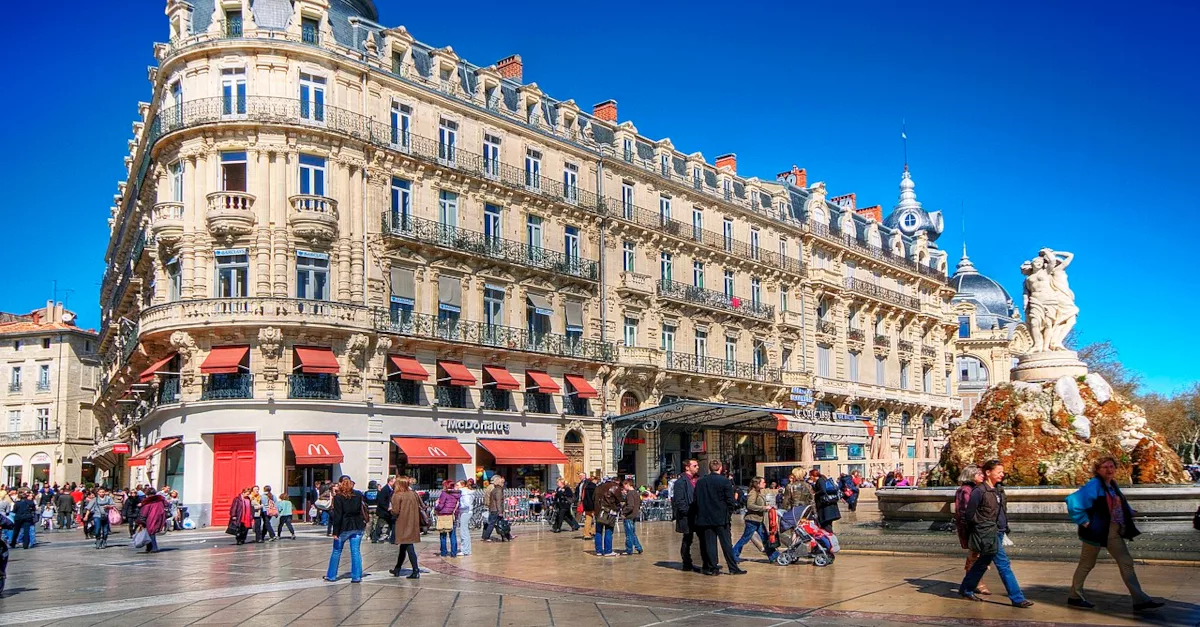
Visiting Montpellier: 30 Must-Do and Must-See Things
Visiting Montpellier means diving into the heart of a city in southern France where history, culture, and modernity meet. As the capital of Hérault, Montpellier charms with its medieval center, historic mansions, lively squares, and picturesque streets.
The city is also a major cultural hub with its museums, festivals, and artistic events. From the Promenade du Peyrou to the Place de la Comédie, every walk reveals a piece of its heritage. Its parks, gardens, and the banks of the Lez River offer green spaces and relaxation right in the city center.
This complete guide will help you plan your stay to fully enjoy everything Montpellier has to offer.
For a unique discovery, embark on our “Must-See Montpellier” trail, a captivating mix of escape game and self-guided cultural tour, which will let you explore the city differently.
Monuments & Historical Heritage – Montpellier
1. Place de la Comédie
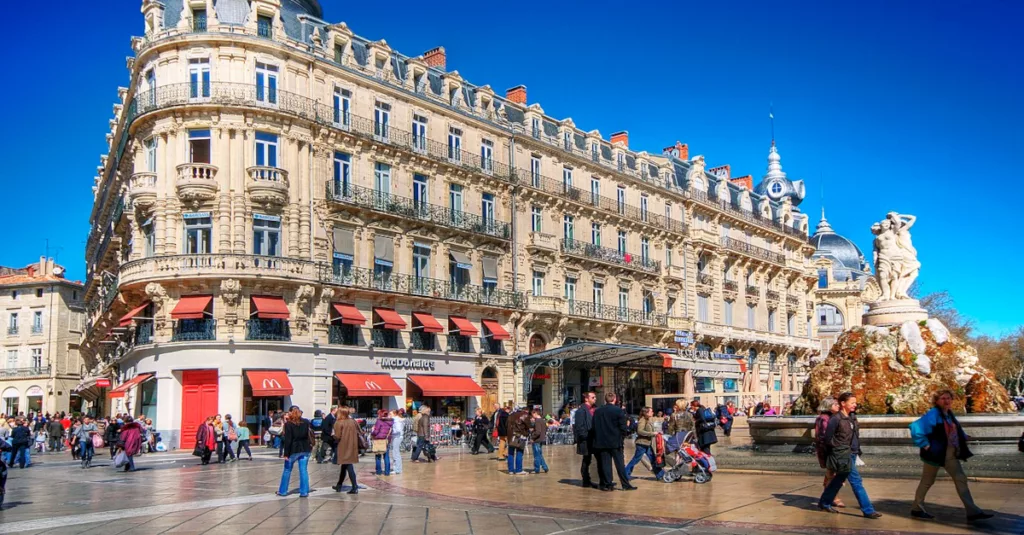 Place de la Comédie in Montpellier
Place de la Comédie is the historic and symbolic heart of Montpellier, located on the site of the city’s former fortifications.
Nicknamed “the Egg Square” due to its strongly oval shape, it has become a large pedestrian space. It is dominated by the Opéra Comédie, an Italian-style theater inaugurated in 1888, whose monumental façade is an iconic urban landmark.
At the center of the square is a fountain adorned with a statue of the Three Graces, a work by Étienne d’Antoine dating from the late 18th century.
Place de la Comédie was long a traffic route before being pedestrianized in the 1980s to become a friendly public space. A tunnel (the Comédie Tunnel) was opened in 1984 under the square to divert traffic and preserve the pedestrian atmosphere.
2. Porte du Peyrou
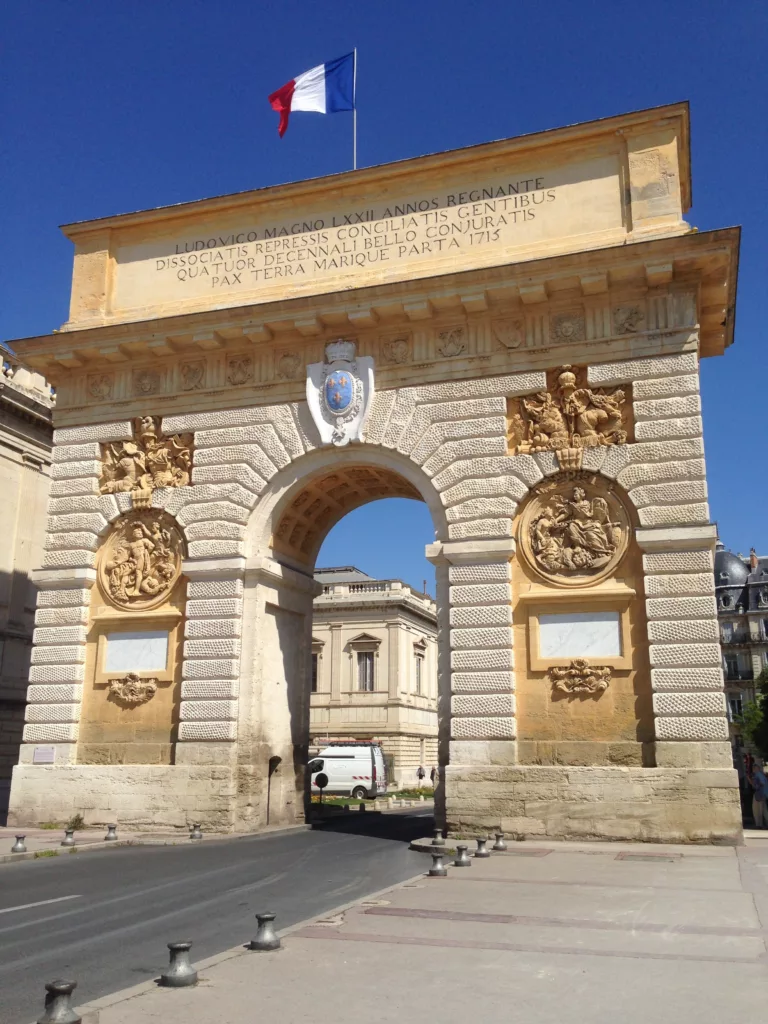 Triumphal Arch of Montpellier
The Triumphal Arch, also called Porte du Peyrou, marks the monumental entrance to Montpellier from the Promenade du Peyrou.
It was designed by François II d’Orbay, a student of Jules Hardouin-Mansart, and built in 1692–1693 on the site of a former medieval gate.
The arch is decorated with sculpted medallions, bas-reliefs, and a sculpted attic, representing Louis XIV’s victories and royal allegories.
Visitors can access a panoramic terrace at the top: nearly 90 steps lead to a 360° view over Montpellier, the vineyards, Pic Saint-Loup, the Mediterranean, and the Cévennes.
Discover the meaning of the different medallions in our Must-See Montpellier trail.
3. Saint-Pierre Cathedral
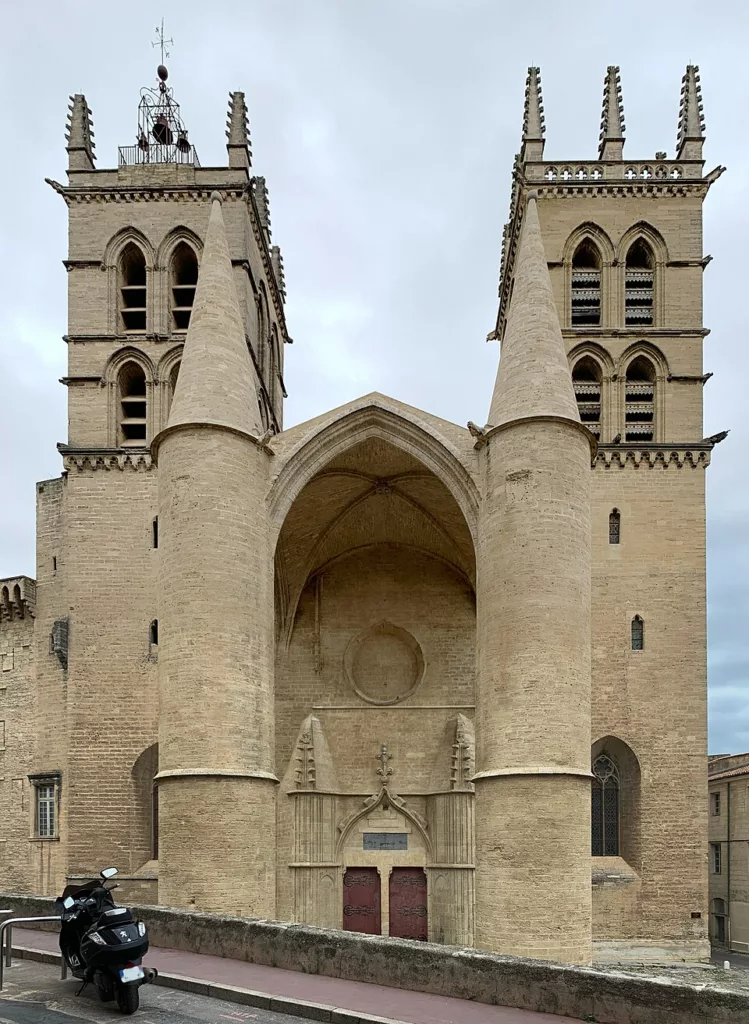 Saint-Pierre Cathedral
Saint-Pierre Cathedral in Montpellier was originally the chapel of the Benedictine monastery of Saint-Benoît, founded in 1364. It was elevated to cathedral status in 1536 when the episcopal seat was moved from Maguelone to Montpellier.
Its architectural style is characteristic of Southern Gothic: a single nave, few windows, thick walls, and massive buttresses. The cathedral has a fortress-like appearance: it had four corner towers and defenses (battlements, walkway), hence its nickname “Fort Saint-Pierre.”
It houses a major work: the painting “The Fall of Simon Magus” by Sébastien Bourdon, illustrating an apocryphal episode in Saint Peter’s life.
Discover the cathedral’s mysterious orientation with our Must-See Montpellier trail.
4. Saint-Roch Church
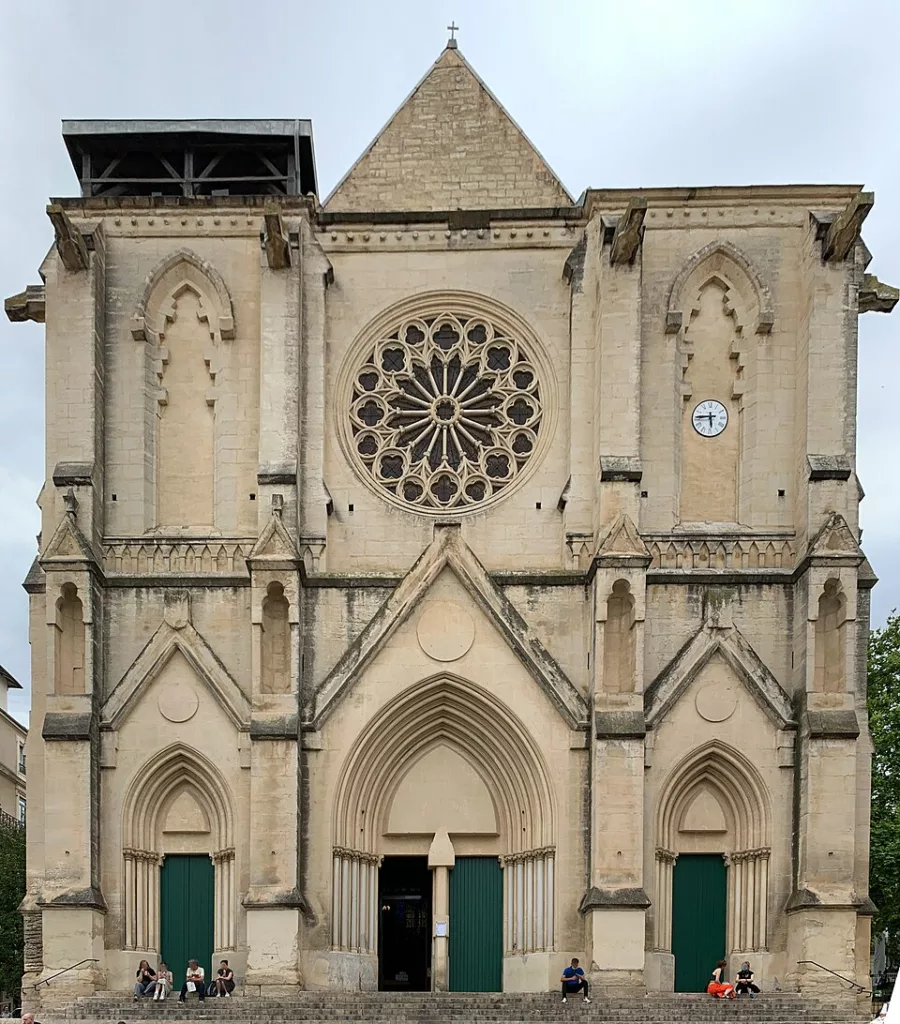 Saint-Roch Church Montpellier
Saint-Roch Church in Montpellier is a Neo-Gothic sanctuary built between 1861 and 1867 by municipal architect Jean Cassan. It stands on the site of the former Saint-Paul Church and the Trinitarian convent, destroyed during the religious wars.
The church honors Saint Roch, a native of Montpellier and protector against epidemics. He is celebrated every August 16 during a large procession. A monumental statue of Saint Roch, sculpted by Auguste Baussan in 1884, stands in front of the church and is one of its most striking symbols.
The stained glass, created by several workshops including that of Louis-Victor Gesta, is inspired by Symbolism and Art Nouveau. The church is also a pilgrimage site: located on the Via Tolosana (Way of Saint James), it welcomes pilgrims every year.
5. Château de Flaugergues
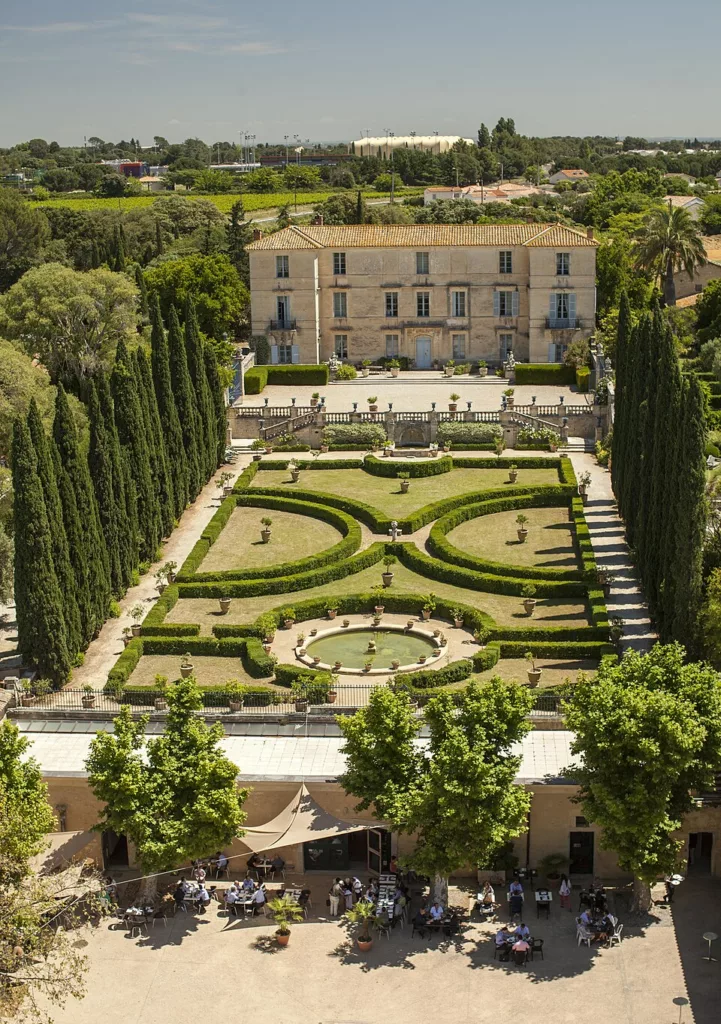
Château de Flaugergues, built in 1696, is one of the oldest “Montpellier follies,” pleasure residences of the Montpellier nobility. Étienne de Flaugergues, a magistrate at the Court of Accounts, transformed the estate for over 45 years to give it its current appearance.
The château still belongs to the Colbert family, descendants of Étienne de Flaugergues, which gives it a strong historical link. The gardens, classified as “Remarkable Gardens,” offer several atmospheres: a French garden, orangery, bamboo grove, olive tree alley, and landscaped park.
The estate has produced wine since Antiquity: its 25-hectare vineyard is now cultivated within the city and labeled a “remarkable vineyard.”
The château’s furnishings are rich: Flemish tapestries from 1670, Louis XV furniture, and ancient scientific instruments are displayed.
In recent years, the château has hosted a collaborative urban farm, the Oasis of Flaugergues, pioneering in permaculture and open to visitors.
6. Antigone District
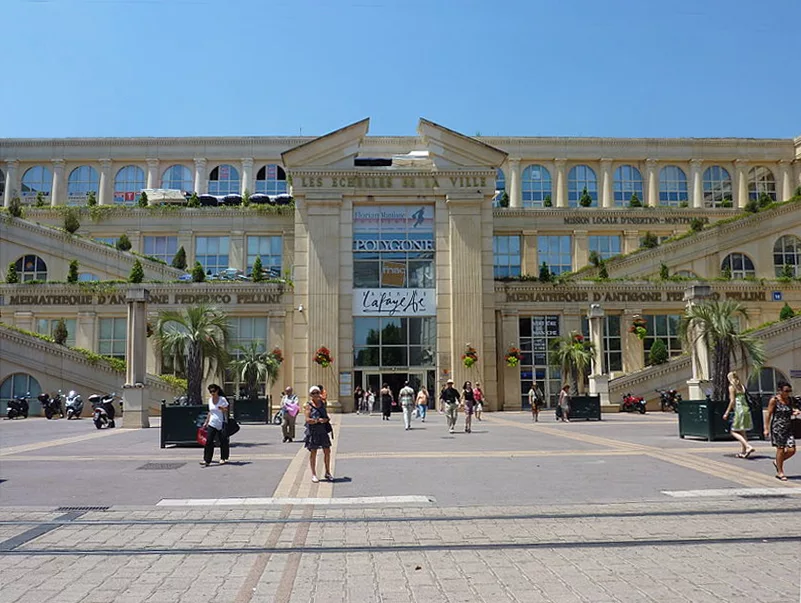
Antigone is a district of Montpellier located east of the city center. It was designed by the Catalan architect Ricardo Bofill from 1978, under the direction of Mayor Georges Frêche and geographer Raymond Dugrand.
Construction began in 1983 and finished around 2000. The architectural style of Antigone is heavily inspired by ancient Greece, with large-scale neoclassical motifs (pediments, pilasters, entablatures).
The district covers approximately 0.96 km² (96 hectares). Urbanistically, Antigone was designed as a visual and symbolic link between Montpellier’s historic center and the Lez River, forming an axis of about one kilometer with the Hôtel de Région, also designed by Bofill.
The district contains social housing (HLM), shops, public facilities (schools, cultural spaces), and leisure areas, reflecting a goal of social diversity.
7. Medieval Mikveh
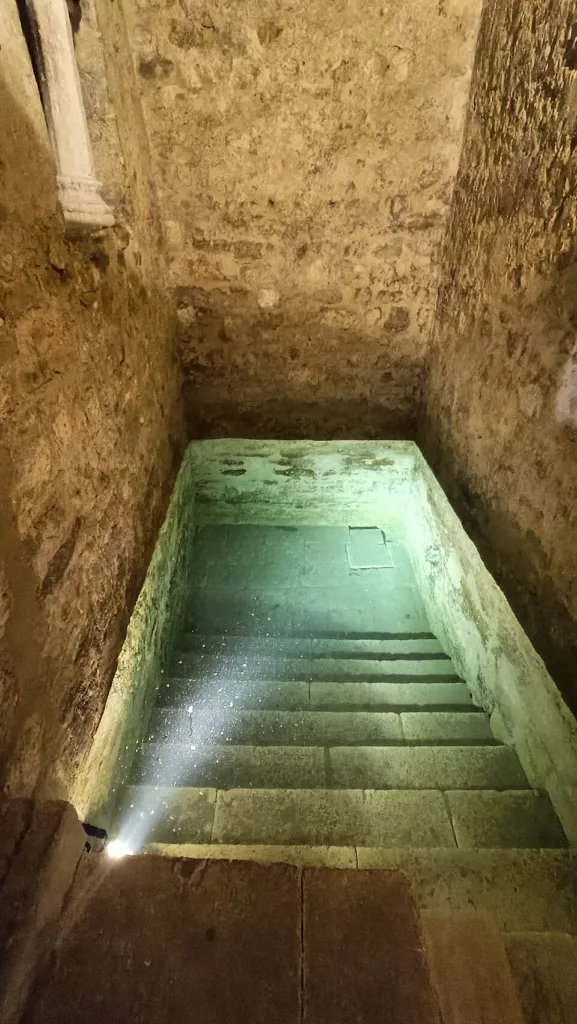
The medieval mikveh in Montpellier is a 13th-century Jewish ritual bath, located at 1 Rue de la Barralerie in the old Jewish quarter.
It is one of the oldest and best-preserved in Europe, thanks to its remarkable state of conservation. The mikveh’s water comes from a constantly replenished underground aquifer, ensuring pure water for ritual use. Access to the basin is via a staircase of 15 ritual steps, leading to a changing room before descending to the bath.
The building houses the remains of a medieval synagogue, reflecting the organization of the Jewish community in the Middle Ages. The mikveh was rediscovered in 1985 and studied in successive excavations by archaeologists, notably between 2000 and 2017.
8. Tour de la Babote

The Tour de la Babote (sometimes spelled “Babotte”) is one of the last remnants of Montpellier’s medieval walls, classified as a historic monument since August 4, 1927. Originally, it was part of the “commune enclosure,” a defensive belt of around twenty towers around the city in the 12th–13th centuries.
In the 18th century, the tower was transformed into an astronomical observatory: the Royal Society of Sciences installed an observatory and raised it with two stair turrets. It hosted scientific experiments: in December 1783, Sébastien Lenormand allegedly tested a parachute prototype from the tower. In 1832, the tower supported a Chappe telegraph, a mechanism used to transmit messages over distance.
Today, the Tour de la Babote houses the Montpellier Astronomical Society, and guided tours allow visitors to reach the top. The tower reaches 26 meters high, offering a beautiful view over the city.
9. L’Écusson District

The L’Écusson district refers to Montpellier’s historic center, a medieval area deeply marked by its history. Its name comes from its shape: L’Écusson resembles a heraldic “shield,” referring to the historic center’s form.
Within L’Écusson, remnants of old medieval fortifications remain, such as the Tour des Pins or the Porte de la Blanquière. The district is mainly pedestrian: visitors wander through a true labyrinth of narrow streets, small squares, and old buildings.
Notable sites in L’Écusson include Saint-Pierre Cathedral, the Saint-Côme Anatomical Amphitheater, and even a mikveh, an ancient Jewish ritual bath. Place de la Comédie, the lively heart of the district, is bordered by the Opera and the famous Three Graces fountain.
The Jardin du Peyrou in L’Écusson offers a viewpoint with a triumphal arch and a statue of Louis XIV, reflecting the city’s history. Since the 1980s, the district has undergone a major urban renovation program (“Grand Cœur”) aimed at restoring heritage and revitalizing city life.
Explore its medieval streets independently with our route The Must-Sees of Montpellier
10. Hôtel de Lunas
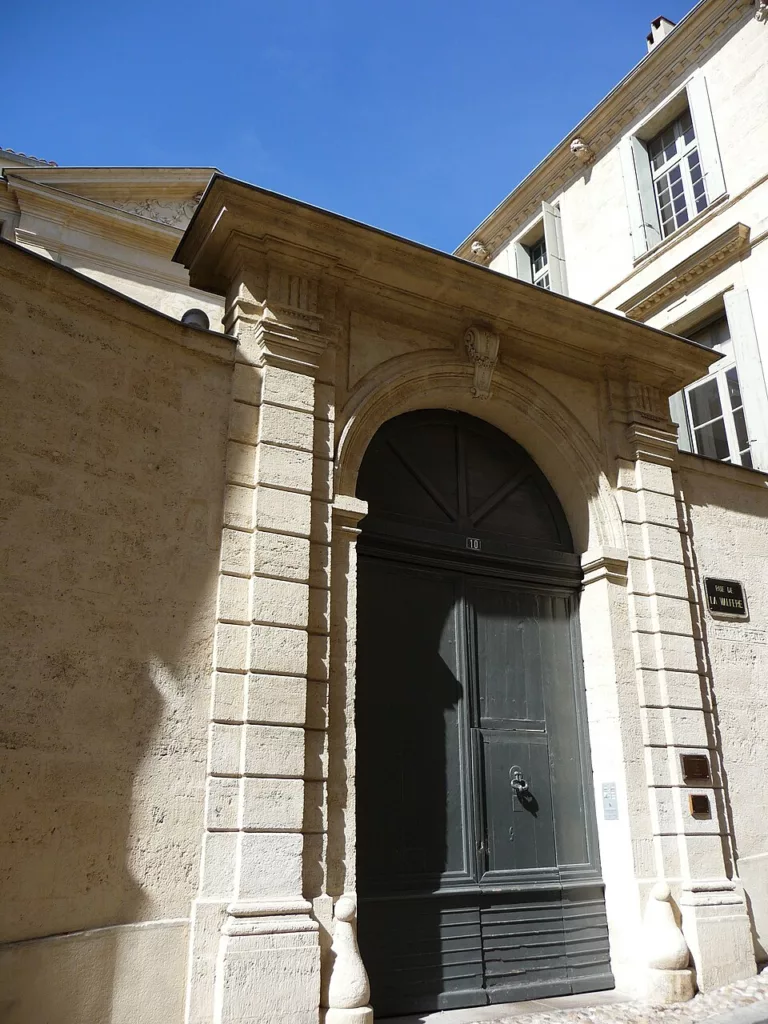
Hôtel de Lunas is a private mansion located at 10 Rue de la Valfère in L’Écusson, Montpellier’s historic center. It was built around 1707 by advisor Henri de Bosc on older buildings dating from about 1550.
In 1737, the building was acquired by Antoine-Jean Viel de Lunas, giving it its current name.
The hotel is U-shaped around a courtyard, with a rear wing overlooking a garden. Its garden-facing façade features elegant architectural details, including a pediment and sculpted corbels.
The building has been state-owned since 1974 and managed by the National Monuments Center; it has been classified as a historic monument since September 27, 1971.
Some rooms (music room, dining room, etc.) are open to visitors during events such as “Les Salons de l’Hôtel de Lunas,” offering a glimpse into the private life of a prominent Montpellier family.
11. Notre-Dame des Tables Church
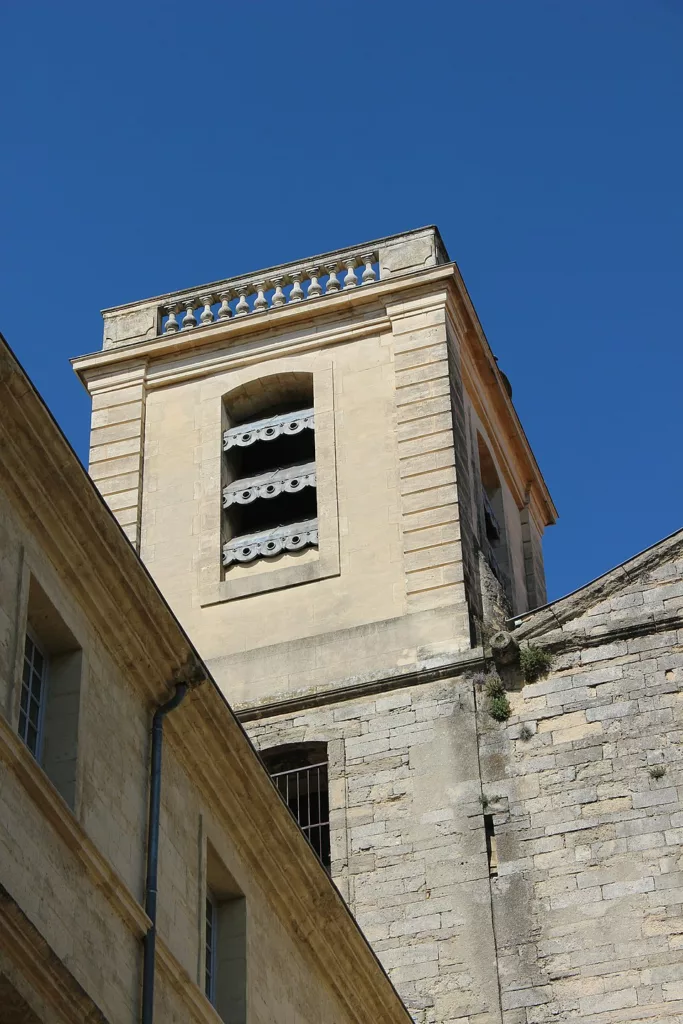
Notre-Dame-des-Tables is a very old church, named after the “tables” of money changers and merchants that once surrounded the building in the medieval period.
The original sanctuary was destroyed during the Wars of Religion. The medieval Romanesque chapel supported by money changers no longer exists, but its crypt remains. The current building was the former chapel of the Jesuit College, built between 1707 and 1748 by architect Jean Giral.
This church, in classical Baroque style, was elevated to the rank of minor basilica by Pope Pius XII in 1939. In the entrance drum, one can see a painted sky (possibly by Jacques Giral, the architect’s brother), restored in 1992.
The basilica is dedicated to the Virgin Mary, highly revered in Montpellier: the Virgin of Notre-Dame des Tables has appeared in the city’s coat of arms since the 12th century.
12. Hôtel Montcalm
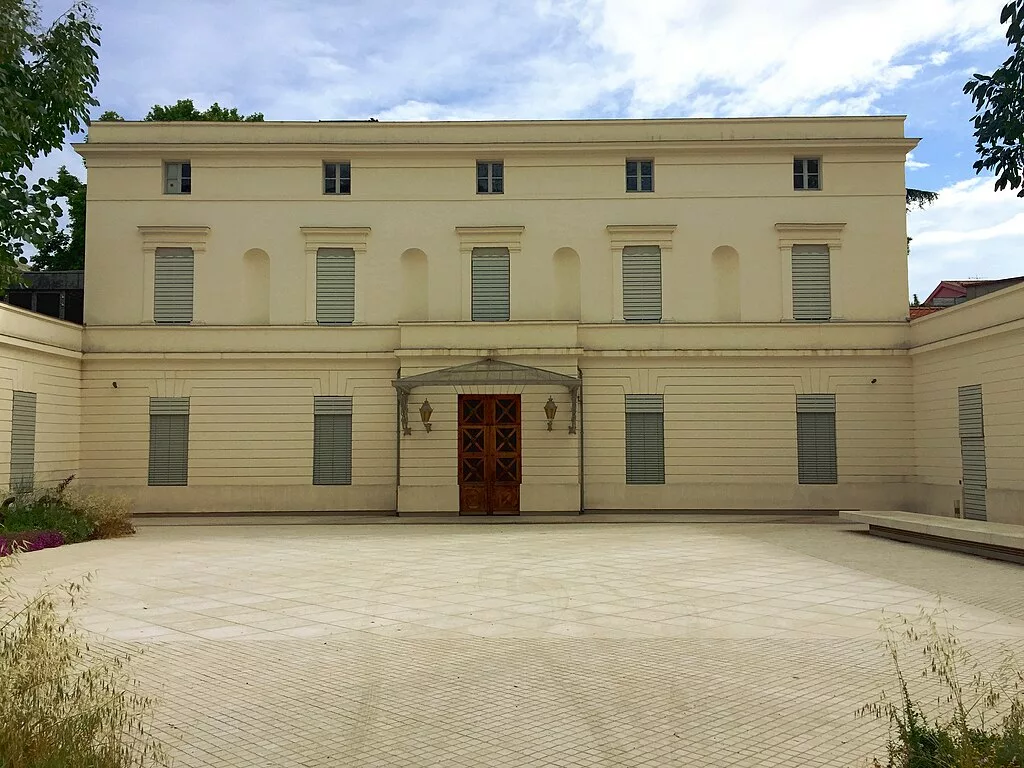
Hôtel Montcalm is a private mansion located at 5 Rue de l’Ancien-Courrier / Rue de la Friperie in Montpellier’s historic center.
It was built in the 16th century, with major renovations in the 17th century (around 1680) to expand the garden-facing gallery and remake the staircase.
In the 19th century, the hotel was linked to the Marquis de Montcalm, descendant of Louis-Joseph de Montcalm: his family lived here before departing for North America.
Since 2019, Hôtel Montcalm houses the MO.CO. Hôtel des Collections, a contemporary art center in Montpellier, with an “Atlas” garden designed by Bertrand Lavier, Gilles Clément, and Coloco.
13. Former Ursulines Convent

The Ursulines Convent in Montpellier was founded in 1641 by architect Jean Bonnassier, in the Rue Sainte-Ursule area. Its original purpose was to host nuns dedicated to educating young girls as well as caring for the sick and needy.
During the French Revolution, the convent was sold as national property and converted into a women’s prison.
The City of Montpellier purchased the convent in 1980, when it was threatened with demolition, to establish the National Choreographic Center Montpellier Danse. Today, it is renamed L’Agora, an international dance hub with studios, performance halls, and rehearsal spaces.
14. Château de l’Engarran
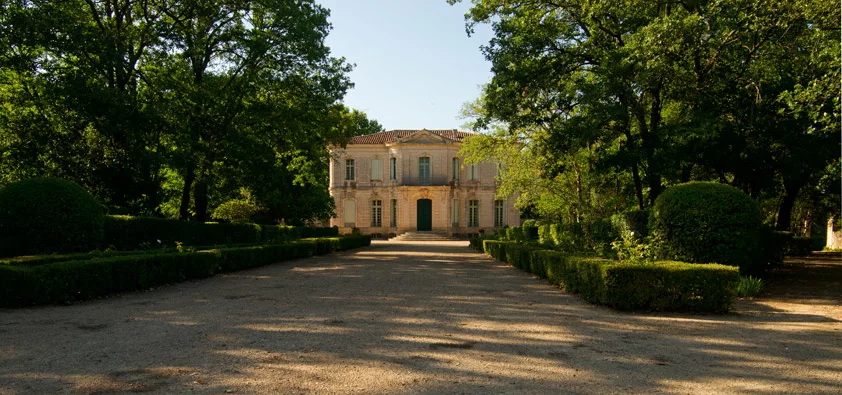
Château de l’Engarran is an 18th-century “Montpellier folly” located in Lavérune, on the road to Juvignac.
It was built around 1750 on the foundations of an older building from 1632. The estate has belonged to the same family for five generations.
The park is landscaped in the French style, with two ponds, statues, and a water feature. The vineyard covers about 60 hectares, producing AOC (Grés de Montpellier, Saint-Georges d’Orques) and IGP Pays d’Oc wines.
Since 1885, an on-site wine museum displays ancient tools and machinery used in viticulture.
The château was used as a filming location in 2024 for the adaptation of The Count of Monte Cristo, where it represented the Morcerf residence.
15. Place de la Canourgue

Place de la Canourgue is the oldest square in Montpellier. The name “Canourgue” comes from the Occitan canorgua, referring to a canonical chapter, as the land once belonged to the canons of Saint-Pierre.
In the 17th century, several private mansions were built around the square, such as Hôtel Richer de Belleval, Hôtel de Cambacérès, and Hôtel du Sarret.
A Unicorn Fountain, an original sculptural work, stands in the center of the square’s garden.
Originally, the square was meant to host a new cathedral, but the project was abandoned, and only the foundations remain visible in certain areas.
Discover the history of this fountain and whom it honors with our route The Must-Sees of Montpellier
16. Montpellier Courthouse
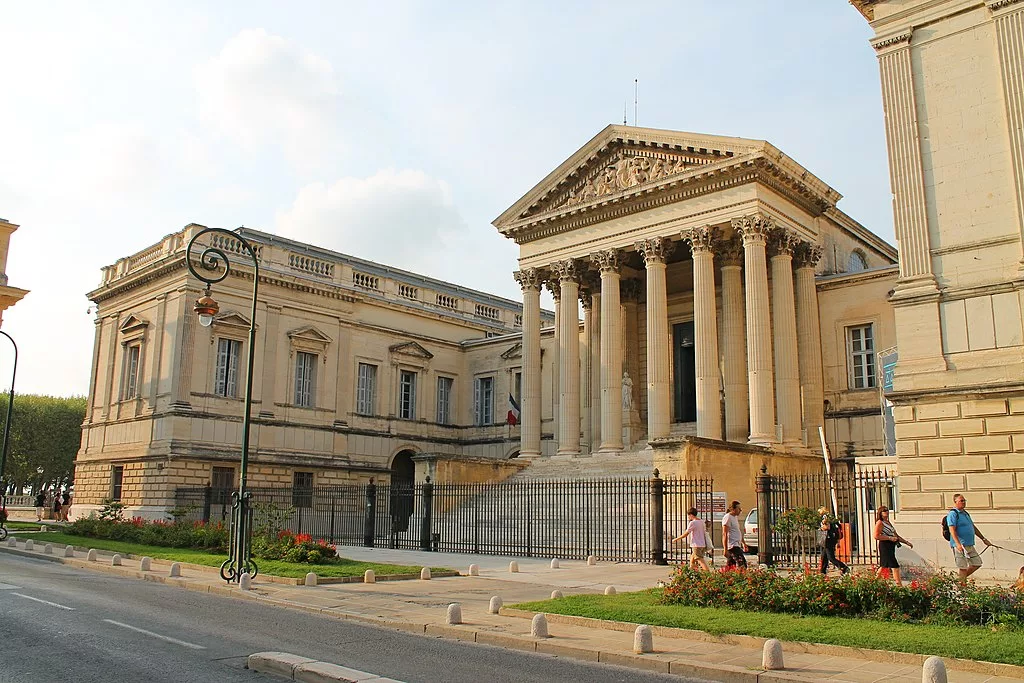
Montpellier Courthouse is located on Rue Foch, in the heart of L’Écusson, the historic center. It currently houses the Court of Appeal and the Assize Court of Montpellier.
The historic building was constructed between 1846 and 1853 based on plans by architect Charles Abric. Its architecture is neoclassical, with Corinthian columns, a sculpted pediment, and a grand staircase, giving it the appearance of a temple.
The courthouse preserves Montpellier’s legal heritage: it notably commemorates Jean-Jacques Régis de Cambacérès, born in Montpellier and father of the Civil Code.
Discover the secrets of the courthouse frescoes in our Montpellier treasure hunt.
17. Saint Clément Aqueduct
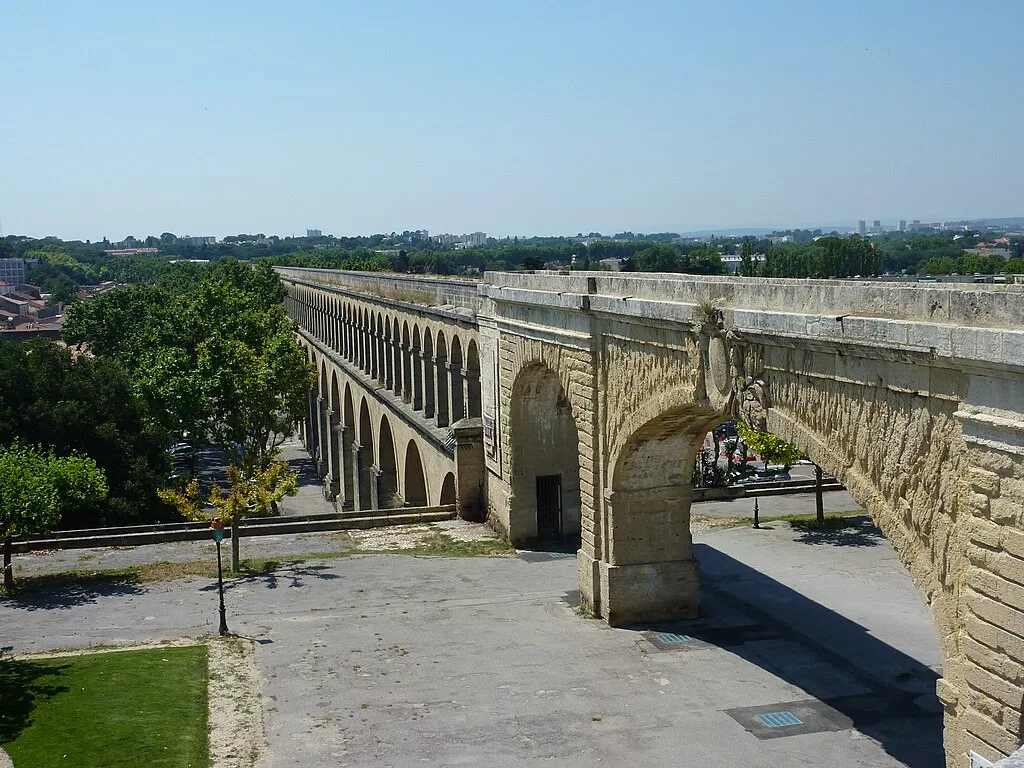
The Saint-Clément Aqueduct, also called the “Arceaux Aqueduct,” is an 18th-century structure built to bring water from the springs of Saint-Clément-de-Rivière to Montpellier.
It was designed by hydraulic engineer Henri Pitot de Launay, with construction beginning in 1751. The aqueduct stretches about 14 kilometers from the springs to the Peyrou water tower in Montpellier.
Its most iconic part, called the “Arceaux,” consists of a double row of arches (53 large arches and 183 smaller ones) inspired by Roman architecture. The aqueduct was inaugurated on December 7, 1765, when water first flowed into the Peyrou basin to the cheers of the people of Montpellier.
The aqueduct no longer carries water since the 1980s, as modern pipelines have taken over its hydraulic role.
Visit this aqueduct with our treasure hunt “The Must-Sees of Montpellier”
18. Les Halles de Laissac
Les Halles Laissac is located on Place Alexandre-Laissac, in the heart of Montpellier’s historic center.
The current covered market was rebuilt and inaugurated in December 2018, replacing previous markets dating from 1880 and 1968.
The new hall has a circular shape (1,111 m²) and includes 24 stalls, arranged around a central mall illuminated by a skylight.
Its architecture is inspired by the Baltard style: a lightweight metal structure with a façade reaching 6–12 meters. The roof is covered with photovoltaic panels (approximately 60 kW), contributing to the energy transition.
Artist Mona Young-Eun Kim, a student at Montpellier Fine Arts School, created artwork on the skylight and windows: a melon motif, a Mediterranean symbol.
Museums & Culture – Montpellier
1. Musée Fabre
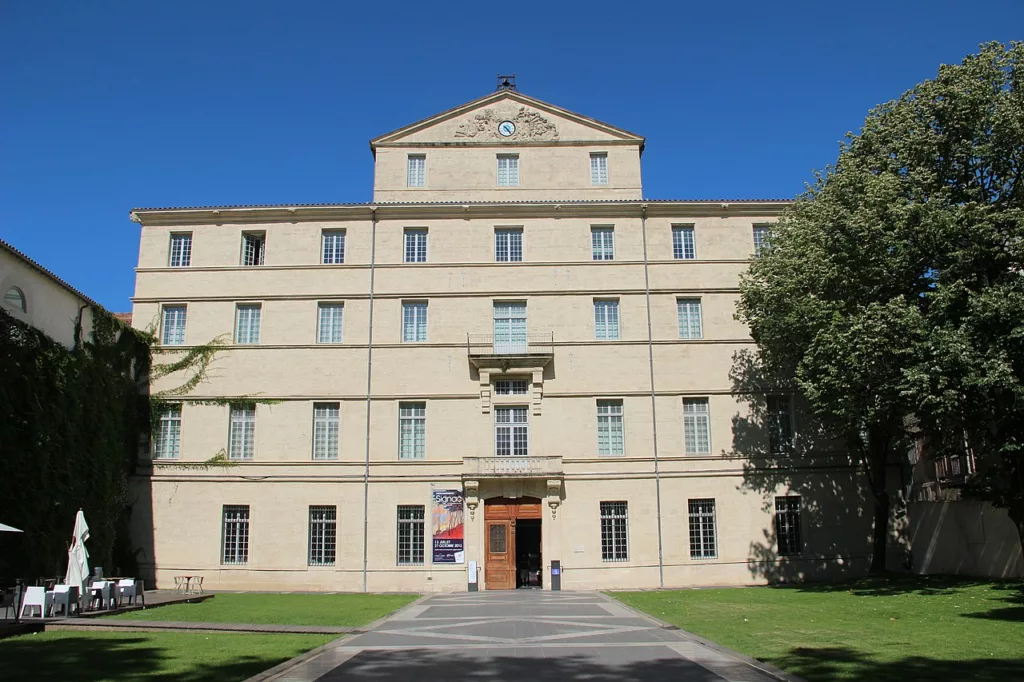
Musée Fabre was founded in 1825 thanks to the donation from the Montpellier painter and collector François‑Xavier Fabre. It is housed in the Hôtel de Massilian, a beautiful 18th-century building located near the Esplanade Charles-de-Gaulle.
After a major restoration from 2003 to 2007, the museum now includes over 9,200 m² of modern galleries, combining space and light. Its permanent collections include around 800 paintings, as well as thousands of drawings, engravings, and sculptures spanning several centuries of European art. Visitors can see masterpieces by Rubens, Poussin, David, Delacroix, Courbet, Monet, Degas, as well as more contemporary works.
2. Pavillon Populaire
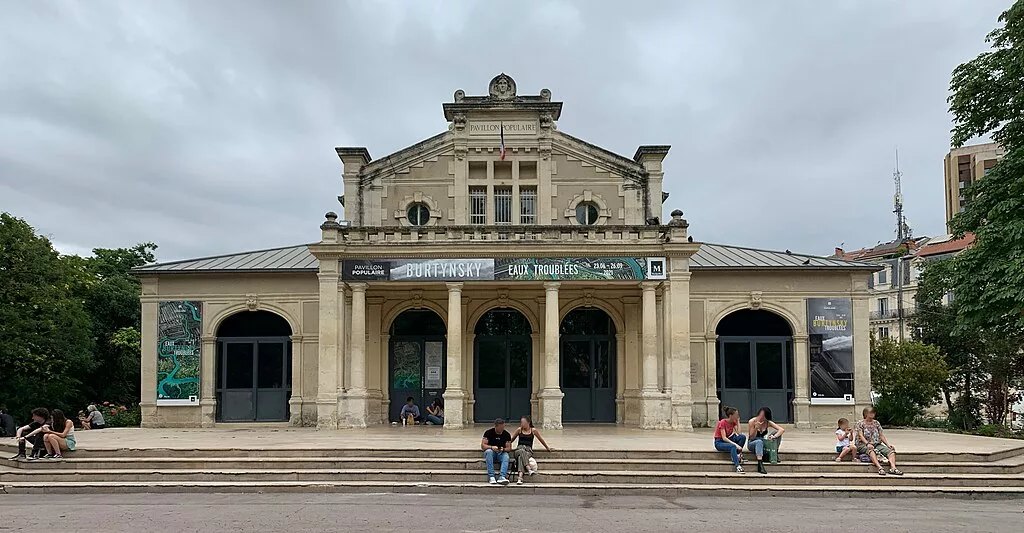
The Pavillon Populaire is a photography and contemporary art exhibition space located on the Esplanade Charles-de-Gaulle, facing the Comédie.
The building was inaugurated in 1897 and initially served as a kiosk for the city’s art exhibitions. It was renovated in the 1990s to become a permanent exhibition venue for photography and contemporary art.
The Pavillon Populaire does not have permanent collections: it offers temporary exhibitions showcasing photography, contemporary art, and visual creation. Each year it hosts internationally renowned photographers as well as emerging talents. (montpellier-tourisme.fr)
3. Anatomy & History of Medicine Museum
The museum is located in the former Faculty of Medicine of Montpellier, one of the oldest in Europe, founded in 1220. It preserves anatomical and medical collections intended for teaching, including skeletons, anatomical preparations, casts, and old medical instruments.
The museum traces the history of medicine in Montpellier, which was a major European center for medical study since the Middle Ages.
It houses rare instruments, such as surgical saws, trepanation tools, and optical or medical physics devices from the 18th and 19th centuries. Some anatomical collections are impressive, including fetuses, preserved organs, and wax models from the 18th century. The museum also displays paintings and portraits of famous Montpellier doctors, as well as ancient medical books.
4. Planet Ocean Montpellier
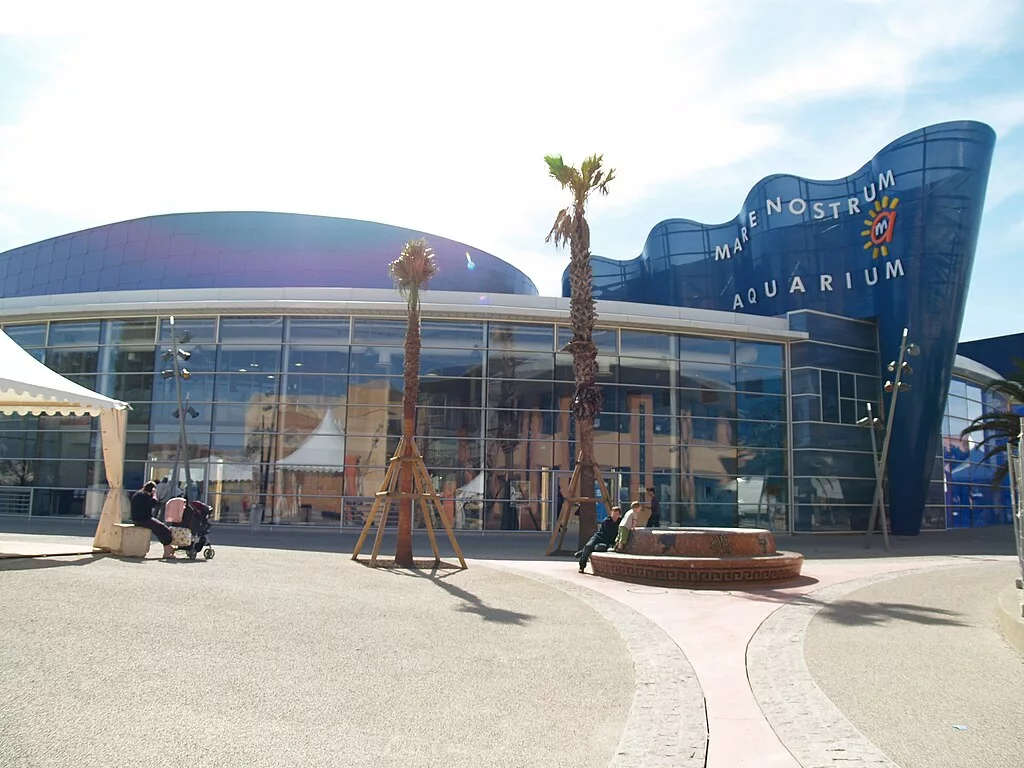
Planet Ocean Montpellier is a complex in the Odysseum district of Montpellier, combining an aquarium and a planetarium. It houses around 300 animal species.
The visit route is organized into 9 stops: aquatic environments (Mediterranean shores, abyss, mangrove…) up to the Universe.
The planetarium dome offers immersive shows, projecting the starry sky, celestial movements, and other astronomical phenomena. There is also a storm simulator at sea aboard a boat, letting visitors feel the effects of marine elements (rain, wind, waves…)
Visitors can observe African penguins in a recreated natural reserve on site.
The complex belongs to the Montpellier Méditerranée Metropolis, and since 2018 the Mare Nostrum aquarium and Galilée planetarium merged to form Planet Ocean Montpellier.
Parks, Gardens & Walks
1. Jardin des Plantes de Montpellier

The Jardin des Plantes de Montpellier is the oldest botanical garden in France, founded in 1593 by Pierre Richer de Belleval, botanist of King Henri IV. Today it belongs to the Faculty of Medicine of Montpellier, serving teaching, research, and the conservation of rare plants.
The garden covers 4 hectares and houses over 2,500 plant species, including very rare or exotic specimens.
It is organized into thematic sections: medicinal plants, exotic trees, tropical greenhouses, local plants, and experimental zones for botanical research. The garden has historic greenhouses from the 19th century, housing unique tropical and subtropical plants. Remarkable trees, like Lebanese cedars and magnolias, reflect the garden’s botanical history and scientific purpose.
The garden is open to the public for free, offering educational walks for visitors of all ages.
2. Montpellier Zoological Park
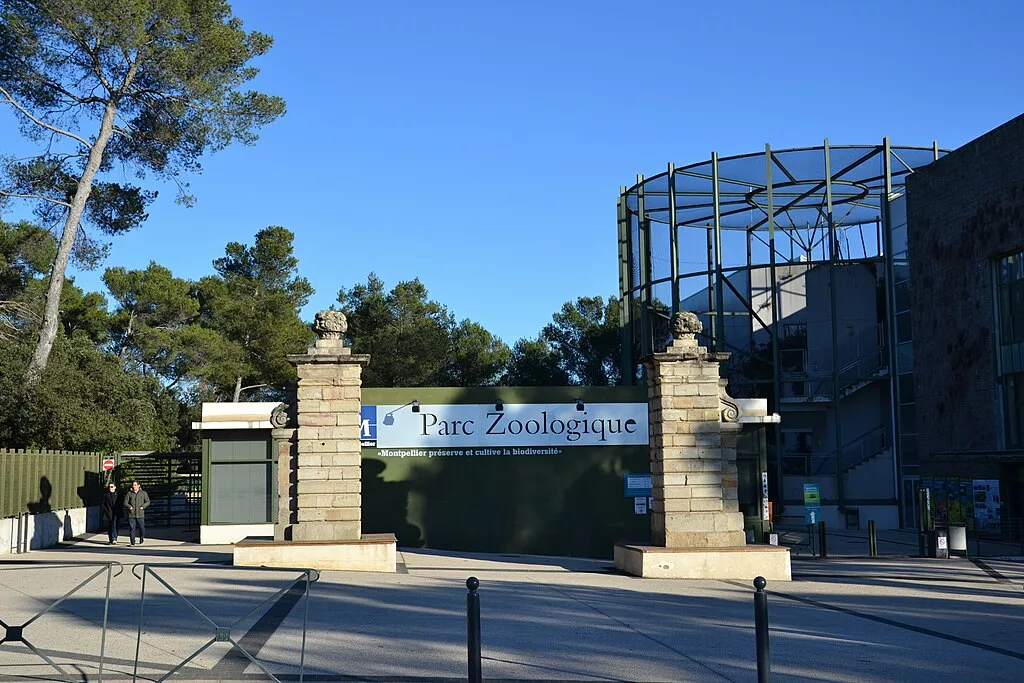
The Montpellier Zoological Park, also known as Zoo de Lunaret, opened in 1964 and covers 80 hectares, of which 60 hectares are open to the public.
It is home to more than 500 animals, representing around 120 species from around the world, in habitats recreated to resemble their natural environments.
The park is free for the public, funded by the City of Montpellier, and dedicated to education and raising awareness about biodiversity.
The park is part of the Domaine de Lunaret, which also includes a pond, an arboretum, and protected natural areas, offering a complete ecological experience.
Thematic trails allow visitors to explore different biotopes, such as the African savannah, tropical forest, and Mediterranean zones.
3. Parc du Peyrou

Parc du Peyrou is a historic public park situated on a hill with panoramic views over Montpellier and its surroundings.
It was created in the 18th century in the French classical style, inspired by the royal gardens of Paris. The park is known for its royal esplanade, a large rectangular square surrounded by statues and bordered by the Saint-Clément aqueduct, also called the “Arc de Triomphe of Montpellier.”
At the center stands the equestrian statue of Louis XIV, a symbol of royal power and the classical era. The park offers a pleasant walk along terraces and avenues lined with plane trees, ideal for pedestrians and joggers. (montpellier.fr)
The Saint-Clément aqueduct, visible from the park, once supplied Montpellier with drinking water and is a remarkable example of 17th-century engineering.
The park also features a water tower and decorative fountains, added over the centuries to beautify the public space.
4. Walk along the Lez
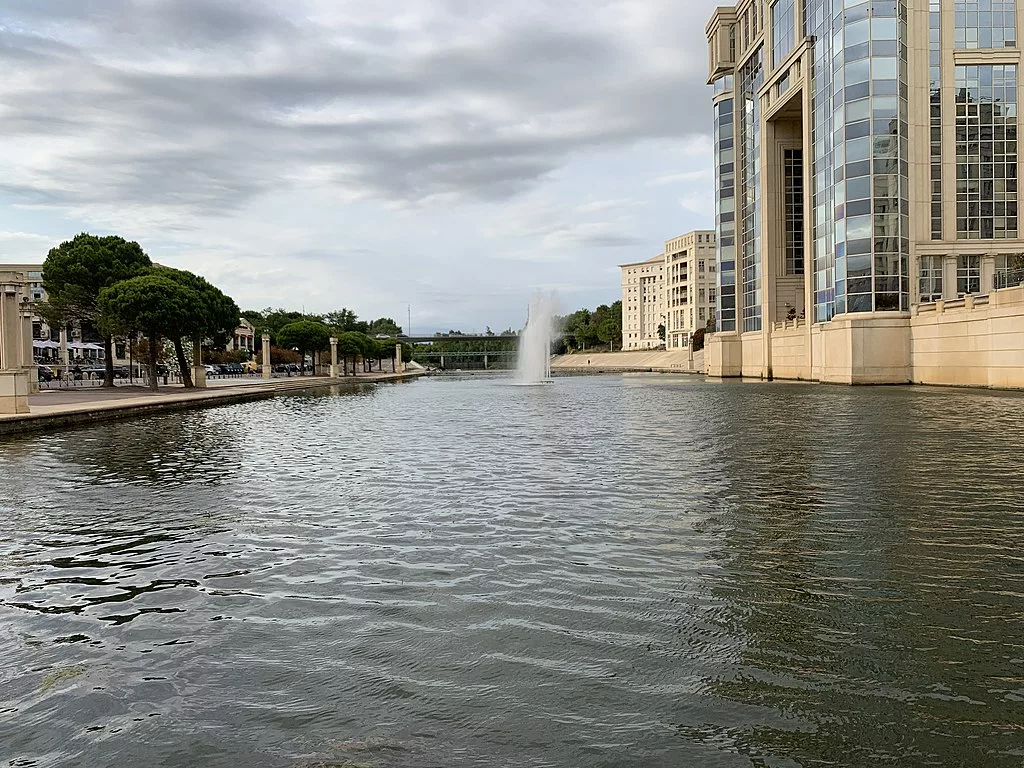
The walk along the Lez, the main river of Montpellier, offers a mix of nature, urbanism, and converted industrial heritage.
The path connects the city center to the outskirts, providing pedestrians and cyclists a green and safe route.
The banks of the Lez have been redeveloped to accommodate relaxation areas, playgrounds, and picnic zones.
The walk passes several historical and architectural sites, including old mills, bridges, and rehabilitated industrial buildings.
Montpellier Gastronomy
🥘 Dishes & Specialties
Tielle sétoise
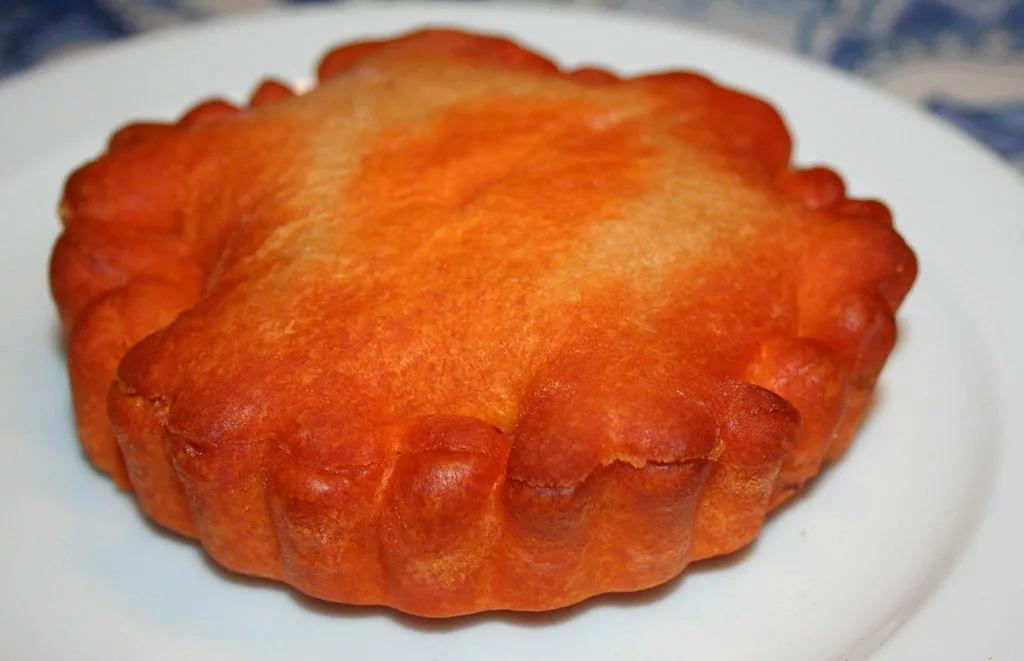
The tielle sétoise is a traditional savory pie from the port city of Sète, in Hérault. It is usually stuffed with octopus or squid, cooked with tomato, onion, garlic, and spices. (setetourisme.fr)
The tielle’s dough is soft and lightly golden, generously holding the filling. This specialty dates back to the 19th century, inherited from Italian immigration from Naples and southern Italy.
Tielle sétoise can be eaten hot or cold, as a starter, main course, or shared at festivals and markets. Each tielle is often homemade and may vary in size, from small individual portions to large family pies.
It symbolizes the culinary identity of Sète, a fishing town with maritime traditions, celebrated during local festivals.
Bourride & Mediterranean Fish
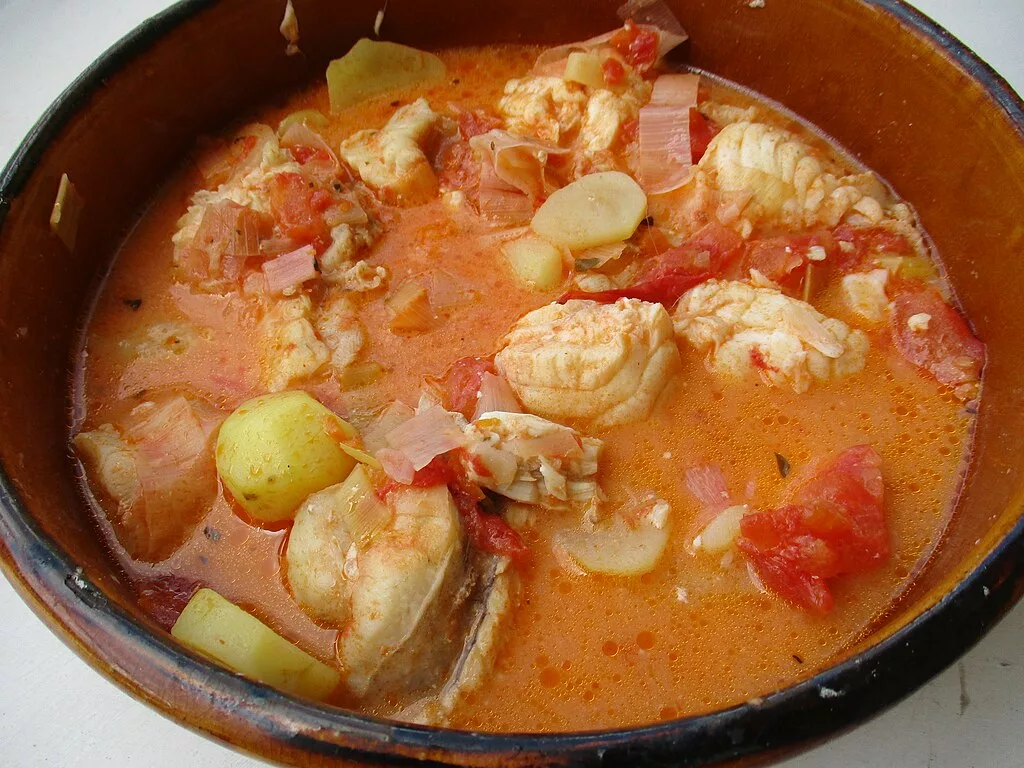
Bourride is a soup or stew of Mediterranean fish, typical of Provence and Languedoc, particularly in the Sète and Marseille regions.
It is usually prepared with white fish like whiting, monkfish, conger, or gurnard. Its signature feature is the aioli sauce, made from garlic, olive oil, and sometimes egg yolk.
Mediterranean vegetables such as carrots, fennel, or potatoes are often added to enrich flavor and consistency. Bourride is generally served hot, accompanied by croutons or garlic-rubbed toasted bread.
It differs from bouillabaisse due to its simpler selection of fish and the presence of aioli in the sauce instead of a complex saffron broth.
Cod Brandade

Brandade de morue is a traditional dish made of salted cod and mashed potatoes, typical of southern France, especially Languedoc and Montpellier.
The cod is desalted and slowly cooked, then mixed with olive oil and sometimes garlic to achieve a creamy, flavorful texture.
This dish was popularized by fishing communities and Mediterranean ports, which preserved salted fish for off-season consumption. Brandade can be baked in the oven, gratinéed with breadcrumbs, or served warm in a creamy dish.
In Montpellier, brandade is often served with raw vegetables, toasted bread, or salad for a complete traditional meal.
Desserts & Sweets
Grisettes
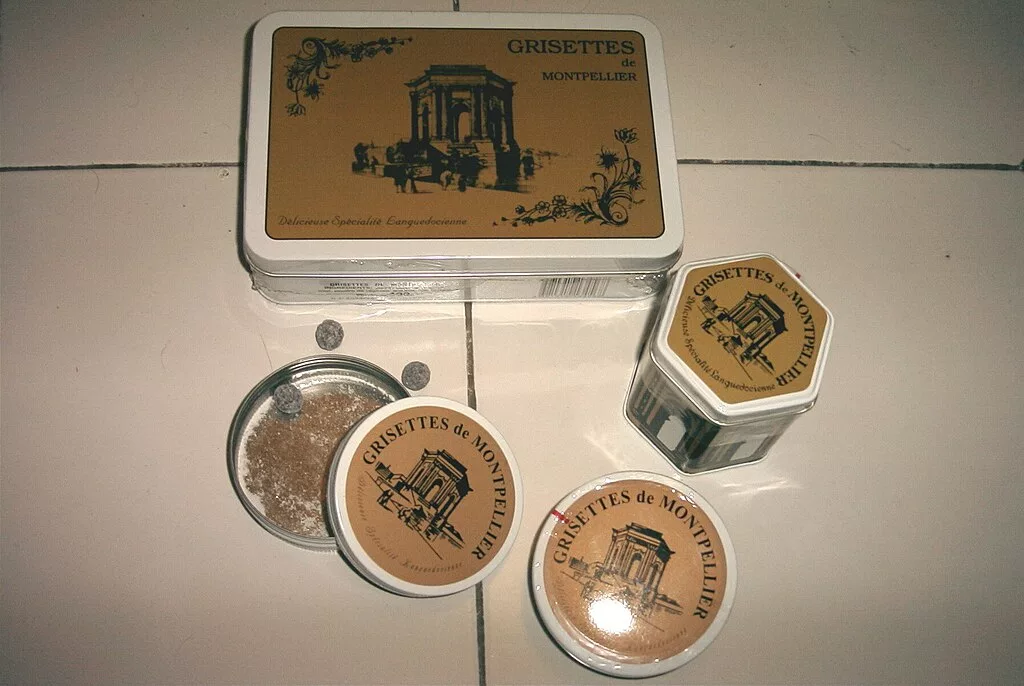
Grisettes are small sugar-coated candies flavored with mint or honey, typical of Montpellier and Languedoc since the 19th century.
They are named after the grisettes, young silk workers of Montpellier, who used to consume them as inexpensive quick sweets.
Traditional grisette recipes use sugar, honey, syrup, and natural flavors such as mint or licorice.
Candied Fruits
Candied fruits are fruits (cherries, lemons, oranges, melons…) cooked in sugar syrup until they achieve a soft and sweet texture.
In Montpellier, candied fruits are often used in regional cakes, tarts, and sweets for traditional celebrations.
Local Wines & Languedoc Appellations
Languedoc, a historic wine region, is one of the largest wine producers in France, with a tradition dating back to Roman times.
Vineyards around Montpellier grow on varied soils, combining limestone, clay, and sandy soils, which influence wine characteristics.
Major appellations in the region include Pic Saint-Loup, Grès de Montpellier, Languedoc AOP, Coteaux du Languedoc, and Saint-Christol.
Red wines dominate local production, often made from Syrah, Grenache, Mourvèdre, and Carignan, but excellent whites and rosés are also produced.
Pic Saint-Loup, north of Montpellier, is known for its powerful, fruity reds, highly appreciated by wine connoisseurs.
Major Events
1. Montpellier Dance Festival
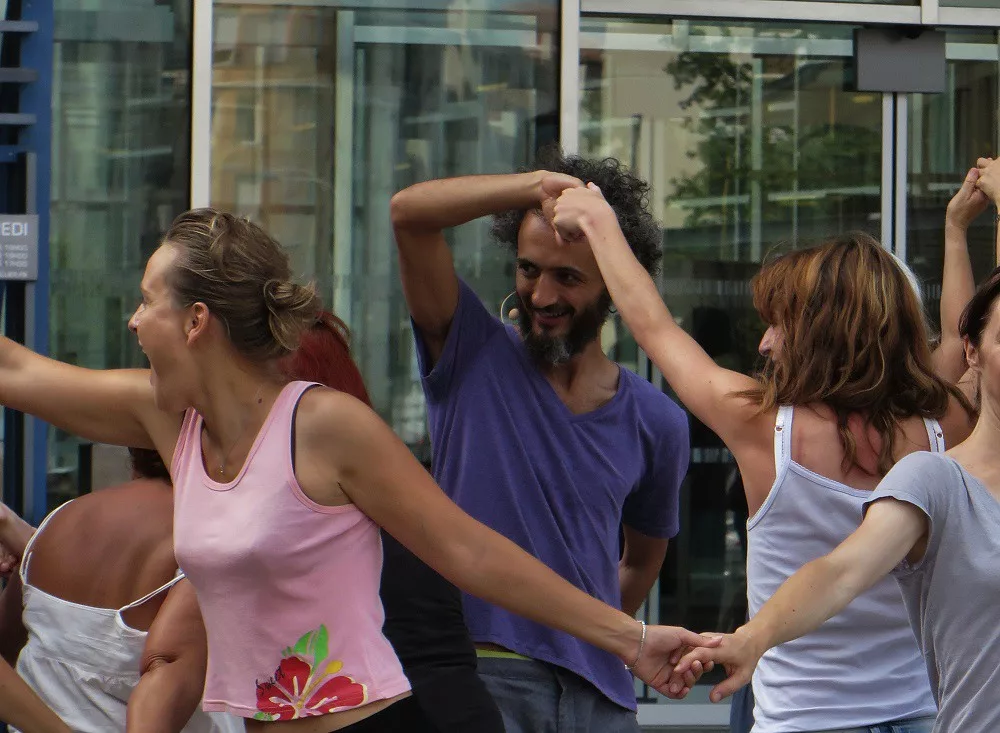
The Montpellier Dance Festival is an international contemporary dance event, held annually in Montpellier since 1985.
It is coordinated by the Centre Chorégraphique National Montpellier Méditerranée Danse (CCN), led by internationally renowned choreographers. The festival takes place mainly in June and July, offering a rich program combining contemporary creations and reimagined classical performances.
Each year, it welcomes French and international companies, allowing the public to discover a variety of innovative styles. Performances are held in several iconic venues in Montpellier, such as the Opéra Comédie, Pavillon Populaire, and the CCN itself.
2. Comédie du Livre

The Comédie du Livre is an annual literary festival held every May in Montpellier, at the heart of Esplanade Charles-de-Gaulle, also called “Place de la Comédie”. It was created in 1989 and has become one of the largest book and author festivals in France.
The event brings together over 300 authors from France and abroad for meetings, conferences, and book signings. The festival highlights contemporary literature, comics, essays, poetry, and children’s books.
Visitors can attend roundtables, public readings, and workshops, encouraging interaction between authors and readers.
3. Feria de Montpellier
The Feria de Montpellier is an annual festive event celebrating bullfighting culture and Spanish-Mediterranean traditions. It takes place every spring and/or summer, mainly at Place de la Comédie and the city’s arenas.
The feria combines bullfights, equestrian shows, concerts, dances, and popular activities, offering a rich program for all audiences. It attracts thousands of visitors each year, locals and tourists alike, to enjoy its festive and convivial atmosphere.
The Montpellier arenas host bullfights and novice bullfights, featuring French and Spanish toreros. Alongside the bullfighting events, street performances, musical bands, and costume parades animate the city. The Feria de Montpellier is also an opportunity to taste local and Mediterranean gastronomy, with tapas, wines, and regional products. (montpellier-tourisme.fr)
Excursions / Day Trips Around Montpellier
1. Palavas-les-Flots
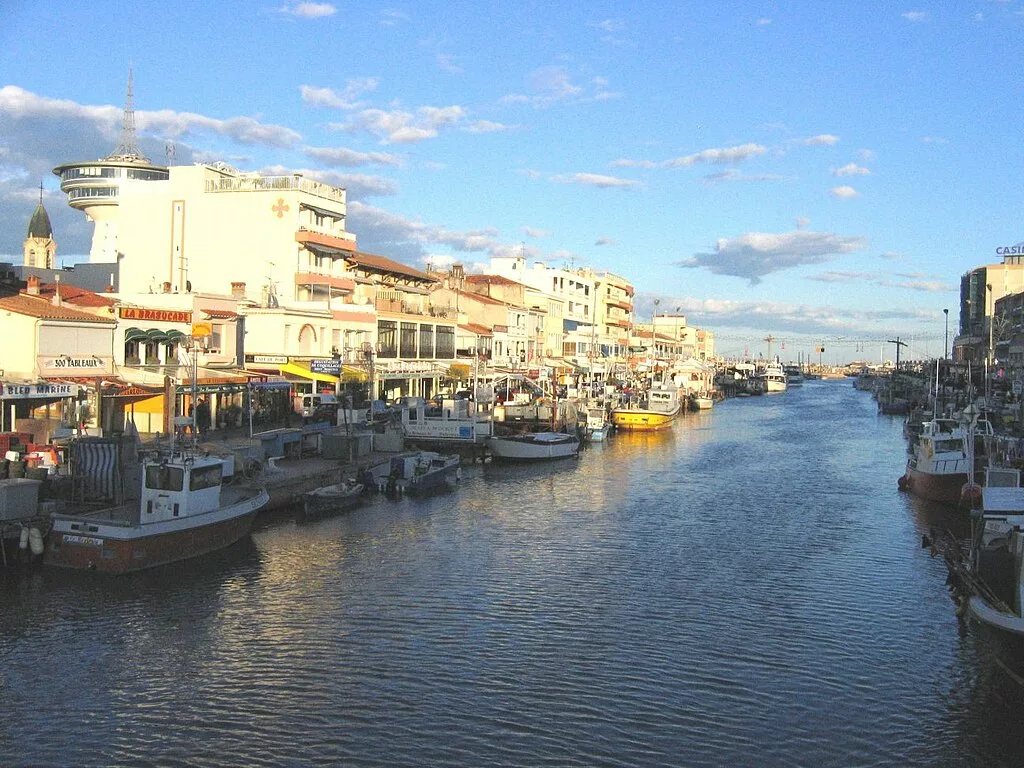
Palavas-les-Flots is a seaside resort located about 10 km south of Montpellier on the Mediterranean coast. The trip from Montpellier can be made by car, bus, or bike, offering a pleasant ride along the Petite Camargue and coastal lagoons.
Palavas is famous for its lively seafront, sandy beaches, and seafood restaurants. The Rhône-Sète Canal passes through the town, allowing visitors to explore Palavas by boat trips or walks along the water.
The Palavas Lighthouse and the sculpture La Crique are iconic spots for photos and strolls. Palavas has been an inspiration for many artists, including painter Georges Braque.
2. Saint-Guilhem-le-Désert

Saint-Guilhem-le-Désert is a medieval village ranked among the Most Beautiful Villages of France, located about 35 km northwest of Montpellier. The trip can be made by car or bus via the regional park of Haut-Languedoc and the Hérault gorges.
The village is famous for its Gellone Abbey, founded in the 9th century by Saint Guilhem, a UNESCO World Heritage Site.
Saint-Guilhem-le-Désert is an important stop on the Camino de Santiago, attracting pilgrims and hikers. Visitors can stroll through its narrow cobbled streets, lined with medieval stone houses and local artisan workshops.
The Hérault Valley and Hérault gorges offer spectacular scenery and hiking trails for nature and photography enthusiasts. Saint-Guilhem-le-Désert is also renowned for its local gastronomy, including olive oil, Hérault wines, and artisanal products.
3. Pic Saint-Loup
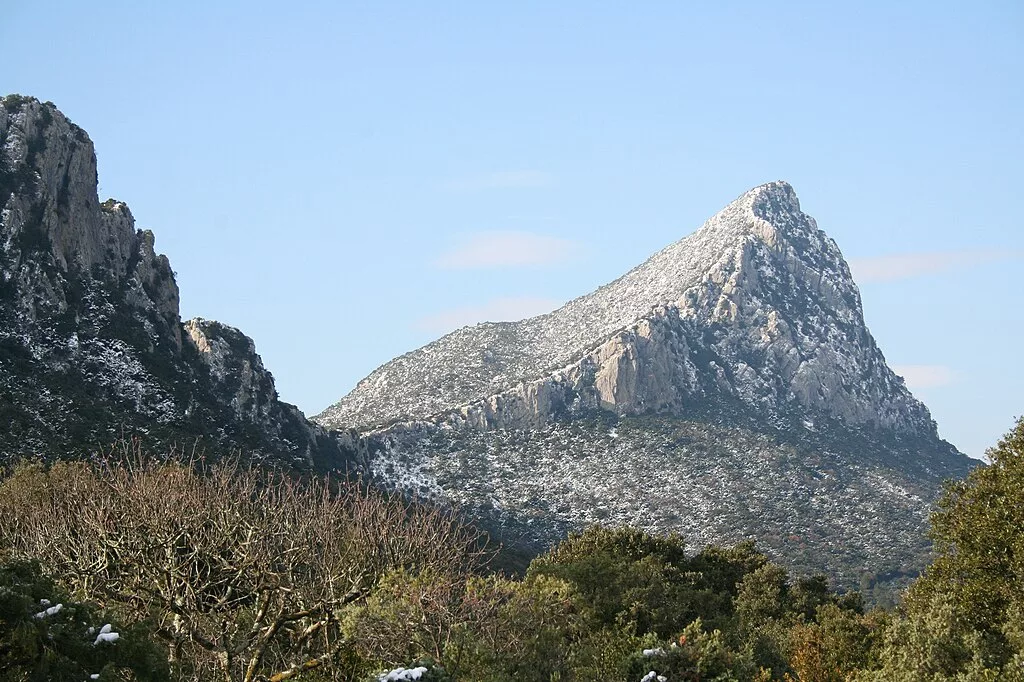
The Pic Saint-Loup is an iconic peak of the Languedoc region, located about 20 km north of Montpellier, rising to 658 meters above sea level. The trip from Montpellier can be made by car or on foot, giving access to trails leading to the summit or nearby vineyards.
The site is famous for its panoramic landscapes, offering spectacular views over the garrigue, vineyards, and sometimes the Mediterranean on clear days. (Pic Saint-Loup is also at the heart of an AOC wine appellation renowned for its powerful and aromatic red wines.)
Hikers can explore several loop trails, suitable for different levels, from family walks to more challenging climbs.
4. Abbaye de Valmagne
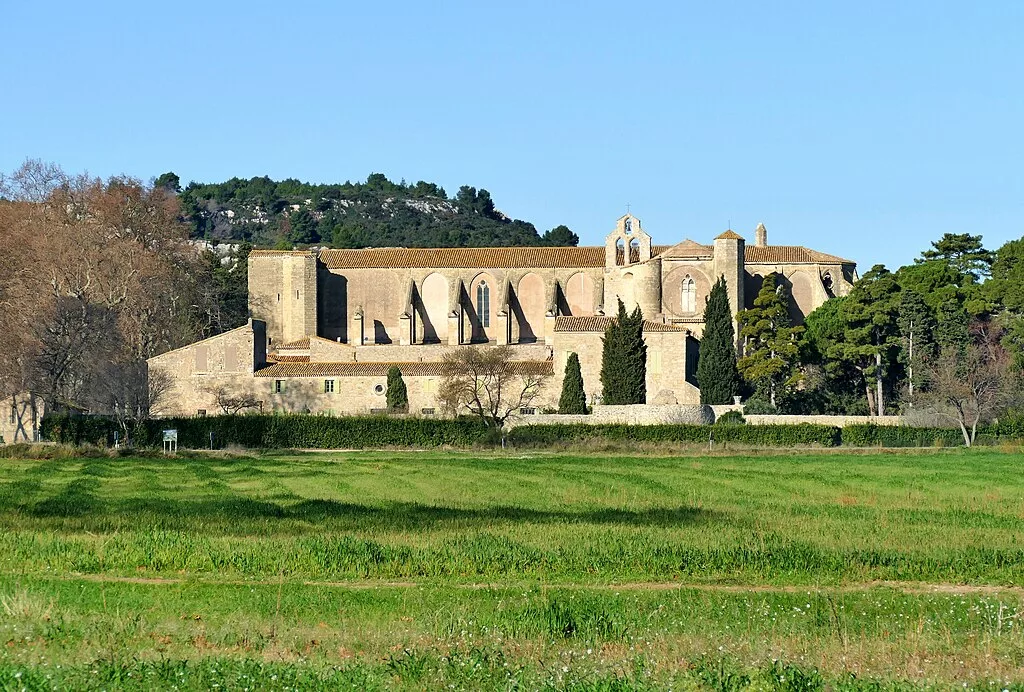
The Valmagne Abbey, founded in 1139, is located in the commune of Villeveyrac, about 45 minutes by car from Montpellier. Originally Benedictine, it became Cistercian in the mid-12th century, joining the Cîteaux order in 1159.
Nicknamed the “Cathedral of the Vines”, the abbey has an impressive Gothic church 83 meters long and 24.5 meters high. After the French Revolution, the abbey church was transformed into a wine cellar, with gigantic Russian oak vats still visible today.
The abbey estate includes a millenary vineyard covering about 35 hectares cultivated organically.
During your visit, you can explore the cloister, the chapter house, the parlour, and discover a typical Cistercian abbey “lavabo” fountain.
5. Sète and the Thau Lagoon
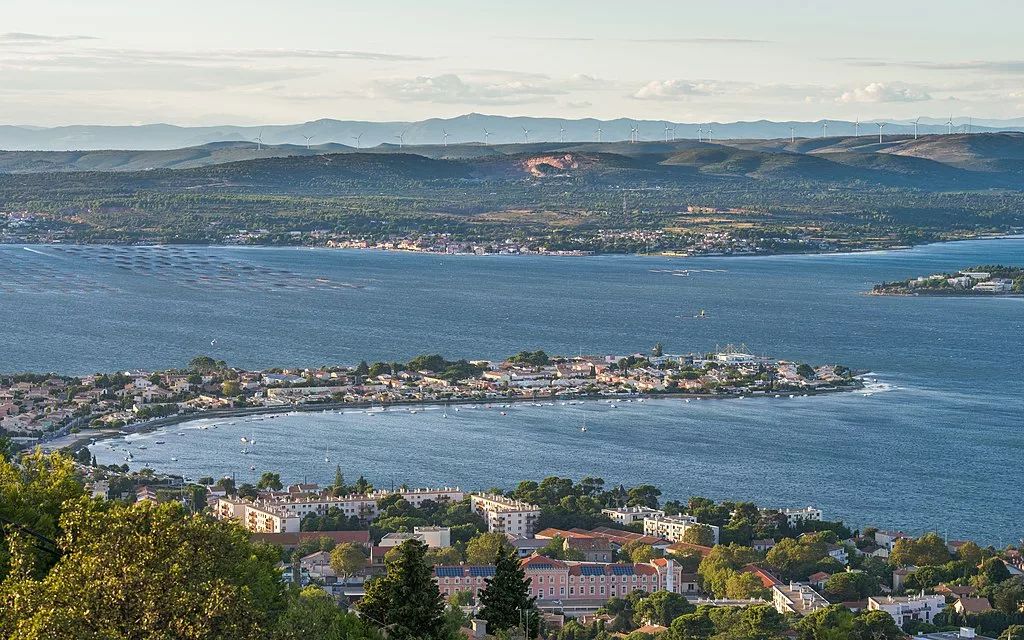
The Thau Lagoon, or Étang de Thau, is the largest lagoon in Occitanie, covering about 7,012 hectares. It has an average depth of 4 m but can reach up to 30 m in the navigation channel.
On a day trip from Montpellier, you can visit Sète — often called the Venice of Languedoc — with its canals and typical neighborhoods. The commercial port of Sète has historical significance: it was developed to serve as an outlet for the Canal du Midi under the reign of Louis XIV.
The Thau Lagoon is home to a rich fauna: birds such as herons and flamingos, and shellfish (oysters, mussels) highly prized. A boat trip allows visitors to sail above the oyster farms and stop at a local oyster farm for an authentic tasting. The Sète metropolitan area, Sète Agglopôle Méditerranée, which includes the Thau Lagoon, has 14 municipalities and over 125,000 inhabitants.
For food lovers, it is possible to combine the visit to Sète with a tasting of oysters and local wines at a vineyard by the lagoon.
Conclusion
Visiting Montpellier allows you to discover a city where historical heritage, contemporary culture, and Mediterranean life harmoniously intertwine.
From the medieval center of Écusson to modern neighborhoods like Antigone, through parks, gardens, and walks along the Lez, Montpellier offers a variety of experiences for all tastes. Its museums and festivals, such as the Montpellier Dance Festival or Comédie du Livre, enrich the cultural life throughout the year.
Local gastronomy, with traditional dishes, wines, and seafood, completes the experience in a flavorful way.
Excursions to Palavas-les-Flots, Saint-Guilhem-le-Désert, Pic Saint-Loup, Valmagne Abbey, or Sète allow exploration of the surrounding areas and nature.
Visiting Montpellier is an unforgettable experience combining history, culture, nature, and Mediterranean gastronomy.
Explore Montpellier differently with our treasure hunt «The Must-Sees of Montpellier»