Visiting Nantes: 30 must-see and must-do experiences
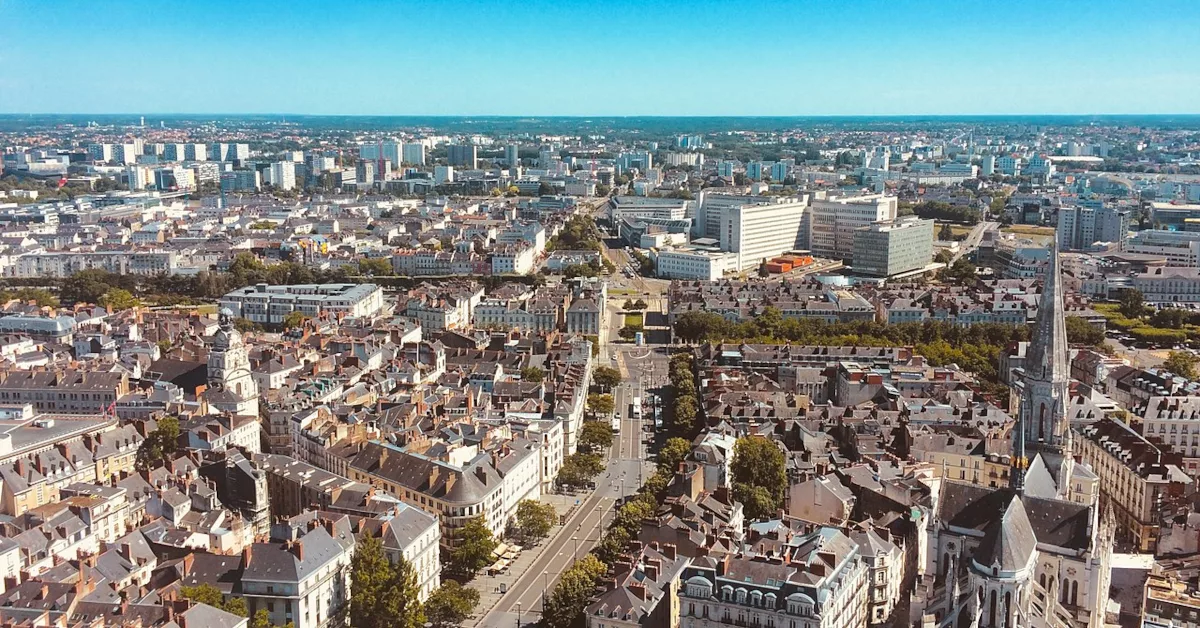
Visiting Nantes means discovering a dynamic city rich in history, located on the banks of the Loire. The capital of the Pays de la Loire region captivates with its medieval heritage, iconic monuments, and picturesque neighborhoods.
Between the Château des Ducs de Bretagne, the Saint-Pierre-et-Saint-Paul Cathedral, and the Bouffay district, Nantes offers a journey through time.
The city is also an important cultural center with its museums, Les Machines de l’île, and Le Lieu Unique. Its parks, gardens, and walks along the Loire allow visitors to enjoy green spaces right in the city.
This comprehensive guide will help you plan your stay and fully enjoy all the treasures of Nantes.
Monuments & Historical Heritage – Nantes
1. Château des Ducs de Bretagne

The Château des Ducs de Bretagne is a vast castle located in Nantes. It was the residence of the Dukes of Brittany between the 13th and 16th centuries.
The current construction of the castle dates from a project launched in 1466 by Duke François II, on the old foundations of the 13th-century castle.
After the union of Brittany with France in 1532, the castle became a royal property. Classified as a “historical monument” since 1840, it now houses the Nantes History Museum.
Over the centuries, the castle has successively served as a barracks, military arsenal, and then a prison.
The castle was extensively restored in the 1990s and 2000s; it reopened in 2007 after fifteen years of work.
2. Saint-Pierre-et-Saint-Paul Cathedral
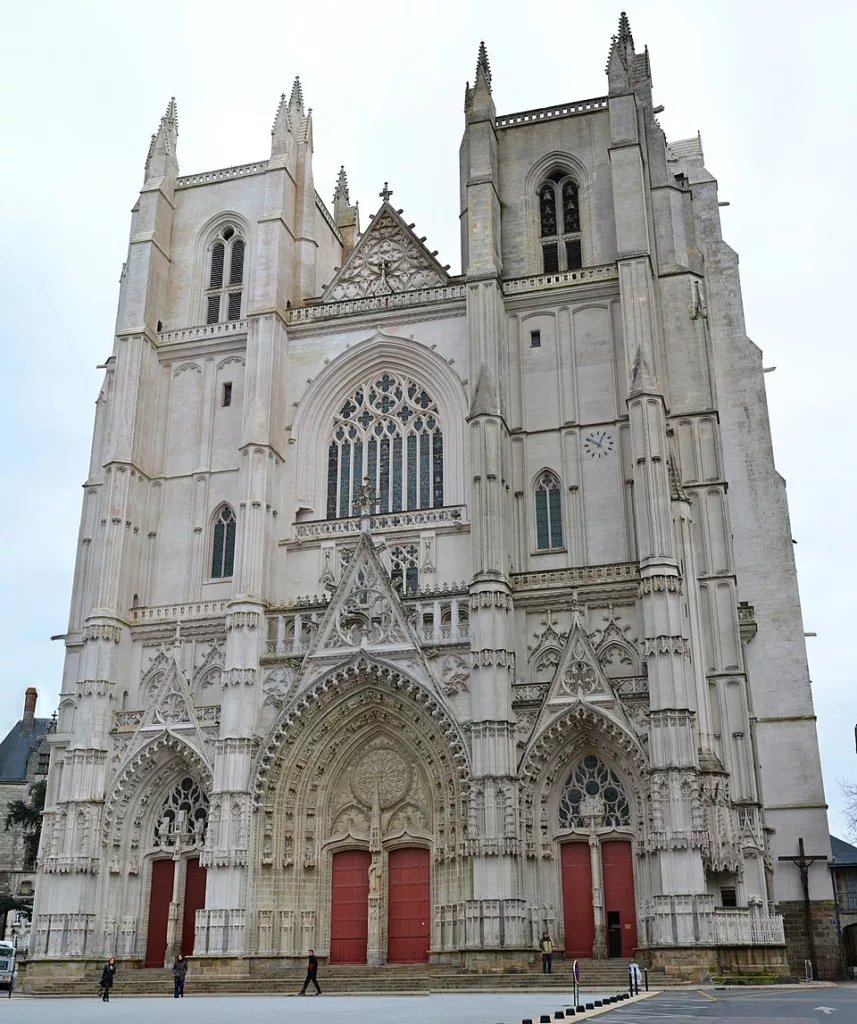
The construction of Saint-Pierre-et-Saint-Paul Cathedral in Nantes began in 1434, on the site of a former Romanesque cathedral. The project was very long: it lasted 457 years until its completion in 1891.
The architectural style is mainly late Gothic (or flamboyant), with Romanesque elements inherited from the previous building. The facade is dominated by two square towers 63 meters high.
The interior of the cathedral is distinguished by the whiteness of the stone, which creates a very bright atmosphere. Inside the cathedral are the tombs of François II, Duke of Brittany, and his wife Marguerite de Foix, created by Michel Colombe.
The building has been severely damaged several times: bombings in 1944, fire in 1972 (which destroyed the roof structure), and another fire in July 2020.
3. Sainte-Croix Church

Sainte-Croix Church in Nantes is located in the historic Bouffay district. Its construction began in 1669, to rebuild a previous church that had become too small. It was rebuilt between 1669 and 1685; the nave is in flamboyant Gothic style.
In 1860, architect Henri-Théodore Driollet added a belfry above the church facade, taken from the old bell tower of the “Tour du Bouffay.” This belfry houses a historic bell, named “La Bouffay,” cast in 1663.
The church facade combines a classical style (with columns and a pediment) with Baroque elements, particularly on the upper levels.
4. Passage Pommeraye
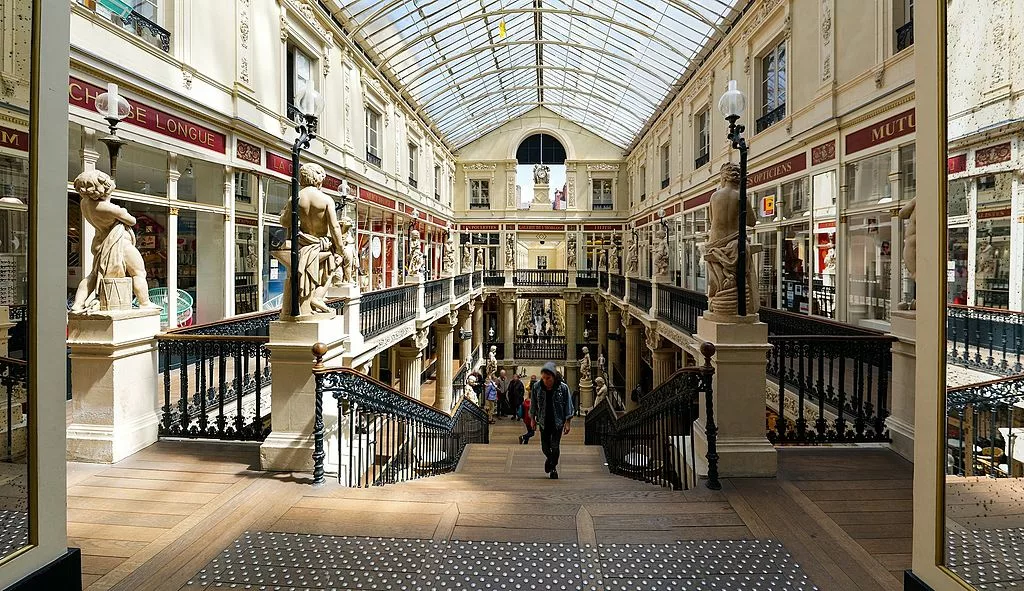
Passage Pommeraye is a covered shopping arcade located in the heart of Nantes, between Rue Santeuil and Rue de la Fosse. Its construction began at the end of 1840 and was completed on July 4, 1843, under the initiative of notary Louis Pommeraye.
The passage is organized over three levels, with galleries served by a central monumental staircase, illuminated by a skylight. Its richly decorated architecture mixes neoclassicism and eclecticism, with allegorical statues representing industry, arts, agriculture, sciences, etc.
The developer Louis Pommeraye went bankrupt during the 1846-1847 crisis, and he died ruined in 1850, while his passage prospered.
5. Nantes City Hall
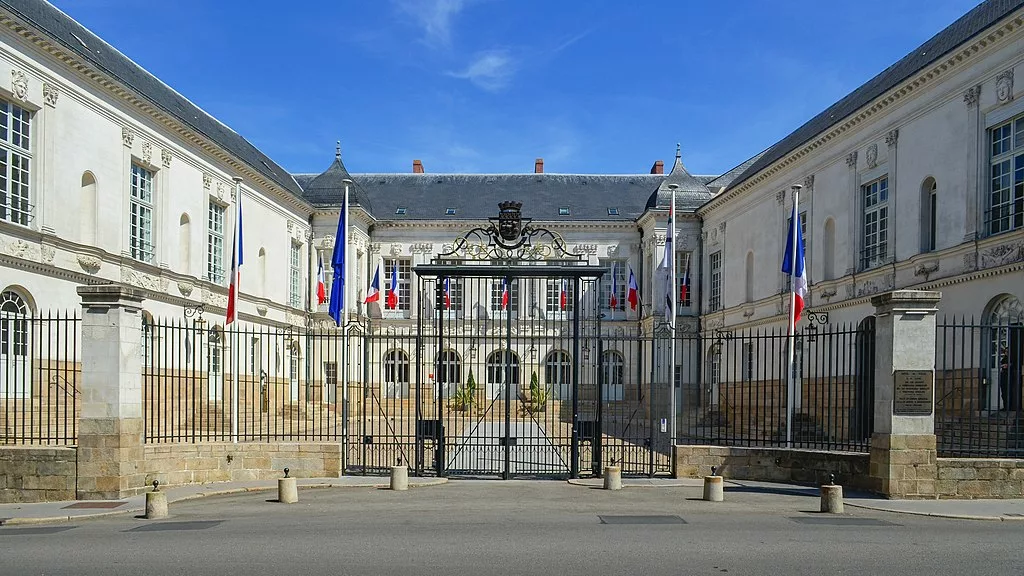
Nantes City Hall is a historic building located on Rue de l’Hôtel-de-Ville, in the heart of the city. The core of the building is the former Derval manor, acquired by the city in 1578 to serve as the city hall.
The Nantes City Hall is in neoclassical style for its current facade.
The Nantes City Hall has expanded progressively: it now includes buildings of very different ages and styles, notably the Hôtel de Monti and the Hôtel de Rosmadec acquired in the 20th century.
6. Tour LU / Le Lieu Unique
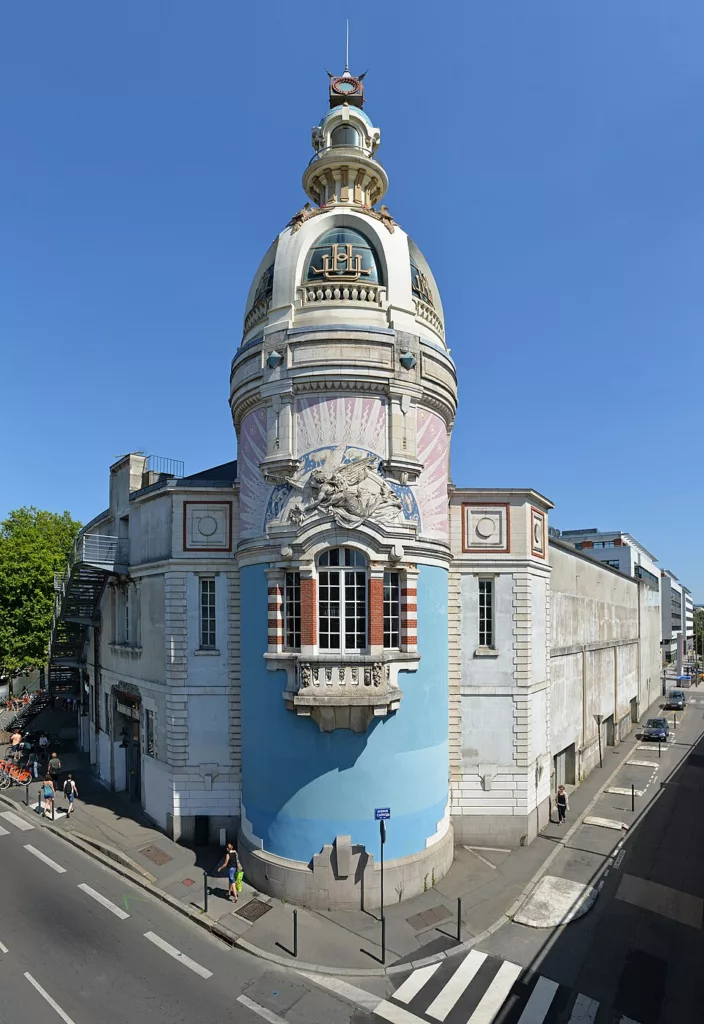
The Lieu Unique is a national center for contemporary culture, housed in the former Lefèvre-Utile (LU) biscuit factory in Nantes. The LU factory was founded by the Lefèvre-Utile family, famous for their petit-beurre biscuits, and production took place there from 1895 to 1985.
The LU Tower, the symbol of the site, was built in 1909 originally as an advertising totem for the LU biscuit brand. The tower is approximately 35 meters high, topped by a stylized biscuit box and zodiac sculptures. When the factory closed, one of the two original towers was destroyed, and the remaining tower was faithfully restored in 1998.
The conversion of the site into a cultural venue was entrusted to architect Patrick Bouchain, giving new life to the old factory. Le Lieu Unique officially opened on January 1, 2000, marking the rebirth of the site as an artistic space.
Visiting the LU Tower offers an archival tour (photos, videos, interviews) tracing over 20 years of programming at Le Lieu Unique.
7. Saint-Nicolas Basilica
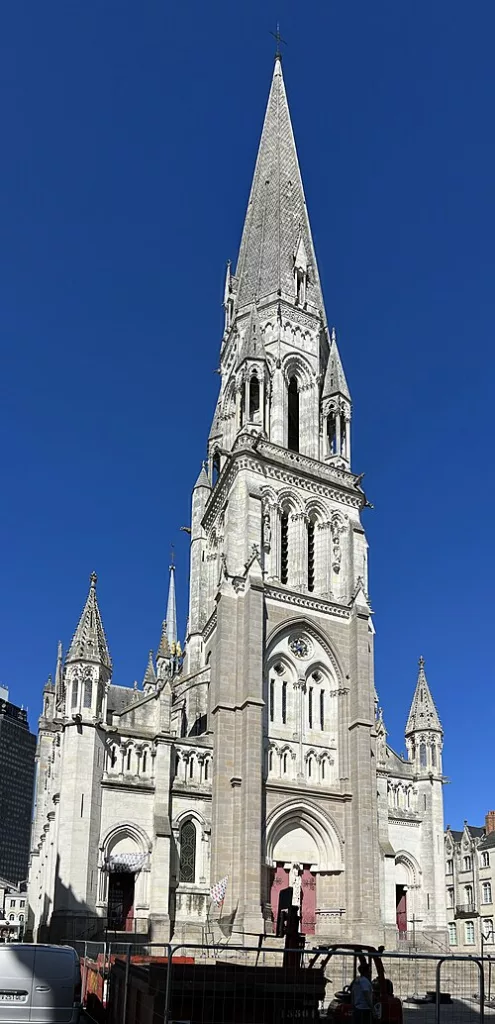
Saint-Nicolas Basilica is a Catholic church in neo-Gothic style, located in the city center of Nantes. Its construction took place between 1844 and 1869, under the guidance of Abbé Félix Fournier and according to the plans of architect Jean-Baptiste-Antoine Lassus.
On the spire, one can observe eight musician angels (in lead) playing small trumpets; these are replicas, as the originals had disappeared before being recovered.
8. Notre-Dame-de-Bon-Port Church
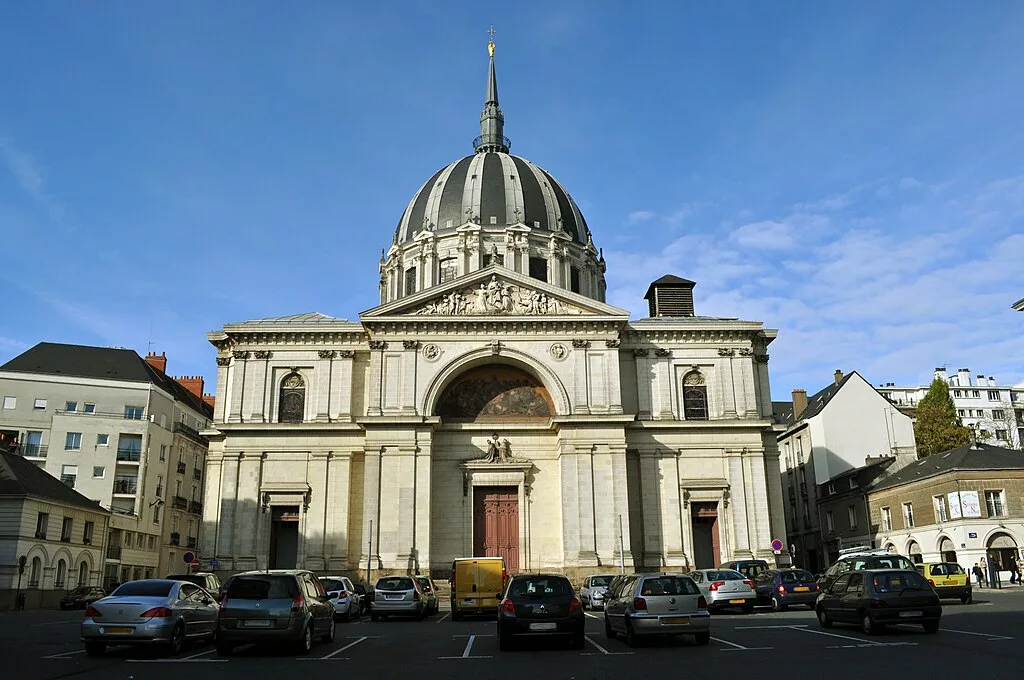
Notre-Dame-de-Bon-Port Church, also locally known as “Saint-Louis Church,” was built between 1846 and 1858 by architects Saint-Félix Seheult and Joseph-Fleury Chenantais.
The pediment depicts the Virgin Mary surrounded by angels: one blesses departing sailors, while the other welcomes sailors returning safely.
Inside, the pendentives under the dome are decorated with paintings by Alphonse Le Hénaff, including several scenes recalling Louis IX.
9. Louis XVI Column
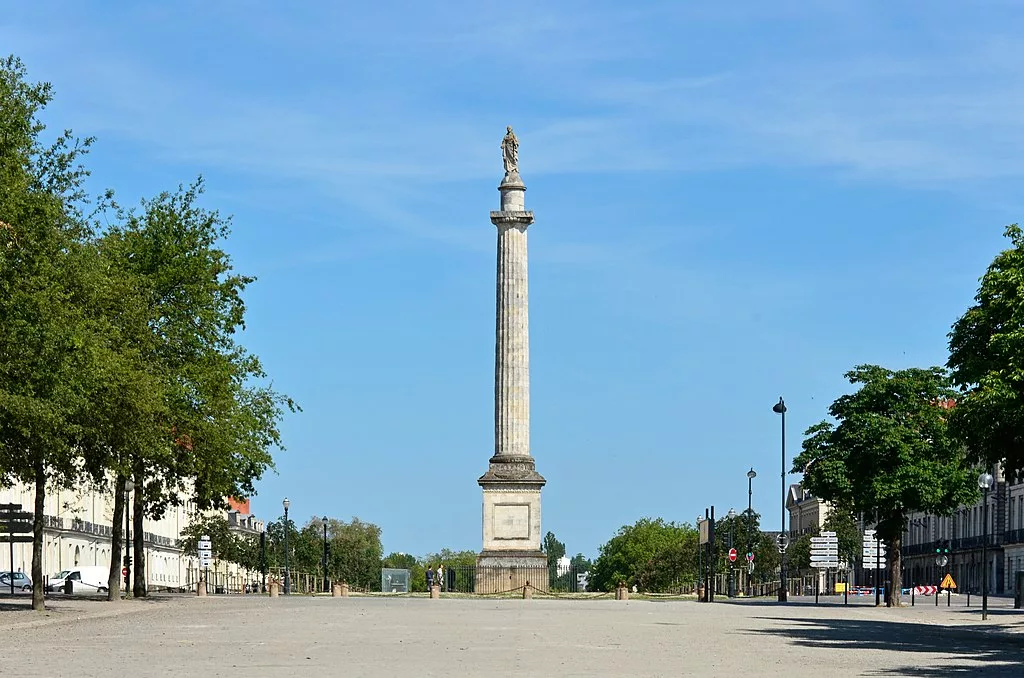
The Louis XVI Column is located at Place Maréchal-Foch, in downtown Nantes (formerly Place d’Armes, then Place Louis XVI). The initial project dates back to 1788, led by architect Mathurin Crucy and several colleagues, to honor the king.
Originally, this column was to be called the “Column of Liberty” in 1790, symbolizing the Nation, the Law, and the King. The statue of King Louis XVI that crowns the column was sculpted by Dominique Molknecht and installed on August 14, 1823.
10. Graslin Theater
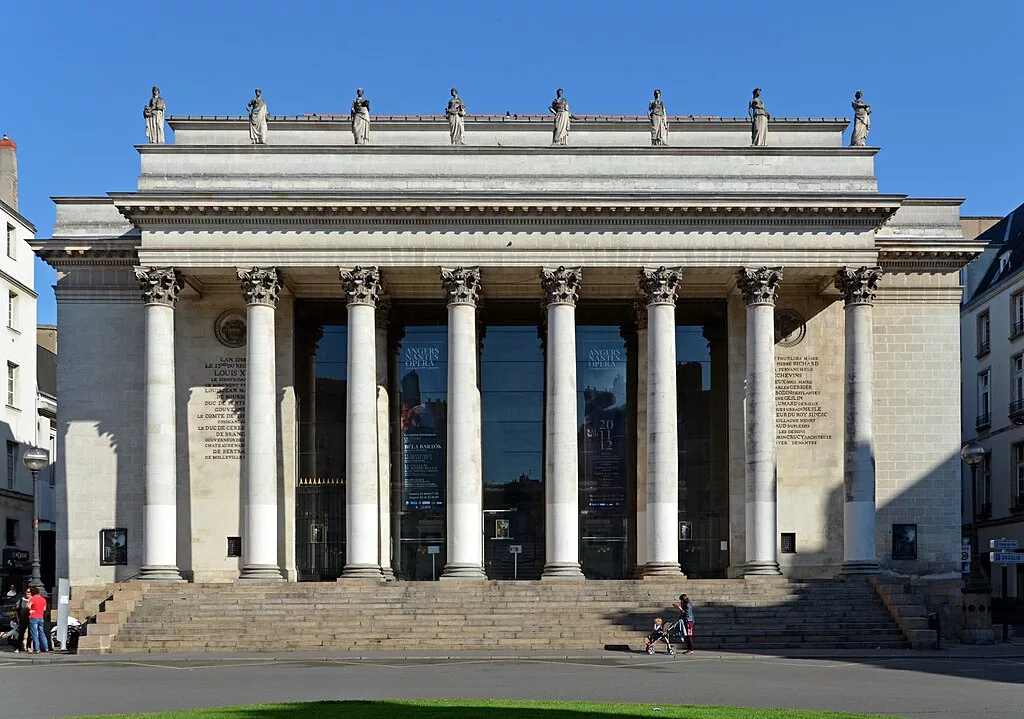
The Graslin Theater is an opera house located in Nantes, built by architect Mathurin Crucy at the end of the 18th century. It was inaugurated on March 23, 1788, and named after Jean-Louis Graslin, the landowner.
The building is designed in a neoclassical style and is distinguished by its facade with eight Corinthian columns, topped by statues representing eight muses. Its capacity is approximately 784 spectators.
Graslin Theater was destroyed by a fire in 1796, but rebuilt for Napoleon’s visit in 1811.
The Graslin Theater hosts a varied lyrical program: traditional operas, contemporary creations, as well as concerts.
11. Bouffay District
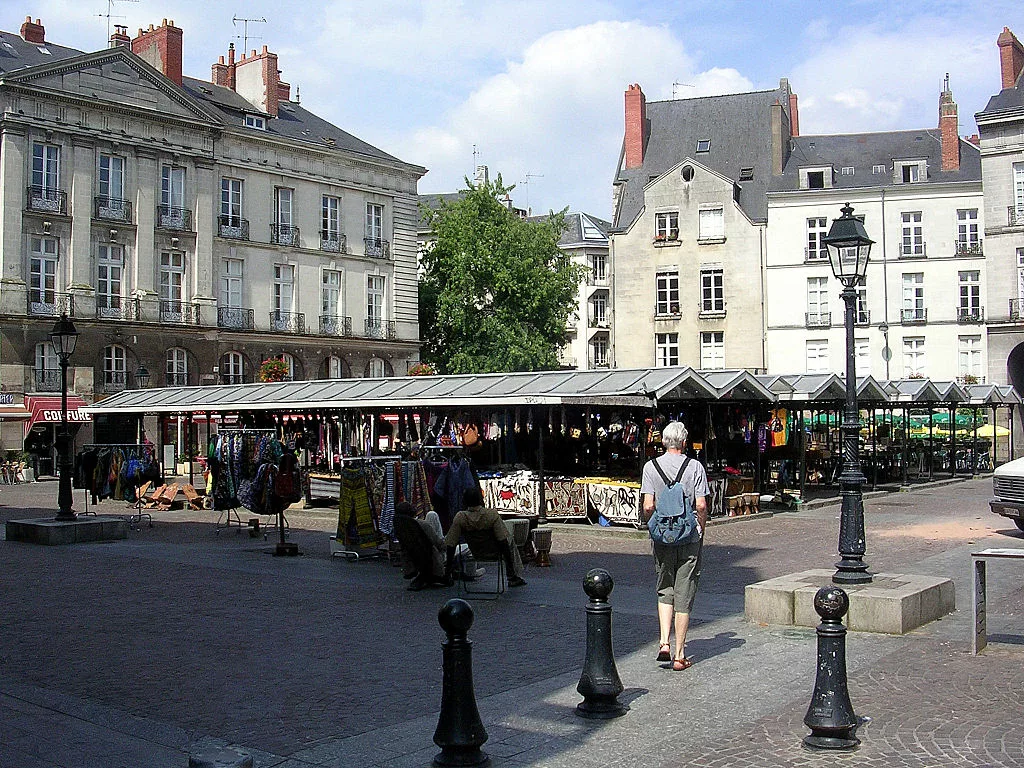
The Bouffay district is the historic heart of Nantes, located between the Château des Ducs de Bretagne and Place Graslin. Its name comes from the word “buffa”, which originally referred to a fair or market in the Middle Ages.
Bouffay preserves many medieval buildings and half-timbered houses, offering a glimpse of Nantes’ ancient architecture. The district is known for its narrow, cobbled streets, such as Rue de la Fosse or Rue des Vieilles Douves, which create a picturesque atmosphere.
Bouffay also retains remnants of medieval ramparts, visible in some streets and courtyards. The district was partially rebuilt in the 19th century, but it has preserved its medieval charm thanks to the restoration of many facades.
Museums & Culture – Nantes
1. Nantes Museum of Arts
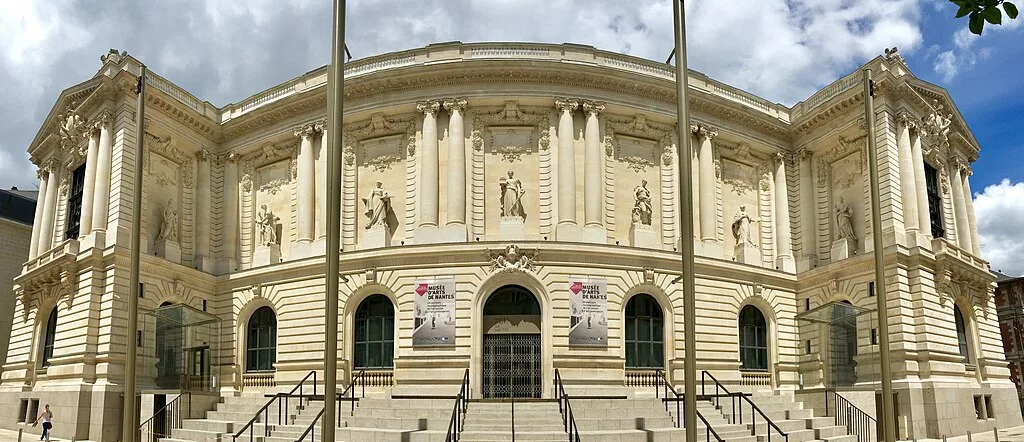
The Nantes Museum of Arts covers nine centuries of art history, from the Middle Ages to contemporary art. It houses more than 14,000 works, nearly half of which are modern or contemporary.
The museum building combines architectures from different periods: the Palais (19th century), the Chapelle de l’Oratoire (17th century), and a modern building called “Le Cube” dedicated to contemporary art.
The museum reopened in its current form in 2017, after extension and renovation work.
Among the masterpieces on display are paintings by Ingres, Delacroix, Courbet, Monet, as well as works by Picasso, Kandinsky, Soulages, Kapoor, and others. The exhibition layout is designed to create a dialogue between eras: displays juxtapose old and modern/contemporary works to surprise and stimulate the viewer.
2. Jules Verne Museum
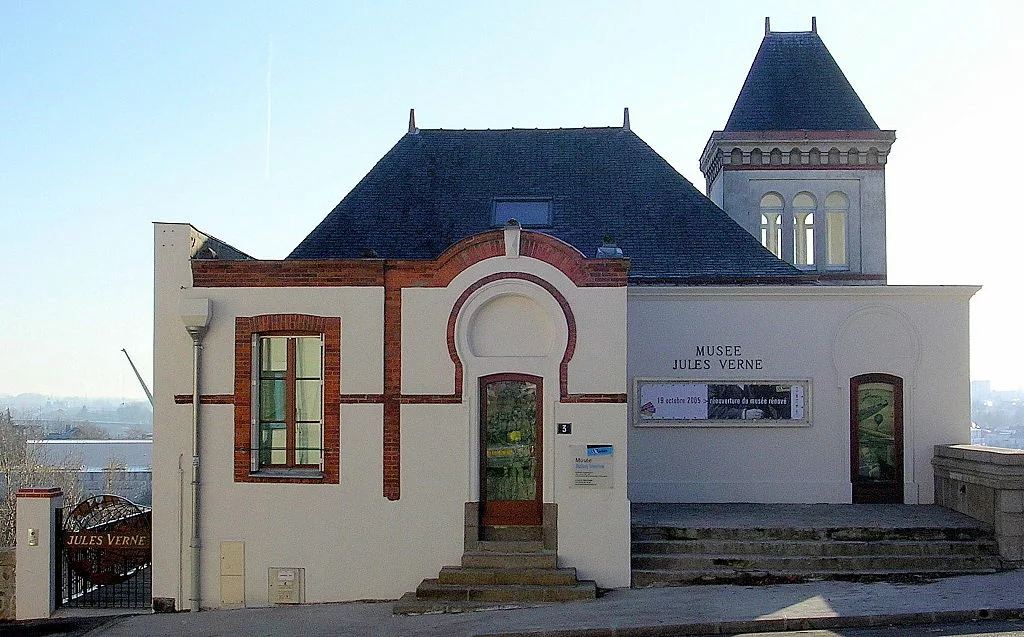
The Jules Verne Museum was inaugurated in 1978, on the 150th anniversary of Jules Verne’s birth.
The building housing the museum is a 19th-century bourgeois house, built between 1872 and 1878 by architect Ernest-Marie Buron. Although the museum is dedicated to Verne, he never lived in this building; his family home was instead in Bas-Chantenay, not far away.
The museum’s collections include more than 20,000 pages of autograph manuscripts, making it a rich resource for understanding Verne’s writing. Visitors can see objects, models, illustrations, posters, games, and multimedia content inspired by his novels. The tour passes through several themed rooms: for example, “The Beginning of Dreams,” “The Two Jules,” “The Known and Unknown World,” and an audiovisual room.
3. Les Machines de l’île
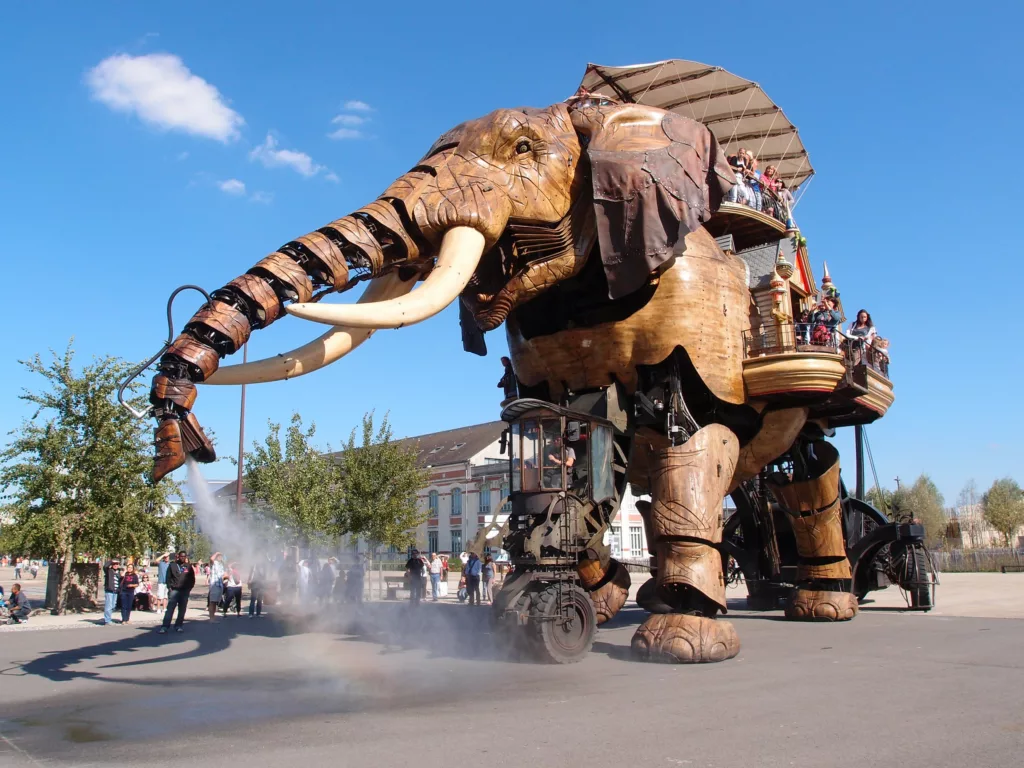
The Machines of the Island project was launched by François Delarozière and Pierre Orefice as part of the redevelopment of Nantes’ former shipyards.
It combines three worlds: the imagination of Jules Verne, the mechanics of Leonardo da Vinci, and Nantes’ industrial history. The main site is located in the naves of the former Dubigeon shipyards, where the machines are built and displayed.
The Great Elephant, one of the most iconic machines, is approximately 12 meters tall, can carry up to 45 passengers, and moves at 1–3 km/h.
There is a Machines Gallery, a true “living laboratory” where the public can see models, mechanisms, and creation processes. In this gallery, there are poetry machines: giant butterflies, hummingbirds, chameleons, caterpillars, spiders… all articulated.
The Marine Worlds Carousel, inaugurated in 2012, is a three-level ride representing marine creatures (rays, octopuses, jellyfish…) as well as imaginary boats.
Visitors can access terraces above the workshop: from there, they can observe welders, carpenters, and builders in action.
The project is conceived as a “machine-city”: these machines are not confined to an amusement park; they are an integral part of the urban landscape.
Parks, Gardens & Walks – Nantes
1. Jardin des Plantes
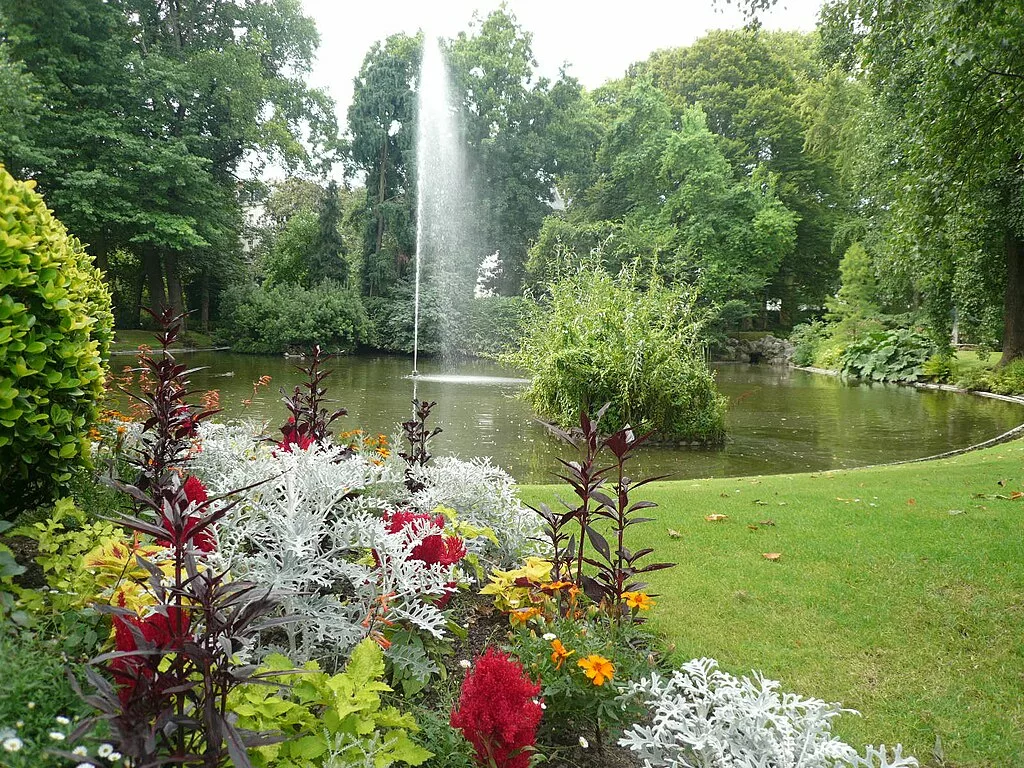
The Jardin des Plantes of Nantes is a municipal botanical garden of 7.32 hectares, located in the city center.
It contains more than 10,000 plant taxa (species, varieties…), making it one of the major botanical collections in France. The garden has about 800 m² of greenhouses, housing exotic plants, epiphytes, cacti, succulents, and orchids.
One of the oldest trees in the park is the Hectot Magnolia, planted in 1807 and still present today. The garden has a very rich camellia collection with about 600 cultivars.
The garden also has a menagerie: visitors can see dwarf goats, ducks, waterfowl… There are ponds, a waterfall, bridges, statues, and pavilions throughout the park, giving it both a scientific and leisurely character.
2. Parc de Procé
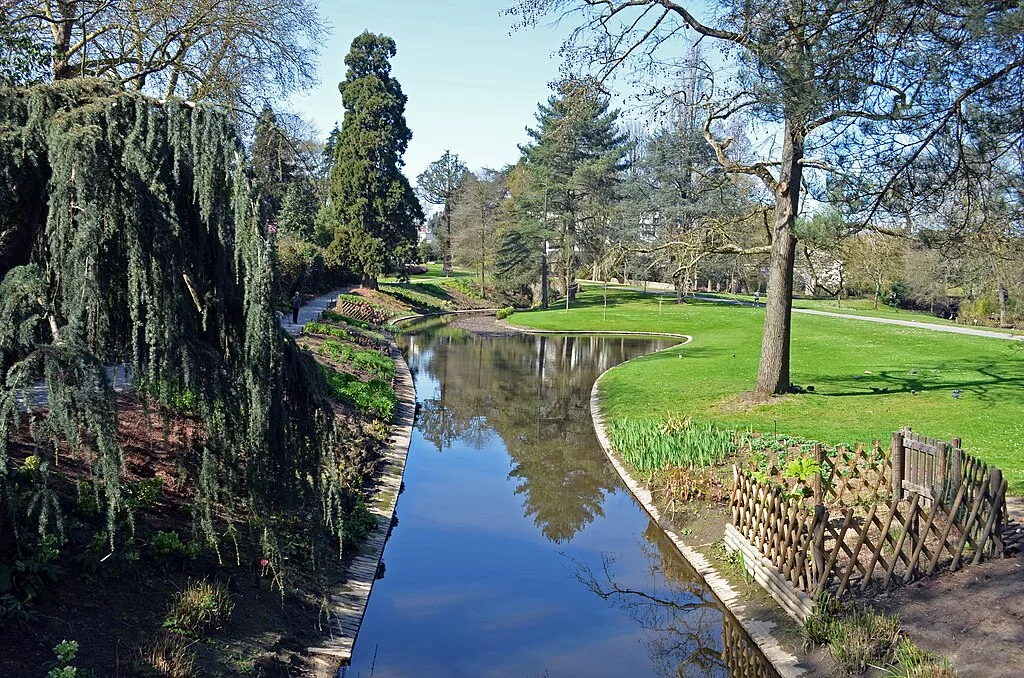
Procé Park covers approximately 12 hectares and is located in the west of Nantes, in the Hauts-Pavés / Dervallières districts. It was designed in 1866 by landscaper Dominique Noisette, in an “English park” style.
The park is crossed by the Chézine, a small tributary of the Loire, which contributes to the green corridor and romantic character of the site. There is a great variety of vegetation: magnolias, camellias, azaleas, rhododendrons, hydrangeas, and other heath plants typical of Nantes gardens. The park is home to several remarkable century-old trees: tulip trees (near the manor), Atlas cedars, sequoias, service trees, etc.
The Procé manor, built around 1789, is at the center of the park; it now houses a tearoom/restaurant and exhibitions. There are seven allegorical statues in the park: four of them (Botany, Forest, Harvest, Sculpture) come from the former Palais du Trocadéro in Paris.
The park is heavily frequented: according to Nantes Métropole, 800,000 visitors stroll through it each year.
3. Parc du Grand-Blottereau

The park covers approximately 22 hectares, making it one of the largest parks in Nantes.
It is known for its exotic atmosphere, with tropical greenhouses, useful plants (aromatic, medicinal, edible) and a very diverse plant collection. The estate houses the Grand-Blottereau Castle, built in the 18th century for Gabriel Michel, a Nantes shipowner.
Historically, the park had an educational purpose: at the beginning of the 20th century, it was the headquarters of the Colonial Agronomy Section of the School of Commerce. The tropical agronomy greenhouses, dating from 1902, house century-old plants such as cocoa, vanilla, pepper, and other exotic species.
The park offers a “Landscapes of the World” thematic trail, with areas inspired by the Mediterranean, American bayous, a banana plantation, and a Korean garden (Suncheon hill). The Korean garden is particularly remarkable: it is inspired by the hills of Suncheon (South Korea), with bamboos, Japanese maples, ginkgos, and a traditional pavilion. The park’s tropical vegetable garden, accessible to visitors from mid-May, contains nearly 280 varieties of useful plants (sweet potatoes, peppers, quinoa, peanuts, etc.).
Since 2008, a “Natural Garden” has been maintained by students from the Grand-Blottereau horticultural school: this garden, an LPO refuge, demonstrates biodiversity-friendly practices.
The park has numerous recreational facilities: sports fields (football, basketball, tennis, pétanque), a gymnasium, playgrounds, and picnic areas.
4. Île de Versailles Garden
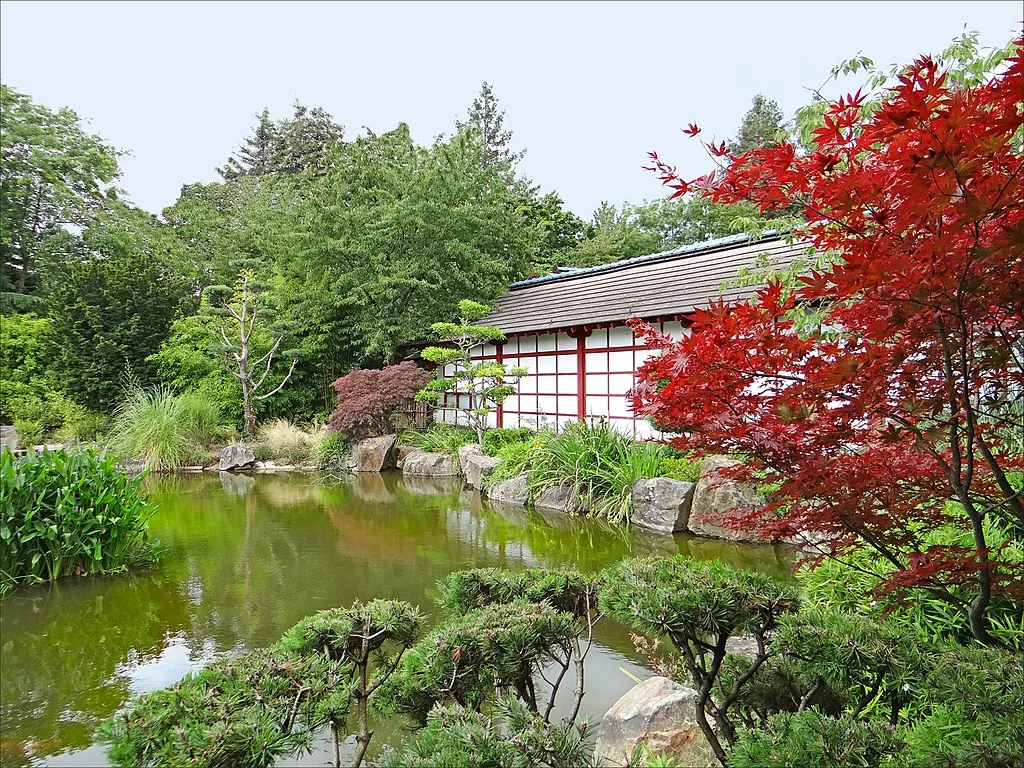
The Île de Versailles Garden is a Japanese-style garden located on the Île de Versailles, in the heart of the Loire in Nantes. It was created in 1980 by the Nantes city council to enhance the island and offer a place for relaxation.
The garden is inspired by Japanese tradition, with wooden bridges, ponds, lanterns, and waterfalls. It is planted with cherry trees, Japanese maples, bamboos, and azaleas, creating different atmospheres depending on the season.
The Île de Versailles is crossed by the Chézine, which feeds the garden’s ponds and waterfalls. The island also features contemporary sculptures and temporary art installations.
Nantes Gastronomy
Dishes & Specialties
Beurre blanc
The beurre blanc is an iconic sauce from the Nantes region, usually served with fish or seafood. It is made with butter, white wine, and shallots, offering a rich and creamy flavor.
Local seafood, such as mussels, oysters, and shrimp, pairs perfectly with this preparation.
Curé nantais

The Curé nantais is a soft cheese made in Vendée and around Nantes. It has a creamy texture and a slightly tangy flavor. This cheese is enjoyed as a starter, main dish, or alongside charcuterie.
Gâteau nantais

The Gâteau nantais is a traditional dessert made with almonds, rum, and powdered sugar. Its moist texture and delicate aroma make it an iconic Nantes dessert.
Desserts & Sweets
Local Crêpes and Galettes
The crêpes and galettes are very popular in the Nantes region, made with buckwheat or regular flour. They can be enjoyed sweet or savory, with a variety of fillings. Many crêperies in Nantes serve these specialties, allowing visitors to discover traditional Breton flavors.
Muscadet and Other Local Wines
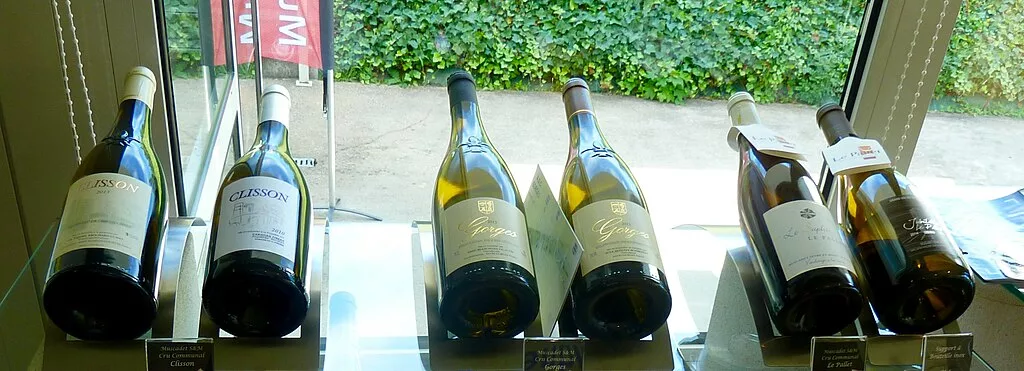
The Muscadet is the typical white wine of the region, often served with fish and seafood. It is light, fresh, and distinguished by subtle aromas of lemon and flowers. Vineyards around Nantes also produce other local wines. Muscadet pairs perfectly with traditional meals and gastronomic tastings. It is easily found in restaurants and wine cellars throughout the city. Discovering this wine is an integral part of the Nantes culinary experience.
Major Events – Nantes
1. Voyage à Nantes
The Voyage à Nantes is a summer artistic and cultural route that transforms the city into an open-air museum. Every year, contemporary installations and artworks are scattered throughout various neighborhoods of Nantes.
The Green Line, marked on the ground, guides visitors through the city’s most emblematic and unusual spots. The displayed works range from monumental sculptures to interactive installations, often inspired by Nantes’ history or imagination.
La Nuit du VAN marks the official launch, with performances, light projections, and artistic interventions across the city.
2. Les Rendez-vous de l’Erdre
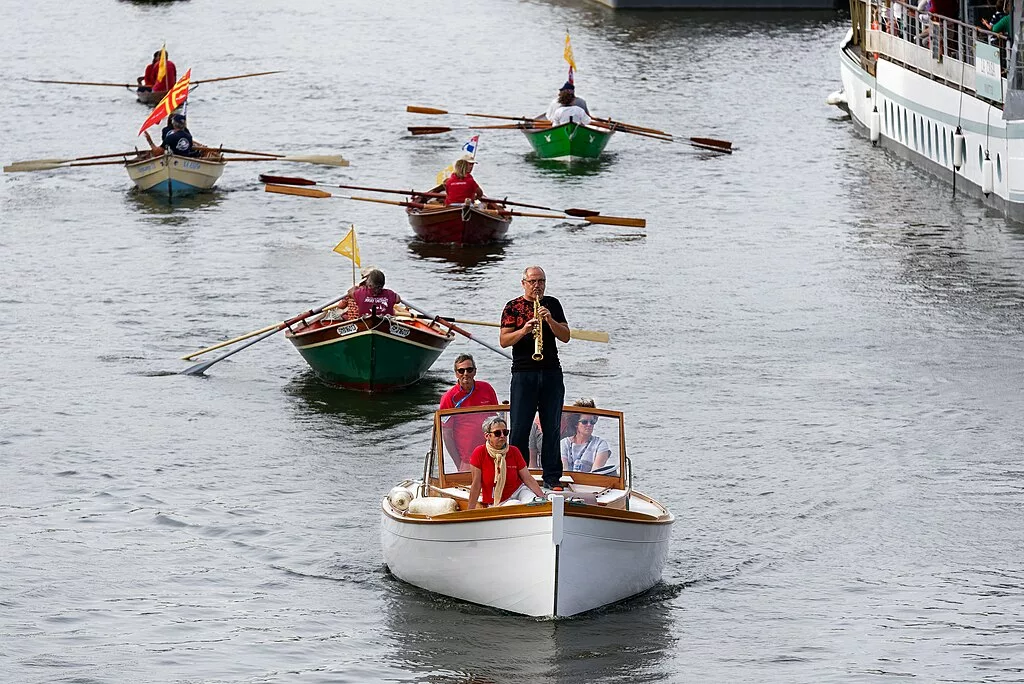
The Rendez‑vous de l’Erdre is an annual jazz and classic pleasure boating festival that takes place along the Erdre River. The festival was created in 1987 by the Cultural Summer Association.
The event occurs in Nantes, as well as in several nearby towns such as Nort‑sur‑Erdre, Sucé‑sur‑Erdre, and Carquefou.
It offers each year a hundred free concerts, open to all jazz styles: from traditional jazz to electro jazz, including blues.
Alongside the concerts, a nautical flotilla forms on the Erdre, gathering pleasure boats for regattas and parades. Some of the boats present during the festival are historic and heritage vessels, such as barges or old sailing ships.
The festival generally takes place late August / early September. One of the emblematic locations of the festival is Quai Ceineray, where a floating stage is set up on the Erdre for concerts.
3. La Folle Journée
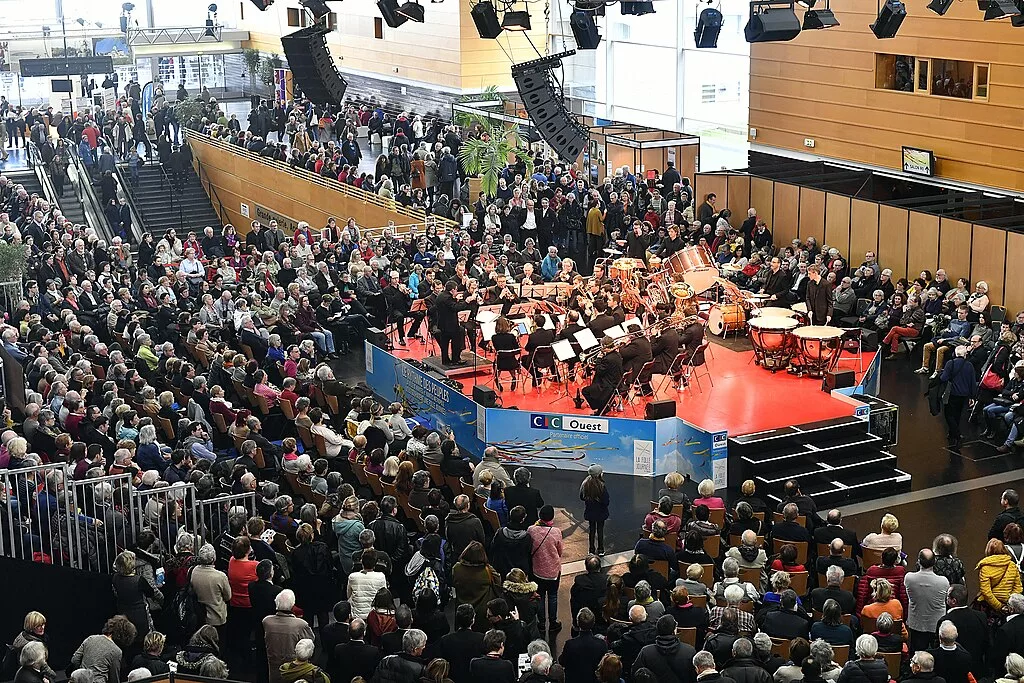
The Folle Journée is a classical music festival held annually in Nantes. It was founded in 1995 by René Martin. The festival’s name (“La Folle Journée”) refers to Beaumarchais’ play The Marriage of Figaro.
Originally, the festival lasted only a weekend, but it now spans five days. Each edition is built around a musical theme: a composer, a style, or a historical period.
The Cité des Congrès in Nantes is the main venue for the festival, which uses numerous halls of various sizes. The festival concept is based on short concerts (around 45 minutes) and very accessible ticket prices to reach a broad audience.
Excursions / Trips Around Nantes
1. Clisson and the Château de Clisson
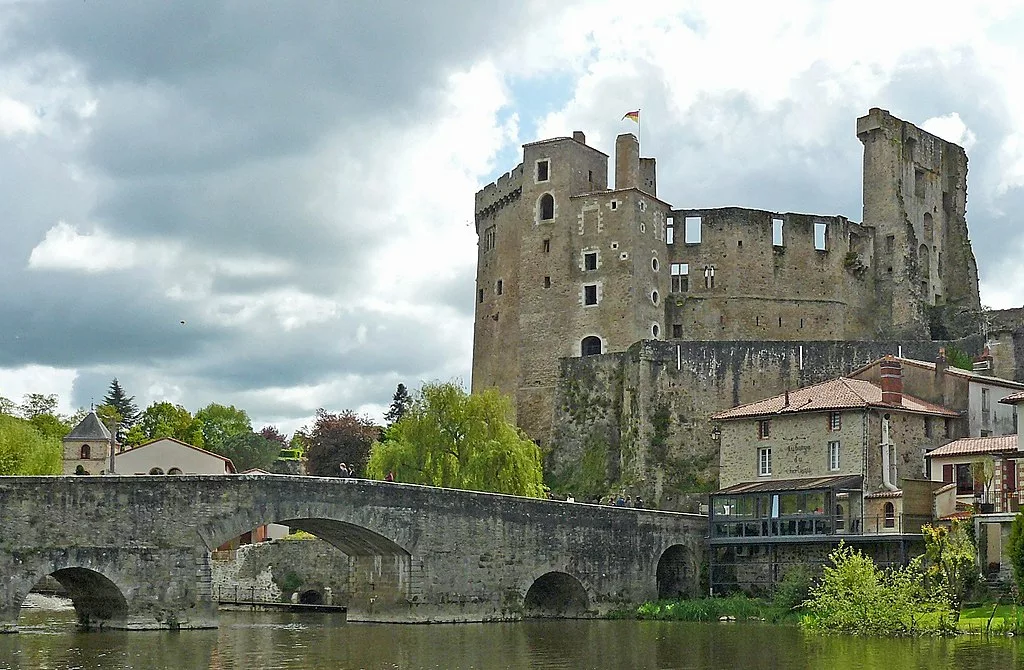
The Château de Clisson is a medieval fortress located on a granite promontory, overlooking the left bank of the Sèvre Nantaise. It was built starting in the 11th century by the powerful Clisson family.
The castle had a strategic role: it was on the border of Brittany, facing Anjou and Poitou, making it a frontier stronghold.
It was classified as a historic monument in 1924, before being acquired by the Loire-Atlantique Department in 1962.
2. Pornic and the Atlantic Coast
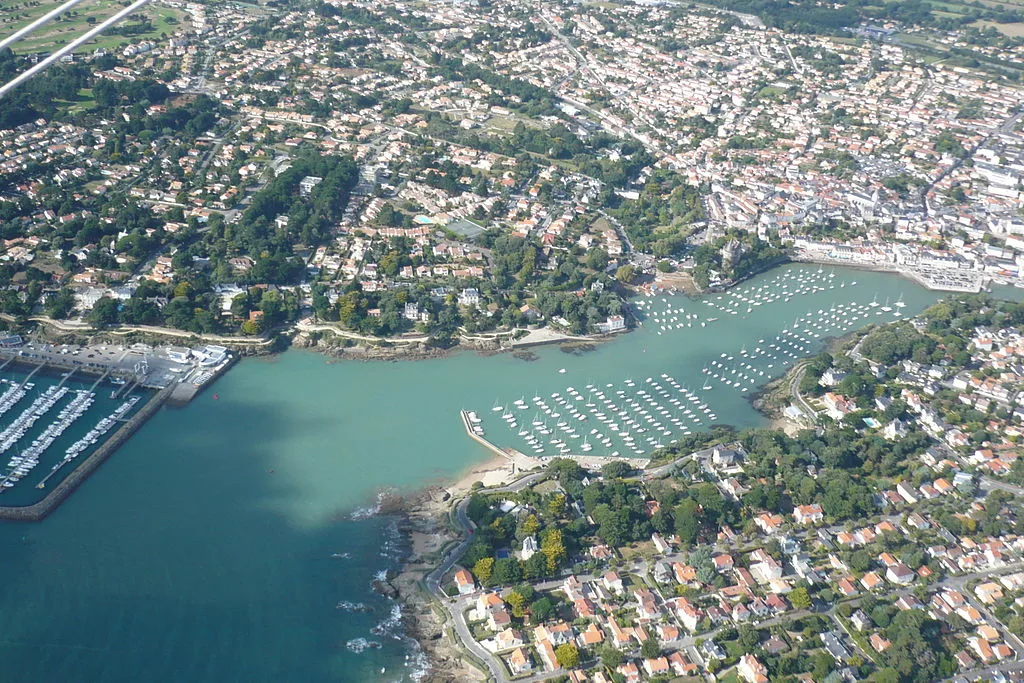
Pornic is a coastal town located about 50 km from Nantes, known for its beaches and picturesque port.
The town is known for its fishing and pleasure port, which forms the historic and tourist center of Pornic. Pornic has a diverse architectural heritage, with the Château de Pornic, traditional fishermen’s houses, and 19th-century seaside villas.
The town is famous for its sandy beaches, such as Plage de la Noëveillard, popular with families and swimming enthusiasts. The customs officers’ trail (GR8) runs along the coast, offering views of cliffs, coves, and Atlantic panoramas.
3. Île de Noirmoutier
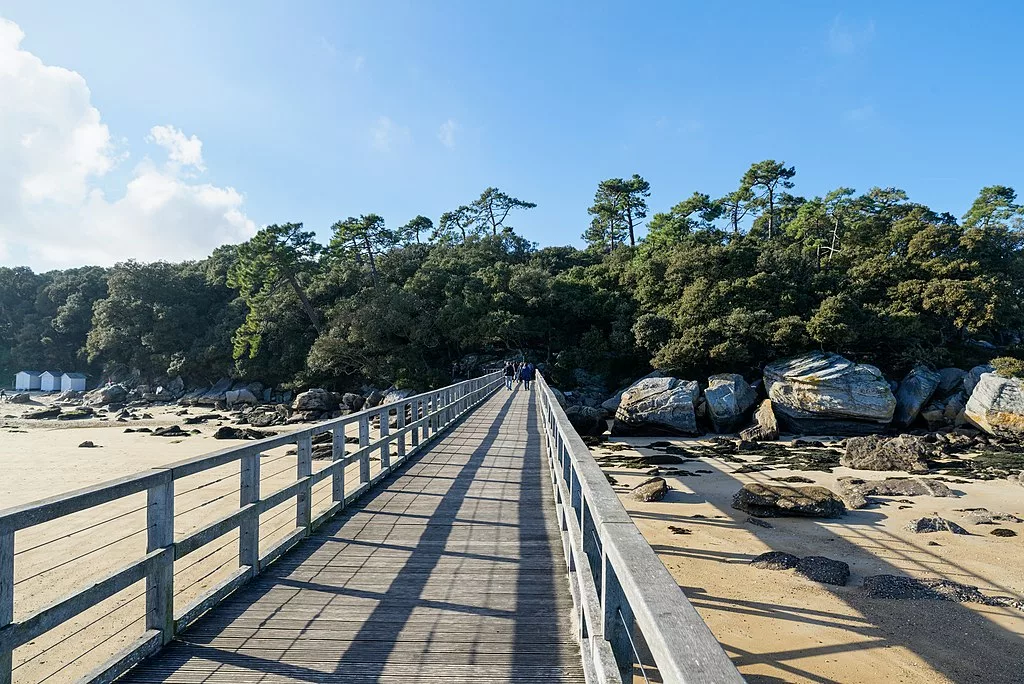
Île de Noirmoutier is located on the Atlantic coast, in the Vendée department, and is connected to the mainland by the Noirmoutier Bridge and the Passage du Gois.
The Passage du Gois is a unique 4.5 km submersible road that appears at low tide and is covered at high tide.
The island has a rich natural heritage, with salt marshes, dunes, and maritime pine forests. The salt marshes of the island have produced sea salt since the Middle Ages, a traditional activity still ongoing today.
The village of Noirmoutier-en-l’Île houses the medieval castle, built in the 13th century to defend the island from invasions. Noirmoutier also has a religious heritage, notably the Saint-Philbert Church and the Saint-Philbert Abbey, founded in the 7th century.
Noirmoutier has been nicknamed “the island of mimosas” thanks to its many mimosa trees that bloom as early as February, coloring the landscape bright yellow.
4. Fontevraud Abbey
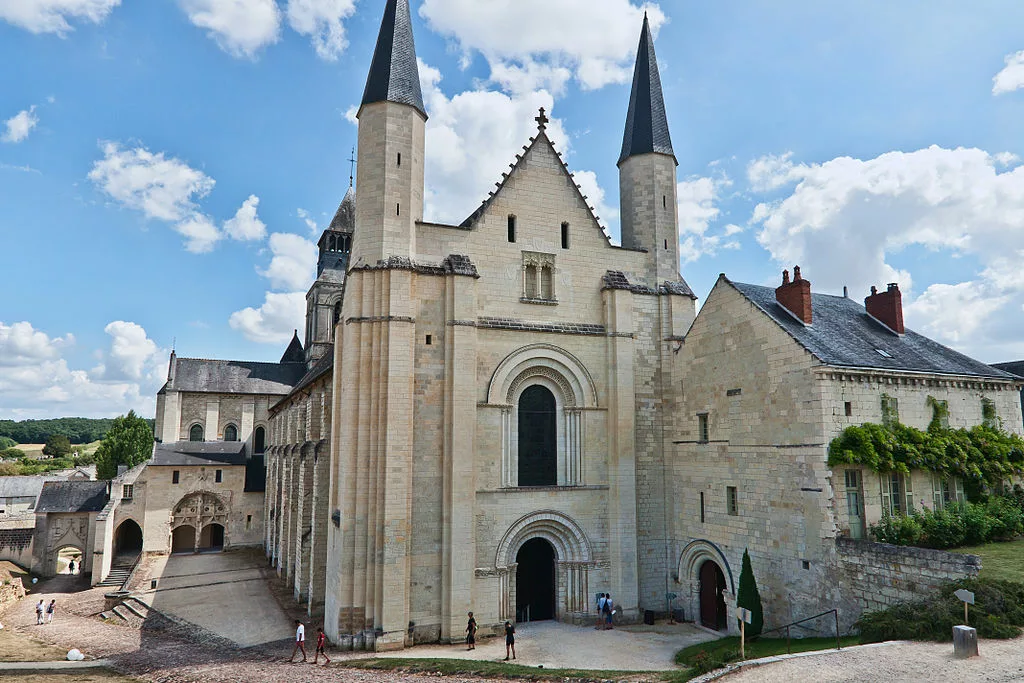
Fontevraud Abbey is a royal abbey founded in 1101 by Robert d’Arbrissel, an itinerant preacher. It is located in the commune of Fontevraud-l’Abbaye, near Saumur in Maine-et-Loire.
The abbey is the largest medieval monastic complex in Europe, covering nearly 13 hectares. It is known for being a double monastery, housing both monks and nuns under the authority of an abbess.
The abbey houses the tombs of Eleanor of Aquitaine, Richard the Lionheart, and John Lackland, famous historical figures.
The buildings display a mix of Romanesque and Gothic architecture, particularly in the abbey church and cloisters. Since 1983, the site has been classified as a historic monument and hosts the Abbey Cultural Center, managed by the Royaumont Foundation.
Conclusion
From the Château des Ducs de Bretagne to street art murals, Nantes offers a diversity of experiences for every taste. Major events, such as the Voyage à Nantes or La Folle Journée, enrich the cultural life throughout the year.
The parks, gardens, and walks along the Erdre and Loire rivers provide moments of relaxation in the heart of the city. For those wishing to extend their discovery, excursions to Clisson, Pornic, Île de Noirmoutier, or Fontevraud Abbey perfectly complement the stay.
Visiting Nantes is an unforgettable experience that combines heritage, gastronomy, nature, and culture.