Visit Aix-en-Provence: 30 Must-See Attractions and Things to Do
Visiting Aix-en-Provence means discovering one of the most beautiful cities in Provence, where heritage, culture, and the art of living come together. A city of water, art, and history, it captivates visitors with its fountains, lively streets, and elegant architecture infused with the charm of southern France.
Originally a Roman settlement that became a major cultural center, Aix-en-Provence is also deeply marked by the legacy of Paul Cézanne and the landscapes of Montagne Sainte-Victoire. Between historic monuments, prestigious museums, Provençal markets, and natural spaces, the city offers a unique diversity of experiences.
It is also an ideal base for exploring Provence, from the villages of the Luberon to major cities such as Marseille and Avignon.
Discover Aix-en-Provence in a different way with our treasure hunt “The Highlights of Aix-en-Provence“, a unique blend of an escape game and a guided tour.
Monuments & Historical Heritage of Aix-en-Provence
Saint-Sauveur Cathedral Parish, Aix-en-Provence
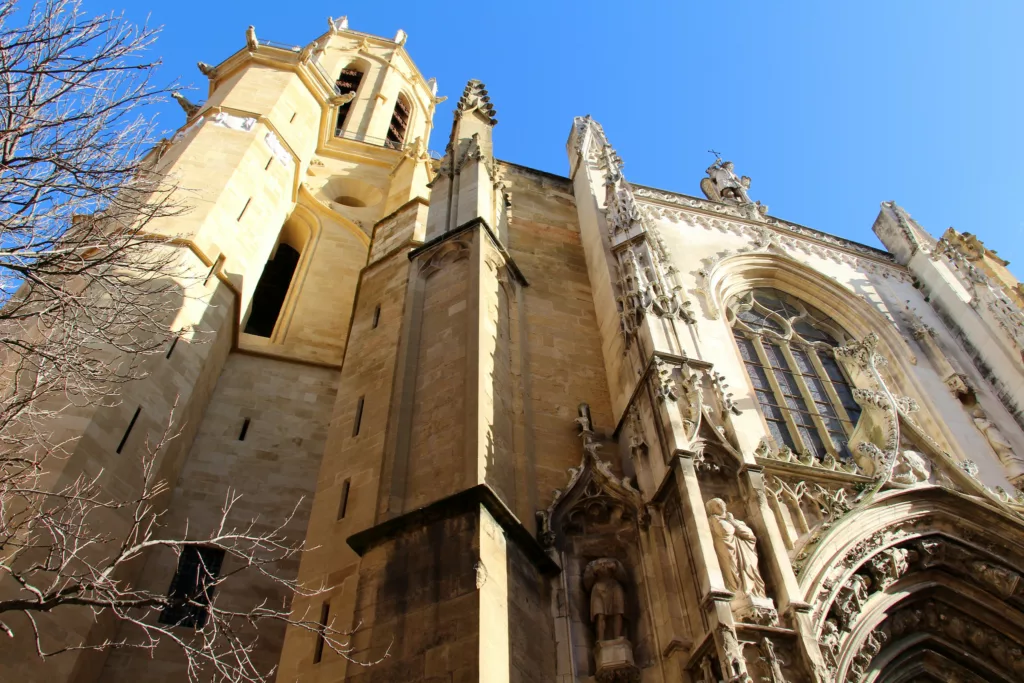
The Saint-Sauveur Cathedral of Aix-en-Provence is an iconic Catholic building, constructed on the site of the ancient Roman forum.
Its construction mainly took place between the 12th and 16th centuries, although some older elements, such as the baptistery, date back to the 6th century.
The cathedral’s façade illustrates different phases of construction, ranging from Romanesque to Gothic styles, with a portal completed in the 16th century. The bell tower, finished in 1425, as well as the medieval cloister, reflect the gradual evolution of the religious complex.
According to tradition, a first chapel was built on this site by Saint Maximin, who came from Israel with Mary Magdalene. The carved walnut wood doors, created in the early 16th century, depict religious scenes and finely crafted biblical figures.
Discover the secrets of the cathedral’s statues in our Aix-en-Provence treasure hunt.
Joseph Sec Mausoleum
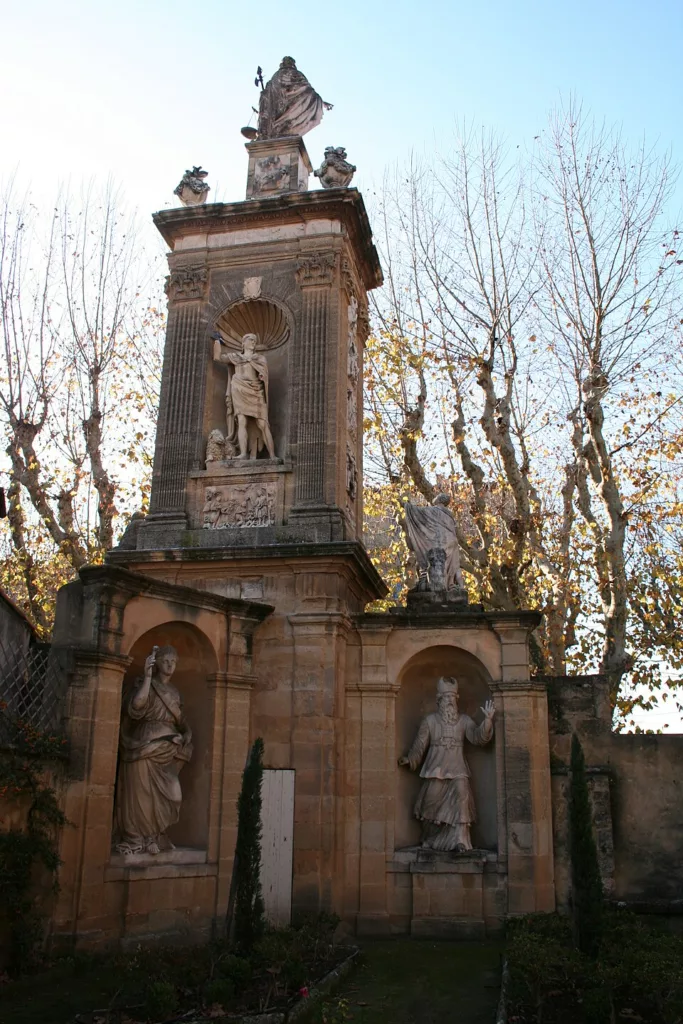
The Mausoleum of Joseph Sec was commissioned by Joseph Sec, a master carpenter who became a wealthy timber merchant. Its original Revolutionary-style architecture combines religious, Masonic, and republican symbols.
The main façade depicts Moses holding the Tablets of the Law, surrounded by allegories symbolizing Europe and Africa. At the top of the monument stands Themis, the embodiment of justice and law. At the rear, a garden contains several statues inspired by the Old Testament, creating a rare artistic ensemble in France.
Aix-en-Provence Town Hall
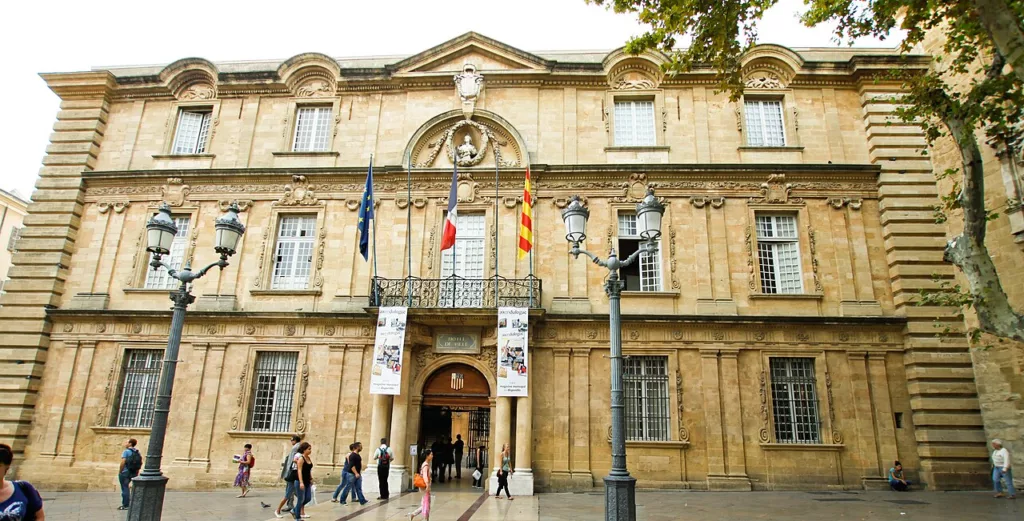
The Aix-en-Provence Town Hall has served as the seat of the city’s municipal administration for centuries. In the 14th century, the town hall was moved to its current location following the unification of several districts of Aix.
It is directly connected to the famous Clock Tower of Aix-en-Provence, forming a remarkable architectural ensemble. The building was designed by the Aix-based architect Pierre Pavillon. Its elegant façade is inspired by Italian palaces, featuring a symmetrical layout and refined decorative elements.
Each floor is separated by decorative friezes, notably adorned with triglyphs, rosettes, and floral motifs. During the French Revolution, the building lost several of its original ornaments.
Discover the hidden details on the façade of this town hall in our treasure hunt.
Church of La Madeleine, Aix-en-Provence
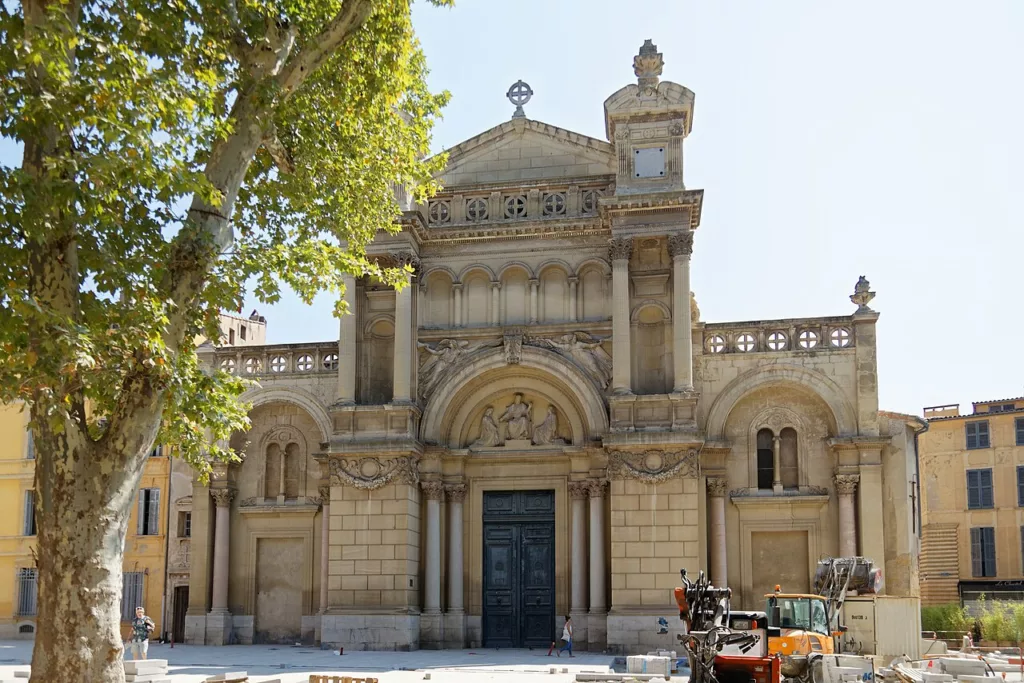
The Church of La Madeleine in Aix-en-Provence is a Catholic parish church dedicated to Mary Magdalene.
Although its origins date back to the Middle Ages, the current building was rebuilt between 1691 and 1703. Architect Laurent Vallon designed the main structure in a classical style. The façade was later redesigned in the 19th century by Henri Révoil.
The church houses a remarkable organ built in 1743 by Jean-Esprit Isnard. Several famous figures, including Paul Cézanne, were baptized here.
Observe this church carefully to solve the puzzles in our Aix-en-Provence treasure hunt.
Chapel of the Visitation
The Chapel of the Visitation is part of a former monastery built between 1647 and 1652. The entire complex was designed by the Aix-based architect Pierre Pavillon. The chapel stands out for its original Baroque style, differing from the typical models of Jesuit buildings.
Its spectacular façade, visible at the end of Rue Constantin, consists of three superimposed levels. A staircase of thirteen steps enhances its monumental appearance and vertical elevation.
Over time, the façade has been modified, including the replacement of certain statues and the disappearance of a balustrade. The central medallion once depicted the Visitation before being altered. The granddaughters of Madame de Sévigné, Pauline and Marie-Blanche de Grignan, were raised in this convent and are buried there.
Rotonde Fountain
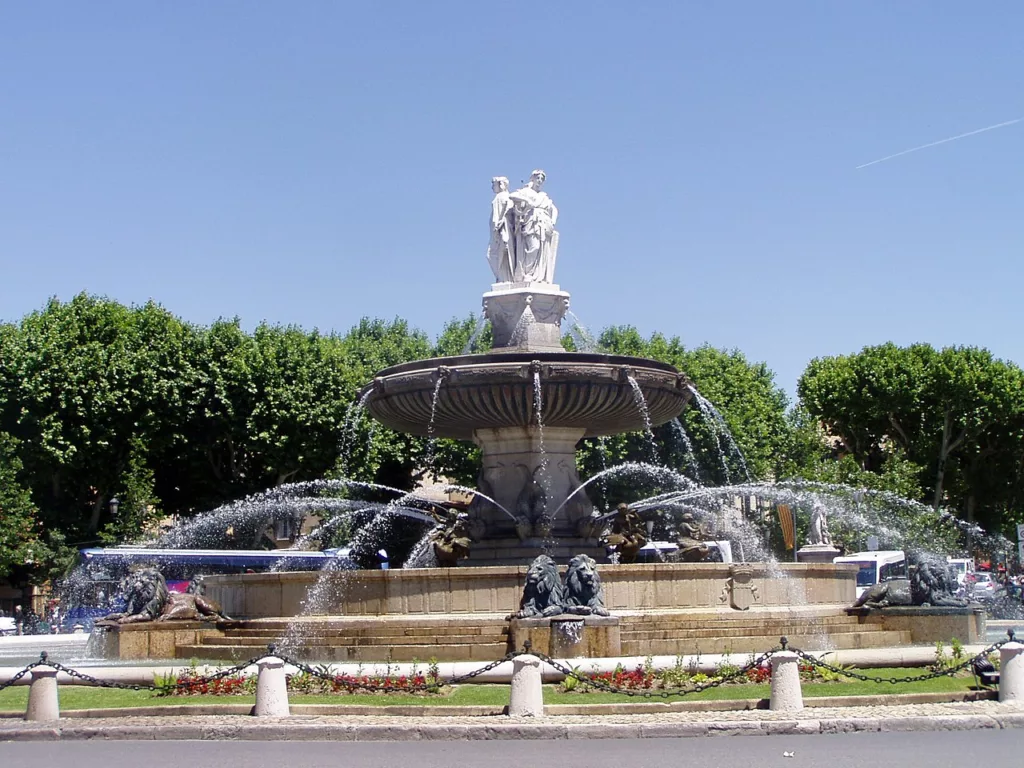
The Rotonde Fountain is located at the end of Cours Mirabeau and today marks the center of Aix-en-Provence.
It was designed by engineer Théophile de Tournadre and inaugurated in 1860. The fountain was built to celebrate the arrival of water through the Zola Canal.
Standing 12 meters high with a large circular basin, it impresses visitors with its dimensions. The monument is decorated with sculpted lions and groups of children riding swans.
At the top, three statues symbolize justice, commerce, and the fine arts. These sculptures earned the fountain the nickname “Fountain of the Three Graces.”
Church of Saint-Jean-de-Malte, Aix-en-Provence
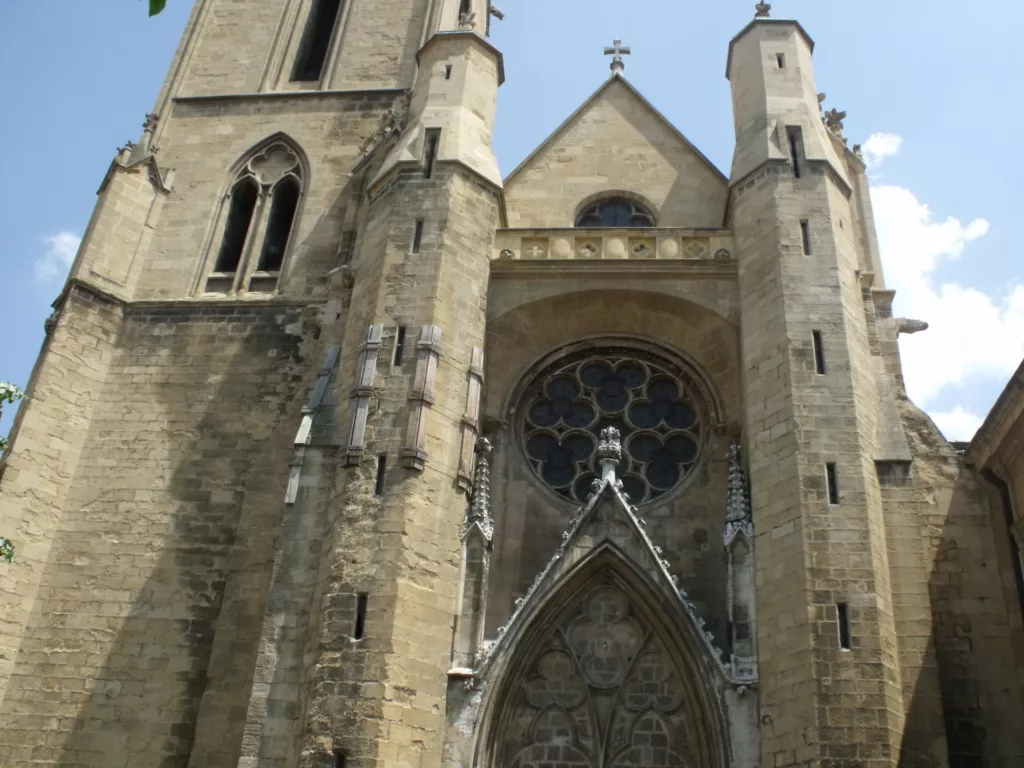
The Church of Saint-Jean-de-Malte in Aix-en-Provence is considered the first Gothic church built in Provence. The building was constructed in the 13th century, between 1272 and 1277, on the site of an earlier chapel.
This church is linked to the Order of Saint John of Jerusalem, which had settled there as early as the 12th century. Its impressive bell tower reaches 67 meters in height, making it the highest point in the city.
The church features sober Gothic architecture, with a single nave and a bright interior. It houses numerous works of art, including paintings and a modern organ built in the 21st century.
Clock Tower
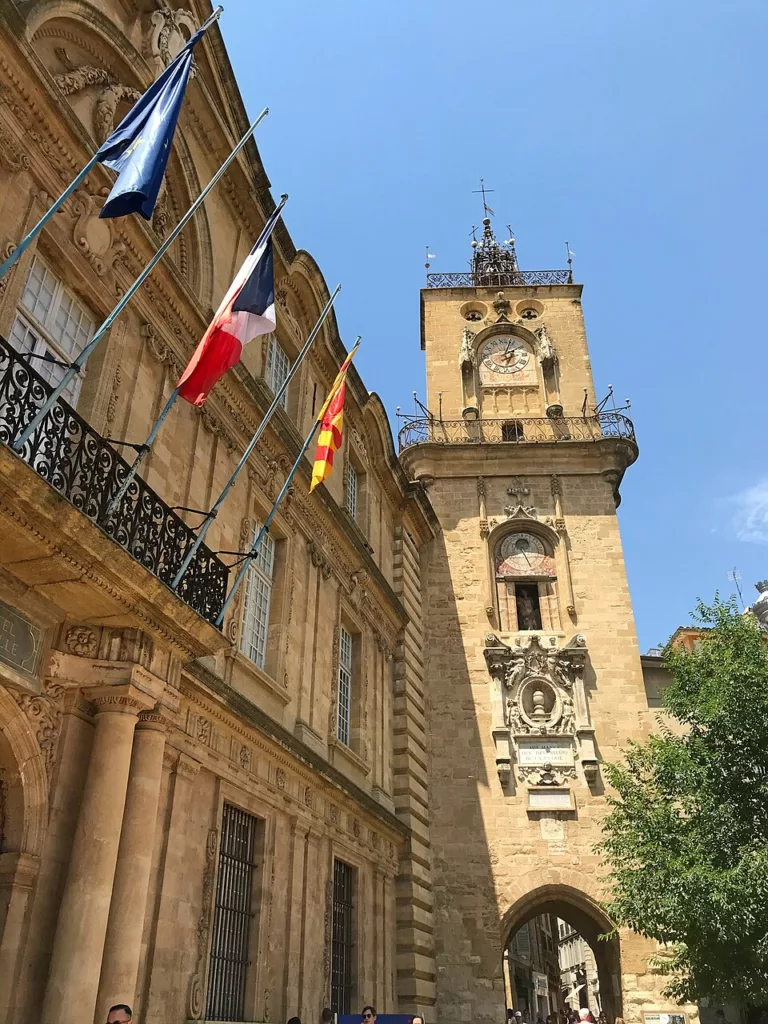
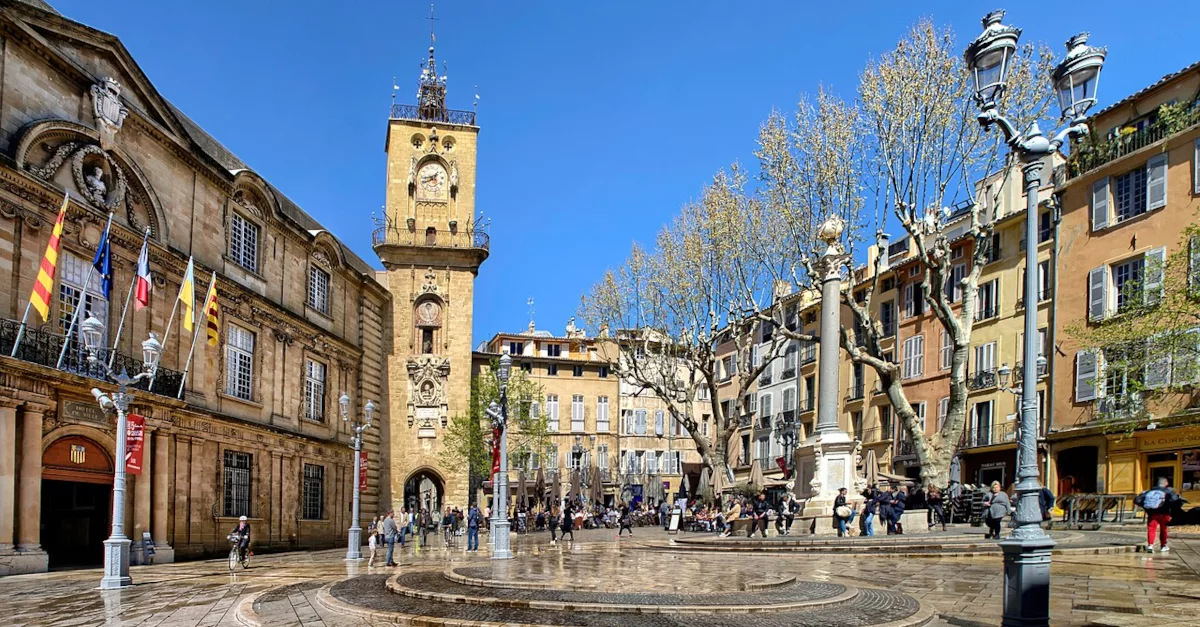
The Clock Tower of Aix-en-Provence is one of the major elements of the city’s former defensive and administrative system. Once the gate of the Saint-Sauveur district, it spans the street directly and marks the entrance to the comital city. From the years following 1357, the city council’s meeting room, previously itinerant, was permanently established at the foot of the tower, further strengthening its central role in municipal life.
The construction of the tower in its current form dates back to 1510–1512, when it was heightened. An inscription, now lost, once confirmed that it had been raised in 1510 on an old gate of the comital city. This transformation gave it its monumental appearance and affirmed its symbolic function as a marker of communal power.
Learn more about the different phases of the moon in our Aix-en-Provence trail.
Four Dolphins Fountain
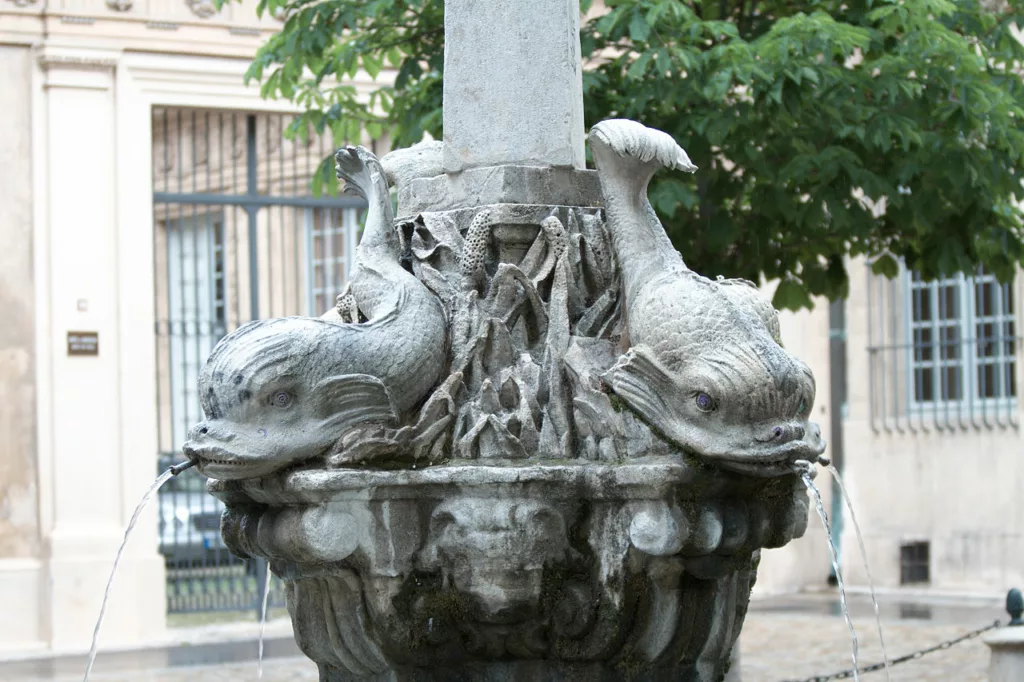
The Four Dolphins Fountain was sculpted in 1667 by Jean-Claude Rambot on the former Place Mazarine. It quickly became a major feature of the urban landscape, to the point that it gave the square its current name, while the street crossing it retained the name Mazarine.
The fountain consists of a circular basin made from cold stone from Sainte-Baume. At its center, a slightly off-center obelisk is supported by four dolphins, whose tail fins are carved from Calissanne stone.
At the top of the obelisk, various ornaments have succeeded one another over time: a gilded fleur-de-lis, a pine cone, then a Maltese cross, before once again featuring a pine cone created by the sculptor Servian after the Second World War. After being vandalized in the 1980s, the sculpture was restored identically.
In 2015, the Four Dolphins Fountain underwent another restoration, helping preserve this iconic piece of Aix heritage.
Grain Market Hall
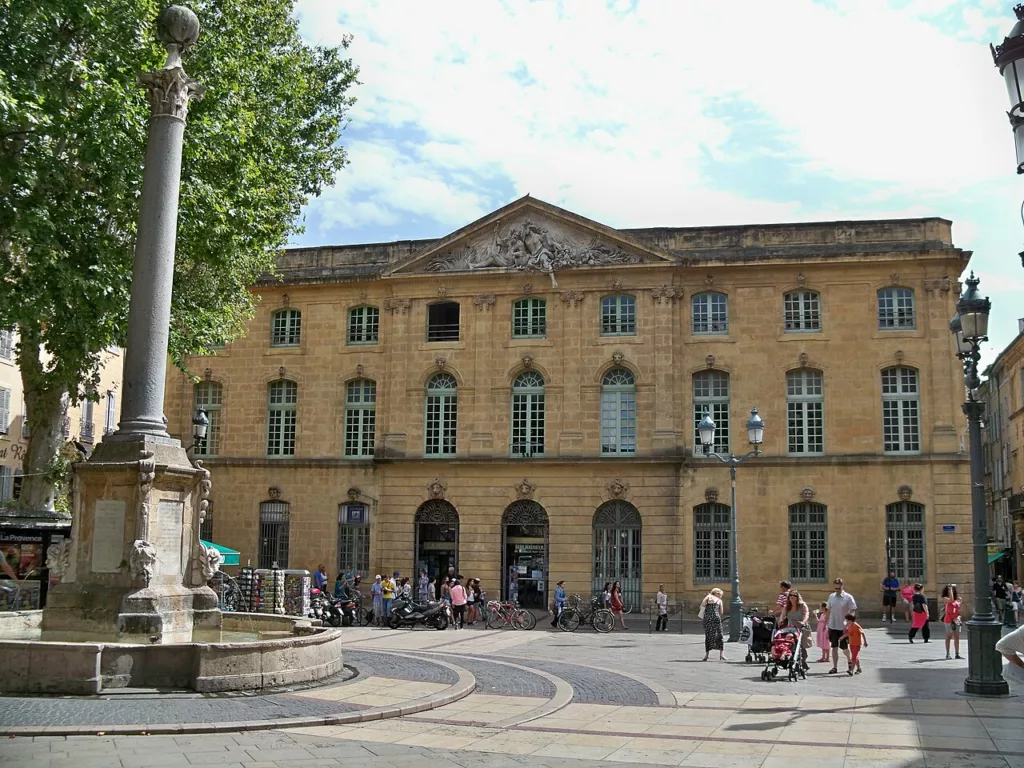
The Grain Market Hall of Aix-en-Provence is an emblematic building located between Place de l’Hôtel-de-Ville and Place Richelme. Built between 1717 and 1765, it was originally designed as a grain market intended to organize and regulate the wheat trade in the city.
Its history began in the 17th century, when the municipality undertook major urban developments in this area of Aix-en-Provence. The current site was once occupied by a block of houses and a market square where grain trading took place. In response to complaints about commercial practices, the City Council decided in 1709 to completely reorganize the area in order to install a more structured wheat granary.
The gradual enlargement of the square led to the purchase and demolition of several houses, allowing the construction of an initial wheat storehouse in 1718 under the direction of local master masons and craftsmen. This first building formed the core of the future Grain Market Hall. Over the decades, the site was expanded and restructured, particularly from 1737 onward, to meet increasing storage and trade needs.
In the second half of the 18th century, new works were entrusted to architect Georges Vallon, who supervised the expansion and harmonization of the building. The whole complex was completed in 1766, giving the hall its final appearance. The façade is notably decorated with a pediment sculpted by Jean-Pancrace Chastel, representing an allegory of the fertility of Provence through the figures of the Rhône and the Durance.
Over time, the hall changed function. After serving as a grain market, it became the Labour Exchange between 1896 and 1922, then housed the P.T.T. services after restoration in 1923. Listed as a historic monument in 1983, it now houses an annex of the Méjanes Library as well as municipal services, thus preserving a public function in the heart of the city.
Entremont Oppidum
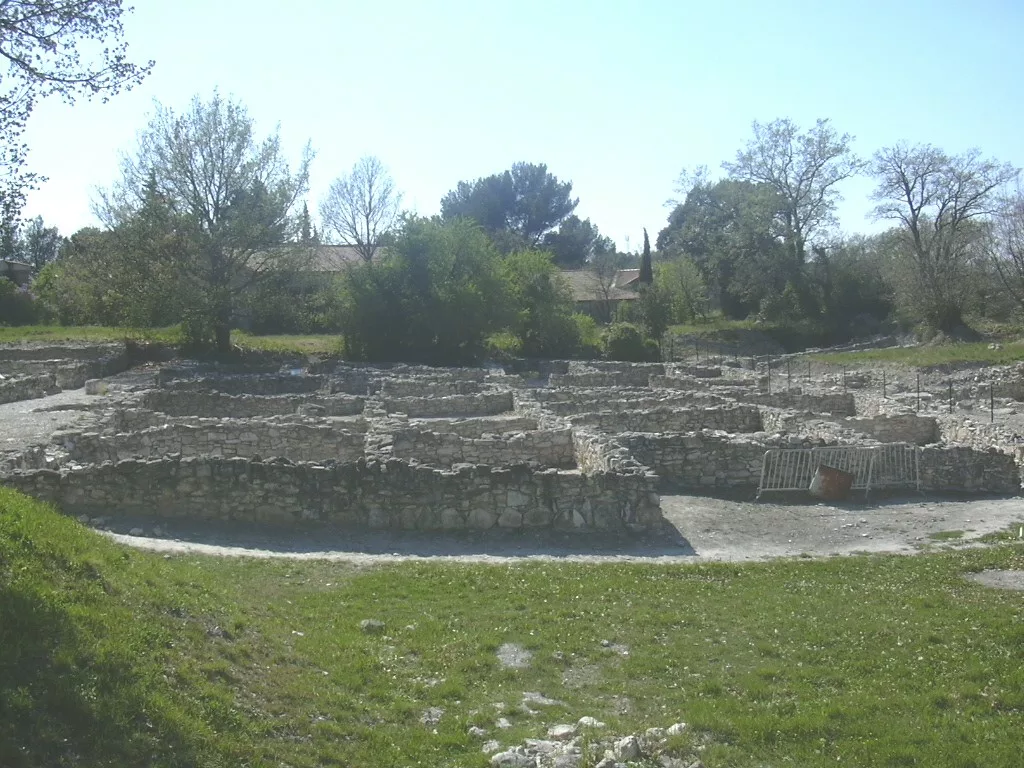
The Entremont oppidum is an archaeological site located in Aix-en-Provence, about 3 km from the city center, on the Puyricard plateau. In Antiquity, it was the capital of the Celto-Ligurian confederation, inhabited between around 180 and 90 BC.
The site consists of two successive settlements, known as Habitat 1 and Habitat 2, surrounded by successive ramparts that bear witness to its rapid development. After the Romans captured the site in 123 BC, the oppidum was gradually abandoned in favor of the new city of Aquae Sextiae, established below.
Entremont has yielded numerous archaeological discoveries, including statues, bas-reliefs, and “severed heads,” now mainly preserved at the Granet Museum in Aix-en-Provence.
The site was rediscovered in the 19th century and has been the subject of major excavations since the 20th century, helping researchers better understand the organization and life of this ancient city.
Must-Visit Museums in Aix-en-Provence
Hôtel de Caumont – Art Centre
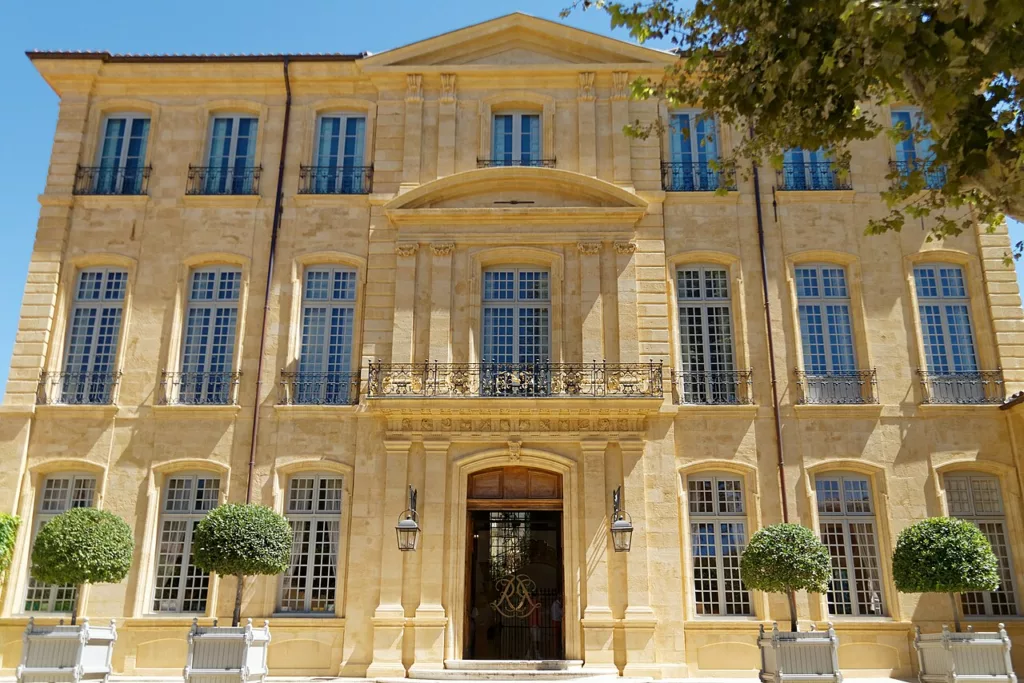
The Hôtel de Caumont is a private mansion located in Aix-en-Provence, built between 1715 and 1742. Originally the private residence of noble families, the building later served several purposes, including as a music conservatory in the 20th century. The city of Aix-en-Provence acquired it in 1964.
Since 2015, after extensive restoration, the Hôtel de Caumont has become an art center. It hosts temporary exhibitions dedicated to major artists such as Monet, Chagall, Botero, and Van Gogh.
The venue also offers a “recreated museum,” allowing visitors to discover the atmosphere of 18th-century salons, as well as French-style gardens open to the public.
Granet Museum
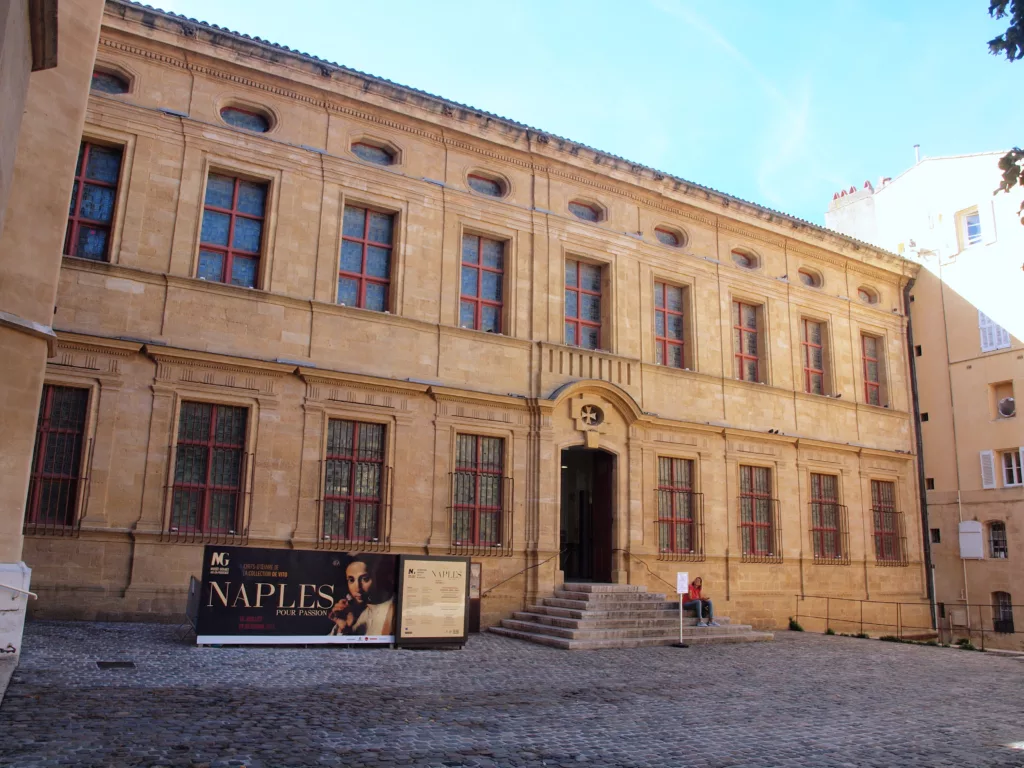
The Granet Museum is a museum of art, archaeology, and decorative arts. It opened to the public in 1838 and is now one of the region’s leading museums.
Its collections are particularly rich and cover a broad period, from Antiquity to the 20th century. They include paintings, sculptures, and archaeological objects, notably from local excavations and major donations.
The museum has a remarkable archaeology collection, with objects from sites such as the Entremont oppidum, bearing witness to the ancient presence of Celto-Ligurian populations in the region.
The sculpture section presents works ranging from the Renaissance to modern art, with major artists such as Alberto Giacometti. Some pieces are on loan from major national museums.
The Egyptian collection is one of the museum’s most important. Built up in the 19th century thanks to several donors, it includes statues, sarcophagi, stelae, mummies, and ritual objects that offer insight into ancient Egyptian civilization.
The museum also houses an important collection of European paintings, with works ranging from the 15th to the 20th century. Visitors can admire artists such as Rembrandt, Rubens, Ingres, Cézanne, and Picasso.
Since 2013, the Chapel of the White Penitents has been integrated into the museum under the name “Granet XXe.” It is dedicated to modern and contemporary art, notably thanks to loans from the Jean Planque Foundation.
Calisson Museum, Confiserie du Roy René

The Calisson Museum is a cultural and gourmet venue located in Aix-en-Provence, dedicated to the history of the famous Calisson d’Aix and the almond of Provence. It offers an immersive experience combining heritage, artisanal know-how, and innovation.
The museum trail retraces the history of this traditional confection through modern and sensory displays. Visitors discover the stages of calisson production, from almond tree cultivation to the making of the finished product.
The museum is located above the production workshops of the Confiserie du Roy René, allowing visitors to observe the confectioners at work through large glass windows. This close proximity offers a unique immersion into the production process of calissons and Provençal nougat.
The Roy René gardens complete the visit. They are freely accessible and feature a trail dedicated to the history of almond trees in Provence, with areas devoted to biodiversity and honey-producing plants that support bees.
Camp des Milles Memorial Site
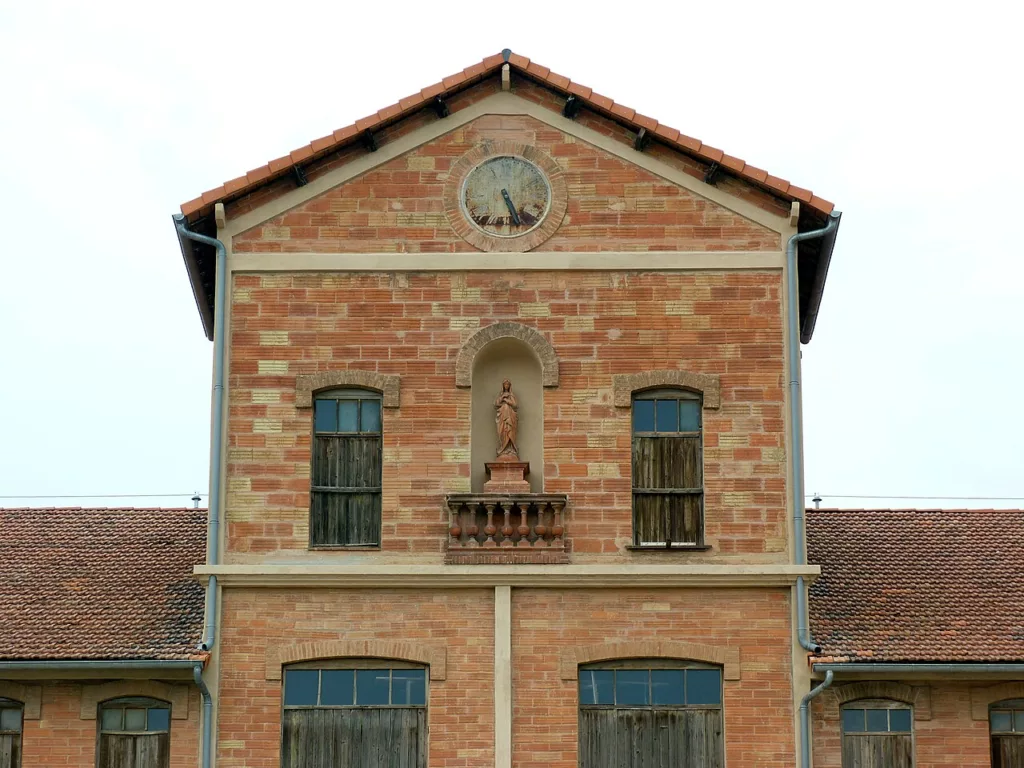
The Camp des Milles, located in Aix-en-Provence in a former industrial tile factory opened in 1882 and converted into a camp in 1939, was a French internment and deportation camp that operated during the Second World War. It first served to intern foreign nationals described as “enemy subjects,” then, under the Vichy regime, people deemed “undesirable,” including many anti-fascist refugees, intellectuals, artists, and Jews from several European countries.
From the summer of 1942 onward, the site became a transit point to Nazi deportation camps, particularly Auschwitz, with several convoys deporting more than 2,000 people, including women and children.
The camp was also marked by the presence of numerous interned artists and intellectuals, who continued to create despite the conditions of detention, leaving behind significant artistic production and historical testimonies. After the war, the site was reused for industrial purposes before gradually being recognized as a major place of remembrance.
Since 2012, Camp des Milles has been a memorial site open to the public, offering exhibition, visitor, and reflection spaces that retrace its history and analyze the mechanisms that led to persecution and genocide, as part of an educational mission aimed at fighting racism, antisemitism, and all forms of discrimination.
Vasarely Foundation, Aix-en-Provence
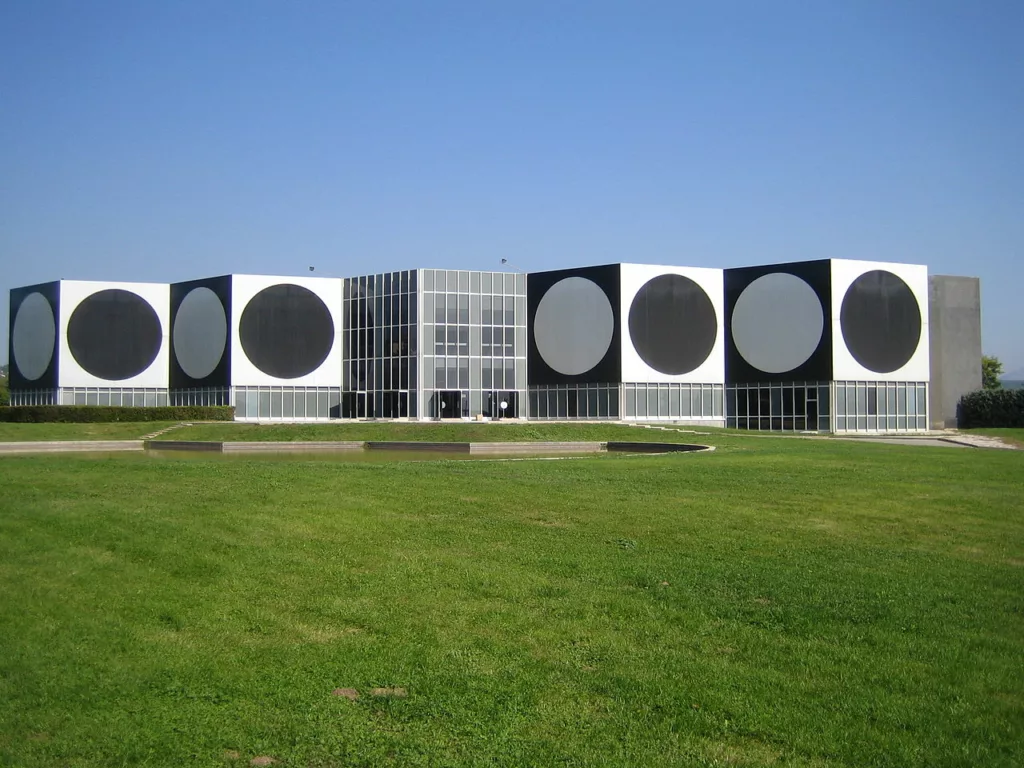
The Vasarely Foundation is a contemporary art center located in Aix-en-Provence, designed and funded by the Franco-Hungarian artist Victor Vasarely between 1971 and 1976, with the idea of creating a true “polychrome city of happiness,” where art would be directly integrated into architecture and accessible to as many people as possible.
The building, described as an “architectonic center,” is composed of 16 hexagonal honeycomb-like structures, forming a monumental ensemble where Vasarely’s works are not simply exhibited but integrated into the walls, façades, and interior spaces. The architecture itself is part of the artwork, with optical effects, geometric forms, and black/silver contrasts designed to produce kinetic visual effects.
Inside, the foundation presents large works known as “integrations,” which combine art and architecture, as well as emblematic creations of optical and kinetic art, a movement of which Vasarely was one of the main founders. The original aim of the project was to break away from artistic elitism by offering “art for all,” without social or cultural barriers.
Museum of the Pavillon de Vendôme
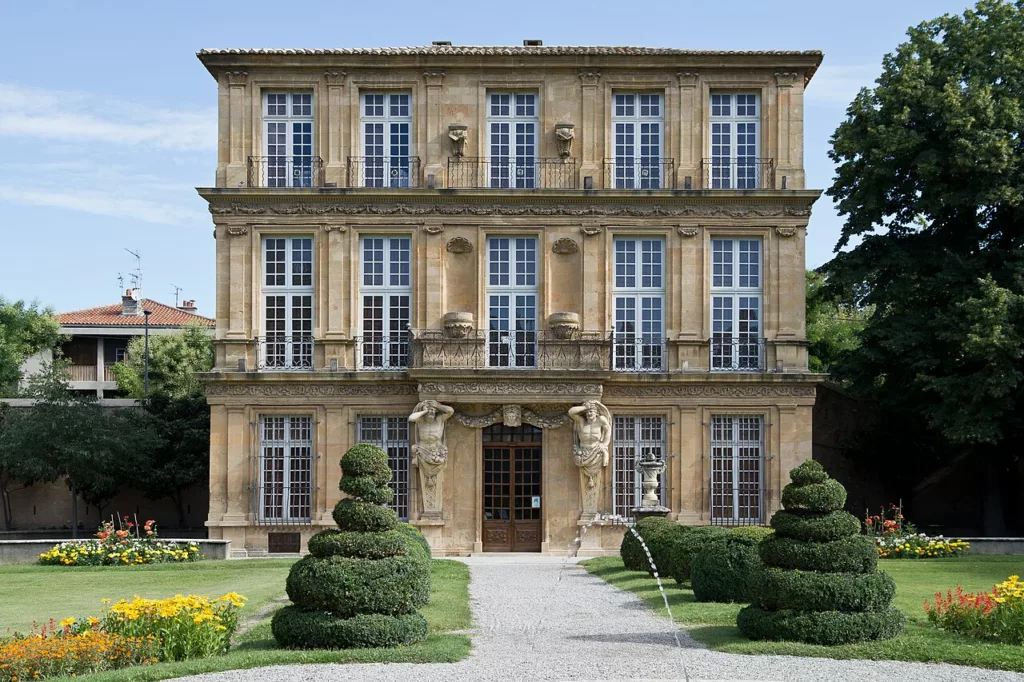
The Pavillon de Vendôme is a former 17th-century mansion located in Aix-en-Provence, built between 1665 and 1667 for Louis de Mercœur, Duke of Vendôme, in a Provençal classical style attributed to the architect Antoine Matisse.
Originally designed as a country residence outside the city walls, it is distinguished by its elegant façade with superimposed orders, sculpted atlantes supporting a balcony, and a French-style garden inspired by the 17th century.
Over the centuries, the building has served various purposes, evolving from an aristocratic residence into a religious boarding school in the 19th century, before being acquired and restored by art enthusiast Henri Dobler in the early 20th century, who contributed to its preservation and designation as a historic monument.
Today, it belongs to the city of Aix-en-Provence and functions as a museum and exhibition space for art and photography, while preserving a remarkable collection of interior decorations, antique furniture, and a public garden that make it a major cultural and heritage site in the city.
Parks and Green Spaces in Aix-en-Provence
Lac de Bimont
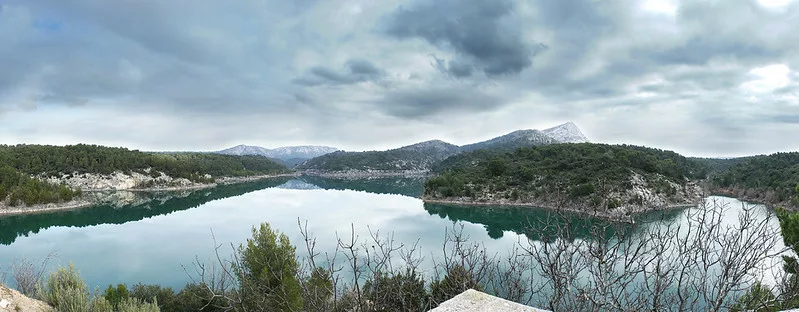
The Lac de Bimont is a must-visit destination for nature lovers near Aix-en-Provence. Nestled at the foot of the majestic Montagne Sainte-Victoire, it offers a spectacular and quintessentially Provençal setting.
Its turquoise waters contrast beautifully with the white limestone cliffs, creating an ideal landscape for photography. The site is also perfect for hiking, with several accessible trails around the lake.
Garden of the Painters
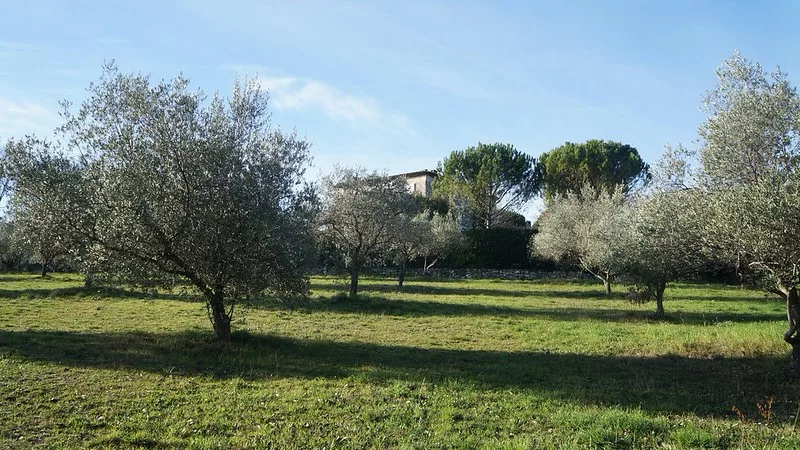
The Garden of the Painters has a history closely linked to Paul Cézanne. Located on a scenic viewpoint, it offered the painter an exceptional perspective of the Montagne Sainte-Victoire. He regularly came here to capture the changing light that enhances the Provençal landscape.
Today, the city transformed this area into a public promenade in 2004. Covering approximately 400 m², it showcases typical Provençal features such as terraced stone walls and Mediterranean vegetation.
Promenade de la Torse
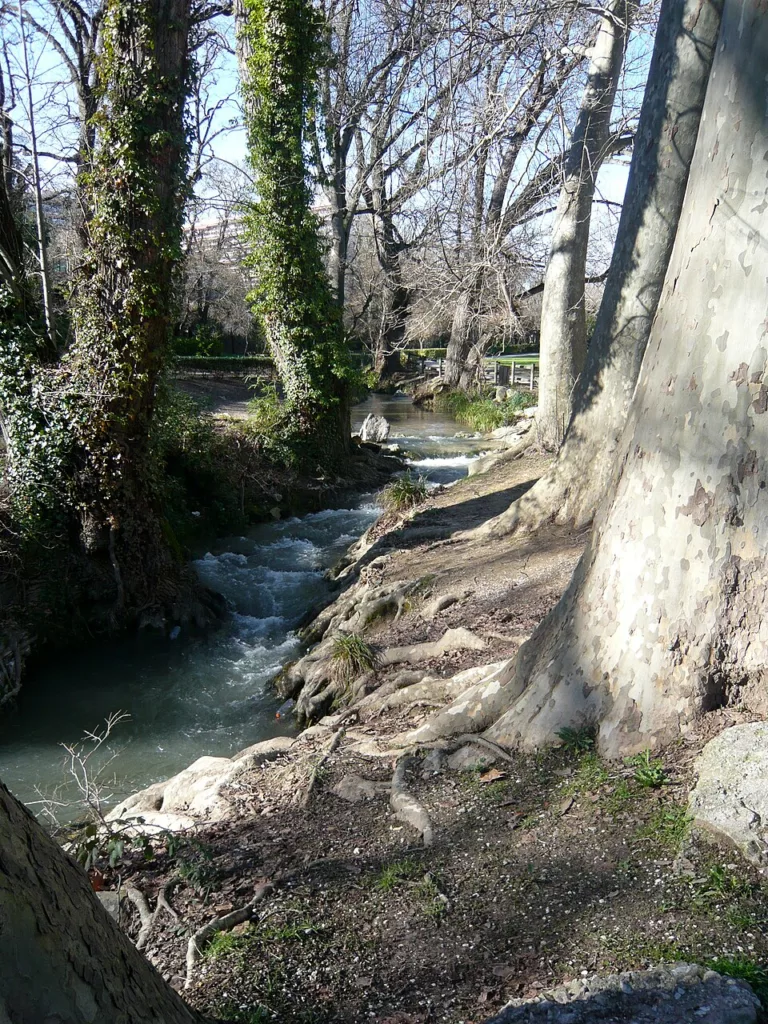
The Promenade de la Torse is a natural area located east of the city along the stream of the same name. Created from 1984 onward during the development of the surrounding neighborhoods, it now covers nearly 8 hectares.
The pathway follows the watercourse and crosses several wooden footbridges, offering a peaceful and immersive walk. A large 2,500 m² pond populated by fish, ducks, and swans adds to the site’s charm. Popular with joggers, it is also ideal for families and anyone seeking nature within the city.
Parc Jourdan
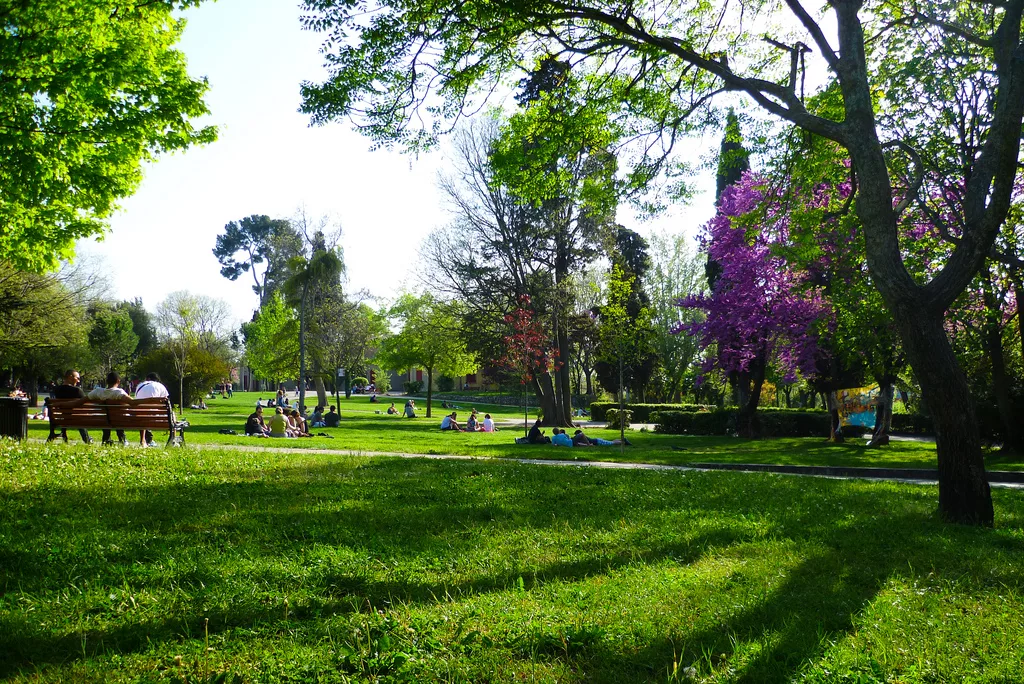
Parc Jourdan is one of the city’s most iconic green spaces. Located in the southern part of Aix-en-Provence, it covers around 4 hectares and offers several convenient access points. Its origins date back to 1926, although it was officially landscaped and named in 1935.
From the main entrance, a majestic avenue lined with lime trees leads to an elegant reflecting pool. An impressive water staircase connects the lower and upper sections of the park. On the heights stands the Oustau de Prouvènço, an 18th-century country house dedicated to Provençal culture.
The park also features busts of Frédéric Mistral and Émile Zola. Lively during the summer with numerous events, it remains open year-round with seasonal opening hours.
Gastronomy & Specialties of Aix-en-Provence
The Calisson
The Calisson d’Aix is an iconic Provençal confection originating from Aix-en-Provence. It is made from a mixture of finely ground almonds and candied fruits, most commonly melon and orange. Its soft texture is covered with royal icing placed on a thin wafer base.
This specialty has existed for several centuries and is said to be linked to religious traditions or medieval legends.
The Provençal Navette

The Provençal navette is a traditional biscuit flavored with orange blossom. It is generally made from flour, olive oil, and sometimes almonds. Its elongated shape resembles a small boat, which is where it gets its name, “navette.” It is particularly associated with local traditions, especially during religious celebrations. Crisp and lightly sweetened, it is often enjoyed as an afternoon snack or with coffee.
Provençal Tomatoes
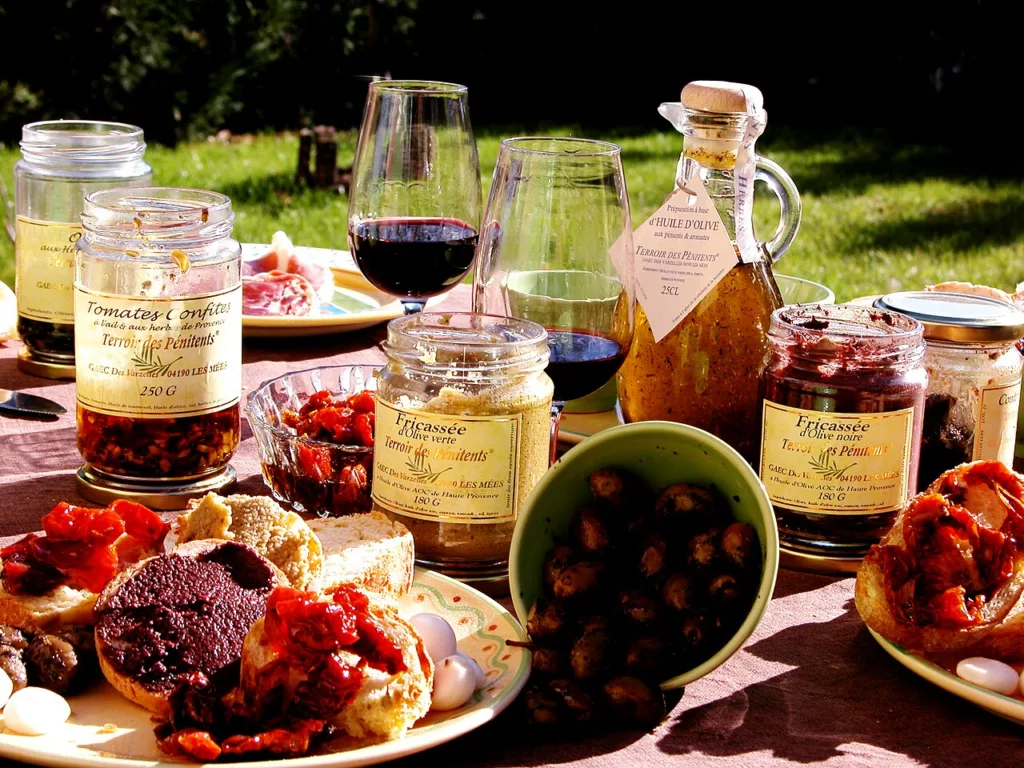
Provençal tomatoes are a simple and flavorful dish typical of southern France. They are prepared with halved tomatoes topped with garlic, parsley, and breadcrumbs. Olive oil, an essential ingredient in Provençal cuisine, gives them their distinctive Mediterranean flavor.
Soupe au Pistou
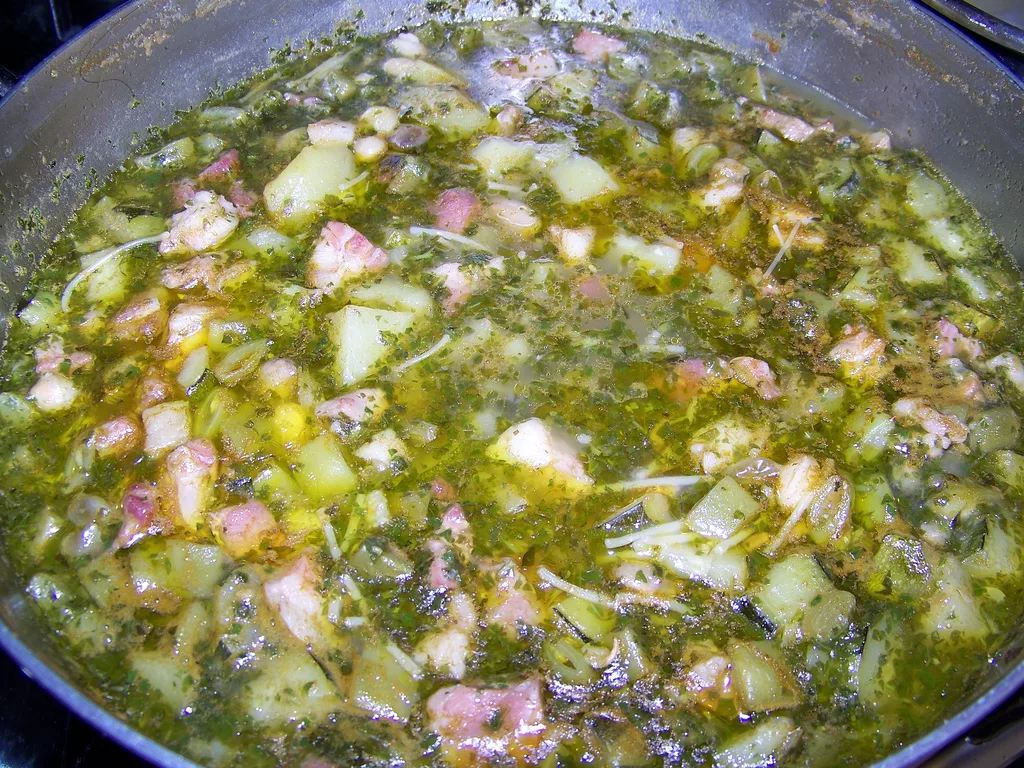
Soupe au pistou is an iconic specialty of Provençal cuisine, especially popular during the summer. It is made with seasonal vegetables such as zucchini, green beans, tomatoes, and potatoes. Its distinctive feature is pistou, a sauce made from basil, garlic, and olive oil, which is added at the end of cooking.
Wines of Aix-en-Provence
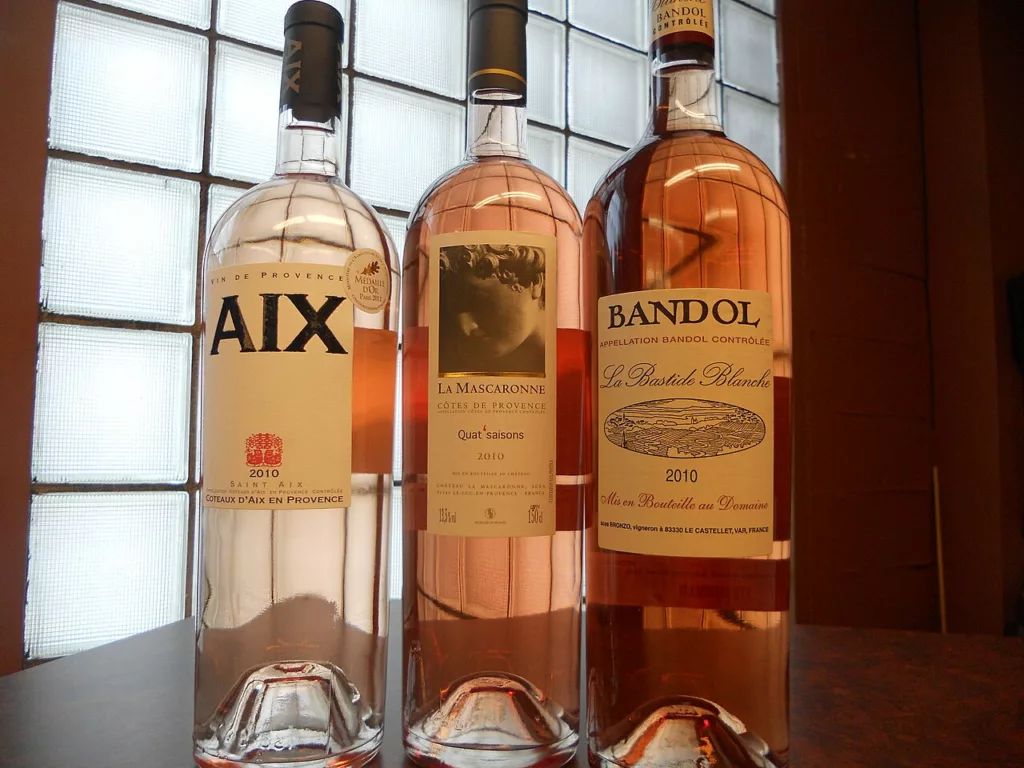
The wines of Aix-en-Provence are produced under the Coteaux d’Aix-en-Provence appellation, officially recognized since 1985. This vineyard benefits from an ideal Mediterranean climate, with abundant sunshine and the influence of the mistral wind. Its rosé wines are particularly renowned, known for being fresh, fruity, and highly appreciated during the summer. The region also produces structured red wines and aromatic white wines.
Excursions from Aix-en-Provence
The Villages of the Luberon
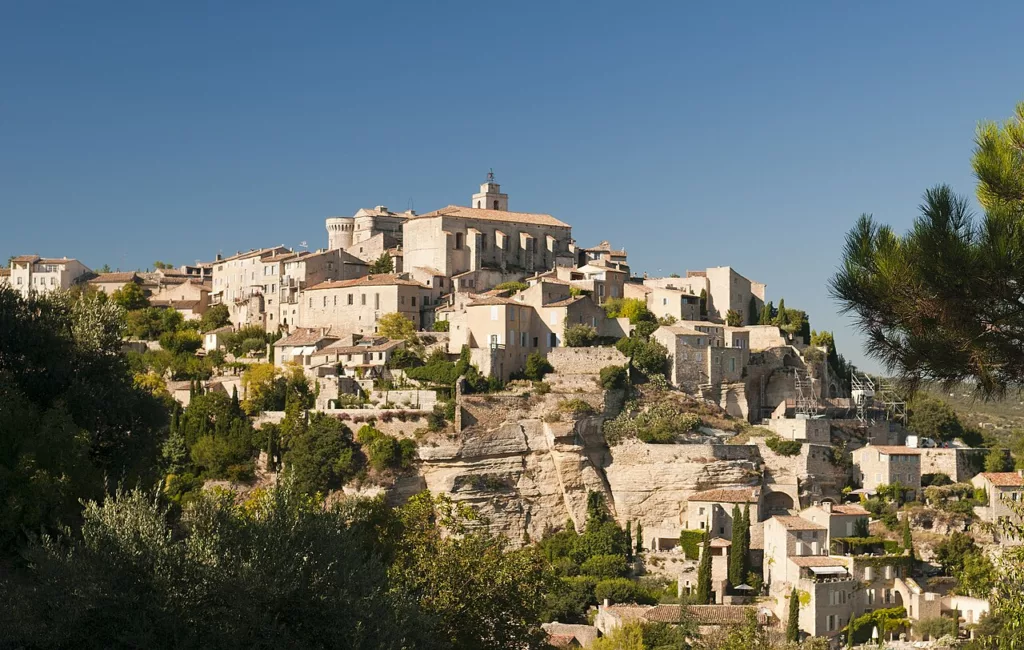
This region captivates visitors with its rolling hills, vineyards, and lavender fields that are quintessentially Provençal. Among the most famous villages, Gordes impresses with its hilltop architecture and panoramic views. The village of Roussillon is renowned for its ochre-colored cliffs and houses, while Lourmarin charms visitors with its lively streets and Renaissance château.
These villages offer an authentic immersion into the Provençal way of life. Between local markets, traditional craftsmanship, and gastronomy, each stop promises memorable discoveries.
Arles
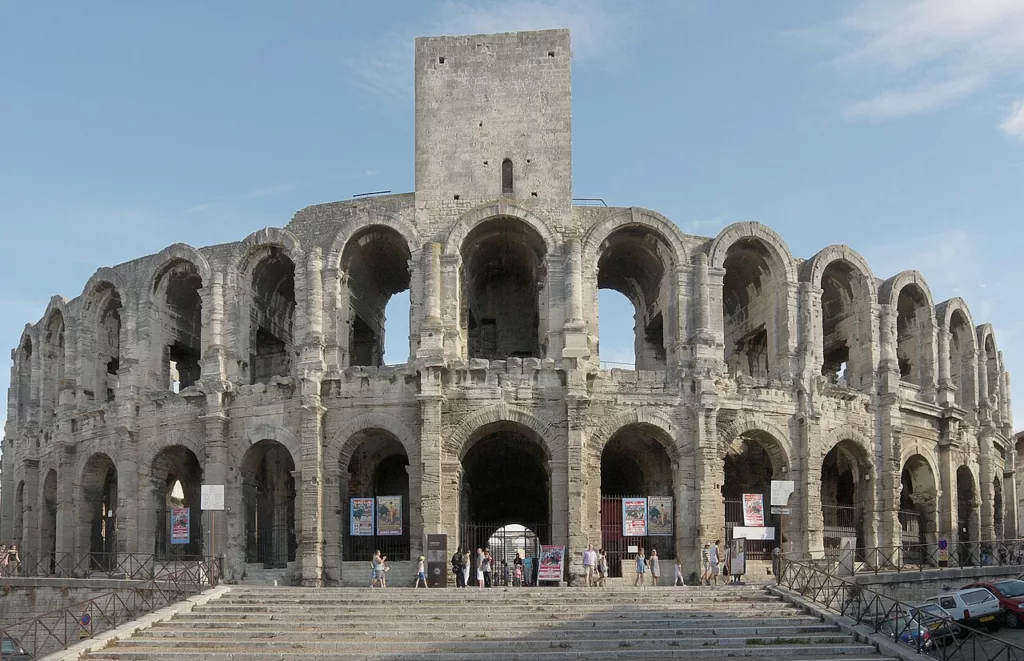
An ancient Roman city, Arles is home to remarkable monuments such as the Arles Arena and the Ancient Theatre of Arles. These remains testify to the importance of Arles during the Roman Empire.
The city is also famous for inspiring the painter Vincent van Gogh during his stay in Provence. Its picturesque streets and colorful façades recall the landscapes he immortalized in his paintings.
Arles is also known for its traditions, particularly Camargue culture and its popular festivals. Every year, it hosts major cultural events such as the Rencontres d’Arles photography festival.
Avignon
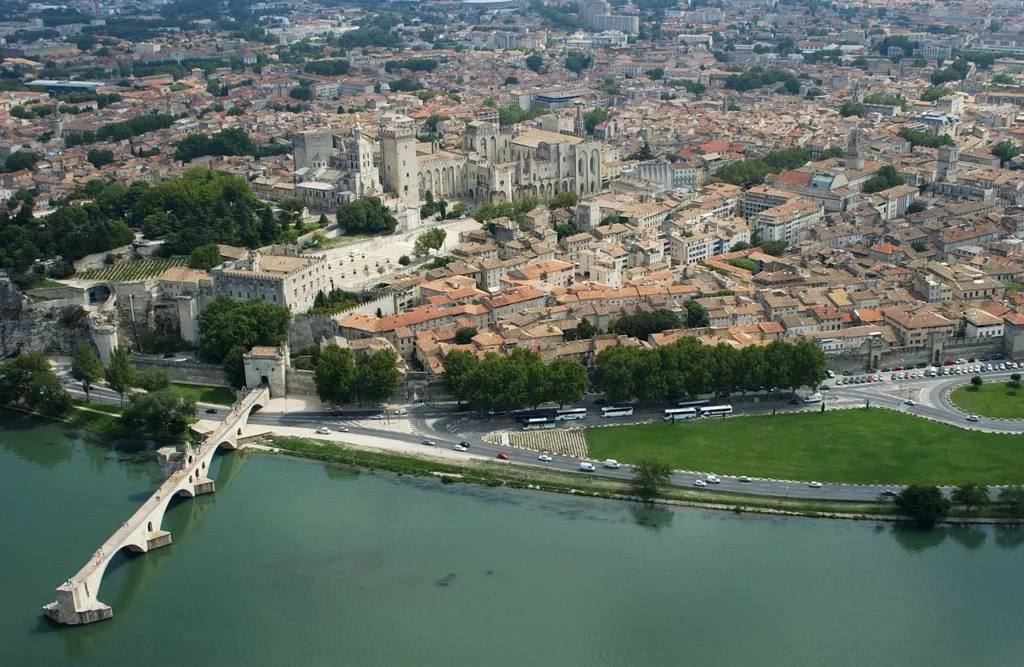
A former papal city during the 14th century, Avignon is dominated by the famous Palace of the Popes, one of the largest Gothic buildings in Europe. The Saint-Bénézet Bridge, better known as the Bridge of Avignon, is another must-see landmark.
The historic center, listed as a UNESCO World Heritage Site, invites visitors to wander through its charming streets.
Avignon is also a vibrant cultural city thanks to the renowned Avignon Festival. Every summer, the festival transforms the city into a vast artistic stage. Lively squares, markets, and café terraces contribute to its welcoming atmosphere.
Marseille
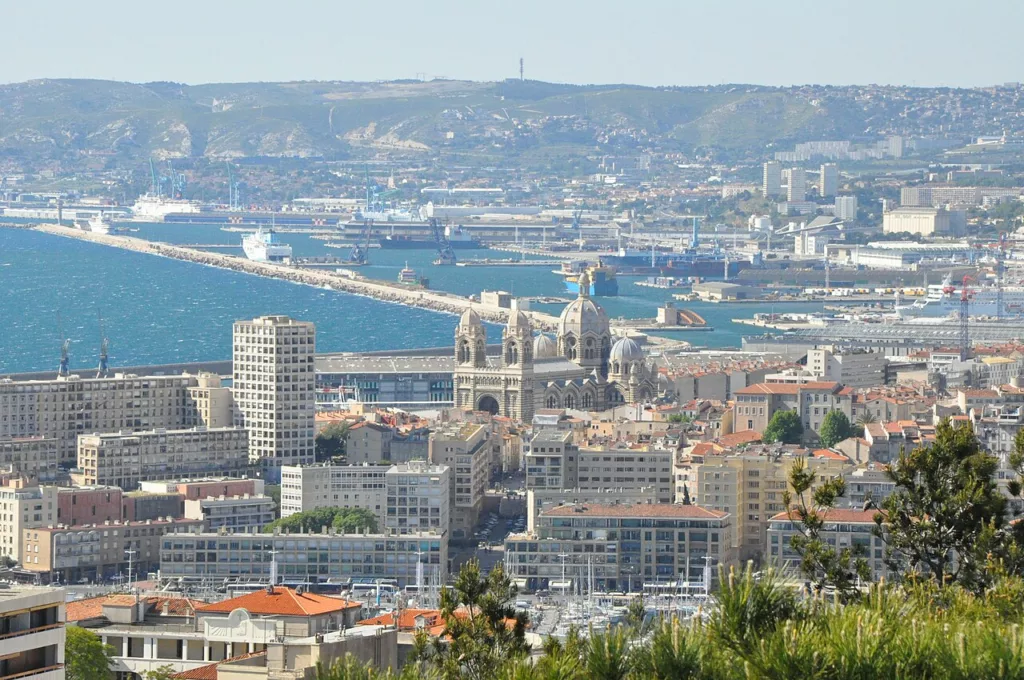
As the oldest city in France, Marseille boasts a rich heritage and a unique Mediterranean identity. The Old Port of Marseille is the vibrant heart of the city, bustling with cafés, terraces, and markets. The Basilica of Notre-Dame de la Garde offers spectacular views over the entire city and the sea.
Nature lovers will enjoy an excursion to the Calanques National Park, known for its wild and preserved landscapes. Marseille also charms visitors with its distinctive neighborhoods such as Le Panier, famous for its colorful streets and authentic atmosphere. As a cosmopolitan city, Marseille reflects a blend of cultures that can be felt in its gastronomy and vibrant lifestyle.
The famous bouillabaisse is an essential local specialty for lovers of Provençal cuisine.
Conclusion
Visiting Aix-en-Provence means discovering a city of art, history, and light at the heart of Provence. Its exceptional heritage, featuring cathedrals, mansions, fountains, and iconic squares, reflects centuries of rich and well-preserved history.
The city also captivates visitors with its must-see museums, such as the Granet Museum and the Hôtel de Caumont, which showcase the region’s artistic heritage and the work of great masters such as Cézanne.
Its parks, gardens, and natural spaces provide a true escape into tranquility, whether at Parc Jourdan, the Promenade de la Torse, or among the landscapes of Montagne Sainte-Victoire.
Aix-en-Provence is also a gourmet destination, where visitors can enjoy iconic specialties such as calissons, navettes, and traditional Provençal cuisine.
Finally, its ideal location makes it easy to explore nearby destinations such as Marseille, Avignon, Arles, and the villages of the Luberon, offering access to all the richness of Provence.
Aix-en-Provence is therefore a complete destination, perfect for a stay that combines culture, nature, gastronomy, and the Mediterranean art of living.