Visit La Rochelle: 30 Must-See Attractions and Things to Do
La Rochelle is an iconic port city on France’s Atlantic coast, located in the Charente-Maritime department. Combining maritime history, medieval architecture, and nautical activities, it attracts visitors with its heritage, museums, markets, and walks along the Old Port or the nearby islands.
Discover La Rochelle in a different way with our treasure hunt experience, a blend of an escape game and a cultural tour designed to uncover the secrets and highlights of this city.
Monuments & Historical Heritage – La Rochelle
1. Saint-Nicolas, Chain, and Lantern Towers
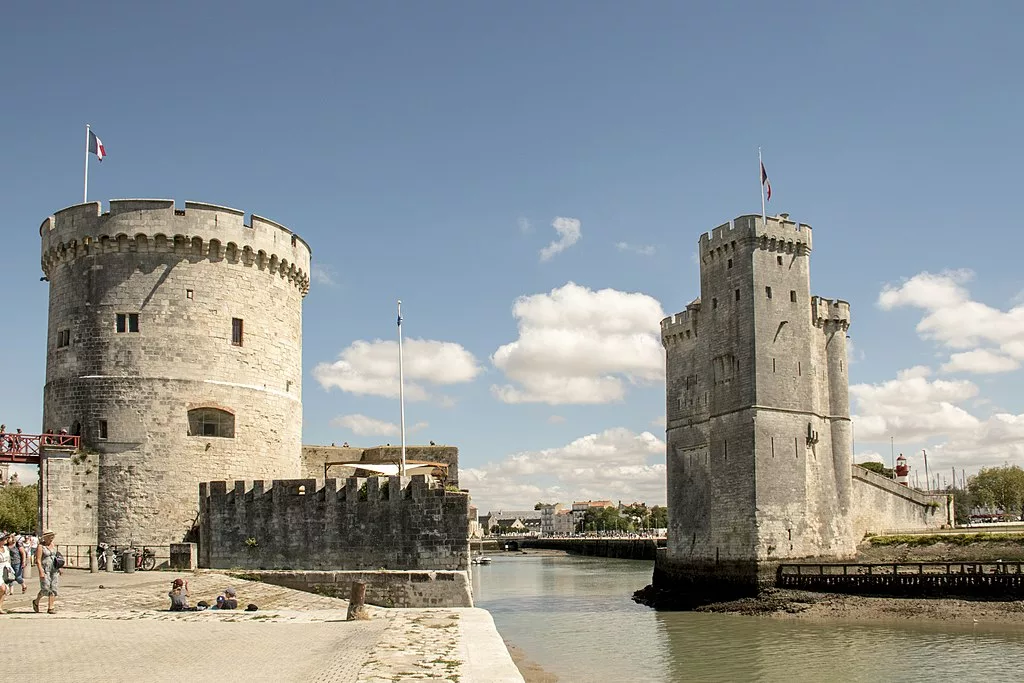
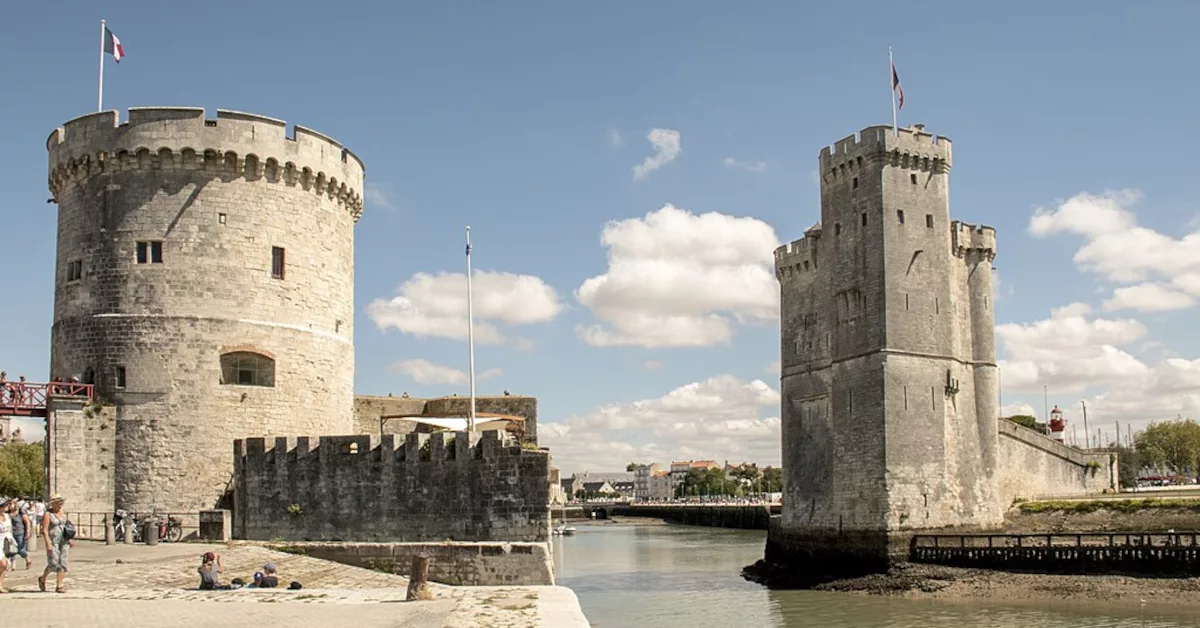
The Saint-Nicolas, Chain, and Lantern Towers are three iconic medieval landmarks that once defended the entrance to La Rochelle’s Old Port.
The Saint-Nicolas Tower was built in the 14th century, around 1345 according to historical studies. The Chain Tower was constructed between 1382 and 1390. A heavy iron chain once connected the Chain Tower to the Saint-Nicolas Tower, allowing access to the harbor to be blocked.
The Lantern Tower, the oldest of the three, dates back to the late 12th century. The Saint-Nicolas Tower combined defensive and residential functions, notably housing the tower captain’s residence. Due to the unstable ground on which it was built, the Saint-Nicolas Tower has gradually tilted over the centuries.
The Chain Tower lost its roof in the 17th century following an explosion linked to military conflicts, which altered its appearance.
Discover the secrets and roles of La Rochelle’s three defensive towers through our La Rochelle treasure hunt.
2. The Grosse-Horloge Gate
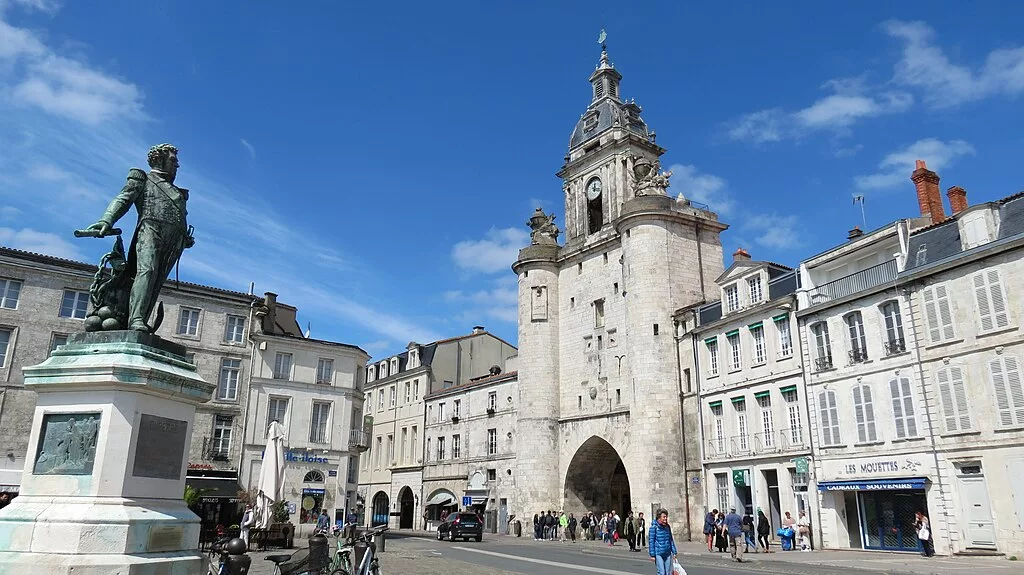
The Grosse-Horloge is a former city gate of La Rochelle, originally built in the 12th century as part of the first medieval city walls. During the Middle Ages, it was known as the Perrot Gate because it provided access to the district of the same name.
In 1478, an octagonal bell tower was added above the gate, transforming it into the town’s belfry. The bell tower was topped with a campanile housing the clock bell, which gave the gate its current name.
Between 1744 and 1746, the upper section of the structure was redesigned in the Louis XV style, with a dome, columns, and symbolic decorations.
The medieval turrets flanking the tower are decorated with trophies representing astronomical and maritime allegories.
Discover the hidden details of the Grosse-Horloge in our La Rochelle treasure hunt.
3. City Hall
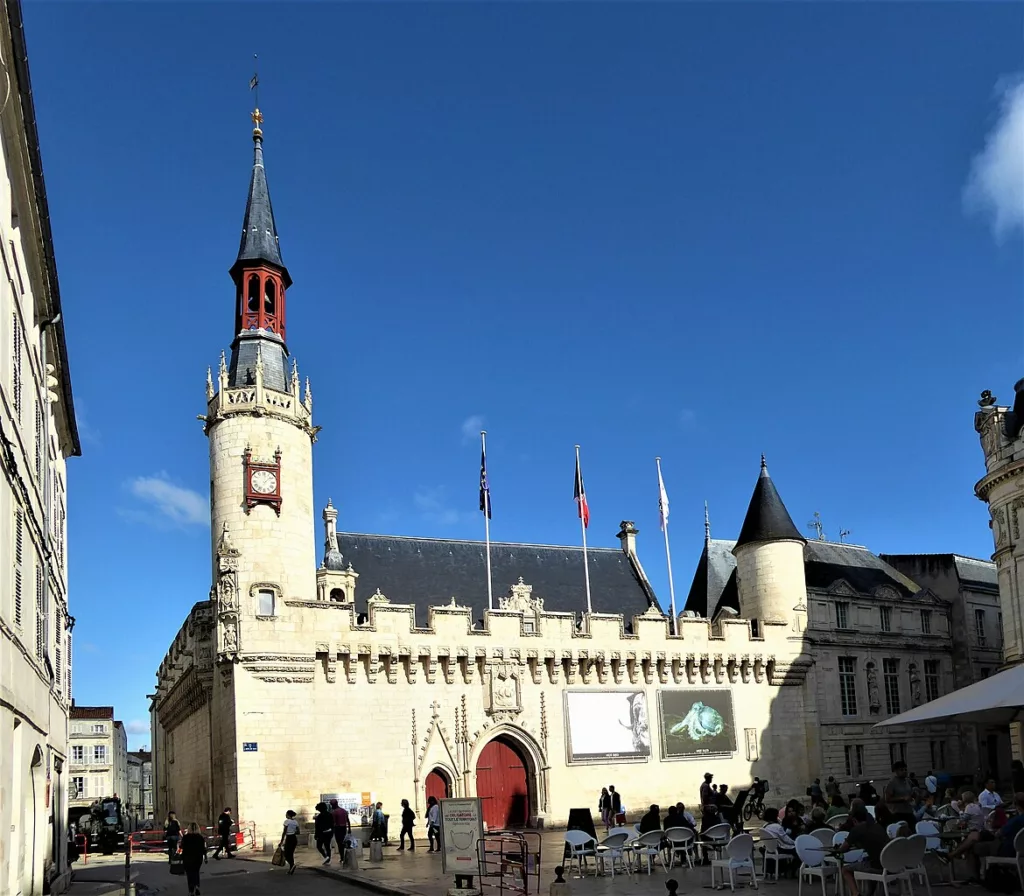
La Rochelle City Hall has housed the municipal administration since 1298, making it the oldest town hall in France still serving its original function.
It consists of a Renaissance-style main building protected by a flamboyant Gothic defensive wall featuring battlements and machicolations. The enclosure includes towers, a walkway, and gargoyles, reinforcing the fortified appearance of the town hall.
Jean Guiton, the Huguenot mayor during the Siege of La Rochelle in 1627–1628, is commemorated at City Hall; his statue stands on the square in front of the building.
The building suffered a major fire on June 28, 2013, which destroyed much of its timber framework and roofing. During the restoration led by architect Philippe Villeneuve, the reconstruction was carried out “identically, but with modern techniques”: preserving the original appearance while strengthening the foundations with concrete.
Learn more about Jean Guiton and the coat of arms of La Rochelle through our La Rochelle tour.
4. Saint-Sauveur Church
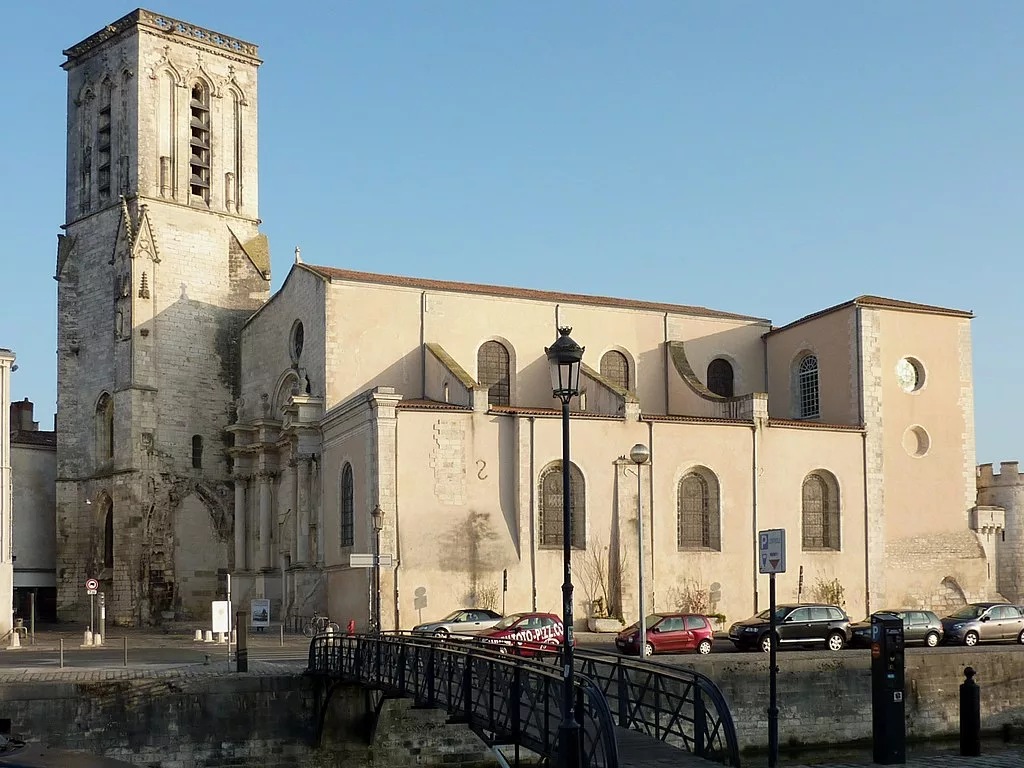
Saint-Sauveur Church is located in the historic center of La Rochelle, near the Old Port. Construction began in the 12th century and continued until the 17th century, with several modifications made over time.
The building combines Romanesque and Gothic styles, reflecting its architectural evolution. The church was heavily damaged during the French Wars of Religion in the 16th century and was subsequently restored.
Several works of art and statues are preserved inside the church, including sculptures of saints and ornate altarpieces.
The church is still used for worship today but also hosts concerts and exhibitions.
5. Saint-Louis Cathedral
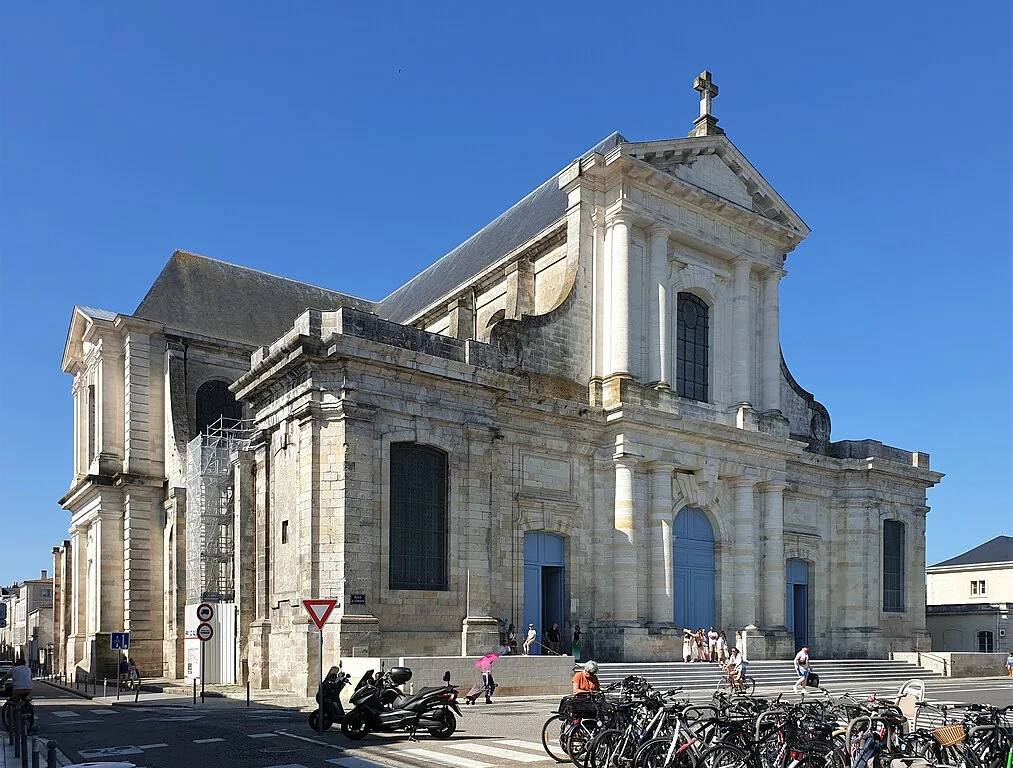
Its construction began in 1742 and was completed in 1762, replacing an old medieval building destroyed during the Wars of Religion.
The Cathedral owes its name to Louis IX, King of France in the 13th century, known for his piety and sense of justice, and later a symbol of the Christian monarchy. The name Saint-Louis reflects the desire to restore Catholic religious authority after a period of conflict and Protestant dominance in La Rochelle.
The architect chose a neoclassical style, influenced by Roman architecture, for the façade and interior structure.
Several stained-glass windows depict biblical scenes and figures of local saints. The cathedral was consecrated in 1782 by the Bishop of La Rochelle.
Discover the hidden details of this façade in our La Rochelle treasure hunt.
6. Chapel of the White Ladies
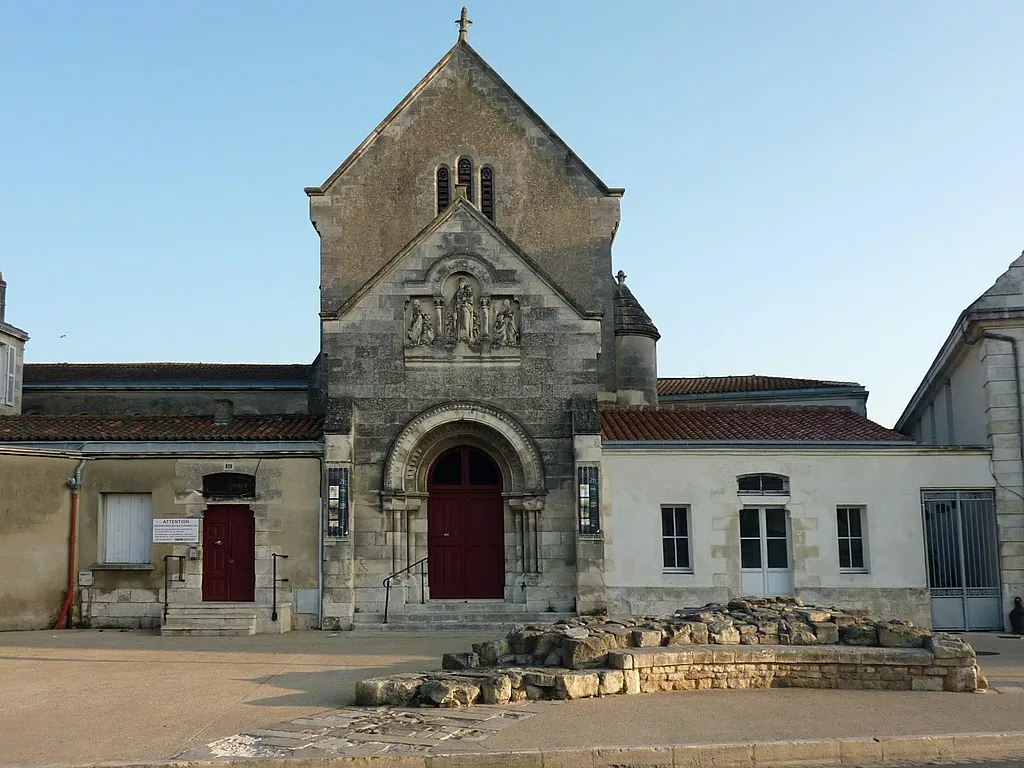
The Chapel of the White Ladies was built in 1878 by architect Gustave Allaux for the convent of the Sisters of Our Lady of Charity, known as the “White Ladies.” The White Ladies were a female religious order dedicated to education and charitable work. The name therefore refers to their white habit, a symbol of purity and devotion.
The city of La Rochelle acquired the building in 1989 with the initial idea of turning it into a media library, but it was ultimately transformed into an art gallery. Since 2011, it has been an exhibition venue dedicated to contemporary art in the city. The chapel hosts around three to four exhibitions per year, including installations, videos, sculptures, photography, and painting.
7. Halles Market
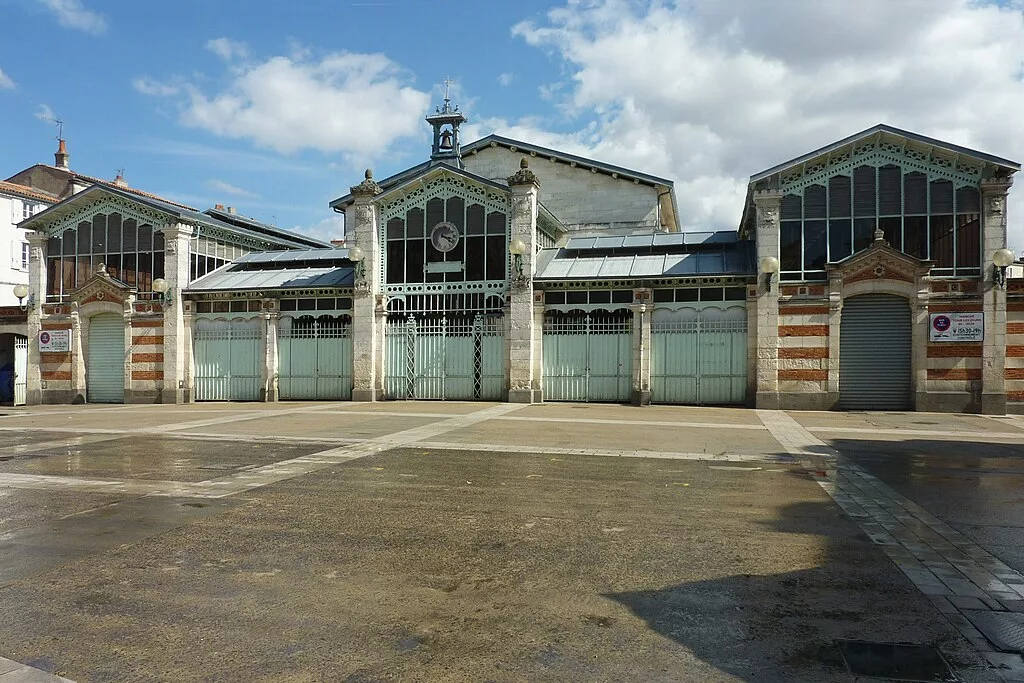
The Halles Market is located in the heart of La Rochelle, near the Old Port, and is the city’s main covered market. The current building, constructed in 1928, is a typical example of the iron-and-glass architecture of the period.
The market is home to around one hundred vendors, offering fruit, vegetables, meat, fish, cheese, and local products. It is particularly renowned for its seafood, including oysters, mussels, shrimp, and freshly caught fish.
The market is open every day, with peak activity on weekends and in the morning for fresh shopping. The Halles also offer specific regional products, such as Pineau des Charentes, cognac, and cheese specialties.
Museums & Aquarium of La Rochelle
1. La Rochelle Aquarium
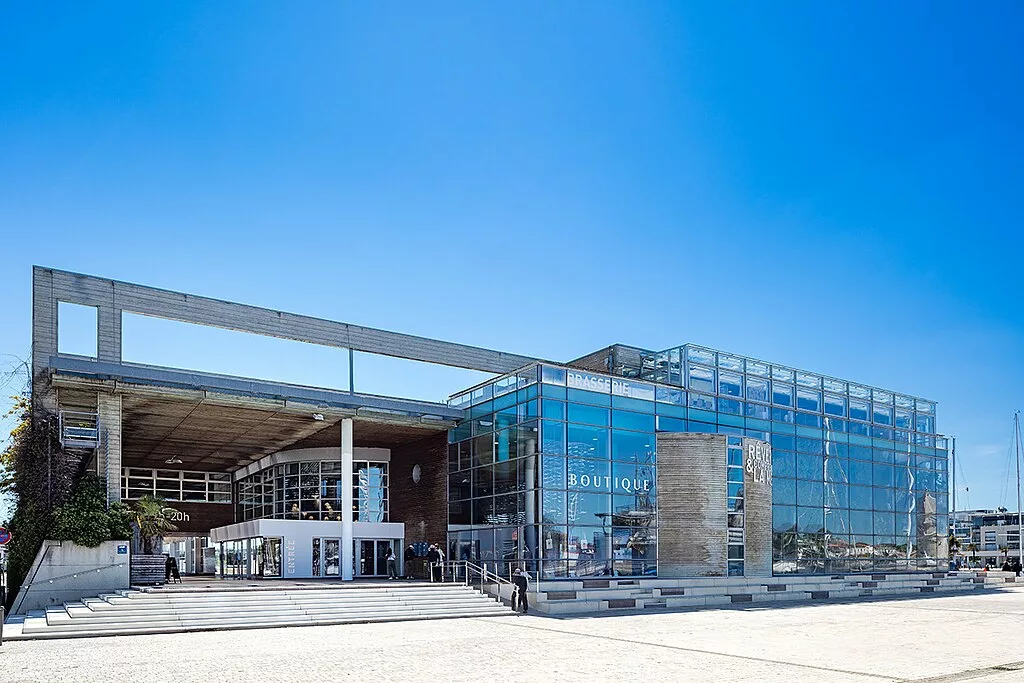
The La Rochelle Aquarium is one of the largest private aquariums in Europe, open since 1988. The Aquarium is home to more than 12,000 marine animals, representing nearly 600 species from around the world.
It features several themed areas, such as cold seas, the tropics, and the oceans, allowing visitors to discover different ecosystems. Visitors can admire rays, sharks, seahorses, turtles, and jellyfish, as well as many species of colorful fish.
It has large panoramic tanks, allowing visitors to fully immerse themselves in underwater life.
2. Natural History Museum
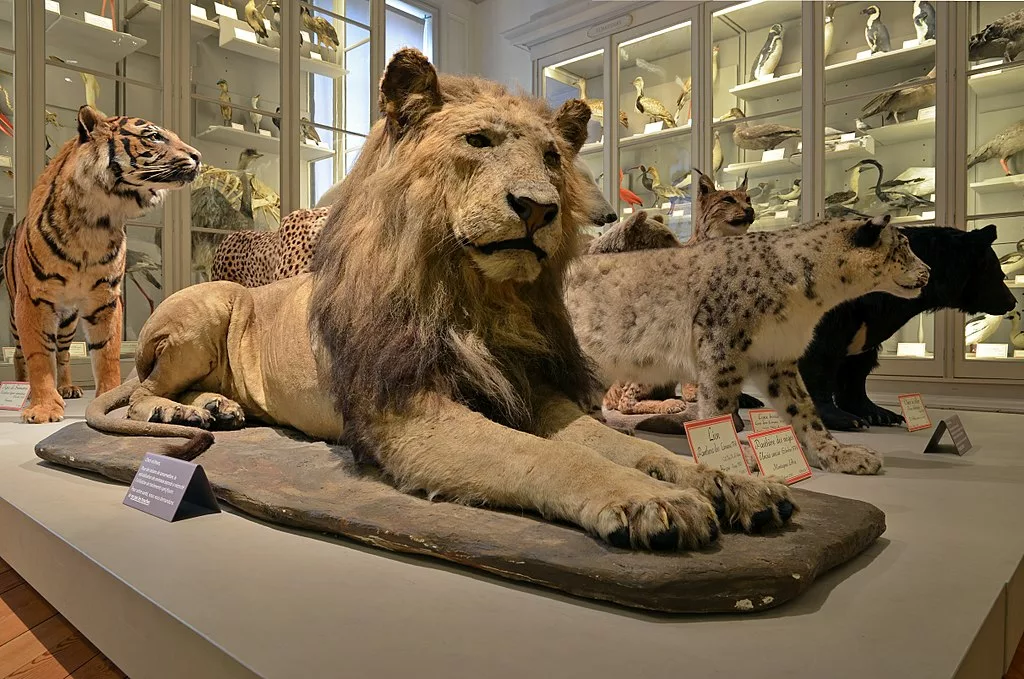
The history of the museum dates back to the 18th century, with the cabinet of Clément Lafaille, a naturalist from La Rochelle who donated his collection and library.
The building housing the museum is the former Hôtel du Gouvernement, granted to the city by Napoleon in 1808. It was fully renovated and modernized in 2007, with a more interactive and contemporary museum design.
The La Rochelle Natural History Museum displays nearly 10,000 objects across 5 levels and 32 rooms, drawn from natural history and ethnographic collections.
Its collections cover a wide range of fields, including zoology, botany, mineralogy, paleontology, and ethnography. It also includes a scientific library dedicated to natural sciences and ethnography, with thousands of works.
3. Maritime Museum
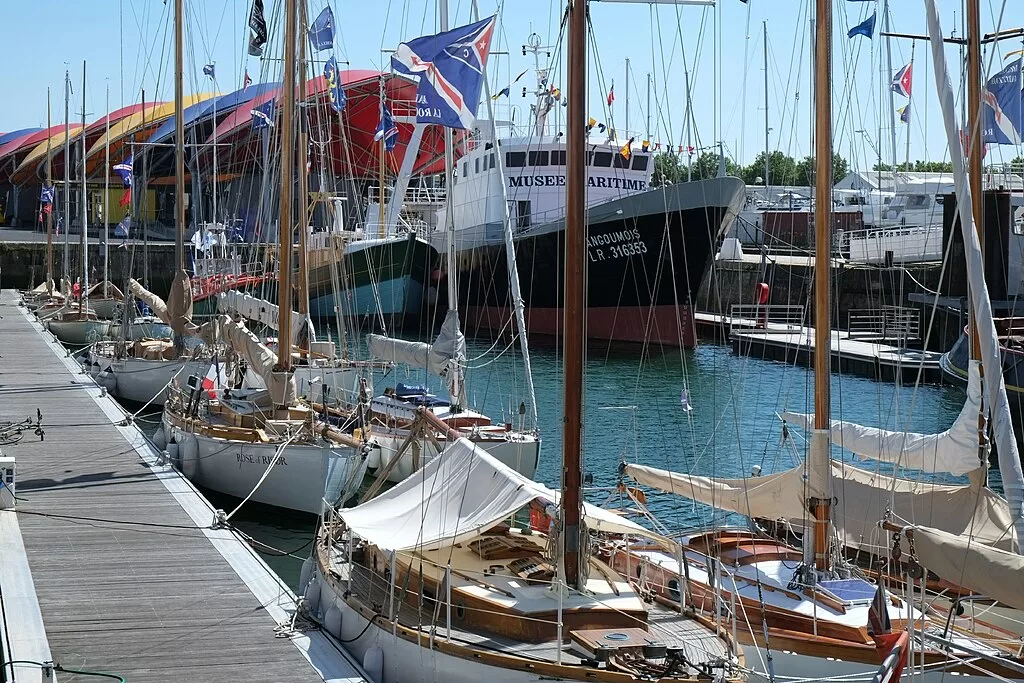
The Maritime Museum of La Rochelle is located on Place Bernard Moitessier, in the trawler basin of the Old Port.
It preserves a heritage fleet of around ten vessels, eight of which are listed as Historic Monuments. Three of these vessels are open to visitors afloat, allowing visitors to board them and discover life on board.
Among its emblematic vessels is the weather frigate France 1, listed as a historic monument.
The museum was founded in 1988, first as an association, before becoming a municipal museum.
The onshore museum consists of a flag gallery covered with colorful sail-shaped canvases, housing the permanent exhibition “La Rochelle, Born from the Sea.”
The former port “Encan” building houses a collection of small pleasure boats and temporary exhibitions. In its collections, the museum presents models and dioramas illustrating vanished ships or key moments in port history. The museum is also committed to preserving intangible maritime heritage, with testimonies from former sailors, interviews, and activities related to sea heritage.
4. New World Museum
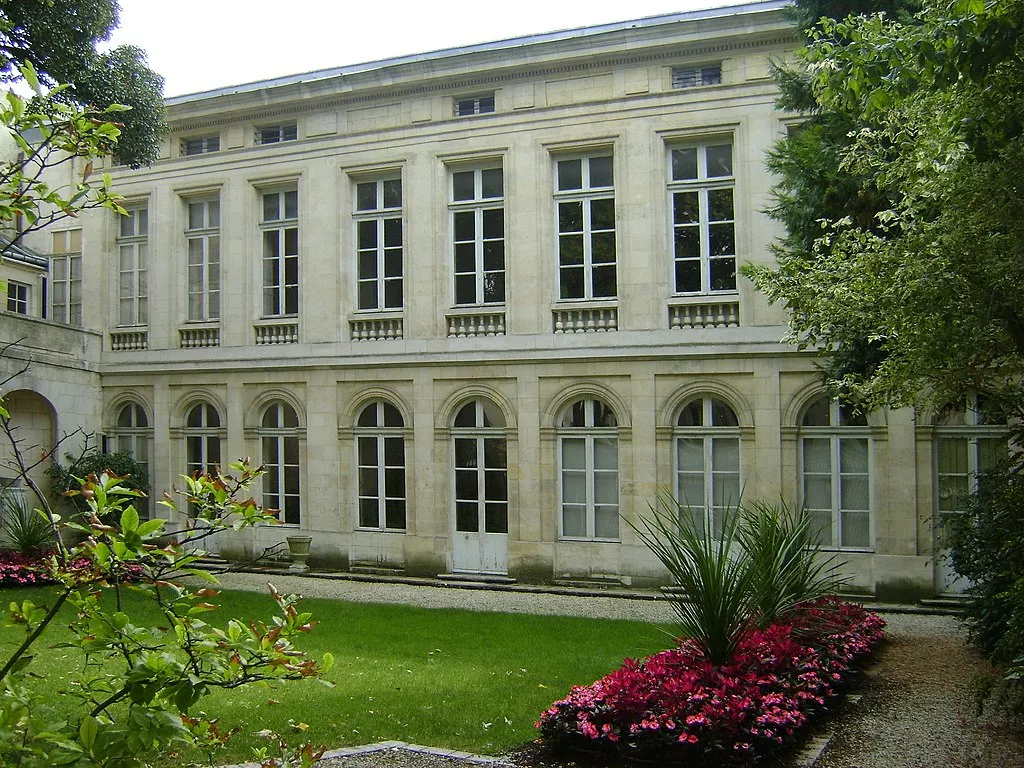
The New World Museum is located at 10 Rue Fleuriau, in the former 18th-century Fleuriau townhouse.
The Hôtel Fleuriau, which houses the museum, belonged to the Fleuriau family, who became wealthy through a plantation in Saint-Domingue, present-day Haiti.
It was inaugurated in 1982 at the initiative of Michel Crépeau, then mayor of La Rochelle. The museum is dedicated to the historical relations between France — particularly La Rochelle — and the Americas, including the Caribbean, New France, and Louisiana.
It notably addresses the theme of the slave trade and slavery in the Caribbean colonies. The collections include paintings, drawings, engravings, old maps, sculptures, and photographs related to the “New World.”
The museum also holds decorative art objects and rare American colonial furniture.
Parks, Gardens & Walks – La Rochelle
1. Parc Charruyer
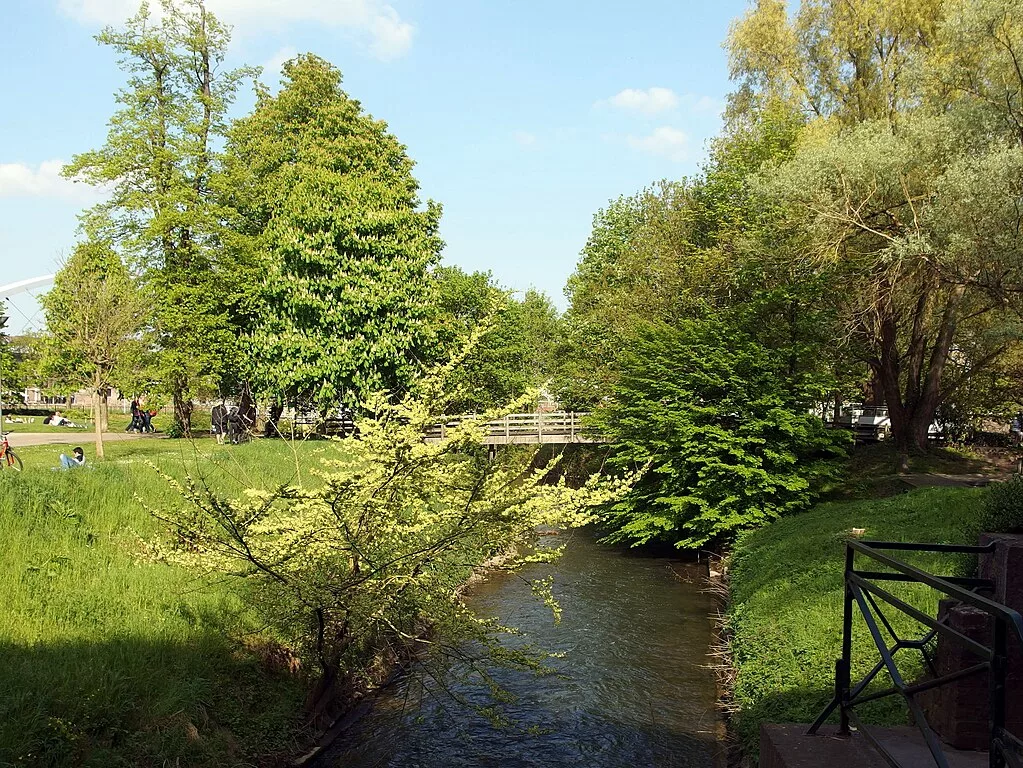
Parc Charruyer covers around 40 hectares, making it the largest park in central La Rochelle. It stretches for nearly 2 km, forming a beautiful green corridor through the city.
The park was laid out between May 1887 and December 1890 on the site of the city’s former fortifications. Its creation was made possible thanks to a legacy from Mademoiselle Adèle Charruyer, daughter of a La Rochelle shipowner.
Two streams, the Fétilly and the Lafond, run through the park; they are remnants of the old fortification moats.
The park is designed in an English landscape style, with winding paths and large century-old trees. Since 1945, it has housed a 4-hectare animal park: Parc Charles-Édouard Beltrémieux. In the animal park, visitors can observe local species such as Poitou geese, Marans hens, Poitou donkeys, fallow deer, peacocks, and parakeets.
The park preserves remains of La Rochelle’s fortifications, such as the redoubt known as “Le Paté” and parts of the city wall transformed into a “ramparts path.”
2. Mail Gardens
The Allées du Mail form a public promenade around 600 m long along the seafront in La Rochelle. Originally, in the 16th century, the “Mail” was a meadow used for festivals and popular celebrations.
In the 17th century, this land was laid out for playing the mail game, an ancestor of croquet, which gave the avenue its name.
The promenade consists of a wide central lawn bordered by flowerbeds and surrounded by trees. On each side of the central lawn are a pedestrian path, a row of trees, and a space for vehicle traffic.
At the end of the Mail stands a war memorial from the First World War, inaugurated in 1922. The Mail is surrounded by seaside villas and elegant residential houses hidden behind black gates.
3. La Rochelle Beaches
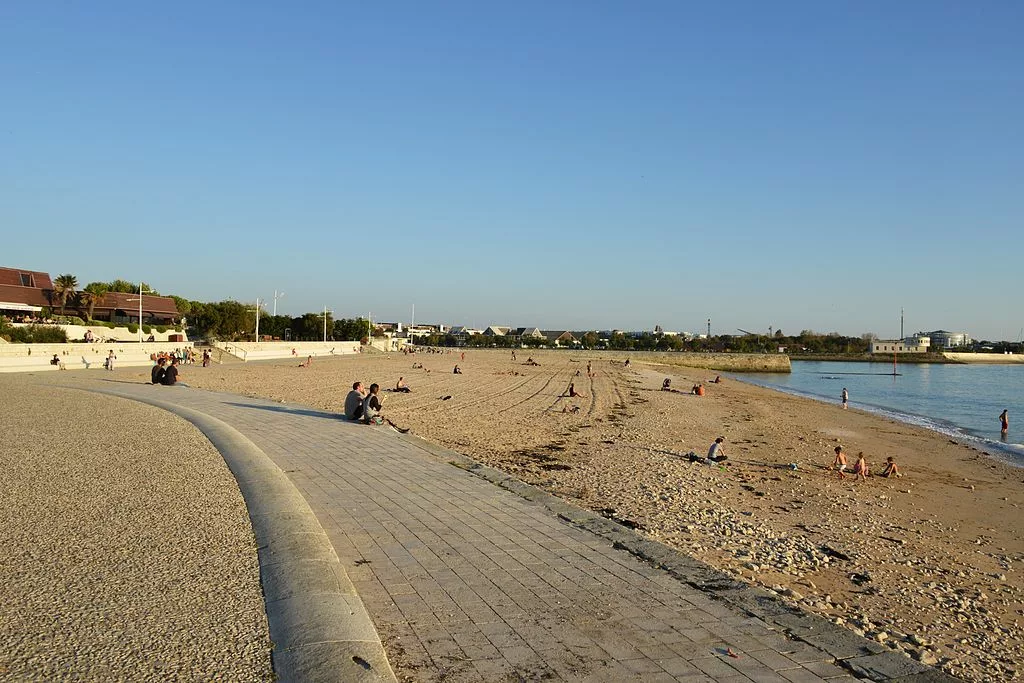
La Rochelle has three main beaches: La Concurrence Beach, Minimes Beach, and Chef de Baie Beach.
La Concurrence Beach is an urban sandy beach, ideally located in the city center, close to the Old Port and the Towers. This beach has wooden decking to make access to the water easier, particularly for people with reduced mobility, with equipment such as the Tiralo and Hippocampe beach wheelchair.
Minimes Beach is the largest beach in La Rochelle, with an open view of the marina and the “Lighthouse at the End of the World.” At Minimes Beach, visitors can enjoy activities such as beach volleyball, sailing, paddleboarding, or shore fishing. Part of Minimes Beach is managed in a “natural” way: 15% of its area is left without added sand to encourage dune vegetation and protect certain species.
Chef de Baie Beach is quieter and semi-natural, with rocky and sandy areas bordered by low vegetation.
La Rochelle Gastronomy
Oysters
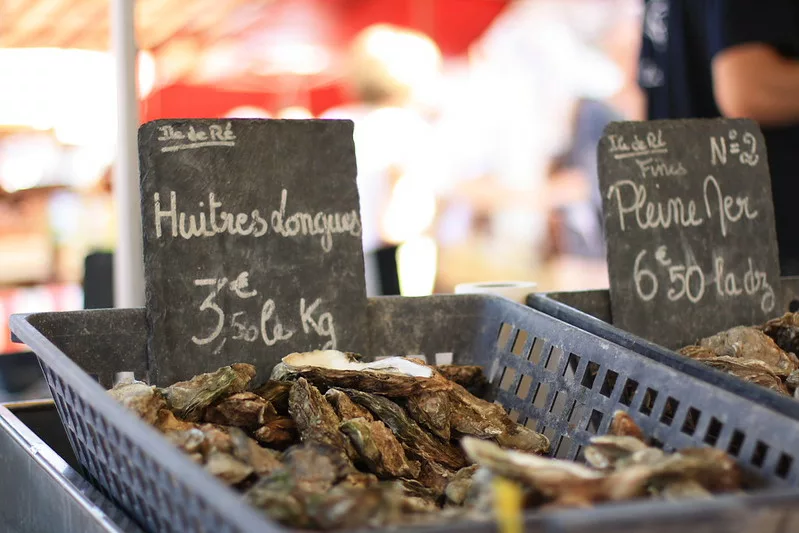
Charente-Maritime oysters are a must-try gastronomic specialty in La Rochelle, and can be enjoyed fresh at the stalls of the Central Market, which includes oyster farmers among its fishmongers.
These oysters, such as the region’s “HCM Oyster,” come from oyster beds located off the islands of Ré, Aix, and Oléron, where they are farmed for two to three years. For a more immersive experience, visitors can also go to oyster farmers’ huts around La Rochelle, where tastings take place by the sea in an authentic setting.
Mouclade and Seafood Gratin
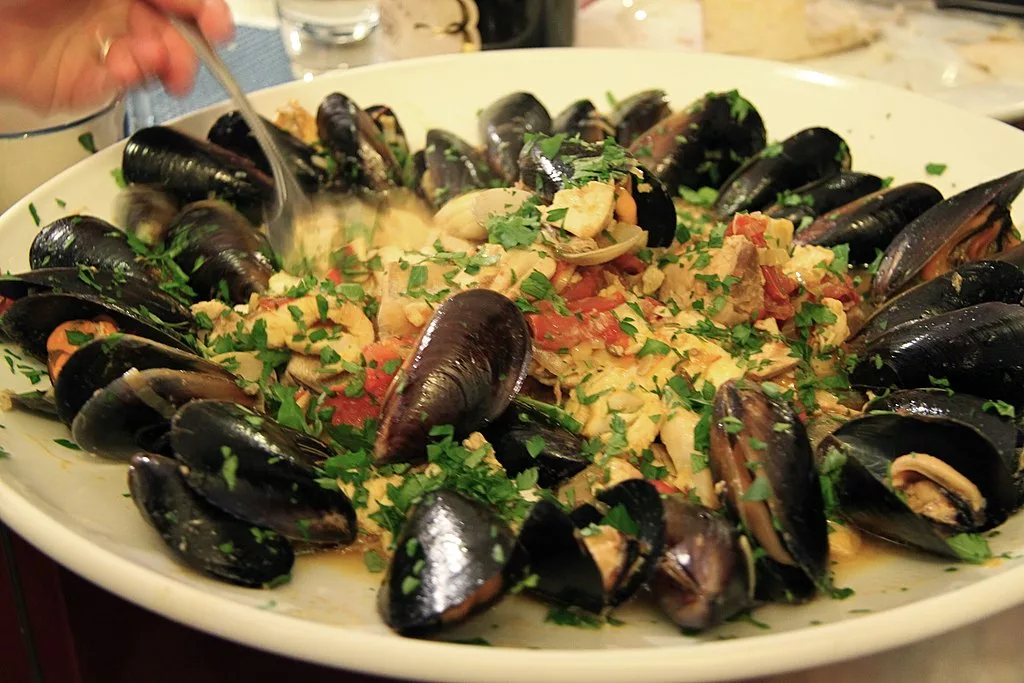
La mouclade charentaise is a traditional dish made with bouchot mussels, which are mussels grown on wooden stakes, prepared in a creamy sauce with white wine, Pineau des Charentes, and sometimes enhanced with saffron or curry, depending on local variations.
The seafood gratin, meanwhile, showcases the richness of the Charente coast with a mixture of shellfish and crustaceans, such as mussels, oysters, and whelks, baked with cream and typical of La Rochelle tables.
Pineau des Charentes and Cognac
The Pineau des Charentes is a sweet fortified wine highly appreciated in the region. It is made from a harmonious blend of grape must and cognac, with fruity, honeyed, and sometimes spicy notes depending on the variety. Cparici
The cognac, meanwhile, is the region’s emblematic brandy, aged in oak barrels. In La Rochelle, it is common to visit cellars and vineyards, such as those on Île d’Oléron, to taste these spirits in a heritage-rich setting.
Tourteau Fromager
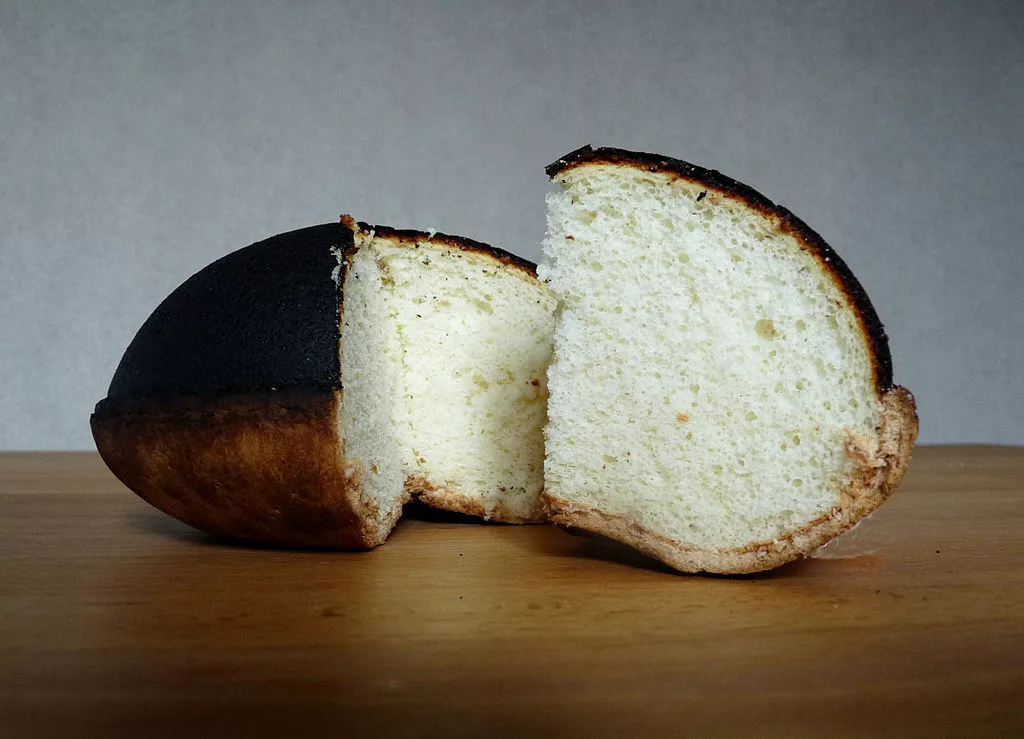
The Tourteau fromager is a Poitou-Charentes specialty: a cheese soufflé cake characterized by its black, intentionally “burnt” crust and its soft, airy interior.
Major Events – La Rochelle
Francofolies

The Francofolies de La Rochelle is a French-language music festival founded in 1985 by Jean-Louis Foulquier. The festival lasts around 5 days each summer, in mid-July, with a very rich program.
It takes place in several venues across La Rochelle, including the Jean-Louis Foulquier main stage, La Sirène concert hall, and La Coursive. The Francofolies combine established artists and emerging talents through their “Le Chantier des Francofolies” talent development program.
Le Chantier allows young French-speaking artists to perform, train, and receive professional support.
Alongside the main festival, there is also FrancOff, a more alternative and independent scene, notably held in non-traditional venues around La Rochelle.
Grand Pavois
The Grand Pavois La Rochelle is an international in-water boat show held at the Port des Minimes. It was founded in 1973 by four residents of La Rochelle: Henri Amel, Roger Mallard, Michel Dufour, and Fernand Hervé.
Today, it ranks among the five largest in-water boat shows internationally. The show covers around 100,000 m², with both land and water exhibition areas. Around 700 boats are presented, including 300 displayed afloat. It welcomes nearly 800 brands specializing in marine equipment, sailing boats, engines, and nautical innovations.
The show offers 12 themed areas, such as fishing, boating, sustainable navigation, and traditional boats. Grand Pavois Beach is the show’s “beach” area, where board-sports activities are organized, including paddleboarding, windfoil, kayaking, and more.
Excursions & Day Trips Around La Rochelle
Île de Ré
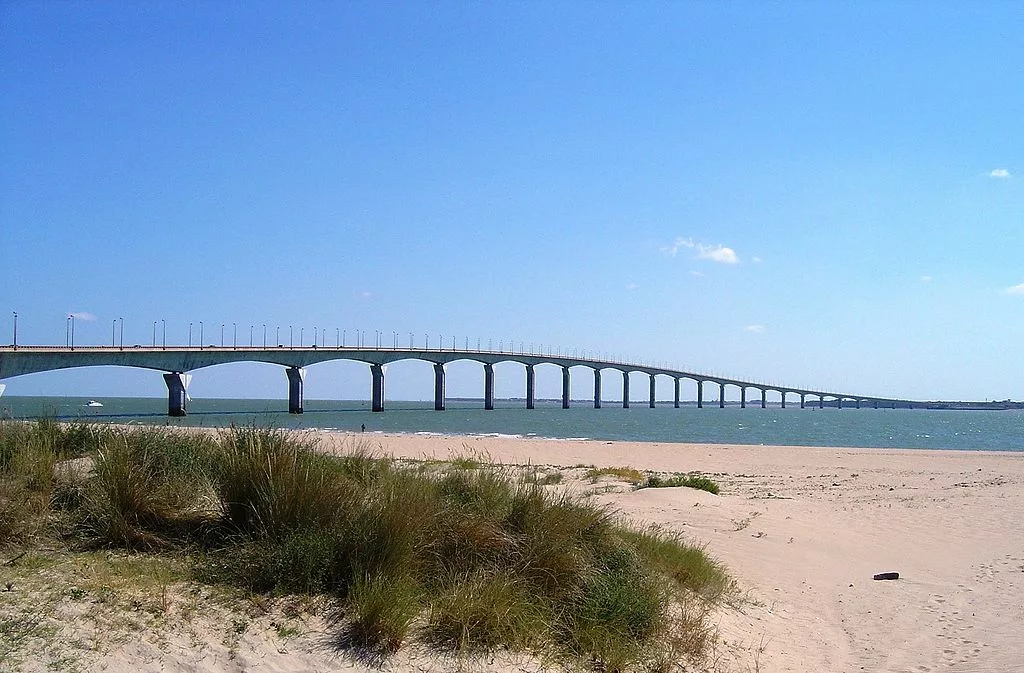
Île de Ré is an island located on France’s Atlantic coast in the Charente-Maritime department. It is connected to the mainland by a 2.9 km bridge that was inaugurated in 1988.
The island is famous for its fine sandy beaches, ideal for swimming, sailing, and relaxing. Its network of cycling paths is particularly extensive, with nearly 110 km of routes allowing visitors to discover salt marshes, picturesque villages, and lighthouses.
The island is renowned for its sea salt production and for oyster and mussel farming. Saint-Martin-de-Ré, the island’s capital, is a fortified town listed as a UNESCO World Heritage Site thanks to Vauban’s fortifications.
Île d’Aix
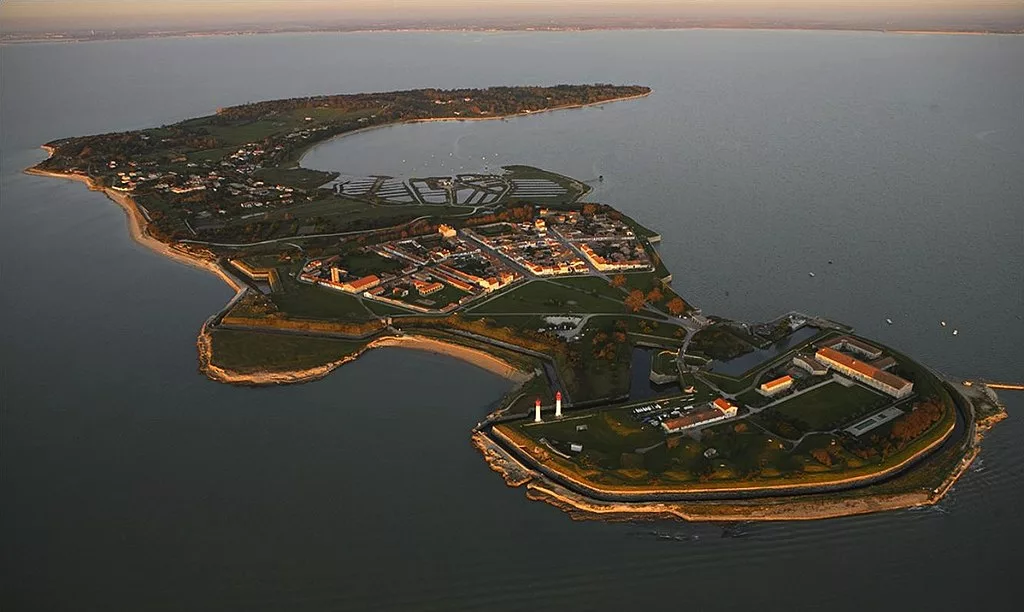
The island is accessible only by boat or ferry service, departing from Fouras, La Rochelle, or Rochefort. It covers approximately 3 km², making it easy to explore on foot or by bicycle.
Île d’Aix is known for its military heritage, notably Fort Liédot and Fort Boyard, which once protected the Charente estuary. The island is also famous for being the last place where Napoleon I stayed in France before leaving for exile on Saint Helena in 1815.
The island does not allow cars; transportation is limited to walking, cycling, or horse-drawn carriages, preserving its peaceful and natural atmosphere. Île d’Aix also features fine sandy beaches, perfect for swimming and relaxation.
The Napoleon House, now a museum, traces the emperor’s stay and offers exhibitions about the island’s history. The island is also known for its lighthouses, including the Île d’Aix Lighthouse, which guides ships entering the Charente estuary.
Fort Boyard
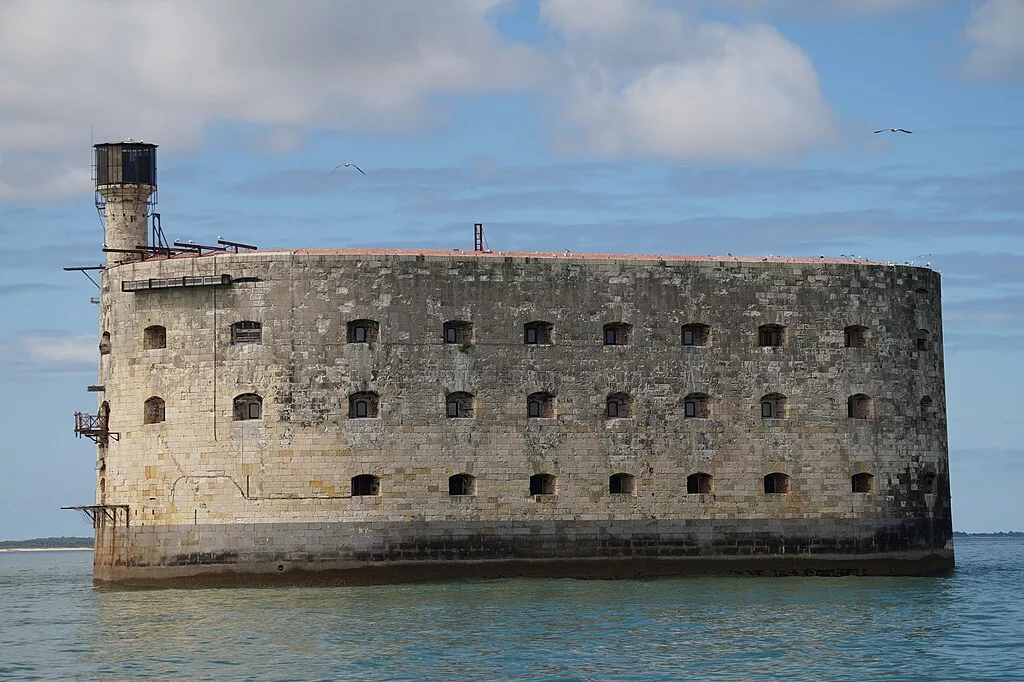
Fort Boyard is a fortification located between Île d’Aix and Île d’Oléron in the Pertuis d’Antioche strait. Construction began under Napoleon I in 1801 to protect the Charente estuary and the port of Rochefort.
The fortress was not completed until 1857, during the reign of Napoleon III, due to technical challenges related to the rocky site and harsh storms. The fort measures approximately 68 meters long and 31 meters wide, with walls reaching up to 20 meters thick.
It was intended to complete the defensive system of the Rochefort naval arsenal, but advances in artillery technology quickly rendered its military role obsolete.
Fort Boyard became world-famous thanks to the television game show “Fort Boyard”, created in 1990 by Jacques Antoine. The fort is not accessible to the public on foot, but it can be viewed by boat through sightseeing cruises departing from La Rochelle or Île d’Oléron.
Conclusion – Visiting La Rochelle
Visiting La Rochelle means discovering one of the most iconic destinations on France’s Atlantic coast, perfect for both a weekend getaway and a longer vacation.
Between its lively Old Port, medieval landmarks, and must-see museums, the city offers a rich experience for every type of traveler. La Rochelle also charms visitors with its beaches, parks, local gastronomy, and its proximity to the islands of Ré, Aix, and Oléron, which are ideal for nature-filled excursions.
Thanks to its pleasant climate, exceptional heritage, and unique maritime atmosphere, La Rochelle stands out as an essential destination for tourism in Charente-Maritime.
An authentic, vibrant, and refreshing city that inspires visitors to return again and again.