Visit Colmar: 30 Must-See Things to Do and See
Nestled in the heart of Alsace, the town of Colmar is a must-see destination for anyone wishing to visit Colmar and discover an exceptional historical and cultural heritage. With its cobbled streets, half-timbered houses, and iconic monuments, the town offers a true journey through time, from the Middle Ages to the Renaissance.
Among the must-see places when visiting Colmar are the famous Petite Venise, Saint Martin’s Collegiate Church, and the Unterlinden Museum, which houses the renowned Isenheim Altarpiece. Each site reflects the city’s rich artistic, religious, and architectural heritage.
Visiting Colmar also means enjoying a unique atmosphere that blends culture, Alsatian gastronomy, and a relaxed way of life. Just outside the town, the Alsace Wine Route and typical villages like Eguisheim extend the experience with exceptional vineyard landscapes and authentic heritage.
This article invites you to discover all the monuments, museums, neighborhoods, and activities you shouldn’t miss to make the most of your stay and fully visit Colmar.
Monuments & Historical Heritage of Colmar
Dominican Convent of Colmar
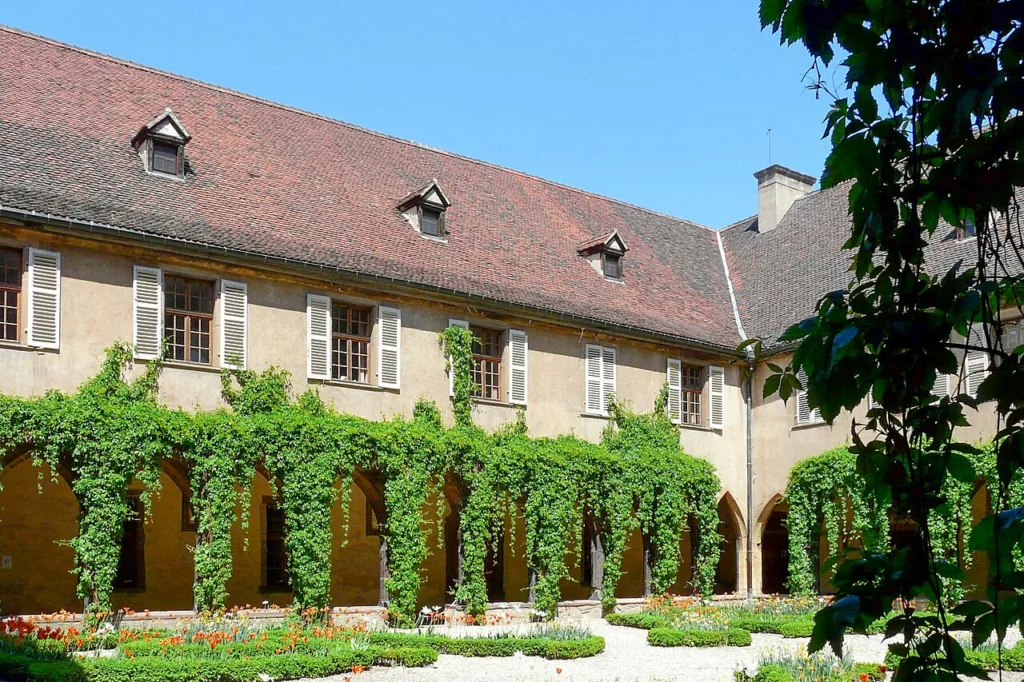
Built in 1289 by the Dominican order, this site illustrates the importance of religious orders in the development of Colmar during the Middle Ages. Its church impresses with its simple Gothic style, characterized by slender columns and a bright, refined atmosphere.
Over the centuries, the building has undergone several transformations, serving as a convent, then a military depot, and later a civilian space after the French Revolution. Since the 20th century, the former convent has housed the municipal library, giving it a new cultural and intellectual life.
In its choir, visitors can admire remarkable works such as “The Virgin in the Rose Bush” by Martin Schongauer, a masterpiece from the late 15th century.
Saint Martin’s Collegiate Church of Colmar
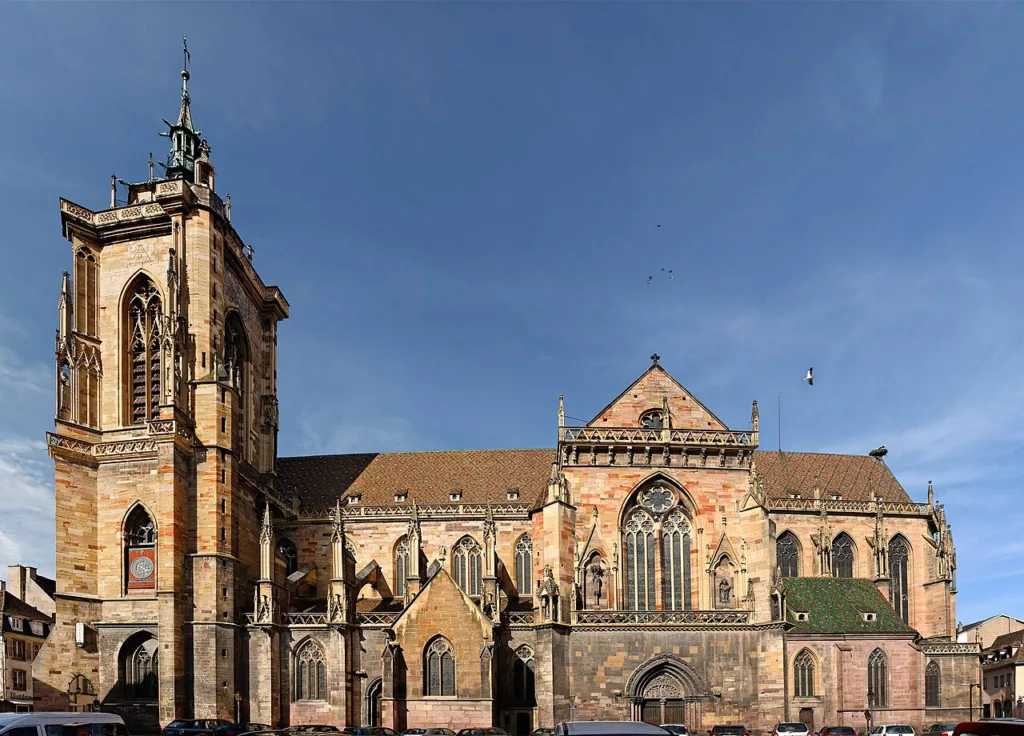
The Saint Martin’s Collegiate Church of Colmar, often nicknamed the “cathedral of Colmar,” is one of the largest Gothic buildings in Alsace. Its construction began in the 13th century and was completed around 1365, reflecting the religious and architectural power of the medieval city.
With its 71-meter-high tower, it is a major landmark visible from several parts of Colmar. The interior stands out for its simple and luminous architecture, typical of Rhenish Gothic style.
The church houses remarkable historical elements, including medieval stained-glass windows and finely preserved religious sculptures. Its richly decorated choir stalls depict biblical scenes and major figures from the Old and New Testaments.
Maison Pfister
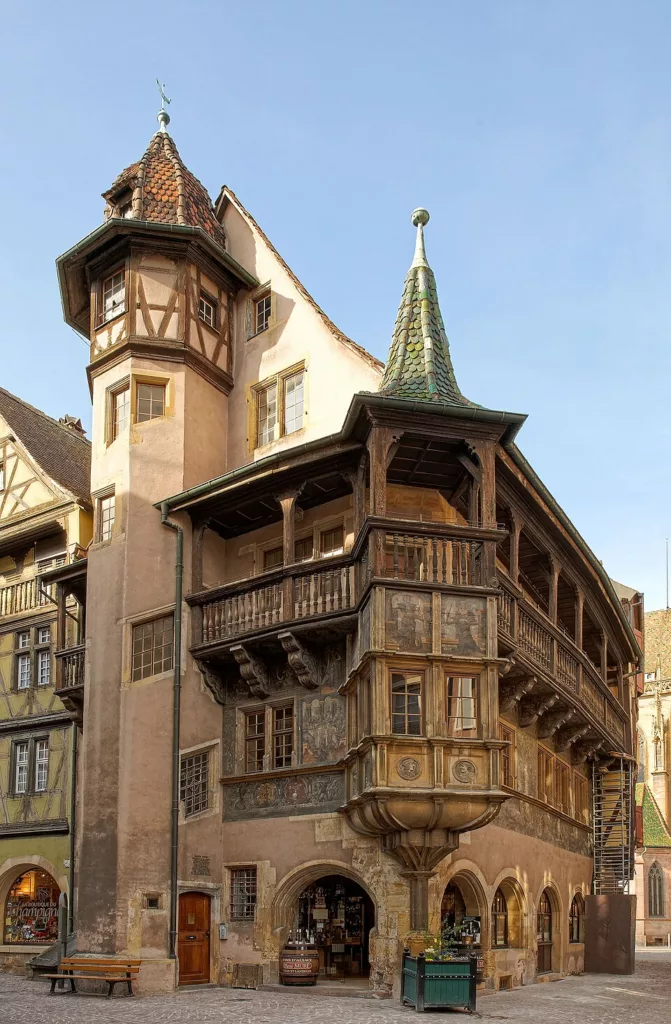
Located in the heart of Colmar, the Maison Pfister is one of the city’s most photographed architectural gems. Built in 1537, it is a remarkable example of Renaissance architecture in Alsace.
Situated on the famous Rue des Marchands, it immediately draws attention with its richly decorated façades. Its wooden oriel window and corner turret give it a unique silhouette, typical of 16th-century bourgeois houses. The frescoes adorning its façade depict German emperors and finely detailed biblical scenes.
It takes its name from the Pfister family, who owned it in the 19th century and contributed to its fame. Listed as a historic monument, it has undergone several restorations to preserve its original decoration.
Maison zum Kragen
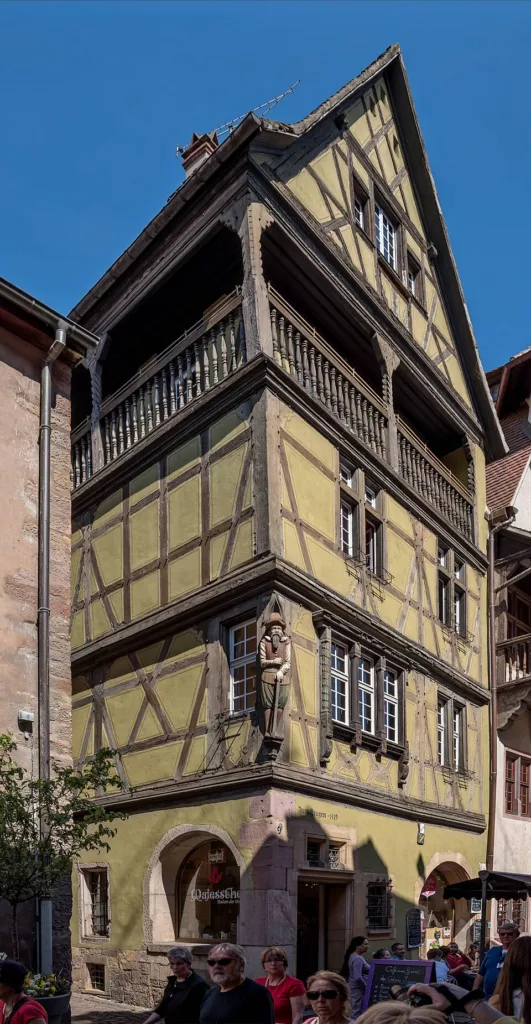
The Maison zum Kragen, located on Rue des Marchands, is a fine example of a half-timbered house in the local heritage. Built and rebuilt at the end of the 16th century, it reflects the architectural evolution of Colmar after several structural collapses.
Its timber-frame structure gives it a traditional appearance that blends perfectly with the city’s medieval setting. The carved post on its façade depicts a cloth merchant holding a measuring rod, recalling the commercial activities of the past.
Listed as a historic monument, Maison zum Kragen is protected for its remarkable façades and roofs.
Maison Adolph
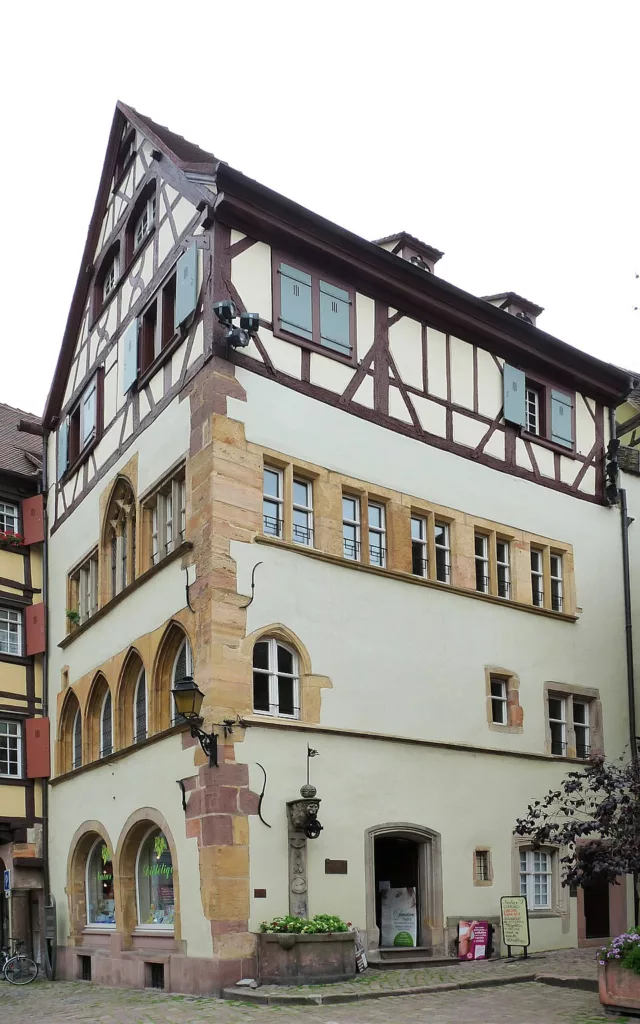
The Maison Adolph likely dates back to the 14th century, making it a valuable witness to medieval Colmar.
Its Gothic architecture is distinguished by pointed arch windows typical of the 14th century. The building was modified several times between the 16th and 19th centuries, giving it an appearance that blends multiple historical periods.
Its half-timbered gable, added later, reflects the evolution of traditional Alsatian architecture. The house takes its name from a former owner who restored its Gothic windows in the 19th century.
In front of the building stands a well decorated with lion heads dating from 1592, adding to the charm of the site.
Schwendi Fountain
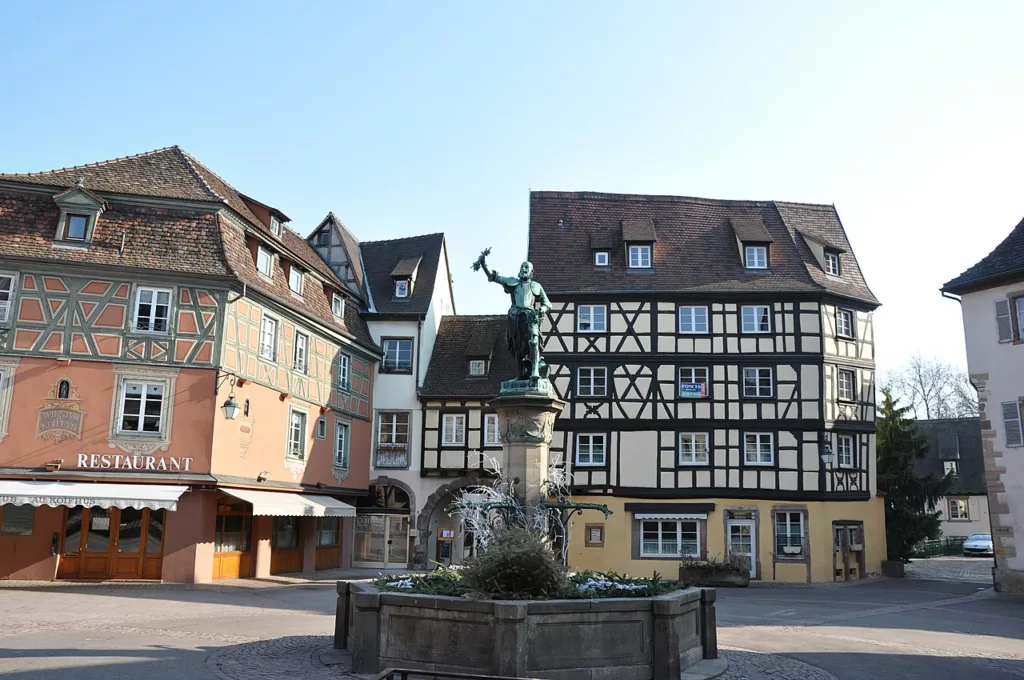
The Schwendi Fountain is one of the most famous works by sculptor Auguste Bartholdi. Erected in 1898, it pays tribute to Lazare de Schwendi, a military leader and lord of Hohlandsbourg.
The bronze statue depicts Schwendi holding a bunch of grapes, a symbol often associated with the Tokay legend. The original work was destroyed during World War II before being rebuilt and reinstalled after the war.
Like many of Bartholdi’s creations in Colmar, it reflects the city’s artistic importance in the 19th century. The fountain was even reoriented in 1954 to better face the square and its visitors.
Koïfhus
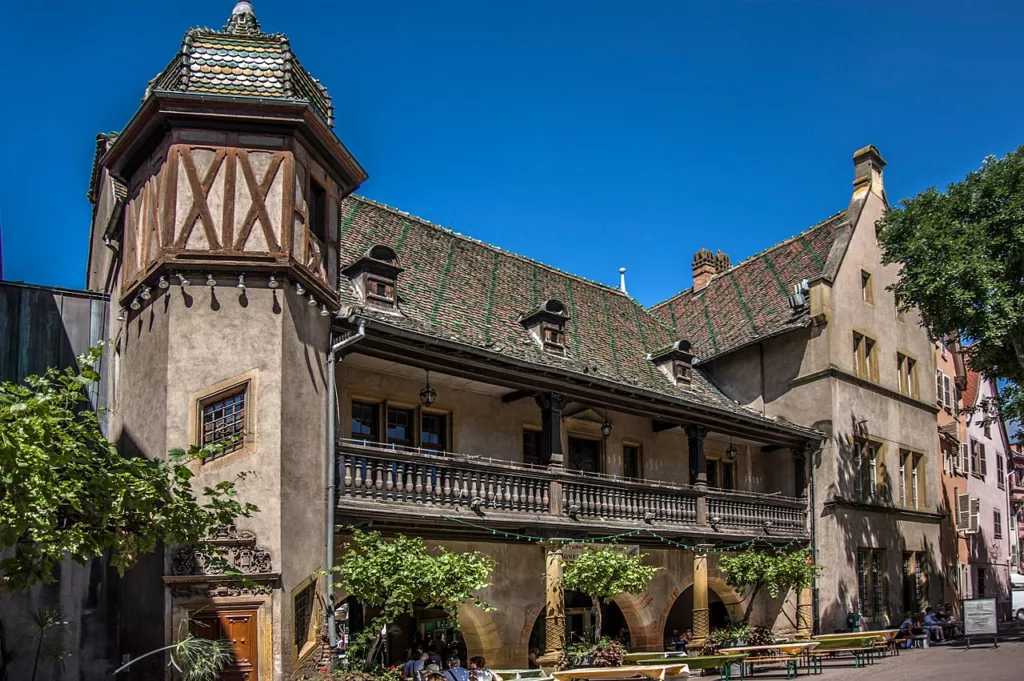
The Koïfhus, built in 1480, once served as a customs house and administrative center. Located on Grand Rue, it occupies a strategic position between the main streets of Colmar’s historic center.
Its Renaissance architecture stands out with its imposing façades and glazed tile roofs. In medieval times, the building played a key role in trade by taxing goods entering the city.
The upper floor also hosted meetings of the Décapole, an alliance of imperial cities in Alsace. The Koïfhus even served as city hall at various times between the 15th and 19th centuries.
Inside, a historic hall impresses with its large windows and solemn atmosphere. In front of the building stands a column dating from 1543, commemorating a victory of Charles V.
Covered Market of Colmar
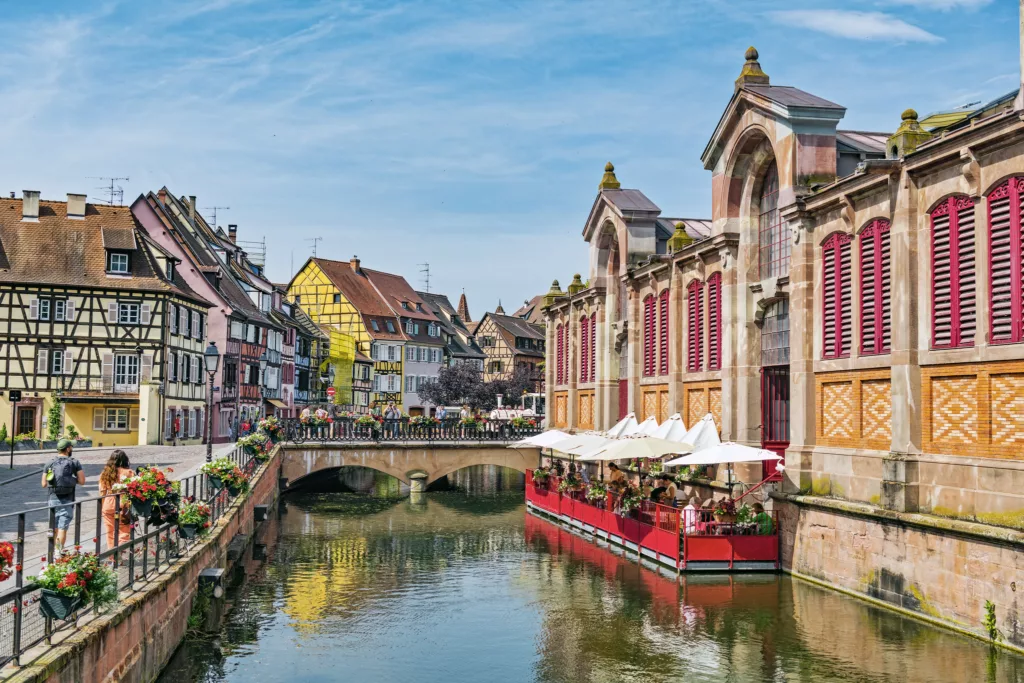
The Covered Market of Colmar, built in 1865, is a fine example of 19th-century architecture. Its brick, stone, and wrought iron structure perfectly reflects the industrial style of its time. Designed by architect Louis-Michel Boltz, it illustrates Colmar’s urban development in the 19th century.
Originally, market gardeners would dock directly at the building to sell their fresh produce. Today, the market still hosts many vendors offering local and Alsatian products.
A statue by Bartholdi, the “Little Winemaker,” is located in a niche at the corner of the building. Restored to its original function, it has become a must-visit spot for food lovers and visitors.
Little Venice
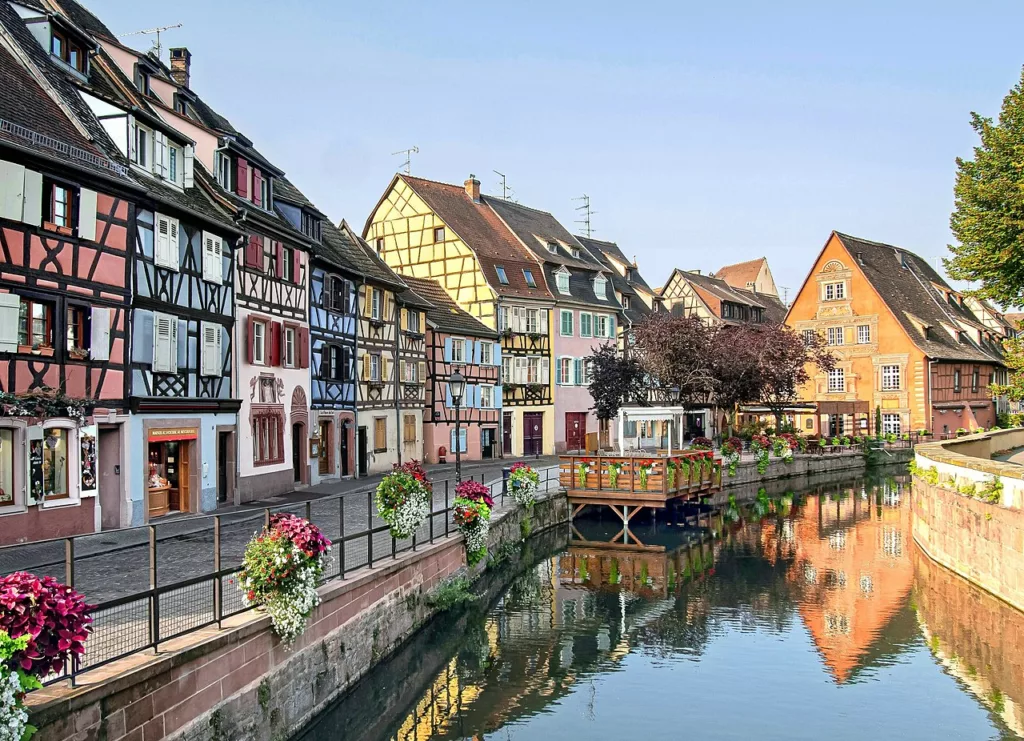
In the south of Colmar’s historic center, Little Venice is one of the most picturesque districts of the city. It owes its name to its canals lined with colorful houses reminiscent of Venice in Italy.
This district stretches along the Lauch River, which runs through Colmar and shapes the entire landscape. In the past, market gardeners used these canals to transport their goods directly to the market.
The half-timbered houses, built between the 14th and 18th centuries, give the area a unique medieval charm. Quai de la Poissonnerie is one of the most iconic spots to admire the colorful façades along the water.
House of Heads
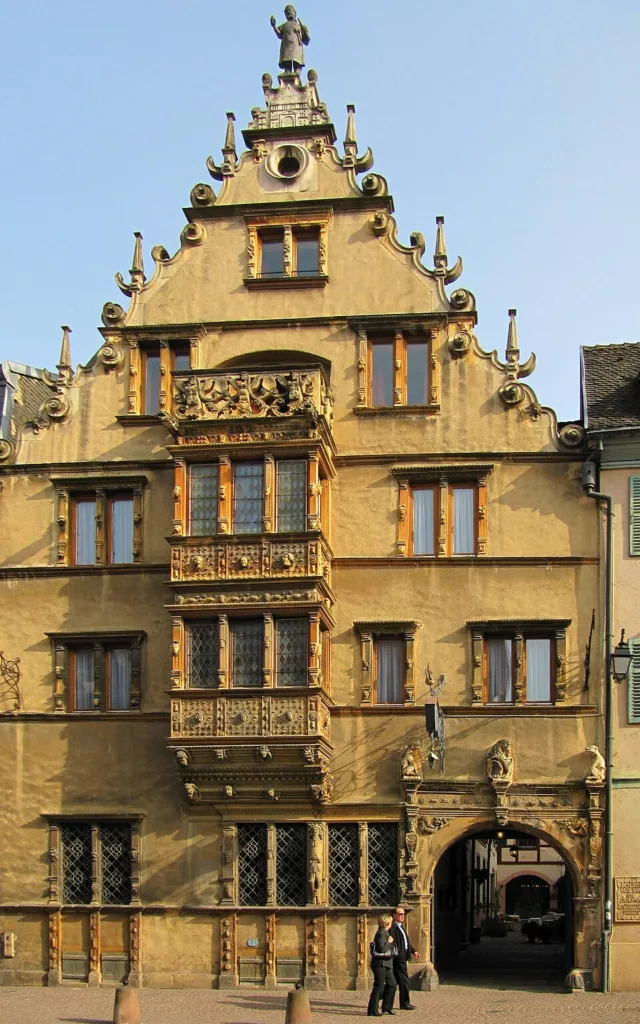
The House of Heads takes its name from the 106 sculpted masks decorating its Renaissance façade. Built in 1609 for the merchant Anton Burger, it reflects the wealth of Colmar’s merchant elite in the 17th century.
Its richly decorated façade is one of the finest examples of Renaissance architecture in Alsace. The building is also known for its central oriel, adorned with finely crafted sculptures and details.
At the top of the gable, a small cooper statue created by Auguste Bartholdi can be seen. Listed as a historic monument since 1898, it is carefully preserved for its artistic and historical value.
The House of Heads has changed ownership many times before becoming a prestigious hotel and gastronomic venue.
Place des Six-Montagnes-Noires
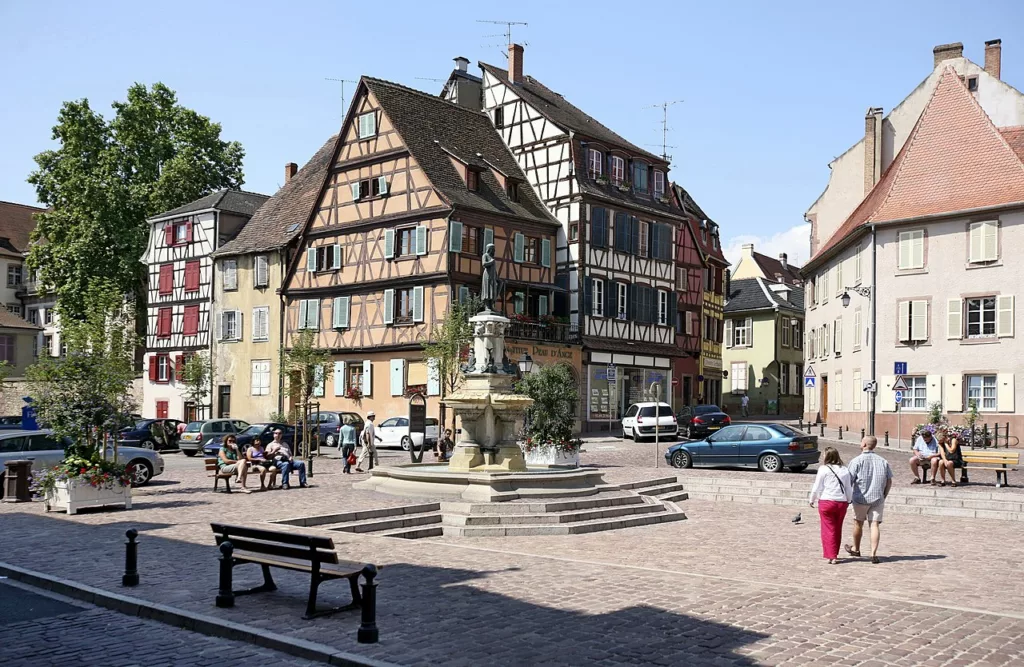
The Place des Six-Montagnes-Noires connects several iconic streets such as Grand Rue, Rue Saint-Jean, and Rue Turenne. Its original name comes from a former 15th-century inn called “Zum Schwarzenberg,” now disappeared.
This square perfectly reflects the medieval layout of Colmar’s old town with its many narrow access points. It is home to the famous Roesselmann Fountain, erected in 1888, which pays tribute to a local historical figure.
The Hostellerie Le Maréchal, located on the square, is one of the most photographed buildings in the area.
Saint Matthew’s Church of Colmar
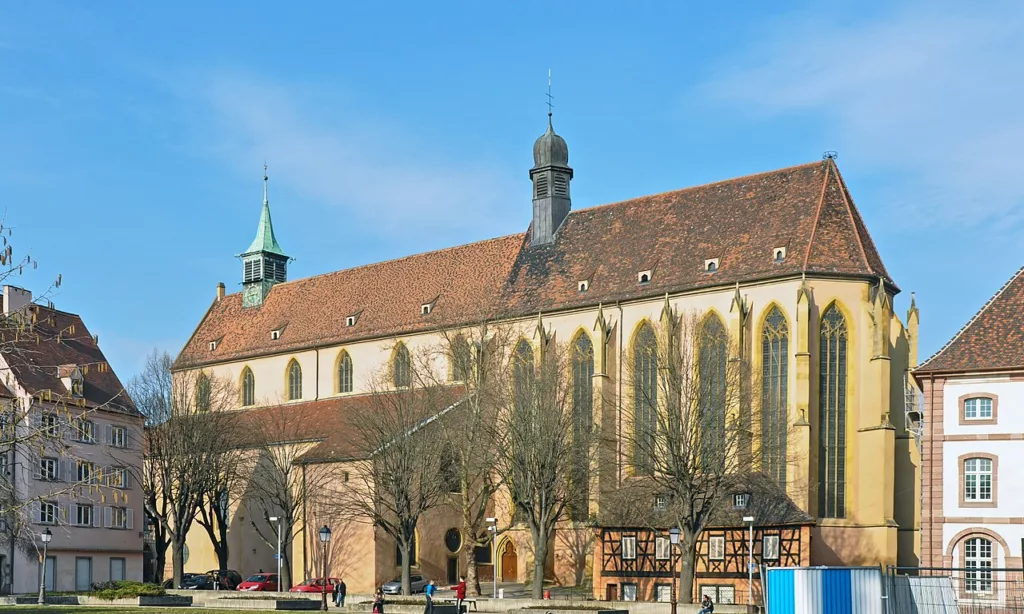
Saint Matthew’s Church of Colmar is a former Franciscan church built from the late 13th century. After the Reformation, it was assigned to Lutheran worship in 1575.
Its architecture combines medieval Gothic elements with Protestant features. The building experienced several closures and changes of use during the 17th century and has been listed as a historic monument since 1948.
It is famous for its Silbermann organ dating from the 18th century. Its exceptional acoustics make it an important venue for concerts. The galleries and balustrades are decorated with remarkable religious paintings.
Manneken Pis of Colmar
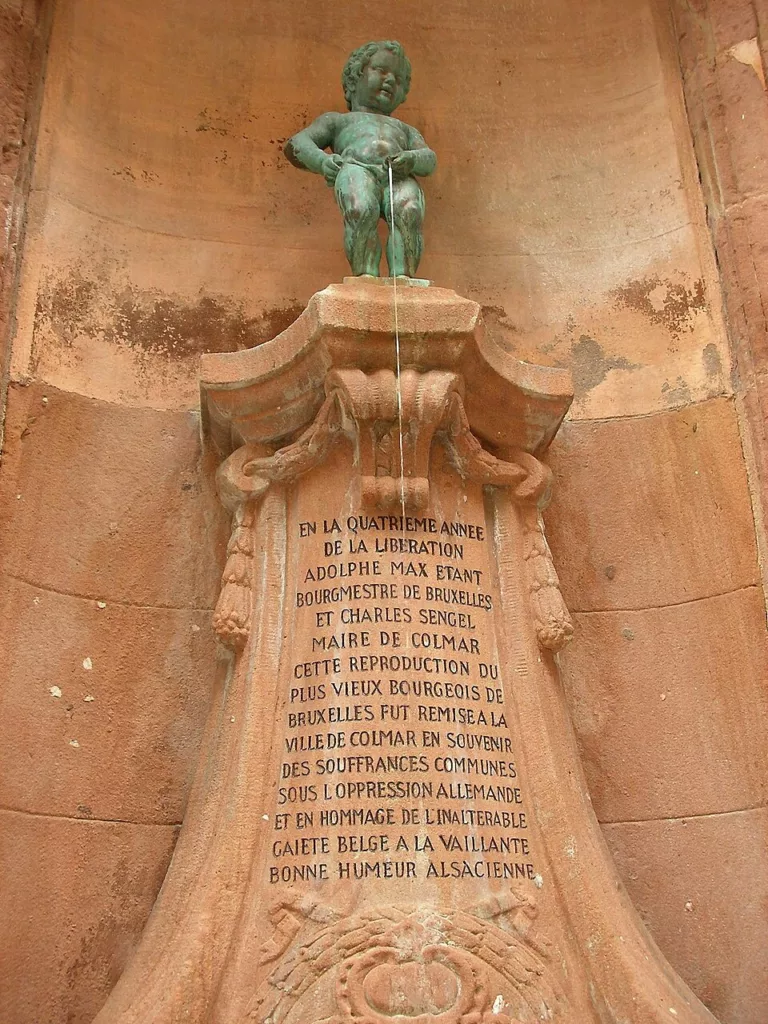
The Manneken Pis of Colmar is a small fountain depicting a child urinating, located on Rue des Augustins. It is a direct replica of the famous Manneken Pis of Brussels.
The statue was created in 1922 to commemorate the liberation of Colmar. It was offered to the city as a symbol of friendship between France and Belgium.
Originally installed in front of the former municipal baths, it has been moved several times before reaching its current location. During World War II, it was hidden to prevent its destruction.
House of the Knights of Saint John
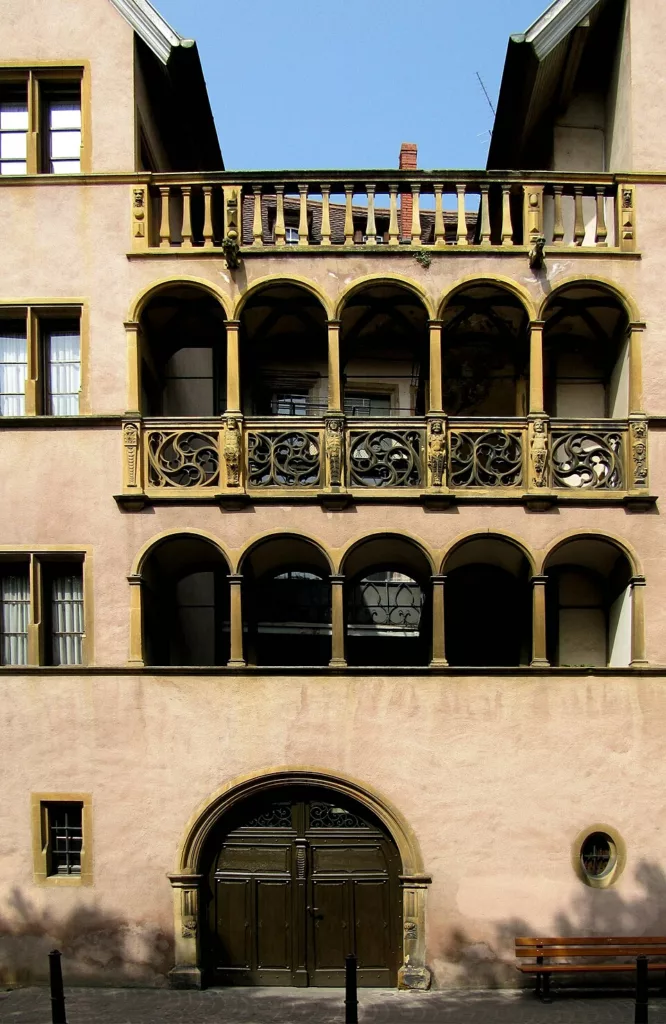
The House of the Knights of Saint John was built in 1608 in a style inspired by Venetian architecture. The building features an inner courtyard surrounded by two perpendicular wings. Its façades are decorated with mullioned windows typical of the Renaissance.
The house was dismantled and then rebuilt identically in the 19th century. It has been listed as a historic monument since 1903. Its architecture recalls Italian palaces with its galleries and arcades.
Municipal Theatre of Colmar
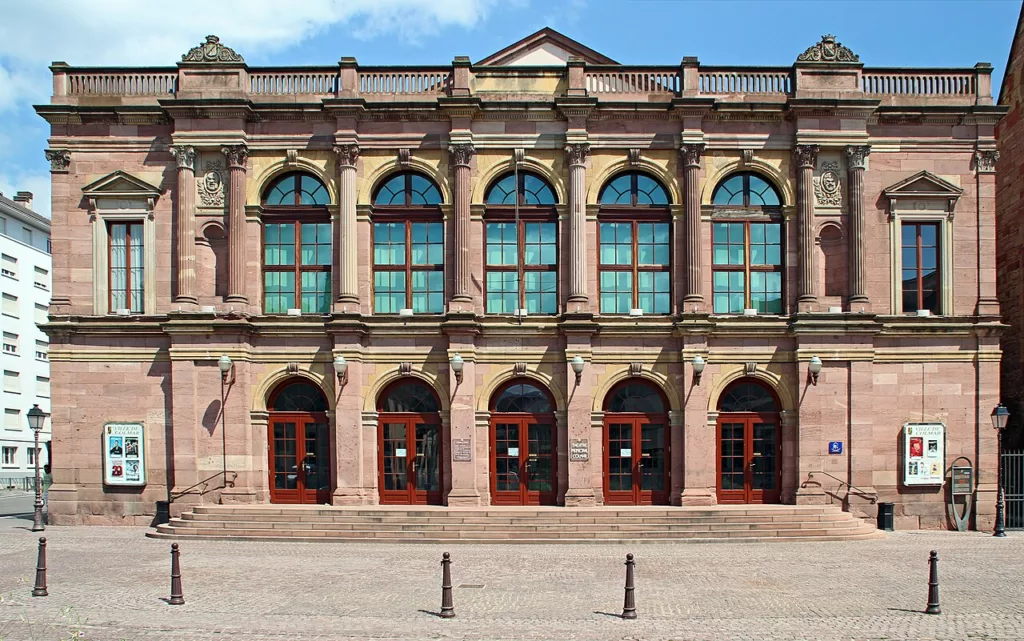
The Municipal Theatre of Colmar was built between 1847 and 1849 by architect Louis-Michel Boltz. The building stands on a former dependency of the Unterlinden convent.
Its exterior architecture features a classical French-style façade with five openings. The interior hall is designed in the style of Italian theaters, with several levels of galleries and a central stage.
Must-See Museums
Unterlinden Museum
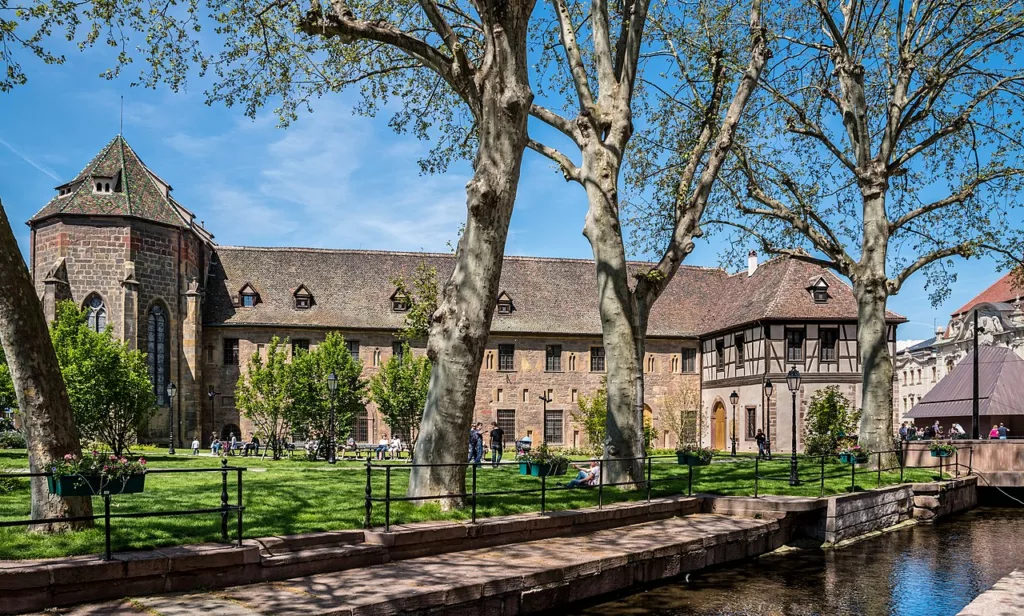
The Unterlinden Museum is housed in a former Dominican convent dating from the 13th century. It opened to the public in 1853.
It is best known for housing the Isenheim Altarpiece by Matthias Grünewald. Its collections cover a wide period, from Antiquity to contemporary art, including works by artists such as Monet and Picasso.
The museum also includes collections of archaeology and decorative arts. A major modern extension was completed in 2015 by the architects Herzog & de Meuron.
Toy Museum of Colmar
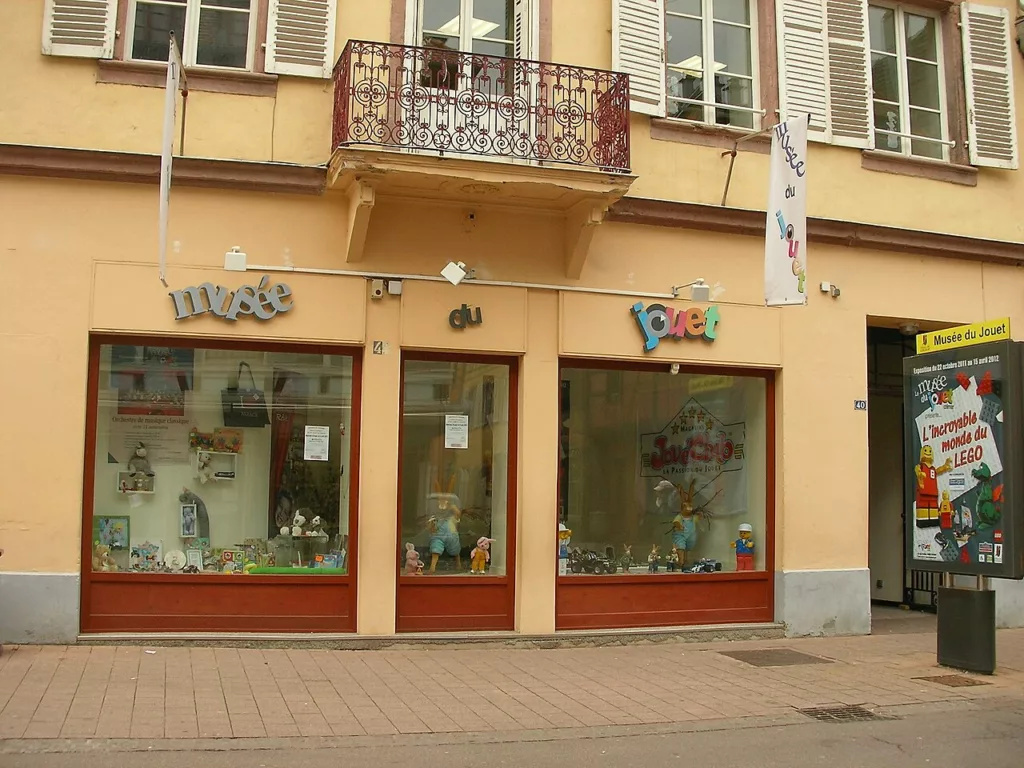
The Toy Museum of Colmar opened in 1993 and is housed in a former neighborhood cinema. It displays more than 1,000 toys from different eras.
The collections span from the 19th century to the present day. Visitors can discover antique toys, dolls, model trains, and video games. A large train model occupies part of the second floor.
Bartholdi Museum
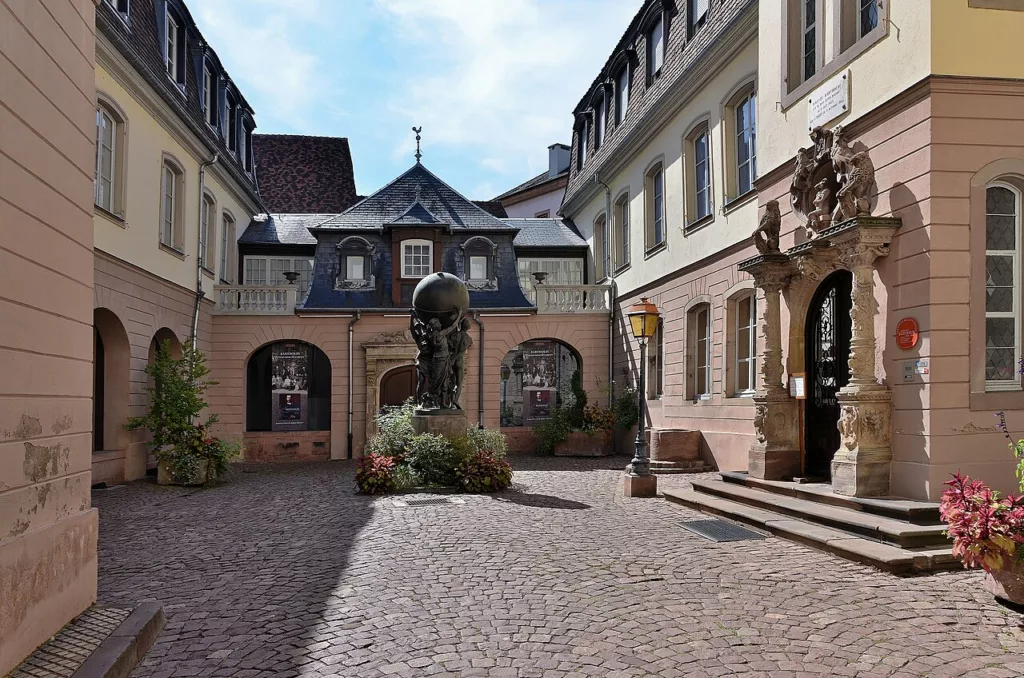
The Bartholdi Museum is located in Colmar, in the birthplace of sculptor Auguste Bartholdi. It is dedicated to the life and works of this famous 19th-century artist and was inaugurated in 1922.
Visitors can discover sculptures, models, and original drawings, including projects related to the Statue of Liberty and the Lion of Belfort. In the courtyard, a large bronze sculpture titled The Great Supports of the World can be seen.
The museum offers insight into Bartholdi’s work and artistic inspiration.
Choco-Story Colmar
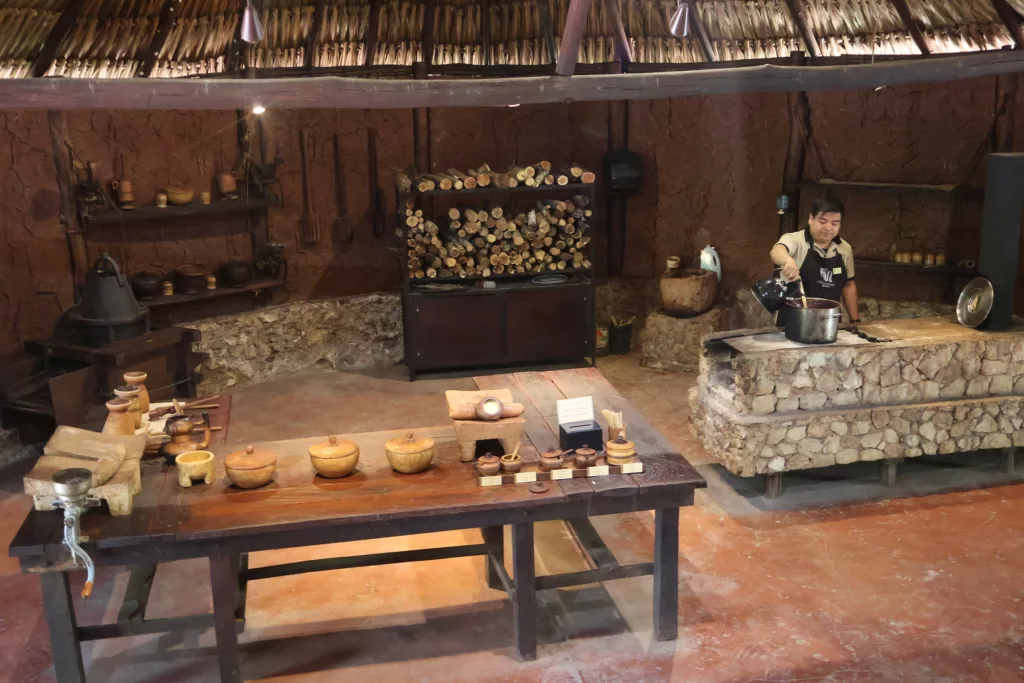
Choco-Story Colmar is a museum dedicated to the history of chocolate and its production. Located at Place de la Cathédrale, it offers an interactive journey through the evolution of chocolate.
Visitors can learn about the history of cocoa spanning over 4,000 years. The museum also offers tastings of different types of chocolate and workshops where visitors can create their own chocolate.
A typical visit lasts around 90 minutes and includes an audio guide in several languages. Visitors can also admire impressive chocolate sculptures.
Parks and Green Spaces
Colmar-Houssen Leisure Base
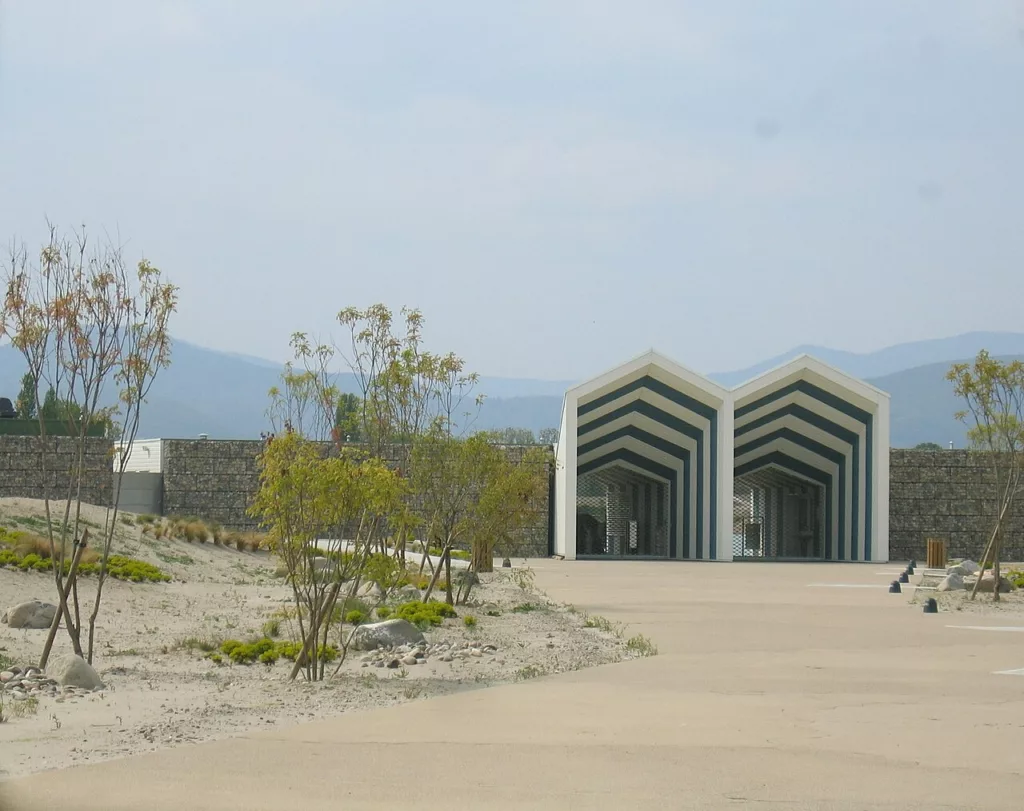
The Colmar-Houssen leisure base is a large recreational area located near Colmar. It features a sandy beach and a supervised swimming area in summer.
Visitors can enjoy activities such as beach volleyball and beach soccer. The site also includes a water park with slides, trampolines, and diving boards.
Water activities like paddleboarding and pedal boats are available. There is also a playground area for children and several food outlets on site.
Access is generally free, although some activities require payment.
Champ de Mars Park
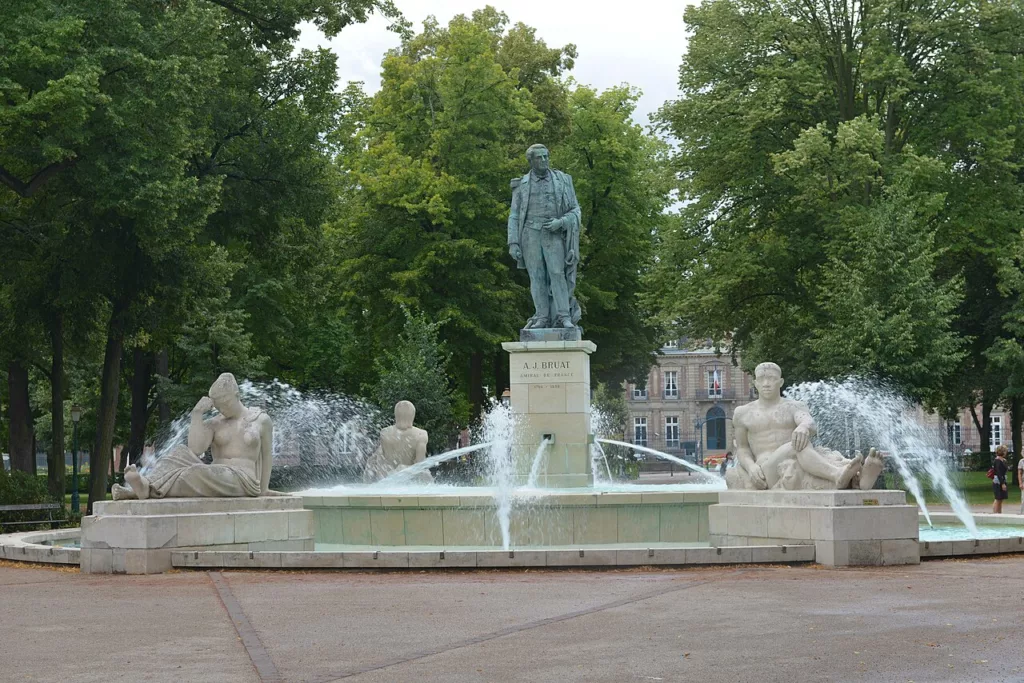
The Champ de Mars is a large public park located in the city center. It offers wide green spaces for walking and relaxing.
At the center stands a fountain topped by a statue of Admiral Bruat, created by Bartholdi in 1864.
The park layout is inspired by the shape of the Legion of Honour cross. It also features a bandstand for events and an old carousel.
Water Tower Park
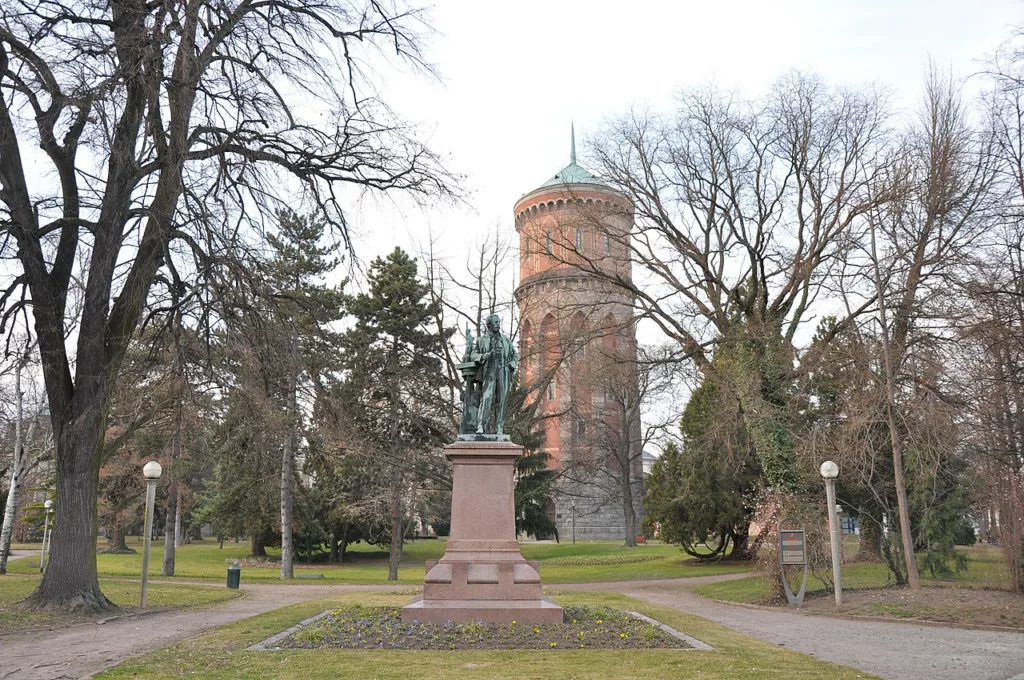
The Water Tower Park of Colmar is a public park located on Avenue Raymond Poincaré. It was developed in the late 19th century as the city expanded southward.
The park takes its name from the water tower built between 1884 and 1886 in a neo-Gothic style, which was used to regulate the city’s water supply.
It is located near the Colmar Court of Appeal. The site once hosted experimental gardens and botanical collections. Today, it still features remarkable trees, including a sequoia.
A rose garden was added in the 2000s, and the park also hosted a natural history museum pavilion between 1959 and 1989.
Adolphe Hirn Square
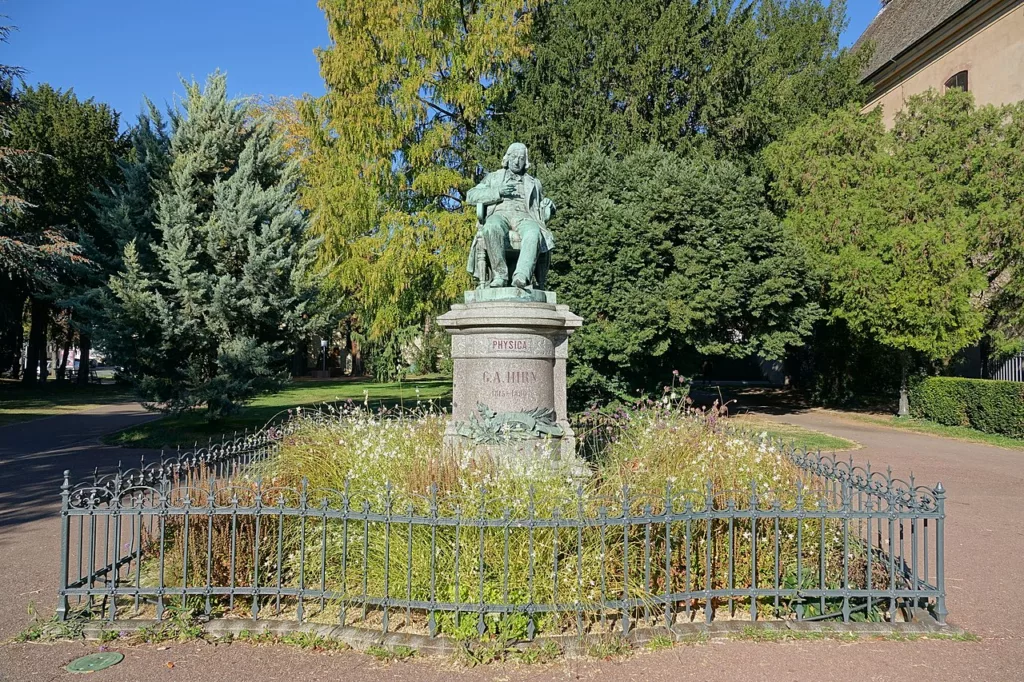
Adolphe Hirn Square is a public garden located in Colmar, in the Oberhof district. It was originally a promenade area situated outside the former city walls and already existed before 1789 as a leisure space.
The square takes its name from the statue of Gustave Adolphe Hirn created by Auguste Bartholdi. This statue was inaugurated in 1894 after the landscaping works were completed.
The garden was redesigned from 1882 in a French-style layout. Today, it is a शांत and pleasant place with flower-lined paths and a central fountain. It is located next to the Bartholdi high school, housed in a former Jesuit college.
Gastronomy & Specialties of Colmar
Baeckeoffe
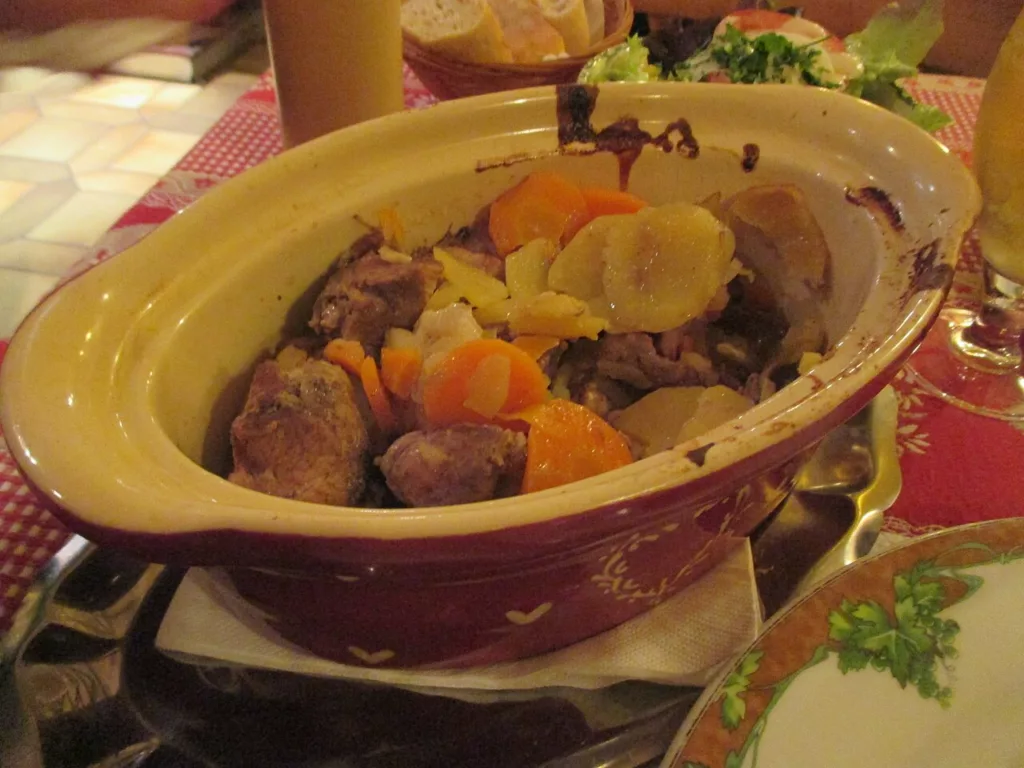
Baeckeoffe is a traditional Alsatian dish that is very popular in Colmar. It is made with several marinated meats such as beef, pork, and lamb.
These meats are slowly cooked with potatoes and vegetables in a sealed earthenware dish. It is a convivial dish often shared with family.
Sauerkraut (Choucroute)
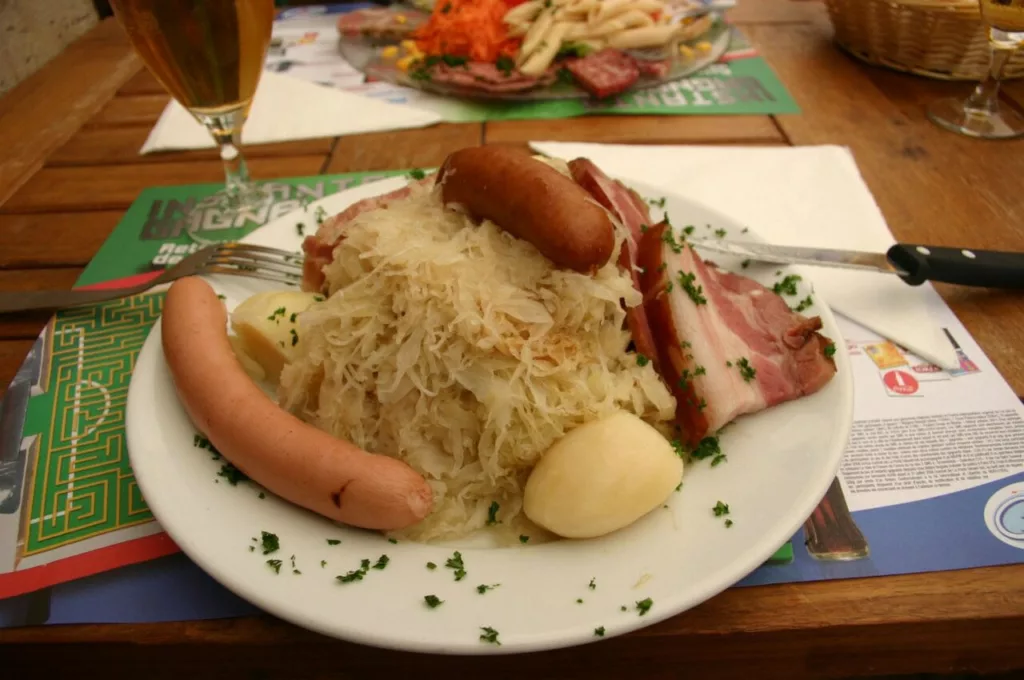
Choucroute is one of the most famous dishes of Colmar and Alsace. It is made from fermented cabbage and usually served with various meats and sausages.
This dish is rich and very flavorful, often enjoyed during traditional meals.
Rhine Fish Stew (Matelote du Rhin)

Rhine fish stew is a specialty made with freshwater fish. It is prepared with a sauce made from Alsatian white wine.
It often includes different types of fish such as eel or perch, enhanced with herbs and spices. It is a typical recipe from the Rhine region.
Coq au Riesling
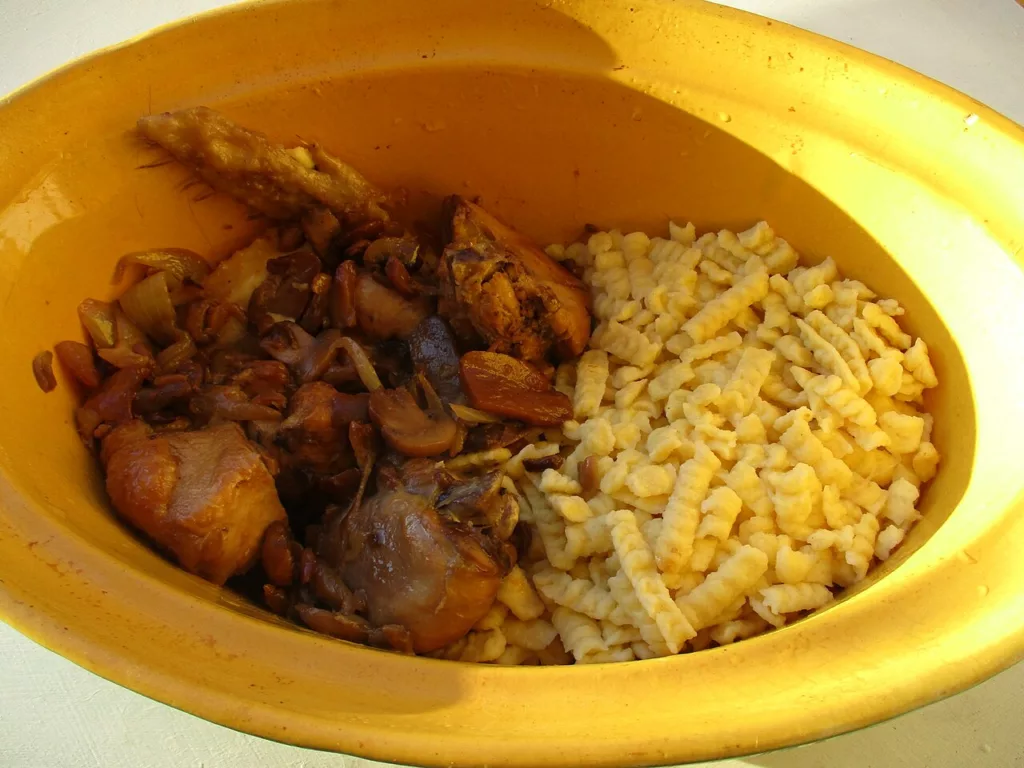
Coq au Riesling is an emblematic dish of Alsatian cuisine. It is prepared with chicken simmered in Riesling white wine.
The sauce is often creamy and aromatic, and it is usually served with pasta or spaetzle. It is appreciated for its finesse and delicate flavors.
Excursions Around Colmar
Alsace Wine Route
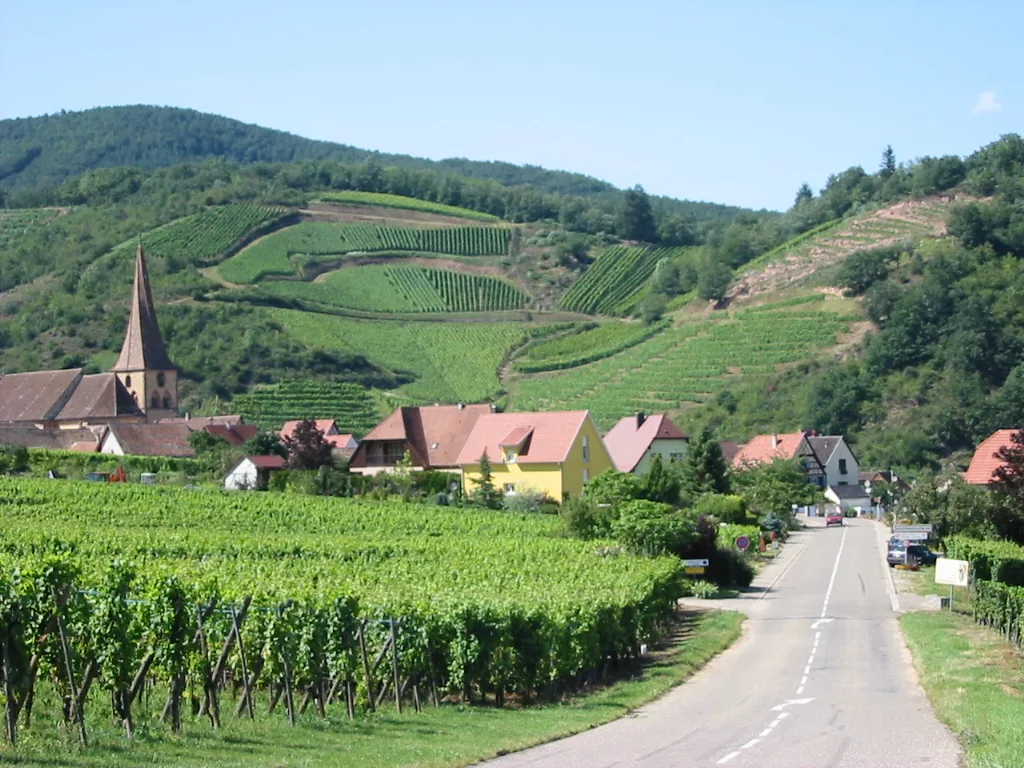
The Alsace Wine Route is a tourist itinerary that passes through many wine-producing villages starting from Colmar. It stretches for about 170 km between Marlenheim and Thann, at the foot of the Vosges mountains.
Colmar is often considered the ideal starting point to explore this route. It allows visitors to discover typical villages such as Riquewihr, Kaysersberg, and Eguisheim.
The landscapes feature vineyards, hills, and medieval castles. The route is known for its half-timbered houses and flower-filled streets. Visitors can meet winemakers and taste Alsatian wines in local cellars.
The main grape varieties include Riesling, Gewurztraminer, and Pinot Gris.
Eguisheim
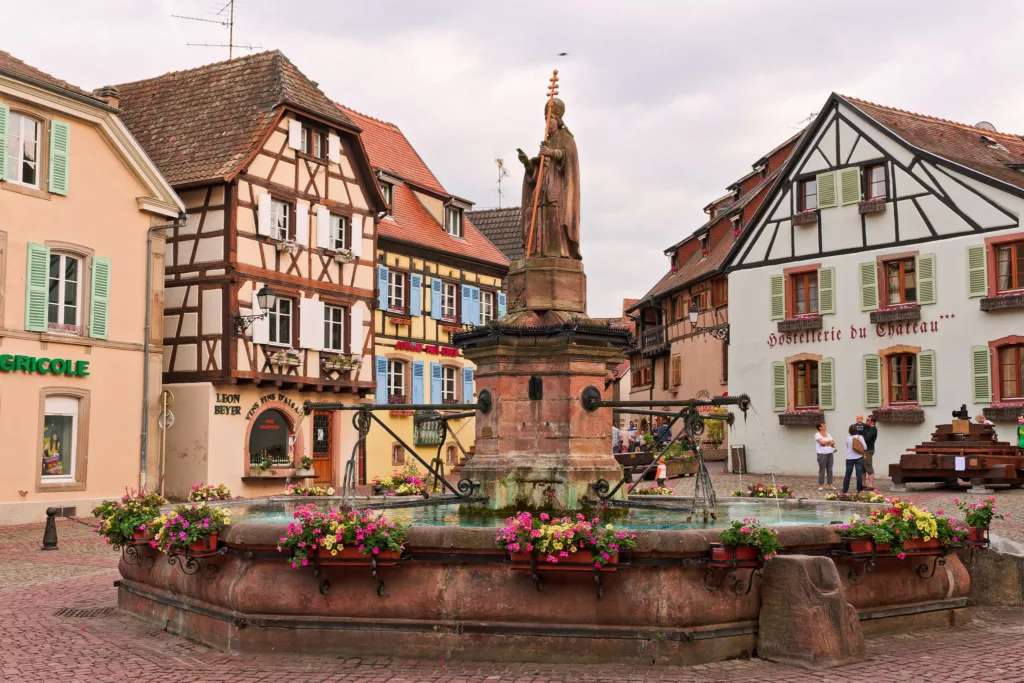
Eguisheim is an Alsatian village located about 7 km from Colmar, making it an easy day trip. It is listed among the “Most Beautiful Villages of France” and is highly appreciated for its medieval charm.
The village was voted “Favorite Village of the French” in 2013, which boosted its popularity. It is built in concentric circles around an old castle, giving it a unique layout.
Its cobbled streets are lined with colorful half-timbered houses. Visitors can explore fountains, churches, and historic buildings dating back to the Middle Ages.
Eguisheim is surrounded by vineyards producing renowned Alsatian wines such as Riesling.
Strasbourg
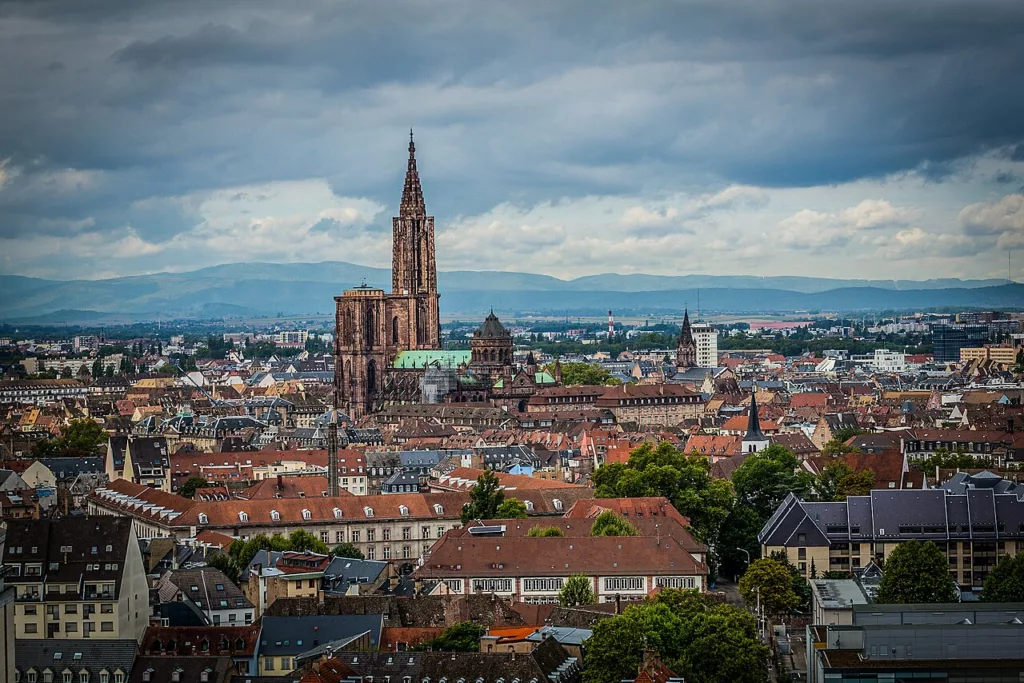
Strasbourg is a major city located in northeastern France, about 75 km from Colmar. It is the capital of the Grand Est region and hosts several European institutions.
The city is famous for its Notre-Dame Cathedral, a masterpiece of Gothic architecture. Its historic center, known as the Grande Île, is listed as a UNESCO World Heritage Site.
The Petite France district is known for its half-timbered houses and canals. Strasbourg is also famous for its Christmas markets, among the oldest in Europe.
From Colmar, Strasbourg can be reached by train in about one hour. Visitors can explore many museums, parks, and historic buildings.
The Vosges Mountains
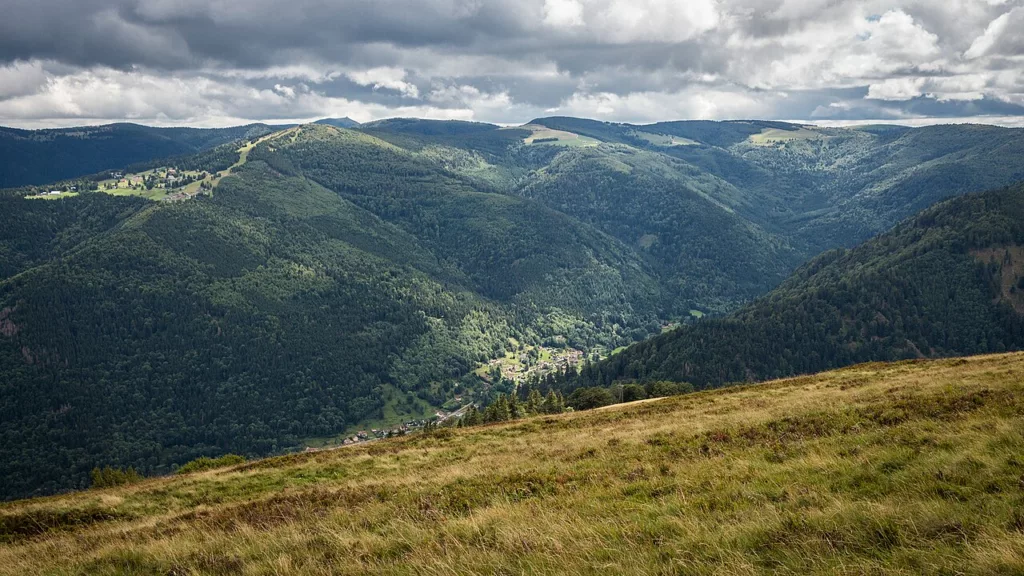
The Vosges are a mountain range located in eastern France, mainly in the Grand Est region and partly in Alsace. They stretch from north to south between Lorraine and Alsace, near cities like Colmar.
The massif is known for its landscapes of forests, lakes, and rounded peaks called “ballons.” Its highest point is the Grand Ballon, reaching about 1,424 meters.
The Vosges offer many outdoor activities such as hiking, skiing, and mountain biking. The Route des Crêtes is one of the most famous scenic routes.
The region is also home to diverse wildlife, including deer, chamois, and birds of prey. It is a popular destination for nature lovers and offers rich cultural heritage with traditional villages and farm inns.
Conclusion
In conclusion, visiting Colmar is a unique experience that immerses you in the heart of Alsatian history, culture, and heritage. With its iconic monuments such as Saint Martin’s Collegiate Church, its museums filled with major works, and its picturesque districts like Little Venice, the city charms visitors with its authenticity and timeless appeal.
Whether strolling through its cobbled streets lined with half-timbered houses, discovering local gastronomy, or exploring the famous Alsace Wine Route, every moment in Colmar offers an unforgettable experience.
Visiting Colmar is much more than a simple trip—it is an invitation to discover the soul of Alsace and enjoy a rich and memorable journey.