Visit Grenoble: 30 must-see things to do and see
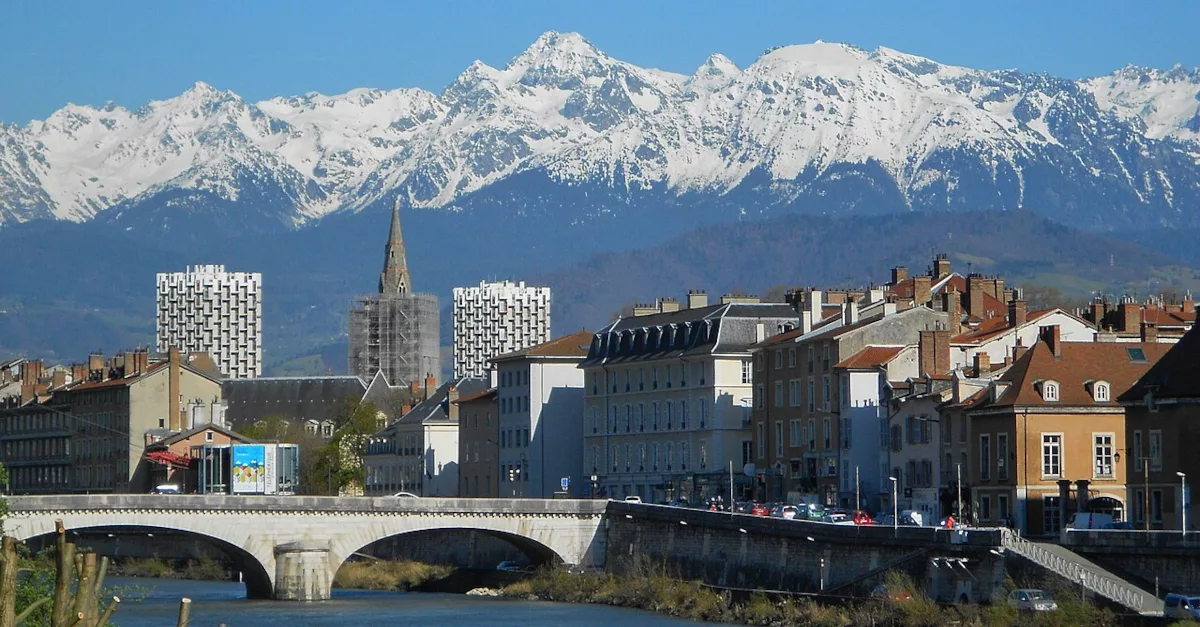
Visiting Grenoble means discovering a unique destination where historical heritage, culture, and Alpine nature come together harmoniously. Located in the heart of the mountains, the city appeals both through its rich past and its exceptional setting, surrounded by spectacular mountain ranges.
Nicknamed the “capital of the Alps,” Grenoble is full of must-see sites that reflect its history and evolution over the centuries. Among them, the famous Fort de la Bastille offers breathtaking views over the city, while the Cathédrale Notre-Dame de Grenoble and the Palais du Parlement du Dauphiné illustrate the richness of its architectural heritage.
Beyond its monuments, Grenoble is also an ideal gateway to exceptional natural areas, such as the Parc naturel régional du Vercors and the Parc naturel régional de Chartreuse, perfect for hiking enthusiasts and lovers of wide-open spaces.
Whether you are looking for cultural discoveries, urban walks, or outdoor adventures, visiting Grenoble promises a complete and refreshing experience.
Discover Grenoble differently with our scavenger hunt “The must-sees of Grenbole” a mix between an escape game and a cultural tour.
Monuments & Heritage Sites in Grenoble
Palais du Parlement of Dauphiné
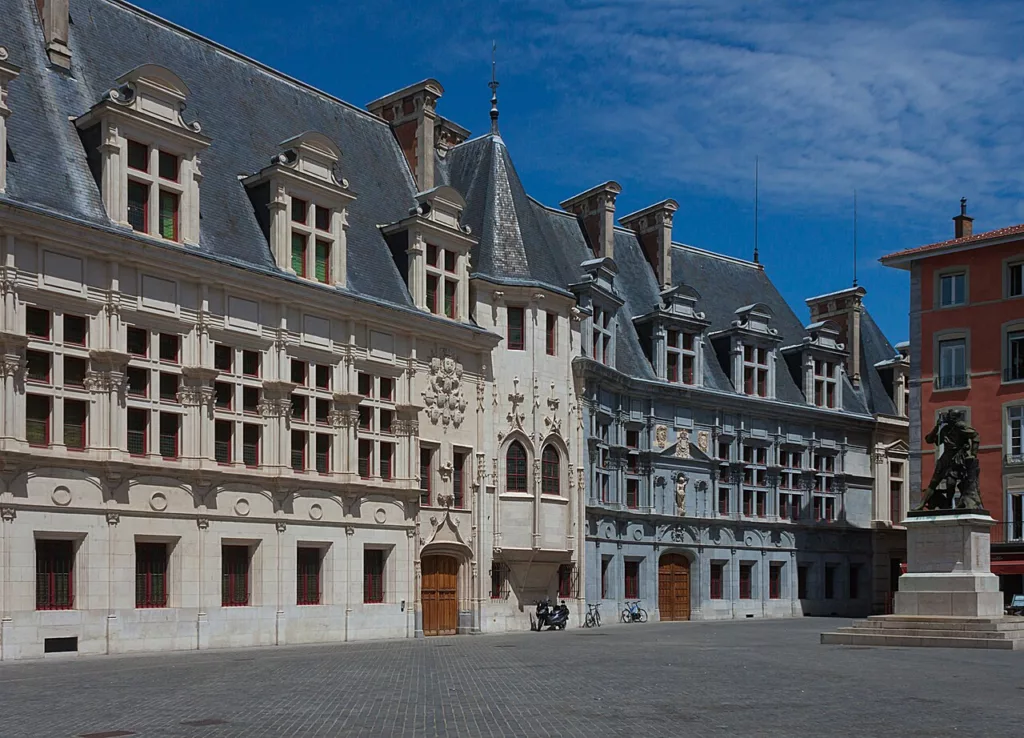
The Palais du parlement du Dauphiné, located on Place Saint-André, dates back to the late 15th century and was long the seat of the Parliament of Dauphiné, before becoming a courthouse until 2002.
Its remarkable architecture combines several styles, from Flamboyant Gothic to Renaissance and Neo-Renaissance. Its two-tone façade, decorated with coats of arms and sculptures, reflects the prestige of this former judicial institution. Inside, the old courtrooms preserve rich décor, with carved woodwork and ornate ceilings.
Created in 1453 by Louis XI from the Delphinal Council founded by Humbert II of Viennois, the Parliament of Dauphiné played a major role in the region’s history. It made Grenoble a true regional capital, attracting magistrates, lawyers, and litigants.
The palace was also the scene of major historical events, including the Day of the Tiles in 1788, often considered a prelude to the French Revolution. This popular uprising aimed to defend the parliament against royal reforms.
After the Revolution, the institution disappeared and the building became a courthouse, a function it kept until the early 21st century. Today, the palace belongs to the Isère department and is undergoing a major renovation project to give it a new cultural, heritage, and touristic life.
Discover the secrets of the coats of arms on this palace in our scavenger hunt in Grenoble.
Fort de la Bastille
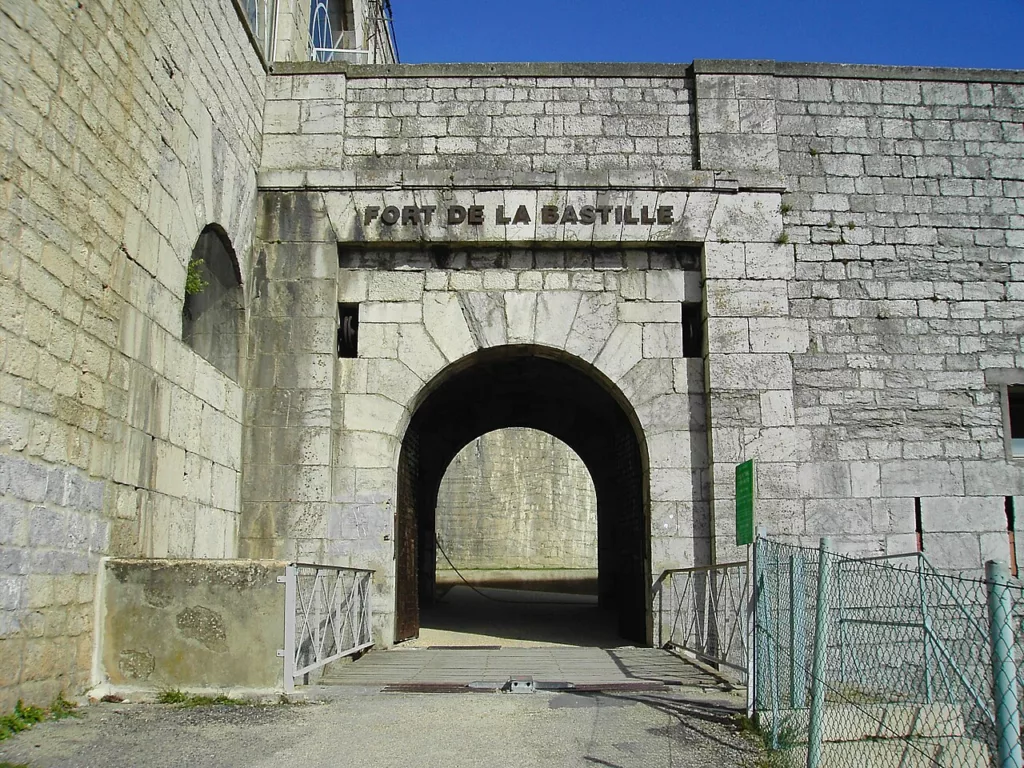
The Bastille of Grenoble is a former 19th-century military fort overlooking the city of Grenoble from a hill rising to nearly 500 meters in altitude. Built between 1824 and 1847 under General Haxo, it replaced an earlier fortification built in the 16th century by Lesdiguières.
Thanks to its strategic position, the Bastille was used to monitor and defend the surrounding valleys, especially those of the Isère and Drac rivers, while remaining difficult for enemies to access. The fort includes an elaborate defensive system with casemates, ditches, drawbridges, and underground galleries, although it was never used in actual combat.
Today, the Bastille is Grenoble’s main tourist site. Accessible by cable car, on foot, or by road, it offers an exceptional panoramic view of the Alpine ranges and welcomes hundreds of thousands of visitors each year who come to enjoy its scenery, cultural activities, and hiking trails.
Cathédrale Notre-Dame of Grenoble
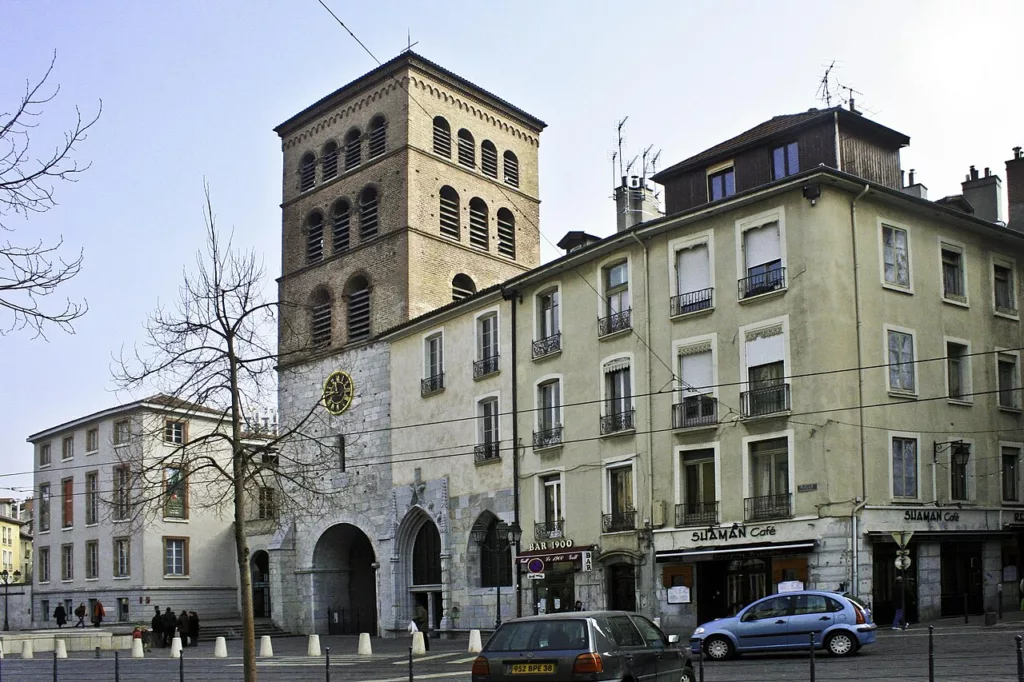
The Cathédrale Notre-Dame de Grenoble is a religious building whose construction began as early as the 10th century. As the seat of the bishopric, it combines Romanesque and Gothic styles, reflecting the many transformations it has undergone over the centuries.
A rare feature, the cathedral is integrated into a dense urban fabric, with residential buildings attached to its walls, and it connects directly with the neighboring Saint-Hugues church, forming a paired-church system inherited from the Middle Ages.
Its history dates back to Roman times, on the site of the ancient town of Cularo, where places of worship already existed. The discovery in 1989 of a 4th-century baptistery reinforced its historical importance and renewed interest in the site.
Inside, the architecture shows successive modifications: a 12th-century nave, various chapels, a choir decorated with a Gothic ciborium, and numerous religious artworks. The brick bell tower-porch, massive and sober, is the most visible element from Place Notre-Dame.
Place Victor Hugo
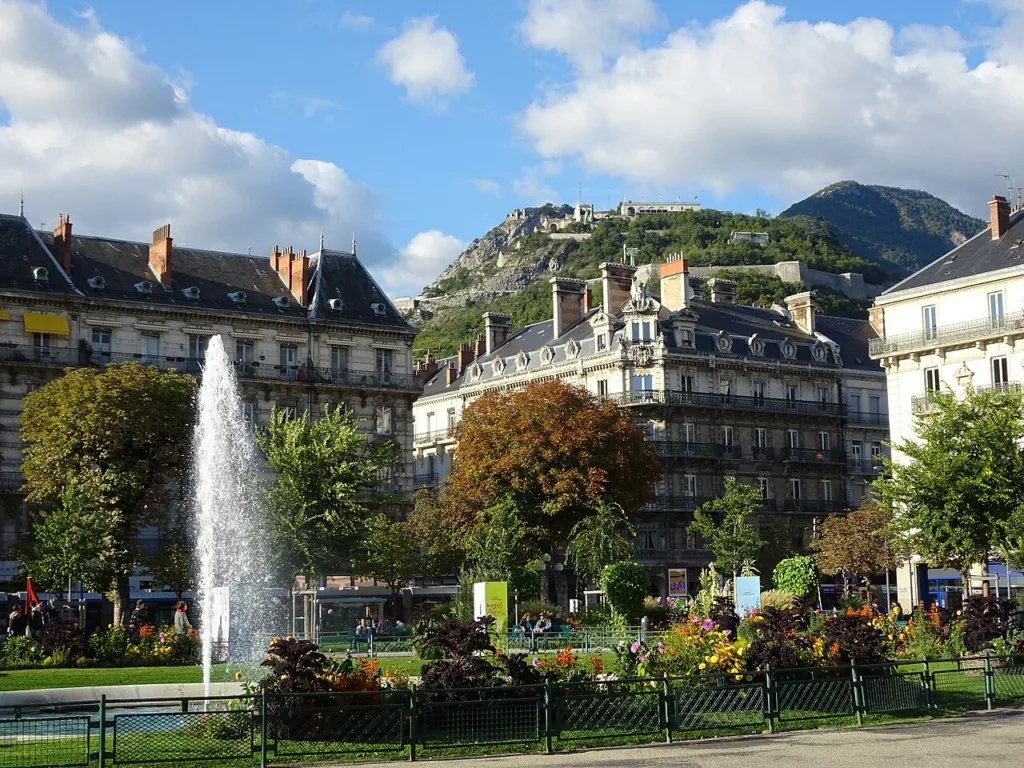
The Place Victor-Hugo is one of Grenoble’s most lively central squares, located in the heart of the city center and surrounded by shopping streets. Created in 1885 after the demolition of old barracks and ramparts, it is part of the city’s late-19th-century Haussmann-style urban development.
Dedicated to writer Victor Hugo, the square quickly became a key social hub, especially during the Belle Époque, when cafés, concerts, and events animated its terraces daily. Today, it remains a major meeting point with shops, restaurants, and regular events such as the Christmas market.
Fully renovated in 2021, the square is now more green and pedestrian-friendly while preserving its architectural heritage. It notably features a statue of composer Hector Berlioz, along with several notable buildings dating from its original development.
Discover the hidden secrets of the building at number 8 of the square, as well as the hidden statue, in our Grenoble route.
Basilica of the Sacred Heart of Grenoble
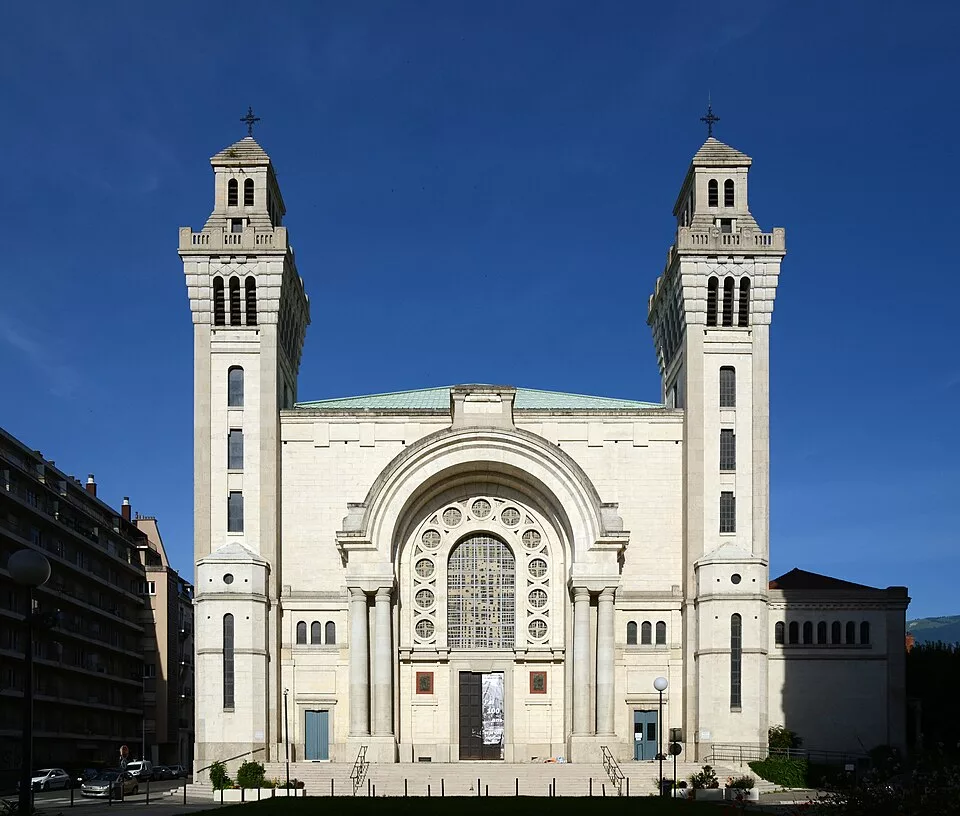
The Basilica of the Sacred Heart of Grenoble is a major religious building located near the train station in Grenoble. Built from 1922 onward, it stands out for its Romano-Byzantine style and a history marked by long phases of construction and renovation.
The parish was founded in 1911 to support the development of the railway district. The basilica project was launched after World War I under the guidance of Bishop Alexandre Caillot. Although consecrated in 1943, the church remained unfinished for decades, including the abandonment of a planned 75-meter bell tower.
It was only between 2013 and 2016 that a major renovation project completed and modernized the building. The basilica was fully refurbished, now offering around 1,500 seats and brighter spaces thanks to large stained-glass windows.
Inside, the architecture is impressive in scale, with a 25-meter-high nave and a spacious chancel with a marble floor. The overall design is notably sober, especially the altar, which is intentionally minimalistic.
One of its most remarkable features is the contemporary stained glass designed by Arcabas, dedicated to the theme of Creation. Installed between 2016 and 2019, these monumental windows bring a modern, colorful light into the building.
Saint-André Collegiate Church
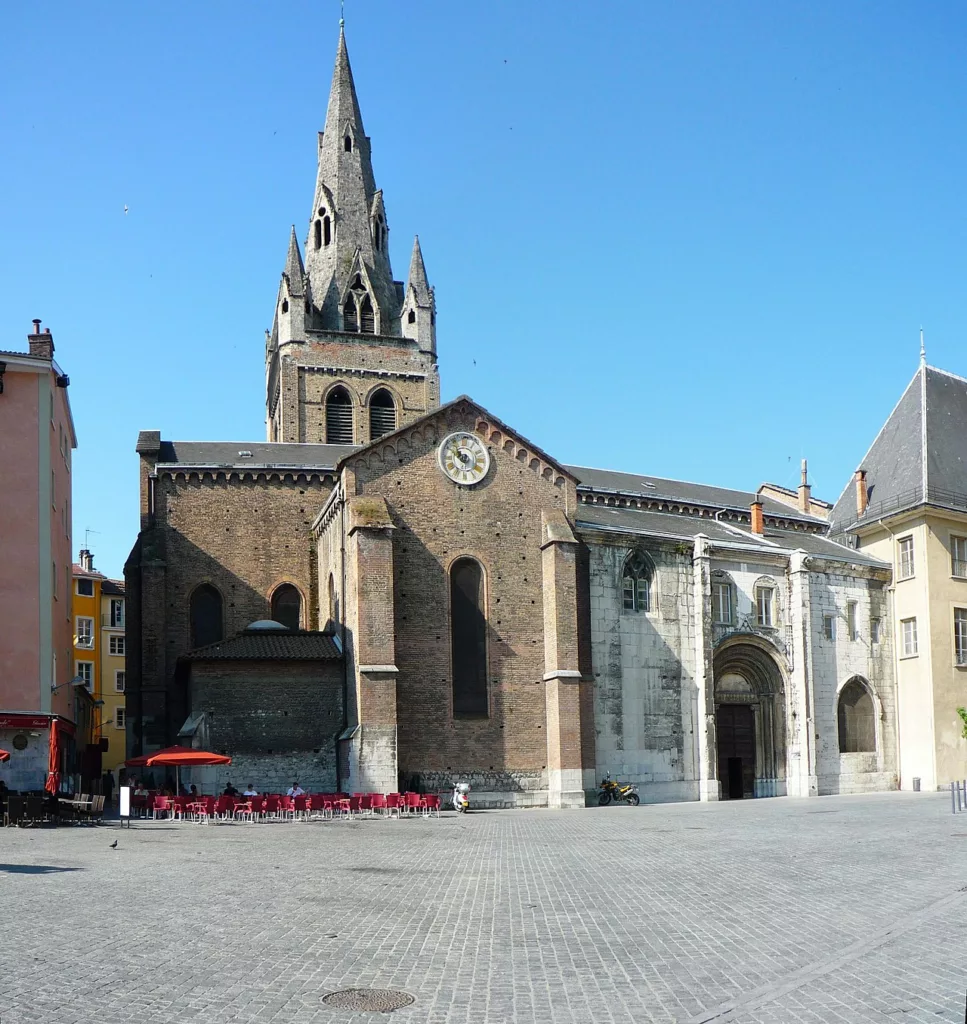
The Collégiale Saint-André de Grenoble is a former church located opposite the Palais du Parlement du Dauphiné. Founded in 1228 by the Dauphin André, it originally served as a private chapel and burial place for the rulers of Dauphiné, partly funded by silver mines in the Oisans region.
Built in a typically Dauphinois Romanesque style, the church is characterized by a sober and harmonious architecture, with a single nave, a low transept, and a square apse. Its lateral bell tower, 56 meters high and topped with an octagonal spire, is particularly distinctive.
Over the centuries, the building played an important religious and political role. After the annexation of Dauphiné to France in 1349, it became a royal chapel and hosted significant events, including sermons by François de Sales. During the French Revolution, the canons were dispersed and the church became a simple parish.
Today, the collegiate church preserves several notable elements, such as the tomb of knight Pierre Terrail de Bayard and relics of Philippine Duchesne.
Place Grenette
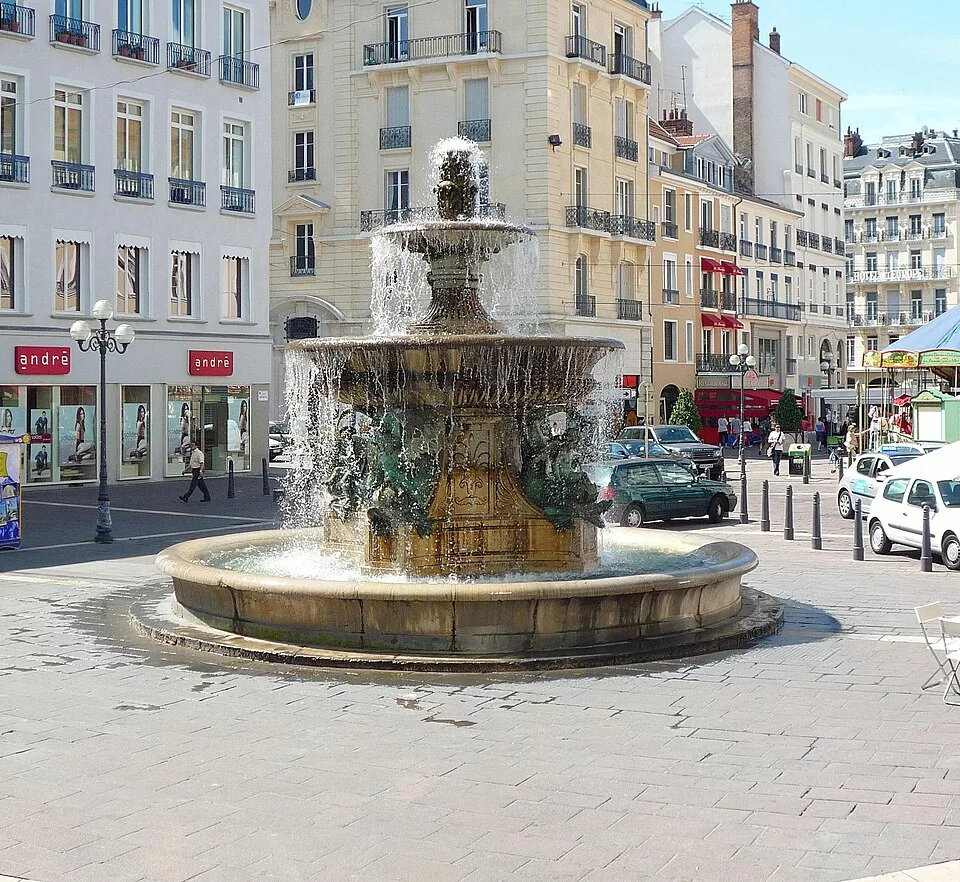
The Place Grenette is a key transit and gathering point, surrounded by shops and restaurants and well served by public transport.
Its name comes from the historic grain markets that took place there in the Middle Ages, when it was known as “Place du Breuil” or “Granaterie.” Originally outside the city walls, it was gradually integrated into the urban fabric from the 16th century onward, becoming a central hub of Grenoble life.
Throughout history, Place Grenette has witnessed many notable, sometimes tragic events. Public executions took place there, including that of accomplices of the famous smuggler Louis Mandrin in the 18th century. It was also affected by political unrest, notably during the Day of the Tiles, a prelude to the French Revolution.
In the 19th century, the square was modernized with the construction of the Lavalette water tower, a monumental fountain decorated with dolphin sculptures, symbolizing Dauphiné. It continued to evolve in the 20th century, transitioning from a traffic-heavy space to a fully pedestrianized and lively square in the late 1960s.
Discover the hidden details of this fountain in our Grenoble route.
Saint Louis Church
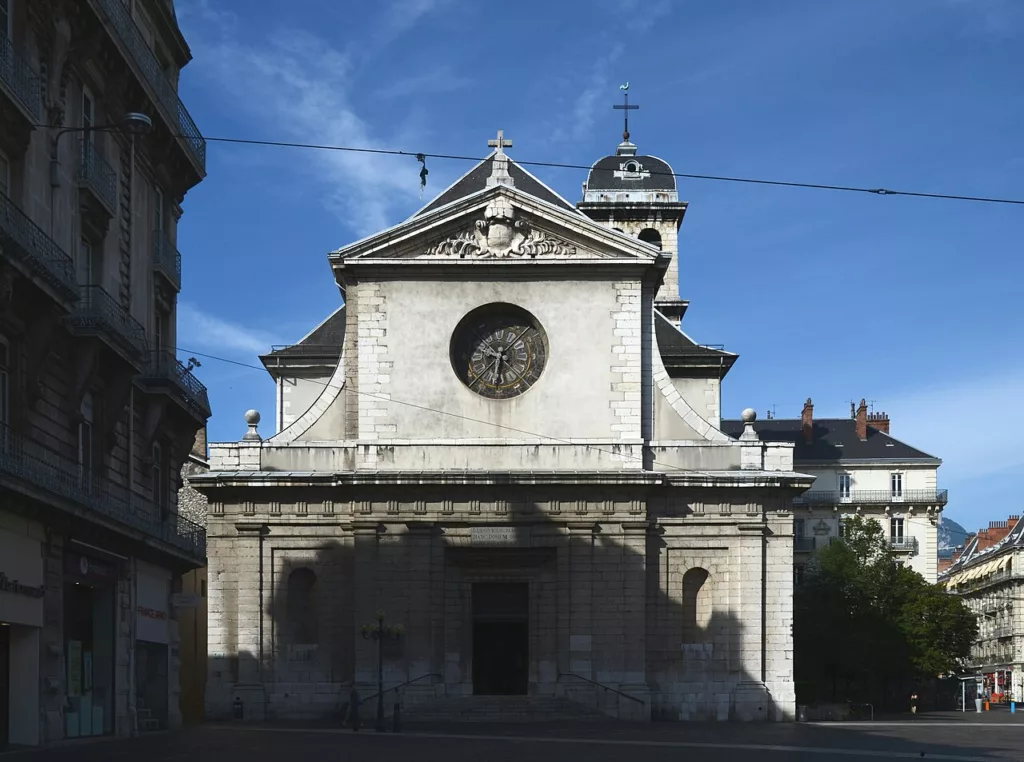
The Église Saint-Louis de Grenoble was built between 1689 and 1699 and is dedicated to Louis IX, better known as Saint Louis.
Its construction was commissioned by Bishop Étienne Le Camus, who aimed to create new parishes to support the city’s expansion.
The building’s architecture is simple and laid out in a Latin cross plan. On the façade, a Latin inscription recalls its foundation: “Louis the Great built this house for the Lord in 1699.” A decorative oculus with stained glass and a clock can also be seen.
Inside, the church contains several notable elements, including a white marble Virgin dating from the 16th century, paintings by a Dominican friar, as well as 17th-century walnut confessionals and pulpit. The main altar dates from the 18th century.
The stained glass windows, created in the early 20th century by master glassmaker Louis Balmet, bring light and color to this otherwise restrained architectural ensemble.
The church also has four bells, some dating from the 19th century, and a significant organ. This instrument, rebuilt in 1980 by organ builder Bartoloméo Formentelli, contains more than 4,600 pipes. Restored in 2012, it remains an important part of Grenoble’s cultural and musical life.
Discover the secrets of the inscriptions on the building in our scavenger hunt in Grenoble.
Fountain of the Three Orders of Grenoble
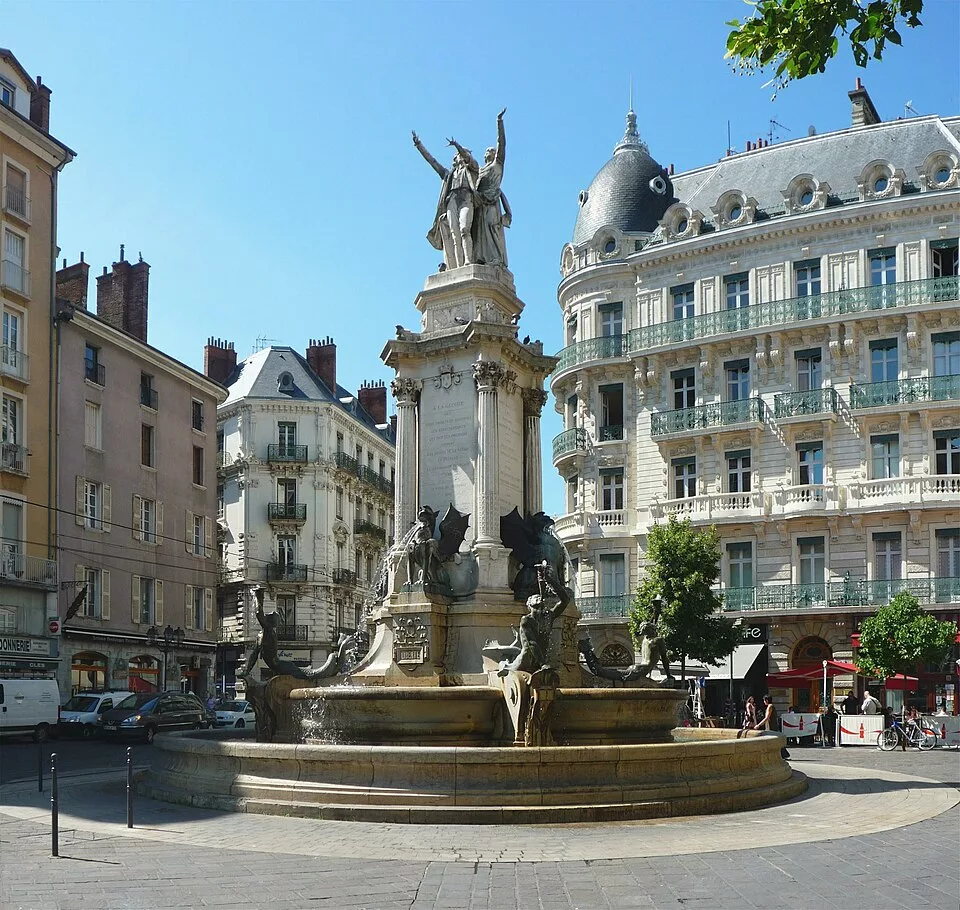
The Fontaine des trois ordres, also known as the “Centenary Fountain,” commemorates the events of 1788, considered the precursors to the French Revolution, notably the famous Day of the Tiles.
Inaugurated in 1897 in the presence of President Félix Faure, this monument was created by Grenoble sculptor Henri Ding. It reflects the desire to highlight Grenoble’s key role in French revolutionary history.
The monument consists of a large circular basin with a nine-meter-high pedestal at its center. At the top, three marble figures represent the three estates of the Ancien Régime: the Third Estate, the Clergy, and the Nobility. Gathered around the Declaration of the Rights of Man, they symbolize unity and the early demands for democracy.
Around the fountain, bronze decorative elements also stand out: four tritons spray water jets while sculpted griffins complete the majestic ensemble. The pedestal faces are engraved with inscriptions tracing key stages of the Revolution, from 1788 to the Tennis Court Oath of 1789.
Over time, the fountain has undergone several changes. Its bronze elements were melted down during World War II before being restored in 1957.
Learn about the role of the Day of the Tiles in French history in our scavenger hunt in Grenoble.
Saint John Church of Grenoble
The Église Saint-Jean de Grenoble was built between 1963 and 1965 by architect Maurice Blanc. It stands out for its bold and original architecture, typical of 20th-century religious buildings.
The church has a circular floor plan about 37 meters in diameter and can accommodate up to 1,300 people, making it one of Grenoble’s most distinctive contemporary churches.
Originally, the building was covered by a self-supporting hyperboloid roof topped with a bronze cap. However, due to waterproofing issues, it was completely redesigned in 1979. The new roof features a lantern with nine openings and is topped by a cross reaching 27 meters in height.
Over time, the building required maintenance work, particularly on its roof. A renovation project was considered in the 2020s, supported by public donations to preserve this modern architectural heritage.
Stendhal Birthplace Apartment
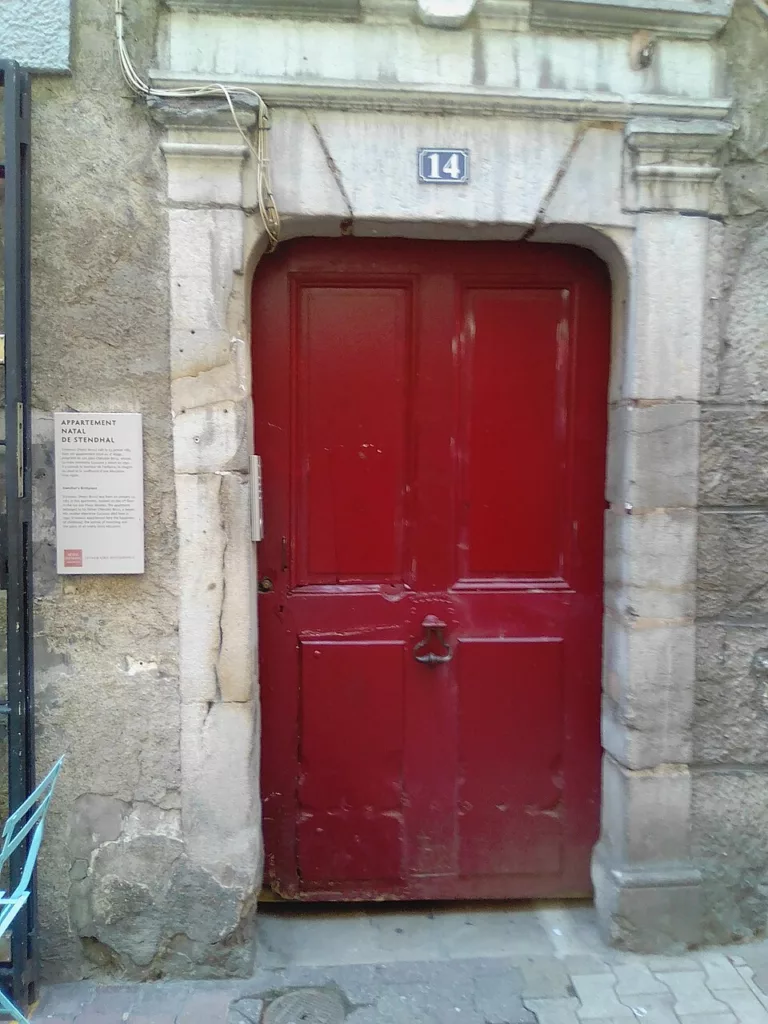
The Maison natale de Stendhal is located in the historic center of Grenoble, on Rue Jean-Jacques-Rousseau. It is here that writer Stendhal, born Henri Beyle, came into the world on January 23, 1783.
The apartment where he was born is on the second floor, within his family home, which included his father, a lawyer at the Grenoble Parliament, and his mother. Stendhal spent his early childhood there before leaving after his mother’s death.
Today, the house remains a place of historical significance, although it is largely private and only occasionally open to visitors. A commemorative plaque on the façade marks the birthplace of this major figure in French literature.
The building also housed a museum dedicated to the Dauphiné Resistance in the 1960s, before it was relocated elsewhere.
Follow in Stendhal’s footsteps in our Grenoble route.
Helical Garage
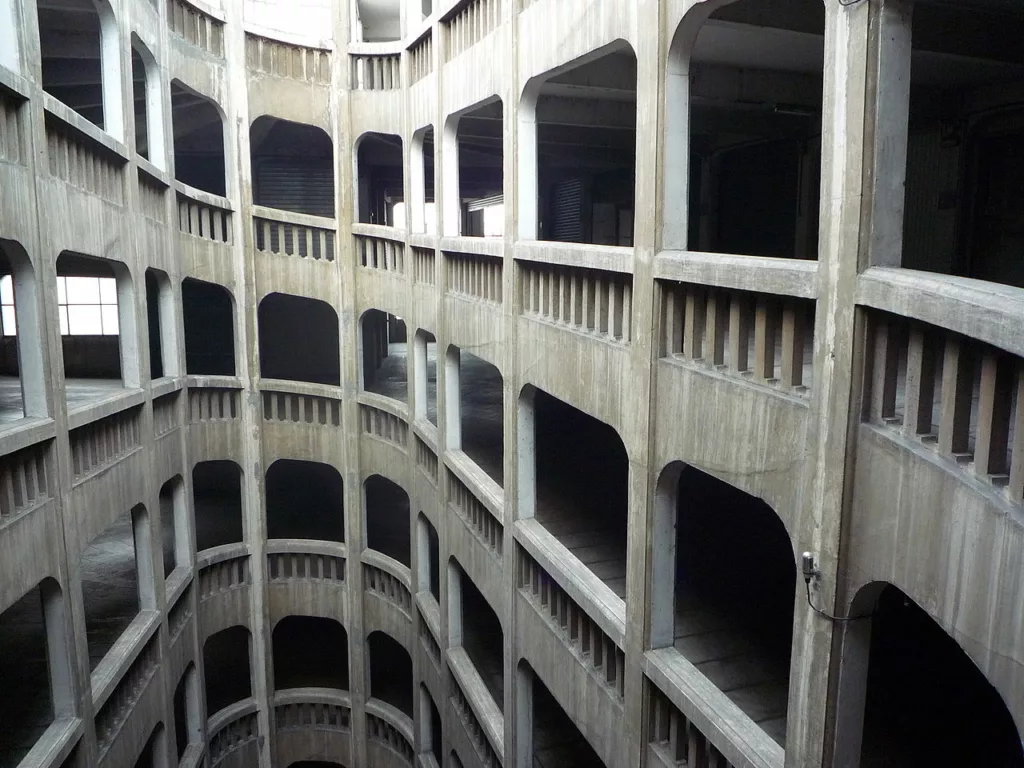
The Garage hélicoïdal de Grenoble is a unique building located in the heart of Grenoble, constructed between 1928 and 1932 in the Art Deco style. Designed to meet the rise of the automobile in the early 20th century, it originally accommodated 225 cars and today holds more than 250.
Its defining feature is its internal structure: a reinforced concrete helical ramp allows vehicles to circulate across multiple levels around a large central void. This ingenious system enables smooth traffic flow and parking within a very constrained space.
Invisible from the street as it is integrated into a block of buildings, the garage stands out for its discreet exterior and complex interior. Each parking box was originally equipped with modern conveniences for its time, such as water, electricity, and an individual locking system.
It has also become a film location, appearing in several movies and series, including Cavale (2002), directed by Lucas Belvaux, Loin du périph (2022) starring Omar Sy, and Anthracite (2024), a Netflix series.
Saint-Bruno Church of Grenoble
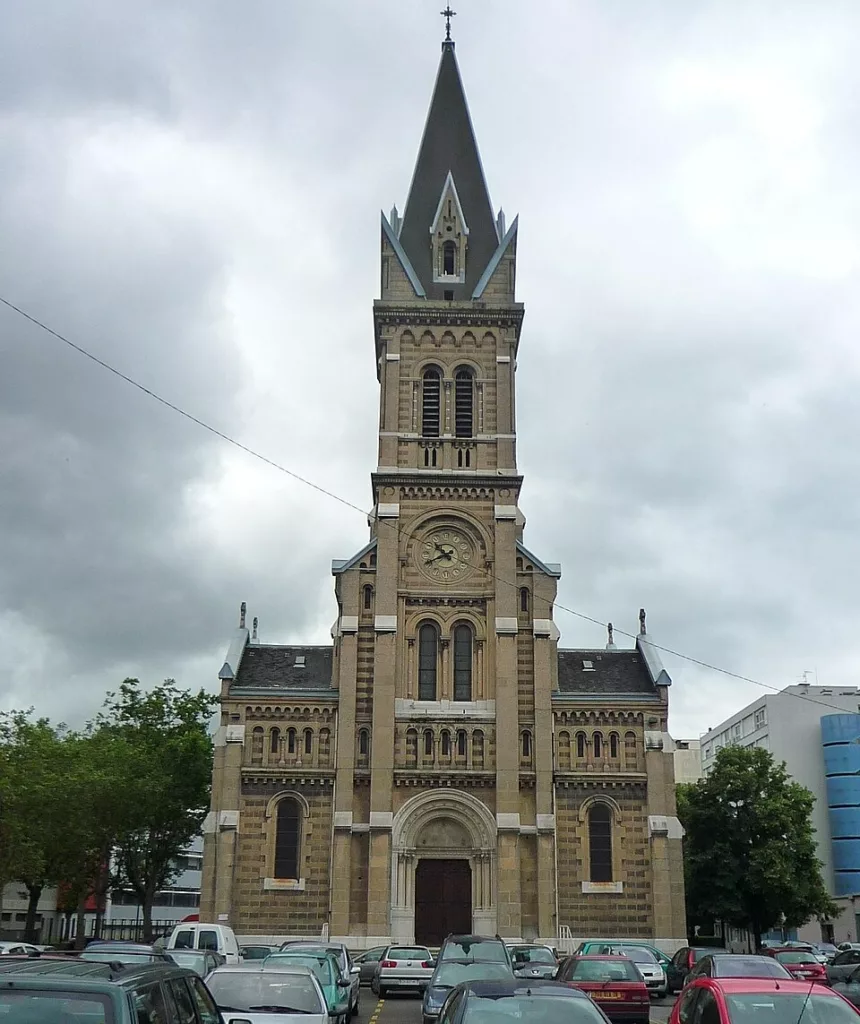
The Église Saint-Bruno de Grenoble is a parish church located in the Saint-Bruno district, near the Grenoble train station. Built between 1869 and 1878, it is dedicated to Saint Bruno.
Its architecture is in the Neo-Romanesque style. The building is notable for its innovative use of molded cement, which replaces traditional stone throughout the structure—an uncommon technique in the 19th century.
The façade gives the impression of cut stone, but it is in fact made of artificial materials chosen to reduce costs and speed up construction. The bell tower rises to 67 meters, making the church one of the tallest buildings in Grenoble at the time of its construction.
Perret Tower of Grenoble
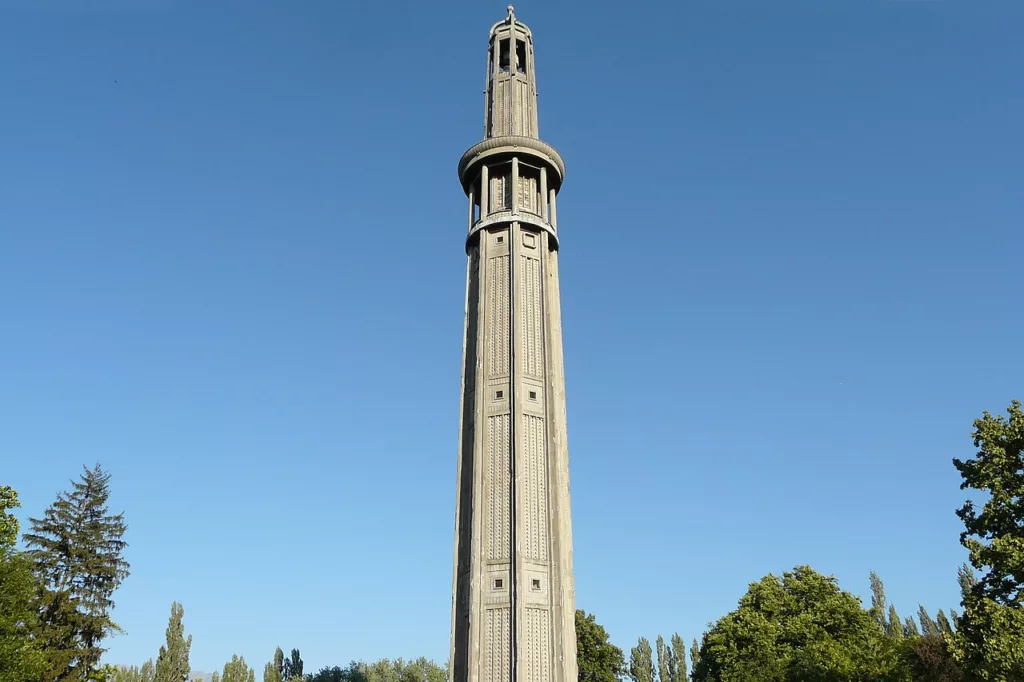
The Perret Tower of Grenoble is an observation tower located in Paul Mistral Park. Built between 1924 and 1925 by architect Auguste Perret for the International Exhibition of “white coal,” it is considered the first major reinforced-concrete tower in the world. Standing 93 meters tall, it served both as a symbol of the exhibition and as a viewing and orientation tower for visitors.
Its innovative architecture is based on an exposed reinforced-concrete structure with no decorative elements, highlighting the modernity of the material. Closed to the public since the 1960s due to deterioration, it is now listed as a historic monument and is undergoing major restoration.
Must-visit museums in Grenoble
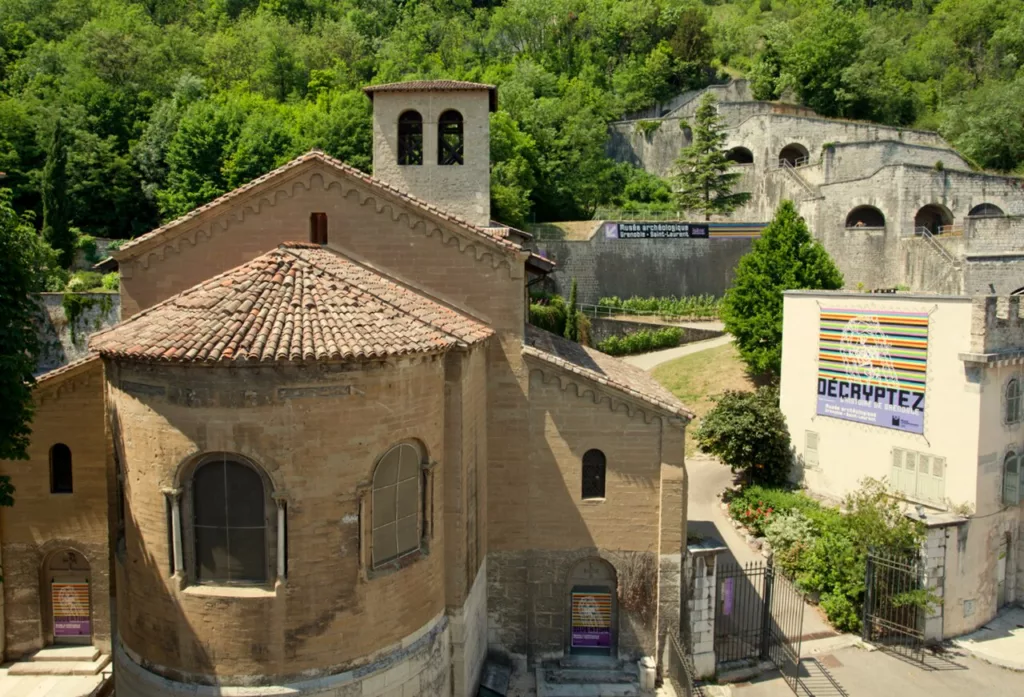
Saint-Laurent Archaeological Museum
Museum of Grenoble
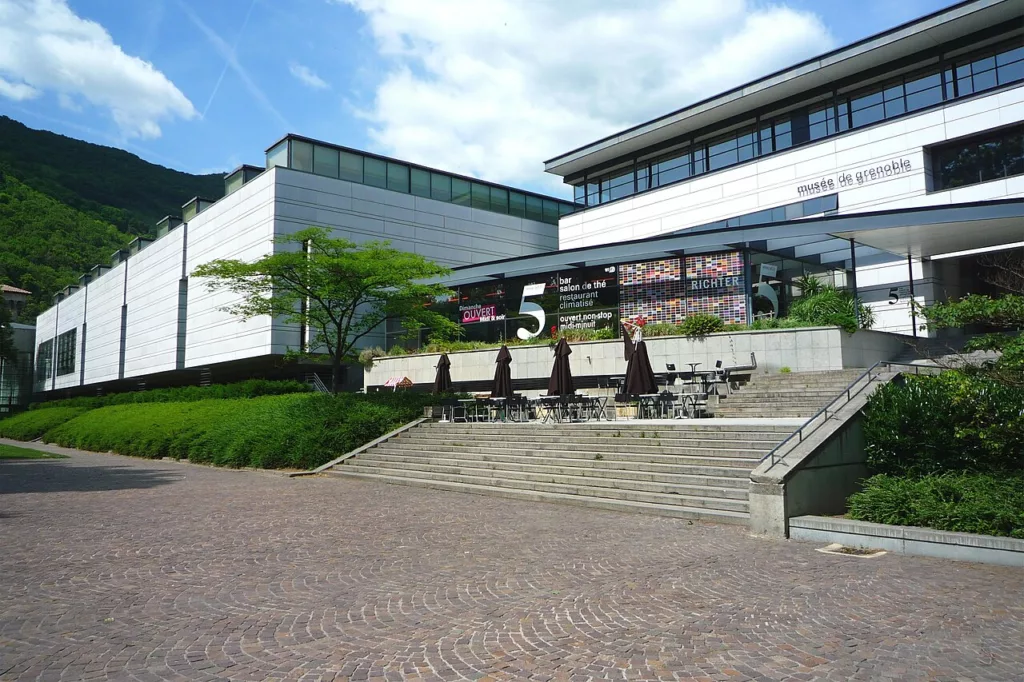
The Museum of Grenoble is an art museum founded in 1798. It houses a collection of around 25,000 works, ranging from Antiquity to contemporary art. Visitors can admire works by major artists such as Rubens, Matisse, Picasso, Monet, and Andy Warhol.
The museum is renowned for the richness and diversity of its collections, particularly in painting, sculpture, drawing, and decorative arts. It is also one of the first museums in France to have given significant space to modern and contemporary art.
The current building was inaugurated in 1994. It is located along the Isère River and also includes a sculpture garden as well as the integration of a medieval tower known as the Tour de l’Isle.
Musée Dauphinois
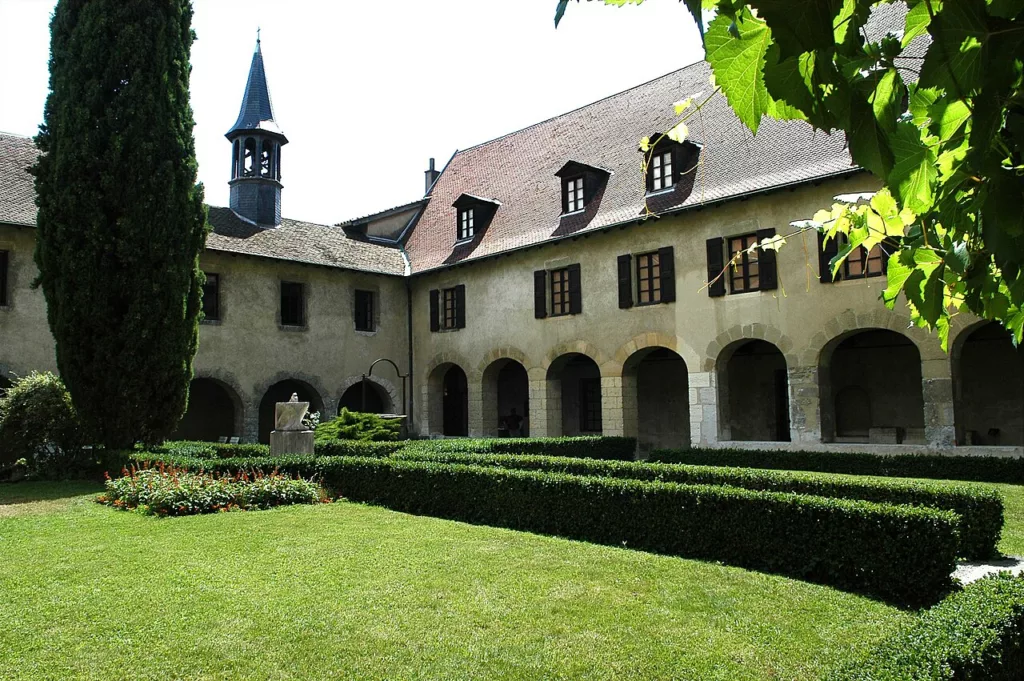
The Musée Dauphinois is a regional museum located in Grenoble, dedicated to the history and cultures of the Dauphiné region and the French Alps. Founded in 1906, it is one of the first regional heritage museums in France.
It is housed in the former Sainte-Marie d’en-Haut convent, a 17th-century building classified as a historic monument. Its collections include more than 100,000 objects, as well as photographs, documents, films, sound recordings, and books.
It traces the lives of Alpine populations through the centuries, from prehistory to the modern era. Among its flagship exhibitions are “Alps, 7,000 Years of History” and “The White Dream,” dedicated to winter sports in the Alps.
Museum of the Resistance and Deportation of Isère
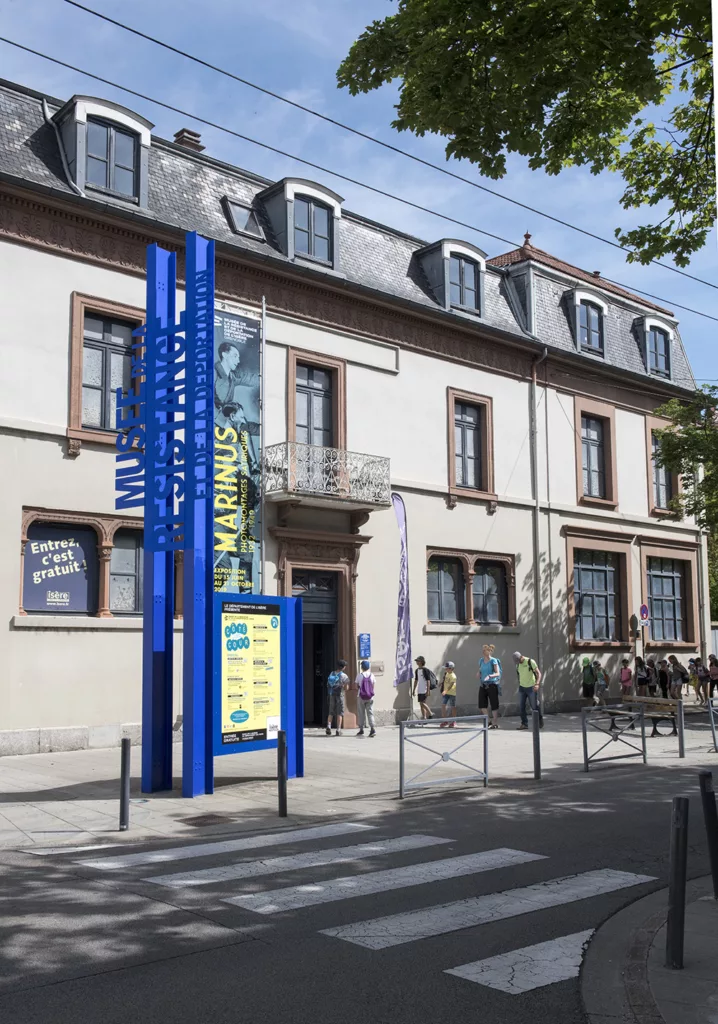
The Museum of the Resistance and Deportation of Isère is dedicated to the history of the Second World War, particularly the Resistance, Deportation, and life under occupation in the Isère region.
Inaugurated in 1966 by former resistance members, deportees, and teachers, its goal is to preserve and transmit the memory of this historical period. Since 1994, it has been located on Rue Hébert in a building fully redesigned to host its collections.
The museum offers a chronological tour retracing the major stages of the Second World War. It explains the rise of totalitarian regimes, the Occupation, the Vichy government, and the various forms of resistance in Isère.
A major focus is placed on the maquis, clandestine networks, and local resistance actions. The museum also addresses repression, arrests, and deportations. Its scenography is immersive, using period objects, testimonies, documents, and audiovisual reconstructions to encourage reflection and remembrance.
Museum of Mountain Troops
The Musée des troupes de montagne is a military museum located in the Bastille fort in Grenoble. It pays tribute to the Alpine hunters, known as the “blue devils,” and retraces their history from the late 19th century to contemporary conflicts.
Created in 1988, the museum was initially located on Rue Hébert in Grenoble before closing in 2002 for regulatory upgrades. It reopened in 2009 in renovated rooms of the Bastille fort, offering a modern and immersive exhibition space.
The museum displays a rich collection of military objects, uniforms, weapons, maps, and testimonies over about 600 m². Reconstructed scenes illustrate soldiers’ daily life in mountainous conditions, particularly during the two World Wars.
The exhibition also highlights the evolution of mountain troops and their missions in France and abroad, emphasizing their adaptation to extreme conditions and strategic importance in Alpine regions.
Accessible by cable car, hiking trails, or car, the museum benefits from a panoramic location above Grenoble. It is also part of a memorial route leading to the national monument of mountain troops on Mont Jalla.
Museum of Grenoble Natural History
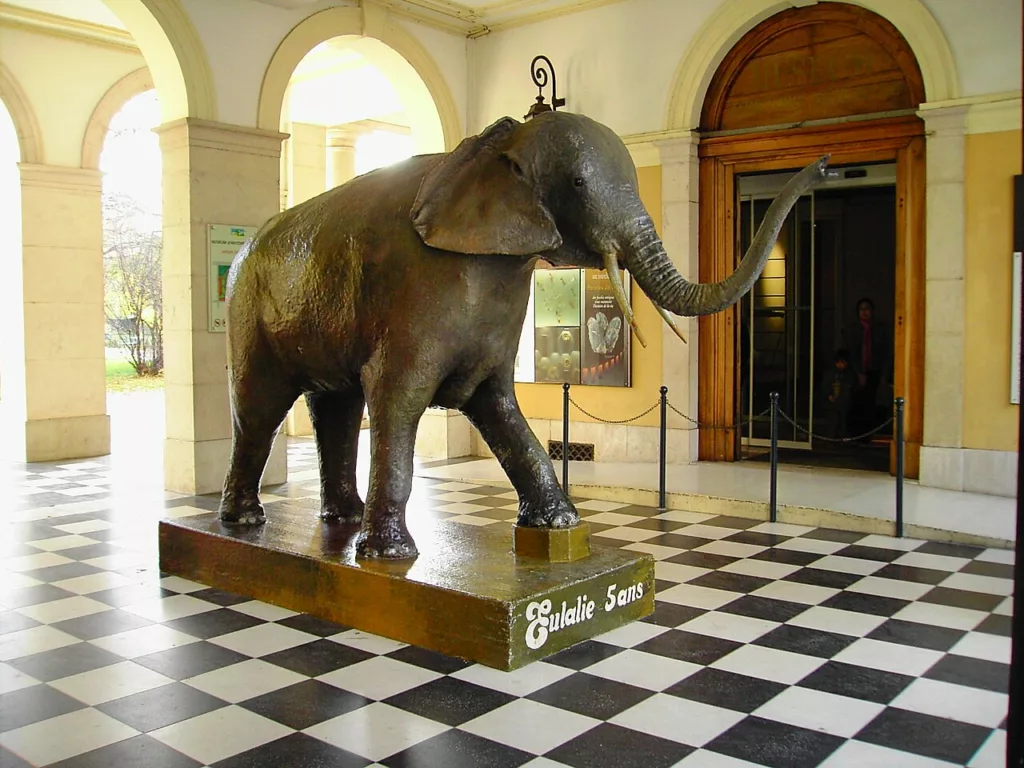
The Muséum d’histoire naturelle de Grenoble is a municipal museum founded in 1775. It has been located in its current building since 1855, in the heart of the Jardin des Plantes Joséphine Baker.
It holds one of the largest natural history collections in France, with around 1.5 million specimens. Its collections cover several scientific fields, including botany, zoology, geology, and ethnology. The museum originated from a “cabinet of natural history” created in the late 18th century through the initiative of scholars and local notable figures, becoming a municipal institution in 1814 before evolving into a full scientific museum.
Over time, the museum has been enriched by numerous donations, scientific expeditions, and acquisitions. Today it features permanent exhibits on Alpine wildlife, Alpine geology, minerals, extinct species, and biodiversity, as well as temporary exhibitions.
Park and green spaces of Grenoble
Grand Lake of Laffrey
The Grand lac de Laffrey is a natural glacial lake located about 23 km from Grenoble, in the heart of the Taillefer massif.
It is one of the four lakes of Laffrey and covers approximately 1.22 km², with a length of 2.7 km and a maximum width of around 600 meters. Its altitude is 911 meters and its depth reaches up to 39 meters.
The lake was formed following the retreat of the Romanche glaciers during the last glacial periods. The successive movements of the glaciers shaped natural basins, creating this typical lake landscape of the region.
Grand Lake of Laffrey is surrounded by a mountainous and rural environment. The climate is marked by cold and sometimes harsh winters, with temperatures often dropping well below freezing. The lake regularly freezes in winter, while summers can be warm and pleasant.
The Route Napoléon runs along the western shore of the lake, making it easily accessible. This historic road connects Grenoble to the French Riviera through the Alps.
Paul Mistral Park
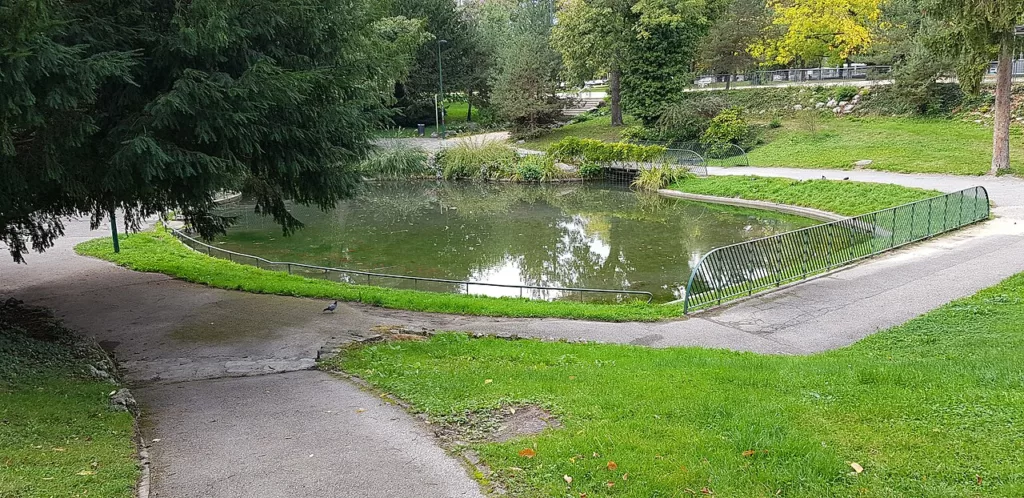
Paul-Mistral Park is a large 21-hectare urban park located in Grenoble, in the Isère department. It occupies a former military site transformed for the 1925 International Exhibition.
It is home to the Stade des Alpes, the sports palace, and several memorial monuments. Its layout evolved over time, particularly after the 1968 Winter Olympic Games.
The park also plays an important role in Grenoble’s historical memory, with several monuments related to the Second World War. It features a great diversity of trees and urban wildlife, especially many bird species.
City Garden
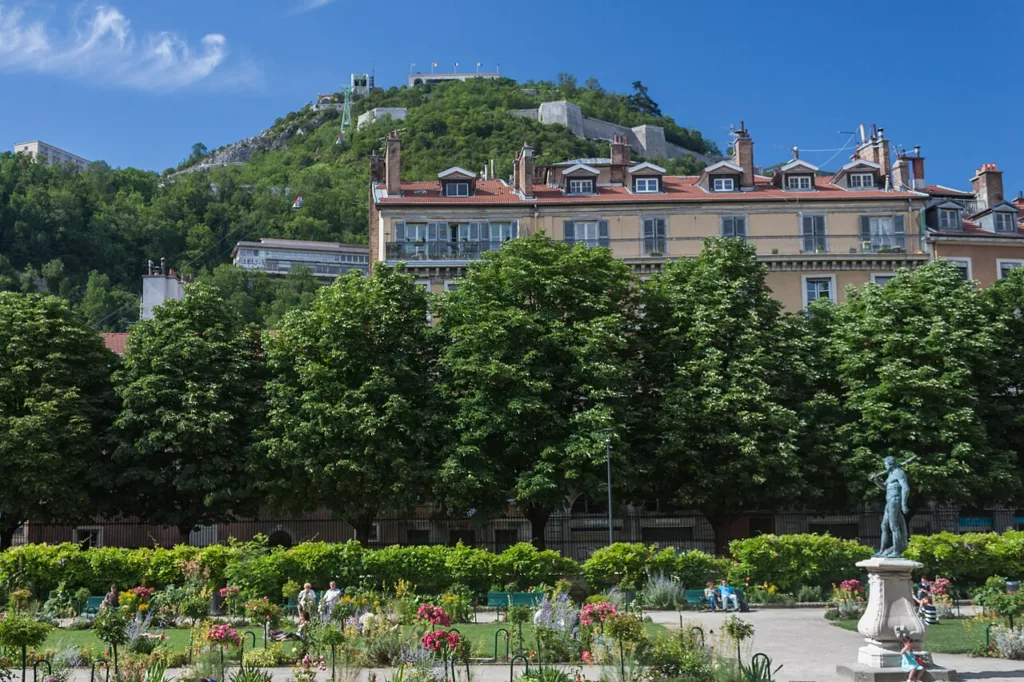
The Jardin de Ville of Grenoble is a historic urban garden and a true example of a French formal garden. It combines a structured area with a rose garden and a more natural wooded space.
The park is also remarkable for its ancient trees, notably around one hundred plane trees, some of which are protected. The site is dominated by large lime trees and horse chestnuts, creating a shaded and peaceful atmosphere.
Originally, the site was a meadow called “the treasury meadow,” where Catherine de’ Medici is said to have walked. In the 17th century, the Duke of Lesdiguières transformed the area into a private classical-style garden.
The garden became public in 1719 and still retains strong historical and landscape value today. Covering 1.7 hectares, it remains a popular relaxation space in the heart of the city.
Gastronomy & specialties of Grenoble
Chartreuse
Dauphinois Gratin
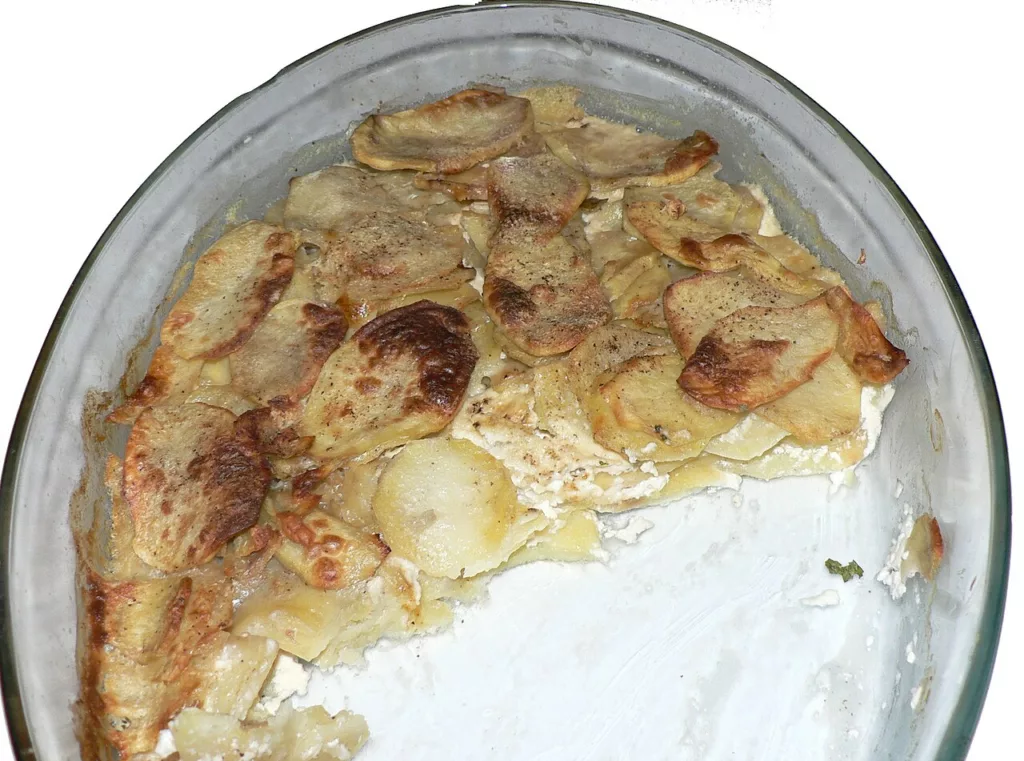
The gratin dauphinois is a traditional specialty of French cuisine originating from the Dauphiné region. It is a simple and authentic dish made with potatoes, milk, and sometimes cream.
The potatoes are sliced into thin rounds and slowly baked in a mixture of milk and cream, giving them a soft and flavorful texture. The dish is generally seasoned with garlic and nutmeg.
This dish is often served as a side with meat, but it can also be enjoyed as a complete main course, especially during winter.
Ravioles of Dauphiné
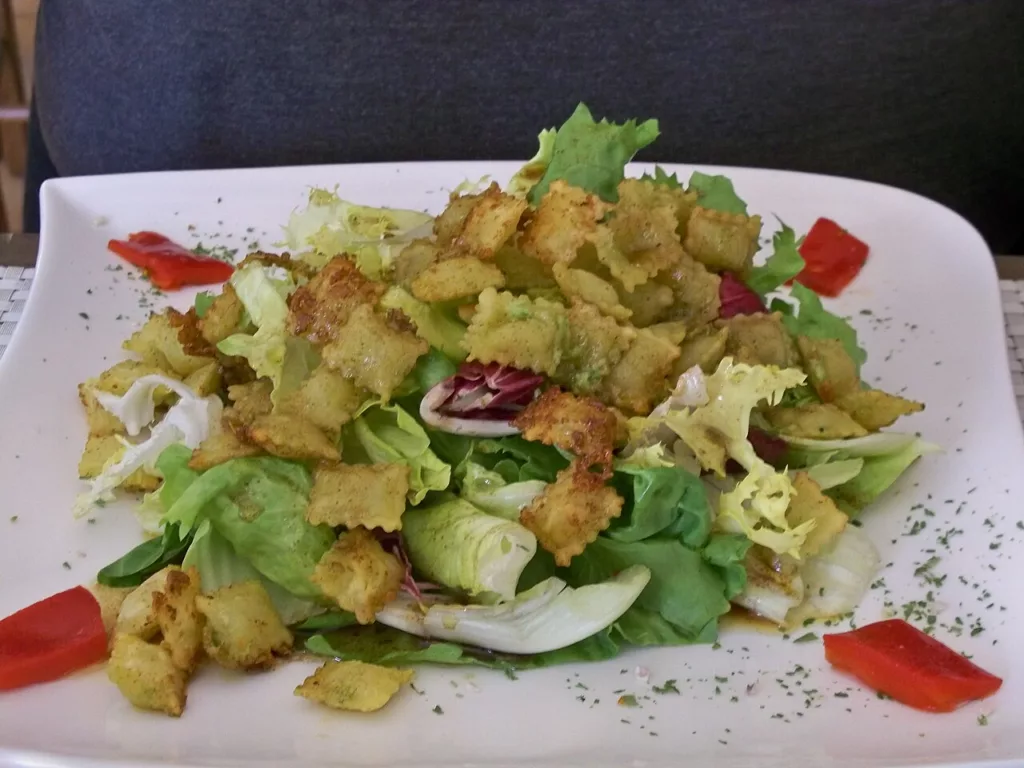
Ravioles du Dauphiné are made of small squares of thin pasta filled with a mixture of cheese, parsley, and egg.
Historically, ravioles have existed since the Middle Ages and evolved over time. Originally, they could be filled with meat or vegetables, before cheese became the main ingredient.
Ravioles du Dauphiné are distinguished by their very thin dough made from soft wheat flour, egg, and water. The filling includes cheeses such as Comté or Emmental, as well as fresh cheese, parsley, and egg.
They are generally poached briefly in simmering water but can also be served baked as a gratin, pan-fried, or in salads.
Grenoble Walnut
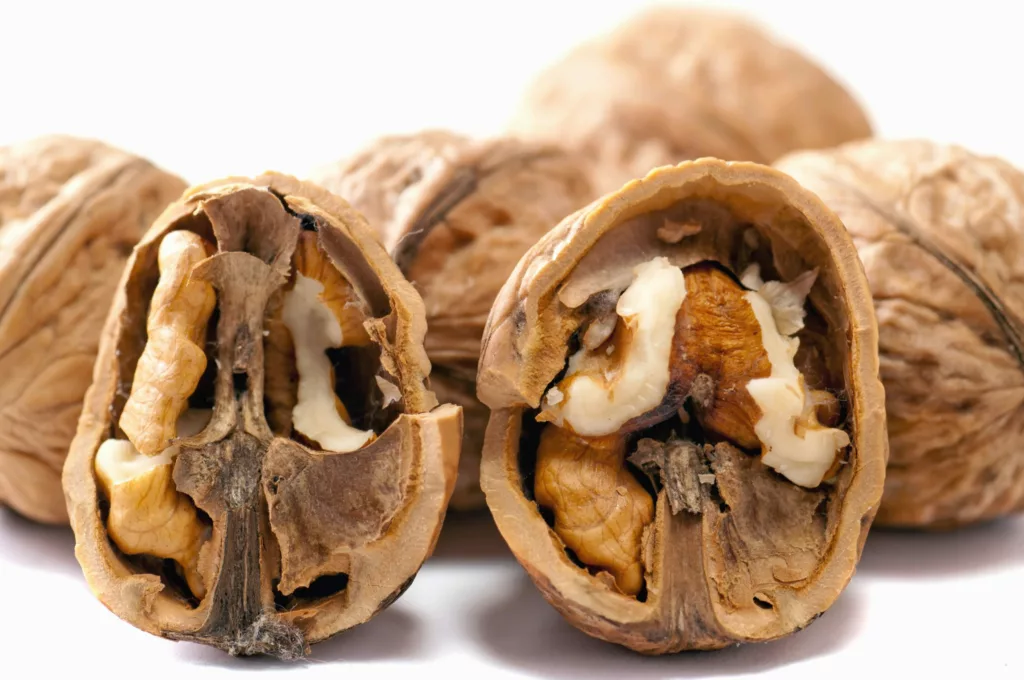
The Grenoble walnut is a nut benefiting from a Protected Designation of Origin (PDO). It is produced in a specific geographical area around Grenoble, mainly in the Isère Valley in France.
The production area covers several hundred municipalities across Isère, Drôme, and Savoie. The main cultivation zones are located in the lower Isère Valley, between the Voironnais and the Royans regions, at the foot of the Vercors massif.
Three walnut varieties are authorized under the designation: Franquette, Mayette, and Parisienne. These varieties are cultivated under specific conditions, on well-drained soils and generally below 600 meters in altitude.
The Grenoble walnut obtained official recognition as early as 1938, making it one of the first controlled designation products for fruit in France. It is mainly consumed as dried fruit but is also used in pastries, confectionery, and cooking. Harvesting takes place every autumn, generally in September and October.
Murçon
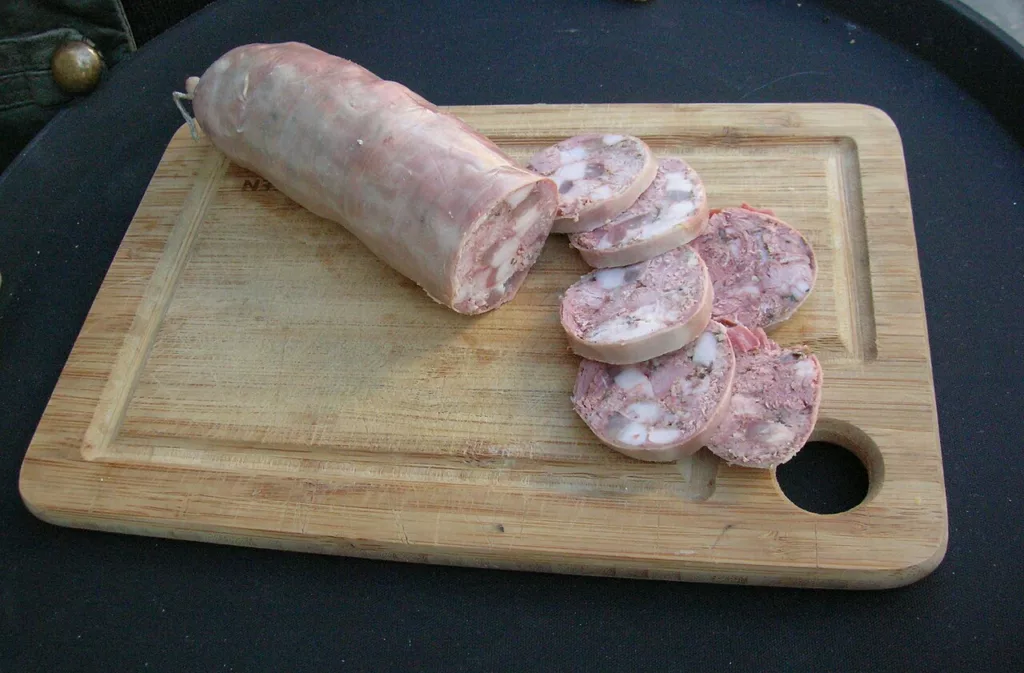
Murçon (or Murson) is a traditional cured meat specialty from the Dauphiné region, originally from La Mure, made with minced pork and coarser cuts of meat. Flavored with caraway seeds, it is prepared as a sausage cooked in water and served hot, often with potatoes that absorb its aromas.
Excursions from Grenoble
Vercors Regional Natural Park
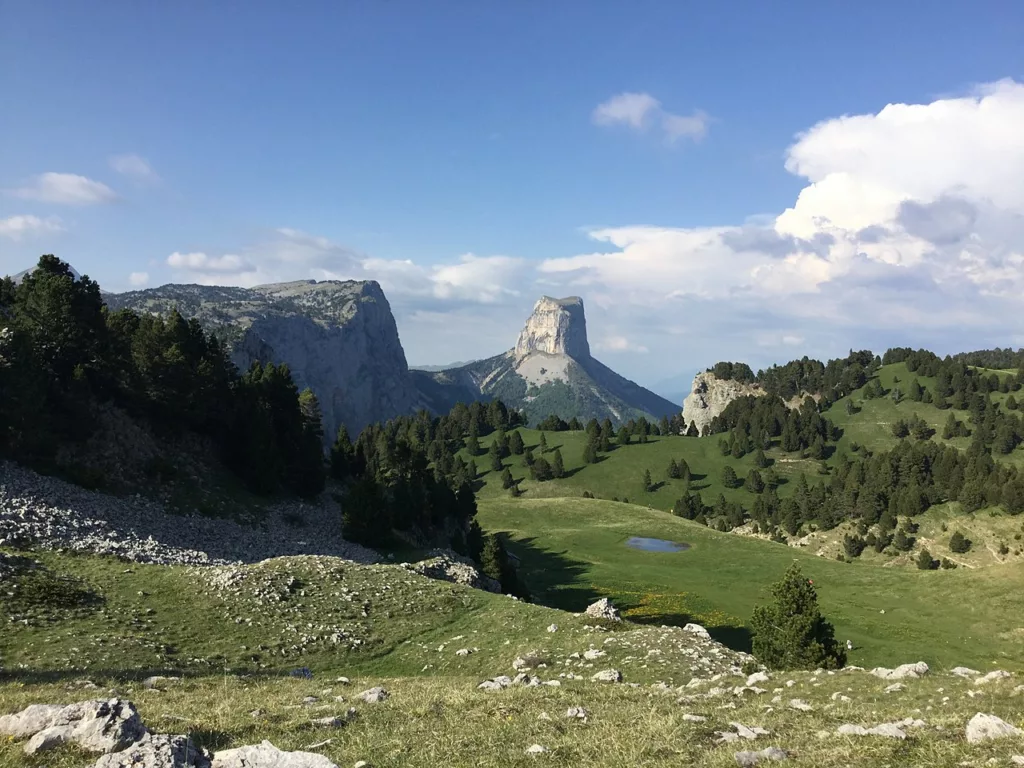
The Vercors Regional Natural Park, located less than an hour’s drive from Grenoble, provides quick access to a vast preserved mountain area, perfect for a day trip or a weekend outdoors.
From Grenoble, several areas of the Vercors are easily accessible, such as the Lans-en-Vercors plateau, Autrans, and Méaudre. These villages are surrounded by forests and meadows, with numerous hiking trails suitable for all levels.
The Bourne Gorges are also a very popular route. The road is spectacular and offers impressive cliffs as well as remarkable viewpoints over the massif.
For more experienced hikers, the Hauts-Plateaux du Vercors provide a wild and protected environment, with vast natural landscapes and diverse wildlife.
The Vercors is also an attractive destination in every season. In summer, visitors can enjoy hiking, mountain biking, and climbing, while in winter, the resorts of the massif offer downhill skiing, cross-country skiing, and snowshoeing.
Chartreuse Regional Natural Park
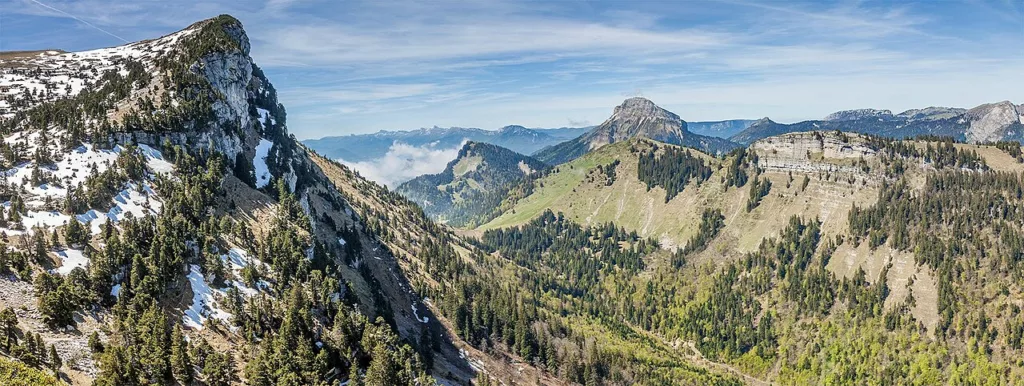
The Parc naturel régional de Chartreuse is a natural area located between Grenoble, Chambéry, and Voiron.
This mid-mountain park is known for its forest landscapes, cliffs, and limestone reliefs typical of the Prealps. It offers an ideal setting for outdoor activities close to the city. From Grenoble, several sites are quickly accessible, such as Col de Porte, Le Sappey-en-Chartreuse, or Saint-Pierre-de-Chartreuse. These areas offer numerous hiking trails suitable for all levels, as well as beautiful views over the surrounding mountain ranges.
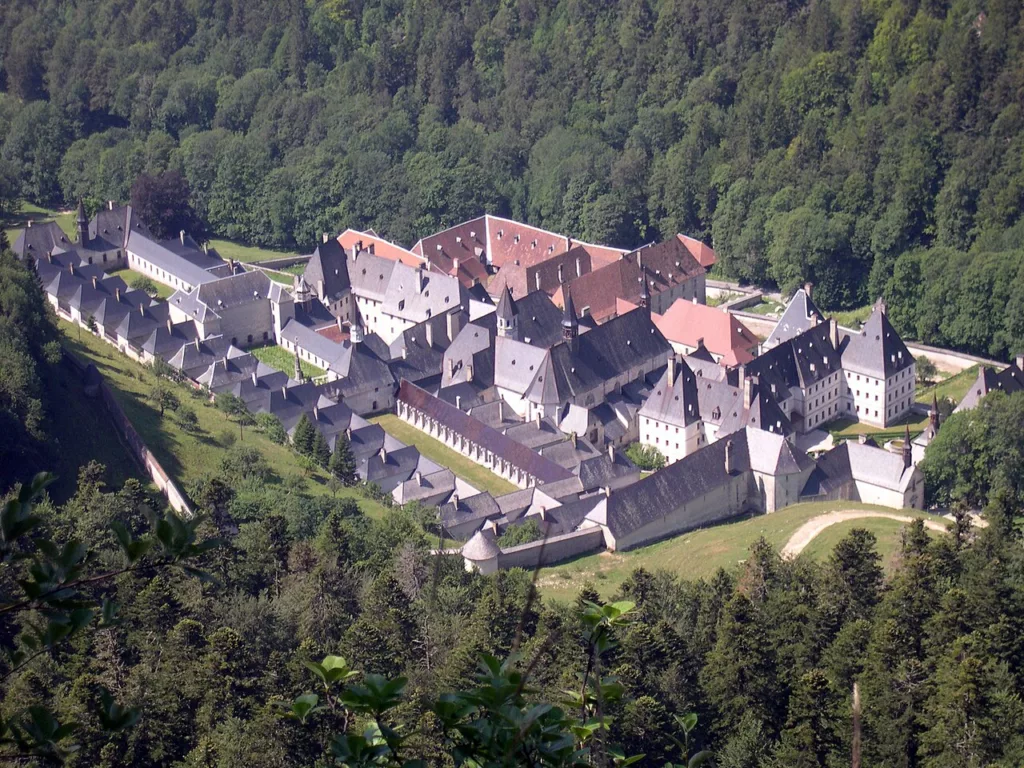
The Cirque de Saint-Même is one of the park’s most emblematic sites, with its waterfalls and preserved natural environment. The Monastery of Grande Chartreuse is also an important place, rich in history and nestled in the heart of the mountains.
Chartreuse is especially appreciated for hiking, mountain biking, and nature discovery activities. In winter, snowshoeing and Nordic skiing are also popular in certain areas.
The Monastery of Grande Chartreuse
Fort Saint-Eynard
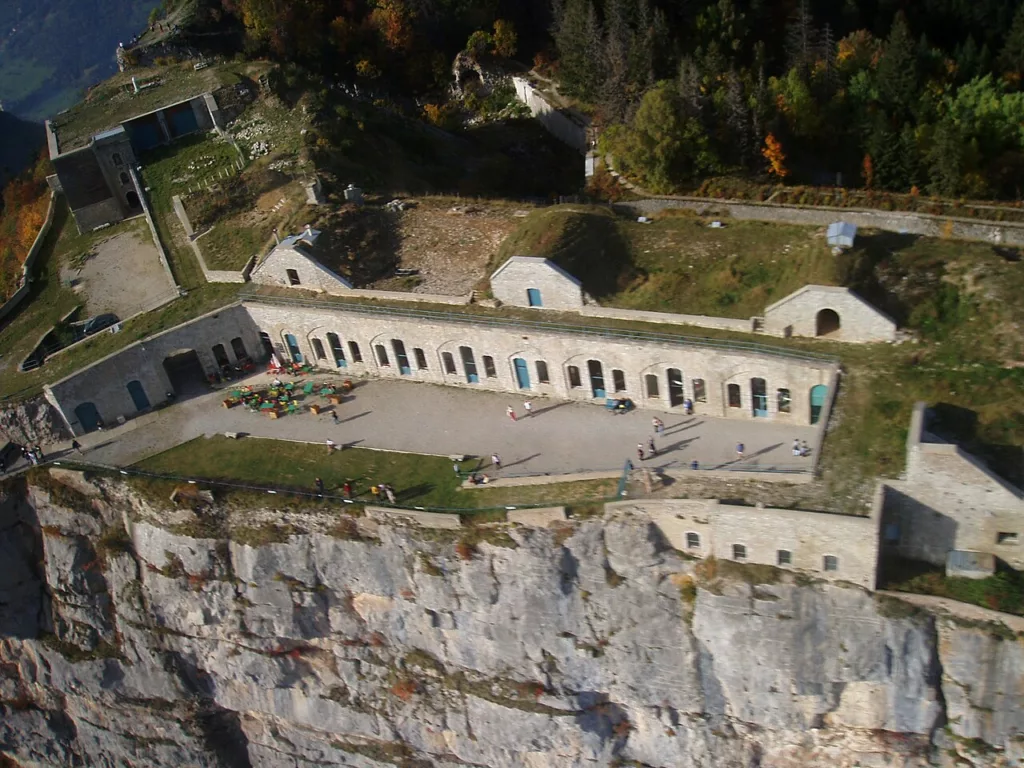
Fort Saint-Eynard is a fortification located in the Chartreuse massif, above Grenoble. It was built between 1873 and 1879 as part of the Séré de Rivières defense system.
The fort is part of Grenoble’s fortified belt, made up of several military structures. It is located at around 1,325 meters above sea level, on Mount Saint-Eynard.
Its dominant position allowed it to monitor the Grenoble valley and the access routes from Savoy. The fort could accommodate around 470 soldiers and was equipped with several artillery pieces.
Despite its strategic importance, it was never used in military conflict. It was abandoned by the army and then purchased by local municipalities in 1963. Today, the fort has been restored and hosts a museum and a restaurant open to the public.
Choranche Cave
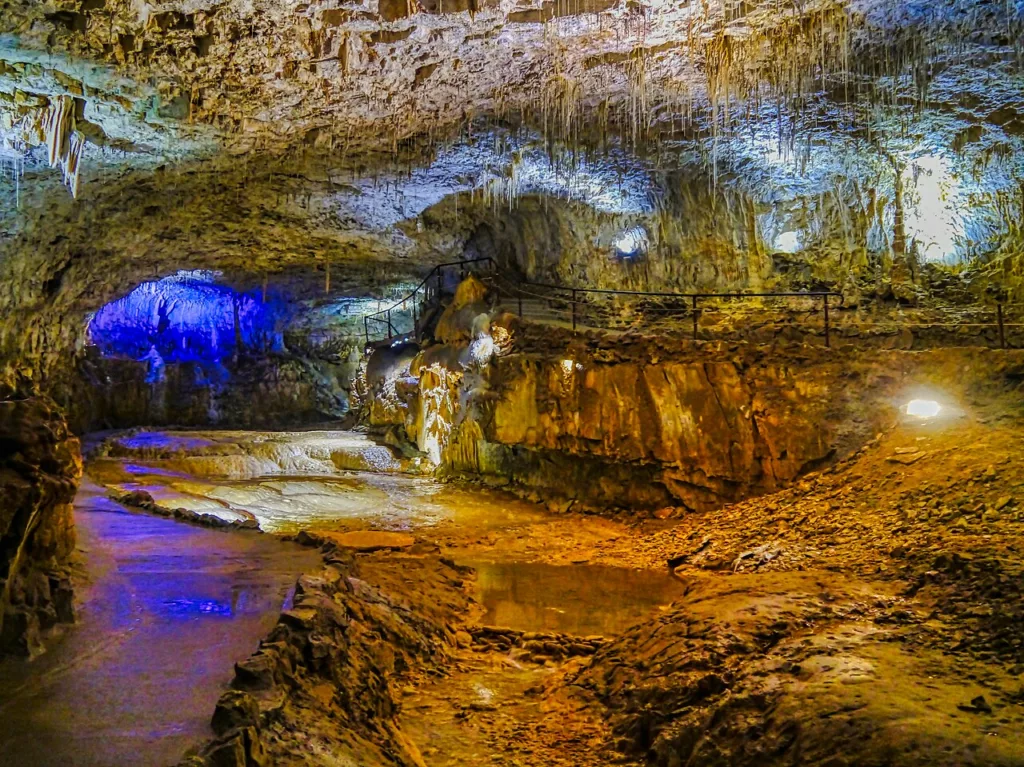
Choranche Cave is located near the municipality of Choranche, at the foot of the Presles cliffs. This cave is a natural cavity carved by water through limestone. It has a highly developed underground network, with more than 32 km of known galleries.
The cave is famous for its concretions, especially soda straws, which are thin calcite columns that can reach several meters in length. It also contains an underground river, called the Serpentine, as well as lakes and waterfalls.
Exploration of the cave began in the late 19th century and continued throughout the 20th century thanks to speleologists. Several networks were gradually connected to form the system known today.
Choranche Cave is also home to a rare species, the olm, a blind cave-dwelling animal that lives in underground waters.
Today, the cave is a developed tourist site open to the public.
Alpe d’Huez