Visit Luxembourg: 30 Must-See Attractions and Experiences
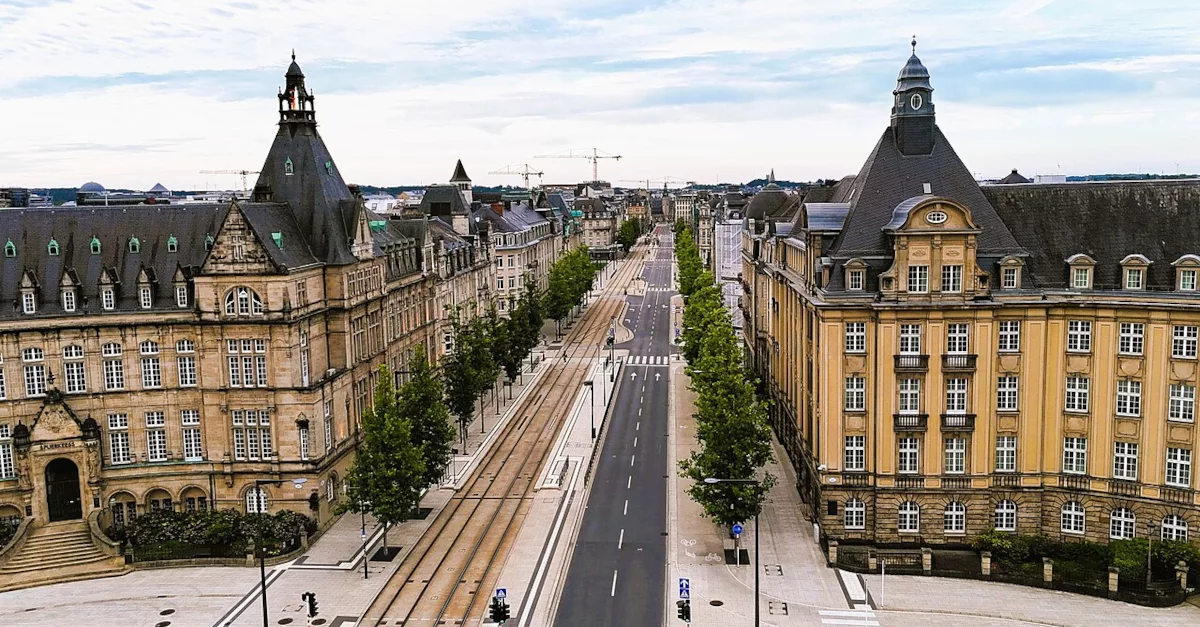
Would you like to visit Luxembourg and discover one of Europe’s most beautiful capitals? Luxembourg City, the capital of the Grand Duchy of Luxembourg, captivates visitors with its exceptional historical heritage, its UNESCO World Heritage-listed fortifications, its picturesque neighborhoods, and its unique quality of life. Nestled between green valleys and historic ramparts, the city offers a harmonious blend of tradition, culture, and modernity.
What can you do in Luxembourg during a weekend getaway or a longer stay? From exploring the famous Bock Casemates to visiting the Grand Ducal Palace, Notre-Dame Cathedral, historic squares, and numerous museums, Luxembourg City is filled with must-see attractions. Nature lovers will also enjoy its parks and walking trails, which provide remarkable views of the old town and its ancient fortifications.
A human-scale destination, Luxembourg City is easy to explore on foot and allows visitors to experience a rich concentration of history, culture, and European lifestyle in just a few days. In this guide, discover the best places to visit in Luxembourg, the must-see monuments, museums not to be missed, local specialties to taste, and all the practical information you need to plan your stay in the Luxembourgish capital.
Experience Luxembourg City differently with our treasure hunt game, “Luxembourg Highlights” — a unique mix of an escape game and a guided tour.
Monuments and Historical Heritage in Luxembourg
Bock Casemates
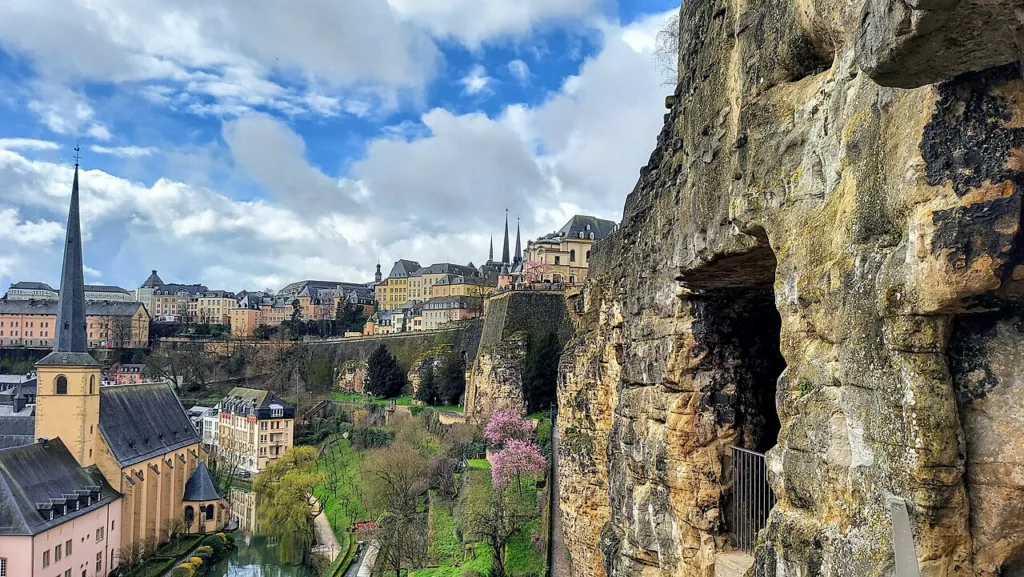
The Bock Casemates form one of the most impressive underground defense networks in Europe, carved into the rock at the heart of Luxembourg’s old town. The first underground galleries were built in 1644 during Spanish rule and were significantly expanded by the Austrians in the 18th century.
The site is directly linked to the origins of Luxembourg: it was on the Bock promontory that Count Sigefroi built his castle in 963. Once nicknamed the “Gibraltar of the North,” the Fortress of Luxembourg was among the most formidable strongholds in Europe.
At their peak, the Bock Casemates could accommodate around 1,200 soldiers and about fifty cannons to defend the city. Before the fortress was dismantled in 1867, the entire underground network extended nearly 23 kilometers across multiple levels.
During both World Wars, the casemates served as air-raid shelters and were capable of protecting up to 35,000 people.
Discover the history of the Bock Casemates through our Luxembourg trail.
Luxembourg-Hamm American Military Cemetery
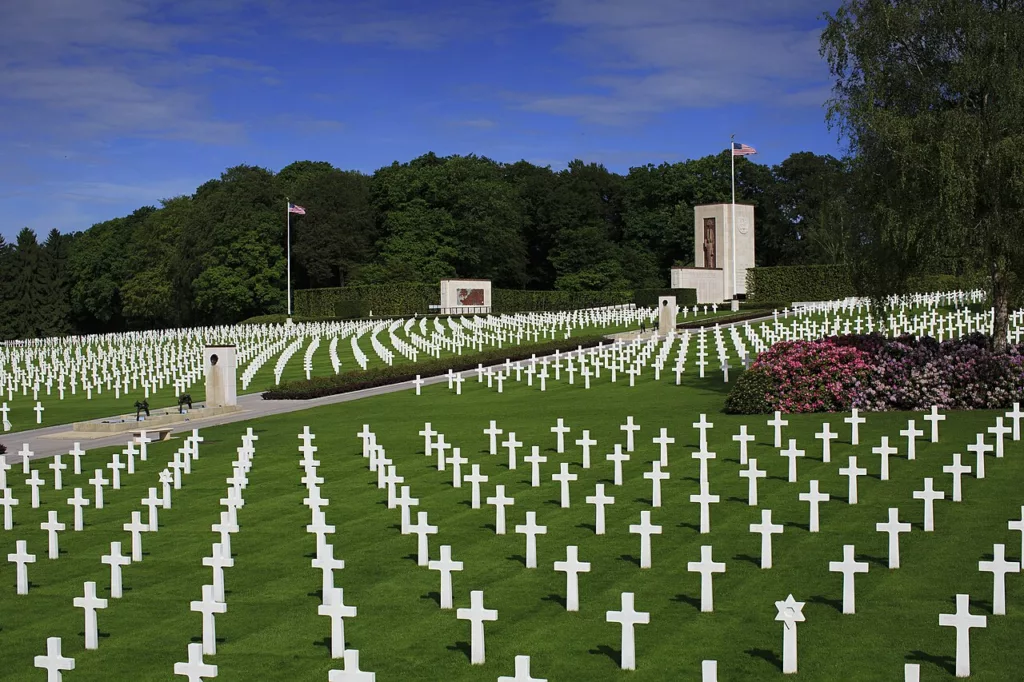
The Luxembourg-Hamm American Military Cemetery is the final resting place of more than 5,000 American soldiers who died during World War II, primarily during the Battle of the Bulge and the advance toward the Rhine. The cemetery was established on December 29, 1944, by the 609th Graves Registration Company of the U.S. Third Army while fierce fighting was still taking place in the Ardennes.
The site is located in the Hamm district, about 5 kilometers east of Luxembourg City center. The famous American General George S. Patton is buried at the heart of the cemetery, in accordance with his wish to remain among the soldiers he commanded.
The perfectly aligned rows of white crosses and Stars of David form a vast semicircle around a memorial chapel. The memorial also bears the names of 371 American servicemen who went missing and whose remains were never recovered or identified.
The cemetery covers more than 20 hectares of landscaped grounds, enhanced by fountains, rose gardens, and majestic trees that create an atmosphere of remembrance and reflection. Officially inaugurated in 1960, it is now administered by the American Battle Monuments Commission, the organization responsible for American military cemeteries abroad.
Notre-Dame Cathedral
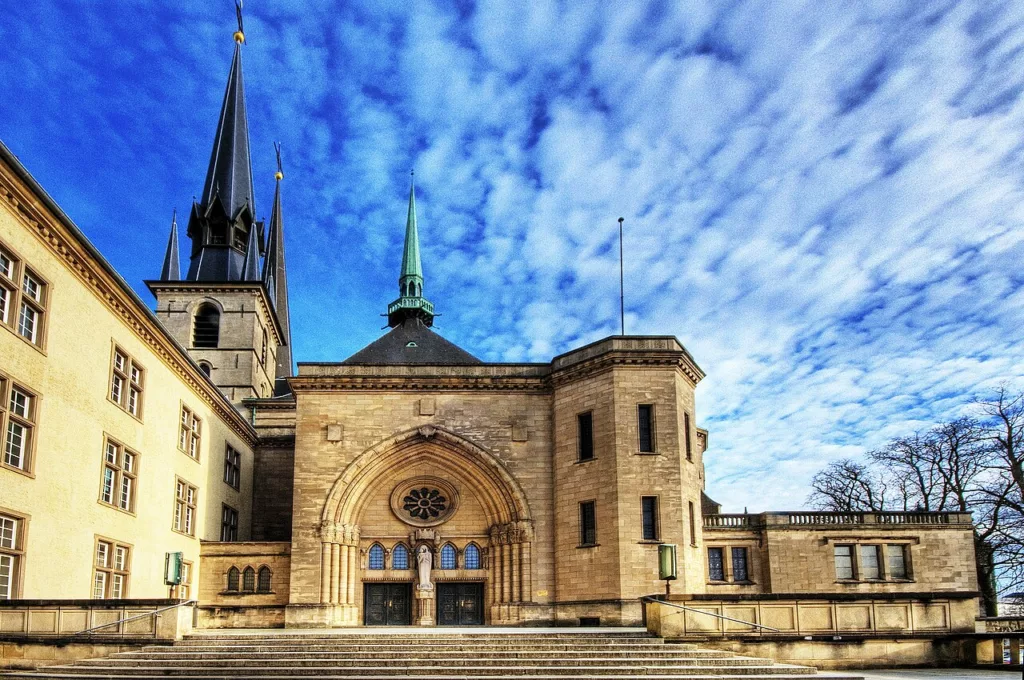
Notre-Dame Cathedral is the only cathedral in Luxembourg. Built between 1613 and 1621, it was originally the church of the Jesuit College before becoming a cathedral in 1870.
Since 1794, the cathedral has housed the statue of Our Lady, Consoler of the Afflicted, patron saint of both the city and the country. Every year, the famous Octave pilgrimage attracts thousands of pilgrims who come to honor the Virgin Mary, a tradition deeply rooted in Luxembourg’s history.
Between 1935 and 1938, the building was significantly expanded to reflect its growing religious and national importance. The cathedral crypt contains the tombs of several members of the Grand Ducal family, as well as that of John the Blind, King of Bohemia and Count of Luxembourg.
Discover the secrets of Notre-Dame Cathedral through our Luxembourg treasure hunt.
Pfaffenthal Panoramic Elevator
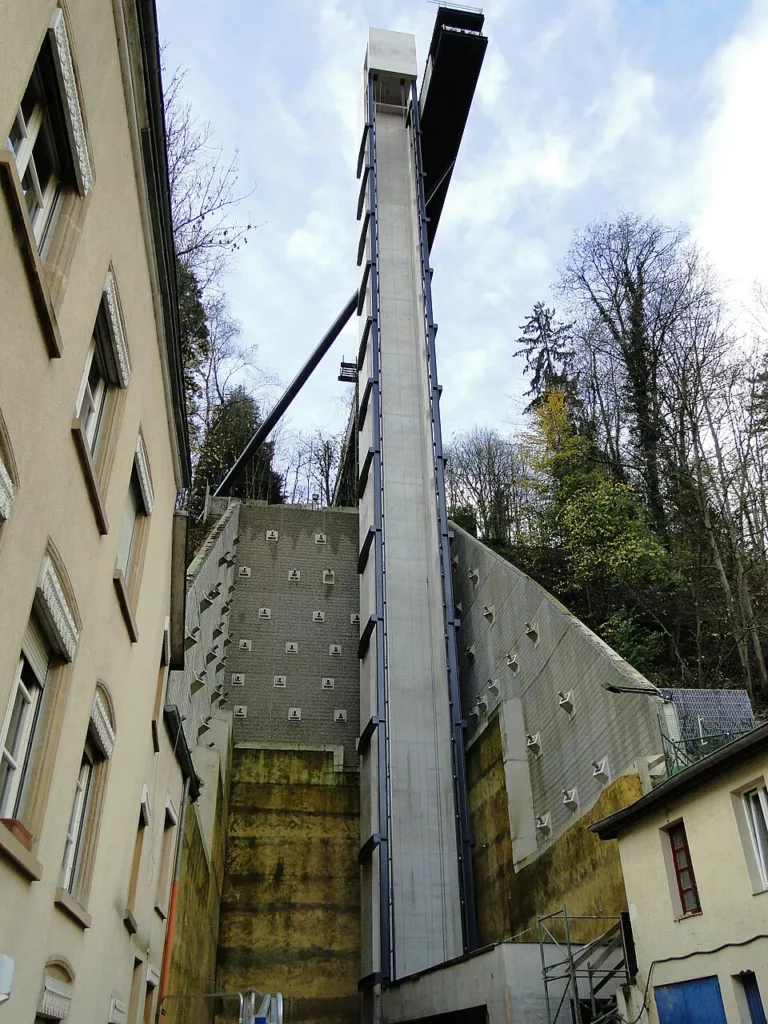
Inaugurated in July 2016, the Pfaffenthal Panoramic Elevator has become one of the symbols of modern urban mobility in Luxembourg City. This spectacular glass structure connects the Upper Town with the historic Pfaffenthal district, located at the bottom of the Alzette Valley.
The panoramic cabin covers a vertical distance of approximately 60 meters in just 30 seconds. Thanks to its glass walls, the elevator offers exceptional views of the Alzette Valley, the city fortifications, and the rooftops of old Luxembourg.
Standing 71 meters high, it is among the most photographed attractions in the Luxembourgish capital. Completely free to use, it is accessible to pedestrians, cyclists, people with reduced mobility, and families with strollers.
The elevator can accommodate up to 5 cyclists and 10 pedestrians at the same time, with a maximum load capacity of 5 tons.
Grand Ducal Palace
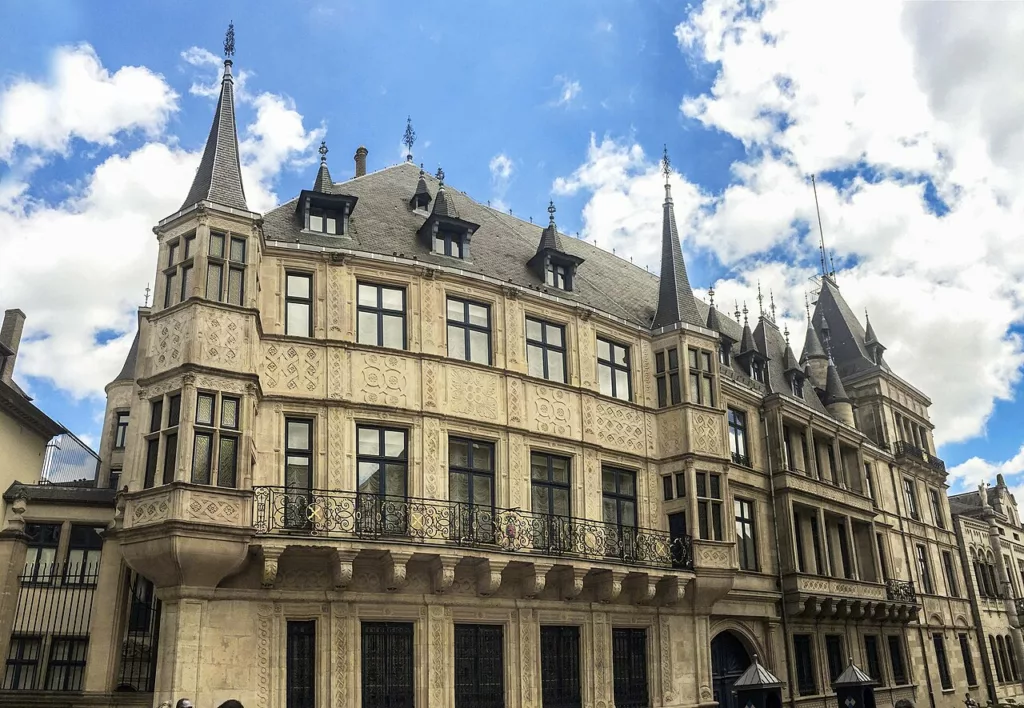
The Grand Ducal Palace is the official city residence of the Grand Duke of Luxembourg and the main place where he carries out his duties as head of state. The building was constructed in 1572–1573 as Luxembourg’s city hall, after the previous building was destroyed in 1554 by an explosion caused by lightning.
Its elegant Flemish Renaissance-style façade is considered one of the most remarkable in the Luxembourgish capital. In 1890, the building officially became the residence of the Luxembourgish sovereign when Grand Duke Adolphe ascended the throne and transformed it into the Grand Ducal Palace.
Over the centuries, the palace has successively served as a city hall, seat of government, residence of the Dutch governor, and official residence of the Luxembourgish monarchy.
During the German occupation in the Second World War, the palace was requisitioned by the Nazis and used as a concert hall and reception venue.
Foreign heads of state on official visits to Luxembourg are traditionally welcomed and accommodated at the Grand Ducal Palace. A major restoration carried out between 1991 and 1996 restored the palace to its historic splendor while adapting it to modern needs.
The palace exceptionally opens its doors to the public every summer, allowing visitors to discover its ceremonial rooms, monumental staircase, and rich decorative collections.
Find a hidden date in a text about the Grand Ducal Palace in our Luxembourg treasure hunt.
Place d’Armes
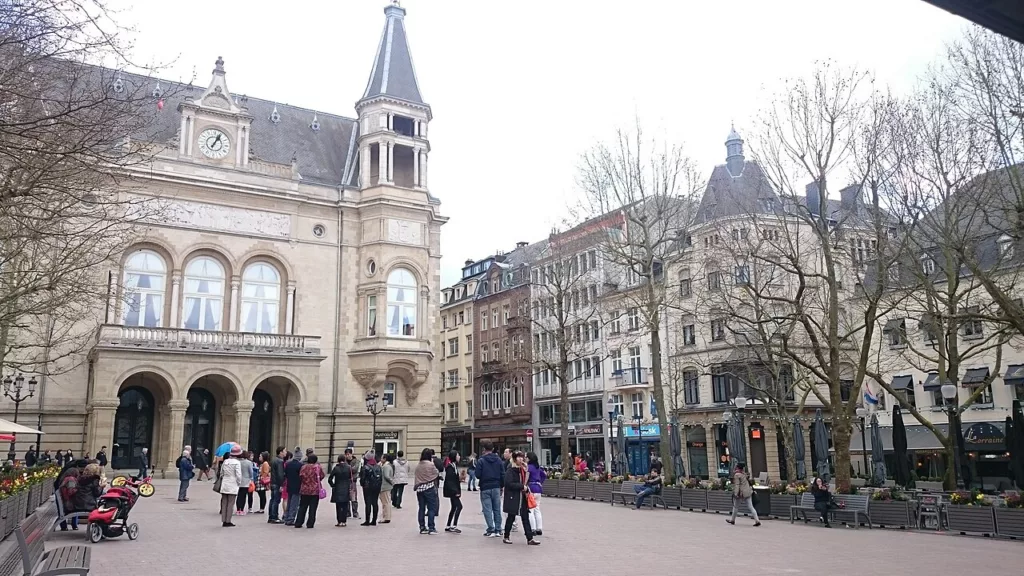
Place d’Armes was laid out in 1671 under Spanish rule by the military engineer Jean Charles de Landas, before being embellished a few years later by the French under Louis XIV.
Located in the heart of the historic center, the square is surrounded by cafés, restaurants, and elegant buildings that contribute to its welcoming atmosphere.
At the center of the square stands a bandstand where orchestras, jazz bands, and ensembles regularly perform during public events.
Throughout the year, Place d’Armes hosts markets, festivals, open-air concerts, and various cultural events that bring the city center to life.
The square is bordered by the famous Cercle Cité, a historic building that today hosts exhibitions, conferences, and cultural events.
Discover a mythical animal hidden on this square in our Luxembourg trail.
Citadel of the Holy Spirit
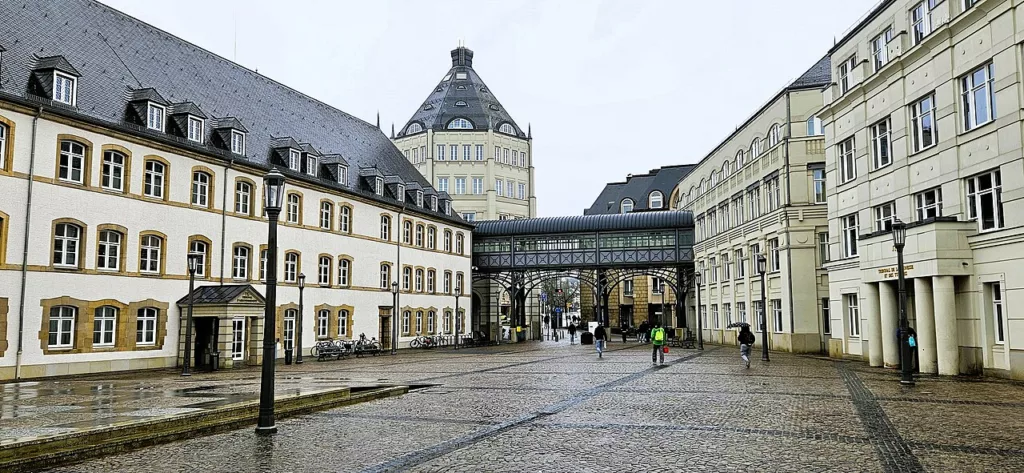
The Citadel of the Holy Spirit occupies a strategic plateau overlooking the Alzette Valley and is one of the major elements of Luxembourg’s former fortress.
The history of the site dates back to 1234, when Countess Ermesinde founded a convent of Poor Clares there, leaving a lasting mark on the development of the plateau. The first fortifications of the Saint-Esprit plateau were built between 1551 and 1553 during the construction period of Luxembourg’s modern fortress.
Under Spanish rule, the plateau gradually acquired a major military role and became one of the most heavily defended points in the city. After Luxembourg was conquered by Louis XIV in 1684, the French military engineer Sébastien Le Prestre de Vauban transformed the plateau into a true citadel and considerably strengthened its defenses.
The Poor Clare nuns were expelled from the site at the end of the 17th century to make way for barracks and military installations for the garrison. Under the Austrian Habsburgs, major casemates were dug between 1746 and 1751, further reinforcing the citadel’s defensive role.
Today, the plateau is home to the Judicial City, while the historic remains of the citadel still survive beneath the modern buildings.
Gëlle Fra Memorial Monument
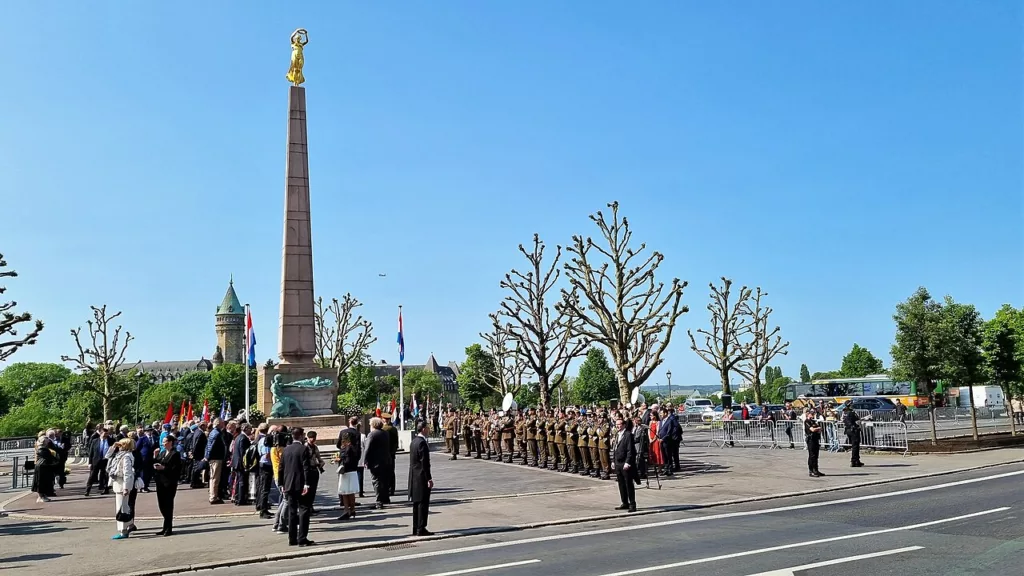
The Monument of Remembrance, nicknamed “Gëlle Fra” (“Golden Lady” in Luxembourgish), is one of Luxembourg’s most important national symbols. Inaugurated in 1923, the monument pays tribute to the Luxembourgers who volunteered to serve in the French army during the First World War despite the country’s official neutrality.
At the top of the 21-meter obelisk stands a golden statue representing victory, holding a laurel wreath. At the base of the monument, two bronze soldiers symbolize sacrifice and mourning: one keeps watch over his fallen comrade.
In 1940, the Nazi authorities had the Gëlle Fra dismantled, as it was considered a symbol of freedom and national resistance. After several decades in which it remained missing, the elements of the statue were recovered, and the monument was fully restored and reinaugurated in 1985.
Today, the Gëlle Fra commemorates not only the victims of the First World War, but also those of later conflicts and the Luxembourgish resistance.
Discover the hidden symbols on this square in our Luxembourg trail.
Hämmelsmarsch
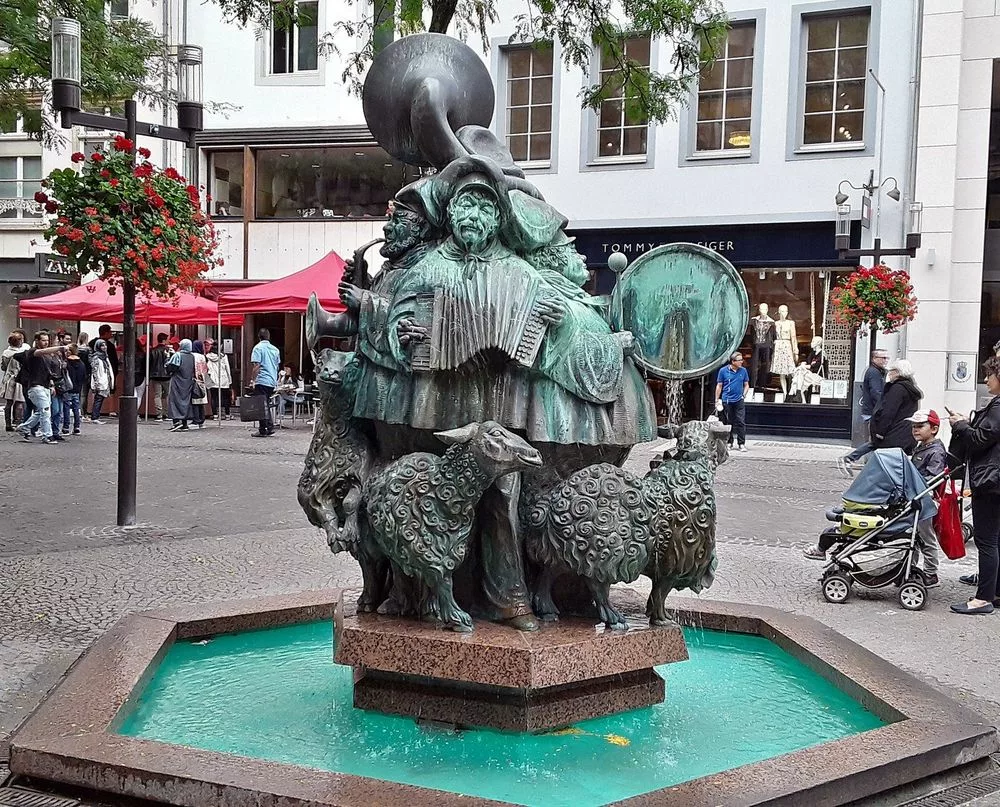
The Hämmelsmarsch (“sheep march”) is one of Luxembourg’s oldest and most emblematic folk traditions. This tradition consists of a musical parade in which local bands walk through the streets to announce the arrival of a fair or funfair.
Its name comes from the sheep (“Hammel” in Luxembourgish) that once accompanied the procession led by a shepherd.
The current melody is associated with Luxembourgish national poet Michel Lentz, who wrote lyrics in the 19th century to a much older popular tune.
Historically, the tradition is linked to the Schueberfouer, Luxembourg’s great fair, founded in 1340 by John the Blind. Originally, the sheep presented during the parade were sometimes used as prizes in shooting competitions held during the fair.
Discover the secrets of this statue in our Luxembourg trail.
Place Guillaume II
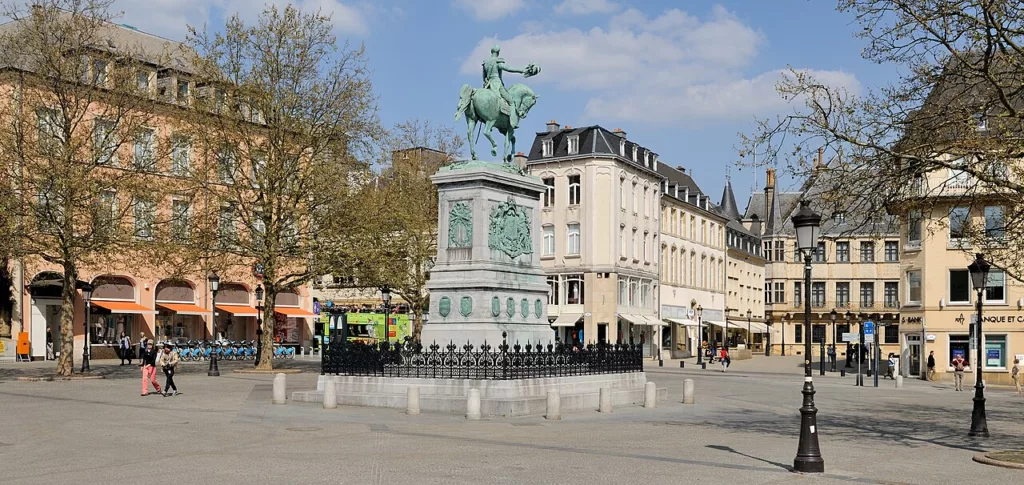
Luxembourgers affectionately nickname it “Knuedler”, a name derived from the Luxembourgish word Knued (“knot”), referring to the knotted rope once worn by the Franciscan monks who occupied the site. Since the mid-13th century, the location was home to a Franciscan church and monastery before their disappearance at the end of the 18th century.
In 1797, French revolutionary troops confiscated the convent, paving the way for the transformation of the area into a public square. The square is named after William II, King of the Netherlands and Grand Duke of Luxembourg, whom it has honored since the 19th century.
An imposing equestrian statue of William II has dominated the eastern side of the square since 1884 and remains one of the most photographed monuments in the capital.
The Luxembourg City Hall, built between 1830 and 1838 in a neoclassical style, occupies the southwestern side of the square and continues to serve as the seat of the municipal administration.
Every Wednesday and Saturday, the square hosts a traditional market where locals and visitors can purchase fresh produce, flowers, and local specialties.
Discover the secrets of the hidden inscriptions on the statue in our Luxembourg treasure hunt.
Saint Michael’s Church
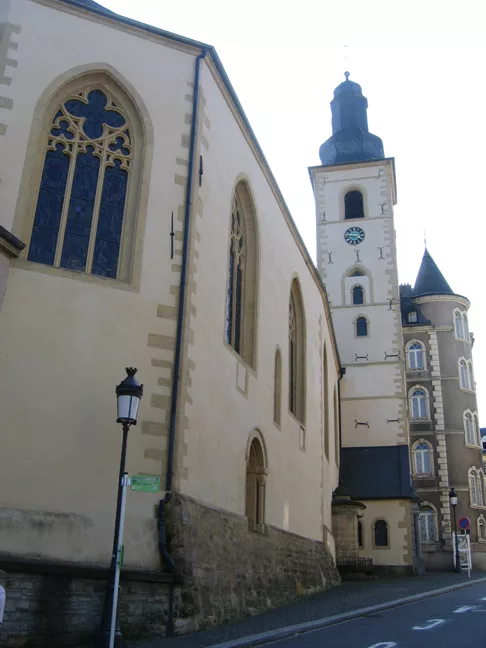
Saint Michael’s Church is considered the oldest surviving place of worship in Luxembourg City, with origins dating back to the year 987.
It was Count Sigefroi who built a castle chapel on this site to serve the Bock Castle, just a few decades after the city’s foundation. Throughout its thousand-year history, the church was destroyed, rebuilt, and expanded several times following the numerous sieges endured by the Fortress of Luxembourg.
Its present appearance dates mainly from 1688, although some parts of the building are much older.
The entrance portal preserves elements dating back to the medieval period and is one of the oldest surviving examples of religious architecture in Luxembourg. Its Baroque onion-shaped bell tower, added in the 17th century, has become one of the visual landmarks of Luxembourg’s historic center.
According to a local tradition, the church escaped destruction during the French Revolution thanks to a depiction of Saint Michael whose headgear resembled the revolutionary Phrygian cap.
Discover the secrets of the hidden statues on the church in our Luxembourg trail.
Church of the Holy Apostles Peter and Paul
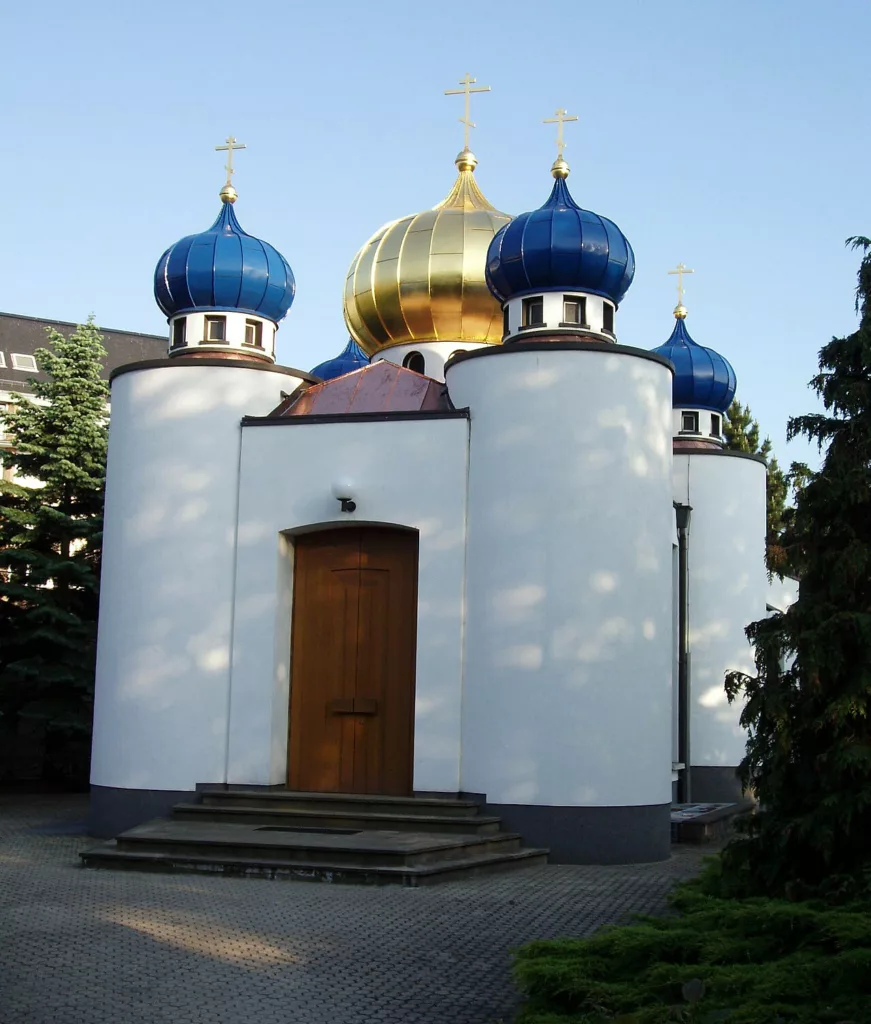
The Church of the Holy Apostles Peter and Paul is the first Russian Orthodox church built in Luxembourg. The Orthodox parish associated with it was founded in 1928 by Russian émigrés who arrived in Luxembourg following the Russian Revolution and the Civil War.
The first parishioners were mainly former soldiers of General Lavr Kornilov’s army, who settled in Luxembourg to work in quarries and factories. For several decades, the Orthodox community held services in temporary premises before being able to build its own church.
In 1979, the foundation stone of the building was laid after Luxembourgish authorities granted land for its construction. Consecrated on July 12, 1982, it is dedicated to Saints Peter and Paul, two of the most important figures of early Christianity.
With its domes and traditional iconostasis, the church is today a remarkable testament to the presence of Russian Orthodox culture at the heart of the Grand Duchy.
Dicks and Lentz Monument
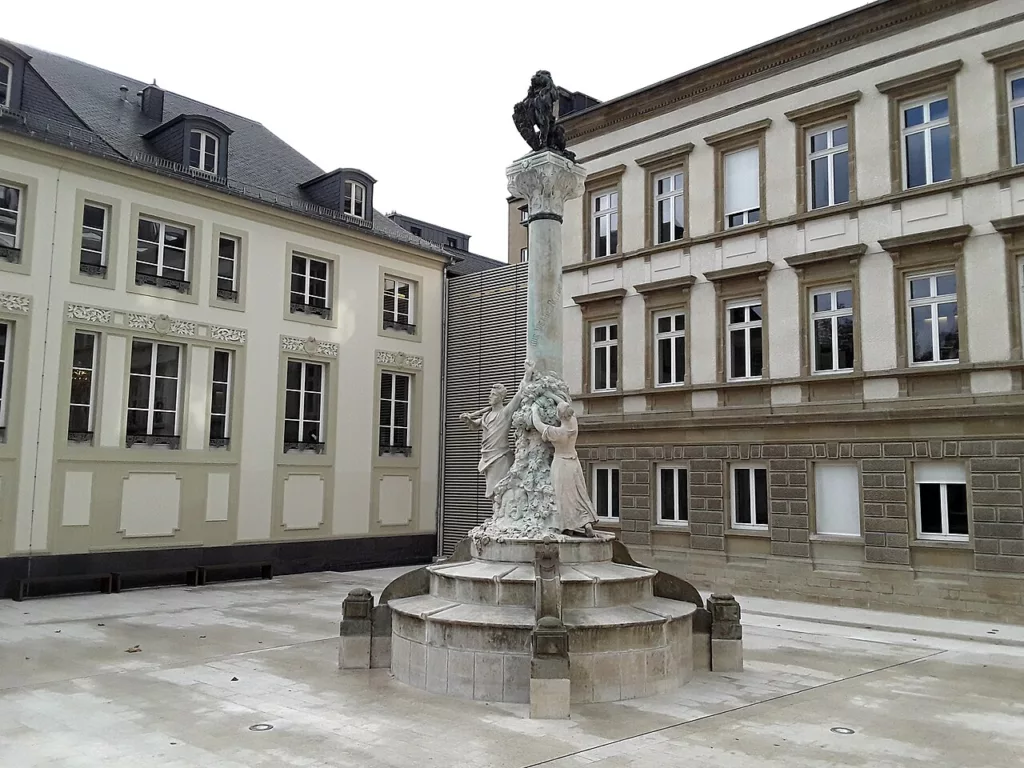
The Dicks and Lentz Monument was inaugurated in 1903 and pays tribute to Luxembourg’s two most celebrated national poets: Edmond de la Fontaine, known by the pseudonym “Dicks,” and Michel Lentz.
Dicks and Michel Lentz played a major role in the development of Luxembourgish-language literature during the 19th century. Michel Lentz is particularly famous for writing the lyrics of “Ons Heemecht,” Luxembourg’s national anthem.
At the top of the monument stands a majestic lion, the heraldic symbol of the Grand Duchy of Luxembourg.
The column bears the inscription “Mir wëlle bleiwe wat mir sin” (“We want to remain what we are”), which has become the emblematic motto of the Luxembourgish people.
A blacksmith figure sculpted on the monument symbolizes the historical importance of the steel industry in the country’s development.
Discover the hidden symbols of this monument in our Luxembourg trail.
Must-See Museums in Luxembourg
Nationalmusée um Fëschmaart
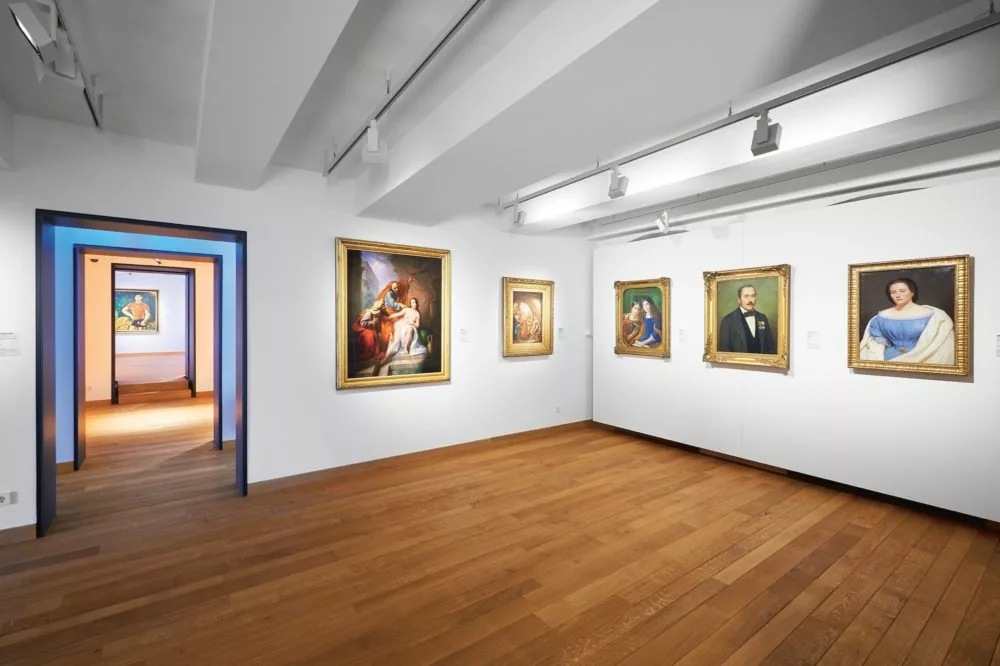
The Nationalmusée um Fëschmaart is Luxembourg’s principal museum of archaeology, history, and art, showcasing collections that span every period of the country’s history.
The museum’s origins date back to the 19th century, when Luxembourgish historians and archaeologists began collecting and preserving the nation’s heritage.
Its collections trace more than 100,000 years of history, from prehistoric times to contemporary art.
Among its treasures are exceptional archaeological artifacts, Roman mosaics, medieval works of art, and creations by Luxembourgish and international artists.
Luxembourg City History Museum – Lëtzebuerg City Museum
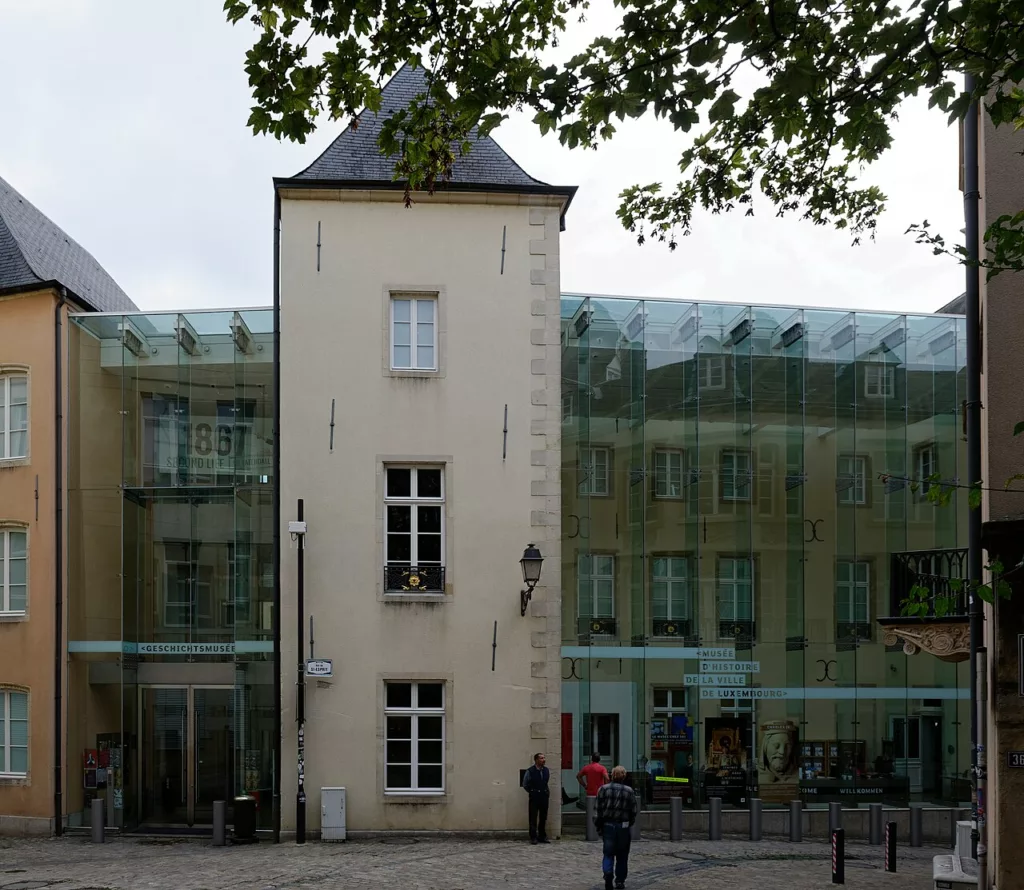
The Lëtzebuerg City Museum is dedicated to the history of Luxembourg City, from its medieval origins to its evolution into a modern European capital.
Opened in 1996, the museum is renowned for its remarkable architecture, which combines buildings dating from the 17th to the 19th centuries with contemporary glass and steel structures.
One of its most spectacular features is its panoramic glass elevator, which travels vertically through several centuries of architecture and offers a unique view of the building’s historical remains.
The collections tell more than a thousand years of urban history through scale models, archaeological objects, photographs, documents, and multimedia installations. A large-scale model of the Fortress of Luxembourg helps visitors understand why the city was once nicknamed the “Gibraltar of the North.”
The museum also places great emphasis on everyday life, illustrating the evolution of neighborhoods, professions, transportation, and local traditions.
Grand Duke Jean Museum of Modern Art
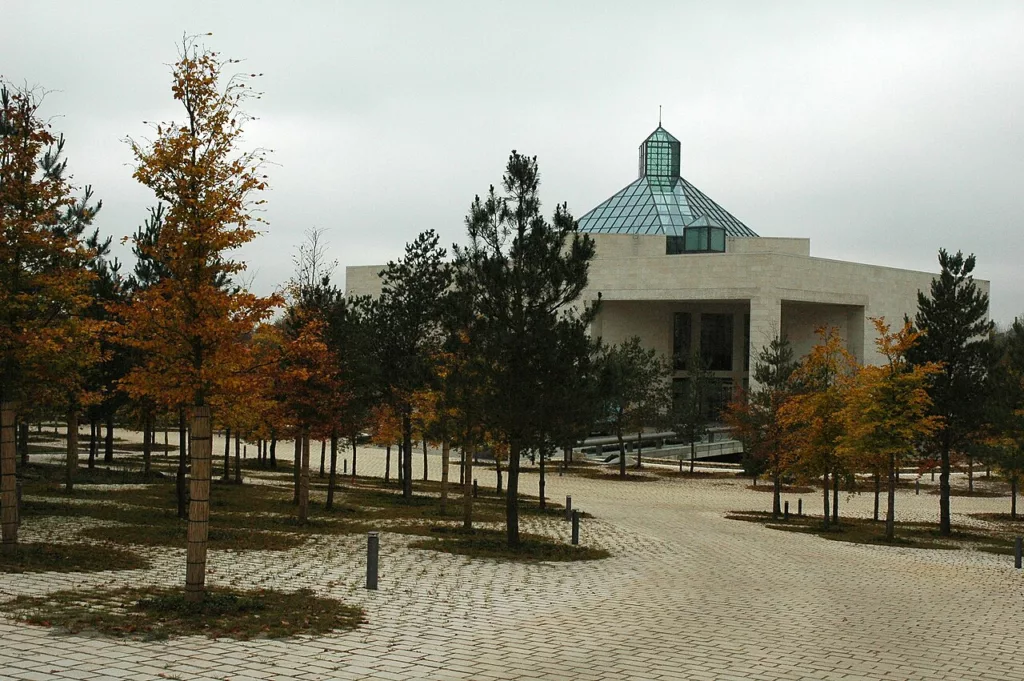
The Grand Duke Jean Museum of Modern Art, better known as Mudam, is Luxembourg’s leading contemporary art museum. The museum is located on the historic site of Fort Thüngen, in the heart of Dräi Eechelen Park, where military heritage meets contemporary architecture.
Its building was designed by the renowned Chinese-American architect Ieoh Ming Pei, winner of the Pritzker Prize and also the architect behind the Louvre Pyramid in Paris.
Opened on July 1, 2006, the museum is named after Grand Duke Jean in recognition of his role in Luxembourg’s cultural development. Mudam’s architecture was conceived as a dialogue between the past, represented by the former fortifications, and the future, embodied by the European district of Kirchberg.
Today, the museum houses several hundred contemporary artworks created by Luxembourgish and international artists.
National Museum of Natural History
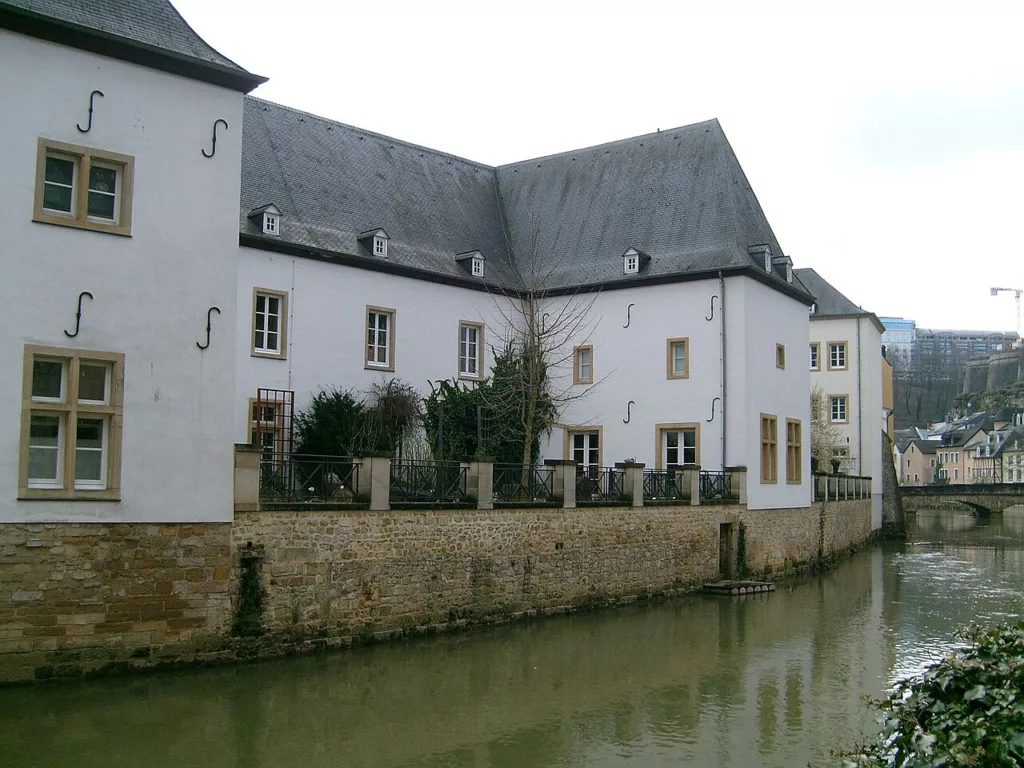
The National Museum of Natural History of Luxembourg was founded in 1854 and is one of Luxembourg’s oldest scientific institutions. Since 1996, it has been housed in the former Saint-Jean Hospice, a historic complex located in the picturesque Grund district along the Alzette River.
The museum contains millions of scientific specimens studied by researchers specializing in biodiversity, geology, paleontology, and Earth sciences. Its collections cover a wide range of scientific fields, including botany, zoology, ecology, geology, mineralogy, paleontology, and astrophysics.
In 2017, the Naturmusée completely renewed its permanent exhibitions to incorporate the latest scientific advances. The exhibits present the evolution of the Earth, the history of life, minerals, fossils, and the diversity of animal and plant species through interactive displays.
Fort Thüngen
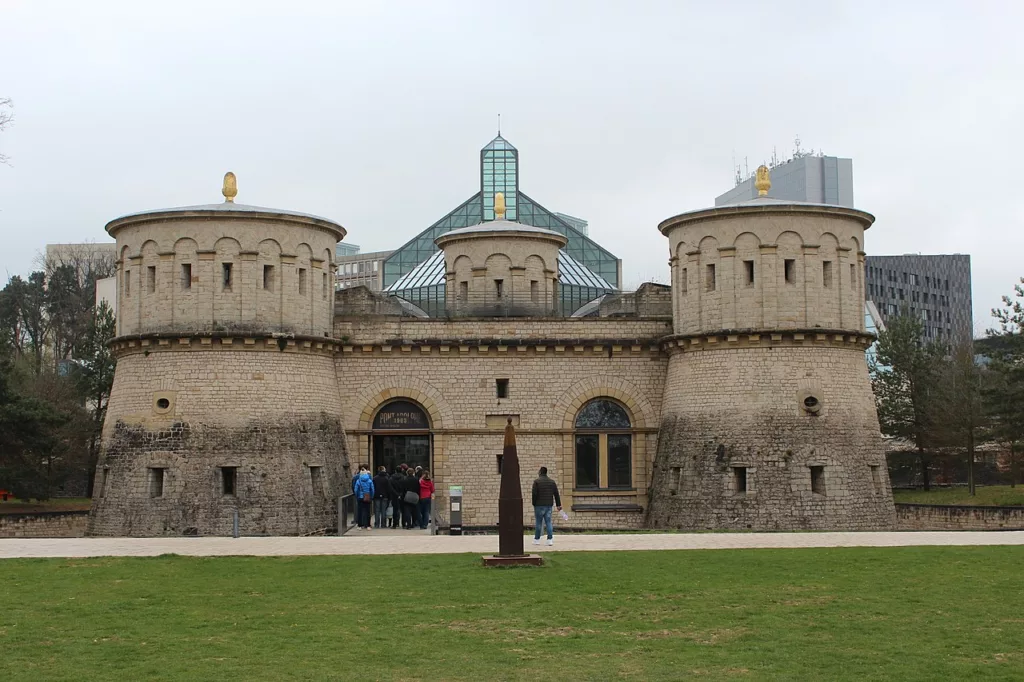
The Fort Thüngen is one of the best-preserved remnants of Luxembourg’s former fortress, once known as the “Gibraltar of the North.”
It was built in 1732–1733 by the Austrians on the site of an earlier redoubt constructed by Vauban to strengthen the defenses of the Kirchberg Plateau. The fort takes its name from Baron Adam Sigmund von Thüngen, commander of the Fortress of Luxembourg in the 18th century.
Luxembourgers know it best as “Dräi Eechelen” (“Three Acorns”), a reference to the three towers topped with stone acorns that dominate the structure. A vast network of underground galleries and mine chambers strengthened its defensive capabilities, part of which can still be visited today.
Under Prussian administration, the fort was expanded in 1836, and its casemates could accommodate up to 500 soldiers and several dozen artillery pieces. Following the Treaty of London of 1867, most of the fort was demolished between 1870 and 1874, leaving only the three towers and a few foundations.
In the 1990s, extensive archaeological and restoration work made it possible to reconstruct the fort using historical plans and remains. Since 2012, the fort has housed the Dräi Eechelen Museum, dedicated to the history of the fortress, the city, and Luxembourgish identity.
Parks and Green Spaces in Luxembourg
Merl Park
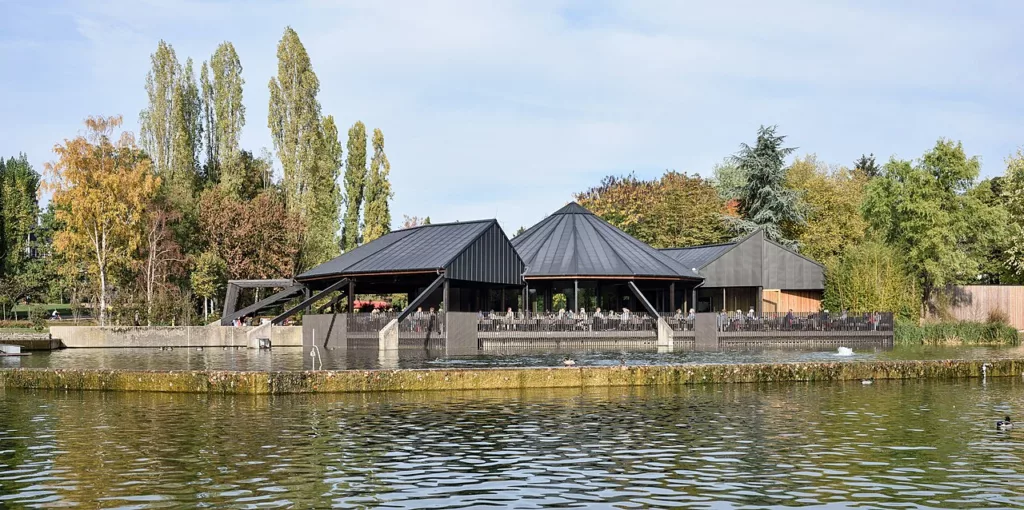
With its vast lawns, mature trees, and ponds, Merl Park is one of the city’s favorite places for walks, picnics, and outdoor relaxation.
Despite its name, the park is officially located in the district of Hollerich, at the border of the Merl, Belair, and Hollerich neighborhoods.
Its large central pond is regularly inhabited by ducks, coots, and other water birds that add to the site’s natural charm.
The park features a modern and innovative playground that has become one of the most popular in the capital among families. This playground includes a vast 900 m² interactive water play area, as well as equipment accessible to children of all abilities.
Part of the park is designed as an open-air art gallery, regularly hosting temporary exhibitions and artistic installations.
Luxembourg Municipal Park
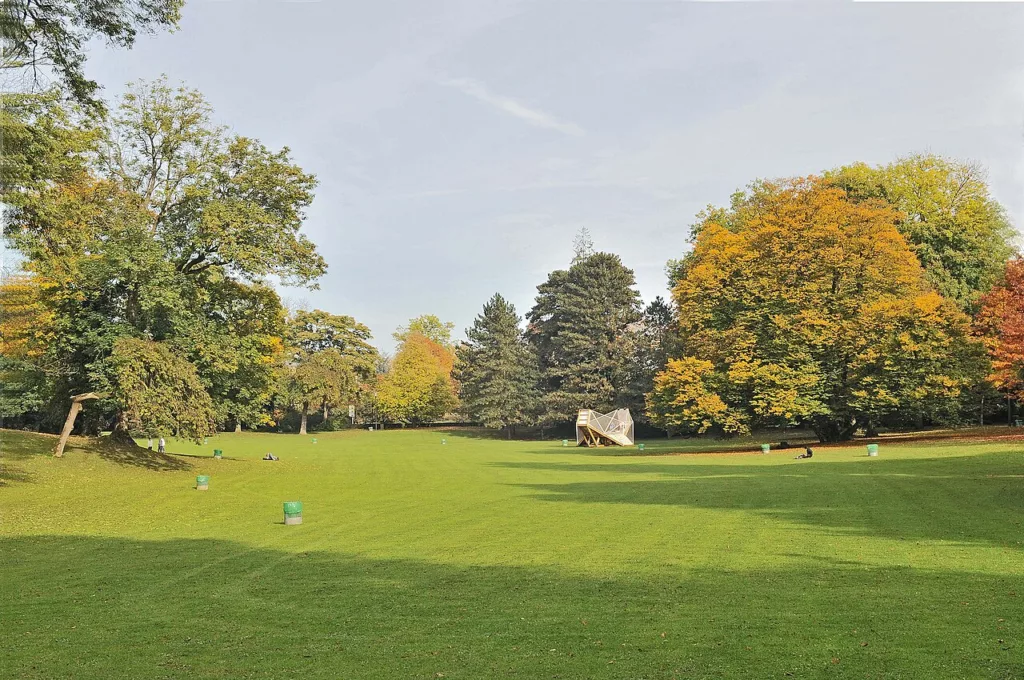
Luxembourg Municipal Park is the largest historic park in the capital, covering approximately 20 to 30 hectares between the Upper Town and the surrounding districts.
The park was created following the Treaty of London of 1867, which required the dismantling of the Fortress of Luxembourg and transformed former military land into public green spaces. Its design was entrusted to the famous French landscape architect Édouard André, who from 1878 created a vast landscaped garden inspired by the English style.
The park is often considered the “green lung” of Luxembourg City thanks to its expansive lawns, century-old trees, and winding pathways.
The famous Kinnekswiss (“King’s Meadow”) is the park’s largest lawn and regularly hosts concerts, festivals, and outdoor events.
The park is home to several iconic buildings, including the Villa Vauban, now an art museum, and the Villa Louvigny, famous for hosting the Eurovision Song Contest in 1962 and 1966. Remains of the former fortifications can still be seen, notably Fort Lambert, which was discovered during construction work and integrated into the park’s landscape.
Kaltreis Park
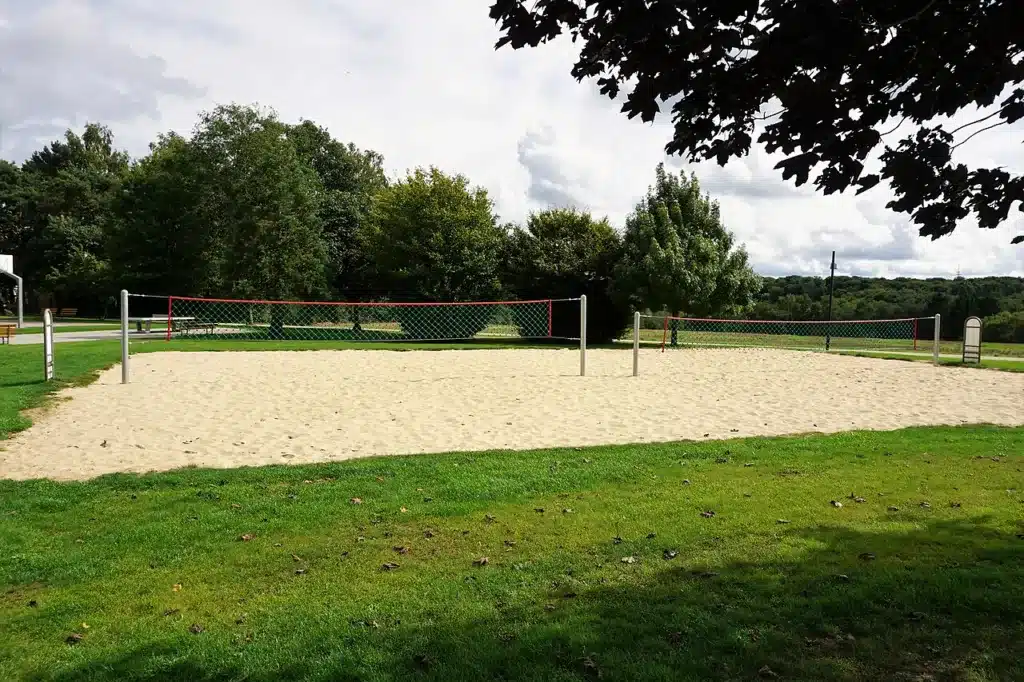
Kaltreis Park was created in the 1980s and plays an important role in the capital’s network of green spaces, linking urban areas with the natural landscapes further south.
The park is laid out around two artificial ponds that create a peaceful atmosphere and support local biodiversity.
Between 2015 and 2017, the site underwent a major renovation based on the participation of neighborhood residents.
Its space-themed playground has become one of the most original in Luxembourg City, with a large Apollo 11-inspired rocket as its main attraction.
The park also offers water games, very popular during the summer, which are transformed out of season into a recreational area for bicycles and scooters. Visitors will also find many sports facilities, including an outdoor fitness area, basketball courts, beach volleyball courts, pétanque areas, and table tennis tables.
A large dog area allows owners to let their pets run freely in a secure space.
The name “Kaltreis” recalls Luxembourg’s military history: the nearby boulevard was once nicknamed “op der Batterie,” because French troops had installed their artillery there during the siege of 1794.
Pétrusse Parks
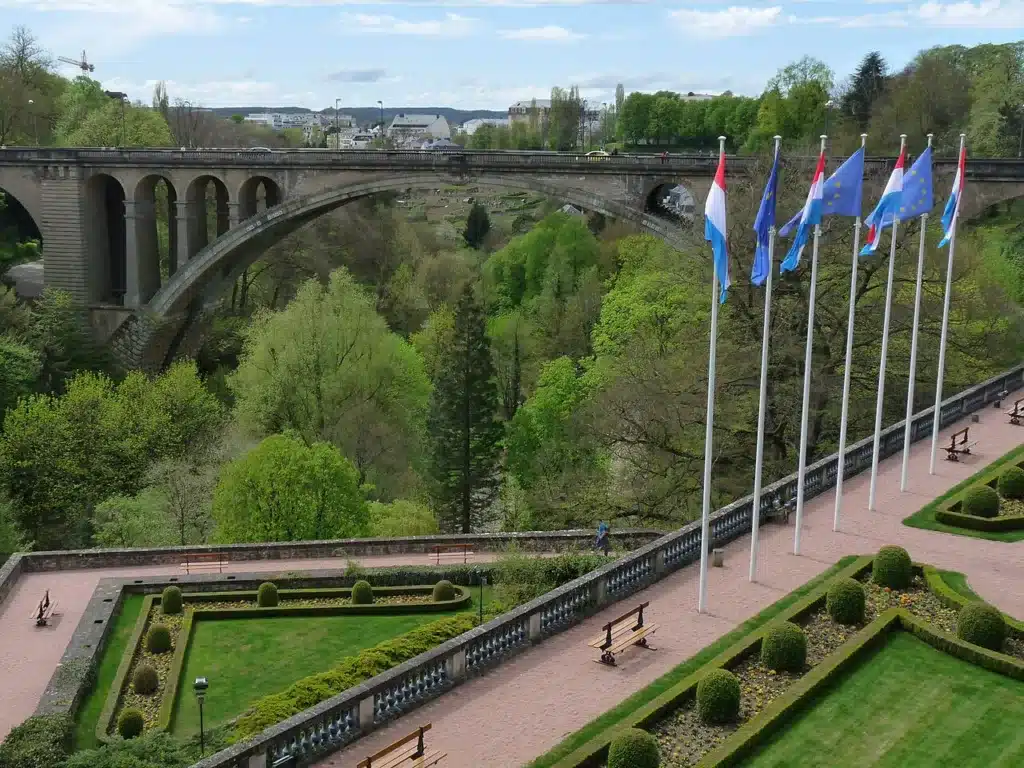
The Pétrusse Parks stretch through the heart of Luxembourg City in a green valley shaped by the Pétrusse River, a tributary of the Alzette.
Designed in a romantic spirit, they combine rock formations, a sunken valley landscape, green spaces, and historical remains in a setting that is unique in Luxembourg.
The Pétrusse Valley was once a major natural defense of the Luxembourg fortress, protecting its southern flank. Visitors can still see bastions, ramparts, and the famous Pétrusse Casemates, all witnesses to the capital’s military past.
The park offers spectacular views of two of the city’s emblematic monuments: the Adolphe Bridge and the Luxembourg Viaduct, which majestically dominate the valley.
Among the site’s hidden treasures is the Saint-Quirin Chapel, part of which is carved into the rock and whose origins date back to the 14th century.
After the fortress was dismantled following the Treaty of London of 1867, the valley was gradually transformed into a vast walking and relaxation area for residents.
Luxembourgish Gastronomy and Specialties
Paschtéit — Luxembourgish Vol-au-Vent

Paschtéit is one of Luxembourg’s most popular specialties and corresponds to the Luxembourgish version of vol-au-vent.
This dish is made with a puff pastry shell filled with a creamy sauce based on meat and mushrooms. Despite its French origins, Paschtéit has become a staple of Luxembourgish cuisine.
In Luxembourg, it is often served with fries and a touch of crème fraîche.
Fierkelsjelli
Fierkelsjelli is a traditional dish made with suckling pig served in aspic. This specialty reflects the rural and peasant origins of Luxembourgish cuisine.
The dish is usually served cold as a starter or at traditional buffets.
Kuddelfleck
Kuddelfleck is made from carefully cooked beef tripe, breaded and then fried. Depending on the region, it is served with a white wine, mustard, or spicy tomato sauce.
Rieslingspaschtéit
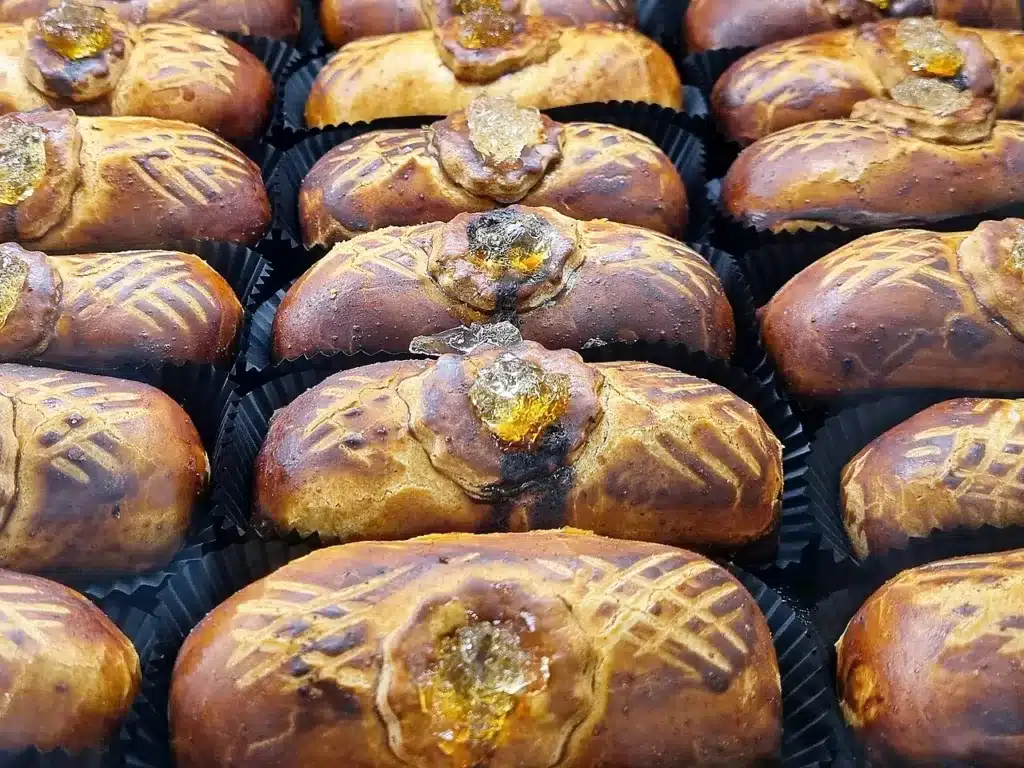
Rieslingspaschtéit is often nicknamed the “queen of pâtés” in Luxembourg. This specialty consists of a crispy pastry filled with marinated veal and Luxembourgish Riesling jelly.
Its elongated shape is recognizable thanks to its decorative crown-shaped opening on top.
Bouneschlupp

Bouneschlupp is a traditional Luxembourgish soup made with green beans. It is usually prepared with potatoes, onions, smoked bacon, and sometimes Mettwurscht sausage.
Luxembourgish Riesling and Pinot Gris
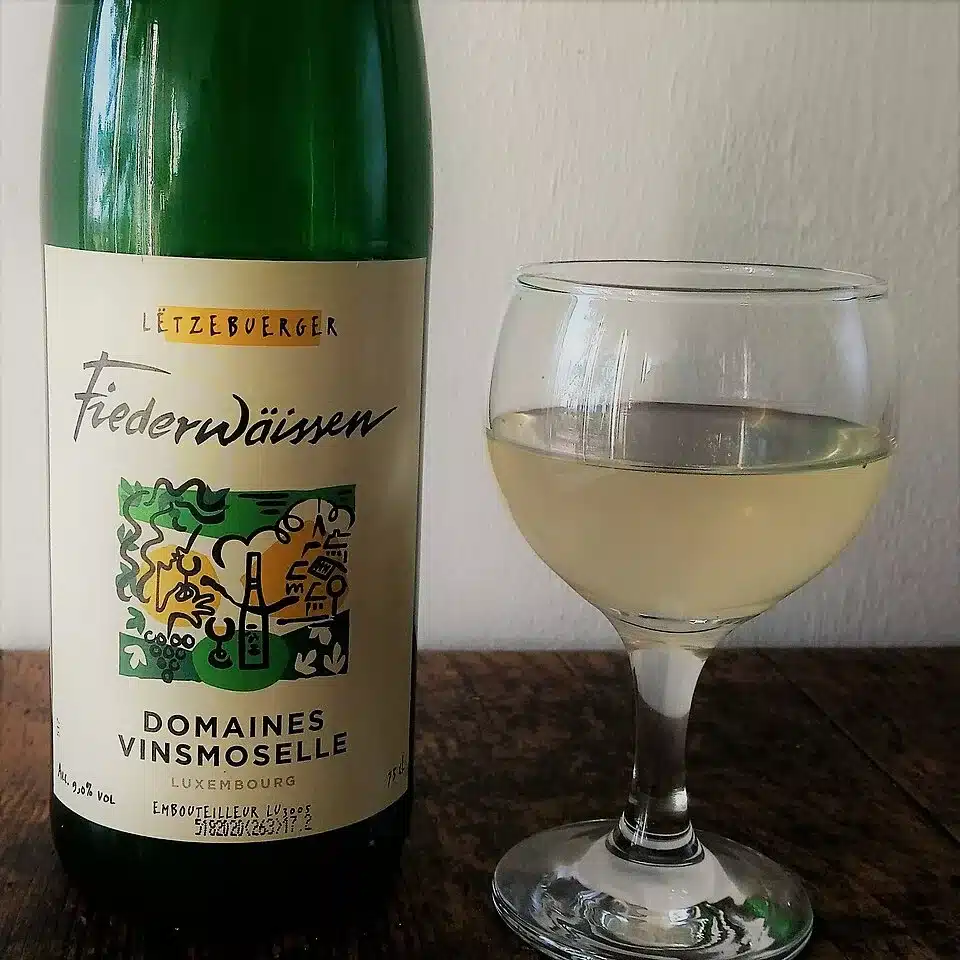
Riesling and Pinot Gris are among the most prestigious grape varieties grown in Luxembourg’s Moselle Valley. Luxembourgish viticulture dates back to Roman times on the banks of the Moselle.
Luxembourgish Riesling is renowned for its freshness, minerality, and fruity aromas. Pinot Gris produced in Luxembourg stands out for its aromatic richness and balance between roundness and freshness.
These two wines pair perfectly with local specialties such as Rieslingspaschtéit, Moselle fish, and seafood.
Excursions from Luxembourg
Metz, France
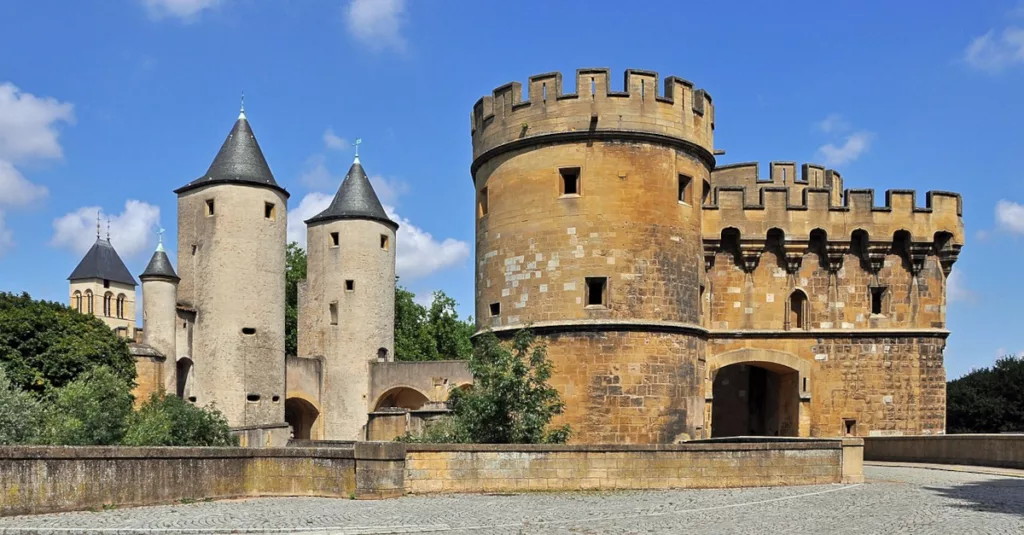
Metz is located about 55 km from Luxembourg City and has more than 3,000 years of history, having been successively Gallic, Roman, French, and German.
The majestic Saint Stephen’s Cathedral of Metz is famous for having the largest surface area of stained glass in France, nearly 6,500 m². Metz is nicknamed the “Garden City” thanks to its many green spaces and walks along the Moselle.
The Centre Pompidou-Metz is one of the most important cultural branches of the famous Paris museum. The Imperial Quarter bears witness to the German period between 1871 and 1918, with remarkable monumental architecture.
The city is home to remains of Roman baths, aqueducts, and amphitheaters. Its covered market, inaugurated in 1831, is one of the largest in France.
Dinant, Belgium
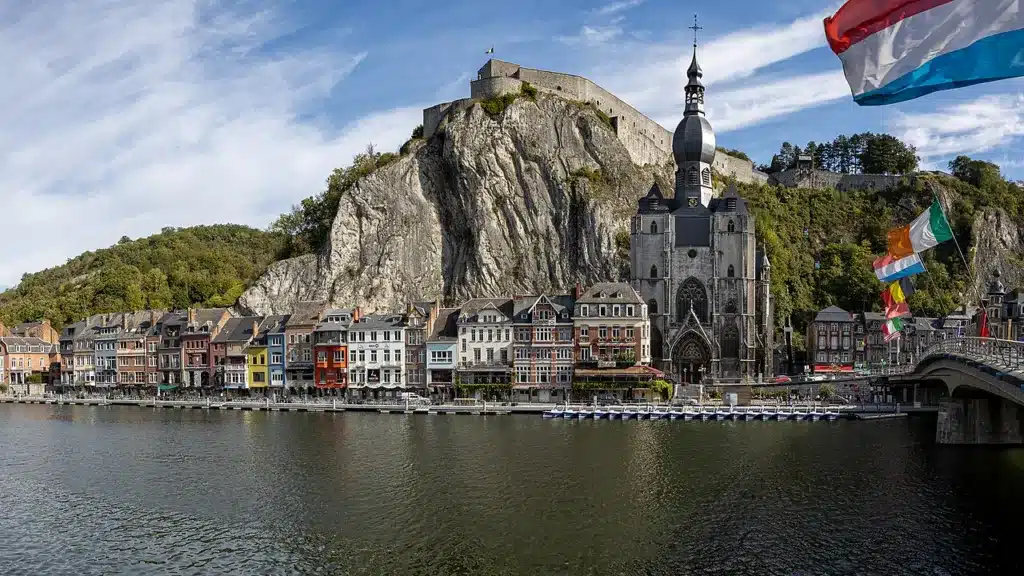
Dinant is a picturesque town located on the banks of the Meuse in the Belgian Ardennes. It is world-famous as the birthplace of Adolphe Sax, inventor of the saxophone.
The spectacular Citadel of Dinant dominates the town from a rocky promontory. A cable car provides easy access to the citadel while offering panoramic views over the valley.
The Collegiate Church of Notre-Dame is recognizable by its impressive onion-shaped bell tower. The colorful houses lined up along the Meuse are among the most photographed landscapes in Belgium.
Dinant was heavily affected at the beginning of the First World War in August 1914. The town is also renowned for its river cruises on the Meuse.
Mullerthal, Luxembourg
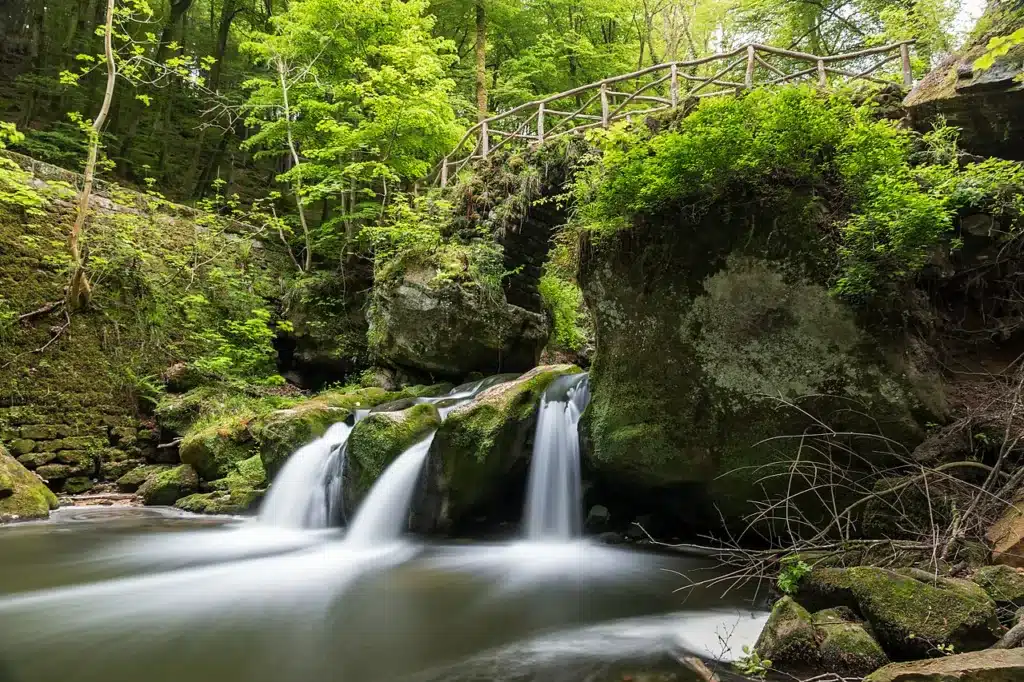
Mullerthal is nicknamed “Luxembourg’s Little Switzerland” because of its spectacular rocky landscapes. The region is crossed by the famous Mullerthal Trail, one of the most beautiful hiking trails in Europe.
Its sandstone formations, shaped by erosion, date back more than 200 million years. Narrow gorges and rocky passages create landscapes unique to Luxembourg.
The region is home to the famous Schiessentümpel waterfall, one of the country’s most photographed natural sites. Numerous trails allow visitors to explore forests, cliffs, and preserved valleys.
Strasbourg, France
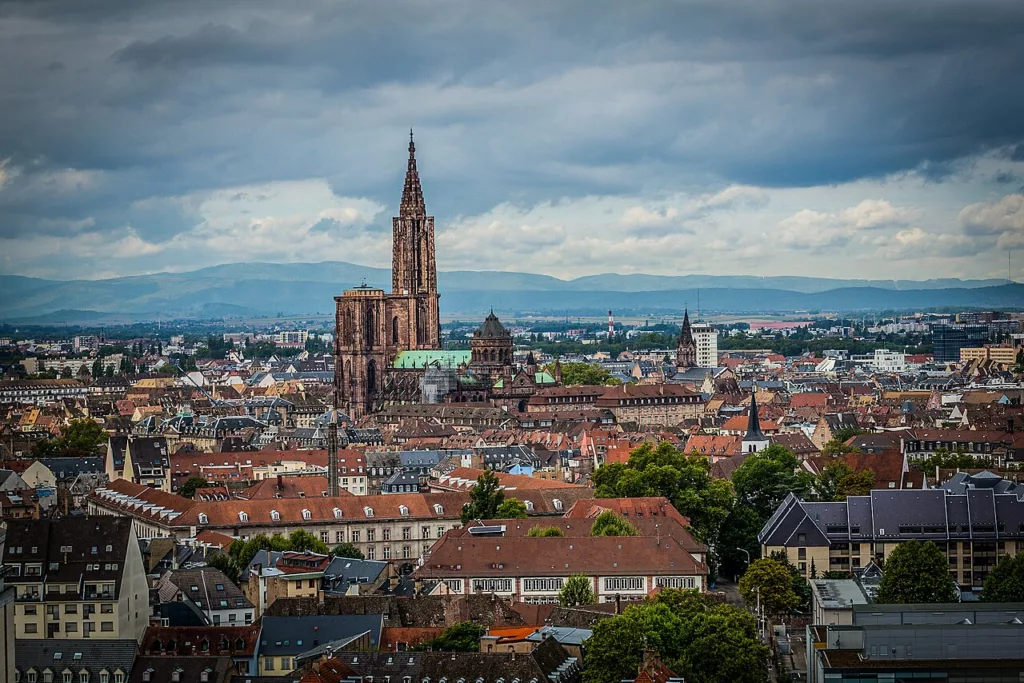
Strasbourg is the capital of Alsace and one of Europe’s most important capitals. The city is notably home to the European Parliament.
The magnificent Notre-Dame Cathedral of Strasbourg was the tallest building in the world for several centuries. The Petite France district is famous for its half-timbered houses and canals. Strasbourg lies at the crossroads of French and German influences.
Its Christmas market, created in the 16th century, is among the oldest in Europe.
Vianden Castle, Luxembourg
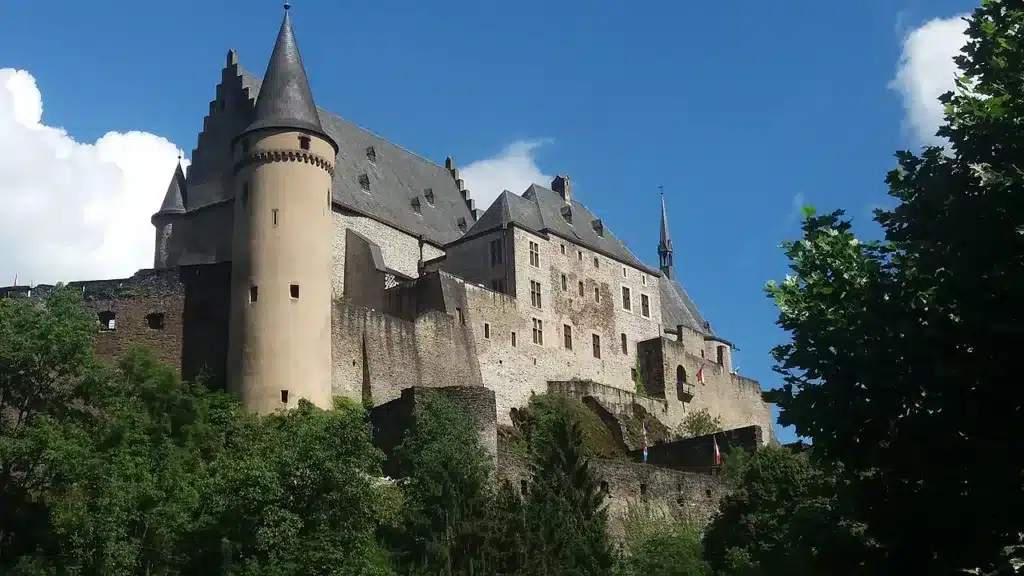
Vianden Castle is considered one of the most beautiful feudal castles in Europe. Its construction extended from the 11th to the 14th century on the foundations of an ancient Roman fort.
Overlooking the Our Valley, it offers exceptional panoramic views over the town of Vianden. The castle was the residence of the powerful Counts of Vianden during the Middle Ages.
The writer Victor Hugo stayed in Vianden several times and helped make the site better known. After a long period of abandonment, the castle underwent an exemplary restoration in the 20th century.
Every summer, it hosts a very popular medieval festival with tournaments, craftspeople, and historical performances.
Conclusion
Visiting Luxembourg City means discovering a European capital that is at once historic, modern, and welcoming. Between its UNESCO-listed fortifications, emblematic monuments, museums, green spaces, and local traditions, the city offers a rich and varied experience that appeals to history lovers as much as to culture and nature enthusiasts.
Whether you come for a weekend in Luxembourg or for a longer stay, the Luxembourgish capital is full of must-see places to explore. From the Bock Casemates to the Grand Ducal Palace, via Notre-Dame Cathedral, historic squares, and picturesque districts, each visit offers a deeper understanding of the unique identity of this city at the heart of Europe.
Easy to visit, pleasant to explore on foot, and endowed with exceptional heritage, Luxembourg City is an ideal destination for a cultural getaway. All that remains is to prepare your itinerary and set off to discover the most beautiful places to visit in Luxembourg, so you can fully enjoy the charm of the Grand Duchy’s capital.