Visit Orléans: 30 Must-See Attractions and Things to Do
Visiting Orléans means discovering a city steeped in history, located in the heart of the Loire Valley and closely associated with the figure of Joan of Arc. Between medieval heritage, Renaissance architecture, and more contemporary developments, Orléans offers a pleasant balance between tradition and modernity.
As you stroll through its historic center, you will encounter iconic monuments, lively streets, and a vibrant atmosphere fueled by its shops and markets. Bordering the Loire River, the city also charms visitors with its natural spaces and riverside promenades, making Orléans an ideal destination for a stay combining culture, relaxation, and gastronomy.
Experience Orléans in a different way with our treasure hunt, “Orléans Highlights“, a unique blend of a guided tour and a self-guided escape game.
Historic Monuments & Heritage in Orléans
Sainte-Croix Cathedral of Orléans
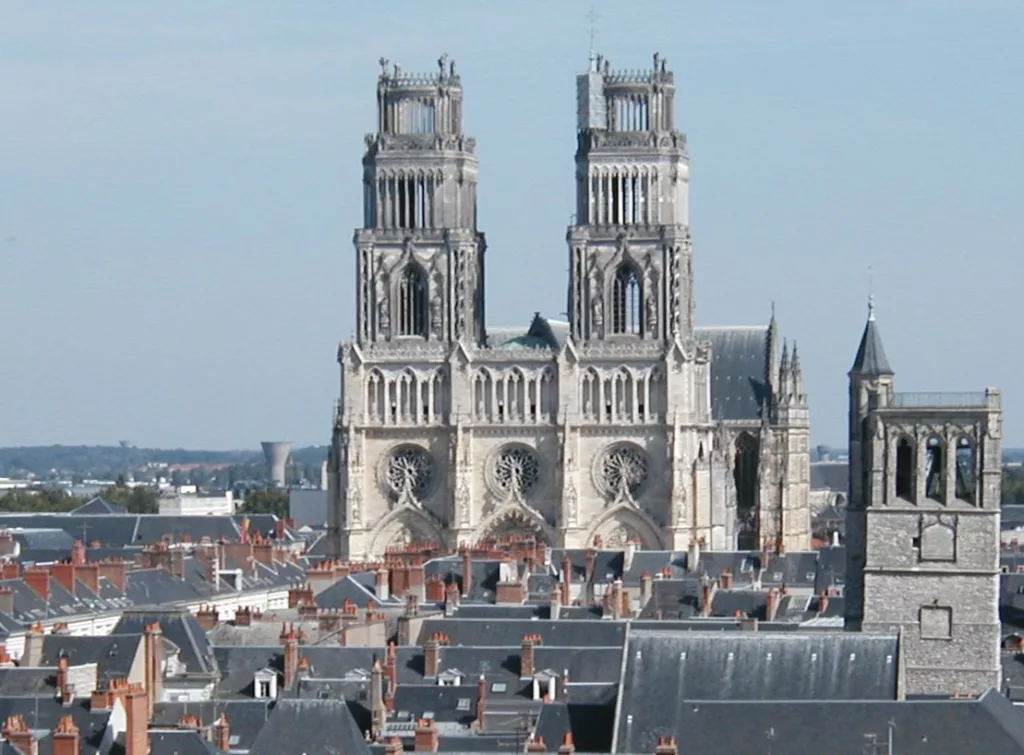
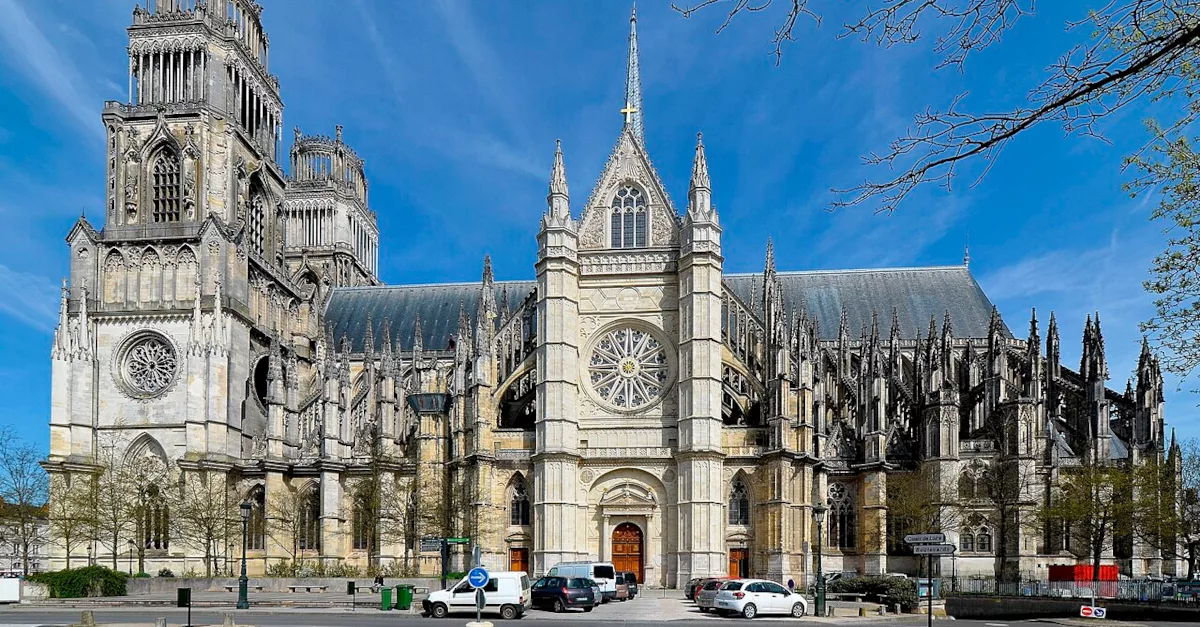
The Sainte-Croix Cathedral of Orléans, located in the heart of the historic center, is the seat of the Diocese of Orléans and a masterpiece of Gothic architecture, enriched with Neo-Gothic elements over the centuries.
Construction began in the 13th century and continued over several centuries until the 19th century, giving the building a long and eventful history. The cathedral is linked to major events in French history, notably the passage of Joan of Arc, with whom it is closely associated, as well as several royal ceremonies and important political events of the Middle Ages.
Listed as a historic monument since 1862, the cathedral impresses visitors with its monumental dimensions, remarkable stained-glass windows depicting the story of Joan of Arc, and its two imposing towers visible from across the city.
Discover the secrets of the Evangelists featured on the cathedral during our Orléans adventure trail.
Hôtel Groslot
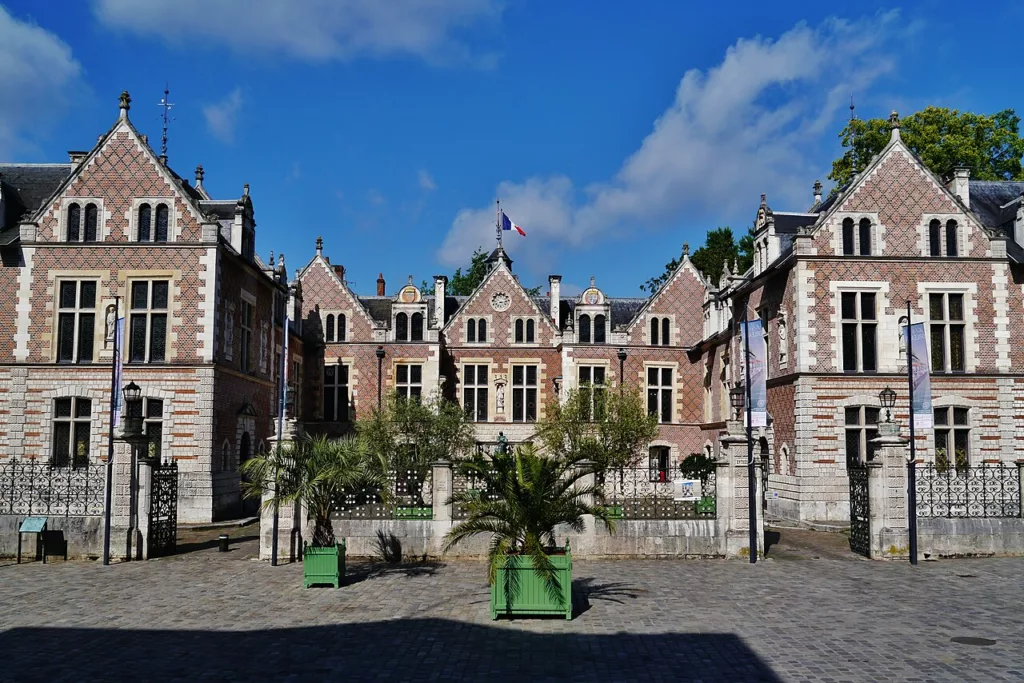
The Hôtel Groslot is a magnificent Renaissance mansion located in the heart of Orléans’ historic center, on Place de l’Étape. Built in the 16th century for the Groslot family, it was designed by architect Jacques I Androuet du Cerceau and reflects the prestige of Renaissance architecture in the Loire Valley.
This historic monument welcomed several important royal figures, including King Francis II, who died there in 1560, as well as Catherine de Medici and Charles IX during key moments in French history. Later converted into the city hall after the French Revolution, it remains an iconic part of life in Orléans and is notably used for civil wedding ceremonies.
Listed as a historic monument, the Hôtel Groslot is distinguished by its red brick and stone façade, monumental staircase, and richly decorated Neo-Renaissance rooms. It also houses numerous pieces of historic furniture and memorabilia related to Joan of Arc.
Discover the coats of arms displayed on Hôtel Groslot and the mysteries surrounding the statue of Joan of Arc standing in front of the building with our treasure hunt in Orléans.
Statue of Joan of Arc
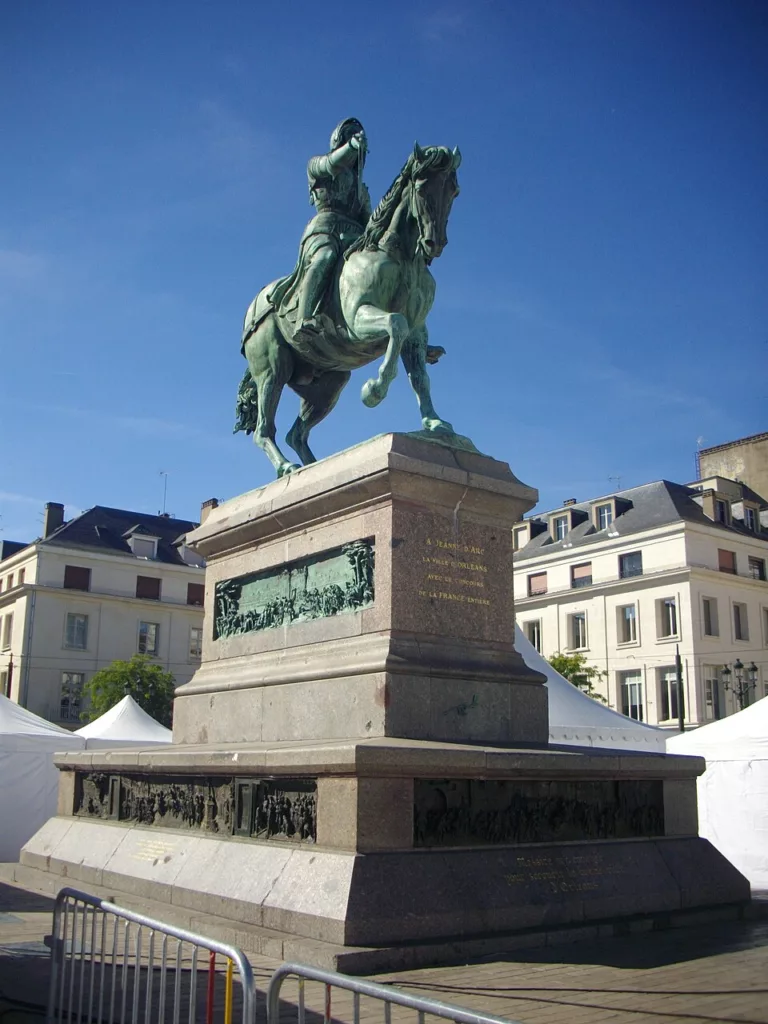
The Equestrian Statue of Joan of Arc, located in Place du Martroi, depicts Joan of Arc as a military leader with her sword raised, embodying the courage and victory of the city during the Hundred Years’ War.
Created in 1855 by sculptor Denis Foyatier, this monumental bronze statue has become a powerful symbol of Orléans’ identity. It commemorates Joan of Arc’s liberation of Orléans in 1429 and plays a central role during the famous Joan of Arc Festival celebrations.
Damaged during the Second World War, it was restored after 1945 with the participation of both the city of Orléans and New Orleans. Today, it is protected as a historic monument.
Discover the mysteries of the bas-reliefs decorating this statue during our Orléans adventure trail.
Rue Royale
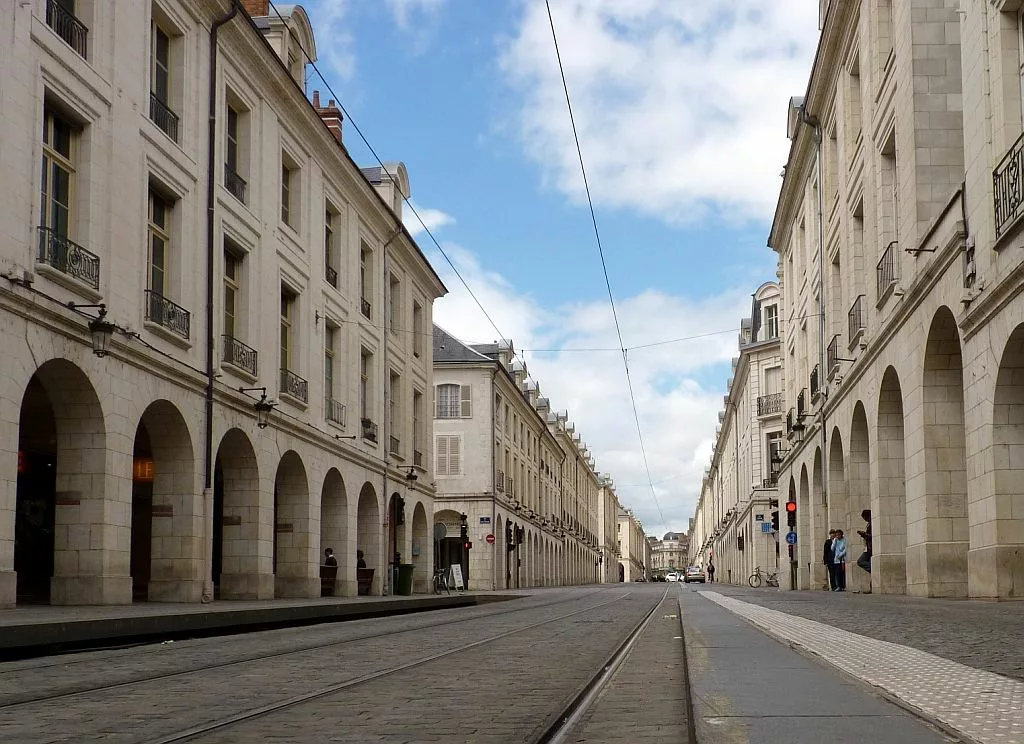
Rue Royale is one of the main thoroughfares in downtown Orléans. Built in the 18th century during the reign of Louis XV, it connects Place du Martroi to the George V Bridge, forming a major urban axis at the heart of the city.
Designed as part of a harmonious urban planning project by Jean Hupeau, the street is distinguished by its uniform arcaded façades, characteristic of French classical architecture. Stretching approximately 450 meters, it was conceived to accompany the reconstruction of the bridge and to structure the city’s entrance on the Loire side.
Throughout its history, Rue Royale has undergone several transformations. Partially destroyed during the bombings of 1940 in the Second World War, it was subsequently rebuilt identically, preserving its original style. Today, it is a protected heritage site and stands as a remarkable example of architectural restoration.
A true commercial heart of Orléans, the street is home to shops, restaurants, and historic buildings beneath its arcades. It is also a lively thoroughfare crossed by the tramway and features artistic landmarks such as the La Baigneuse fountain.
Find your way through this street and uncover its secrets during our treasure hunt in Orléans.
Saint-Paterne Church
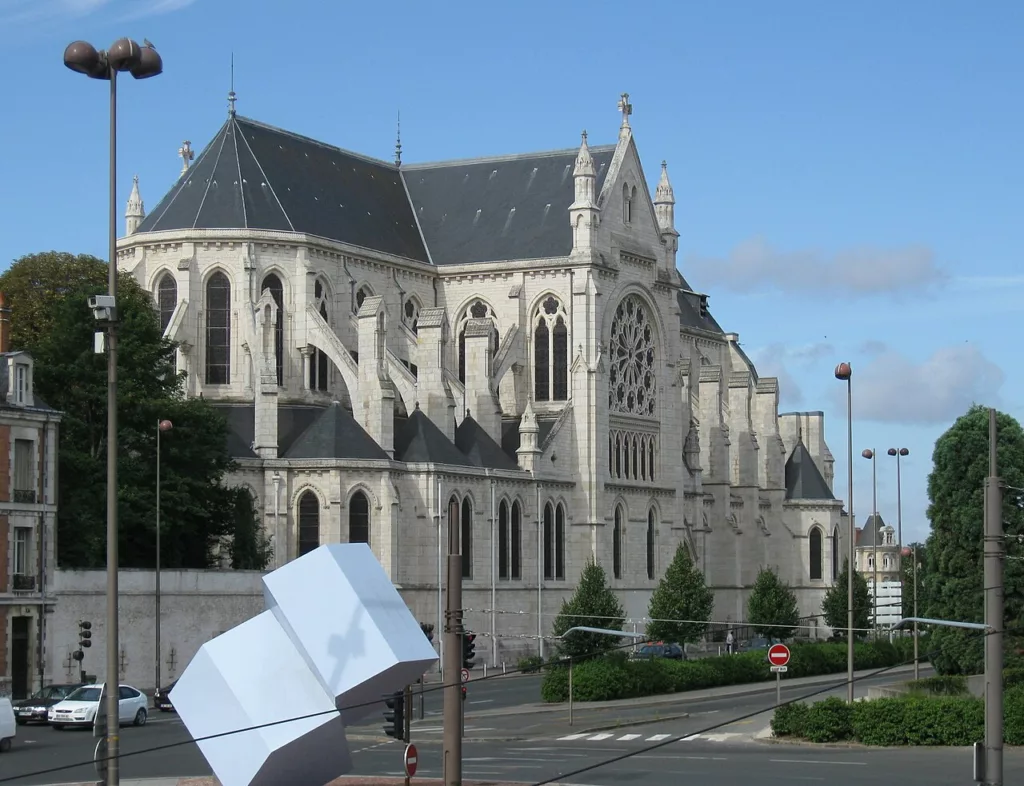
Saint-Paterne Church of Orléans is a Catholic church located in the city of Orléans. Its origins date back to the 12th century, when a priory, chapel, and hospice were established on the site. It is dedicated to Saint Paternus of Avranches.
Throughout its history, the church has been destroyed and rebuilt several times. It was notably razed during the Hundred Years’ War by the townspeople themselves, and later destroyed again during the French Wars of Religion in the 16th century. During the French Revolution, it temporarily lost its religious function and was used for various civic purposes.
The current building mainly dates from the late 19th century. It was rebuilt between 1876 and 1883 under the direction of architect Paul Deshérault, at the initiative of Bishop Félix Dupanloup, and was consecrated in 1894. Its Neo-Gothic architecture draws inspiration from the great medieval churches while incorporating more modern elements.
Saint-Paterne Church is also renowned for its organ, installed in the 19th century by the famous Cavaillé-Coll workshop, as well as for its stained-glass windows created in the 20th century by Jacques Le Chevallier. Today, the church hosts religious services as well as concerts, thanks to its acclaimed acoustics.
Discover this landmark and many other hidden treasures during our treasure hunt in Orléans.
Collegiate Church of Saint-Aignan of Orléans
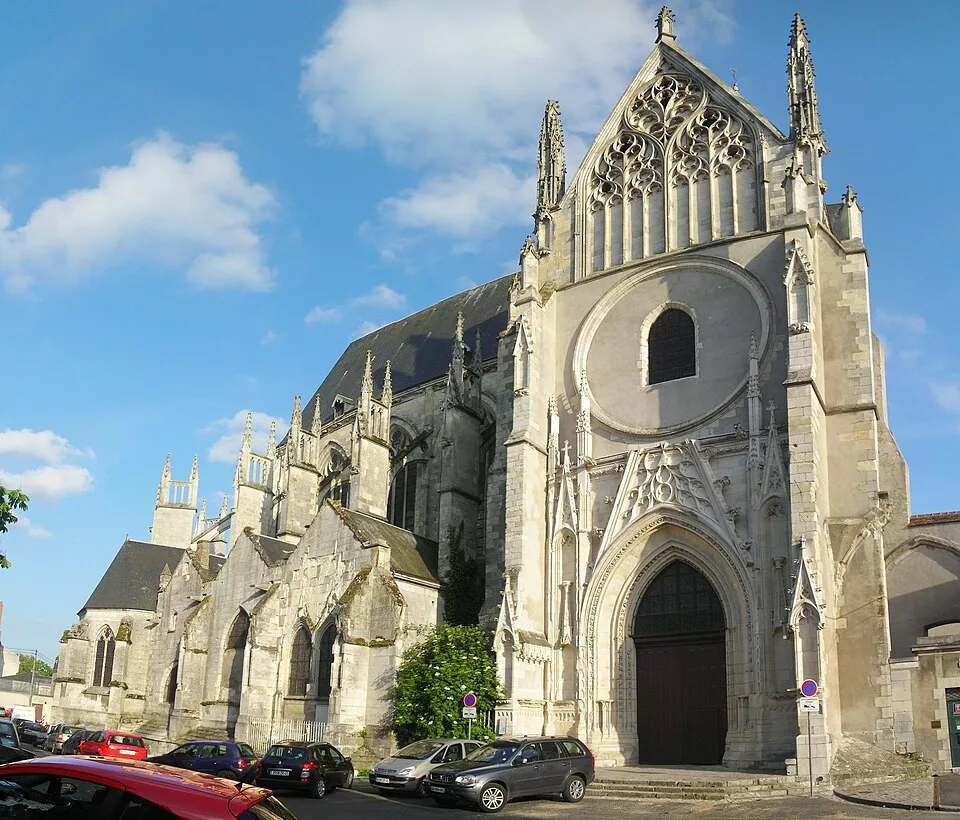
The Collegiate Church of Saint-Aignan of Orléans is an emblematic church located in the heart of Orléans’ historic center, in the Bourgogne district, on the north bank of the Loire. Dedicated to Saint Aignan of Orléans, it reflects a rich history combining religious traditions, historical events, and architectural heritage.
According to tradition, Saint Aignan played a decisive role in 451 during the invasion of the Huns led by Attila. Through his prayers and actions, he is said to have helped protect the city while awaiting the arrival of Roman troops led by Flavius Aetius. This legend deeply shaped the identity of Orléans, making Saint Aignan the city’s patron saint.
From the early Middle Ages onward, the site became an important religious center. It evolved from a monastery into an abbey, then into a collegiate church run by canons. Despite its importance, the building suffered numerous destructions, notably during the Viking invasions of the 9th century and the great fire of 999, which devastated the city. The current crypt is one of the rare remains from this ancient period.
In the 11th century, King Robert II the Pious had a basilica rebuilt, whose crypt still survives today. The crypt is remarkable for its size and Romanesque architecture, with an ambulatory, radiating chapels, and sculpted capitals depicting symbolic scenes.
The collegiate church was destroyed and rebuilt several more times during the Hundred Years’ War and later during the Wars of Religion in the 16th century. The relics of Saint Aignan were then partly destroyed, weakening the site’s spiritual role. After these troubled periods, restoration work was undertaken, notably with the support of King Louis XIII.
During the French Revolution, the collegiate church lost its religious function and was used for various purposes before being returned to worship in 1802 after the Concordat. Listed as a historic monument as early as 1840, it has since undergone several restoration campaigns.
Today, only part of the original building remains, notably the choir, transepts, and crypt. The crypt is a major feature of Orléans’ architectural heritage and attracts many visitors interested in history and Romanesque art. Finally, the Collegiate Church of Saint-Aignan was also an important center of sacred music. It housed a professional choir and welcomed many composers and organists, contributing to the city’s musical influence for several centuries.
Saint-Marceau Church of Orléans
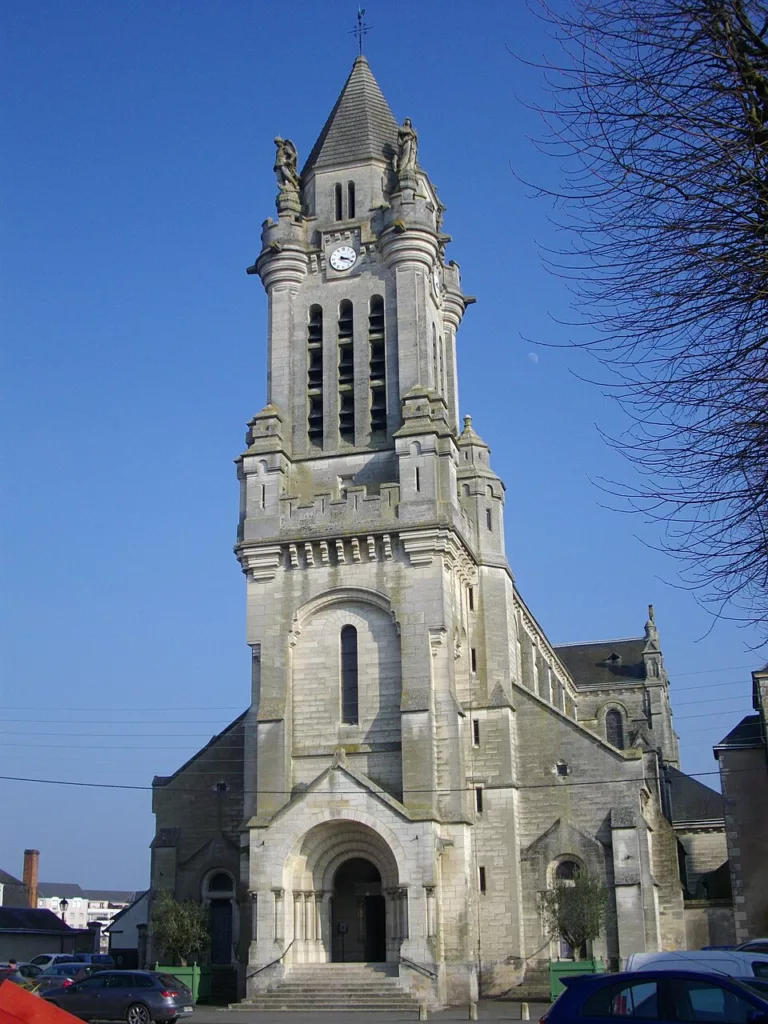
Saint-Marceau Church of Orléans is a religious building. Although the current church dates from the late 19th century, its presence is documented as early as the 9th century.
Over the centuries, the church underwent many upheavals. Dependent on the monastery of Micy in the Middle Ages, it was first rebuilt in 1082. It was then damaged during the Siege of Orléans (1428–1429), before being destroyed again during the Wars of Religion in 1567 and rebuilt at the end of the 16th century.
During the French Revolution, the church’s function changed completely: it became a political venue, then a “temple of agriculture” in 1798, before being returned to worship in 1803 under Napoleon.
The current building was rebuilt between 1888 and 1901, slightly north of the former church, which had become too fragile, particularly after the major floods of the 19th century. The bell tower, completed in 1900, was destroyed in 1944 during bombing raids and later rebuilt more modestly after the war. The church is especially known for having housed, in 1909, one of the first altars dedicated to Joan of Arc, the emblematic figure of Orléans.
Every year, at the end of August, it becomes the heart of the Saint-Fiacre celebrations. This traditional festival pays tribute to the district’s horticultural past: the church is decorated with fruit and vegetables according to a new theme each year, in a festive atmosphere combining markets, activities, and conviviality.
Inside, the stained-glass windows notably evoke the story of Saint Marceau, to whom the church is dedicated. According to tradition, this 2nd-century deacon was martyred in 177. His cult developed over time, particularly through the transfer of his relics.
Notre-Dame des Miracles Church
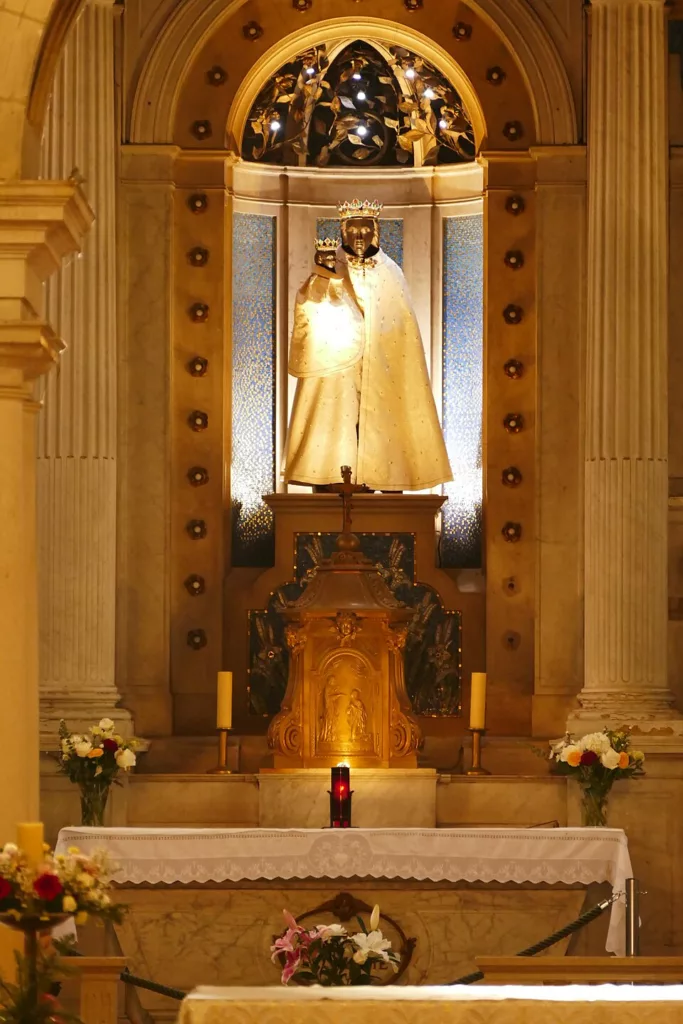
Notre-Dame-des-Miracles Church of Orléans, formerly known as Saint-Pol Church, is an emblematic spiritual site located right in the city center.
Its history dates back to the 6th century, when Syrian merchants living in the Avenum district brought a wooden statue of the Black Virgin there. This statue quickly became an object of devotion, especially after a miracle was attributed to it during a Norman attack in the 9th century, which, according to tradition, was repelled thanks to the Virgin’s intercession.
A first church was built in the 12th century to house this statue. Over time, the site became an important pilgrimage center. During the Middle Ages, residents came there to pray for the protection of the city, especially during periods of conflict.
In 1429, Joan of Arc herself came there to pray during the Siege of Orléans, further strengthening the sanctuary’s symbolic significance.
The church suffered numerous destructions, notably during the Wars of Religion, when the original statue was destroyed. It was then replaced by a copy, painted black in memory of the first one. During the French Revolution, the building was looted, but the statue of the Virgin resisted damage, strengthening popular devotion to the site.
In 1940, a bombing caused a fire that almost entirely destroyed the church. Only the chapel of the Black Virgin survived. The building was then reconstructed in the second half of the 20th century, with a different orientation adapted to the section that remained intact.
House of Joan of Arc
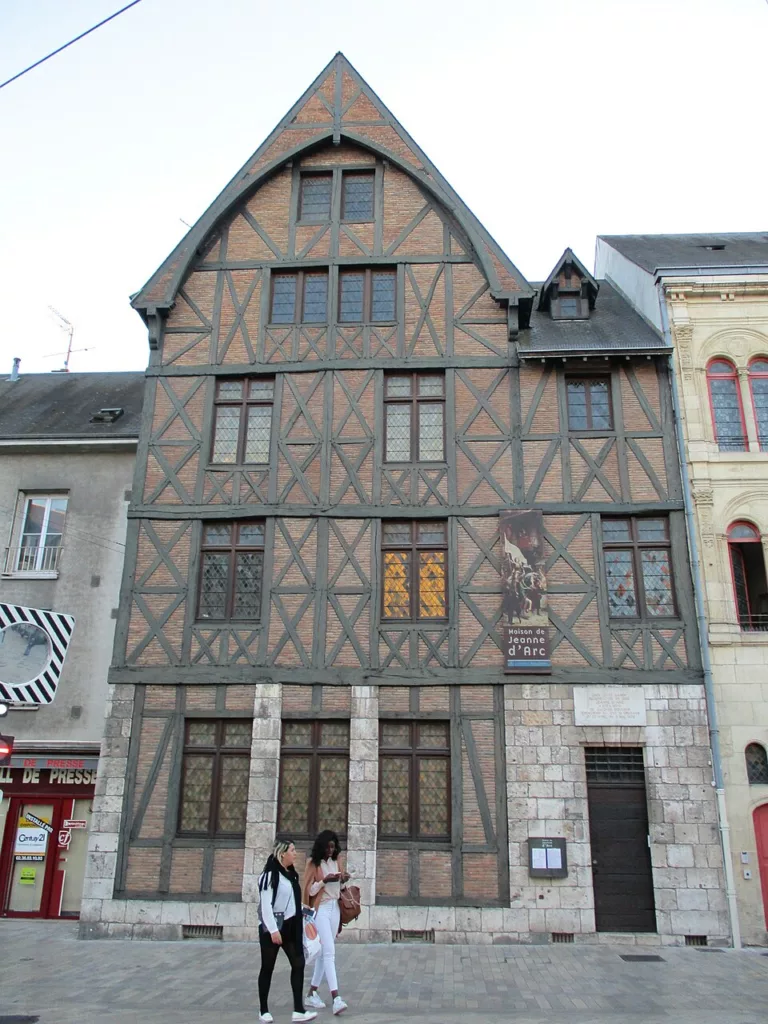
The House of Joan of Arc in Orléans is an emblematic site in the city center, now converted into a museum dedicated to the heroine’s history. Originally, this house belonged to Jacques Boucher, treasurer to the Duke of Orléans. It was here that Joan of Arc stayed in 1429 for several decisive weeks while taking part in the liberation of the city during the Siege of Orléans (1428–1429).
The original medieval house, built with timber framing and half-timbering, was unfortunately destroyed in 1940 during the bombings of the Second World War. It was later rebuilt identically in 1965 to preserve the memory of this major historical episode.
In 1974, the building became a municipal museum devoted to Joan of Arc and her era. Today, it houses an important documentary collection made up of thousands of documents: manuscripts, books, engravings, posters, and archives retracing the life of the Maid of Orléans and the context of the Hundred Years’ War.
Discover the story of Joan of Arc during our treasure hunt in Orléans.
Saint-Pierre du Martroi Church
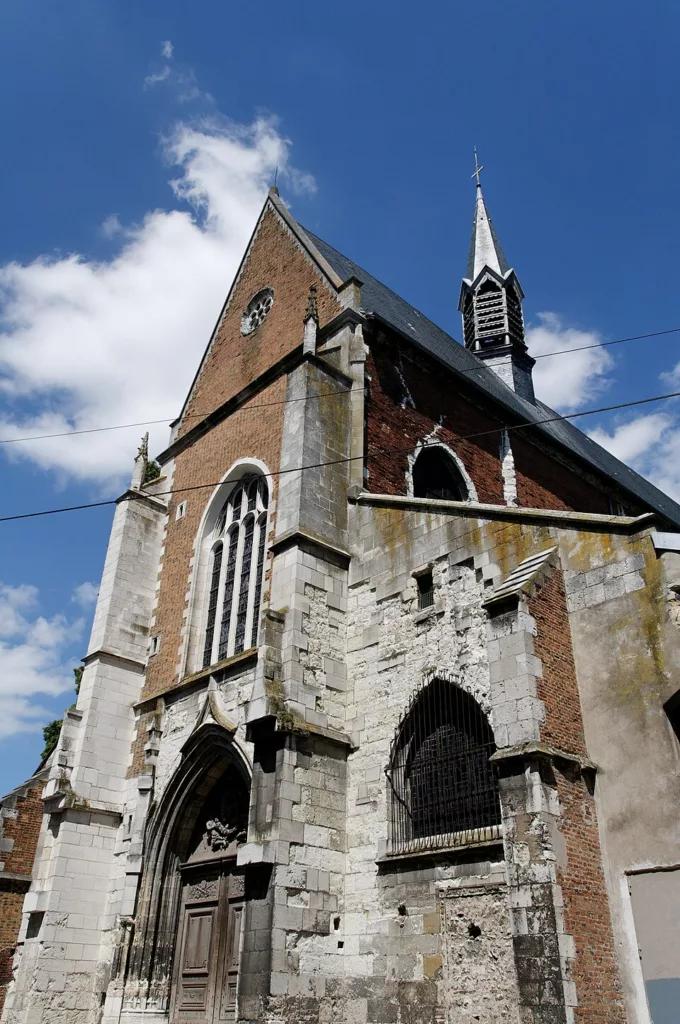
Saint-Pierre du Martroi Church, located in the very heart of Orléans near Place du Martroi, belongs to the Diocese of Orléans and remains an active place of worship today.
The history of this church dates back to the 10th century, when an earlier building known as Saint-Pierre-Ensentelée already stood on the site. Destroyed during the Hundred Years’ War, it was rebuilt in the 16th century to meet the needs of a growing parish. The building then underwent several transformations in the 18th and 19th centuries, reflecting both architectural changes and the challenges of history.
Architecturally, the church has a classical structure consisting of a central nave flanked by side aisles connected by arcades. Side chapels were added after the initial construction. The current vaults, rebuilt in the 17th century after the Wars of Religion, rest on a wooden and plaster structure, replacing the former stone vaults. On the exterior, the use of red brick gives the building a sober yet distinctive appearance.
The main façade, inspired by the Renaissance, is enriched with elements added in the 17th century, including Louis XIV-style doors and a bas-relief depicting Saint Peter delivered by angels. Listed as a historic monument since 1942, Saint-Pierre du Martroi Church is a valuable testimony to the religious and urban history of Orléans.
Discover the secrets of this portal during our treasure hunt in Orléans.
Campo Santo
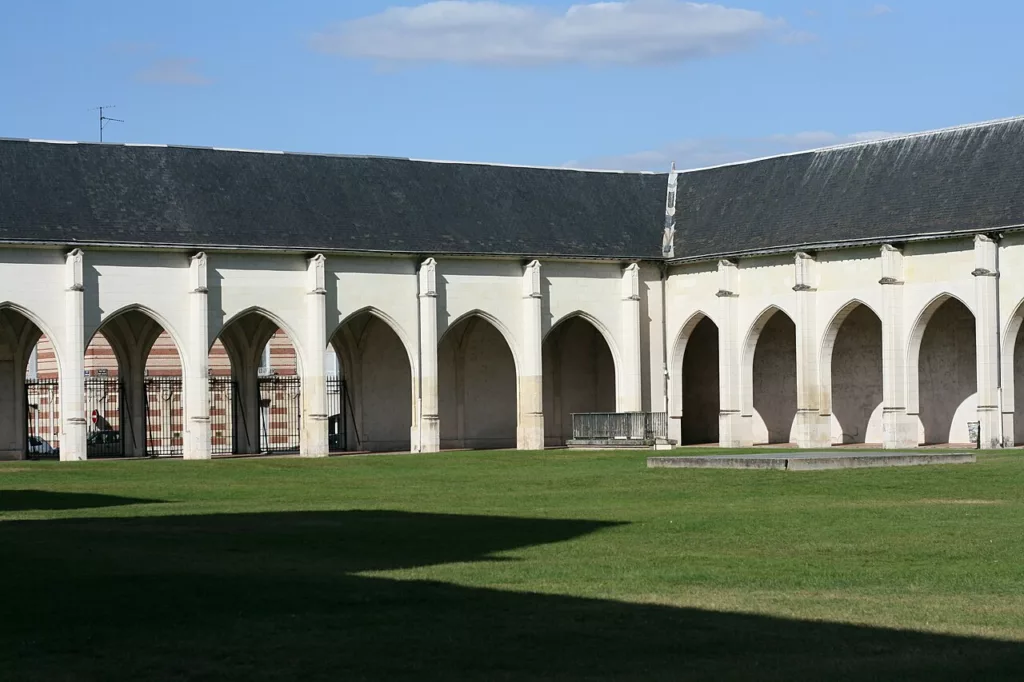
The Campo Santo of Orléans has now been transformed into a cultural space. It takes the form of a vast cloister surrounded by arcades, offering a unique setting in the heart of the city.
Its history dates back to the 12th century. For several centuries, the Campo Santo served as the main cemetery, known as the “Grand Cemetery” or “Martroi-aux-Corps.” The galleries surrounding it were built between the 15th and 16th centuries to protect the site, particularly from animals. However, the site suffered major damage during the Wars of Religion, with the destruction of chapels and structures.
At the end of the 18th century, sanitary concerns led to cemeteries being moved outside cities. The Campo Santo was then decommissioned as a burial site, and the remains were transferred to new cemeteries on the outskirts of Orléans. The site later served several purposes, including as a grain market until the 19th century.
In the 20th century, the site was extensively redeveloped. After the destruction of some old structures, the Campo Santo became an open space dedicated to culture and events. Today, it regularly hosts gatherings such as markets, festivals, and events linked to the Joan of Arc celebrations.
Listed as a historic monument, the Campo Santo notably preserves its arcades, protected since 1913, as well as its monumental 16th-century gate. It thus embodies a place steeped in history, transformed from a funerary space into a true cultural heart of the city.
Thesis Hall
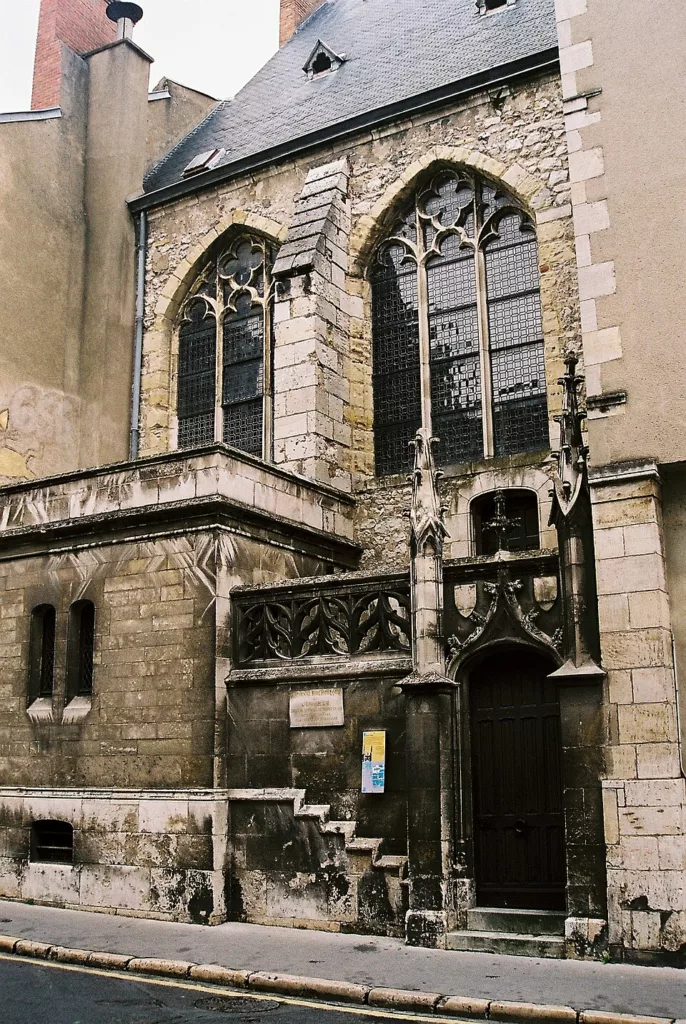
The Thesis Hall of Orléans is one of the rare surviving remains of the former University of Orléans, once renowned throughout France for its teaching. Located just a few steps from the prefecture, it bears witness to the city’s rich intellectual past.
Listed as a historic monument, this hall long served both as a library and as an examination room for students. It welcomed major figures of history and culture, including John Calvin, who founded his first Protestant temple nearby, as well as Erasmus, François Rabelais, Charles Perrault, and Jean de La Bruyère.
Place du Châtelet
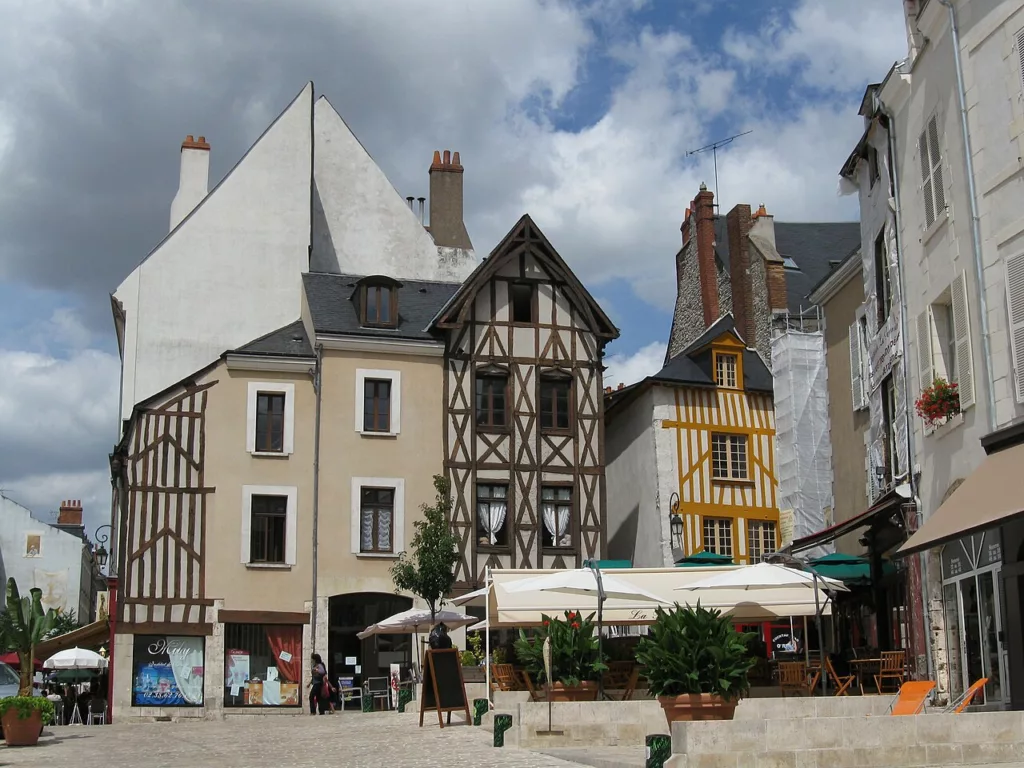
Place du Châtelet is an emblematic square in downtown Orléans, located on the right bank of the Loire, near the George V Bridge. Created at the end of the 19th century, the square was the result of a major urban redevelopment project that required the demolition of old houses and medieval alleyways. This open space then made it possible to install metal market halls in 1882, intended for the wholesale market and reflecting the city’s flourishing commercial activity at the time.
Over time, the site evolved: the former market halls were replaced in 1977 by a modern shopping center, which now occupies a large part of the square. Despite these transformations, several old buildings have been preserved, offering a glimpse into the district’s architectural past.
Among them, the so-called Jean Dalibert House, built in the 16th century, retains the layout of a medieval residence. Other Renaissance buildings also remain, some of which are listed in the inventory of historic monuments. Place du Châtelet therefore perfectly illustrates the dialogue between ancient heritage and modernity in the heart of Orléans.
Must-See Museums in Orléans
Museum of Fine Arts
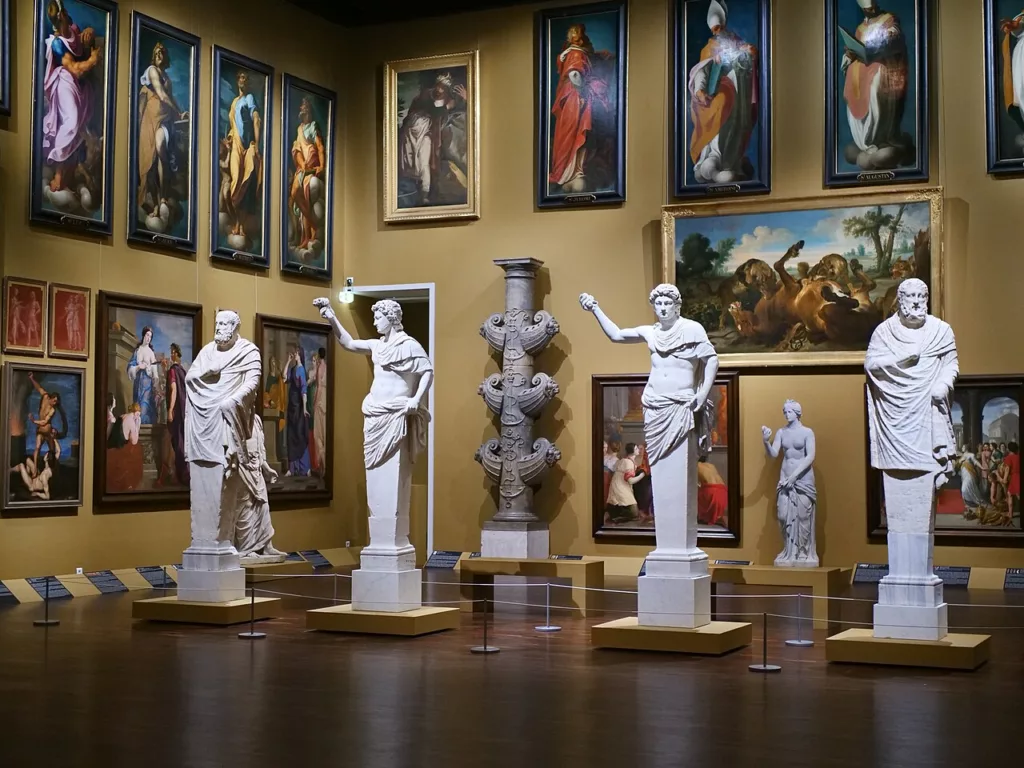
The Musée des Beaux-Arts d’Orléans is one of the oldest provincial museums in France. It was founded in 1797 and has very rich collections covering a broad period from the 15th to the 20th century, including 700 works on display. It features paintings, sculptures, drawings, pastels, and prints from the major European schools.
The museum presents works by major artists such as Correggio, Velázquez, Delacroix, Courbet, Gauguin, and Picasso. Its painting collection is especially varied, with Italian, Spanish, French, and Northern European works.
It is also renowned for its important graphic arts cabinet, which brings together more than 10,000 drawings and one of the largest pastel collections in France after that of the Louvre Museum.
Memorial Museum for the Children of the Vel d’Hiv
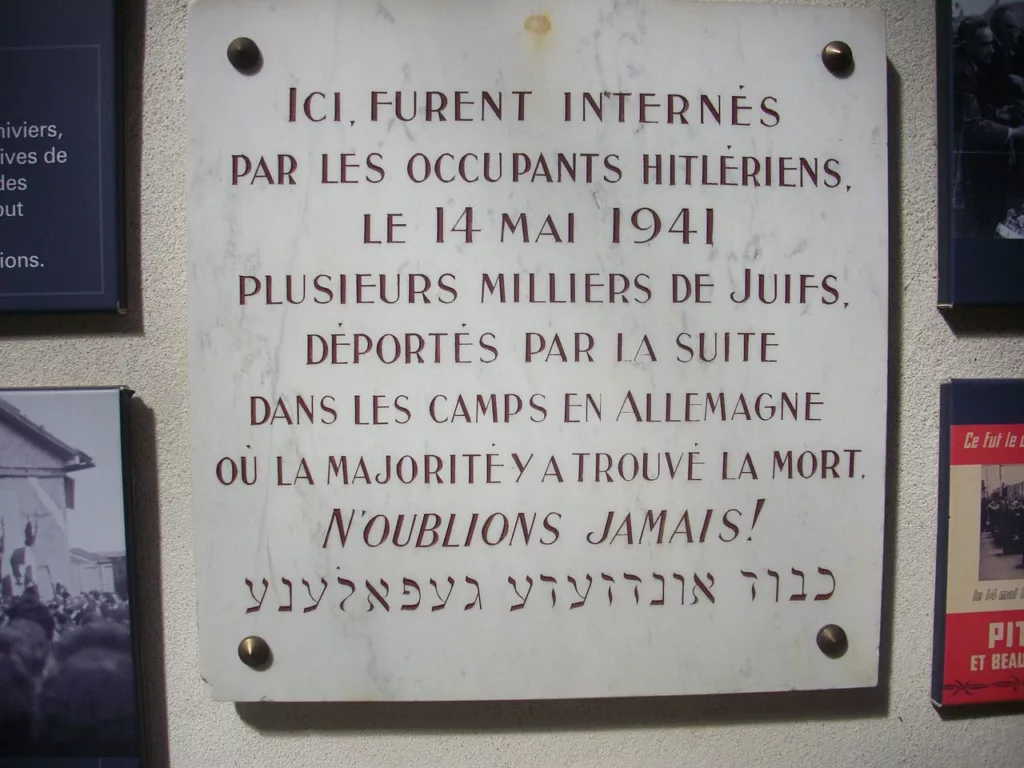
The CERCIL – Memorial Museum for the Children of the Vel d’Hiv is a history and remembrance center located in Orléans. It is dedicated to the Second World War and to the history of the internment camps in the Loiret region.
This museum retraces the fate of the populations interned in the camps of Beaune-la-Rolande, Pithiviers, and Jargeau, located in the Loiret department. It particularly highlights the story of the thousands of Jewish children deported during the Holocaust.
The museum offers a permanent exhibition presenting documents, testimonies, and objects connected to this tragic period of history. It is both a place of remembrance and an educational space dedicated to transmitting the history of the Holocaust and persecution in France.
Orléans Museum of History and Archaeology
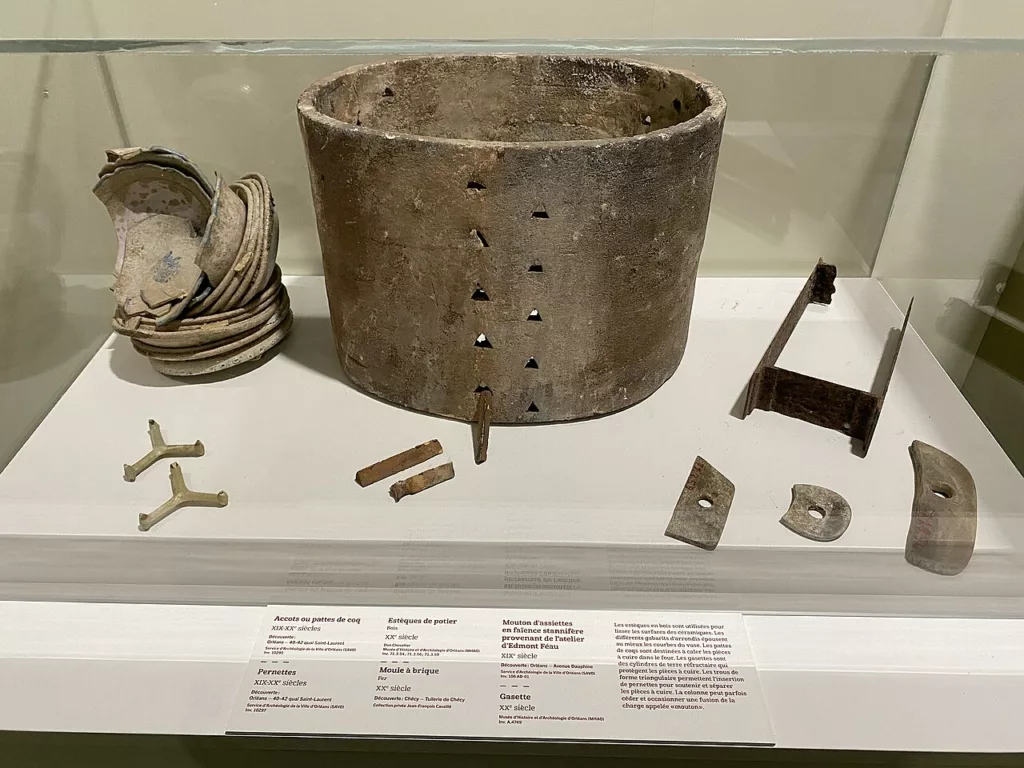
The Historical and Archaeological Museum of Orléanais, founded in 1823, is one of the oldest museums in the city of Orléans. It is now located in the Hôtel Cabu, a historic building in the city center, and holds the “Musée de France” label.
The museum presents highly varied collections that trace the history of the region from Antiquity to the modern era. It notably features the famous Neuvy-en-Sullias treasure, an exceptional collection of bronze statues dating from the Gallo-Roman period.
The collections also include objects from the Middle Ages and the Renaissance, such as architectural elements from religious monuments in the region, as well as pieces linked to the history of Orléans.
A significant part of the collections is devoted to Joan of Arc and the city’s history, as well as to the Loire and local life through the centuries.
The museum was marked by history, particularly by a fire in 1940 that destroyed part of its collections. It was later restored and reopened to the public in the 1960s.
FRAC (Regional Contemporary Art Fund)
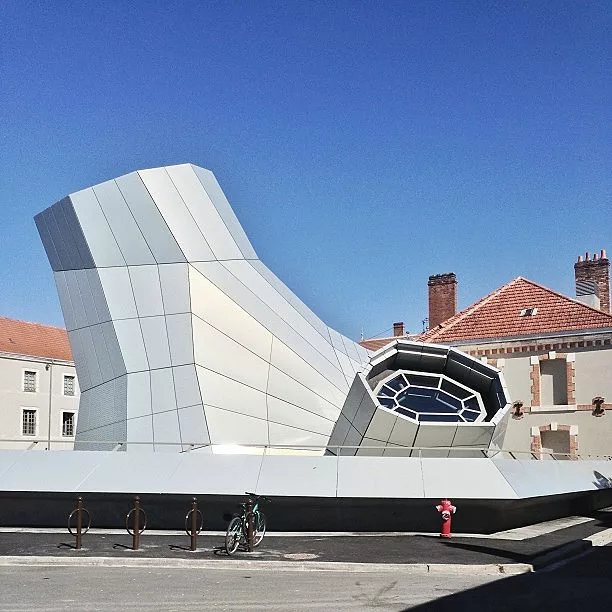
The FRAC Centre-Val de Loire is part of the network of Regional Contemporary Art Funds, created in France in the 1980s. The mission of the FRACs is to build and circulate contemporary art collections throughout the country.
The works held by the FRACs are not kept in a single location but circulate through regional, national, and international exhibitions. FRAC Centre-Val de Loire contributes to the democratization of contemporary art by making artworks accessible to as many people as possible.
Orléans Museum for Biodiversity and the Environment – MOBE
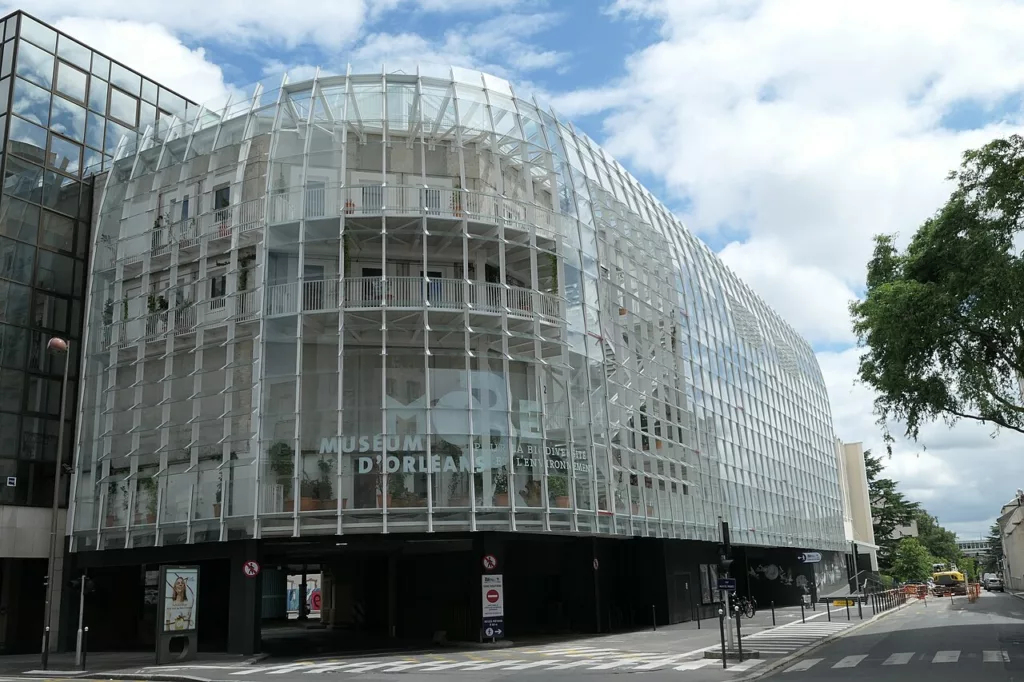
The Orléans Museum for Biodiversity and the Environment (MOBE) is a natural history museum located in Orléans, in the Loiret department. It is dedicated to exploring biodiversity, natural sciences, and the relationship between humans and the environment.
The museum was inaugurated in 1823 and is one of the oldest scientific institutions in the region. It is classified as a “Musée de France,” a label awarded by the French Ministry of Culture.
MOBE presents rich collections in zoology, botany, paleontology, and geology. Its collections include more than 435,000 specimens collected through donations, fieldwork, and scientific research.
The museum offers a modern educational approach, with exhibitions organized around themes rather than simple scientific classifications. It was completely renovated and reopened to the public on May 19, 2021, after several years of closure.
Parks and Green Spaces in Orléans
Parc Floral de La Source
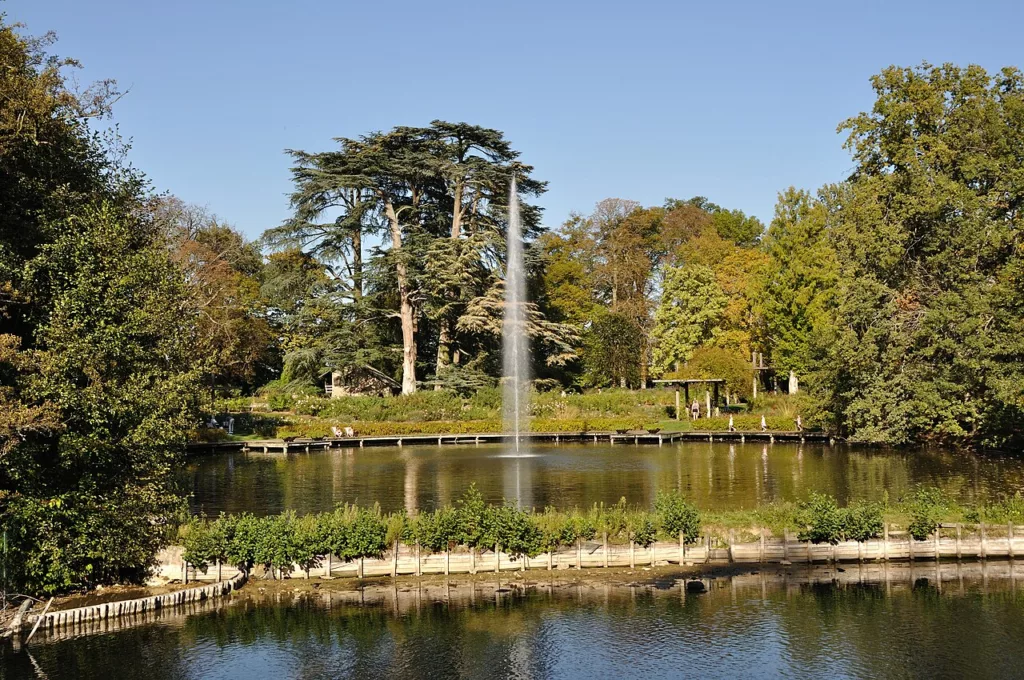
Parc Floral de La Source
Orléans Jardin des Plantes
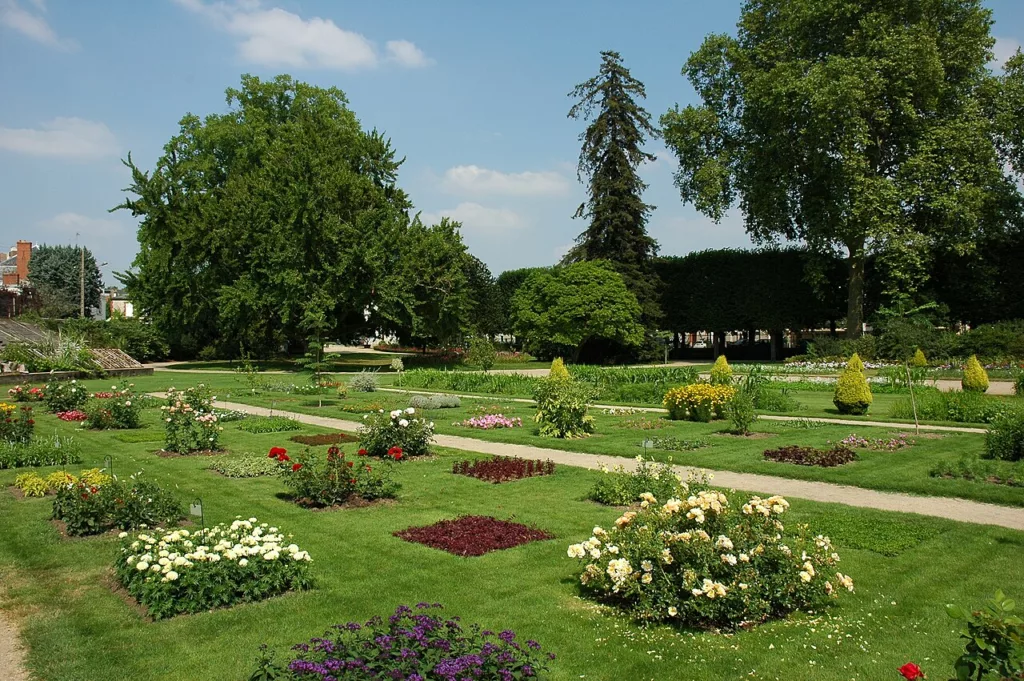
The Jardin des Plantes of Orléans is a botanical garden located in the Saint-Marceau district, south of the Loire. It was created in 1834 and is one of the oldest botanical gardens in France still in operation. The garden covers around 3.5 hectares near Orléans city center.
The site includes a French-style garden, an orangery, and several tropical greenhouses. The Jardin des Plantes also has a rose garden and areas dedicated to climate-adapted plants. It contains varied plant collections, including trees, flowers, and exotic plants.
The garden was partly designed by architect François-Narcisse Pagot, who also designed the orangery.
Parc Louis Pasteur
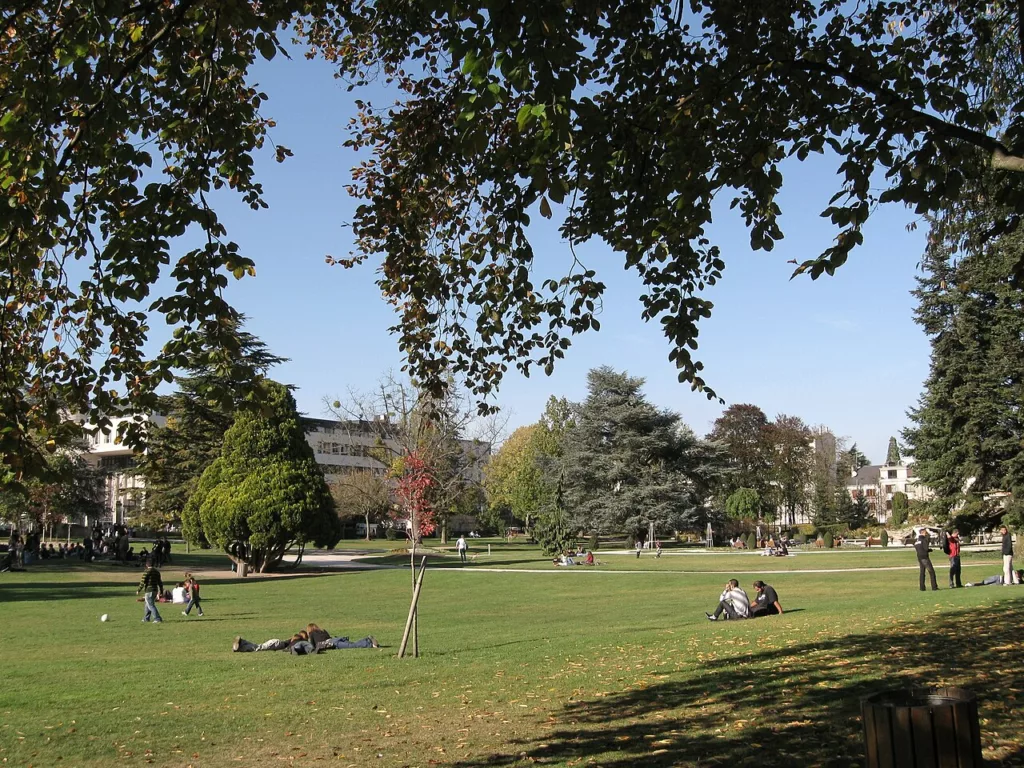
Parc Louis Pasteur is a public garden located in downtown Orléans, north of the Loire. It was created in 1927 and covers around 4 hectares. The park is named after the scientist Louis Pasteur in tribute to his work.
It is located in the Saint-Vincent district, close to several schools. The site was formerly a cemetery before being transformed into a public green space. Parc Pasteur was designed by landscape architect Édouard Gitton.
It includes French-style gardens, large lawns, and many remarkable trees. It also features sculptures, monuments, and a memorial dedicated to Jean Zay. The park has leisure facilities such as a merry-go-round, a tennis court, and a small train.
Île Charlemagne Leisure Park
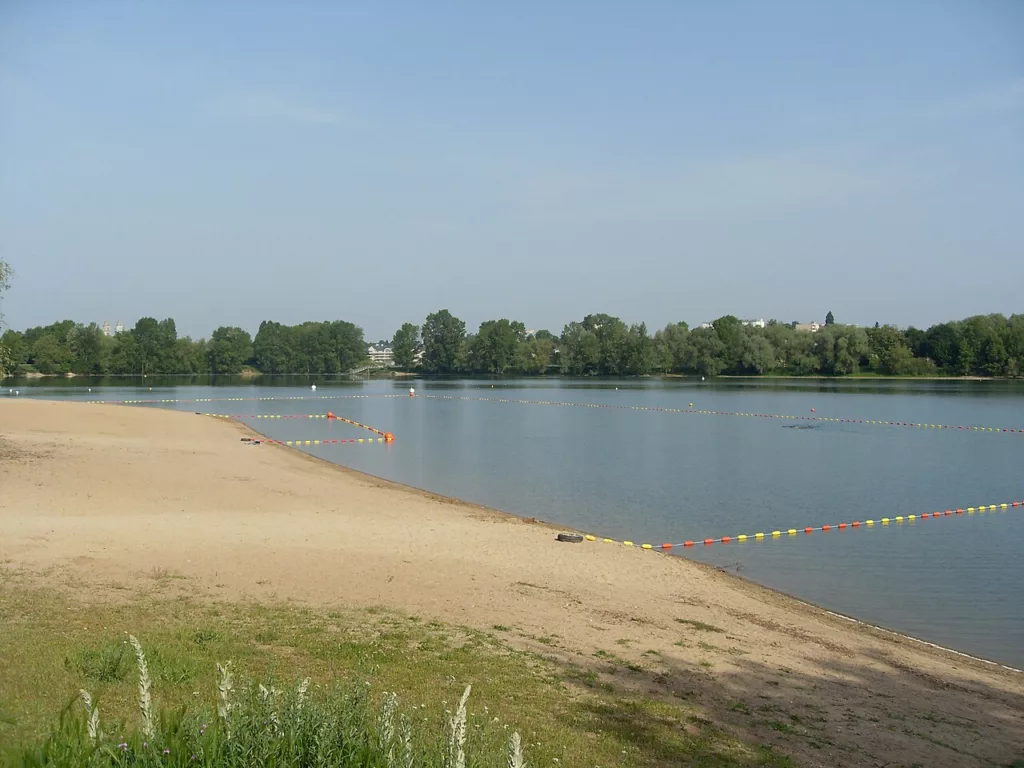
The Île Charlemagne – Parc de Loire leisure park is a vast outdoor space located in Saint-Jean-le-Blanc, near Orléans, on the banks of the Loire. It covers around 70 hectares and was developed in 1987 to provide a place for relaxation and sports activities in a natural setting.
This site is mainly dedicated to outdoor leisure and water activities. It includes two supervised beaches in summer, where swimming is allowed from May to September. Visitors can also enjoy many activities such as sailing, canoeing and kayaking, windsurfing, catamaran sailing, and fishing.
The leisure park also offers many sports and relaxation activities, including mountain biking, jogging, beach volleyball, football, pétanque, and playgrounds for children. An adventure park with treetop courses and paintball completes the leisure offering.
The site is crossed by the Loire à Vélo cycling route, making it a popular spot for cyclists. Access is free of charge, and picnic areas and refreshment stands are available during the summer season.
Culinary Specialties of Orléans
Andouille de Jargeau

Andouille de Jargeau is mainly made from pork meat, with a small proportion of offal, which distinguishes it from andouillette.
This charcuterie, generally eaten hot, is often served with potatoes, vegetables, or lentils. It has been recognized as a regional specialty since the late 19th century.
Orléans Mustard

Orléans mustard is made from mustard seeds ground on a stone mill, mixed with Orléans vinegar, Guérande salt, and sometimes aromatics. Its production dates back to the 16th century, when the vinegar-makers and mustard-makers of Orléans received official recognition of their expertise in 1580 to guarantee the quality and authenticity of their products. This tradition gave rise to a mustard with a fine taste, both mild and spicy.
Cotignac d’Orléans
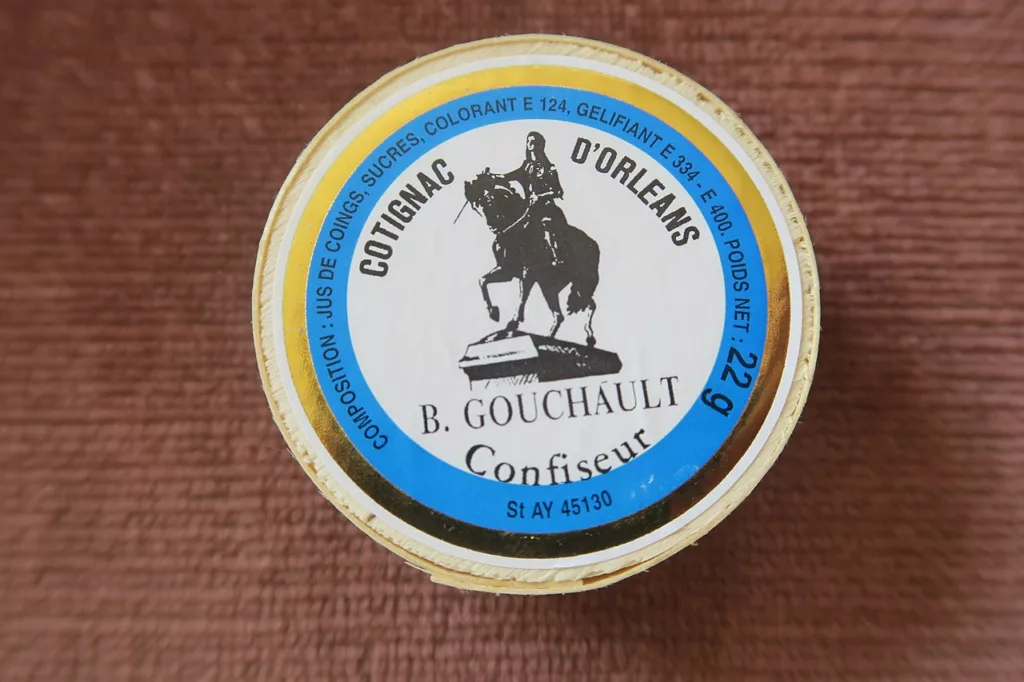
Cotignac d’Orléans is a thick jelly made from quinces and sugar, considered a typical regional confectionery since the Middle Ages.
This product is usually presented in small wooden, porcelain, or glass boxes. It is enjoyed by breaking off a piece from the box or eating it directly with a spoon, making it an original and traditional delicacy.
Orléans Fruit Macarons

Orléans fruit macarons are a pastry specialty created in 2006 by Orléans artisans to promote local gastronomy. These macarons come in several flavors, such as strawberry deglazed with Orléans vinegar, pear and ginger, hazelnut, or a blend of rose petals, lime, and cinnamon. They are renowned for their delicacy and creativity.
Excursions from Orléans
The Loire Valley Castles: Chambord, Chenonceau
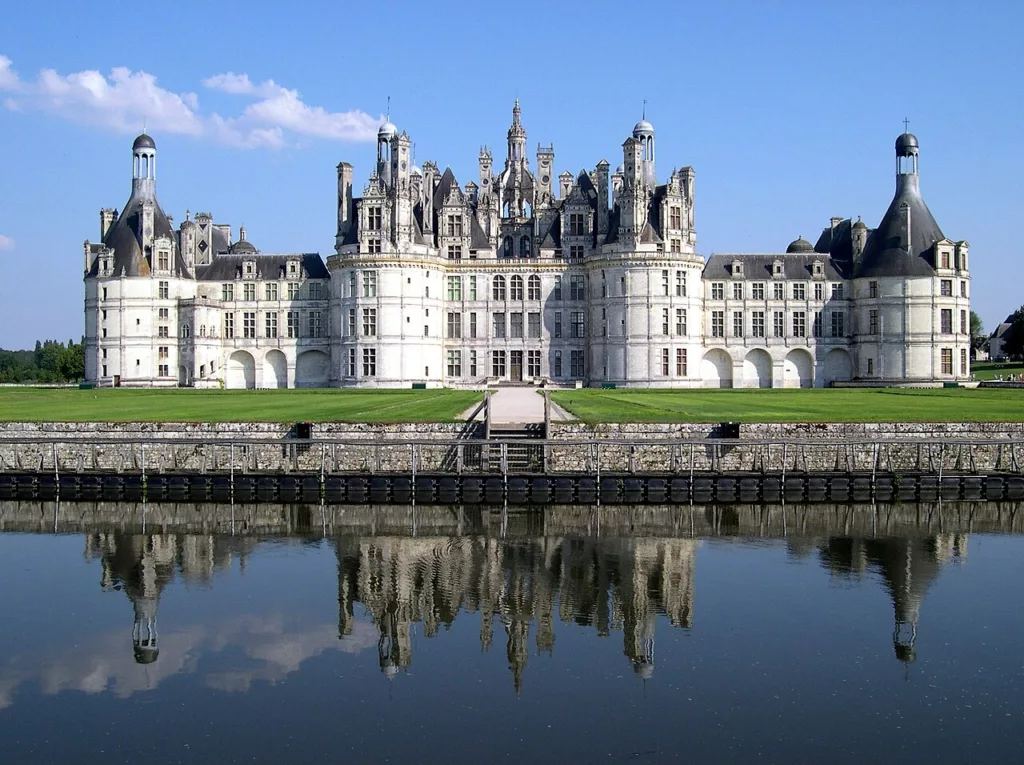
From Orléans, it is easy to set off on an excursion to discover the most famous castles of the Loire Valley. Among the must-sees are the Château de Chambord and the Château de Chenonceau, two jewels of French heritage located within reasonable driving distance.
The Château de Chambord is the largest of the Loire Valley castles. Built in the 16th century at the request of Francis I, it is famous for its spectacular architecture, numerous towers, and double-helix staircase attributed to Leonardo da Vinci. Surrounded by an immense forest park, it offers an impressive visit combining history, nature, and architecture.
The Château de Chenonceau, nicknamed the “Ladies’ Castle,” is one of the most elegant in the region. Built over the Cher River, it is remarkable for its gallery spanning the river. Its history is linked to several major female figures, such as Diane de Poitiers and Catherine de’ Medici, who shaped its layout and decoration.
Blois
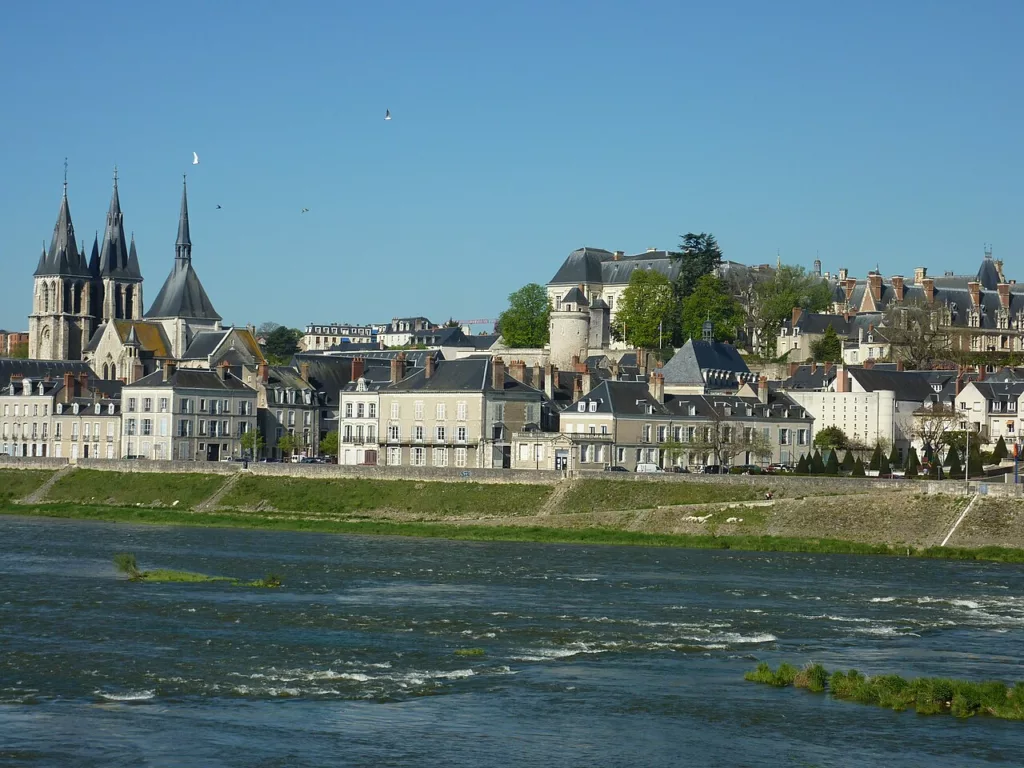
Blois is located about a 1-hour drive from Orléans. The city charms visitors with its rich historical heritage and typical Loire Valley atmosphere.
Its most emblematic site is the Royal Château of Blois, a favorite residence of several French kings during the Renaissance. This unique monument stands out for its four wings in different architectural styles — medieval, Gothic, Renaissance, and classical — which together tell several centuries of French history.
As you stroll through the old town, you will discover cobbled lanes, half-timbered houses, and picturesque stairways descending toward the Loire. The city also offers beautiful views of the river and pleasant quays for walking.
Amboise
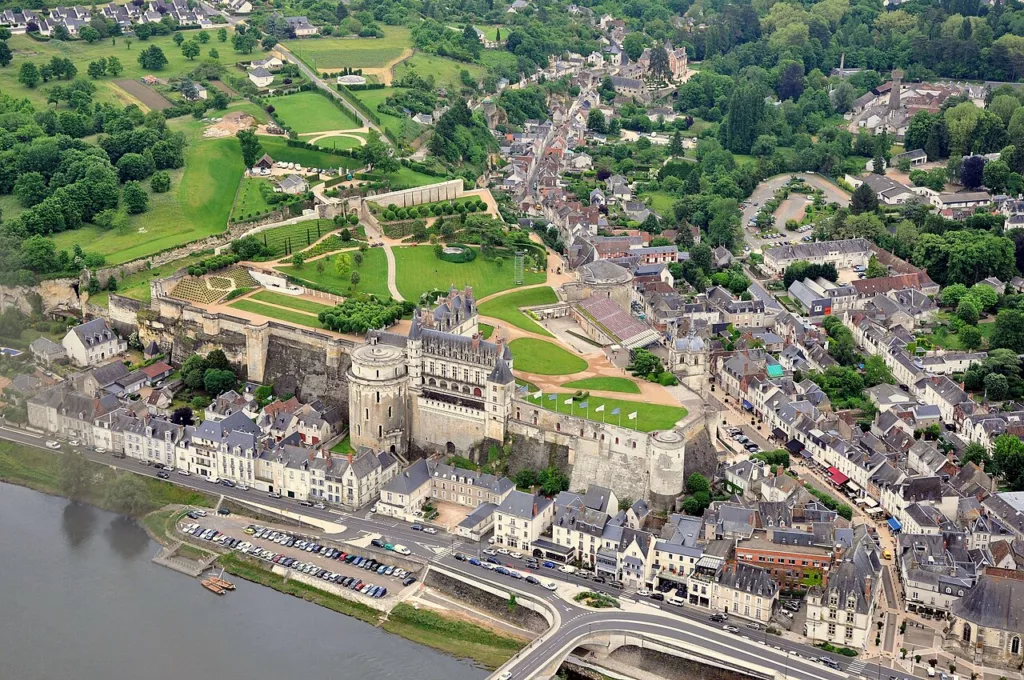
Amboise is located about 1 hour and 15 minutes away by car, in the heart of the Loire Valley. The town is especially known for its royal heritage and its links with the French Renaissance.
The central highlight of a visit is the Royal Château of Amboise, perched on a promontory overlooking the Loire. This château was a residence of the kings of France in the late Middle Ages and early Renaissance. Today, it offers panoramic views over the river and the town, as well as beautiful terraced gardens.
Just nearby is Clos Lucé, Leonardo da Vinci’s final residence, where he spent the last years of his life. The site features exhibitions, reconstructions of his inventions, and a large park dedicated to his machines.
Amboise town center is pleasant to explore, with its shopping streets, old houses, and Loire riverbanks perfect for walks. The town is also an excellent base for discovering several other Loire Valley castles nearby.
Tours
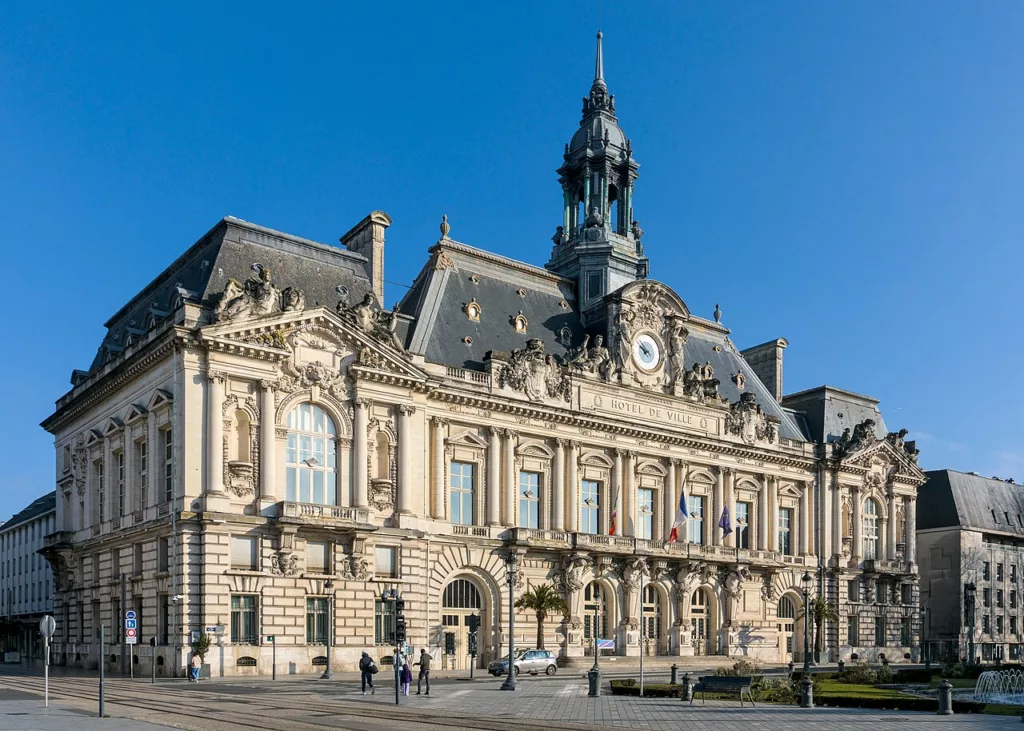
Tours is located about a 1-hour-and-30-minute drive away. The heart of the visit is in Old Tours, around the famous Place Plumereau, known for its half-timbered houses and lively atmosphere. It is the ideal place to stroll, enjoy a coffee, or make the most of the many restaurants.
Among the must-sees, Saint-Gatien Cathedral impresses visitors with its Gothic architecture and magnificent stained-glass windows. Nearby, the Museum of Fine Arts, housed in the former episcopal palace, contains a rich collection ranging from the Renaissance to the 19th century.
Conclusion
Visiting Orléans means discovering a human-scale city where history blends harmoniously with everyday life, especially through the legacy of Joan of Arc, which deeply shapes its identity. Between emblematic monuments, varied museums, green spaces, and culinary specialties, Orléans offers a rich and balanced experience, ideal for a cultural and relaxing stay.
Thanks to its privileged location in the heart of the Loire Valley, the city is also an excellent starting point for exploring the surrounding castles and enjoying the Loire landscapes listed as a UNESCO World Heritage Site.