Visit Reims: 30 Must-See Things to Do and See
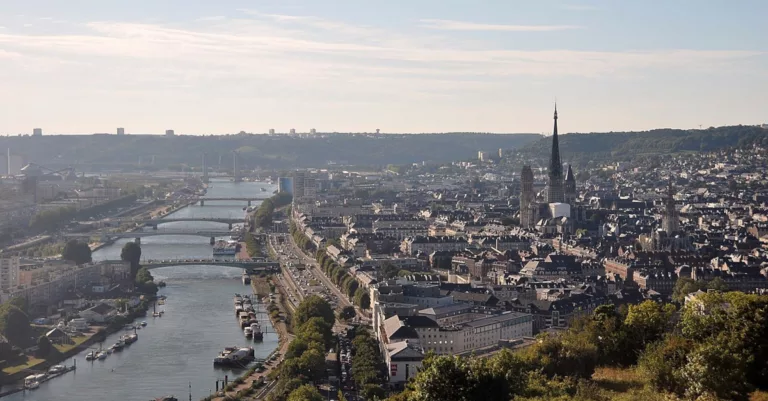
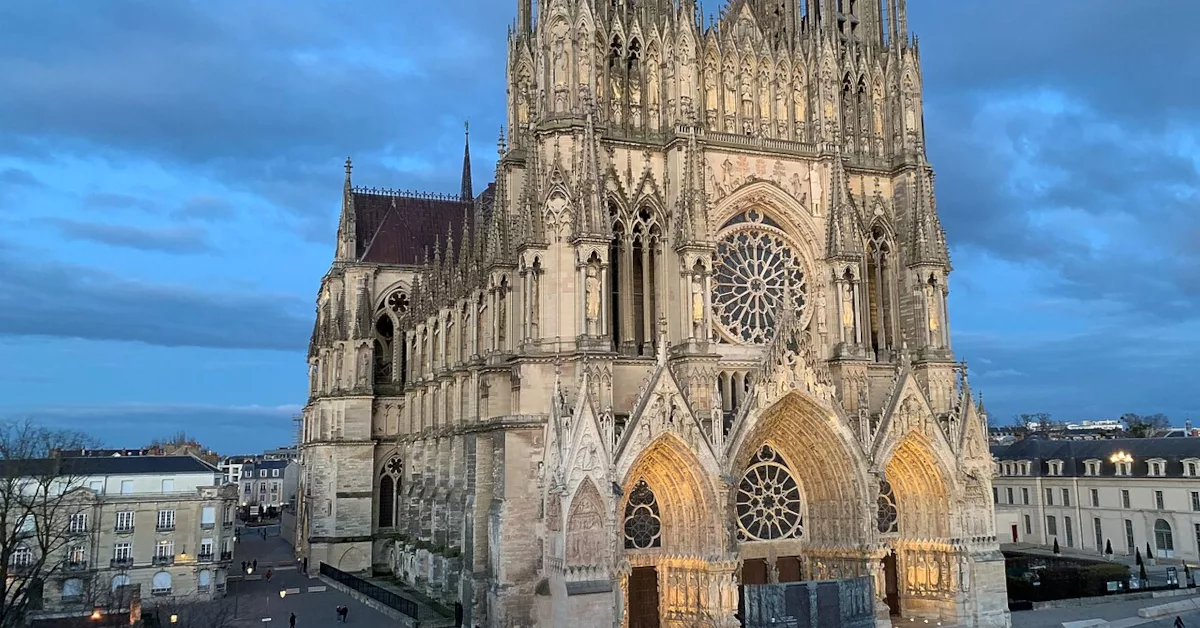
Visiting Reims means discovering one of the most iconic cities in France, located in the heart of the Champagne region. Known worldwide for its Notre-Dame Cathedral, where many French kings were crowned, Reims boasts an exceptional historical and architectural heritage.
The city combines Gallo-Roman remains, medieval buildings, classical architecture, and Art Deco creations, reflecting centuries of history. It is also a vibrant cultural center, with museums, parks, and memorial sites connected to major periods of history. Reims is inseparable from champagne, a symbol of elegance and celebration.
Between cultural visits, walks through green spaces, and gastronomic discoveries, the city offers a rich and varied experience. It is an ideal destination for a stay full of heritage and emotion.
Discover Reims in a different way with our tour, “Reims Highlights“, a mix between an escape game and a cultural tour.
Monuments & Historical Heritage of Reims
Porte de Mars
Porte de Mars
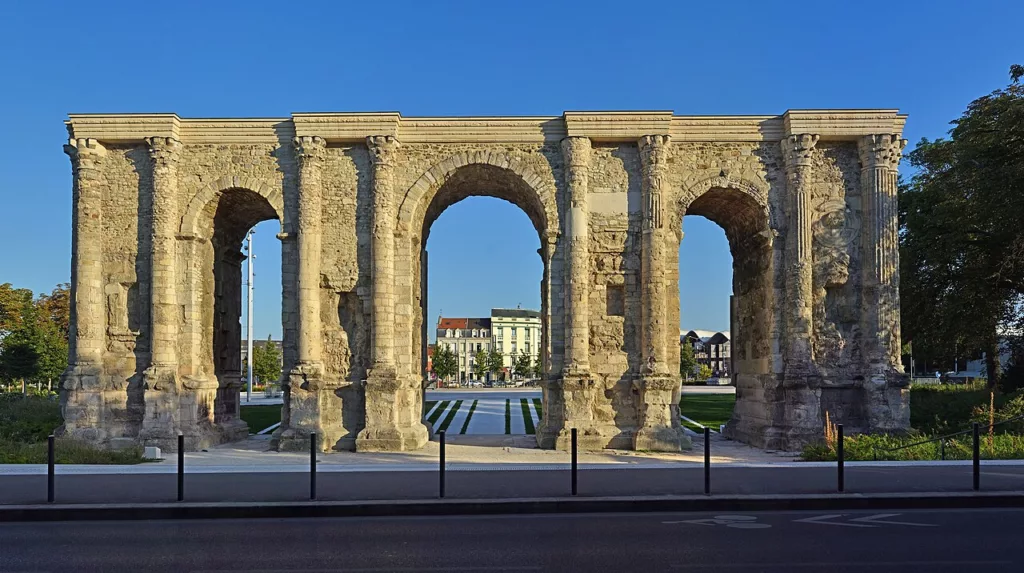
The Porte de Mars is a Gallo-Roman monument located in Reims, dating back to the 3rd century. It owes its name to the proximity of an ancient temple dedicated to Mars, the Roman god of war.
At 32 meters long, it is the widest surviving arch in the Roman world. Originally, it served as a monumental arch before being incorporated into the city walls in the 4th century. It then became one of the main gateways into the ancient city of Durocortorum.
Over the centuries, the monument was transformed, buried, and rediscovered in the 19th century before being restored. Its sculpted decoration notably depicts mythological scenes such as Romulus and Remus, as well as agricultural activities.
Discover the secrets of a Roman fresco on this gate in our Reims tour.
Boulingrin Central Market Halls
Boulingrin Central Market Halls
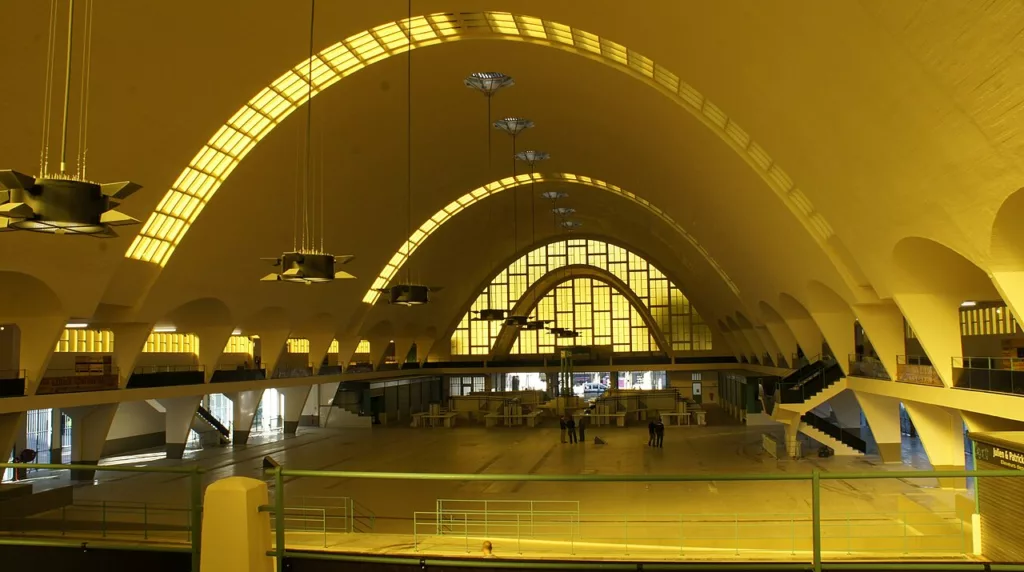
The Boulingrin Market Halls are an iconic covered market located north of downtown Reims. Built between 1927 and 1929, they were designed by architect Émile Maigrot and engineer Eugène Freyssinet.
The building stands out thanks to its impressive reinforced concrete vault, 38 meters wide and nearly 20 meters high. Originally intended to host both wholesale and retail markets, they replaced former market halls destroyed during World War I.
After a period of abandonment at the end of the 20th century, they were listed as a historic monument in 1990, preventing their demolition. A major renovation carried out between 2010 and 2012 restored their original appearance while modernizing the facilities. Today, they host a market several times a week as well as cultural and festive events.
Discover the mysterious letters featured on the building in our treasure hunt in Reims.
Le Cellier
Le Cellier
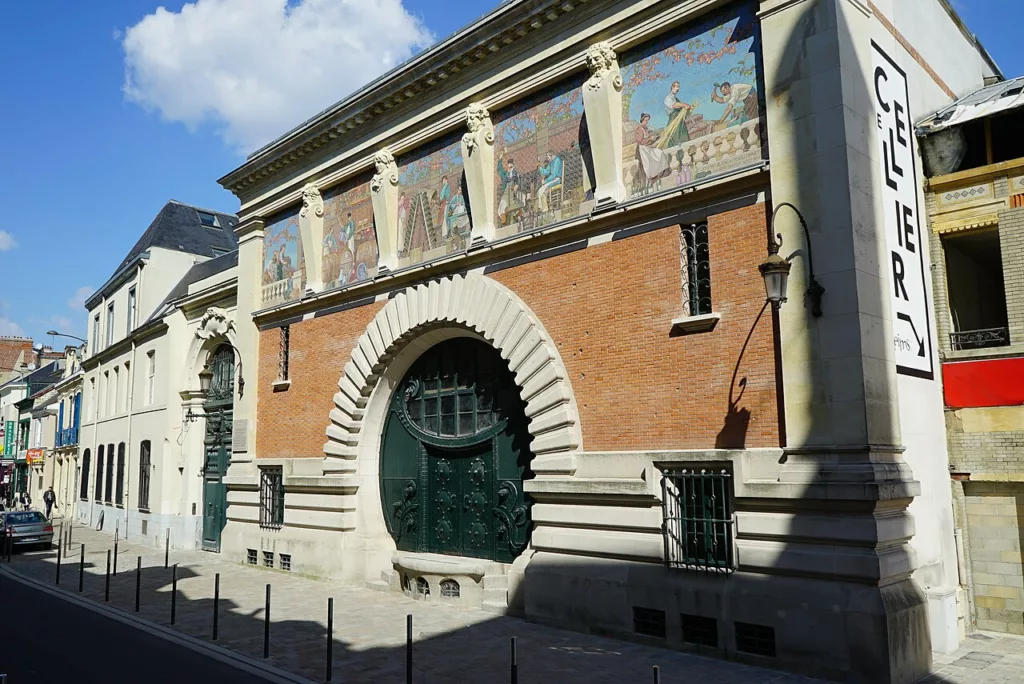
The Mumm Shipping Cellar, also known as Le Cellier, is a former building linked to champagne production that has now been converted into a cultural venue. Built in 1898 for the Mumm house, it was designed by architect Ernest Kalas.
Its Art Deco façade is remarkable, particularly because of its mosaics illustrating the different stages of champagne production. Artists contributed to its decoration with sculptures and caryatids representing the virtues of wine.
Over time, the building changed owners before being acquired by the city of Reims in 2010. Since 2015, it has hosted exhibitions, concerts, and various artistic activities.
Discover the secrets of the building’s frescoes in our Reims tour.
Reims City Hall
Reims City Hall
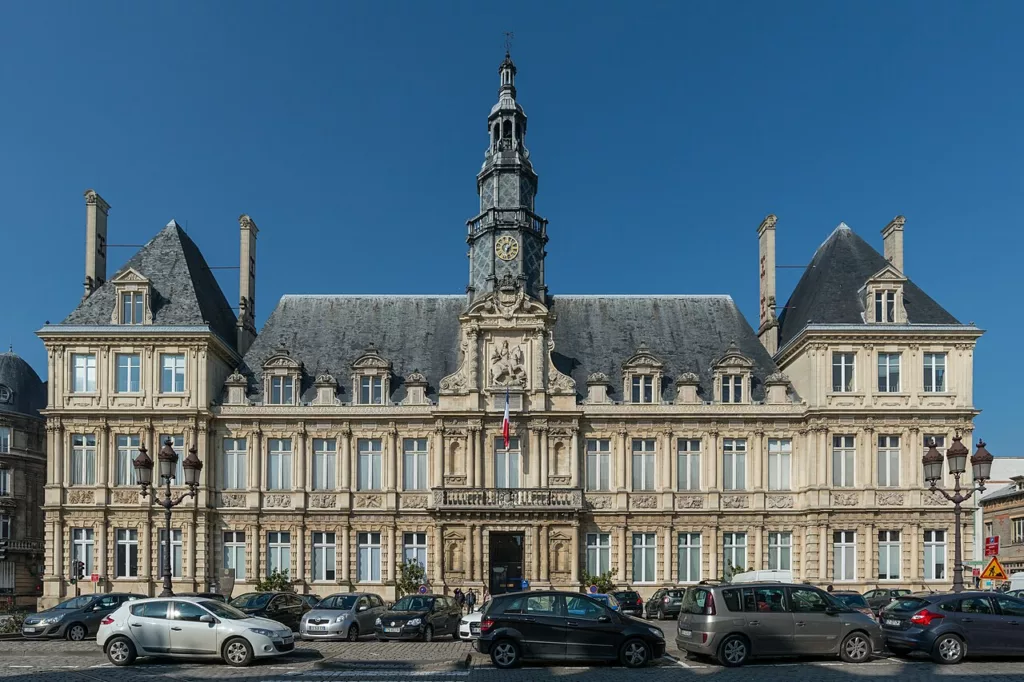
Reims City Hall has been the seat of the municipal institutions since the late 15th century. Construction of the current building began in 1627 under the direction of architect Jean Bonhomme. The building adopts a classical style with a monumental façade decorated with columns and an equestrian statue of Louis XIII.
Over the centuries, it was enlarged and modified to reach its current form organized around an inner courtyard. Severely damaged during World War I, it was rebuilt in the 1920s.
The interior notably contains a richly decorated ceremonial hall as well as a unique organ installed inside a town hall.
Discover the secret of a mysterious Latin inscription on the building with our treasure hunt in Reims.
Cryptoporticus
Cryptoporticus
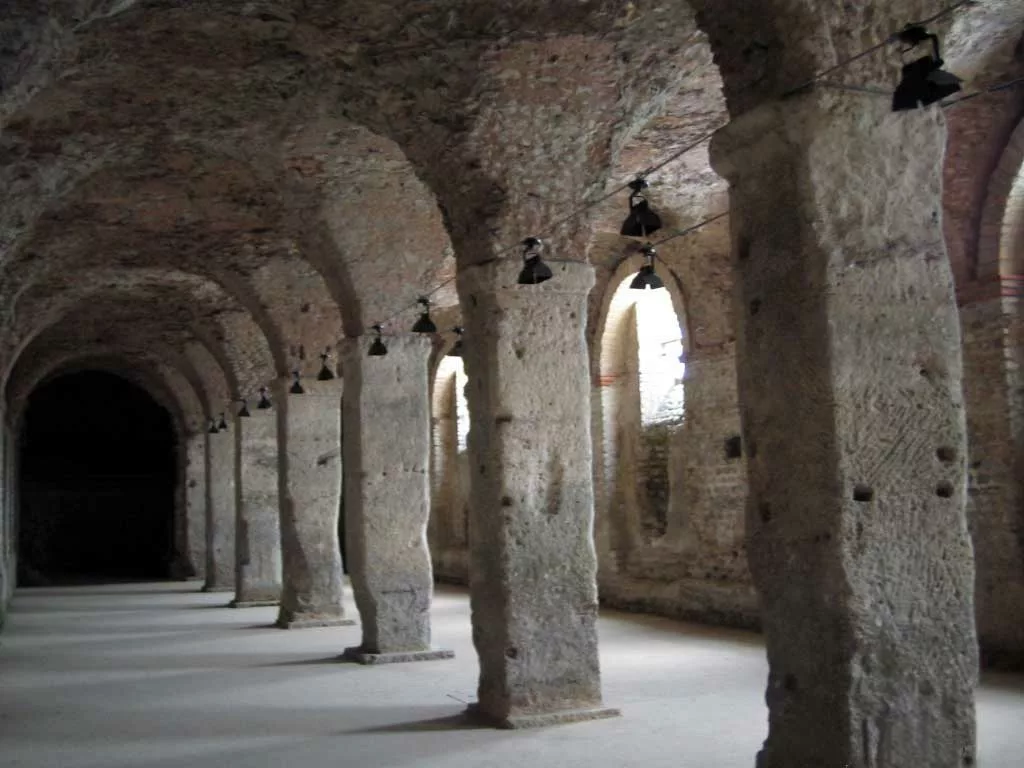
The Reims Cryptoporticus is a Gallo-Roman underground gallery located beneath Place du Forum. Built in the 1st century, it was part of the ancient forum of the city of Durocortorum.
Its U-shaped structure probably served as storage space and commercial galleries. The monument consists of stone vaults supported by rows of massive pillars.
Abandoned after Antiquity, it was rediscovered in the early 20th century during urban works. Listed as a historic monument in 1923, it was gradually restored and opened to the public.
Place Royale
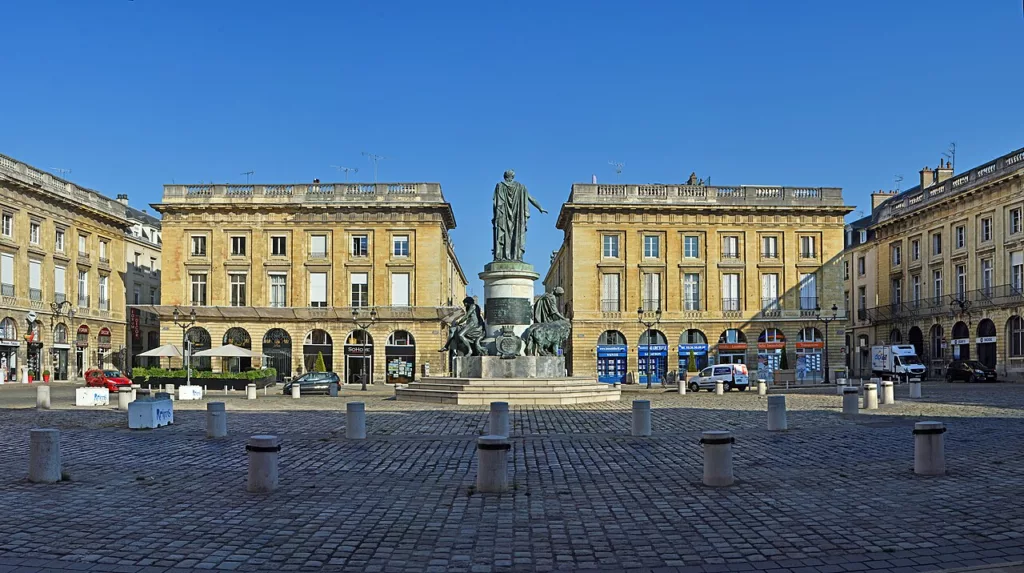
Place Royale
The Place Royale is an elegant square located in the heart of downtown Reims. Developed in the 18th century, it was part of a major urban planning project aimed at modernizing the city.
Its harmonious architecture is typical of royal squares, with orderly and symmetrical façades. At its center stands a monument dedicated to Louis XV, whose current statue dates from the early 19th century. The square occupies the site of the former forum of the Gallo-Roman city.
It was partially rebuilt after the destruction caused by World War I while preserving its historical appearance.
Discover the animal represented on the square’s street lamps in our Reims tour.
Porte du Chapitre
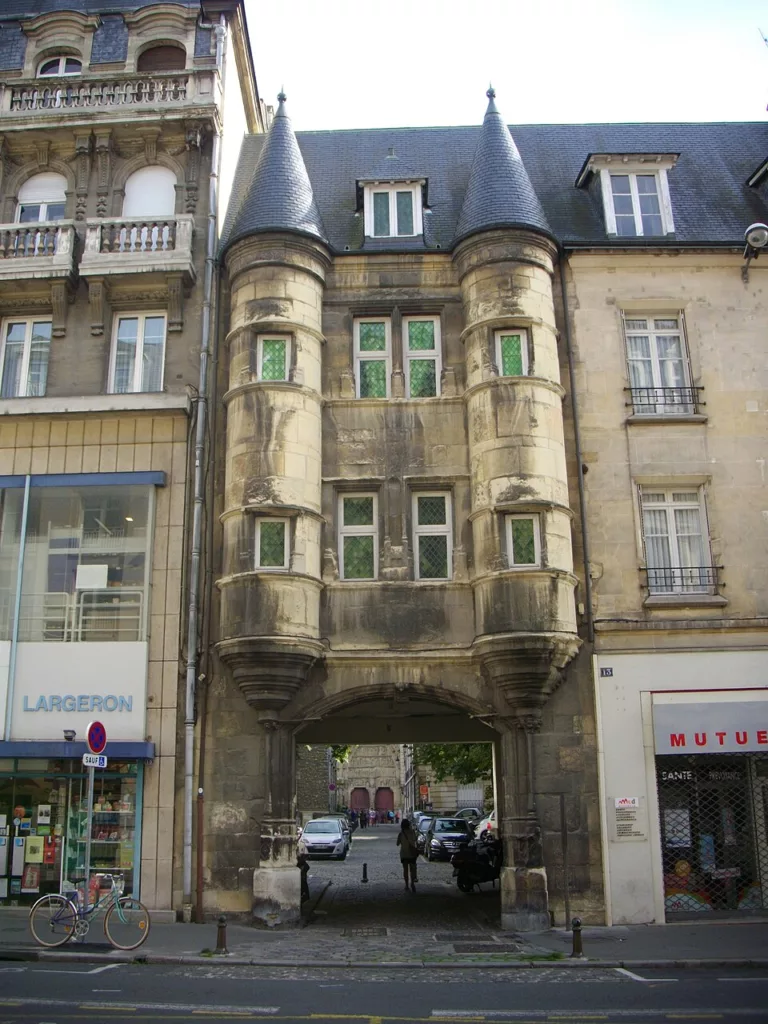
Porte du Chapitre
The Porte du Chapitre is a former Gothic gateway located near Reims Cathedral. Built in the 16th century, it marked the entrance to the cathedral chapter district.
This district once formed a true small town with its own religious, educational, and commercial buildings. The gate provided access to the chapter courtyard from what is now Rue Carnot.
Damaged during World War I, it was partially rebuilt after the conflict. Some of its original decorative elements are now preserved in the city’s museums.
Notre-Dame Cathedral of Reims
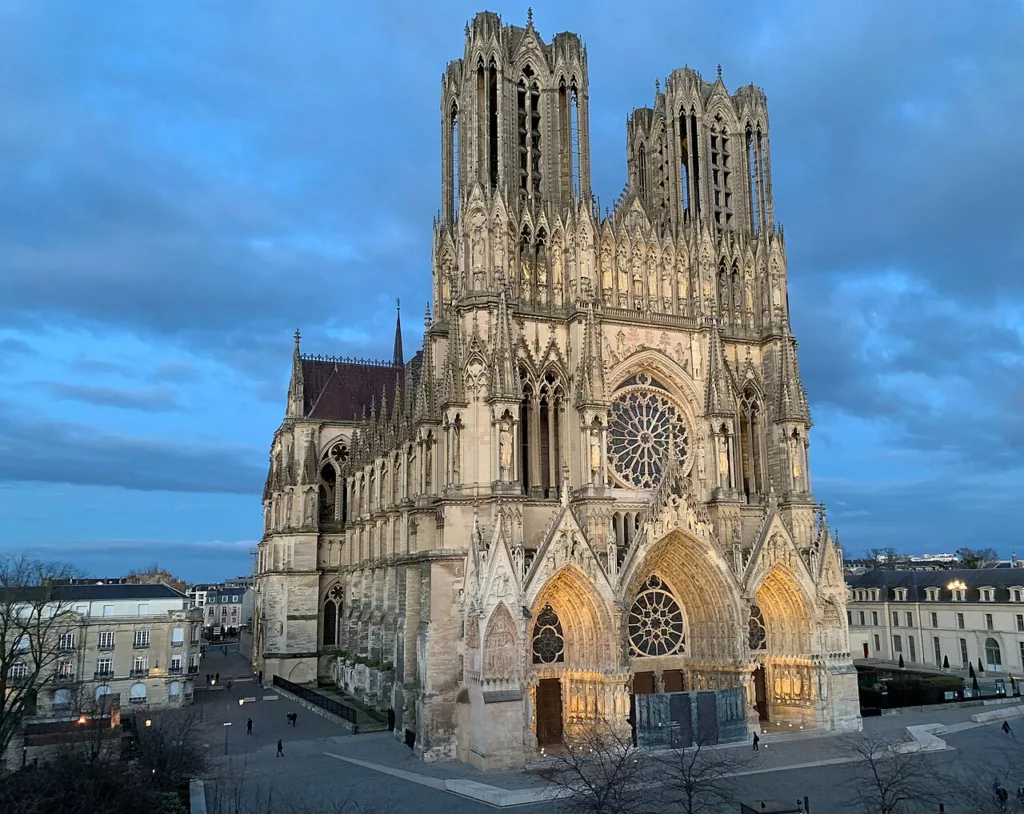
Notre-Dame Cathedral of Reims
The Notre-Dame Cathedral of Reims is one of the greatest masterpieces of Gothic architecture in France and a major symbol of national history. Located in Reims, it was built beginning in 1211 and completed in the 14th century. It stands out for its impressive proportions, its two towers rising over 80 meters high, and its thousands of sculptures.
Dedicated to the Virgin Mary, the cathedral is especially famous for being the coronation site of most French kings. Among the most significant events was the coronation of Charles VII in 1429, made possible thanks to the intervention of Joan of Arc, who restored hope to the kingdom during the Hundred Years’ War.
The building is also remarkable for the richness of its decoration, with more than 2,300 statues adorning its façades, including the famous “Smiling Angel,” which has become the emblem of the city. Inside, light shines through magnificent stained-glass windows, some of which were created in the 20th century by contemporary artists such as Marc Chagall.
Severely damaged during the bombings of World War I, the cathedral was restored throughout the 20th century, becoming a symbol of resilience and reconciliation, notably during the historic meeting between Charles de Gaulle and Konrad Adenauer in 1962.
Listed as a historic monument and designated a UNESCO World Heritage Site since 1991, Reims Cathedral now attracts millions of visitors and remains an essential place for understanding French history, art, and culture.
Discover the secrets of the cathedral’s sculptures in our Reims tour.
Palais du Tau
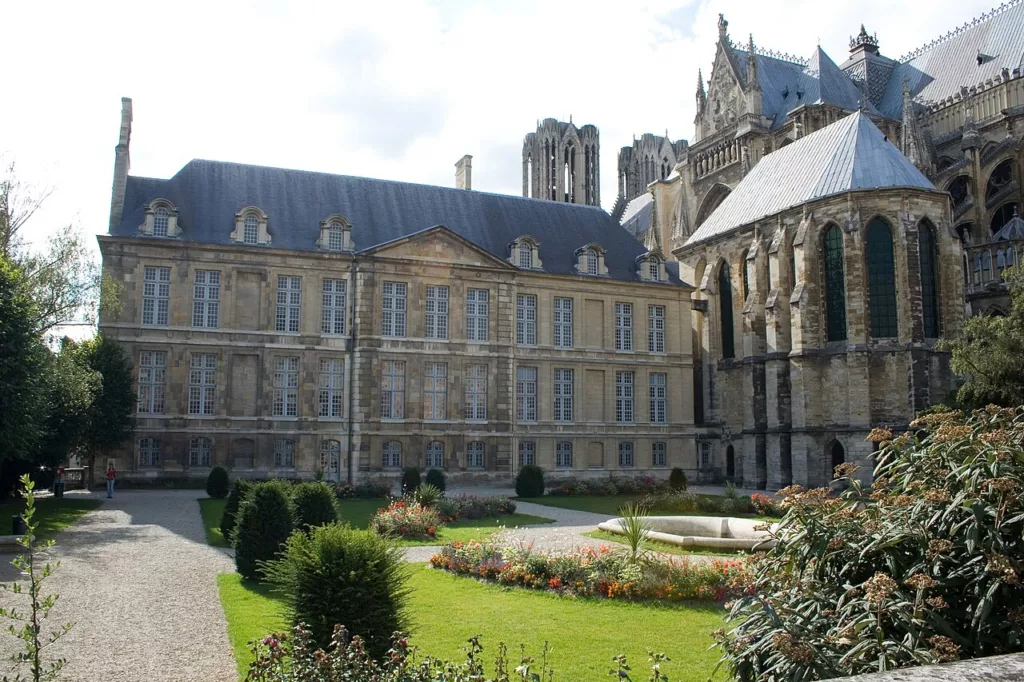
Palais du Tau
The Palais du Tau in Reims is a former archbishop’s palace located right next to Notre-Dame Cathedral. It owes its name to its former T-shaped layout (“tau” in Greek) during the Middle Ages.
This monument long served as the residence of the archbishops of Reims, but also as accommodation for the kings of France during their coronation ceremonies at the cathedral. It was also here that the great royal banquets took place after the ceremonies.
After the French Revolution, the palace served several functions in succession: courthouse, chamber of commerce, and later museum. Severely damaged during World War I in 1914, it was gradually restored throughout the 20th century.
Today, the Palais du Tau is a museum managed by the Centre des monuments nationaux. The museum presents rich collections related to Reims Cathedral and the coronations of French kings: medieval sculptures, tapestries, liturgical objects, and royal treasures.
Visitors can discover several remarkable rooms such as the Banquet Hall, the Upper Chapel, the Goliath Room, and the Treasury Room. Each displays exceptional works and remains originating from the cathedral.
Carnegie Library
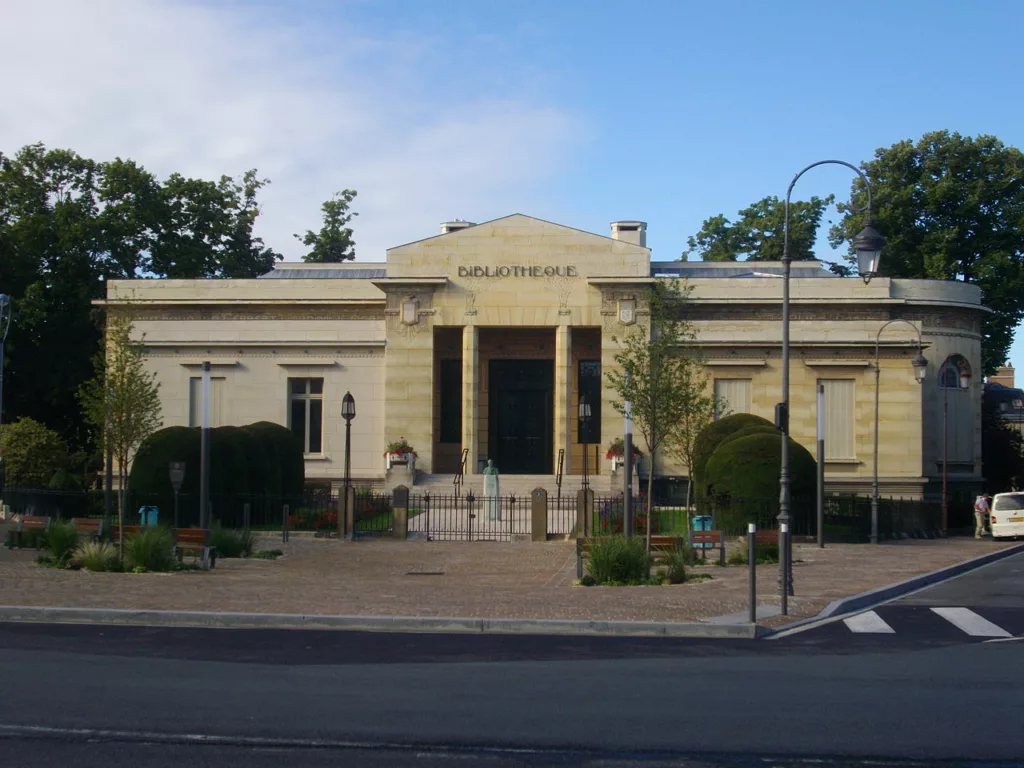
Carnegie Library
The Carnegie Library of Reims is a municipal library specializing in research and heritage collections. It was built in the Art Deco style between 1921 and 1928 and inaugurated on June 10, 1928, by President Gaston Doumergue and American ambassador Myron T. Herrick.
It owes its name to the American philanthropist Andrew Carnegie, who financed its construction after World War I as part of a reconstruction program for devastated regions. The city of Reims thus received significant support to rebuild its library.
The library’s collections date back to the 18th century, notably through the confiscation of the Jesuit college’s property in 1764 and the revolutionary seizures of the libraries belonging to abbeys and the cathedral chapter. Over time, the collections have been enriched by numerous donations and today constitute an exceptional heritage collection.
The building, designed by architect Max Sainsaulieu, is considered a masterpiece of Art Deco architecture. It is distinguished by its refined decoration: mosaics, marble, wrought ironwork, stained glass, and a richly decorated grand hall. Several renowned artists and craftsmen contributed to its creation, including Jacques Gruber for the stained-glass windows and Jacques Simon for the hall chandelier.
Today, the Carnegie Library is dedicated to the preservation and promotion of written heritage. It houses around 400,000 documents, including medieval manuscripts, incunabula, rare books, and extensive collections dedicated to the Reims region.
Reims Courthouse
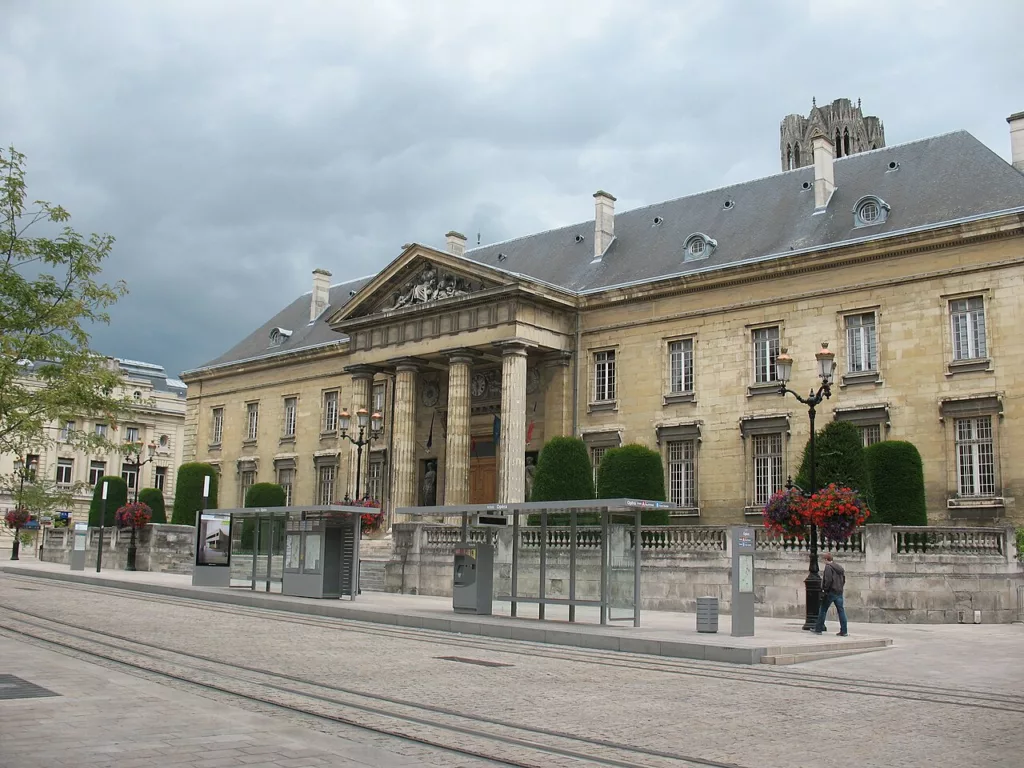
Reims Courthouse
The Reims Courthouse is a building located in the city center, on the site of the former Hôtel-Dieu hospital. Today, it houses the city’s main courts, including the judicial court and the commercial court.
Originally, the site served as a hospital from the Middle Ages onward. The Hôtel-Dieu welcomed the sick, the poor, and travelers. It was managed by religious communities, mainly Augustinian nuns. Over the centuries, the establishment expanded and played an important role in the social and medical life of Reims.
In the 19th century, the buildings gradually became unsuitable for medical needs. The hospital was relocated to other sites, and the former Hôtel-Dieu was partially converted for judicial purposes. The site began hosting legal institutions as early as 1839.
The current building results from several transformations and reconstructions, notably during the 19th century. Architect Narcisse Brunette contributed to the design of the neo-Greek façade while preserving certain older elements such as medieval cellars.
The site also possesses remarkable heritage features. An ancient underground hall has been preserved and listed as a historic monument since 1930. Outside, the façade is decorated with sculptures symbolizing Justice and Integrity.
Reims Opera House
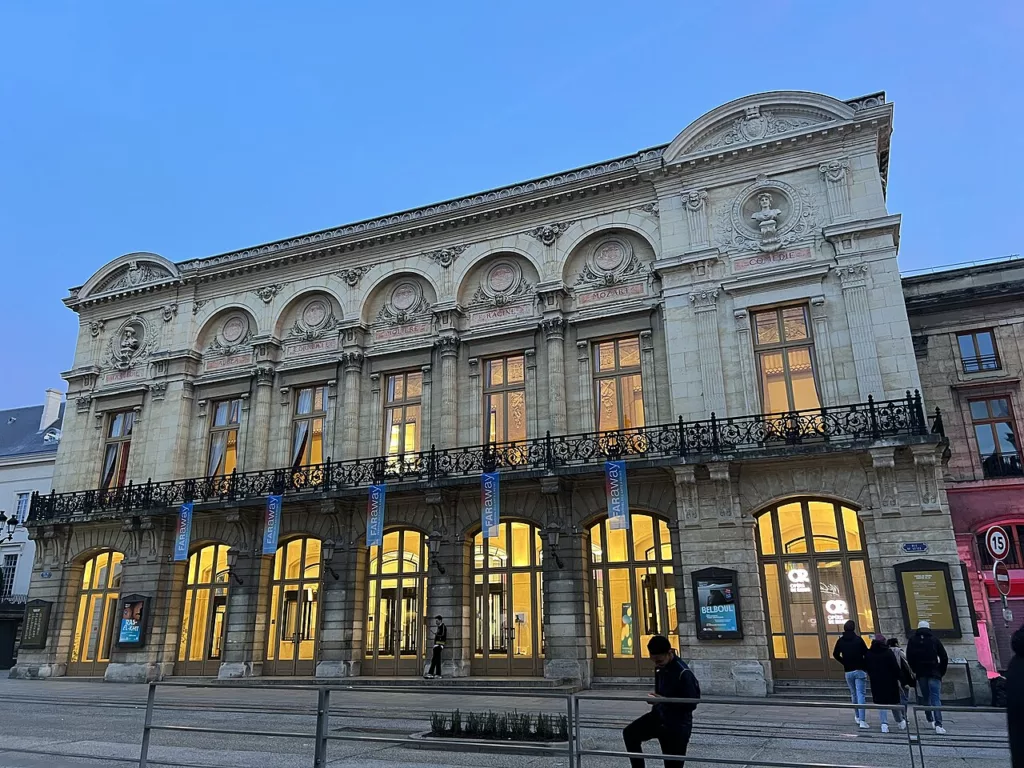
Reims Opera House
The Reims Opera House is an Italian-style theater located in the heart of Reims, near the courthouse and the Museum of Fine Arts. Built between 1867 and 1873 under the direction of architect Alphonse Gosset, it was inaugurated in 1873. The project was inspired by the great European theaters of the period, notably the Palais Garnier in Paris, with the ambition of providing the city with a prestigious cultural venue.
The building was almost entirely destroyed during World War I in 1914 due to the bombardments that heavily affected downtown Reims. After several years of interruption, it was rebuilt and reopened in 1931. This reconstruction marked an important new stage, with the interior redesigned in the Art Deco style, highly fashionable at the time, while preserving a neo-classical exterior architecture.
The Opera House is distinguished by its horseshoe-shaped auditorium, typical of Italian-style theaters, offering excellent visibility and carefully designed acoustics. Its current capacity is around 790 seats, resulting from several renovations carried out throughout the 20th century to improve audience comfort and safety.
Today, the Reims Opera House hosts opera productions, symphonic concerts, dance performances, and contemporary creations.
Discover the secrets of this opera house in our treasure hunt in Reims.
Saint-Jacques Church
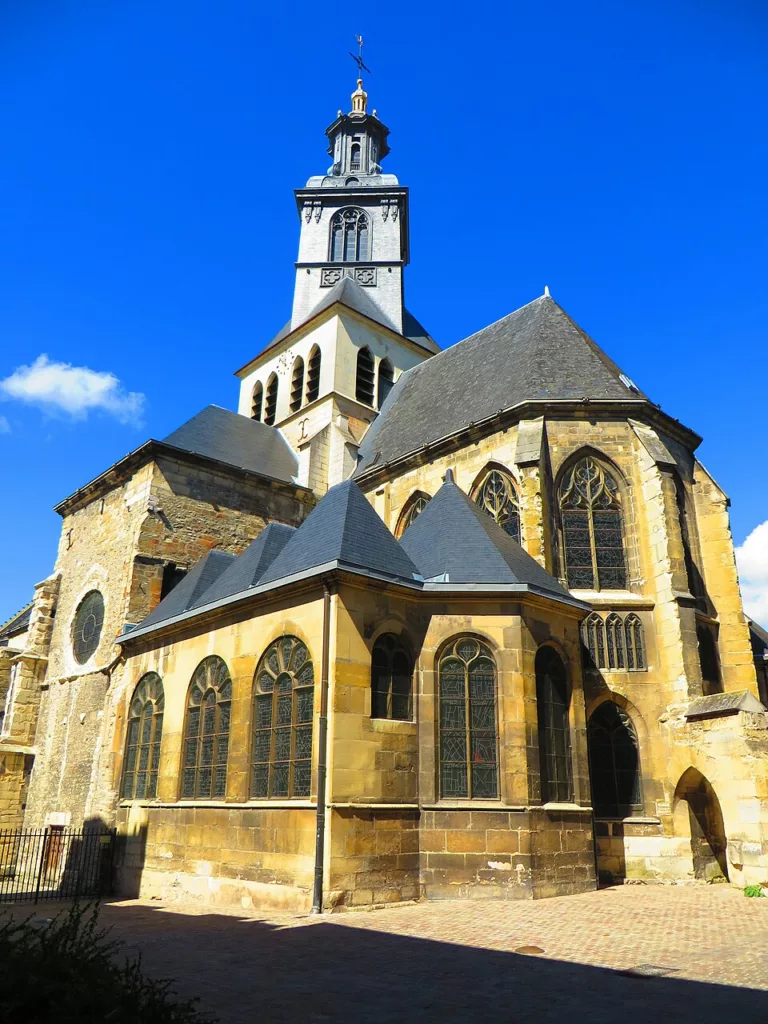
Saint-Jacques Church
Saint-Jacques Church in Reims is one of the oldest religious buildings still preserved in the city, with origins dating back to the 12th century. Located in the heart of Reims, it is a remarkable example of Gothic architecture, enriched over the centuries through additions and successive restorations. Construction began around 1190, and the building was gradually completed during the 13th century, notably with the completion of the timber framework and the main structures.
Throughout its history, the church underwent several major transformations. A Gothic tower was destroyed by a storm in 1711 and replaced with a classical-style bell tower. During the French Revolution, the building was decommissioned and used as a stable and barracks before regaining its religious function at the beginning of the 19th century. Architect Narcisse Brunette carried out major restoration works in the mid-19th century, giving the church part of its current appearance.
The building suffered severe damage during World War I, leading to a new restoration campaign led by Henri Deneux in the 1920s. He introduced an innovative removable reinforced concrete framework, a technique he would also experiment with at Reims Cathedral. The church reopened for worship in 1922, although restoration work continued until 1932.
Place Drouet d’Erlon
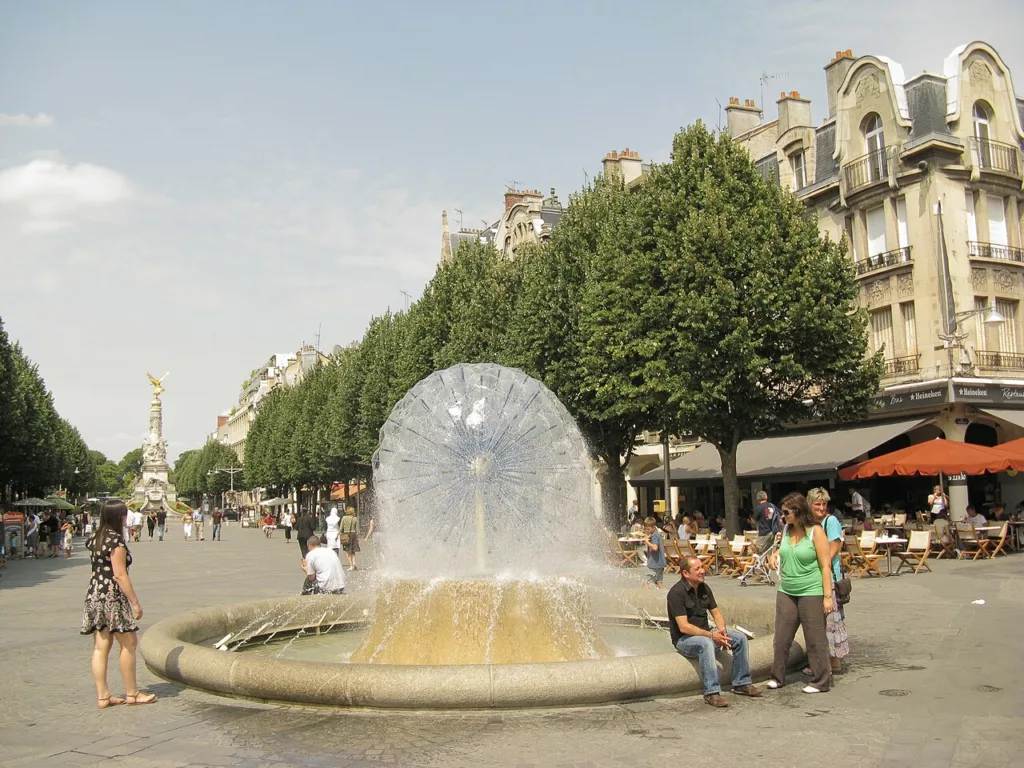
Place Drouet d’Erlon
Place Drouet-d’Erlon is one of the most iconic public spaces in downtown Reims. Simply called “Place d’Erlon” by locals, it is a major hub of life in Reims, serving as a place for walking, meeting, and cultural events. With its impressive dimensions of around 600 meters long and 35 meters wide, it is considered one of the longest pedestrian squares in France.
At the center of the square stands the Subé Fountain, topped by the statue of Glory, which serves as an unmissable landmark. Today, the area is largely pedestrianized and lined with terraces, shops, restaurants, and leisure venues, making it a particularly lively place throughout the year. Cultural and entertainment facilities can also be found nearby, including a modern cinema complex.
Porte de Paris
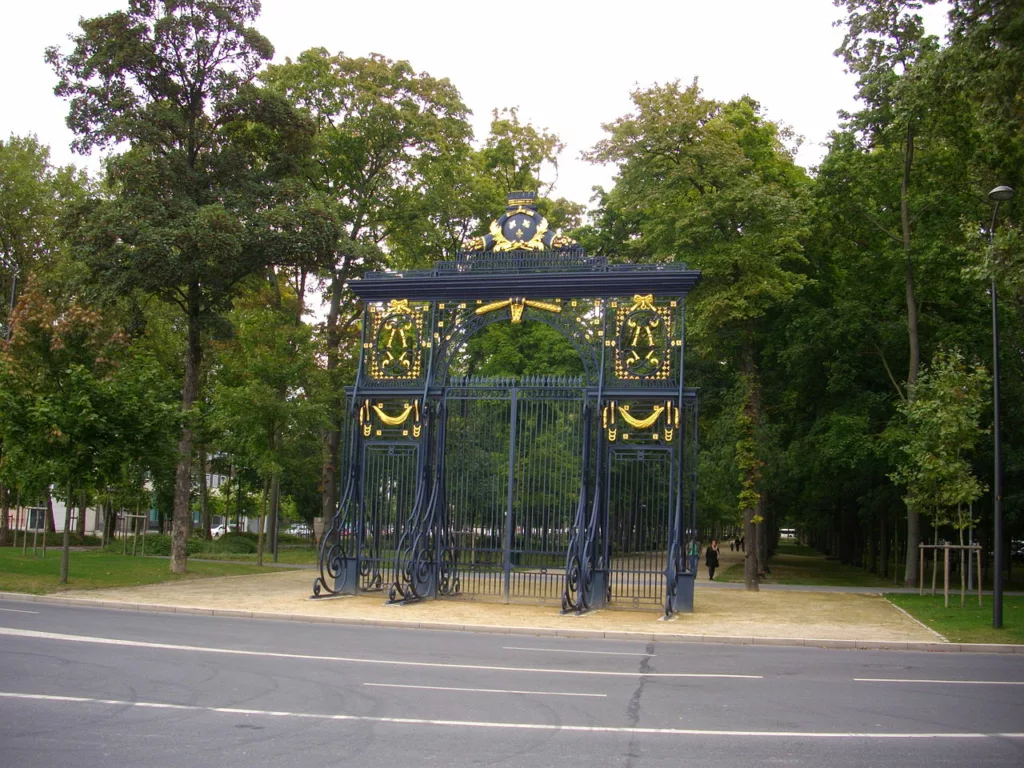
Porte de Paris
The Porte de Paris is an iconic monument in Reims, located at the entrance to the former roads leading toward the French capital, from which it takes its name. Designed between 1774 and 1776 in the Louis XVI style, this imposing wrought-iron gate was originally a ceremonial entrance intended to mark the prestigious entryway into the city. It was made by Reims locksmiths Lecoq and Revel on the eve of Louis XVI’s coronation, although it was ultimately not ready in time for the event.
Initially installed along the Vesle River, the gate also served as an octroi barrier, used to control and tax goods entering the city. Throughout the 19th century, it was moved several times due to urban development and traffic changes, notably toward Rue de Paris and later near the former slaughterhouses. Having become an obstacle to automobile traffic in the 20th century, it was dismantled in 1949 before being restored and reinstalled in 1953 at its current location, in the Basses-Promenades on Rue de Bir-Hakeim.
Saint-Remi Basilica
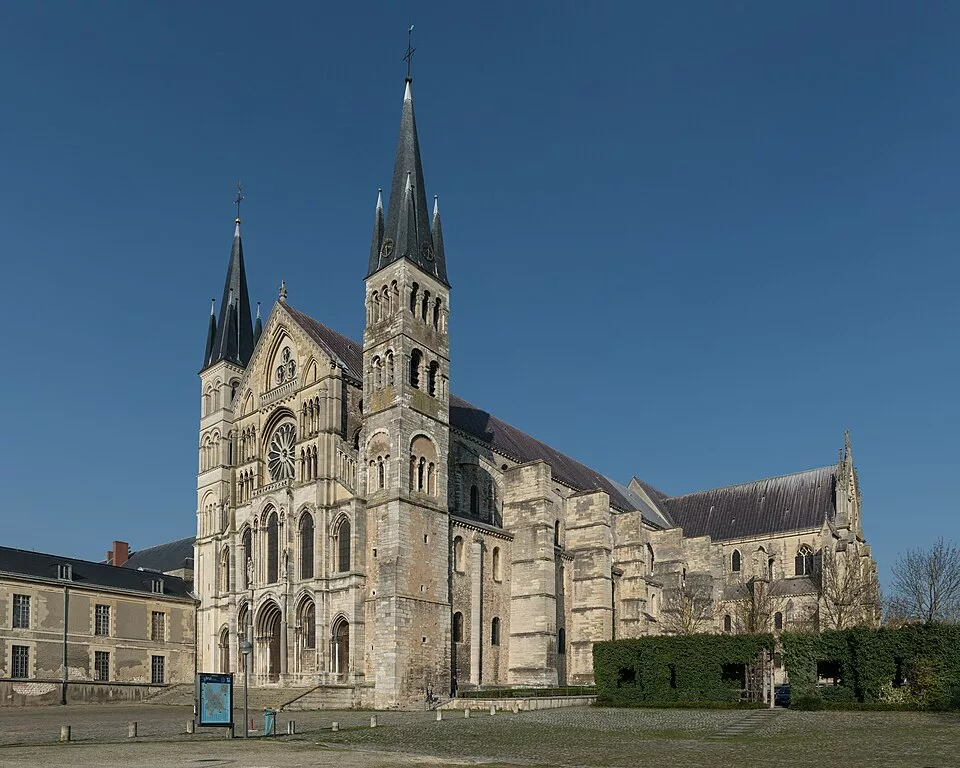
Saint-Remi Basilica
The Saint-Remi Basilica of Reims is one of the city’s most important religious buildings, alongside Notre-Dame Cathedral. Formerly the abbey church of a powerful Benedictine monastery, it developed between the 11th and 13th centuries while incorporating Gothic transformations and later additions.
The history of the site is closely linked to that of Saint Remi, Bishop of Reims, known for baptizing Clovis, King of the Franks, a symbolic event in the Christianization of the kingdom. Very early on, his tomb became an important pilgrimage site, around which a religious community and then an abbey were formed. This renown contributed to the development of the site and the gradual construction of a vast monastic complex.
The interior houses a rich artistic heritage: ancient and contemporary stained-glass windows, sculptures, and above all the tomb of Saint Remi, restored in the 19th century. The basilica also played a major role in royal history, as it hosted the coronation of several Frankish rulers, reinforcing its status as an emblematic place of power and the sacred.
Must-See Museums in Reims
Automobile Museum

Automobile Museum
The Reims-Champagne Automobile Museum is an association-run museum dedicated to the history of automobiles and two-wheelers, located in Reims in the former industrial premises of the Menuiserie Métallique Moderne. Originally created around the collection of designer and collector Philippe Charbonneaux, the museum opened to the public in 1985 and is now managed by an association of enthusiasts, ensuring the preservation and promotion of this unique heritage.
The museum presents a particularly rich collection retracing more than a century of automotive evolution. Visitors can discover around 160 vintage cars, nearly 90 motorcycles and motorized bicycles, as well as an impressive collection of pedal cars, miniatures, and enamel signs. Some pieces date back to the very beginning of the 20th century, including early motorized models that bear witness to the beginnings of the automobile industry. Major French and international brands are represented, offering a complete panorama of mechanical innovation and automotive design.
Beyond the vehicles themselves, the museum also highlights the cultural world of the automobile through advertising objects, antique toys, and themed exhibitions.
Museum of the Surrender
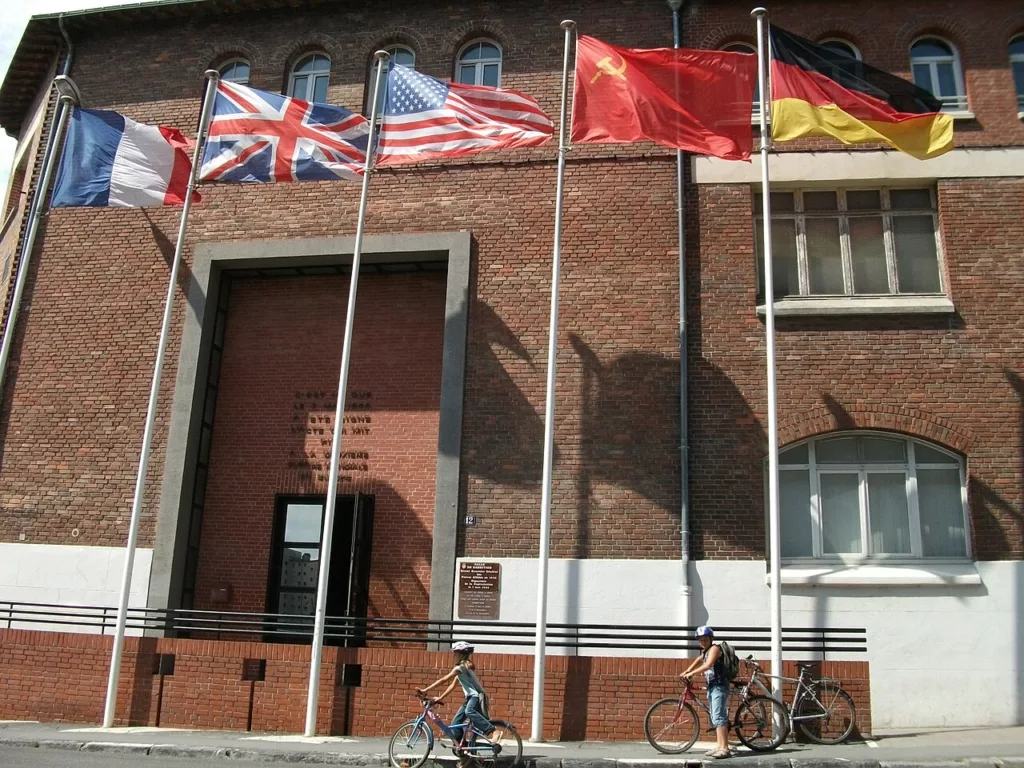
Museum of the Surrender
The Museum of the Surrender is a history museum located in Reims, housed in part of the former premises of Franklin-Roosevelt High School. It occupies a highly symbolic site: it was here that Nazi Germany’s surrender to the Allied forces was signed on May 7, 1945, at 2:41 a.m., marking the end of fighting in Europe during World War II. The site has been listed as a historic monument since 1985.
The museum preserves and highlights the memory of this decisive day through an immersive exhibition layout. Visitors can notably discover a reconstruction of the “War Room,” the operations room of the Allied headquarters, preserved as it was in 1945 with its strategic maps. Other spaces display period documents, uniforms, photographs, and military objects, helping place the signing in its historical and political context.
Fort de la Pompelle
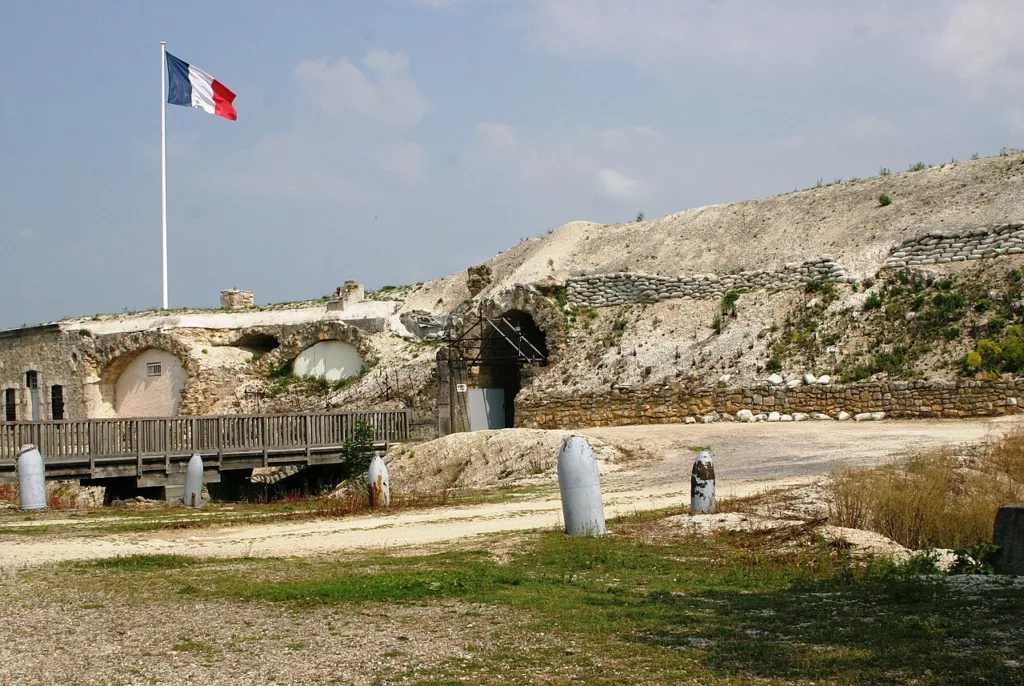
Fort de la Pompelle
The Fort de la Pompelle is a military fort built between 1880 and 1883 as part of the Séré de Rivières defense system, designed to protect the city of Reims after the Franco-Prussian War of 1870. Located about eight kilometers from the city center, it formed part of the fortified belt surrounding the city.
Disarmed in 1913, it was quickly occupied by German troops in 1914 before being retaken by the French army after the Battle of the Marne. Throughout World War I, the fort played a major strategic role in the defense of Reims and withstood numerous assaults without ever being recaptured.
After the war, the site was gradually transformed into a museum. Today, it preserves many remains and an important collection of military objects related to the conflict, allowing visitors to discover soldiers’ life in the trenches and the history of the battles around Reims.
Saint-Remi History Museum
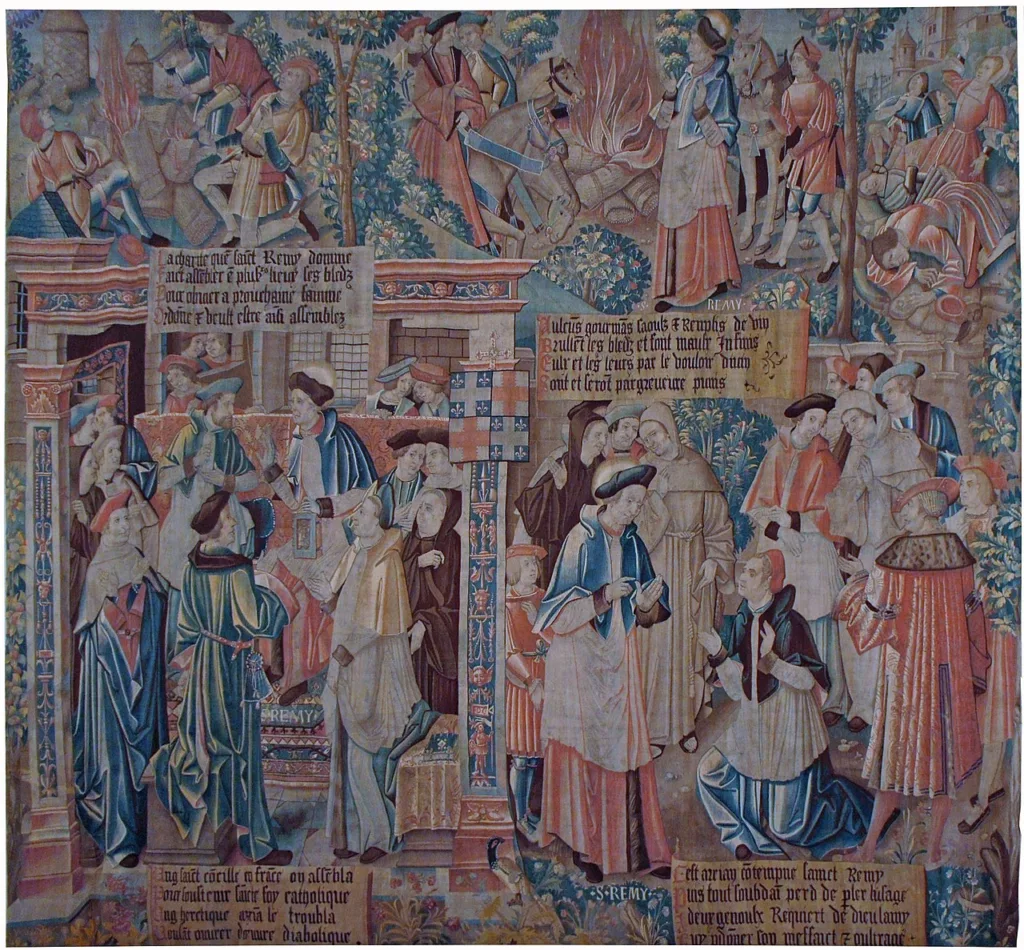
Saint-Remi History Museum Tapestry
The Saint-Remi Museum in Reims is housed in the former Saint-Remi Abbey, a major historic site in the city of Reims. Listed as a historic monument and a UNESCO World Heritage Site, it is one of the most important heritage complexes in the region.
The museum presents a wide variety of collections covering Prehistory, the Gallo-Roman period, the Middle Ages, and the Renaissance. It features archaeological objects, works of art, and a major section dedicated to the military history of the region.
The building itself is remarkable: its 18th-century cloister, grand monumental staircase, medieval chapter house, and former monastic spaces reveal the architecture of the former royal abbey. The whole site is closely linked to the history of Clovis’s baptism and Reims’s religious role in the history of France.
Hôtel Le Vergeur Museum
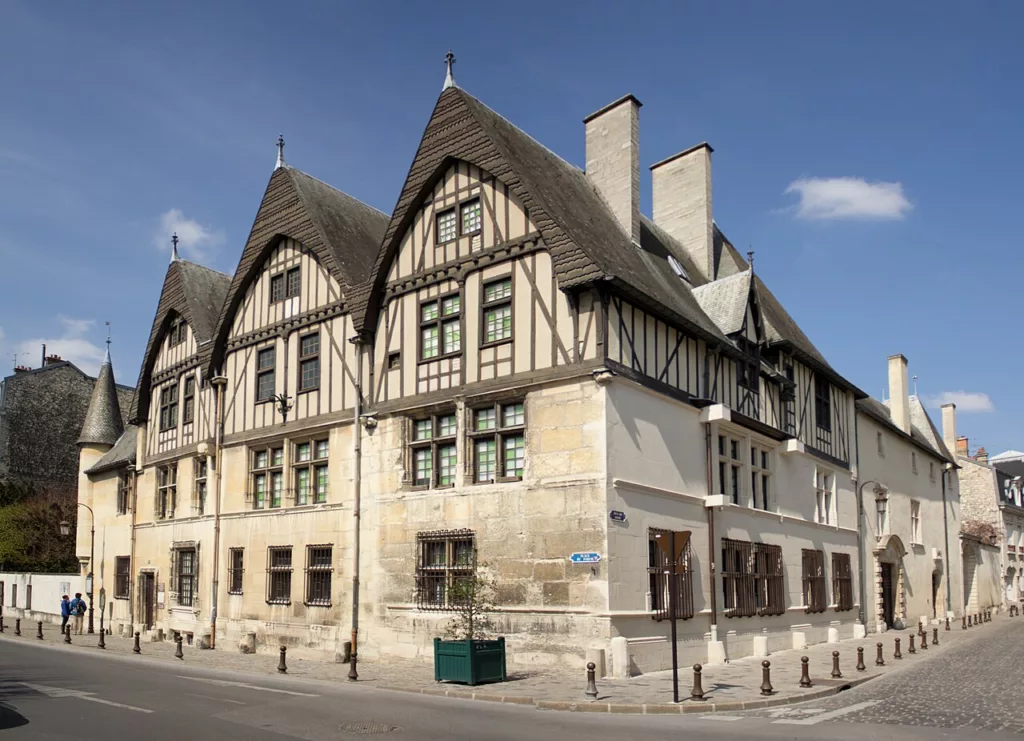
Hôtel Le Vergeur Museum
The Hôtel Le Vergeur Museum is located in Reims, on Place du Forum, in the heart of the historic center. It is a private mansion listed as a historic monument, with its oldest sections dating back to the 13th century.
Once the residence of influential families, including Nicolas Le Vergeur, the building underwent several transformations over the centuries. Heavily damaged during World War I, like much of Reims, it was restored in the early 20th century by Hugues Krafft, who made it his residence and installed his collections there. Upon his death, he bequeathed the property to an association, giving rise to the museum as it exists today.
Today, the museum presents a rich collection ranging from Antiquity to the 20th century: works of art, engravings, Renaissance and Neo-Gothic furniture, Asian and Oriental objects, as well as reconstructed rooms evoking 19th-century domestic life. The site also stands out for its courtyard and garden, where ancient architectural elements from vanished buildings in Reims are displayed.
The Hôtel Le Vergeur Museum therefore offers a visit combining art history, architecture, and the memory of the city of Reims, in a particularly well-preserved heritage setting.
Museum of Fine Arts
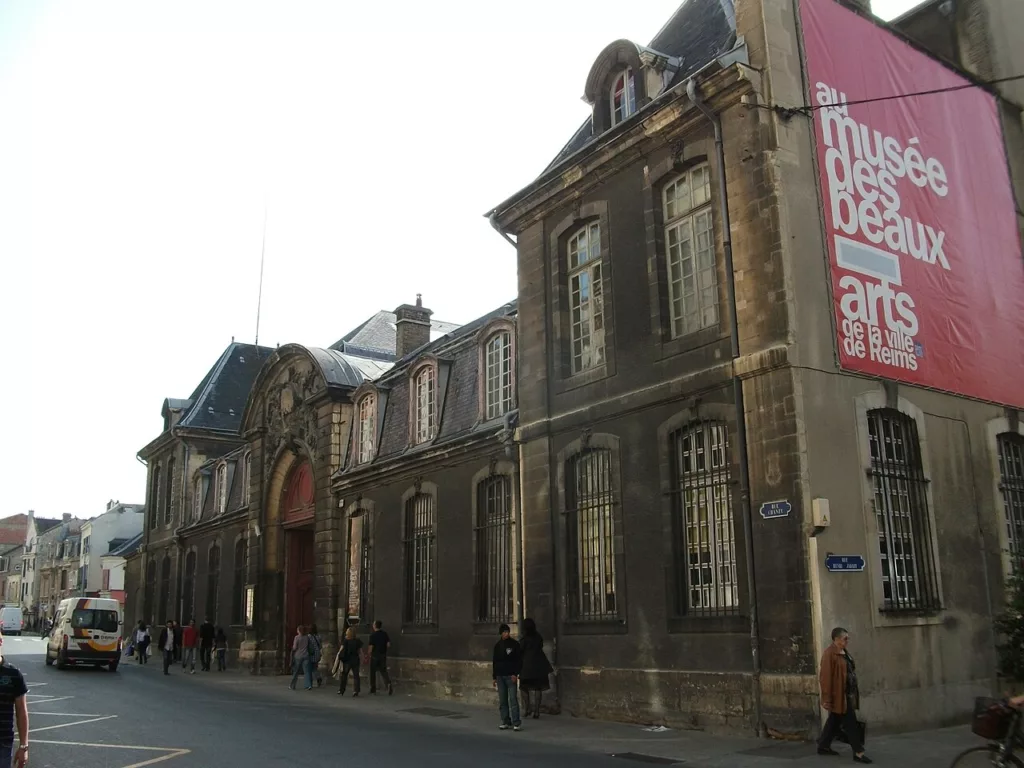
Museum of Fine Arts
The Museum of Fine Arts in Reims is a major French museum located on Rue Chanzy, in the very heart of the city. Founded in 1794, it is one of the oldest museums in France and today preserves a rich collection of works ranging from the 16th to the 20th century. Housed in the former Saint-Denis Abbey, a historic building listed as a historic monument, the museum offers a remarkable setting combining ancient architecture and artistic collections.
Its history began with the revolutionary seizures that created its first artistic collection. Throughout the 19th century, the collections grew thanks to many donations, notably from collector Henry Vasnier. As the number of works increased, the city decided in the early 20th century to move the museum into the former Saint-Denis Abbey, a building whose origins date back to the 9th century.
Today, the museum presents a wide diversity of works: Flemish, Dutch, and French paintings, sculptures, drawings, and decorative art objects. It includes major artists such as Nicolas Poussin, Rubens, Delacroix, Monet, and Renoir. An important 19th-century art collection, particularly Impressionist works, is also preserved there.
Parks and Green Spaces in Reims
Parc de Champagne
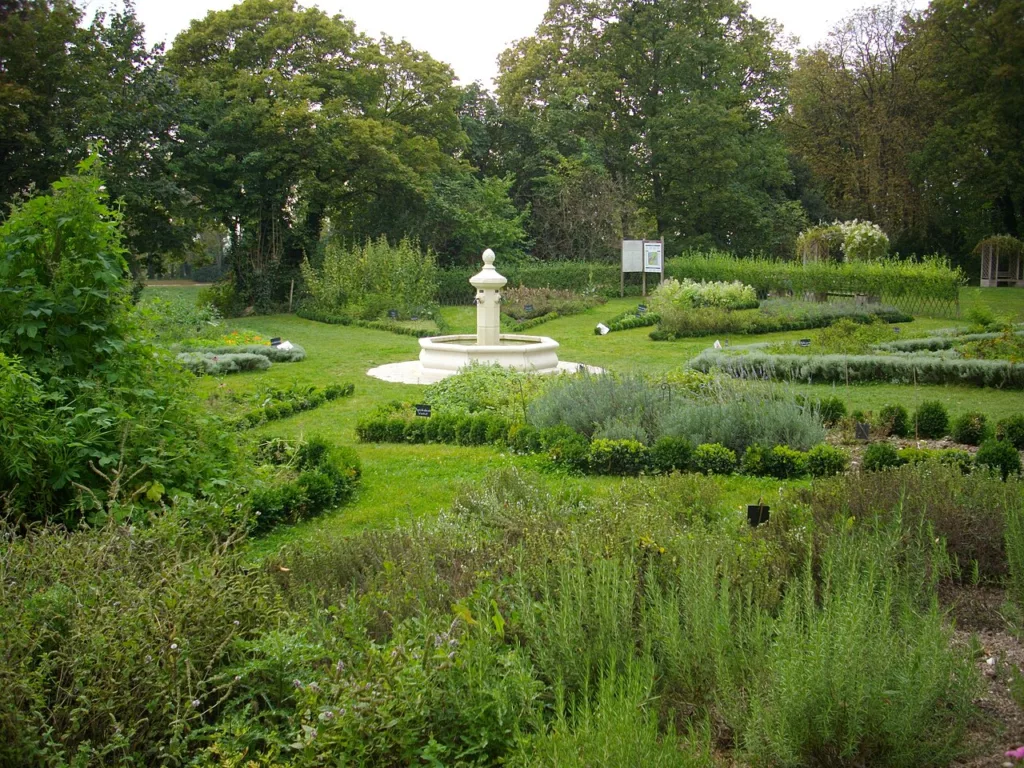
Parc de Champagne
Parc de Champagne is a large landscaped park located in Reims, in the Grand Est region. Created between 1909 and 1911 by the Marquis de Polignac, it originally served as a relaxation area for the employees of the Pommery cellars while also providing a prestigious setting for the Champagne house. Designed as an English-style garden, it extends over more than 21 hectares.
From its opening, the park also became a place dedicated to sport and well-being. It notably hosted the famous Collège d’athlètes founded by Georges Hébert, a pioneer of physical education in France. Many high-level athletes, such as Jean Bouin, came to train there in the early 20th century.
Severely damaged during World War I, the park was later restored. Today, it remains a major place for relaxation and leisure in Reims, hosting numerous cultural and sporting activities: concerts, events, playgrounds, themed gardens, and events such as the International Show Jumping competition and the Flâneries Musicales.
Parc de Champagne is also an important place of remembrance. It notably features the Monument to the Heroes of the Black Army, honoring African soldiers of World War I, as well as other commemorative monuments.
Parc de la Patte d’Oie
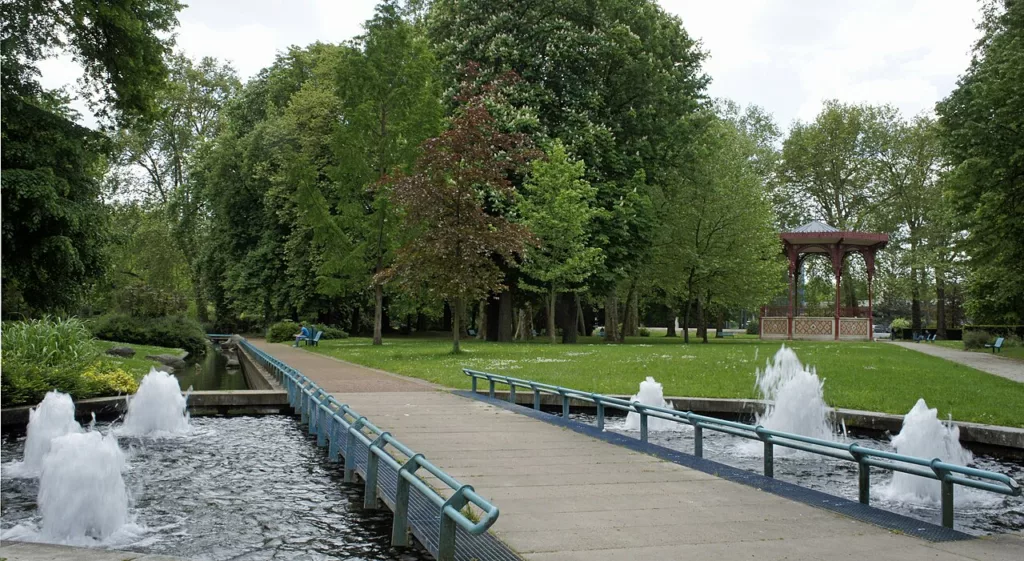
Parc de la Patte d’Oie
Parc de la Patte d’Oie, created in 1733, is a green space located in the very center of Reims, between the Vesle River and the train station.
Originally designed as a French formal garden, the park has undergone several transformations over time, notably at the end of the 19th century and again in the 1990s during its modernization. Today, it includes a variety of spaces: decorative ponds, water jets, esplanades, a children’s playground, and a bandstand.
The park also includes a more natural landscaped area, with a rocky zone inspired by Alpine landscapes, created at the end of the 19th century.
Several sculptures can also be found there, including “The Victorious Stag” by Pierre-Albert Laplanche, as well as contemporary art installations. The playground was designed in connection with the history of the builders of Reims Cathedral, strengthening the link between heritage and modernity.
Pierre Schneiter Horticultural Garden
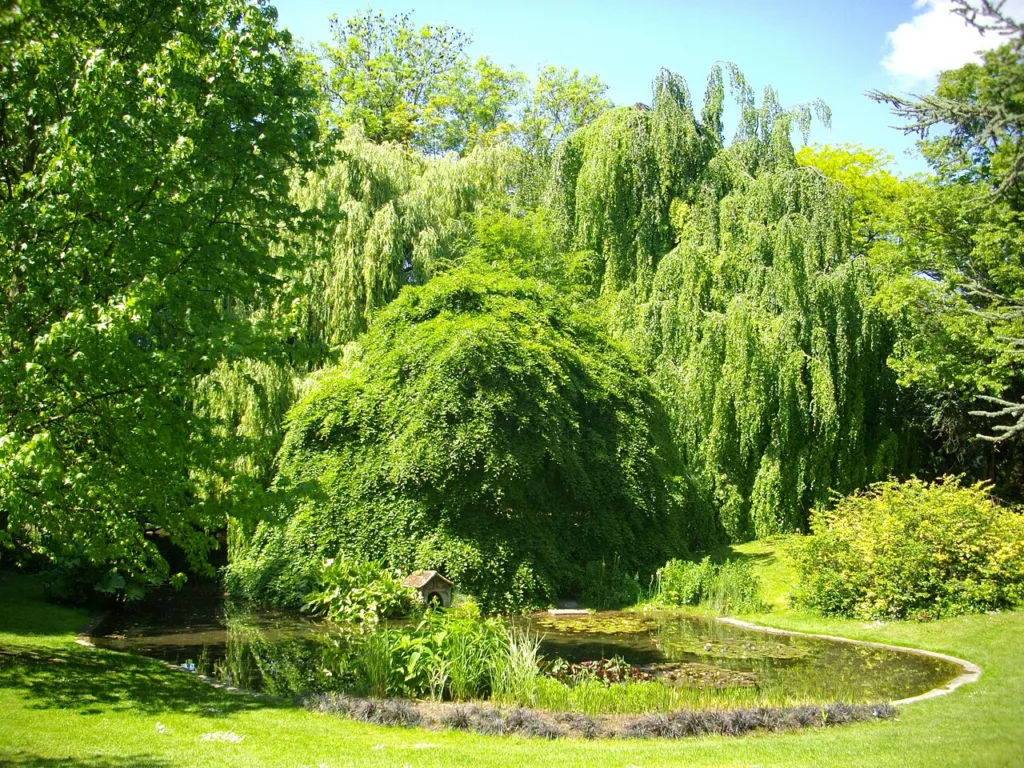
Pierre Schneiter Horticultural Garden
Pierre Schneiter Park is a garden located in downtown Reims, in the Boulevard Roederer district. Nicknamed the “newlyweds’ park” by locals, it is well known as a popular location for wedding photo shoots. Its flower-filled setting, waterfall, rose garden, and orangery make it a particularly sought-after backdrop.
Created on the former garden of the Horticultural Society, the park first hosted a small zoological and leisure area in the 1960s before evolving into a landscaped public garden. Today, it retains a very botanical and scientific character, with many carefully labeled collection trees and shrubs.
It also features a neoclassical pavilion nicknamed “Le Trianon,” a decorative waterfall, a small ornamental bridge, and a bronze lion statue inspired by Antoine-Louis Barye.
Upper and Lower Promenades
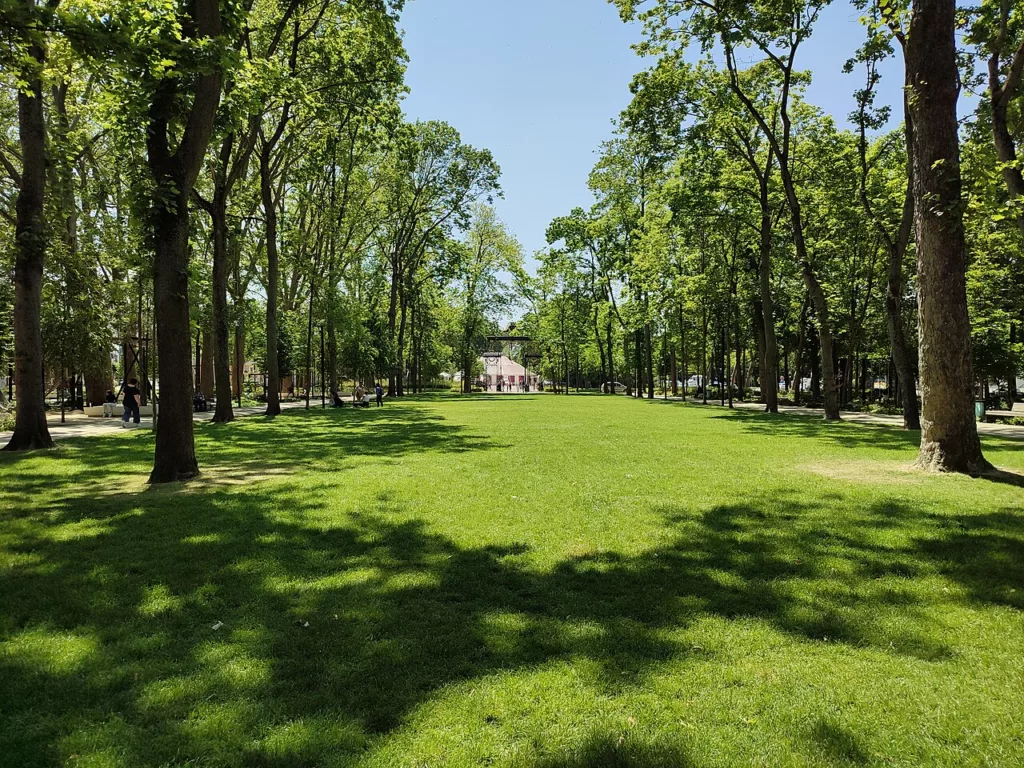
Lower Promenades
The Upper and Lower Promenades of Reims form a vast landscaped area in the heart of the city. Created from the 18th century onward on the former ramparts of Reims, they are now one of the main green corridors in the city center.
The Upper Promenades are located between the train station and the historic center. They offer a largely tree-lined space dotted with squares, monuments, and pedestrian areas. They play an important role in connecting the different districts of the city center.
The Lower Promenades, located further south, long remained a more open space and were recently redeveloped into a true urban park. Today, they offer relaxation areas, landscaped gardens, and modern walking paths integrated into the Reims landscape.
Separated by Square Colbert, these two areas form an essential green continuity within the city. They connect several iconic places such as the train station, Place de la République, La Patte d’Oie, and the various parks in the center.
Gastronomy & Specialties of Reims
The Pink Biscuit of Reims
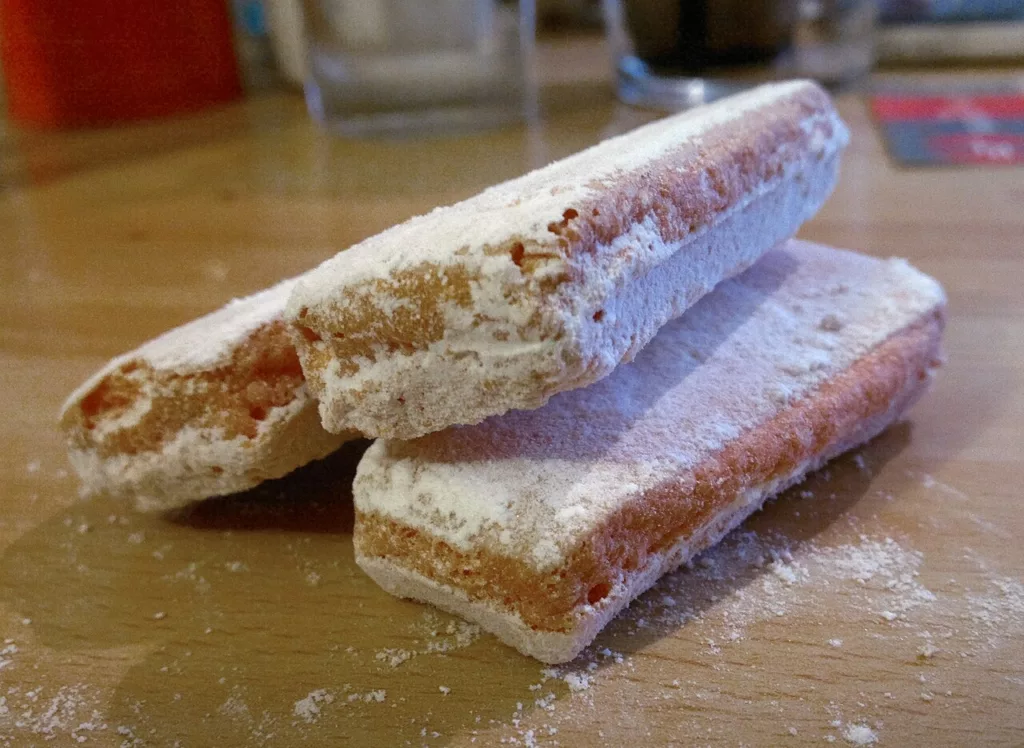
The Pink Biscuit of Reims
The pink biscuit of Reims is an iconic pastry specialty of the city. It is easily recognizable by its characteristic pink color. Its texture is dry and slightly crunchy, which makes it unique. Traditionally, it is enjoyed by dipping it into champagne or a hot drink. It has been made since the 17th century and is part of Reims’s culinary heritage.
Croquignoles of Reims

Croquignoles of Reims
Croquignoles of Reims are small dry and crunchy biscuits typical of the region. Their firm and light texture makes them pleasant to nibble with coffee or tea.
Nonnettes of Reims

Nonnettes of Reims
Nonnettes of Reims are small round cakes made with honey and gingerbread. They are often filled with orange or citrus marmalade. Their origins date back to the Middle Ages, when they were prepared in monasteries, hence their name. Their flavor is sweet and slightly spicy, with a rich aroma. They are usually enjoyed with tea or as a dessert.
Reims Ham

Reims Ham
Reims ham is a traditional charcuterie specialty from the Champagne region. It is made from boned pork ham, slowly cooked in a flavored broth. Its distinctive quality comes from its fine, slightly pink, and very tender meat. Depending on the recipe, it is often coated with breadcrumbs or jelly. It can be enjoyed cold in slices or served hot in cooked dishes.
Champagne
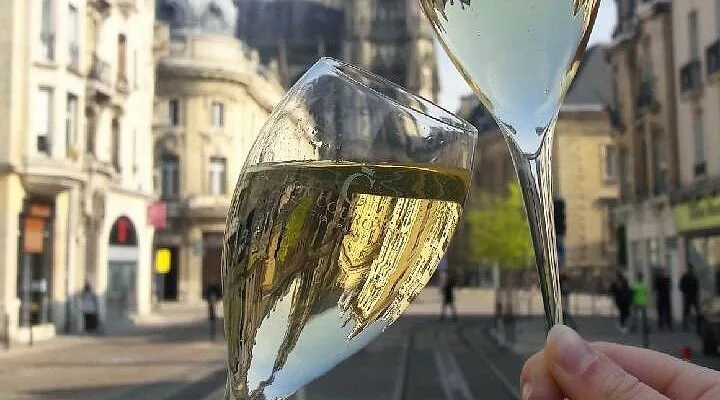
Champagne
Champagne is an exceptional sparkling wine produced in the Reims and Épernay region. It is made using a traditional method known as the “Champagne method.” This wine is mainly produced from grape varieties such as Pinot Noir, Pinot Meunier, and Chardonnay. It is known worldwide for its fine bubbles and festive image. Champagne is often associated with major celebrations and important moments. It benefits from a protected designation of origin recognized internationally.
Excursions from Reims
Épernay
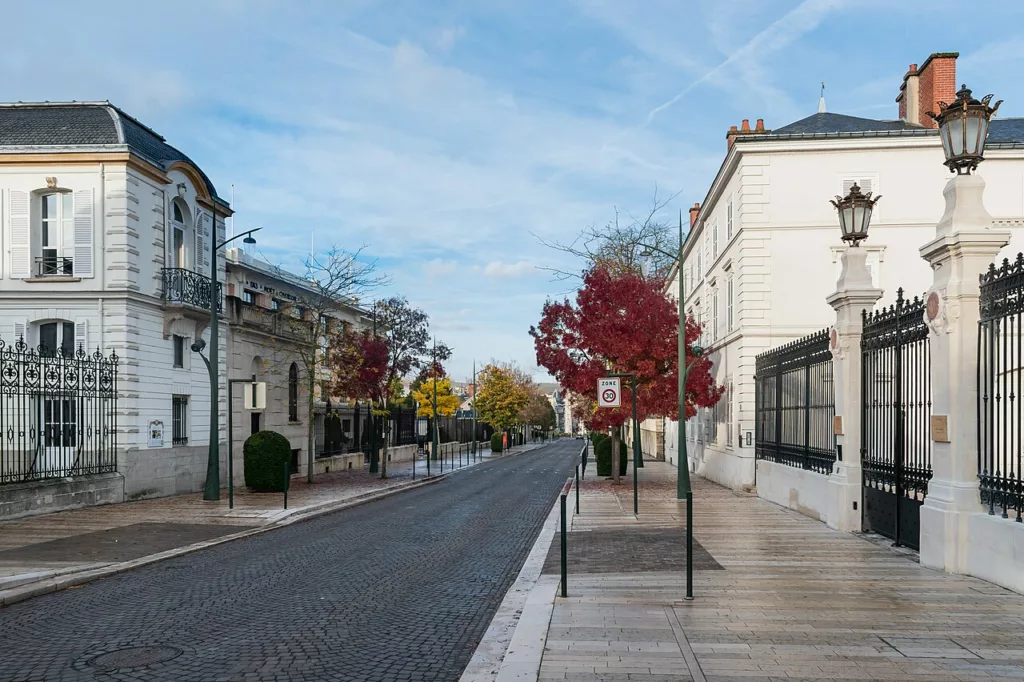
Avenue de Champagne in Épernay
Épernay is located about 25 to 30 minutes by car from Reims, in the heart of the Champagne region. The city is known worldwide for its central role in champagne production.
Its main avenue, Avenue de Champagne, is lined with prestigious major houses such as Moët & Chandon and Perrier-Jouët. Beneath this avenue lie kilometers of cellars carved into the chalk, where millions of bottles age.
Épernay also offers a pleasant city center with shopping streets and classical-style buildings. The city is surrounded by vineyards listed as a UNESCO World Heritage Site in the Champagne region. Several guided tours allow visitors to discover the cellars and the secrets of champagne making.
Laon
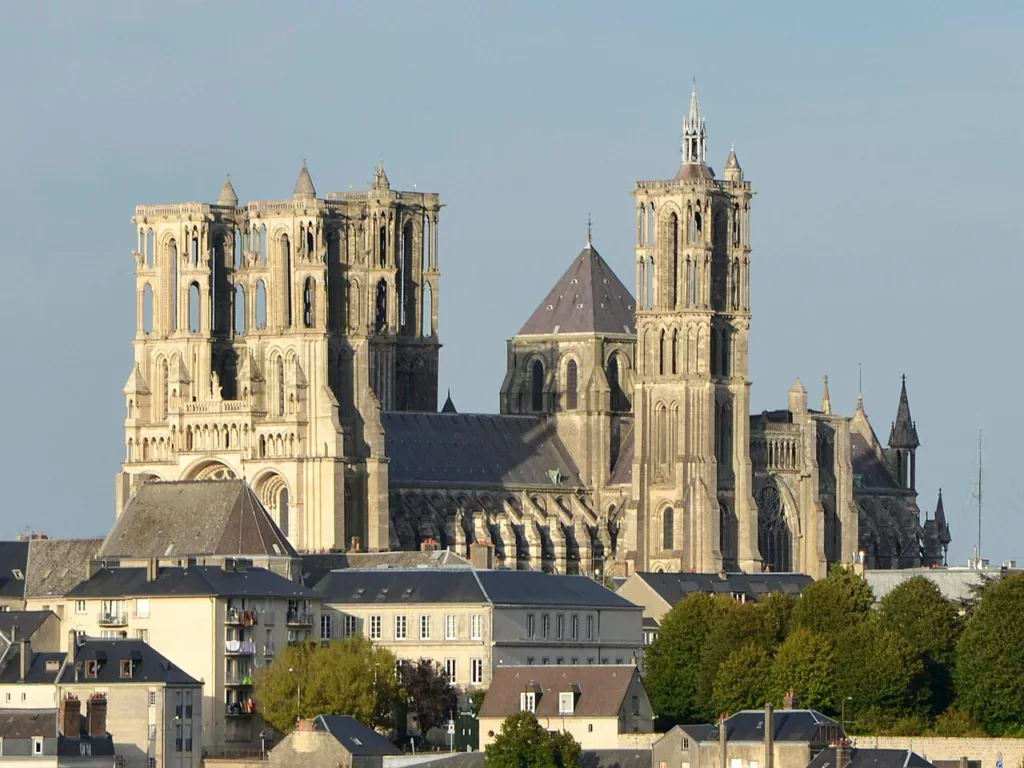
Laon
Laon is a city located about 1 hour and 15 minutes by car from Reims, in the Aisne department. It is famous for its old town perched on a hill, visible from far across the surrounding plain.
This position made it a strategic historic city from the Middle Ages onward. Laon has one of the most beautiful Gothic cathedrals in France, Notre-Dame Cathedral of Laon, remarkable for its slender towers and ox sculptures. The old center is entirely surrounded by well-preserved ramparts, offering magnificent panoramic walks.
The cobbled streets and old houses give the city an authentic medieval atmosphere. Visitors can also discover underground passages and historic remains beneath the upper town. Laon was a former royal capital under the Carolingians, which reinforces its historical importance. It is an ideal excursion from Reims for lovers of history and heritage.
Châlons-en-Champagne
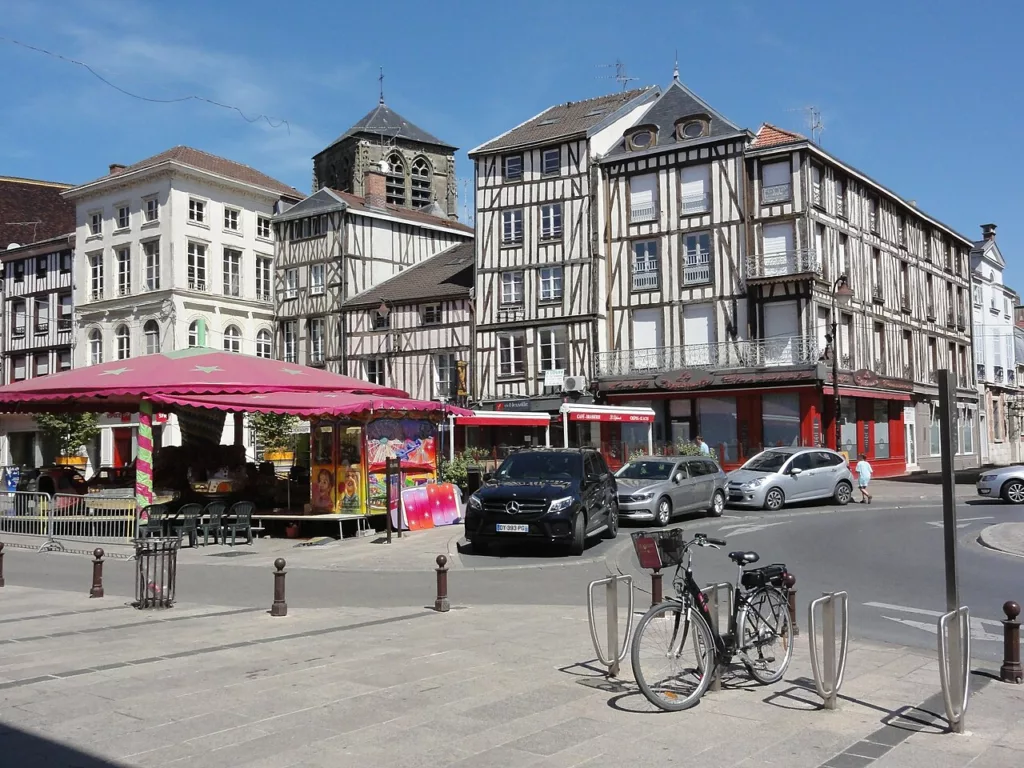
Châlons-en-Champagne
Châlons-en-Champagne is located about 45 minutes by car from Reims, in the heart of the Marne department. The city is crossed by several branches of the Marne and Mau rivers, earning it the nickname “sparkling little Venice.”
Its historic center is marked by beautiful half-timbered houses, private mansions, and many old churches. Saint-Étienne Cathedral and the Basilica of Notre-Dame de l’Épine are among the must-see monuments nearby. Châlons is also known for its boat rides on the canals, a very popular activity among visitors.
The city has a peaceful atmosphere, with many parks and gardens along the water. It is also a dynamic cultural center, hosting festivals and performances throughout the year. The Museum of Fine Arts and Archaeology allows visitors to discover its rich past. It is an ideal destination for a refreshing and relaxing outing from Reims.
Conclusion
Visiting Reims means diving into the heart of a city with exceptional heritage, shaped by its royal history, remarkable architecture, and Gallo-Roman legacy. From the majestic Notre-Dame Cathedral to its must-see museums, historic squares, and iconic monuments, each place tells part of the history of France.
The city also offers magnificent green spaces such as the promenades, true breathing spaces in the heart of Reims’s urban landscape. Its gastronomy, from pink biscuits and nonnettes to world-famous champagne, perfectly completes the experience.
Reims is also an excellent starting point for discovering nearby cities such as Épernay, Laon, and Châlons-en-Champagne. Between heritage, culture, and the art of living, visiting Reims promises a rich and varied experience. It is an ideal destination for history lovers as well as travelers seeking authentic discoveries.
Discover Reims in a different way with our treasure hunt, “Reims Highlights“.