Visit Dijon: 30 Must-See Attractions and Things to Do
Visiting Dijon, the historic capital of the Bourgogne-Franche-Comté region, means discovering a city with exceptional and beautifully preserved heritage. Renowned for its historic center, medieval and Renaissance monuments, and nationally acclaimed museums, Dijon captivates lovers of history, architecture, and culture.
A city of art and history, Dijon is also an essential gastronomic destination in France, famous for its mustard, gingerbread, and Burgundy wines. Its pedestrian-friendly city center, grand mansions, Gothic churches, and lively squares make it an ideal place to explore on foot.
Easily accessible and located in the heart of Burgundy’s wine region, Dijon is also an excellent starting point for exploring the vineyards, villages, and major tourist attractions of the area. Combining heritage, gastronomy, and the French art of living, visiting Dijon offers a complete and authentic experience in the heart of France.
Discover Dijon in a different way with our treasure hunt game “Dijon Highlights“, a mix between an Escape Game and a cultural tour.
Monuments and Historical Heritage of Dijon
Saint-Michel Church
 Saint-Michel Church
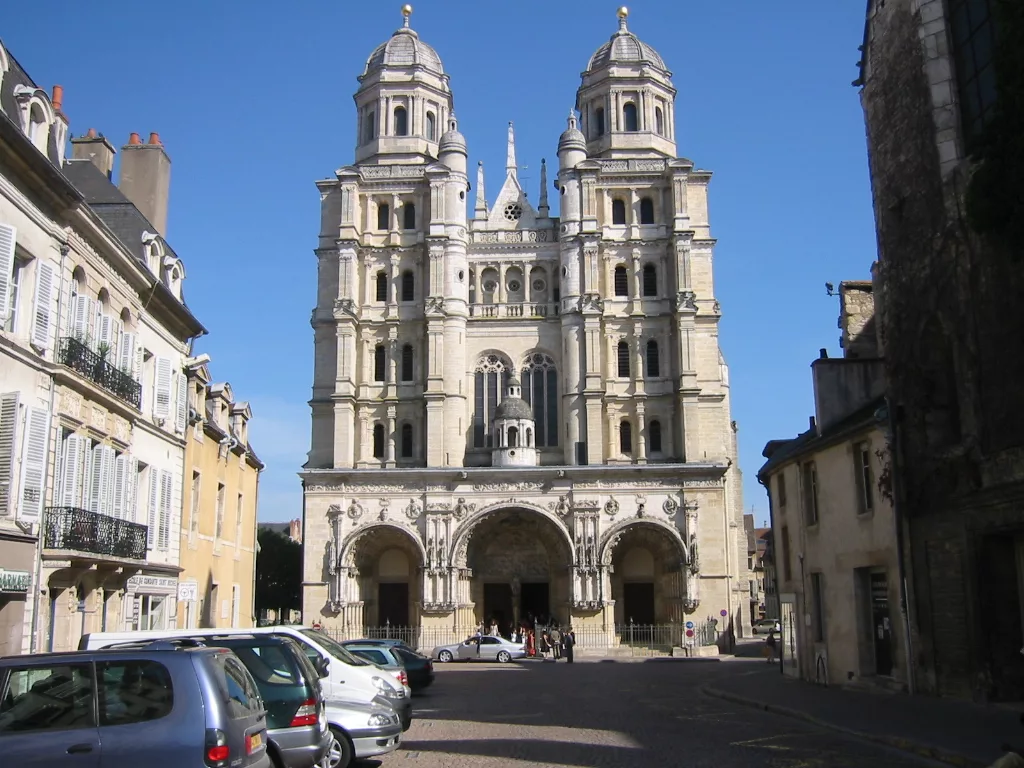
The construction of Saint-Michel Church in Dijon began at the end of the 15th century and was completed in the 16th century, which explains its unique blend of architectural styles.
It is famous for its spectacular façade, which combines flamboyant Gothic art with influences from the Italian Renaissance. At first glance, visitors notice its imposing proportions and the two towers dominating the neighborhood.
The interior surprises visitors with its bright atmosphere and numerous ancient religious artworks. Among its treasures is a remarkably well-preserved 15th-century entombment sculpture.
Discover secrets hidden within this façade in our Dijon experience.
Saint-Étienne Church
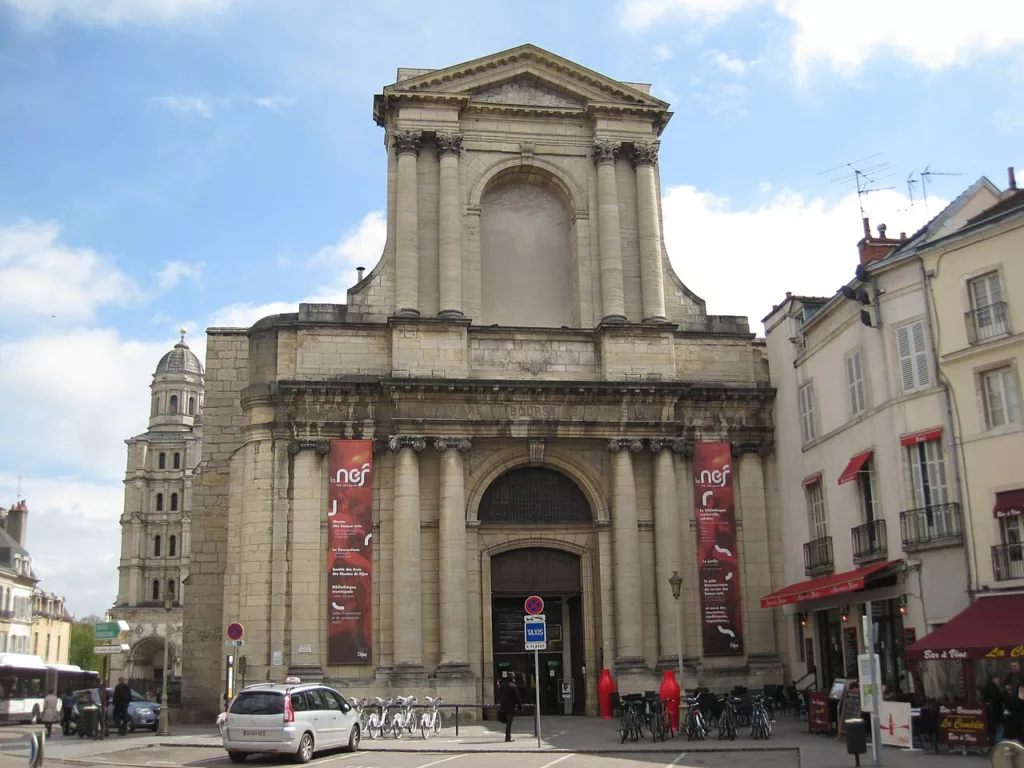 Saint-Étienne Church
Saint-Étienne Church in Dijon is a former medieval church dating from the 15th century, now deconsecrated and located in the heart of Dijon’s historic center.
Its history has been eventful, with several major reconstructions following collapses in the 15th and 17th centuries. The church features a hybrid architecture, combining a Gothic core with a classical Jesuit-style façade added in the 18th century.
Over time, the building lost its religious function and was gradually transformed into a civic and cultural space. Today, it notably houses the Rude Museum, dedicated to the famous sculptor François Rude, who was born in Dijon. It also hosts the Colette Library, which helps bring new life to this former sacred place.
The church even served at various times as a market hall, a stock exchange, and an administrative center, making it a place with many different uses throughout its history.
Grand Theatre of the Dijon Opera
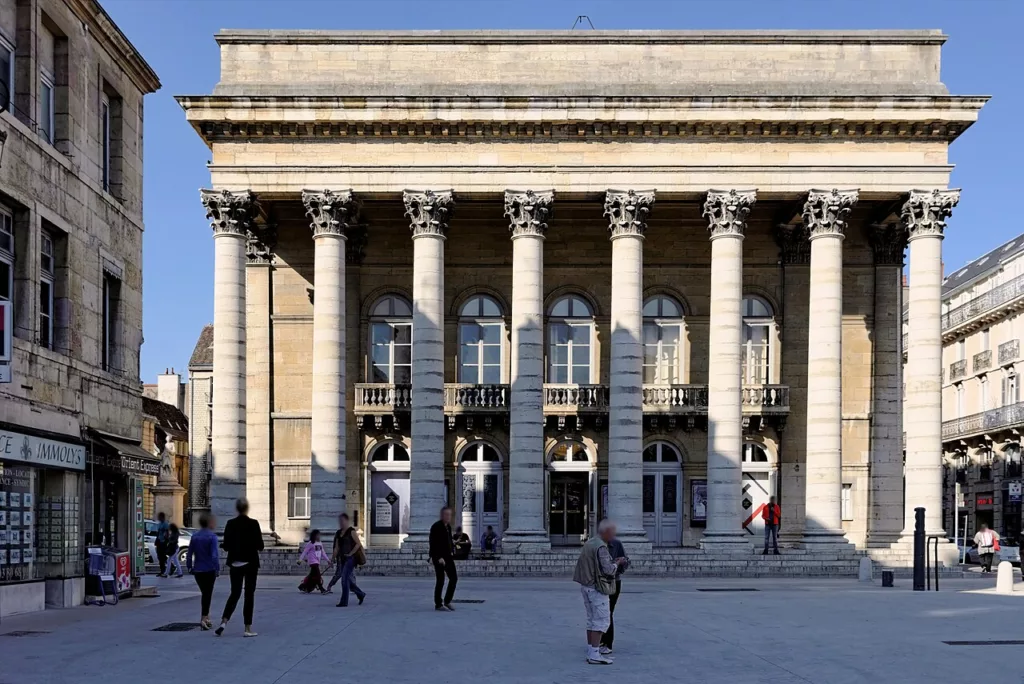
The Grand Theatre of Dijon was inaugurated in 1828 after many years of construction that began during the First Empire. Its neoclassical architecture is inspired by Antiquity, with a façade dominated by an imposing peristyle of Corinthian columns.
The building was designed by architects Jacques Cellerier and Simon Vallot, who wanted to create a prestigious and monumental venue. Inside, the horseshoe-shaped auditorium is typical of Italian-style theatres.
The ceiling of the auditorium is decorated with a trompe-l’œil fresco depicting mythological scenes related to music and dance.
The theatre has been modernized several times, notably in 1969 to improve audience comfort and visibility. Today, it can accommodate around 690 people while preserving its original elegance.
Palace of the Dukes and Estates of Burgundy
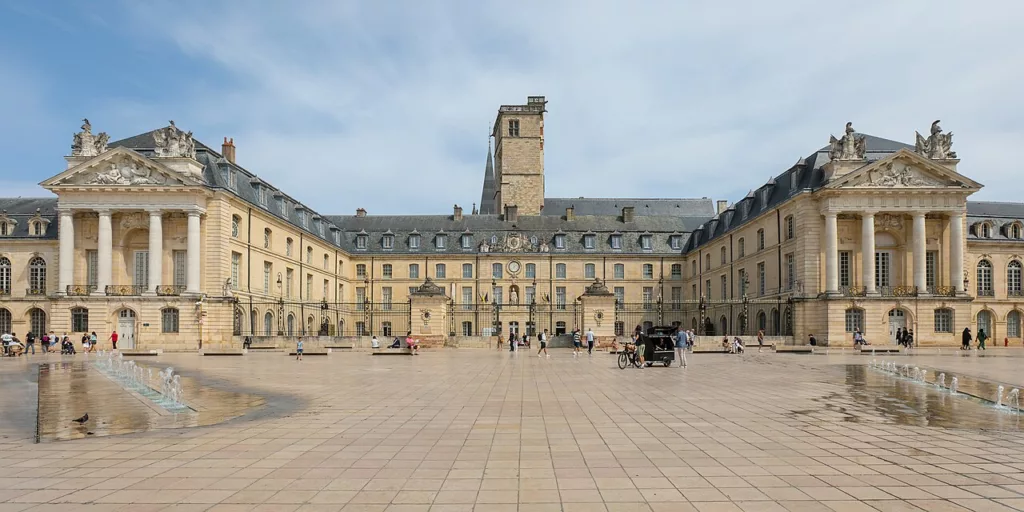
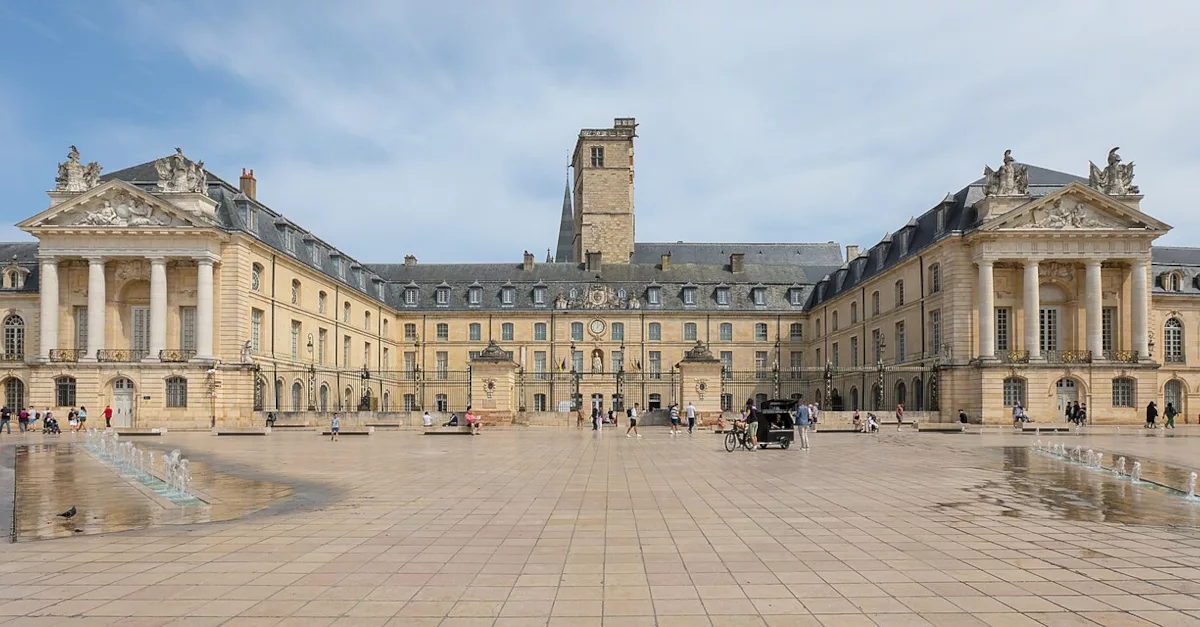
The Palace of the Dukes of Burgundy is the most iconic monument in Dijon’s historic center. Construction began in the 14th century, and the building evolved over nearly a thousand years of history.
It was once the residence of the powerful Dukes of Burgundy, who ruled over a vast European state. The palace architecture blends several styles, ranging from medieval Gothic to the classical styles of the 17th and 18th centuries.
Today, the palace houses Dijon’s City Hall as well as the Museum of Fine Arts, one of the richest museums in France. The semicircular Place de la Libération highlights the building’s classical façade.
Inside, visitors can still admire the grand Hall of the Estates and the tombs of the Dukes of Burgundy.
Discover the hidden secrets of the façade and the mysterious nearby statue with our Dijon experience.
Philippe the Good Tower
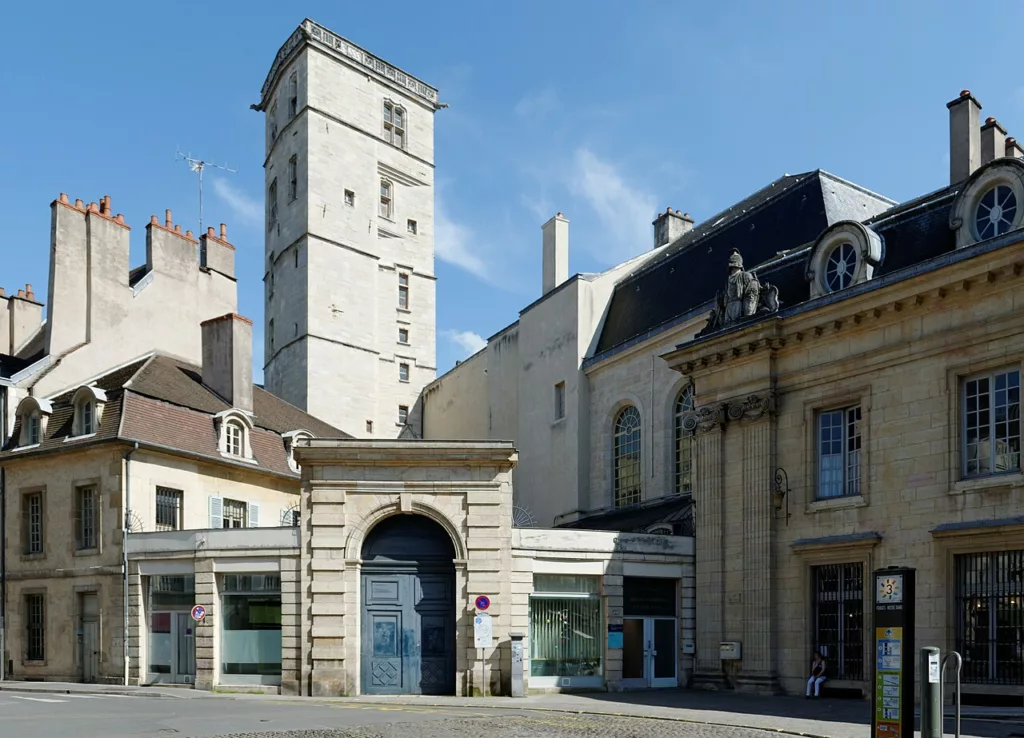
The Philippe the Good Tower is one of the most emblematic monuments of the Palace of the Dukes of Burgundy. Built in the 15th century, it symbolizes the power of the Dukes of Burgundy at the height of their influence.
Standing 46 meters high, it still dominates the entire historic center of Dijon today. It was designed both as a watchtower and as a strong political symbol.
Its famous spiral staircase includes more than 300 steps leading to the top. In the 18th century, it even served as a scientific observatory for local astronomers. In the 19th century, it hosted a Chappe telegraph relay connecting several French cities.
Maison Milsand
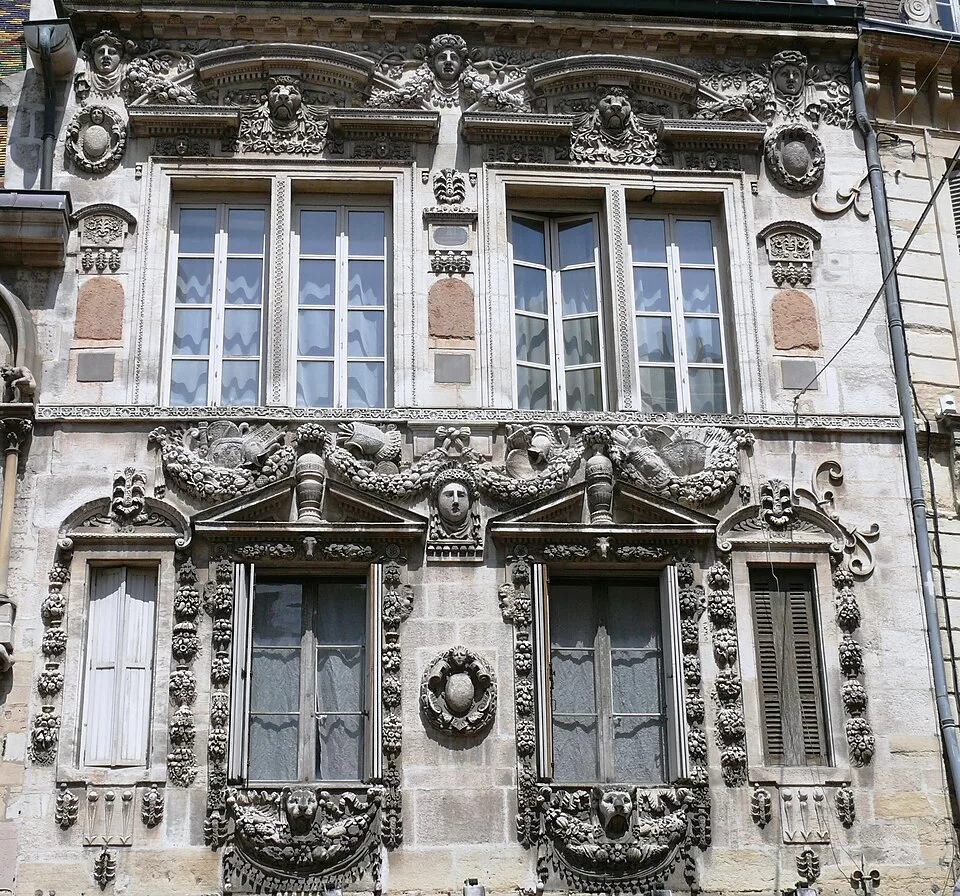
The Maison Maillard, also known as Maison Milsand, is one of the finest examples of Renaissance architecture in Dijon. Built in 1561, it was commissioned by Jean Maillard, who was then mayor of the city.
Its richly sculpted façade immediately catches the attention of visitors walking along Rue des Forges. The building is partly attributed to architect Hugues Sambin, an important figure of the Renaissance in Burgundy.
The house also features a remarkable inner courtyard, typical of Dijon’s private mansions. Visitors can admire a staircase and sculpted decorations that reflect the prestige of its former occupants.
Discover hidden details on the façade in our treasure hunt in Dijon.
Hôtel Aubriot
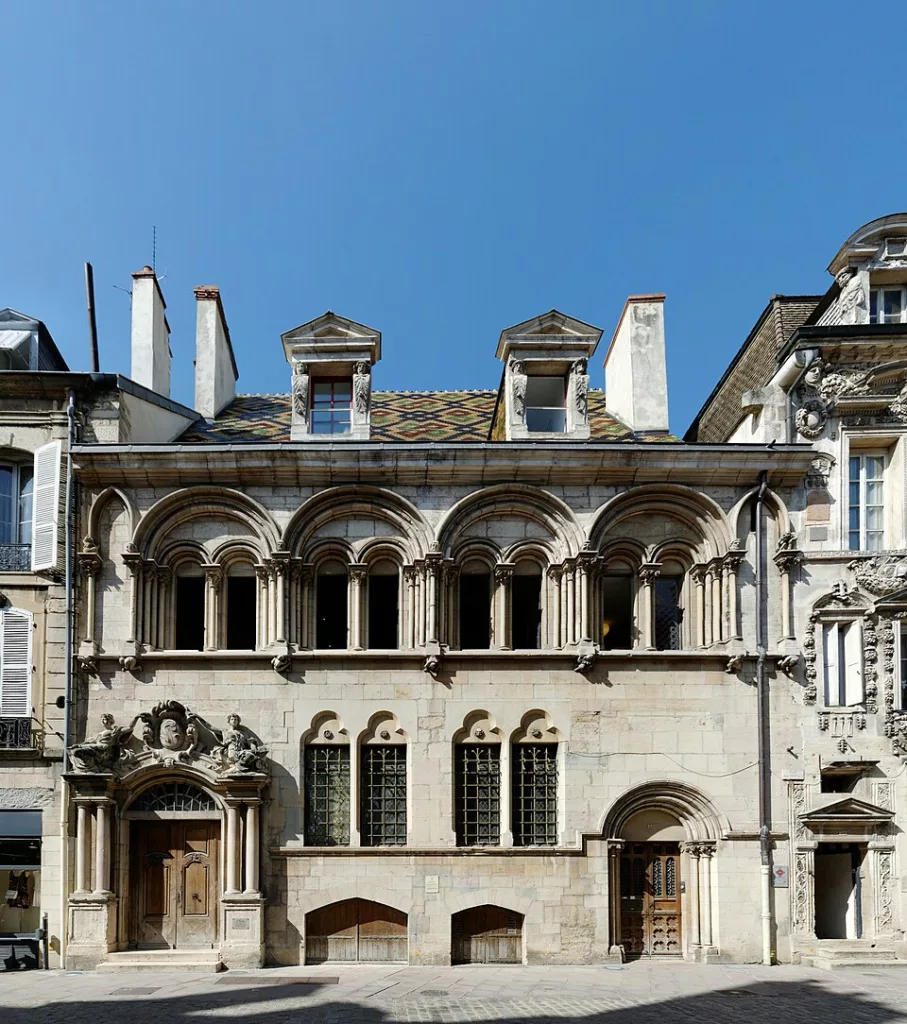
Hôtel Aubriot is one of the oldest private mansions in Dijon, dating back to the 13th century. The building rests on a vast medieval vaulted cellar, once used by money changers. This cellar was known as the “vault of exchanges,” reflecting the city’s historic economic activity.
The building is also linked to Hugues Aubriot, an important figure in Dijon’s medieval history. Its façade still preserves remarkable architectural elements despite many transformations over the centuries. During the Renaissance and in the 18th century, the building was modified to serve as a courthouse. It later underwent several major restorations, especially at the beginning of the 20th century.
Hôtel de Vogüé
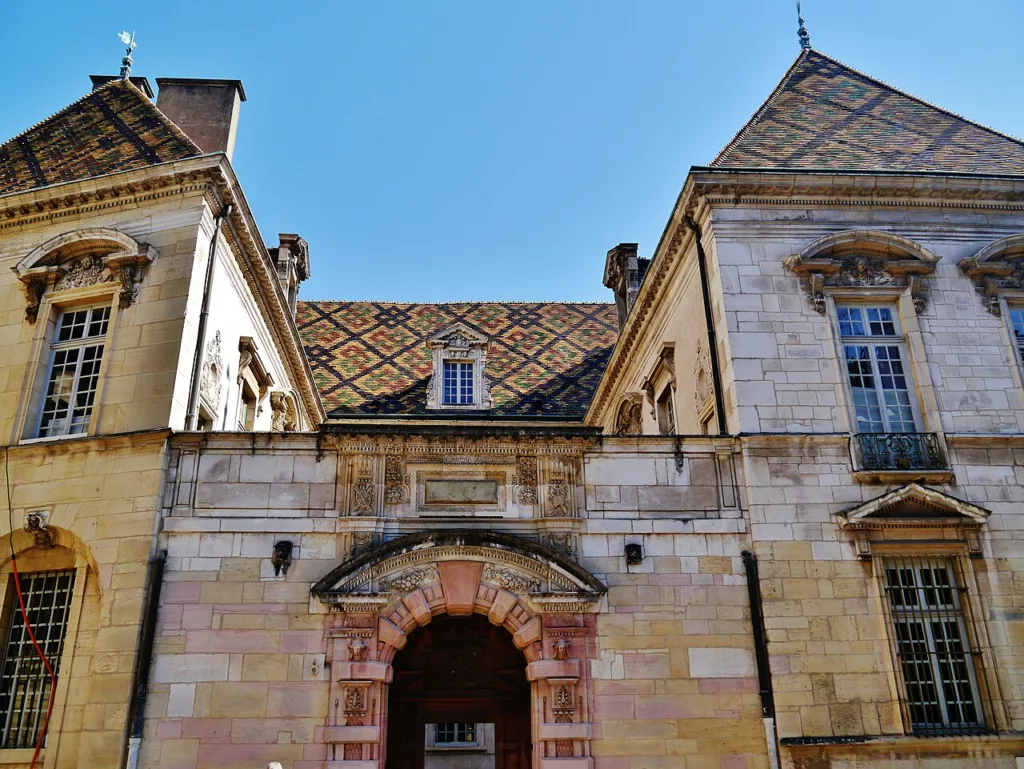
Hôtel de Vogüé is a private mansion located in Dijon, in the Côte-d’Or department. It was built starting in 1614 for Étienne Bouhier, a councillor at the Parliament of Burgundy and an art enthusiast.
The building represents a transitional style between the Renaissance and classicism. It underwent a major expansion in 1690.
Discover mysterious letters hidden on this mansion in our Dijon experience.
Notre-Dame Church of Dijon
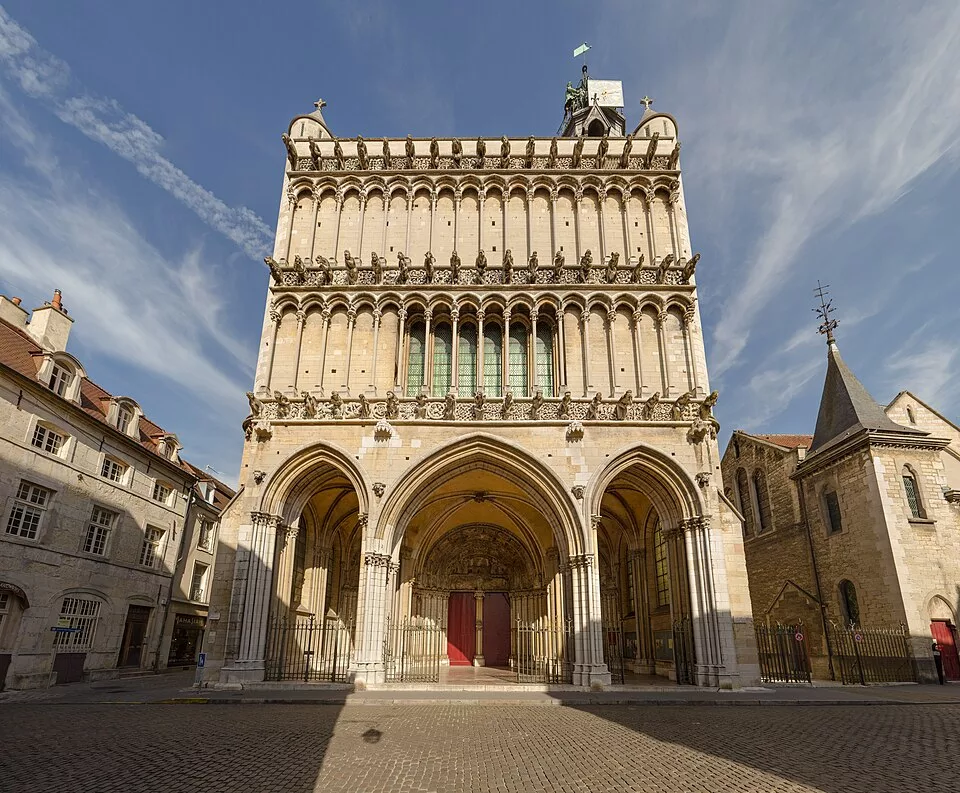
The Notre-Dame Church of Dijon was mainly built between 1220 and 1250 and stands as a major example of 13th-century French Gothic architecture.
This relatively flat façade conceals the church’s interior structure and includes numerous decorative sculptures, including false gargoyles added during the 19th-century restorations.
The church houses several remarkable heritage features. The statue of Notre-Dame de Bon-Espoir, dating from the 11th or 12th century, is one of the oldest Virgin Mary statues in France. The building is also known for the Jacquemart, an animated clock installed on the façade, as well as for the famous owl sculpture carved into an exterior buttress, which has become a popular symbol of the city.
The stained-glass windows include several original 13th-century panels, complemented in the 19th century by Neo-Gothic creations. The organ, installed in the gallery, dates from the late 19th century and reflects the church’s musical tradition.
Today, Notre-Dame de Dijon remains a central monument of the city’s architectural and spiritual heritage, serving both as a place of worship and as a highly visited cultural site.
Discover the secrets of this bell in our Dijon experience.
Central Market Halls and Central Market
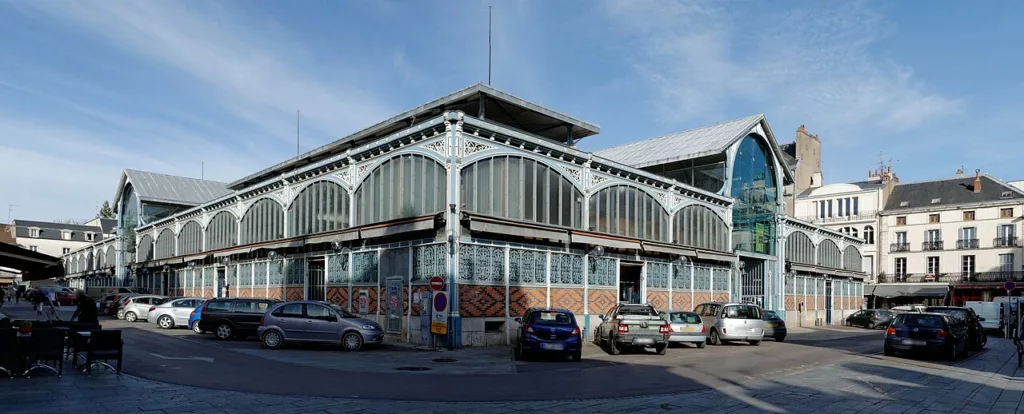
The Central Market Halls of Dijon are a covered market located in the city center of Dijon, in Bourgogne-Franche-Comté. Built between 1873 and 1875, they are a remarkable example of 19th-century metal architecture.
The project was launched by the Dijon municipality in 1868 to create a modern covered market. The plans were finalized by engineer Louis-Clément Weinberger. The building was erected on the site of a former Dominican convent.
The structure covers an area of around 4,400 m² and reaches a height of 13 meters. It is organized into four pavilions around two large cross-shaped aisles. Originally, it housed numerous shops, market stalls, and annexes for merchants.
The architecture of the halls stands out for its metal structure, with a succession of arcades and decorated columns. The capitals are adorned with plant motifs, especially vine branches. The sculpted decorations also depict animals and symbols related to trade and food, such as heads of game or livestock.
Decorative medallions show mythological figures such as Ceres, goddess of harvests, and Hermes, god of commerce. The roof is directly inspired by the great metal market halls of 19th-century Paris.
Discover the animals featured on this façade with our treasure hunt in Dijon.
Place Grangier
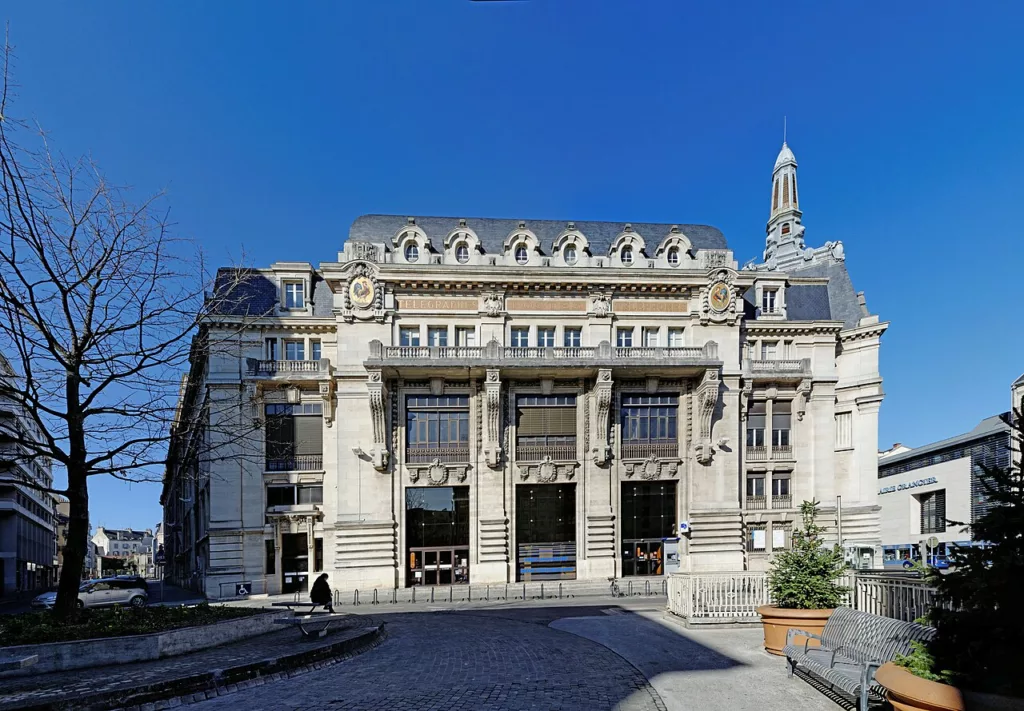
The square’s name comes from Henri Grangier and his wife Sophie Villeneuve, benefactors of the city of Dijon, who bequeathed their fortune and collections to the municipality as well as to the general hospital.
Historically, the site of the square was occupied from the 15th to the 19th century by Dijon Castle. This vast building, constructed between the late Middle Ages and the beginning of the Renaissance, was demolished between 1891 and 1897 after several debates and controversies. Its disappearance paved the way for a major urban transformation of the district.
At the beginning of the 20th century, several important buildings were constructed around the square. One of the most remarkable is the Hôtel des Postes, built between 1907 and 1909 in a style inspired by classical French architecture. It is especially notable for its monumental clock accompanied by sculptures representing Day and Night.
Around the square, several Art Nouveau buildings were also built by architect Louis Perreau between 1906 and 1908. These buildings contribute to the architectural identity of the site, combining floral decorations with the characteristic lines of this artistic movement.
Throughout the 20th century, the square continued to evolve. In the 1920s, an Art Deco-style hotel was built, illustrating the architectural renewal of the period. In the 1960s, a modern tower block was added, changing the silhouette of the district.
At the same time, major urban developments were carried out, including the construction of an underground car park in the late 1960s, which profoundly transformed the organization of the center of the square.
Discover a rather unusual clock on this square with our treasure hunt in Dijon.
Porte Guillaume
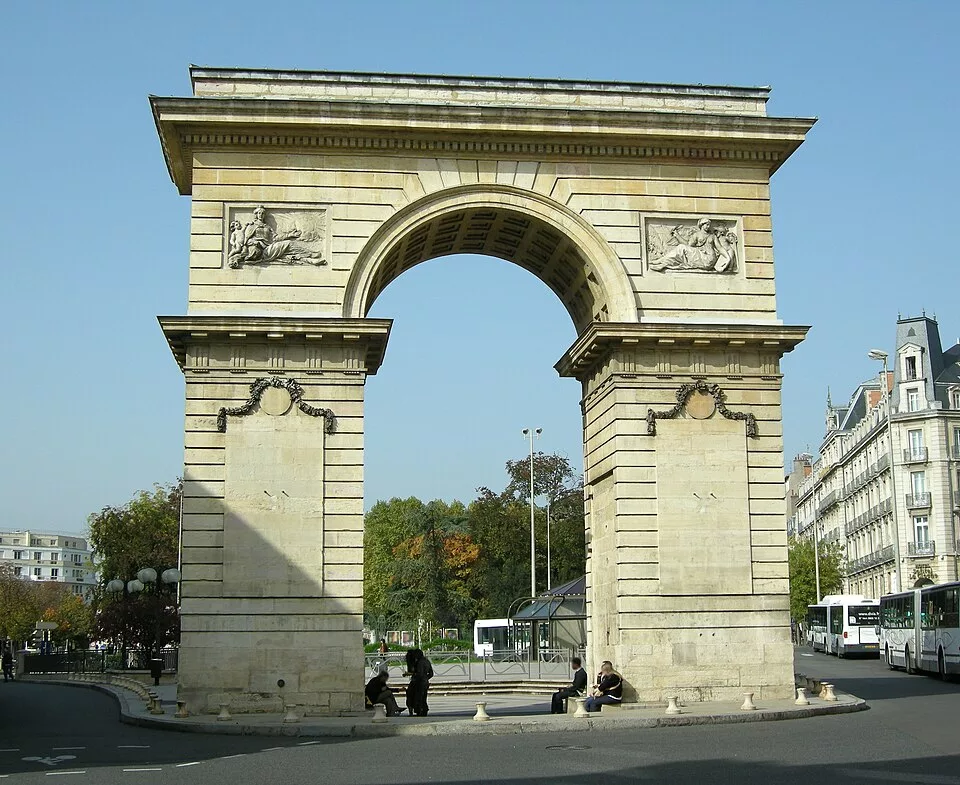
Porte Guillaume was built at the end of the 18th century, between 1786 and 1788, on the site of a former gate in the medieval ramparts.
Originally, the structure was erected in tribute to the Prince of Condé, governor of Burgundy. It was then named Porte Condé. During the French Revolution, in 1791, it was renamed the Arch of Liberty. Later, in the 19th century, it became Porte Guillaume, in reference to Guillaume de Volpiano.
The gate is neoclassical in style. It is built around a large central arch. The side piers are decorated with rustication and topped with a Doric entablature. The whole structure is adorned with bas-reliefs created by sculptor Claude-François Attiret. These sculptures represent allegories linked to Burgundy, wisdom, and the city of Dijon.
Saint-Bénigne Cathedral of Dijon
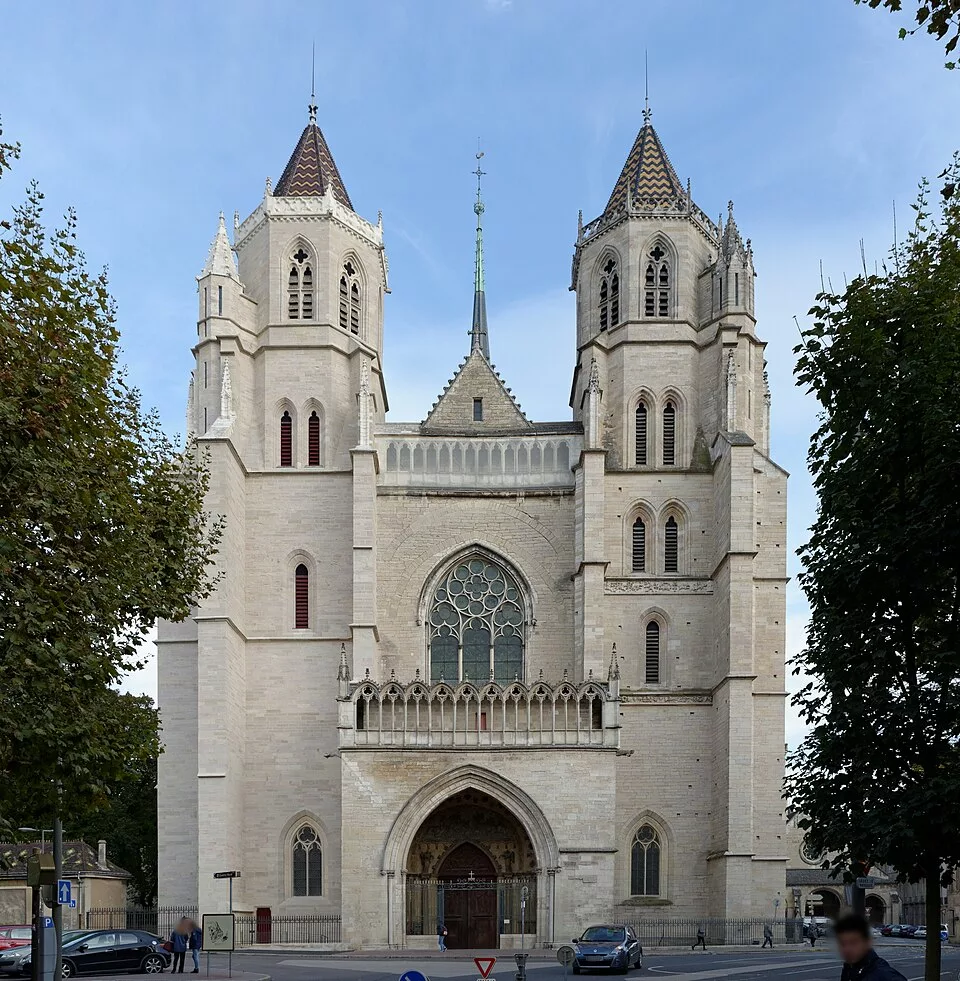
Saint-Bénigne Cathedral of Dijon is Gothic in style and was built between 1280 and 1393 on the site of the former Saint-Bénigne Abbey.
The building is dedicated to Saint Bénigne, a Christian martyr from the 2nd century. It was elevated to cathedral status in 1792, after the creation of the Diocese of Dijon.
The history of the site dates back to the year 511, when a crypt was built to house the relics of Saint Bénigne. A basilica was then constructed, and an abbey developed around the site. In the 11th century, under the influence of Abbot Guillaume de Volpiano, a major reconstruction was carried out with an underground church, an upper church, and a large rotunda.
The current cathedral preserves ancient elements, especially the crypt, which is the main remnant of the medieval rotunda. This crypt is a remarkable example of 11th-century religious architecture.
Over the centuries, the building underwent several transformations, including its Gothic reconstruction between the 13th and 14th centuries, the partial destruction of the rotunda in 1792, and its rediscovery and restoration in the 19th century. A new spire was also added at the end of the 19th century.
The cathedral is also known for its great organ, its bell carillon, and its historical importance in the region.
Saint-Philibert Church of Dijon
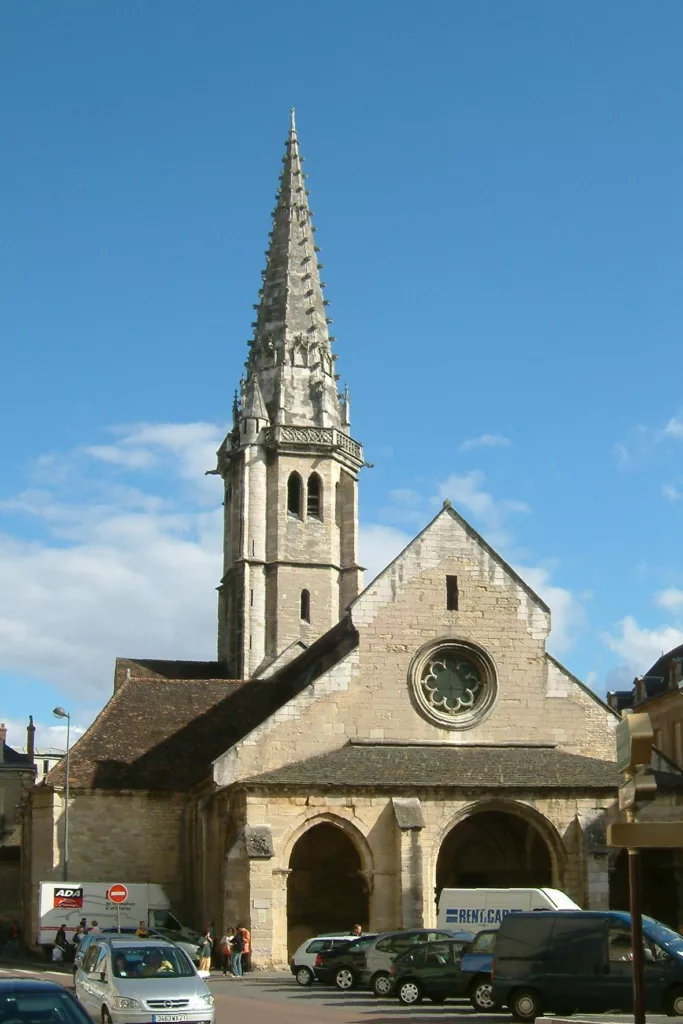
Saint-Philibert Church of Dijon is a former Catholic church located on Rue Michelet, near Saint-Bénigne Cathedral. It was built in the 12th century in Romanesque style and is the only Romanesque religious building still visible in Dijon.
Over time, the church underwent several modifications. A bell tower was added in the early 16th century, while chapels and a porch were built or altered between the 16th and 18th centuries.
Originally, the building played an important role in the city’s political and religious life. It was notably in its cemetery that communal assemblies were held and that the city of Dijon received a municipal charter in 1187.
During the Revolution, the church was deconsecrated and used for military purposes, as a stable and storage depot. Part of the building, including the apse, was destroyed in 1825 to allow the widening of a street.
In the 19th and 20th centuries, the church served several purposes: military depot, museum, exhibition hall, and concert venue. It was listed as a historical monument in 1913.
Must-See Museums in Dijon
Dijon Museum of Fine Arts
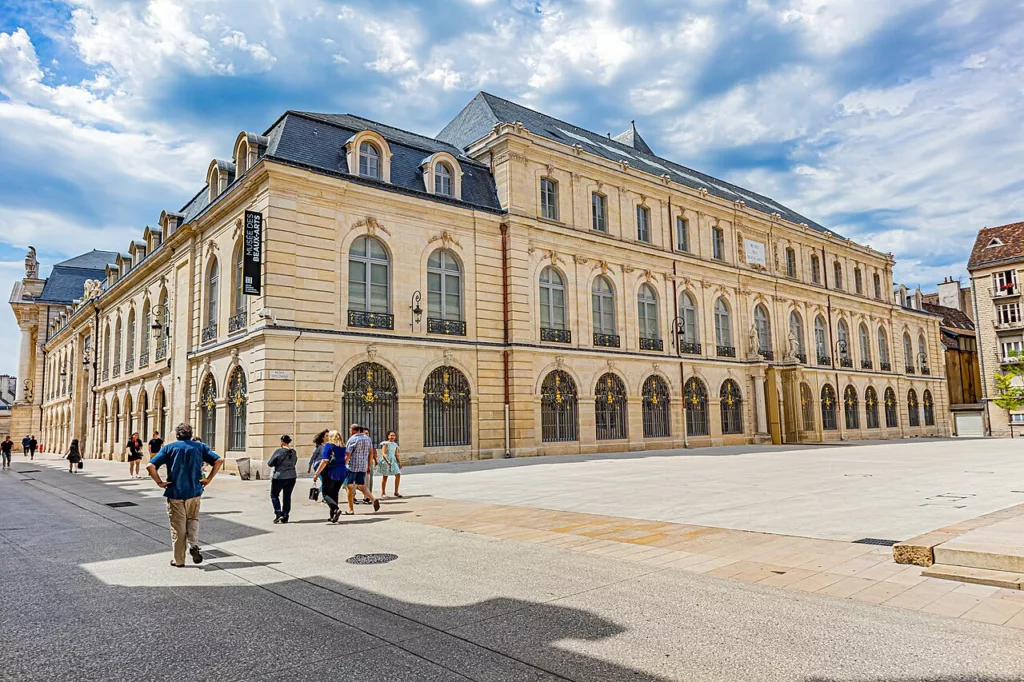
Located in the heart of the Palace of the Dukes of Burgundy, the Dijon Museum of Fine Arts is one of the oldest museums in France. Founded at the end of the 18th century, it reflects a long history linked to artistic education and heritage preservation.
Its impressive collections cover more than 130,000 works, from Antiquity to contemporary art. The museum is particularly renowned for the tombs of the Dukes of Burgundy, true masterpieces of medieval art.
A major renovation completed in 2019 modernized the spaces and enhanced the presentation of the artworks. The museum offers a journey through the history of European art, with works by great masters such as Delacroix, Monet, and Rubens.
Museum of Burgundian Life
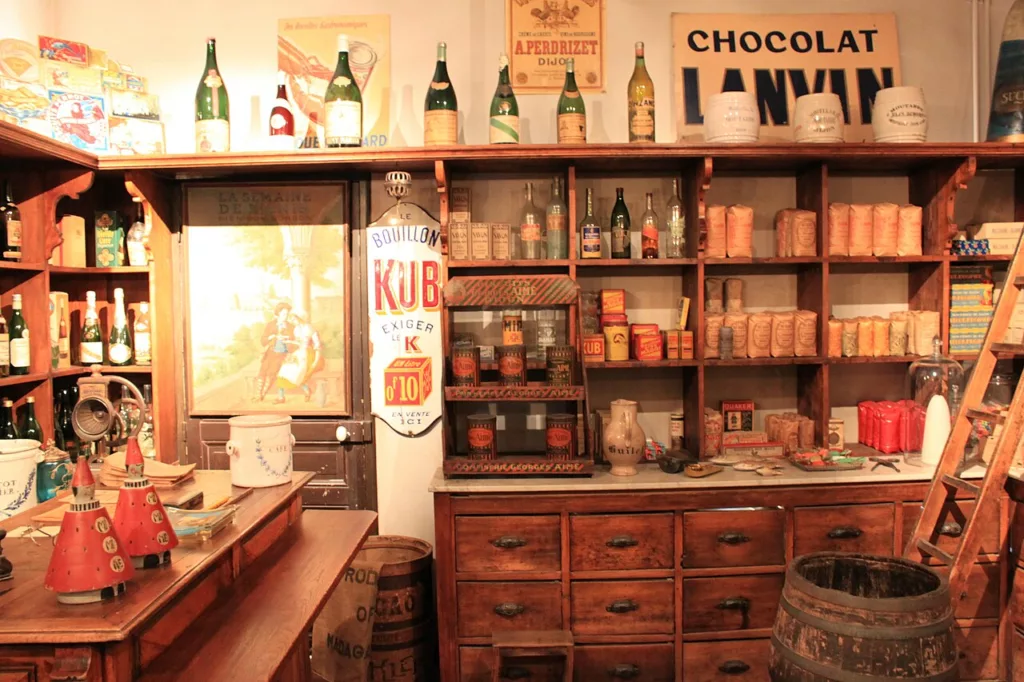
Housed in the former Bernardine monastery in Dijon, the Museum of Burgundian Life immerses visitors in traditional everyday life in Burgundy. This ethnographic museum traces rural and urban life in the region during the 19th and early 20th centuries.
Visitors can discover reconstructions of old shops, such as a pharmacy, a grocery store, and a traditional butcher’s shop. The collections highlight trades, everyday objects, and regional Burgundian costumes.
One room is devoted to the famous history of Dijon mustard, a gastronomic emblem of the region. The museum also preserves a rich documentary collection made up of thousands of books and old photographs.
Natural History Museum
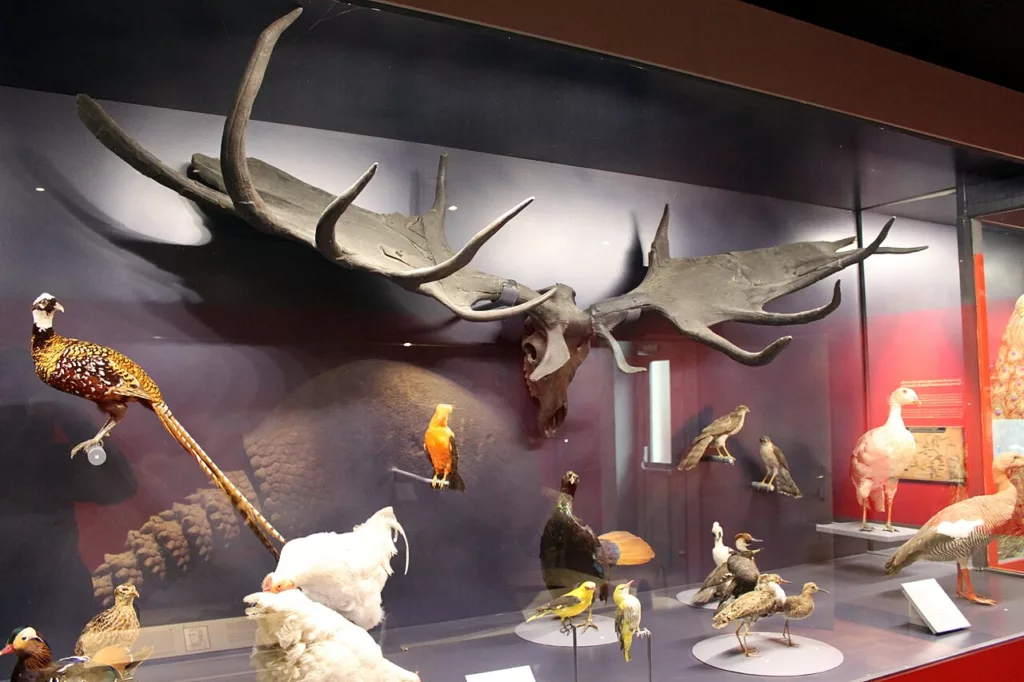
The Natural History Museum of Dijon is a place dedicated to the discovery of biodiversity and natural sciences. Founded in 1836, it is one of the oldest natural history museums in France and preserves an important scientific and educational heritage.
The site is part of a scientific complex that also includes a botanical garden and a modern planetarium. Visitors can explore exhibitions on fauna, flora, and major environmental issues.
Visitors can discover impressive specimens, including fossils and extinct animals such as the glyptodon and the mastodon.
Rude Museum
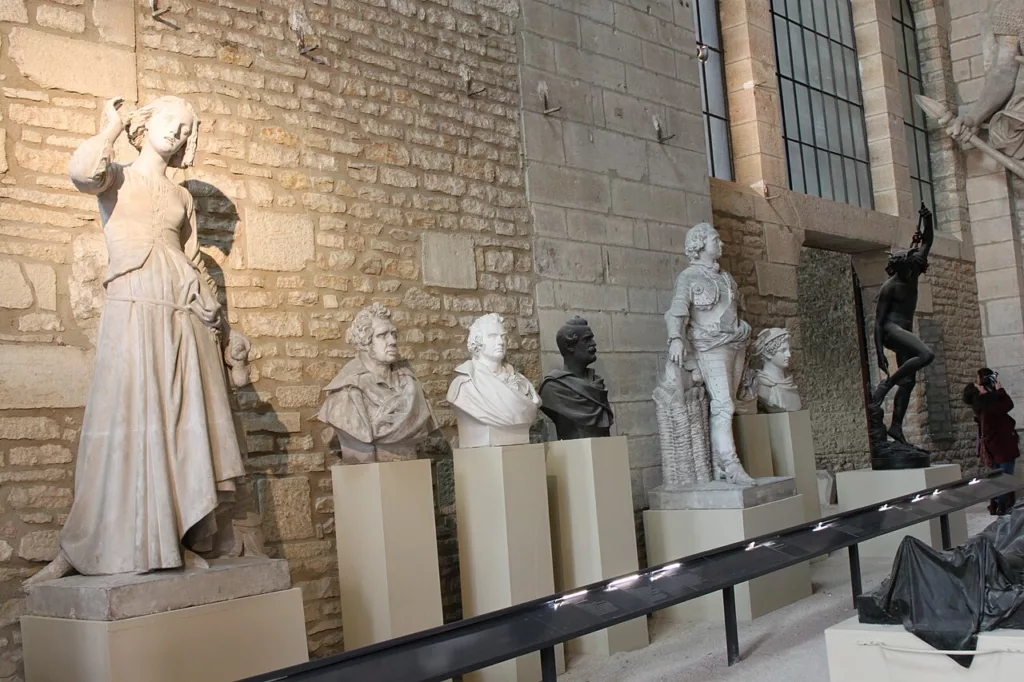
The Rude Museum, located in Dijon, is a cultural venue devoted to both art and archaeology. Housed in part of the former Saint-Étienne Church, it offers a unique historic setting that enhances its collections.
This museum is mainly dedicated to the Dijon-born sculptor François Rude, displaying life-size plaster casts of some of his major works. Visitors can notably discover emblematic pieces such as The Departure of the Volunteers of 1792, also known as La Marseillaise.
At the same time, the museum also houses an archaeological section devoted to the remains of Dijon’s ancient castrum. These elements help visitors better understand the city’s ancient history and the evolution of its heritage.
Archaeological Museum
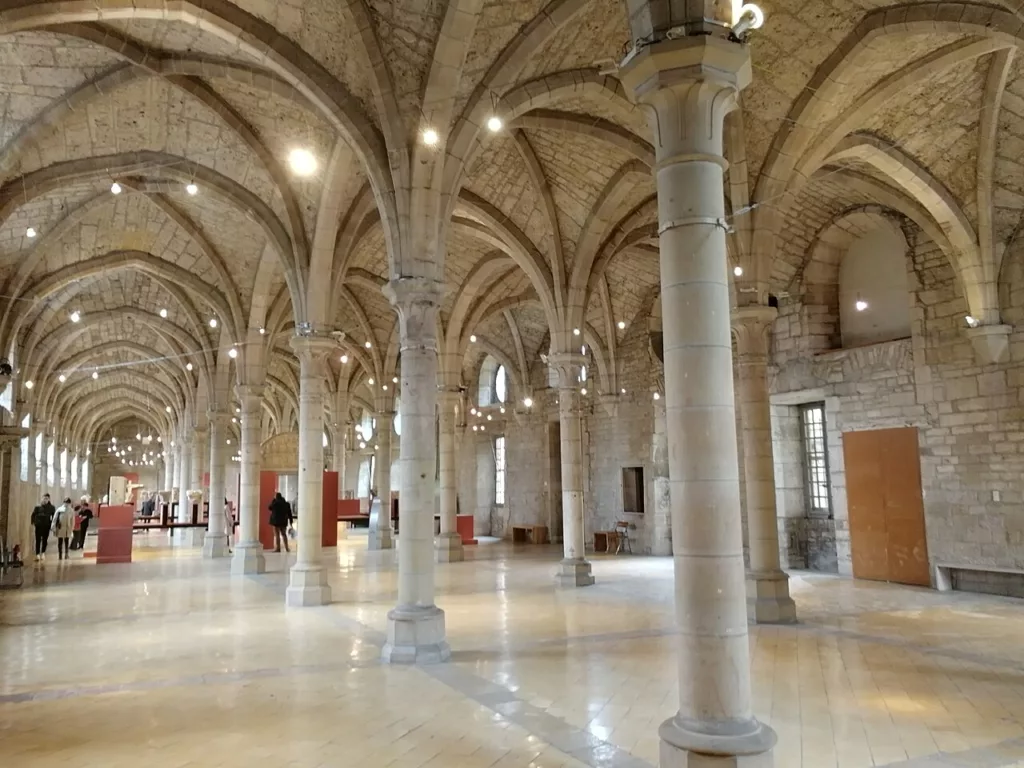
The Dijon Archaeological Museum is a must-see place to discover the ancient history of Burgundy, from Prehistory to the Middle Ages. Housed in the former Saint-Bénigne Abbey, it offers an exceptional historic setting that enhances the value of its collections.
The museum presents a rich and well-structured chronological route across several levels, allowing visitors to explore different historical periods. It features Gallo-Roman remains, objects from ancient everyday life, as well as remarkable medieval pieces.
Among the most important works are the ex-votos from the springs of the Seine, Merovingian objects, and medieval religious sculptures of great heritage value.
Parks and Green Spaces in Dijon
Jardin de l’Arquebuse
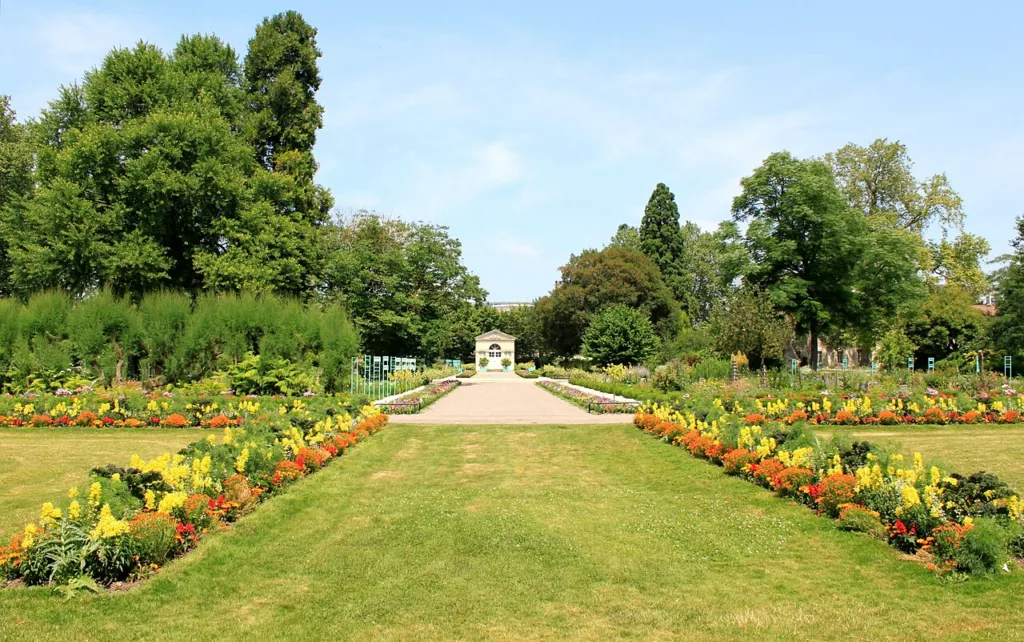
The Jardin de l’Arquebuse botanical garden in Dijon is a municipal garden created in 1833 in the heart of the city. It covers around 5 hectares and brings together nearly 3,500 plant species from Burgundy and around the world, spread across landscaped areas, botanical collections, and scientific facilities.
The site includes an English-style garden crossed by the Raines stream, as well as several remarkable areas such as a rose garden, an arboretum, and greenhouses. It also houses important cultural and scientific facilities, including the Dijon Natural History Museum and the Hubert Curien Planetarium, making it a true center dedicated to the discovery of nature and science.
Parc de la Colombière
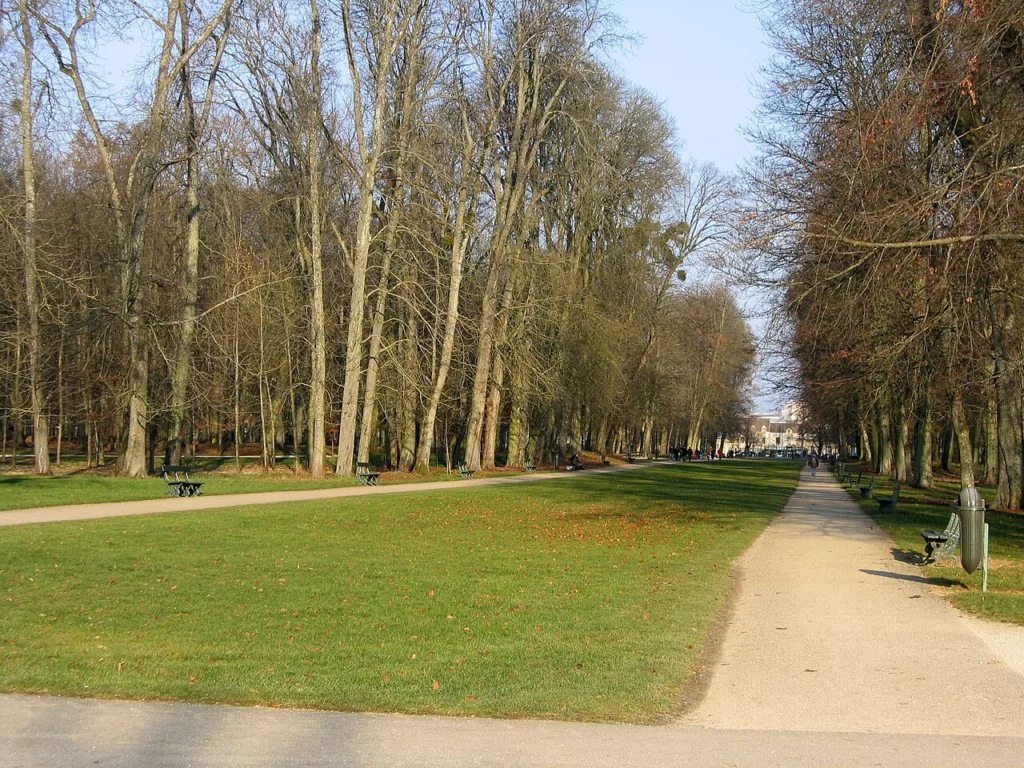
Parc de la Colombière is a vast 33-hectare wooded public park located in Dijon, in Bourgogne-Franche-Comté. Created in the 17th century, it is one of the city’s main green spaces and has been listed as a historical monument since 1925.
Originally designed as a private park for the Grand Condé, it was laid out according to the principles of the French formal garden, with long symmetrical avenues organized around a central point. Gradually opened to the people of Dijon, it became a popular place for walking from the end of the 17th century onward.
Today, the park combines wooded areas, structured avenues, playgrounds, and landscaped zones. It also contains remarkable features such as the Temple of Love and remains of the Roman Agrippa road, bearing witness to the historical richness of the site.
Parc de la Colombière remains a major place for relaxation, nature, and heritage in the heart of Dijon.
Darcy Garden
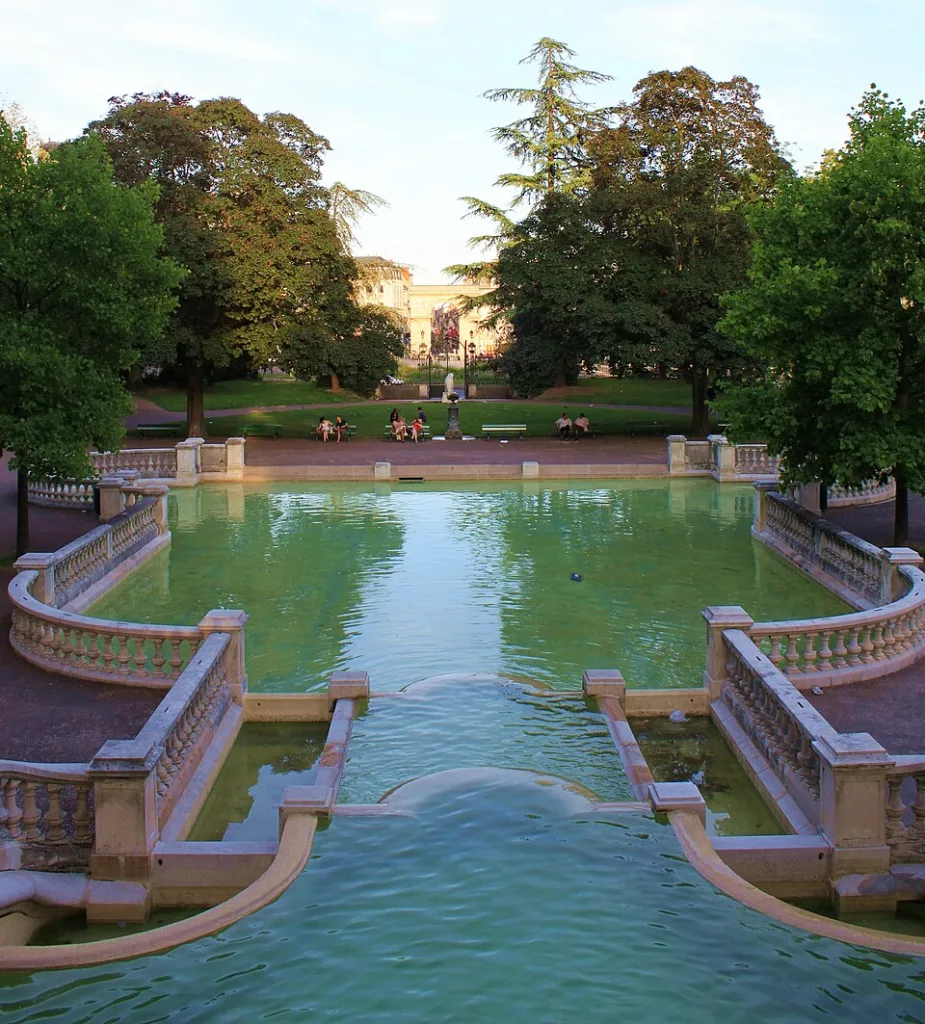
Darcy Garden was created in 1880 and was the city’s first public garden, laid out in a Neo-Renaissance style on the former water reservoir designed by engineer Henry Darcy.
The garden stands out for its ponds, fountains, terraces, and landscaped areas decorated with statues and walking paths.
One of its most remarkable features is the underground reservoir that once supplied Dijon with drinking water, making the site an early example of modern hydraulic infrastructure. The garden entrance is also marked by the famous statue of the white bear, which has become a symbol of the place.
Lake Kir
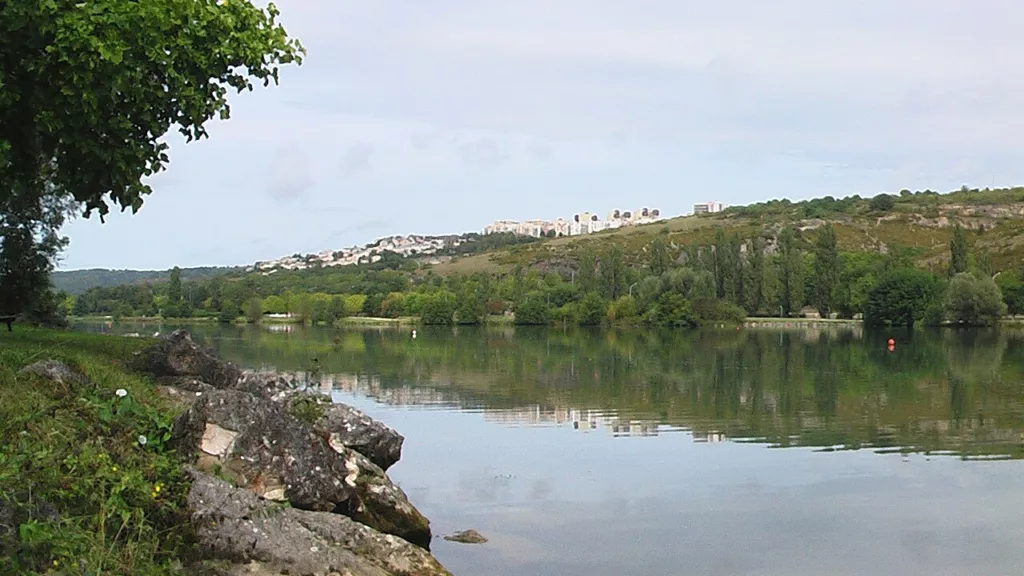
Lake Kir is a large artificial body of water located west of Dijon, in Côte-d’Or. Created in the 1960s, it is now one of the main leisure areas in the Dijon metropolitan area.
Surrounded by wooded areas and green spaces, it offers a natural setting ideal for relaxation, walks, and sports activities. The site is crossed by the Ouche, the river that feeds and runs through the lake along its entire length.
Lake Kir covers around 37 hectares and offers many activities throughout the year. Visitors can enjoy supervised swimming in summer, sailing, canoeing, kayaking, rowing, and fishing. Developed paths also allow for hiking, jogging, and cycling around the lake.
During the summer, the site hosts the “Dijon Plage” event, which transforms the banks into a real leisure area with equipped beaches, sports activities, and free entertainment.
Gastronomy & Dijon Specialties
Mustard
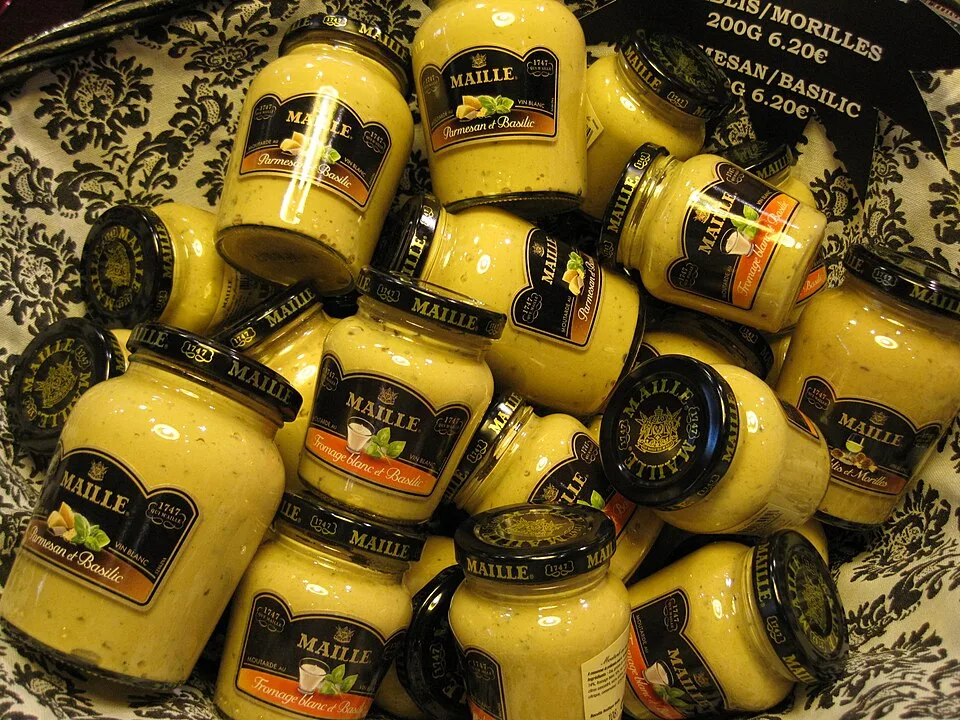
Dijon mustard is one of the region’s most iconic specialties. It is known for its strong, slightly spicy flavor. Traditionally, it is made from brown mustard seeds and vinegar. It pairs perfectly with meats, sauces, and sandwiches. Today, it is recognized and enjoyed all over the world.
Dijon Blackcurrant Liqueur

Dijon blackcurrant liqueur is a sweet liqueur made from blackcurrant berries. It is known for its dark color and pronounced fruity taste. It is often used in famous cocktails such as kir.
Dijon Gingerbread

Dijon gingerbread is a traditional pastry made with honey and spices. It is characterized by its soft texture and warm aroma. The spices used may include cinnamon, ginger, or nutmeg. It is often enjoyed plain or served with foie gras or jam.
Époisses
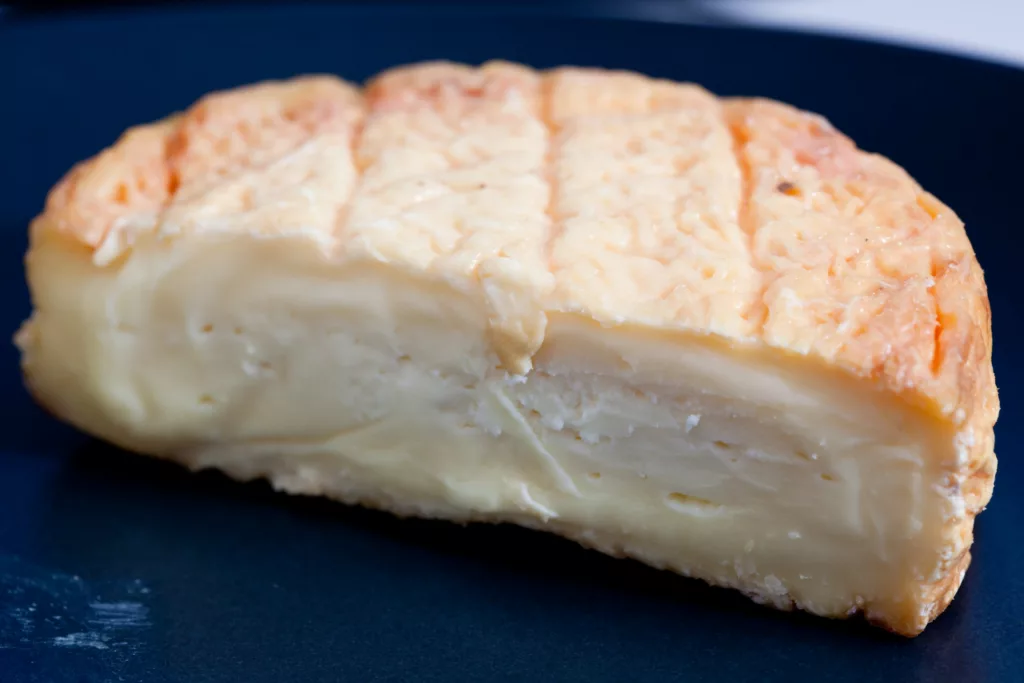
Époisses is a Burgundian soft cheese with a washed rind. It is known for its powerful aroma and rich, creamy taste. Aged with marc de Bourgogne, it develops complex aromas. When fully matured, its texture becomes meltingly soft in the mouth.
Beef Bourguignon

Beef Bourguignon is an iconic traditional dish of French cuisine. It is prepared with beef slowly simmered in red Burgundy wine. Carrots, onions, and mushrooms are usually added. Slow cooking makes the meat tender and flavorful.
Eggs en Meurette
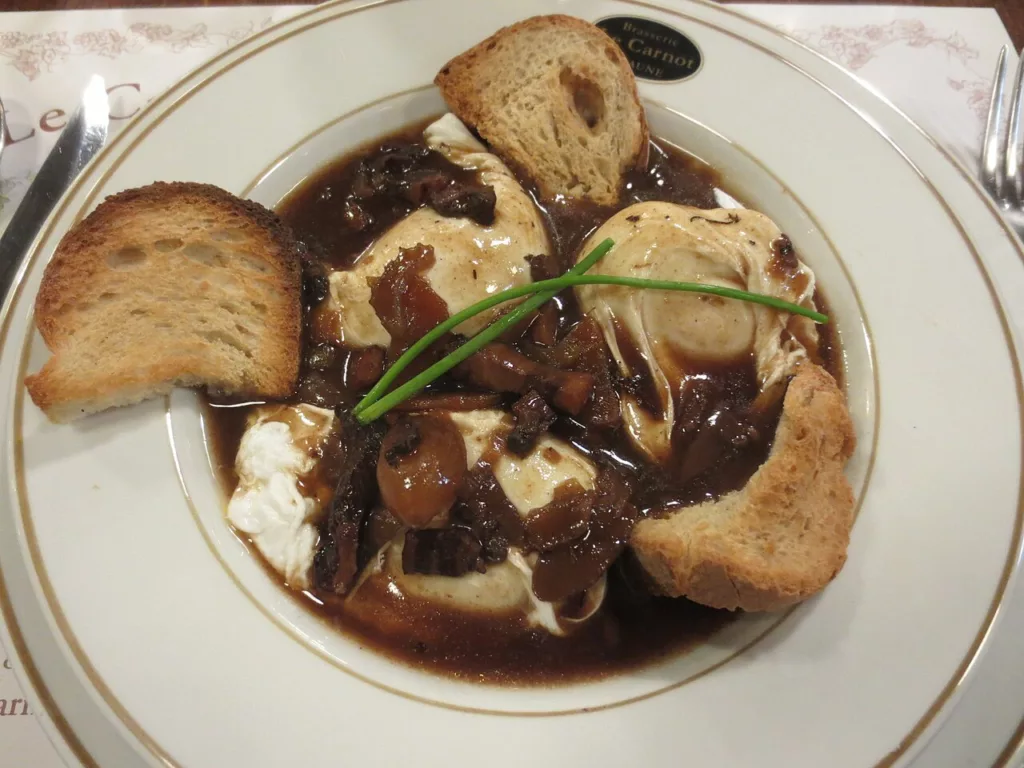
Eggs en meurette are a Burgundian specialty made with poached eggs. They are served with a red wine sauce, bacon lardons, onions, and mushrooms. The dish is usually accompanied by toasted bread rubbed with garlic.
Excursions from Dijon
Beaune
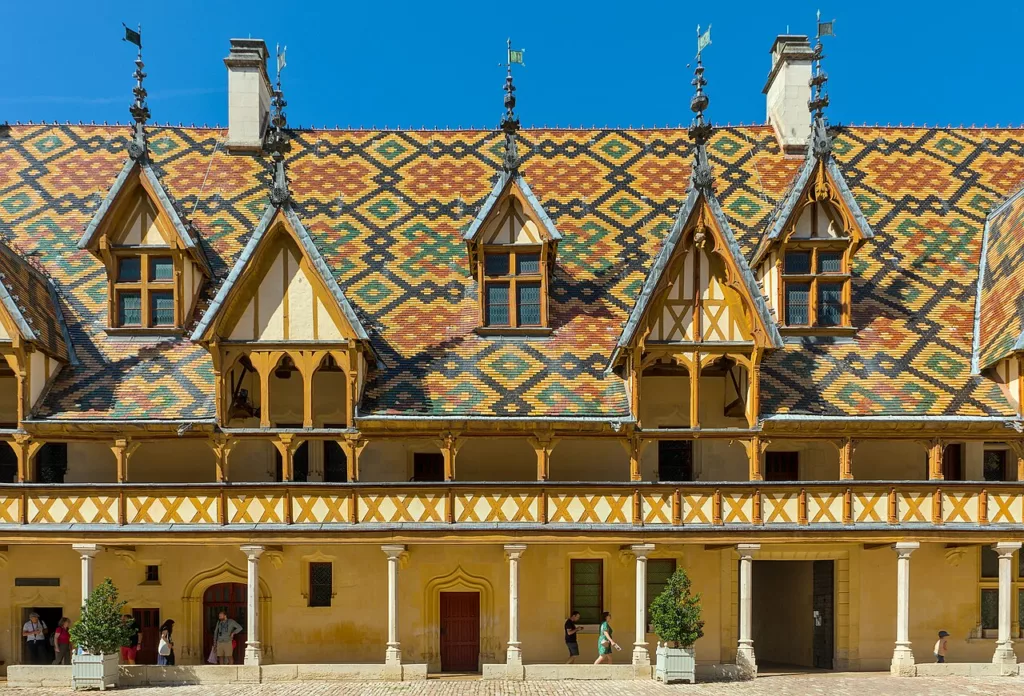
Beaune is an essential Burgundy town, easily accessible from Dijon in less than an hour. It is world-famous for its prestigious wines and major wine estates.
Beaune’s historic center is surrounded by well-preserved ramparts. Visitors can explore the famous Hospices de Beaune, a former medieval hospital with a colorful roof. The town also offers many wine cellars and Burgundy wine tastings. Its cobbled streets create an authentic and charming atmosphere.
Beaune also hosts major events such as the Hospices wine auction.
Vézelay
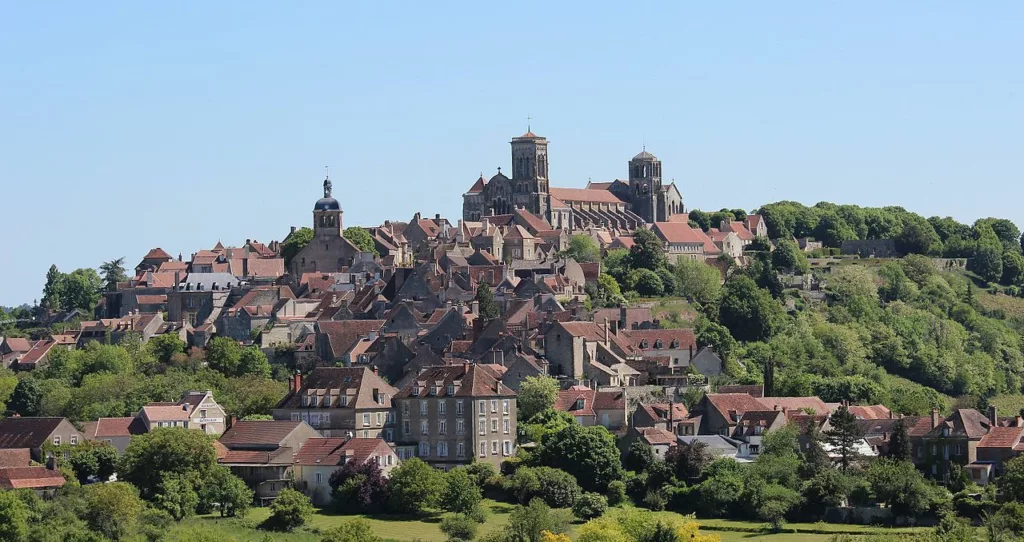
Vézelay is a medieval village located in Burgundy, listed among the most beautiful villages in France.
It is especially famous for the Basilica of Sainte-Marie-Madeleine, a masterpiece of Romanesque art. This basilica is an important pilgrimage site on the routes to Santiago de Compostela.
The village is perched on a hill, offering a remarkable panorama over the surrounding valley. Its cobbled streets and old houses give it an authentic charm.
Fontenay Abbey
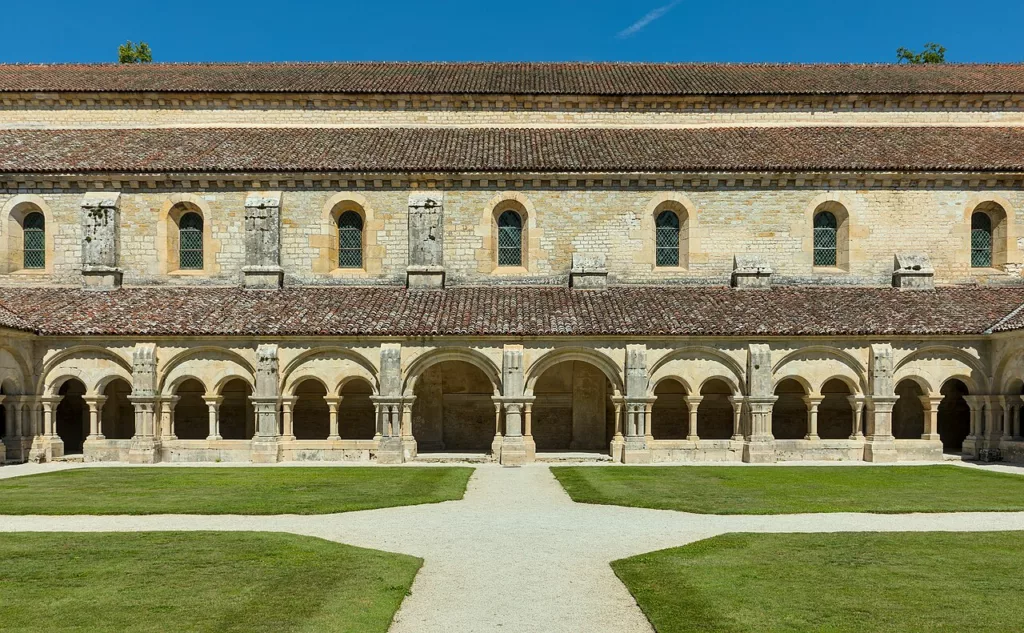
Fontenay Abbey is a former Cistercian abbey located in Burgundy, founded in the 12th century. It is one of the oldest preserved Cistercian monasteries in Europe.
Its architecture is sober and harmonious, faithful to the principles of the Cistercian order. Visitors can discover the church, the cloister, the chapter house, and the former monastic buildings. The abbey is surrounded by a vast natural estate that reinforces its peaceful atmosphere. It is listed as a UNESCO World Heritage Site.
Vineyards
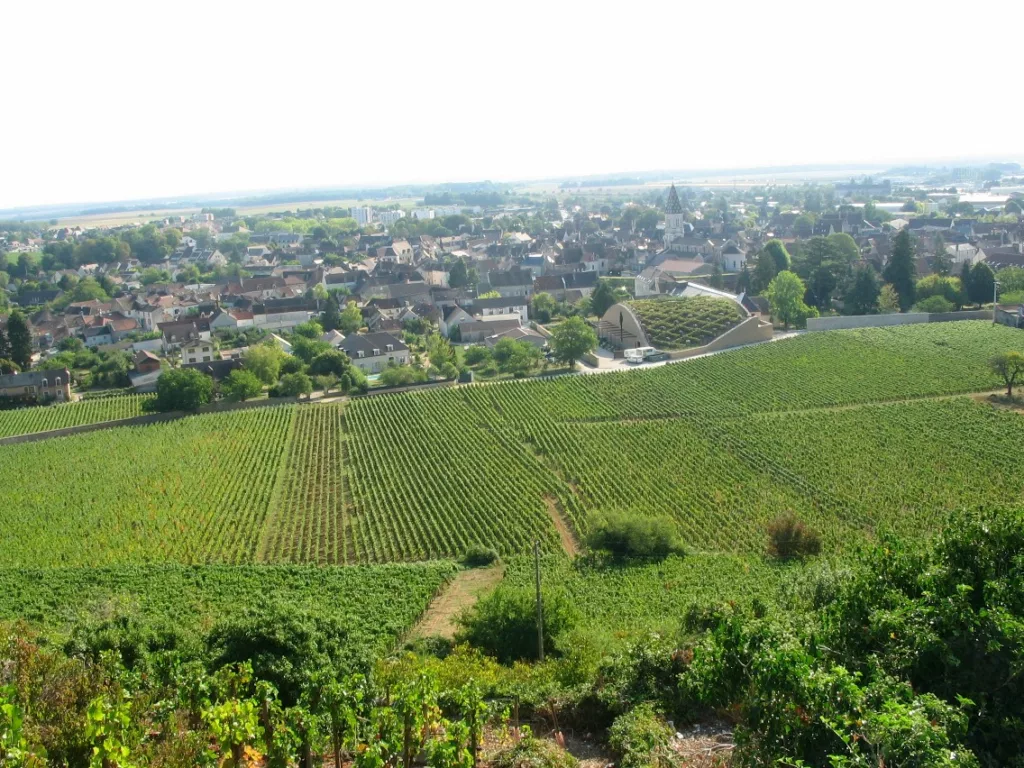
The vineyards around Dijon are part of the famous Burgundy wine region. They stretch across hillsides renowned for the quality of their terroirs.
From Dijon, it is easy to set off and explore the wine routes. These itineraries pass through authentic and charming wine villages. Visitors can tour cellars and meet passionate winemakers. Tastings are a great way to discover the wide variety of wines produced in the region.
Burgundy wines are mainly made from Pinot Noir for reds and Chardonnay for whites. Each appellation has unique aromas and characteristics linked to its terroir.
Conclusion
Visiting Dijon means discovering a city with exceptional heritage, where every street tells part of Burgundy’s history. Between its emblematic monuments such as the Palace of the Dukes, its remarkable churches, and its Renaissance private mansions, the historic center offers a unique immersion into several centuries of architecture and culture.
The city also charms visitors with the richness of its museums and green spaces, such as the Jardin de l’Arquebuse, Darcy Garden, and Parc de la Colombière, which bring a real quality of life to the heart of the metropolitan area.
Dijon is also an essential gourmet destination, with specialties such as mustard, gingerbread, and blackcurrant liqueur, which perfectly reflect local know-how.
Finally, its privileged location makes it an ideal starting point for exploring Burgundy, its renowned vineyards, and exceptional sites such as Beaune, Vézelay, and Fontenay Abbey. Combining culture, nature, and gastronomy, visiting Dijon offers a complete and memorable experience in the heart of Burgundy.
Discover Dijon in a different way with our treasure hunt game “Dijon Highlights“.